Entertainment
10 Forgotten Fantasy Movies Better Than Most Blockbusters You’ve Already Seen

We seek out fantasy movies because they give us an escape from reality. Whether we journey to a place over the rainbow or head on a daring adventure to save Middle-earth, these fantasy films have provided us with a place to go beyond our wildest imaginations. But for every Mary Poppins, there is a Bedknobs and Broomsticks, a praiseworthy film that doesn’t get as much attention and adoration.
We are going to celebrate ten fantasy movies that you’ve been sleeping on. They’ve been around, and some might even have a cult following, but they are sadly not in the same conversation as the legends of the genre. From a ‘90s animated classic that millennials adore to a duo of Hugh Jackman films that were forgotten during his Wolverine reign, it’s time to wake up and turn on these iconic films.
‘Excalibur’ (1981)


The legend of King Arthur and the knights of the Round Table remains one of the most beloved stories. Having been retold countless ways throughout entertainment, there remains one sweeping epic medieval fantasy retelling that may be its grandest: Excalibur. Brought to life by John Boorman, Excalibur is loosely based on Thomas Malory’s Le Morte d’Arthur and follows King Arthur (Nigel Terry) from his birth through his unification of England, the rise of Camelot, and the eventual downfall caused by love, betrayal, and magic.
Excalibur is a sweeping visual experience of epic proportions that relies heavily on the theme of destiny. Through the examination of the price of power and the inescapable presence of both good and evil in human nature, Excalibur reverberates through the mantra that “the king and the land are one.” What sets this iteration of the story apart is its operatic scope and lush Irish filming that made it a definitive sword-and-sorcery classic. Excalibur is a hypnotic, operatic cinematic achievement that revitalized the medieval genre in the ‘80s.
‘FernGully: The Last Rainforest’ (1992)

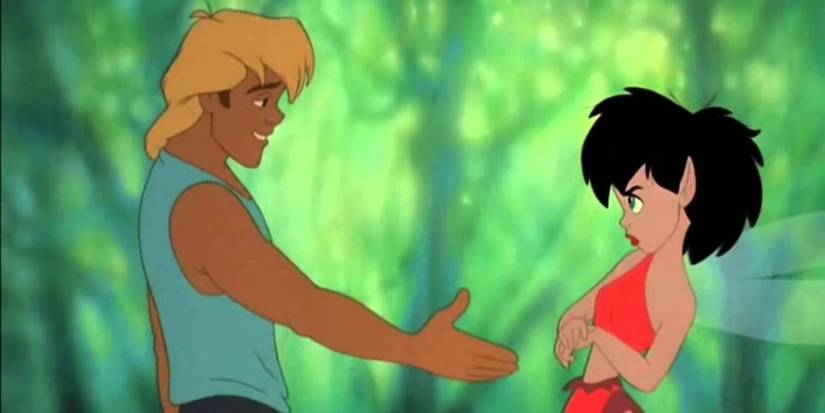
The fact that there is a generation that doesn’t revere FernGully: The Last Rainforest in the way that millennials do is a travesty. Directed by Bill Kroyer from a screenplay by Jim Cox, based on the FernGully stories by Diana Young, the musical fantasy flick follows a brave fairy named Crysta (Samantha Mathis) and her forest friends, including a manic, lovable fruit bat named Batty Koda (Robin Williams), as they battle to save their magical Australian rainforest home from a destructive logging crew and an ancient, pollution-fueled entity named Hexxus (Tim Curry).
FernGully bravely weaves a heartfelt, pro-environment message into a vibrant fantasy world that doesn’t diminish its message for younger audiences. Coming out just as the Disney Renaissance was surging, it became a niche film that fell by the wayside. Coincidentally, arriving a year before Aladdin, Williams’ eccentric character was almost instantly overshadowed by his iconic role as the Genie. Nevertheless, looking back, FernGully is a visually remarkable work, as the bioluminescent, fairy-filled world gave young viewers hope that perhaps magic might live in their own backyards.
‘Krull’ (1983)
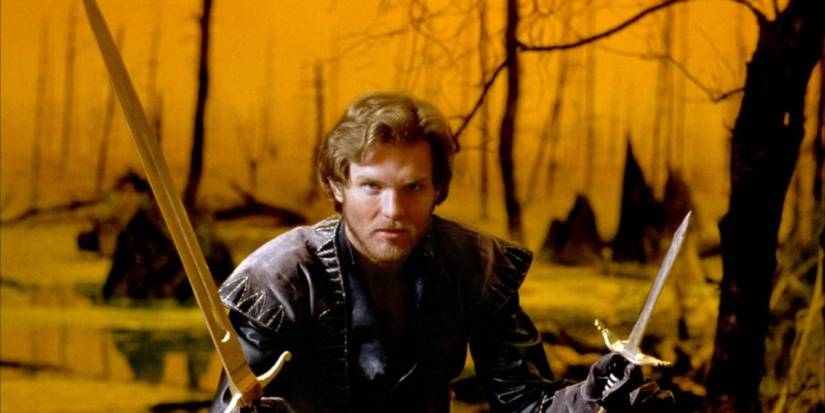
You have most likely been sleeping on Peter Yates’ science fantasy adventure movie, Krull. The movie tells the story of Prince Colwyn (Ken Marshall), who embarks on a quest to rescue his bride, Princess Lyssa (Lysette Anthony), from a fearsome alien warlord known as The Beast. But first, Colwyn, alongside a merry band of misfit warriors, magicians, and outlaws, must locate and retrieve a mythical, five-bladed throwing star known as the Glaive, the only weapon capable of destroying the monster.
Krull mixed two distinct genres: high fantasy, including swords, castles, prophecies, and magic, and science fiction, featuring alien spaceships, lasers, and telepaths. Regardless, the unique premise gave Krull a unique identity as a wildly entertaining medieval fantasy quest set in space. With a bold imagination and a classic Dungeons-and-Dragons-style party, Krull may have simply been ahead of its time, but it deserves immense praise for its world-building. From the weaponry to the Black Fortress, this 1980s gem is unforgettable.
‘Bedknobs and Broomsticks’ (1971)

Bedknobs and Broomsticks will forever be overshadowed by Mary Poppins. That said, leave it on its own, and the adaptation of the Mary Norton books is quite divine. Directed by Robert Stevenson, the fantasy film tells the story of Carrie, Charlie, and Paul Rawlins (Cindy O’Callaghan, Ian Weighill, and Roy Snart), three orphaned siblings, who are evacuated to a small village and placed in the care of Miss Eglantine Price (Angela Lansbury), an apprentice witch. Together with a cynical magic correspondence professor, they embark on a magical, flying-bed adventure to find an ancient spell to help defend England from Nazi invaders.
With a delightful songbook from the Sherman Brothers and magical set pieces that give the film flight, Bedknobs and Broomsticks blends a dark period of history with the whimsy of Disney for an enchanting tale. Though it may seem like a heavy moment to use as a means for a story, it only helps to serve as a fun, empowering fantasy where everyday heroes rise to the occasion. Like Mary Poppins before it, the whimsical numbers and locales bring the story to sensational places. Lansbury established herself as a fledgling Disney legend through this performance. What child didn’t want to hop on an enchanted bed to the Isle of Naboombu, only for her to sing us to sleep decades later as Mrs. Potts in Beauty and the Beast?
‘Legend’ (1985)
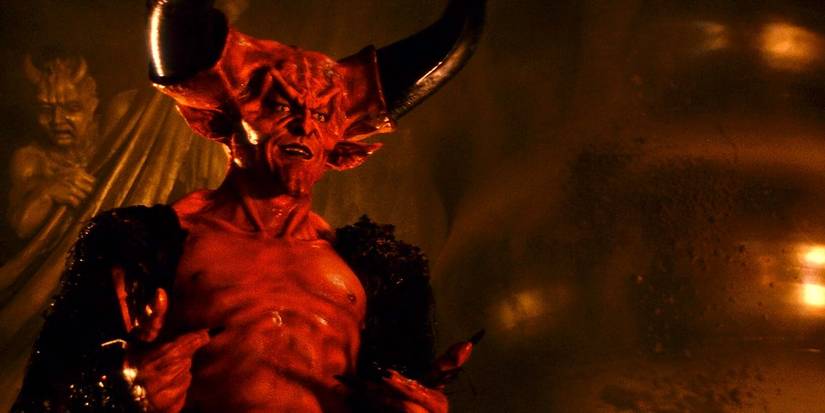
In 1985, Ridley Scott gave Tom Cruise a new genre big break in the epic dark fantasy adventure Legend. An ‘80s team-up you likely never knew you needed in a film you might not have known existed, Legend tells the tale of a pure-hearted forest dweller named Jack (Cruise) who must stop the Lord of Darkness (Tim Curry) from destroying the last unicorns. After a goblin strikes a unicorn, plunging the world into a freezing winter, Jack and his elven allies set out to defeat Darkness and rescue Princess Lili (Mia Sara).
Scott’s reign as a top-rated director usually doesn’t include Legend, but his work on the film is quite profound. His meticulous storytelling shines through the lush, sun-dappled forests, glowing unicorns, and eerie, firelit dungeons. In a time before CGI, the makeup design was unfathomable, and legendary makeup artist Rob Bottin’s work on characters, including Meg Mucklebones (Robert Picardo) and the Goblin minions, is truly sublime. However, Legend‘s crowning achievement comes in the creation of the Lord of Darkness. Covered in massive prosthetics and enormous horns, his jaw-dropping look, Curry’s evocative portrayal ranks as one of his very best crafted characters.
‘Pleasantville’ (1998)

Directed by Gary Ross, Pleasantville follows two teenage siblings, David and Jennifer (Tobey Maguire and Reese Witherspoon), who find themselves trapped in Pleasantville, a beloved black-and-white series set in the ’50s. As they introduce modern, emotional, and sexual experiences to the repressed, idyllic town, the residents and their world begin to change, turning from black and white to color.
Using the changing worlds as an allegory for social change, Pleasantville tackles racism, censorship, repression, and the danger of forced conformity through a fantastical premise. Beneath the lighthearted exterior, the story captures the illusions of perfection, the fear of change, and the power of civil rights on the evolution of society. As the characters begin to experience real feelings, thoughts, and passions, their monochrome world transforms into the vibrant colors of freedom. Not only does the film provide brilliant performances from a young Witherspoon and Maguire, but it also boasts dynamic turns from Jeff Daniels, Joan Allen, and William H. Macy.
‘The Beastmaster’ (1982)

If you see it as a cheesy, low-rent version of Conan the Barbarian, no wonder The Beastmaster has been slept on. But if you take the Don Coscarelli-directed film at face value as its own thing, then it is quite fantastic. Based on the 1959 science fiction novel The Beast Master by Alice “Andre” Norton, the sword-and-sorcery film follows Dar (Marc Singer), a warrior born with the telepathic ability to communicate with animals. After a cult of fanatic barbarians destroys his village, Dar sets out on a quest for revenge against the evil high priest, Maax (Rip Torn).
A story of revenge led by a charismatic hero and scene-stealing trained animals, The Beastmaster is an earnest B-movie that captures the pure joy of the high-fantasy era. Dar is a fun protagonist, but his ability to telepathically communicate with animals is the complete and utter draw. His loyal squad—which includes a majestic tiger, an eagle, and a pair of mischievous thieving ferrets—gives the movie a unique twist and delightful charm. Then, in the terrifying department, Torn’s over-the-top performance as the evil wizard Maax and the nightmarish winged Death Guards lead to a memorable tonal blend of fantasy and body horror. The Beastmaster serves as an important blueprint for this action-adventure style.
‘The Fountain’ (2006)

Some audiences like movies that are simple and straightforward, but if you’re seeking out a Darren Aronofsky project, you’ll be hard-pressed to find it. One of his lesser-remembered films of the early aughts is the Hugh Jackman and Rachel Weisz-led epic sci-fi fantasy romance The Fountain. A visually philosophical drama, The Fountain weaves together three distinct timelines spanning a thousand years, centering around a man (Jackman) trying to save the woman he loves (Weisz).
Through the intertwining tales, The Fountain undergoes masterful twists and turns, leading to the realization that death is not a curse but a road to rebirth and the continuation of life. In this tri-level transcendent epic, Aronofsky seamlessly combines an awe-inspiring visual stunner with genuine emotional depth and philosophy. Though the past is pretty, the magic in which Aronofsky crafts his space and cosmic sequence is mesmerizing. Add in a sweeping score by Clint Mansell and Jackman and Weisz delivering remarkable, weighty performances, and The Fountain retains its epic status as a near-perfect, ambitious blend of fantasy and sci-fi with emotional depth.
‘Van Helsing’ (2004)
The truth is, in the first decade of the 21st century, we simply could not imagine Hugh Jackman as anyone but Wolverine. In turn, it was a harder sell to see him in any other type of project. And yet, he not only held his own, but he also dominated in Stephen Sommers’ action-packed Van Helsing. A product of its time and an homage to the Universal Monsters of the past, Van Helsing casts Jackman as Gabriel Van Helsing, an amnesic Vatican-commissioned monster hunter who travels to Transylvania, teaming up with Anna Valerious (Kate Beckinsale), the last of an ancient family sworn to kill Count Dracula (Richard Roxburgh) and Frankenstein’s (Shuler Hensley) monster.
If it sounds like an apocalyptic and convoluted plot, well, it is, and that’s why it’s a delicious dumb popcorn flick. Fulfilling the horror fantasy quota, Van Helsing acts as a pulp action classic that mixes monster lore with pure unadulterated camp. It’s a “greatest hits” type of story that is visually mesmerizing. Coming off the success of The Mummy and its successors, Van Helsing had a high bar to achieve. It may not have reached it, but it earned a cult classic moniker in the process. Audiences are certainly never going to be bored as it’s wall-to-wall physics-defying stunts and high-energy action.
‘Willow’ (1988)
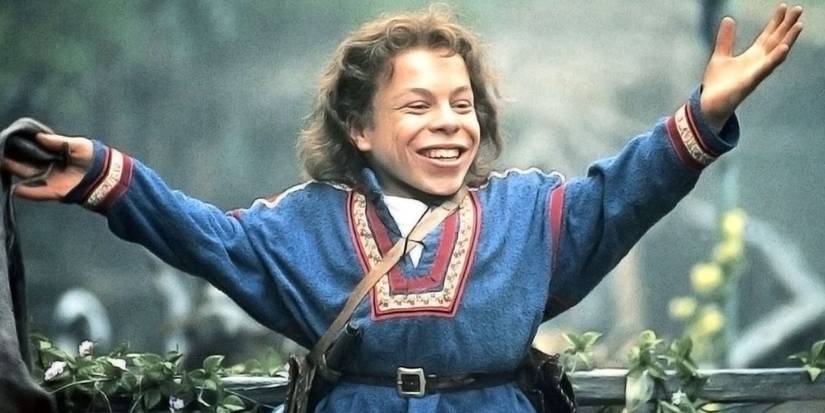
Willow is absolutely the film you’ve heard about that you’ve probably never taken the time to sit down and watch, and that’s a shame. The classic high fantasy tale tells the story of an aspiring sorcerer and farmer named Willow Ufgood (Warwick Davis), who discovers an infant prophesied to destroy the evil Queen Bavmorda (Jean Marsh). Willow then teams up with rogue warrior Madmartigan (Val Kilmer) to protect the baby from dark magical forces. Filled with high fantasy tropes galore, Willow is just as charming now as it was then.
Beloved by all who watch, the film is the brainchild of director Ron Howard, writer Bob Dolman, and was executive-produced by George Lucas. If that’s not a dream team, I don’t know what is. Willow showcases an underdog story and an unlikely hero’s journey. It was quite progressive for its time, allowing actors with dwarfism to step into fully fleshed-out roles as central heroes, rather than strictly fantastical creature parts. As a work of cinema, Willow uses amazing practical creature designs and pioneering digital morphing technology that revolutionized cinematic technology. Years later, it received a Disney+ show, but things didn’t exactly end well for it.


You must be logged in to post a comment Login