Entertainment
10 Greatest Movie Masterpieces That You Can Only Watch Once

Not all masterpieces are created equal. For every classic movie that you can watch over and over again, there’s one that you’ll watch once and never again. Whether it’s because of their subject matter or the presentation of it, these masterpieces can be exercises in endurance that test your emotions.
Real-life and fictional tragedies, traumas and acts of violence are all perpetrated in these masterpieces. While many of them may be far less explicit than the average action or horror film, the ways in which the filmmakers are able to depict the unsettling material will rattle and remain with you far longer. If you haven’t seen any of these ten masterpieces, you should, but one time will be more than enough.
‘The Virgin Spring’ (1960)


Ingmar Bergman‘s infamous, Oscar-winning rape-and-revenge drama The Virgin Spring famously inspired the horror film The Last House on the Left. While that Wes Craven-directed piece of pure exploitation may actually be harder to watch than Bergman’s film, there’s something about the elevated filmmaking of The Virgin Spring that makes it all the more unsettling in the long-term. It’s an arthouse film, not something designed to shock and appall, but rather be studied and examined, and the closer you examine it, the sicker you’re likely to feel.
Set in medieval Sweden and based on a 13th-century ballad, the film follows a young woman who is sexually assaulted and murdered, with her assailants later unknowingly taking shelter at her parents’ home. This act of horrific violence begets violent retribution from the parents, and the film leaves you feeling empty at the futility of what has been accomplished by its end. The fact that it is all so stunningly acted and vividly photographed, by Bergman’s long-time collaborator Sven Nykvist, never once makes it any more palatable or less harrowing. The Virgin Spring inflicts itself on you, and it is hard to wash away.
‘Come and See’ (1985)

The anti-war masterpiece Come and See is as effective a representation of the brutality and damage wrought by armed conflict as has ever been made. While some war films may downplay the visceral levels of carnage, Come and See puts it on full display and never flinches away from it. War is hell, and the movie wants you to know it, no matter how hard it might be to watch.
It is set during World War II and told from a Soviet perspective, as a young Belarusian boy joins a resistance movement and bears witness to the atrocities committed by the Nazis and the reciprocal violence it inspires. The final film by director Elem Klimov, Come and See finds no excitement or tension to be mined from depicting war, and instead offers only devastation and despair.
‘Grave of the Fireflies’ (1988)


Grave of the Fireflies is another harrowing WWII film, but one whose tragedy unfolds in a more quiet and more sorrowful manner in comparison to the shocking violence of Come and See. An animated film produced by Studio Ghibli, it relates the civilian cost of war from the perspective of two young siblings in Japan, and if you understand the nature of this list, you know nothing good awaits them.
After the American bombing of Kobe, brother and sister Seita and Setsuko find themselves in dire straits after the death of their mother. Left without food or shelter, their struggle to survive is reflective of the realities faced by many civilians in war-torn countries, a subject not often reflected in film, especially from Western cinema. Grave of the Fireflies is heartbreaking, and its ghosts will haunt you with phantom emotions long after.
‘Schindler’s List’ (1993)
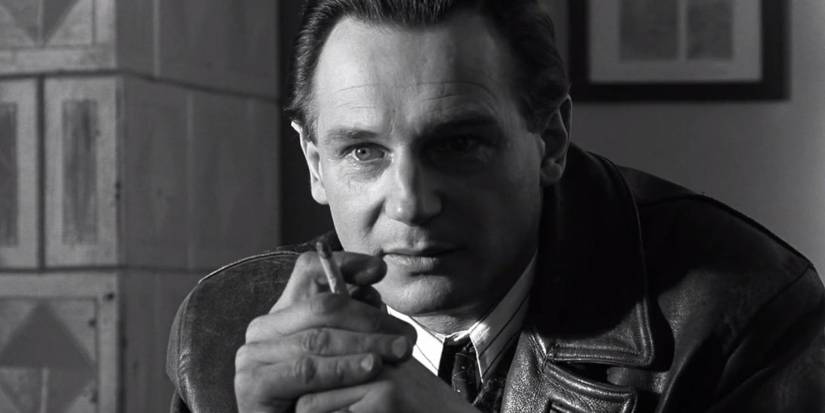
One last wartime drama that few will find themselves rewatching, Steven Spielberg‘s Schindler’s List, is one of the filmmaker’s greatest achievements as a director, and undoubtedly his most harrowing to watch. The Holocaust is a subject that few filmmakers dared to touch before this film, and many that did after fell prey to emotional manipulation bordering on exploitation. Spielberg’s film avoids those pitfalls, and while it may certainly massage the truth behind its real-life story, it is an undeniably empathetic masterpiece.
Oskar Schindler was a member of the Nazi party and a wealthy industrialist who would save the lives of over 1,000 Jewish citizens by employing them in his factory. He would eventually go bankrupt as a result of his humanitarian cause, and later became immortalized in Spielberg’s film, which was based on the novel Schindler’s Ark by Thomas Keneally. The film is as technically impressive as any of Spielberg’s work, but here the director uses his keen eye for visual storytelling for greater emotional purpose in chronicling the true horrors of the Holocaust, making it vivid in a way no textbook could. Schindler’s List feels even more urgent in this modern era of denialism.
‘Happiness’ (1998)

Todd Solondz has never been a filmmaker to shy away from audacious or awkward material, and his black comedy masterpiece Happiness has both in full supply. An ensemble film following three separate narratives, the film is alternatively cringey, uncomfortable, and downright horrifying, shining a light on subject matter that many filmmakers wouldn’t touch with a ten-foot pole.
Following the lives of three sisters and the issues they separately face, the film deals with sexuality, harassment, assault and, most infamously, pedophilia. It is that latter subject, handled in such a casual yet upsetting manner, that makes Happiness such a discomforting watch. Despite the film’s deft ability to mix harsh humor amid its mortifying storylines, it cannot lessen the impact with which it will make you squirm in your seat, itching for relief.
‘Mysterious Skin’ (2004)

Gregg Araki‘s Mysterious Skin, adapted from the novel by Scott Heim, also deals with the sexual abuse of children, however, in a manner and tone vastly different from Happiness. The film has been lauded for its portrayal of how this form of violent trauma can have long-lasting psychological effects. While the filmmakers took great pains in depicting the most horrific actions in a way that suggests far more than it explicitly shows, the film is still uncompromising and emotionally devastating.
Joseph Gordon-Levitt and future Oscar-nominated director Brady Corbet play two young adults whose shared experience of abuse as children has deeply affected both their lives in different ways. One of them engages in unhealthy sexual experiences, while the other has completely repressed his memory of the event. Through their parallel journeys, Mysterious Skin examines the reverberating effects of trauma, and while it manages to find traces of hope within its narrative, it never negates the tragedy that underlines it.
‘United 93’ (2006)

Paul Greengrass‘ visceral film depicting the events that took place on the ill-fated flight United 93 on 9/11 was a painful viewing experience when it was released in 2006, only five years removed from the tragic events, and it hasn’t lost any of its potency since. Far from an exploitative or glossy Hollywood bastardization, the film is both a tense thriller and a queasily realistic recreation that honors the lives lost on one of the most infamous days in American history.
Using the same cinema vérité style that Greengrass had honed on his previous films Bloody Sunday and The Bourne Supremacy, the film juggles multiple characters and locations as it details the events leading up to the hijacking of the titular flight. Eventually, it focuses solely on the efforts of those heroic passengers onboard who fought back against their hijackers, depicting it with brutal authenticity without any hint of bombastic embellishment. United 93 is a white-knuckle thriller that drops into the pit of your stomach and makes you never want to experience its thrills again.
‘Incendies’ (2010)

Before he became synonymous with sci-fi epics, Denis Villeneuve directed some incredibly provocative and disturbing films, none more so than his gutwrenching masterpiece Incendies. Adapted from Wajdi Mouawad‘s play of the same name, the plot was inspired by real events that occurred during the Lebanese Civil War, and as such is unflinching in its depiction of atrocities committed by extremists. While the turns in the narrative are something akin to a Greek tragedy, the content is horrifically historically relevant.
Structured as a mystery, the film follows a twin brother and sister as they attempt to find a previously unknown sibling to honor the wishes of their deceased mother. Concurrently, the film details the mother’s harrowing experiences of torture and assault while a prisoner of war. The film’s notorious plot twist could easily have come off as cheap shock value in less skilled hands, but under Villeneuve’s direction, it is a shattering emotional climax that is impossible to forget.
‘The Act of Killing’ (2012)
Many documentaries manage to capture the horrific realities of all manner of subjects with an urgency that is often unattainable in narrative films. Films like Shoah or The Thin Blue Line expose ugly truths with words straight from the mouths of those who lived through the events. Joshua Oppenheimer‘s singularly affecting film The Act of Killing is even more unsettling for how it lets those who committed atrocities speak for themselves, and even recreate the acts themselves.
Filmed in Medan, North Sumatra, the documentary details the mass killings that took place in Indonesia between 1965 and 1966 as part of the country’s transition to the New Order. More than just a series of talking heads recounting the killings, the film instead has the perpetrators reenact their murders, confronting them with the violence and exposing their impunity. It is an extremely difficult film to watch, cataloging now the actual events but instead interrogating the acts of killing and the banality of the evil behind them.
‘Mass’ (2021)

It is both upsetting and completely understandable that Fran Kranz‘s impeccably written and acted masterpiece Mass has gone so underseen. In dealing with the subject of school shootings, the film dives headfirst into a subject that has torn the fabric of American society and inspired virulent debate. Though the film does not directly depict any of the violence that its characters seek to understand, unlike Gus Van Sant‘s equally damaging Elephant, it studies the pain and grief that result from it in distressing detail.
Reed Birney and Ann Dowd play the parents of a school shooter, while Jason Isaacs and Martha Plimpton play the parents of one of his victims. They all come together to discuss the tragedy, trying to find understanding years after the senseless violence. The film interrogates many of the discussion points that have become common refrains in the wake of such real-life tragedies, but never once does it become a didactic or tedious lecture. It treats its characters and subject matter with ultimate empathy, which makes it necessary viewing that many will find unnecessary to repeat.

