Entertainment
10 Psychological Thriller Movies That Will Keep You Hooked From Start to Finish

Psychological thrillers operate on a different frequency from most movies, trading spectacle for tension, and action for unease. Rather than dazzling you with explosions or action, they disorient you with uncertainty: what is real, what is hidden, and what is about to be revealed.
The best entries in the genre understand that the human mind is far more unpredictable than any external threat. They build suspense through ambiguity and suggestion. You’re hooked by the feeling that something is off, even if you can’t yet explain why.
10
‘Stranger by the Lake’ (2014)


“I saw you.” This one’s deceptively simple. Set almost entirely around a secluded lakeside cruising spot, Stranger by the Lake follows Franck (Pierre Deladonchamps), a man drawn into a dangerous attraction with Michel (Christophe Paou), whose charm is matched only by the violence he is capable of. Early in the film, Franck witnesses Michel commit a murder. What makes the story so unsettling is what follows: he chooses to stay. The narrative becomes less about uncovering the truth and more about understanding why Franck continues to pursue someone he knows is dangerous.
Director Alain Guiraudie builds tension through repetition. Days pass, routines repeat, conversations circle around the same ideas. By the time the movie reaches its final stretch, the mood has shifted from quiet curiosity to near-total dread, and the consequences feel inevitable.
9
‘Red Rooms’ (2024)


“I want to understand him.” Red Rooms is a sharp statement on obsession in the digital age. The main character is Kelly-Anne (Juliette Gariépy), a woman who becomes fixated on a high-profile trial involving a man (Maxwell McCabe-Lokos) accused of producing and distributing violent “red room” videos on the dark web. She attends the trial daily, studies the evidence, and begins to blur the line between observer and participant.
The tension builds gradually, driven by what is withheld as much as by what is revealed. Kelly-Anne’s motivations remain ambiguous, her behavior increasingly difficult to interpret. The audience is left to question not just the accused, but those watching him. This was a challenging role to play, but Gariépy is great in the part, believable as someone on a path of self-destruction. Not for nothing, Red Rooms swept the awards at that year’s Fantasia Film Festival.
8
‘Decision to Leave’ (2022)

Image via CJ Entertainment
“My heart is beating… like I’m insane.” This neo-noir gem from master Park Chan-wook transforms a murder investigation into something far more intimate. In Decision to Leave, detective Hae-jun (Park Hae-il) is assigned to a case involving a man who has fallen to his death, and his attention quickly turns to the victim’s wife, Seo-rae (Tang Wei). Is she innocent? Is she manipulating him? And perhaps more intriguingly, does he even want the truth?
While not as ambitious as the director’s masterpieces, Decision to Leave is still satisfyingly labyrinthine, serving up twists and narrative trickery at every turn, along with the sumptuous cinematography Park is known for. His direction here is elegant and assured, constantly shifting in tone and perspective but keeping the intricate storylines totally controlled, ultimately winning the Best Director award at Cannes for his efforts.
7
‘Knife in the Water’ (1962)

“You’re not afraid, are you?” This movie is lean both in terms of runtime (it’s just 94 minutes) and setting, taking place almost entirely on a boat. However, it feels expansive in its psychological scope. A married couple (Leon Niemczyk and Jolanta Umecka) invites a young hitchhiker (Zygmunt Malanowicz) to join them on a sailing trip, setting the stage for a tense and increasingly volatile dynamic. The husband asserts dominance, while the younger man challenges it.
Meanwhile, the wife observes it all with a quiet, ambiguous presence. Power shifts constantly between them, and the film never lets you settle into a clear sense of control or safety. Indeed, what makes Knife in the Water so compelling is its ability to generate tension from minimal elements. Rather than melodrama, it operates on subtle shifts: glances, gestures, small acts of provocation.
6
‘The Vanishing’ (1988)
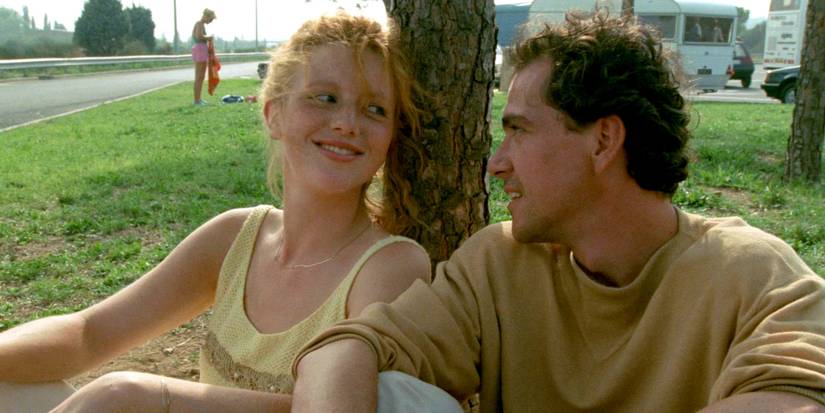
“I want to know what happened.” The Vanishing is dark and bleak but undeniably brilliant. During a road trip, a young woman (Johanna ter Steege) disappears without a trace at a rest stop. Years later, her boyfriend, Rex (Gene Bervoets), is still searching for answers, unable to move on without understanding what happened. The film takes an unusual approach by revealing the identity of the abductor early on. Instead of focusing on who committed the crime, it shifts the emphasis to why, and to what lengths Rex is willing to go to find out.
Equally unsettling is the portrayal of the man responsible (Bernard-Pierre Donnadieu). He isn’t presented as a larger-than-life villain. Instead, he appears ordinary, even methodical. That normality is disturbing in its own way. It strips away the comfort of thinking that evil is always obvious or exaggerated.
5
‘Blow-Up’ (1966)

“I thought I saw a murder.” Blow-Up turns perception itself into the central mystery. Thomas (David Hemmings), a fashion photographer drifting through 1960s London, accidentally captures what he believes may be evidence of a murder while photographing a couple in a park. As he enlarges the images, again and again, the truth seems to emerge… and then slip away. The more Thomas examines the photographs, the less certain he becomes.
Here, reality itself feels unstable, shaped as much by interpretation as by fact. In this sense, the movie resists traditional thriller mechanics, instead going for something a little deeper and more thematic. This comes through clearly in the phenomenal final scene, a pitch-perfect moment that sums up everything that came before. Themes aside, Blow-Up is simply compelling as a snapshot of Swinging London.
4
‘Caché’ (2005)
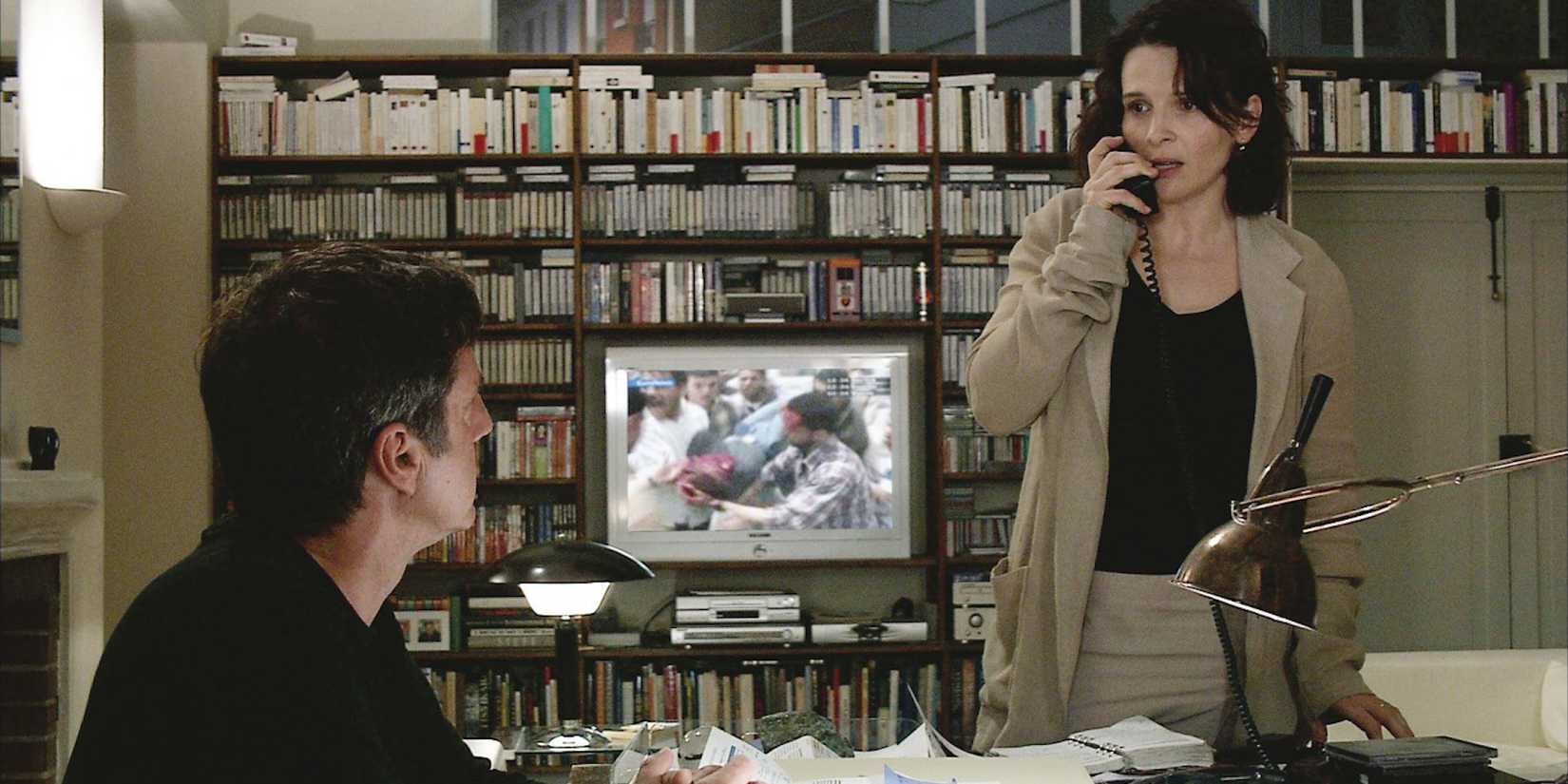
“Someone is watching us.” Caché (meaning “hidden”) begins with a simple, unsettling premise: a Parisian couple (Daniel Auteuil and Juliette Binoche) starts receiving anonymous videotapes of their home, filmed from a distance. There are no demands or explanations, just the quiet implication that someone is watching. As the tapes continue, Georges, the husband, becomes increasingly paranoid, suspecting connections to his past.
The film gradually expands beyond the immediate mystery, uncovering buried guilt and unresolved history that complicate any straightforward interpretation. Its conclusions go way beyond the individual characters at the heart of the drama. Michael Haneke directs it all with cold precision, often holding the camera in static shots that force the viewer to question what they’re seeing. In the years since, Caché‘s critical stature has continued to grow, and it’s now frequently ranked among the best movies of the 21st century.
3
‘The Conversation’ (1974)
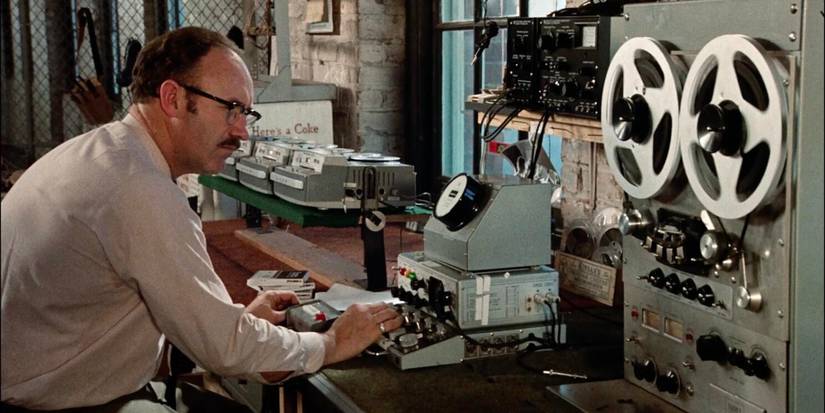
“I’m not afraid of death… I’m afraid of murder.” Francis Ford Coppola delivered this paranoid masterpiece between Godfathers. The Conversation is built on a single recording and the uncertainty surrounding it. Harry Caul (Gene Hackman), a surveillance expert, is hired to record a conversation between a young couple. He analyzes the audio, becoming convinced that their lives may be in danger. Along the way, the film becomes as much a character study as a thriller, anchored by Hackman’s strong performance.
The movie really traps you inside the protagonist’s mind. He’s intensely private, almost emotionally sealed off, yet his work forces him into the most intimate corners of other people’s lives. That contradiction creates a slow psychological fracture. As he becomes more consumed by the recording, his sense of reality begins to shift, and you feel that instability with him.
2
‘M’ (1931)
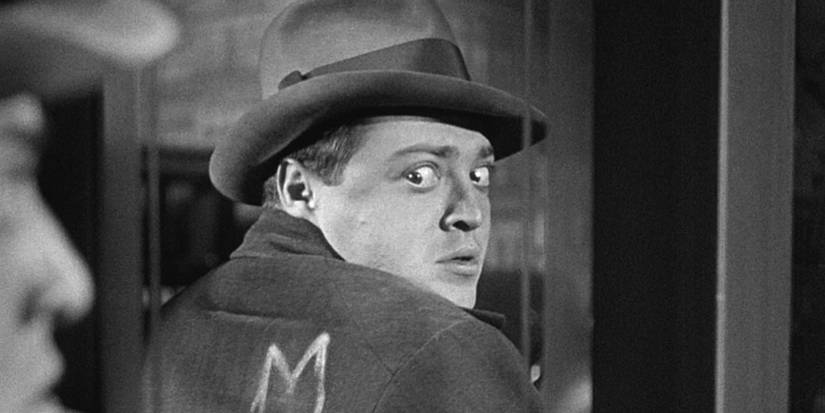
“I can’t help what I am!” This classic is one of the defining films from Fritz Lang, director of Metropolis and The Testament of Dr. Mabuse. It’s a proto-noir about a series of child murders terrorizing a German city, prompting both the police and the criminal underworld to hunt for the killer. The investigation unfolds across multiple fronts, each with its own methods and motivations. When the killer is finally captured, the narrative shifts in unexpected directions.
M. is almost a hundred years old at this point, so some aspects of it will feel a little inaccessible to modern audiences but, overall, the film holds up. Here, Lang uses sound in an especially effective way. For instance, the killer is associated with a simple whistled tune. In an era when sound film was still new, this was incredibly innovative, and it still works. You hear it, and tension spikes instantly.
1
‘Les Diaboliques’ (1955)

“I saw him.” Les Diaboliques begins with a perfect crime, or what appears to be one. A headmaster’s wife (Véra Clouzot) and his mistress (Simone Signoret) conspire to murder him (Paul Meurisse), carefully planning every detail and disposing of the body in a school pool. But when the body disappears, the certainty of their plan begins to unravel. The women, once united, begin to fracture under the pressure, their fear feeding into the growing sense that something is terribly wrong.
The atmosphere plays a huge role. Shot in stark black and white, the film leans into shadows, reflections, and empty spaces. Silence is used just as effectively as sound, making even the smallest noise feel significant. And then there’s the legendary third act. Without relying on spectacle, it delivers a payoff that recontextualizes everything that came before.


Diabolique
- Release Date
-
January 29, 1955
- Runtime
-
117 Minutes
- Director
-
Henri-Georges Clouzot
- Writers
-
Henri-Georges Clouzot, Jérôme Géronimi
Cast


You must be logged in to post a comment Login