Entertainment
10 Saddest Best Picture Oscar Winners of All Time, Ranked

If you work your way through every movie to have won Best Picture at the Academy Awards, you’re inevitably going to encounter a fair few downbeat films. Going back to the earliest Oscar ceremonies, even, you’ve got the likes of Wings and All Quiet on the Western Front, with the former being a romantic melodrama set during World War I, and the latter also being a World War I movie, but a considerably more harrowing one; more dramatic/tragic than melodramatic.
Both kinds of movies can be tearjerkers, or generally sad, so it’s for that reason that some of the movies below are emotionally intense historical dramas, and others don’t tell true stories, but prove moving because of what they deal with and what they explore thematically. It is hard to rank these, since what one finds sad can be subjective, and comparing real-life stories to entirely fictional ones is a little challenging as well, but an attempt was made regardless. Sorry if that attempt makes you sad.
10
‘Ordinary People’ (1980)


It was impressive that Robert Redford won a Best Director Oscar for his first directorial effort, Ordinary People, and the movie also won Best Picture. It is, to put it bluntly, a family drama about grief, because it revolves around the aftermath of a young man’s death, with his parents and now sole surviving brother struggling to maintain any sense of normalcy following such a tragedy.
Raging Bull came out the same year, and might’ve been a more deserving winner, but if that movie had won, it probably wouldn’t be here, since it’s just a whole lot heavier in a kind of empty and despairing way, rather than being a somewhat more approachable tearjerker the way Ordinary People is. It’s still not an easy film to watch, by any means, but it says enough about perseverance and how to grapple with grief to keep it feeling more bittersweet, rather than just outright bitter.
9
‘Casablanca’ (1942)


Good old Casablanca. It’s an honestly difficult to beat film, however you choose to define it, as it does everything a movie of its time could possibly do, and then a little more, somehow. It’s about an apathetic and heartbroken man who, in the early stages of World War II, spends his time in the titular city being generally miserable, but then he’s reconnected with the woman he loves, and finds himself torn between doing what he wants and what is likely right for the greater good.
It does all that with more nuance – or at least care on a writing front – than you might expect for a film of its age. Casablanca hits all the emotional beats it does largely because it’s flawlessly written, and so everything else kind of flows and also excels from there. Out of all the Best Picture winners from the first half of the 20th century, it’s quite possibly the most moving.
8
‘Gladiator’ (2000)

As an epic and an action movie rolled into one, Gladiator ends up being pretty broad and maybe even a bit conventional in terms of the story it tells, but at least it tells that story effectively. It’s essentially a revenge story set during the era of the Roman Empire, but if you’re after strict history, that’s not really what this wants to be about. Some historical figures play a part in the narrative, though the protagonist is fictional.
Much of Gladiator, even with its historical setting, is fictional, which is possibly okay if you’re more after spectacle, action, and a well-paced viewing experience.
Lots of other things are fictional, which is possibly okay if you’re more after spectacle, action, and a well-paced viewing experience. Where it goes emotionally might seem obvious, and not just in hindsight, either, yet it’s all in the execution, like so many movies that work wonders with ideas or narrative beats that, on paper, might not sound all too exciting.
7
‘Everything Everywhere All at Once’ (2022)

You have to admire the ambition here, above anything else, and even if you’re not particularly wild about the movie itself. Everything Everywhere All at Once is the Best Picture winner that fits into the most genres in Oscar history, and it feels like it does so quite comfortably. There’s a good excuse to do that here as well, since Everything Everywhere All at Once is all about the multiverse and differing selves in different universes.
It can jump between being a martial arts movie, an existentialist comedy, and a genuinely touching family drama (plus so many other things) at pretty much any point it wants, and it still feels coherent. Well, coherent in its own way. It’s utter chaos by the standards of any other movie, Best Picture-winning or otherwise, but Everything Everywhere All at Once successfully establishes its own rules then plays by them, all the while proving capable of catching you off-guard with all the emotional scenes because of how playful it is elsewhere. You may well be moved by a pair of rocks sitting in the middle of nowhere, pondering existence and the meaning – or lack thereof – of life. People with sausages for fingers being sad. Is that allowed? In Everything Everywhere All at Once, apparently so. There’s also a Ratatouille spoof that’s hilarious, then heartbreaking, and then hilarious again. It really is an everything kind of movie.
6
‘The Lord of the Rings: The Return of the King’ (2003)

The Lord of the Rings: The Return of the King really gets to hit the ground running, since it’s the third part in a trilogy, and furthermore, it’s not the sort of sequel that was only made because the first movie was successful. The Lord of the Rings was helmed as one huge three-part film, and even if the other two would’ve been worthy Best Picture winners, they were “merely” nominated.
So, The Lord of the Rings: The Return of the King was a big old win for the trilogy as a whole, or at least you can view it that way. Since it concludes everything, it manages to feature many of the most exciting sequences of the whole trilogy, and it’s almost inevitable that you’ll be moved by some aspect of the multi-scene ending (or “epilogue” might be the more accurate word) found here.
5
‘West Side Story’ (1961)
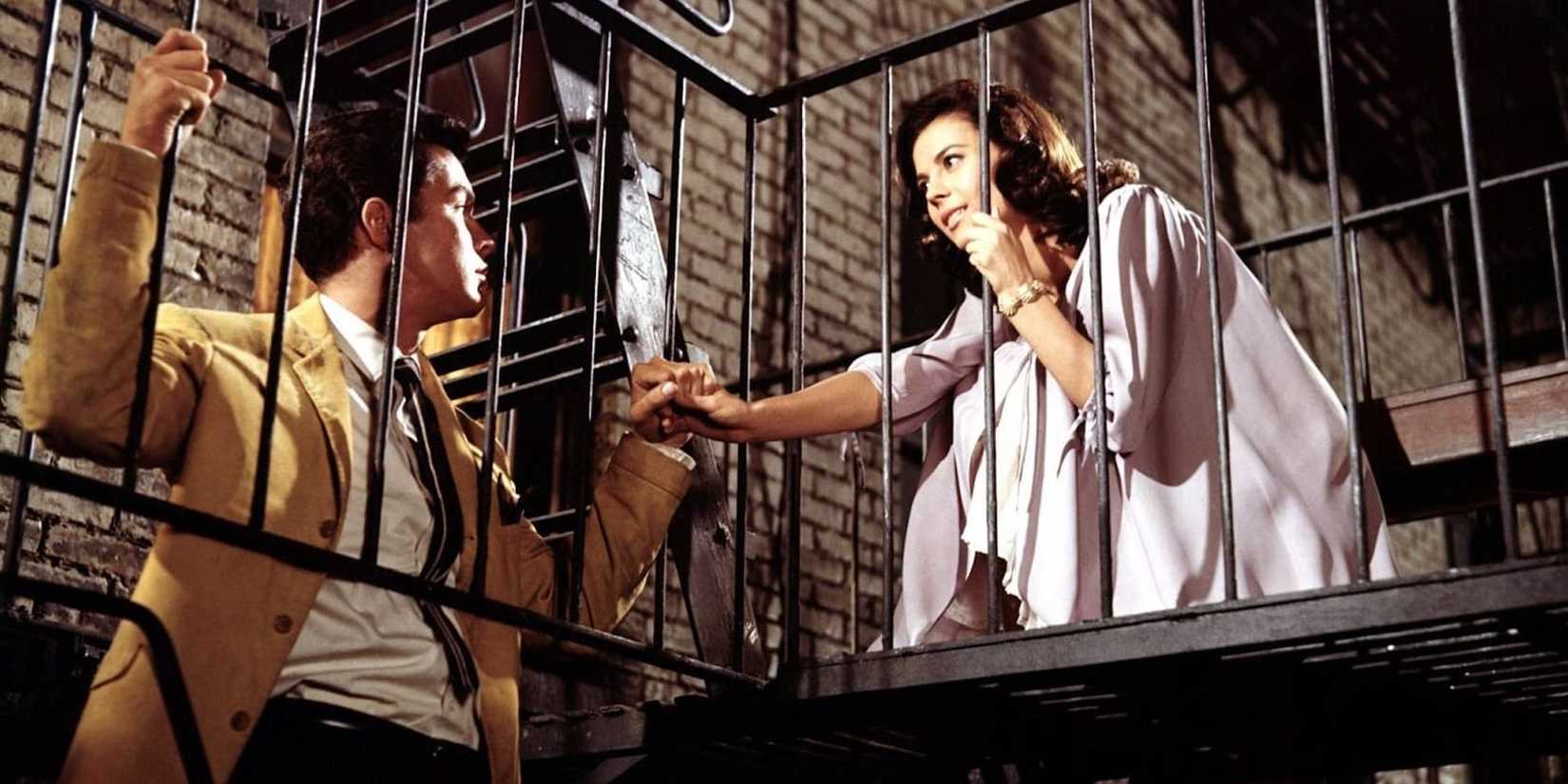
West Side Story might well be the saddest Best Picture winner that’s not based on a true story, or doesn’t have some kind of historical event depicted at its center (like being about a tragic occurrence in history, but with fictional characters taking part). It’s instead a spin on Romeo and Juliet, except set in New York City during the 1950s.
Well, if you want to be technical, that does make it set in the past in a way. And West Side Story is about a gang war that’s supposed to reflect real-world prejudices and conflicts, just not about specific real-world events. Like you’d expect for something that reworks Romeo and Juliet, it’s unbelievably sad, and it’s the sort of thing that doesn’t get any less sad when you’re watching it for, say, the second, third, or fiftieth time.
4
’12 Years a Slave’ (2013)

Based on the memoir of the same name, written by Solomon Northup, 12 Years a Slave is about Northup’s experiences after being kidnapped and sold into slavery between the years of 1841 and 1853. Nothing is sugar-coated and everything is brutal and heavy, all to emphasize the horror of the situation, with the commitment to accuracy throughout much of the film clearly making it all the more harrowing.
It’s one of those Best Picture winners that’s not a nice or cathartic sort of tearjerker. 12 Years a Slave might make you feel more hollow over anything else, but that’s by design, and any sort of different approach likely wouldn’t have had quite the same impact. It’s a movie that’s very much worth watching the one time, and an unsurprisingly difficult one to think about watching again.
3
‘The Deer Hunter’ (1978)
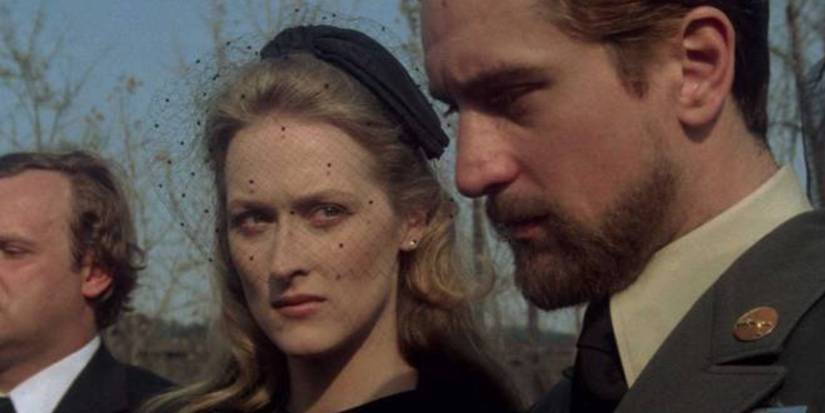
The emphasis on historical accuracy was praised regarding 12 Years a Slave, so some might question the idea of The Deer Hunter also ranking quite high here. It captures the horror of war generally speaking in an impressively devastating manner, especially regarding the psychological impact of it on the soldiers who survive their time in combat, but specifically about the Vietnam War… yes, there are some serious liberties taken.
Maybe that’s okay, to some extent, because The Deer Hunter differs from 12 Years a Slave on account of it being about characters who didn’t literally exist in real life, with the characters here being used to explore possible real-life experiences some U.S. soldiers might have had before, during, and after serving in Vietnam. Also, The Deer Hunter is unapologetically a tragedy in every way, even in the classical sense, so it commits all three hours of its runtime to being about as sad as an American-made Vietnam War movie could possibly be.
2
‘Titanic’ (1997)
See, one of the undeniable things about Titanic is that it’s really not afraid to be a tearjerker. It wants you to care about the central romance, and then it wants you to feel a whole host of emotions when the young people in love – plus so many others – face the inevitable tragedy that is always going to happen in a movie called “Titanic.” It’s not even a spoiler if you know nothing about history, given the opening scenes have the wreck of the Titanic being explored.
With this film, you’ve got an impactful fictional story being told, via the two main characters, and then there’s all the harrowing real-world tragedy of Titanic, and some characters here who are based on actual people. James Cameron found a way to more or less make two emotionally devastating movies in one (and at well over three hours in length, it genuinely doubles the runtime of numerous films out there).
1
‘Schindler’s List’ (1993)
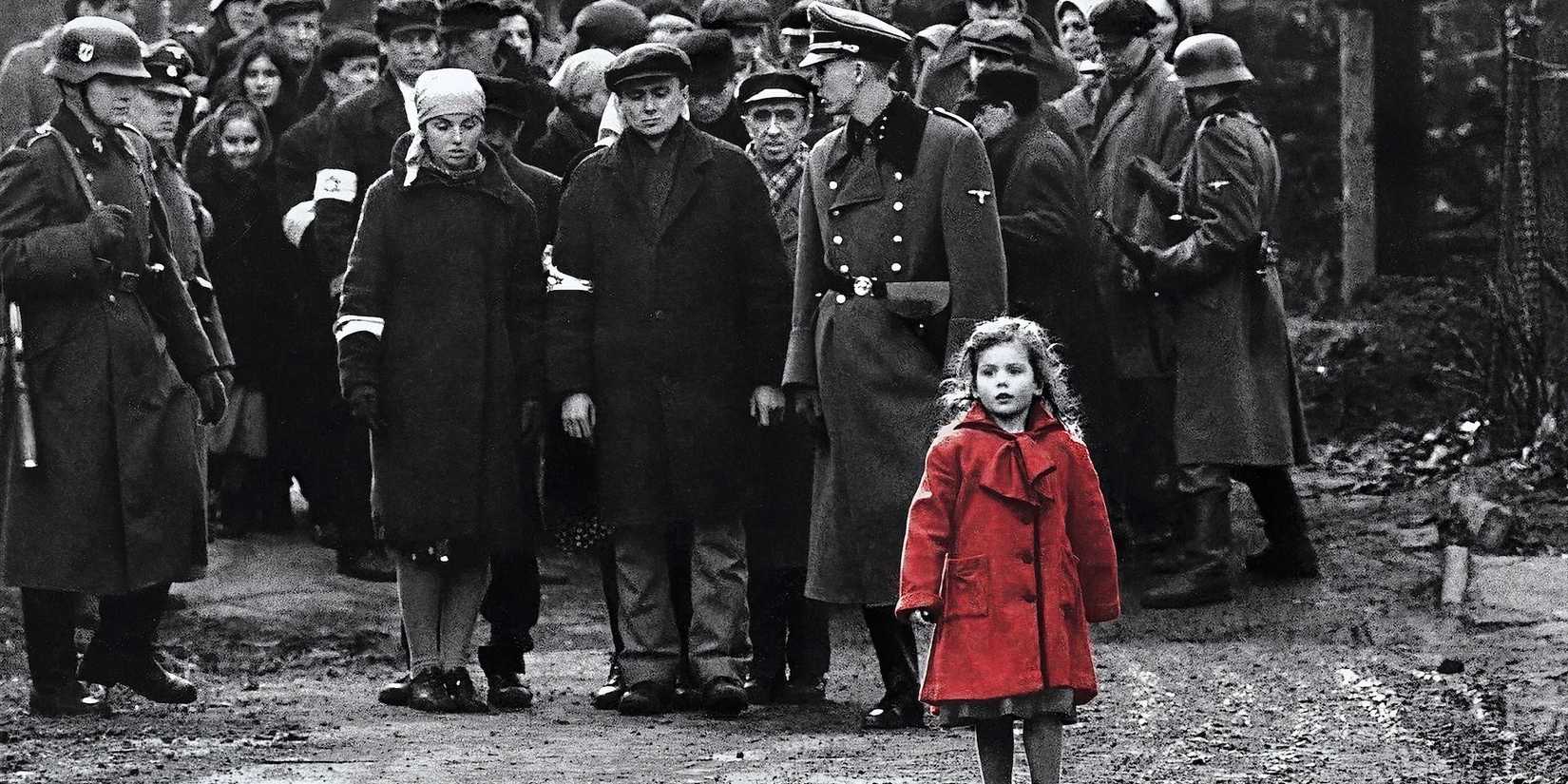
It wouldn’t have been easy to work on Schindler’s List, it’s not easy to watch Schindler’s List, and it’s not easy to talk about Schindler’s List. It has to be that way, though, and it’s comparable in its quality and approach to something like 12 Years a Slave, with both being about horrific times in human history, with Schindler’s List being set during World War II and largely functioning as an exploration of the Holocaust.
In that sense, it’s unflinching, even if it also does attempt to highlight an act of heroism that happened among all the unspeakable horror. If it’s bittersweet, then Schindler’s List is not evenly bitter and sweet, since the horrors inherent to this story are what stick out the most, and what the majority of the film’s runtime is dedicated to… though the contrast, at least by the end, does ensure the movie is sad in a variety of ways. It’s got the time to hit you on more than a few emotional fronts, too, since Schindler’s List is also quite a long film.


Schindler’s List
- Release Date
-
December 15, 1993
- Runtime
-
195 Minutes
- Writers
-
Thomas Keneally, Steven Zaillian