Entertainment
10 Worst Songs by The Beatles, Ranked

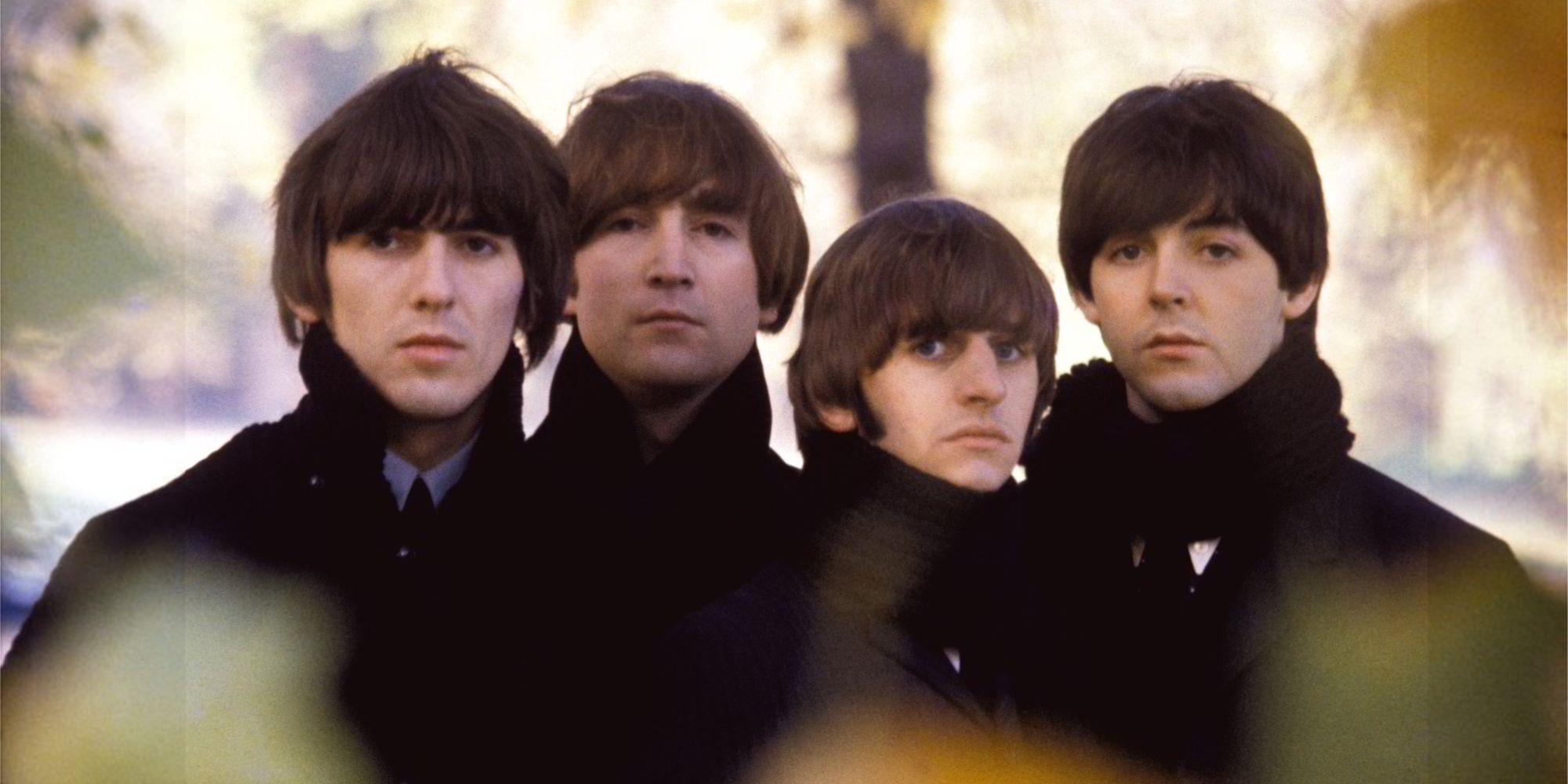

It might sound hyperbolic to throw out the name of a band or artist and call them one of the best of all time, but when it comes to The Beatles, such lofty praise is unlikely to make anyone blink an eye. They are The Beatles, they were made up of Paul McCartney, John Lennon, George Harrison, and Ringo Starr, they were active and releasing albums for a bit under a decade, and most of the albums they released are among the greatest of all time.
You’re always best off tackling those albums (especially the ones from the second half of the band’s career) in whole, but hey, all albums are made up of songs, and songs are the focus of the ranking below. Specifically, these are the relatively rare Beatles songs that aren’t very good. Many of these are throwaway/forgettable ones, and some function more like interludes than full-fledged songs, but if you’re to count every song on any Beatles album as a full song, then these all rank among the very worst put out by a band that was, arguably, the very best.
10
“Savoy Truffle”
From ‘The Beatles’ (1968)
Without a doubt, The Beatles (sometimes called “The White Album”) is one of the most important rock albums of all time. It’s one of the wildest and most varied of all time, in a manner that still feels unparalleled within the realms of non-experimental music, since most of the tracks here are legitimate songs. There are a few points where things do get kind of experimental (see “Revolution 9”), but usually, it’s just out there because there are a whole variety of sub-genres covered from song to song.
Of the 30 songs featured on the self-titled Beatles album, “Savoy Truffle” sure is one of them. It’s a George Harrison-written and sung track, and might well be one of his weakest Beatles-era efforts. The whole song is annoying, and might’ve been tolerable if it had just been an interlude (there are certainly worse songs by The Beatles that only go for a minute, or just under), but it’s three minutes long, almost, and it adds very little to the overall album.
9
“Run for Your Life”
From ‘Rubber Soul’ (1965)
To the credit of “Run for Your Life,” it is a successfully creepy song, but whether it was supposed to be truly horrifying is a bit harder to discern. It’s about a very intense man directing a series of statements toward his partner/girlfriend, saying he’d rather see her dead than with another man and stuff, and that if she did that, she should indeed “run for” her “life.”
Maybe it was supposed to be tongue-in-cheek or darkly funny, but the execution is off. It’s just a sour song that really tanks the album it belongs to, Rubber Soul. There is one other sort of weak song on that album, so more on that in a bit, but “Run for Your Life” stands out for being the closing track; one that, because of its placement, ensures the otherwise strong album cannot actually end on a high.
8
“Your Mother Should Know”
From ‘Magical Mystery Tour’ (1967)
There are some great songs featured on Magical Mystery Tour (especially the LP version, rather than the EP one), but “Your Mother Should Know” is not one of them. It’s a lesser Paul McCartney song that puts on, in full display, his traits that tend to receive the most criticism/scorn. It’s a plinky-plonky, corny, and grating track, and this is coming from someone who honestly doesn’t mind “Ob-La-Di, Ob-La-Da.”
There isn’t anything of substance in “Your Mother Should Know,” and it doesn’t even have the decency to offer listeners something earwormy or catchy in nature. It’s just tedious and not memorable. What else can be said about it? Your mother shouldn’t know this one, and nor should you. No one should know about – or remember – “Your Mother Should Know.” It doesn’t deserve it.
7
“What Goes On”
From ‘Rubber Soul’ (1965)
This whole ranking is going to be quite kind to Ringo Starr, because while he gets quite a bit of criticism for being the least essential Beatle (it’s not a fair criticism, but you do tend to see it), there are only two songs sung by Starr featured in this ranking. Side-note, but it feels weird to call him “Starr.” It’s much more fun to call him “Ringo.” It’s a bit like awkwardly calling Kanye West “West” when “Kanye” feels so much more appropriate.
Uh, wait, where were we? Oh yeah, Ringo singing. He sings “What Goes On.” It’s not as creepy a song as “Run for Your Life,” nor does it derail Rubber Soul at as pivotal a point as that song does, but it is the most boring and tacky Rubber Soul track. The vibes are bad on “Run for Your Life,” but at least there’s some kind of misguided passion there, and an attempt at making things feel memorable. “What Goes On” is pure filler, and it feels out of step with what’s an otherwise very high-quality Beatles album.
6
“Little Child”
From ‘With the Beatles’ (1963)
Hmm. “Little Child” is another slightly creepy song, just not in as violent or menacing a way as “Run for Your Life.” It was featured on the second album The Beatles ever released, With the Beatles, but even then, it still feels lackluster by the standards of their early stuff. It’s got very little going for it, and it’s also very short (that’s a contributing factor to the feeling of nothingness), clocking in at under two minutes.
Maybe that’s kind of merciful. But it is also disappointing. There are just a few lines repeated a bunch of times, but not in a fun Blondie doing “Atomic” kind of way. Those lines are a bit off, what with the “little child” thing and all, and musically, “Little Child” also does almost nothing of note. It is, to put it mildly, entirely inessential.
5
“Honey Don’t”
From ‘Beatles for Sale’ (1964)
Another Ringo track, on a vocal front, “Honey Don’t” has nothing going for it. It appears on Beatles for Sale, which is an album that’s easy to get mixed up with With the Beatles, since both albums came out fairly early within the band’s discography, and neither album’s very good. Well, some songs on those albums work. They’re not irredeemable; it’s more just that neither is on the same level as Please Please Me, A Hard Day’s Night, or Help.
Since “Honey Don’t” is a cover, maybe you could give it a bit of a pass, not being a full-fledged Beatles song and all… but it was still recorded by them, appeared on an album with their name on it, and ultimately underwhelmed as a song, too. “Honey, skip that track,” you might tell a loved one, if you were sitting down with them listening to Beatles for Sale and track #10 came on. This joke will be repeated in a few entries when talking about another bad Beatles song with the word “Honey” in it. Deal with it.
4
“Maggie Mae”
From ‘Let It Be’ (1970)
This one’s a cover, and a very short one at that, but still, “Maggie Mae” is a tremendously worthless inclusion on Let It Be, which is the only Beatles album that came out in the 1970s (also the second-last one recorded, and ultimately the final one ever released). It goes for 40 seconds, so it might well take you longer to read these 160-ish words about the song than it would take you to hear the whole thing.
You should absolutely avoid hearing the whole thing, though. “Maggie Mae” is terrible. It doesn’t matter if it’s supposed to be a joke, or an interlude, or whatever. It’s an annoying public-domain folk song re-recorded and inserted onto Let It Be for absolutely no reason. It’s this song and one other very useless interlude track that ultimately make Let It Be the weakest of all the albums by The Beatles that came out during the second half of their career, as a group.
3
“Why Don’t We Do It in the Road?”
From ‘The Beatles’ (1968)
Back to the self-titled album from 1968, “Why Don’t We Do It in the Road?” is a throwaway song that’s at least two times longer than it should be, and it’s still short in the end, being a few seconds shy of two minutes all up. It doesn’t stop said self-titled album from being a classic, necessarily, as the quantity of music there means a few dud tracks are forgivable, but still… you might well be tempted to skip this one whenever you return to The Beatles (1968).
It’s a Paul McCartney song, and it’s supposed to be funny, probably, but it’s not very funny, and it also doesn’t sound very good. If you want to read into the inspiration behind this uncomfortably sexual song, knock yourself out, but also, maybe, the less you know, the better. And the more tempted you are to listen to the whole album while skipping “Why Don’t We Do It in the Road?” the better, too.
2
“Wild Honey Pie”
From ‘The Beatles’ (1968)
To keep the hate against The Beatles (1968) and the lesser songs found on it going for a bit, here’s “Wild Honey Pie.” More like, “Wild. Honey, why?” That’s what you’d ask a member of The Beatles at the time, were you in an intimate or romantic relationship with them. Just, “why?” Why put this song on the album?
“No, no. I hear you. Your self-titled album is supposed to be crazy and wild and a bit inconsistent. You’re experimenting. I get that,” you’d say. Then you’d ask again: “But why this crazy? Can you not just leave it off? It’s 53 seconds long and it’s terrible.” But your words would fall on deaf ears, and in November 1968, come the release of The Beatles, the world would experience the horror of “Wild Honey Pie.” At least you tried to stop the horror from spreading to so great an extent.
1
“Dig It”
From ‘Let It Be’ (1970)
Just as confounding as “Maggie Mae,” on Let It Be, is the similarly short and useless “Dig It.” The former comes after the title track, on the album, and the latter is placed before the title track. And the title track is great, obviously, and also undeniably moving, but if you listen to Let It Be from start to finish, you find that deeply felt title track sandwiched between two all-time terrible interludes.
At the risk of sounding conspiratorial, it’s like someone wanted to sabotage “Let It Be,” the song. Maybe John Lennon did. Maybe he, or someone else, wanted to diminish the power of “Let It Be,” which is an all-out Paul McCartney song (written and sung by him). That’s the only possible way to explain why these two terrible mini-songs are featured on Let It Be, and why they’re placed on either side of the title track. If not, then why else would anyone think the inclusion of either was a good thing for the overall album? It’s truly baffling stuff.
You must be logged in to post a comment Login