Entertainment
20 Greatest TV Drama Show Masterpieces of All Time, Ranked

When it comes to a good television drama, it must be gripping. They need an engaging hook. Whether hero, villain, or antihero, the characters must be worth following. Throughout the history of television, we’ve seen series that not only contain those traits, but also so much more. They’re so extraordinary, we can call them masterpieces.
Though there are certainly many more titles that could make this list, the 20 masterpieces below are not only impactful but also iconic. They’ve moved us through an array of emotions. We’ve been shocked through twists and turns. They’ve left us with cliffhangers that have us anxious until the next season. These 20 drama titles are timeless and universally acclaimed. It’s time to celebrate these masterpieces that got us feeling a lot of feels.
20
‘Six Feet Under’ (2001-2005)

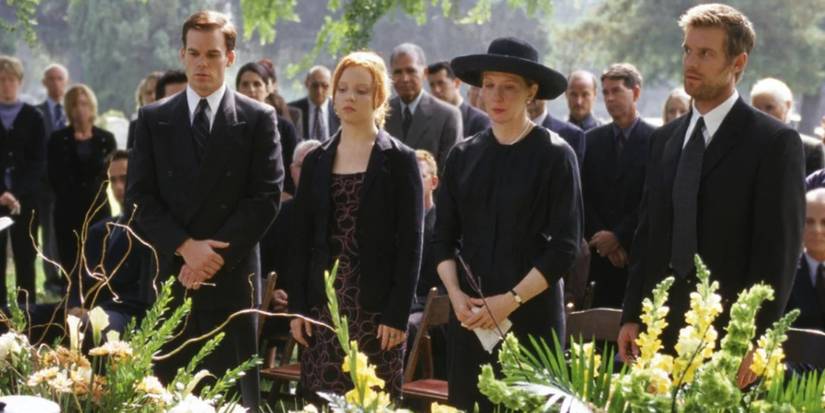
Though the initial premise may sound morbid, the result was something extraordinary. Everyone loves a family drama, but there was truly nothing quite like Six Feet Under. Following the death of the Fisher family patriarch, Nate (Peter Krause) and his brother David (Michael C. Hall) inherit ownership of Fisher & Sons Funeral Home. Alongside their widowed mother, Ruth (Frances Conroy), and sister, Claire (Lauren Ambrose), Six Feet Under went beyond a conventional family drama. The Alan Ball-created series tackled themes of mortality, grief, sexuality, and finding the beauty and meaning in life’s fleeting moments. And sometimes it’s told through surreal conversations with the deceased to find resolution.
Bookended by a perfect pilot and a perfect finale, the journey with the Fisher family was filled with both viewers and characters accepting the inevitable. Each character had their own personal crises while maintaining a blood is thicker than water mentality. Though conflict was very much the name of the family business. An episodic series where each story begins with a new death, the overarching character development was furthered by each thematic episode. Six Feet Under smartly balanced profound tragedy with dark humor. With five perfect seasons, the legacy of Six Feet Under remains.
19
‘Law & Order’ (1990-2010; 2022-Present)

Dun-dun. Very few television dramas are instantly recognizable by the sound effect that precedes the title screen. Then comes Law & Order, the iconic, long-running police procedural from Dick Wolf. The show is simple: Law & Order revolutionized the two-part storytelling structure for procedurals where the first thirty minutes involved the detectives investigating a homocide while the last thirty minutes focuses on the District Attorney’s office prosecuting the case. Rarely ever straying away from its mission, Law & Order tells you exactly what you’re going to get in its introductory voice-over. From original stories to ripped-from-the-headlines-inspired narratives, there has never been a shortage of narratives to bring to life.
Avoiding major arcs involving the police and lawyers’ personal lives, the characters became legendary for their exceptional work and their dynamic with others in the field. Focusing on partnership and process made the ensemble its strongest asset. The series has had a wave of stars coming and going throughout its storied run, including Jerry Orbach, S. Epatha Merkerson, Sam Waterston, Jesse L. Martin, and Dennis Farina, among others. And there are very few stage actors in New York City who haven’t popped up on an episode once in their careers. Having spawned an array of spin-offs and crossovers, Law & Order‘s legacy is profound. It’s because of the flagship series that spin-offs like Law & Order: Special Victims Unit have had such an illustrious run. The pinnacle of procedural dramas, Law & Order is rightly addictive.
18
‘Justified’ (2010-2015)

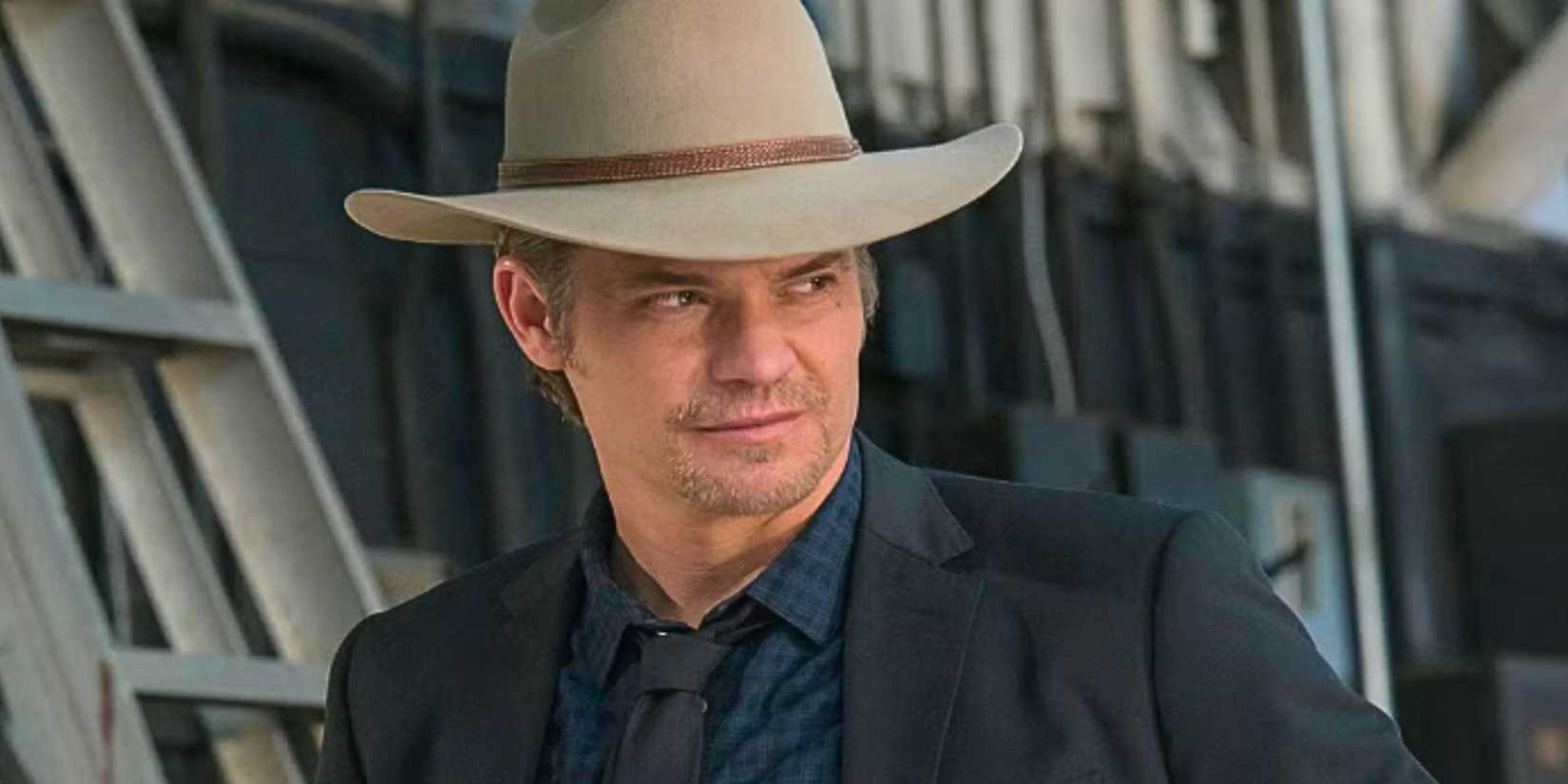
Who was cooler than Raylan Givens? Absolutely no one. Lifted from the stories and characters by Elmore Leonard, Justified became the blueprint for modern neo-Western crime series. Developed by Graham Yost, the series follows Timothy Olyphant as Deputy U.S. Marshall Raylan Givens, who, after an incident in Miami, is forced back to his backwoods roots in Kentucky’s Harlan County as he enforces his signature style of justice. Known for his unconventional, fast-draw, and sometimes fatal methods, Raylan’s suave demeanor often helps him come out on top. With a distinct Appalachian atmosphere that immerses audiences in Harlan County, Justified is a whip-smart masterpiece that modernizes classic gunslinger tropes while forging its own path.
A gritty, rural crime masterpiece, Justified was all about its characters. The series focuses primarily on Raylan and his method of enforcing the law, but he’s shaped by a strong ensemble around him. Raylan is easily Olyphant’s greatest role, evident in his dynamic with his longtime rival, Boyd Crowder, played by the equally outstanding Walton Goggins. One of the best bad-guy-versus-good-guy duos in modern television, their ongoing cat-and-mouse game, which coincides with each season’s overarching narrative, keeps the series engaging. Whether wide-spanning drug rings or familiar battles for power, the stories that Justifed told were uniquely its own. Though a revival series, Justified: City Primeval, brought Olyphant’s Raylan back for an adventure in Detroit, nothing will match the original run.
17
‘Severance’ (2022-Present)
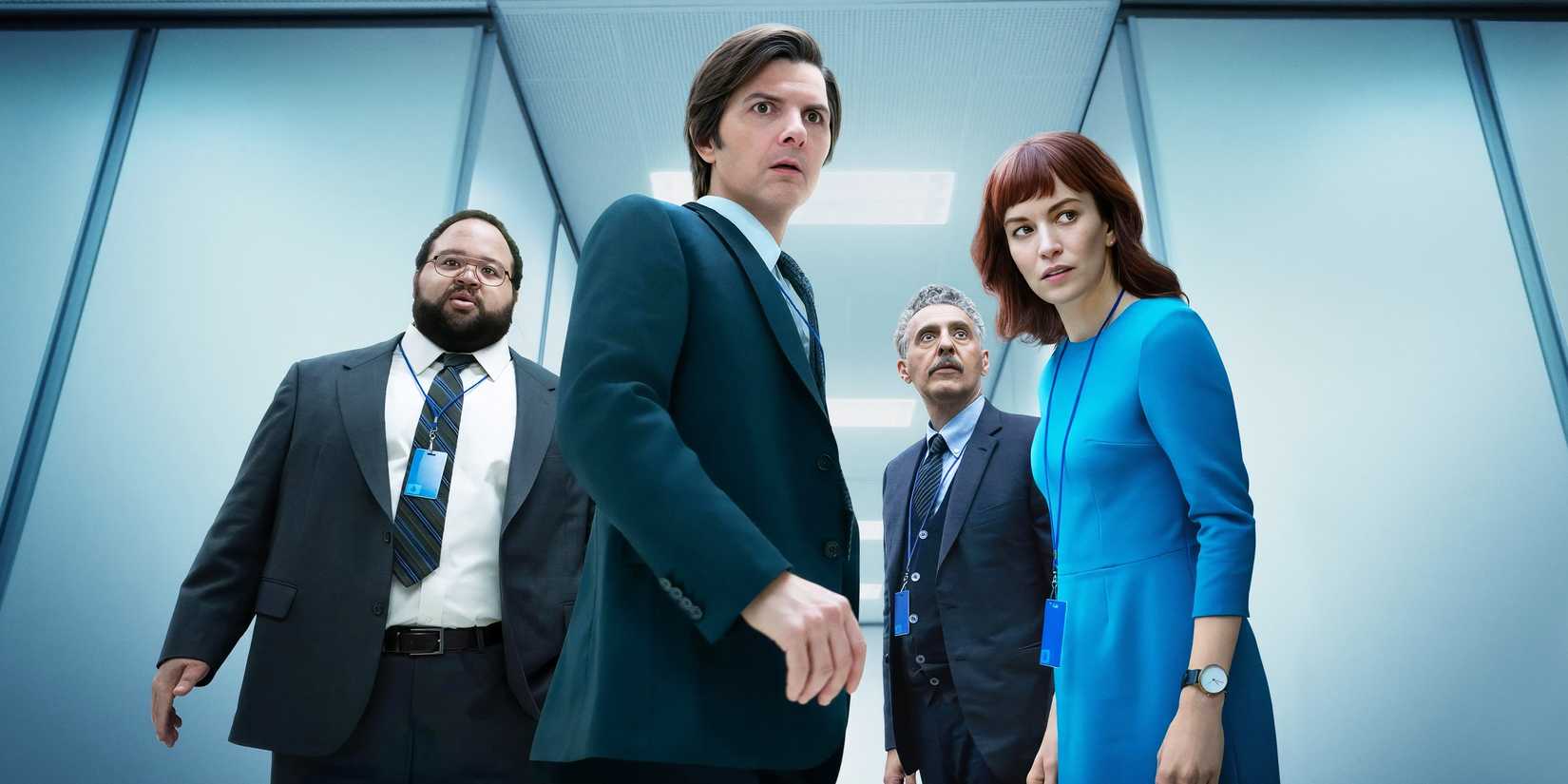
Trying to stand out amongst the pack on modern television can often be difficult. Whether being compared to another series or not having an engaging enough premise, if you’re not offering something novel, chances are you’ll be stuck with the pack. But then you have a show like Severance, and its brilliance and ambition make it one of the most original series of the 2020s. Created by Dan Erickson and directed by Ben Stiller, the series follows the employees at Lumon Industries, a biotechnology corporation, who have undergone “severance,” a surgical procedure that splits a person’s memories between work and their personal lives. As the “innies” begin to uncover the sinister plot surrounding their jobs, it leads to a journey of identity, rebellion, and self-discovery. A fascinating mix of psychological mystery with surrealistic satire, Severance immediately became television’s greatest obsession.
Through two seasons thus far, Severance is the gift that keeps on giving. Severance is a masterful fusion of dystopian science fiction, workplace satire, and psychological thriller that forces the audience to think while they watch. Certainly not background fodder, Severance is an enthralling wonderland that continues to leave viewers begging for answers. Thanks to an impenetrable cast led by Adam Scott, Britt Lower, Zach Cherry, John Turturro, Tramell Tillman, and Patricia Arquette, Severance thrives with its immaculate storytelling. Severance also features a fully fleshed-out visual universe. Against a sterile, retrofuturistic backdrop, Severance captures how the mundane can be truly menacing. As the series marches on, it’s likely it will climb closer to the top spot of this list.
16
‘Hill Street Blues’ (1981-1987)
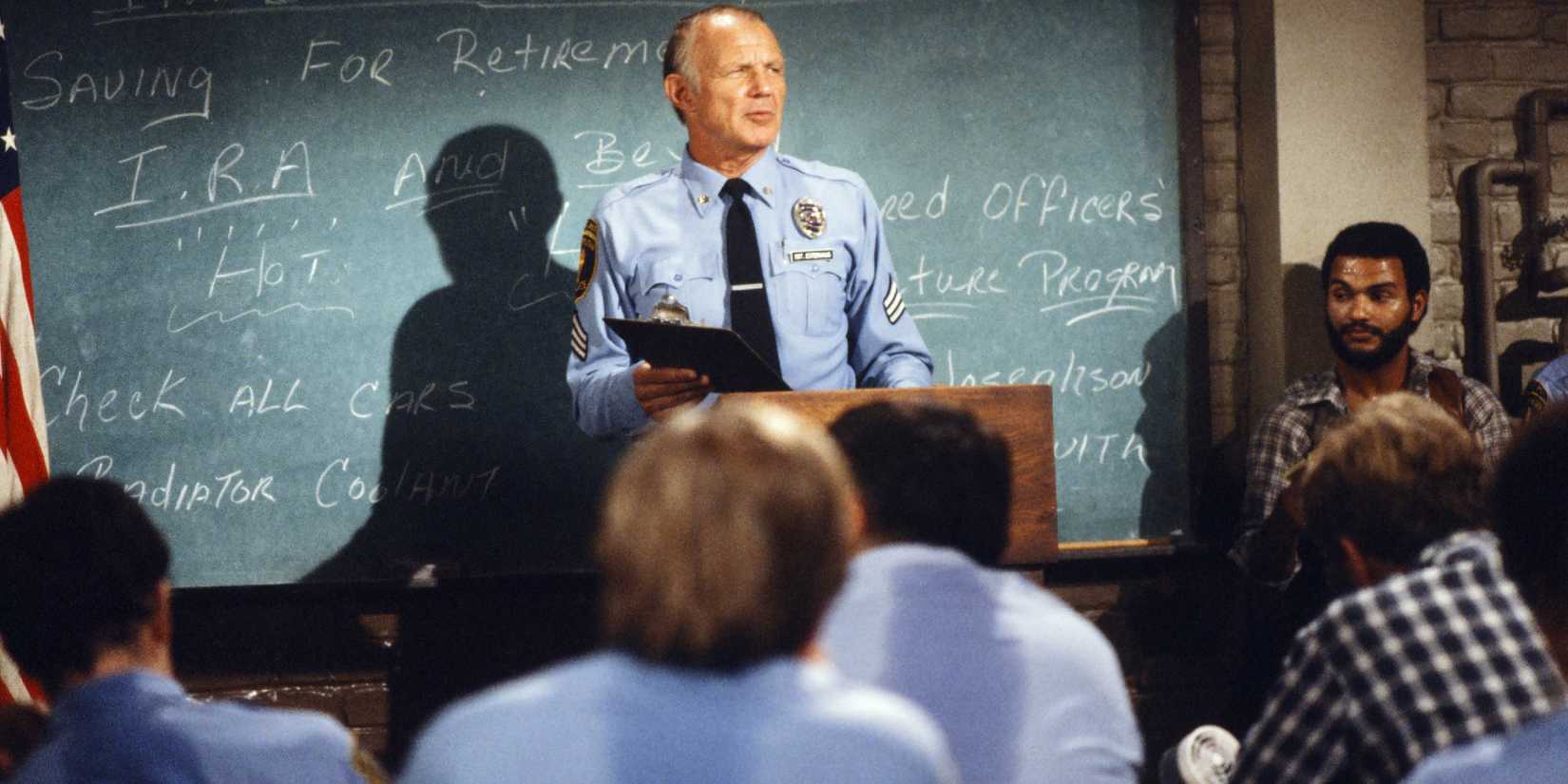
For many, Hill Street Blues may have been lost to time, but the truth is, without the NBC series, it’s likely the serial police procedurals that followed could never have been. Through seven seasons, Hill Street Blues followed the lives of the Metropolitan Police Department staff of a police station located on Hill Street. As they struggle with their personal and professional lives, the officers must manage a chaotic, crime-ridden inner-city precinct. Avoiding 80s clichés, Hill Street Blues struck a balance between dark drama and humor for levity, without the concise, clear, or happy resolutions typical of the era. A pioneer in the case-of-the-week format combined with long-term, serialized storylines, Hill Street Blues became must-watch television.
With the series featuring an almost documentary-style filming approach, Hill Street Blues immersed viewers in its world. Through a raw and authentic depiction, Hill Street Blues unabashedly showcased police work through truth, moral ambiguity, and corruption. By setting the series in a nondescript U.S. city, the series’ universality made it resonate because this city could be your city. Through the ensemble approach, Hill Street Blues ensured that, for better or worse, they showcased the community within the precinct. They united as an underpaid yet overworked team, battling bureaucracy. In the world of police dramas, Hill Street Blues sincerely set the tone for the genre forever.
15
‘The Newsroom’ (2012-2014)

Many shows attempt to be topical, but what The Newsroom did extraordinarily well was take the headlines of the moment and use them as a motivation for the action. Created by Aaron Sorkin, the three-season series pulls back the curtain on the fictional Atlantis Cable News channel where news anchor Will McAvoy (Jeff Daniels) and his staff attempt to produce an idealistic, high-integrity news show in the face of corporate, commercial, and personal obstacles. With a focus on news that matters through analysis of real-world events, the Newsroom was one of the most accessible, intelligent dramas that could have easily run for years.
Sorkin used his proficiency with the pen to craft a wonderfully nuanced character set in a fictionalized version of real events. Like many of his previous series, namely Sports Night, he can pull back the curtain on what a newsroom looks and feels like and remind audiences what it’s like to focus on ethical journalism over clickbait. Maybe it’s a fantasy he dreamed up, but his universe was so welcoming that it gave hope that this is how journalism actually is. That said, the idealized ACN newsroom comprised a cohesive ensemble, including Emily Mortimer, John Gallagher Jr., Alison Pill, Thomas Sadoski, Dev Patel, Olivia Munn, and Sam Waterston. Truly a series that was cut too soon, The Newsroom was a conversation series that was very much necessary.
14
‘Fargo’ (2014-2024)

There have been quite a few movies that have attempted to turn their product into a TV series. While many aspired to be the next M*A*S*H*, very few succeeded. Then, decades later, the Joel and Ethan Coen masterpiece, Fargo, was transformed into an anthology series, and magic was made. Consisting of five self-contained seasons that share the same continuity as the film, Fargo depicts slightly interconnected “true crime” stories, centering on ordinary people drawn into murderous, chaotic situations involving Midwest niceties, mundane small-town life, and overtly inept criminals. With a twisted dark humor seeping into a tense crime drama that unfold. Created by Noah Hawley, Fargo uses the film’s success as a jumping-off point to become its own masterful project.
Make no mistake, the FX series is intentionally violent. It helps heighten the action as the crime collides with these seemingly innocent denizens of the quaint towns. Whether singular criminals or wide-spanning mafia syndicates, Hawley’s ability to tie the universe together through intricately small details and overarching themes became the draw for viewers to return season after season. As an anthology series, each season’s story lives on its own with a brand-new cast for each. Fargo’s ability to draw in sensational stars to play in Hawley’s sandbox elevated the already appealing series. The legendary list included Martin Freeman, Billy Bob Thornton, Kirsten Dunst, Jesse Plemons, Carrie Coon, Ewan McGregor, Chris Rock, Jessie Buckley, Juno Temple, and Lamorne Morris, among others. Through cinematic quality production and sensational writing, Fargo is television excellence.
13
‘The X-Files’ (1993-2002; 2016-2018)

No show shaped modern science fiction television quite like The X-Files. Created by Chris Carter, the series followed FBI agents Fox Mulder (David Duchovny) and Dana Scully (Gillian Anderson) as they investigated marginalized, unsolved cases. Focusing on solving what really is the truth out there, The X-Files entertained through its monster-of-the-week format while tapping into our deepest fears through the supernatural, paranormal, and conspiracy theories. Through its dark tone that effortlessly united sci-fi, horror, and thriller, The X-Files filled a massive void and a desire for something haunting.
With a cinematic approach that takes no shortcuts, The X-Files explored the bigger picture through engaging, shorter narratives. Between the mistrust of the government and the battle between science and faith, The X-Files’ ability to layer it all in under the guise of a sci-fi thriller made it bigger than it is. The X-Files was appointment television because of the brilliant chemistry between Anderson and Duchovny. In a time when dynamic duos in mystery and crime shows were all the rage, Mulder and Scully stood atop the heap. What made their partnership crucial was the flipped role reversal and a strong female co-lead. A masterpiece that continues to resonate, The X-Files remains a piece of its time. With high anxiety in a post-Cold War, pre-Internet world, The X-Files tapped into the zeitgeist with ease.
12
‘The Pitt’ (2025-Present)

You might be shocked to see a show that’s barely a year old to make this list, but if you’ve watched The Pitt, you’ll completely understand. Let’s face it, The Pitt is a modern masterpiece and the best series on television right now. You might be shocked to see a show that’s barely a year old to make this list, but if you’ve watched The Pitt, you’ll completely understand. Created by R. Scott Gemmill, the high-octane medical drama chronicles the day in the life of the doctors, nurses, and staff at Pittsburgh Trauma Medical Center’s emergency room. Having to navigate staff shortages and underfunding during an intense 15-hour shift, The Pitt is a gritty, realistic portrayal that highlights healthcare burnout, addiction, and systemic issues. With each episode reflecting a single hour in the shift, The Pitt becomes a wholly immersive experience that medical dramas have never done before.
The Pitt can essentially be called a scripted documentary for how faithfully it depicts the action. When medical professionals deem the story to be authentic, you know you’re doing something extraordinary. The real-time format heightens the stakes tremendously. The characters are literally racing against the clock as obstacles are suddenly tossed in their path. And yet, there’s no shortage of character development through these intimate moments in the emergency room. Noah Wyle is in a career-best role as Dr. Michael “Robby” Robinavitch. He plays the traumatized yet deeply empathetic physician navigating personal and professional crises while simultaneously serving as a selfless mentor. Though Wyle’s Dr. Robby is the de facto leader in the ER, for the show itself, it’s an ensemble effort. Every single primary character is brilliantly built, flaws and all. Two seasons in, and the format keeps the show fresh. With that, the show can continue, introducing new faces as old ones depart. As long as it sticks to a shift per season, The Pitt could outlast ER and Grey’s Anatomy.
11
‘Deadwood’ (2004-2006)

Before the Taylor Sheridan Western boom arrived, the 21st century kicked off with the greatest serialized Western drama, Deadwood. The David Milch hit series was a historical fiction that took viewers through the daily lives of the denizens of the Dakota Territory town, Deadwood. Using real-life individuals and events as the launching pad, depicting the trials and tribulations of a South Dakota gold mining camp as it transitioned into a civilized town. Starting with the power struggle between ruthless saloon owner Al Swearengen (Ian McShane) and honest former marshal Seth Bullock (Timothy Olyphant), as they navigate greed and murder and discover what defines a community. Rough and gritty with cursing galore, Deadwood didn’t idealize the West; rather, it showcased the hardships with fervent integrity.
Deadwood showcased sensational world-building of a lawless world. Deadwood’s visceral portrayal of the frontier isn’t meant to be perfect. The grit and dirt of the town contrast with the pristine, clean denizens of Deadwood, showcasing the disparity in power, class, and money. Without its authentic integrity, Deadwood would have lost its allure. The series’ writing became one of its great attributes. Written like a Shakespearean Western. Built into the Westernisms is seamless profanity, but not for shock value. It’s there for authenticity. Rather than sticking to the traditional drama formula, Deadwood remained philosophically character-driven. Beyond Olyphant and McShane, Deadwood featured one of the best ensembles of the decade, which included Molly Parker, John Hawkes, Robin Weigert, Jim Beaver, Dayton Callie, and more. Even with only 36 episodes, Deadwood was a masterpiece. Though a movie was made 13 years later to help tie up an exceptional series, it also served as a thank-you to the fans.
You must be logged in to post a comment Login