Entertainment
6 Most Universally Beloved K-Dramas of All Time, Ranked

Some K-dramas are popular, while others are truly beloved. They are shows that go beyond demographics, language barriers, and even the passage of time, becoming cultural icons on their own merit. These are the dramas you recommend to a skeptical friend, only to have them return a week later, with dark circles under their eyes and emotionally devastated, but hooked on the K-drama world.
The following six series did more than just set ratings records or launch international careers; they captured the global imagination. Whether it’s the campy, glorious chaos of a high school romance or the subtle, mundane beauty of neighbors sharing side dishes in 1980s Seoul, each of these shows represents a different dimension of K-drama magic. These are the six most universally beloved K-dramas of all time.
6
‘Boys Over Flowers’ (2009)

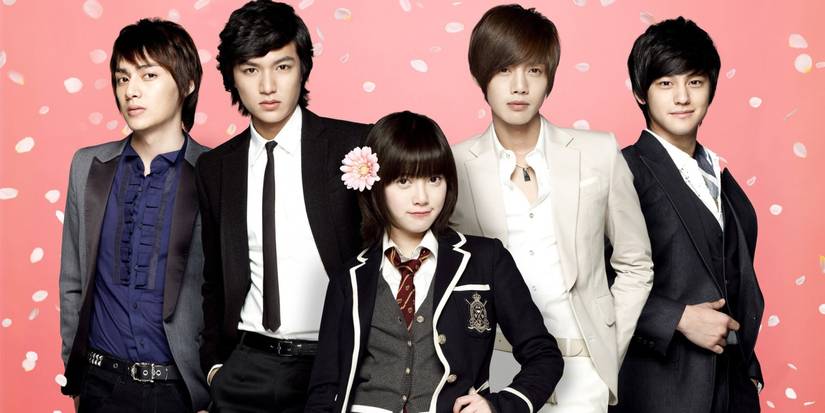
Boys Over Flowers is the original K-drama gateway, introducing a generation of international viewers to Korean television. It peaked at a staggering 35.5% viewership in Korea nationwide and became a pan-Asian phenomenon, airing in over 180 countries and catapulting Lee Min-ho to superstardom. The drama inspired multiple international remakes, an original soundtrack that still evokes nostalgia, and a fashion legacy that elevated even everyday looks and fashion across the world, inspiring a so-called flowerboy appearance. Critics may wince, but Boys Over Flowers is untouchable, serving as a cultural artifact and a rite of passage for any K-drama fan.
Boys Over Flowers follows Geum Jan-di (Koo Hye-sun), a working-class girl who saves a bullied student from the prestigious Shinhwa High School and receives a swimming scholarship there, before realizing it’s merely a viper’s nest of privilege and cruelty. There she meets the F4, four obscenely wealthy heirs who rule the school, led by the explosive Gu Jun-pyo (Lee); Jun-pyo torments Jan-di, but she defies him, and he falls hopelessly in love. What follows is a glorious, untamed melodrama featuring amnesia, kidnappings, arranged marriages, and enough longing stares to power a small city. The fashion is, by today’s terms, questionable; the hairstyles and accessories are infamous; and the plot is like a telenovela on fast-forward, but it’s all irresistible.
5
‘Moon Lovers: Scarlet Heart Ryeo’ (2016)
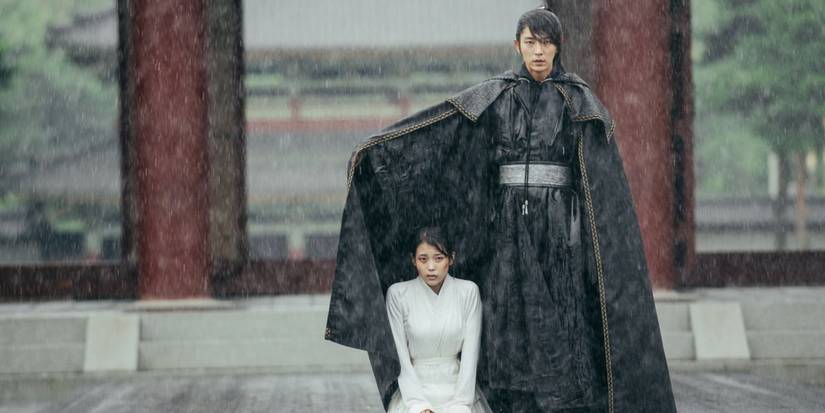
Moon Lovers: Scarlet Heart Ryeo is an intriguing case study of international versus domestic love. While its Korean ratings were modest, the drama became a staggering international sensation, garnering over two billion views on China’s Youku platform and igniting a fervent global fandom that still seems very active. IU and Lee Joon-gi gave career-defining performances, with Lee’s portrayal of the tortured outcast, Prince Wang So, inspiring numerous fanfictions and art. The show’s original soundtrack was a chart-topping success in its own right, too, while tourism in filming locations increased. It’s a legendary series at this point, and it launched most, if not all, of its main cast into stardom, including Kang Ha-neul and Nam Joo-hyuk, who were arguably already very popular in South Korea.
Moon Lovers follows Go Ha-jin (IU), a modern-day woman dealing with a broken heart, when she nearly drowns during a solar eclipse and ends up in the body of Hae Soo, a Goryeo-era noblewoman. She awakens in a palace teeming with beautiful, dangerous princes (eight in total) and is immediately drawn into a dynastic power struggle. Hae Soo is torn between the gentle warmth of the 8th Prince, Wang Wook (Kang), and the wounded, outcast intensity of the 4th Prince, Wang So (Lee). The romance that comes from her chemistry with Wang So is passionate but merciless, with the K-drama ending with a finale so devastating that it prompted fan petitions for a rewrite/sequel. It’s the K-drama equivalent of a cult classic that transcended its “cult” status, showing that some love stories are universal and forever.
4
‘Descendants of the Sun’ (2016)


Descendants of the Sun has a special cultural impact; it aired simultaneously in China and South Korea, reaching a staggering 38.8% viewership in Korea nationwide and over 2.6 billion views in China. It was the most profitable show of the time, accruing revenue from viewership, sponsorships, advertising, and reruns, and it won the Grand Prize at the Baeksang Arts Awards, catapulting Song Joong-ki and Song Hye-kyo to superstardom. Their subsequent real-life marriage and divorce only added to the show’s mythology. Fashion and beauty brands associated with the show, in particular Song Hye-kyo’s looks, saw a rise in sales, while Song Joong-ki was declared “Nation’s Husband” in China. Production-wise, this was the first highly popular K-drama that was entirely pre-recorded before airing—many of the most popular shows at the time were filmed while airing.
Descendants of the Sun follows Captain Yoo Si-jin, the leader of a South Korean special forces unit, and trauma surgeon Dr. Kang Mo-yeon, who meet in a hospital emergency room and instantly hit it off. What begins as a flirtatious push-and-pull in Seoul escalates when both are deployed to the fictional war-torn nation of Uruk. The romance that develops between them is a masterclass in old-fashioned, big-sweep melodrama, heightened by the constant threat of danger and death, making every stolen moment feel important. Descendants of the Sun is, above all, a love story about two people whose principles and careers keep getting in the way of their happiness, making it a standout in the romantic drama genre. It may not be the most complex K-drama ever produced, but its sheer euphoric reach throughout Asia and beyond solidifies its place on this list.
3
‘Goblin’ (2016–2017)

Image via Hwa&Dam Pictures
Goblin is undoubtedly one of the gems that redefined what a Korean drama could be. The series finale received a near-impossible 20.5% viewership on cable, setting a new record that lasted for years. This is another drama with an iconic original soundtrack that became a phenomenon in its own right, topping charts across Asia and earning platinum status. Gong Yoo and Kim Go-eun‘s chemistry wowed international audiences, while Lee Dong-wook‘s grim reaper became so iconic that the actor’s career skyrocketed. The show received the Grand Prize at the Baeksang Arts Awards and dominated the year-end ceremonies, winning 26 awards in total.
Goblin follows Kim Shin (Gong), a 939-year-old man cursed with immortality and an invisible sword lodged in his chest, which can only be pulled out by a human bride who sees it, eventually granting him death. His bride appears in the form of Ji Eun-tak (Kim), a naturally upbeat senior high school student who can see the dead and claims to be the one he has been waiting for. A grim reaper with amnesia (Lee) shares Kim Shin’s large home with him, and he quickly falls for a sunny chicken shop owner with her own secrets. This dense, fantastical premise should collapse under its own weight, but instead it becomes a meditation on mortality, memory, and the unbearable pain of loving someone you are doomed to lose. It is, quite simply, the fantasy romance K-drama against which all others are now measured, and its emotional devastation is the type that audiences actively seek to experience over and over.
2
‘Crash Landing on You’ (2019–2020)

The almost immediate global response to Crash Landing on You was unprecedented; it spent 22 weeks on Netflix’s global top ten list, becoming the platform’s third most-watched non-English series at the time. It broke viewership records in Korea and Japan and sparked countless parodies, fashion guides, and even real-life travel inquiries about the Swiss village where the bittersweet finale takes place. The romance between Hyun Bin and Son Ye-jin felt so genuine and electric that, when the two actors married in real-life, fans celebrated it as a collective win. Crash Landing on You received numerous Baeksang nominations and a Seoul International Drama Award, but its true legacy is simpler: it was the drama that consoled a divided world, reminding millions that love can cross any border, even if only in their imaginations.
Crash Landing on You follows Yoon Se-ri (Son), a South Korean chaebol heiress and fashion mogul who tests a paragliding suit one day and is caught in a freak tornado; she wakes up tangled in a tree in the North Korean demilitarized zone. Captain Ri Jeong-hyeok (Hyun), an elite North Korean officer, discovers Se-ri and decides, against all logic, to hide her in his village near the border and help smuggle her back home. What follows is a love story so epic and seemingly impossible that it serves as a metaphor for every political, emotional, and familial barrier that separates two people. The North Korean village setting, complete with squads of goofy soldiers and gossipy ladies, brought warmth to the series and humanized one of the world’s most isolated countries. The show is also frequently credited with sparking a new Korean Wave, and we could argue that Crash Landing on You is responsible for many of the modern K-dramas of the 2020s.
1
‘Reply 1988’ (2015–2016)
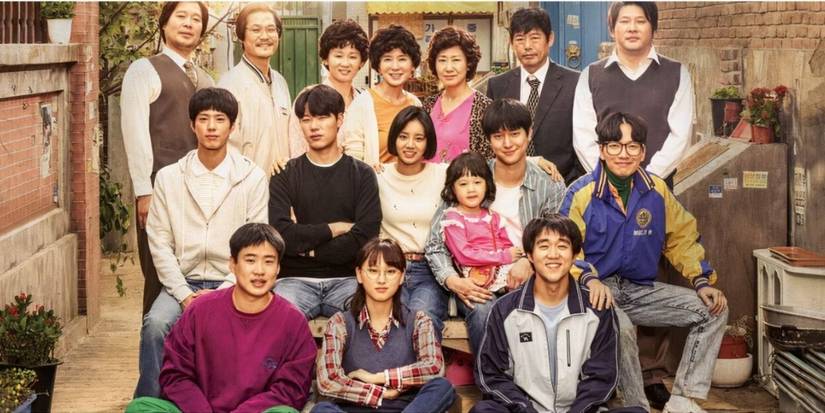
Reply 1988 not only succeeded but also inspired awe. Its final episode received a 19.6% cable rating, breaking the record that was later surpassed by Goblin. More remarkably, Reply 1988 sparked an annual rewatch ritual across South Korea (and even some other countries), proving its extraordinary emotional impact. The show’s nostalgic recreation of 1980s Korea, including the Olympic spirit, the music, the food, and the fashion, sparked a retro craze (“newtro”) that increased sales of everything from tracksuits to vintage sneakers. It won the Grand Prize at the Baeksang Arts Awards and has been voted the best Korean drama of all time by countless critics. Its true achievement, however, is more profound: it shows viewers that the most epic story ever told is unfolding right here, within us.
Reply 1988 takes place on a single, unremarkable street in Seoul’s Dobong district in the late 1980s, where five families with teenage children live lives of ordinary, exquisite humanity. Reply 1988 lacks a central conflict, a supervillain, or a fateful curse, instead featuring neighbors sharing food through open doors, teenagers obsessed with cassette tapes and first loves, and parents who are equally concerned with money and each other. The plot revolves around Sung Duk-seon (Lee Hye-ri) and the four boys who grow up alongside her, one of whom will become her husband—a mystery that the show keeps until the final episode. When the finale returns to the alley for the final time with the signature voiceover, it’s laced with nostalgia and sadness that will still make you happy; the ending adds to the reasons why Reply 1988 is the best Korean drama ever made.
You must be logged in to post a comment Login