Entertainment
7 Greatest Book Trilogies of the 21st Century

It’s difficult enough to write an excellent book, but it’s an entirely different art unto itself to craft an equally excellent trilogy of them. As long as each book offers a feeling of self-contained satisfaction, and the author also manages to make the whole trilogy feel like an escalating, meaningful, satisfying progression, any trilogy has the potential to be deemed great.
Throughout the 21st century in particular, there have been a few noteworthy book trilogies that haven’t just been great, they’ve been the absolute best of the last 26 years. From YA classics like the Hunger Games series to period pieces like the Wolf Hall trilogy, these have been some truly exceptional sets of novels that have demonstrated why the art of the book trilogy is still alive and well in modern times.
7
The Wolf Hall Trilogy


British writer Hilary Mantel was a great master of the historical fiction genre, and she demonstrated that greatly with the last three novels she ever wrote: Wolf Hall, Bring Up the Bodies, and The Mirror & the Light. Set during the 16th century, this trilogy is a sweeping saga chronicling the rise and fall of Thomas Cromwell (which is why this is also known as the Thomas Cromwell trilogy), the son of a blacksmith who became the chief minister to King Henry VIII.
Anchored by Mantel’s beautifully vivid prose and a brilliantly creative reinvention of the Tudor era.
Before it became one of the best miniseries worth watching over and over, Wolf Hall was the greatest historical fiction trilogy of the 21st century. Anchored by Mantel’s beautifully vivid prose and a brilliantly creative reinvention of the Tudor era, the trilogy masterfully strikes the perfect balance between mythologizing Cromwell and also humanizing him with unexpected depth. It’s an entirely unique approach to the genre that makes court politics feel like the most gripping, modern-feeling source of drama imaginable.
6
The MaddAddam Trilogy

Saying that novelist, poet, and literary critic Margaret Atwood is one of the greatest and most important Canadian writers of the 20th and 21st centuries would be quite an understatement. But it’s not all The Handmaid’s Tale with Atwood; there’s also the MaddAddam trilogy, a speculative fiction and adventure romance trilogy (which technically also counts as sci-fi, even if Atwood rejects the label) about a dystopian near-future Earth that’s been decimated by climate collapse.
From Oryx and Crake to The Year of the Flood to the eponymous MaddAddam, the trilogy is a wonderfully human yet bitingly satirical critique of genetic engineering and unchecked capitalist greed. We’re talking about three of the greatest climate-fiction novels of the 21st century, a trio of books bolstered by some exceptional worldbuilding, which present a sense of hope readers don’t often find in the dystopian genre.
5
The Infernal Devices Trilogy

With the unprecedented success of J. K. Rowling‘s Harry Potter series, the 21st century saw an unprecedented boom in the Young Adult genre across all media, including literature. From this boom came Cassandra Clare‘s The Mortal Instruments series, six of the most widely beloved YA fantasy novels of the last two decades. Before she finished the series, though, Clare wrote the Infernal Devices trilogy, a prequel series to the Mortal Instruments saga.
To this day, many fantasy fans still deem the Infernal Devices series as not just considerably superior to the original saga, but also three of the best YA books of their era. With its tremendous emotional depth, richly atmospheric Victorian setting, and one of the best love triangles in the history of the YA fantasy genre, Clockwork Angel, Clockwork Prince, and Clockwork Princess are worth reading even for adult readers. With a more mature writing style than The Mortal Instruments, as well as an emotionally stirring exploration of themes of grief and sacrifice that should resonate with anyone, every reader should love this trilogy, no matter their age.
4
The Hunger Games Trilogy
At this point, with it being such a tremendously successful multimedia franchise, there’s barely any need to even introduce Suzanne Collins‘ Hunger Games trilogy. It should hardly be surprising that the series, which originated and spearheaded the YA dystopia fad of the 2010s, consistently remained the best of the bunch. Still, all that fame and popularity can, at times, make people forget that this is actually a legitimately exceptionally written trilogy.
There’s an argument to be made that the trilogy got slightly weaker as it went on, but Catching Fire and Mockingjay are both still a pair of incredible sequels. There are only a handful of dystopian books better than The Hunger Games, and when it comes to dystopian book trilogies? It doesn’t get much more iconic than this one. With its high-stakes, adrenaline-pumping action, chillingly relevant critiques of authoritarian power and the media’s exploitation of the public, and the profoundly compelling character writing, these three books are essential reading for all those who love the dystopian genre.
3
The Remembrance of Earth’s Past Trilogy

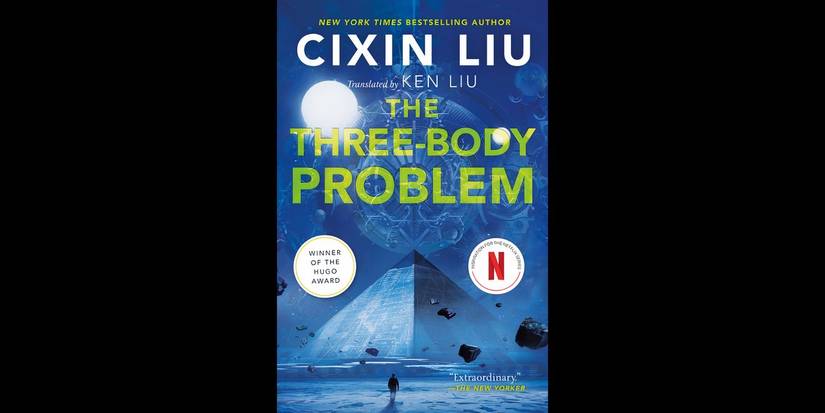
It’s not only the English-speaking world that has produced exceptional book trilogies throughout the last 26 years. Case in point: Cixin Liu‘s Chinese series Remembrance of Earth’s Past, consisting of The Three-Body Problem, The Dark Forest, and Death’s End. It was the inspiration for one of the most near-perfect hard sci-fi shows on Netflix, and itself fittingly consists of three books that wonderfully blend hard and soft science fiction elements. Sometimes read as an allegory for China-United States relations, the series is about humanity’s preparation for the invasion of an alien threat.
Alien invasion stories are aplenty, but few reach the awe-inspiring, downright epic cosmic scale that the Remembrance of Earth’s Past trilogy benefits from. Mind-bending, sharply political, and boldly philosophical, it’s a series that perfectly lends itself to some of the most profound analyses that one will get from any 21st-century book trilogy. It’s a must-read for all those who enjoy literary science fiction, and even though its characters may sometimes feel like somewhat shallow vessels for the plot, the plot itself is so deliriously entertaining and emotionally compelling that it’s easy to forgive that as a feature, not necessarily a bug.
2
The Broken Earth Trilogy
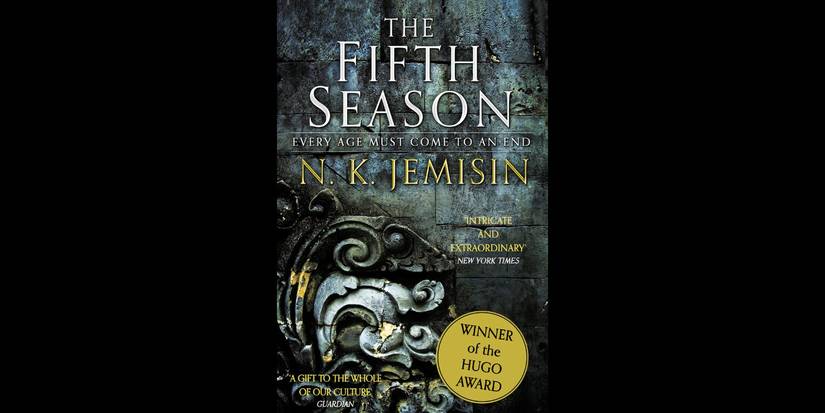
When science fiction meets fantasy in a way that blurs the line between both genres, along the same vein of the kind of magic that Star Wars achieves, it becomes a genre known as science fantasy—and N. K. Jemisin‘s The Broken Earth is one of the best science fantasy book trilogies in history, let alone of the 21st century. It’s an epic post-apocalyptic tale set on a supercontinent called the Stillness, where humanity struggles to survive cataclysmic natural disasters that occur periodically.
The Fifth Season won the Hugo Award for Best Novel, as did its first sequel, The Obelisk Gate. The Stone Sky may not have achieved the same honor, but it is the highest-rated book of the trilogy on Goodreads, and isn’t the favor of the court of public opinion the ultimate award? In any case, these are three of the best sci-fi books of the last 10 years. With Jemisin’s unique eye for breathtaking world-building, instantly captivating imagination, and ambitious narrative structure, it’s no wonder that the Broken Earth series has received so much praise. Jemisin is well-known for her bold artistic choices, and there are plenty of those here (including a particular POV being narrated in second person), making this essential reading for sci-fi fans.
1
Era One of Mistborn

Those who have grown tired of the likes of George R. R. Martin and Patrick Rothfuss seeming unable to finish the book series that they’ve been promising for well over a decade ought to take a look at Brandon Sanderson. He is easily one of the greatest fantasy authors of modern times, and few of his works demonstrate that better than the Mistborn series. The books are organized into four eras (only two of which have been completed up to this point) with large time jumps between each other, making it so that each era feels entirely like its own series. Era One of Mistborn is composed of The Final Empire, The Well of Ascension, and The Hero of Ages, and it feels like a completely self-contained story as high-quality as any of Sanderson’s previous and future masterpieces.
It’s one of the few fantasy book series better than Harry Potter, the kind that must be read in order to be truly believed. It’s a masterpiece of modern fantasy unlike any other, with one of the best hard magic systems ever written, a powerful subversion of the “Dark Lord” trope, and a mind-blowing ending that recontextualizes the whole thing and makes a re-read instantly tempting. It’s an exquisitely creative work of genre literature that always takes full advantage of its fascinatingly original premise, full of the same kind of slow-building tension and airtight structure that all fans of Sanderson have come to expect. Some have called Sanderson’s prose here overly simplistic, but those who appreciate highly accessible and functional language over unnecessarily flowery styles are bound to find Mistborn irresistible.
You must be logged in to post a comment Login