Entertainment
8 Must-Watch Adventure Horror Movies, Ranked

Most genres aim to generate a strong emotional reaction. Thrillers are all about excitement and suspense, romance tries to get the audience to swoon with joy, and comedies never hide their intention of making the audience laugh. Horror is special. Its goal is to generate its own emotional reaction, as well as a viscerally physical response in the audience. As long as viewers are screaming, squirming, and covering their eyes in fear, the genre is doing its job.
Another genre that horror often blends remarkably well with is adventure, seeing as some of the greatest horror gems of all time also happen to be adventure movies. Both genres are rooted in sky-high stakes and overcoming monumental challenges, so watching a hero journey through a strange land while combating monsters, demons, and the like can often be absolutely engrossing. Overcoming the unknown is what both horror and adventure movies are all about, so the marriage between these two genres is often remarkable.
8
‘Lake Michigan Monster’ (2018)


Before he broke onto the cult comedy scene with Hundreds of Beavers, indie filmmaker Ryland Brickson Cole Tews charmed festival crowds with the irresistibly hilarious B-horror comedy Lake Michigan Monster. Inspired by the likes of Monty Python, the earlier seasons of The Simpsons, and the work of Canadian auteur Guy Maddin, it’s one of those forgotten 2010s movies that have aged like fine wine.
Micro-budget productions are always at their best when they celebrate their own cheapness, and that’s certainly what Lake Michigan Monster‘s whole sense of humor is founded on. It’s a hilarious mishmash of genres, influences, offbeat moments, and tributes to Golden-Age Hollywood B-horror movies; and though it’s not particularly scary, it’s still a must-see horror adventure production.
7
‘Creature from the Black Lagoon’ (1954)


A clear inspiration for Lake Michigan Monster, as well as for countless other horror movies that came after its release, Jack Arnold‘s Creature from the Black Lagoon was one of the last classic Universal Horror movies that the studio produced during Hollywood’s Golden Age. It still remains the best film in the franchise, a timeless classic that may not be all that terrifying nowadays anymore, but is still just as entertaining as it always has been.
The film was shot in 3D right as the fad was coming to an end, but whereas many 3D films from its time were so gimmick-heavy that they could never stand the test of time, Creature from the Black Lagoon actually has merits that have allowed it to remain iconic. Aside from pioneering groundbreaking underwater cinematography and introducing one of the most memorable monster designs in film history, the movie is also an unexpectedly emotional creature feature which has aged wonderfully.
6
‘The Descent’ (2005)

Directed by Neil Marshall, The Descent is one of the best British horror movies of the 21st century thus far. With an ending so overwhelmingly bleak that it was originally removed in North America, it truly is one of those horror adventures so harrowing that those with a weak stomach are better off steering clear. Horror veterans, on the other hand, ought to consider this one of those modern classics that they should watch at least once in their lives.
It’s one of the heaviest adventure movies of all time, enough to make pretty much anyone want to avoid spelunking for the rest of their lives. Claustrophobic, emotionally complex, and complete with some of the scariest monsters of any horror movie from the 2000s, it’s a near-masterpiece that focuses on gradually building up a hugely effective sense of suspense rather than on springing cheap jump scares on unsuspecting viewers.
5
‘Ravenous’ (1999)

Despite having an exceptional cast led by Guy Pearce at the top of his game, Ravenous is still one of the most underrated folk horror movies of all time. Set in the mid-19th-century US, this Western dark comedy is one of the most unique Westerns that the ’90s ever saw. After a troubled production history that included its original director being replaced by Antonia Bird three weeks into the shoot, the movie became a box office bomb upon release. In the years since, however, it has become a bit of a cult classic.
It’s definitely the sort of horror movie that favors style over substance, but that style is so darkly hilarious, so delightfully gory, and so entertainingly gonzo both in terms of tone and visuals that it’s hard to complain. It’s an almost experimental genre experiment that somehow works remarkably well on every level that matters, making it one of those criminally underappreciated ’90s gems that deserve infinitely more love nowadays.
4
‘Godzilla, Mothra and King Ghidorah: Giant Monsters All-Out Attack’ (2001)
It was 1954’s Godzilla that pretty much invented the entire kaiju genre, a cornerstone of the horror genre so groundbreaking and important that no list of the best horror movies ever could ever possibly be complete without at least one kaiju classic. In the case of this particular list, that kaiju classic is a relatively modern one: Godzilla, Mothra and King Ghidorah: Giant Monsters All-Out Attack, by far one of the best Japanese Godzilla movies to date.
Serving as a direct sequel to the original Godzilla by ignoring the events of every other installment in the series, it’s one of the most suspenseful, entertaining, and visually impressive entries in the franchise’s history. Turning Godzilla into a terrifying villain and his classic foes into heroic guardians was certainly a bold choice, but one that director Shusuke Kaneko pulls off exceptionally well. Balancing a strong human narrative with brutal monster action in precisely the way that all kaiju movies should aim for, it’s a must-see for all those who love adventure horror.
3
‘Alice’ (1988)

Not many people have heard of 1988’s Alice, and that’s perfectly okay, because this surrealist dark fantasy masterpiece by experimental Czech auteur Jan Švankmajer feels like exactly the sort of international indie gem destined to remain an obscure cult classic forever, the kind of masterpiece that makes you feel like you’ve discovered a gold mine when you finally watch it. It’s also the type of surreal movie that makes you feel like you’re tripping balls.
A loose adaptation of Lewis Carroll‘s legendary Alice’s Adventures in Wonderland, this masterclass in surrealist filmmaking is an animated/live-action hybrid unlike any other. By no means does it carry much of the whimsical innocence of Carroll’s work, however. Instead, Švankmajer’s film operates on a nightmarish dream logic that should delight any fan of David Lynch‘s work, creating an unsettling, almost grotesque sense of absurdity which benefits the story marvelously.
2
‘King Kong’ (1933)

There would be no kaiju genre without King Kong, one of the most perfect fantasy movies of the 20th century. Combining live-action sequences with stop-motion animation in ways that were absolutely revolutionary at the time, the film may no longer look quite as convincing as it may have back in 1933, but its wonderful black-and-white imagery still titillates the imagination in ways that not many other creature features from the era ever could. Adventure monster films have been absolutely foundational for adventure horror, and King Kong is right up there as one of the most important.
The film single-handedly saved RKO Pictures from bankruptcy during the Great Depression, and it’s not at all hard to see why. Even all these many years later, it’s still one of the most entertaining horror movies from Hollywood’s Golden Age, a pre-Code classic that introduced cinema to one of its biggest icons. Visually magical, elevated by Max Steiner‘s timeless score, narratively weighty and emotional, and even complete with some unexpected thematic depth, it’s a real icon of the genre that will never get old.
1
‘Jaws’ (1975)
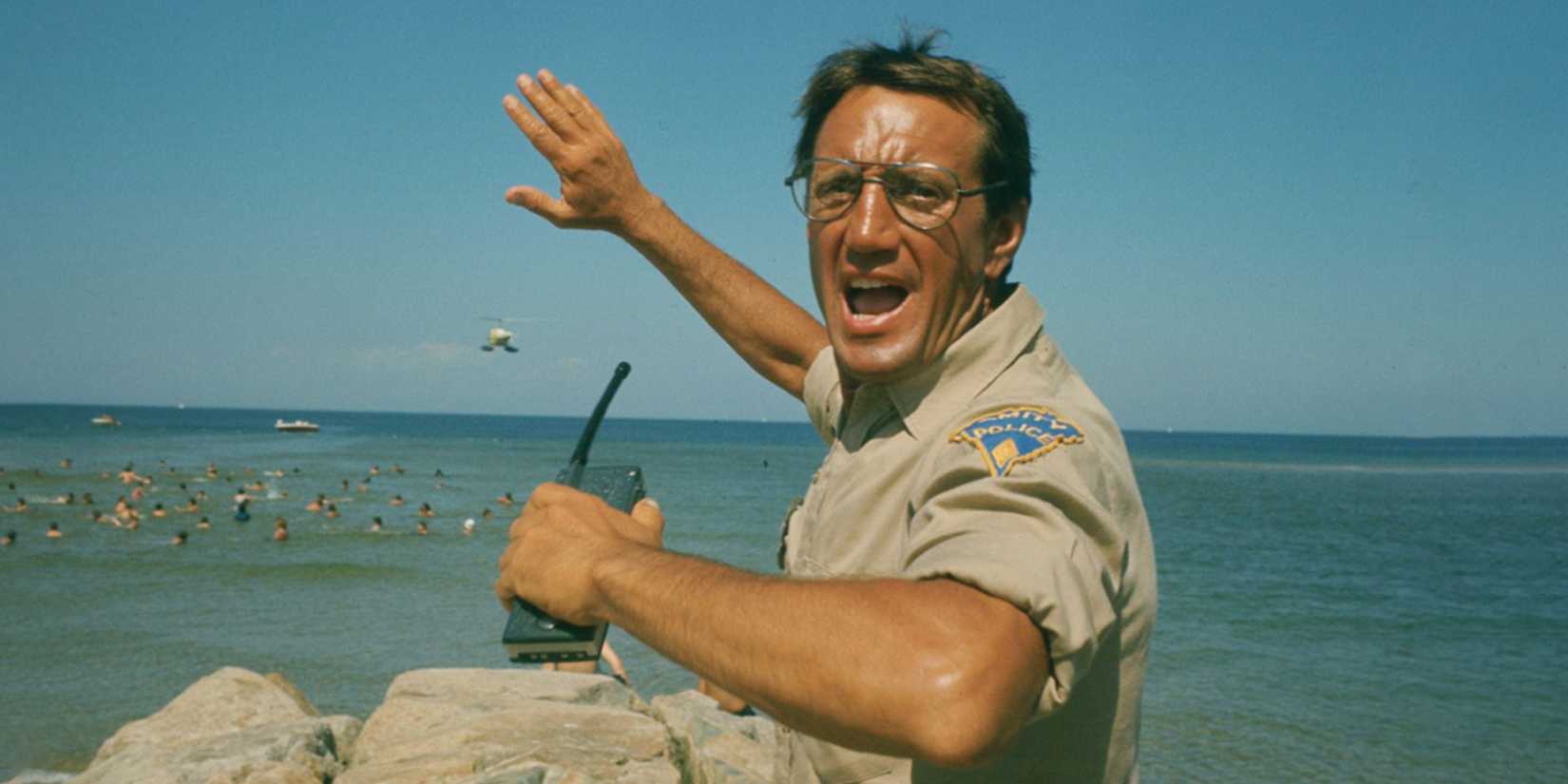
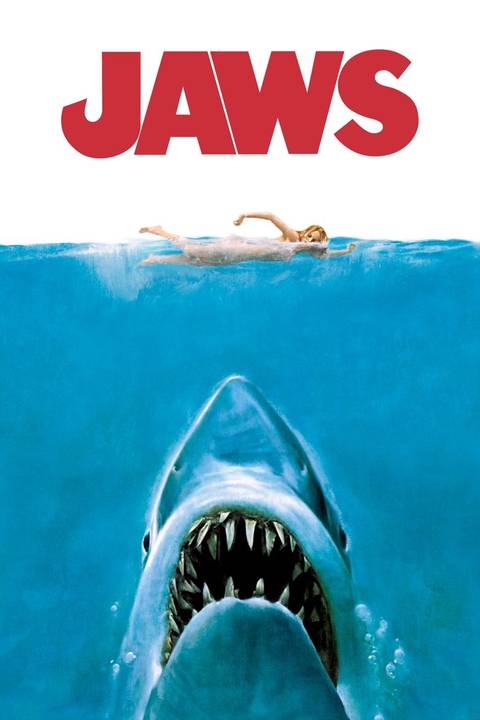
Nowadays, blockbusters are Hollywood’s bread and butter; but it was only in 1975 that Steven Spielberg became the father of blockbusters when he made the adventure creature feature Jaws. Never before had a film had such a widespread release strategy, nor such aggressive marketing, and the film industry simply hasn’t been the same since. All these many years later, this is still one of the best horror masterpieces of the ’70s, genuinely one of the most important movies in the history of American cinema.
As far as adventure horror goes, it simply doesn’t get much better than Jaws. What’s not to praise about this legendary masterpiece? It’s an absolute masterpiece in suspense, with Spielberg’s airtight direction, John Williams‘ deceptively simple yet undeniably haunting score, and the wise decision to show very little of the actual shark all contributing to making this one of the most nail-biting cinematic experiences of the ’70s. Visually striking, perfectly acted, and exceptionally written, Jaws is the cream of the crop when it comes to adventure horror.



You must be logged in to post a comment Login