


Related: Mariska Hargitay‘s Comfy Pants Scream ‘Hamptons Mom‘ — Here‘s Why
Advertisement



Most genres aim to generate a strong emotional reaction. Thrillers are all about excitement and suspense, romance tries to get the audience to swoon with joy, and comedies never hide their intention of making the audience laugh. Horror is special. Its goal is to generate its own emotional reaction, as well as a viscerally physical response in the audience. As long as viewers are screaming, squirming, and covering their eyes in fear, the genre is doing its job.
Another genre that horror often blends remarkably well with is adventure, seeing as some of the greatest horror gems of all time also happen to be adventure movies. Both genres are rooted in sky-high stakes and overcoming monumental challenges, so watching a hero journey through a strange land while combating monsters, demons, and the like can often be absolutely engrossing. Overcoming the unknown is what both horror and adventure movies are all about, so the marriage between these two genres is often remarkable.

Before he broke onto the cult comedy scene with Hundreds of Beavers, indie filmmaker Ryland Brickson Cole Tews charmed festival crowds with the irresistibly hilarious B-horror comedy Lake Michigan Monster. Inspired by the likes of Monty Python, the earlier seasons of The Simpsons, and the work of Canadian auteur Guy Maddin, it’s one of those forgotten 2010s movies that have aged like fine wine.
Micro-budget productions are always at their best when they celebrate their own cheapness, and that’s certainly what Lake Michigan Monster‘s whole sense of humor is founded on. It’s a hilarious mishmash of genres, influences, offbeat moments, and tributes to Golden-Age Hollywood B-horror movies; and though it’s not particularly scary, it’s still a must-see horror adventure production.

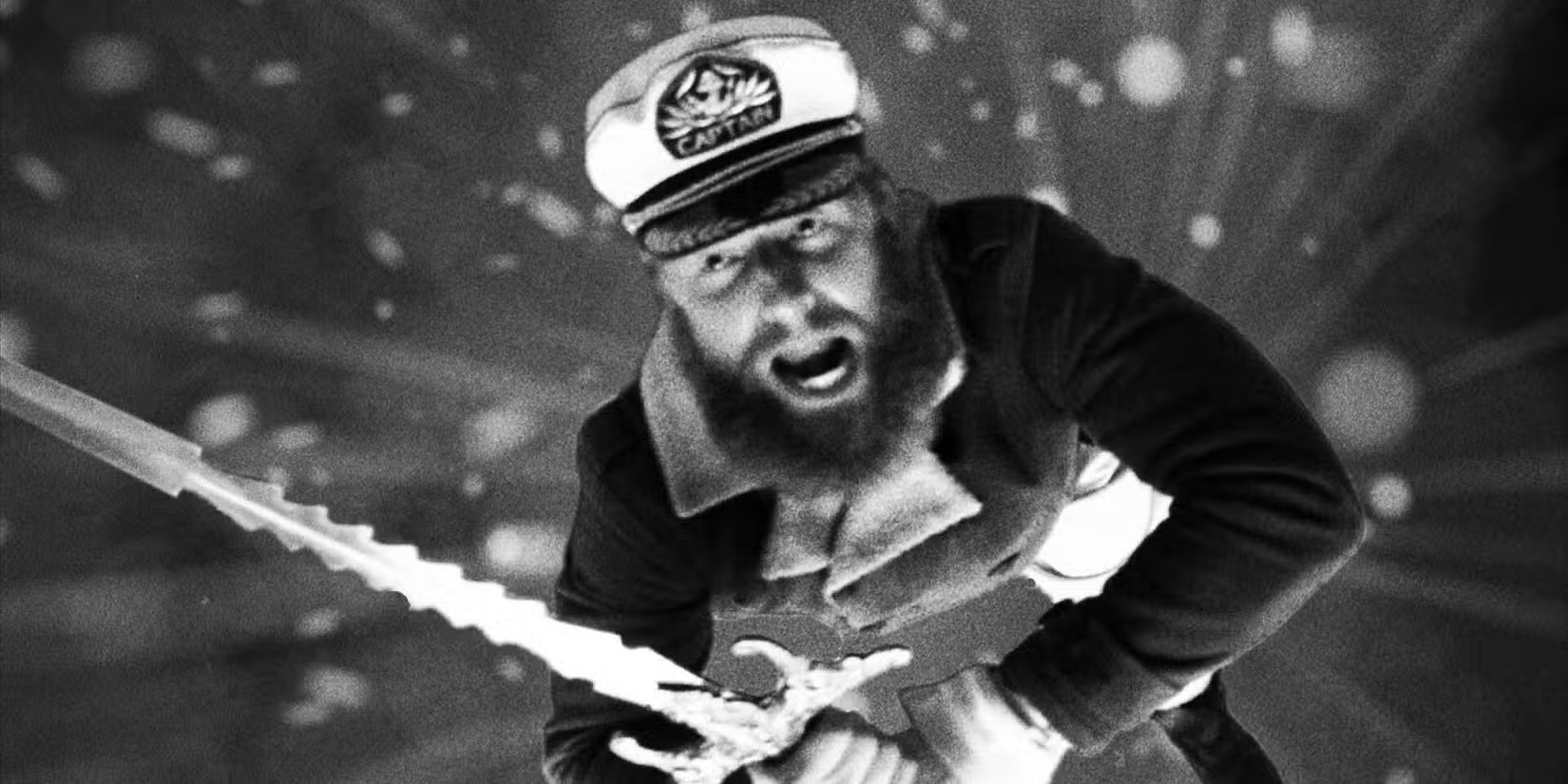
A clear inspiration for Lake Michigan Monster, as well as for countless other horror movies that came after its release, Jack Arnold‘s Creature from the Black Lagoon was one of the last classic Universal Horror movies that the studio produced during Hollywood’s Golden Age. It still remains the best film in the franchise, a timeless classic that may not be all that terrifying nowadays anymore, but is still just as entertaining as it always has been.
The film was shot in 3D right as the fad was coming to an end, but whereas many 3D films from its time were so gimmick-heavy that they could never stand the test of time, Creature from the Black Lagoon actually has merits that have allowed it to remain iconic. Aside from pioneering groundbreaking underwater cinematography and introducing one of the most memorable monster designs in film history, the movie is also an unexpectedly emotional creature feature which has aged wonderfully.

Directed by Neil Marshall, The Descent is one of the best British horror movies of the 21st century thus far. With an ending so overwhelmingly bleak that it was originally removed in North America, it truly is one of those horror adventures so harrowing that those with a weak stomach are better off steering clear. Horror veterans, on the other hand, ought to consider this one of those modern classics that they should watch at least once in their lives.
It’s one of the heaviest adventure movies of all time, enough to make pretty much anyone want to avoid spelunking for the rest of their lives. Claustrophobic, emotionally complex, and complete with some of the scariest monsters of any horror movie from the 2000s, it’s a near-masterpiece that focuses on gradually building up a hugely effective sense of suspense rather than on springing cheap jump scares on unsuspecting viewers.

Despite having an exceptional cast led by Guy Pearce at the top of his game, Ravenous is still one of the most underrated folk horror movies of all time. Set in the mid-19th-century US, this Western dark comedy is one of the most unique Westerns that the ’90s ever saw. After a troubled production history that included its original director being replaced by Antonia Bird three weeks into the shoot, the movie became a box office bomb upon release. In the years since, however, it has become a bit of a cult classic.
It’s definitely the sort of horror movie that favors style over substance, but that style is so darkly hilarious, so delightfully gory, and so entertainingly gonzo both in terms of tone and visuals that it’s hard to complain. It’s an almost experimental genre experiment that somehow works remarkably well on every level that matters, making it one of those criminally underappreciated ’90s gems that deserve infinitely more love nowadays.
It was 1954’s Godzilla that pretty much invented the entire kaiju genre, a cornerstone of the horror genre so groundbreaking and important that no list of the best horror movies ever could ever possibly be complete without at least one kaiju classic. In the case of this particular list, that kaiju classic is a relatively modern one: Godzilla, Mothra and King Ghidorah: Giant Monsters All-Out Attack, by far one of the best Japanese Godzilla movies to date.
Serving as a direct sequel to the original Godzilla by ignoring the events of every other installment in the series, it’s one of the most suspenseful, entertaining, and visually impressive entries in the franchise’s history. Turning Godzilla into a terrifying villain and his classic foes into heroic guardians was certainly a bold choice, but one that director Shusuke Kaneko pulls off exceptionally well. Balancing a strong human narrative with brutal monster action in precisely the way that all kaiju movies should aim for, it’s a must-see for all those who love adventure horror.

Not many people have heard of 1988’s Alice, and that’s perfectly okay, because this surrealist dark fantasy masterpiece by experimental Czech auteur Jan Švankmajer feels like exactly the sort of international indie gem destined to remain an obscure cult classic forever, the kind of masterpiece that makes you feel like you’ve discovered a gold mine when you finally watch it. It’s also the type of surreal movie that makes you feel like you’re tripping balls.
A loose adaptation of Lewis Carroll‘s legendary Alice’s Adventures in Wonderland, this masterclass in surrealist filmmaking is an animated/live-action hybrid unlike any other. By no means does it carry much of the whimsical innocence of Carroll’s work, however. Instead, Švankmajer’s film operates on a nightmarish dream logic that should delight any fan of David Lynch‘s work, creating an unsettling, almost grotesque sense of absurdity which benefits the story marvelously.

There would be no kaiju genre without King Kong, one of the most perfect fantasy movies of the 20th century. Combining live-action sequences with stop-motion animation in ways that were absolutely revolutionary at the time, the film may no longer look quite as convincing as it may have back in 1933, but its wonderful black-and-white imagery still titillates the imagination in ways that not many other creature features from the era ever could. Adventure monster films have been absolutely foundational for adventure horror, and King Kong is right up there as one of the most important.
The film single-handedly saved RKO Pictures from bankruptcy during the Great Depression, and it’s not at all hard to see why. Even all these many years later, it’s still one of the most entertaining horror movies from Hollywood’s Golden Age, a pre-Code classic that introduced cinema to one of its biggest icons. Visually magical, elevated by Max Steiner‘s timeless score, narratively weighty and emotional, and even complete with some unexpected thematic depth, it’s a real icon of the genre that will never get old.

Nowadays, blockbusters are Hollywood’s bread and butter; but it was only in 1975 that Steven Spielberg became the father of blockbusters when he made the adventure creature feature Jaws. Never before had a film had such a widespread release strategy, nor such aggressive marketing, and the film industry simply hasn’t been the same since. All these many years later, this is still one of the best horror masterpieces of the ’70s, genuinely one of the most important movies in the history of American cinema.
As far as adventure horror goes, it simply doesn’t get much better than Jaws. What’s not to praise about this legendary masterpiece? It’s an absolute masterpiece in suspense, with Spielberg’s airtight direction, John Williams‘ deceptively simple yet undeniably haunting score, and the wise decision to show very little of the actual shark all contributing to making this one of the most nail-biting cinematic experiences of the ’70s. Visually striking, perfectly acted, and exceptionally written, Jaws is the cream of the crop when it comes to adventure horror.
:max_bytes(150000):strip_icc():format(jpeg)/Dutton-Ranch-032226-1-721cd912f4224b76b1cdf7db25afd724.jpg)
A “Justified” alum is taking over the “Yellowstone” spinoff series.
:max_bytes(150000):strip_icc():format(jpeg)/Unmarried-celeb-couples-063026-955857638d344384a29812ccfd70e6f3.jpg)
These are the duos who’ve proven that commitment doesn’t always require a marriage license.
:max_bytes(150000):strip_icc():format(jpeg)/Kate-Gosselin-Collin-Gosselin-063026-1d40961f3e0c47a5b1d2169d1f5eec8c.jpg)
In comments on social media, the reality star said because she’s in the “public eye,” legal proceedings involving her son are “different.”
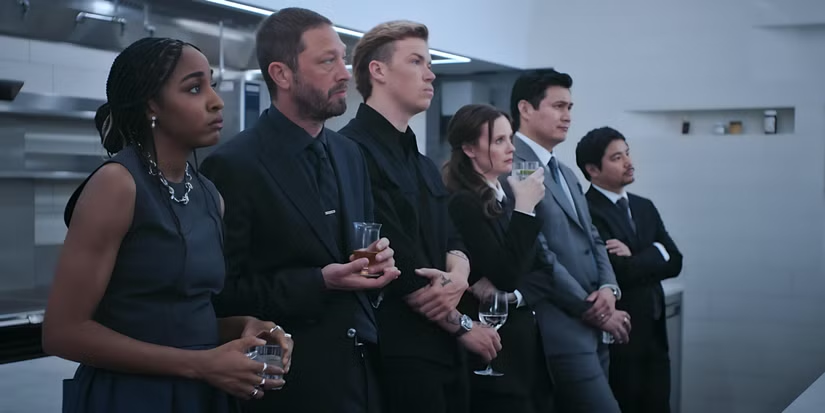
The aprons are off, the final “Yes, Chef!” has been uttered, and The Bear has finally closed its doors with Season 5. Since 2022, audiences have followed Carmy Berzatto (Jeremy Allen White) and his motley crew as they transformed the once-dingy The Original Beef into the fine-dining restaurant The Bear. It was never a smooth ride. Over five seasons, the series captured the relentless pressure of running a restaurant while exploring the personal struggles that each member of the kitchen brigade brought through its doors.
In between the nonsensical screaming, the burnt meats, and panic attacks by the garbage, The Bear has always been a story about finding a chosen family. Individually, these deeply flawed characters are more than willing to call each other out. Together they somehow become a well-oiled machine when it matters most. Every season introduces different ingredients to the table, whether it’s risky creative swings, character growth, or unresolved conflicts. Some installments are simply better seasoned than others. With the series now complete, here’s every season of The Bear, ranked.

For a season that literally takes place after the much-awaited opening of The Bear restaurant, audiences would expect to see more of the carnage inside the kitchen and among the restaurant staff. However, Season 3 of The Bear has quite the tonal mismatch. Instead of bringing audiences deeper into the action of the kitchen, it spends more time inside Carmy’s psyche, giving more background on why he wanted to open a restaurant in the first place. This creates some confusion because the season hyperfocuses on Carmy’s existential crisis as a chef instead of showing how the restaurant is actually operating under its increasingly worrying circumstances.
However, Season 3 also gifted audiences with some standout episodes. Season 3, Episode 6, “Napkins,” is a touching tribute to Tina (Liza Colón-Zayas) that captures the fear of being laid off and the struggle of finding a new job, ultimately leading her to cross paths with Mikey (Jon Bernthal) and discover a cooking career she never expected. Even more emotional is “Ice Chips,” where Sugar (Abby Elliott) goes into labor with only Donna (Jamie Lee Curtis) by her side. It’s no secret that Sugar and Donna have the most troubled relationship in the series. Putting them together in such a life-or-death situation creates incredible tension while delivering some of the most vulnerable moments between mother and daughter.

Season 4 of The Bear might stray away from the chaos of its earlier seasons, which, again, feels at odds with what came before. However, arguably, its slower pace also serves as a much-needed breather before the show approaches its final season. It’s the season where Carmy realizes he can no longer avoid the demons inside his head. Everything that clouded his mind over the previous seasons is finally, and satisfactorily, externalized as he embarks on an extensive apology tour to Claire (Molly Gordon), Donna, and even Cousin Richie (Ebon Moss-Bachrach). It’s also the season where Carmy finally faces the inevitable truth: he might be good at cooking, but he might not love it anymore.
There’s not much of the restaurant action fans were expecting, which is a disappointing continuation of Season 3’s biggest flaw. However, family is a major theme throughout Season 4. Whether it’s Sydney (Ayo Edebiri) reconnecting with her cousin Chantel (Danielle Deadwyler) and her daughter T.J. (Arion King) while getting her hair done in Episode 4, “Worms,” or the Berzattos mending broken bridges at a wedding in Episode 7, “Bears,” Season 4 is all about finding closure. And no closure is more important than in the Season 4 finale, which is The Bear‘s most experimental episode yet, unfolding almost entirely through a single, uninterrupted conversation in the back of the restaurant.
Just like a well-rounded dish, Season 5 is the perfect balance of all the ingredients from its four previous seasons. It has the unexpected chaos of a kitchen gone absolutely haywire from torrential Chicago storms and a flooded restaurant, the good old-fashioned Carmy and Sydney fallouts and makeups, and the emotional growth that comes from overcoming the impossible. Most importantly, it finally gives audiences the action they’ve been waiting for with one unforgettable night of restaurant service. The episode not only highlights the chefs but also the front of house, showing how this imperfect team somehow works like a well-oiled machine under the immense pressure of their restaurant potentially being closed.
The only flaw is that some episodes feel like filler, particularly Episodes 2 and 3, as they mainly focus on the prep leading up to the night of service. Even so, Season 5 is much more experimental, following just one night of service in a way that arguably feels The Pitt-esque, minus the one-take format. It also takes a bold risk by ramping up the tension, from Uncle Jimmy (Oliver Platt) feeling more betrayed by Carmy than ever before to the unexpected fistfight between The Bear‘s biggest bromance, Marcus (Lionel Boyce) and Luca (Will Poulter). Best of all, there are barely any major guest-star cameos — Mikey included. Much of the attention stays on the crew itself, making this a season that truly belongs to the OG cast.

Although the discourse around it was controversial, especially during awards season, Season 1 is proof that The Bear is a comedy. Not pure sitcom comedy, but dark, dramatic comedy nevertheless. It turns everyone’s worst nightmare of working in a restaurant kitchen into something both stressful and weirdly hilarious. Between its frantic camerawork, unforgiving dialogue, and constant talking over one another, the season throws viewers into a workplace that is as chaotic as it is dysfunctional. It’s unabashedly messy and symbolic of what it’s like working in a cramped, dirty kitchen that’s practically a health and HVAC hazard. The fact that the kitchen eventually catches fire in the finale perfectly sums up just how unfit The Original Beef really was.
And yet, it’s this relentless chaos that makes some of Season 1’s funniest moments land. The humor comes from the sheer absurdity of everything constantly going wrong, and nobody is well-adjusted enough to fix things properly. The staff can barely talk to each other, let alone cook together. But beneath all the shouting and fighting, the season is really about these cooks finding their place in the restaurant. They resist Carmy’s new system and the roles he’s trying to build, but once everything finally starts to click, all the chaos and hard work pay off in a genuinely satisfying way.

Season 2 of The Bear has the highest of highs and the lowest of lows, altogether making it the best installment of the series. It’s where nearly every character experiences a breakthrough, and the season takes the time to show the work behind that growth instead of simply handing it to them. Audiences watch Tina and Ebra (Edwin Lee Gibson) attend culinary school in Episode 2, “Pasta” (granted, Ebra drops out, but he eventually finds his own path in Season 4 on his own terms), Marcus stage as a pastry chef in Copenhagen in Episode 4, “Honeydew,” and, most importantly, Richie finally realize the importance of his role in the show’s most celebrated episode yet, Episode 7, “Forks.” Watching these characters — many of whom entered the restaurant with little to no fine-dining experience — finally find their place in the industry makes their journeys all the more beautiful and inspiring.
That said, not everything is sweet in Season 2. The sophomore season isn’t afraid of breaking audiences’ hearts with the most devastating twists. Just as Carmy thinks he’s found happiness outside the kitchen, he sabotages it during his infamous fridge meltdown on opening night. Marcus struggles to care for his terminally ill mother, who eventually passes away and numbs him later in the series. Then there’s the dramatic flashback episode, “Fishes,” which shows the Berzattos’ main source of trauma. Donna’s alcoholism and self-martyrdom reveal why Carmy, Natalie, and Mikey have carried so many scars into adulthood. By the finale, The Bear may finally be open for business. Emotionally, its staff has only just begun opening their emotional baggage.

2022 – 2026-00-00
Hulu
Christopher Storer
Ramy Youssef
:max_bytes(150000):strip_icc():format(jpeg)/Queen-Camilla-during-an-audience-with-JK-Rowling-at-the-Palace-of-Holyroodhouse-063026-82e6481220d54023b49871e7e4bd6946.jpg)
Queen Camilla posed with Rowling in a social media post that drew intense pushback online. “During Pride month, is a statement,” one wrote.
Us Weekly has affiliate partnerships. We receive compensation when you click on a link and make a purchase. Learn more!
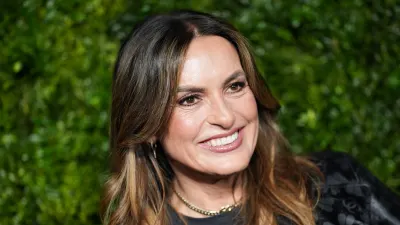
We’ve seen celebs wear cutoff, patch-pocket and even purple jeans, but Mariska Hargitay‘s embroidered pair are a new level of chic. The pants style simply screams ‘Hamptons boutique,’ and we found a similar summer look hiding on Amazon — for only $35.
Spotted walking through New York City with a coffee mug in hand, Hargitay traded her usual sleek tailoring for something far more playful: a soft T-shirt, a Knicks baseball cap and khaki wide-leg pants covered in floral embroidery. The combo was cute yet elevated, and her fun pants choice definitely added whimsy to tried-and-true basics.
Get the Utcoco Wide-Leg Embroidered Pants for $35 at Amazon! Please note, prices are accurate at the date of publication but are subject to change.
These Utcoco Wide-Leg Embroidered Pants look just like the bottoms Hargitay wore, featuring the same beige base, unique embroidery and easy wide-leg drape. However, the Amazon alternative goes the extra mile, thanks to a frilly hem that adds a touch of romance and front seams that quietly elongate the legs.

Mariska Hargitay proved that sporty can totally be chic. Instead of basic leggings, Hargitay wore the dreamiest eyelet-style lounge pants that took her aesthetic from courtside-cool to classy. We found the expensive look hiding on Amazon! The star turned up at the 2026 NBA Finals rocking a New York Knicks jersey, white sneakers and breezy […]
It goes without saying that these denim pants are chicer and infinitely more interesting than plain old blue jeans. Pair them with a crisp white tee and sneakers for daytime errands, then swap in a lacy tank and sandals when dinner reservations call. There’s no need to go all out here — the bold bottoms are the statement piece, so everything you pair with it can be somewhat simple.
On top of making even a T-shirt look intentional, the artsy denim style is also mega comfortable. One five-star fan shared, “The material feels sturdy like a jean rather than a jegging, but are still stretchy and movable . . . They’re lightweight, soft and comfy, but solid jeans.”
Hargitay knows that the right pants can carry an entire wardrobe, and these embroidered wonders are an easy way to turn even your easiest outfits into a fashion-forward ensemble. Steal the star’s New York cool-mom formula and see how quickly the Utcoco bottoms become your most-worn piece!
Get the Utcoco Wide-Leg Embroidered Pants for $35 at Amazon! Please note, prices are accurate at the date of publication but are subject to change.
Not what you’re looking for? Shop other chic pants and don’t forget to check out all of Amazon’s Daily Deals for more great finds!

If there’s one thing I remember from my recent trip to London, it’s polka dots, and Blake Lively just brought the rich mom look to New York City. Not only that, but she also nailed the elevated lounge pants trend. I found her comfy-chic style for just $23! Heading out to dinner, Lively was spotted […]
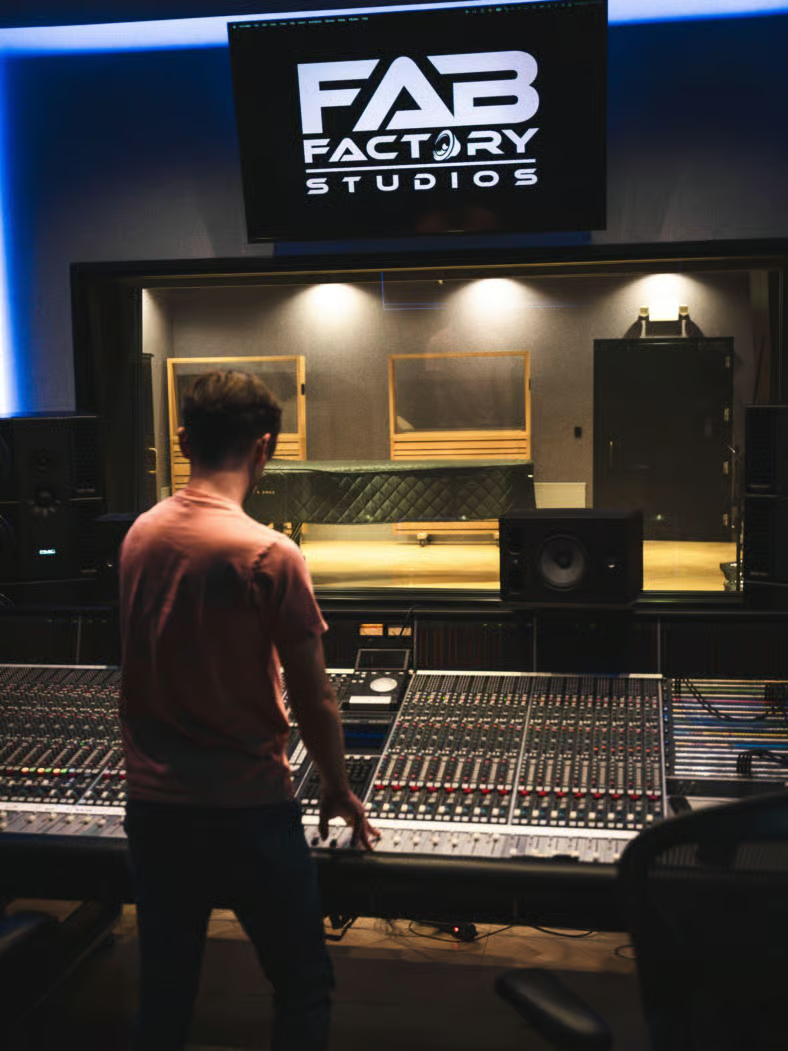
Fab Factory Studios has taken a strategic stake in Milkyway Brands, the Los Angeles-based merchandise and fulfillment company, and moved the operation into dedicated warehouse space on its North Hollywood campus. The investment signals a broader shift in entertainment economics: creators now view merchandise as a real business line, not an afterthought.
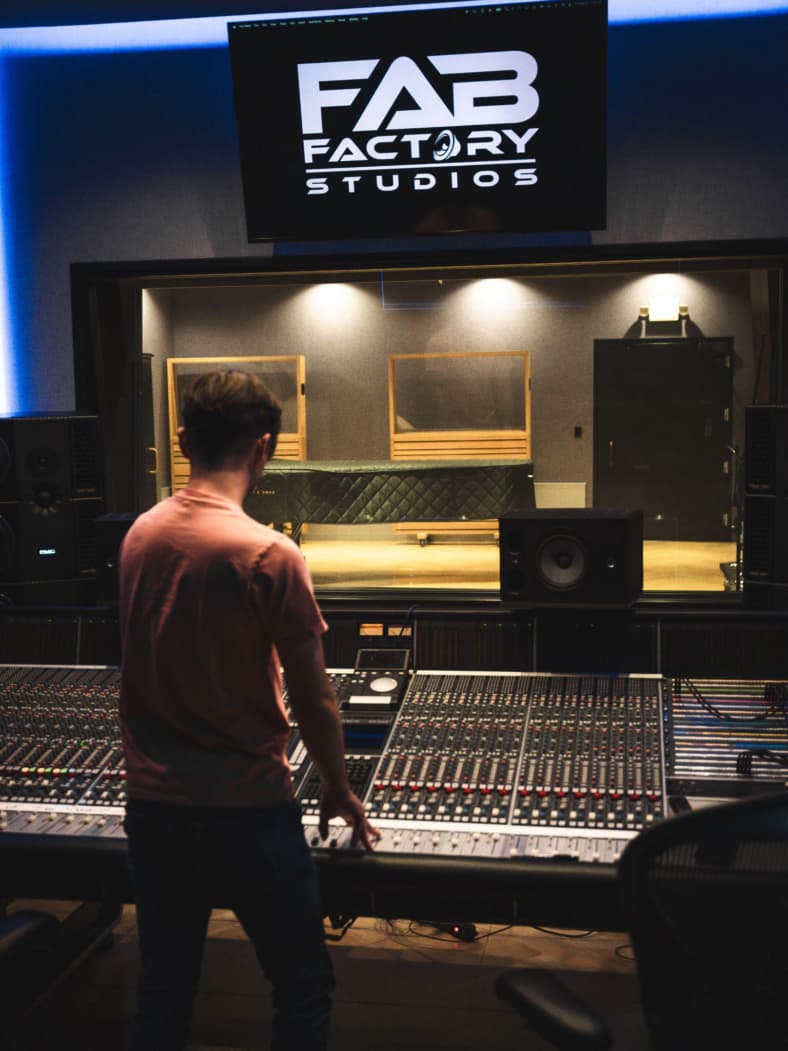
Fab Factory has spent the past decade building one of Los Angeles’ largest privately held production ecosystems. The company operates more than 120,000 square feet of production, post-production and event infrastructure across North Hollywood and East Hollywood. Its client roster spans SZA, will.i.am, The Chainsmokers, Post Malone and Hit-Boy in music, plus film and television projects including Joker, Venom and The Rings of Power.
The Milkyway investment extends that infrastructure into a new revenue stream. By housing Milkyway’s design, manufacturing and fulfillment operations under the same roof as Fab Factory’s studios and post-production bays, the companies have created what amounts to a vertical merchandise pipeline. An artist recording in Fab Factory’s studio can move directly into Milkyway’s production space to manufacture apparel bearing their brand.
Milkyway Brands was founded by Franco Infante, who scaled the company from a phone-case startup into a full-service merchandise operation serving artists, creators, sports properties and brands. His client roster has included Jhené Aiko, A$AP Rocky, Kevin Hart, Anderson. Paak, the LA Clippers and Jordan Brand.
The company identified a clear market gap. Most artists outsource merchandise to third-party vendors scattered across multiple supply chains, creating delays, quality inconsistencies and higher fulfillment costs. Milkyway controls the entire process in-house: apparel design, manufacturing, decoration and drop-ship fulfillment.
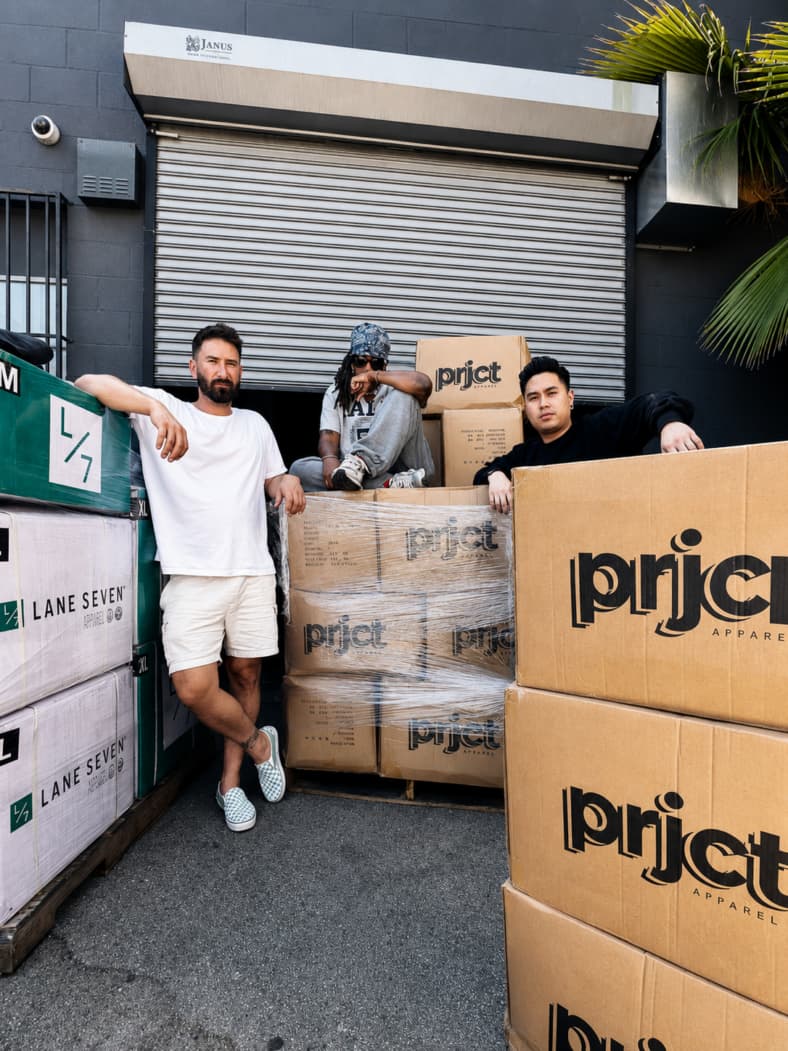
In 2025, Infante launched Prjct Blanks, a proprietary line of premium blanks manufactured and finished on Milkyway’s own equipment. The company is also building Prjct Merch, a Shopify-connected platform that allows customers to upload artwork, receive instant pricing and route jobs directly into production.
The Fab Factory investment brings both capital and creative adjacency to the Milkyway operation. Tai Savet, who led the business acquisition, joined as an investor alongside Ketrina “Taz” Askew, longtime manager of Grammy-nominated artist Jhené Aiko, and Chris Cyre, a music and merchandise veteran.
For Fab Factory chairman Steven Fabos, the strategy builds on a proven playbook. Before founding Fab Factory, Fabos started Steven Charles, a gourmet dessert company that became the private-label supplier behind Starbucks’ cake pops and was later acquired by Bain Capital-backed DessertHoldings. He has consistently pursued vertical ownership across his business ventures.
“Quality becomes defensible when you own the infrastructure,” Fabos said. “Milkyway has the same DNA: own the product, own the process and build something that can scale without losing its standard.”
The deal reflects a maturation in how artists view merchandise revenue. Creators are no longer treating product as a peripheral brand extension. Apparel, blanks and limited-edition merchandise are now core business lines with real margin potential.
Infante said creators increasingly demand that merchandise quality match the quality of their content. An artist with a global fanbase cannot afford to sell low-quality apparel bearing their name; it damages the brand. By controlling manufacturing, Milkyway ensures every product meets the production standard the brand requires.
Savet, who led the acquisition, framed the partnership in those terms. “Fab Factory sits at the source of culture. Milkyway gives that culture a product engine. When those two businesses operate under one roof, every recording session, campaign, fan moment and brand activation has a direct path to commerce,” he said.
From a business standpoint, the investment addresses a structural problem in creator monetization. Artists have historically ceded merchandise revenue to third-party operators in exchange for outsourcing operational complexity. By moving that function in-house, Fab Factory and Milkyway are capturing margin at multiple points: manufacturing, decoration, fulfillment, and potentially platform licensing through Prjct Merch.
The campus consolidation also improves operational efficiency. A brand can now shoot content, produce video, design merchandise and manufacture apparel without coordinating across multiple vendors and supply chains. That speed translates to faster time-to-market for limited-edition drops and faster inventory turns.
For Fab Factory, the investment extends its role beyond studio operator into a comprehensive entertainment infrastructure platform. The company now owns the full creator pipeline: content creation, post-production and commerce fulfillment. That ownership structure increases customer switching costs and makes Fab Factory a more valuable strategic asset for entertainment companies and management firms seeking integrated production services.
Terms of the investment were not disclosed.
:max_bytes(150000):strip_icc():format(jpeg)/Project-Runway-063026-e908cc6d79a04b8883253dd2fcec5589.jpg)
Roach claimed new “Project Runway” contestant and former “Drag Race” queen Plane Jane reused a look from the RuPaul-hosted show’s runway.
The gangster genre has been an enduring genre for nearly a century, evolving to reflect the times, from the Prohibition era to the modern age. Some of these movies have been staples in cinema, not only the best of the genre. They have a common theme: they reveal the human drama behind the violence, whether it’s set in Las Vegas or Hong Kong. This universality has made them favorites for cinephiles and casual audiences alike.
The gangster movies on this list have little to no flaws, featuring unforgettable performances, masterful direction, and stories that remain just as compelling decades after their release. You’ll find the usual suspects on this list, like Martin Scorsese, Robert De Niro, Al Pacino and Joe Pesci (The Irishman is not included, though), but also there are movies that you may have missed or underappreciated before. These are the gangster movies that are perfect in all senses of the word.

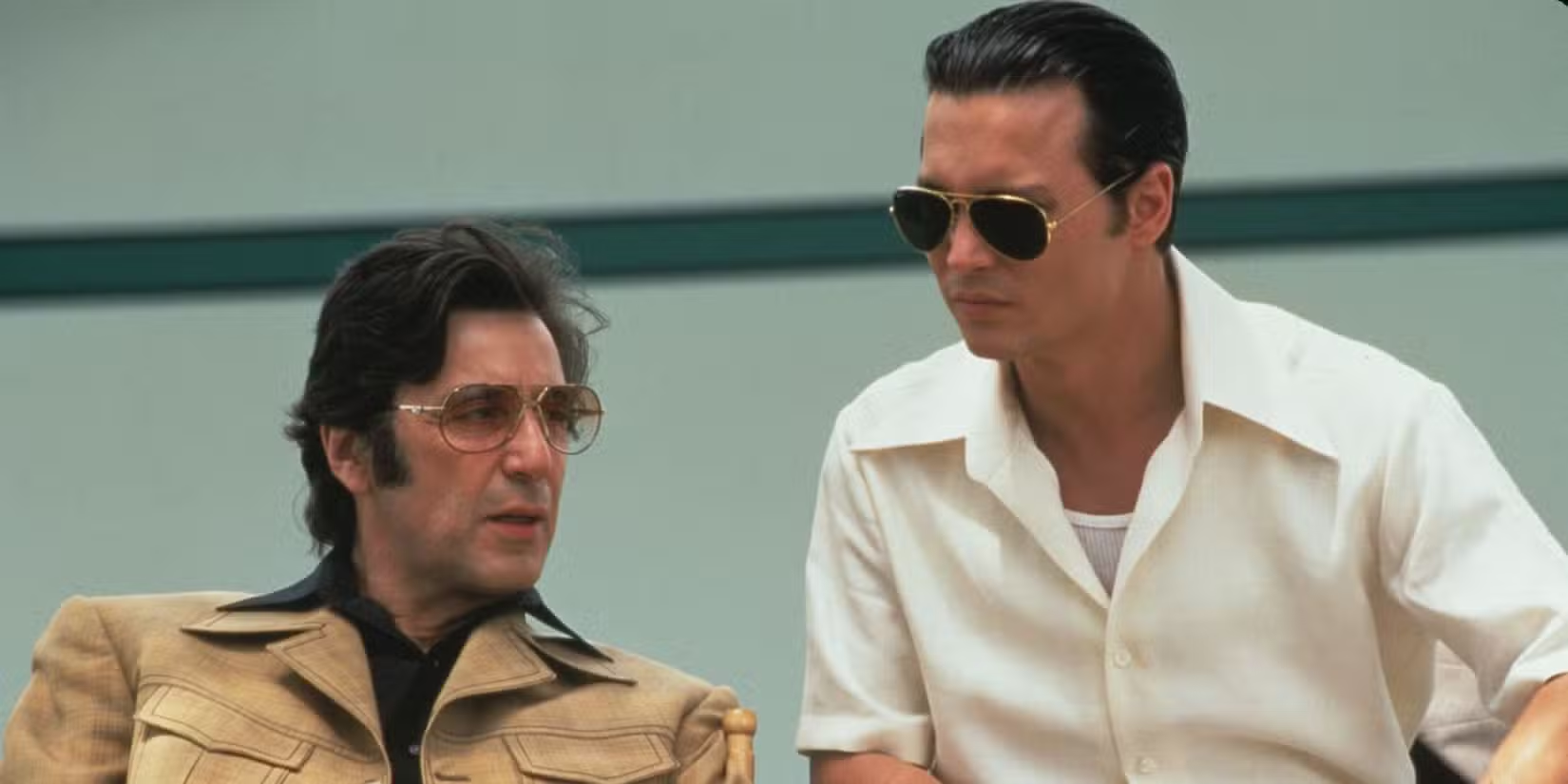
Based on a true story, Donnie Brasco follows FBI agent Joseph Pistone (Johnny Depp) as he infiltrates the New York mafia under the alias Donnie Brasco. His mission is to gain the trust of aging mobster Lefty Ruggiero (Al Pacino) and gather intelligence on the operation from the inside. While he tries to stay committed, Donnie develops a genuine friendship with Lefty and struggles to maintain his double identity.
Unlike many gangster films that focus on powerful crime bosses, Donnie Brasco explores organized crime from the perspective of smaller people in the organization. Its greatest strength lies in the relationship between Donnie and Lefty, which becomes increasingly tragic as the story progresses. Both men are ultimately victims of circumstances they cannot fully control. Depp and Pacino gave nuanced and emotional performances, making Donnie Brasco one of the most rewatchable gangster movies in recent memory.

Eastern Promises begins when a midwife named Anna (Naomi Watts) investigates the identity of the woman she helped give birth to. The clues lead her into the Russian mafia and its trusted driver, Nikolai Luzhin (Viggo Mortensen). As Anna digs deeper, she finds a darker conspiracy that leads the mafia boss to threaten her to stop.
Directed by David Cronenberg, Eastern Promises is one of the best modern gangster films because of its detailed character work and moral complexity. Cronenberg avoids many of the genre’s familiar clichés, and follows the story through the eye of an outsider, making it more immersive. Mortensen’s Nikolai is one of the most fascinating characters in the genre for his layered and enigmatic character. With its unforgettable sequences, particularly the bathhouse fight sequence, Eastern Promises is one of those films that’s just perfect in all aspects.

Set during the Prohibition era, Miller’s Crossing follows Tom Reagan (Gabriel Byrne), the trusted adviser to Irish mob boss Leo O’Bannon (Albert Finney). When tensions escalate between O’Bannon and rival Italian gangster, Tom finds himself caught in the middle. Complicating matters further is Verna (Marcia Gay Harden), a woman romantically involved with both Leo and Tom, whose connections to the conflict make everything more dangerous.
Miller’s Crossing is one of the most underrated gangster films. Directed by the Coen Brothers with stunning cinematography by Barry Sonnenfeld, the film is an intricate and dense chess match. While other gangster films focus on the action and violence, Miller’s Crossing focuses on grounded conflict about loyalty and trust. The Byrne/Finney duo deliver astonishing performances, while being supported by a quirky and memorable set of characters filled with the Coens’ friends. The film was a box office failure, which hampered its impact. Nevertheless, that doesn’t stop some critics and audiences from raving and even comparing it to The Godfather trilogy.

Infernal Affairs centers on two men: Chan Wing-yan (Tony Leung) is an undercover police officer who has spent years infiltrating a powerful triad organization, while Lau Kin-ming (Andy Lau) is a gang member secretly working within the police force as a mole for the criminal underworld. As both of their bosses realize they have a mole in their respective organizations, the two men desperately try to uncover the other’s identity before their cover is blown.
Infernal Affairs is one of the best imports from the vast library of Hong Kong gangster cinema. The premise might sound common, but the execution is simply extraordinary. Rather than focusing primarily on crime itself, the film examines the emotional toll of living a double life for years. Both protagonists are trapped between their identities, while also showing what could have been if they were on the other side. The relentless pacing and expertly crafted suspense make it a must-see. It famously inspired Martin Scorsese‘s The Departed, yet many still regard the original as the sharper and more emotionally resonant film.

The Untouchables follows Treasury agent Eliot Ness (Kevin Costner) as he attempts to bring down notorious crime boss Al Capone (Robert De Niro). Frustrated by widespread corruption within law enforcement, Ness assembles a small team of trustworthy officers, which includes Irish-American vet James Malone (Sean Connery) and ace trainee George Stone (Andy Garcia), to challenge Capone’s criminal empire.
Blending historical drama with the thrills of a classic Hollywood thriller, The Untouchables was a critical hit upon its release. Brian De Palma directs the film with suspenseful and memorable sequences, particularly the famous train station shootout. The film also benefits from larger-than-life performances from the all-star ensemble cast that elevate the story while remaining emotionally engaging. As a result, Connery was awarded a Best Supporting Actor Oscar for his performance. Rounded out by a beautiful score by Ennio Morricone and great production design, The Untouchables is one of the best gangster films of its decade.

Casino follows the rise and fall of Ace Rothstein (Robert De Niro), a gambling expert chosen by the mob to oversee a major casino operation in Las Vegas. Ace becomes one of the most influential figures on the Strip, while his volatile friend Nicky Santoro (Joe Pesci) enforces the mob’s interests through violence. At the same time, Ace’s troubled marriage to Ginger (Sharon Stone) spirals out of control, creating personal problems that affect the evolving empire.
The list is entering the Martin Scorsese and Robert De Niro territory now. The famed director is no stranger to gangster films, and with Casino, he dives into organized crime at its most glamorous and highest levels. Clocking in at over three hours, the film is remarkable for its attention to detail, offering a comprehensive look at how mob-controlled casinos operated at their peak. With its lavish visuals and energetic storytelling, it also plays out as a cautionary tale about power and self-destruction. Released so close to Goodfellas, the film did not enjoy the same love from critics and awards, but Casino surely has to be watched on its own merits because there are definitely plenty of them.

Road to Perdition follows Michael Sullivan (Tom Hanks), an Irish mob enforcer whose idyllic life is threatened after his son (Tyler Hoechlin) witnesses a murder. Eager to tie up loose ends, the son of the mob family (Daniel Craig) targets Sullivan and his loved ones, which then forces Sullivan and his son to flee across the Midwest while being hunted by a contract killer (Jude Law).
Based on a graphic novel series from DC Comics, Road to Perdition is a stylish and solid gangster drama, anchored by a powerful father-son relationship. Sam Mendes approaches the story through its characters first, while also delivering the usual gangster-film thrills. The film features stunning, Oscar-winning cinematography that turns even moments of brutality into visual poetry, while its performances from heavyweight actors like Paul Newman, Tom Hanks, and Jude Law provide emotional weight and entertainment. Road to Perdition is a deeply moving crime epic that combines the grandeur of classic gangster cinema with a focus on family and legacy.

Inspired by real events, Goodfellas follows Henry Hill (Ray Liotta), a young man who has dreamed of becoming a gangster ever since he was a kid. Henry gradually earns the trust of mobsters Jimmy Conway (Robert De Niro) and Tommy DeVito (Joe Pesci). Enjoying the wealth and influence that comes with the job, Henry becomes consumed by the lifestyle until the consequences catch up with him.
Goodfellas is considered the best gangster saga and the best Martin Scorsese film. From its opening narration, it is iconic. The famous tracking shots, colorful, memorable characters, and soundtrack all come together to create this masterpiece. Scorsese’s direction makes the audience feel the allure of the criminal world before exposing its ugliness. Goodfellas strips away romantic notions about gangsters by revealing the pettiness and greed beneath the glamour. This exhilarating crime story won Scorsese his Silver Lion for Best Director when it premiered at the Venice Film Festival, and went on to be nominated for six Oscars, winning one for Pesci.

Spanning several decades, Once Upon a Time in America follows David “Noodles” Aaronson (Robert De Niro) and his friend Max Bercovicz (James Woods) as they rise from street criminals in New York’s Lower East Side to powerful gangsters during the Prohibition era. As the gang grows richer and more influential, their relationships become strained by greed and jealousy.
Sergio Leone‘s final film is often overlooked in the gangster genre because of its epic scale. The colossal runtime resulted in the American distributors cutting the film down from nearly four hours to just two hours and twenty minutes. As a result, many cinephiles and fans seek the European cut, which is more sweeping and immersive. Tackling three different timelines, the film is ambitious and sprawling, providing the allure of the gangster world and regrets. Its dreamlike storytelling, sweeping cinematography, and haunting score by Ennio Morricone create an atmosphere unlike anything else in the genre. It is a great swan song for an influential director like Leone.

The Godfather follows the powerful Corleone crime family headed by the aging patriarch Vito Corleone (Marlon Brando) as he refuses to enter the narcotics trade, a decision that sparks a violent conflict with rival families. When Vito is nearly assassinated, his reluctant son Michael (Al Pacino), who initially wants nothing to do with the family business, is drawn into the criminal world and assumes his position as a leader.
What makes The Godfather arguably the greatest gangster film ever made is how it transcends the genre. Francis Ford Coppola crafts a story that functions as both a mafia saga and a Shakespearean family tragedy. The film itself showcases filmmaking at its best, where the lighting, blocking, music and performances all come together as a unit. Every character feels fully realized, from Vito’s quiet authority to Michael’s chilling descent into moral darkness. The film was nominated for eight Oscars and won three, including Best Picture and Best Actor for Brando. It is followed by two equally exemplary sequels that expand the Corleone family story in the underworld.
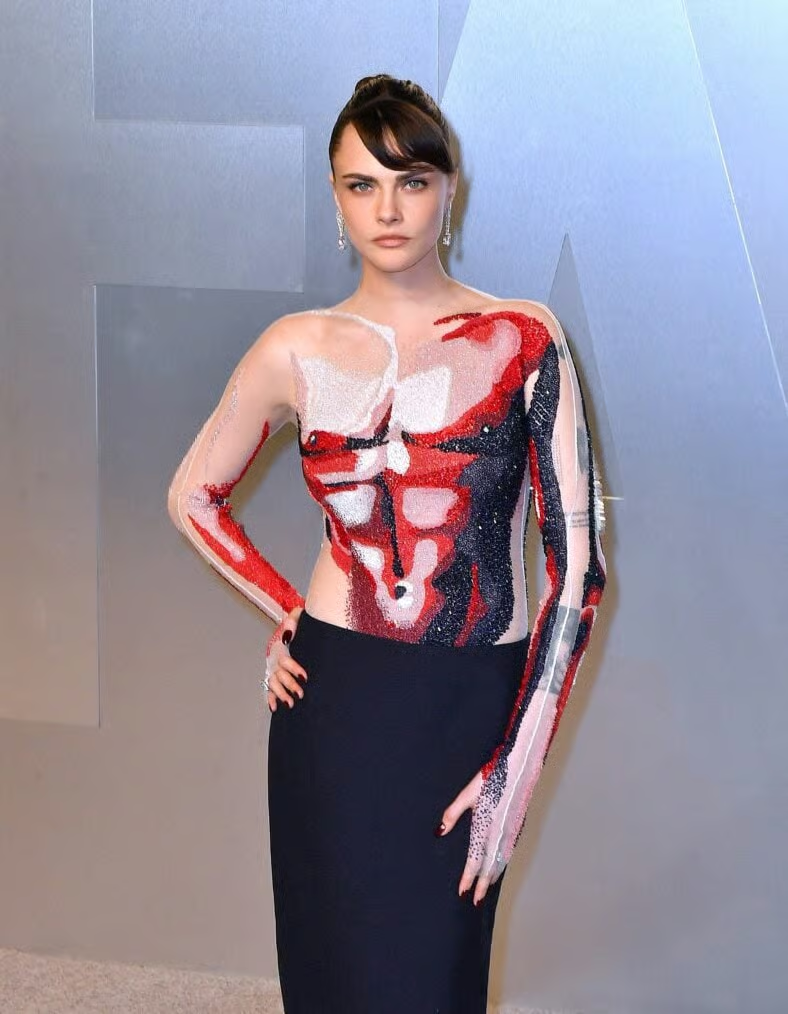
After years of speculation, Cara Delevingne is finally setting the record straight about her relationship with Amber Heard. The model and actress confirmed that she and Heard were romantically involved following the actress’ split from Johnny Depp, shedding new light on a rumor that has circulated in Hollywood for nearly a decade.
Delevingne made the revelation during a recent appearance on “The Louis Theroux Podcast,” where she discussed her connection to Heard and addressed long-standing reports that their relationship played a role in Depp’s jealousy.
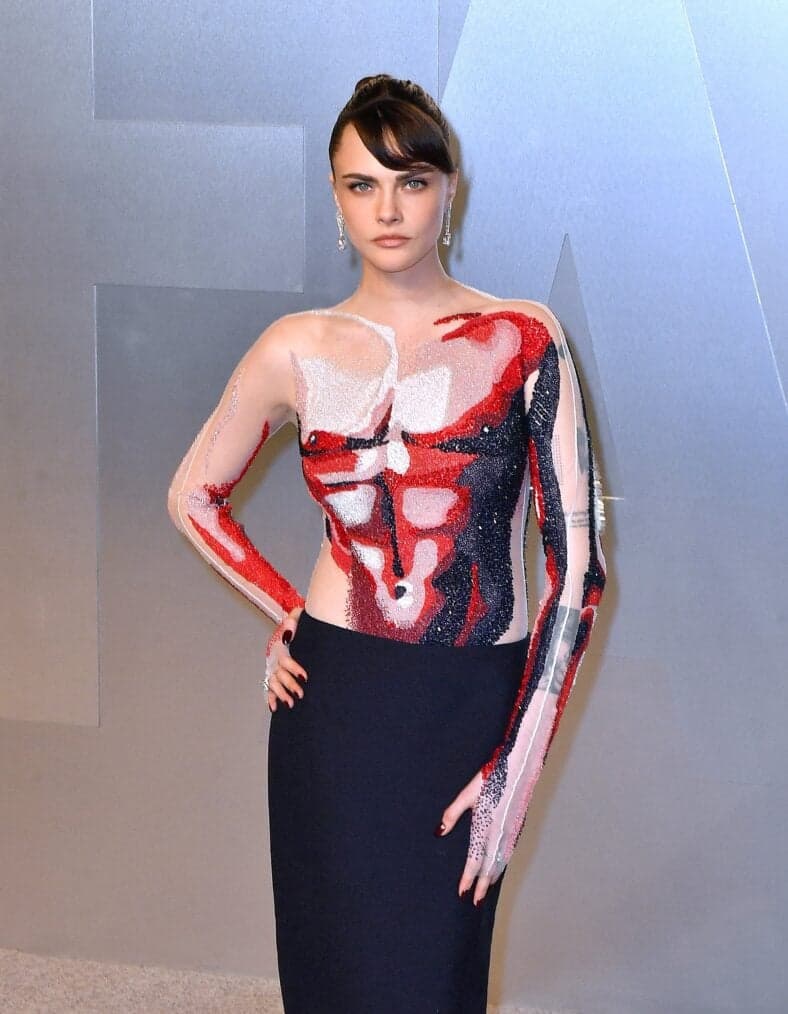
Rumors about Heard and Delevingne first surfaced in 2016 after the “Aquaman” actress finalized her divorce settlement with Depp and was photographed spending time with the supermodel in London. Now, Delevingne has confirmed there was truth behind the speculation.
“We were close for a long time, and then when they were going through the divorce, yeah, we were entangled, I suppose,” Delevingne said during the interview.
The actress later clarified there was no uncertainty about what happened between them. “Later, after they divorced, it had, I suppose… No, I don’t suppose. I know. Yeah,” she said.

According to Delevingne, her history with Heard dates back to 2013, when both women appeared in the film “London Fields” alongside Depp.
The movie, which starred Billy Bob Thornton, became notorious for behind-the-scenes legal battles between its director and producers. But Delevingne suggested there was also personal drama unfolding among some of the cast members.
Host Louis Theroux referenced reports that Depp had become upset over the possibility that Heard and Delevingne were involved romantically. “He was driven crazy by the idea that Amber might be sleeping with you,” Theroux said.
Delevingne acknowledged Depp’s jealousy but insisted nothing romantic was happening between her and Heard at that time. “Nothing was happening at that point,” she recalled.
She also claimed Depp “was pretty driven crazy by jealousy” during the filming of London Fields, which took place years before the couple eventually married.
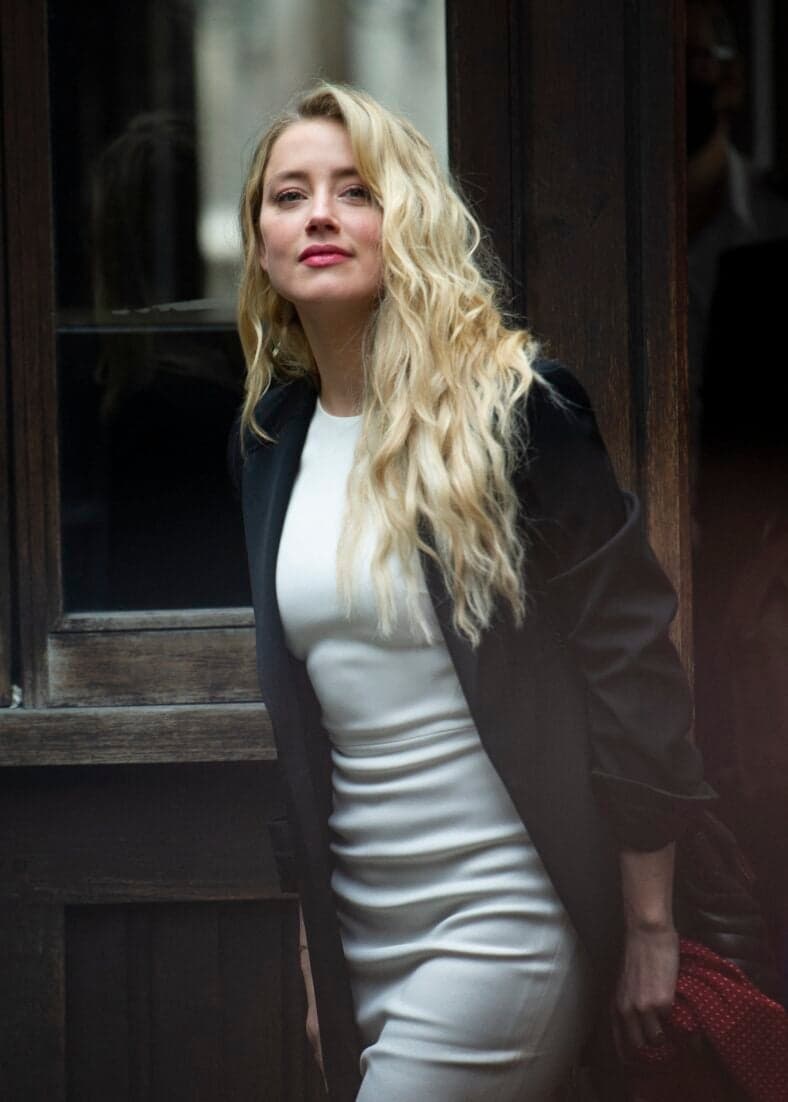
While discussing her relationship with Heard, Delevingne suggested she wasn’t the only person romantically involved with the actress after her divorce. According to Delevingne, Heard “was also entangled with other people.”
When Theroux suggested one of those people was Elon Musk, Delevingne responded, “There you go.”
Heard and Musk were romantically linked after her divorce from Depp, with the billionaire and the actress maintaining an on-again, off-again relationship for several years.
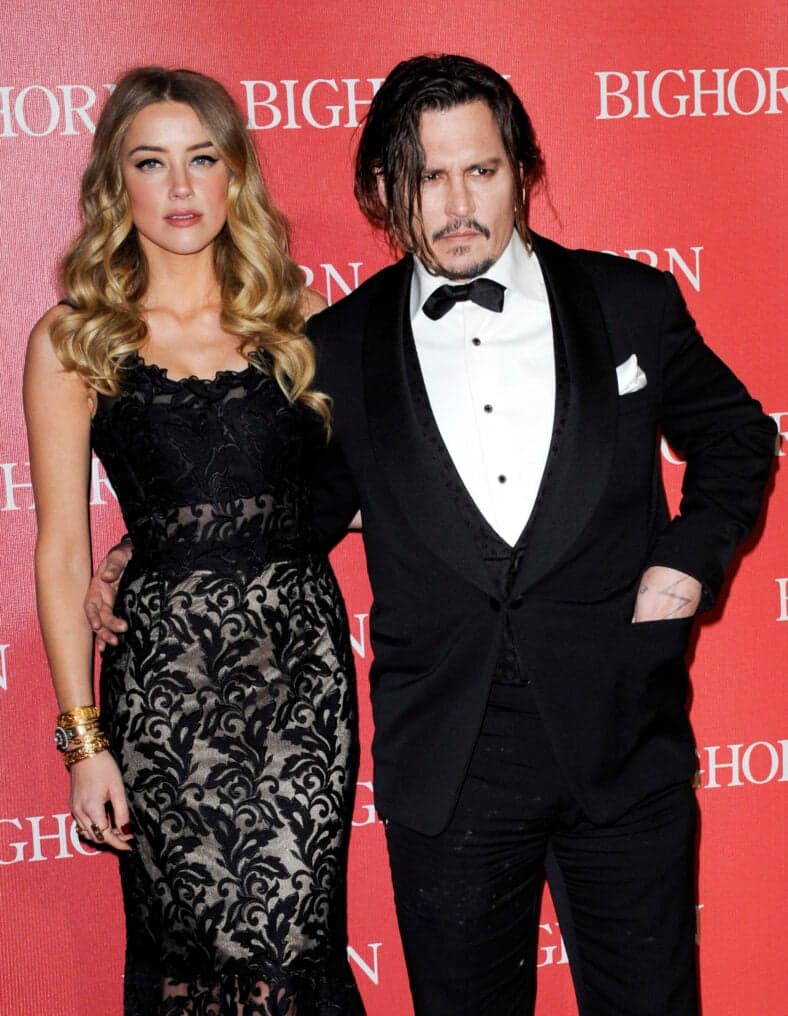
The revelations come years after Depp and Heard’s highly publicized legal fight dominated headlines around the world. In 2019, Depp filed a defamation lawsuit against Heard over a Washington Post op-ed in which she described herself as a survivor of domestic abuse. Although Heard never mentioned Depp by name, the actor argued the article damaged his reputation and career.
The 2022 trial became one of the most closely watched celebrity court cases in recent history, generating weeks of testimony, viral moments, and intense public scrutiny. Several high-profile figures, including Kate Moss and Ellen Barkin, testified during the proceedings.
Ultimately, the jury sided largely with Depp and awarded him millions in damages, though the final amount was later reduced.

Following the verdict, Depp released an emotional statement reflecting on the impact the allegations had on his personal and professional life.
“Six years ago, my life, the life of my children, the lives of those closest to me, and also, the lives of the people, who for many, many years have supported and believed in me were forever changed. All in the blink of an eye,” he said.
Depp also criticized what he described as an overwhelming wave of accusations and media coverage. “It had already traveled around the world twice within a nanosecond and it had a seismic impact on my life and my career,” he said. “And six years later, the jury gave me my life back. I am truly humbled.”
He further claimed the media circulated “false, very serious and criminal allegations” against him, creating what he called an “endless barrage of hateful content.”
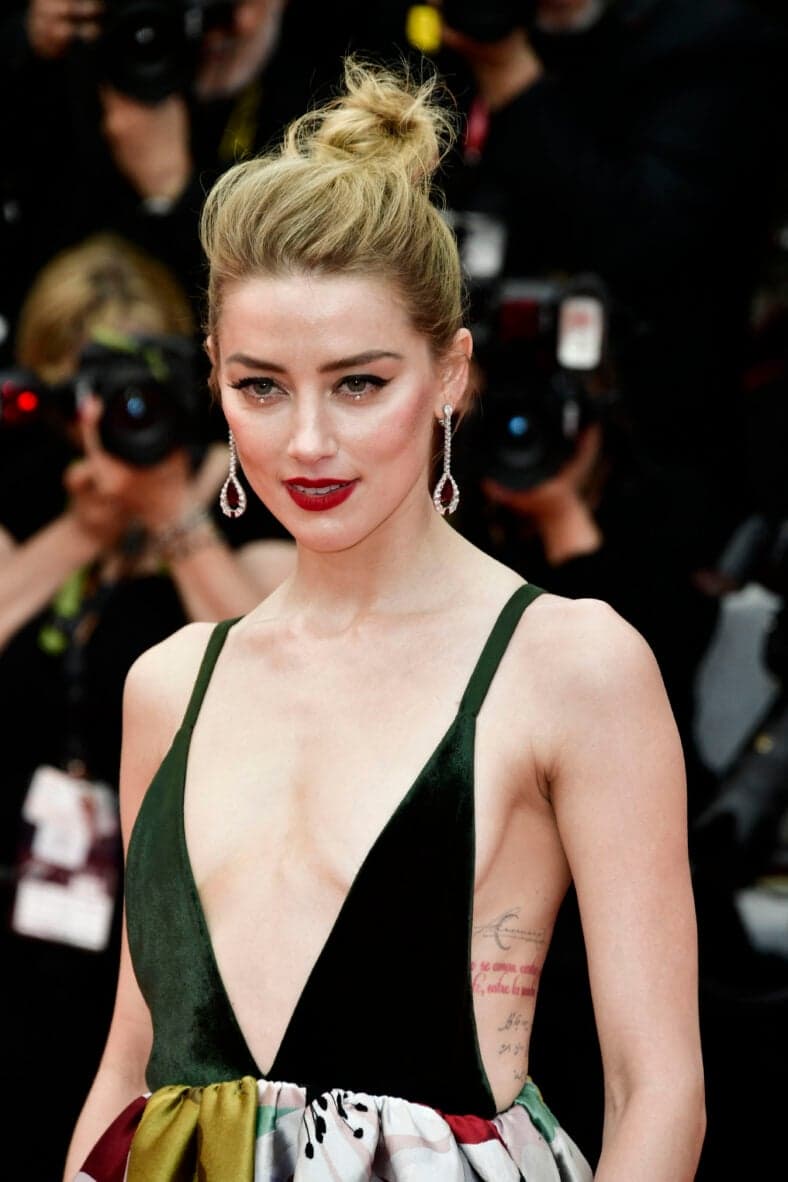
In the years since the trial, Heard has largely stepped away from the spotlight and relocated to Madrid, Spain. The actress is now raising her three children: daughter Oonagh and twins Agnes and Ocean, whom she welcomed in May 2025.
Earlier this year, Heard celebrated her growing family in a heartfelt Instagram post. “This year I am elated beyond words to celebrate the completion of the family I’ve strived to build for years,” she wrote. “I thought I couldn’t possibly burst with more joy. Well, now I am bursting times three!!!”









Weekend Open Thread: Staud – Corporette.com


The House | Manchesterism won’t survive the painful trade-offs unless it gets citizens on board


Strategy authorizes up to $1.25B in Bitcoin sales under new capital plan


Potential 2028er World Cup attendee leaderboard


Asia stock markets slide as tech shares slump


MAJOR BITCOIN & MARKET UPDATE!!!! (MUST WATCH ASAP!!!)


A Look At A Gaggle Of Transputer Boards

Dell (DELL) Shares Tumble Over 5% Following Analyst Downgrade to Hold


Coinbase, Circle Deepen Crypto Stock Losses Despite Resilient S&P 500


Australia treasurer says alleged access of prime minister’s bank data ’incredibly concerning’


Kraken's xStocks Opens Bending Spoons IPO Registration to EEA Retail


FIH Pro League: India defeat Pakistan 7-1, register biggest win of campaign | Other Sports News


Bitcoin Sparks $600M Hourly Liquidations With $65,000 Set To Become Resistance


Bluekit phishing kit adopts browser-in-the-middle for login theft


Russian hackers now target Signal backup recovery keys

Hyperliquid Named on Singapore MAS Investor Alert Register


Ripple and SBI launch RLUSD in Japan after JFSA approval


RTX holders must register wallets before token distribution begins


Anonymous researcher drops 0-day ‘exploitarium’ repo

The AI boom won’t burst all at once. It will pop in ‘rolling bubbles’: Macquarie
You must be logged in to post a comment Login