Entertainment
Christoph Waltz Doesn’t Act to Have Fun, Even in His New ‘Dracula’ Film [Exclusive]

Summary
- Dracula stars Caleb Landry Jones and Christoph Waltz in a new reimagining of the iconic character.
- The film marks another collaboration between Jones and writer-director Luc Besson following Dogman.
- In a post-screening Q&A, Jones and Waltz discussed the creative process behind the film and their approach to bringing this version of Dracula to the screen.
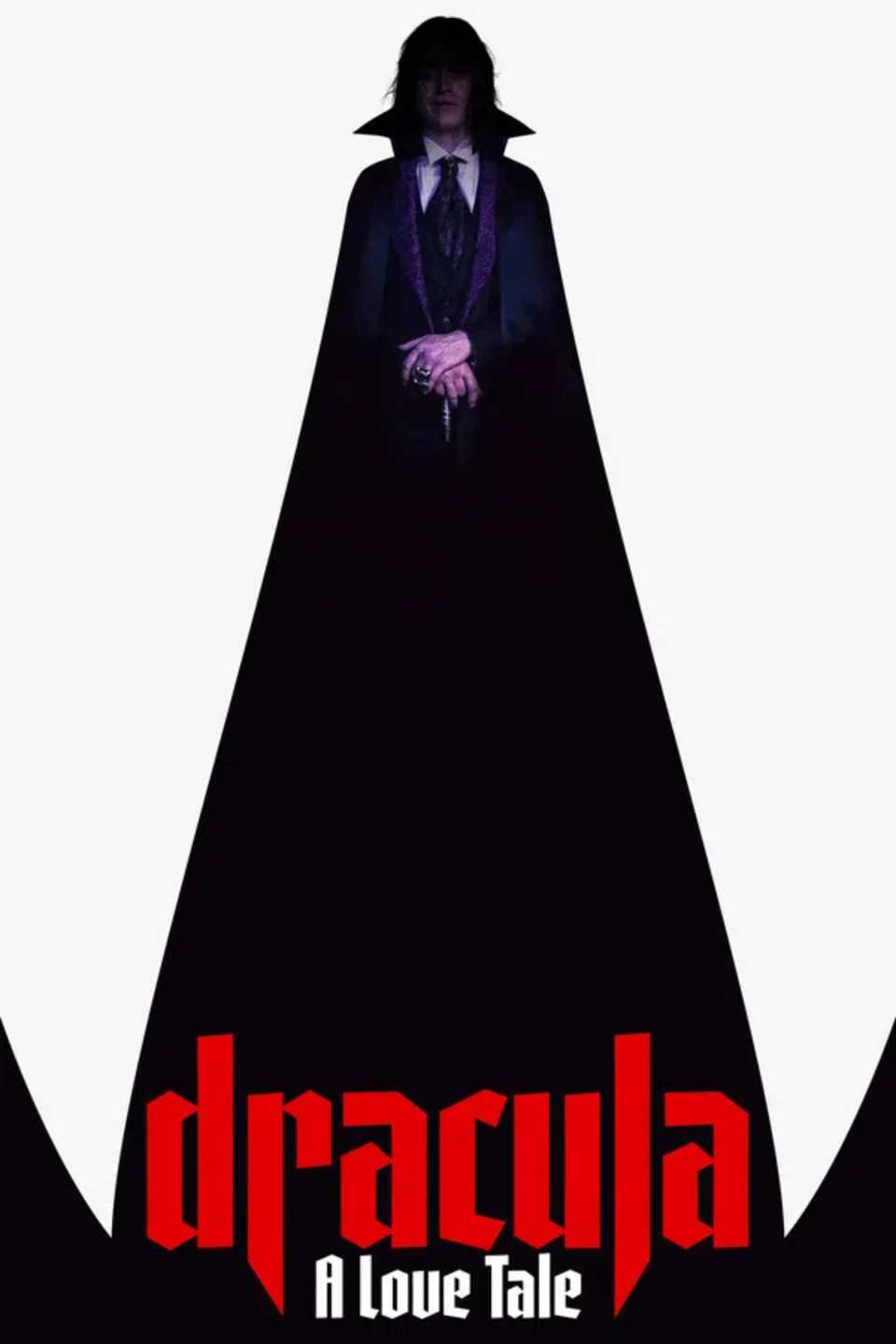
Count Dracula has been reimagined for film countless times, but the 2026 iteration approaches the iconic vampire through performance, restraint, and atmosphere rather than spectacle. Directed by Luc Besson, Dracula stars Caleb Landry Jones in the titular role and Christoph Waltz as the Priest, a Van Helsing-like character. Joining Jones and Waltz in the film are Zoë Bleu, Guillaume de Tonquédec, and more. Rather than leaning into scale or excess, the film centers on its characters, physical transformations, and mood, following two figures on intersecting paths that gradually move toward confrontation.
Following Collider’s early screening in collaboration with Vertical, Steve Weintraub moderated a Q&A with the two stars of Dracula, where Jones and Waltz reflected on some of their favorite films from titans of the industry, what drew them to Besson’s script, and the collaborative demands of working with a writer-director who remains deeply involved throughout production. The pair also discuss preparing for demanding roles, performing under heavy makeup and armor, seeing the finished film for the first time with Danny Elfman’s score, and why not every part of the filmmaking process needs to be explained off-screen.
Favorite Films from Titans of the Industry
Plus their favorite theaters to catch a movie in.
COLLIDER: How’s everyone doing? While we’re getting set up, can I introduce Christoph Waltz and Caleb Laundry Jones.
CHRISTOPH WALTZ: Hello. Good evening.
How are you guys doing tonight while we’re waiting for the camera to get set up?
WALTZ: Thank you for coming, everybody. I’m completely over, not over, I’m whelmed. Not overwhelmed.
How long have you guys been in L.A.? I don’t know where you guys are based. Have you been in L.A. for the last little bit or?
WALTZ: Yes. Yeah.
CALEB LANDRY JONES: I just want to know what you guys thought.
I was telling Caleb outside, I thought he was great. I really, I really did. You know, you guys are both such. And we’ll talk about this when the cameras are going, but I really love both of your work. I really do.
WALTZ: Thank you.
JONES: Which of the Draculas was your favorite?
Oh, don’t even play that way. Listen, I really want to start —
JONES: Two people said this one, so I know.
I really want to start with a huge thank you for doing this Q&A with us and being here and to Vertical for partnering up to do the screening. And I just want to say thanks.
WALTZ: Thank you.
JONES: Thank you.
And thanks to everyone here in the audience for coming out tonight on the school night. I appreciate it. Before we jump into Dracula, I like doing a get to know you. Let’s call it the get to know your Dracula actor. And so, I’ve been doing this with a lot of people recently, and I’m just very curious. It’s about filmmakers that I love and most of the audience loves. For each of you, do you have a favorite Martin Scorsese movie?
WALTZ: I have a favorite Martin Scorsese movie. It may be Mean Streets. And it’s not because these fabulous actors were so young and beautiful. It’s because it’s really, you know, especially historically for its moment in time, an almost revolutionary movie. And, yeah, I don’t care for the big things so much.
Just to follow up on that, there is a fantastic Scorsese documentary on Apple TV right now. It’s a five part session and it really gets into his early days.
WALTZ: It’s five parts, big thing, right?
JONES: $9.99, $14.
Yeah, but it’s a fantastic doc. Do you have a favorite Scorsese? You want me to move on to the next?
JONES: No, I was just thinking of a favorite. It’s tricky because there’s probably three, but the one that made me want to go to film school and stuff was Who’s That Knocking at My Door, because I’d never seen anything like that. Especially from an American film director. And it made me think, “Oh, you can make that in film school. You should go to film school.”
Sure. There’s a pretty cool screen card of your film that’s now above you.
JONES: Of Who’s That Knocking at My Door?
Exactly.
JONES: Oh, wonderful.
The next part of this question is another filmmaker. Do you have a favorite Christopher Nolan?
JONES: No, no, I like The Following a lot. I really liked that movie.
There’s two more. The next one is, Mr. Spielberg. It wasn’t.
JONES: The Following was… Was that a student film or just the first film?
It was his first film.
JONES: Was it in school?
He was filming it, like over the course of a few years, I believe, when he could get the actors and money. I could be wrong about that.
JONES: I like that.
Do you have a favorite Spielberg?
WALTZ: I forget the title. With the truck chasing the car.
JONES: The Duel, I think, right?
WALTZ: Yeah yeah yeah yeah, yeah. That really is my favorite Spielberg.
I’ve heard a few people say that actually.
JONES: I love The Animaniacs, but he did not direct that.
It’s a good answer. We’ll let it go. This is the last one.
JONES: That’s hard.
I mean, yeah, the next one’s the hardest. Actually, I’m a huge Stanley Kubrick fan. And do you have a favorite Kubrick?
JONES: Wow. Yes.
WALTZ: You know, I run through the Kubrick movies through my head and said, “Yeah, this is not… The next one. Yeah. This is no, no, that. Yeah. This.” And I can’t decide. I actually admire them all to a degree where I’m incapable of picking, favorite.
I think he’s an amazing filmmaker.
WALTZ: Yeah, you could say that.
Yeah. I mean, truly. And if anyone in the audience is not familiar with his movies. Please —
JONES: Go see Doctor Sleep. That was a bad joke, I’m so sorry.
One last thing before we get into your movie. I love seeing movies in movie theaters. I just love it so much. For each of you, do you have a favorite movie theater?
WALTZ: There is a tiny little theater in Vienna, and it unfortunately has closed down recently. It’s called the Balleria. And it was there since, I think, the 20s of the 20th century. And it is the loveliest little theater. And they only play sort of copies of films that only old people would know. I think that’s my favorite movie theater in the world.
JONES: That’s so sweet.
WALTZ: Yeah, you should come.
JONES: Well, they closed it down.
WALTZ: Maybe they’ll reopen.
JONES: I don’t have a theater like that. My theater got bought by Regal, and that turned into a massive mall of a place, but a great place to see Lord of the Rings. I loved it when I moved here, the cheapest cinema was the Beverly Cinema, and you could catch two movies for nine bucks. And so that was the one. And I lived a block away from Arclight and Egyptian’s not too far, so. But I never made it to Egyptian. But I was always excited that they were playing things like Bunuel.
WALTZ: This here was a nice movie theater when it was still a nice movie theater.
I have to say, one of the things that I really enjoy about this theater, this used to be an Arclight, and what I really like is what they’ve done with these screens. I’m dead serious. Like, this is some state of the art stuff in terms of projection.
WALTZ: But they don’t project anything onto it.
Do they actually project here?
WALTZ: Occasionally. Tonight.
We have one room that has projection here. Where exactly?
JONES: All right, there you go. I’m not sure what that means. Yeah, well.
We’ll just shoot. We’ll shoot it, but then just move on. Okay.
Reuniting With Besson After ‘Dogman’
“So it was a real honor for a filmmaker that I revere to come back to me with something else in this way.”


So, jumping into the film, one of the things that I read and what Luc told me was because of your work with him on Dog Man, that he was inspired to work with you again, and he was thinking about what can I do with you? And that’s where Dracula came in. And so what is it like as an actor when a director is that enamored by your performance that he wants to keep working with you?
JONES: It’s what I was looking for when I came out to L.A., when watching Scorsese, watching one movie back to back with something else. I don’t want to bring up Klaus Kinski, but, you know, when I read on the back that… or Jim Carrey shooting The Mask and — what’s the other one where he goes backwards, Pet Detective? You know, like the same year or something. I’m amazed by that. I’ve been fascinated by that for a very long time. Or Keaton from Beetlejuice to Batman. So it was a real honor for a filmmaker that I revere to come back to me with something else in this way. This is a real, very special thing.
Reading the Script and Collaborating With a Director-Writer
And why Jones trusts Besson the way he does.
I know you both read a lot of scripts. What was it like reading Luc’s script for this for the first time? And what was it about the material that said, “Oh, yes, I really want to be a part of this:?
JONES: Page 8. But you guys don’t know what that is. But we do.
WALTZ: With Luc it’s not a thing. Not a result. Before you actually start working on it. And it makes a lot of sense, you know, that it’s still a living organism. That that needs to be tended to and cared for. So you get you don’t read a script as something set in stone and say yay or nay. You enter a conversation and a discussion and that’s how you find yourself involved. All of a sudden, pleasantly and interested and engaged and all of a sudden you’re on a stage in a costume shooting this and you, in a way, you still continue deliberating. And that’s actually how it should be.
Actually, I want to do a follow up. If you don’t mind. I’m a big fan of Luc’s work. Can you talk a little bit about the collaboration on set with him? Because he writes and directs and he’s so involved in all the shots. What is it like collaborating with him, and how is he possibly similar or different to other filmmakers that you’ve worked with?
WALTZ: You answer that.
JONES: Okay. I mean, I’ve said things like this before, but on sets, you hear so many problems, and it can take hours and hours until there’s a solution. If there’s a solution they’re days or weeks or months or a year later for reshoots for the solution. And Luc is finding the solution immediately. And it usually means he has to step in and do it himself. But it’s also part of why I feel like I can trust him in the way I do when working with him because of how he works, the way he works: he’s investing all of himself. And he is not losing focus from the film ever while making the film. And these things alone are, I think, very rare. I’m usually very upset with the director when I see a director take the eye off the ball and joke around or start to become fearful about what we’re doing and what people will think. This stuff becomes very difficult suddenly, and Luc is always solving the problem. And together. We’re solving it together in some ways, too.
When you say scripts and Christoph is talking about, did you say delegating or deliberating? What was the word with the D? Yeah, it was with a D is a D word. And, you know, the end of the movie was something we were talking about probably from the beginning. I don’t know about yourself, but that was something from early on discussing, and “It doesn’t feel right. What is it?” And yada, yada, yada. Christoph and Luc were working on this together, and I kind of stepped back a little bit and said, “Yes, that looks good,” not knowing myself if it’s right or wrong, but I talk way too much, I thought.
The Comraderie Myth in Filmmaking
And how each actor prepares for a role in a film as heavy as ‘Dracula’.
I thought that answer was great. One of the things about the film is you’re both on different paths throughout the film leading up to that confrontation. I don’t want to do spoilers or anything, but what was it actually —
WALTZ: Just in case you haven’t seen it.
But what was it actually like when you guys filmed together? Was it towards the end of the shoot? Was it on purpose towards the end? And what was it like finally collaborating on screen?
JONES: We filmed and we went home to a separate place.
WALTZ: Yeah, if you don’t mind, please. It was pleasantly professional. You know, this whole camaraderie myth is a myth. I just exaggerated it to call it a myth. It’s important to get along with people, and we got along, and then we have our things to come back to after work. And I think that’s how it should be. You don’t need to get married to shoot a movie together.
I’m a huge fan of both of your work, and I think that what you put on this film is just fantastic. And I’m always curious about how actors get ready for roles because I’m just so impressed. So when you’re getting ready to do a role like this, for both of you —
JONES: There’s a lot of bad takes in there, Steven. I fell off the horse a few times.
But I never saw it. But that’s the movie magic.
JONES: That’s what I’m saying. That’s what you saw.
But I am really curious about what it’s like in those weeks leading up to the first day of filming in terms of, for both of you, how do you like to get ready for a role and if you could just talk a little bit about it?
WALTZ: It’s actually very straightforward. You start very relaxed and comfortable with yourself and then the tension increases slowly until you really hate yourself. And then you start working.
The thing is, I think you’re probably telling the truth with that.
JONES: I think there’s a lot of truth to that. For me.
But I mean, being serious, like you have to deliver this very intense emotional performance and you really put it on display in this. I really am curious, how are you thinking about the role before you’re stepping on set? If you could just talk a little bit about it. It seems like you might be reluctant, but I’m trying.
JONES: No, I’m not sure, honestly. Just trying to keep up. It’s hard to know what century I was in most of the time. When I was in makeup, I knew what timeframe it was. But when I wasn’t, sometimes I was very lost. Yeah, I don’t wanna bore him, you know?
Well, I’ll say something. I spoke to Joaquin Phoenix about the way he likes to work and he was reluctant about talking about it, but he said his favorite days on set is when he starts working and all of a sudden he realizes it’s lunch. Like he sort of disappears into the role and I found that so fascinating because it, you know, it was just…
WALTZ: You know that can be medicated.
That is true. But I think he was being sincere, you know?
JONES: He doesn’t eat?
No, he doesn’t do anything.
WALTZ: In all seriousness, I think there is no formula. There is no recipe. Everything, every role demands something else. Every day demands something else. Every scene demands something else. Every partner, every director. So that’s why experience helps because, you know, just to have something to fall back onto. But there is no, if someone says, “This is how I do it and this is how I always do it,” then, well, I’m happy. Good luck. It must be great to do it that way. I wouldn’t know.
There’s going to be a lot of fans of this movie and I love learning about the behind the scenes of the making of film and, like, interesting facts. So is there anything that you think would surprise people to learn about the making of Dracula?
WALTZ: No. You know, of course, if I may, I hope you forgive me, beg to differ because I don’t think it’s a positive thing to disclose what’s going on behind the camera. Now, everybody is an expert. Everybody criticizes a movie from a perspective that is not necessarily an audience’s perspective. Being an audience is, I mean, I’m talking about myself when I’m an audience, is a responsibility set aside from the responsibility from the ones who make the movie. There is the screen in between. And I think that’s how it should be. I don’t want to know how they made it. I just want to see what they made.
JONES: Some people really want to know what nail polish and breakfast and regimen.
WALTZ: It’s turned into a fringe industry and I think the focus needs to go on the story.
Okay. I’m curious how you found the voice of the character, Caleb.
JONES: A dialect coach. A dialect coach worked for three months on dialect and then it was a lot of just… groaning every morning and will it so.
Armor, Makeup, and the Physical Limitations of Both
“Sweat isn’t helpful.”

Something else I want to touch on. I loved the armor that you have in the beginning and I love the mask. Your mask is badass and I’m just curious, A, did you take it home and B, can I have it?
JONES: No, Luc’s got all of that stuff in a collection. So maybe someday we can see it in a museum. But yeah, no. But that was made by Terry and I forget his last name who worked on Excalibur. I love that movie a lot. You don’t love that movie, I bet.
WALTZ: No.
JONES: But it’s a great movie. Anyway, I’ve seen it five times, six times.
I want to do one other thing, which is I thought your makeup was exceptional when you’re 400. And I love the hair, I love the makeup and I talk a little bit about, do you enjoy working under that kind of thing? And part two is, is there any temptation to leave set when you’re in that kind of makeup just to get people’s reaction?
JONES: No.
I would so be taking it for a spin.
JONES: You’d think that. But no, no, no, you get that when you come out and nobody’s seen it and you get that and then you just want to get it off as soon as possible. But at the same time, it was not much. Frankenstein was crazy, this was nothing. They had it down to like four hours by the end and it was putting on gloves and then doing several pieces for the face and the chest. But they had it, I think, at a very, very easy job when it came to that. But you just hope it stays on, you know? And we get it.
How does that actually work though? Is it one of the —
JONES: Sweat isn’t helpful. That’s what I mean. You can’t poop. And you can’t eat, you know?
Dead serious.
JONES: Which works for Dracula.
I am actually legitimately curious when you’re in that kind of makeup or you’re wearing a costume that is very restrictive…
JONES: You could poop, that was my choice. And you could eat, that was my choice too.
How much though.
JONES: To not reapply later.
I am really serious about how much does that impact what you are putting in your body legitimately? Like are you thinking about certain liquids or certain foods?
JONES: Oh yeah, yeah, for sure. Yeah, don’t… I’m sorry to talk about it. You know, poop in the morning and make sure you don’t have to for the rest of the day. But that’s more because also-
WALTZ: That’s so interesting.
JONES: I’m giving you guys this stuff he said we don’t wanna give. Because I think there is something to it. And I love watching a three hour fan made something. But yeah, I’ll stop. But no, all those things somehow become helpful.
Seeing the Finished Film and Hearing the Score
“That’s what the music’s supposed to do: it opens a new dimension.”

What was it like for both of you seeing the film for the final version for the first time and hearing Danny Elfman’s beautiful music?
JONES: Yeah, we were upset that you cut it on this. Somebody cut it so fast. Guess we gotta get out of here.
It has to do with the Q&A.
JONES: I thought it was because of the police at a certain time, you can’t, because it’s not a theater that’s open every day.
100%. What was it like for both of you seeing it for the first time and hearing his music and the way Luc had cut it together?
JONES: I mean, I love Danny Elfman from The Simpsons onward, so that was amazing to see the movie. It’s just, you’re seeing the movie and you’re in the movie and you’re in a lot of the movie and you’re watching it back and it’s a little hard to watch. And so, luckily there is music that takes you away from that. There’s this particular sequence, I think, more at the end of the second act, if I’m not mistaken, where the music really starts to take hold where they start to charge the castle and he really gives it to the music in that way. And that was, I remember being very happy to see that in a movie and to be a part of that, you know? Because music gets used now. It’s like, I don’t know, the music is… I’m picky. So many people just play the keyboard, you know? Nothing against John Carpenter. Just, you know, there’s some really good stuff out there. A lot of it happened before I was born.
WALTZ: That’s what the music’s supposed to do: it opens a new dimension. So when you see it finally all mixed together, it is a different film. And, you know, I think you’re lucky if the music is that great. Because, as I said, a new dimension and a much, much grander dimension.
I’m just about out of time with you.
JONES: I was just thinking music’s so important and sometimes we’re watching movies. I don’t know about you guys, but I don’t know if AI wrote the script or if AI did the music or just folks just gave up, you know? So it’s very special to… Danny does the… I don’t know.
Looking Ahead and Outside of ‘Dracula’
“I take my work very seriously.”

No, no, I totally get what you’re saying. Christoph, just an individual for you. How much fun did you have being on Only Murders in the Building?
JONES: I just saw that, by the way.
WALTZ: Well…
JONES: I really liked it!
WALTZ: You know, along the lines of the above-discussed topics, I don’t really go to work to have fun. I take my work very seriously. Of course, you can have fun, but it’s a different kind of fun. And the fact that it is a comedy does not really influence the work itself so much. And comedy is just more difficult than the rest. So you have to be more precise and more attentive and more concentrated and more focused. And that way, I have more fun, but I admit only my kind of fun.
And my last question. Caleb I believe you co-wrote Down the Arm of God. I’m not actually sure when it’s coming out. What can you say about it, and what inspired you to co-write the script?
JONES: It feels weird with Christoph here, so I don’t want to take too much time. It’s a film that I believe very much in and with people that very much need a voice. And it’s a social impact film, I guess you can say, but these films are very hard to make. And nobody wants them right now. It’s frustrating. But I think that kind of work is very important.
100% agree. I’m looking forward to seeing it.
Dracula is in theaters now.

- Release Date
-
February 6, 2026
- Runtime
-
129 minutes
- Director
-
Luc Besson
- Writers
-
Luc Besson, Bram Stoker
- Producers
-
Virginie Besson-Silla, Luc Besson
You must be logged in to post a comment Login