

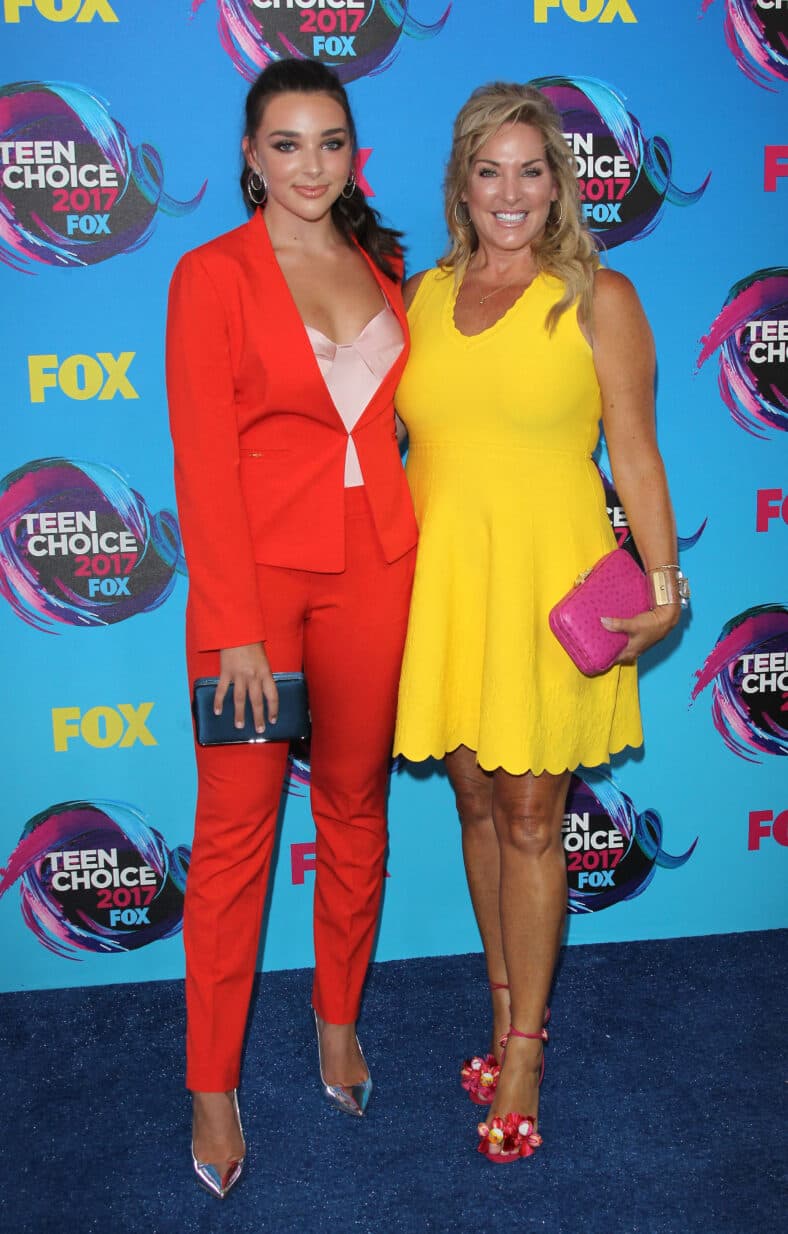

Is Kendall Vertes done with dance? She doesn’t think so.
During a new interview, the “Dance Moms” alum opened up about her desire to become a Dallas Cowboys Cheerleader.
However, there’s one thing about the team driving Kendall Vertes away.
Advertisement
According to PEOPLE, Vertes recently discussed her future as a dancer on her podcast, “Not So Little with Kendall Vertes,” and said she’s interested in becoming a Dallas Cowboys Cheerleader.
Elsewhere during the episode, however, she said the team being the subject of a new reality show, “America’s Sweethearts,” has turned her off.
“I thought about doing NFL dancing, but again … now that there’s reality television shows surrounding it, do I really want to go back down that alley?” she said.
Advertisement
For those who may be unfamiliar, Vertes spent several years on reality TV as a star of Lifetime’s “Dance Moms.”
While Vertes had some highs on the show, the veteran reality star wants to stay as far away from being on unscripted television as possible.
“Like, I want to enjoy dance without that intertwined into it again,” she said.
Kendall Vertes Said She Was ‘Destined’ To Be A Dallas Cowboys Cheerleader
MEGA
While speaking with PEOPLE on May 13, Vertes, 24, said that despite the show, she sees herself in a Dallas Cowboys Cheerleader outfit in the future.
“I feel like I’m destined to be a DCC cheerleader one day. You know my mom would love that too,” she said.
Advertisement
But in order to make the team, Vertes admitted she’d need to “get back in the studio” to brush some of the dust off.
And while appearing on the final roster will take hard work, Vertes revealed she’s more than willing to take on the challenge.
“I don’t think I’m done with dance just yet. That would be my closure,” she said.
Kendall Vertes Says She’s ‘Used’ To Filming Reality TV
Advertisement
Regarding her worries about the Texas-based cheer team still being followed by Netflix cameras when it’s her turn to perform at AT&T Stadium in Arlington, Vertes said she’d consider signing on because her love for dance outweighs everything else.
“I’m used to [reality TV],” Vertes said. “I just wouldn’t want the viewers to think that I’m doing it to stay in the spotlight. It would be for me and my love for dance. And of course it just so happens to be that there’s a TV show around it.”
Vertes Opens Up About Starting Her Podcast
MEGA
In November 2025, Vertes got candid about her decision to start her podcast, stating that it stemmed from her desire to create a more “mature” look.
“I felt like now’s a great time to share my life again with my followers who basically grew up with me, because we’re all going through this weird transition phase of going from being a college student into adulthood,” she said, per PEOPLE.
Additionally, Vertes said her podcast gives her the opportunity to speak directly to her followers, updating them on details of her personal life.
Advertisement
“I totally want to use this podcast obviously to emphasize my life after Dance Moms and what I am up to now and what career path I’m going to go on, but I also wanted to use this to kind of let people see who I really am because all they saw was 45 minutes of me basically crying on the TV show,” she said. “They didn’t get to see my full personality.”
Vertes Gets Real About ‘Past Trauma’ From Filming The Show
MEGA
According to Vertes, her “Not So Little” show also allows her to work through challenges she faced growing up in front of the cameras.
“A lot of my experiences as a child have kind of woven their way into my adulthood, and sometimes I’m like, ‘Why do I feel like this?’ And it’s like, ‘Oh, maybe it’s my past trauma speaking,’” she said.
Speaking of trauma, the TV personality said she’s never spoken to a mental health professional about her upbringing, but admitted she feels comfortable speaking about things online, especially because most of her followers grew up watching her.
“I think a lot of people just want to know what really went on behind the scenes,” she said. “Now it’s kind of our time to navigate those emotions and kind of shed light to it in a positive way and move on as well.”
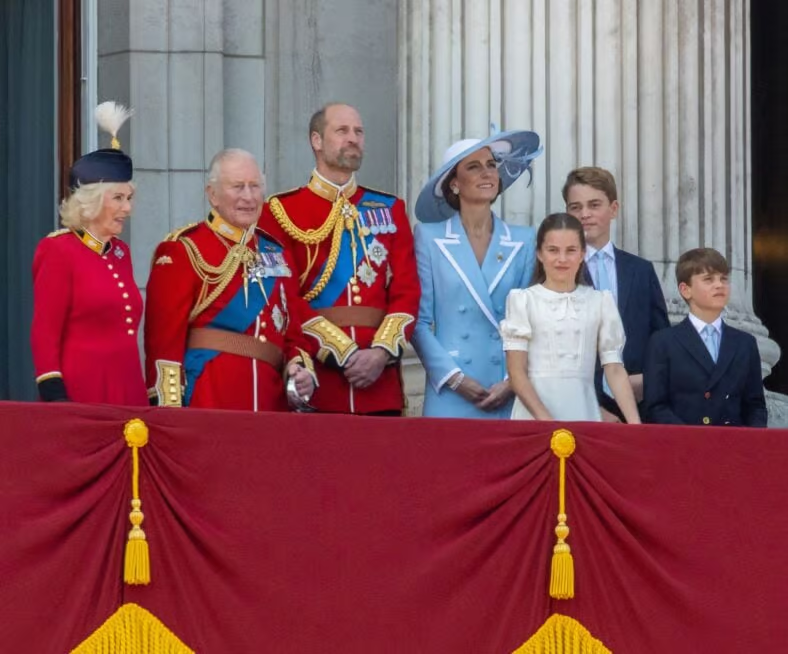
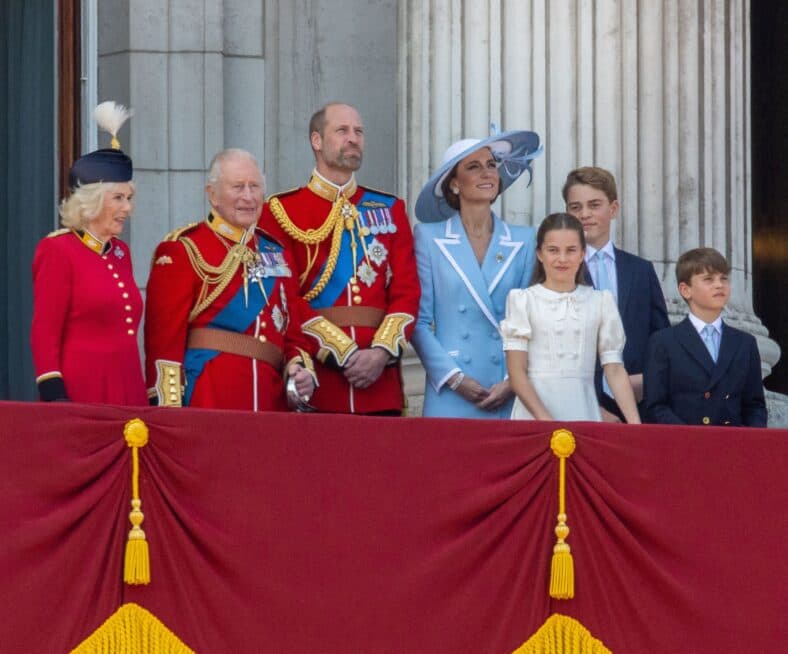
Taylor Swift and Travis Kelce‘s wedding may have been packed with celebrities, athletes, and entertainment icons, but a new report suggests the couple also shared a special moment with royalty before their big day. The revelation surfaced on the same day Prince William made a surprise appearance on Travis and Jason Kelce‘s “New Heights” podcast, creating an unexpected royal connection to one of the year’s biggest celebrity events.
ZUMAPRESS.com / MEGA
According to PEOPLE, Prince William and Princess Kate privately met with Swift and Kelce ahead of their lavish Madison Square Garden wedding celebration.
The meeting is believed to have taken place in May when Swift and Kelce were spending time in England. Around that same period, Prince William also discussed his appearance on the “New Heights” podcast, which Travis Kelce co-hosts with his brother, Jason Kelce.
Prince William Made A Surprise Appearance On The Kelce Brothers’ Podcast
The Prince of Wales joined the Kelce brothers for a special episode of “New Heights,” where Jason Kelce welcomed him with an introduction worthy of royalty.
Advertisement
“That’s right, the president of the English Football Association, the vice-royal patron of the Welsh Rugby Union, the Duke of Cambridge, the Duke of Cornwall, the Lord of the Isles, Prince and Great Steward of Scotland, Earl of Chester and the Prince of Wales … please welcome His Royal Highness, Prince William,” Jason said.
Laughing at the lengthy introduction, William responded, “That was quite an intro, guys, amazing!”
Jason quickly replied, “We had to do it big for you, had to do it big.”
Francis Dias/Newspix Internation / MEGA
During the conversation, William discussed his lifelong love of soccer and explained that it didn’t come from his father. When asked whether King Charles helped inspire his passion for Aston Villa, William immediately shut down the idea. “Absolutely not,” he said. “My father hates football.”
William explained that his love for the sport developed through friends rather than family traditions. “My family haven’t got a particularly long history with football,” he said. “My football love came from friends taking me to my first match.”
Advertisement
The royal recalled attending an Aston Villa versus Bolton match in 2000, which sparked a fandom that continues today.
Travis Kelce Calls Meeting The Royal Family One Of His Coolest Experiences
The private pre-wedding meeting wasn’t the first time Swift and Kelce crossed paths with the royal family. In 2024, Prince William attended Swift’s “Eras Tour” in London alongside Prince George and Princess Charlotte. Afterward, Swift shared a now-viral selfie featuring herself, Kelce, William, George, and Charlotte, writing “Happy Bday M8” in honor of the prince’s birthday.
Kelce later reflected on the experience during a “New Heights” episode. “They were an absolute delight to me. I wasn’t sure if I was supposed to bow to them or curtsy, or just be an American idiot and shake their hand.”
The NFL star singled out Princess Charlotte as the standout of the encounter: “She was a superstar.”
Advertisement
Jason agreed, saying, “She had fire to her, she was asking questions. That was the most electric part of it.”
Taylor Swift Has Long Shared A Special Connection With Prince William
ZUMAPRESS.com / MEGA
William and Swift’s friendship stretches back more than a decade. In 2013, the future king famously joined Swift and Jon Bon Jovi on stage during a charity gala at Kensington Palace, where the trio surprised guests with a performance of Bon Jovi’s hit “Livin’ on a Prayer.”
More recently, William has spoken publicly about how much his children enjoy Swift’s music. During a May appearance on “Heart Radio,” the prince revealed, “Charlotte, my daughter, and Louis, to be fair, but Charlotte particularly, is obsessed with Taylor Swift.”
When asked whether he would attend Swift and Kelce’s wedding, William playfully dodged the question, saying, “No comment.”
He then joked, “That feels like a showbiz excuse, but it’s not. I’m hoping, and I’m sure there might be an invitation around, but we’ll see.”
Advertisement
Prince William Didn’t Attend The Wedding
ALPR / AdMedia / MEGA
Although PEOPLE reports that William and Kate met privately with Swift and Kelce before the ceremony, the outlet noted that the royal couple ultimately did not attend the wedding itself. Still, the reported meeting adds another notable chapter to the growing friendship between the Prince and Princess of Wales and one of the world’s most famous couples.
And while Americans may not be getting a royal wedding anytime soon, Swift and Kelce’s Madison Square Garden celebration apparently came with a touch of royal approval.
Taking your child to their first concert can become one of those core childhood memories, the kind they’ll talk about decades later. But pulling it off well takes more planning than just buying tickets and showing up. From protecting little ears to picking the right seats, here’s how to make a first concert experience something both of you actually enjoy.
Is Your Child Old Enough to Go to Their 1st Concert?
Before you start scanning ticket sites, take an honest look at whether your child is genuinely ready for a live show. Babies and toddlers typically don’t do well at concerts, and the volume levels at most venues can actually damage their hearing. “Overall, taking small children to large concerts is not recommended given the lack of regulation surrounding sound standards at different venues,” Abhita Reddy, MD, a board-certified pediatric ENT/otolaryngologist at Cedars-Sinai Medical Center in Los Angeles, told Parents.com.
Beyond age, consider whether your child actually loves the artist. Authentic excitement carries a kid through the long lines, late nights and sensory overload that come with live music. If you’re chasing a hot ticket, hold off on telling your child until the tickets are officially in hand and look into signing up for the artist’s presale to improve your odds.
Choosing the Right Seats For a Kid’s 1st Show
Where you sit matters more than most first-time concert parents realize. If the artist plays multiple venue sizes on their tour, a smaller venue or outdoor amphitheater is often a gentler introduction than a packed stadium. The crowd feels manageable, the walks are shorter, and the overall experience is less overwhelming for a kid taking it all in for the first time.
Advertisement
There’s a common belief that floor seats are automatically the best because they’re closest to the stage. The reality is more complicated. Floor seating is level rather than angled, which means your sightline depends entirely on how tall you are compared to the people in front of you, which is a tough setup for a small child. Lower-level seated sections often strike the best balance, offering an unobstructed view of the stage without the pushing and competition of general admission floor, and they’re typically cheaper than floor tickets, according to GotStubs.
Whenever possible, grab aisle seats. They make bathroom runs, snack trips and early exits dramatically easier and you’ll want all three options available.
How to Prepare Your Child Before the Concert
A little prep work goes a long way toward avoiding meltdowns. Watch live concert clips of the artist together in the days leading up to the show so your child has a sense of what the volume, lights and crowd energy will feel like in person. Surprise can be exciting, but for first-timers, knowing roughly what’s coming helps them settle in faster once the lights drop.
A few practical items to pack:
Advertisement
Kids’ earplugs or noise-canceling headphones. Children’s ears are more sensitive to loud sounds, and concert volumes can cause real damage without protection.
Snacks and drinks, if the venue allows them. Concession lines run long and prices run high. If outside food isn’t permitted, arrive early to handle the lines before the show starts.
Layers. Venues can swing from chilly to hot and sweaty in a matter of minutes once a crowd fills in.
A small stuffed animal or familiar item for younger kids who might need something grounding if things get overwhelming.
If the show is going to run late, prep your child for a later bedtime and clear the next day’s schedule. A tired, overscheduled kid the morning after rarely remembers the magic of the night before.
What to Expect During the Concert
Get there early. Arriving before the crowd builds gives your child time to absorb the energy gradually, find your seats without rushing, handle bathroom and snack trips calmly, and visit the merch stand before lines balloon. A T-shirt or poster turns into a lasting reminder of the night well worth the detour.
Thank You!
You have successfully subscribed.
Once the show starts, watch your child more than you watch the stage. If they’re tired or overstimulated, leaving early is the right call. Pushing through a meltdown rarely ends well for anyone, and an early exit doesn’t erase the parts they enjoyed. Take a few photos before the lights go down, and try to catch a candid shot of their face during the opening song that look of disbelief and joy is the photo you’ll want years from now.
Advertisement
After the Show: Locking in the Memory
The car ride home is prime conversation territory. Ask what their favorite part was, what surprised them, and what they’d want to do differently next time. Those answers shape how you plan the next concert and they help your child process an experience that may have been bigger and louder than anything they’d been through before.
A first concert isn’t just about the artist on stage. It’s about your kid discovering what it feels like to be part of a crowd singing the same words, watching someone they admire perform a few hundred feet away, and realizing music hits differently when you’re hearing it live. Done right, it’s a memory that sticks.
World-famous history aficionado Tom Hanks can currently be seen in World War II with Tom Hanks, a 20-part documentary series that the Oscar-winning star has described as the most comprehensive telling of the conflict. Hanks’ fascination for WWII history goes all the way back to the 1990s, when he starred in Steven Spielberg‘s genre-defining masterpiece Saving Private Ryan. The movie was a critical and commercial hit, and it inspired a trilogy of WWII-era television shows that were released across two decades. More recently, Hanks headlined the WWII action film Greyhound, and he is now filming a long-awaited sequel. While fans wait for the new movie, they can revisit Saving Private Ryan on Prime Video, where it was added on July 1.
The movie debuted theatrically in 1998, only a few years after Spielberg won the Best Director Oscar for his Holocaust epic Schindler’s List. Like that film, Saving Private Ryan was a hit with audiences and critics alike. It remained the highest-grossing WWII movie ever made until it was overtaken by Christopher Nolan‘s Dunkirk, which was overtaken by Nolan’s own Oppenheimer. Saving Private Ryan grossed around $480 million worldwide against a reported budget of $70 million.
Advertisement
Advertisement
Collider Exclusive · Oscar Best Picture Quiz Which Oscar Best Picture Is Your Perfect Movie? Parasite · Everything Everywhere · Oppenheimer · Birdman · No Country
Five Oscar Best Picture winners. Five completely different visions of what cinema can be — and what it can do to you. One of them is the film that was made for the way your mind works. Ten questions will figure out which one.
🪜Parasite
🌀Everything Everywhere
☢️Oppenheimer
Advertisement
🐦Birdman
🪙No Country for Old Men
Advertisement
01
What kind of film experience do you actually want? The best movies don’t just entertain — they leave something behind.
Advertisement
02
Which idea grabs you most in a film? Great films are driven by a central obsession. What’s yours?
Advertisement
03
How do you like your story told? Form is content. The way a story is shaped changes what it means.
Advertisement
04
What makes a truly great antagonist? The opposition defines the protagonist. What kind of opposition fascinates you?
Advertisement
05
What do you want from a film’s ending? The final note is the one that lingers. What do you want it to sound like?
Advertisement
06
Which setting pulls you in most? Where a film takes place shapes everything — mood, stakes, what’s even possible.
Advertisement
07
What cinematic craft impresses you most? Every great film has a signature — a technical or artistic element that makes it unmistakable.
Advertisement
08
What kind of main character do you root for? The protagonist is the lens. Who you choose to follow says something about you.
Advertisement
09
How do you feel about a film that takes its time? Pace is a choice. Some films sprint; others let tension accumulate slowly, deliberately.
Advertisement
10
What do you want to feel walking out of the cinema? The best films leave a mark. What kind of mark do you want?
Advertisement
The Academy Has Decided Your Perfect Film Is…
Your answers have pointed to one Oscar Best Picture winner above all others. This is the film that was made for the way your mind works.
Advertisement
Parasite
You are drawn to films that operate on multiple levels simultaneously — that begin in one genre and quietly, brilliantly migrate into another. Bong Joon-ho’s Parasite is a film about class, desire, and the architecture of inequality that manages to be darkly funny, deeply suspenseful, and genuinely shocking across a single extraordinary running time. Your instinct is for cinema that hides its true intentions until the moment it’s ready to reveal them. Parasite is exactly that — a film that rewards close attention and punishes assumptions, right up to its devastating final image.
Advertisement
Everything Everywhere All at Once
You want it all — and this film gives you all of it. The Daniels’ Everything Everywhere All at Once is one of the most maximalist films ever made: action comedy, multiverse sci-fi, family drama, existential crisis, and a genuinely earned emotional core that sneaks up on you amid the chaos. You are someone who responds to ambition, who doesn’t want cinema to choose between being entertaining and being meaningful. This film refuses that choice entirely. It is overwhelming by design, and its overwhelming nature is precisely the point — because the feeling of being crushed by infinite possibility is exactly what it’s about.
Advertisement
Oppenheimer
You are drawn to cinema on a grand scale — films that understand history not as a backdrop but as a force, and that place their characters inside that force and watch what happens. Christopher Nolan’s Oppenheimer is a film about the terrifying gap between what we can do and what we should do, told with the full weight of one of the most consequential moments in human history behind it. You want your films to feel important without feeling self-important — to earn their ambition through sheer craft and the gravity of their subject. Oppenheimer does exactly that. It is enormous, complicated, and refuses easy comfort.
Advertisement
Birdman
You are drawn to films that foreground their own construction — that make the how of the filmmaking part of the what it’s about. Alejandro González Iñárritu’s Birdman, shot to appear as a single continuous take, is cinema examining itself through the cracked mirror of a fading actor’s ego. You respond to formal daring, to the feeling that a film is doing something that probably shouldn’t be possible. Michael Keaton’s performance and Emmanuel Lubezki’s restless camera create something genuinely unlike anything else — a film that is simultaneously about creativity, relevance, self-destruction, and the impossibility of ever truly knowing if your work means anything at all.
Advertisement
No Country for Old Men
You are drawn to cinema that trusts silence, that refuses to explain itself, and that treats dread as a form of meaning. The Coen Brothers’ No Country for Old Men is a film about the arrival of a new kind of evil — implacable, arbitrary, and utterly indifferent to the moral frameworks we use to make sense of the world. It is one of the most formally controlled films ever made, and its controlled restraint is what makes it so terrifying. You want your films to haunt you, not comfort you. You are not interested in resolution if resolution would be dishonest. No Country for Old Men is honest in a way that most cinema never dares to be.
Advertisement
Advertisement
Tom Hanks’ Love for Historical Films Continues
The movie now holds a “Certified Fresh” 95% score on the aggregator website Rotten Tomatoes, where the consensus reads, “Anchored by another winning performance from Tom Hanks, Steven Spielberg’s unflinchingly realistic war film virtually redefines the genre.” Hanks received an Oscar nomination for his performance, four years after he was denied his third nod in a row when the Academy ignored his performance in Apollo 13. Hanks was coming off two back-to-back wins, for the films Philadelphia and Forrest Gump, and was considered a favorite for Apollo 13. After Saving Private Ryan, Hanks and Spielberg co-created the HBO series Band of Brothers, which was followed by two spiritual sequels, The Pacific and Masters of the Air.
You can watch World War II with Tom Hanks on the History Channel, and Saving Private Ryan on Prime Video. Stay tuned to Collider for more updates.
Sara Bareilles is opening up about the “crazy” time she spent touring with rock band Maroon 5.
“Oh my god, it was crazy. It was crazy,” the singer, 46, said in a clip of a recent Rolling Stone interview shared via TikTok on Friday, July 3. “I saw cocaine for the first time. Like, went to use the bathroom at a party and there was a little — this [does] not even belong to the band, this was one of those things where we’re out and about.”
Bareilles continued, “I was like, ‘Oh my god, that’s cocaine.’ Couldn’t believe it. Still never done cocaine, guys. I don’t do drugs. Except with therapists.”
Bareilles famous attended UCLA as the same time as Maroon 5 band members Ryan Dusick and Mickey Madden. (The band also consists of lead singer Adam Levine, PJ Morton, James Valentine, Nate Morton, James Carmichael and Matt Flynn.)
Advertisement
After college and establishing themselves in their respective singing careers, Bareilles has toured with Maroon 5 on multiple occasions, including the band’s 2008 “It Won’t Be Soon Before Long Tour” and their 2012 “Hands All Over Tour.”
@thesarabareilles on writing a song based on Stephen Colbert losing his father and two brothers at a young age: On Anderson Cooper’s podcast, “He had this incredible conversation with Stephen Colbert. It’s these two men that I really love, and their tenderness with each other and about their loss was so moving to me.” #sarabareilles#goodgrief#stephencolbert#andersoncooper#allthereis
“Oh my god, those boys were so wonderful to us,” the singer continued of her experience on the road with the band. “They were so generous and so kind and they were, felt like big brothers. They took me on the road, our band, they took us under their wing, they shared everything they had.”
Advertisement
She continued, “It was — it was really awesome. I could not get over seeing all the girls. There was a lot of, like, literally throwing underwear. I thought it was, like, a trope that happened, but it’s real. They just throw their underwear, and I’m like, ‘Did you bring two pairs?’ is the first thing I think about, because if you’re wearing a skirt and you sit down on a surface your vagina is touching the chair. So, this is where my mind goes.”
In a January 2014 interview with CBS News, Bareilles opened up about how the members of Maroon 5 were able to alter the path of her singing career by showcasing her talents while touring.
“Those boys changed the trajectory of my life in a big way,” she told the news outlet at the time. “And yeah, I’m forever grateful.”
Thank You!
You have successfully subscribed.
Advertisement
In addition to discussing her on- and off-stage connection with the band, Bareilles also discussed the release of her new album “Good Grief” — her first in seven years — which focused on her depression and feelings of grief during the Covid-19 pandemic.
“What I realized is that grief must be witness. You must share it. It doesn’t heal on its own,” she explained. “And the recognition that is born from taking the time to share and unpack and just see each other in your grief is the thing that actually transforms and transmutes.”
She added, “Of course, I wish my friends were still here, but I am a different person because of losing them and loving them. And I am more of who I think I’m meant to be become because of it. So it’s wild. Grief is a miracle. It’s just love. It’s so beautiful.”
The 1996 summer blockbuster Independence Day is full of iconic moments that absolutely thrilled audiences. This includes the sight of alien vessels blowing up the White House and thrilling dogfights between American fighter jets and smaller extraterrestrial ships. Arguably, though, the most iconic thing in the entire film is Bill Pullman’s rousing “Today, we celebrate our Independence Day” speech. Onscreen, his powerful words rallied the entire world together in defiance of an alien invasion; offscreen, those words cemented Independence Day as the most patriotic movie of the ‘90s. Long story short? It’s impossible to think of this movie without remembering this amazing line.
Because of this, you may be shocked to discover that the movie’s script did not originally have this legendary line. Instead, it was added at the last minute to convince 20th Century Fox that the movie should be named Independence Day; Warner Bros. owned the rights to this title, and Fox wanted to name the movie Doomsday in order to avoid paying a rival studio. Fortunately, two weeks after Dean Devlin and Roland Emmerich snuck the line into the film’s dailies, Fox approved using the title Independence Day.
Sneaking In The Perfect Line
When Independence Day premiered in 1996, many fans thought it was the first film with this title. However, they were wrong: in 1984, Warner Bros. released a movie of the same name. That earlier film didn’t feature invading aliens. Instead, it focused on a small-town artist (played by Kathleen Quinlan) trying to make her dreams come true. It got mixed reviews, and very few people saw the movie because it was only available on VHS until 2015. However, its success (or lack thereof) didn’t matter. Because WB already had a movie with this title, 20th Century Fox wouldn’t be able to name their own blockbuster Independence Day without paying for the rights.
As you might imagine, Fox didn’t want to pay if they didn’t have to. Therefore, they used ID4 as a working title during production; for the theatrical release, they wanted to name the movie Doomsday to match the disaster vibe of other ‘90s films. However, writer Dean Devlin and director Roland Emmerich really, really wanted to name this movie Independence Day, so they hatched a plan. He knew that Fox executives were regularly viewing dailies from the film to ensure that their money (it had a $75 million budget) was well spent. Because of this, he teamed up with Bill Pullman to secretly convince those execs of the need for a name change.
The original script for Independence Day did have the big Bill Pullman speech, which his character used to rally the nations of the world together against the alien threat. However, it didn’t have the iconic “Today, we celebrate our Independence Day” line. Devlin and Emmerich conspired with Pullman, pulling him aside to add this new line. Their goal was simple: they wanted the Fox executives watching the dailies to be so moved by the end of the speech that they approved naming the movie Independence Day. Incredibly, the strategy worked: two weeks after execs viewed the dailies, 20th Century Fox negotiated a deal with Warner Bros. for the rights to the name.
All of this adds a wonderfully meta dimension to the ‘90s biggest blockbuster film. In the context of Independence Day, the end of the speech is used to rally the world together in the name of a righteous cause. In the real world, the end of the speech was used to rally studio executives into making the smartest name change in Hollywood history. It was a great call, really; like, can you imagine if this crowdpleasing movie had a name as generic as Doomsday? Fortunately, two men making a movie about out-of-this-world invaders were able to do the impossible and bring a bunch of stubborn studio executives back down to Earth.
It’s rare enough that a series over 40 years old finds new life in the present, with The Golden Girls being one of only a handful of series that come to mind. Rarer still is a Saturday morning TV staple of the same vintage that, likewise, finds a resurgence in the present. Yet She-Ra: Princess of Power has done just that, with the two-season animated series finding new life on the Apple TV store 41 years after its September 1985 premiere. And it’s not hard to see why.
‘She-Ra: Princess of Power’ Was a Series First
She-Ra: Princess of Power is a spin-off from He-Man and the Masters of the Universe, which itself was a spin-off of Mattel’s Masters of the Universe toy line. Unlike its parent, though, She-Ra: Princess of Power was developed as a series first, with Filmation and Mattel working together to create the show, with Mattel footing the bill. Writers Larry DiTillio and J. Michael Straczynski created the initial group of characters, which included She-Ra, sister of He-Man, her alter-ego Princess Adora, and her nemesis, the evil Hordak. They also came up with the premise, with Mattel releasing the accompanying toys after the series had begun production (but before the premiere).
Advertisement
Advertisement
Collider Exclusive · Universe Personality Quiz Which Iconic Universe Do You Belong in the Most? Star Wars · Lord of the Rings · Harry Potter · Game of Thrones · Star Trek
Five legendary universes. Five completely different visions of what the world could be — or already was. One of them is the world your instincts, your values, and your particular way of existing were built for. Eight questions will tell you which one.
🚀Star Wars
💍Lord of the Rings
🧙Harry Potter
Advertisement
👑Game of Thrones
🖖Star Trek
Advertisement
01
What gives your life its deepest sense of meaning? Every universe is built around a different answer to this question.
Advertisement
02
Which kind of world do you most want to inhabit? The environment shapes who you become. Choose carefully.
Advertisement
03
How do you prefer your conflicts resolved? The shape of a world’s conflicts tells you everything about its soul.
Advertisement
04
Who do you want beside you when things get difficult? Your ideal companions reveal the world you were made for.
Advertisement
05
What is your relationship with power? How you seek, wield, or resist power is the map of who you are.
Advertisement
06
How does your universe treat good and evil? A world’s moral architecture tells you more about it than any map.
Advertisement
07
What role would you naturally fall into? Every universe has archetypes. Which one fits you without trying?
Advertisement
08
What do you ultimately believe about the future? The answer to this is the clearest window into which universe already lives inside you.
Advertisement
Your Universe Has Been Chosen You Belong In…
Your answers point to the iconic universe your values, your instincts, and your particular way of seeing the world were built for. This is where you would find your people — and your purpose.
Advertisement
A Galaxy Far, Far Away
Star Wars
You believe in the cause — in the idea that freedom is worth fighting for even when the odds are impossible and the empire is vast.
Advertisement
You are drawn to the moral clarity of a universe where hope itself is a form of resistance.
You’d find your people in the Rebellion — a ragtag coalition of true believers held together by conviction more than resources.
Star Wars is fundamentally a story about ordinary people choosing to matter in an extraordinary conflict — and that is exactly your kind of story.
The Force may or may not be with you. But the will to use it for something larger than yourself certainly is.
Middle-earth
Lord of the Rings
You understand, in the deepest part of yourself, that the journey matters as much as the destination — and that the world’s beauty is worth protecting even at great cost.
Advertisement
Middle-earth is a world of ancient wonder, deep friendship, and a darkness that only retreats when enough small acts of courage accumulate.
You would thrive here because you value the fellowship more than the glory — the road more than the arrival.
Tolkien’s universe rewards patience, loyalty, and the willingness to carry something heavy across a very long distance.
Those are not burdens to you. They are simply how you move through the world.
The Wizarding World
Harry Potter
You believe that love, loyalty, and doing what’s right are not naive sentiments — they are the most powerful forces in any world, magical or otherwise.
Advertisement
The Wizarding World is a place of wonder hidden in plain sight, where learning is transformative and the bonds you form at school follow you into every battle.
You would flourish here because you take both the magic and the friendships seriously — and you understand that one without the other is incomplete.
Harry Potter’s universe ultimately rewards those who choose to stand for something even when standing is terrifying.
That choice — made quietly, without guarantee — is something you understand completely.
Westeros · The Known World
Game of Thrones
You see the world clearly — its power structures, its hypocrisies, its brutal arithmetic — and you are not paralysed by that clarity. You use it.
Advertisement
Westeros is a world that rewards intelligence, adaptability, and the willingness to understand that every alliance is also a negotiation.
You would survive here — possibly thrive here — because you don’t confuse the world as it is with the world as you’d like it to be.
Game of Thrones is a story about what happens when the idealists and the realists collide. You are sharp enough to know which one lasts longer.
Winter always comes. You are already prepared.
The United Federation of Planets
Star Trek
You believe the future is worth building — that curiosity, cooperation, and the expansion of understanding are not just ideals but the most practical path forward for any civilisation.
Advertisement
Star Trek is a universe where the questions matter as much as the answers, and where encountering something utterly alien is cause for wonder rather than fear.
You would belong here because you are fundamentally optimistic about what intelligence and decency can achieve — while being honest about how hard that achievement is.
The Federation is the universe’s most ambitious thought experiment: what if we actually got better?
You don’t just hope that’s possible. You think it’s the only thing worth working toward.
Released at a time when the most empowering female protagonist on Saturday morning was Smurfette, She-Ra: Princess of Power stood apart from its Saturday morning kin. The series is set on the planet Etheria, where Princess Adora (Melendy Britt) has lived ever since being kidnapped at birth by Hordak from Queen Marlena and King Randor of Eternia. Raised by Shadow Weaver (Linda Gary), Adora grew up believing the Horde kept peace in Etheria and served as a Horde Force Captain. That changed while on a mission in the Whispering Woods, where she encountered He-Man (John Erwin).
Advertisement
He has been tasked by the Sorceress (Linda Gary) to find the one who is destined to wield the Sword of Protection, a sword similar to that of his own Sword of Power. That just so happens to be Adora, who, after touching the jewel on the hilt, is contacted by the Sorceress. She reveals the truths that Adora has long been denied: her kidnapping as a baby, the true atrocities of Hordak and his Evil Horde, and that He-Man is her brother, Adam. The Sorceress then instructs her to exclaim, “For the Honor of Grayskull!” transforming Adora into She-Ra for the first time, and transforming her horse, Spirit, into Swift Wind (Erik Gunden), a flying unicorn. Together, they foil Hordak’s attack against the rebels, with Adora breaking rank and joining the Great Rebellion as their leader.
‘She-Ra: Princess of Power’ Is Groundbreaking and Still Relevant Today
She-Ra: Princess of Power may have been a spin-off, but it differs significantly in tone and thematically from its He-Man. The setting allows for a more fantastical tone, not the medieval sci-fi feel of its predecessor. There are wielders of magic like the absent-minded Madame Razz (Gary), imaginative characters like Swift Wind and Kowl (Gunden), a flying creature that looks like a cross between a koala and an owl with bright, rainbow ears, and more adult themes, like Adora’s arc of guilt and redemption, not unlike the struggle of another Warrior Princess that would appear 10 years later in live-action.
There’s also a key difference in the intentions of the two main characters. It’s as clear as the difference in the phrases used in their respective transformations, “I have the Power” versus “For the honor of Grayskull.” He-Man uses the Sword of Power as a weapon for conflict almost exclusively. She-Ra, on the other hand, bears the Sword of Protection, and while she does use it in combat, it also magically transforms into a shield, nets, or helmets as needed to protect. Her purpose to protect is never seen as less than He-Man’s purpose to fight: she is his equal, a strong, heroic protagonist in her own right, and the leader of a rebellion that boasts heroic protagonists.
1985 also happened to be the year that another series centered around a female protagonist, Jem and the Holograms, premiered, making the year a touchstone for female representation on television. The two series, as a result, were ahead of their time. With female representation on television as good as it’s ever been now, it’s clear She-Ra: Princess of Power was far ahead of its time. Morally, it’s positive, with a clear delineation between good and evil. It’s a clever blend of sci-fi and fantasy, has diverse characters, and, like Xena: Warrior Princess after it, bears hints of queer representation that was decidedly against what was allowed on TV at the time (and definitely not on Saturday morning). All told, these elements and more make it unsurprising that this 41-year-old animated classic has found a renewed popularity on Apple TV. Turns out she has the power, too.
You need to brace yourself for how many great books will not be found below. This is a rather reckless endeavor, to try to rank just 25 of the best books ever published, since there are great works of literature that are centuries old, at this point. Some authors of great books lived and died so long ago that they couldn’t have processed the idea of such books becoming movies, because cinema wasn’t a thing yet. Some legendary authors lived, wrote, and died before they could ever be photographed.
The point is, the novel, as an art form, goes back a wildly long time. There are probably more books to choose from, for a ranking like this, than most other art forms. So, please don’t be too alarmed. There was no attempt to please anyone here 100%, and instead, an attempt was made to highlight some classic staples, a few modern books that are on their way to becoming classics, a handful of pulpier novels that might not be “high art,” but they are entertaining, and then a few personal (maybe even selfish) picks from the person currently yapping, just because it keeps things interesting, and because a top 25 filled exclusively with the books you’d expect might be a little boring. Brace yourself. Snubs are coming.
Advertisement
25
‘Nineteen Eighty-Four’ (1949)
Image via Simon & Schuster
Kicking things off with something that’s a bit of a downer, here’s Nineteen Eighty-Four, which is an undeniably essential read. It feels like some people think just knowing about Nineteen Eighty-Four is enough, and it is, admittedly, iconic enough that a good many things in it are knowable without reading it in full… but you are missing out if you don’t tackle the whole thing.
George Orwell really did write one of the greatest dystopian stories of all time here, and its influence on pretty much all the dystopia-related novels, movies, and games (plus other things) made after 1949 can’t be denied. It’s mostly about a desperate/probably futile attempt to stand up against – and stand out in – a world that’s been pretty much ruined by a totalitarian superstate. It remains relevant, sad as that might be to admit, and really does feel so ahead of its time in so many ways.
Advertisement
24
‘Dracula’ (1897)
Image via Penguin Classics
Jumping back another half a century now (and don’t worry; it’s not going to be the only book from the 1800s here), here’s Dracula, which is quintessential as far as the horror genre is concerned, much like how Nineteen Eighty-Four is incredibly important within the bounds of dystopian fiction. Dracula is an epistolary novel about the titular count, a vampire, causing chaos, and a collection of characters who want to hunt down and kill him.
It’s simple in terms of its premise, but the style here does make it feel like something a little more special. Dracula also can’t be overlooked for how important it was for the century or so of horror to come, following its publication, and there isn’t really a story about a vampire – or vampires – that comes close, for sheer influence and importance. Even if you might feel uneasy about reading books that are more than a century old, Dracula is still worth taking on and devoting your time to.
Advertisement
23
‘Wuthering Heights’ (1847)
Image via Chartwell
This might seem like it’s establishing a pattern of jumping back 50 years with every new entry, but that’s not the case (promise). Wuthering Heights is a real classic, since it’s not far off being 200 years old, which is wild to think about. It would’ve been very out there for its time, one would imagine, in terms of how dark and angst-filled it’s willing to get as a story about love… kind of? But not really a love story, being more centered on obsession and a dangerous kind of passion.
You get a very strong feeling in your gut from reading Wuthering Heights, and such an experience has proven hard to translate and capture on screen, though that hasn’t stopped various people from trying. With Wuthering Heights, you do just have to read it, or maybe listen to it in full, and then it’s pretty easy to see what all the hype (a hype that has persisted for nearly two centuries) is about.
Advertisement
22
‘Empire of Pain’ (2021)
Image via Doubleday
Yes, Empire of Pain is a work of non-fiction, and there is going to be one other non-fiction book below, but they’re still books. Documentary movies are still movies, with filmmaking skills needed to make a good one, and you do have to be a good writer to craft a genuinely interesting non-fiction book. Thankfully, Patrick Radden Keefe is a phenomenal non-fiction writer, and Empire of Pain might well be the best demonstration of his writing skills to date.
He condenses a lot of information into a coherent and surprisingly epic narrative, with the focus being on the Sackler family and what it did throughout the 20th century to bring about the opioid epidemic, which has, for the most part, been a 21st-century problem. There’s more drama and dread here than you get in a good many works of heavy-going fiction, and Empire of Pain also well and truly feels like one of the most important books published in the last decade or so.
Advertisement
21
‘Lolita’ (1955)
Image via Olympia Press
When writing Lolita, Vladimir Nabokov just went for it in a way few writers had before, and also very few writers have since. He tackled some of the most challenging subject matter a work of literature has ever tried to tackle, since Lolita is about a sexual predator who becomes infatuated with his 12-year-old stepdaughter, nicknaming her Lolita and doing little else but manipulating her – and those around her – so that he can get closer to her, and abuse her.
This guy’s also the narrator, which is a wild approach to take, and it makes the whole novel challenging to read, since you have to be in his head the entire time. Further complications ensue because his way of describing his life is poetically done and sometimes even funny, so it’s hard not to feel conflicted about finding the style of the writing engaging and compelling, and all the while, the story – and what it’s dealing with thematically – is more horrifying than a good many works of actual horror. It’s a real trip of a book, to put it (far too) mildly.
Advertisement
20
‘A Storm of Swords’ (2000)
Image via Bantam Spectra
The highlight of the Song of Ice and Fire series to date (and it might remain the best of them, should books #6 and #7 never actually come out), A Storm of Swords is both huge and hugely satisfying. The War of the Five Kings breaks out near the end of book #1, is explored throughout book #2, and then here in book #3, escalates further, with many of the most distressing and cathartic sequences of the whole series found here.
If you know, you know. And even if you’ve not read A Song of Ice and Fire, but have seen Game of Thrones, then you also know, since the events of A Storm of Swords are largely covered throughout that show’s third and fourth seasons. It’s nice to never say never, in terms of the possibility of George R.R. Martin finishing his series, but even if he might go down in history as someone who couldn’t finish a long-running saga, his reputation for starting and then developing such a saga well (just minus an ending) will still be intact, for what that’s worth.
Advertisement
19
‘Infinite Jest’ (1996)
Image via Little, Brown and Company
Infinite Jest is near-infinitely dense, and it goes on and on and on in a way that’s equal parts impressive and frustrating. Actually, not equal parts. It’s more impressive than it is frustrating, since it is almost always interesting, not to mention sometimes quite entertaining, and always admirable with its scope. It’s about several different groups of characters that generally feel pretty separate from each other, though there is a film referred to as “the Entertainment” that unites all, since it has the ability to transfix anyone who watches it, ensuring their death, because it’s apparently just that entertaining.
It’s a strange book, in other words. It’s also over 1000 pages long, and those pages are more packed with text than you’d find in a more ordinarily formatted book. Infinite Jest is also somewhat infamous for all its endnotes, which are like another novel entirely when viewed on their own, so that does add further to the postmodern-ness of it all. It’s not the easiest thing to get through, by any means, but it is worth tackling, and ultimately proves very rewarding.
Advertisement
18
‘The Hitchhiker’s Guide to the Galaxy’ (1979)
Image via Pan Books
And now for something completely different, because The Hitchhiker’s Guide to the Galaxy is a brisk read, and an overall short book, compared to the aforementioned Infinite Jest. Both are pretty funny, for what that’s worth, though The Hitchhiker’s Guide to the Galaxy plays a particularly high number of things for laughs, in turn being a contender for the crown of “funniest book of all time.”
Humor in literature feels kind of rare, or at least books that are almost entirely comedic don’t feel as common as, say, movies that are 100% focused on being comedies. Though, to the further credit of The Hitchhiker’s Guide to the Galaxy, it also functions as an excellent piece of science fiction, and then if you find the whole thing too brief, for whatever reason, it thankfully kick-started a whole series, with Douglas Adams writing five Hitchhiker’s Guide books before his passing in 2001, with there being a sixth and final book, called And Another Thing…, written by Eoin Colfer and published in 2009.
Advertisement
17
‘The Count of Monte Cristo’ (1846)
Image via Penguin
One of the ultimate literary crowd-pleasers (or whatever you’d call the book equivalent of a crowd-pleaser), The Count of Monte Cristo also stands as one of the ultimate serial novels. It was published over a period that spanned 1844 to 1846, satisfying in the same way that the best TV dramas would more than a century later, with a good many cliffhangers found throughout to keep readers hooked.
For 180 years now, people have been able to read The Count of Monte Cristo as one complete work, and it delivers as a dramatic adventure tale about vengeance, crime, and justice all these many (many) years later. Of all the books published before 1900, The Count of Monte Cristo is up there among the easiest to read, and it’s all executed in a way that makes more than 1000 pages surprisingly digestible.
Advertisement
16
‘Wiseguy’ (1985)
Image via Simon & Schuster
Nyeah, this is a great book about the mafia, see? No, but for real, Wiseguy is incredible, and it’s that previously alluded to non-fiction book that deserves to be here. Maybe there should be more works of non-fiction here, beyond just Empire of Pain and Wiseguy, but to go back to that whole idea of not being able to please everyone, there might well be people who object to even two non-fiction books being here.
With Wiseguy, it tells a story you’d be familiar with, if you’ve seen Goodfellas, since it was the book that said Martin Scorsese gangster film was based on. Yet there’s also so much here that adds to what they were able to put into the movie, with Wiseguy feeling almost like the book equivalent of a Goodfellas extended/director’s cut. You get the style and narrative of the movie quite closely, just with more detail and events covered (and Henry Hill’s quoted extensively throughout Wiseguy, which mirrors the way Ray Liotta, as Hill, narrated so much of Goodfellas).
Cailee Spaeny is standing with dirty clothes and face in Pacific Rim Uprising.Image via Legendary Pictures
Hollywood has effectively milked the Chinese theatrical market for all that it was worth; audiences in the Middle Kingdom mainly watch local movies these days. Hollywood movies can still break through on occasion, but this is getting rarer by the year. There was a solid, decade-long period, however, during which American films would often gross more in China than in North America. Warcraft, for instance, made more than $225 million in China alone; the film’s total global haul stood at around $430 million. Furious 7, the highest-grossing installment of the Fast & Furious franchise, made nearly $400 million in China. The one movie that benefited greatly from a thriving Chinese market was Guillermo del Toro‘s first big-budget feature, Pacific Rim.
The film barely crawled past the $100 million mark domestically, but it was able to generate $111 million in the Middle Kingdom. In fact, its strong performance in China was what compelled Legendary Pictures to push ahead with a sequel. However, the production outfit switched distribution deals between the two movies, moving from Warner Bros. for the first film to Universal for Pacific Rim Uprising. Del Toro chose not to return for the sequel, even though he had dossiers of data on the world he’d created. The directorial duties were handed over, instead, to Steven S. DeKnight, who was a key creative force behind the popular television series Spartacus and Daredevil.
Advertisement
Advertisement
Collider Exclusive · Sci-Fi Survival Quiz Which Sci-Fi World Would You Survive? The Matrix · Mad Max · Blade Runner · Dune · Star Wars
Five universes. Five completely different ways the future went wrong — or sideways, or up in flames. Only one of them is the world your instincts were built for. Eight questions will figure out which dystopia, galaxy, or desert wasteland you’d actually make it out of alive.
💊The Matrix
🔥Mad Max
🌧️Blade Runner
Advertisement
🏜️Dune
🚀Star Wars
Advertisement
01
You sense something is deeply wrong with the world around you. What do you do? The first instinct is often the truest one.
Advertisement
02
In a world of scarcity, what resource do you guard most fiercely? What we protect reveals what we believe survival actually requires.
Advertisement
03
What kind of threat keeps you up at night? Fear is useful data — if you’re honest about what you’re actually afraid of.
Advertisement
04
How do you deal with authority you don’t trust? Every dystopia has a power structure. Your approach to it determines everything.
Advertisement
05
Which environment could you actually endure long-term? Survival isn’t just tactical — it’s physical, psychological, and very much about where you are.
Advertisement
06
Who do you want in your corner when things fall apart? The company you keep is the clearest signal of who you actually are.
Advertisement
07
Where do you draw the line — if you draw one at all? Every survivor eventually faces a moment that tests what they’re actually made of.
Advertisement
08
What would actually make survival worth it? Staying alive is one thing. Having a reason to is another.
Advertisement
Your Fate Has Been Calculated You’d Survive In…
Your answers point to the world your instincts were built for. This is the universe your temperament, your survival instincts, and your particular brand of stubbornness were made for.
Advertisement
The Resistance, Zion
The Matrix
You took the red pill a long time ago — probably before anyone offered it to you. You’re a systems thinker who can’t help but notice the seams in things.
Advertisement
You’re drawn to understanding how the system works before figuring out how to break it.
You’d find the Resistance, or it would find you — your instinct for spotting constructed realities is the machines’ worst nightmare.
You function best when you have access to information and the freedom to act on it.
The Matrix built an airtight prison. You’d be the one probing the walls for the door.
The Wasteland
Mad Max
The wasteland doesn’t reward the clever or the well-connected — it rewards those who are hard to kill and harder to break. That’s you.
Advertisement
You don’t need comfort, community, or a cause larger than the next horizon.
You need a vehicle, a clear threat, and enough fuel to outrun it — and you’re good at all three.
You are unsentimental enough to survive that world, and decent enough — just barely — to be something more than another raider.
In the wasteland, that distinction is everything.
Los Angeles, 2049
Blade Runner
You’d survive here because you know how to exist in moral grey areas without losing yourself completely.
Advertisement
You read people accurately, keep your circle small, and ask the questions others prefer not to answer.
In a city where humanity is a legal designation rather than a feeling, you hold onto something that keeps you functional.
You’re not a hero. But you’re not lost, either.
In Blade Runner’s world, that distinction is everything.
Arrakis
Dune
Arrakis is the most hostile environment in the known universe — and you are precisely the kind of person it rewards.
Advertisement
Patience, discipline, and political awareness are your core strengths — and on Arrakis, they’re survival tools.
You understand that the long game matters more than any single victory.
Others come to Dune and are consumed by it. You’d learn its logic and earn its respect.
In time, you wouldn’t just survive Arrakis — you’d begin to reshape it.
A Galaxy Far, Far Away
Star Wars
The galaxy far, far away is vast, loud, and in a constant state of violent political upheaval — and you wouldn’t have it any other way.
Advertisement
You find meaning in being part of something larger than yourself — a cause, a crew, a rebellion.
You’d gravitate toward the Rebellion, or the fringes, or whatever pocket of the galaxy still believes the Empire’s grip can be broken.
You fight — not because you have to, but because standing aside isn’t something you’re capable of.
In Star Wars, that willingness is what makes all the difference.
Advertisement
Here’s When You Can Watch ‘Pacific Rim: Uprising’ on HBO Max
Pacific Rim Uprising featured an all-new cast that included John Boyega, Cailee Spaeny, Scott Eastwood, and Adria Arjona. The movie also featured Chinese actors Jing Tian and Zhang Jin. The move made sense, and the sequel managed to gross $100 million in China. But it underperformed virtually everywhere else, grossing just $60 million domestically and around $291 million worldwide against a reported budget of more than $150 million. The movie now holds a 42% score on the aggregator Rotten Tomatoes, where the consensus reads, “Pacific Rim: Uprising won’t win any points for subtlety or originality, but it delivers enough of the rock ’em-sock ’em robots-vs.-kaiju thrills that fans of the original will be looking for.” The movie will be made available to stream domestically on HBO Max from July 17. Stay tuned to Collider for more updates.
Advertisement
Release Date
Advertisement
March 23, 2018
Runtime
111 minutes
Advertisement
Director
Steven S. DeKnight
Writers
Advertisement
Emily Carmichael, Kira Snyder, Steven S. DeKnight, T.S. Nowlin, Travis Beacham
Producers
Guillermo del Toro, Jon Jashni, Mary Parent, Cale Boyter, Thomas Tull, Femi Oguns
2026 has been a big year for fans of Steven Spielberg, particularly for those who are fond of his work in the sci-fi genre. Spielberg has been on a bit of a hiatus from sci-fi movies since 2018, when he directed the Tye Sheridan and Olivia Cooke-led blockbuster, Ready Player One. He has since worked on historical epics such as The Fabelmans and West Side Story, but through his production company, Amblin Entertainment, he has a producing hand in dozens of projects every year, even the ones he doesn’t direct. A few years ago, Spielberg worked with his long-time collaborator Tom Hanks on a project that’s still making strides on streaming after all this time — the duo famously worked together on one of the greatest war movies of all time, Saving Private Ryan.
Back in 2024, Steven Spielberg and Tom Hanks each served as producers on the Apple TV series, Masters of the Air. The series features some big names, including Dune: Part Two and Elvis star Austin Butler, as well as Callum Turner, who is being eyed as a potential favorite to play James Bond. For those who aren’t familiar with Masters of the Air, the best elevator pitch for the series is Top Gun: Maverick, but set during World War II, so there’s little to no surprise why it’s been such a fan-favorite. The series finale of Masters of the Air came out in March 2024, and although it’s been well over two years, the series is still in the Apple TV top 10 in a handful of countries around the world. This comes despite no renewal — the show is a limited series, so there was never a plan for Season 2.
Advertisement
Collider Exclusive · Oscar Best Picture Quiz Which Oscar Best Picture Is Your Perfect Movie? Parasite · Everything Everywhere · Oppenheimer · Birdman · No Country
Advertisement
Five Oscar Best Picture winners. Five completely different visions of what cinema can be — and what it can do to you. One of them is the film that was made for the way your mind works. Ten questions will figure out which one.
🪜Parasite
🌀Everything Everywhere
☢️Oppenheimer
🐦Birdman
Advertisement
🪙No Country for Old Men
Advertisement
01
What kind of film experience do you actually want? The best movies don’t just entertain — they leave something behind.
Advertisement
02
Which idea grabs you most in a film? Great films are driven by a central obsession. What’s yours?
Advertisement
03
How do you like your story told? Form is content. The way a story is shaped changes what it means.
Advertisement
04
What makes a truly great antagonist? The opposition defines the protagonist. What kind of opposition fascinates you?
Advertisement
05
What do you want from a film’s ending? The final note is the one that lingers. What do you want it to sound like?
Advertisement
06
Which setting pulls you in most? Where a film takes place shapes everything — mood, stakes, what’s even possible.
Advertisement
07
What cinematic craft impresses you most? Every great film has a signature — a technical or artistic element that makes it unmistakable.
Advertisement
08
What kind of main character do you root for? The protagonist is the lens. Who you choose to follow says something about you.
Advertisement
09
How do you feel about a film that takes its time? Pace is a choice. Some films sprint; others let tension accumulate slowly, deliberately.
Advertisement
10
What do you want to feel walking out of the cinema? The best films leave a mark. What kind of mark do you want?
Advertisement
The Academy Has Decided Your Perfect Film Is…
Your answers have pointed to one Oscar Best Picture winner above all others. This is the film that was made for the way your mind works.
Advertisement
Parasite
You are drawn to films that operate on multiple levels simultaneously — that begin in one genre and quietly, brilliantly migrate into another. Bong Joon-ho’s Parasite is a film about class, desire, and the architecture of inequality that manages to be darkly funny, deeply suspenseful, and genuinely shocking across a single extraordinary running time. Your instinct is for cinema that hides its true intentions until the moment it’s ready to reveal them. Parasite is exactly that — a film that rewards close attention and punishes assumptions, right up to its devastating final image.
Advertisement
Everything Everywhere All at Once
You want it all — and this film gives you all of it. The Daniels’ Everything Everywhere All at Once is one of the most maximalist films ever made: action comedy, multiverse sci-fi, family drama, existential crisis, and a genuinely earned emotional core that sneaks up on you amid the chaos. You are someone who responds to ambition, who doesn’t want cinema to choose between being entertaining and being meaningful. This film refuses that choice entirely. It is overwhelming by design, and its overwhelming nature is precisely the point — because the feeling of being crushed by infinite possibility is exactly what it’s about.
Advertisement
Oppenheimer
You are drawn to cinema on a grand scale — films that understand history not as a backdrop but as a force, and that place their characters inside that force and watch what happens. Christopher Nolan’s Oppenheimer is a film about the terrifying gap between what we can do and what we should do, told with the full weight of one of the most consequential moments in human history behind it. You want your films to feel important without feeling self-important — to earn their ambition through sheer craft and the gravity of their subject. Oppenheimer does exactly that. It is enormous, complicated, and refuses easy comfort.
Advertisement
Birdman
You are drawn to films that foreground their own construction — that make the how of the filmmaking part of the what it’s about. Alejandro González Iñárritu’s Birdman, shot to appear as a single continuous take, is cinema examining itself through the cracked mirror of a fading actor’s ego. You respond to formal daring, to the feeling that a film is doing something that probably shouldn’t be possible. Michael Keaton’s performance and Emmanuel Lubezki’s restless camera create something genuinely unlike anything else — a film that is simultaneously about creativity, relevance, self-destruction, and the impossibility of ever truly knowing if your work means anything at all.
Advertisement
No Country for Old Men
You are drawn to cinema that trusts silence, that refuses to explain itself, and that treats dread as a form of meaning. The Coen Brothers’ No Country for Old Men is a film about the arrival of a new kind of evil — implacable, arbitrary, and utterly indifferent to the moral frameworks we use to make sense of the world. It is one of the most formally controlled films ever made, and its controlled restraint is what makes it so terrifying. You want your films to haunt you, not comfort you. You are not interested in resolution if resolution would be dishonest. No Country for Old Men is honest in a way that most cinema never dares to be.
Advertisement
What Is ‘Masters of the Air’ About?
An official synopsis for Masters of the Air, which holds scores of 85% from critics and 73% from audiences on Rotten Tomatoes, reads as follows:
Advertisement
“Based on Donald L. Miller’s acclaimed book, Masters of the Air follows the men of the 100th Bomb Group — the ‘Bloody Hundredth’ — as they risk their lives high above Europe during World War II. Facing brutal odds, mechanical failure, enemy fire, and psychological strain, these American airmen forge unbreakable bonds while carrying out the Army Air Forces’ most dangerous bombing missions.”
Masters of the Air was written and created for TV by John Orloff, who is also known for his work as one of the lead writers on Band of Brothers. Orloff even penned the script for the 2011 conspiracy thriller, Anonymous, starring Rhys Ifans.
Check out all nine episodes of Masters of the Air on Apple TV and stay tuned to Collider for more updates and coverage of Hanks and Spielberg’s future projects.
“I’m heartbroken to have to withdraw from doubles,” Serena, 44, announced via Instagram on Saturday, July 4, alongside a video showing the athlete walking tenderly on her nearly fully-bandaged right leg. “Coming back to compete again has been a gift, and the opportunity to play alongside @venuswilliams once more meant the world to me. I did everything I could to be ready, but unfortunately my knee just isn’t ready to compete.”
The tennis star continued, “I’m especially grateful to tournament director, Jamie Baker, and the entire tournament team for giving me every opportunity to play here. Thank you to the fans for your incredible support and for making this comeback so meaningful…All I can say is stay tuned to a city near you…”
Serena returned to tennis back in June, coming out or retirement to team up with Victoria Mboko in a doubles match against Erin Routliffe and Nicole Melichar-Martinez. (Mboko, 19, suffered an injury that forced the pair to withdraw.)
Advertisement
“Queen’s Club feels like the perfect place to begin this next chapter,” Williams said in a statement to The Athletic on June 1. “Grass has given me some of the most meaningful moments in my career, and I’m excited to be back competing on one of the sport’s most iconic stages.”
In her highly anticipated lead-up to Wimbledon, Serena also competed at the Berlin Open alongside Karolina Muchova. (The pair ultimately lost to Guiliana Olmos and Erin Routliffe 6-4, 6-4.)
Serena then made her Wimbledon return in her first singles match in nearly four years against Maya Joint, at which point she tweaked her knee late in the first set of the much-awaited match. (Joint ultimately won the match 6-3, 6-7, 6-3.)
Thank You!
You have successfully subscribed.
Advertisement
“It fels so good to be back on the grass at @wimbledon,” she wrote via Instagram following her first-round loss. “I’m incredibly thankful for the wild card — and even more grateful my daughters got to see that it’s never too late to chase something you love.”
Julian Finney/Getty Images Serena Williams was reminded of another tennis icon — Roger Federer and his wife, Mirka — while watching Zendaya’s new film Challengers. In a review of the movie for Vogue, which was published on Friday, April 26, Williams, 42, opened up about seeing the real world of competitive tennis reflected in the […]
Advertisement
In addition to sharing a video of the athlete struggling to walk on her right knee, Serena also posted photographs of medical syringes filled with fluid taken from her knee and snapshots of what appeared to be a small part of her rehab process.
“The photo of the syringes shows the fluid they drained from my knee after my singles match…yikes!” Serena continued in the caption. “The good news is my knee shouldn’t swell or collect that much fluid again. The bad news is that, as hard as I tried, I just wasn’t able to get it ready for doubles.”
You must be logged in to post a comment Login