Most science fiction franchises tend to try to reinvent themselves over the years, with mixed results. Some, like Star Wars, return with new installments that often spark divisive discourse. Others, like Blade Runneror Tron, have extremely lengthy gaps between sequels. One sci-fi franchise not only reinvented itself in the early 2010s but also delivered a truly epic scale that very few blockbusters have matched. This honor goes tothePlanet of the Apesreboot series, which is available to stream on Hulu and Prime Video.
Starting with Rise of the Planet of the Apes, the new films focus on the birth of the titular Planet of the Apes, especially how the apes evolve into the dominant species on the planet. It’s not the first time someone has tried to reboot the series; Tim Burtonlaunched his own version of Planet of the Apes in 2001, and James Cameronwas even approached to revive the series on film before he eventually made Titanic. The new Planet of the Apes succeeds because it takes the time to show how its world is constantly evolving, offering a sense of growth that other sci-fi franchises lack. It also doesn’t hurt that one of Hollywood’s best directors helped take the series to a new level.
Advertisement
The ‘Planet of the Apes’ Reboot Revamps a Major Element of the Original Series
In the original Planet of the Apes, humanity has devolved into a mute class of workers while the apes lord over them. This led to arguably one of the greatest twists in science fiction history, in which George Taylor (Charlton Heston) discovers that the “planet” he’s landed on is actually Earth, ravaged by nuclear war. Rise of the Planet of the Apes shifts from a nuclear threat to a viral one, as scientist Will Rodman (James Franco) creates a drug called ALZ-112 to reverse the effects of Alzheimer’s disease.
Advertisement
Collider Exclusive · Sci-Fi Survival Quiz Which Sci-Fi World Would You Survive? The Matrix · Mad Max · Blade Runner · Dune · Star Wars
Five universes. Five completely different ways the future went wrong — or sideways, or up in flames. Only one of them is the world your instincts were built for. Eight questions will figure out which dystopia, galaxy, or desert wasteland you’d actually make it out of alive.
💊The Matrix
🔥Mad Max
Advertisement
🌧️Blade Runner
🏜️Dune
🚀Star Wars
Advertisement
01
You sense something is deeply wrong with the world around you. What do you do? The first instinct is often the truest one.
Advertisement
02
In a world of scarcity, what resource do you guard most fiercely? What we protect reveals what we believe survival actually requires.
Advertisement
03
What kind of threat keeps you up at night? Fear is useful data — if you’re honest about what you’re actually afraid of.
Advertisement
04
How do you deal with authority you don’t trust? Every dystopia has a power structure. Your approach to it determines everything.
Advertisement
05
Which environment could you actually endure long-term? Survival isn’t just tactical — it’s physical, psychological, and very much about where you are.
Advertisement
06
Who do you want in your corner when things fall apart? The company you keep is the clearest signal of who you actually are.
Advertisement
07
Where do you draw the line — if you draw one at all? Every survivor eventually faces a moment that tests what they’re actually made of.
Advertisement
08
What would actually make survival worth it? Staying alive is one thing. Having a reason to is another.
Advertisement
Your Fate Has Been Calculated You’d Survive In…
Your answers point to the world your instincts were built for. This is the universe your temperament, your survival instincts, and your particular brand of stubbornness were made for.
Advertisement
The Resistance, Zion
The Matrix
Advertisement
You took the red pill a long time ago — probably before anyone offered it to you. You’re a systems thinker who can’t help but notice the seams in things.
You’re drawn to understanding how the system works before figuring out how to break it.
You’d find the Resistance, or it would find you — your instinct for spotting constructed realities is the machines’ worst nightmare.
You function best when you have access to information and the freedom to act on it.
The Matrix built an airtight prison. You’d be the one probing the walls for the door.
The Wasteland
Mad Max
Advertisement
The wasteland doesn’t reward the clever or the well-connected — it rewards those who are hard to kill and harder to break. That’s you.
You don’t need comfort, community, or a cause larger than the next horizon.
You need a vehicle, a clear threat, and enough fuel to outrun it — and you’re good at all three.
You are unsentimental enough to survive that world, and decent enough — just barely — to be something more than another raider.
In the wasteland, that distinction is everything.
Los Angeles, 2049
Blade Runner
Advertisement
You’d survive here because you know how to exist in moral grey areas without losing yourself completely.
You read people accurately, keep your circle small, and ask the questions others prefer not to answer.
In a city where humanity is a legal designation rather than a feeling, you hold onto something that keeps you functional.
You’re not a hero. But you’re not lost, either.
In Blade Runner’s world, that distinction is everything.
Arrakis
Dune
Advertisement
Arrakis is the most hostile environment in the known universe — and you are precisely the kind of person it rewards.
Patience, discipline, and political awareness are your core strengths — and on Arrakis, they’re survival tools.
You understand that the long game matters more than any single victory.
Others come to Dune and are consumed by it. You’d learn its logic and earn its respect.
In time, you wouldn’t just survive Arrakis — you’d begin to reshape it.
A Galaxy Far, Far Away
Star Wars
Advertisement
The galaxy far, far away is vast, loud, and in a constant state of violent political upheaval — and you wouldn’t have it any other way.
You find meaning in being part of something larger than yourself — a cause, a crew, a rebellion.
You’d gravitate toward the Rebellion, or the fringes, or whatever pocket of the galaxy still believes the Empire’s grip can be broken.
You fight — not because you have to, but because standing aside isn’t something you’re capable of.
In Star Wars, that willingness is what makes all the difference.
“We’ve incorporated elements from Conquest of the Planet of the Apes, in terms of how the apes begin to revolt, but this is primarily a prequel to the 1968 film… Caesar is a revolutionary figure who will be talked about by his fellow apes for centuries… This is just the first step in the evolution of the apes, and there’s a lot more stories to tell after this. I imagine the next film will be about the all-out war between the apes and humans.”
True to Wyatt’s words, the next two films, Dawn of the Planet of the Apesand War for the Planet of the Apes, focused on how humanity and apes came to battle. It also brought a new director into the fold, as Matt Reeves stepped up to helm both sequels. Reeves brought a truly epic scale to the Planet of the Apes reboot, showcasing just how much the world changed in the wake of humanity’s decimation. Rain-soaked forests, snow-covered terrain, and a massive military fortress are given plenty of sweeping shots, with cinematographer Michael Seresin taking time to close in on both human and apes’ facial expressions — letting their eyes say much more than words could. Reeves’ vision led to critical and commercial success for both Apes sequels, and paved the way for his work on The Batman.
Thanks to Andy Serkis, the New ‘Planet of the Apes’ Blends Pathos with Blockbuster Thrills
There’s one person who helped make the Planet of the Apes reboot a bona fide success, and it’s Andy Serkis. Serkis delivers a career-best performance as Caesar, thanks to a blend of motion capture and a truly magnetic performance. Every time Caesar is on-screen, the camera gravitates toward him, showcasing his transformation from a mere ape to a leader to a messianic figure. Even in death, Caesar continues to cast a large shadow as Kingdom of the Planet of the Apes shows how apes have taken up his words, for good and ill. It’s also led the Planet of the Apes reboot to continue topping the streaming charts, showing that the new films have just as strong a hold on modern audiences as the original Planet of the Apes did on its audience.
Advertisement
The Planet of the Apes reboot proves that not every reboot of a popular franchise needs to rely on nostalgia or simply rehash the original story. It also showcases that there’s still room for sweeping epics in the sci-fi landscape, especially as Dune: Part Threegears up to hit theaters.
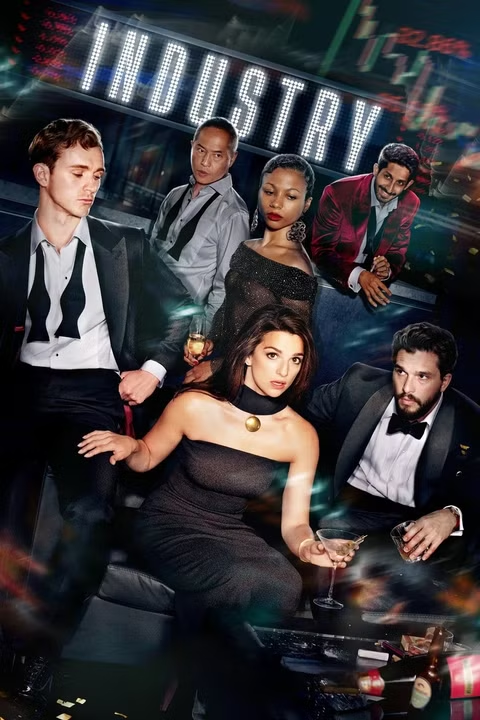
2026 has already been a strong year for HBO. The return of hit medical drama The Pittstarring Noah Wyleand an impressive debut season for A Knight of the Seven Kingdomswere just two of the big success stories, with the recent third season of House of the Dragon making up for a divisive second installment. But perhaps one of the most underrated shows to air this year so far has been the fourth season of Industry, which scored impressive reviews during its early-2026 run.
The acclaimed drama, created by former investment bankers Mickey Down and Konrad Kay, has only increased in popularity since its first installment, with the recent Season 4 premiere earning over 800,000 cross-platform viewers in its first three days across HBO and HBO Max, the show’s highest premiere to date. This then grew to 1.1 million viewers for Season 4, Episode 6, “Dear Henry,” with the success encouraging HBO to renew the series for a fifth and final season.
“In terms of ‘why now?’, I mean, it’s been five seasons… I think five seasons is a really good run,” HBO boss Casey Bloys said when asked about the fifth season being the last, with thoughts quickly turning to how Down and Kay can bring their thrilling gem to an epic conclusion. Well, adding several exciting names to the cast is a great start, with it now confirmed that a selection of talented faces will be joining Season 5. This includes Cary Elwes as investor Padgett Stillman, Glee‘s Dianna Agron as Skip Binksy, the CFO of a wellness tech company, Sam Riley as elusive British businessman Solomon Kerr, Silo‘s Jessica Brown Findlay as Marina, a family friend of Sir Henry Muck, and Luke Manley (Marty Supreme), Baby Gill (Slow Horses), and Eduard Poliakov (On Drive).
Advertisement
Advertisement
Collider Exclusive · Universe Personality Quiz Which Iconic Universe Do You Belong in the Most? Star Wars · Lord of the Rings · Harry Potter · Game of Thrones · Star Trek
Five legendary universes. Five completely different visions of what the world could be — or already was. One of them is the world your instincts, your values, and your particular way of existing were built for. Eight questions will tell you which one.
🚀Star Wars
💍Lord of the Rings
🧙Harry Potter
Advertisement
👑Game of Thrones
🖖Star Trek
Advertisement
01
What gives your life its deepest sense of meaning? Every universe is built around a different answer to this question.
Advertisement
02
Which kind of world do you most want to inhabit? The environment shapes who you become. Choose carefully.
Advertisement
03
How do you prefer your conflicts resolved? The shape of a world’s conflicts tells you everything about its soul.
Advertisement
04
Who do you want beside you when things get difficult? Your ideal companions reveal the world you were made for.
Advertisement
05
What is your relationship with power? How you seek, wield, or resist power is the map of who you are.
Advertisement
06
How does your universe treat good and evil? A world’s moral architecture tells you more about it than any map.
Advertisement
07
What role would you naturally fall into? Every universe has archetypes. Which one fits you without trying?
Advertisement
08
What do you ultimately believe about the future? The answer to this is the clearest window into which universe already lives inside you.
Advertisement
Your Universe Has Been Chosen You Belong In…
Your answers point to the iconic universe your values, your instincts, and your particular way of seeing the world were built for. This is where you would find your people — and your purpose.
Advertisement
A Galaxy Far, Far Away
Star Wars
You believe in the cause — in the idea that freedom is worth fighting for even when the odds are impossible and the empire is vast.
Advertisement
You are drawn to the moral clarity of a universe where hope itself is a form of resistance.
You’d find your people in the Rebellion — a ragtag coalition of true believers held together by conviction more than resources.
Star Wars is fundamentally a story about ordinary people choosing to matter in an extraordinary conflict — and that is exactly your kind of story.
The Force may or may not be with you. But the will to use it for something larger than yourself certainly is.
Middle-earth
Lord of the Rings
You understand, in the deepest part of yourself, that the journey matters as much as the destination — and that the world’s beauty is worth protecting even at great cost.
Advertisement
Middle-earth is a world of ancient wonder, deep friendship, and a darkness that only retreats when enough small acts of courage accumulate.
You would thrive here because you value the fellowship more than the glory — the road more than the arrival.
Tolkien’s universe rewards patience, loyalty, and the willingness to carry something heavy across a very long distance.
Those are not burdens to you. They are simply how you move through the world.
The Wizarding World
Harry Potter
You believe that love, loyalty, and doing what’s right are not naive sentiments — they are the most powerful forces in any world, magical or otherwise.
Advertisement
The Wizarding World is a place of wonder hidden in plain sight, where learning is transformative and the bonds you form at school follow you into every battle.
You would flourish here because you take both the magic and the friendships seriously — and you understand that one without the other is incomplete.
Harry Potter’s universe ultimately rewards those who choose to stand for something even when standing is terrifying.
That choice — made quietly, without guarantee — is something you understand completely.
Westeros · The Known World
Game of Thrones
You see the world clearly — its power structures, its hypocrisies, its brutal arithmetic — and you are not paralysed by that clarity. You use it.
Advertisement
Westeros is a world that rewards intelligence, adaptability, and the willingness to understand that every alliance is also a negotiation.
You would survive here — possibly thrive here — because you don’t confuse the world as it is with the world as you’d like it to be.
Game of Thrones is a story about what happens when the idealists and the realists collide. You are sharp enough to know which one lasts longer.
Winter always comes. You are already prepared.
The United Federation of Planets
Star Trek
You believe the future is worth building — that curiosity, cooperation, and the expansion of understanding are not just ideals but the most practical path forward for any civilisation.
Advertisement
Star Trek is a universe where the questions matter as much as the answers, and where encountering something utterly alien is cause for wonder rather than fear.
You would belong here because you are fundamentally optimistic about what intelligence and decency can achieve — while being honest about how hard that achievement is.
The Federation is the universe’s most ambitious thought experiment: what if we actually got better?
You don’t just hope that’s possible. You think it’s the only thing worth working toward.
Advertisement
What’s the Most Anticipated HBO Max Release Still to Come?
One thing that sets James Cameron apart from other filmmakers is his quality-over-quantity approach — Cameron has only directed three movies in the last 16 years, but each earned over $1 billion and is one of the highest-grossing movies of all time. Cameron has focused primarily on developing the Avatar franchise in the last 20 years, but now that the future of the series has been called into question, he could be ready to dive into other projects after spending so much time on Pandora. However, while many modern audiences have connected to Cameron through his work on the hit sci-fi franchise, he’s been directing acclaimed hits for 40 years now. Avatar: The Way of Water may have grossed over $2 billion at the box office, but Cameron has another sci-fi sequel that’s even more iconic than his long-awaited return to Pandora.
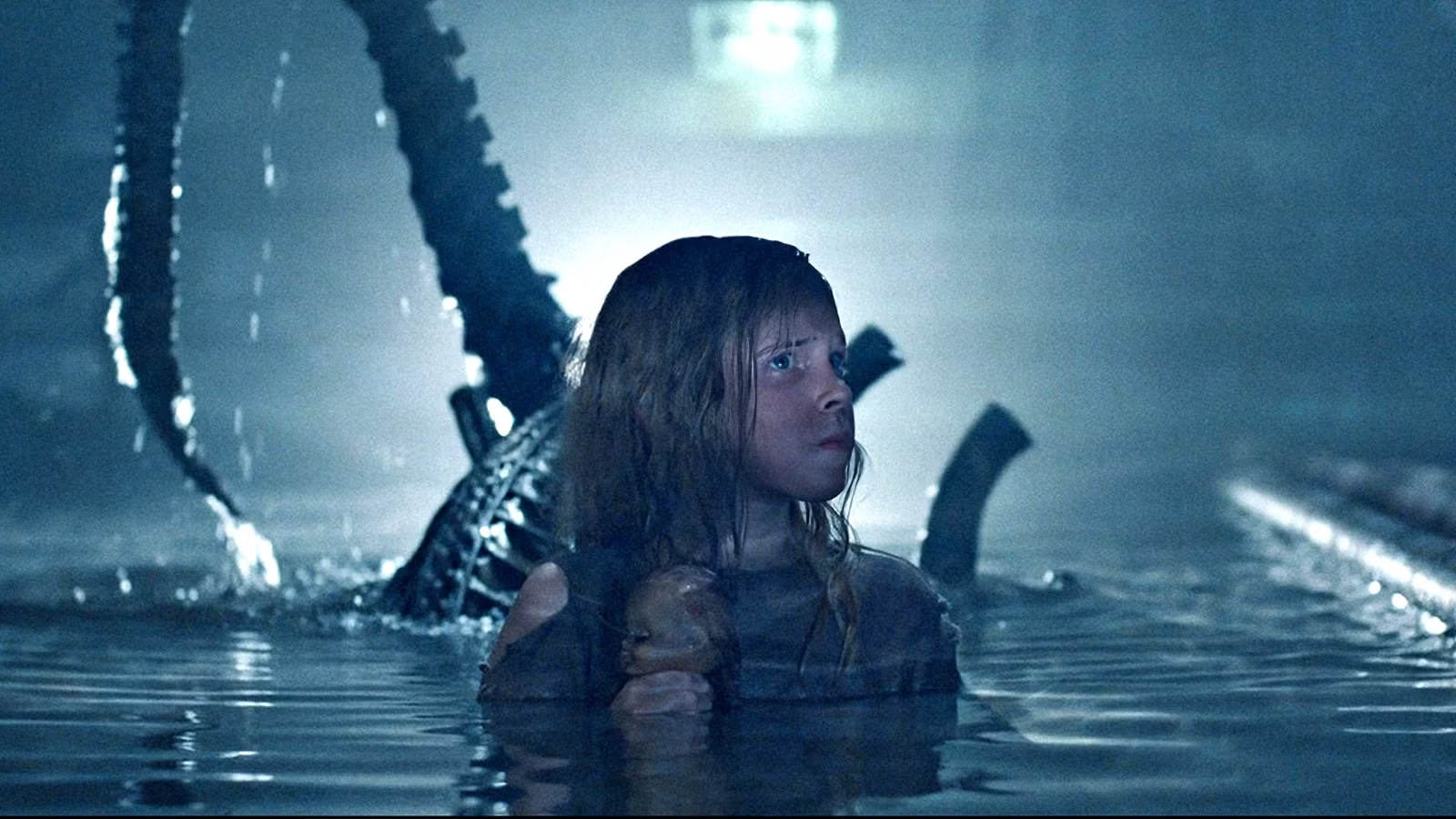
All the way back in 1986, James Cameron took the directorial reins from Ridley Scott for Aliens, the sequel to the influential 1979 sci-fi masterpiece, Alien. It was always going to be difficult for any sequel to live up to a movie as good as Alien, but Cameron delivered a sci-fi thriller just as good, and some would even argue better, than the original. Now 40 years removed from Aliens grossing over $131 million at the box office against a modest $18 million budget, the film is officially making a comeback with a new Prime 1 Studio statue of the Queen Alien from the film. Standing at nearly 30 inches tall, the figure is now available for pre-order for a whopping $8,699, and it’s expected to ship out to customers starting November 2027.
Advertisement
Advertisement
Collider Exclusive · Sci-Fi Personality Quiz Which Sci-Fi Hero Are You Most Like? Paul Atreides · Captain Kirk · Princess Leia · Ellen Ripley · Max Rockatansky
Five iconic heroes. Five completely different ways of facing an impossible universe. One of them shares your instincts, your values, and your particular way of refusing to back down. Eight questions will tell you which one.
🏜️Paul Atreides
🖖Capt. Kirk
✊Princess Leia
Advertisement
🔦Ellen Ripley
🔥Max Rockatansky
Advertisement
01
How do you lead when the stakes couldn’t be higher? The way you lead under pressure is the most honest thing about you.
Advertisement
02
What is your greatest strength in a crisis? The quality that keeps you alive when everything else fails.
Advertisement
03
What is the thing you’d sacrifice everything else for? Your deepest motivation is your truest compass.
Advertisement
04
How do you relate to the people around you? Who you are to others under pressure is who you really are.
Advertisement
05
You’re facing a threat that no one else believes is real. What do you do? How you respond when you’re the only one who sees it defines everything.
Advertisement
06
What has your heroism cost you personally? Every hero pays. The question is what — and whether they’d pay it again.
Advertisement
07
How do you feel about the rules of the world you’re in? Every hero has a relationship with the system. What’s yours?
Advertisement
08
When everything is on the line, what keeps you going? The answer is the most honest thing about you.
Advertisement
Your Hero Has Been Identified Your Sci-Fi Hero Is…
Your answers point to the iconic sci-fi hero who shares your instincts, your values, and your particular way of facing the impossible.
Advertisement
Arrakis · Dune
Paul Atreides
You carry a weight most people would crumble under — the knowledge of what you’re capable of, and the burden of what you might have to become.
Advertisement
You see further ahead than others and you plan accordingly, even when the vision frightens you.
You are driven by loyalty to your people and a sense of destiny you didn’t ask for but can’t escape.
Paul Atreides is not simply a hero — he is someone who understands the cost of power and chooses to bear it anyway.
That gravity, that willingness to carry what others won’t, is exactly you.
USS Enterprise · Star Trek
Captain Kirk
You lead with instinct, warmth, and an absolute refusal to accept a no-win scenario — because you’ve always believed there’s a third option nobody else has thought of yet.
Advertisement
You take the mission seriously without ever taking yourself too seriously.
Your crew would follow you anywhere, not because you demand it, but because you’ve earned it.
Kirk’s genius isn’t tactical — it’s human. He reads people, bends rules with purpose, and wills outcomes into existence through sheer conviction.
That combination of warmth, audacity, and relentless optimism is unmistakably yours.
The Rebellion · Star Wars
Princess Leia
You are the kind of person who holds the line when everyone else is losing faith — not because you’re fearless, but because giving up simply isn’t something you’re capable of.
Advertisement
You lead through conviction. Your voice carries because your belief is unshakeable.
You gave up everything ordinary the moment you chose the cause, and you’ve never looked back.
Leia is not a supporting character in her own story — she is the moral centre of the entire rebellion.
That same fierce, principled, unbreakable core is what defines you.
The Nostromo · Alien
Ellen Ripley
You are not reckless, not grandiose, and not particularly interested in being anyone’s hero — you just refuse to stop when it matters.
Advertisement
You see threats clearly, you document the truth even when no one listens, and when the time comes you handle it yourself.
Ripley’s heroism is earned, not performed. She doesn’t have a speech — she has a flamethrower and a plan.
You share her composure under the worst possible pressure, and her refusal to pretend the monster isn’t there.
When it counts, you don’t flinch. That’s everything.
The Wasteland · Mad Max
Max Rockatansky
You have been through fire that would break most people — and what came out the other side is something the world underestimates at its peril.
Advertisement
You don’t ask for help, don’t need validation, and don’t wait for anyone to tell you the rules no longer apply.
Your loyalty, when it finally arrives, is absolute — but it’s earned in silence and tested in action, not in words.
Max is not a nihilist. He is someone who lost everything and found, against his will, that he still has something worth protecting.
That bruised, stubborn, ultimately human core is exactly yours.
Advertisement
Is ‘Aliens’ on Streaming?
Aliens is not available to watch on any of the big streaming services in America at the time of writing, but the film is available to rent or purchase on VOD platforms like Prime Video and Apple TV for only a few dollars. Even the original Alien is absent from streaming right now, as is the controversial 1992 threequel, Alien 3, which was directed by David Fincher. More recent additions to the franchise like the TV series Alien: Earth and the blockbuster Alien: Romulus are streaming on Hulu for all subscribers.
Check out the new Queen Alien Prime 1 Studio figure from Aliens and stay tuned to Collider for more updates and coverage of James Cameron’s future projects.
The term “low fantasy” refers to magical stories that take place on Earth rather than a totally separate world like Middle-earth or Narnia. These tales inject whimsy and enchantment into otherwise mundane settings, which actually makes the fantastical elements hit even harder.
Magic systems, meanwhile, come in a spectrum ranging from “hard”—meaning magic with clear rules and mechanics, like those in the Mistborn series—to “soft”—which refers to magic that is mysterious and ambiguous, like some of the spellcraft in Game of Thrones. With those points in mind,this list looks at the most memorable and ingenious magic systems in all of low fantasy, the ones that stand out because of their creativity, structure, and dynamism.
Advertisement
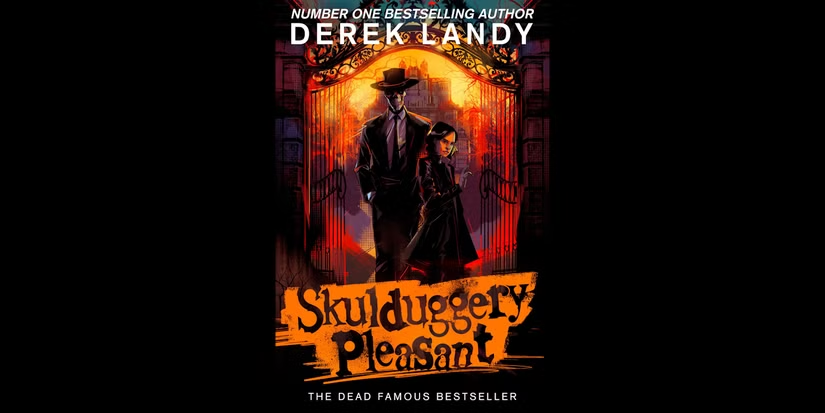
‘Skulduggery Pleasant’ (2007)
Image via Harper Collins Children’s Books
“Magic belongs to those willing to master it.” Skulduggery Pleasant is a great YA urban fantasy that follows twelve-year-old Stephanie Edgley after she inherits her eccentric uncle’s estate and becomes the partner of the skeletal detective Skulduggery Pleasant, a bag of bones animated by raw magic, capable of casting spells and hurling fireballs. He’s just one of many colorful inhabitants in a hidden magical society operating alongside contemporary Ireland.
Through Stephanie’s eyes, readers slowly learn about a system in which practitioners generally devote themselves to a single branch of magic, like elemental manipulation, developing genuine expertise through years of study. Magic here isn’t limitless or easy; it requires a ton of intelligence and experience. Author Derek Landy bundles all this within an enjoyable package of sharp humor and fast-paced plotting.
Advertisement
‘Storm Front’ (2000)
Image via Ace
“Magic always demands preparation.” Another story about a magical detective, though a darker, grittier one. Storm Front is the first installment in Jim Butcher‘s Dresden Files, centering on Harry Dresden, Chicago’s only professional wizard-for-hire. In this one, he investigates a series of gruesome supernatural murders while balancing his responsibilities to both the magical and ordinary worlds. The magic Harry uses is pretty “hard,” grounded in rules and unbending principles.
For instance, spells demand physical and mental effort, leaving practitioners drained, and are strictly governed by the body of wizards known as the White Council. Mages require concentration, symbolic tools, and preparation to cast spells effectively, and violating certain magical principles carries severe consequences. In other words, in the book, wizardry feels more like a demanding craft involving staves, blasting rods, circles, potions, enchanted objects, and a lot of practice.
Advertisement
‘The Magicians’ (2009)
Image via Cornerstone
“Magic is harder than anyone imagines.” Most fantasy novels portray magic as empowering, but The Magicians takes a far more complicated view. In it, author Lev Grossman presents spellcasting as an extraordinarily demanding academic discipline requiring immense intelligence and precision. Even more strikingly, the students who master it still find themselves wrestling with depression, ennui, loneliness, and nihilism.
In this regard, The Magicians is a kind of anti-Harry Potter, replacing wonder and enchantment with stress and competition, and portraying magic as a power that corrupts those who wield it. Protagonist Quentin Coldwater enrolls at a magical university expecting fulfillment, only to encounter exhausting studies and endless danger. On top of that, interpersonal problems still abound. Ultimately, while the characters’ spells may be mighty, they can’t solve their emotional issues or undo their trauma.
Advertisement
‘Harry Potter and the Goblet of Fire’ (2000)
The original cover of Harry Potter and the Goblet of FireImage via Bloomsbury Publishing
“The magical world is far larger than Hogwarts alone.” Practically any Harry Potter bookcould make this list, though the one with the most striking explanation and depiction of its magic systems might be Goblet of Fire. It broadens the scope of the story and world, with Harry’s unexpected selection for the Triwizard Tournament introducing us to magical schools beyond Hogwarts, as well as all sorts of new spells and items. There’s just so much colorful stuff here: grindylows, merpeople, arcane cups, dragons, and even resurrection rituals.
Importantly,a lot of this stuff isn’t just entertaining set dressing but integral to the plot itself. For example, near the beginning of the book, Harry and Ron use a Portkey, an ordinary object that has been enchanted to transport those who touch it to another location; this magic is what later teleports Harry and Cedric to the graveyard when they both touch the Triwizard Cup. Finally, Goblet also explains the Unforgivable Curses, which, too, make a dramatic reappearance in the third act.
Advertisement
Collider Exclusive · The Sorting Hat Awaits Which Hogwarts House Are You? Gryffindor · Slytherin · Hufflepuff · Ravenclaw
Advertisement
Four houses. One destiny. The Sorting Hat has considered thousands of students — now it’s your turn. Answer honestly and discover where you truly belong at Hogwarts School of Witchcraft and Wizardry.
🦁Gryffindor
🐍Slytherin
🦡Hufflepuff
🦅Ravenclaw
Advertisement
01
Advertisement
What quality do you value most in yourself? Answer as honestly as you can — the Hat always knows.
02
Advertisement
A friend is being treated unfairly. What do you do? How you protect others says everything about who you are.
03
Advertisement
What does success look like to you? What you’re working toward defines who you’re becoming.
04
Advertisement
What is your greatest fear? Fear is the most honest thing about a person.
05
Advertisement
The rules say no. Your gut says go. What do you do? Every institution has rules. What you do with them is a choice.
06
Advertisement
What kind of friend are you? Who you are to the people you love is who you really are.
07
Advertisement
You look into the Mirror of Erised. What do you see? The mirror shows the deepest desire of your heart.
08
Advertisement
The Sorting Hat pauses. It whispers: “You could do well in any house. But what matters most to you — truly?” This is your tiebreaker. The Hat always listens.
The Sorting Hat Speaks Your House Has Been Chosen
Advertisement
After careful deliberation, the Sorting Hat has made its decision. This is the house your values, your instincts, and your particular way of being in the world were made for.
Gryffindor Tower · Scarlet & Gold
Advertisement
🦁 Gryffindor
You have nerve. Not the reckless kind, but the deep, quiet courage that shows up even when you’re terrified — especially then.
Gryffindors don’t act because they’re fearless — they act because they understand that some things are worth being afraid for.
You stand up for people when it would be easier to look away.
You charge toward what’s right even when the odds are terrible.
Harry, Hermione, Ron — the heroes of Hogwarts’s greatest chapter — all called the tower with the scarlet and gold home. And now, so do you.
Slytherin Dungeon · Emerald & Silver
Advertisement
🐍 Slytherin
You are driven, sharp, and utterly clear-eyed about what you want and how to get there.
Slytherin has long been misunderstood — painted as the house of villains when it is, at its best, the house of those who refuse to accept limits placed on them by others.
You are resourceful, strategic, and you play the long game.
You know your worth. You protect your own fiercely.
The dungeon common room with its view of the Black Lake is yours — and the ambitions that will take you further than anyone expects are yours too.
Hufflepuff Basement · Yellow & Black
Advertisement
🦡 Hufflepuff
You are the kind of person that makes the world genuinely better just by being in it.
Hufflepuff is not the “safe” house or the “leftover” house — it is the house of those with the greatest heart and the most unwavering integrity.
You show up. You work hard. You don’t need glory or recognition — you do what’s right because it’s right.
Your loyalty never wavers, even when tested.
Nymphadora Tonks, Cedric Diggory, Newt Scamander — some of the wizarding world’s finest. And now you join them.
Ravenclaw Tower · Blue & Bronze
Advertisement
🦅 Ravenclaw
Your mind is your greatest gift, and you’ve always known it.
Ravenclaws are the thinkers, the questioners, the ones who find a puzzle irresistible and a good book better company than most people.
Ravenclaw is not merely about intelligence — it’s about the love of learning, the pursuit of truth, and the rare courage to admit you don’t know something yet.
You see the world with unusual clarity and depth.
Luna Lovegood, Filius Flitwick, Rowena Ravenclaw herself — all extraordinary, all original. And so are you.
Advertisement
‘Piranesi’ (2020)
Image via Bloomsbury
“The House gives everything, but only to those who truly observe it.” A gorgeous, lyrical novel by the great Susanna Clarke. The plot revolves around a character nicknamed Piranesi who lives within a strange dimension he calls “the House.” It’s an endless labyrinth of halls, statues, tides, and clouds that appears to exist outside ordinary reality. As Piranesi carefully documents the rhythms of this impossible place, he slowly begins uncovering secrets about both the House and his forgotten past.
Advertisement
The magic in the book is mysterious, and we never really understand how all of it works, like how or why the House alters people’s consciousness and distorts their memories. Different characters also have contrasting beliefs about its nature and how it works. For example, two of the supporting characters take an academic approach, using rituals and scientific tools to try and extract power from this odd alternate world, while Piranesi treats the House like a living thing meant to be understood rather than exploited.
‘Babel’ (2022)
Image via Harper Voyager
“Translation itself becomes a source of power.” This book from R.F. Kuang (author of The Poppy War) boasts a very cool, original magic system rooted in translation. Set in an alternative nineteenth-century Oxford, the novel follows Robin Swift as he studies at the Royal Institute of Translation, better known as Babel (a reference to the biblical tower where everyone spoke a different language and no one could understand each other).
Advertisement
At Babel, scholars harness magic through specially engraved silver bars that exploit the subtle differences between words in different languages. Those tiny gaps in meaning become sources of supernatural energy capable of reshaping the physical world. Kuang fleshes this novel system out into an entire discipline, showing how it influences politics and conflict all across the globe, and supports both empires and rebels in pursuing their aims. Thematically, she uses these ideas to comment on colonialism, language, scholarship, power, and identity.
‘Jonathan Strange & Mr Norrell’ (2004)
Image via Bloomsbury
“Magic has a history every bit as important as its power.” While Piranesi is great, Jonathan Strange & Mr Norrellremains Susanna Clarke’s masterpiece. It’s set during the Napoleonic Wars in an alternative version of nineteenth-century England and follows the country’s only practicing magicians, the cautious Gilbert Norrell and the brilliant but impulsive Jonathan Strange, as they attempt to restore English magic to its former glory.
Advertisement
Along the way, Clarke constructs an entire scholarly tradition complete with centuries of forgotten history, rival schools of thought, legendary practitioners, and academic debate. Footnotes, fictional books, ancient folktales, scholarly disputes, and long-forgotten magical traditions create the impression that English magic has existed for centuries before the novel begins. Some of the magic is systematized and academic, while other parts of it are dark and dangerous, like the arcana wrought by the Raven King, a stolen human child raised in the faerie world.
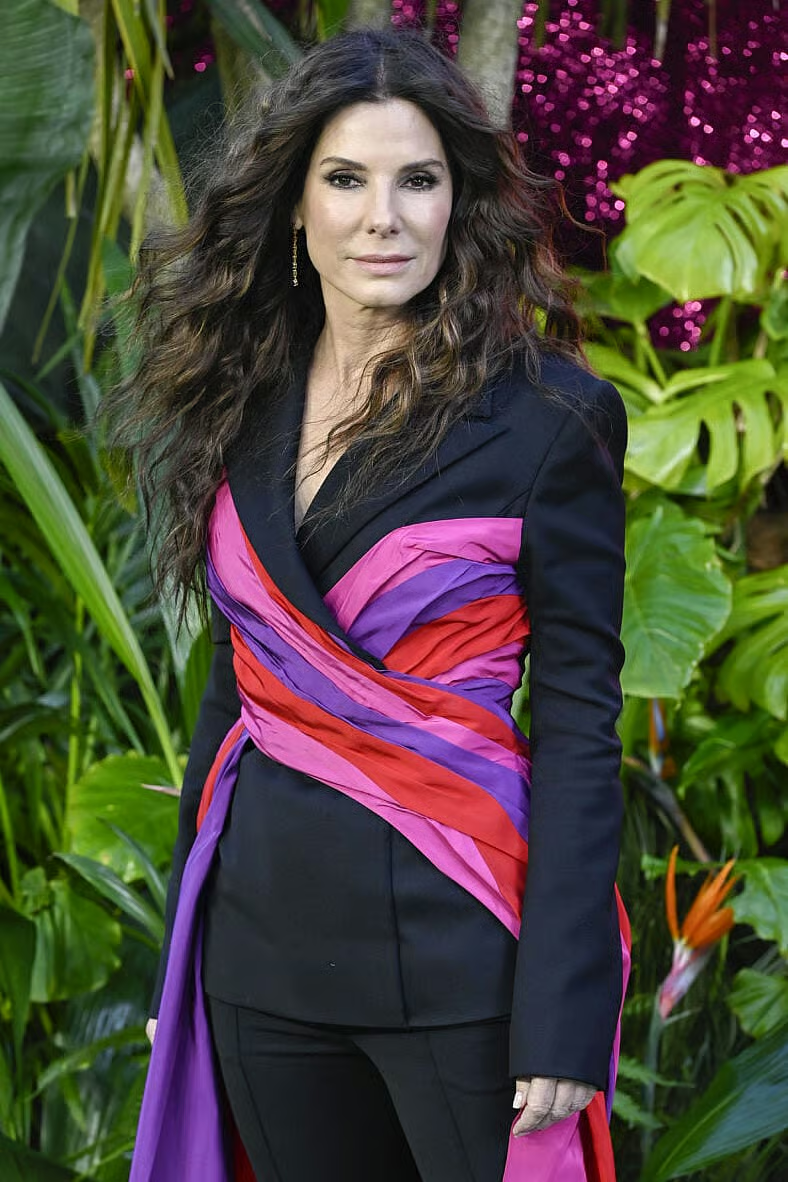
Sandra Bullock is opening up about the private grief that began long before she said goodbye to Bryan Randall.
The actress recently revisited the three-year ALS battle her longtime partner endured, revealing how keeping his diagnosis private left her carrying an enormous emotional burden largely alone.
As Bullock reflected on Randall’s final years, she also described the complicated reality of caring for someone she loved while helping their children navigate an illness that changed their family long before his death in August 2023.
5News Licensing / MEGA
For Sandra Bullock, her husband’s illness was not something she could openly discuss, even as its impact reshaped their lives.
Appearing on Jason Bateman, Will Arnett and Sean Hayes’ “SmartLess” podcast, the “Bird Box” actress explained that Randall had specifically asked her not to reveal his ALS diagnosis.
Advertisement
“I wasn’t allowed to speak about it. That was the request and I tried — I honored it,” Bullock explained.
The 62-year-old understood why Randall wanted privacy, yet keeping the diagnosis to herself during an already difficult period became isolating.
“It isolated me in the process,” she shared. The COVID-19 pandemic intensified that experience, leaving Bullock to carry what she described as the “huge weight” of the diagnosis without being able to publicly acknowledge what her family was facing.
Bullock also revealed that her grieving process began much earlier than people might have realized.
Advertisement
“I started grieving Bryan four years before he passed,” she said, explaining that he “was ill for half of our relationship.”
Randall ultimately died at 57 in August 2023 following his private three-year battle with ALS, also known as Lou Gehrig’s disease.
Sandra Bullock described the emotional experience as unfolding gradually rather than beginning with Bryan Randall’s death.
As his illness progressed, the “Lost City” star was forced to confront the reality of losing the person she considered her partner while he was still physically present.
“My person left a lot earlier than the body left,” Bullock revealed. She admitted that she did not fully process that reality until after Randall died because she remained focused on getting through each day.
Advertisement
ALS itself added another layer of uncertainty. The Hollywood star described the diagnosis as “the process of elimination over the course of a year,” involving repeated medical evaluations and physical assessments.
She recalled doctors giving Randall different milestones and tests, including grips and breathing tests, as they worked through the progression of the disease.
For Bullock, that uncertainty meant planning quietly while continuing to care for her family.
“You have to quietly plan. And I’m a very good planner with illness,” she explained. Her experience with illness in her own family had already shaped that instinct, as her father had experienced “accidents” and her mother had cancer.
Advertisement
Sandra Bullock Focused On Her Children Through The Darkest Period
Bryan Randall’s illness was particularly difficult because Bullock was not navigating it alone. The couple co-parented the actress’s son, Louis, and daughter, Laila, while Randall was also the father of his daughter, Skylar. Bullock said the children’s needs remained central as she dealt with the worsening condition.
“It doesn’t scare me — not the illness itself, it doesn’t scare me. I can see and be around just about anything,” she noted.
However, the presence of young children made the experience considerably more complicated. Bullock was especially concerned about how Laila would process Randall’s decline because she viewed him as a father figure.
“I had two young kids that were navigating it, especially a little girl who saw [Randall] as a father figure,” Bullock said.
The family’s circumstances meant she had to balance caregiving, planning and parenting while maintaining the privacy Randall had requested.
Advertisement
Bullock’s sister, Gesine, was the only person who knew about Randall’s diagnosis for a period of time. Eventually, Bullock confided in friends, including Jennifer Aniston and Amanda Anka, Bateman’s wife.
“When the physical illness was then coupled with the mental health aspect of things — and it’s something that people don’t talk about… it was a trifecta that was pretty dark,” Bullock said, revealing just how layered the experience had become.
Sandra Bullock Focused On Healing Before Returning To Hollywood
Bullock’s careful focus on her children also shaped the way she approached life after Bryan Randall’s death.
Rather than immediately returning to Hollywood’s demands, she stepped away from the spotlight and focused on healing and spending time with Louis and Laila.
A source told PEOPLE in April that the doting mom wanted to make sure she and her children were in “the best possible place” before resuming her career.
Advertisement
That period eventually led to her highly anticipated return with “Practical Magic 2,” marking her first movie since 2022.
Bullock appeared alongside Nicole Kidman at CinemaCon that month to promote the sequel, signaling that she was ready to begin another chapter professionally.
Her return was not presented as a rush back to work, however. Instead, it followed years in which family and personal recovery took precedence.
Bullock Gives Rare Glimpse Into Life With Her Children
After years of keeping her family life largely out of the public eye, Sandra Bullock has offered another rare glimpse into the world she has built around her children.
On August 18, the actress shared a rare Instagram carousel offering an unusually personal look at her recent life, captioning the post, “Friends, family, fun, fishies, furries, aaaand work.”
Advertisement
The collection included Bullock enjoying the outdoors, fishing and rafting, spending time with friends, including Jason Bateman and Amanda Anka, and visiting her parents’ graves with her sister, Gesine Bullock-Prado.
Most notably, the carousel included a rare image of her children, Louis and Laila, walking with their mother through the countryside.
The three were photographed from behind, allowing Bullock to share the family moment while continuing to protect her children’s privacy. The post also included glimpses of Bullock’s dog and other personal moments.
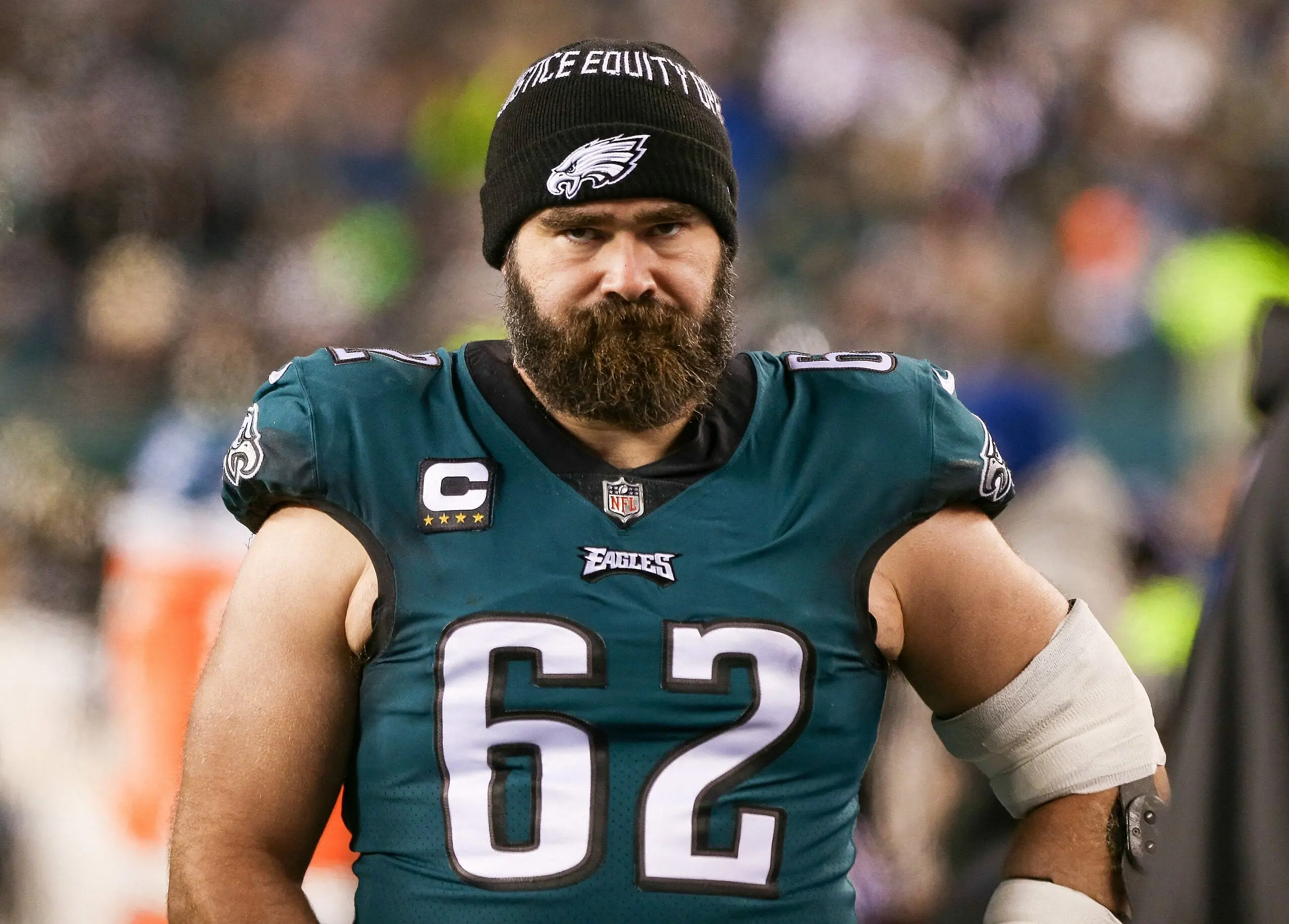
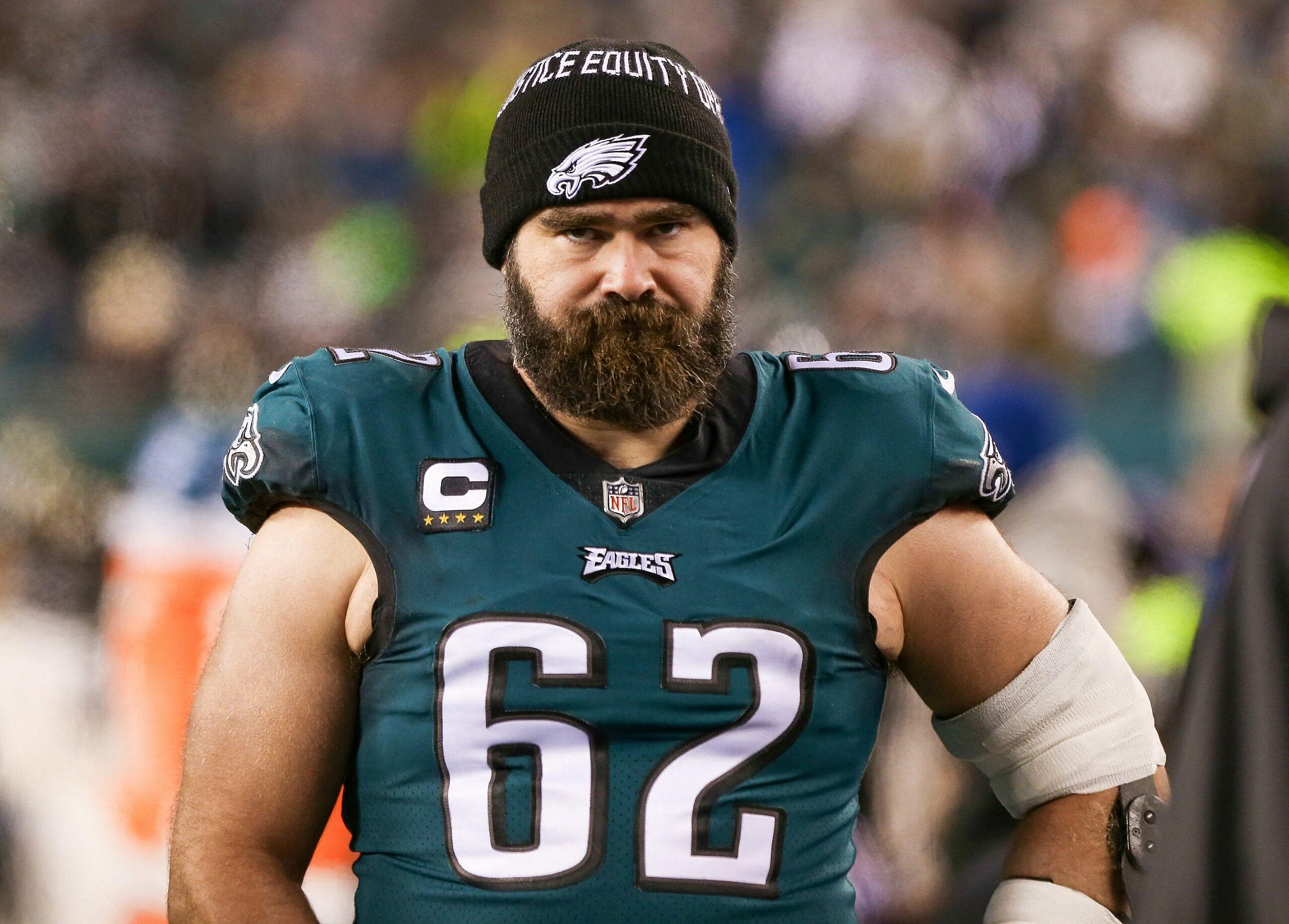
Jason Kelce has taken an unconventional approach to address the enormous amount of water consumed by AI data centers.
The retired Philadelphia Eagles legend stars in an ad campaign urging citizens to donate their pee to cool data centers.
Jason does take part in advocacy from time to time and recently put his beer-drinking skills to work to raise money for the Eagles Autism Foundation at his annual bash.
Advertisement
Jason Kelce thinks there’s a better way to handle the issue of AI data centers consuming huge amounts of water.
In a bizarre new advertising campaign, the former football star joined forces with canned water giant Liquid Death and light beer brand Garage Beer, which he co-owns with his brother Travis, to take a stand against the enormous environmental impact of AI infrastructure.
The campaign starts with a shot of Jason filling up a glass jar with urine while speaking to viewers.
“AI data centers waste millions of gallons of water. That’s why Liquid Death and Garage Beer have decided to team up. We want your pee … to cool these data centers,” he says.
Advertisement
Kelce’s Pee Pitch Highlights A Real AI Problem
The video then cuts to a scene in which he performs a song asking for “endless gallons of pee” and encouraging viewers to send it to data centers.
In another scene, a crowd of people can be seen taking jars of urine to the post office, with a disclaimer saying, “The suits want us to tell you to please don’t actually send your pee.”
The move was a promotional effort for Liquid Death’s sparkling energy drinks and Garage Beer, which Jason co-owns with his brother, Kansas City Chiefs star Travis Kelce.
Advertisement
While the campaign is satirical, it draws attention to a very real ecological concern that has sparked tense debate online.
A study funded by the Department of Energy found that data centers across the United States consumed 66 billion liters of water, while another study found that local community water systems could require $10 billion to $58 billion in new infrastructure by 2030.
Jason Kelce Has Used His Platform To Support Good Causes
Jason is no stranger to speaking up on societal issues and championing causes close to his heart.
Back in June, the New Heights podcast cohost put his drinking skills to good use during the annual Eagles Autism Foundation fundraiser in New Jersey.
The event saw him compete against a patron in the Beer Bowl, where they drank to become the champion and win a $50,000 prize. Jason won the drinking competition and reportedly donated $50,000 of his own money to the fundraiser, per the New York Post.
Advertisement
Sam Altman Calls AI Water Consumption Claims ‘Fake’
Meanwhile, OpenAI boss Sam Altman dismissed concerns about data centers consuming large amounts of water as “fake,” arguing that humans also consume energy.
He made the assertion while weighing in on some of the common criticisms the new technology continues to garner during the India AI Impact Summit.
Altman noted at the time that rumors suggesting ChatGPT uses gallons of water per query were “completely untrue, totally insane” and have “no connection to reality,” per CNBC.
Sam Altman Says AI’s Energy Demands Matter More Than Water
While data centers traditionally rely on large amounts of water to cool operating systems and prevent overheating, some evolved models don’t require it at all.
In his address, Altman implied that energy availability was a far more critical concern to the advancement of AI than water.
“Not per query, but in total – because the world is using so much AI … and we need to move towards nuclear or wind and solar very quickly,” he said.
Advertisement
He then pushed back against a previous comment by Bill Gates that the efficiency of the human brain suggests AI will become progressively more energy-efficient.
“One of the things that is always unfair in this comparison is people talk about how much energy it takes to train an AI model … But it also takes a lot of energy to train a human,” he said. “It takes like 20 years of life, and all the food you eat before that time, before you get smart.”
“The fair comparison is if you ask ChatGPT a question, how much energy does it take once a model is trained to answer that question, versus a human, and probably AI has already caught up on an energy efficiency basis, measured that way,” he added.
EDITOR’S NOTE: This interview contains spoilers for ‘Star Trek: Strange New Worlds’ Season 4, Episode 5, “Level-Five Transporter Accident.”
Summary
Star Trek: Strange New Worlds‘ puppet episode uses Jim Henson-built puppets, 14 puppeteers, and required hundreds of hours of planning.
Showrunners Henry Alonso Meyers and Akiva Goldsman reveal how the episode came to life and what to expect from the show’s final season.
The Season 4 finale, “Tomorrow’s Enterprise,” is teased as a “timey-wimey” adventure.
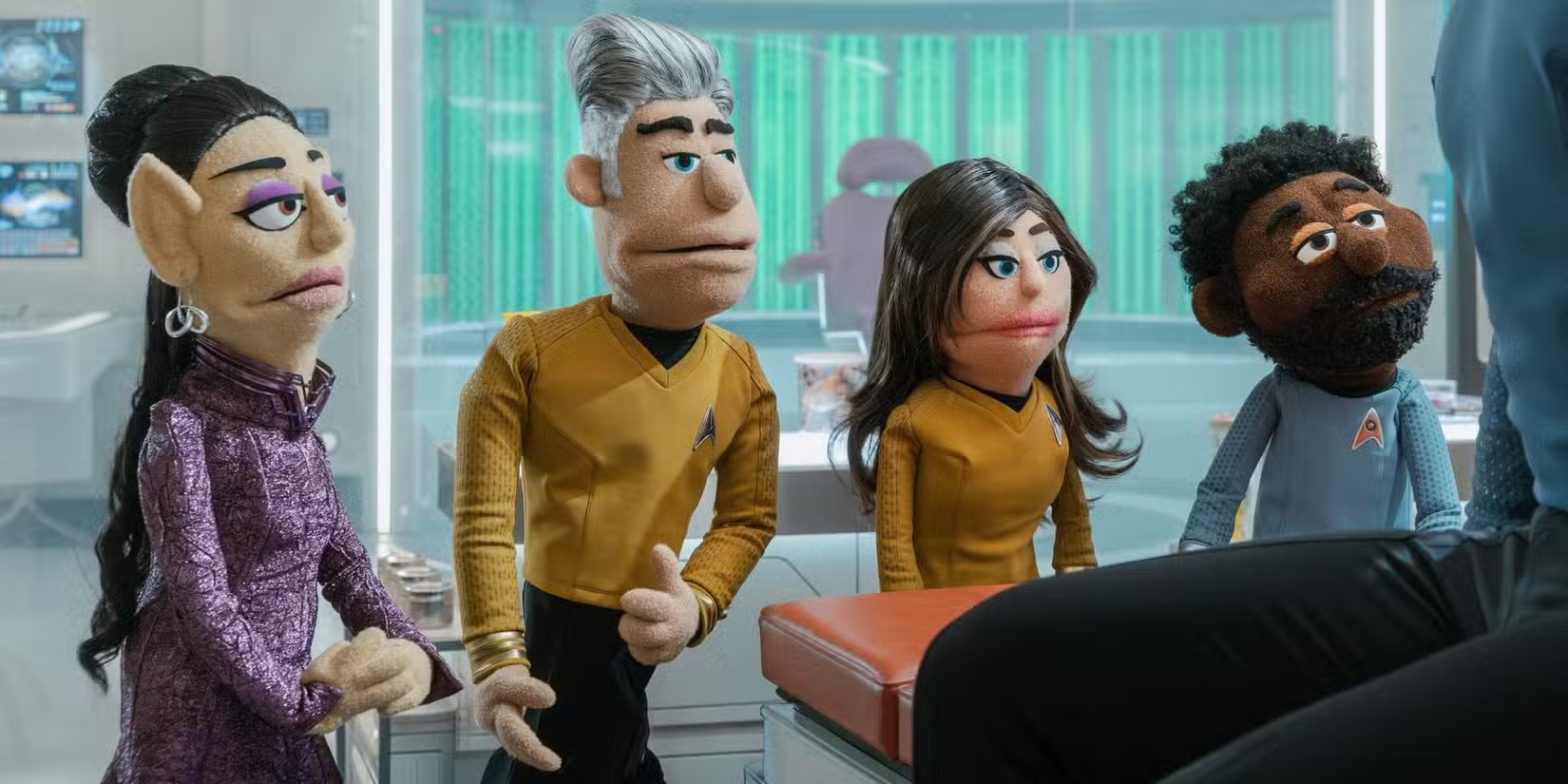
Strange New Worldshas officially delivered one of the most delightfully unusual Star Trek episodes of the entire franchise with Season 4, Episode 5, “Level-Five Transporter Accident.” The episode was first teased at SDCC 2025, as the creative team revealed that the series would officially be doing a “Puppet” episode in its then-distant fourth season. The episode goes full Muppets, with incredibly designed puppets from the Jim Henson Company, plenty of physical comedy, and even a touch of romance.
Ahead of the season, I sat down with co-showrunners Henry Alonso Meyers and Akiva Goldsman to discuss this long-awaited episode, which Meyers co-wrote with Dana Horgan. During our conversation, Meyers revealed that the episode required hours upon hours of planning, new builds for the bridge set, and 14 dedicated puppeteers bringing the crew of the Enterprise to life. Meanwhile, Goldsman teased a “timey-wimey” adventure for the Season 4 finale, “Tomorrow’s Enterprise,” which references the Star Trek: The Next Generationepisode, “Yesterday’s Enterprise.” He also spoke about the six-episode final season expected to air next year and promised to go out on an emotional note. You can watch the interview in the player above or read the full transcript of our conversation below.
Advertisement
This ‘Strange New Worlds’ Episode Required 14 Puppeteers and 100s of Hours of Planning
“I think that there is a median between people who love Muppets and people who love Star Trek, and we really wanted to find a way to explore that.”
(L-R): Gia Sandhu as T’Pring, Anson Mount as Captain Pike, Rebecca Romijn as Una, Babs Olusanmokun as Dr. M’Benga, and Ethan Peck as Spock in season 4, episode 5, of Star Trek: Strange New Worlds streaming on Paramount+, 2026. Photo Credit: Jan Thijs/Paramount+
Image via Jan Thijs/Paramount+
COLLIDER: My favorite episodes each season are always the ones where you guys take full advantage of the premise that anything can happen in space. Henry, I know you co-wrote this one with Dana Horgan. How did the concept for this puppet episode come about, and what was the most exciting part of pushing beyond our expectations for this episode?
HENRY ALONSO MYERS: We had been talking about doing a puppet episode for a long time, and we felt that, much like we did with the musical, that in order to do it, we couldn’t just half do it. We couldn’t just do a sort of slight version of it. We really needed to rise up and try to make the best possible version of it.
Then the other thing that we really needed to do was make sure that it felt like a Star Trek episode distinctly, specifically, and in all of the story. The transporter accident kind of ended up being the thing that pulled it all together. We hadn’t done a transporter accident episode yet. We felt like this was a great opportunity to try that.
Advertisement
And part of the goal, I think, in doing the episode was: what is the biggest, most difficult thing that we haven’t had a chance to do yet? I think part of it was also like, if this is the last season, because we never know, what are the things that you really, really, really wish you’d tried? I think that there is a median between people who love Muppets and people who love Star Trek, and we really wanted to find a way to explore that.
I mean, part of our goal in doing this show is to make a show that is, at its heart, for lovers of Star Trek, but also that reaches out to people who’ve never seen Star Trek before and present something for them. So, I feel like there is something for people of all types in a given season. You may not love every episode, but you will love all of the show. There’s something for you in everything, and our goal was to do a big reach for people who had never seen it and do a big reach for people who have seen it and know it in their hearts.
I’d love to hear more from either of you about the logistics of filming this episode with so many puppets. How many puppeteers did you have on set? How much time did it take for props to design and create all of these puppets?
MYERS: I feel like we had 14 puppeteers. Part of it was Jordan Canning, our director, who we had done a lot of prep work with her the season before, literally walking through all the sets, about the concept of it, just as we were talking about it. We reached out to Henson as early in the process as we could, because we felt like they would be the right people to do the puppet builds.
Advertisement
We had a kind of broad early concept of what the episode would be, and we knew that it would lean on Spock, and so we had a long talk with Ethan [Peck] about it. We had to rebuild the captain’s chair in order to have a puppeteer fit through it. There were a few sections that required a lot of adjustment, but you’d be surprised. I mean, our sets are great and are weirdly well suited towards puppeteering.
And then, obviously, this is about having a director who really knows and understands how this has to work, and can work around the sets and work with their understanding of how they want to design the shots in a way that feels like puppets, and yet it gives it that feeling of, “Oh, they just kind of came up with it at the last minute.”
I love the scientific advantage of the puppets not needing to breathe or being able to be chopped in half, and I love the ending moment with them all during their little suitless spacewalk. Were there any “we can only do this with puppets” concepts that didn’t make it into the episode?
MYERS: I feel like there were 100 things that we kept trying, but weirdly, everything ended up in the episode that we wanted. There were a few things that we pushed the idea of that we may or may not have put in the episode finally. Part of it, I think, is that just the presence of puppets alone makes a dramatic scene funny.
Advertisement
Yes, the ‘Strange New Worlds’ Season 4 Finale Is a ‘Star Trek: The Next Generation’ Reference
“It might be a timey-wimey episode.”
(L-R): Anson Mount as Captain Pike and Rebecca Romijn as Una in season 4, episode 5, of Star Trek: Strange New Worlds streaming on Paramount+, 2026. Photo Credit: Jan Thijs/Paramount+
Image via Jan Thijs/Paramount+
We were delighted to reveal the episode titles at Collider. I’m really curious if you can tease anything about the back half, especially the soap opera reference with Chronitron’s “Through the Hourglass” and the finale, “Tomorrow’s Enterprise.”
AKIVA GOLDSMAN: “Tomorrow’s Enterprise,” I think in a very sort of tangential way, is a reference to a Next Gen title, obviously. So, it’s not, dare I say, rocket science for anybody to imagine it might be a timey-wimey episode, to use an adjacent genre reference.
Advertisement
I think what you’ll discover in the back half of the season is it’s fully equipped with all the things we do. It has as classic Star Trek as you might find in the most straight-ahead action-adventure sci-fi way, and then it does that thing that we do, which makes us Strange New Worlds. Our worlds are genres, and what we try to do is we try to use different genres as different lenses on storytelling. So, as we continue to focus on the deepening of our characters and we drive towards the inevitable end, and prepare for that, we’re getting everything ready for that last season, which is ultimately a single suite of six episodes, which lets us say goodbye to the show and hello to the eras that we know.
We’ve had musicals, puppets, horror, noir. So many things. How are you going to top that in the final season?
GOLDSMAN: We won’t, actually. And I mean that honestly. I mean, if we top it, which I hope we will, and I believe we have, we will top it by doing the thing that we do best and that our cast does best, and that all these genres we’re in service of, which is storytelling and emotion, and emotion and emotion and emotion.
New episodes of Star Trek: Strange New Worlds air every Thursday on Paramount+.
Advertisement
Advertisement
Release Date
2022 – 2027-00-00
Advertisement
Network
Paramount+
Advertisement
Showrunner
Henry Alonso Myers, Akiva Goldsman
Directors
Advertisement
Dan Liu, Amanda Row, Maja Vrvilo, Akiva Goldsman, Dermott Downs, Eduardo Sánchez, Jeffrey W. Byrd, Jonathan Frakes, Jordan Canning, Leslie Hope, Valerie Weiss, Sydney Freeland, Christopher J. Byrne, Rachel Leiterman
On Tuesday, August 18, PETA unveiled a new promo video Panettiere filmed in the final weeks of her life to protest the captivity of whales, dolphins and other marine life at theme parks across the world.
“Can you imagine [the animals’] frustration, their trauma, their depression? All that is important and crucial for their well-being is ripped away,” Panettiere argues in comments about the animals, obtained by Us. “We can end this. You and me. In their ocean homes, they can be with their families, dive deep to escape the hot sun and enjoy the rain on their backs … all of that is taken from them when they are confined to small tanks.”
In the ad, Panettiere draws attention to the way animals are forced to live inside small enclosures at various parks around the planet, performing tricks for screaming visitors without any refuge.
Advertisement
Hayden Panettiere posing in PETA campaignPETA
The powerful PETA clip ends with the former Heroes star asking viewers to pledge to stop visiting marine theme parks.
“Vow today to never go to a marine park that keeps dolphins in extreme captivity. Together, we can end this cruelty,” she asks.
Alongside the video’s release, PETA Senior Vice President Lisa Lange paid tribute to Panettiere’s long history of fierce animal rights activism. (Panettiere memorably appeared in the acclaimed 2009 documentary The Cove, where she was shown paddling into the ocean off the coast of Japan to confront dolphin hunters.)
“Hayden Panettiere became a household name playing a hero on TV, but to animals, she was the real deal,” Lange said on Tuesday. “She fearlessly paddled into the blood-stained waters of Taiji, Japan to stare down dolphin hunters during their annual massacre, a moment captured in the Oscar-winning documentary The Cove, and never stopped denouncing marine parks like SeaWorld, calling their confinement of complex, far-ranging marine mammals in concrete tanks ‘disgusting.’ The world has lost a kind soul and the animals a fierce ally, and everyone at PETA holds her memory close.”
In the years after they broke up, Hayden Panettiere’s relationship with Brian Hickerson was still complicated even at the time of her tragic death. “Hayden and Brian have been on and off for years, but have pretty much always remained in contact,” a source exclusively shares with Us of the pair’s history prior to her […]
The actress was also the spokesperson for the Hawaii-based marine charity Whaleman Foundation, which fights for the welfare of whales, dolphins, and porpoises in their natural habitat.
PETA joined a chorus of Hollywood stars in paying tribute to Panettiere’s life and legacy following her death on Sunday, August 16. The Greenville Police Department confirmed on Sunday that Panettiere was found “unresponsive” at a residence in Greenville, South Carolina. The Nashville alum was later pronounced dead from a suspected overdose.
Advertisement
“It is with profound sadness that we share the tragic passing of our beloved Hayden,” Panettiere’s father, Skip Panettiere, told Us in a statement at the time. “She was an incredible light and a force of nature who brought immeasurable love and joy to all who knew her — and to the millions who watched her onscreen.”
An autopsy — which was completed on Monday, August 17 — determined that “no signs of trauma were discovered that would have contributed” to Panettiere’s death. An official cause of death is “pending further investigation and the completion of additional studies,” per the Greenville County Coroner’s Office.
Hayden Panettiere‘s former fiancé, Wladimir Klitschko, is speaking out for the first time about her shocking death. “Our family is going through a time of profound shock and grief,” Klitschko, 50, wrote via Instagram on Tuesday, August 18, alongside a throwback photo of him, Panettiere and their daughter, Kaya. “The announcement of Hayden’s tragic death […]
Us reported that Panettiere’s ex-boyfriend Brian Hickerson and his brother, Zach Hickerson, were at the Greenville apartment when emergency personnel arrived on Sunday. An incident report obtained by Us indicated that Brian, 37, provided a “bag of medication” that Panettiere was “currently on.”
Advertisement
Local police are still investigating the circumstances surrounding Panettiere’s death.
If you or someone you know is struggling with substance abuse, contact the Substance Abuse and Mental Health Services Administration (SAMHSA) National Helpline at 1-800-662-HELP (4357).
It may be hard to imagine, even with today’s massive critical and commercial genre hits like the John Wick and the Mission: Impossible series, but fast-moving, crowd-pleasing action pictures once had a legitimate shot at sweeping the Academy Awards. One of those films was Andrew Davis‘s The Fugitive in 1993. Still a staple of the dad cinema and TNT afternoon canon, the impeccably crafted thriller is now enjoying a second life as it skyrockets up the Pluto TV charts — people will never be able to get enough of Richard Kimble’s quest for justice.
Fresh off the surprise-hit Steven Seagal vehicle Under Siege, Davis tackled The Fugitive not as a typical television adaptation (though it absolutely is that), but a bare-bones, take-no-prisoners thriller loaded with character moments for character actors and practical special effects. It earned co-star Tommy Lee Jones his only Oscar win for Best Supporting Actor and the film itself a Best Picture nod, among five other nominations and near-universal acclaim. Luckily, this prototype for today’s man-on-the run films still thrills.
Advertisement
What Is ‘The Fugitive’ About?
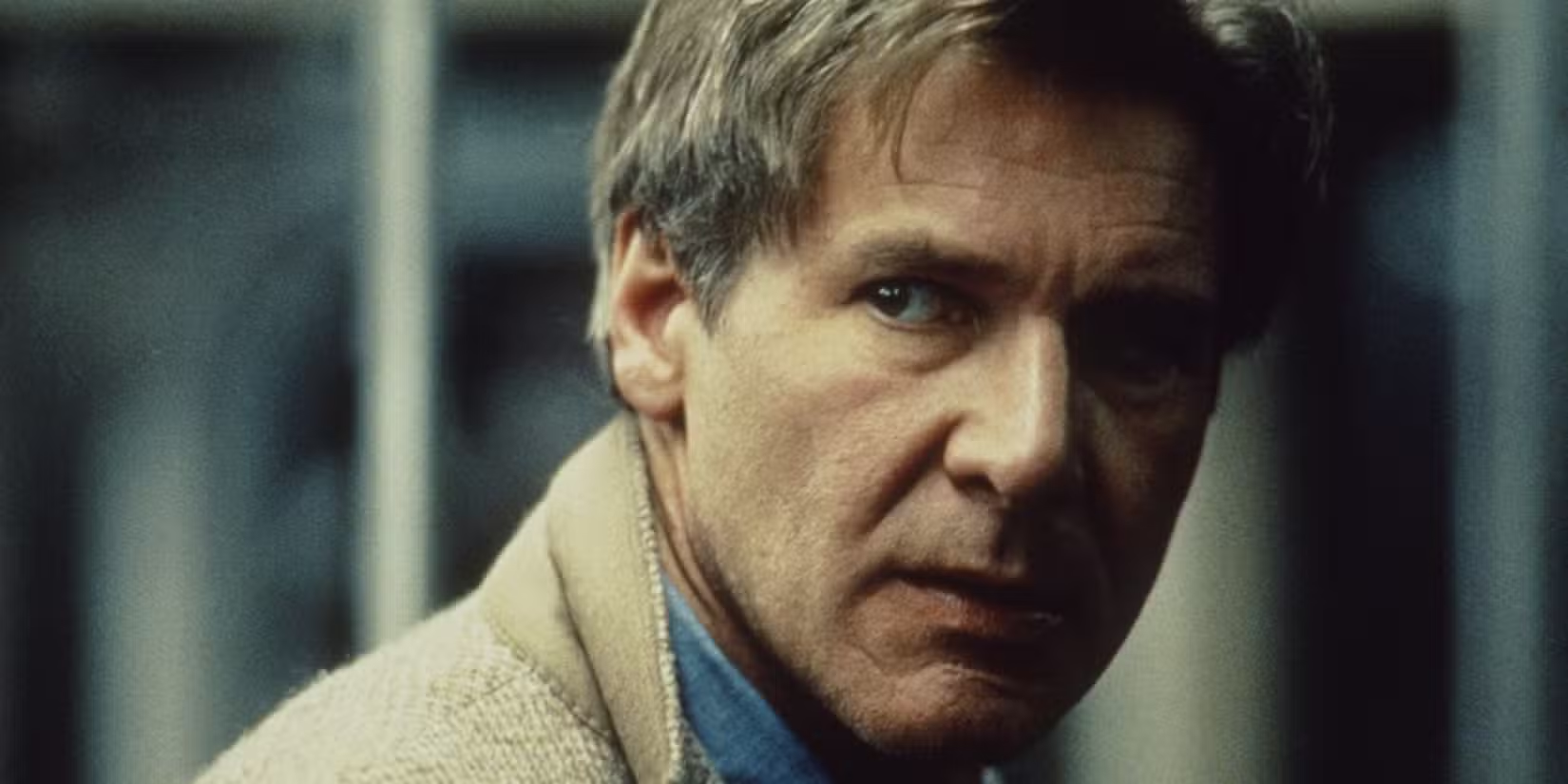
Harrison Ford in The Fugitive.Image via Warner Bros.
The Fugitive begins with Ford’s Dr. Richard Kimble discovering the murder of his wife — and a glimpse of the one-armed man who killed her. Kimble’s trial and sentencing to death are played as a Kafka-esque nightmare until a violent prisoner revolt and a bus crash leave him on the run and in the crosshairs of Jones’ U.S. Marshal Sam Gerard. The cat and mouse pursuit that follows, with Kimble desperately gathering evidence to clear his name and barely stymieing Gerard at every turn, largely plays out in and around the city of Chicago and eventually balloons into a larger (and less plausible) conspiracy plot.
The film is a somewhat faithful adaptation of the massively influential 1960s TV series with David Janssen and Barry Morse in the Ford and Jones roles, respectively. The series was one of the first to follow a single, twisted plot across multiple seasons with a two-part finale built up as an event viewers couldn’t refuse to miss. Series creator Roy Huggins stayed on board as executive producer for the film, which proved a box office juggernaut in 1993, earning almost $400 million at the global box office.
Advertisement
What Makes ‘The Fugitive’ Special
With as much plot as it has, The Fugitive, as a cinematic experience, is not really about it. In fact, for years, audiences have thoroughly picked the film’s series of wild coincidences and unbelievable twists apart. Rather, The Fugitive represents a perfect, alchemical mix of incredible star power (Ford v. Jones), action and effects (by master genre craftsman Davis), and sturdy, propulsive storytelling that doesn’t get too bogged down in the details (Die Hard veteran Jeb Stuart).
It’s Kimble’s moment-to-moment escape artistry and near-misses with Jones’ task force that carries the viewer from the spectacular train derailment/bus crash to the fugitive and the lawman’s confrontation atop a roaring dam (a sequence that includes Jones’ iconic delivery of the line “I don’t care”), to the highly-charged (albeit unbelievable) showdown at a medical conference. Davis’ proficiency with elaborate practical effects worked much to the film’s power as well, with the train derailment being shot in a single, one million-dollar take that looks spectacular and, most importantly, real.
The film was such a unanimous hit among critics and audiences that it almost swept awards season, with a Best Picture nod that ranks alongside The Silence of the Lambs as one of the biggest surprises in Oscar history. And the film’s timeless effects, bruising action, and rock-solid performances make it every bit as rewatchable today as in 1993. It’s currently among the top-streamed films, free on Pluto TV.
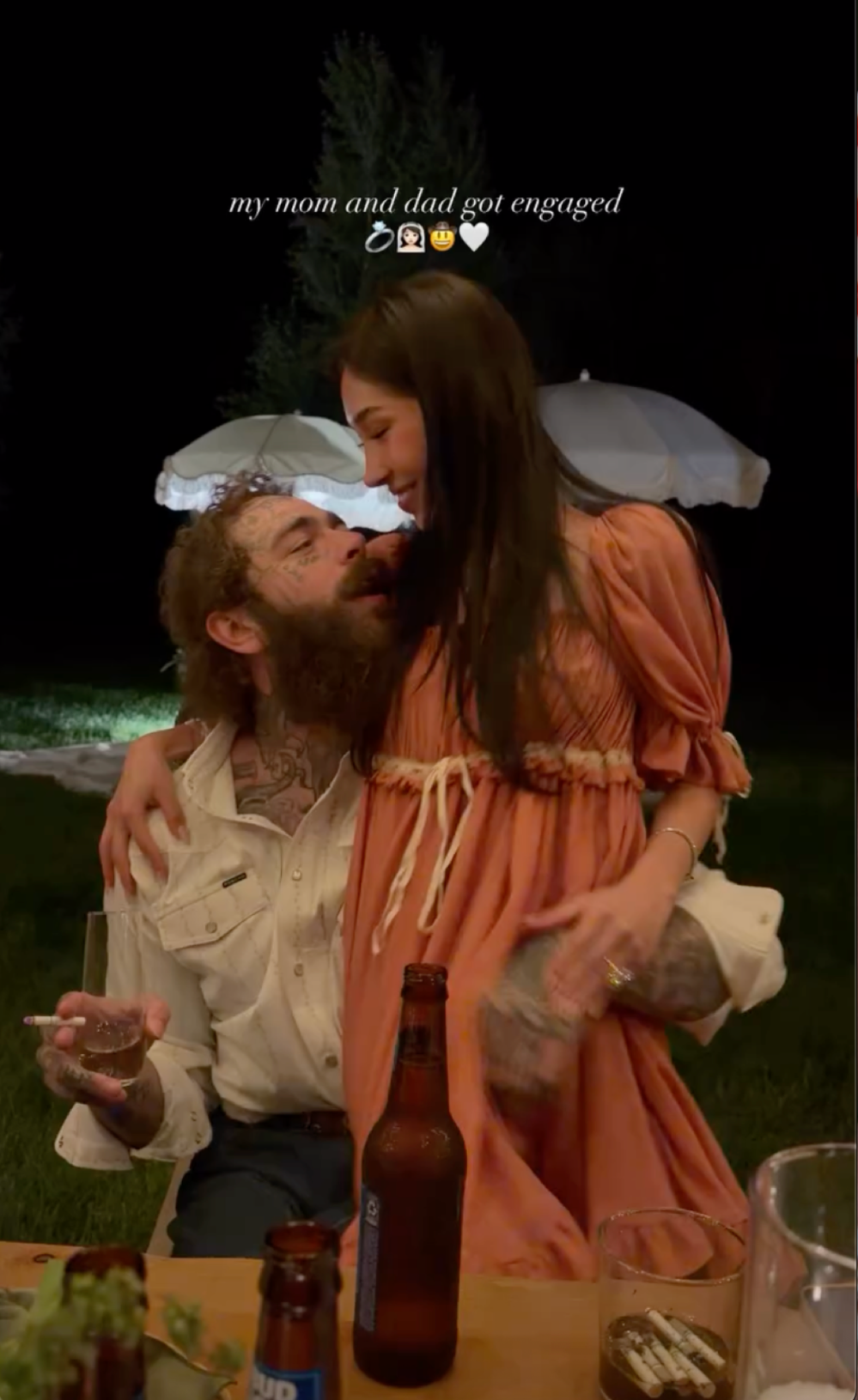
Malone, 31, seemingly proposed to Lee, a stylist, earlier this week with some of her best friends in attendance, according to a social media post from Lee’s friend.
“Mom and dad got engaged,” Matthew Madonna wrote via his Instagram Story on Wednesday, August 19, sharing a video of the couple cozying up while Lee was sitting on Malone’s (real name Austin Richard Post) lap.
Several stars took the next step in their relationships in 2026 by getting engaged to their significant others. Sports Illustrated model Clarissa Bowers kicked off the New Year by announcing her engagement to Jackson Morgan by showing off her ring via social media on January 4. Allison Holker joined the list on February 12 when […]
The couple shared a kiss in the clip, which also revealed Lee wearing a large diamond sparkler on her ring finger.
Us has reached out to Malone’s rep for comment.
Advertisement
Post Malone kisses Christy Lee.Courtesy of Brooke Donovan/Instagram
Phoebe Mckeaan, a friend of Lee, also shared a photo from what appeared to be the engagement dinner via her Instagram Story on Wednesday.
She posted a snap of the bride-to-be holding the back of the “Sunflower” singer’s neck as they drove together in a car. Lee’s new bling was front and center in the picture, which McKeaan captioned with a ring and red heart emoji.
Christy Lee showing off her ring.Courtesy of Phoebe Mckeaan/Instagram
Another close friend of Lee’s posted about the special moment, capturing some PDA between the newly-engaged pair.
“So happy for you both,” model Brooke Donovan wrote via her Instagram Story.
Post Malone and Hee Sung “Jamie” Park kept most of their relationship private. Malone (real name Austin Post) confirmed he had a new woman in his life in May 2022, when he revealed that his then-unidentified girlfriend was pregnant with their first baby. Throughout Park’s pregnancy and delivery, the “Sunflower” rapper kept details about their […]
Neither Malone nor Lee have publicly commented on the news, but that isn’t unusual as they’ve kept most of their relationship out of the public eye.
The rapper was first linked to Lee, a Parsons School of Design at the New School student, in January 2025 when they were photographed leaving the Mascagni Hotel in Rome.
Post Malone and Christy Lee.Courtesy of Matthew Maddona/Instagram
That March, Malone was seen with Lee at a bar in Idaho before traveling together through Paris in April 2025.
News broke in June 2025 that the pair had called it quits one month prior, but it’s clear they have since rekindled their romance.
Advertisement
Thank You!
You have successfully subscribed.
Post Malone and Christy Lee celebrating their engagement.Courtesy of Siena Suder/Instagram
Prior to his relationship with Lee, Malone was engaged to Hee Sung “Jamie” Park.
Malone welcomed his daughter with Park in May 2022, the same year he confirmed they quietly got engaged. The musician battled Park in court for custody following their November 2024 split, which was settled the following year.
Us confirmed in November 2025 that the exes filed court documents in Utah, where Malone lives, informing the judge that they had agreed to a custody deal.
After a rollicking four seasons, Netflix’s most impulsive and poor decision-making teenagers from North Carolina have finally reached the end of their adventure. When Outer Banks first started back in 2020, the series was a weird combination of teen drama, class struggle, and treasure hunting. Some shows might have honed in on one of those dynamics as the seasons progressed, but, for better or worse, Outer Banks has never forgotten its roots.
From hunting for the gold of El Dorado to finding Blackbeard’s treasure, the series has led this gang of kids to all corners of the world, taking on everyone from international mercenaries to long-lost evil dads. In some ways, it’s nice that the final season of Outer Banks sticks to what it knows. It doesn’t try to blindside the audience with any big last-minute twists; it isn’t trying to change the formula now that one of its characters has died. While that makes for a less exciting finale, Season 5 of Outer Banks sticks to its guns, and there’s something admirable about that at least.
Advertisement
‘Outer Banks’ Season 5 Grapples With the Death of J.J.
When Season 4 wrapped up, fans of OBX were stunned to see that the show killed off one of its most beloved characters, J.J. Maybank (Rudy Pankow). Admittedly, if anyone was going to die from the Pogues, J.J. seems like the most logical candidate given that he was by far the most impulsive kid in the group and was facing major upheaval after finding out his father wasn’t Luke (Gary Weeks), the alcoholic and abusive man who raised him, but somehow a worse and more wicked man named Chandler Groff (J. Anthony Crane). After witnessing Groff kill J.J. over the Blue Crown, Kiara (Madison Bailey) is understandably traumatized. Much of Season 5 is spent with Kie dealing with the grief and trauma of losing one of her best friends and her boyfriend.
While there’s been a lot of speculation surrounding why Pankow left the series, it’s hard to deny that J.J.’s death did add a bit of real gravitas. After so many outrageous adventures, it always seemed a little too lucky that everyone kept getting out of every scrape happy and healthy, ready to head back to the fish camp in the OBX. That these characters continued to make the worst decisions only added to both the show’s most frustrating elements and addictive allure. Kie’s grief and her process of overcoming the heartbreak of losing J.J. is one of the best storylines of the season, and the one that makes the most sense. While her friends don’t seem to grasp why she’s so dogged about revenge, it’s understandable why she’s the only one who feels this way.
‘Outer Banks’ Season 5 Throws the Pogues Into Their Most Dire Straits
Drew Starkey, Carlacia Grant, Madelyn Cline, Chase Stokes, Madison Bailey, Jonathan Daviss in Outer Banks Season 5Image via Netflix
Advertisement
J.J.’s ghost looms large over the group, but it’s not the only problem that the kids face. Kildare is dealing with development changes by the Kooks, who seem determined to wipe the Pogues off the map; Groff is still bounding around being dastardly with the Corsair pirates now on his tail, and while Kie grieves, her friends are also dealing with their own personal battles. Pope (Jonathan Daviss) is traumatized, living in the aftermath of killing Lightner (Rigo Sanchez), and Cleo (Carlacia Grant) has been separated from the group and shipped back to Nassau. Sarah (Madelyn Cline) and John B. (Chase Stokes) are grappling with Sarah’s pregnancy and the fact that they are quite literally homeless now that they’re back in Kildare.
While the OBX used to be a safe place for the kids, things have changed since their latest trip. Kildare has turned on the Pogues, and everywhere they look, there seems to be another old enemy sprouting up to either take their treasure or their home. Rafe (Drew Starkey), who was once one of the big bads of the show, has been given a semi-decent redemption arc that puts him on the side of the Pogues this season, but lest you think he’s been brought in to replace J.J., that is far from the truth. His own journey of facing the ghosts that he’s had since Season 1 is both the most outrageous part of the finale and, oddly, one of the more cathartic moments.
But while Outer Banks tries to wrap up some of these major storylines, it often feels like the solutions come a little too easily. The series both has too much it wants to say and not enough. From launching the kids back into an international adventure mid-season to tossing in a hurricane that hits the Outer Banks, there’s a lot happening in Season 5, and it muddies the waters regarding which storylines actually matter.
Advertisement
‘Outer Banks’ Introduces an Overwhelming Amount of Villains in Season 5
Alongside Groff, who clearly has it in for the kids, is a slew of villains now chasing the Pogues. From the Corsairs to mercenaries to drug lords to wicked stepmothers to Kooks eager to steal their land, it feels like there is no shortage of people who hate the Pogues. This hits at one of the biggest issues of Season 5. This show has always been a teen drama with elements of class struggle and treasure hunting, but it turns out that when you have so much going on, you’re going to have a lot to wrap up. The final season moves at a frenzied pace, jumping from one conflict into another.
The Pogues aren’t helping themselves, either. Almost immediately upon their return to Kildare, John B. makes one of the most foolish mistakes he’s made in a while, throwing the kids out of the frying pan and into the fire. On the list of egregious and irresponsible things that the Pogues have done, this might just rank at the top. It is so silly that it feels obviously manufactured to throw another obstacle back in the Pogues’ faces — and worst of all, it’s unnecessary.
There’s already a lot for the group to contend with and, rather than diving deeper and becoming more introspective about the actions of the past few years, the added troubles attempt to obfuscate that none of these characters are really getting the well-rounded conclusion they deserve. This is a familiar format for Outer Banks, and old habits die hard, but it’s hard not to feel like the saccharine, fairytale series finale feels a bit hollow when looking back at the show as a whole.
Advertisement
‘Outer Banks’ Fails To Stick the Landing in Its Final Season
Madelyn Cline, Chase Stokes, Jonathan Daviss, and Madison Bailey in Outer Banks Season 5Image via Netflix
Outer Banks is still ridiculously addicting to watch — only soap operas can rival the twists on this show — but after so many years, the finale should have given viewers a bit more to chew on. The fact that some of the worst characters in Kildare seem happy and friendly with the Pogues by the end is just the disappointing cherry on top. With so little introspection, it doesn’t feel like these characters have fundamentally changed in any way since we first met them. They’ve lost one of their closest friends, and yet they barely hesitate to jump on another plane heading to another country halfway around the world to get themselves into another life-threatening situation.
Who’s to say another treasure hunt doesn’t come around five years down the line that will send the Pogues back on a globe-trotting journey? Considering how quickly the Pogues seem to fall into trouble, it seems more like a matter of when and not if. In many ways, the story doesn’t feel complete, or that this particular chapter of their lives is coming to a close. Perhaps that’s just how it is in the OBX, but after all of that grief and trauma, it certainly feels like the kids deserve more than what they got — and we’re not talking about the gold.
Outer Banks‘ final season is now streaming on Netflix.
Advertisement
Advertisement
Release Date
2020 – 2026-00-00
Advertisement
Network
Netflix
Advertisement
Showrunner
Jonas Pate, Shannon Burke, Josh Pate
Directors
Advertisement
Jonas Pate
Writers
Josh Pate, Shannon Burke, Jonas Pate
Advertisement
Advertisement
Chase Stokes
John B. Routledge
Advertisement
Madelyn Cline
Sarah Cameron
Advertisement
Advertisement
Pros & Cons
Kiara’s story is by far the most interesting this season as she grapples with J.J.’s death.
The show is still masterful when it comes to surprising plot twists that keep the viewer hooked.
Season 5 has far too many villains to contend with and not enough time to actually deal with them.
The story wraps up a bit too neatly by the end of the series, and it doesn’t feel like the Pogues have actually really changed or grown.
The ending feels incomplete, with too much character development left unexplored.









































































You must be logged in to post a comment Login