
Entertainment
‘DTF St. Louis’ Creator Explains Floyd’s Shocking Finale Fate and Why He Couldn’t Look at Fan Theories


[Editor’s note: The following contains major spoilers for DTF St. Louis.]
Summary
From creator/writer/director Steven Conrad, the season finale of the seven-episode HBO limited series DTF St. Louis has aired, finally revealing the circumstances around the tragic death of Floyd Smernitch (David Harbour). Never set up as a puzzle in need of solving, but instead more of an emotional unraveling, a messy love triangle that shined a light on the loneliness of three people who loved each other and were desperate for connection while looking for it in all the wrong places ultimately collapsed on itself. Clark (Jason Bateman) seemed to genuinely want to boost his friend’s confidence but did so in such a misguided way that it left Floyd feeling trapped in a black hole without the validation and love he so desired. What makes it all even more heartbreaking is watching Clark and Floyd attempt to shortcut fulfillment through the DTF app instead of just getting real with each other and their loved ones about what they were really feeling.
Collider recently got the opportunity to chat one-on-one with Conrad about the season’s undeniably bittersweet ending and what led to Floyd’s fate. During the interview, he discussed the impact Bateman had on who Clark became, creating tension through conversation, Floyd’s Playgirl past and how it affected his present, the unscripted moment in the kitchen in the first episode of the season, having a very clear sense of Floyd’s fate and why it had to play out this way, avoiding fan theories, and whether there could be another season.
Jason Bateman Helped Shape Who Clark Forrest Became in ‘DTF St. Louis’
“His draw to Floyd is immediate because it just makes him feel safe.”

Collider: You had been working on the development of the series and the characters for a bit of time before you finally got to shoot it. I would imagine there were changes that happened with the characters when it went from Pedro Pascal being in the series to Jason Bateman being in the series. What were the biggest changes that happened with this that you think ultimately worked to the advantage of what the series is now?
STEVEN CONRAD: I hadn’t quite apprehended it, but when Jason and I started to talk about doing this together, he mentioned that some of what Clark’s energy could be is that his draw to Floyd is immediate because it just makes him feel safe. He wanted to start with, “I like being with this guy. This guy is big, he’s keen, he’s really sweet, and he’s funny, and I like being with him.” Jason could do that. You could see Jason’s Clark enjoying being with Floyd in a way that I knew could start somewhere. And then, if you have a place to start, you have a place to go. Jason made that explicit, and it seemed like a very important foothold.
It seems like very different versions of all these characters could have existed.
CONRAD: Clark needs a friend. He really needs a friend. That’s a tricky thing to count on an actor being able to dramatize. I would be so challenged if someone said to me, “Okay, start and make this clear that you need a friend.” I wouldn’t know how to start behaving like that. Jason inherently knew how to do that.

In the heart of suburbia, three lives intertwine through a dating app, but one death throws the town into chaos.
From a writing standpoint, it feels like there’s a huge challenge you had with this show, with big chunks of episodes being conversations between characters, whether it’s Clark and the detectives, or Clark and Floyd. There are a lot of just people having conversations. Were you ever worried about or nervous about making that interesting and keeping that interesting?
CONRAD: If you just bear in mind, all the time, that you’re really creating tension, and all of it is there to create tension, you can create tension with conversation the same way you can create tension with score. But if you forget that that’s the point, then it can be boring. Hopefully, if they were to be dissected, the idea that this was a genre piece that did have something to say about a mystery, a thriller, a psychological thriller, a weird kind of erotic thriller, these conversations circulate inside the thoughts that would exist in those genres.
Floyd Smernitch Was a Man Fully Committed to His Bad Ideas in ‘DTF St. Louis’
“It probably seemed like a good idea at the time for guys to do an exposé in Playgirl in the ‘90s.”

How did Floyd’s Playgirl past come about? What led to that detail?
CONRAD: It probably seemed like a good idea at the time for guys to do an exposé in Playgirl in the ‘90s. Our art department researched, and they weren’t really helped out by the concepts. They were very cheap, Top Gun, super macho, comically not good, full commitment to a bad idea kind of thing. I felt like the earlier we could get this notion out, that previously there have been full commitments to bad ideas, it would seem just as likely now that you’re going to make this same commitment to a middle-aged bad idea, something that lacked sense but was also beautiful. Floyd felt very free about his body and didn’t have inhibitions about that. It’s true of his marriage. He’s married to a partner who has very few sexual inhibitions. I like that about their partnership. It’s evolved over time. Some years were more intense, some years very, very quiet. But I feel like those two have a sexuality that was really very rewarding.
Playgirl just came from me wanting to get to know Floyd a little more and wondering what he was like when he was 24. How stupid could he have been? How smart had he been? What was he proud of? There’s a really small detail in there that I’m not even sure is visible, but he has a little get-to-know-you section where they ask him what his favorite snack is and what he wants to be someday. His answers are really very beautiful and honest, and I just wanted that to feel honest, not knowing that someone else might laugh at it.
There’s a shot in the first episode with David Harbour and Linda Cardellini in the kitchen, when he rests his stomach on the celery that’s on the counter. Was that scripted? Did you have a conversation about that? How did that moment happen?
CONRAD: That wasn’t scripted. That was one of the first things we shot. I was still getting to know David, as a partner, on the set. I saw the setting, and he’d come in and out with his belly. I knew that belly could touch the to touch the food that Carol was preparing if he just stood normally by the table. The trick would be to say, “This character is so used to this that he doesn’t even think about where this part of his body is anymore.” David plays a character who is 30 pounds heavier than David usually is. This person ends way in front of where they used to end and maybe isn’t aware that that’s where they end now because they didn’t always end there. It seemed to me like he didn’t know that he went out that far, so he would likely not know that he brushed up against anyway.
That sounds really complicated, but it was really a simple little piece of comedy. The best comedy says other things. The idea of having such a divorced relationship to your body in middle age just seemed so understandable to me. So, I thought it up in the moment. Instantly, he recognized that as something he wanted to do, and he just worked out the timing of it all. There’s another element to that scene. It’s the full box of Cheez-Its that he has tucked under his arm that’s holding the Batman comic book, and that was David’s idea, to have Cheez-Its, belly, Batman. That’s all you need to know about Floyd at the moment.

In 49 Minutes, HBO’s 7-Part Dark Comedy Miniseries Revealed Its Most Unexpected Villain
Jason Bateman makes for the perfect red herring.
Once you did have a sense of what the series was and you were ready to shoot it, did you always know by that point how it was going to end and how everything would play out? I know sometimes people do a show like this, and they’re still changing their mind and working on the ending of it all the way through. Did you know exactly what your ending would be?
CONRAD: Yes, I have done both of those versions of things too, over the many years. You could fall into a group of fellow filmmakers and they like the spontaneity of creating something on the day. I’m terrified by that. I love to be able to say to our filmmaking partners, “The last time we’re going to see this character is going to be this.” We made a TV show called Patriot for Amazon, and I knew what the last image was going to be, ultimately of our final season, and I could share with our lead actor. I could always say to him, “We are going to wind up here, and you are going to be sharing this. That’s coming. That’s three hours away.” I don’t know what I would say to them if we couldn’t start the show with Floyd feeling some huge emotional deficit, some real driving need. The first time we see him, he’s struggling to connect with his stepson. His clothes don’t fit anymore. You know he’s not comfortable in his skin anymore. He took the time to write this note about grownupsies. You have a sense that this man knows what grownupsies feels like. I like to be able to say to David, “This is where you start and this is where we’re headed. And there’s a lot to do between now and then.”
I think that destination is very important. It helps you pick your mood. So much of what we do is allowing the audience to feel a certain kind of mood. I didn’t have this with HBO, but it’s been true with other places I’ve worked, where you start to have conversations about the lighting, and they’ll resist there being any darkness in the show. Shouldn’t it have a mood? Shouldn’t it make you feel a kind of way? If there’s no mood, then you’re not feeling. And if you’re not feeling, you’re going to probably stop watching. Knowing where the show goes really helps me make all those other decisions. So, I don’t think I’ll allow myself to be in a situation that is open-ended. All the scripts were written before we started to make the show. Everything changes a little bit, but wholesale changes don’t happen to us when we go to shoot.
‘DTF St. Louis’ Was Never Meant To Be Viewed as a Puzzle That Needed Solving
“It has to deliver other satisfactions to the audience.”
I initially thought that maybe Floyd killed himself. Then, I thought maybe he had a heart attack. And then, I suspected Clark. And then, I suspected Carol. And then, I suspected Richard. Did you want to keep us guessing until the end? Did you want us to keep questioning those characters’ motives because it feels like some of that comes from how the audience perceives the characters and what they project onto them?
CONRAD: That’s a good question. Having some awareness of what you’re up to is probably a real good idea in a story like this because it’s not a puzzle. I don’t think it should be approached entirely like it’s a puzzle because it has to deliver other satisfactions to the audience. They didn’t take a puzzle out to try to solve. They sat down to watch seven hours of drama. So, it’s important that there’s curiosity because there’s curiosity on the part of the detectives, and you shouldn’t be ahead of them, otherwise there’s less engagement. Wondering is a great quality to provoke from somebody in the audience, but making it too much of a game can turn it into another preoccupation.
Honestly, if your whole goal was just to figure these things out, you could do it because it’s going to be someone who’s in the pilot unless it’s just sloppy. There’s only so many choices and so many scenarios that you could figure it out. But I think anybody who enjoys it tells themselves to stop trying to figure it out so they can just enjoy it. It’s tough to turn that part of your motor skills off. You just go, “I could solve this crime. I know more than they do.” But the experience of how this happened is as important as what happened. Making sure you are good at how is important too.
What led to your specific decision for Floyd’s ultimate fate? As you were trying to figure that out, why did this feel right? Had you thought of other possibilities?
CONRAD: No. Going in, this all made sense. You could just see it. Somehow, something happened and you could just see the dilemma. It was the invention of DTF St. Louis and their tagline, “All the excitement, none of the consequences.” As soon as that dropped into our creative world, we thought, “Oh, this is going to be a thing they’re playing with like matches.” None of the consequences seemed to be a bad bet. You watch two people you kind of like think there won’t be consequences, but of course there are. When you share intimacy with anyone, there will be consequences. So, I knew they would be mistaken about that gamble. And then, I started thinking about, what could be the most consequential thing for this man to lose?
I knew it wasn’t his marriage. I knew it was going to be a greater achievement, and that achievement of a stepfather or a stepmother to a young person is such a monumental thing to be good at, if you can find a way to be good at that. I knew this was going to have that tragic feel at the end. I thought, “This ought to be the thing that breaks and can’t be fixed because of recklessness and because you’ve allowed this reckless thing into your home, one way or another, and you didn’t see this coming. Here’s a consequence you never expected. You’d be assessed and misunderstood by a young person who isn’t capable yet of recognizing what it is you’re doing and only feels strange and lonely because he’s seen you do it.” I knew that was going to happen. The rest of it was there for me to try to figure out how to create a path that ultimately seems obvious in terms of it being satisfying, but not so obvious that it doesn’t have energy.

‘DTF St. Louis’ Makes Unexpected Progress in Its Twisty Love Triangle Murder Mystery
Richard Jenkins reveals the detail he improvised for Homer while Joy Sunday shares her excitement to be filming Season 3 of ‘Wednesday.’
Did you see any of the theories that viewers were talking about as they watched the season?
CONRAD: No, I can’t. That’s just a recipe for four hours of sitting down and tearing your hair out. No, and don’t tell me about it either. People are probably going to guess it in one way or another. The answers are sort of there. Floyd’s ideation, he’s suffering from heavy duty depression, he hasn’t bought new clothes, he’s suffering economically, he lacks intimacy. It wouldn’t take a genius, an emotional genius, to know that this person needs a tremendous amount of tenderness. The only repository for it is his weather broadcasting partner, which was almost enough, except that flirting with the fun of this new friendship allowed for a really dark unexpected incident to happen, and it was enough to destroy. Floyd was easy to destroy because he was barely keeping himself together.
Creator Steven Conrad Says There Could Be a Way To Do Another Season of ‘DTF St. Louis’
“You could do it somewhere else and find another vein of storytelling.”

Is this a series where you feel like you’ve completed the story you wanted to tell and that’s it? Because I would tune in for another season of Homer and Jodie working on another case together.
CONRAD: That’s exciting. If you take The White Lotus model, and you have the upstairs-downstairs thing with these privileged people with problems, and then these people who work at this place, you could do it somewhere else and find another vein of storytelling. I don’t know. Sex and violence, you could spend your whole career just writing about those two things and not repeat yourself. The possibility is there, for sure. Homer has got to retire, though. He might be a consultant on some future DTF crime. I like the idea of Jodie. She’s my kind of hero. She’s like Rocky. She always had it. All she needed was some events to draw it out of her. She didn’t change. She just got recognized. I like her an awful lot, and I like Joy Sunday considerably, too.

- Release Date
-
2026 – 2026-00-00
- Network
-
HBO
- Showrunner
-
Steve Conrad
- Directors
-
Steven Conrad
- Writers
-
Steven Conrad
DTF St. Louis airs on HBO and is available to stream on HBO Max.

Continue Reading
Euphoria introduced Grace Van Patten‘s sister Anna Van Patten by having her character involved in a brutal group sex scene with multiple men.
During the Sunday, May 3, episode of the hit HBO series, Kitty (Anna Van Patten) joined the club after Angel (Priscilla Delgado) disappeared from rehab. She initially was meant to dance for the customers at the strip joint but then a group of four men hired her to join them in a private room.
Kitty was then seen taking ketamine before the men took turns having sex with her. Rue (Zendaya) watched the brutal situation unfold on the cameras in the back. She then tried to offer help to Kitty — even asking if she was forced to work at the club — but the new dancer blew off her concerns.
Things take a turn for the worst when a robbery took place at the club. The manager got shot and Rue ultimately realized that Laurie was to blame. Elsewhere in the episode, Maddy (Alexa Demie) took Cassie (Sydney Sweeney) under her wing, which resulted in her gaining tons of new subscribers on OnlyFans.
Euphoria, which premiered in 2019, originally followed troubled high school student Rue as she struggled to remain sober after rehab. The hit HBO series was quickly renewed for a second season after its premiere, but it took nearly three years for the next batch of episodes to air.
Season 3 was originally set to air on HBO in 2025 before facing several obstacles, including creator Sam Levinson’s commitment to his short-lived series The Idol. The dual WGA and SAG-AFTRA strikes, which took place in late 2023, also prolonged the delay.
Since season 2 concluded, the cast went through a loss when Angus Cloud died at age 25 in July 2023 following an accidental overdose. The show is expected to address the fate of his character, Fezco, while Eric Dane‘s Cal made an appearance in the trailer one month after the actor’s death following a battle with ALS. He was 53.
“Some people ask why it took so long between seasons 2 and 3. There were obvious factors — the strikes, trying to make a schedule work with our very in-demand cast, but the real time was in trying to figure out how to find a way to pay respect to those who we lost,” Levinson said in a speech at the season 3 premiere in April 2026.

The Euphoria cast and crew have mourned the deaths of some of their colleagues over the years. Euphoria, which premiered in 2019, originally followed troubled high school student Rue (Zendaya) as she struggled to remain sober after rehab. The hit HBO series was quickly renewed for a second season after its premiere, but it took […]
He continued: “When Angus died, it was tough. I loved him deeply, and I fought hard to keep him clean. The year he died, in 2023, he was one of 73,000 people in America who died of a fentanyl overdose. I learned a whole lot that year, but what I realized more than anything is that death is what gives life meaning. You can’t be arrogant about existence. You’re forced to reckon with the fact that life itself is a wonder, a gift, a profound blessing.”


Levinson also explained how the show will pay tribute on screen.
“There are a lot of scenes where people are either talking to him on the phone,” he told Variety about the decision for Fez to still be part of the story. “I thought that if I couldn’t keep him alive in life then maybe within this show that I can control and keep him alive there. I think the whole thing was to honor him and also I can’t wait for you to see the last few episodes. I think he would be cracking up at his story line. I think he would love it.”
Euphoria airs on HBO Sundays at 9 p.m. ET.
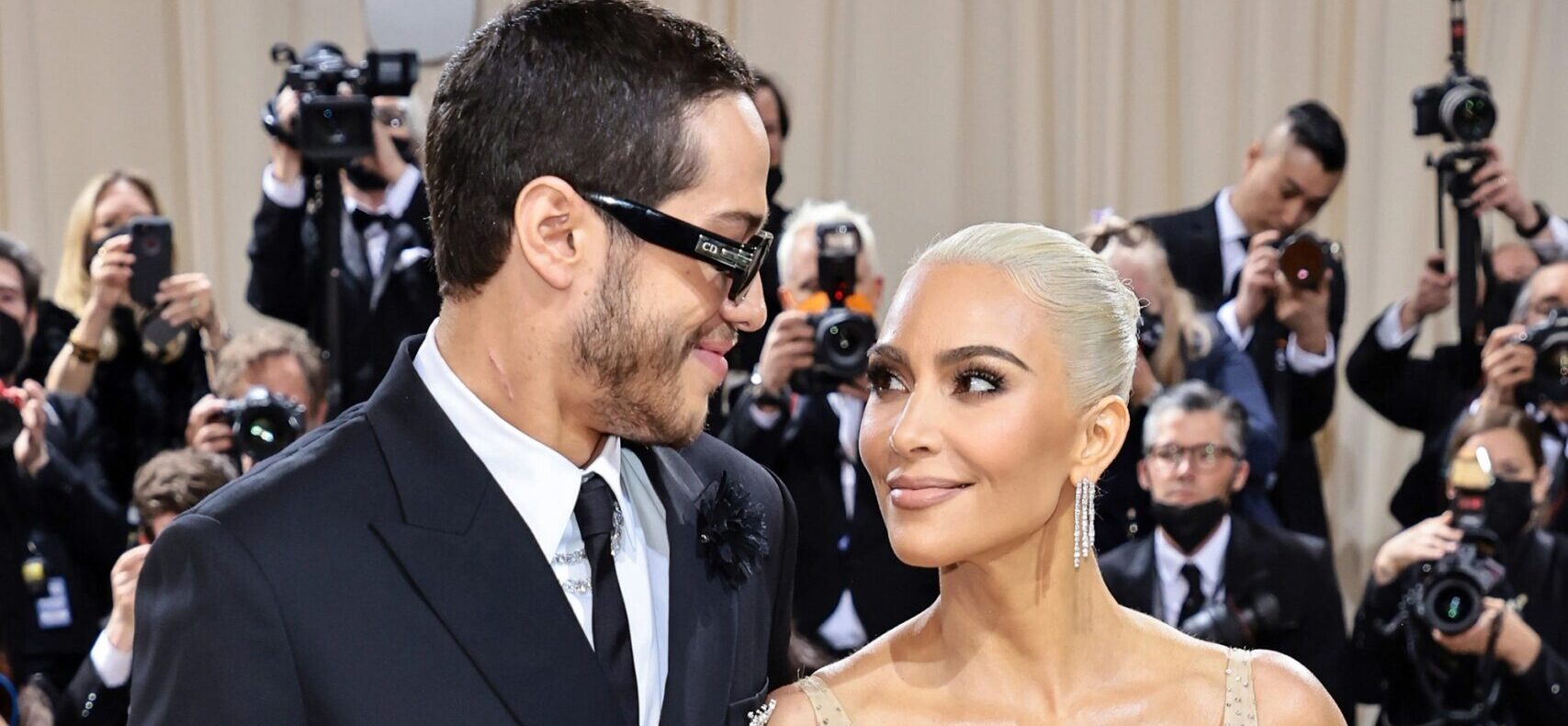
The Met Gala curse has become a popular online theory suggesting that celebrity couples who attend the event together are doomed to break up shortly after. Over the years, several high-profile splits have fueled the speculation, giving the idea a life of its own across social media.
However, the pattern may be more coincidence than curse, as many couples who have walked the Met Gala red carpet together have gone on to stay happily together. Nevertheless, the speculation continues to trend online.
In 2016, The Weeknd, real name Abel Tesfaye, walked the Met Gala red carpet with model Bella Hadid. The couple arrived in matching Givency outfits, with Hadid donning a black strapless gown and The Weeknd wearing an all-black suit with a matching bow tie. Six months after the event, however, they announced their amicable split, citing their busy schedules.
The following year, The Weeknd made his new relationship with Selena Gomez red-carpet official when they attended the Met Gala together and shared a kiss for photographers. The former Disney star wore a blush-colored silk chiffon Coach dress with hand-sewn embroidery. In October that same year, multiple sources confirmed that the couple had broken up.
Jamie Foxx And Katie Holmes Separated Shortly After Attending The Met Gala
It isn’t clear when Katie Holmes and Jamie Foxx began dating, but the actress has been spotted with the “Django Unchained” actor as early as 2013. The couple kept an extremely low profile in their romance, with only insiders offering a glimpse into their relationship.
In 2016, an insider said Holmes and Foxx were “very serious” about each other. Papparazzi shots were the only evidence that the two spent time together, often seen holding hands and hugging. In 2018, the two were spotted at a gala in New York, where they sat beside each other and shared laughs the whole night.
They made their first appearance as a couple at the 2019 Met Gala, where Holmes wore a purple Zac Posen gown. Three months later, the couple broke up after six years together.
Kim Kardashian And Pete Davidson Split After Less Than A Year Of Dating
Rumors that Kim Kardashian and Pete Davidson started making the rounds after the reality star appeared as a guest on SNL, where she shared the spotlight with the comedian. In a sketch, the two played Aladdin and Jasmine and shared a kiss in a parody of the Disney movie. Later, Kardashian described that the kiss had a “little zing.”
The two were then spotted on several dates and even went on a vacation to the Bahamas. In February 2022, Davidson publicly called Kardashian his “girlfriend” in an interview with PEOPLE. They attended the Met Gala that same year, with the reality star donning the controversial Marilyn Monroe dress. Three months later, they separated, with a source claiming the relationship “ran its course.”
Miley Cyrus And Liam Hemsworth Announced Their Separation Three Months After The Met Gala
Miley Cyrus and Liam Hemsworth’s on-and-off relationship dates back to 2009. The two met on the set of “The Last Song” and sparked a relationship. They broke up and got back together a few times before getting engaged in 2012. In September 2013, however, they called off their engagement and went their separate ways.
Cyrus and Hemsworth sparked dating rumors in January 2016, and a week later, the “Party in the U.S.A.” singer showed off her engagement ring on Instagram. The couple married sometime in December 2018, and they attended the Met Gala the following year. In August 2019, they announced their separation and later filed for divorce, citing irreconcilable differences. Their divorce was finalized in 2020.
Sabrina Carpenter And Barry Keoghan Confirmed Their Split Months After The Met Gala
Dating rumors about Sabrina Carpenter and Barry Keoghan began circulating in late 2023, when they were seen having a “romantic dinner” together. The two made several public appearances together but never outright confirmed their relationship, often avoiding questions about each other or vaguely answering relationship inquiries without naming each other.
In May 2024, Carpenter and Keoghan attended the Met Gala separately but posed for red carpet photos together. The actor portrayed the singer’s love interest in the music video for “Please, Please, Please” the following month, further fueling rumors about their relationship. Eight months after the Met Gala, the two parted ways for good, with a source claiming the relationship “didn’t end well.”
Yellowstone‘s Marshals spinoff shocked viewers with a dangerous ranch fire that resulted in country singer Riley Green‘s character Garrett suffering from second degree burns.
During the Sunday, May 3, episode of the hit CBS series, Kayce (Luke Grimes) saw a fire break out in a barn on his property. He rushed over as Garrett was helping the horses in the stable escape but then things took a turn. Garrett was caught under a beam that fell and he subsequently suffered second degree burns.
The rest of the episode showed Garrett’s loved ones concerned about his health — and his lungs — after a doctor noted that there was internal damage in addition to external. It remains to be seen how much of a health scare Garrett is going through.
Marshals marks Green’s acting debut — with him appearing in multiple episodes this season.

Yellowstone‘s Marshals spinoff has already featured guest appearances from country stars — but who does musician Riley Green play? During the Sunday, March 8, episode of the Yellowstone spinoff, Cal (Logan Marshall-Green) and Andrea (Ash Santos) shared a drink at the local bar — the Four Sixes — country singer Ashley Cooke performed her song […]
“I’m so excited to be joining the cast of Marshals. Being on set with my buddy Luke Grimes made the experience even more memorable,” Green said in a statement in February. “This is my first go around in the acting space and I couldn’t have asked for a better introduction to this world.”
Green plays former Navy SEAL Garrett, who arrives at the ranch hoping to lean on his friends Kayce Dutton and Cal to help “put the demons of his past to rest,” according to the official character description.

“It happened really organically. It was through Luke Grimes, who’s become a real good buddy of mine,” Green told People in April about how his role on the show came to be. “He’s starting his music career and was starting to come to Nashville and doing some cowriting and stuff. I was trying to help him out in that world a little bit with some people that I knew. He was like, ‘Man, you should try acting, you know? I think you’d be good at it.’ I was already kind of putting thought into that.”
Green recalled everyone being “so welcoming” to him on set as he balanced acting and performing.
“A lot of my music career, other than writing new songs and adding things to a set, there’s a lot of monotony of playing the same songs over and over again, showing in and out during a tour,” he shared. “This is something that’s brand new every day.”
After meeting with an acting coach, Green was taught not to “worry so much about the lines” and instead focus on responding “to what the other person says.” Green also teased how his character has “a lot of vulnerability,” in addition to his extensive military experience.
“He’d been through a lot and had a lot of problems and that’s not the easiest thing to just jump into,” Green noted. “I certainly think there would have been characters that would have been easier for me to sort of tap into that were more similar to me.”
He continued: “This guy was somebody that really had a lot of deep emotional problems from things that had happened to him in the past. And when you haven’t lived those, you really kind of just rely on feedback from other people in the room.”
Marshals airs on CBS Sundays at 8 p.m. ET.

Each year, the annual Met Gala encourages Hollywood’s finest to make an unforgettable appearance that coincides with the theme of the Metropolitan Museum of Art’s Costume Institute.
From “Camp: Notes on Fashion” in 2019 to “Punk: Chaos to Couture” in 2013, stars bring their A-game to the fundraiser.
Outrageous looks have almost become an essential part of the stylish night. With the imaginations of fashion’s most creative designers behind them, stars have sported everything from backless chaps to pope attire.
The “China: Through the Looking Glass” collection in 2015 brought forth some seriously wild looks. Sarah Jessica Parker arrived in a Philip Treacy headpiece that featured a mohawk and a custom H&M dress that she helped design. Rihanna turned heads in a bright yellow Guo Pei Couture number that had a train over eight feet long. And you could hardly see Solange Knowles’ head peeking out of her structured Giles dress.
Possibly the funkiest theme of all was 2019’s “Camp: Notes on Fashion.” Katy Perry made headlines for wearing a Jeremy Scott ensemble featuring a 3-D chandelier that even lit up. From Tiffany Haddish’s Michael Kors sparkly suit to Cardi B‘s Thom Browne mattress dress, it’s nearly impossible to narrow down the wild looks.
These are just a few of the wacky and cool outfits that have stood out through the years. But to see all the wildest, greatest and completely absurd looks to grace the Met Gala red carpet, keep scrolling.
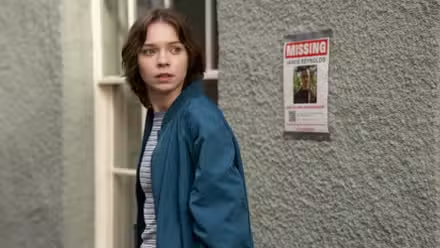
If you’re of a certain age, there’s a very good chance you’ve read William Golding‘s classic 1954 novel Lord of the Flies, which has been required reading in many schools. The book, about a group of young boys stranded on an island after a plane crash, has inspired many other works since, including Showtime’s Yellowjackets. It’s also been adapted a few times on screen, most notably via films in 1963 and 1990. Now, Lord of the Flies is back as a four-part miniseries set to premiere on Netflix in the U.S., and if you’ve read the book, you know what to expect. Not content to simply let things play out exactly as they do in the novel, though, creator Jack Thorne (Adolescence) and director Marc Munden (The Secret Garden) take some creative risks that don’t always work.
What Is ‘Lord of the Flies’ About?
The first thing this new version of Lord of the Flies does right is that it doesn’t give in to temptation and update the source material for the modern age. The miniseries isn’t set in the 21st century, with whiny kids missing their cellphones. The BBC is involved, which means it’s not Americanized either. Lord of the Flies isn’t interested in slowly establishing the characters before hitting viewers with the inciting incident. From the first scene, the plane crash has already happened, with the focus on a survivor lying in the muck.
Each of the miniseries’ four episodes revolves around a different major character. The premiere revolves around Piggy (David McKenna), a short kid with asthma and the smarts to lead everyone, if only the others would listen. In the second episode, the plot shifts to Jack (Lox Pratt), the angry blonde kid and head of the boys’ choir, who quickly assumes leadership of the hunters. Episode 3 belongs to Simon (Ike Talbut), a boy torn between two sides and mentally breaking down, while the finale centers on Ralph (Winston Sawyer) as he struggles to hold on to his role as chief.
This approach allows for an understanding of how different personalities adjust to being stranded when they’re much too young to process the situation. Some rise to lead, while others crumble and let selfish desires take over. Piggy is the brains of the group, but isn’t respected because of his appearance. Increasingly, it’s him and Ralph against the insanity spreading in Jack’s group. How many of them will make it out alive?
‘Lord of the Flies’ Doesn’t Try to Modernize the Story
How do you add something new to such a well-known story, especially when the choice has been made not to modernize it? In some respects, you don’t. Munden and Thorne seem to recognize this and allow this tale to mostly play out as is, since throwing in too many ideas would cut a classic off at the knees. Golding’s story stands on its own, and its powerful themes about societal breakdown remain timely today.
Still, this Lord of the Flies adaptation is more than a simple, straightforward retelling; it’s a work of art. Munden contributes an impressive cinematic flair that becomes its own character at points. Shots twist or go fuzzy in the chaos. Colors brighten or become more saturated when one character starts to fall apart. When the group of survivors is being introduced, the camera often finds them, one by one, in uncomfortable close-ups on numb faces, like end-of-the-world school photos.
The score, created in part by the iconic Hans Zimmer, has the same unnerving personality. It’s never too aggressive, but it doesn’t allow the viewer to relax either. It begins with simple woodwinds and strings, putting the audience in the story’s era, before becoming more frantic, reaching a crescendo of horror in later episodes. These artistic touches are a treat for the eyes and ears, but they also feel a bit too overwrought at times, mostly as a consequence of the overall series length.
‘Lord of the Flies’ Phenomenal Young Cast Keeps the Miniseries Afloat

Golding’s novel is just 224 pages long, which means that Lord of the Flies works perfectly as a two-hour film. As a four-hour miniseries, the story is strained midway through, with repetitive scenes and meandering shots leading up to bigger moments. There’s one crucial scene where the new adaptation goes in a direction it should’ve avoided. Rather than being sudden and terrifying, it’s drawn out too long, with prolonged goodbyes that diminish the immediate shock of the original moment, removing the pain of immediacy where things can go to hell in an instant. It’s the only time when the miniseries makes a misstep, becoming too modernized after rejecting it elsewhere.
Thankfully, this divergence can be somewhat forgiven due to the young cast’s phenomenal performances. Talbut’s wide eyes convey Simon’s breakdown, while Sawyer displays the calm and steadiness that make Ralph a chosen chief. Yet Lord of the Flies is especially buoyed by two cast members. Lox Pratt’s Jack is awful in the best way possible. He’s a horrible jerk, a selfish kid who deserves the worst, yet he’s also shown to be scared and weak when he’s not showing off. It’s easy to see why Pratt was cast as Draco Malfoy in the new Harry Potter TV series. McKenna’s Piggy is the tragic heart of Lord of the Flies, and the miniseries is at its best every time it finds him. The character is wise beyond his years, a lonely soul forced to grow up all too young, all conveyed without the necessity of dialogue.
Another adaptation of Lord of the Flies arguably isn’t necessary, especially if you’re already familiar with the story, but this new interpretation is a solid way in for the uninitiated. Its cinematic style is effective, and its performances are outstanding. If its four episodes had been a bit shorter, and a few changes to the source material had been reversed, Lord of the Flies could have achieved greatness; instead, it settles for being pretty good.
Lord of the Flies is now streaming on Netflix.

- Release Date
-
2026 – 2026-00-00
- Network
-
BBC One
- Directors
-
Marc Munden
- Writers
-
Jack Thorne
Cast
-

-
David McKenna
Nicholas (Piggy)
Pros & Cons
- The plot stays in its era and isn’t modernized.
- Marc Munden adds an unnerving cinematic flare to many shots.
- The score, made in part by Hans Zimmer, becomes chilling when needed.
- The performances, especially from David McKenna and Lox Pratt, are superb.
- The episodes are a little too long, causing the story to drag in the middle.
- One death scene is altered and too drawn-out, thus lessening the impact.
Entertainment
Jack Thorne Says Netflix’s ‘Lord of the Flies’ Found Its “Animal” in That Brutal Death

Editor’s Note: The following contains spoilers for Lord of the Flies.
Fresh off the success of Adolescence, writer Jack Thorne is digging even deeper for his latest complex portrait of boyhood with the first TV adaptation of Lord of the Flies, a story that’s stuck with him since his own childhood. Streaming on Netflix, William Golding’s dystopian classic story of schoolboys stranded on a tropical island after a deadly plane crash with no adults to keep things from descending into primal madness focuses on Piggy (David McKenna), Jack (Lox Pratt), Simon (Ike Talbut) and Ralph (Winston Sawyers). Clashes turn into leadership struggles as civilization quickly frays, and the young boys who once thought they were friends start to hunt each other.
Thorne is the type of writer who likes to shake things up while he embraces the chaos of never knowing what’s next until it presents itself. That approach to his career has done him well throughout the last 25 years, and has led to a wide variety of projects, genres, and mediums — with everything from the award-winning Adolescence and Netflix’s Lord of the Flies to three Enola Holmes movies, the stage play Stranger Things: The First Shadow, and The Beatles’ upcoming cinematic universe (featuring one biopic each for John Lennon, Paul McCartney, George Harrison and Ringo Starr) for director Sam Mendes.
Thorne sat down with me for an in-depth conversation digging deep into his process of adapting Lord of the Flies and the choices and changes he made. He also discussed why the conversations surrounding Adolescence felt special, how there were never plans to continue that story beyond what they have already released to the world, how impressed he was with Owen Cooper’s stand-out performance in Adolescence as well as the young ensemble in Lord of the Flies, putting his trust in Mendes for The Beatles films, and why Ang Lee is one of his heroes.
‘Lord of the Flies’ Is a Story With Deep Personal Significance for Writer Thorne
“That has been the book, all my life. It’s one that’s lived with me in lots of different ways.”

COLLIDER: Lord of the Flies feels like one of those stories that we all know the story of, whether we’ve actually read it or watched the previous movies. When did you first become aware of the story, and what did it mean to you before doing this?
JACK THORNE: I read this as an 11-year-old. I didn’t study it in school, but my mom was a supply English teacher at Portway English Department. My copy of Lord of the Flies had Portway English Department stamped on the inside cover because my mom stole it, which I think is apt for Lord of the Flies. It was really my mom’s stolen copy. When I read it, I remember the sensation of feeling like the writer had gotten into me somehow. I felt like Simon. I felt profoundly like Simon. I was an autistic kid. I wasn’t particularly adept at dealing with other people and being in social situations at all. I did look for the other in quite a lot of my life. I did reach for the other. And so, I remember this feeling of feeling like I was Simon, and then Simon gets killed. I didn’t understand what had happened, but there’s the line about his silvery body drifting out to sea and I remember going, “Oh, shit.” I’ve never forgotten that feeling.
I tried to make Lord of the Flies before. I tried to make it about 15 years ago for Channel 4, but we couldn’t get the rights. Joel [Wilson], who’s a very close friend of mine as well as an executive producer for this project, it was his company that made it. We were having Sunday lunch at his house, and he said to me, “What’s the one book?” And I said, “Lord of the Flies.” That has been the book, all my life. It’s one that’s lived with me in lots of different ways, with lots of different ways of telling it.
Were there aspects of the Lord of the Flies story that couldn’t make it into the films because of time that you knew you wanted to include in this, because you did have more time?
THORNE: Yeah, lots. The films are both very interesting, but there’s so much in every page of [William] Golding’s book that I wanted to spend time with. That was particularly true of Jack. It’s not just the difference between time in film versus TV. It’s the difference in terms of the vocabulary of television and what that chapter format can do, which I’m always obsessed with when I’m starting a project. I like to work out the story and know what I’m going to tell, but then figure out what the chapters are. That thing of spending the second chapter with Jack, which was the big revelation for me at the start of the journey, when we were working out how to pitch to them, and understanding Jack came from the book. Golding was talking about Jack’s emotion after the argument at the fire and Jack walking away from the fire and the fire having gone out. The way Golding described Jack’s face and emotion, at that point, I was like, “I don’t think I understood it properly. I need to revisit the book from the beginning again.” Just that thing of being able to spend time with and give insight to those characters felt like the treat of doing it on television.
Thorne Wanted To Explore the Tenderness in ‘Lord of the Flies’
“That was the discovery I made reading it as an adult.”

You’ve previously said that this story is a remarkably tender portrait of young boys, and I don’t know that I’ve ever heard anybody describe Lord of the Flies in that way. If you went into writing this with that perspective, did it feel like that shaped the way you told the whole story?
THORNE: That was the discovery I made reading it as an adult. As a child, I was like, “I’m Simon. The world hates me. This book makes sense to me.” As an adult, when I read it, I could see bits of Jack that I refused to look at as a kid. And I could see bits of Ralph that are less kind than I expected. I honed in on that and saw the tenderness. I think there’s one character [Golding] doesn’t like, which is Roger. I think he actually quite liked Jack in some ways. I think he certainly likes Ralph, and I think he loves Piggy, and he loves Simon. I just wanted to understand that perspective and get inside what I saw as his tenderness as a writer.
As you decided to do these chapters and focus each one on a different one of the boys, did you immediately know the order you wanted to do that in?
THORNE: No. Where Ralph sat was the trickiest decision of all. Simon was the obvious one. Simon had to be chapter three, and the death of Simon had to be chapter three. With Jack, it felt like chapter two would be interesting. There was something about the hunt and the going out of the fire that felt very Jack. And then, with Piggy and Ralph, they could belong on either side. Ralph is the lead character of the show and not giving them an episode until the last episode felt like a brutal decision that I wouldn’t have made if I was coming at this as an original writer. But then, it was about following the book because the book was telling me, and Ralph is the end of it. Golding does something really interesting with Ralph, towards the end of the book, in that he tells us about his home life, just briefly, just a little bit. It’s the moment when Golding is pointing a spotlight at him in lots of ways, as he’s trying to survive and trying to work out the cost of survival. So, Piggy starts it and Ralph ends it.

Netflix Sets 2026 Debut for the First-Ever ‘Lord of the Flies’ TV Series in 72 Years
Netflix picked up the rights to the series last month.
You’ve talked about how this is a story about the moments when these young boys lose themselves and become stuck in a situation they can’t control. It also feels like you’re watching a story specifically about how they deal with that situation at the age they’re at because they likely would have dealt with it differently if they were older and had more or different life experiences. Do you feel like that influenced the casting of these characters? What did you think of this cast? What was it like to see what you saw in your head brought to life by them?
THORNE: Really inspiring and really difficult. There were moments when I wanted to leave the room because it was not what I wanted it to be. Luckily, I was surrounded by colleagues who are made of stronger stuff than I am and had faith in the process. The interesting thing was that there were certain actors where you just went, “Oh, there’s Simon.” When we saw Ike [Talbut] for the first time, we went, “Oh, there’s Simon.” There was this chemical reaction to him. Similarly, with David [McKenna], who plays Piggy, we just went, “Oh, that’s Piggy.” And then, we spent time with him and realized how wonderful he is. That kid stole everyone’s heart.
With the other two, the fascinating thing about the process is that Winston [Sawyers} and Lox [Pratt] auditioned for both parts quite a number of times. We were swapping them around because we were like, “These are two sensational actors. How the hell do we decide who they should play?” The beautiful thing about the process was that, at the end of it, we weren’t taking four kids or eight kids. We were taking 40 kids. With so many of the other parts, they were so close to playing a Jack or a Maurice or a Roger. (Director) Marc [Munden] used them in such sensational ways, really spending time on their faces.
How did the experience compare to watching Owen Cooper tackle Adolescence?
THORNE: We started filming on Adolescence with Episode 3. That was literally, “Let’s boil the poor boy in acid and see how he does.” Luckily, Owen was and is sensational. It was so interesting watching Phil [Barantini] direct Owen because what Phil did was give all his notes to Owen and no notes at all to Erin [Doherty]. So, in that crucial scene, Erin just literally had to riff off of what Owen was giving her. Because she’s so wonderful, she could take whatever he gave.
With Lord of the Flies, we had young actors who were younger than Owen, quite considerably younger than Owen, pre-pubescent boys in the literal sense, playing opposite boys. Owen was a young man, but these were boys. That is so hard. It was boys playing opposite boys with 30 extras around them, all of whom were young people too, and none of whom wanted to keep still. The fact that they were able to do this, I can’t get over how good these actors are, in terms of the detail they found in their performances. That’s down to them and that’s down to the brilliance of Marc Mudnen.
Thorne Didn’t Set Out To Become the Voice of Boyhood Masculinity and Violence
“I’m fascinated by that age because I know its importance.”

You’ve become known for penning complex portraits of masculinity and violence, but you’ve done so with young characters who are still in boyhood, who have not yet fully entered manhood. What is it that most compels you to tell stories like this about characters at this age or close to this age? Do you think you’ll make it a trilogy and do another project, or do you want to do a comedy?
THORNE: I think I’ve hung up my boots for now. It was an accident. It wasn’t like I set out to do it. I was doing Lord of the Flies before I was doing Adolescence. As soon as Stephen [Graham] talked to me about doing Adolescence, I was in. Some people plan their careers. Other people have a chaotic relationship with their careers. I have a chaotic relationship with my career. I’m fascinated by that age because I know it’s importance. Because I didn’t really talk much at that age, I sat in the back and watched, so I feel like I saw many different colors of what that age was, just through sitting in the back of class and not being able to do it. I was desperate to have friends, and I was desperately bad at making friends. I was really bad at being 10. I was really bad at being 11. I was really bad at being 12, 13, 14 and 15. Those ages are concrete in my head because there was so much traumatic observation. Returning to that time and trying to find windows into it for my own sanity, but also because I think it’s really important, is something that hopefully I’ll continue to do, but with breaks to do other things.

New Twisted Adaptation Is the Perfect ‘Adolescence’ Replacement in First Trailer
“Maybe there is a beast… maybe it’s only us.”
The scene in Episode 3 that builds to the group of boys chanting, “Kill the beast, cut its throat, spill its blood,” is intense and animalistic. That murder is such a significant moment. What was it like to figure out how you wanted to handle that moment and how you wanted that to be seen?
THORNE: I can take very little credit for that. That’s down to the authorship of Marc Munden. I think film writers get too little credit, and I think TV directors get too little credit. I am in awe of the choices he made. It was the fourth thing we’ve done together, and I said to him, right at the beginning, “Make this yours.” That is an example of a moment when Marc just flew. I love what he did. I didn’t understand it when I first saw it. And then, slowly I found that clarity, and I was like, “This is incredible.” He went deep into the animal and found the animal. We also had an amazing choreographer, Polly [Bennett], who really led the boys and found a way of unleashing those kids. But that’s all down to the might of Marc Munden.
The end of Episode 4 is so interesting because they hit this wall of a reality check. Ralph is trying to hide from Jack, and then they find these adult men on the beach. It’s the moment when they realize the fun and games are over, and you see the fear and pain in Ralph’s eyes, and the other boys behind him don’t have the same emotion on their faces that he does. What was that ending moment like to see? What was it like to see how that played out?
THORNE: Winston is amazing in that moment. It’s largely the text from the book. We found a few more details in it, but largely we used Golding’s words at that moment. By that point, the kids were so deep in that Marc just trusted them to make their choices as they moved towards the boat. I loved how Thomas [Connor], who plays Roger, the worst of them all, just immediately disrobed and was like, “Okay, I’ll go do that now.” And then, the two that can’t move are Jack and Ralph, for totally different reasons. Lox is beautiful in that moment, as he’s standing there completely lost. His shoulders change from being ones of a warrior to being ones of a child again. And Winston is just looking up with total responsibility for something that he’s not responsible for. He’s grown and changed. I love that moment. I can take small credit for it because it’s about those incredible actors, and it’s about Marc.
The Conversations Surrounding ‘Adolescence’ Felt Very Special to Thorne
“Everyone that saw it wanted to talk to me about it. I got emails from friends from school that I hadn’t spoken to for years.”

What was it like for you to see the reaction to Adolescence, from the viewers, from the critics, and from all the awards show love? Have you been surprised by all the talk about people wanting another season of that? Was that something that had ever even occurred to you when you wrote it?
THORNE: No, we wrote it to finish with Episode 4. We were pretty sure it should end in Episode 4, and nothing has changed our mind about that. But it was amazing. It’s like nothing I’ve ever encountered before. When you make a TV show, you don’t actually hear from that many people. When you make theater, you’ve got a relationship with the audience that just builds and builds. There was a moment when social media was nice, and you had a relationship with the audience on social media. Now, you get emails from a few people – friends, colleagues, people who get it. Sometimes you get surprising emails. I’ve gotten a few surprising emails about Lord of the Flies, but you don’t get that many. You just sit there in your own silence and go, “Okay, well that was a thing.”
With Adolescence, everyone who saw it wanted to talk to me about it. I got emails from friends from school that I hadn’t spoken to for years – the few friends I did have – saying, “I just had a conversation with my 13-year-old that I’ve needed to have for a very long time,” or “I’ve just spoken to my 16-year-old, and they broke down in tears.” To be part of that conversation just felt so special. It was lovely. Stephen and I talked about wanting to make sofa shows because we both grew up on the sofa beside our mums watching tele. To have made a sofa show was hugely important to us and hugely gratifying too.
How did you end up involved with the Stranger Things stage play? You do theater, but you didn’t work on that series, so how did that happen?
THORNE: Because of Harry Potter, their idea was that I might be useful, in terms of working out how to translate stories to the stage. I think I was useful at the beginning when we were talking about it, and then Kate [Trefry] made it her own in a wonderful way.
What was that experience like? Did you see the show?
THORNE: Oh, yeah. The first preview was amazing. It was the same with Harry Potter. When you’re in a room that’s hearing the story for the first time, and you’re surrounded by people that are really passionate about the story, and the Stranger Things audience is massively different from the Harry Potter audience, but you’re seeing them feel their way through it and I love that. It’s like being at a rock concert for about five minutes. It’s very special. I loved it. What happens in the next few years, as AI becomes more powerful, is going to be very interesting, whether the live experience suddenly becomes much more important. That will be fascinating and seems likely. How we translate all our storytelling is going to be interesting.

Barry Keoghan Officially Breaks Silence on Sam Mendes’ Colossal 4-Part Beatles Series [Exclusive]
“There’s just a nice energy around it…”
You’re also getting to create a Beatles cinematic universe, with John Lennon, Paul McCartney, George Harrison and Ringo Starr each getting their own biopics. Is that something you had ever imagined yourself doing?
THORNE: It’s amazing. The truth is, in (director) Sam Mendes we trust. He’s the heart and soul of it. I’m very lucky. Me and Sam worked on a play together, called The Motive and the Cue, that was very, very important to me and taught me a lot about the sort of writer I wanted to be. And then, he was kind enough to invite me in to be part of the Beatles. It’s been amazing.
What is the writing process like when those are the characters that you have in your head?
THORNE: I can’t talk about it more than I’ve talked about it, I don’t think.
Just regarding the process, does it feel more challenging when you are thinking of actual people, especially when they’re such famous people?
THORNE: It depends. Every project is different. The places you get stuck are different on every project, whether it’s fictional or non-fictional. Sometimes the story doesn’t break down in the way that you want it to when you’re in the non-fiction world, or in the based-on world, and sometimes it gives you treats that you’re not expecting. Each has its own rewards. I did a show last year, called Toxic Town, that was about a group of women fighting their council, and the interesting thing about it was, every time you needed something to be there, it was, but it didn’t behave itself.
I try to take those lessons into my fictional telling as well. The stories shouldn’t behave themselves because people understand the rhythm of stories. If you’re telling stories that are rhythmically similar to everything they know, then they know when to pick up their phones and look at social media and get absorbed in other things. They go, “Well, I need to concentrate at minute 10 and minute 25, and then probably by minute 52, and the rest of the time, it’s meat on the bones. The bones are what I need to really concentrate on, and I know when those bones are going to hit.”
One of Thorne’s Heroes Is Filmmaker Ang Lee, and He Hopes To Continue Emulating His Approach to Storytelling
“The thing I love about Ang Lee is that he moves between different spaces and learns from those different spaces.”

It feels like you’re doing these different projects from such different approaches. With The Beatles, they’re real people who are also very famous. With Stranger Things, it’s for the stage. With Lord of the Flies, you’re working from source material. With the Enola Holmes films, your character is growing and developing while your actor is growing and developing. You aren’t stuck in just one type of thing.
THORNE: No. One of my heroes is Ang Lee. The thing I love about Ang Lee is that he moves between different spaces and learns from those different spaces, which helps him when he’s telling us whatever kind of story he’s telling. He’s got an understanding of the rhythm, but he’s also learning the rhythm at the same time, rather than settling into it. That’s what I want to do. I want to keep fresh and keep that sense of the new in me because I want to keep doing it, and I love it. When I talked about chaos, I literally don’t know what I’m doing next. I’m always like, “Oh, right, this. This is the thing.” I’ll get a call from [someone], and suddenly I’m like, “Oh, right, this is what I’m doing now.” I really like that. That excitement is still in me. Twenty-five years into my writing career, I’m really lucky that that’s the case.
Lord of the Flies is available to stream on Netflix.
- Release Date
-
2026 – 2026-00-00
- Network
-
BBC One
- Directors
-
Marc Munden
- Writers
-
Jack Thorne
Cast
-
-
David McKenna
Nicholas (Piggy)
Us Weekly has affiliate partnerships. We receive compensation when you click on a link and make a purchase. Learn more!
When it comes to spring footwear, we default to sneakers, too. But leave it to Meryl Streep to convince Us to go outside the box. The actress wore a chic, expensive-looking style that puts sporty kicks to shame. Her slip-ons are something between mules, clogs and loafers, combining three sophisticated silhouettes into one epic look.
The Devil Wears Prada 2 star recently stepped out in New York City wearing a green polka dot trench coat, easy-going jeans and an oversized leather tote bag. But the real scene-stealer was her shoe style that left the fashion world buzzing, and Us sprinting to our go-to retailers. These clog-style shoes might be the ‘It’ look for 2026.
The Lucky Brand Louisaa Leather Mules have the same hybrid silhouette Streep threw on in New York. They deliver loafer-meets-mule energy with a modern slingback strap that keeps them secure while walking about town.

We’ve spotted tons of high-fashion looks around New York City, but Jennifer Lawrence‘s latest shoe style is a first! Lawrence stepped out for errands wearing a lightweight sweater, white cargo pants and the most polarizing shoe style to hit the streets this spring. The results are in: this butter-yellow loafer look gets a resounding ‘yes.’ […]
The design details are what really sell these slip-on shoes. The soft leather build, intricate stitching and mini heel has the power to elevate your aesthetic, even when paired with jeans. These head-turning mules are the classy alternative to sneakers we’ve all been waiting for.
As if we need another reason to hop on board, shoppers also say they’re mega comfy. One happy reviewer wrote, “They are so comfortable. I can wear them all day. The fit and style are great. The leather quality is great. Soft not hard.”
Another big fan shared, “They’re my new favorite casual errand running shoes. I love the loafer look without dealing with the stress of potentially causing blisters. I love that I can slip them on with any socks.” The reviewer even said they will “probably get these in another color.”
The chic leather slip-ons do what sneakers can’t. They make outfits appear effortlessly put together and pair beautifully with everything you already own. Jeans, trousers, dresses — you name it. You’ll wear these now-trending shoes from brunch to the boardroom. Snag the Streep-approved look and thank Us later!
Get the Lucky Brand Louisaa Leather Mules for $74 at Amazon! Please note, prices are accurate at the date of publication but are subject to change.
Not what you’re looking for? Shop other spring shoes, and don’t forget to check out Amazon’s Daily Deals for more great finds!
In the latest issue of Us Weekly, our Hot Stuff roundup spotlights an exciting partnership between Khloé Kardashian and It’s A 10 Haircare, fashion finds perfect for Mother’s Day gifting plus beauty launches that will leave your skin soft, smooth and glowing.
Volition Beauty’s Greek Goddess Glow Drops (a go-to for HGTV star Alison Victoria) are a makeup bag must-have for achieving a luminous, hydrated complexion. This face serum — which can be mixed in with your favorite foundation or applied alone to your face or décolletage for added radiance — is packed with powerhouse skincare ingredients, including skin-plumping peptides, texture-improving resveratrol and moisture-boosting hyaluronic acid.
On the fashion front, Patricia Nash Designs impressed Us with a spring- and summer-ready crossbody bag that doubles as a thoughtful gift for your No. 1 supporter this Mother’s Day — or a chic way to treat yourself.
There’s more to check out! Scroll on to see what else made the latest Hot Stuff list:
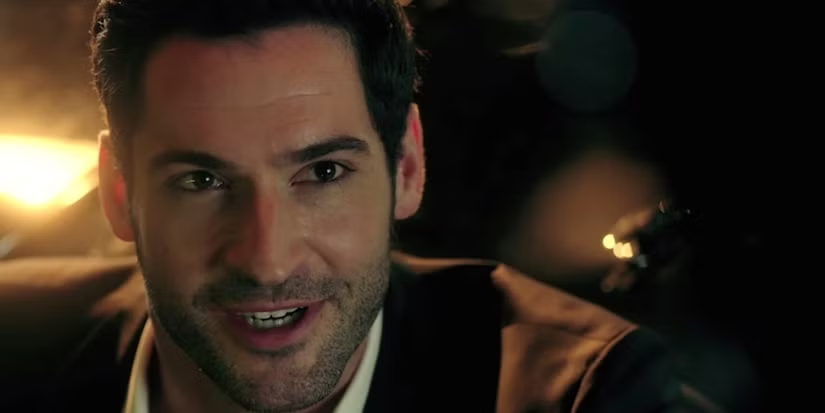
By day, he’s a crime consultant. By night, he’s the Devil. Loosely based on the DC Comics character of the same name, Lucifer took both network and streaming by storm with its anti-hero, Lucifer Morningstar (Tom Ellis). True to his biblical origins, Lucifer is tasked with punishing the morally corrupt for eternity. However, he grows tired of working for God — and of being barred from Heaven. Like the rebel he is, he packs his bags and heads to Earth in search of freedom. Of course, it’s not that simple, and his story spirals out into six dramatic seasons, but what happened behind the scenes is somehow even more dramatic. Lucifer nearly faced cancellation during the show’s major climaxes, only to be saved by divine intervention, a.k.a. the show’s devoted fans.
What Is ‘Lucifer’ About?
Serving as a more urban fantasy–leaning take on the original DC Comics character, Lucifer follows Lucifer Morningstar, who is furious after being cast out of Heaven by God and condemned to punish sinners forever. Determined to rebel against his father, the Devil packs his bags and builds a new life in the City of Angels: Los Angeles. When he’s not busy bringing women back to his flashy penthouse or drinking copious amounts of alcohol, he runs his exclusive nightclub, Lux. However, everything changes when someone is shot outside his club, leading him to cross paths with Detective Chloe Decker (Lauren German).
After being the first to discover a dead body outside his club — and determined to clear his name — Lucifer accompanies Detective Decker on her investigation. What she doesn’t realize is that he possesses powers that can expedite her work. Although Lucifer is ultimately proven innocent, the experience gives him a new sense of purpose on Earth: becoming a crime consultant. Decker is understandably hesitant to have someone like him on the team, but Lucifer quickly proves he has a knack for getting to the bottom of cases. Meanwhile, back in Heaven, those watching from the clouds are far from pleased with his new career.
‘Lucifer’ Puts a Supernatural Spin on the Crime Thriller Genre
Lucifer keeps things both fresh and familiar. Each episode follows a new criminal investigation somewhere in Los Angeles, reminiscent of more recent procedurals like High Potential. Although they make an effective team, Lucifer and Decker are constantly at odds, largely due to Lucifer’s immaturity clashing with Decker’s sternness. However, for all of Lucifer’s unseriousness, the devil proves to be exceptionally skilled at his “crime consulting” job — mainly because his powers allow him to draw out people’s deepest desires, something Decker remains completely unaware of. At the same time, his life becomes increasingly complicated as he’s persistently hounded by celestial beings in human form, ranging from his angelic brother, Amenadiel (D. B. Woodside), to biblical figures like Cain (Tom Welling) and Eve (Invar Lavi).
However, somewhere around the midpoint of all six seasons of Lucifer, things get incredibly heavy. What initially starts as Lucifer’s “passion project” becomes complicated, as eternal forces threaten to take away the life he has built on Earth — and the people he has come to care about. The moment those same forces begin manifesting in murders, putting the civilians of Los Angeles at risk, Lucifer stops messing around. This shift is what makes the show worth watching. In angelic lore, celestial beings are emotionally detached and objective towards mortals. Yet in the series, the Devil himself proves to be, ironically, the most human.
Fans Saved ‘Lucifer’ from Impending Cancellation

Despite its strong popularity, Lucifer nearly met an abrupt end in 2018 when Fox cancelled the show following its Season 3 cliffhanger finale. The decision was largely attributed to declining viewership: while Season 1 averaged 7.17 million viewers, Season 3 dropped to around 4.16 million. Co-showrunner Joe Henderson said the cancellation came as a complete surprise, especially since the finale was intentionally written as a cliffhanger under the assumption the network wouldn’t pull the plug. Notably, Lucifer was cancelled in the same month as Brooklyn Nine-Nine, another Fox staple.
As the producers process the loss, fans refused to accept it, launching the #SaveLucifer campaign with viral hashtags, petitions, and lobbying efforts aimed at streaming platforms. Fortunately, Netflix stepped in and revived Lucifer for Season 4, eventually carrying it through its series finale in Season 6. The save was worth the risk. By the time Lucifer reached the second half of Season 5 on Netflix, it had garnered 1.8 billion viewing minutes. The campaign is a strong example of how accessible social media is for fans to advocate for their favorite shows — especially in today’s era, where many series are canceled too quickly to fully grow an audience. More importantly, it proves that Lucifer was simply too good to let go.

- Release Date
-
2016 – 2021
- Network
-
FOX, Netflix
- Directors
-
Nathan Hope, Eagle Egilsson, Louis Shaw Milito, Sherwin Shilati, Claudia Yarmy, Greg Beeman, Tara Nicole Weyr, Lisa Demaine, Richard Speight Jr., Kevin Alejandro, Viet Nguyen, Alrick Riley, Eduardo Sánchez, Sam Hill, Mairzee Almas, Ben Hernandez Bray, Brad Tanenbaum, D.B. Woodside, David Frazee, David Paymer, Eriq La Salle, Hanelle M. Culpepper, Mark Tonderai, Matt Earl Beesley
- Writers
-
Jen Graham Imada, David McMillan
Former New York City mayor and President Donald Trump supporter Rudy Giuliani is reportedly in critical condition at an unnamed Florida hospital.
“Mayor Giuliani is a fighter who has faced every challenge in his life with unwavering strength, and he’s fighting with that same level of strength as we speak,” the politician’s spokesperson, Ted Goodman, told multiple outlets, including The New York Times, on Sunday, May 3.
While the former mayor’s spokesperson declined to specify which Florida hospital Giuliani, 81, is reportedly being treated at, he did tell the newspaper of record that those who care for Giuliani are asking for people to “join us in prayer.”
On Sunday, Fox News reported that while Giuliani is in critical condition he is also “stable.”

Harvey Weinstein was hospitalized again and underwent heart surgery. The disgraced media mogul, 72, was taken to Bellevue Hospital in New York on the evening of Sunday, September 8, and had emergency heart surgery the next day. Weinstein’s representative Craig Rothfeld confirmed to Us Weekly on Monday, September 9, that Weinstein was “rushed” to the […]
Per The New York Times, it is unclear how long Giuliani has reportedly been hospitalized and what health condition or conditions he is currently facing. This is not the first time, however, the polarizing political figure has faced health issues.
In September 2025, Giuliani was injured after he was involved in a car accident in New Hampshire.
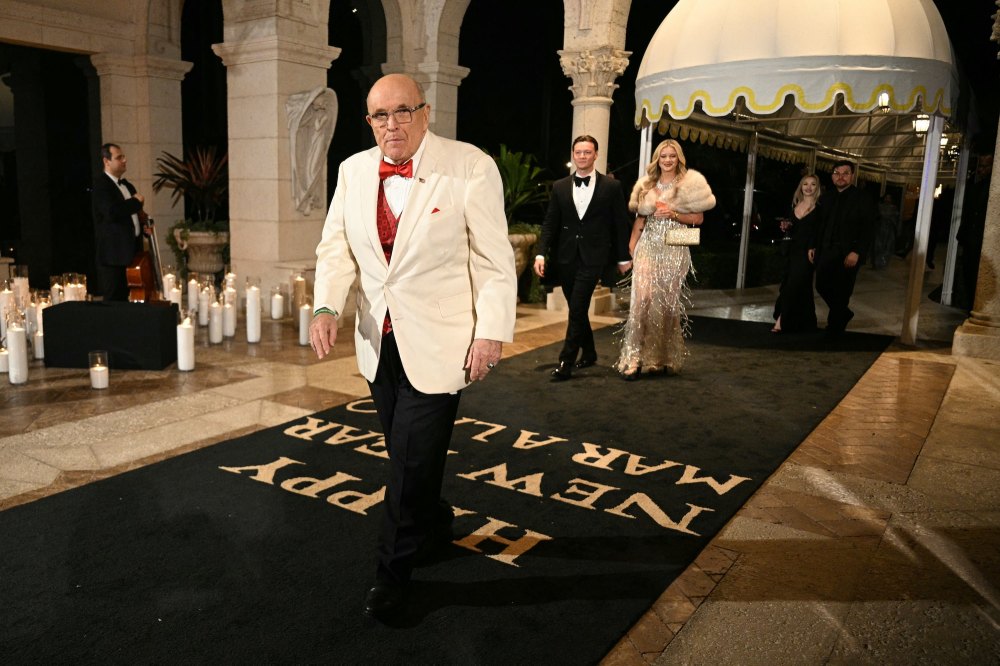
Rudy Giuliani Getty Images
The former mayor was the reported passenger in a Ford Bronco when the vehicle was struck from behind in Manchester, according to local police who spoke to various publications at the time.
“[Giuliani] was diagnosed with a fracture thoracic vertebra, multiple lacerations and contusions, as well as injuries to his left arm and lower leg,” the politician’s security guard, Michael Ragusa, said in a statement shortly after the incident, per the BBC.
The incident occurred shortly after Giuliani was said to have assisted an alleged, unknown victim of domestic violence, who his security guard claimed flagged him down while walking alongside the road.
“Mayor Giuliani immediately rendered assistance and contacted 911,” Ragusa claimed at the time. Later, local New Hampshire police confirmed officers were investigating a reported domestic violence incident in the area at the time of the crash.
“As a result of the collision, both vehicles went into the median and were heavily damaged,” police further added. No charges were filed after authorities investigated the nature of the crash.

Tiger Woods appeared to call President Donald Trump from the scene of his car crash on March 27, per police bodycam footage obtained by TMZ on Thursday, April 2. Woods, 50, can be seen telling a police officer, “I was just talking to the president” from the site of the accident in Jupiter Island, Florida. […]
Giuliani, who was elected mayor of New York City in 1993, became a household name after the deadly terrorist attacks on the World Trade Center on September 11, 2001. He was soon known as “America’s Mayor,” credited for helping both the city and the country heal from the devastation.
His political stock plummeted, however, after he became a staunch supporter of Trump, 79, claiming that former President Joe Biden’s 2020 presidential election victory was “rigged.” Giuliani reached a $148 million settlement with two former election workers who successfully sued the former mayor for defamation over his false election fraud claims.
NewsBeat1 minute ago
Kim Kardashian shares unseen Met Gala photos ahead of fashion’s biggest night
Business2 minutes ago
Chaozhou Three-Circle Group targets $1 billion Hong Kong listing

Crypto World4 minutes ago
Bitcoin Rallies to $80K, Highest Price Since January

NewsBeat1 month ago
Manchester United reach agreement with Casemiro over contract clause amid transfer speculation

Politics3 weeks ago
US brings back mandatory military draft registration

NewsBeat1 month ago
Steven Gerrard disagrees with Gary Neville over ‘shock’ Chelsea and Arsenal claim | Football


-

 Tech7 days ago
Register Renaming | Hackaday
-

 Politics6 days ago
Drax board avoid their own AGM, accused of greenwashing & environmental racism
-

 Fashion5 days ago
Kylie Jenner’s KHY Enters a New Era with ‘Born in LA’
-

 Tech7 days ago
Why Blue Badges Disappeared From Toyota Hybrids
-

 Tech7 days ago
Images of Samsung’s rumored smart glasses have leaked
-

 NewsBeat14 hours ago
Channel 5 – All Creatures Great and Small series 7 new post
-
 Tech3 days ago
Trump’s 25% EU auto tariff breaches Turnberry Agreement that also covers semiconductors and digital trade
-

 Business5 days ago
Most Commercial Energy Audits Miss the Real Losses
-

 Business7 days ago
(VIDEO) Charlize Theron Climbs Times Square Billboard to Promote New Netflix Thriller ‘Apex’
-

 Crypto World6 days ago
CFTC’s AI will review U.S. crypto registration applications, chairman tells CoinDesk
-
 Sports3 days ago
Paul Scholes issues Marcus Rashford reality check as agreement emerges over Man United star
-

 Business5 days ago
Barclay Brothers Avoid Bankruptcy: HSBC Drops High Court Petitions After IVA Deal
-
 Entertainment7 days ago
Alicia Keys Calls Out Music Industry ‘Boys Club’
-
 Business5 days ago
Tesla Officially Registers Elon Musk’s Stock: What Investors Need to Know
-

 Tech6 days ago
Get Ready for More Brain-Scanning Consumer Gadgets
-
 Crypto World6 days ago
Robinhood Phishing Scam Exploits Gmail Dot Feature to Bypass Security
-

 Crypto World6 days ago
Gmail Dot Trick Underpins Robinhood Phishing, Sending Real-Looking Emails
-

 Entertainment6 days ago
Sister Wives: Janelle Posts New Scary Warning
-

 Business3 days ago
Two Powerball Tickets Split $143 Million Jackpot in Indiana and Kansas
-
 Business6 days ago
Superdry co-founder accused of raping woman
You must be logged in to post a comment Login