Entertainment
How Star Trek Was Destroyed By Hollywood, The Full History Of Its Ruination
By Joshua Tyler
| Updated


Star Trek has never been at a lower point. The franchise’s current batch of shows receives almost no ratings, and the brand’s total mismanagement has been so bad that it’s driven away existing Trekkies while failing to attract any new viewers.
This is far worse than having no show on the air at all, since a lack of content often builds anticipation and hunger for more. On the other hand, year after year of producing terrible content that actively seeks to alienate fans, breeds hatred and contempt, while destroying any trust or interest in the brand.

What happened? What went wrong? How did we end up in this Star Trek hellscape? To find the answer, we have to look into the past.
Paramount Began Planning Star Trek’s Destruction In 2017
The year is 2017. Star Trek had been off television for 12 years. The last Trek release, Star Trek: Beyond, turned out to be a box-office disappointment.
So, Paramount devised a bold new plan to revitalize Star Trek with a prequel series. Oh, wait, they’d just done that. The entire 2009 Star Trek movie franchise was a prequel.

But that was on the big screen; this time, the twist was that the prequel would be a series. Oh, wait, they already did that, too. It was called Star Trek: Enterprise, and Paramount pulled the plug after four seasons.
That very recent past seemingly forgotten, Paramount moved forward with another prequel, their third attempt in a row at making a Star Trek prequel happen. Third time was not the charm.
Brian Fuller And The Rise Of Alex Kurtzman
The Disco era began with the debut of Star Trek: Discovery in 2017. Discovery was created by a man named Brian Fuller.
Fuller was a well-known television writer and producer. He’d written for both Star Trek: Deep Space Nine and Star Trek: Voyager in the 90s. Since then, he’d established himself as a much sought-after talent, creating critically acclaimed series like Pushing Daisies and Hannibal.

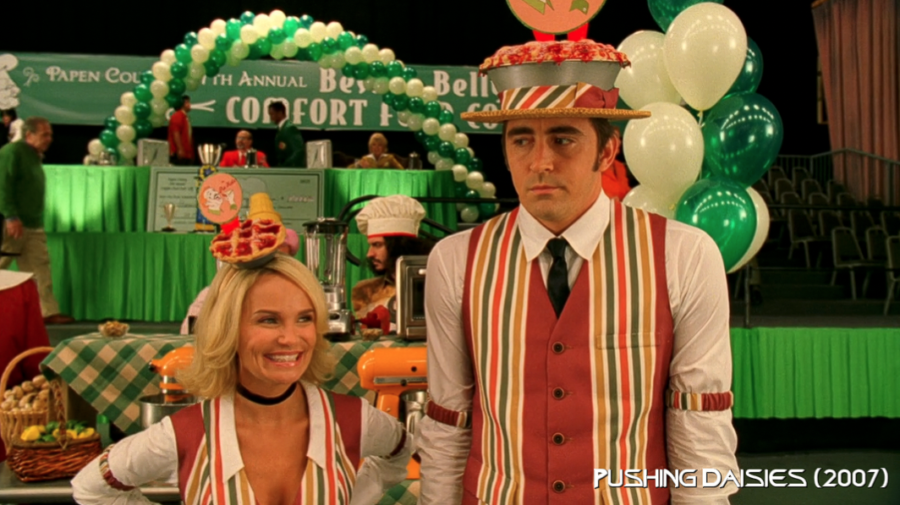
He had the right resume, and so, Paramount hired him to create a new Star Trek series. His initial pitch was to do something serialized, with “diversity” as a focus, and a dark and gritty tone inspired by Game of Thrones. If you’re a Star Trek fan, you probably already see the problem. That’s right, Brian Fuller wanted to turn Gene Roddenberry’s bright and hopeful view of the future into a Game of Thrones knockoff.
Fuller worked on the show for 9 months. His tenure was marked by missed deadlines and ever-expanding budgets. Paramount clashed with him over his desire to reboot Star Trek into a Game of Thrones series. The company wanted its brand to stick with the traditions that made Star Trek work, and Fuller wanted to warp it into something entirely different. After these struggles and amid much controversy, Fuller essentially left the production while maintaining credit for the show.
Up til this point, Paramount had made good decisions. Hiring Fuller didn’t work out, but on paper, it should have. When Fuller failed to get what Star Trek was as a brand, Paramount made another good decision by getting rid of him.
Getting rid of Fuller was the last good Star Trek decision Paramount would ever make.

They replaced Fuller with Gretchen J. Berg & Aaron Harberts. Berg & Hoberts were Fuller’s people. They’d worked with him on past projects and were already helping him make Star Trek: Discovery. The ideas Fuller was implementing, the terrible ideas that got him essentially fired, were also their ideas. So they stayed the course and kept working on their Game of Thrones-ification of Star Trek.
Eventually, Berg & Hoberts were also fired, but not for trying to ruin Star Trek. It happened amidst accusations of abuse towards the show’s writers.
Still, this was Paramount’s chance to course-correct and save Trekkies from the Game of Thrones-ification of Star Trek. Instead of doing that and fixing things, Paramount did something worse.
Alex Kurtzman was put in their place. Kurtzman was the man most responsible for the worst of the recent Star Trek movies, Star Trek: Into Darkness. He now held the future of the entire franchise in his hands. He would remain in charge not just of Discovery, but of the entire Star Trek franchise, throughout the Disco era.
Star Trek: Discovery Launches And Is Hated
By the time Alex Kurtzman was hired, production was pretty far along on Star Trek: Discovery. Kurtzman made tweaks to satisfy some of Paramount’s concerns, but much of what the show would be was already written in stone.
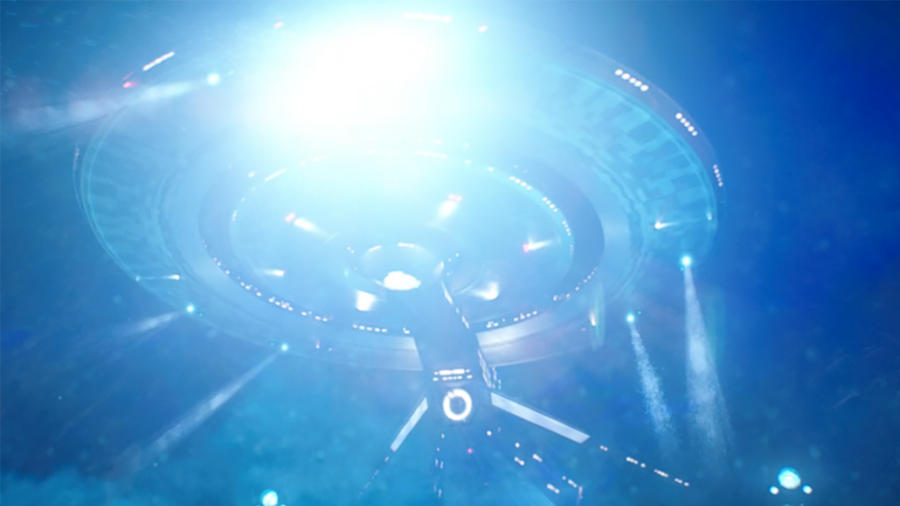
Star Trek: Discovery was the most expensive Star Trek series ever produced, at the time. Paramount could have trashed it and taken a tax write-off, but that’s tough to do with so much money on the line. So they released it.
The show was poorly received by fans. Critics initially praised it, but critics rarely watch shows beyond the first one or two episodes. They ignore it after that, which makes their reviews meaningless.

Reports of Discovery’s ratings were vague and unreliable. Most indications were that after an initially strong debut, people began abandoning the show.
Paramount and their new best friend, Alex Kurtzman, took note and tried making big changes for season 2. They brought in Anson Mount to play Christopher Pike, and Mount was fantastic. Unfortunately, the rest of the show was still the show it was always designed to be. Adding one good character to a terrible show cannot save it.
Paramount Activates Quarantine Protocols For Star Trek: Discovery
Stuck with a show no one liked, Paramount did the only thing they could do besides cancel it: They quarantined the entire series, separating it from the rest of Star Trek. They did that by time-jumping Star Trek: Discovery so far into the future that nothing it did could have any further impact on the franchise.

They created a spinoff called Star Trek: Strange New Worlds for Pike to rescue him from Discovery’s sinking ship. Though his new series was technically an extension of the Disco-verse, it quickly set out to differentiate itself from Discovery and the mistakes it had made.
Unfortunately, Alex Kurtzman was still in charge, and he simultaneously set out to make Strange New Worlds his own, which meant he made it stupid. He made it his stated mission to work only with people who didn’t actually like Star Trek, intending to hollow out the brand and wear it like a skinsuit.


So, instead of hiring serious science fiction writers who might have a fondness for Gene Roddenberry’s work, he hired Strange New Worlds and Discovery writers based on diversity quotas. Those writers, who care nothing about Star Trek or science fiction, then turned the show into a playground for theater kids rather than Star Trek fans. After a strong first-season debut, Star Trek: Strange New Worlds devolved into a series of joke episodes and ridiculous plot arcs, which chased away initially optimistic Trek fans.
Star Trek Starts Winning Razzies
That should have been it for the Disco era. The franchise forked away from it; Paramount was working on other Star Trek shows. Discovery limped onward but was soon canceled after five seasons of disinterest.

However, Alex Kurtzman had been trying to make a Star Trek: Section 31 spinoff since the first season of Discovery. His plan centered on a widely disliked Star Trek: Discovery character, played by actress Michelle Yeoh.
Fans hated the idea, and no one at Paramount seemed particularly excited about it. They prioritized Strange New Worlds over it, and while a Section 31 series was announced, it never went into full production. Kurtzman’s last update stated clearly that Section 31 was now a very low priority.
And then, in March of 2023, Michelle Yeoh won an Oscar. In April of 2023, Star Trek: Section 31 entered full production as a feature film. Oscar-winning tends to have that effect.
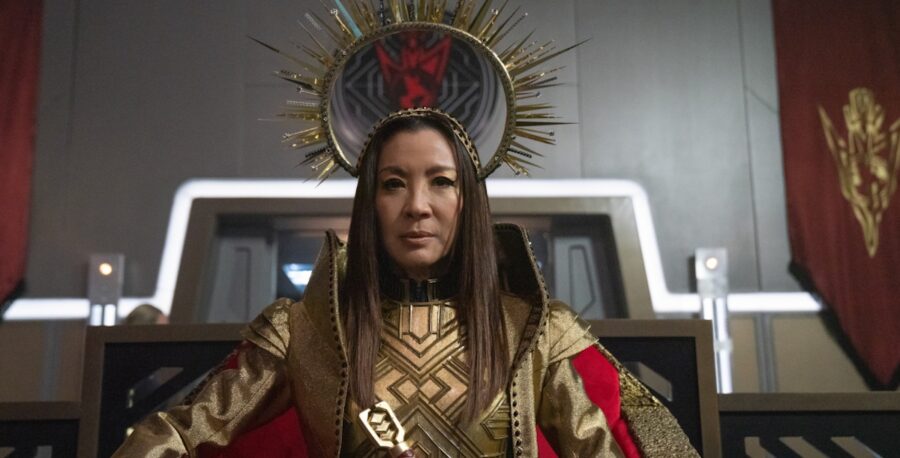

In January of 2024, Star Trek: Section 31 arrived as a direct-to-streaming movie on Paramount+. It was the first Star Trek movie released in nearly a decade. It’s now the worst-reviewed movie in the entire Star Trek canon, with audiences giving it an appalling 16% fresh score. It received three Razzie nominations: Worst Picture, Worst Actress, and Worst Screenplay.
Star Trek: Section 31 begins when a spitwad flies across the screen, tracing the shape of the Starfleet logo. Viewers would later learn that Spitwad is actually the movie’s hero ship, but that knowledge doesn’t make it any better. The movie revolves around Michelle Yeoh’s Philippa Georgiou, a character responsible for numerous acts of genocide. And she’s not sorry about any of it.
There are other characters in Section 31, but they’re no better. The super cool Section 31 spy team introduces itself by shouting at each other, issuing threats, and posing for the camera. Like Georgiou, they’re also mostly serial killers, and they’re all pretty upset they aren’t able to do more killing.

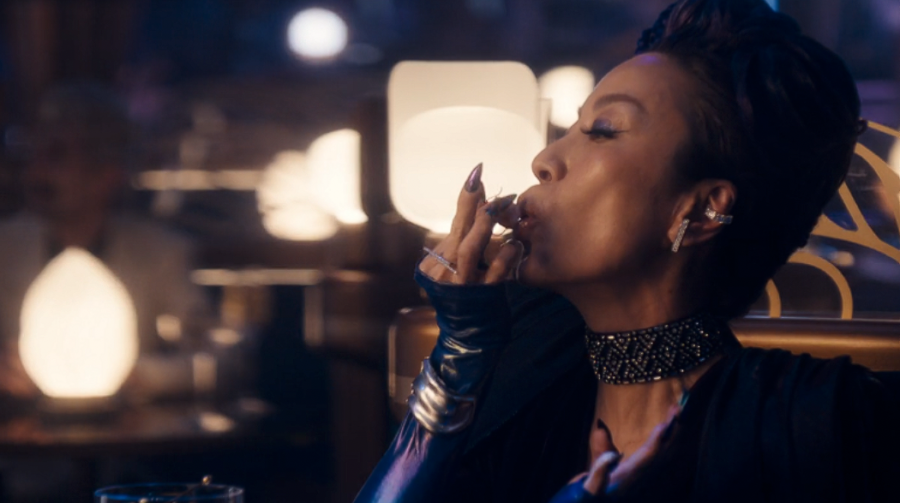
Luckily, this mission to do a thing takes place in the exact same space bar they’re already standing in. Paramount didn’t need to build any other sets for their heist. What a financially fortuitous coincidence.
There’s a confusing fistfight in front of a bad green screen rendering of a blurry tunnel. A murder mystery that no one cares about. A robot gets incapacitated by being kneed in the crotch.
Star Trek: Section 31 ends when Phillipa Georgiou genocides an entire universe on suspicion of possible mischief and then tells her team she’s going to kill them. If you still have doubts about the quality of Star Trek: Section 31’s writing, please enjoy this actual line of dialogue from the movie: “She died like she lived. By that you know what I mean.”
Star Trek Becomes A Zombie Franchise Thanks To Starfleet Academy
A disaster on the scale of Star Trek: Section 31 should have been the end of Alex Kurtzman. Paramount, however, continues funding his disasters. So enabled, Alex Kurtzman continued moving forward on one of his worst pet projects, Starfleet Academy.
The idea of a show centered around the Academy had been floating around for decades. It’s not something Trekkies ever really wanted, though, because the point of Star Trek is to be about professionals out exploring and not watching kids sitting in classrooms or flirting with each other in the cafeteria. Alex Kurtzman, however, having clearly demonstrated he didn’t really want existing fans, perhaps saw this as an opportunity to finally be rid of them.

Ratings for the show are self-reported by Paramount and so can’t be relied on. However, most evidence suggests no one is watching it. Some estimates have its total viewership as being under a million. Fans hate it beyond all measure, and Starfleet Academy has some of the lowest audience scores of anything currently airing on streaming.
Yet, somehow, Starfleet Academy was renewed for a second season and will continue. Why? I suspect money laundering. If you have a better explanation, I’d like to hear it.
Heroes Arose, But Alex Kurtzman Struck Them Down
It didn’t have to be this way. Even after Fuller’s plans failed, Paramount had ways to correct course.
Developing in parallel with the Disco-verse was a Star Trek animated series called Lower Decks, helmed by Rick & Morty alum Mike McMahan. Mike McMahan is a serious, lifelong Star Trek fan, and while technically his show was produced under Alex Kurtzman’s auspices, all indications are that Kurtzman had nothing to do with Lower Decks.
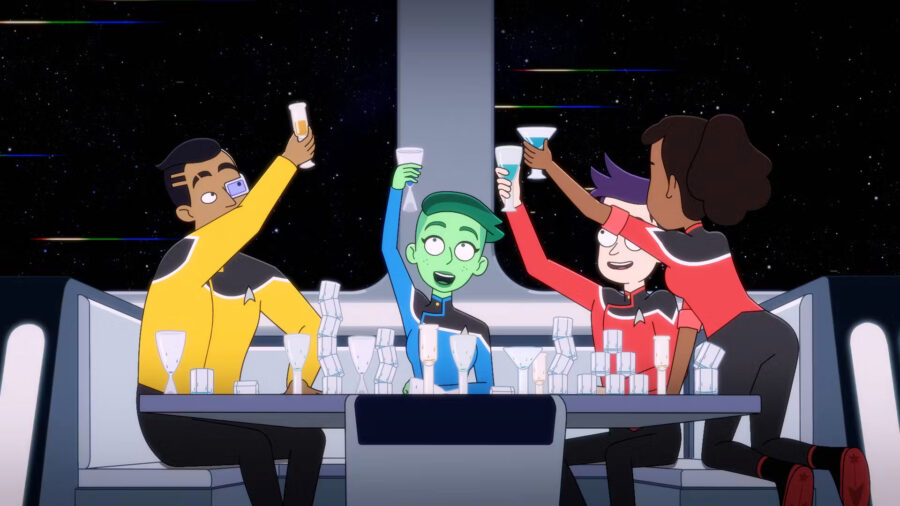
That allowed McMahan to stack his staff with serious writing talent, who knew the genre and knew everything about Star Trek. They took Star Trek seriously, and as a result, Lower Decks was a huge success, and it had nothing at all to do with the Disco-verse.
Alex Kurtzman rewarded McMahan’s success by canceling his show after five seasons and firing him. Paramount did nothing to stop him.
Tangential to the Disco-verse was the Picard-verse, a series vanity project Alex Kurtzman developed around Patrick Stewart’s Captain Picard character. The show was a disaster for two seasons until the third, when Paramount somehow convinced Kurtzman to turn the whole thing over to veteran TV showrunner and legit Star Trek fan Terry Matalas.
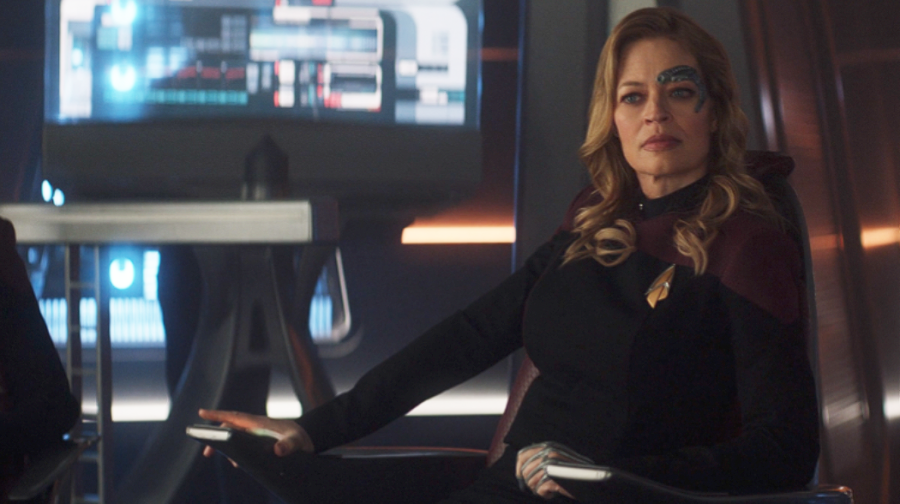

Matalas delivered the best Star Trek season of the modern Trek era. Matalas lobbied to be given more work, doing more Star Trek. Fans launched petitions to try and convince Paramount to hand the entire franchise over to him.
Alex Kurtzman, still with an iron grip on the franchise, responded by passing on Matalas and hiring more people who don’t like Star Trek to replace him on the franchise’s next projects, Section 31 and Starfleet Academy.
And that’s the current state of Star Trek. We’re left with dancing Klingon boy bands and rainbow vomit. Sure, the .001% of humans who spent their formative years as theater kids may like it. Is that really a demographic worth pursuing? It’s like five people, and four of them are named Skylar.
The Legacy Of Star Trek’s Disco Era
Brian Fuller achieved what he set out to achieve. He erased Star Trek and replaced it with an outer space Game of Thrones.
His plan culminated in a horrible Suicide Squad/Guardians of the Galaxy ripoff mashup with the Star Trek name slapped on it in hopes of tricking people into giving them money. Then it blossomed into a Dawson’s Creek knockoff with combadges.

Alex Kurtzman’s attempt replace Trekkies with new Trekkies who would like his slop, totally failed. He didn’t find replacements, because those replacements would have to be young women. Newsflash: Young women are never going to watch something called Star Trek.
And yet, despite no longer having an audience or a point for existing, Star Trek keeps going anyway. It’s become a zombie franchise that Paramount keeps making because that’s what franchises are supposed to do. Keep going.
Maybe it will keep going for a while. There doesn’t seem to be any way to stop it. So Star Trek fans have beamed away, and after years of abuse, they’re unlikely to return. No need to set the auto-destruct on your way out, Trekkies. Alex Kurtzman blew it up a long time ago.
You must be logged in to post a comment Login