Throughout the various personal turmoils for which the members of Fleetwood Mac are known, one relationship buoyed the band for decades: the friendship between its two frontwomen, Christine McVie and Stevie Nicks.
McVie joined the band in 1970 during one of its early lineup changes and for years was its only woman. When Nicks was added to the lineup in 1975, the two became fast friends.
Theirs was not a competitive relationship, but a sisterly one – both women were gifted songwriters responsible for crafting many of the band’s best-known tunes. Though the two grew apart in the 1980s amid Nicks’ worsening drug addiction and the band’s growing internal tension, they came back together when McVie returned to Fleetwood Mac in 2014.
Advertisement
At a concert in London, shortly before McVie officially rejoined the band, Nicks dedicated the song “Landslide” to her “mentor. Big sister. Best friend.” And at the show’s end, McVie was there, accompanying her bandmates for “Don’t Stop.”
“I never want her to ever go out of my life again, and that has nothing to do with music and everything to do with her and I as friends,” Nicks told the Minneapolis Star-Tribune in 2015.
On Wednesday, McVie, the band’s “songbird,” died after a brief illness at age 79. Below, revisit McVie’s and Nicks’ years-long relationship as bandmates, best friends and “sisters.”
McVie and Nicks hit it off from the start
The story of Nicks joining Fleetwood Mac is legend now: Band founder and drummer Mick Fleetwood wanted to recruit guitarist Lindsey Buckingham, who stipulated that he would only join if his girlfriend and musician Nicks could join, too. McVie cast the deciding vote, and the rest is history.
Advertisement
“It was critical that I got on with her because I’d never played with another girl,” McVie told the Guardian in 2013. “But I liked her instantly. She was funny and nice but also there was no competition. We were completely different on the stage to each other and we wrote differently too.”
Throughout the band’s many personal complications – McVie married and divorced Fleetwood Mac bassist John McVie and had an affair with the band’s lighting director, while Nicks had rollercoaster romances with Buckingham and Fleetwood – they were each other’s center.
“To be in a band with another girl who was this amazing musician – (McVie) kind of instantly became my best friend,” Nicks told the New Yorker earlier this year. “Christine was a whole other ballgame. She liked hanging out with the guys. She was just more comfortable with men than I had ever been.”
The two protected each other, Nicks said, in a male-dominated industry: “We made a pact, in the very beginning, that we would never be treated with disrespect by all the male musicians in the community.
“I would say to her, ‘Together, we are a serious force of nature, and it will give us the strength to maneuver the waters that are ahead of us,’” Nicks told the New Yorker.
Advertisement
The band succeeds but McVie and Nicks grow distant
“Rumours” was the band’s greatest success to date when it was released in 1977. But the band’s relationships with each other were deteriorating, save for the one between McVie and Nicks. While the pair were enduring breakups with their significant others, Nicks and McVie spent their time offstage together.
The Guardian asked McVie if she was trying to offset the band’s tumult with her songs on “Rumours,” including the lighthearted “You Make Lovin’ Fun” and optimistic “Don’t Stop.” She said she likely had been.
As multiple members’ drug use intensified, the band’s dynamic grew tense. McVie distanced herself from the group in 1984 amid her bandmates’ addictions, telling the Guardian she was “just sick of it.” Nicks, meanwhile, was becoming dependent on cocaine.
McVie told Rolling Stone that year that she’d grown apart from Nicks: “She seems to have developed her own fantasy world, somehow, which I’m not part of. We don’t socialize much.”
In 1986, Nicks checked into the Betty Ford Center to treat her addiction, though she later became addicted to Klonopin, which she said claimed years of her life. She quit the prescription drug in the 1990s.
Advertisement
After recording some solo works, McVie returned to Fleetwood Mac for their 1987 album “Tango in the Night,” and two of her songs on that record – “Little Lies” and “Everywhere” – became major hits. But Nicks departed the band soon after, and the band’s best-known lineup wouldn’t officially reunite until 1997 for “The Dance” tour and subsequent live album.
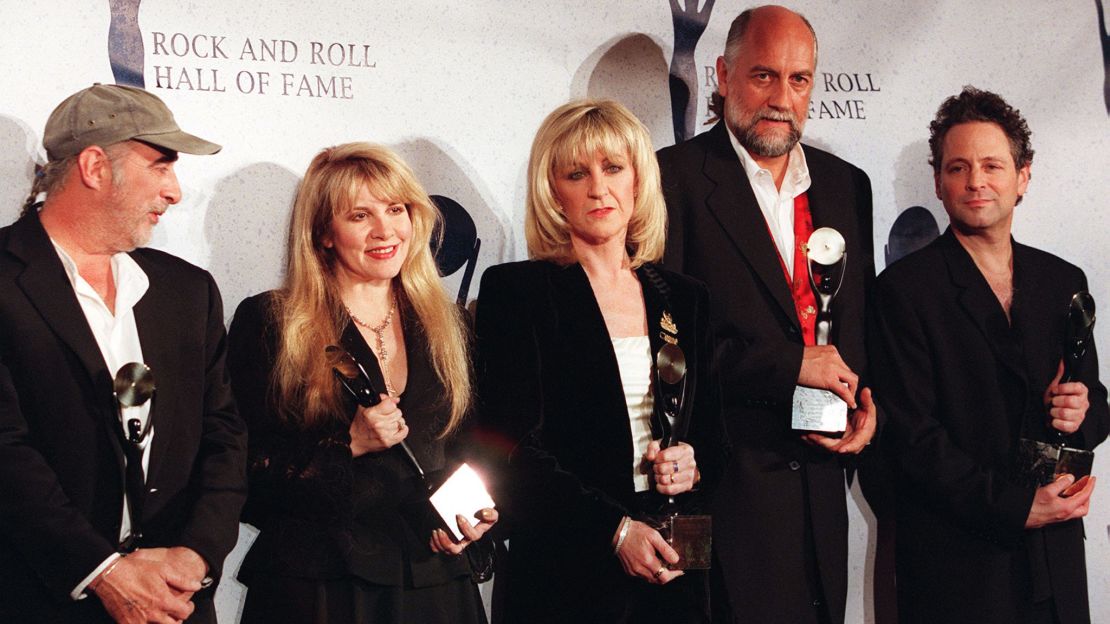
The reunion was short-lived: After the band was inducted into the Rock & Roll Hall of Fame in 1998, McVie officially quit Fleetwood Mac, citing a fear of flying and exhaustion of life on the road.
McVie returns to Fleetwood Mac – and to Nicks’ side
In the 2010s, after more than a decade of retirement, McVie toyed with returning to performing. She officially rejoined Fleetwood Mac after calling Fleetwood himself and gauging what her return would mean for the group.
“Fortunately Stevie was dying for me to come back, as were the rest of the band,” she told the Arts Desk.
Advertisement
In 2015, a year after she’d rejoined Fleetwood Mac, McVie hit the road with her bandmates. Touring with the group was tiring but fun, the first time they’d performed together in years.
“I’m only here for Stevie,” she told the New Yorker that year.
Nicks concurred: “When we went on the road, I realized what an amazing friend she’d been of mine that I had lost and didn’t realize the whole consequences of it till now,” she told the Minneapolis Star-Tribune in 2015.
During that tour, McVie wore a silver chain that Nicks had given her – a “metaphor,” McVie told the New Yorker, “that the chain of the band will never be broken. Not by me, anyways. Not again by me.”
McVie told the Arts Desk in 2016 that she and Nicks were “better friends now than (they) were 16 years ago.”
Advertisement
Touring with Buckingham and Fleetwood could quickly get tumultuous for Nicks, McVie said, due to their shared history. “But with me in there, it gave Stevie the chance to get her breath back and not have this constant thing going on with Lindsey: her sister was back,” she said.
Their mutual praise continued: In 2019, McVie said Nicks was “just unbelievable” onstage: “The more I see her perform on stage the better I think she is. She holds the fort.”
When their 2018-2019 tour ended, though – without Buckingham, who was fired – the band “kind of broke up,” McVie told Rolling Stone earlier this year. She added that she didn’t speak with Nicks as often as she did when they toured together.
As for a reunion, McVie told Rolling Stone that while it wasn’t off the table, she wasn’t feeling “physically up for it.”
Advertisement
“I’m getting a bit long in the teeth here,” she said. “I’m quite happy being at home. I don’t know if I ever want to tour again. It’s bloody hard work.”
News of McVie’s death rattled Nicks, who wrote that she had only found out McVie was sick days earlier. She called McVie her “best friend in the whole world since the first day of 1975.”
On her social media accounts, Nicks shared a handwritten note containing lyrics from the Haim song “Hallelujah,” some of which discusses grief and the loss of a best friend.
“See you on the other side, my love,” Nicks wrote. “Don’t forget me – Always, Stevie.”
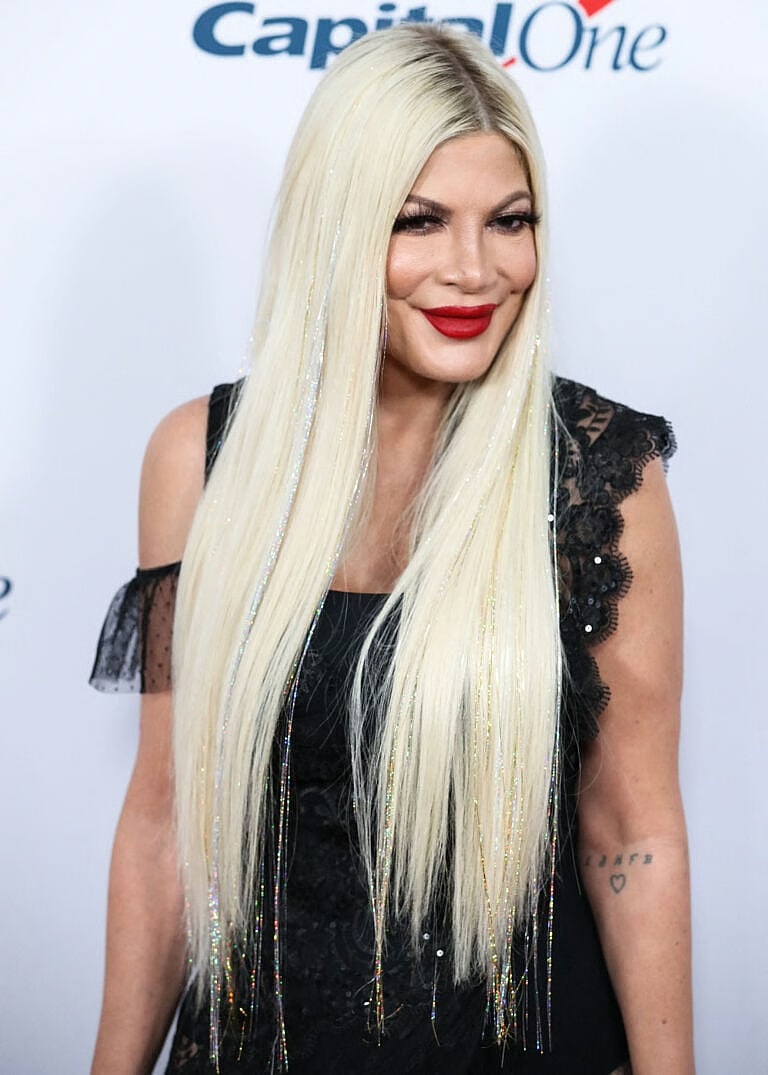
Tori Spelling is opening up after a terrifying car accident that sent her, four of her children, and three of their friends to the hospital.
The crash, which happened recently, left the group shaken and dealing with multiple injuries.
Days later, the actress shared new details about the incident, including the split-second decision she made to protect the kids and the overwhelming gratitude she feels after what could have been a far more devastating outcome.
Advertisement
Tori Spelling Recalls Split-Second Decision During Crash
Tori Spelling gave a detailed account of the crash in a video posted on Instagram days after the incident.
The accident happened on April 2 in Temecula, California, about 80 miles outside Los Angeles, with eight people in the vehicle.
According to Spelling, the crash was caused by another driver who was “speeding, going crazy, crazy fast” and ran a red light before hitting their car.
She described how quickly the situation escalated and how she reacted instinctively.
Advertisement
“In a split second, I looked to my right and I saw he was coming full on, full impact into the side of our car,” the actress said.
Trying to protect the children, Spelling explained, “I turned hard left, as hard as I could, as fast as I could, to avoid as much impact on the children as possible.”
Spelling Expresses Gratitude After Scary Accident
MEGA
Despite the terrifying experience, Tori Spelling emphasized how grateful she felt that the situation wasn’t worse. Reflecting on the crash, she shared just how serious it could have been.
“We are so grateful and so lucky, because it could have been so much worse,” the “Scary Movie” star said, adding that she felt protected in that moment.
She continued, “I’m just really grateful that in a split second, guardian angels were definitely with us that day.”
Advertisement
Spelling also thanked the Inland Valley and Wildomar first responders who assisted at the scene, noting that they provided “great care” to everyone involved.
Beyond that, she acknowledged the outpouring of support from others, saying, “I’m grateful to everyone who has reached out and repeatedly checked on us and offered to do whatever we needed to get us through this and all the blessings everyone has sent.”
Fans Offer Support To Tori Spelling Amid Her Frightening Ordeal
Lumeimages / MEGA
Shortly after Spelling shared the video, thousands of fans trooped to the comments section to express relief and happiness over the safety of the star and the seven kids.
“So glad you are all okay. I know how terrifying it must have been for all of you. I hope you all are healing,” one fan commented.
A second person shared, “Sending you and your kids and their friends so much love and light and healing energy!! Thank God you guys are ok.”
Advertisement
A third fan also commented, “So glad you all are physically ok. My thoughts and prayers are with you and the kids as you navigate through. It sounds like it was a terrifying experience.”
A fourth user added, “I am grateful that you made it through on. You used your driver instincts to make that hard left turn. Sending prayers and hugs.”
Spelling And Children Hospitalized Following Crash
C Flanigan/imageSPACE / MEGA
As The Blast reported, deputies from the Riverside County Sheriff’s Office were dispatched to the scene around 5:45 p.m. and found two vehicles with collision damage.
According to their account, Tori Spelling was driving four of her children and three of their friends when a driver hit them after allegedly speeding and running through a red light.
Following the incident, all eight occupants were transported to the hospital in three separate ambulances.
Advertisement
At the hospital, Spelling and the children were treated for injuries including cuts, bruises, contusions, and concussions.
No arrests were made, and everyone involved was evaluated at the scene before being taken for further care.
Tori Spelling And Family Still ‘Shook Up’ But Recovering After Incident
MEGA
In the days following the accident, sources provided insight into how Spelling and the children had been coping.
Speaking to PEOPLE, one source described the crash as “scary” and said it “happened very quickly.”
The source shared that “Everyone’s still pretty shook up and have minor injuries,” reflecting the emotional impact of the experience. Despite that, there was also a sense of relief about how things turned out.
Advertisement
“Tori feels they were all very lucky that it wasn’t worse, though,” the source added, noting that the outcome could have been far more serious.
In a positive moment after the ordeal, the family was able to come together shortly afterward.
According to the same source, they felt fortunate that “they were all able to spend Easter together,” marking a moment of relief after an otherwise frightening experience.
Not every Netflix action pickup travels like this but this new 119-minute South Korean spy thriller arrived with the right ingredients for a global break: it is directed by Ryoo Seung-wan, built around a premium cast led by Zo In-sung, Park Jeong-min, Park Hae-joon, and Shin Sae-kyeong, and set in Vladivostok, where South and North Korean operatives get pulled into a criminal web of shifting loyalties and escalating violence.
As per FlixPatrol, the instant streaming come-up shows that viewers understood that pitch immediately, especially those looking for something to scratch that James Bond itch as fans wait for Amazon’s reboot. As of April 7, it is the #1 movie on Netflix worldwide. The country breakdown shows this was not a narrow regional spike. It is sitting at #1 right now in markets including Bahrain, Kuwait, Oman, Qatar, Saudi Arabia, Romania, South Korea, Taiwan, Vietnam, Morocco, and Martinique, while also holding strong at #2 in places such as Hong Kong, Japan, Jordan, Kenya, Malaysia, the Philippines, Singapore, and the UAE. Not just that, during the last seven days, the film has consistently stayed in the Top 10 in most of the regions it is currently trending high up in.
That movie is Humint, and what makes its rise feel significant is how widely it has connected outside its home market. Netflix has leaned into the film’s mix of hand-to-hand combat, gunfights, and car chases, but the bigger selling point is that it is not just action. It is espionage action with geopolitical friction, emotional baggage, and a border-city setting that instantly gives the movie a colder, more dangerous texture than generic streaming thrillers. Yes, it is a Korean action film, but its Netflix run already looks far bigger than a domestic-fandom story. The film premiered globally on Netflix on March 31, and within a week it had spread across Asia, the Middle East, Latin America, and parts of Europe.
Advertisement
Advertisement
Collider Exclusive · Oscar Best Picture Quiz Which Oscar Best Picture Is Your Perfect Movie? Parasite · Everything Everywhere · Oppenheimer · Birdman · No Country
Five Oscar Best Picture winners. Five completely different visions of what cinema can be — and what it can do to you. One of them is the film that was made for the way your mind works. Ten questions will figure out which one.
🪜Parasite
🌀Everything Everywhere
☢️Oppenheimer
Advertisement
🐦Birdman
🪙No Country for Old Men
Advertisement
01
What kind of film experience do you actually want? The best movies don’t just entertain — they leave something behind.
Advertisement
02
Which idea grabs you most in a film? Great films are driven by a central obsession. What’s yours?
Advertisement
03
How do you like your story told? Form is content. The way a story is shaped changes what it means.
Advertisement
04
What makes a truly great antagonist? The opposition defines the protagonist. What kind of opposition fascinates you?
Advertisement
05
What do you want from a film’s ending? The final note is the one that lingers. What do you want it to sound like?
Advertisement
06
Which setting pulls you in most? Where a film takes place shapes everything — mood, stakes, what’s even possible.
Advertisement
07
What cinematic craft impresses you most? Every great film has a signature — a technical or artistic element that makes it unmistakable.
Advertisement
08
What kind of main character do you root for? The protagonist is the lens. Who you choose to follow says something about you.
Advertisement
09
How do you feel about a film that takes its time? Pace is a choice. Some films sprint; others let tension accumulate slowly, deliberately.
Advertisement
10
What do you want to feel walking out of the cinema? The best films leave a mark. What kind of mark do you want?
Advertisement
The Academy Has Decided Your Perfect Film Is…
Your answers have pointed to one Oscar Best Picture winner above all others. This is the film that was made for the way your mind works.
Advertisement
Parasite
You are drawn to films that operate on multiple levels simultaneously — that begin in one genre and quietly, brilliantly migrate into another. Bong Joon-ho’s Parasite is a film about class, desire, and the architecture of inequality that manages to be darkly funny, deeply suspenseful, and genuinely shocking across a single extraordinary running time. Your instinct is for cinema that hides its true intentions until the moment it’s ready to reveal them. Parasite is exactly that — a film that rewards close attention and punishes assumptions, right up to its devastating final image.
Advertisement
Everything Everywhere All at Once
You want it all — and this film gives you all of it. The Daniels’ Everything Everywhere All at Once is one of the most maximalist films ever made: action comedy, multiverse sci-fi, family drama, existential crisis, and a genuinely earned emotional core that sneaks up on you amid the chaos. You are someone who responds to ambition, who doesn’t want cinema to choose between being entertaining and being meaningful. This film refuses that choice entirely. It is overwhelming by design, and its overwhelming nature is precisely the point — because the feeling of being crushed by infinite possibility is exactly what it’s about.
Advertisement
Oppenheimer
You are drawn to cinema on a grand scale — films that understand history not as a backdrop but as a force, and that place their characters inside that force and watch what happens. Christopher Nolan’s Oppenheimer is a film about the terrifying gap between what we can do and what we should do, told with the full weight of one of the most consequential moments in human history behind it. You want your films to feel important without feeling self-important — to earn their ambition through sheer craft and the gravity of their subject. Oppenheimer does exactly that. It is enormous, complicated, and refuses easy comfort.
Advertisement
Birdman
You are drawn to films that foreground their own construction — that make the how of the filmmaking part of the what it’s about. Alejandro González Iñárritu’s Birdman, shot to appear as a single continuous take, is cinema examining itself through the cracked mirror of a fading actor’s ego. You respond to formal daring, to the feeling that a film is doing something that probably shouldn’t be possible. Michael Keaton’s performance and Emmanuel Lubezki’s restless camera create something genuinely unlike anything else — a film that is simultaneously about creativity, relevance, self-destruction, and the impossibility of ever truly knowing if your work means anything at all.
Advertisement
No Country for Old Men
You are drawn to cinema that trusts silence, that refuses to explain itself, and that treats dread as a form of meaning. The Coen Brothers’ No Country for Old Men is a film about the arrival of a new kind of evil — implacable, arbitrary, and utterly indifferent to the moral frameworks we use to make sense of the world. It is one of the most formally controlled films ever made, and its controlled restraint is what makes it so terrifying. You want your films to haunt you, not comfort you. You are not interested in resolution if resolution would be dishonest. No Country for Old Men is honest in a way that most cinema never dares to be.
Advertisement
Advertisement
‘Humint’ Has a Humble Rating on IMDB for Now
Even with the rankings going through the roof, Humint is not being received like an instant critical darling just yet: it currently sits at about 6.5–6.6/10 on IMDb, which is a fairly modest score for a movie performing this strongly on Netflix’s global charts. And on Rotten Tomatoes, the film still doesn’t have an official critics’ or audience score locked in, so its long-term reception story is still very much unsettled.
Humint is available to stream on Netflix. Stay tuned to Collider for more updates.
I’m having trouble assessing The Super Mario Galaxy Movie because I’m not the primary audience for a movie like this. It’s not that I’m allergic to fun (I am) or only like psychological thrillers (also true). While it’s true that I don’t actively seek out kids’ movies, I do have kids, and they loved 2023’s The Super Mario Bros. Movie. We saw the first one on opening night at the drive-in, and we did the same for this new one.
I never had a Nintendo in the house growing up, so I appreciate how the franchise has drip-fed its lore in a way that casual viewers can follow, using characters that are universally recognizable. We all know who Mario is, and I don’t know a single person who hasn’t played Super Smash Bros. at a friend’s house at some point in their life. That’s the extent of my expertise.
What really bugged me about The Super Mario Galaxy Movie, though, is how much effort went into the visuals while the plot and dialogue took a back seat to the spectacle. The 2023 movie struck a nice balance. It looked great, and it had plenty of zingers. This one gives off Avatar vibes, or at least it feels like I’m supposed to be so entranced by the worldbuilding that the storytelling doesn’t really matter. If there’s no real story to tell, then I don’t want to be there.
I felt like a kid being brainwashed into submission for 98 minutes, and for that reason I felt robbed. Then I remembered that this is exactly why we took the kids to see it, so I got what I paid for and probably shouldn’t be complaining. Growing up isn’t easy anywhere, I guess.
Bigger, Bolder, And Sneaking In Another IP
I don’t want to bog you down with exposition for The Super Mario Galaxy Movie because there isn’t a whole lot going on to begin with. Rosalina (Brie Larson) gets kidnapped by Bowser Jr. (Benny Safdie). Mario (Chris Pratt) and Luigi (Charlie Day) recruit help from Yoshi (Donald Glover), and of course Toad (Keegan-Michael Key) and his gang of anthropomorphic mushroom pals run interference when things get dicey.
Bowser Jr. kidnapped Rosalina for revenge because his father, Bowser (Jack Black), was imprisoned and shrunk by Mario, Princess Peach (Anya Taylor-Joy), and the rest of the crew. That’s the long and short of The Super Mario Galaxy Movie. There is, however, one surprise I didn’t see coming, which is the appearance of Fox McCloud from the Star Fox video game series. Fittingly, Glen Powell shows up in the role, continuing his streak as Hollywood’s unofficial sequel MVP. He sells it, too, thanks to all that convincing fake flying he logged in the 2022 Top Gun reboot.
Advertisement
Plenty Of Reasons To Watch This Movie
There are plenty of explosions, Koopas running amok, and all sorts of majestic establishing shots in The Super Mario Galaxy Movie, and it’s enough to make you want to throw down your hard-earned cash and see it in theaters. I say “see” because this is a very visual movie. Every frame of computer-generated animation feels deliberate, down to the smallest detail. I caught myself drooling from both sides of my mouth more than once, and it wasn’t because the straw for my Diet Coke was broken. I was definitely enthralled by what I was seeing. But without a story that pulls you in, the whole thing starts to feel a little flat.
If I had to compare The Super Mario Galaxy Movie to anything, it would be the first Avatar. I’d absolutely take my kids again, who were jumping and yelling so enthusiastically from start to finish that I’m surprised we weren’t told to tone it down. They were raucous by drive-in standards, which is saying a lot, but so was every other kid. I can’t blame them either. This movie is a blast to look at, and no expense was spared in making every single sequence as dense as possible. I’d be lying, however, if I said I was excited to watch this one at home. This is a big screen movie, preferably in a setting where your kids can throw popcorn and cheer for their favorite characters without anyone giving you the side-eye.
Like Avatar, which I saw multiple times in theaters back in 2009, I tapped out halfway through my first home viewing because most living room setups just can’t replicate the experience.
I also used the sprawling worldbuilding moments to my advantage while watching The Super Mario Galaxy Movie at the drive-in. We always treat the kids to ice cream pops midway through, and I didn’t feel like I was missing anything during the 20 minutes I stood in line. The dialogue is sparse, and I could still see the massive screen while people-watching and stretching my legs. Overall, it was a four-star experience for what I’d call a two-star movie, which averages out to my final score.
The Super Mario Galaxy Movie SCORE
The Super Mario Galaxy Movie is currently playing in theaters and drive-ins. Your kids will love it. You’ll enjoy looking at it. You’ll enjoy that your kids enjoyed it, which is the most important part. But you’ll probably still walk away feeling like something is missing, especially compared to its predecessor.
The families that make up both the big and small screen form a lengthy and fascinating list. Some, like the Carradines, Barrymores, and Hustons, have spanned generations. Others, notably the Arquettes and Baldwins, feature multiple siblings who have left their mark on television and film since the 1980s. The Jacoby/Jayne family is yet another group of brothers who, while lesser known, built screen careers that made all of them recognizable faces.
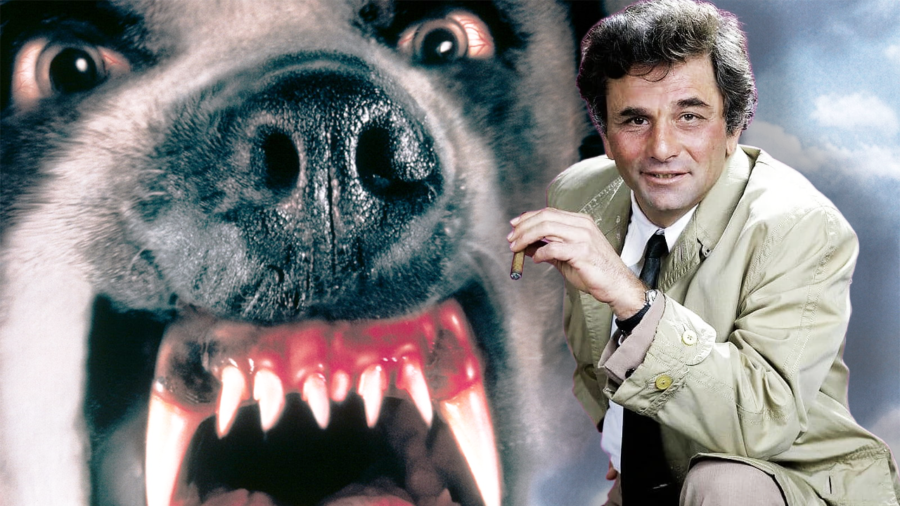
Three brothers—Bobby (Robert Jayne), Billy (William Jayne), and Scott Jacoby—built impressive résumés in the 1970s and ’80s, with notable horror and sci-fi credits. Though their careers began to wane in the 1990s, their contributions to those genres should not go unnoticed and deserve recognition as a family with solid acting chops.
From Broadway To The Silver Screen
The eldest Jacoby brother, Scott, was born in Skokie, Illinois, in 1956. In 1966, his family moved to Brooklyn, where he began his acting career. Starting on stage, he earned a Tony Award nomination for his role in the 1968 Broadway production of Golden Rainbow. His film career began a year later with the 1969 drama Children’s Games. As he entered his teens, television appearances followed, along with several feature film roles. His performance in the 1973 network movie That Certain Summer earned him a Primetime Emmy Award for Outstanding Supporting Actor.
Scott’s contributions to horror began in 1974 with the made-for-TV film Bad Ronald, where his unsettling performance stood out alongside veteran actors Dabney Coleman and Pippa Scott. He followed this with a memorable role opposite Jodie Foster in the 1976 film The Little Girl Who Lives Down the Lane.
His career continued through the late 1970s with supporting roles in film and television. In the 1980s, he appeared in several horror titles, including Return to Horror High and To Die For (and its sequel), helping to round out his later career before stepping away from acting in the early 1990s.
Advertisement
The Tremors Connection
The youngest brother, Bobby, began working in television movies in 1979 at just six years old. As the 1980s progressed, he became a familiar face on primetime TV, including a recurring role on Diff’rent Strokes as Arnold Drummond’s friend Ricky. He also appeared on the nighttime soap Knots Landing from 1980 to 1985. Throughout the decade, he earned more than half a dozen Young Artist Award nominations, winning twice in 1988 for roles in Perfect Strangers and the TV drama A Different Affair.
In 1989, Bobby transitioned into roles that appealed to sci-fi and horror fans, starring in the sword-and-sorcery film Wizards of the Lost Kingdom II. This role allowed him to work with B-movie legends Charles B. Griffith and Roger Corman, alongside genre favorites Sid Haig and John Carradine.
His most memorable role came in 1990, when he played Melvin Plug in the cult hit Tremors. He later reprised the role in Tremors III: Back to Perfection and in the Tremors television series. Bobby also appeared in Night of the Demons II (1994) and Beyond the Wall of Sleep (2006), before transitioning into work behind the camera as a producer and screenwriter.
Billy The Beastmaster
Middle sibling Billy is perhaps the most recognizable to fans of sci-fi and horror. After numerous minor television and film roles, he landed the part of young Dar in The Beastmaster (1982). That same year, he appeared in the horror film Superstition, featuring one of the film’s most gruesome death scenes.
Billy’s genre work continued with appearances in Cujo, Bloody Birthday, Nightmares, and an episode of Tales from the Darkside. His performances earned him five Young Artist Award nominations, with three wins for his work in Just One of the Guys, The Golden Girls, and 21 Jump Street. He remains active in the industry today, having directed multiple music videos for the band Buckcherry.
Sisters Just As Prolific As The Misters
The family’s screen presence extended beyond the three brothers. Their sister Susan appeared in 1970s television series such as Eight Is Enough, The Rockford Files, and Columbo, while also working behind the scenes as a production assistant on shows like Diff’rent Strokes and Good Times.
The youngest sibling, Laura, built an impressive résumé with more than 30 screen credits over a 12-year span beginning in 1979. She appeared in popular 1980s series, including T.J. Hooker, Night Court, and Punky Brewster, and won three Young Artist Awards for her work in Rad, Valerie, and The Night They Saved Christmas. Fittingly, her final acting credit came in Parker Lewis Can’t Lose, starring her brother Billy—bringing the family’s on-screen legacy full circle.
Catherine O’Hara‘s brother, Michael P. O’Hara, is sharing a meaningful dream encounter with the late actress that occurred shortly before her death. He also opened up about her sudden passing, reflecting on Catherine’s final days.
Catherine died on January 30, 2026, at 71 years old, leaving behind her husband, Bo Welch, and their two sons, Matthew and Luke.
Catherine O’Hara Visited Michael In A Dream
ZUMAPRESS.com / MEGA
In his podcast “Tip O The Iceberg,” Michael O’Hara opened up about the recent passing of his sister, Catherine. The podcast explores the “value of dreams,” and in season 3, episode 1, titled “Dreams of Our Loved Ones,” the writer and producer shared some dream encounters she had with her sister.
Michael shared that he recently had an unexpected and “very, very sad” death in his family, adding that he dreamed about Catherine a few days before her death. “I always cherish the times I can meet with a loved one in the dream state.”
In his dream, Michael was hugging her sister. Looking back, he said it was as if Catherine was bidding farewell. “I was hugging her, which was really beautiful. And I guess it was sort of a goodbye,” Michael noted.
Advertisement
The Actress ‘Wasn’t Talking Much’ Before Her Death
BT/ADM/Capital Pictures / MEGA
Michael also shared that Catherine “wasn’t talking much” before she passed, explaining that he didn’t live close to the actress, who resided in Los Angeles. It seemed the two kept in touch via phone calls, but shortly before her death, Michael said Catherine “didn’t really want to talk on the phone.”
On the morning of January 30, emergency responders received a call from Catherine’s home for a medical emergency. The actress was in “serious condition” when she was transported to the hospital, where she later died.
Her agency confirmed her passing, revealing that Catherine battled a “brief illness” before her death. Her cause of death was later reported as pulmonary embolism, with the underlying cause listed as rectal cancer, as reported by The Blast.
Michael O’Hara Also Had A Dream About His Sister After Her Death
Gregg DeGuire/Image Press Agency/MEGA
Michael shared that he had another dream visit from Catherine after her death. In it, he was visiting her in a new house in the middle of renovations, as the actress was choosing furnishings. “She said, ‘You can sleep here anytime, Michael. You can come over and stay anytime,” Michael recalled his sister saying.
The dream was reminiscent of something that happened in real life. Back when the actress was on the sketch comedy show “Second City Television,” Michael, who was apprenticing near his sister’s place, would spend some nights in Catherine’s spare bedroom. “Yeah, pretty cool. But yeah, it was beautiful. She was just so happy and very busy in the other world that she’s now in, but yeah, it’s beautiful,” Michael said of his dream.
At the end of the episode, Michael talked about how dream visits from loved ones are ways to connect to them. “We’re all interconnected… And the love, you know, continues no matter what. They’re always with us,” he concluded.
Advertisement
Catherine O’Hara Had A Rare Heart Condition
Spread Pictures / MEGA
In an interview in 2021, the comedian talked about a rare heart condition that she was born with, called dextrocardia with situs inversus. Per Johns Hopkins Medicine, it’s a congenital condition in which the heart or other organs are positioned on the opposite side.
Catherine wasn’t diagnosed with it until she was in her 40s while undergoing a routine tuberculosis test. “When the doctor told us that my heart was on the right side and my organs were flipped, my husband immediately said, ‘No, her head’s on backwards’,” she said, recalling the moment when she learned about her condition.
Dextrocardia affects 1 in 12,000 people. In most cases, it doesn’t require treatment unless complications occur. In Catherine’s case, her condition wasn’t identified as a factor in her death.
The Actress Received A Posthumous Award For Her Role In ‘The Studio’
Vinnie Levine / MEGA
Prior to her death, Catherine appeared in the comedy series “The Studio,” where she played Patty Leigh, the eccentric former head of the fictitious company Continental Studios. At the Actor Awards held in March, the actress won Outstanding Performance by a Female Actor in a Comedy Series.
Catherine made history as the first woman in the Screen Actors Guild to win an individual award posthumously. Seth Rogen, the creator of the series and her co-star, accepted the award on her behalf, delivering an emotional speech.
Rogen praised the actress’s professionalism and talent while also acknowledging her impeccable personality. He said, “She really showed that you can be a genius and be kind, and one of those things does not have to come at the expense of the other in any way, shape, or form.”
Imagine that Skynet was waging war against humans, but those humans also wore VR sets that allowed them to have all the sexy time they wanted, diminishing their willingness to carry out their resistance. That’s the most succinct way I can describe 1992’s Prototype X29A, but there’s a lot more going on beneath that setup. It tells a familiar story about the last breath of humanity fighting back against an evil robot uprising, and you can expect many of these beats to play out as you’ve seen them countless times before.
Prototype X29A uses its bleak, dystopian Los Angeles setting as a springboard for its ideas about where humanity is headed in the mid-21st century, and at its core, it’s about the unwavering human spirit in the face of a mechanical uprising. What sets this film apart from its contemporaries is that humanity isn’t exactly what it seems, as there are cybernetically infused humans on the right side of history, but we never get the full story on how they came to be. The result is a tense, low-budget sci-fi thriller about the hubris of man in the face of change, and how technology has the potential to be responsible for both humanity’s undoing and its salvation.
The Omegas Versus The World
Prototype X29A centers on our unfortunately named protagonist Hawkins Coselow (Robert Tossbert). Confined to a wheelchair, Hawkins is a shell of his former self after losing his ability to walk during the war. He spends most of his time tinkering with his computer and complaining to his ex-lover and kind-of roommate, Chandra Kerkorian (Lane Lenhart). While their relationship has been on the rocks for some time, they still have sexual fantasies about each other, because it allows them to imagine a world where Hawkins’ legs still work.
Everything changes when Hawkins is approached by Dr. Alexis Zalazny (Brenda Swanson), who informs him that she’s working on new technology that will allow him to regain the use of his legs. The catch is that if he agrees to undergo the experimental procedure she’s proposing, there’s no turning back. Wanting to walk again more than anything, he agrees, which turns out to be a fatal mistake, because the prototype suit he becomes attached to turns him into a ruthless killing machine with one primary objective: wipe out the Omegas.
Unbeknownst to Hawkins, the Omegas are a breed of cybernetically infused humans who have fought tirelessly to resist technology like Zalazny’s, and they’re on the verge of extinction. Only one Omega remains, and they have the power to keep the resistance intact. The problem is that Chandra’s involvement with the resistance is far more complicated than she ever could have imagined.
With our two lovers at odds, and the fate of humanity hanging in the balance, it’s only a matter of time before society as they know it comes crashing down and a new world order is established.
Advertisement
Retro-Futuristic Vibes You Can Get Behind
Though filmed for approximately $1 million and released direct-to-video, Prototype X29A is quite the accomplishment for writer-director Phillip J. Roth. It leans hard into its cyberpunk aesthetic, and for 1992, its CGI is surprisingly ambitious when you consider what else was coming out around the same time. Compared to 1993’s Arcade, for example, you’d think the movies were made decades apart, with Prototype X29A clearly having the upper hand thanks to its VFX.
What really sells it for me, though, is the actual Prototype suit that Hawkins walks around in. It looks futuristic enough to sell the premise, but not so egregious that it pulls you out of the movie. It looks like a guy in a suit because it is a guy in a suit. The computer readouts from his point of view reveal just enough information to move things along without sounding like total junk science. And, most importantly, the sexual tension between him and Chandra, who is unwillingly and unwittingly on her way to becoming the savior of the wasteland, is palpable because at the end of the day, they both want the same things. The unfortunate reality they have to deal with is that Hawkins is no longer in control of his destiny.
By today’s standards, Prototype X29A is one of many dystopian, cyberpunk stories about humanity’s extinction in the face of technological innovation used for warfare. For a 1992 film with a minimal budget, it’s stylish, fun, and dangerous enough to stand out on its own. It’s a perfect late-night watch if you want something in the same wheelhouse as the original Terminator, but prefer a story that takes place after the collapse instead of before it.
As of this writing, you can stream Prototype X29A for free on Tubi.
Monster movies often get dismissed as simple spectacle: creatures, chaos, and little else. But beneath the surface, the best of them get creative, playing with the old new tropes in new ways, using them to touch on deeper themes, or simply wowing us with phenomenal effects and creature design.
With that in mind, this list looks at some creature features that deserve a little more attention. While not that obscure, they’re the kind of movies that even some genre superfans might not have gotten around to watching yet. They’re by turns strange, stylish, or simply ahead of their time.
Advertisement
10
‘Grabbers’ (2012)
Image via IFC Films
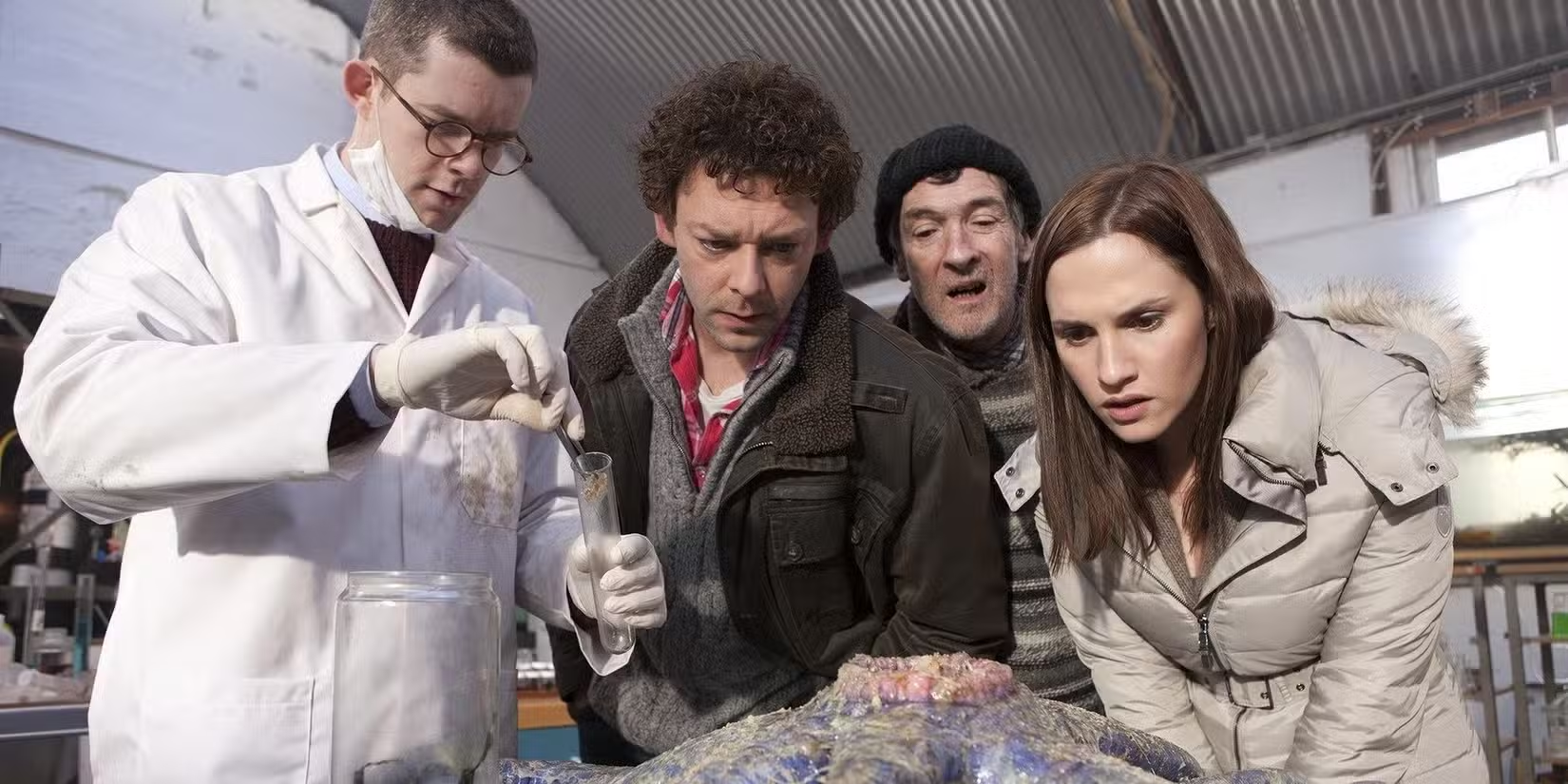
“Whatever you do… don’t sober up.” In Grabbers, a small Irish island is besieged by tentacled alien creatures that drain human blood… with one unexpected weakness: alcohol. The locals realize intoxication is their best defense, and the story turns into a bizarre and hilarious fight for survival. The premise is inherently ridiculous, but it’s executed with such charm and confidence that it works. This is a horror-comedy, populated by quirky, likable characters, and a strong sense of place in the tight-knit coastal setting where everybody knows everybody.
The creatures themselves are effectively designed, blending practical effects with a sense of tangible threat. They’re just menacing enough to be more than purely comedic. Ultimately, Grabbers succeeds because it understands something a lot of creature features forget: the monster is only half the entertainment. The other half is how people respond to it. And in this case, the response is as inventive and as fun as the threat itself.
Advertisement
9
‘Leviathan’ (1989)
Image via Metro-Goldwyn-Mayer
“Something down there is alive… and it’s hungry.” Leviathan was a part of a wave of underwater monster movies in the late ’80s, arriving alongside the likes of DeepStar Six and The Abyss. In it, a deep-sea mining crew discovers a sunken Soviet vessel containing a mysterious substance. After bringing it aboard, they begin to suffer grotesque mutations, revealing that they’ve unleashed something far more dangerous than they anticipated.
While the flick doesn’t reinvent the genre, it does pull off the classic tropes with style and commitment. Leviathan clearly draws on sources like Alien and The Thing, but it doesn’t feel like a cheap imitation. It’s very atmospheric, for instance, using its environment brilliantly to amp up the claustrophobia. Darkness and shadow obscure the creature, and sound design expertly builds the unease. Finally, when we do see the monster, it’s suitably freaky, thanks to work by legendary special effects artist Stan Winston.
Advertisement
8
‘Daughters of Darkness’ (1971)
Delphine Seyrig in Daughters of Darkness holding a man’s head while he kisses a woman.Image via Ciné Vog Films
“There are many kinds of love… and many kinds of death.” Daughters of Darkness focuses on a newly married couple (John Karlen and Danielle Ouimet) traveling through Europe who encounter a mysterious countess (Delphine Seyrig) who claims to be the infamous Elizabeth Báthory, a noblewoman and serial killer from the 1500s. As she insinuates herself into their lives, an atmosphere of seduction and menace begins to take hold.
From here, the movie bucks several genre conventions by embracing a more psychological angle. It’s a gothic sensibility, modernized. The vampire figure is less a source of overt horror and more a symbol of desire, power, and manipulation. The film’s pacing is deliberate, too, allowing tension to build through suggestion rather than action. That said, the highlight is undeniably Seyrig. She’s incredibly elegant and alluring here in a way that few stars could pull off.
Advertisement
7
‘Colossal’ (2016)
ColossalImage via Neon
“You’re not controlling it… It’s controlling you.” This black comedy was a huge box-office bomb, but it’s worth checking out for monster movie fans. Colossal features Anne Hathaway as Gloria, a struggling woman who discovers that her movements are somehow connected to a giant monster rampaging through Seoul. She tries to understand this connection, gradually realizing the darker implications of her influence. Meanwhile, her childhood friend Oscar (Jason Sudeikis) begins manifesting a giant robot.
Colossal stands out because it uses its monster as a metaphor. What initially seems like a quirky premise gradually becomes something more unsettling, exploring themes of control, abuse, and responsibility. The jokes soon fade away, replaced by rising emotional stakes and disturbing power dynamics. The performances are central, grounding the movie’s more fantastical elements in emotional reality. All in all, this is a unique movie that nicely blends indie drama and kaiju spectacle.
Advertisement
6
‘Vampires’ (1998)
“Forget what you’ve heard about vampires… this is different.” Vampires is one of the lesser-known, late-career movies from John Carpenter. It’s about a team of professional vampire hunters led by a hardened veteran (James Woods) that tracks down a powerful ancient vampire (Thomas Ian Griffith) in the American Southwest. But as they close in on their target, they discover that this enemy is far more formidable than anything they’ve faced before.
With this one, Carpenter melds western elements with horror, dressing the usual vampire story beats in a tone that feels rugged and grounded. The vampires themselves are presented as brutal, physical threats rather than romantic figures. In fact, the whole movie is pretty lean and mean: the action sequences are direct and impactful, while the dialogue carries a rough, cynical edge that suits the characters. There’s a sense of world-building beneath the surface, suggesting a larger mythology without over-explaining it.
Advertisement
5
‘The Faculty’ (1998)
Image via Miramax
“I always wanted to be one of the beautiful people.” This was the project Robert Rodriguez made between From Dusk Til Dawn and Spy Kids. The Faculty tells the story of a group of high school students who begin to suspect that their teachers have been taken over by parasitic aliens. The infection spreads rapidly through the school, forcing the students to figure out who is still human and how to stop the invasion.
The movie cleverly reworks classic invasion narratives into a high school setting. In particular, it draws clear inspiration from Invasion of the Body Snatchers, but filters it through a late-’90s teen horror sensibility. For example, the characters at first seem like archetypes (the jock, the nerd, the popular girl, etc), but as the story progresses, those labels break down. The whole thing has a self-aware edge, peppering in sharp one-liners and moments of humor.
Advertisement
4
‘The Void’ (2016)
People in awe of a triangle of light in The Void (2016).Image via D Films
“There’s something beyond this world… and it’s coming.” A police officer (Aaron Poole) brings an injured man (Evan Stern) to a nearly empty hospital, only for the building to be surrounded by robed figures. Strange events unfold inside, and the survivors soon realize they are caught in the middle of something far more cosmic and incomprehensible. The movie builds this setup into an effective Lovecraftian tale that pays homage to low-budget ’80s horror.
The Void cranks up the tension through atmosphere and mystery, gradually revealing glimpses of something vast and unknowable. Cosmic horror meets body horror as human bodies start breaking down and identities dissolve. The film then hits us with fantastic practical creature effects that feel tangible and unsettling, sure to please genre purists. They’re all flesh, tentacles, and distortion, with more physicality than your stock CGI monster.
Advertisement
3
‘Mimic’ (1997)
Image via Lionsgate
“They were designed to imitate… and now they’re evolving.” This gem was the sophomore feature from Guillermo del Toro. Mira Sorvino leads the cast as Dr. Susan Tyler, a scientist who creates a genetically engineered insect to combat a disease spread by cockroaches. Years later, the creatures have evolved, taking on new forms and posing a threat to the city above. The premise is decidedly pulpy, though del Toro elevates it with his boundless creativity and visual style.
Here, he confidently merges sci-fi and urban, embracing gothic lighting, underground locations, and a pervasive sense of decay and dampness. As its title suggests, the movie’s most disturbing element is the mimicry: creatures folding their bodies to resemble humans, jerky, almost-correct movements, shadows and silhouettes that look human… until they don’t. It’s all very uncanny. The creatures are intelligent too, strategizing and adapting, making them fearsome antagonists.
Advertisement
2
‘The Relic’ (1997)
A monster lunges forward in The Relic.Image via Paramount Pictures
“It’s not just killing… It’s hunting.” In The Relic, a shipment from South America arrives at a Chicago museum, bringing with it a mysterious creature that begins to stalk the building’s corridors. As a gala approaches, the threat escalates, trapping guests inside with the monster. The museum becomes a labyrinth of dark hallways and exhibits, a space where danger can emerge from anywhere.
This movie is straightforward and crowd-pleasing, admittedly very goofy but also very entertaining in its own way, anchored by winning performances from Tom Sizemore and Penelope Ann Miller. In terms of the visuals, the creature design is imposing, combining elements of different animals into something distinctly unnatural. All in all, while The Relic might not innovate or break new ground, it is a fun riff on classic creature feature story structure, including a juicy mystery, well-handled suspense, and a whole lot of gory monster mayhem.
Advertisement
1
‘The Abyss’ (1989)
A diver reaches out in James Cameron’s The AbyssImage via 20th Century Studios
“There’s something down there… something not like us.” The Abyss underperformed on release, with most finding it inferior to James Cameron‘s previous work, but it’s actually pretty solid. The setup is classic monster movie stuff: a civilian diving team is recruited to assist in the recovery of a sunken nuclear submarine. They descend deeper into the ocean, eventually encountering a mysterious and intelligent presence that challenges their understanding.
The plot pivots in a lot of unexpected ways, definitely digging a lot deeper than your average creature feature. It gets surprisingly rich with its themes, implicating human behavior as the real source of horror. The characters are also layered, and their relationships keep the sci-fi plot grounded. Finally, there are the effects, which were groundbreaking for the time (this was James Cameron, after all), and they still hold up all these decades later.
Advertisement
Collider Exclusive · Sci-Fi Survival Quiz Which Sci-Fi World Would You Survive? The Matrix · Mad Max · Blade Runner · Dune · Star Wars
Advertisement
Five universes. Five completely different ways the future went wrong — or sideways, or up in flames. Only one of them is the world your instincts were built for. Eight questions will figure out which dystopia, galaxy, or desert wasteland you’d actually make it out of alive.
💊The Matrix
🔥Mad Max
🌧️Blade Runner
🏜️Dune
Advertisement
🚀Star Wars
Advertisement
01
You sense something is deeply wrong with the world around you. What do you do? The first instinct is often the truest one.
Advertisement
02
In a world of scarcity, what resource do you guard most fiercely? What we protect reveals what we believe survival actually requires.
Advertisement
03
What kind of threat keeps you up at night? Fear is useful data — if you’re honest about what you’re actually afraid of.
Advertisement
04
How do you deal with authority you don’t trust? Every dystopia has a power structure. Your approach to it determines everything.
Advertisement
05
Which environment could you actually endure long-term? Survival isn’t just tactical — it’s physical, psychological, and very much about where you are.
Advertisement
06
Who do you want in your corner when things fall apart? The company you keep is the clearest signal of who you actually are.
Advertisement
07
Where do you draw the line — if you draw one at all? Every survivor eventually faces a moment that tests what they’re actually made of.
Advertisement
08
What would actually make survival worth it? Staying alive is one thing. Having a reason to is another.
Advertisement
Your Fate Has Been Calculated You’d Survive In…
Your answers point to the world your instincts were built for. This is the universe your temperament, your survival instincts, and your particular brand of stubbornness were made for.
Advertisement
The Resistance, Zion
The Matrix
You took the red pill a long time ago — probably before anyone offered it to you. You’re a systems thinker who can’t help but notice the seams in things.
You’re drawn to understanding how the system works before figuring out how to break it.
You’d find the Resistance, or it would find you — your instinct for spotting constructed realities is the machines’ worst nightmare.
You function best when you have access to information and the freedom to act on it.
The Matrix built an airtight prison. You’d be the one probing the walls for the door.
Advertisement
The Wasteland
Mad Max
The wasteland doesn’t reward the clever or the well-connected — it rewards those who are hard to kill and harder to break. That’s you.
You don’t need comfort, community, or a cause larger than the next horizon.
You need a vehicle, a clear threat, and enough fuel to outrun it — and you’re good at all three.
You are unsentimental enough to survive that world, and decent enough — just barely — to be something more than another raider.
In the wasteland, that distinction is everything.
Advertisement
Los Angeles, 2049
Blade Runner
You’d survive here because you know how to exist in moral grey areas without losing yourself completely.
You read people accurately, keep your circle small, and ask the questions others prefer not to answer.
In a city where humanity is a legal designation rather than a feeling, you hold onto something that keeps you functional.
You’re not a hero. But you’re not lost, either.
In Blade Runner’s world, that distinction is everything.
Advertisement
Arrakis
Dune
Arrakis is the most hostile environment in the known universe — and you are precisely the kind of person it rewards.
Patience, discipline, and political awareness are your core strengths — and on Arrakis, they’re survival tools.
You understand that the long game matters more than any single victory.
Others come to Dune and are consumed by it. You’d learn its logic and earn its respect.
In time, you wouldn’t just survive Arrakis — you’d begin to reshape it.
Advertisement
A Galaxy Far, Far Away
Star Wars
The galaxy far, far away is vast, loud, and in a constant state of violent political upheaval — and you wouldn’t have it any other way.
You find meaning in being part of something larger than yourself — a cause, a crew, a rebellion.
You’d gravitate toward the Rebellion, or the fringes, or whatever pocket of the galaxy still believes the Empire’s grip can be broken.
You fight — not because you have to, but because standing aside isn’t something you’re capable of.
In Star Wars, that willingness is what makes all the difference.








:max_bytes(150000):strip_icc():format(jpeg)/Taylor-Frankie-Paul-SLOMW-Dakota-Mortensen-Park-City-2026-040126-7227ca725d9642db9892dd3ea0e4cd1e.jpg)
:max_bytes(150000):strip_icc():format(jpeg)/The-Testaments-685-04022026-3b20d00db66a48128251b8fe3a90420b.jpg)
:max_bytes(150000):strip_icc():format(jpeg)/the-handmaids-tale-season-6-episode-2-exile-elisabeth-moss-040725-5d14d02e7c5b479bb799715da44c5398.jpg)












![*SOLO* GTA ONLINE CAR DUPE MONEY GLITCH! [XBOX/PS/PC]](https://wordupnews.com/wp-content/uploads/2026/04/1775646733_hqdefault-80x80.jpg)




































You must be logged in to post a comment Login