

Entertainment
Khloé Kardashian Says Daughter True Thompson Has an ‘Elevated’ Way of Wearing Her XO Blue Perfume

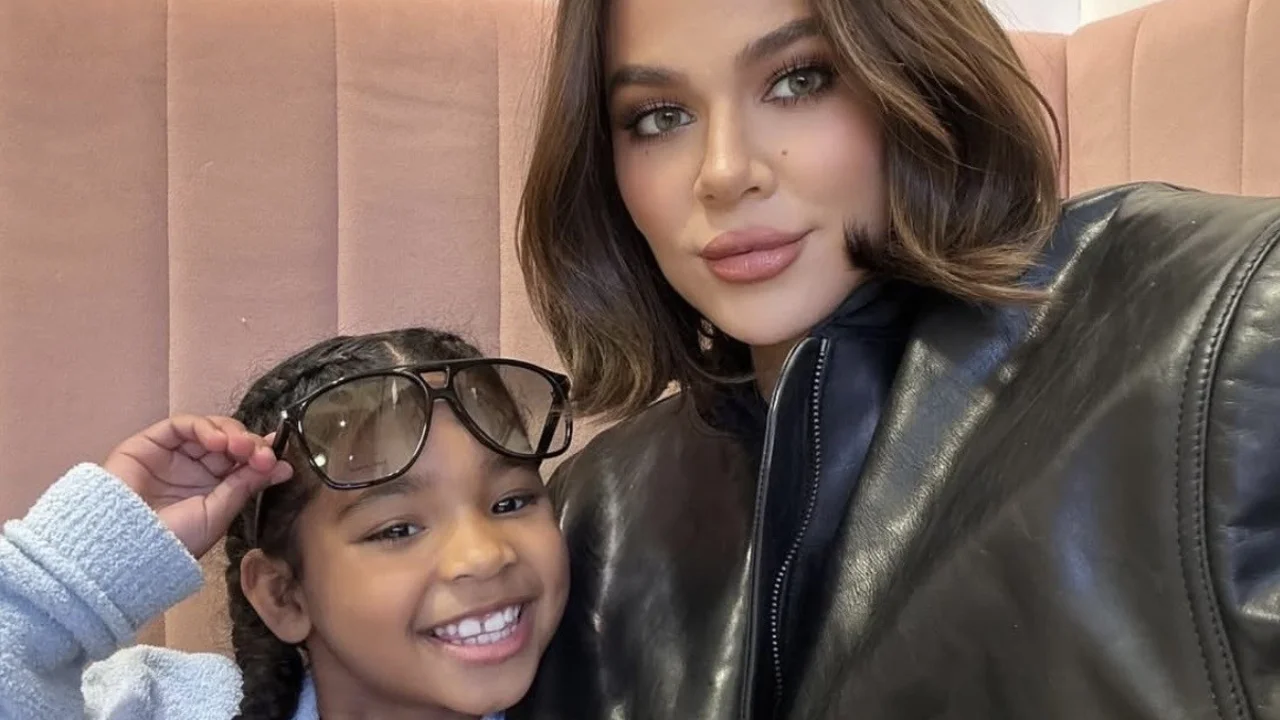
Like mother, like daughter! Khloé Kardashian’s new XO Blue perfume has already earned the approval of daughter True Thompson.
Ahead of the launch party in Malibu, California on June 16, The Kardashians star shared that Thompson, 8, is already taking after her in one unexpected way.
“She doesn’t wear fragrance on a daily basis, but she has the Squishmallows fragrance, which is so cute and age-appropriate, and then she has all of mine on her counter, and sometimes she sprays herself, and sometimes she doesn’t, but they’re into scents, these kids,” she explained during a virtual press day.
When Kardashian’s daughter does decide to borrow one of the reality television star’s favorites, she has her own way of doing things.
“I do let her use it, but it’s everything in moderation and she’s so great. She sprays her clothes and not herself, which I’m like, ‘Okay, elevated.’ I love when kids are smarter and more creative than we are. So, she doesn’t spray her body, which I’m fine with.”
It’s a far cry from Kardashian’s own spritzing habits growing up.
“When I was younger, it was Bath and Body Works. … I mean, we doused ourselves in the most potent of stuff.”
These days, though, Kardashian is chasing vacation vibes with her signature scent.
“XO Blue is very tropical, in my opinion. I think when you put it on, you immediately get this woody coconut. I feel very transported onto a beach with a piña colada. … It’s still something that you can wear, but I just love where it transports me to.”
And for the Khloé In Wonder Land podcast host, the appeal goes beyond an island getaway.
“I just want you to feel the sexiest at your core, and that doesn’t have to be this aesthetic thing.”
“For me, that’s all energetically. I just want you to feel just super sexy and feminine and that you can manhandle anyone and do whatever you want to do, and you’re just that girl. … You want to be in a summer dress or a tank top. It’s so silly that that’s how I feel when I’m wearing it, but I feel like the less clothes, the better.”
The Khloud founder is just as passionate about what goes into her body as what goes on it.
“I love peptides. I don’t know if that’s a secret. I feel like everyone takes a peptide. … I take injections, which I love, and they just make you feel good and you look good. … I’m also a big vitamin girl and just staying active. There’s not one thing that’s gonna make anything all better.”
RELATED CONTENT:

Continue Reading

A distraught Sara Gilson was reportedly overheard in the background of a child’s 9-1-1 phone call prior to the influencer’s death.
“I’m trying to reach him [the child] back, but I could hear a female in the background screaming and crying. Some sort of loud bang in the background,” an Owasso Police Department dispatcher allegedly told first respondents on Thursday, July 23, after receiving an emergency call from “a child who lived at the home,” per a Sunday, July 26, report by People.
Gilson, 43, was allegedly shot and killed by her estranged husband, Shawn Duffey, who was also found dead in the pair’s Oklahoma home, two weeks after the social media star accused him of pedophilia. Gilson is survived by her two children from a previous relationship.
Us has reached out to the Owasso Police Department for comment.

Influencer Sara Gilson was allegedly killed by her estranged husband, Shawn Duffey, mere weeks after she allegedly accused him of being a pedophile. Tulsa’s ABC affiliate reported on July 23, 2026, that Gilson and Duffey were found dead in their Oklahoma City home after a fatal shooting. A juvenile family member present at the scene […]
The outlet stated that the call was placed at 11:15 PM before local officers attended the scene of the alleged murder-suicide. The dispatcher was also reportedly heard speaking to first respondents, who arrived at the scene by 11:18 PM, about a “male that we were looking for a few weeks ago after he got caught kissing a juvenile.”
Gilson, a hairstylist who had amassed 69,000 TikTok followers at the time of publication, claimed via the platform two weeks prior to her death that her marriage to Duffey, 48, was over as her ex was allegedly guilty of pedophilia. (Duffey did not publicly address allegations prior to his death.)
“Preparing for when Netflix drops a documentary about my soon-to-be ex-husband, who I just found out is a pedophile,” the influencer wrote over a July 11 video of herself sitting in a chair and pretending to get mic’ed up: a reference to the current viral social media trend where users pretend to be interviewed by the streaming service.
Sara Gilson’s loved ones are remembering the influencer in the days since she was allegedly killed by her estranged husband, Shawn Duffey, in a shocking murder-suicide. “Her last day, she was happy,” Gilson’s best friend Kelsi Lard told People in an interview published on Sunday, July 26, sharing that she was with her “the same […]
At the time, Gilson also captioned the post, “I wish I was joking.”
According to People, Duffey had been slapped with a protective order by Gilson on July 10, on behalf of her minor daughter, “a 15-year-old-girl who played on the youth basketball team” that Duffey had coached. The order, which was reportedly valid until Monday, August 24, forced Duffey out of the family home and to stay 100 yards away from Gilson.
Per an earlier report by local news outlet The Oklahoman, Gilson claimed that Duffey allegedly kissed and touched her daughter, and that his actions were witnessed by another coach.


Influencer Sara Gilson’s ex-husband, Lyle Landers, allegedly “begged” her to leave her estranged husband Shawn Duffey before the couple’s apparent murder-suicide. “She had been stuck in a relationship where domestic abuse seemed ‘OK,’” Landers, 46, claimed in an interview with People published on Sunday, July 26, of his ex-wife, with whom he shared two kids, […]
The girl allegedly told her mother, per the outlet, that Duffey engaged in additional inappropriate behavior, including sending her messages, inviting her to his hotel room during a tournament trip and offering her money “to keep her quiet.”
If you or someone you know is struggling or in crisis, help is available. Call or text 988 or chat at 988lifeline.org. https://988lifeline.org/
If you or someone you know is experiencing child abuse, call or text Child Help Hotline at 1-800-422-4453. https://www.childhelphotline.org/
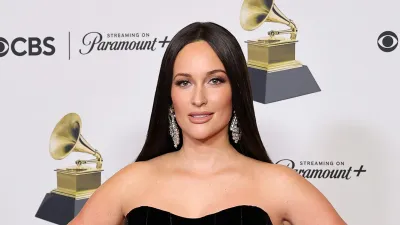
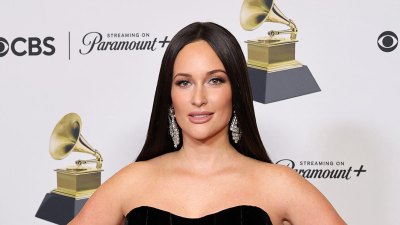
Less than one month out from her scheduled national tour, Kacey Musgraves has reportedly cancelled three shows without publicly disclosing an explanation.
According to Sunday, July 26, reports by People and the Daily Mail, the country singer-songwriter, 37, informed ticket holders via email that her Thursday, August 20, Chicago opening night was cancelled, in addition to a Friday, August 29, show in Boston and a Wednesday, September 2, show in Brooklyn, New York City.
No explanation was provided in the Middle of Nowhere Tour email notifications which were sent from Ticketmaster, per the Daily Mail.
Us has reached out to representatives for Musgraves for comment.
Kacey Musgraves followed her arrow straight to the doctor’s office after recording her smash hit duet “I Remember Everything” with Zach Bryan. In a clip from her upcoming Sunday, March 10, appearance on Sunday Today With Willie Geist, Musgraves, 35, revealed that she was approached to record the track with Bryan, 27, at a very […]
A screenshot of the email appeared to have been shared by fans via Reddit on Sunday, and showed refund details. “All tickets will be automatically refunded to fans at their original point of purchase,” the screenshot read. “We apologize for any inconvenience.”
Reddit fans speculated within the post’s comments section as to why the dates had been pulled by Musgraves, with theories spanning cost issues, reconsidered venue suitability and poor ticket sales.
Anticipation for Musgraves’ tour had grown in recent days in light of the musician releasing the video for her Middle of Nowhere track “Mexico Honey.” She took to Instagram on Wednesday, July 22, to share some of the video before returning over the weekend to share details about its production. “An ode to Mexico and the passion, color, texture, and love I have felt there. Shot on 16mm film in Jalisco. Out now,” Musgraves captioned a carousel of stills.
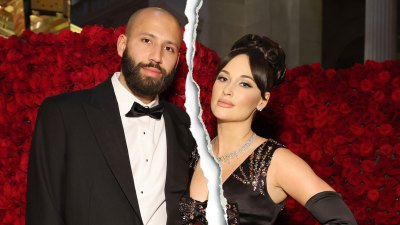
Cindy Ord/MG22/Getty Images for The Met Museum/Vogue Kacey Musgraves and her boyfriend of two years, Cole Schafer, have split, Us Weekly can confirm. “They weren’t seeing eye to eye in terms of where they are in life right now and decided to end things,” a source exclusively tells Us of Musgraves, 35, and Schafer. The […]
Meanwhile on Musgraves’ Instagram, a post promoting her upcoming tour — including the now-cancelled dates — remains pinned to the star’s grid. “See you in the middle of nowhere,” she captioned the May 9 post.
The partial cancellation comes a little over one year after Musgraves, who rose to fame on Nashville Star in 2007 where she placed seventh overall, was forced to postpone a Nashville appearance due to a medical incident.
“Sooo I’m in Mexico with a f***ing broken rib,” she shared via her Instagram Stories on June 20 last year. “Wednesday night it was raining and I was running to grab some towels and had an extremely hard fall on some very slick tile I didn’t see. Thankful I didn’t smack my head but I landed very very hard on my back left ribcage and I broke rib number 6.”
Musgraves, who shared a photo of a chest X-ray at the time, continued, “This s*** is no joke. I’m in a lot of pain and doing ANYTHING is extremely difficult but I’m managing and being well taken care of. There is no physical way I can get on a plane and fly back to Nashville.”
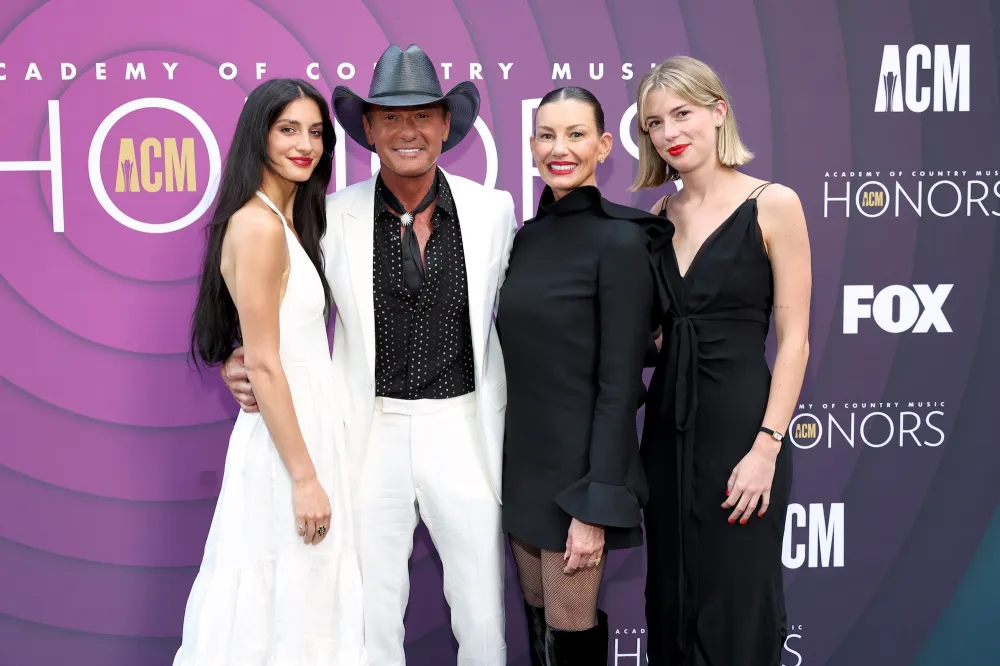
Tim McGraw and Faith Hill’s daughter paid homage to her parents while making a surprise appearance at her father’s recent concert.
“I don’t have words to express the honor I [felt] to sing my mama’s song last night, and for it to be at dad’s show,” Audrey McGraw wrote via Instagram on Saturday, July 26. “To be your daughter is an infinite gift. I love y’all so much, I am always so proud and so inspired by you. Thank you for sharing this crazy life with us. Proud to be a road dawg forever. ♾️.”
She concluded, “Plus The dance hall doctors, baby!!!! The sickest band out there!! Hell yeah. Family always. Love y’all. 🖤🖤🖤.”
Alongside the message, Audrey, 24, shared a black-and-white video of her belting out the lyrics to Hill’s 2002 track “Stronger.”
“So cry for me baby, and I’ll cry for you / And we’ll both break down and we’ll both break through / We’ll find our way and we’ll face the truth / We both will be stronger,” Audrey sang in the clip. “And we’ll lie down in our loneliness / And wake up with our sad regrets / Even though we don’t know it yet / We both will be stronger / We both will be stronger.”
Audrey went on to share a photo of her smiling alongside Tim, who grinned as he held a guitar backstage.
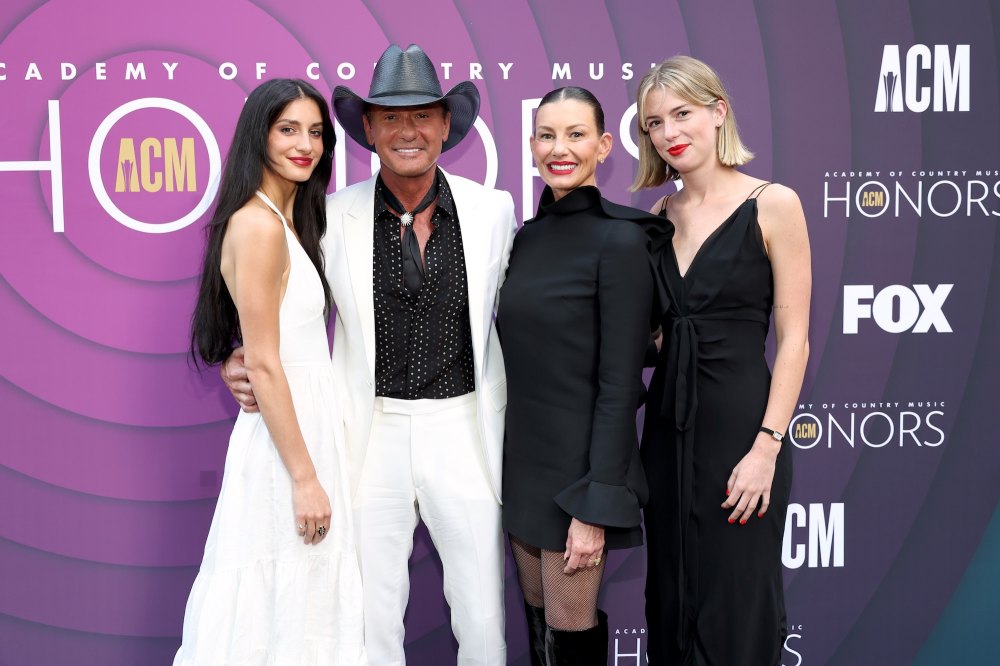
“LOVE YOU DAD!!! Jone’s Beach rocked!” she captioned the Saturday Instagram post. “Thanks for having me out there. So proud of you. 🖤🪽✨.”
Tim and Hill, who tied the knot in 1996, became parents when they welcomed daughter Gracie in 1997. The couple went on to welcome Maggie and Audrey in 1998 and 2001, respectively.

Tim McGraw and Faith Hill may be country music royalty, but at home, they are just dad and mom. Thank You! You have successfully subscribed. Subscribe to newsletters Enter your email Please enter a valid email. Subscribe By signing up, I agree to the Terms and Privacy Policy and to receive emails from Us Weekly […]
Audrey, who is following in her parents footsteps, took a moment in March during a concert in Las Vegas to pay tribute to her parents.
“Coming from a Mississippi woman and a Louisiana man, who just got inducted into the Country Hall of Fame,” Audrey said of Tim and Hill onstage at the time. “My God, I’m just so, so proud of my dad [and] of both of my parents. I love them so much.”
Tim, for his part, has also sang his daughters’ praises through the years.
“I’d love to do a song with all five of us at some point. I talk about it all the time and they’re like, ‘I ain’t singing with you, Dad,’” Tim told Entertainment Tonight in a 2023 interview. “They’ll sing with Mom, but I’m probably not up to par with the rest of them. I’m the worst singer in the family. They’re the life of the party every time they’re around. They just inspire us in so many ways.”
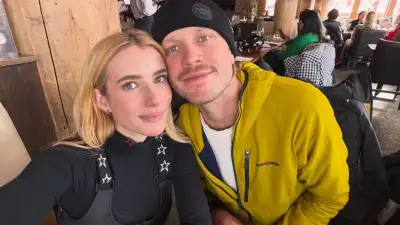
Julia Roberts didn’t miss the chance to celebrate her niece Emma Roberts’ intimate nuptials to now-husband Cody John.
Julia, 58, was spotted at the private Idaho residence where Emma’s wedding was held on Saturday, July 25, according to photos obtained by Page Six. One day earlier, Julia and husband Danny Moder were seen visiting the Gem State, per photos obtained by online gossip site DeuxMoi.
Emma, 35, and John, 36, said “I do” on Saturday in front of Julia, Moder, 57, and a small group of the pair’s closest friends and family members. Vogue reported that the American Horror Story actress enlisted her stylists, Brit and Kara Elkin, to serve as bridesmaids for the big day.
The Elkins were also present during Emma’s final bridal gown fitting with Monique Lhuillier alongside Emma’s mom, Kelly Cunningham, the actress’ sister, Grace Nickels, cousins Charlotte Long and Daphne Merrymen, as well as friends Ally Gasparian and Lily Kershaw.

Emma Roberts and her longtime partner, Cody John, are officially married. Roberts, 35, and John, 36, said “I do” in an intimate ceremony held in Idaho on Saturday, July 24, according to photos obtained by online gossip site DeuxMoi. While John looked dapper in a custom espresso-colored Ferragamo suit, the blushing bride stunned in a […]
Emma is Cunningham’s daughter with ex Eric Roberts, who has reportedly been estranged from the Maybe I Do star and his sister Julia for many years. (Eric and Julia also have another sister, Lisa Roberts Gillian, and it’s not known whether Eric and Lisa were in attendance at Emma’s wedding.)
Emma and John, who have been together since 2022, exchanged vows in an outdoor ceremony surrounded by dozens of white roses. John looked dapper in a burgundy suit for the occasion, while Emma looked elegant in her custom Lhuillier frock.
“I didn’t really know what I wanted [at first]. I just knew that I wanted it to feel very vintage-inspired,” Emma told Vogue of her dress inspiration. “I’m obsessed with antique books and treasure hunting, and I love collecting old ephemera, so I really wanted that to shine through in the dress.”
She continued at the time, “I kind of wanted to look like a ghost — a little antique ghost doll.”
Lhuillier, 54, fashioned Emma’s gown out of silk chiffon for an “ethereal, romantic and vintage-inspired” aesthetic.
“This gown took nine months to make, and I would say it took close to 1000 hours to complete,” the designer revealed to the outlet. “The beauty of this dress is it keeps transforming throughout the night.”
According to Lhuillier, the strapless gown was “convertible” thanks to an off-the-shoulder removable shawl. Emma later donned an archival black corset dress from the brand for the reception afterparty.
“I love the idea of wearing black for the afterparty,” Emma quipped. “We love doing something that’s a little unexpected. This looks like it could be totally vintage from 100 years ago, or from now. This is going to be so fun in Idaho at the afterparty.”
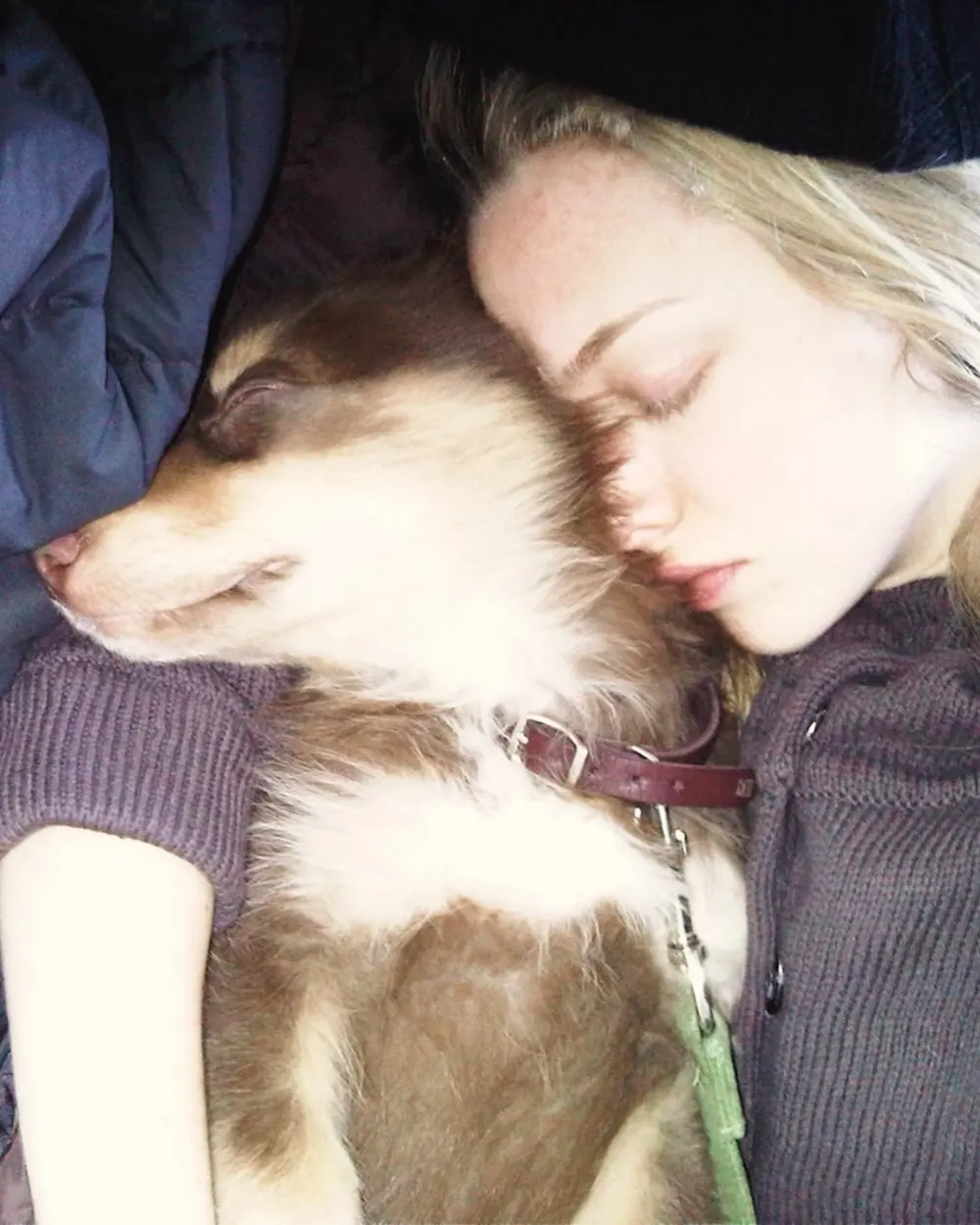
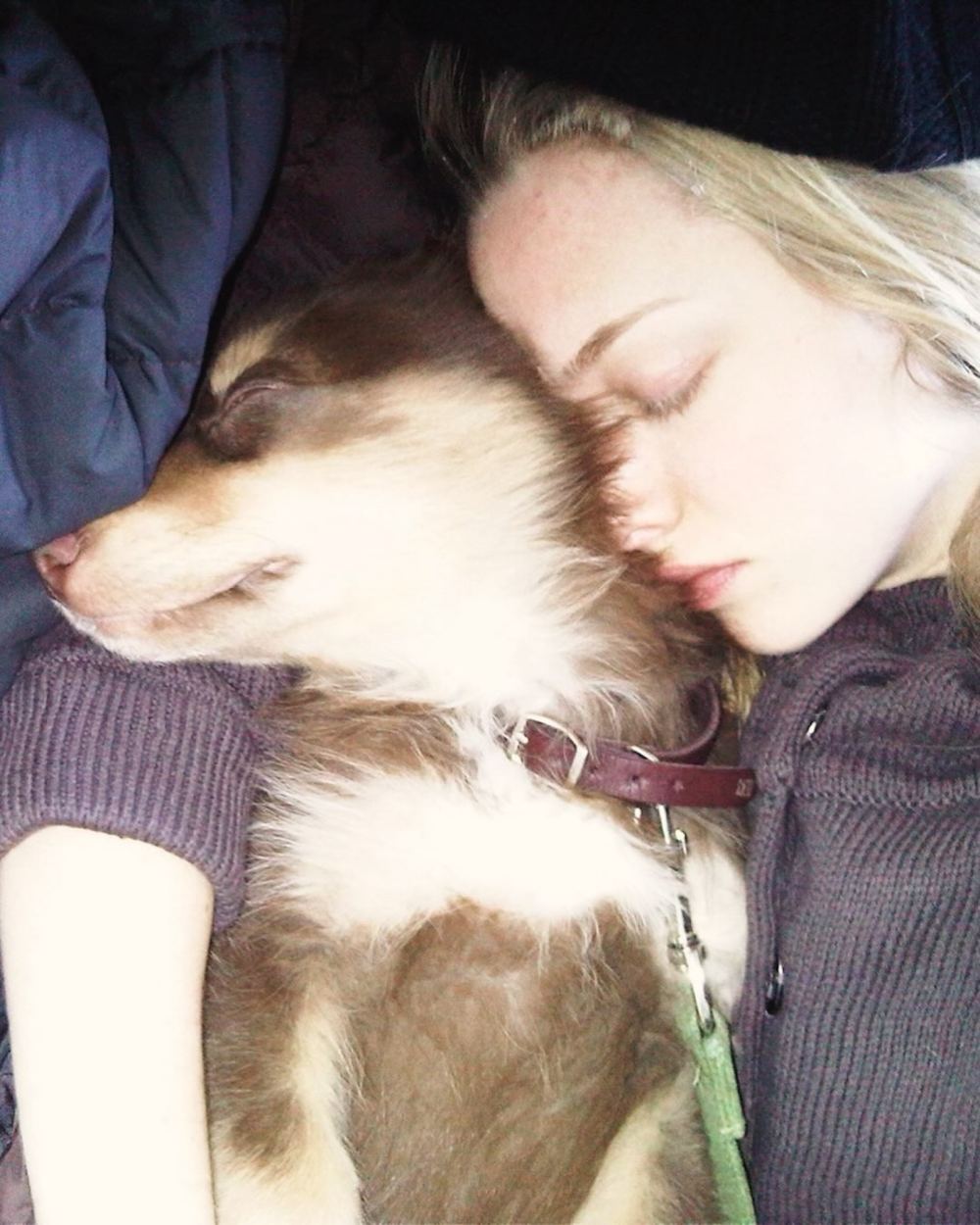
Amanda Seyfried is honoring her furry, four-legged bestie Finn after her beloved dog’s death at age 16.
“This one’s forever and ever,” Seyfried, 40, wrote via Instagram on Saturday, June 25, while sharing a selfie featuring the actress laying beside Finn.
In the comments section, Olivia Munn shared a sweet message, writing, “Fly high, sweet pup 🕊️♥️♥️♥️.”
Seyfried adopted the Australian shepherd while working on the set of the HBO series Big Love, which ran from 2006-2011.
“As soon as he was mine, like 24 hours after I got him, I realized something about me needed him,” Seyfried told People in 2019. “He completely changed my life and helped me find my solitude and my independence. When you have a lifestyle like I did when I was in my early twenties, there were no constants.”
She continued at the time, “It was just hard to know where I was going to be the next month because of my career. That’s why I got him.”
Seyfried explained that she has now made sure her film contracts allow for Finn to be brought onto set, unless he’s traveling a far distance.
“I just can’t picture being anywhere without him,” she said. “Except England. Every time I do a movie over there, I have to leave him. I wouldn’t put him through that plane ride unless I was there for long enough to make sense because he has such a good life when he’s being babysat by my agent.”
Amanda Seyfried lives the dream life with her husband Thomas Sadoski, and two children, on their farm in the Catskill Mountains of New York — and all animals are welcome. “I’m locally known as somebody who will take the emergency situation and adopt an animal in need,” Seyfried, 38, exclusively told Us Weekly at the […]
Five years later, Seyfried got candid about how Finn has altered the course of her life.
“[Pets give us] purpose. No matter what we say, we can’t deny the fact that we need purpose, and to have that responsibility of taking care of animals, who don’t have a voice and can’t really do much for themselves, it gives you so much more than we could ever give them, really,” Seyfried told People in a 2024 interview. “I don’t know what my twenties would’ve looked like without Finn. I really don’t know. I don’t know how I would’ve navigated Hollywood. I mean, I stayed out of a lot of trouble, I think, because I had that guy to come home to.”
Seyfried recalled taking Finn home and thinking she would “find a home for him and have him for a couple of weeks,” but said she “fell in love with him right away.”
“I was just like, ‘I’m going to keep him safe,’ and then he just ended up keeping me safe,” she said. “I had struggled with a lot of anxiety and I have OCD, and my twenties were just hard in general, like anybody’s twenties are hard, so I think he grounded me in a way that nothing else could have.”
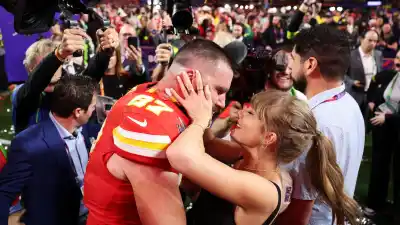
New York City fallen first responders’ families were beyond touched to receive contributions from Taylor Swift and Travis Kelce’s multimillion dollar charity donation.
To celebrate their July 3 nuptials, Swift and Kelce, both 36, donated $26 million to an array of worthy causes close to their hearts in various American cities that hold special meaning for the couple. One of the recipients was Answer the Call, a NYC-based nonprofit that helps provide financial assistance and support to families of NYPD, FDNY, PAPD and EMS personnel killed in the line of duty.
“We are extremely grateful to Taylor and Travis for their incredible support of Answer the Call,” executive director Lauren Profeta wrote in a statement shared via Instagram at the time. “Their extraordinary donation will ensure that we can continue to provide much-needed financial assistance to the families of New York City’s fallen first responders. We thank them for their kindness, their generosity and for their fulfillment to our collective promise to Never Forget.”
In the weeks after Swift and Kelce said “I do” in a star-studded wedding inside NYC’s famed Madison Square Garden, After the Call shared a handful of heartfelt letters addressed to the newlyweds from families who have been positively impacted by their charitable donation.

UPDATE 7/3/2026 at 3:43 p.m. ET — Rhode Island Governor Dan McKee has joined a chorus of charities and celebrities thanking Taylor Swift and Travis Kelce for making $26 million in charitable donations across the country. On Friday, July 3, the politician, 75, shared a tweet where the Rhode Island Food Bank personally thanked the […]
“I know firsthand how much the support of this organization means to families like mine,” Patricia Polimeni, whose detective husband Jack Polimeni died in 2020, wrote in a statement. “Your donation is so much more than a financial gift. It provides hope, comfort and sense of community for families who are learning to navigate life after the loss of someone who dedicated their life to serving others.”
Amanda Rivera, who lost her dad William Rivera in 2004, noted in a separate letter that Answer the Call helped her family “find [their] way” after his death.
“We found a community where people knew what the other has been through and made friends who eventually became family,” she wrote. “The organization has given me so many opportunities and experiences that I never thought I would experience — like throwing out the first pitch at a New York Mets game, attending concerts and much more.”
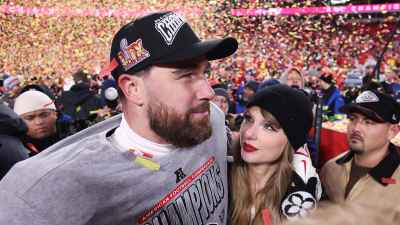
Jamie Squire/Getty Images Taylor Swift was seen paying it forward after security guards stayed late at a MLB game with her and Travis Kelce. “Game is over, she took pictures with everybody there,” sports broadcaster Adam Lefkoe said on the Friday, January 31, episode of The Steam Room. “We had to wait an hour because […]
Amanda, who calls herself a “dedicated Swiftie,” further stressed that Swift and Kelce’s support “means the world to” her.
Allison Garger, whose husband Thomas J. Kennedy was killed in the September 11, 2001, terrorist attacks in NYC, noted in a separate letter that her family once attended the pop star’s concert at MetLife Stadium.
“Taylor, in the rainy concert at MetLife Stadium one year, you touched my son Michael’s hand,” Garger recalled without detailing when the Grammy winner performed in New Jersey. “He has been inspired by you since then. We are forever grateful! Heart-shaped hands forever!”
Valerie Perry, for her part, noted that Answer the Call “changed [her] life” following her husband William J. Perry’s death in 1980.
“They have brought smiles because I feel like my Bill is always remembered, even after all these years,” Valerie said in a statement of her own. “Now, to read your donation? I AM IN TEARS for such a gift to all these families that have been through so much. Prayers for your future together and God bless both of you for your generosity and your caring souls for doing something so amazing.”
New documentary footage featuring Sen. Lindsey Graham is revealing what the late politician considered to be his greatest accomplishment before his shocking death at age 71.
“It’s the best thing I’ve ever done. He loves blowing stuff up,” Graham said of the ongoing war in Iran and President Donald Trump’s apparent affection for war while speaking to Israeli Prime Minister Benjamin Netanyahu in never-before-seen footage from documentary filmmaker Alex Holder’s ongoing project, Lindsey’s Game.
“He hasn’t tweeted much at all,” Graham added in the footage of Trump, 80, who is known to spend much of his time on his social media platform, Truth Social. “No drama. He’s been a great wartime president. I said last night that Trump and Bibi are like Roosevelt and Churchill.”
Holder spent four years embedded with the former senator for the project, which began filming in late 2021 and is currently in post-production. No release date or distributor has been announced at the time of publication.
“The level of access Senator Graham gave our team was truly remarkable,” Holder said in a Sunday, July 26, appearance on CNN’s Inside Politics with Manu Raju. “For more than four years, we documented his work, private conversations, and closed-door meetings with world leaders and policymakers as some of the most consequential events of our time unfolded. This project will offer audiences a rare window into the private moments, relationships, and decisions behind the headlines that have shaped the public life of one of America’s most prominent and controversial political figures.”
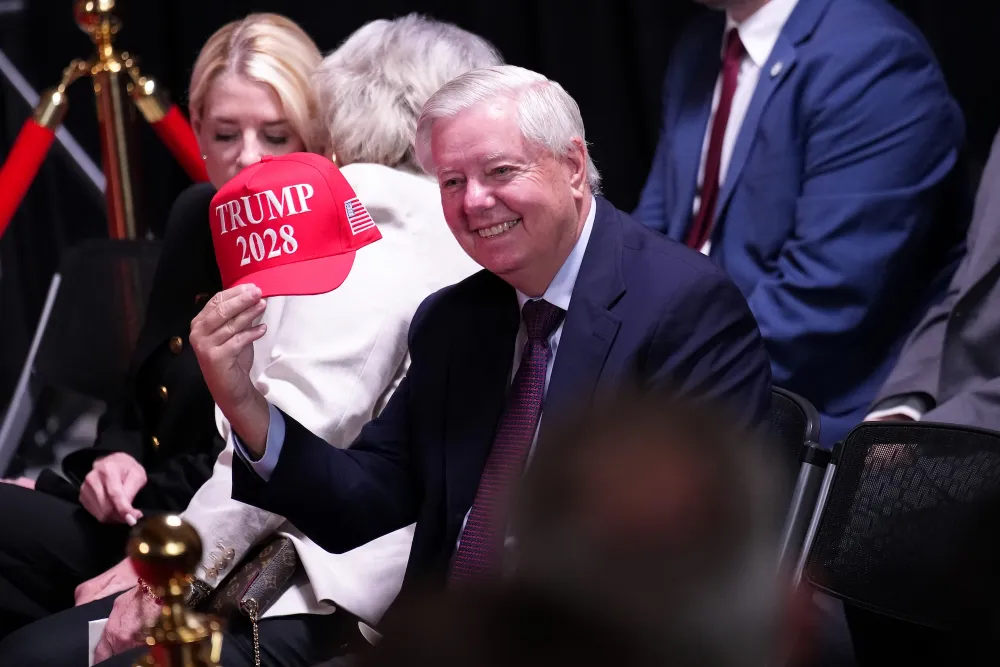
U.S. Sen. Lindsey Graham (R-SC) holds up a hat that reads “Trump 2028” Getty Images
News broke on July 11 that Graham, the longtime senator representing South Carolina, had died unexpectedly.
“On the evening of Saturday, July 11, U.S. Senator Lindsey Graham passed away from a brief and sudden illness,” a rep for the politician wrote in a statement at the time. “Senator Graham’s family appreciates prayers at this time and asks for privacy during this incredibly difficult period.”
Days later, Metropolitan Police Department Chief Jeffery W. Carroll and the District of Columbia Chief Medical Examiner Dr. Francisco J. Diaz confirmed to Us that Graham died “of aortic dissection due to arteriosclerotic cardiovascular disease” after a July 12 autopsy.
“Whenever an autopsy is performed in the District of Columbia, the pathologist also orders comprehensive toxicology testing and microcopy both of which take time to complete,” the statement continued. “As soon as the results are available and the investigation concludes, OCME will communicate with the next of kin and the death certificate will be amended from pending to the cause of death and the classification of the manner of death.”
Graham, at one-time a fierce adversary of President Trump, became a staunch MAGA supporter prior to his death, living up to his “war hawk” reputation by advocating for various overseas conflicts including the war in Gaza and war in Iran.
While speaking about the late senator’s life and legacy, President Trump claimed he was one of the last if not the last person to speak to Graham before his shocking death, claiming the senator told him he was tired.
“So, what makes it even stranger is I got a call last night something in the early evening — maybe in the sevens — and he called and said, ‘We’re all set for the Save America Act,’ the president said while calling into the July 12 episode of NBC’s Meet the Press. (Trump was referring to his controversial voting bill that many experts have argued will actually make it more difficult for U.S. citizens to vote.)
”He was pushing the Save America Act like crazy,” the president continued. “He got back, said he just landed from Ukraine, I said, ‘That’s a long trip.’ He sounded a little tired, but perfect, but a little bit tired — he had the right to be, he was a worker. He was really a worker. But he sounded great, actually. But he actually said he was tired.”
While Graham was proud of his efforts advocating for war in Iran, Trump and his administration are facing increased scrutiny over the unpopular decision to start the overseas conflict — according to a July Washington Post-ISOS poll, 68 percent of Americans say the war in Iran is not worth fighting.

Sara Gilson’s loved ones are remembering the influencer in the days since she was allegedly killed by her estranged husband, Shawn Duffey, in a shocking murder-suicide.
“Her last day, she was happy,” Gilson’s best friend Kelsi Lard told People in an interview published on Sunday, July 26, sharing that she was with her “the same day her life was taken.”
Lard continued, “As always, she was cracking jokes and making me laugh. I will miss her so much. I don’t want her life to be diminished into what happened in the end. She brought so much joy to all of us, and I’ll miss her every day.”
Lard shared that she thinks Gilson, whom she had been friends with for more than two decades, would want to be remembered first and foremost as a mother to her two children. Lard added that Gilson once told her being a parent was her “greatest accomplishment.” (Gilson shares her kids with ex-husband Lyle Landers.)

Social media is paying tribute to many influencers who died in 2026. While recording a private New Year’s Eve livestream, Sergio Jiménez died at age 37. Days later, content creator Athira Auni died on January 3 at age 21 after a motorcycle accident. In February, Chinnu Papu died by suicide at age 24. In March, […]
“She was a fun, loving and devoted mom. She loved [her kids] more than anything in this world. She’d do anything for them,” Lard said.
Gilson and Duffey were found dead inside their Tulsa, Oklahoma, home on Thursday, July 23. Gilson was 43.
Law enforcement officials interviewed an unidentified family member on the scene who claimed Gilson and Duffey died by murder-suicide, per local reports. A police investigation is ongoing.
Weeks before her death, Gilson publicly accused Duffey of pedophilia. Duffey did not address the allegations prior to his death. The pair separated earlier in the summer.

Courtesy of Chris O’Donnell/Instagram; Courtesy of Kyle Marisa Roth/Instagram The deaths of several online stars have shaken the TikTok and influencer community — and broken the hearts of countless fans — over the years. Taylor Rousseau Grigg died in October 2024 at the age of 25 after battling undisclosed medical issues. Her husband, Cameron Grigg, […]
“Thank you for the army. Your thoughts, prayers and gift cards have meant more than you know,” Gilson wrote via TikTok last month, addressing her divorce. “While I’m grieving and trying to process the worst thing imaginable, I’m solely focused on my children and their well-being. Their safety and mental health is my only concern at this time.”
She continued, “We are not OK and I’m not sure I’ll ever be the same, but God has been so faithful in this process and I feel his presence in everything I do.”
Landers, for his part, alleged that he “begged” Gilson to leave her estranged husband.
“She had been stuck in a relationship where domestic abuse seemed ‘OK,’” Landers claimed in an interview with People published on Sunday. “I had begged her for five years to get away from him. I had offered to help her, in any way I could, to get away from him. But, he seemed to have some sort of control over her, and she couldn’t seem to get away.”

Hollywood mourned the deaths of some of its most legendary stars in 2026. In June, legendary music executive Clive Davis also died at age 94 following a hospitalization for an upper respiratory infection. At the end of the month, news broke that the Village People lead singer Victor Willis had died. Actor Joby Baker died […]
While Landers and Gilson divorced seven years ago, he explained that the exes were amicably coparenting their children.
“It had been the best thing in the world for our kids, but also for us. We coparent as well as anyone, and it has shown in our kids,” Landers said. “She was a wonderful mother and would die for her children. In fact, her trying to protect children is what ultimately led to her death.”
If you or someone you know is struggling or in crisis, help is available. Call or text 988 or chat at 988lifeline.org. If you or someone you know is experiencing domestic violence, please call the National Domestic Violence Hotline at 1-800-799-7233 for confidential support. If you or someone you know is experiencing child abuse, call or text Child Help Hotline at 1-800-422-4453.

TikTok’s Rebecca Luna has died after documenting her diagnosis with young-onset Alzheimer’s and choosing to end her life with medical aid in dying (MAID). She was 49.
“Rebecca passed away July 25th at approximately 1:15 p.m. surrounded by her loved ones,” a post read via TikTok on Saturday, July 25. “Thank you for your support and privacy.”
Luna’s eldest daughter, Maya, mourned the influencer with the same message via a GoFundMe, created by Luna in June to cover end of life expenses.
“Hi, as a lot of you know I was diagnosed at age 48 with Young Onset Alzheimer’s,” Luna wrote via GoFundMe. “I’m 49 and I will be accessing MAID as my decline has come faster than I had hoped.” (MAID is a practice in which a physician provides a patient suffering from a terminal illness with a prescription for a lethal drug dose, allowing them a purposeful and peaceful death.)
She continued, “I’ve been a single mama (proudly) all my life so my lovely followers suggested I do a go fund me for the end of life expenses so I don’t leave my loved ones behind with that responsibility [on top] of their own grief. All blessings and well wishes are warmly appreciated and I love you all. I couldn’t have come this far without you.”
Luna, who was based in Victoria, British Columbia, first shared her diagnosis on TikTok in April 2025.
“I am in the very early stages of a diagnosis of early onset Alzheimer’s. I am 48 years old. It feels really weird and vulnerable to put myself out there right now like this. But since I’ve been exploring this with my neurologist, I realized there’s not a lot of resources out there for young people facing this terrible disease,” she said in the TikTok video at the time, adding that she has “been able to connect with a few people” but felt like the disease was “isolating.”
More than a year later, Luna shared her final video on July 22. In the TikTok, Luna explained that she had moved her MAID date to Friday.
“Prior to the dates changing for the last year and a half has been legally and medically not my choice, OK? But for the last two weeks I’ve been making the decision,” Luna said at the time. “And it’s a hard decision to make, I have to tell you, because I’m living in a body that doesn’t feel comfortable, safe, good, nothing. It feels terrible. And so the idea of waiting two weeks felt like too much.”
Cody John was romantically linked to actress Emma Roberts for several years before the pair officially said “I do” in an intimate Idaho wedding.
The pair became Instagram official in August 2022 following her split from Garrett Hedlund earlier that year. (Roberts welcomed son Rhodes with ex Hedlund in 2020.)
“Sweet sweet,” John captioned a black-and-white snap of the twosome kissing at the time.
Since their social media debut, Emma — the daughter of Eric Roberts and Kelly Cunningham and Pretty Woman star Julia Roberts’ niece — and John have kept their romance private. Ahead of their relationship, Roberts opened up about her decision to keep her love life low-key.
“I never want to talk about relationships I’m in or that are ending or have ended. It’s hard enough to be with someone by yourself, let alone with an audience,” she told Cosmopolitan in May 2019. “Growing up is hard. Sometimes it makes me sad that I can’t have a private moment. Because of Twitter and Instagram, there’s a whole other element where everybody can comment on what you’re doing, and no one knows the real story.”
The couple shared in July 2024 that they were engaged and tied the knot two years later.
Scroll down to learn more about John:
Cody John Is an Actor
John has been in several shows, including Hulu’s Wu-Tang: An American Saga and The CW’s In the Dark. Emma, who was previously in a relationship with American Horror Story costar Evan Peters, reflected on dating an actor in a 2024 interview.
“One day the veil was lifted and I didn’t want to date actors anymore,” she quipped to Flaunt magazine at the time. “It’s hard, I think, for two actors to be together. I’m trying to think if I’ve seen it done successfully. Also, the actors I’ve been with border on method actors, and that is something that I think is extremely difficult to be in a relationship with — at least for me, especially the characters that they were playing.”
Cody John Is Not Very Active on Social Media
While John is not very active on social media, he shares a sweet tribute to Emma each year on her birthday.
“You make everything magic,” he wrote via Instagram in February 2026. “Happy birthday emma 🫠🫠.” In the comments section, Emma replied, “I love you.”
Cody John Popped the Question to Emma Roberts in 2024
In 2024, Emma shared that she and John were engaged. “Putting this here before my mom tells everyone ❤️,” she wrote via Instagram at the time, jokingly referring to her mom sharing her private life. (Cunningham shared in 2020 that Emma was pregnant with son Rhodes before the actress publicly revealed the news.)
Cody John Wed Emma Roberts in 2026
John and Emma officially said “I do” in July 2026 in Idaho. John donned a custom espresso-colored Ferragamo suit, while Emma opted for a one-shouldered ivory Monique Lhuillier gown. The dress featured a long train with white roses.
Emma’s aunt Julia was photographed in Idaho with her husband, Danny Moder, ahead of the nuptials.

Sports2 minutes ago
Tour de France: Mathieu van der Poel wins legendary final stage – Sports

Tech3 minutes ago
A significant Apple Watch upgrade is planned, but not for years

News Videos4 minutes ago
The Financial Fraud That Trapped Bank of Baroda


-

 Fashion3 days ago
Weekend Open Thread: Brooks Brothers
-

 Crypto World6 days ago
Grayscale Files For Worldcoin ETF, WLD Registers Sharp Rise
-

 NewsBeat6 days ago
How a former Blue Peter presenter stunned America’s Got Talent judges
-

 Tech6 days ago
Sail Virtually Aboard The “Itanic” With IA-64 Emulator
-
 Tech6 days ago
Turtle Beach Command Series KB7 review: a nifty screen-equipped gaming keyboard
-

 NewsBeat7 days ago
Unregistered fitter used Gas Safe logo on business flyers
-

 Tech8 hours ago
Intel is reversing course and bringing hyper-threading back to its server chips
-
 Business5 days ago
New Jersey voter registration controversy explained: How 6,600 noncitizens got on the rolls, and what happens next
-
 Entertainment6 days ago
Johnny Depp’s R-Rated Gothic Cult Classic Gets New Release Ahead of Sydney Sweeney Remake
-

 Tech7 days ago
Watch Flock Safety CEO Garrett Langley discuss the future of surveillance at TechCrunch Disrupt 2026
-

 Crypto World4 days ago
Ethics, other provisions in crypto Clarity Act to be further discussed
-
 NewsBeat6 days ago
Shanghai science forum photos show China’s AI and robotics advances in rivalry with US
-

 Crypto World7 days ago
Circle’s President Sold Over 360,000 Shares, The Filings Explain Why
-
 Sports12 hours ago
Commonwealth Games boxing: Jadumani Singh seals dominant 5-0 win over Pakistan’s Sumama Rehman to enter quarter-finals | Commonwealth Games News
-

 News Videos4 days ago
The Peugeot Family: How 200 Years of an “Old Money” Dynasty Died in A Boardroom
-

 Sports3 days ago
2026 3M Open leaderboard: Scottie Scheffler finds putter in Round 1, sits three back
-

 Politics20 hours ago
Spain sweeps the board at 2026 World Cup with individual awards
-

 Fashion3 days ago
16 Dresses for the High Summer Event
-

 Crypto World6 days ago
Andrew Cuomo joins OKX board as crypto exchange expands in U.S.
-

 Tech7 days ago
The 35 Best Board Games for Family Game Night
You must be logged in to post a comment Login