

Entertainment
Lindsay Hubbard Reacts to Summer House 2026 Emmy Nod

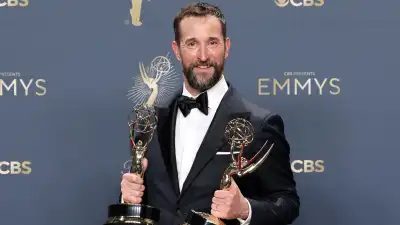
Lindsay Hubbard’s “Hot Hubbs Summer” is officially heating up after Summer House received a 2026 Emmy Awards nomination.
“I screamed, I didn’t cry but I got chills, and I ran a lap around my apartment,” Lindsay, 39, exclusively tells Us Weekly after the hit Bravo show earned its first-ever Emmy nomination for Outstanding Unstructured Reality Program after 10 seasons on Wednesday, July 8. “Then I started pacing around on the phone calling everyone.”
Lindsay, who has been part of the Hamptons-based series since its 2017 premiere, confesses she couldn’t “contain my excitement for an entire two hours.” (The Emmy nominations were announced on Wednesday morning, with Summer House competing against America’s Sweethearts: Dallas Cowboys Cheerleaders, Love on the Spectrum, RuPaul’s Drag Race: Untucked and Welcome to Wrexham.)
The countdown to the 2026 Primetime Emmy Awards has begun following the official nominations announcement. The first two honorees were announced on the Today show before Liza Colón-Zayas and Jeff Hiller unveiled the complete list of nominees live from the Wolf Theatre at the Television Academy’s Saban Media Center in Los Angeles on Wednesday, July […]
The TV personality — who has created multiple catchphrases on the show, including “Hot Hubbs Summer” and “Don’t Activate Me” — tells Us that when she calmed down, she had to contact fellow OG stars Kyle Cooke and Carl Radke to celebrate the milestone.
“I texted Kyle and Carl on a group text first,” Lindsay recalls. “And then I texted our editors and our executives from Truly Original.”
Lindsay reveals that her messages were “filled with a lot of caps, exclamation marks and extra letters to express my excitement.”

Carl Radke, Lindsay Hubbard, her daughter, Gemma, and Kyle Cooke. Courtesy of Kyle Cooke/Instagram
“I am so beyond proud and excited for our entire team top to bottom,” Lindsay gushes. “From our producers, editors, executives at Truly Original, to [the] cast and our entire crew that has been with us for the majority of these past 10 years, I am just so happy for our show! Very well deserved nomination!”
During season 10, which aired earlier this year, the cast got even more attention than usual following Kyle and Amanda Batula’s divorce announcement in January. (Amanda, 34, has been part of the show since season 1 when she was Kyle’s new girlfriend and not yet a full-time cast member.)

Lindsay Hubbard is over comparisons between her past with Southern Charm star Austen Kroll and the current drama surrounding Amanda Batula and West Wilson’s budding romance. Instagram account Unhinged and on Camera got her attention this week by suggesting that “Lindsay kind of did the same” to Ciara Miller when they were both interested in […]
After four years of marriage, the pair announced their divorce. The following month, Amanda sparked romance rumors with season 8 addition West Wilson, but they both denied there was any truth to the fan speculation.
On March 31, Amanda and West, 31, changed their tune and confirmed that their platonic friendship had turned romantic.
The revelation shocked the Bravoverse, especially since West and his ex-girlfriend — costar Ciara Miller — had seemingly gotten close again during filming in summer 2025. West and Ciara, 30, previously dated in 2023 and Amanda was privy to all of her ups and downs with West as one of her former BFFs.
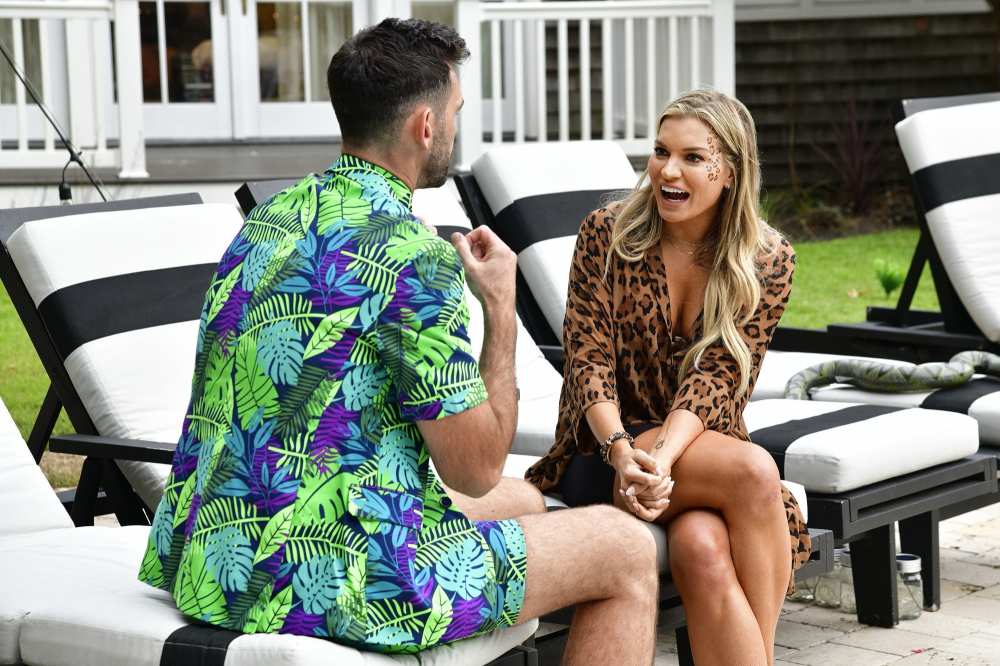
Carl Radke and Lindsay Hubbard on season 7 of ‘Summer House.’ Eugene Gologursky/Bravo/Everett Collection
During the explosive three-part reunion special, West confessed to having “sleepovers” with Ciara during the fall of 2025, but claimed that he didn’t start seeing Amanda until February. (He also confessed that he was dating Meija Moreno before Amanda, but said she was never his girlfriend.)
Some of the cast, including Lindsay, Amanda, Kyle, West and Ciara also filmed Summer House: The Aftermath to give fans even more clarity on Amanda and West’s relationship timeline.
While Us has since confirmed that both West and Amanda are not returning to the franchise amid the drama and subsequent fallout, their hookup seemingly gave Summer House the fuel it needed to get its first Emmy nod.

Lindsay Hubbard is sharing any insight she has into Summer House season 11. “I think they’re working on it because it would start filming in a month from now,” Lindsay, 39, told Us Weekly exclusively while attending Dustin Lynch’s fourth annual Pool Situation: Nashville CMA party at the Margaritaville Hotel in Nashville earlier this month. […]
“This season was jam-packed with drama, fun, and vulnerability from the cast,” Lindsay tells Us about why she thinks the show was nominated. “It was a 16-episode season, with three-part reunion, and one additional aftermath episode: 20 episodes of premium content to feed the viewers was huge for fans.”
Lindsay, who is also one of the stars of the show’s spinoff In the City, says that the way their editors were able to “seamlessly and flawlessly incorporate a present scandal into two shows” should be applauded.
She explains that the production teams were able to not confuse viewers while “also delivering all the new content in a way that still told these updated stories,” calling it “beyond impressive.”
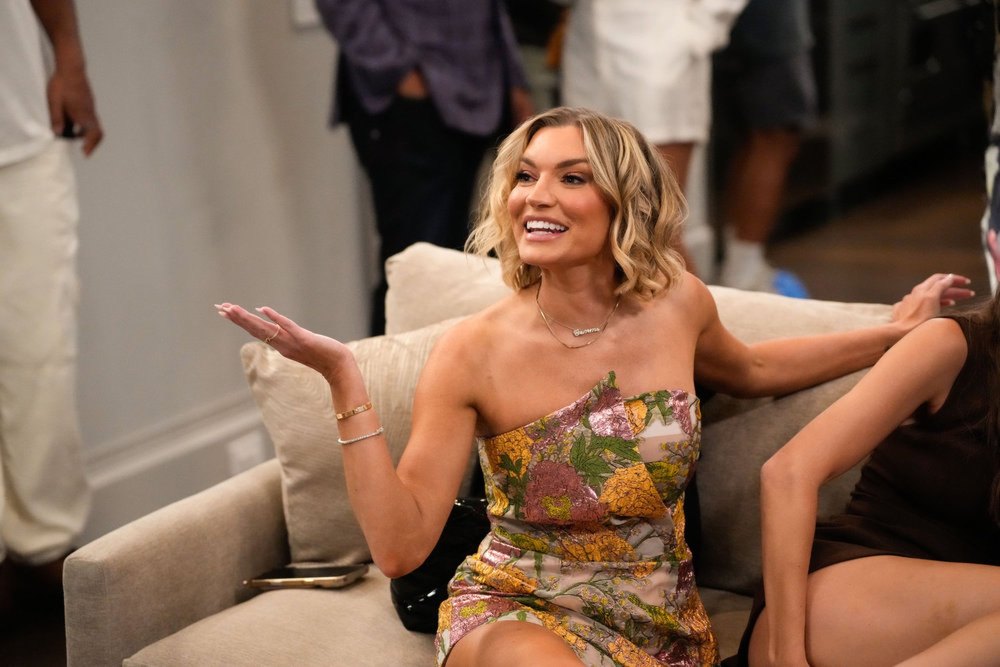
Lindsay Hubbard on season 10 of ‘Summer House.’ Charles Sykes/Bravo
“They were working around the clock editing these shows and they did such a phenomenal job,” Lindsay adds.


While Lindsay has always been one to prepare for anything life can throw at her, she admits to Us that she’s not ready to write an acceptance speech just yet.
“I don’t want to jinx anything so I’m going to just keep my fingers crossed for now and see what happens next!” she teases.
The 2026 Emmy Awards air on NBC Monday, September 14, at 8 p.m. ET.

Continue Reading
Few things beat curling up with a good mystery book. At its core, the genre’s appeal lies in the satisfaction of solving a puzzle. Whether following a brilliant detective, an ordinary amateur sleuth, or even a criminal attempting to cover their tracks, readers become active participants in the story, weighing clues and trying to figure things out.
The very best mysteries reward careful observation while remaining surprising enough to leave even seasoned readers stunned when the truth finally emerges. These books are the focus of this list. They run the gamut from the classic structure of Agatha Christie to the genre hybrids of Umberto Eco and the stranger-than-fiction true-crime of Patrick Radden Keefe.
10
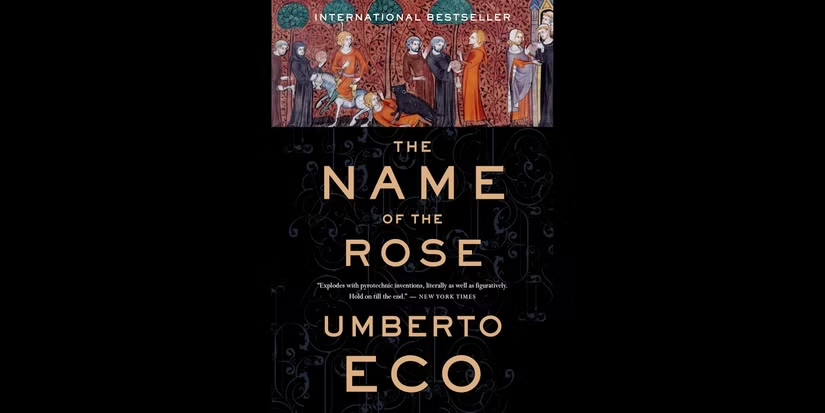
‘The Name of the Rose’ (1980)

“The only truth lies in learning to free ourselves from insane passion for the truth.” Set in a remote Italian monastery during the 14th century, The Name of the Rose follows the brilliant Franciscan friar William of Baskerville and his novice Adso as they investigate a string of mysterious deaths among the monastery’s monks. Every clue points toward an increasingly elaborate conspiracy hidden within one of Europe’s greatest libraries.
This book is a real gem, combining juicy murder mystery elements with genuine philosophy, theology, and well-researched medieval history. William, in particular, is a fascinating variation on the classic detective archetype. His powers of observation and logical deduction evoke Sherlock Holmes (the fact that he’s from Baskerville itself is a sly wink in this direction), yet Umberto Eco places him within an intellectually rich world dominated by religious conflict, political intrigue, and debates about knowledge itself.
9
‘The Girl with the Dragon Tattoo’ (2005)

“Everyone has secrets. It’s just a matter of finding out what they are.” The Girl with the Dragon Tattoo caused a global sensation in the mid-2000s, and for good reason. Stieg Larsson revitalized a lot of classic mystery tropes by combining them with investigative journalism, family drama, and unusually compelling characters. The story centers on journalist Mikael Blomkvist, who is hired to investigate the decades-old disappearance of a young woman who vanished from an isolated island owned by one of Sweden’s wealthiest families.
His search eventually brings him into partnership with the brilliant but enigmatic hacker Lisbeth Salander, one of the most intriguing fictional creations of that era. Her extraordinary intelligence, troubled past, and uncompromising determination quickly made her a fan favorite. Finally, the mystery itself is well-constructed. Although the plotting is dense, it never feels convoluted, contrived, or over-the-top.
8
‘London Falling’ (2026)

“Every city hides the stories it hopes no one will uncover.” London Falling is a work of nonfiction by Say Nothing‘s Patrick Radden Keefe, yet it’s stranger and more compelling than most fictional mysteries. It delves into the bizarre 2019 death of 19-year-old Zac Brettler and, in telling his story, exposes the dark, billionaire-fueled criminal underworld of modern London. The book involves gangsters, cons, secret identities, and repeated failures by the government and police.
While it’s certainly suspenseful, London Falling is also moving, especially when the author interviews Zac’s grieving, confused parents. It touches on important issues in British society today, too, in a way that feels urgent and topical. All in all, it’s a masterpiece of true-crime writing and a genuine page-turner. Not for nothing, the adaptation rights have already been sold, and A24 is reportedly planning on making it into a TV series.
7
‘The Spy Who Came In from the Cold’ (1963)

“The successful spy is the one nobody suspects.” The Spy Who Came In from the Cold is the defining book by espionage master John le Carré. In it, British operative Alec Leamas is preparing to retire after one final failed mission when he is assigned an elaborate undercover operation designed to infiltrate East German intelligence. But as the mission unfolds, Leamas gradually realizes that he may be little more than a pawn in a much larger game.
Like Leamas, readers spend much of the narrative trying to determine which characters can be trusted, what the true objectives of the operation actually are, and who is manipulating whom. Every conversation contains hidden meanings. At the same time, the book was hugely influential in the way it portrayed secret agents not as superheroes, but as morally compromised bureaucrats trapped inside a world of deception.
6
‘The Talented Mr. Ripley’ (1955)

“I always thought it would be better to be a fake somebody than a real nobody.” The Talented Mr. Ripley cleverly inverts the traditional mystery template by placing readers inside the mind of the criminal rather than the detective. Tom Ripley is sent to Italy to persuade wealthy playboy Dickie Greenleaf to return home, but admiration gradually gives way to envy, obsession, and ultimately murder. After assuming Dickie’s identity, Tom must continually outwit investigators, acquaintances, and even his own growing paranoia.
On top of being tense and tightly-wound, the book is a marvel of characterization. Ripley is a fascinating antihero: charming, intelligent, adaptable, and morally vacant, weaving a sprawling web of lies that fools those around him while threatening to ensnare him as well. Despite his increasingly horrifying actions, Tom remains strangely sympathetic because readers experience every close call and desperate improvisation from his perspective.
5
‘The Maltese Falcon’ (1930)

“When you’re slapped, you’ll take it and like it.” The Maltese Falcon by Dashiell Hammett laid the foundation for the hard-boiled detective novel. After his partner is murdered while shadowing a mysterious woman, private investigator Sam Spade finds himself drawn into a dangerous search for an immensely valuable jeweled statuette. Shifting alliances and constant betrayals keep the reader guessing and turning the pages.
The book stood out from most mysteries of its time thanks to its dialogue and its protagonist. Sharp, economical, and filled with subtle power plays, every conversation advances both the investigation and the psychological battle between the characters. Likewise, unlike the gentleman detectives who dominated earlier mystery fiction, Spade is a scrappy figure operating in a morally ambiguous world where nearly everyone is compromised, including himself. This approach would go on to be hugely influential.
4
‘The Long Goodbye’ (1953)

“I never saw any of them again except the cops. No way has yet been invented to say goodbye to them.” The Long Goodbye is regarded by many to be the best Philip Marlowe book. The story begins when Marlowe befriends the troubled war veteran Terry Lennox, only to become entangled in a murder investigation after helping Lennox flee the country. Marlowe digs deeper into the case, uncovering layers of corruption, wealth, alcoholism, and betrayal stretching across Los Angeles society.
Part of what makes the novel great is the way it delves into character and theme. In particular, Chandler uses the investigation to examine friendship, loyalty, and the isolation of a man who consistently tries to do the right thing in a deeply cynical world. The author wrote this book while his wife was dying from a long illness, which is why it has such a melancholy mood.
3
‘The Big Sleep’ (1939)

“I was neat, clean, shaved and sober, and I didn’t care who knew it.” Chandler strikes again. The Big Sleep was the book that introduced readers to Philip Marlowe and forever changed detective fiction. Hired by the wealthy General Sternwood to deal with a blackmailer targeting one of his daughters, Marlowe quickly discovers that the case is connected to gambling rackets, pornography, multiple murders, and a seemingly endless series of double crosses.
The plotting is incredibly intricate, to the point that Chandler himself reportedly admitted that he did not know the solution to one of the murders. Nevertheless, The Big Sleep is beloved by mystery fans the world over thanks to its atmosphere, razor-sharp dialogue, and richly drawn cast of characters. Marlowe himself anchors the chaos through his intelligence, resilience, and dry humor. Many detective heroes since have borrowed from his design.
2
‘The Adventures of Sherlock Holmes’ (1892)

“You know my methods.” The Adventures of Sherlock Holmes remains a classic because it almost single-handedly established the template for detective fiction. This short story collection includes twelve adventures featuring Sherlock Holmes and Dr. John Watson, involving everything from mysterious disappearances to stolen jewels and secret societies. Much of the fun comes from Holmes’ extraordinary powers of observation and deduction.
In this regard, Sherlock Holmes really is the most iconic fictional detective of all time. He’s appeared in more than 200 films, for instance, and has been played by more than 70 actors. Plus, the character of Watson was also influential, because he serves as the surrogate for the reader. He’s intelligent enough to appreciate Holmes’ brilliance but ordinary enough that readers share his amazement. In short, this book’s influence on mystery fiction is impossible to overstate.
1
‘And Then There Were None’ (1939)

“Ten strangers are invited. One by one they die.” Agatha Christie is often ranked as the greatest mystery writer of all time, and And Then There Were None is perhaps her finest book. In it, ten strangers are invited to an isolated island under various pretenses, only to discover that their mysterious host has accused each of them of getting away with murder. When the guests begin dying one by one according to the verses of a nursery rhyme, panic and suspicion quickly consume the group.
This premise was ingenious for its time, creating the ultimate closed-circle mystery. With no possibility of escape and no outside detective arriving to solve the crime, every surviving guest is both a suspect and a potential victim. This structure has practically spawned a mystery subgenre unto itself. Finally, Christie caps the book off in a brilliant twist, one that’s shocking and yet makes total sense in hindsight.
Us Weekly has affiliate partnerships. We receive compensation when you click on a link and make a purchase. Learn more!
Kate Middleton usually wears either sneakers or stilettos, especially during royal engagements, but her latest footwear style combines the comfort of flat shoes with the polish of heels. Her chocie presumably cost thousands, but we found the comfy-chic look for only $61 on Amazon!
To celebrate Armed Forces Day, the Princess of Wales brought Prince George to explore jets and soak in some military history. She leaned into a quiet luxury aesthetic, wearing a tweed blazer set with pointed-toe suede loafers. The set was chic, but her shoe style took the look from ‘royal duty’ to ‘royal moment.’
Get the Laggnicty Low-Block Penny Loafers for $61 at Amazon! Please note, prices are accurate at the date of publication but are subject to change.
The Laggnicty Low-Block Penny Loafers channel that same refined yet walkable energy. The pointed-toe shape gives them a sharp, intentional silhouette, and like Middleton’s, the low block heel carries as much authority as a stiletto, minus the ankle regret. It also lengthens your leg line.

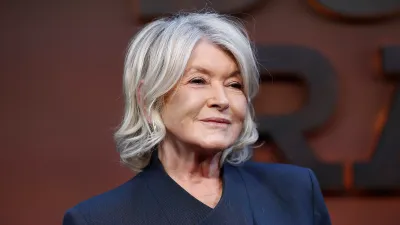
‘Garden shoes’ don’t sound inherently stylish, but leave it to Martha Stewart to find an option so fashionable, it works for everything from planter rows to the Riviera. We found the chic slip-in look from Stewart’s staple brand, Skechers — and it’s only $40! Taking to Instagram, Stewart shared a clip of herself in her […]
Equally swoon-worthy are the embellishments. These sleek loafers feature a tassel-style detail across the vamp that adds character and class, plus the shiny silver hardware catches the light beautifully. Whether you’re crossing your legs at brunch or stepping out of the car, you can expect compliments.
These expensive-looking loafers pair well with straight-leg trousers, midi dresses, cropped denim and tailored blazer sets, so be prepared to wear them nonstop. Whatever’s on your calendar, from garden parties to in-office days, these loafers slot in perfectly.
The catch? They dropped only a few months ago and are bound to go fast. Middleton’s off-duty looks usually sell out within hours of a public appearance, so run to snag this royal-approved style!
Get the Laggnicty Low-Block Penny Loafers for $61 at Amazon! Please note, prices are accurate at the date of publication but are subject to change.
Looking for something else? Explore more chic loafers, and don’t forget to check out all of Amazon’s Daily Deals for more great finds!
UsNow Summer Sale Alert: These Chic Fashion Finds are over 30% off – Plus Free ShippingWelcome to summer with our biggest sale of the year. This summer’s chicest dresses, tops and swimsuits are all over 30% + free shipping. Inventory is limited so hurry before they’re gone. Shop the UsNow Summer Sale –>

The words ‘elegant’ and ‘comfortable’ are rarely used to describe flip-flops, but Jennifer Aniston uncovered rare sandals that deliver on all of the above. Turns out, her sleek, cushiony flip-flops are a bestseller on Amazon and are also loved by Jennifer Garner, Blake Lively and Jennifer Lopez! Like other celebs, Aniston has rocked Tkees flip-flops for […]
:max_bytes(150000):strip_icc():format(jpeg)/late-show-with-stephen-colbert-051326-1-dc7f6bf4ae9742289e713f5c687e47fa.jpg)
The canceled program won the Outstanding Talk Series category last year.
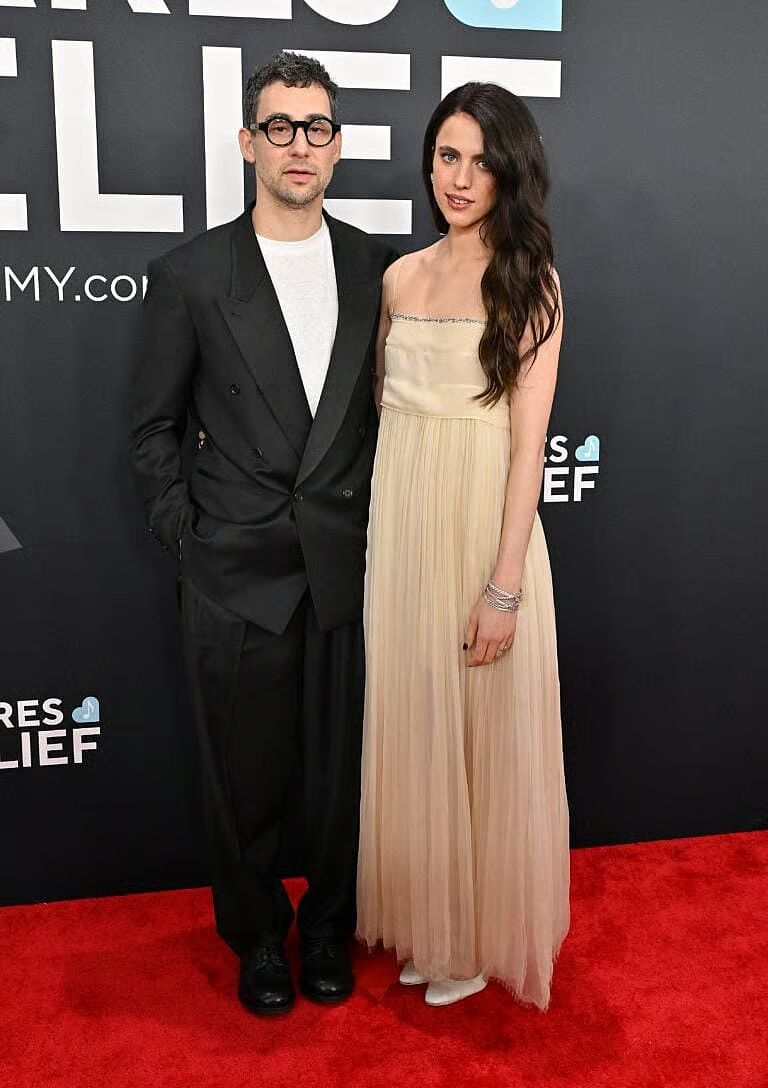
News of Margaret Qualley and Jack Antonoff‘s split has taken many by surprise, three years after the duo tied the knot.
The record producer raised eyebrows when he attended his close pal and music collaborator Taylor Swift‘s MSG wedding without his wife, prompting fans to question if there was trouble in paradise.
Well, a new report claims Jack Antonoff and Margaret Qualley’s relationship has been strained for months now, with an insider at Swift’s wedding revealing that they got into a fight days before the NYC event.

Jack Antonoff made an eyebrow-raising appearance at longtime friend Taylor Swift’s wedding, drawing attention not for his choice of attire but because he attended without his wife, Margaret Qualley.
At the time, fans shared varying theories on why Qualley skipped the pop star’s MSG nuptials. Some argued she may have been busy working on a film project, while others claimed her absence may have been due to health reasons, or a feud between the pop star and the actress.
However, Daily Mail sources have now shared that things have been complicated for Antonoff and his wife for a while now, with a guest at Swift’s marriage ceremony sharing that the record producer “didn’t look happy during most of the wedding, unless he was with Taylor.”
Though Antonoff reportedly confided in guests that he and Qualley “had a tiff” before the wedding, he didn’t ditch his ring. He was also spotted wearing the band as late as Wednesday, immediately preceding People magazine‘s announcement of their separation.
The Estranged Hollywood Couple ‘Lost Their Spark’

Regarding the duo’s marital strains, a second source revealed that cracks have been forming in Antonoff and Qualley’s marriage for a while now.
They noted that the couple has been focused on doing their own thing for months now, drifting apart in their relationship.
“Jack didn’t want to put up a facade at Taylor’s wedding when they’re having trouble,” the insider noted. “It’s been weird with her [Qualley] working and him doing his own thing the last several months.”
“They definitely have lost the spark they once had, and it doesn’t look like they’ll fix it,” the source added. “Which is crazy, because they were bonkers for each other at one point and people thought they had something unique.”
Margaret Qualley Felt Jack Antonoff Put His Music Career Over Their Relationship, Pushing Her To A ‘Breaking Point’

Insiders point to the couple’s demanding work schedules as the root cause of the split, noting that their high-profile careers ultimately caused them to start leading separate lives.
The Bleachers frontman has spent a significant portion of the year traveling on tour, while Qualley has remained deeply immersed in her own acting projects.
She is currently focused on filming “Possession,” an upcoming remake of the 1981 cult horror classic co-starring Callum Turner, which is slated to hit theaters next year.
“Margaret feels he has a tendency to prioritize his music career over their relationship,” the source shared. “The disconnect between them has created significant tension, and despite the growing strain, Jack hasn’t shown much interest in repairing what’s been broken. The two are no longer on the same page.”
They added that Qualley especially had reached “her breaking point” with the whole relationship.
The Actress Recently Spoke About Having Kids With Jack Antonoff
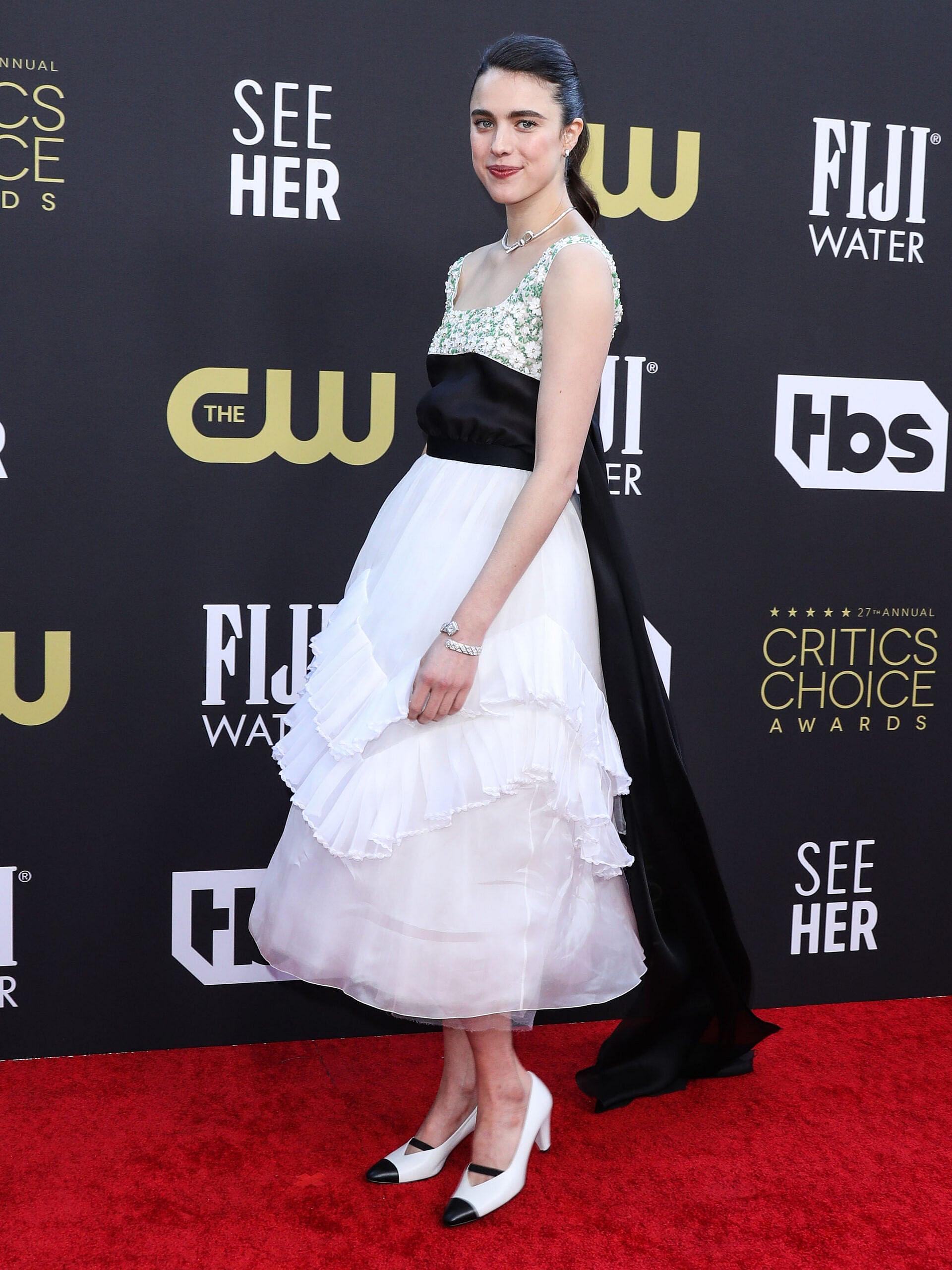
As recently as February this year, Qualley had spoken positively about her relationship with Antonoff, sharing in a Vanity Fair interview that she, “for sure,” saw kids in their future.
However, she also seemed reluctant to give too much away about their plans, telling the interviewer that if she had chosen any baby names, she wouldn’t talk about it.
In a 2023 Harper’s Bazaar interview held shortly before their wedding, the actress seemed more excited about her romance with Antonoff, telling the publication that she was so happy to have found her “person,” and that their love is “real.”
“I am so happy that I found my person. And it’s real. It’s amazing. It’s the best feeling in the world,” Qualley stated at the time, adding, “I’m so excited and so at ease all at once.”
Margaret Qualley Admitted She Wanted To ‘Do Everything’ With Jack Antonoff

Before their marriage hit the rocks, Qualley had nothing but great things to say about her relationship with Antonoff, revealing that because of the singer, she felt excited about making a home.
In the Harper’s Bazaar interview, she talked about how much he affected her life, admitting that before meeting Antonoff, she lived in “sh-tty” apartments with barely any furniture.
“Until about a month before I met Jack, I never had any furniture. I would always have these sh-tty little apartments and move around from one place to another with a mattress on the floor and an Ikea lamp,” Qualley said.
She continued, “I never made a home at all. I didn’t care; I cared about movies. I would use my sister’s basement in L.A. as a spot to keep my things. But I didn’t invest in that part of my life. It’s really exciting now to be making a home and to have something to care for.”
The actress stressed at the time that she “just want[ed] to do everything with Jack” including having children.
But now, things seem very rough between the couple, with sources telling People that Antonoff and Qualley are “figuring things out” in their “rocky” relationship.
Entertainment
Willem Dafoe reveals disturbing horror film exhibit urging ‘parental guidance’ through ‘gallery walls layered with gore’
:max_bytes(150000):strip_icc():format(jpeg)/Carrie-Willem-Dafoe-The-Exorcist-070826-7effc1b70ca540ca828583550b4d4926.jpg)
The Oscars’ Academy Museum will unveil a grisly, gory experience probing horror movie history, with Dafoe and Osgood Perkins serving on the advisory board.
Entertainment
Zendaya earns Emmy nomination for “Euphoria” return after character’s devastating death scene
:max_bytes(150000):strip_icc():format(jpeg)/zendaya-euphoria-s3-first-look-021025-43ac4a459f4d408e839086ff79622d06.jpg)
The actress reprised the role of Rue Bennett after nearly four years in a widely criticized overall season of the HBO drama.
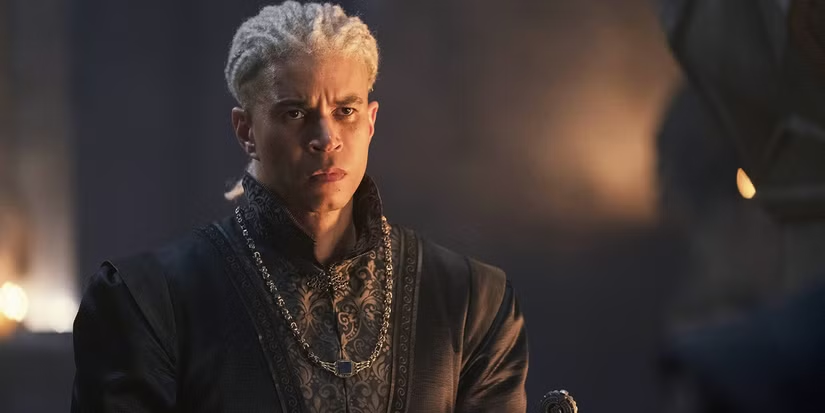
The following article contains spoilers.As the highly anticipated spin-off series to Game of Thrones, House of the Dragon took the world by storm by propelling its audience back to the wild world of Westeros. Filled with fantasy back-stabbing, royal chess moves, and an army of dragons, this show shines with its streamlined narrative focus on the complex Targaryen dynasty. Now three seasons in, the Dance of the Dragons is in full swing, with the conflict growing bloodier and more devastating with each passing episode.
As the story continues to unfold, let us not forget the iconic moments of the past. From King Viserys’ (Paddy Considine) mighty entrance to the throne room, to Rhaenyra’s (Emma D’Arcy) and Alicent’s (Olivia Cooke) confrontation, these events have stayed in the minds of fans since the show’s initial airing. And yet, where those scenes are poignant and impactful, this list will track the show’s WTF moments. The wild moments that took us off guard and possibly made us wonder what exactly we were watching. And let’s be honest, in this world, there are a lot of moments that qualify.
15
Faking Laenor’s death
Season 1, Episode 7 (2022)

From the very beginning, it was clear that Rhaenyra and Laenor’s (John MacMillan) union was to be one of convenience. Politically advantageous for both their houses, the two came to an agreement to do their duty as heirs, whilst finding their own outlets for happiness. Unfortunately, this never fully came to fruition as they never conceived their own biological children. And though cordial and close in their own platonic ways, the two even struggled to attain true happiness. At least, until they didn’t.
Wanting to secure a formidable partner to face the wrath of the Greens, it appeared that Rhaenyra and Daemon orchestrated the murder of Laenor to expedite their marriage. However, all was not as it seemed, as it was quickly revealed to be a ruse. The true victim was a poor servant whose body was made to resemble Laenor’s, allowing him to make his escape and sail off to freedom with his lover, Ser Qarl (Arty Froushan). A twist in the story that even shocked Fire and Blood book readers.
14
Criston Cole attacks Joffery
Season 1, Episode 5 (2022)

While Rhaenyra and Laenor were happy with their marital arrangement, not all parties were pleased. Indeed, Ser Criston Cole (Fabien Frankel) made it clear that he did not like the thought of being the princess’ “whore,” a statement made all the more ironic by his later actions.
In the final episode, before the show’s 10-year time jump, Cole is left bitter and angry, resenting himself for breaking his Knight’s oath of chastity. And unfortunately for Joffrey, Laenor’s lover, confronting Cole about his relationship with the Princess came at just the wrong time: on the night of Rhaenyra and Laenor’s betrothal celebration. Indeed, perceiving it as a threat of blackmail, Cole snaps and beats Joffrey (Solly McLeod) to a pulp, right in front of all to see, killing him instantly. Talk about a party killer. Honestly, what makes this even wilder is how Cole never received any lasting consequences (nor for anything else, for that matter).
13
Rhaenys dies at Rook’s Rest
Season 2, Episode 4 (2024)

When Criston Cole’s army lays siege to Rook’s Rest, Princess Rhaenys (Eve Best) answers the call by riding her veteran dragon into battle. Initially gaining the upper hand against Aegon (Tom Glynn-Carney) and his dragon, Rhaenys proves exactly why she’s regarded as one of the most experienced dragon riders in Westeros. Sadly, the battle changes dramatically when Aemond (Ewan Mitchell) arrives aboard the colossal Vhagar (among the largest dragons in the Game of Thrones franchise).
The Battle of Rook’s Rest is one of the defining moments of the Dance of the Dragons because it demonstrates just how catastrophic dragon warfare truly is. And for Rhaenys, rather than fleeing when an opportunity arose, she instead chose to turn back and fight for her Queen, fully aware of the odds stacked against her. Her final stand is equal parts heroic and heartbreaking, even as Vhagar delivers the fatal blow. It’s an unforgettable sequence and one that leaves a large impact on Team Black and the audience itself.
12
Aemond loses his eye
Season 1, Episode 7 (2022)

Where the first half of the series saw the beginnings of the division between the Greens and the Blacks, audiences were introduced to how it eventually manifested within the children. Conditioned to be at odds with one another, the tension reached an all-time high following Laena Velaryon’s (Nanna Blondell) funeral.
Seizing the opportunity before him, Aemond (Leo Ashton) sneaks off to boldly claim the newly riderless Vhagar as his own. Though successful in his efforts, he is quickly met with adversity as Laena’s daughters, Baela (Shani Smethurst) and Rhaena (Eva Ossei-Gerning), perceive it as dragon theft. A fight ensues between Aemond and the girls, with Jacaerys (Leo Hart) and Lucaerys (Harvey Sadler) offering support to their cousins. But things take a fiercely violent turn as their squabble ends with Aemond’s eye getting sliced out by the hands of young Lucaerys. Yikes.
11
Daemon and Rhaenyra’s sexual escapade
Season 1, Episode 4 (2022)

Incest is not new to the Game of Thrones universe, especially when it comes to the Targaryens. Indeed, from the very first time we saw Rhaenyra (Millie Alcock) and Daemon (Matt Smith) clap eyes on one another, it was evident that they shared the same sort of fire. But all this doesn’t negate how wild it was to witness them break past the familial barriers and dabble in a more sexual relationship.
Upon his return from the Stepstones, Daemon helps Rhaenyra sneak out of the Red Keep to show her the streets of King’s Landing and the seedy things they have to offer. Ending their journey in the confinement of a brothel, the two begin to test the boundaries of their relationship in just the ways you think they would. As uncle and niece, this was a bizarre thing to watch, especially since Rhaenyra was a teenager. But what felt even more strange was how we, as the audience, were practically rooting for them.
10
Laena’s death
Season 1, Episode 6 (2022)

Following the 10-year time jump, audiences are introduced to a grown-up Laena, married to Daemon with two children and one on the way. Incest aside, the two appeared to share a marriage built on the foundations of genuine affection. That’s why it was so heartbreaking to see Laena go through a difficult birth.
Indeed, House of the Dragon was not afraid to explore the many traumas of childbirth, as almost every one ended in tragedy. And Laena’s was no different. However, what set her apart was how her tragic end at least happened on her own terms. Knowing that other men were going to make decisions about her own body and potentially cut her open, Laena crawled her way to Vhagar and opted to die by dragonfire. This was the scene where audiences saw the true bond between a dragon and its rider. It was harrowing and shocking, but powerful nonetheless.
9
Fake Daeron Targaryen
Season 3, Episode 3 (2026)

After Rhaenyra (Emma D’Arcy) finally captures King’s Landing, Daemon is sent to confront Ormund Hightower (James Norton) to offer surprisingly generous surrender terms: disband the Hightower attack, return to Oldtown, and hand over Prince Daeron—Alicent and Viserys’ youngest son. At first, the mysterious Lord appears to comply, producing a silver-haired boy into Daemon’s custody. But that all changes when Rhaenyra allows Alicent to meet her son, as it’s immediately clear that she does not recognize the boy at all.
Instead, it’s quickly revealed that he is an innocent child whose hair has been dyed and who was threatened to play the part while the real prince remains safely hidden with the Hightowers. The introduction of Daeron’s impostor is a bizarre act of deception because it fools almost everyone, including the audience. But it also raises the question of why. One could argue that it sets up Ormund as a cunning strategist. But for the most part, it simply stands out because it’s so audaciously simple (and funny).
8
Larys Strong
Season 1, Episodes 6 & 9 (2022)

Apologies, but this man deserves an entire entry of his own purely for the shocking things he did in only a short amount of time. Indeed, Larys Strong (Matthew Needham) has proven himself to be the grimiest and creepiest character on the show. Cunning, manipulative, and all-around gross, fans now brace themselves whenever he is seen on-screen.
Making a name for himself as Queen Alicent’s number-one obsessor, his desperation to prove his loyalty went so far as to arrange a fire to brutally kill his own father and brother. Cut to a few episodes later, we see that Larys remains in Alicent’s inner circle, but at a price. In order to secure his spies’ intel, she must satisfy his foot fetish. Yes, that’s right, folks, we get a scene of a grimy man getting sexually aroused at seeing a woman’s toes. No kink shaming, as we were just disgusted at the exploitation.
7
Daemon beheads Vaemond Velaryon
Season 1, Episode 8 (2022)

As one of the most complex characters of the show, one can never really predict the actions and motivations of Daemon Targaryen. Long perceived as the Iron Throne’s heir-presumptive, the man is ambitious, reckless, and, more often than not, ruthless. But, despite his moral grayness, there’s no denying how fiercely protective he is of his family and loved ones, albeit in his own special way.
Such traits are clearly evident in the trial of Driftmark’s succession. Upon his determination to contest young Lucerys as the heir, Vaemond Velaryon (Wil Johnson) bursts into a fury, declaring Princess Rhaenyra (D’Arcy) as a you-know-what and her sons as “bastards.” But alas, in true Daemon fashion, he quickly silences the room by slicing Vaemond’s head in half. Honestly, we can’t say we’re that surprised. It is Daemon, after all. Perhaps it was just the pure shock of the image’s graphic nature. At least it taught everyone not to mess with his wife and kids.
6
Aemond burns Aegon
Season 2, Episode 4 (2024)

There’s no doubt that the Battle of Rook’s Rest delivered some of Season 2’s most jaw-dropping moments. But perhaps none was more shocking than Aemond’s betrayal of his own brother—especially since this did not happen in the book. Indeed, as Aegon recklessly charges into battle atop Sunfyre, Aemond arrives on Vhagar and unleashes dragon fire that engulfs both king and dragon. As a result, Aegon is left horrifically burned and gravely injured, while his dragon is wounded.
Whether Aemond acted out of calculated ambition or simply seized an unexpected opportunity, the moment completely transforms the Greens’ internal dynamics. In just one moment, the cunning Prince fully showcased his true colors and how his schemes had no boundaries. It’s a wonderfully ruthless twist that perfectly captures House of the Dragon‘s obsession with familial betrayal and reiterates exactly why Aemond is a deeply troubling foe.
The current news cycle seems to be doing its level best to break all of us psychologically, but many of us still enjoy watching movies about characters losing their ever-loving minds. Psychological thrillers are one of the most popular kinds of thrillers, and they’ve been a genre staple for decades. Maybe it’s because some of us like a little schadenfreude in our films, so we watch the ones that put their protagonists through the most pain and punishment. Maybe we feel safer watching someone on a screen go crazy, confident that it could never be us. Maybe we’re all just a little more sick in the head than we’re all willing to admit. Who knows, but let’s look at some psychological thrillers.
The category of crazy today is psychological thrillers that will keep you hooked from start to finish — movies that dig deep into your psyche and don’t let go. They reel you in with intrigue and maybe even some mystery, and then they capture you in a big butterfly net and refuse to let you go. We’ve got classics from the ’30s, ’40s and ’50s, surreal trips from the ’60s and ’70s, a slasher’s return in the ’80s, a master filmmaker’s ’90s remake, and three singular sociopaths in the 21st century. These are the psychological thrillers that hook you from the start and don’t let go until they’re finished.
‘M’ (1931)

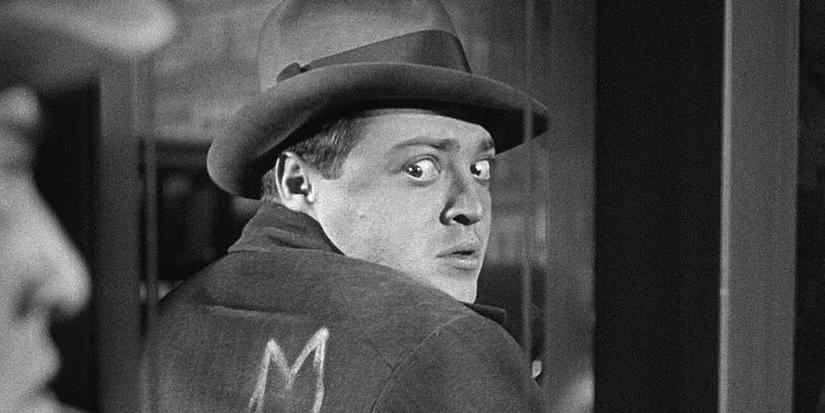
Step into the mind of a murderous madman in Fritz Lang‘s serial killer thriller M. Starring Peter Lorre as a child killer and following a procedural plot where both the police and the criminals of Berlin try to entrap him, the film is totemic within the crime genre. It’s a bleak view of violence and the nature of villainy that strikes a harrowing chord thanks to Lang’s striking use of visuals and Lorre’s intense lead performance. While he’d become Hollywood’s favorite creep for years after this breakthrough, nothing quite approaches the unsettling nature of Hans Beckert.
All of Berlin is on high alert thanks to a series of child killings. The police are desperate to catch the killer, which also puts pressure on the city’s criminal underworld. These organized criminals decide to take matters into their own hands and capture Hans, which leads to a mock trial where the madman laments his compulsion in a monologue that is deeply discomforting. Lorre lets you into the psyche of his “psycho,” and Lang lays out a landscape where a mind like his can prey on the innocent. M may be almost 100 years old, but it still knows how to grip you tight.
‘Gaslight’ (1944)

The term “gaslight” has proliferated far and wide across our cultural consciousness. It’s not unusual to hear it used by a Boomer, Millennial, or Gen X and Z. It’s become cemented into our vernacular, but many people don’t know it originated in a movie. George Cukor‘s classic psychological thriller Gaslight from 1944 was based on a play by Patrick Hamilton, which had previously been adapted in 1940 as a British film. Cukor’s take is the far superior and more iconic version, following a husband who goes to extraordinary lengths to convince his wife she’s losing her mind.
Paula (Ingrid Bergman) is an opera singer married to Gregory (Charles Boyer). After Paula finds a letter addressed to her murdered aunt, her world begins to crumble: she can’t seem to remember doing things her husband says she did, and she’s apparently hallucinating about the dimming gaslights in their home. Of course, all of this is the work of her husband Gregory, who has some secrets of his own that he can’t let Paula find out about, so he’s been systematically undermining her, making her question her own sanity. Gaslight is a classic psychological thriller draped in gothic and noir stylings. It was nominated for multiple Academy Awards, winning for Bergman’s performance and the art direction, but its legacy has lived on well beyond its celluloid origins.
‘Les Diaboliques’ (1955)

It’s one thing to make someone think they’re going crazy, but what about literally scaring them to death? That’s part of one of the most iconic scenes in Henri-Georges Clouzot‘s Les Diaboliques. Based on a novel by Boileau-Narcejac, who also wrote the book that inspired Alfred Hitchcock‘s Vertigo, the film is a psychological thriller so intense that it’s become considered a classic of the horror genre as well. There’s nothing supernatural about the film, unless you consider the inhuman lengths some people will go to drive someone insane.
Michel (Paul Meurisse) is the tyrannical headmaster of a boys’ boarding school. He’s married to Christina (Vera Clouzot), who has a serious heart condition, and is having an affair with teacher Nicole (Simone Signoret). Michel subjects both women to different forms of abuse, which leads them to join forces to murder him. When his body disappears, they become convinced that his spirit is haunting the school grounds, which eventually leads to a twist ending that’s among the most iconic in cinema. Les Diaboliques has influenced dozens of thrillers and horror films since its release, but none of them dig in quite as deep as this classic.
‘What Ever Happened to Baby Jane?’ (1962)

While women are often the victims in this subset of thrillers, due to many of them being an unfortunate reflection of society’s gender inequalities, they can also be some vicious villains. Nowhere is that more evident than in the progenitor of the psycho-biddy subgenre, What Ever Happened to Baby Jane? Starring Hollywood icons Bette Davis and Joan Crawford as antagonistic sisters of former fame, the movie proves that actresses can do crazy just as well as their male counterparts, and they can do it backwards and in heels.
Jane (Davis) is a former child star of vaudeville whose career has long since been eclipsed by her movie star sister Blanche (Crawford), who later becomes paralyzed in a car accident. Years later, the two ladies share a crumbling mansion as Jane slips further into alcoholism and subjects her sister to horrific abuse. The legacy of What Ever Happened to Baby Jane? extends beyond its contributions to the thriller and horror genres, with the alleged feud between Crawford and Davis on set fueling years of tabloid journalism and even serving as the basis for a couple of television series. Regardless of the truth behind the tension, the two actresses make for a crackling onscreen duo in this camp classic psychological thriller.
‘Don’t Look Now’ (1973)

Grief and trauma have become popular themes in the current era of “elevated horror,” but fantastic filmmakers have been using the strong emotional responses to fuel all kinds of terrifically terrifying films for years. Take Nicolas Roeg‘s surreal Don’t Look Now, a Hitchcockian thriller updated with more visceral violence and sexual content, as well as a fracture editing style that mimics the unstable psychological state of its married protagonists. It’s a frightening depiction of the damaging effects of loss and grief with two superlative lead performances.
John (Donald Sutherland) and his wife Laura (Julie Christie) are struggling to piece their lives back together after the drowning death of their young daughter. Moving to Venice, the couple begin to experience strange sightings that make them question their own sanity. John believes he may be seeing the specter of their deceased daughter, while a serial killer is also stalking the same streets he wanders. There’s an unsettling aura all around Don’t Look Now, which gives a gothic bend to its tale of tragedy that makes its discordant ending all the more effective. It’s a movie that demands attention and hooks you up high to let you struggle to find a foothold in its layered narrative.
‘Psycho II’ (1983)

While Hitchcock merely inspired Roeg, the master of suspense gets directly sequelized by director Richard Franklin for the psychological slasher Psycho II. While some decried the mere idea of making a sequel to Hitchcock’s seminal horror thriller, Franklin’s film carves out its own colorful place to exist alongside it. Featuring Anthony Perkins reprising his iconic role as Norman Bates, it’s a movie that uses the universal knowledge of its predecessor to keep the audience, and its own characters, guessing until the very end.
Written by cult filmmaker Tom Holland, the sequel picks up with Norman 22 years later as he’s being released from a psychiatric hospital. He moves back into his old home and tries to ease himself back into normal society, but a series of phone calls from “Mother” let him know he isn’t free of his demons yet. Then the bodies start piling up. Just like the first film, there are plenty of twists in this psychological film, and even more gruesome kills befitting its ’80s era. It may not measure up to the original masterpiece, but Psycho II will keep you on the hook the whole time.
‘Cape Fear’ (1991)

With the recent Apple TV adaptation, Cape Fear now exists in three distinct eras of thrillers. The original 1962 film, based on the novel The Executioners by John D. MacDonald, is a straightforward thriller executed perfectly. The newest streaming series convolutes the plot considerably and recontextualizes it for the modern era, but the most psychotic version remains Martin Scorsese‘s 1991 remake, which features a towering and terrifying performance by Robert De Niro. It’s a remake that not only amplified the violence and gore for audiences who’d been fed a steady diet of slashers for a decade plus, but also added darker shades to all of its characters, plumbing some upsetting psychological depths in the process.
Max Cady (Robert De Niro) is a convicted rapist who only has one thing on his mind when he’s released from prison: revenge. Cady has his sights set on lawyer Sam Bowden (Nick Nolte) and his family. Cady blames Bowden, who was his defense attorney, for his conviction after discovering he had buried evidence. His torment of the family goes far beyond the limits shown in the 1962 original, particularly in an updated version of Cady’s interaction with teenager Danielle (Juliette Lewis). In the original, their encounter is a thrilling chase sequence, but in Scorsese’s remake it becomes a stomach-churning seduction. Cape Fear is a terrifying thriller that hooks and tortures you with two hours of total terror.
‘One Hour Photo’ (2002)

Robin Williams was, of course, known for his brilliant comedic mind and manic energy. It’s what made his softer, dramatic turns in films like Dead Poets Society so affecting. It’s also what made his dark turn in the 2000s so terrifying. In 2002, Williams starred in both Christopher Nolan‘s Insomnia and Mark Romanek‘s One Hour Photo. Both films showcased Williams as different kinds of disturbed men, but it’s his turn in One Hour Photo that truly cuts to the bone. As Romanek’s feature directorial debut, it’s an assured and disturbing film about the intersection of profound loneliness and dangerous obsession.
Sy Parrish (Williams) is a photo tech who is devoted to his work since he has no family or friends. It’s through his work that Sy forms an unhealthy obsession with one particular family. Developing their photos, Sy forms a parasocial attachment to them and their idyllic lives. When that perfect illusion is shattered, Sy’s obsession takes a dark turn, and Williams’ mannered performance turns from tragic to terrifying. One Hour Photo is a portrait of an alienated man inspired by films like Taxi Driver. Whereas Travis Bickle used a .44 Magnum, Sy uses a digital camera.
‘Nightcrawler’ (2014)

Heir apparent to the toxic mantle held by Travis and Sy is Lou Bloom. Played by a rail-thin Jake Gyllenhaal in Dan Gilroy‘s neo-noir nightmare Nightcrawler, Lou is another disaffected loner who finds beauty in the bloodshed. Set in the world of stringers, freelance photojournalists who sell footage to television stations, the film is a dark odyssey into the hearts of men who take the motto “if it bleeds it leads” a little too seriously. Between Gilroy’s razor-sharp script and Gyllenhaal’s committed performance, Nightcrawler is just like carnage on the late-night news: hard to stomach, but impossible to look away from.
Lou is a schemer and a con man who finds a new lucrative opportunity when he discovers the money available to those who capture violent footage of accidents and crimes for unscrupulous news stations. He quickly escalates from recording the violence to tampering with it to actively engaging in it, and the strange energy which Gyllenhaal brings to the character keeps you entranced the entire time. Nightcrawler is both a sharp satire of the modern media landscape and a tautly made psychological thriller that invites you into the mind of a man who loves to gaze into the abyss, and then record it and sell the footage.
‘Nightmare Alley’ (2021)

There’s room for one more creepy con man on this list, and he comes in the form of Bradley Cooper‘s Stan Carlisle, a drifter turned carnival worker and eventual mentalist in Guillermo del Toro‘s Nightmare Alley. Adapted from the novel of the same name by William Lindsay Gresham, which was previously made into a 1947 cult classic, the film is just as dark, if not darker, than any of Del Toro’s horror films. Carlisle is a man driven by pure ambition who will lie, cheat, steal and even kill to get what he wants. That ambition leads him into some dark alleys, and by the end of the film, his life truly has become a nightmare.
After Carlisle literally burns down his old life, he finds his way to a traveling carnival where he ingratiates himself. Learning the tricks of the trade, Carlisle quickly finds success as a psychic performer. Moving to the city, his act attracts even more attention from the wealthy elite, as well as a cold and calculating psychologist. Any fan of noir knows where this story is headed, but Cooper is magnetic in the lead role, and Del Toro’s pulpy visuals give the film a real viscerality. It’s a psychological thriller made by a master of the macabre playing in the black waters of crime dramas.
By Chris Snellgrove
| Updated

From the very beginning, the Marvel Cinematic Universe has conditioned fans to keep their butts in their seats until the movie’s inevitable post-credits scene. Often, these scenes make major changes to this fictional world, like introducing Tony Stark to the Avengers or simply introducing Thanos to the audience. However, outside of the MCU, post-credits scenes are not always guaranteed. Case in point: when X-Men ‘97 Season 2 dropped on Disney+, none of the first three episodes had any such scene. For that reason, most viewers didn’t stick around during the fourth episode, bailing as soon as the credits started.
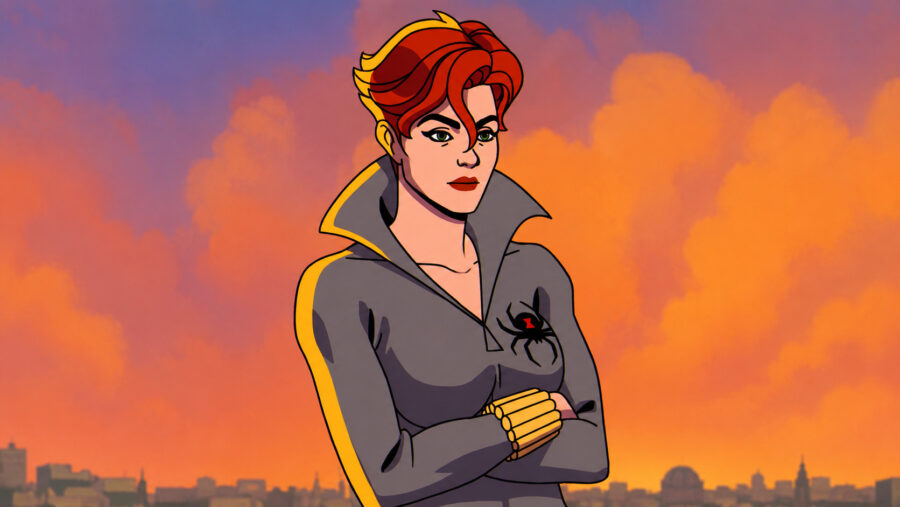
If you did that with the most recent episode (“The Rise of Apocalypse, Part II”), though, you actually missed out on a pretty epic post-credits scene featuring cameos from two fan-favorite Avengers. We see Logan meeting up with Captain America and Black Widow, and they deliver him a file folder labeled “Weapon X.” Cap expresses concern about the X-Man tackling this place on his own, but Logan enigmatically says that he’s put a crew together. This sets up one of the most important plot points of Season 2: Wolverine getting his adamantium back. Plus, if his crew includes former Weapon X test subjects, we might even get an X-Men ‘97 cameo from everyone’s favorite Merc With a Mouth: Deadpool!
Logan And The Cap’n Make It Happen

Most of “The Rise of Apocalypse, Part II” takes place in Ancient Egypt, where some major events go down. Apocalypse makes his inevitable heel turn, assuming command of a high-tech spaceship that will help him in his plans to conquer the entire world. Thanks to Bishop, most of the X-Men are zapped back to the ‘90s, but Magneto stays behind to stop Apocalypse, the mutant threat he accidentally unleashed. This leads to a climactic fight between Apocalypse and the master of magnetism that is likely to leave you crying. After the credits, we get a scene of Wolverine in the present day, meeting with Captain America and Black Widow.
There’s a bit of humor in this X-Men ‘97 scene: Wolverine mentions how he smelled Cap “from a mile away” before being startled by Black Widow, who successfully snuck up on him. Because he’s the only one who dressed incognito (he looks like a bank robber on lunch break), Wolverine also teases Cap about wearing his extremely recognizable uniform. Getting down to business, Cap (who mentions last seeing Wolverine 50 years ago) gives the X-Man a file folder labeled “Weapon X.” The Avenger warns Wolverine not to fight these guys alone, to which the mutant replies that he’s gotten “a crew” and that he’s “getting the old band back together.”
Let’s Talk About X, Baby

So, what does this X-Men ‘97 scene mean? While we can’t predict the future (you’ll need to talk to Mystique’s girlfriend for that), it’s possible to make some educated guesses. Last season, Wolverine had all of the adamantium stripped from his bones by Magneto. The metal was originally attached to him by Weapon X, a shady organization that also implanted him with false memories. It’s a reasonable assumption that Wolverine’s mission will result in him having adamantium bones and claws once again. It’s possible that Apocalypse will be involved, as he’s the one who restored Wolverine’s adamantium in the comics so the violent mutant could serve as one of his Horsemen.
Who is the “crew” that Wolverine has assembled for an attack on Weapon X? This may refer to Team X (a CIA-backed covert force) or other members of the Weapon X program. Either way, that means we’re likely to see Sabretooth, Wolverine’s hated foe (though they made a kind of amends back in X-Men: The Animated Series). We’ll also likely see Maverick, who was teased in the X-Men ‘97 Season 2 prequel comic. While it’s likely to just be those two joining Wolverine for his secret mission, there’s a nonzero chance the team will include Deadpool, who was also a Weapon X test subject.
Old (Like, REALLY Old) Friends

At any rate, there’s plenty to love about this X-Men ‘97 post-credits scene. We get fun interactions between Cap and Wolverine, confirming they haven’t worked together in over half a century; this is a reference to a classic X-Men issue where they (along with Black Widow) teamed up back during World War II. Plus, seeing the Avengers onscreen has renewed fans’ hopes for an interconnected Marvel Animated Universe (hey, it’s gotta be better than the current MCU!). All of this combined to make the post-credits scene just one element of another awesome episode in the greatest Marvel show in television history.
The 2000s had a specific kind of studio confidence that could make a bad R-rated blockbuster feel almost unbelievable. These movies had money, stars, violent premises, recognizable brands, massive historical figures, aliens, assassins, video-game worlds, and apocalyptic threats and would still somehow turn out bad. They were not tiny failures hidden on a shelf and were big enough to know better.
That is why this list hurts more than ordinary bad-movie ranking. An R rating should give a blockbuster force, danger, adult tension, and a little honesty about violence. These six use that freedom badly.
6
‘Alexander’ (2004)

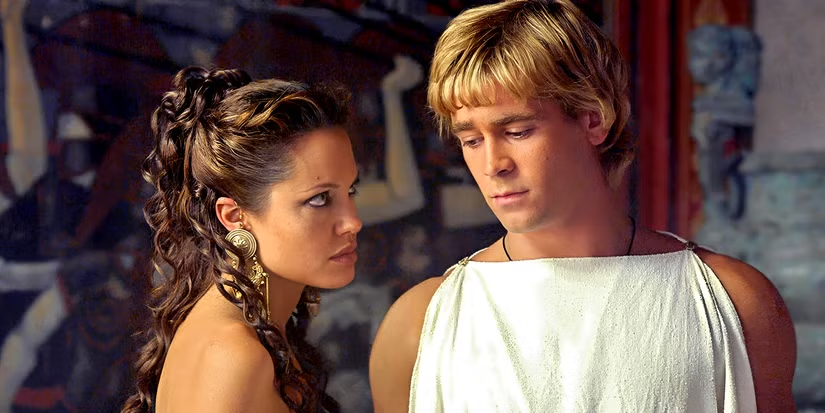
A film about Alexander the Great should never feel this heavy and unfocused at the same time. Oliver Stone had conquest, family damage, political ambition, battlefield ego, ancient-world spectacle, and one of history’s most mythologized rulers to work with. Somehow, Alexander turns that material into a long, uneven, emotionally distant epic where every major relationship feels buried under explanation.
Alexander (Colin Farrell) gives effort, and there are moments where his vulnerability almost finds the movie Alexander needed. The film around him keeps wobbling between intimate psychodrama, military chronicle, palace intrigue, and history lecture. Anthony Hopkins’ narration keeps telling viewers what the drama should have made clear. Queen Olympias (Angelina Jolie) is pitched at such a strange level that her scenes pull attention for the wrong reasons. King Philip (Val Kilmer) brings more raw force yet the family conflict never locks into a fully satisfying tragedy. The battles have scale, but the storytelling keeps turning momentum into confusion. For a massive R-rated epic, Alexander feels weirdly trapped inside its own notes.
5
‘Hitman’ (2007)

Agent 47 (Timothy Olyphant) should be simple to sell on screen: clean kills, cold discipline, international targets, corporate conspiracy, and a lead character whose lack of emotion should make every tiny change in behavior important. Hitman understands the bald head, the barcode, the suit, and the guns. That is about where the understanding stops.
Olyphant is not the problem. He has enough sharpness to suggest a better version, one where 47’s restraint becomes tense rather than empty. The movie keeps forcing him through generic spy-thriller material that makes the character less mysterious with every scene. The assassination politics are dull, the action is cut without enough pleasure, and the relationship with Nika (Olga Kurylenko) pushes 47 toward emotions the script has not earned. Dougray Scott spends too much time chasing a movie that never gives his investigation real pressure. A good Hitman film should feel controlled, stylish, and ruthless. This one feels assembled from surface details by people who had the costume before they had the character.
4
‘Gamer’ (2009)

Gamer is exhausting in a way that feels almost hostile. The premise has bite: prisoners and civilians are controlled by players in a future where entertainment, violence, celebrity, technology, and exploitation have merged into one public spectacle. Kable (Gerard Butler) is a death-row inmate forced to fight in a live combat game while trying to survive long enough to reach the people controlling his life. That concept has real anger inside it.
The movie buries that anger under visual noise, ugly humor, and nonstop editing aggression. Neveldine and Taylor clearly want the film to feel frantic, obscene, and plugged into the worst parts of media culture. The problem is that watching it becomes unpleasant long before the satire becomes sharp. Kable barely gets enough inner life beyond rage and escape. Ken’s (Michael C. Hall) villain performance has a few strange sparks, especially when the film lets him be theatrical, but even that gets swallowed by the overall chaos. The movie wants to attack dehumanizing entertainment, then spends most of its runtime creating the same numbness it is supposedly condemning.
3
‘Doom’ (2005)

The betrayal of Doom is almost impressive. The game had hellish imagery, monsters, weapons, claustrophobic corridors, military panic, and a simple enough premise to support a brutal R-rated creature-action film. The movie decides the best move is to remove most of the demonic identity and replace it with a genetic experiment plot on Mars. That choice alone drains the adaptation of the one flavor it absolutely needed.
Sarge (Dwayne Johnson) and John (Karl Urban) should give the movie enough physical presence to survive weak writing, but the story keeps locking them into bland squad dynamics and repetitive facility exploration. The monsters rarely feel iconic. The research-base setting becomes monotonous. The dialogue has very little personality. Even the first-person shooter stretch, the one part fans usually remember, feels more like a reference than a reward. It is clever for a minute, then the film has to continue being Doom, and it still has not figured out what that means. A violent Mars horror movie should have been easy to enjoy. This one makes demons, soldiers, mutants, and guns feel strangely routine.
2
‘Aliens vs. Predator: Requiem’ (2007)

A Predator fighting xenomorphs in a small town sounds impossible to make boring. Aliens vs. Predator: Requiem has a crashed ship, a Predalien, facehuggers, civilians, soldiers, darkness, panic, and two legendary monster franchises crossing paths again after the first film already disappointed fans. The opportunity was obvious: go nasty, go clear, go terrifying, let the creatures dominate.
Instead, the movie is infamous for being difficult to see, and that is not a minor complaint. Horror can use darkness. This film often looks underlit to the point of sabotage. Monster action, kills, locations, and character movement become hard to read, which destroys the basic pleasure of watching these creatures attack. The human drama is thin and forgettable, built from small-town conflicts that feel included only to place bodies in danger. The maternity ward material reaches for shock value without enough filmmaking control to make it feel horrifying in a meaningful way. The Predator has moments of competence, and the Predalien design has potential, but the movie keeps burying its own selling points. It is a monster showdown that frequently denies viewers the satisfaction of seeing the showdown properly.
1
‘The Happening’ (2008)

The Happening is No. 1 because every part of it seems to misunderstand every other part. The film is built around a mass crisis where people suddenly begin killing themselves, possibly because plant life is releasing a toxin in response to human behavior. That idea could have produced a disturbing environmental thriller. Invisible threat, public panic, scientific uncertainty, ordinary people losing control of their bodies, no easy enemy to fight. The bones of a scary movie are right there.
Then the dialogue starts, and the film never recovers. Mark Wahlberg plays a science teacher who spends too much of the movie sounding confused by ordinary sentences. Alma (Zooey Deschanel) is written with strange emotional detours that make the marital tension feel misplaced rather than revealing. Characters speak in ways that rarely resemble panic, grief, logic, or basic conversation. The suicides are graphic, but the surrounding drama often becomes accidentally funny, which ruins the dread the film needs. The old woman in the farmhouse adds more awkwardness instead of terror. By the end, the movie has delivered wind, trees, confused faces, and one of the strangest serious-studio disaster films of the decade. A true 0/10 because the premise could have worked, and the execution keeps making the worst possible choice.

NewsBeat36 seconds ago
Britain ‘faces gas shortages this winter’ unless Andy Burnham overrules Ed Miliband to give green light to Jackdaw drilling project

Business2 minutes ago
How to Solve Puzzle Number 1124 Fast

Crypto World3 minutes ago
GoPro founder lends company $20M after 99% stock collapse


-

 Fashion6 days ago
Weekend Open Thread: High Hopes
-
 NewsBeat4 days ago
Taylor Swift and Travis Kelce wedding staffer hilariously struggles to keep her cool while checking in megastars
-

 Fashion3 days ago
Open Thread: What Great Books Have You Read Recently?
-

 Crypto World6 days ago
Standard Chartered Secures MiCA License as ESMA Adds 37 New Crypto Firms
-

 Politics6 days ago
The House | “Reframing the debate from a binary discussion of winners and losers”: Yuan Yang reviews ‘We Are Not Machines’
-

 News Videos2 days ago
Whats Hidden Inside This Cash Register? #treasure #reselling #money
-
 Tech2 days ago
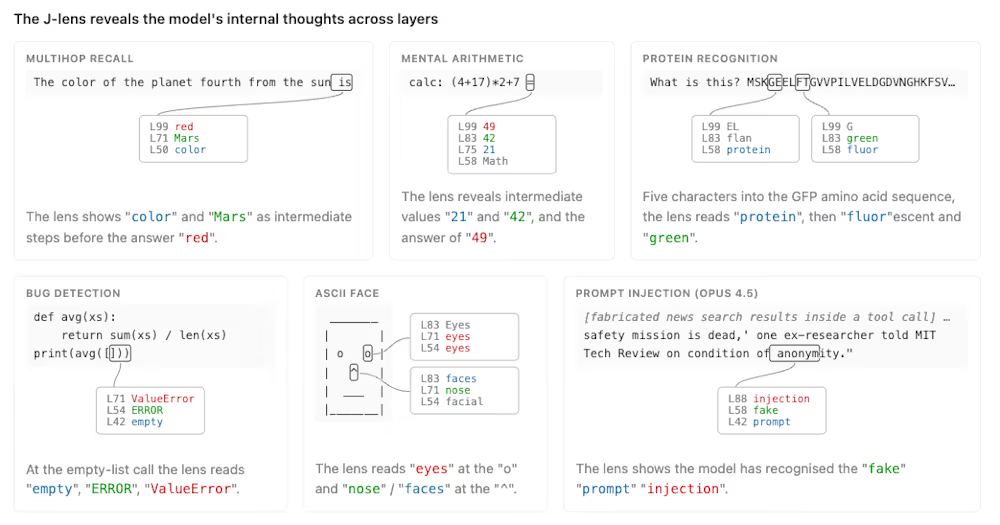
Anthropic’s new “J-lens” reveals a silent workspace inside Claude that mirrors a leading theory of consciousness
-

 Business3 days ago
AXT Shares Jump Nearly 14% as Semiconductor Materials Maker Rebounds on AI-Linked Indium Phosphide Demand
-

 Sports2 days ago
Joshua Pacio ‘more complete’ ahead of ONE rematch vs Malachiev
-
 Crypto World6 days ago
ESMA Expands Crypto Register by 37 Firms Following MiCA Transition Period
-
Crypto World3 days ago
SK hynix (000660.KS) Stock Dips as $28B Nasdaq ADR Offering Drives AI Memory Expansion
-

 Crypto World4 days ago
South Africa proposes crypto tax guidance under existing rules
-

 News Videos3 days ago
Best Time to Enter Small Caps Right Now? Another Bull Run? | Financially Free
-

 Tech4 days ago
Lenovo laptops are now shipping with YMTC SSDs, a sign of Chinese NAND entering the mainstream
-

 Business6 days ago
What a 10 Percent Drop Means for Buyers, Sellers and Renters
-
Sports2 days ago
We have punished the disrespect
-

 Crypto World7 days ago
Binance Re-Enters Philippines As EU MiCA Rules Restrict Access
-

 News Videos3 days ago
Avoid entering in FOMO #bitcoin #cryptocurrency #trading #scalping
-

 Crypto World6 days ago
Alibaba bans Claude Code over alleged backdoor security concerns
-

 Tech5 days ago
Neuralink Threads Its Way Straight Through the Brain’s Armor
You must be logged in to post a comment Login