
Entertainment
Stephen Colbert and “The Late Show” score Emmy nomination for final season

:max_bytes(150000):strip_icc():format(jpeg)/late-show-with-stephen-colbert-051326-1-dc7f6bf4ae9742289e713f5c687e47fa.jpg)
The canceled program won the Outstanding Talk Series category last year.

Continue Reading
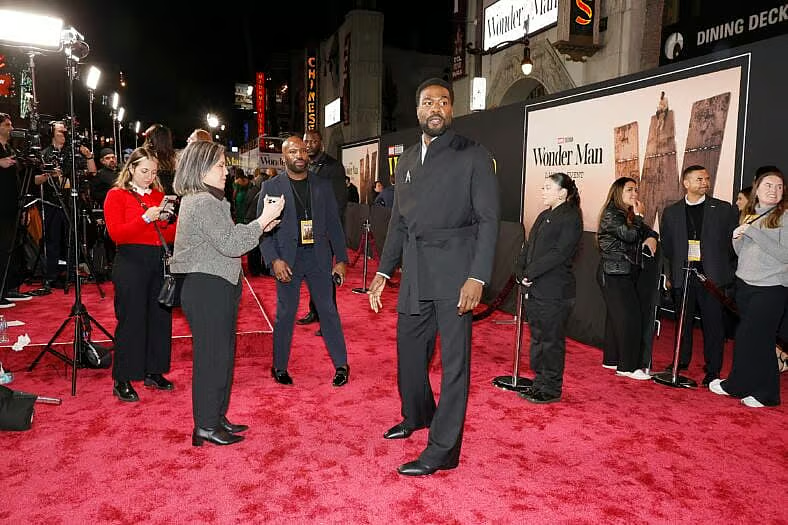
Yahya Abdul-Mateen II is looking on the bright side after news broke that Marvel Studios will no longer move forward with a second season of “Wonder Man.”
Reacting to the surprising update, the actor admitted that setbacks are simply part of the business before thanking fans who embraced the series and ending his message with a confident promise: “See you at the Emmys.”
Yahya Abdul-Mateen II has broken his silence after Marvel Studios decided not to move forward with a second season of “Wonder Man” on Disney+.
In a recent Instagram post, the Emmy-winning actor reflected on the uncertainty that comes with working in Hollywood but made it clear he wasn’t dwelling on the disappointment.
“Word just dropped that Wonder Man won’t be coming back for Season 2. (And if you don’t knowww, now ya knoww!),” he wrote. “That’s life, right? Everything will shake out.”
Abdul-Mateen Thanks Fans For Embracing ‘Wonder Man’

The actor went on to thank viewers who supported the series, saying the show’s impact mattered far more than its short run.
Reflecting on the response from audiences, Abdul-Mateen wrote, “The show worked,” adding that seeing YouTube reaction videos, reading fan messages, and meeting viewers in person reminded him why the project meant so much.
“I could see it on the faces of the YouTube Reactors (because I watched along with y’all this time. Shoutout to y’all) … and I feel it in the genuine love shared when I bump into some of you all during the day. So, thinking of you all today.”
He concluded, “I’m glad we got to be a part of something cool. Thank you for watching… And uhh… See you at the Emmys.”
Fans Mourn Marvel’s Surprise Decision
Fans quickly flooded the comments section with messages of disappointment, saying they weren’t ready to say goodbye to the series.
“I’m crushed, show was sooo good!” one Instagram user wrote, while another added, “This is some BS man. I hope this isn’t the last we see of Wonder Man!”
A third fan commented, “You were sooo good on this. Killing me, I can’t see the continuation. Your work is just amazing.” Another wrote, “Nah, this is unreal, man. I didn’t know what to expect from this show, and it turned out to be one of Marvel TV’s top shows.”
‘Wonder Man’ Seemed Destined To Continue

The cancellation came as a surprise because “Wonder Man” performed well with critics, earning a 91% approval rating on Rotten Tomatoes.
Disney had also announced in March that the series would return for a second season, roughly two months after its debut. However, Variety later reported that a writers’ room was never opened and the creative team was ultimately released to pursue other projects.
The series starred Abdul-Mateen as Simon Williams, a stuntman and actor who develops superpowers while trying to keep his new identity hidden. Ben Kingsley reprised his role as Trevor Slattery, with X Mayo, Demetrius Grosse, Zlatko Burić, Arian Moayed, and Olivia Thirlby rounding out the cast. The series was created by Destin Daniel Cretton and Andrew Guest.
Reviewing the show, Alison Herman praised its leads, writing, “Abdul-Mateen and Kingsley make their characters equally ridiculous and romantic.”
Although Marvel has not explained the cancellation, reports indicate the cast could still return in future Marvel projects.
Yahya Abdul-Mateen Still Has Emmy Glory In Sight

Despite the cancellation, Abdul-Mateen still has plenty to celebrate after earning a Primetime Emmy nomination for Outstanding Lead Actor in a Comedy Series for “Wonder Man.”
He previously won an Emmy for HBO’s “Watchmen,” making him the first live-action actor to receive Emmy nominations for performances in both Marvel and DC projects.
Following the nomination on July 9, Abdul-Mateen shared that he “woke up feeling so blessed” before crediting the cast and crew for helping make the recognition possible.
“It’s only right that this nomination also stands as an acknowledgement of the passion of everyone who helped put this show together,” he wrote. “To Marvel, Destin Cretton, Andrew Guest, Brian Gray, our cast and crew, the city of Los Angeles, the voters who saw my performance worthy of an Emmy nomination, and especially every single person who tuned in and dreamed, laughed, and cried alongside us… CHEERS and THANK YOU!!”
Entertainment
Rosie O’Donnell returning to “The View” for season 30: ‘I will go’ with ‘all’ past cohosts
:max_bytes(150000):strip_icc():format(jpeg)/rosie-view-2-7a803da1641f4bb98e4a6622c2a1ec6f.jpg)
O’Donnell also recalled a “tense time” with Whoopi Goldberg the last time she was at the Hot Topics table, while she publicly sparred with Elisabeth Hasselbeck in 2025.

Hailey Bieber is living her best life while vacationing under the European sun.
The Rhode founder, 29, shared two swimwear snaps in an Instagram carousel on Sunday, August 2, capturing the itty-bitty pink strong bikini she’d opted for while out on a luxury boat amid shimmering water.
“Different blues and lots of Nutella,” she captioned the post, which showed her seated on the ground of the boat while snapping herself in a mirror. Other photos in the carousel showed a turquoise ocean lapping against a gray rocky cave, an azure boat bobbing atop waves, more water shots and a creamy dessert topped with a thick layer of gooey Nutella.
One day prior, Hailey, who is currently vacationing with her husband, Justin Bieber, in Europe, was spotted visiting a bottle shop on Italy’s Panarea Island with Justin, 32, before the pair jumped aboard a golf cart to continue their exploration. Social media footage of the couple showed them swarmed by fans prior to escaping the crowd.

Hailey Bieber is a baddie. Bieber, 28, took to Instagram on Thursday, November 6, to show off her bikini body while celebrating Kendall Jenner’s 30th birthday during a tropical getaway. While relaxing, the Rhode founder showed off a green bikini featuring a thong back with string straps that tied in bows at her hips. Bieber […]
Justin also shared glimpses of the couple’s vacation via his own Instagram account. In a Sunday carousel, he was seen enjoying dinner alongside Hailey as the pair indulged in a bottle of red wine. Additional snaps in Justin’s post showed him puffing on a cigar while enjoying time on a boat, holding Hailey’s hand during another sunlit meal and riding in a golf cart with her.
Hailey recently showed off her enviable figure via Instagram. In her June 23 mirror selfie, Hailey flexed her abs while wearing a sports bra and spandex, completing her look with a navy zip-up hoodie that she wore undone. The post followed Hailey’s Instagram unveiling as an ambassador for Kim Kardashian’s Skims label, with Hailey serving as the face of its lingerie campaign.
Campaign imagery showed Hailey rocking a black Skims bralette and matching thong underwear, a beige bra and boyshort underwear, a white bralette and high-cut thong, and a caramel-hued bra and thong set.


Hailey Bieber is ready for summer. Bieber, 28, took to Instagram on Sunday, June 8, to show off her figure in a black bikini while posing on a beach. In the snap, she rocked a triangle halter top, which she teamed with cropped long sleeves. The model added a touch of the cowgirl-core aesthetic with […]
Kim, 45, showed her public approval for Hailey’s part in her brand campaign, taking to Hailey’s post’s comments section to share praise. “Sooooo beautiful and hot and sexy and cutesie ❤️🔥😍❤️,” she wrote, while Kim’s younger sister, Kylie Jenner, also commented with a bitten lip emoji. Kendall Jenner joined in on the fun, writing “really hot ndb” in the comments section, too.
Hailey opened up about her style inspiration, and the enviable couples’ ensembles she shares with Justin, during an interview with Interview magazine in April. “We both just really like expressing ourselves through our style and supporting each other’s individualism,” she said of their sometimes-coordinating, sometimes-clashing wardrobes at the time.
“When we go on a carpet together or something, nobody wants to clash or look crazy, and it’s not very often that we do that,” she added. “Obviously, we’ll talk about what the other person’s wearing, but on a day-to-day basis, I’m like, ‘I don’t give a s*** what you want to wear. Are you comfortable? Do you feel good?’ That’s all that matters to me.”
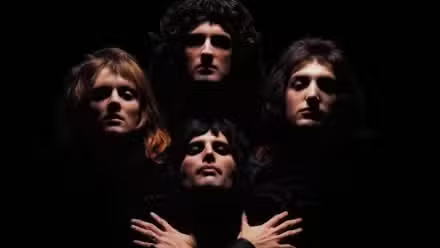
Winning a Grammy is one of music’s highest honors, but the Recording Academy is also famous for its history of controversial snubs. And classic rock hits are no exception. Unlike when The Beatles took home the coveted award at the 9th Annual Grammy Awards in 1967 for their hit song “Michelle” that was featured on their 1965 album Rubber Soul. However, over the years, so many legendary songs have lost Record of the Year to songs that have long since faded from the conversation while the “snubs” went on to give us some of the biggest and influential hit records of all time. Looking back, it’s hard to see how the Grammys made their choices.
From Beatles classic hits to arena-filled Queen anthems, these songs topped the Billboard Hot 100 and defined entire generations. They may have been overlooked on music’s biggest night, but their legacy has only grown bolder with time. Here are the 10 biggest classic rock hits that never won Record of the Year.
10
“The Boys Are Back in Town” by Thin Lizzy
Not many classic rock songs have the same melodic vibe as Thin Lizzy‘s “The Boys Are Back in Town.” The song was built around Brian Robertson and Scott Gorham’s unforgettable guitar skills, but the song was equally cinematic in its storytelling. The song does a perfect job of painting vivid pictures of old friends, past hometown bars and those magical nights you’ll always remember. Phil Lynott’s cool vocals give the song a personality unlike any other that makes it anything but a simple song.
The song peaked on the Billboard Hot 100 charts at No. 12 when the song was released in 1976. It was the lead single from Jailbreak. This became the Irish rock band’s signature hit song that introduced them to audiences around the world. But, despite its cultural impact, the song lost at the 1977 Grammy Awards to George Benson’s “This Masquerade.” However, almost 50 years later, “The Boys Are Back in Town” still blasts through stadium speakers, movie soundtracks and classic rock radio playlists with the same electrifying energy.
9
“Carry On Wayward Son” by Kansas
Progressive rock music has produced many songs but very few have crossed into the mainstream, like Kansas‘ “Carry On Wayward Son.” From the track’s instantly recognizable intro to its blaring guitar solos, the song packs an incredible amount of complexity into a song that makes it feel like it was meant to be a sing-along. Kerry Livgren’s lyrics about searching for meaning give the record an emotional weight that separates it from so many other classic rock songs from that era.
The song peaked on the Billboard Hot 100 at No. 11 in 1977. The song became Kansas’ breakout hit from Leftoverture, which helped establish the band as one of the most pivotal acts of 1970s rock. The song would go on to earn a nomination for the 1978 Grammy Awards but lost to Debby Boone‘s “You Light Up My Life.” Decades later, “Carry On Wayward Son” is still one of the most beloved songs in classic rock. For a band that never reached No.1 on the Billboard Hot 100, this song became a timeless classic that’s never gone out of style.
8
“Go Your Own Way” by Fleetwood Mac
The collapse of the relationship between Lindsey Buckingham and Stevie Nicks was not going to wallow in heartbreak when it was left up to Buckingham. Fleetwood Mac’s “Go Your Own Way” turned heartbreak into a bold rock anthem that was fueled by raw emotion and one of the most unforgettable choruses of the 1970s. Mick Fleetwood’s drumming pushes the song into this ultimate sense of controlled chaos that took personal turmoil and turned it into a grand performance.
“Go Your Own Way” peaked at No. 10 on the Billboard Hot 100 in 1977. It was released as the lead single from their iconic album Rumours, which helped turn the album into one of the biggest commercial successes in rock history. Just like Kansas’ “Carry on Wayward Son”, Fleetwood Mac lost to Debby Boone’s “You Light Up My Life” that year. However, you can’t listen to classic rock radio and not hear Fleetwood Mac’s iconic song. The song continues to live on in streaming playlists and live performances almost 50 years later after its release.
7
“Sweet Home Alabama” by Lynyrd Skynyrd
Some songs become hits and others become part of a place’s identity. “Sweet Home Alabama” by Lynyrd Skynyrd is clearly cemented in both. The hit song began as a response to Neil Young’s criticism of the American South, but it evolved into one of the most recognizable rock songs ever recorded. The opening guitar riff makes the song feel instantly familiar and there is a sense of warmth that washes over when the beginning chords, infused with blues, begin. The song feels infectious and that has made it impossible to ignore all of these years later.
The hit song peaked on the Billboard Hot 100 at No. 8 in 1974. The song gave Lynyrd Skynyrd their biggest hit, and it helped establish Southern rock as a force to reckon with. In 1975, the song earned the Record of the Year nomination but ultimately lost to Olivia Newton-John’s “I Honestly Love You.” While the Recording Academy chose a softer ballad as the winner, history has largely sided with Lynyrd Skynyrd. “Sweet Home Alabama” has become a cultural phenomenon of a song that even if you don’t listen to the genre as a preference, you definitely know this song.
6
“More Than a Feeling” by Boston
Boston’s “More Than a Feeling” is one of the most instantly captivating songs to ever be recorded. Tom Scholz spent years crafting the layered guitars, harmonies and spotless production that created a song that didn’t sound like anything else on rock radio in the mid 1970s. But at the core of the song, is the wistful reflection on memory and lost love the song provides. It’s as if the song transports you back into time.
In 1976, Boston’s “More Than a Feeling” peaked on the Billboard Hot 100 at No. 5. As the lead single from Boston’s self-titled album, “More Than a feeling” pushed the band into stardom and became one of the defining songs of the classic rock era. In 1977, the song received a nomination but lost to George Benson’s “This Masquerade.” Despite losing, Boston’s hit song has cast a longer shadow between the two. The influence of this song can be heard in generations of artists who followed. And nearly 50 years later, the song still stands as a how some songs have just become timeless.
5
“Bohemian Rhapsody” by Queen
It’s impossible to think of rock music without thinking of Queen’s legendary hit “Bohemian Rhapsody.” A six-minute epic song that doesn’t have a traditional chorus, with an opera-style middle section with one of Freddie Mercury’s greatest vocal performances of all time. The song broke almost every rule when it comes to the traditional layout of a song. On paper, there is no way this song should have worked. However, Queen decided to make one of the boldest statements in music, proving that audiences would like this type of record when backed by perfect songwriting and production.
“Bohemian Rhapsody” peaked on the Billboard Hot 100 at No.9 and spent a total of 19 weeks on the charts. What makes the Grammy’s treatment of this song so surprising isn’t that it lost Record of the Year. Because it never got the chance. Despite this iconic song becoming an international sensation and single-handedly redefining what a rock single could accomplish, the song wasn’t nominated for the award at all. It feels criminal and, looking back, the omission of the song makes it as shocking as the other losses on this list. “Bohemian Rhapsody” has since become one of the most celebrated songs ever. However, in 2004, the song was inducted into the Grammy Hall of Fame and has continuously topped “the greatest songs of all time lists.”
4
“Sweet Child O’ Mine” by Guns N’ Roses
If you ever find yourself thinking of iconic guitar riffs, Guns N’ Roses “Sweet Child O’ Mine” has to be at the top of that list. Not every rock song announces itself with a roaring power chord and ultimately gifts us one of the most famous guitar riffs ever written. The song unfolds into a love song that is unlike anything Guns N’ Roses had released before. The song was inspired by Axl Rose’s relationship with Erin Everly and displayed the band’s gritty attitude to love without sacrificing an ounce of their edge.
Luckily, the gamble paid off in a major way. “Sweet Child O’ Mine” peaked at No.1 on the Billboard Hot 100 in 1988. The song would go on to become the band’s only No.1 hit, but this introduced them to an even bigger audience and officially cemented the band as one of rock’s biggest acts. However, despite the massive success and lasting influence, the song lost the 1989 Grammy Award to Bobby McFerrin’s “Don’t Worry Be Happy.” Although McFerrin’s song is truly beloved as a moment in pop culture, “Sweet Child O’ Mine” has stretched far beyond that. Nearly four decades later, it’s still the song that defined Guns N’ Roses and one of the most recognizable tracks out there.
3
“American Pie” by Don McLean
From the beginning, this song had a lot of things working against it. Don McLean’s “American Pie” is more than eight minutes long, radio stations rarely embraced playing songs of that length, and its poetic and packed lyrics left audiences trying to interpret their meaning. However, this is exactly what made Don McLean’s song a masterpiece. Instead of just stating things plainly, McLean wanted to take listeners on a musical mystery ride when talking about nostalgia and cultural change with the loss of innocence. The track’s lyrics are still being dissected almost 50 years later, which proves how timeless the storytelling remains.
The risk paid off for this iconic song, released in 1971. “American Pie” climbed all the way to No.1 on the Billboard Hot 100 and stayed there for four weeks. It was nominated for the 1973 Grammy Award for Record of the Year but lost to Roberta Flack’s “The First Time Ever I Saw Your Face.” Flack’s classic earned its acclaim, but McLean’s song grew into one of those rare songs that feels less like a hit single and more like a shared piece of American culture. The song has been sung by generations that have disagreed on the actual meaning of the song, but that is part of what makes this song a masterpiece. This is many decades later and the song still holds such power and fascination, making the Grammy snub one of the most memorable.
2
“Hotel California” by Eagles
Ever had a song that left you with questions, and it kept pulling you back to find them? That’s the true magic of “Hotel California.” Since its release, fans have spent decades debating the song’s true meaning, which has varied between interpretations about fame, the music industry, the American dream and excess. Don Henley and Glenn Frey left much of the symbolism behind the lyrics open-ended, which allowed for listeners to find something different with those haunting lyrics. Bring in Don Felder’s unforgettable guitar work, and you have a song that becomes more fascinating after each listen.
“Hotel California” was released on the Eagles‘ legendary album of the same name in 1976. The song peaked at No. 1 on the Billboard Hot 100 for one week, while the album spent eight non-consecutive weeks at number one on the Billboard 200. The song earned a nomination for the 1978 Grammy Award but ultimately lost to Debby Boone’s “You Light Up My Life”, suffering the same fate as Fleetwood Mac and Kansas on this list. Despite only one song being able to take home the coveted award, no one can deny the impact “Hotel California” has had, especially with its closing solo, which is often called the greatest recording ever. “Hotel California” has only become more legendary with time.
1
“Hey Jude” by The Beatles
Some songs are instant hits that you know will become a classic. While others slowly earn that title over time, “Hey Jude” by The Beatles somehow managed to do both. The song was written by Paul McCartney for John Lennon’s son Julian, during his parents’ divorce and what started as a deeply personal message evolved into one of the most uplifting songs in rock history. The gentle encouragement, the skyrocketing melody and the unforgettable “na-na-na” finale took this simple ballad to new heights. This song is a great example of how joy brings people together by having them sing along, whether it’s in a stadium, around a campfire or through their own headphones.
“Hey Jude” became The Beatles’ biggest hit single when released in 1968. The song peaked at No.1 on the Billboard Hot 100 and broke records by spending 9 weeks at No. 1. The song would go on to sell 8 million copies worldwide and become The Beatles’ longest-running chart-topper in the United States. But despite this massive success, the song lost the 1969 Grammy Award for Record of the Year to Simon & Garfunkel’s “Mrs. Robinson.” This “snub” is often considered one of the biggest in Grammy history. The song remains one of the Beatles’ defining achievements, regularly appearing on lists of the greatest songs ever written. If there is a single song that proves Grammy victories don’t determine greatness, it’s “Hey Jude.”

Influencer Jen Hamilton has responded to fans hoping to see her star in a new season of The Bachelorette.
“They do not want me and this is why,” Jen, 35, began in a hilarious Instagram video shared on Sunday, August 2, that responded to a fan advocating for her to be featured in the reality TV dating series.
The social media star, who announced her split from her husband, Brian Hamilton, in June, continued with various vignettes that poked fun at her potential place in the show. “Don’t miss the most dramatic season of The Bachelorette ever. Featuring Jen Hamilton who we did not vet but got lots of comments about,” she said in a sarcastic voice-over before staging would-be meetings with suitors.
“Hi, my name is Jen, what do you like to do? Run? That’s what you can do, that way, thank you for coming,” she said. “A beach date? Did ya’ll … research me first? I’m built different than my predecessors. There’s no drawers that cover it alls.”

Influencer Jen Hamilton shared another emotional video after sparking speculation that her marriage to husband Brian is over. “OK, no crying,” she began in a TikTok posted on Monday, June 15, which she captioned, “The ‘statement.’” Hamilton continued in her video: “I’m feeling embarrassed and feeling exposed and feeling sad, feeling every single thing you […]
Fans took to the clip’s comments section to share praise for Jen’s tongue-on-cheek content, including former Bachelorette Katie Thurston who threw support behind what she saw. “Just say the word, and I’ll give you a direct number,” Thurston, 35, wrote, attracting more than 400 “likes.”
Another fan wrote, “I mean, I’d watch this season,” while another added, “Divorced Mom edition 😂the only season I want to watch.”
Four days prior, Jen shared a similarly hysterical Facebook video that attracted another call for her Bachelorette debut. “Something tells me when you’re ready to get back on the market, you will have a plethora of eligible suitors. Maybe Jen should be the next Bachelorette?” the fan wrote, attracting almost 7,000 thumbs up and heart responses.
Influencer Jen Hamilton shared details of her split from estranged husband Brian Hamilton. “While I was at the hospital, taking care of people, he found the time to have a whole other life. As someone who’s never even passionately kissed anyone else in my entire life, this has broken me beyond comprehension,” Jen, 37, said […]
Jen’s new Instagram video comes days after she seemingly shared a text exchange with her estranged husband. After telling Brian that she will “always love” him, he appeared to write, “Thank you for being you. Losing you is the dumbest thing I’ve ever done.”
Brian then appeared to continue, “I don’t want to leave you in rubble. I want all of you guys to be in my life.” (Jen and Brian share two sons, Ellis and Luke, though it is unclear who Brian was allegedly referring to in the text.)
Jen appeared to respond, “You already have.”
After the former couple confirmed their split via a joint Instagram statement, Jen has since accused her ex of leading a “double life” with a 56-year-old woman behind her back.
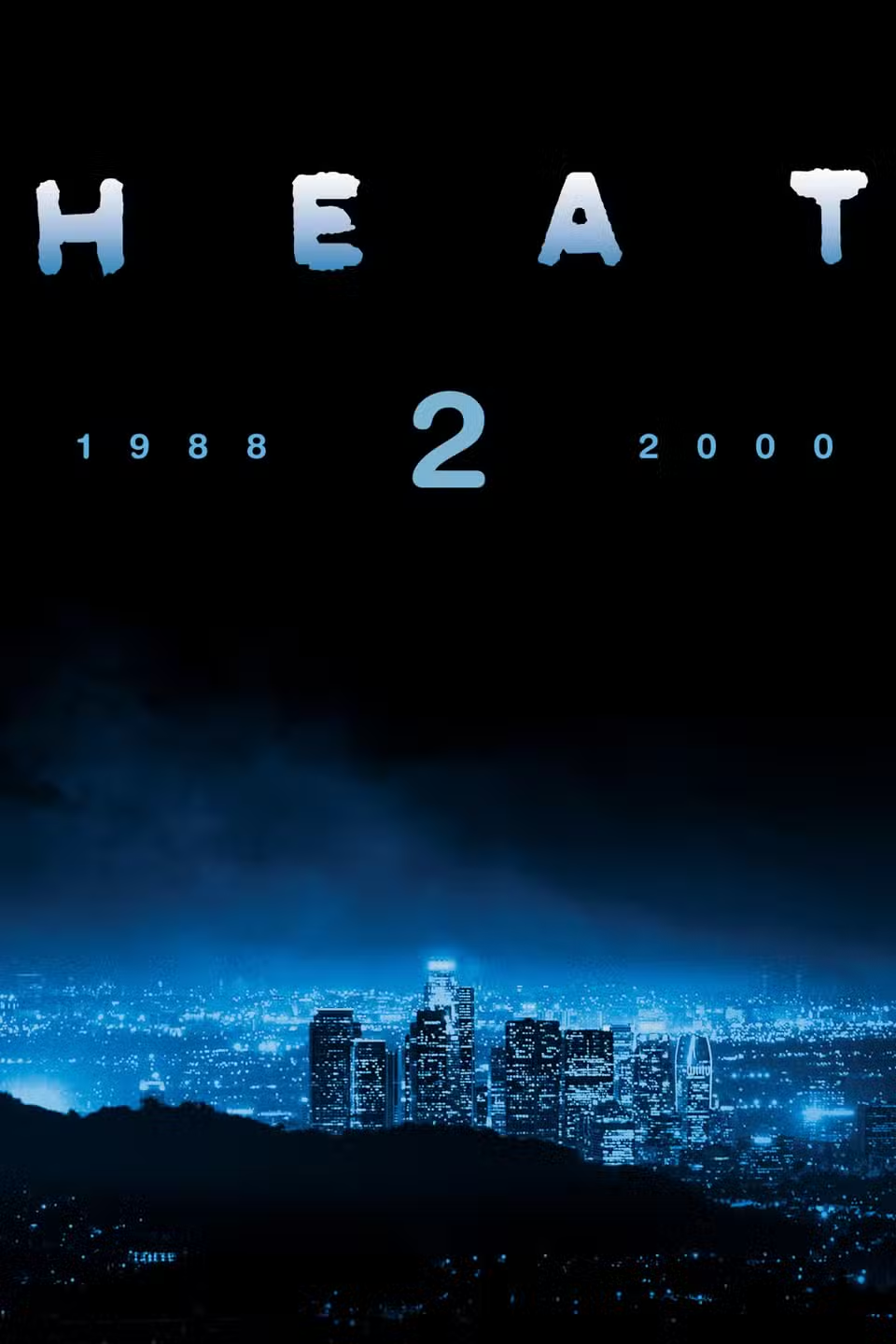
Michael Mann’s Heat 2 is among the highly anticipated movies that were announced in the last few years. The director follows up his 1995 crime thriller of the same name based on the best-selling novel he co-wrote with Meg Gardiner, which serves as both a prequel and sequel. The feature has changed many studios, going from Warner Bros. to Paramount, Sony, and finally Amazon MGM.
Heat 2 has roped in a stellar cast including Leonardo DiCaprio and Christian Bale. Their roles were revealed previously, with Bale set to fill Al Pacino‘s shoes and take the lead as detective Vincent Hanna, while DiCaprio will step into the shoes of the late great Val Kilmer‘s character, Chris Shiherlis, the lone survivor of Neil McCauley’s (Robert De Niro) crew. Further, Stephen Graham is set to take on Robert De Niro’s role, while long-rumored Adam Driver was reportedly in talks to embody Otis Wardell, the serial killer who has haunted Vincent since the 1980s.
However, with most top-line talents set in place, the feature has been in development hell for a while, given Mann wanted a bigger budget than Warner Bros.’ desired $125 million, per a new report. That became one of the main reasons for Heat 2 to change studios. Eventually, the project landed at Amazon Prime, which also took creative control of the James Bond franchise recently.
‘Heat 2’ Will Begin Production This Year
Now Heat 2 is ready to go on the floor, as the report confirms, “with production scheduled to begin in November and Bale and DiCaprio fully onboard, ‘Heat 2’ has reached its final form.” The feature will be backed by F1 producer Jerry Bruckheimer alongside Mann, United Artists’ Scott Stuber, and Nick Nesbitt. As for the scope of the movie, it hasn’t shrunk at all and “features action sequences that dwarf the first film.” And that’s saying something because Heat has a legendary heist/gunfight that was so realistic that law enforcement agencies use it in training exercises.
The makers are expecting Heat 2 to be a global hit: “’Heat 2’ could do for men of different ages what ‘Barbie’ did for women,” a source revealed. “It won’t reach the same box office, but it could easily approach more than $500 million which would make the film profitable theatrically and then a huge hit for Amazon on their platform.”
No release date has been confirmed for Heat 2. Stay tuned to Collider for more such updates.

- Director
-
Michael Mann
- Writers
-
Meg Gardiner, Michael Mann
- Producers
-
Jerry Bruckheimer, Art Linson, Michael Mann, Nick Nesbitt, Jan Pance, Scott Stuber
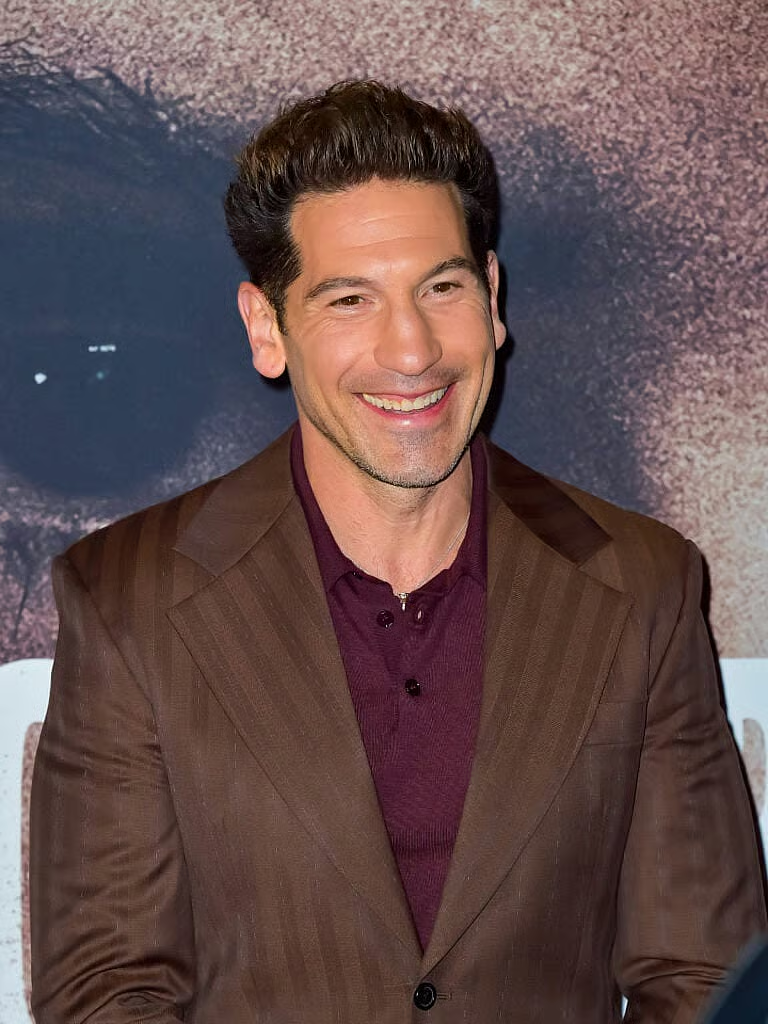
A clip from a 2017 interview with Jon Bernthal is making the rounds online, bringing renewed attention to the actor’s passionate defense of pit bulls. In the resurfaced footage, the “Punisher” star argues that fear of the breed is rooted in unfair stereotypes, even going so far as to describe it as “dog racism.” His past comments have reignited online discussion about the stigma surrounding the dog breed.
On August 1, “The Howard Stern Show” reuploaded a 2017 interview featuring actor Jon Bernthal, in which he defended pit bulls. The resurfaced clip quickly gained traction, with numerous media outlets and social media accounts highlighting his remarks, turning them into a trending topic online.
The conversation turned to pit bulls when Howard Stern asked the actor about a 2009 incident in Venice Beach. Bernthal was arrested following an altercation with a drunk individual who attempted to grab his pit bull. The actor punched the man, who ended up unconscious after hitting his head on the ground.
Stern asked why his pit bull didn’t attack, to which Bernthal answered, “My dogs are the greatest, and they’re unbelievably well trained.” He further added that the stereotype against pit bulls being aggressive is just “dog racism.”
“To be afraid of a breed of dog is completely ridiculous. It’s like being afraid of somebody for their race or their sexual orientation,” Bernthal told Stern.
The Actor Placed The Responsibility On Dog Owners
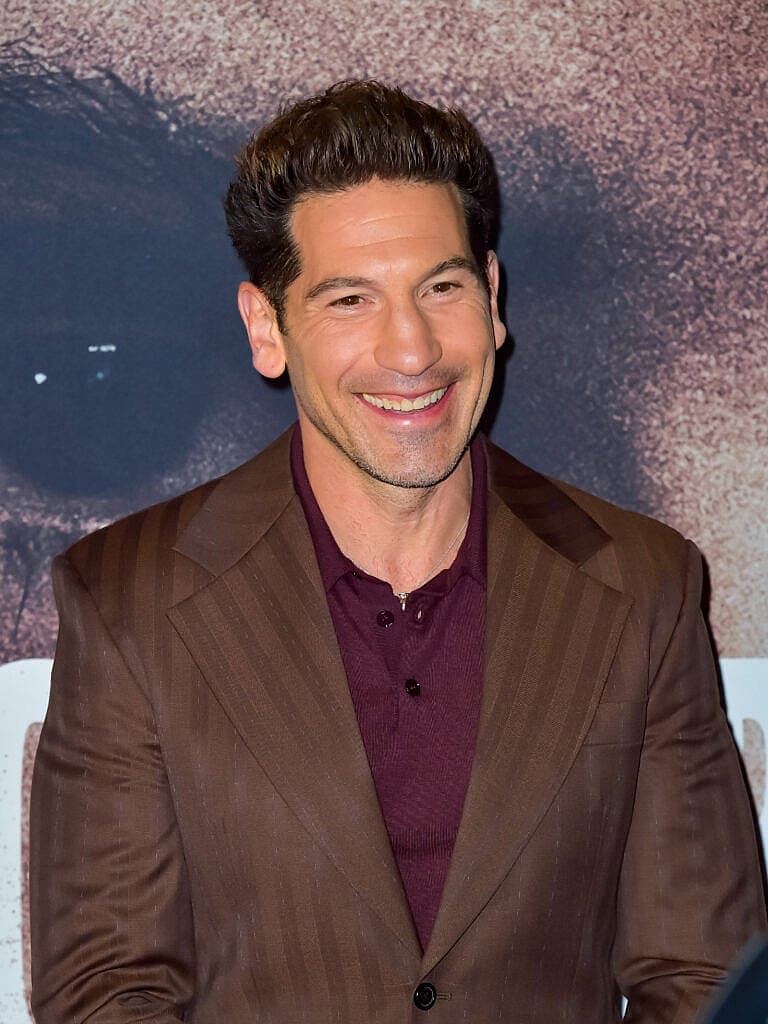
Bernthal admitted that it would “suck” to be bitten by a pit bull. However, he claimed that “they’re no more likely to bite you than a chihuahua or any other breed of dog.”
Moreover, the actor believes that a dog’s behavior depends largely on its owner and how it is raised and trained, regardless of the breed. “I think that a lot of knuckleheads, unfortunately, are attached to that breed of dog,” he added.
The resurfaced clip sparked an online debate. While many agreed with his view, others argued that genetics also play a role. One said mixed breeds are responsible for many attacks, but when it comes to specific breeds, “pit bulls are by far the most dangerous.” One person commented, “If you meet a pit bull who’s an a-shole it’s because an a-shole human taught them to be an a-shole.”
Jon Bernthal Is An Advocate For Pit Bulls
Bernthal has long been vocal about his love of pit bulls. In 2014, he shared that he often traveled by car to work instead of taking a plane, as he wanted to bring his pit bulls, Boss and Venice, with him.
“They’re beautiful. They’re sweethearts,” the actor said, adding that apart from them being his best friends, he wanted to change the public’s perception about the breed. “It’s pretty sick and twisted how people feel about them a lot of the time, and my dogs are total sweethearts,” he told Live Science.
In 2015, Bernthal, who starred in “The Walking Dead” for two seasons in 2010 to 2012, said there wasn’t a day when his dogs were not on set with him, and they were also his companions to meetings and auditions. “Our dogs are part of our family,” he said, per CBS News.
The Actor’s Father Served As Chair For The Humane Society
Bernthal isn’t the only one in his family advocating for pit bulls. His father, Eric, served as chair of the board of directors for the Humane Society of the United States (HSUS) until 2019.
In 2012, the Maryland Court of Appeals declared pit bulls and pit bull mixes “inherently dangerous” breeds. Through his leadership, Eric and the HSUS fought the decision and called out Maryland lawmakers for issuing a “death warrant” for thousands of dogs in shelters. The court ruling was overturned, and a new breed-neutral bill was enacted.
Bernthal credited his father for inspiring his passion for dogs, especially pit bulls, saying Eric “loved dogs to an insane level.”
Fatal Dog Attack Statistics
The role of breed in dog attacks remains a divisive issue, with pit bulls and Rottweilers at the center of discussion.
In 2025, there were 84 reported fatal dog attacks in the U.S. and Canada, with 64 involving dogs identified as pit bulls. Despite the statistics, several studies have shown that a dog’s breed does not correlate to its aggression.
Both the Centers for Disease Control and Prevention (CDC) and the American Veterinary Medical Association (AVMA) have previously warned against breed-specific fatality statistics, as they often rely on visual identification, which may be inaccurate.
Many of history’s greatest fantasy books go on to receive exactly as much love and praise as they deserve. Inevitably, however, the years have seen many other exceptional works of fantasy literature which have been all but forgotten, even though they’ve only gotten better with age. Of course, saying that they’ve been “forgotten” is a bit of an exaggeration for dramatic effect, but there’s no denying that these great fantasy books haven’t been read by nearly as many people as they deserve.
These are, through and through, some of the greatest fantasy books of their time. Some of them are the work of huge names in fantasy literature like Ursula K. Le Guin and her Powers. Others are by considerably smaller names, like Katharine Kerr‘s The Silver Mage, the most tragically forgotten fantasy books of all time have all aged like the finest of wines. No matter their origin, these fantasy books are worthwhile and unworthy of their forgotten status.
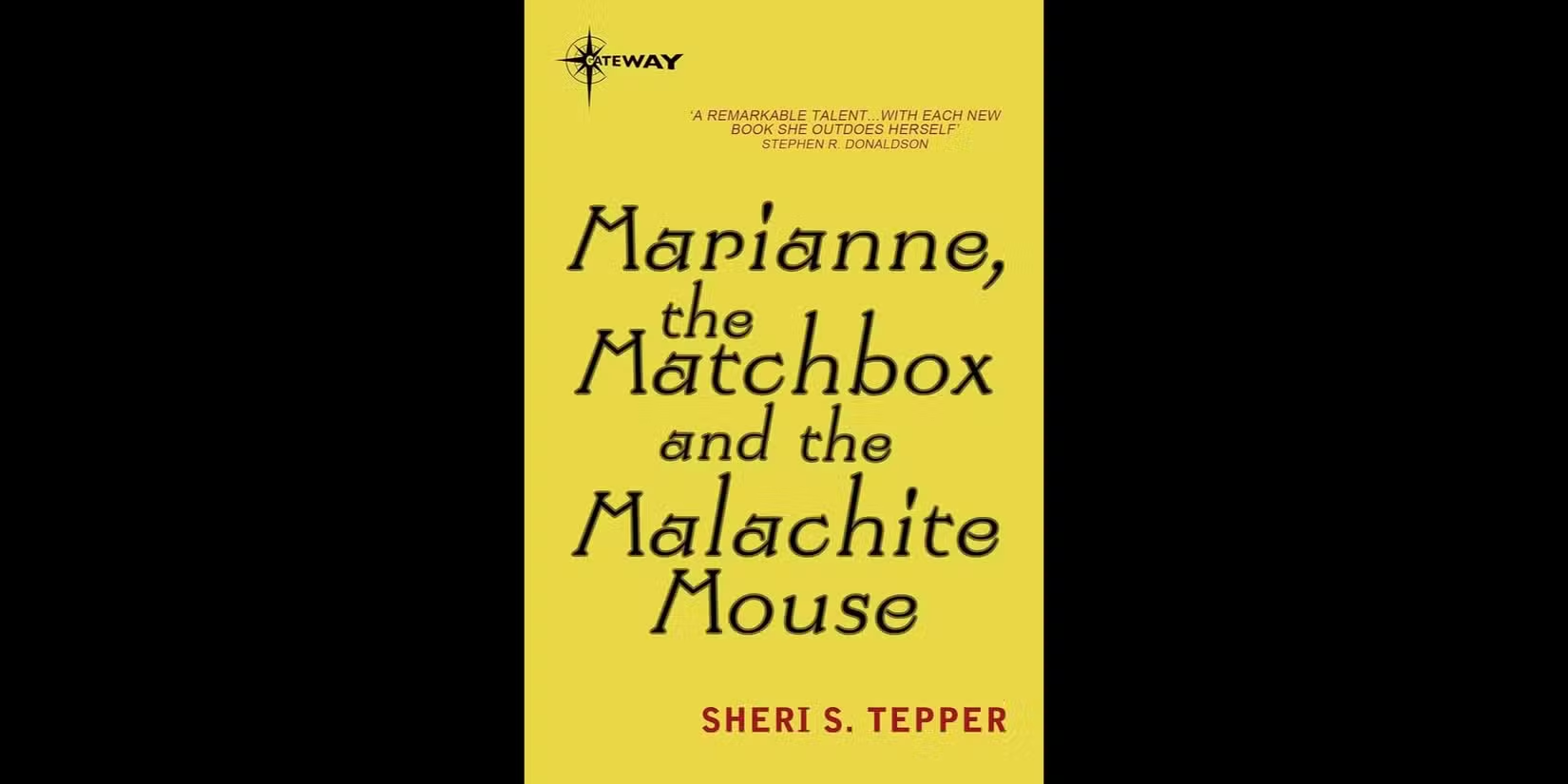
‘Marianne, the Matchbox and the Malachite Mouse’ (1989)

The winner of several big awards and one of the most prolific authors of feminist speculative fiction of her generation, Sheri S. Tepper was nothing short of an absolute legend. Marianne, the Matchbox and the Malachite Mouse is one of her best works, the final installment in the Marianne trilogy, where the titular character’s magical past begins to feel like a distant dream while she struggles in the real world.
But even though it’s one of Tepper’s best works, it’s still one of the most underappreciated fantasy novels of the ’80s. It’s a really strong ending to the series, one that’s every bit as creative as it is emotionally satisfying. Tepper finds ways to introduce fresh new ideas to the world of Marianne even as it’s coming to an end, all through the wit and fast pacing that makes her voice as an author so unique.
‘Powers’ (2007)

Ursula K. Le Guin is one of the greatest and most important authors of speculative fiction of the 20th and 21st centuries, and over her illustrious career, she wrote several of the best fantasy books and book series the world has ever seen. One such series is the YA trilogy Annals of the Western Shore, whose conclusion is the exceptional Powers, following a young boy raised as a domestic slave who can see the future.
Thankfully for fantasy readers not looking to get into a full new series right now, each book in Annals of the Western Shore follows a different main character, making Power—the best of the bunch—easily understandable by itself. It’s one of those fantasy books better than most movies out there, a nuanced exploration of freedom and power that even those who don’t typically love YA fantasy should consider reading.
‘Myth Conceptions’ (1980)

Robert Asprin isn’t exactly a mainstream literary fantasy giant, which makes the discovery of his work all the more satisfying. He was arguably best known for his comedic work, his amusing Myth Adventures series in particular being one of the most enjoyable fantasy comedy book series of not just the 20th century, but perhaps of all time. Myth Conceptions, the second installment, where a court magician has to oppose the world’s mightiest army, is the best of the bunch.
Asprin’s writing style across the whole Myth Adventures series is delectably accessible and amusing, and Myth Conceptions in particular blends Asprin’s universally appealing sense of humor with some surprisingly deep worldbuilding and razor-sharp dialogue. It’s not high art, but anyone who loves their fantasy with a hearty side of puns and banter is pretty much guaranteed to love this underrated gem.
‘Sword-Dancer’ (1986)

Well-known for her work in both fantasy and historical fiction, Jennifer Roberson isn’t a particularly big name outside of niche fantasy fan circles, but she absolutely deserves to be. For reasons why, one needn’t look further than Sword-Dancer, the first chapter of the Tiger and Del series. In it, a legendary mercenary and a mysterious warrior team up on a dangerous rescue mission across the desert.
It’s one of the most near-perfect fantasy books nobody remembers, a really underappreciated book written by a really underappreciated fantasy author. Led by a pair of deeply compelling characters and told with a sense of adventure that fans of the genre can always appreciate, it’s a page-turner that should be perfectly able to get anyone instantly hooked on Tiger and Del.
‘The Silver Mage’ (2009)

Many fantasy book series run for several years and many installments, but Katharine Kerr’s Deverry Cycle, a sweeping narrative of Celtic fantasy spanning several centuries, is on a whole other level. A whopping 23 years after the publication of Daggerspell, the first novel in the series, came the fifteenth installment, The Silver Mage. It’s the highest-rated chapter in the series on Goodreads, and for good reason.
Of course, getting to this point in the Deverry Cycle already means that the reader has fallen in love with the world of Deverry deeply enough to read fifteen books’ worth of it. But even if one were to (for some reason) start here, The Silver Mage would still be an incredible novel in its own right. The writing is hugely accessible, different arcs and plot lines are brought to deeply satisfying conclusions, and the bits of Celtic folklore are the cherry on top.
‘Dragonsong’ (1986)

When a story blends elements of science fiction and fantasy, it’s referred to as science fantasy. It’s the genre that has given us some of the greatest sci-fi and fantasy novels of all time, including the awfully underrated Dragonsong by Anne McCaffrey. It’s the third installment in the 24-novel Dragonriders of Pern series, and it’s also one of the best fantasy books of the last 50 years.
Even older readers ought to consider adding it to their library, because it really is that good of a book.
As one of the best YA fantasy books of its time, Dragonsong is the perfect bridge for younger science fantasy readers to transition into more mature novels. And yet, even older readers ought to consider adding it to their library, because it really is that good of a book. With its richly detailed worldbuilding, heroic protagonist, and deeply emotional story, it’s a wonderful piece of uniquely ’80s-y fantasy literature.
‘The Dying Earth’ (1950)

It’s not just younger readers who deserve great fantasy books, but grown adults too; and as far as underappreciated fantasy books for adult readers go, it doesn’t get much more timeless than the 76-year-old book The Dying Earth. It’s the first (and best) chapter of the book series of the same name by Jack Vance, a collection of science fantasy short stories set in a distant future when humanity is disappearing, and civilization is decaying.
Part post-apocalyptic, part fatalistic adventure, and part sword-and-sorcery gem, The Dying Earth is easily one of the best fantasy books of the 1950s. It was considerably praised upon release and even went on to influence elements of Dungeons & Dragons, and yet, it has faded into relative obscurity over the years. Even still, it has aged like fine wine, blending science and magic in ways so delightfully creative that they’re also endlessly re-readable.
‘The High King’ (1968)

The fifth and final installment of Lloyd Alexander‘s The Chronicles of Prydain series, The High King is top-tier children’s fantasy from the mid-20th century. It is, indeed, one of the best books of the 1960s when it comes to fantasy for the smallest readers of the family, and it’s even hugely enjoyable for fans of the genre who are well into their adult years.
The book delivers powerful character arcs, sky-high and wonderfully emotional stakes, and a timeless message about heroism that you always expect from a Hero’s Journey tale like this one. Today, The High King remains a childhood classic for many readers even after almost six decades of its publication—but that’s still not nearly as big of an audience as it deserves.
‘Troy: Lord of the Silver Bow’ (2005)

David Gemmell was a master of heroic fantasy and has proven to have been massively influential over the years, yet his Troy trilogy still doesn’t deserve even a fraction of the love and praise it deserves. The series is historical fiction just as much as it is fantasy, and its opening installment, Troy: Lord of the Silver Bow, just so happens to be the best of the three.
It’s a fantastic introduction to Gemmell for those unfamiliar with him. Like the rest of the author’s work, Lord of the Silver Bow blends highly stylized depictions of violence and brutal combat with deeply layered character development and vivid worldbuilding. It’s a book that’s just as much of a must-read for fantasy fans as it is for history buffs.
‘Tigana’ (1990)

Canadian writer Guy Gavriel Kay is one of the most accomplished names in the modern history of fantasy literature. He revolutionized historical fantasy and helped Christopher Tolkien edit J. R. R. Tolkien‘s The Silmarillion, and yet there are those who’d argue that his biggest achievement is Tigana. This masterful high fantasy epic follows a band of rebels seeking to overthrow a pair of rival tyrants.
It’s one of the best fantasy books of the 1990s, hugely elevated by Kay’s lyrical, poetic, absolutely gorgeous prose. Within a single tightly-paced book, you get the thematic and emotional scale of an entire epic saga of fantasy novels. That’s just the kind of artist that Kay was. Complex, creative, and bittersweet, Tigana is a must-read for anyone who loves fantasy.
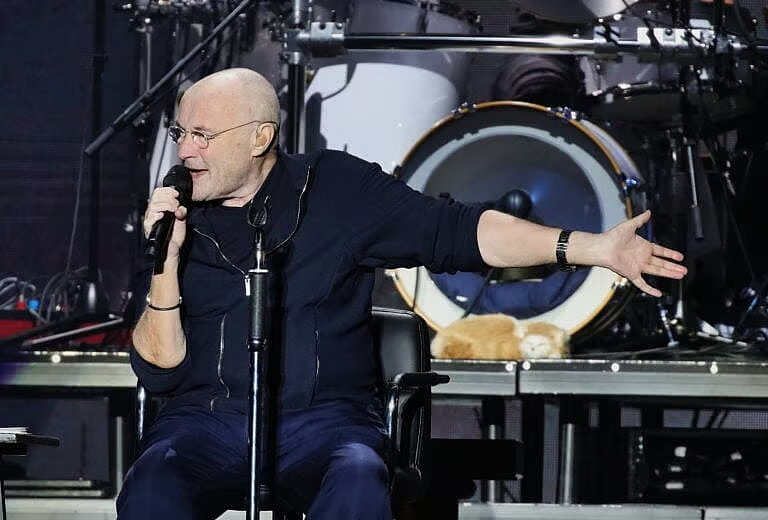
Phil Collins has enjoyed one of the most celebrated careers in music, first rising to fame as the drummer and later the lead singer of Genesis before launching a successful solo career. The musician concluded his final tour in 2022, and at 75 years old, he is reflecting on the frightening health scare he had in 2024 that left him believing he was nearing the end of his life.
Phil Collins has faced a number of health challenges over the past two decades that have significantly affected his ability to perform. Among them is a spinal injury that caused mobility issues and a few knee surgeries.
In 2023, the singer was more than a decade sober before he had a relapse that eventually sent him to the hospital in 2024 for alcohol addiction and organ failure. His health was in such dire condition that he was placed on life support, and his family and close friends were called to say goodbye.
“My kidneys were packing up, my organs were just seizing up. People were coming to say goodbye,” Collins told The Sunday Times. Admittedly, he said he was mostly unconscious at that time, but noted that those who were closest to him feared it was the end. “It could all have gone so terribly wrong,” he said.
All The Singer’s Five Children Were By His Bedside
Collins added that important decisions had to be made, such as whether to keep him on life support. All of the drummer’s children visited him to say their final goodbyes.
He has been married three times and is the father of five children. He shares Joely and Simon with his first wife, Andrea Bertorelli. He later welcomed daughter Lily Collins, best known for starring in “Emily in Paris,” with his second wife, Jill Tavelman. With his third wife, Orianne Cevey, he has two sons, Nicholas and Mathew.
Fortunately, he went on to recover. “I haven’t had a drink since,” he proudly shared. His recuperation wasn’t swift, though, as he spent seven months in a hospital in Switzerland.
Phil Collins Years For Companionship
Collins is currently based in Switzerland and has a live-in nurse who helps care for him following his health crisis. The singer admitted that he would like to find love again and misses certain parts of being in a relationship.
“I’d love to be in love again. I would love a relationship. Kissing somebody, for example. You know, pretty basic stuff,” the singer confessed.
Following his split from his third wife, he entered a relationship with news anchor Dana Tyler in 2007, which lasted until 2020.
At his age, however, Collins said love may no longer be in the cards for him. “I think it’s probably too late for that. I’m not a very social person. I don’t you know, I don’t go out,” he said.
Lily Collins Wrote An Open Letter To Her Father
Lily didn’t always have a close relationship with her father, which he detailed in her 2017 memoir “Unfiltered: No Shame, No Regrets, Just Me.” The actress said her bond with Collins deteriorated after her parents’ divorce.
Lily also penned an open letter to him in the chapter “A Letter to All Dads,” in which she later realized that many of her insecurities stemmed from “issues” with her father. “I forgive you for not always being there when I needed you and for not being the dad I expected. I forgive the mistakes you made,” she wrote.
The father and daughter have since mended their relationship, and Collins shared that he spent the New Year in London with family and Lily. “I have a wonderful relationship with Lily now. So everything has a happy ending, most of the time,” he said.
Phil Collins Is Not Closed Off To Performing Again
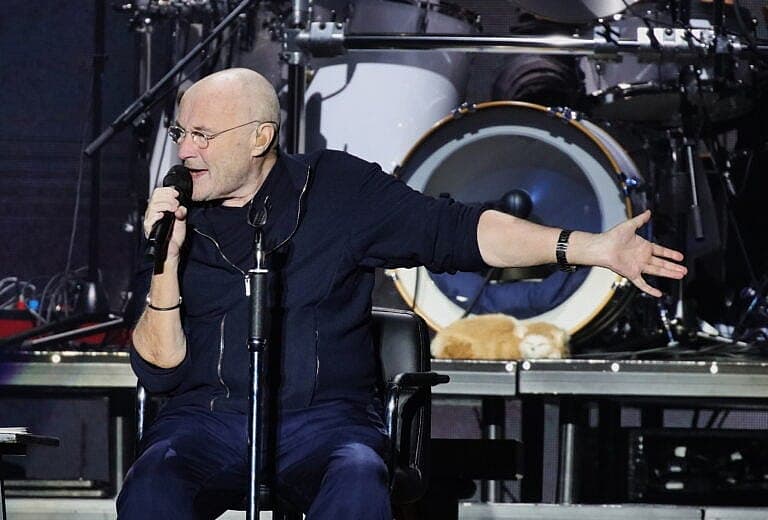
Collins last performed at “The Last Domino? Tour” in 2022 with Genesis. At that time, he announced his retirement due to multiple health issues.
In May, however, Collins shared a positive update on his health, revealing that he feels the healthiest he has in a long time. The musician has unfinished songs and ideas that he’s toying with, as well as a few finished works, and he isn’t opposed to the idea of returning to the stage. “I would contemplate… I’m constantly saying to myself, I better go back down to my studio at home,” he said.
Collins will be inducted at the Rock & Roll Hall of Fame for a second time in November, this time in recognition of his solo career.
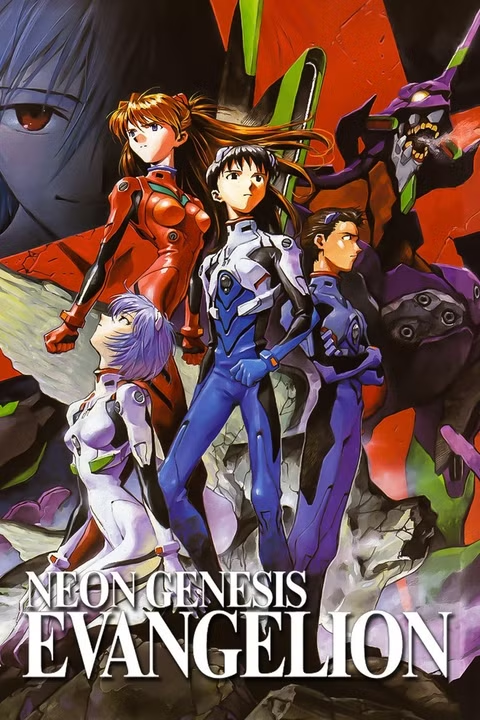
In the mid-1990s, a groundbreaking mecha series emerged from producers Gainax and Tatsunoko Production, forever changing the sci-fi genre. Set in the year 2015, 15 years after a devastating global catastrophe, the anime follows a reluctant teenage boy who is recruited by his estranged father to pilot a mysterious biomechanical weapon against monstrous creatures called Angels that threaten humanity.
Running for 26 episodes between October 4, 1995, and March 27, 1996, Neon Genesis Evangelion remains one of the greatest anime series ever made. It debuted to widespread critical acclaim and today holds a rare 100% Certified Fresh critics’ score on Rotten Tomatoes, alongside an 89% audience score. Over the past three decades, the series has profoundly influenced anime and sci-fi while remaining one of Japan’s most commercially successful multimedia franchises through television, films, merchandise, and home video releases.
Now, one of the most essential sci-fi anime ever made is heading to a new streaming home. According to Polygon, Neon Genesis Evangelion will arrive on The Criterion Channel on September 1, 2026, through a partnership with North American distributor GKIDS. The collection will include three entries from the franchise. First is the original 26-episode series, available in the Japanese dub and the original English dub, the latter streaming officially for the first time. Also included is Evangelion: Death (True)², the 1998 feature-length recap film, and The End of Evangelion, the acclaimed 1997 movie that serves as the alternate conclusion to the OG series.
The Legendary Mecha Series Has Aged Like Fine Wine
Directed by Hideaki Anno, Neon Genesis Evangelion concluded with two famously divisive episodes that many viewers found confusing. In response to the mixed reception, Gainax released The End of Evangelion, written and co-directed by Anno, which has since become one of the most celebrated anime films ever made.
Anno later revisited the franchise with the four-film Rebuild of Evangelion series, released between 2007 and 2021. Rather than serving as straightforward remakes, the films gradually branch off from the original story before delivering an entirely new conclusion. While the Rebuild films will not be part of Criterion Channel’s lineup, they are available on Prime Video until they leave the service in mid-August.
Neon Genesis Evangelion arrives on The Criterion Channel this September. Stay tuned to Collider for the latest entertainment news.

- Release Date
-
1995 – 1996
- Network
-
TV Tokyo
- Directors
-
Keiichi Sugiyama, Masahiko Otsuka, Tensai Okamura, Shoichi Masuo, Minoru Ohara, Seiji Mizushima, Tetsuya Watanabe, Ken Ando
- Writers
-
Akio Satsukawa, Yoji Enokido
-

Megumi Ogata
Shinji Ikari (voice)
-
Kotono Mitsuishi
Misato Katsuragi (voice)

News Videos26 seconds ago
Next 48 HOURS! Bitcoin, Ethereum & Altcoins Are At The Pivot Point

Business2 minutes ago
ZoomInfo: Cheap On Earnings, Expensive On Enterprise Value

Crypto World3 minutes ago
XRP News: xrpld 3.2.1 Hotfix Patches Manifest Flood Draining XRPL Node Resources


-

 Business5 days ago
Why Trees Belong on the Risk Register
-

 Fashion3 days ago
Weekend Open Thread: Wit & Wisdom
-

 Politics3 days ago
Meta enters AI-training agreement with far-right ‘propaganda rag’ Newsmax
-
 Entertainment6 days ago
‘Stargate’ Creator’s New Sci-Fi Series Returns for Season 3 Tomorrow
-

 Crypto World2 days ago
MicroStrategy Post-Earnings CLARITY Act Push Could Add New Catalyst for Its Stock
-

 Politics6 days ago
The Part of the Electric Transition Nobody Wants to Discuss
-

 Business5 days ago
Major shareholder moves on Canyon
-

 Crypto World2 days ago
XRP Ledger v3.3.0 brings five institutional features
-

 News Videos4 days ago
Bitcoin Enters the 3rd Stage of the Bear Market
-

 Crypto World6 days ago
Kraken Enables Retail Access to Jersey Mike’s IPO via Tokenized Shares
-

 Tech6 days ago
New macOS Sequoia & Sonoma security updates for older Macs
-

 Politics4 days ago
Luke Littler’s dominance sparks GOAT debate
-

 News Videos6 days ago
Claude: Build Financial Dashboards in Minutes (2026)
-

 Business6 days ago
Johnson & Johnson agrees to $5.5B settlement over talc cancer claims
-

 Sports3 days ago
Seema Kaliramna Wins Discus Throw Bronze, Takes India’s CWG Medals Tally To 17
-

 Crypto World1 day ago
Crypto PAC spending tops $2M in Michigan House race
-

 Business3 days ago
Trump Announces Hamas Disarmament Agreement as Iran Strikes Kuwait Air Base and US Attacks Pause Overnight
-

 Tech5 days ago
Gemini can now summarize the messiest comment threads in Google Docs
-

 Tech1 day ago
ESET tracks rise in malicious AI skills and adaptable malware
-

 News Videos5 days ago
LIVE: XRP BULL RUN CONFIRMED! Donald Trump & Brad Garlinghouse Discuss Ripple
You must be logged in to post a comment Login