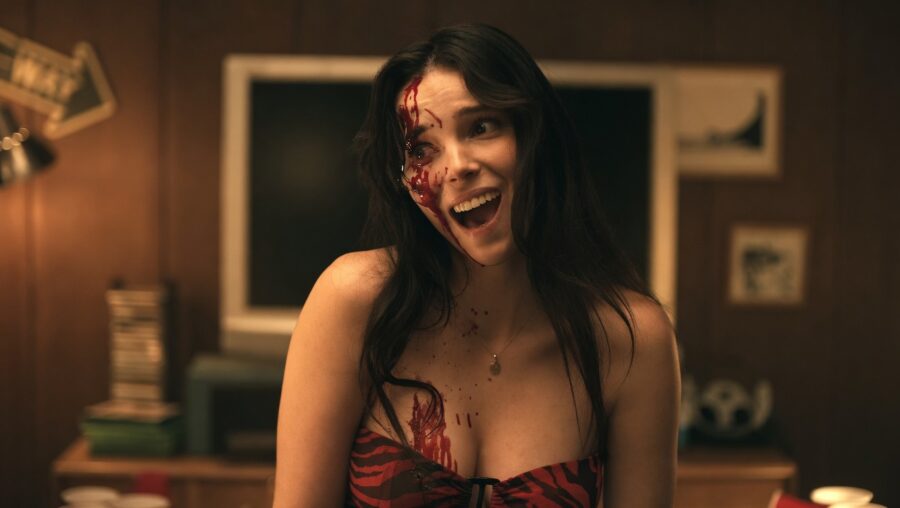
Over the weekend, Obsession crossed the $400 million mark at the global box office. It’s notable because the film written and directed by Curry Barker cost $750,000 to make, making it one of the most profitable films in history, but also because that means it has officially surpassed Supergirl ($100 million), Thunderbolts ($382 million), and by the end of the month, is projected to beat Captain America: Brave New World ($415 million). The days of Marvel turning B-tier and even D-tier characters into nearly a billion dollar movies are long over and the younger audiences are flocking back to horror in the pursuit of something new and different.
Obsession Is Young And Hip, Superheroes Are Old And Broken
Obsessiondared to tell a different type of story. Sort of. Monkey’s Paw morality stories are a dime a dozen but by leaning into toxic relationships and turning Bear (Michael Johnston) into a horrible person, Barker found the right twist on a classic. It helps that Inde Naverrette as Nikki gave the role her all with one of the year’s best performances. Compare young and hungry up-and-coming stars both behind and in front of the camera to the routine, predictable, superhero movies of the last two years and there’s no wonder younger audiences have made their choice.
Thunderboltsdared to do something different within the Marvel formula by focusing on the damaged psychological states of its villainous heroes. It’s Marvel’s best movie in years but it was damaged by years of disappointing films and an entire phase of films that feel like they have no reason to exist. At the end of the day, it’s still a superhero movie.
DC’s latest in the reborn universe under James Gunn is disappointing. Supergirl had the potential to be something different and daring. Woman of Tomorrow by Tom King is the best arc for the character and Milly Alcock is an inspired choice for Superman’s cousin, yet the end result is a very brown movie that lacks the wonder and amazement of Gunn’s own Guardians of the Galaxy.
Marvel And DC Have To Go Back To The Drawing Board
DC’s Clayface
There’s a lot of lessons Hollywood should learn from the success of Obsession, and none of them will stick. Marvel has Spider-Man: Brand New Day and Avengers: Doomsday hitting theaters this year, both of which will be massive hits. The problem is what comes after them. Marvel is going to reset after Secret Wars, but will anyone still care by then?
James Gunn’s decision to make Clayface, written by the modern King of Horror Mike Flanagan and directed by James Watkins, two people far removed from the superhero sphere of influence, is a huge gamble that can pay off big for Warner Bros. It’s closer to Obsession than it is to Superman, and maybe can bridge the gap between the horror-seeking younger audience and the older-skewing superhero audience.
No matter how the major studios decide to move forward, Obsession is a sign that the world has changed. The superhero formula isn’t working as well as it used to when Captain Marvel and Aquaman both broke a billion. The younger audience is demanding something different, something new, and until Disney and Warner Bros figure out what that is, get used to very expensive VFX-filled superhero throwdowns to lose out to the likes of Sirenhead.
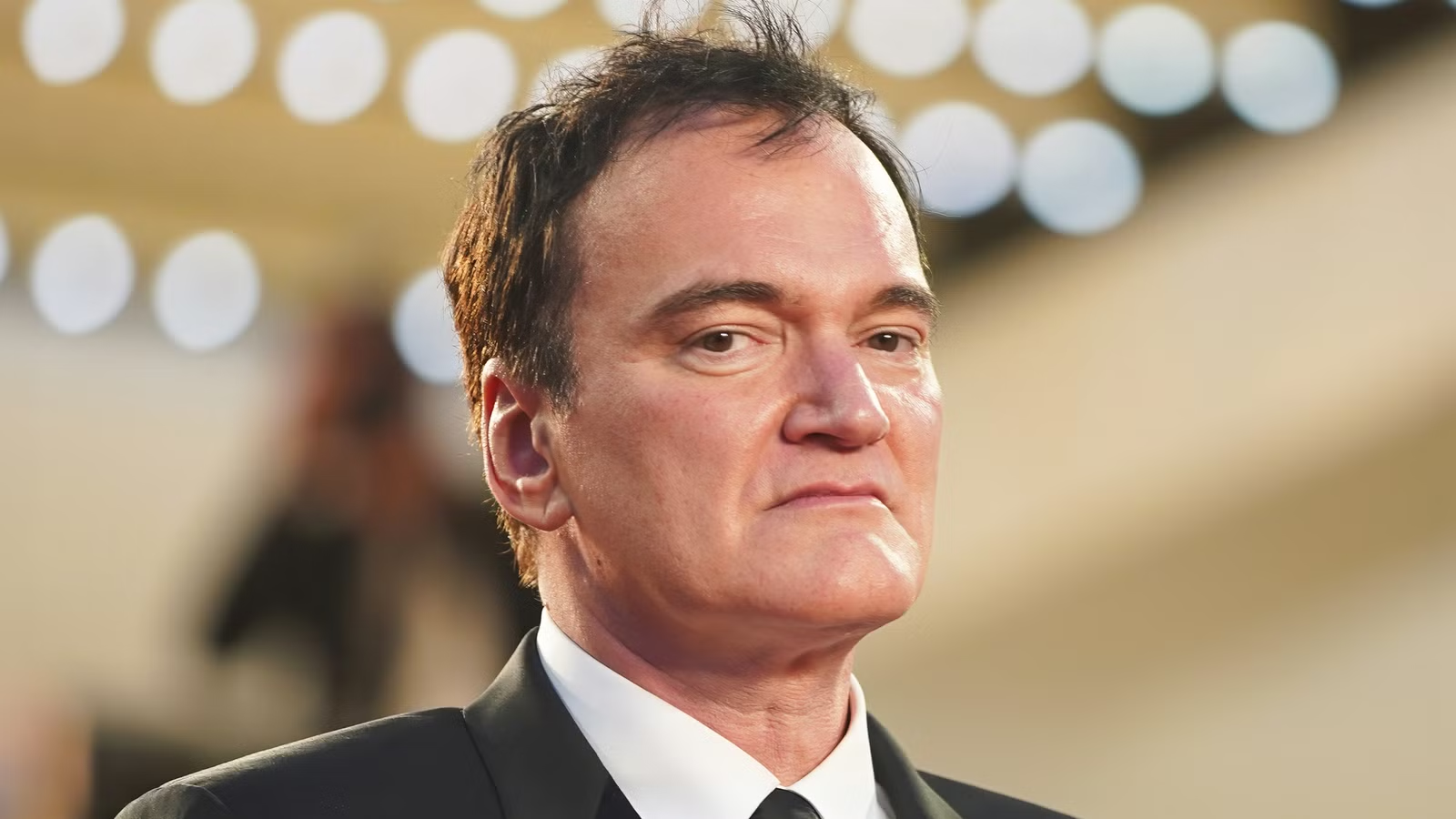
Quentin Tarantino on the red carpetImage via Shutterstock
It has been more than half a decade since Quentin Tarantino last directed a feature film. Tarantino still maintains that he will quit directing movies after his 10th feature because he believes directors lose their touch as they get older. Since his last movie, Once Upon a Time in Hollywood, Tarantino has written books, hosted podcasts, and has even penned a script for David Fincher, who’s set to release The Adventures of Cliff Booth. Tarantino is now working on a play that’ll be performed in London. And once that’s done, he’ll commence work on his new movie. This is what Tarantino’s longtime collaborator, cinematographer Robert Richardson, revealed in a new interview. Richardson also confirmed that Tarantino nearly directed The Movie Critic as his final feature a few years ago, before the project fell apart.
In an interview with Screen Daily, Richardson revealed that he was working with director Antoine Fuqua on the recently released blockbuster Michael Jackson biopic when he was summoned by Tarantino. Fuqua graciously encouraged Richardson to step away from the Jackson biopic and conclude his journey with Tarantino. Richardson has worked as Tarantino’s cinematographer for two decades since the Kill Bill films. He has won three Oscars in his career, although none of them were for Tarantino’s movies. Richardson has, however, received four Oscar nods for his work with Tarantino. The Jackson biopic ended up being shot by Dion Beebe.
Advertisement
Advertisement
Collider Exclusive · Oscar Best Picture Quiz Which Oscar Best Picture Is Your Perfect Movie? Parasite · Everything Everywhere · Oppenheimer · Birdman · No Country
Five Oscar Best Picture winners. Five completely different visions of what cinema can be — and what it can do to you. One of them is the film that was made for the way your mind works. Ten questions will figure out which one.
🪜Parasite
🌀Everything Everywhere
☢️Oppenheimer
Advertisement
🐦Birdman
🪙No Country for Old Men
Advertisement
01
What kind of film experience do you actually want? The best movies don’t just entertain — they leave something behind.
Advertisement
02
Which idea grabs you most in a film? Great films are driven by a central obsession. What’s yours?
Advertisement
03
How do you like your story told? Form is content. The way a story is shaped changes what it means.
Advertisement
04
What makes a truly great antagonist? The opposition defines the protagonist. What kind of opposition fascinates you?
Advertisement
05
What do you want from a film’s ending? The final note is the one that lingers. What do you want it to sound like?
Advertisement
06
Which setting pulls you in most? Where a film takes place shapes everything — mood, stakes, what’s even possible.
Advertisement
07
What cinematic craft impresses you most? Every great film has a signature — a technical or artistic element that makes it unmistakable.
Advertisement
08
What kind of main character do you root for? The protagonist is the lens. Who you choose to follow says something about you.
Advertisement
09
How do you feel about a film that takes its time? Pace is a choice. Some films sprint; others let tension accumulate slowly, deliberately.
Advertisement
10
What do you want to feel walking out of the cinema? The best films leave a mark. What kind of mark do you want?
Advertisement
The Academy Has Decided Your Perfect Film Is…
Your answers have pointed to one Oscar Best Picture winner above all others. This is the film that was made for the way your mind works.
Advertisement
Parasite
You are drawn to films that operate on multiple levels simultaneously — that begin in one genre and quietly, brilliantly migrate into another. Bong Joon-ho’s Parasite is a film about class, desire, and the architecture of inequality that manages to be darkly funny, deeply suspenseful, and genuinely shocking across a single extraordinary running time. Your instinct is for cinema that hides its true intentions until the moment it’s ready to reveal them. Parasite is exactly that — a film that rewards close attention and punishes assumptions, right up to its devastating final image.
Advertisement
Everything Everywhere All at Once
You want it all — and this film gives you all of it. The Daniels’ Everything Everywhere All at Once is one of the most maximalist films ever made: action comedy, multiverse sci-fi, family drama, existential crisis, and a genuinely earned emotional core that sneaks up on you amid the chaos. You are someone who responds to ambition, who doesn’t want cinema to choose between being entertaining and being meaningful. This film refuses that choice entirely. It is overwhelming by design, and its overwhelming nature is precisely the point — because the feeling of being crushed by infinite possibility is exactly what it’s about.
Advertisement
Oppenheimer
You are drawn to cinema on a grand scale — films that understand history not as a backdrop but as a force, and that place their characters inside that force and watch what happens. Christopher Nolan’s Oppenheimer is a film about the terrifying gap between what we can do and what we should do, told with the full weight of one of the most consequential moments in human history behind it. You want your films to feel important without feeling self-important — to earn their ambition through sheer craft and the gravity of their subject. Oppenheimer does exactly that. It is enormous, complicated, and refuses easy comfort.
Advertisement
Birdman
You are drawn to films that foreground their own construction — that make the how of the filmmaking part of the what it’s about. Alejandro González Iñárritu’s Birdman, shot to appear as a single continuous take, is cinema examining itself through the cracked mirror of a fading actor’s ego. You respond to formal daring, to the feeling that a film is doing something that probably shouldn’t be possible. Michael Keaton’s performance and Emmanuel Lubezki’s restless camera create something genuinely unlike anything else — a film that is simultaneously about creativity, relevance, self-destruction, and the impossibility of ever truly knowing if your work means anything at all.
Advertisement
No Country for Old Men
You are drawn to cinema that trusts silence, that refuses to explain itself, and that treats dread as a form of meaning. The Coen Brothers’ No Country for Old Men is a film about the arrival of a new kind of evil — implacable, arbitrary, and utterly indifferent to the moral frameworks we use to make sense of the world. It is one of the most formally controlled films ever made, and its controlled restraint is what makes it so terrifying. You want your films to haunt you, not comfort you. You are not interested in resolution if resolution would be dishonest. No Country for Old Men is honest in a way that most cinema never dares to be.
Advertisement
Advertisement
Here’s What Robert Richardson Had to Say About Quentin Tarantino’s Final Movie
In his new interview, Richardson said that Tarantino is headed in a “fresh” direction for his final film, and revealed when fans can expect concrete information about it. “He’s not going to talk about where he’s going; it’s some time next year, the exact time isn’t locked. It could be prepped in the summer. It depends on how the play does and where it goes,” Richardson said, adding, “He’s going to get out of The Movie Critic and the sequel to Once Upon A Time In Hollywood. This next chapter will be something fresh.” Starring Brad Pitt, Fincher’sThe Adventures of Cliff Booth, will be released on IMAX screens this November, before it debuts on Netflix in December. Stay tuned to Collider for more updates.
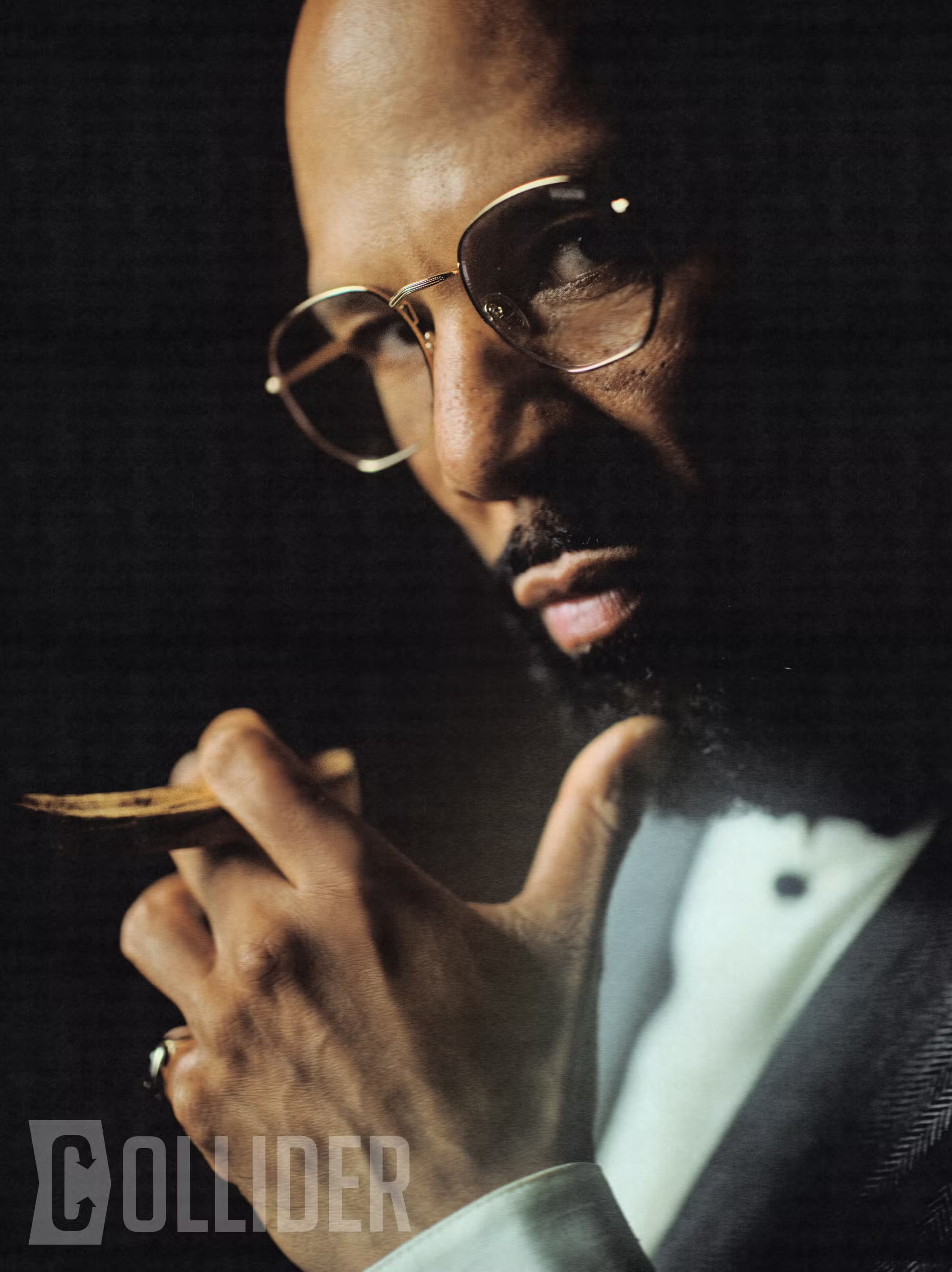
Common has never really been too interested in staying in one lane. More than three decades after first breaking out as a rapper and going on to win multiple Grammys, the Chicago native is still adding new chapters instead of repeating old ones. He might have first lit the flame with music all those years ago, but after a single spark led him to film, television, writing, and activism, none of it feels like reinvention for reinvention’s sake. Long before he was the calculating Robert Sims on Apple TV’s groundbreaking sci-fi, Silo, he was making songs that lingered because they felt lived in. That thread still runs through his work today.
Decked out in an all-white ensemble with a loose sweater draped over his shoulders, Common is the epitome of cool on a Tuesday afternoon in Los Angeles. Junket days rarely leave much room for small talk, but he never rushes our time together. Instead, he greets me with a warm smile, pauses before answering, and speaks with thoughtful intention. It’s even more obvious when I ask about what it means to him to create work that stays with people.
Advertisement
“When I first started my work as an artist, music, all I knew was the love I have for it. I was just putting in my soul and my spirit and my creativity, my imagination, my love for it as a fan of music and all types of art. But as I started to create and put music out there, I liked the way it felt when I created art that resonated with people,” Common says, emphasizing the importance of that element over any record sales. “It was more about the way people responded to the music, that light that I could see in their faces when they were at the shows, the conversations I would have with people about the music. And I think from that point, I realized the power of art; I saw what art can be.”
Listening to him, it’s hard not to draw comparisons to The Flamekeepers in his Apple TV series, Silo. While the group does persist in the deep dark silos, their sole purpose is to preserve fragments of the past so that truth survives. Common isn’t trying to archive history in quite the same way, but there is a similar instinct behind the work he has chosen throughout his career. Whether it’s Selma’s Oscar-winning anthem, “Glory,” his roles in The Hate U Give or Hell on Wheels, or the causes he lends his voice to, Common is continuously drawn to work that outlasts the individual moment in which it was created.
‘Silo’ Season 3 Finally Lets Robert Sims Out of the Shadows
If Common believes the best art lives beyond a specific point in time, then Silo has quietly become one of those rare television series doing exactly that. Fans of the Apple TV show don’t just watch it religiously; they debate and dissect every single frame. It’s that level of attention that makes Robert Sims’ evolution even more satisfying this time around, and he steps into Season 3 as one of its most fascinating and complicated characters.
Advertisement
With his slick black leather jacket, sharp turtleneck, and quiet evil-henchman energy that could rival even the most legendary Bond villains, Robert has spent two seasons as one of Silo’s most intimidating figures — enforcing rules, protecting Judicial, and standing firmly behind a system that rarely welcomes questions (and rarely tolerates them). But he always seems to know more than he’s saying, which is exactly what makes Season 3 such an interesting turning point for the character.
“When you find [him] at the end of Season 2, he and his wife Camille [are] going back and forth on the right way to do it. Some of the things that he believed throughout his life were being questioned, and his wife was one of the people who was bringing it to him. But internally, he was also having questions about the things that he had been fighting for and standing up for and being the head of Judicial for.”
Common never once describes his character as a man losing power, but more as someone losing certainty, and that difference matters. While Robert finds himself caught between the job he’s expected to do and the doubts quietly building beneath the surface, he is one of the people trying to keep everything together despite a cracking foundation. One of the smartest choices Graham Yost’s adaptation of HughHowey’s novels makes this season is refusing to turn Robert into either a hero or a villain.
“What interested me the most was the fact that this season, we get to see the human being,” Common reveals. “When you are dealing with trying to protect your son and create something right for your child… [or] when you’re dealing with a relationship, a marriage that you’ve put all your heart and soul into, and built this secure place for your family, and all that is unraveling, and you’ve got to deal with a lot of different emotions, you question a lot of things about yourself.”
Advertisement
For Common, Alexandria Riley’s Camille is the key to understanding Robert this season. Watching those two drift to opposite sides of the same question also gives Season 3 some of its emotional weight, especially because neither of them is acting out of spite toward the other. They’re just arriving at different conclusions, which Common views less as conflict and more as growing uncertainty.
He sees that what she’s been fighting for may not be wrong.
Advertisement
“You could be in a place of authority, but inside, be in a place of unknown, and really trying to find yourself and find your way.” That said, Common admits that his character isn’t “really grounded” at the start of the season, either. “That first episode, though, he has to do the job. It’s like being in a job, and you’re not sure you’re in the right place, and you’re doing the right thing, but you’re still executing it. He has a lot of questions that need to be answered and decisions that need to be made.”
One of the biggest changes Common stresses about Season 3 is how Robert and Camille are at opposite ends of what it means to protect those in Silo 18. “What’s even causing more turmoil and more of him being disgruntled is that he and his wife, the person who was the security blanket, the person who was his confidant, they’re not vibing,” he says.
That tension with his wife that also changes how Robert looks at Rebecca Ferguson’s Juliette. While originally, she represented everything he believed threatened the silo’s survival, she’s now become something else entirely. “I really think that Robert has more room for compassion for Juliette at the beginning of the season,” Common says, adding that there is an element of wonder in how Robert views her, given that she was the only person who went out to clean and came back alive. “He sees that what she’s been fighting for may not be wrong.”
That shift is part of what makes Common’s scenes with Ferguson, whom he describes as a “free bird,” feel so different this year, too. They’re not exactly playing opponents, but more so two people slowly discovering that they may have been searching for the same thing all along, even if they took different roads to get there. Robert’s question of “What is the truth?” also gives him a better understanding of Juliette’s cause.
Advertisement
“They haven’t had any time to communicate or bond, but he looks at her differently. He sees her differently, with more respect and understanding, and wonder.” The scenes he shared with Ferguson, Common says, had “life to them,” simply because the two were so present for each other. “It was interesting to play in the first episode because I know that Robert, as a character, was deceiving her, but I also cared about her.”
Common Has Never Been Afraid of the Risk
Photography by GinaGizellaManning for Collider
That kind of compassion isn’t something Common wields depending on the role. It’s actually the same instinct that’s guided him since he first picked up a microphone in the late 1980s as a student at Luther High School South in Chicago. Long before audiences knew him as Robert Sims on Silo, they knew him as a rapper who wasn’t afraid to grow beyond expectations. That willingness to move before everyone else also defined some of the biggest swings in his music career.
Advertisement
But before Common addresses the risk of 2002’s Electric Circus, the singer-songwriter highlights the impact his favorite artists had on him in terms of what their music could hold for others. “Growing up, it was StevieWonder, KRS–One, NinaSimone, ArethaFranklin, and Earth, Wind, andFire, all these artists who shaped my life and influenced me to be who I was,” he says warmly. “I realized, ‘Wow, this is something that my art can do.’”
It’s interesting that even now, after Grammys, platinum records, and an Academy Award, Common still talks about music not as a form of entertainment, but more as a responsibility. Those artists didn’t simply soundtrack his childhood, but showed him that songs could shift the way we think, feel, or even see ourselves. That’s the standard he quietly set for his own work long before anyone started calling it influential. “I just did my best, and I continue to do my best to be as honest with where I am as an artist,” he says with a smile. “I want to stay open and stay free to grow and keep the higher purpose in the work that I do. I believe that that is what will allow things to have a timeless effect, and when you put the truth into it.”
As luck would have it, that philosophy would finally be tested. By the time his fourth album,Like Water for Chocolate, arrived in 2000, Common had reached the widest audience of his career. His second single off the record, “The Light,” became a smash hit, introducing his music to listeners far beyond hip-hop’s core and giving him his first real taste of commercial success. “That was the first time I was really on the summer jams in Seattle, in Alabama, in freaking Chicago to Brooklyn, to New York, L.A.,” he reflects. The record, which was also produced by J Dilla and Questlove, is one he looks back on fondly as “really soulful and different.”
But while the easier decision would’ve been to make Like Water for Chocolate all over again, Common went in another direction with his sound. After listening to artists like PinkFloyd, JimiHendrix, Radiohead, and Stereolab, the artist wondered what those sounds would become through his own perspective. “What does that sound like coming from me, coming from this Black man here from the South Side of Chicago? How do I interpret that music that’s inspired by that?’ And that’s what Electric Circus became,” he says. “And it was very risky.”
Advertisement
Risk, as it turned out, came with consequences, as Common admits. “At least from the hip-hop audience, they were like, ‘Oh, we don’t like this.’ The critics didn’t dig it,” he recalls with a laugh. “Man, it was a tough time, to be honest.”
Time, however, has a funny way of changing the conversation. In the years that followed, the resurgence of the album on streaming would find fans calling it a cult classic. “That album was labeled as one of the most innovative and creative and classic albums of that time period,” he grins. “People to this day come up to me and say, ‘Man, one of my favorite albums of yours is Electric Circus.’”
Common doesn’t tell that story like some kind of victory lap or sign of personal vindication. If anything, he sees it as proof that chasing the truth is usually worth the wait. “As an artist, you gotta go where you are, the love, what you care about,” he adds. “There’s something in creating something from a truthful place that at least allows it to have a timeless effect. It might not always, but it will at least be allowed if you create it from a place of truth. So, that was my truth at that time.”
Advertisement
‘Hell on Wheels’ Taught Common to Trust the Journey
Imae via Chris Large; AMC/Everett Collection
After the creative gamble of Electric Circus, Common found himself searching for another place to grow, and as luck would have it, he found it somewhere he never expected. “My first acting class was like, ‘Wow, I feel that freedom. This is what it should be. This is what I believe God wants me to do, also.’ So I did.”
Never wanting to be “put in a box as a musical artist,” Common now admits he needed to express himself in some artistic way, where he could “feel free.” That sentiment eventually led him to Hell on Wheels, where he spent five seasons playing the incredibly layered former slave turned Chief of Railroad Police, Elam Ferguson. Looking back almost 10 years to the date of the series finale, Common doesn’t simply remember his time on the award-winning drama as another acting credit. Rather, he talks about it the way someone remembers the place where everything finally clicked.
“Hell on Wheels, man, that was like a really great college for me,” he smiles, reclining slightly as he reflects on how the AMC series both taught him to work and be present. “It was a real lesson because it was the first time I was working that consistently, and I got to stay in a character and learn more about that character.” For the first time in his career, Common wasn’t just building a character over the course of a few weeks with various crews and directors, but rather over years. As it goes, TV forced him to embrace something he already learned about in music, which is that you can’t always know where the journey is headed.
Advertisement
“When you read a movie script, you know where your character ends, you know what your character may be doing in Act Three. In a TV series, you don’t, so you have to be open to where they take you. They also build on what you bring into the character,” he points out.
Listening to him talk about the show, it’s easy to understand why Silo’s Robert Sims has been such a natural fit across three seasons. There’s a visible pleasure in the way Common describes that process, as though the uncertainty is part of the appeal. He doesn’t seem interested in deciding who a character is before he steps into their shoes. For him, the work is in the discovery.
My first acting class was like, ‘Wow, I feel that freedom. This is what it should be. This is what I believe God wants me to do, also.’
Advertisement
“I always have to go to what the truth of the character is,” he says. “I always have to go to that character’s purpose in the story, and how they serve the story.” That answer leads me to another question, about something I’d noticed between Elam and Robert. On paper, they’re worlds apart. One has spent years fighting against an unjust system, while the other devotes himself to protecting a version of the same. But beneath those differences, both men are trying to light a spark in worlds that ask impossible things of them.
Turns out that Common has been thinking about that connection, too. “I saw some similarities,” he says, almost squinting. “Initially, playing Robert Sims, I was like, ‘Man, me, Rashid, Common, is not the type of guy like Robert Sims. I’m not that type of person.’” But then, as he puts it, Robert began changing for him. “Elam had to fight against that. He had to buck the system in Hell on Wheels early because he was a Black man in the 1800s. But Robert discovered that this system that he was fighting for or standing up for, there’s no truth in that. So now, he is becoming closer to what Elam is in that way.”
What stayed with Common most about Elam wasn’t just that he fought the system; it was that the world never fully hardened him, even after everything it put him through. “One thing about Elam that I really did my best to bring to the character was, as much as this Black man during that time had been through, he still had love in him. He still had compassion and cared about people.”
Advertisement
It’s an observation that says as much about Common as it does about the characters he chooses to play. Whether he’s stepping into a Western or a dystopian sci-fi series, he isn’t interested in people who already have all the answers. He’s drawn to the beats of confidence that lead to curiosity, because that’s where the humanity lives.
Common Is Still a Student of the World
Photography by Gina Gizella Manning for Collider
If Hell on Wheels taught Common anything about himself, it was that growth doesn’t end once you’ve found your footing. In fact, it becomes easier to recognize all the places where real evolution comes from. When I ask how all these chapters of his career have shaped the artist he is today, he laughs. “Oh, man, I’ve got so many different eras. It’s fun sometimes to look back and see pictures of myself or even hear myself on albums, and I’m like, ‘Wow, I said that?’ But the thing that I embrace is being open to the growth and being open to the eras.”
Advertisement
Common doesn’t talk about those branches in time as though they’re versions of himself he’d rather leave behind. Instead, he carries all of them with him, even the difficult ones. “All these different facets of life that I’ve experienced definitely helped shape where I’m going now, and I don’t forget those things. Like the shows where people were throwing pennies at me in New Jersey, at this club where I’m opening up for KRS. I don’t forget that.”
The triumphs matter, too, and Common humbly admits he doesn’t forget the “good moments.” He smiles while recounting one conversation in particular, when Prince walked up to him after hearing “The Light,” which was an experience in itself that later led to a collaboration on Electric Circus for the track “Star *69 (PS With Love).”
“When Prince came to me and said, ‘Man, the song, ‘The Light,’ I really dig that song, man. It’s a major chord.’ I didn’t know music theory like that, so I was just agreeing with Prince, like, ‘Yeah, it’s a major chord!’ Those things gave me fuel,” Common says, laughing. It’s a funny story, but it reveals a lot about how he moves through the world. Along the way, success hasn’t dulled his curiosity, but rather sharpened it.
Similarly, almost 20 years after appearing in Ridley Scott’s crime epic, American Gangster, alongside DenzelWashington and RubyDee, Common talks about the experience not through the lens of standing alongside Hollywood legends, but as someone still taking mental notes of everything he witnessed on set. “The times in life when I’m sitting on a set and watching Denzel and Ruby go to work… I’m like, wow, I’m picking up all these things,” he recalls. “Even from some artists that may not be as well known, but I still see them at work. All those things and people help shape and form me and inspire me.”
Advertisement
While watching Hollywood icons work is one classroom, life has always served up different lessons for Common. Some of the people who have left the deepest impression on him aren’t your regular Grammy winners or Academy Award nominees; they’re people he’s met while visiting prisons, where conversations have stayed with him long after he walked back out.
“When I visit people who are incarcerated, and I go there and just have conversations with the women and men who are incarcerated, some conversations make me who I am, like the talks I have with them,” he says with a pause. “Or seeing a guy who taught himself piano on cardboard because he didn’t have a piano in prison, and now he can play piano. That’s inspiring to me.”
It’s also one of the clearest insights Common offers into how he moves through life and contributes to it with several nonprofits he also supports, like Imagine Justice, Common Ground Foundation and Free to Dream. He never ranks where inspiration truly comes from — because, between Prince and a man teaching himself piano on a piece of cardboard, they occupy the same space for what’s possible when we refuse to stop growing. “I feel like being open to life and seeking, as you say, curiosity,” he says. “I’m a seeker. Those things really help inform my eras, you know?”
Advertisement
Common’s Most Important Life Lessons Were Learned at Home
Photography by Gina Gizelle Manning for Collider
Common might call himself a “seeker,” but long before he was learning from legends or individuals in prison, someone else had quietly shaped the way he sees the world: his mother, Dr. Mahalia Ann Hines, an educator and former principal in Chicago. When asked how his definition of creating an impact has changed over the years, he immediately turns to the foundation his mother laid out for him.
“My mother’s a teacher. She got a doctorate in education,” Common shares. “From the beginning, as long as I can remember life, I’ve seen her looking out for people. It wasn’t always in a formal way, but it was like, sometimes students she had, on the weekends, could come to our house and eat or whatever. I’ve seen her taking care of family too, in certain ways, and making sure they were okay, or helping friends get summer jobs.”
Yet he also admits it was never like philanthropic work; it was more for the community and “doing for people that you’re around who are in need.” He knew he wanted to continue with the same call to action he saw from his mother growing up. “Whether it was my homies, my good friends, that needed something, I would try to provide, or I would be a connector to help them get to a certain place in their lives. Whatever they wanted to pursue, I wanted to do that.”
Advertisement
Listening to Common, it’s clear that instinct never disappeared. Instead, the audience just got bigger, and he got more creative with it. “When I got out there as an artist, I still wanted to be that connector, but now for a bigger amount of people,” he says thoughtfully. “Now, it’s, ‘Okay, how can I connect these kids that come from where I come from, or any pocket on the earth, with people who have high potential but don’t have the access, how can I provide to them?’”
When I got out there as an artist, I still wanted to be that connector, but now for a bigger amount of people.
Advertisement
As he talks, the word “access” keeps resurfacing, proving this is a characteristic that is ingrained in every fiber of Common’s being. As his career expanded, so did the knowledge of what he could offer others through his successes. Mentorship became one part of it, but introducing young people to careers they may never have imagined became another.
“The blessing of certain things being successful or certain things getting out there, like winning an Oscar, was like, ‘Oh, these different people now I can make a call to,” he says most confidently. “I can make a call to the CEO of a company and say, ‘Hey, man, we need to do this,’ and we come up with a 10,000-job initiative in Chicago.”
As he puts it, “it evolves” across the board. “Now I know what a gaffer is. Now I know there are people that do sound on the movie,” he says. “It’s 200 people working on this set… They might eventually say, ‘Oh, I want to be a makeup artist. Well, I want to actually be a director of photography.’”
There’s something quietly consistent about the way Common describes all of it. Whether it’s music, acting, or even advocacy, success for the multifaceted artist only seems valuable if it creates another opportunity for someone else. “At some point… I felt like as much work as I put into my acting and into my music, I wanted to have that same type of work into the activism and the philanthropic work I do, meaning have structure and be strategic and be creative with how you can help people.”
Advertisement
Common’s Found Purpose Beyond Purpose
Photography by Gina Gizella Manning for Collider
For every road that Common has taken across 30 years, it’s striking how often they lead back to the same place. Music became acting, while acting expanded into activism, and activism grew alongside service. None of it seems driven by his personal pursuit of another accolade; instead, there’s only the desire to leave something behind that genuinely matters.
While Common began our conversation by talking about work that reaches people long after it’s made, by the end of it all, he admits his journey is still just getting started. “I feel like I’m on a quest to be impactful as an actor and be as inspiring and mood-changing and life-changing as an actor and storyteller as I’ve been as a musician for some people,” he says. “It’s about picking projects that resonate with you. Of course, as an actor, you’re like, ‘I want to work! I want to work!’ But you have to still be aware and conscious and mindful of the projects you choose.”
Advertisement
That mindfulness feels like the quiet ember under everything Common does. He doesn’t pretend there’s a secret formula to building a career that lasts, either. “To me, there’s no formula, but those are the only ingredients and things that I can say I’ve put in that have blessed me and allowed me. Obviously, the power, the Most High, and the purpose of what God has put me here to do is allow me, but my consciousness of it and applying it has been those things.”
It’s a sentiment that quietly reframes everything we’ve spent the last hour talking about, as Common admits he doesn’t see art as something to consume or even create. “I’m grateful that you say that I’m a part of art that is lasting, because that’s one of the ways that you can give to the planet.”
That, more than anything, seems to be the driving force Common keeps circling back to — not legacy as a trophy case or a time capsule found in silos hundreds of years later, but as something passed along. By the time our conversation winds down, the question no longer feels like what Common has been chasing, but what has been carrying him all along.
“I hope [others] feel my driving force was about purpose, about spreading joy, about having a connection to God, to a higher power, and seeing the God that exists in all human beings. That will translate into love, so I hope that they feel like, ‘Man, one thing we got from Common’s acting, from his music, and from the work he did for people was that he put love into it, and he had love for them, and I think it was a funnel of the love of God.’”
Advertisement
Photography Credits: Photographer: Gina Gizella Manning | ProductionAssistance: GIZELLA | LightingDirector: Mike Pecci | DigitalImagingTechnician: Mike Tran | Grip: Lance A. Williams
Styling Credits: Barber: Daronn Carr | Grooming: Tasha Brown | Styling: Kate March
New footage circulating online allegedly shows a crowd arguing on Horn Island on the same day of Nolan Xavier Wells‘ disappearance. Civil Rights attorney Ben Crump reposted the video on Instagram after content creator @valsinsights initially shared the footage.
The video reportedly originated on TikTok on Monday, July 6.
Footage From Horn Island Shows Nolan Xavier Wells Amid Crowd Before Disappearance
Nolan Xavier Wells’ body was found on Monday, July 6, on Horn Island, Mississippi, two days after he disappeared following a Fourth of July celebration on Saturday, July 4. The 18-year-old was one of the few Black students on a trip to the island, and his family reported him missing when he did not return with the rest of the group.
The video that has since originated was apparently shot from a distance on a boat. And it appears to show a crowd as one individual is heard yelling. It is unclear who the person was shouting at in the footage.
Advertisement
As the footage pans from left to right, several groups of people are seen watching the argument from different boats. Several groups of people are also wading in the water while watching the argument.
Arguing Can Be Heard On The Video
One of Nolan’s friends told the Sun Herald the college student was a great role model. He added that Wells often broke up arguments among friends when they were younger.
His friend, Trace Carter, also spoke to the outlet and revealed that he had spoken to Nolan just before the trip to Horn Island.
Advertisement
“Just hit me up when you get back,” said Carter. “Just be careful, bro. Watch out for yourself.”
Wells replied, “I got you. I’ll hit you up later.”
Nolan’s best friend, 17-year-old Jayvon Williams, said he was supposed to ride to the island on the same boat as Wells, but it filled up too fast. He rode out to Horn Island on another boat but saw Nolan there around 4 p.m.
“As soon as we got out there, he told me that he loved me,” said Williams, while adding that the two always stuck up for each other.
Advertisement
Williams also noted that his friend visited with a girl on the island.
Nolan Xavier Wells Was Found On Horn Island Two Days After His Disappearance
As previously reported by The Shade Room, Nolan was found off the western tip of Horn Island. He was found two days after he was reported missing.
Jackson County Sheriff John Ledbetter claims Nolan wanted to stay on Horn Island when the group left.
“From what we understand, he chose to stay there,” he said to Good Morning America, per WLOX.
Advertisement
The Jackson County Sheriff’s Office is currently investigating, and an autopsy is scheduled for July 7.
Autopsy On Body Of Nolan Xavier Wells Reportedly Scheduled
According to WLOX, an autopsy is scheduled to be performed on the body of 18-year-old Nolan Xavier Wells. This, reportedly on Tuesday, July 7. At this time, officials have reportedly noted that the body recovered from Horn Island on Monday, July 6, appears to be that of the 18-year-old. However, “DNA testing is still needed to officially confirm the identity.”
Per the outlet, the search for the 18-year-old involved multiple agencies. This reportedly included the “Jackson County Sheriff’s Department, the Department of Marine Resources, the Gulf Islands National Seashore, the U.S. Coast Guard, and the United Cajun Navy.”
Josh Gill, the incident commander for the United Cajun Navy, reportedly told the press that the organization received information from Nolan’s family before locating his body on Monday.
Advertisement
“Got the information from the mother, as well as one of the cousins, and then jumped into action really quickly. We deployed some vessels. We deployed some surface vessels, some boats, as well as personnel with drones and some boots on the ground,” he reportedly recalled.
Per Gill, the question now shifts to, “‘Truly, what happened?”
“That’s the question everybody’s asking… We’re not law enforcement. We are a volunteer group that specializes in search and rescue and search and recovery. We leave the investigating to the law enforcement officers. All we know is the end result,” he reportedly concluded.
Internet Users Send Support To Nolan Xavier Wells’ Mom & Family
According to WXXV, Christopher Wells Jr., Nolan’s grandfather, has taken to social media, reportedly sharing a post about his grandson being found, but noting “it’s now time for answers.” Additionally, Nolan’s mother, Christine Wonsley, has also been active on Facebook.
On Monday, she announced a GoFundMe created to support funeral costs for her son.
“I know times are hard and we appreciate and are grateful for anything that is donated,” she wrote.
Furthermore, a few hours later, she returned to the platform, writing:
Advertisement
“Thank you everyone for all the support, love and prayers. Everyone if there are any articles stating I or my husband have made statements or comment regarding the loss of our son Nolan Wells, WE HAVE NOT MADE ANY STATEMENTS TO ANYONE OR ANY OUTLET. Please respect our privacy and allow us to grieve.”
In response, social media users have shared comments.
Facebook user Ashlie Renee Wyatt wrote, “I’ve seen many post about him being a light. Now, I’ve started seeing videos, and I see what they meant. He should be here. That’s the only fact I know. Sending love to all who love him… “
While Facebook user Yvette Mamanu Ramos added, “My heart is truly with you and your family. As a mom who lost my son to murder, I know there are no words that can take away this kind of pain. One thing I learned is to stay off social media and avoid watching the news as much as possible. Reading comments, seeing headlines, and hearing constant updates can make grieving even harder. Right now, protect your peace…”
Facebook user Brandy McClanahan wrote, “I hope you find all the answers you are seeking on behalf of your son and that justice is served. Praying for your family!”
Advertisement
At this time, donations to the GoFundMe have exceeded over $80,000, nearly reaching its $120,000 goal.
More On The Search & Rescue
As The Shade Room previously reported, Nolan Xavier Wells reportedly attended a boat trip and festivities on Horn Island on Saturday, July 4. At the time, he allegedly attended the outing with a group of white male friends. By Sunday, the Jackson County Sheriff’s Office initiated a search for Nolan.
“… Nolan is described as an 18-year-old black male, approximately 6 feet 1 inch tall, weighing 180 pounds. Nolan was last seen on Horn Island wearing blue, not black as previously mentioned, swim trunks, no shirt, and sunglasses,” the department asserted in part at the time.
Then, on Monday, Nolan’s body was located on the island. Since then, conversation over his death has ignited social media — specifically with many discussing the apparent implications of being a Black individual accompanying a white group. More recently, friends of the 18-year-old have reportedly come forward, detailing their reactions and alleged recent interactions with the late teen.
Following one of the strongest debut seasons in Marvel Animation history, X-Men ’97 faced enormous expectations entering Season 2. Fortunately, the first three episodes prove the series hasn’t lost any momentum, delivering another thrilling blend of superhero action, emotional storytelling, and deep comic book lore.
Rather than easing viewers back into the world of the X-Men, Season 2 immediately picks up after the explosive finale of Season 1. With the team scattered across three different time periods, the opening episodes follow multiple storylines simultaneously while laying the groundwork for Apocalypse‘s rise.
It’s an ambitious approach, but one that largely succeeds.
Episode 1 centers on Cyclops, Jean Grey, and the future timeline, adapting elements from The Adventures of Cyclops and Phoenix. Their reunion with Nathan, better known as Cable, provides some of the strongest emotional moments of the season so far. The episode reminds viewers that beneath all of the time travel and mutant battles, X-Men ’97 continues to thrive because of its characters.
Advertisement
X-Men 97′ Season 2 [credit: Marvel Animation]
Episode 2 shifts gears with a fun, action-packed adventure featuring Cable, Jubilee, Sunspot, and the formation of a new X-Force. While the episode embraces the over-the-top style of the classic ’90s comics, it also explores the moral differences between Cable’s hardened worldview and Jubilee’s optimism. Their dynamic creates one of the season’s most entertaining character pairings.
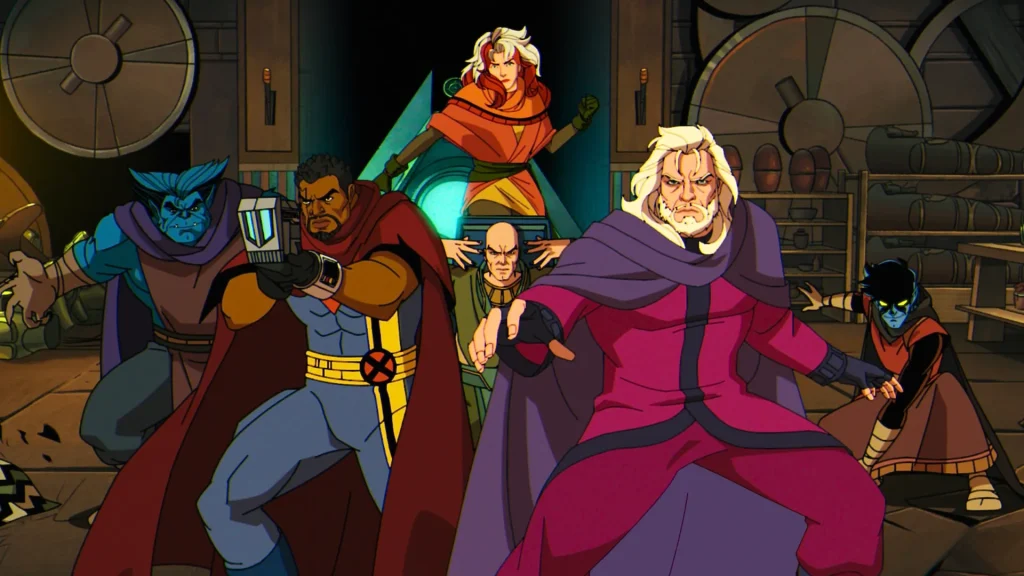
The third episode may be the strongest of the bunch, taking audiences thousands of years into the past as Magnetoencounters a young En Sabah Nur, the mutant destined to become Apocalypse. Rather than presenting the iconic villain as a one-dimensional conqueror, the episode explores his origins in a surprisingly thoughtful way. The conversations between Magneto and En Sabah Nur are among the most compelling scenes in the series, adding emotional complexity to a character fans thought they already knew.
Visually, X-Men ’97 remains one of Marvel’s most impressive productions. The animation captures the spirit of the original 1990s series while elevating every action sequence with fluid movement, vibrant colors, and cinematic direction. Whether it’s mutant powers colliding on the battlefield or quieter emotional moments between teammates, every frame feels carefully crafted.
The voice cast also continues to shine, bringing authenticity and heart to these beloved characters. Even with multiple storylines unfolding simultaneously, each episode finds time for meaningful character moments that remind viewers why the X-Men have endured for generations.
Advertisement
The biggest criticism of these opening episodes is pacing. Episode 1 in particular moves through a significant amount of story in a short amount of time, and several of the timelines could have benefited from an extra episode to further develop their characters and emotional beats. It’s less a flaw in storytelling than a reminder that there’s simply so much happening at once.
X-Men 97′ Season 2 [credit: Marvel Animation]
Even so, those concerns do little to diminish what has been an outstanding start to Season 2. Marvel Animation has once again found the perfect balance between nostalgia and fresh storytelling, honoring classic comic arcs while keeping longtime fans guessing about what’s coming next.
Three episodes in, X-Men ’97 is already shaping up to be one of the year’s best animated series. If the remaining episodes maintain this level of quality, Season 2 has every chance of surpassing its already exceptional predecessor.
Advertisement
Verdict
X-Men ’97 wastes no time reminding fans why it became one of Marvel’s biggest success stories. While the opening episodes occasionally move too quickly through their ambitious storylines, the outstanding animation, emotional character work, and faithful adaptation of beloved comic arcs make for an exceptional return. After three episodes, Season 2 is firing on all cylinders.
Rarely does a sitcom successfully weave in the perfect combination of satire, high brow humor, and utter ridiculousness as the grossly underappreciated Fox/Netflix series Arrested Development. The brainchild of creator Mitchell Hurwitz, the show eluded the ratings to be considered an immediate success, despite a lot of love from critics of the era. But the series developed a rabid cult following that led to its resurgence with two new Netflix-produced seasons after its initial cancellation in 2006, giving fans a total of five hilarious installments that can be viewed on the streaming service.
The Bluth Family (Mis)Fortune
Arrested Development follows the trials and tribulations of the Bluth family, led by construction magnate George Bluth Sr. (Jeffrey Tambor). In the first episode, the torch is set to be passed to his business savvy son Michael (Jason Bateman), as the senior Bluth is set to retire. But in a zany turn of events, it’s revealed at the retirement party (held aboard one of the Bluth’s yachts) that George Sr. named his manipulative and narcissistic wife Lucille (Jessica Walter) as successor moments before the ship is stormed by federal agents that arrest the retiring patriarch.
You Can’t Course Correct With A Family Like This
It’s quickly revealed that George Sr. has been cooking the books for years, and named his wife successor as she couldn’t be forced to testify against him in a court of law. With all of their corporate assets seized and bank accounts frozen by the feds, the spoiled children of George Sr. and Lucille are forced to reckon with the reality of being broke as their respective stars have quickly fallen.
Michael Bluth secures permission from his mother to try to right the company’s ship, but his efforts are constantly beleaguered by siblings George Oscar Bluth II (who goes by Gob and is played by Will Arnett), sister Lindsay (Portia de Rossi) and her husband Tobias (David Cross), and younger brother Buster (Tony Hale).
Too Many Running Gags To Keep Track Of
Arrested Development quickly grew a reputation for ridiculous running gags and equally hilarious catchphrases as the complicated story arcs blend seamlessly together with characters that you can’t get enough of. Whether it’s Gob’s laughable career as an illusionist, spoiled and pampered mama’s boy Buster’s antics in the face of his domineering mother, or Tobias’s aloofness and odd character foibles, the series comes together as an intense mishmash of some of the most unforgettable players to ever assemble on screen.
Endlessly Quotable
America’s most dysfunctional family has their lives narrated by Ron Howard, whose voice follows the Bluth’s with a series of cutaway gags, flashbacks, and zany episode epilogues that reveal events that are never mentioned in subsequent episodes. Arrested Development is brilliant storytelling from every angle, an attribute that is nearly eclipsed by the parade of guest stars, each of whom play roles that match the main characters when it comes to parts that are wonderfully over animated and embellish the extremes of any personality type.
Charlize Theron, Henry Winkler, Rob Corddry, Ed Begley Jr., Amy Poehler, Carl Weathers, and Liza Minnelli come together over the course of the series to give endless hours of quotable material that fans have absorbed and regurgitated time and again since Arrested Development first debuted in 2003.
Stream It Over And Over Again On Netflix
Arrested Development is a show, much like The Office, where fans will watch it over and over again. The brilliant writing, high-level comedic acting, and hilarious plot lines secure the show’s legacy as one of the best sitcoms in recent decades.
Move aside, Aphrodite; there is a new goddess of fashion and beauty, and her name is Zendaya!
The sensational actress is enjoying one of the busiest years of her illustrious career, repeatedly hitting the red carpet for movie premieres in looks that have left fans bowing at her feet.
If anyone doubted her status as the queen of method dressing, Zendaya and her ever-daring stylist Law Roach proved there’s no one serving delectable red carpet fashion as they do.
3ZUMAPRESS.com / MEGA
After wrappingup promotions for “The Drama” and “Spider-Man: Brand New Day,” Zendaya has been rocking Grecian-inspired fashion pieces on “The Odyssey” press tour. She stars as Athena, the goddess of wisdom, warfare, and handicraft, and embodied the mythological character in her red carpet looks.
For the movie’s premiere on Monday, July 6, the actress left many in awe as she stepped out in a bold, alluring Schiaparelli couture gown from Paris Couture Week. The stunning piece, designed by Daniel Roseberry, debuted at the fall/winter 2026 show hours before Roach snatched it for Zendaya.
Advertisement
The gown, as seen in pictures from the premiere, showcased the entertainer’s method dressing skills, as she looked like a Greek goddess come to life. The design featured a sculpted white glazed breastplate, referencing the porcelain effect of nude ancient Greek sculptures, with a lace-up back to give a snatched look.
The sleeveless turtleneck design flowed into a floor-length fringed skirt, “with a white-to-mirror sfumato gradient,” as described in the brand’s press release. The description explained that “the fringed skirt is illuminated from within,” featuring pearl white beads at the top that fade into a metallic gray ombré beaded fringe at the bottom.
The Actress Goes All In To Embrace The Greek Goddess Role
Zendaya did not stop at rocking the Grecian-inspired fashion piece, as she completed her method dressing with the perfect Greek hairstyle. She promoted her previous movies with a sexy bixie hairstyle, but debuted a brand new look on the red carpet to showcase her inner goddess.
The TV personality traded her short hair for a waist-length hairstyle and added a halo braid to match her mythical appearance. She kept the same hairstyle when she surprised fans with a second method dressing, rocking a Grecian-inspired ensemble from Valentino’s Fall 2026 collection.
Advertisement
The daring two-piece dress featured an olive green bodice crafted from intricate leaf appliqués and a voluminous, draped light-grey maxi skirt. The brand raved about Zendaya’s sensual appearance in the Alessandro Michele-designed number on X, sparking a wave of gushing tributes from fans.
Fans Applaud Zendaya As The Queen Of Method Dressing
Zendaya casually delivering two of the most cohesive method dressing eras for spiderman and the odyssey back to back in a single month… YEAH SHE’S NEVER LOSING HER CROWN pic.twitter.com/RFR4e9ZqKJ
Zendaya’sGrecian-inspired red carpet fashion left many in awe, with one fan hailing her as the queen of method dressing. The fan shared a collage of the actress’s red carpet ensembles for “Spider-Man: Brand New Day” and “The Odyssey,” alongside the words:
“Zendaya casually delivering two of the most cohesive method dressing eras for Spider-Man and The Odyssey back to back in a single month… YEAH SHE’S NEVER LOSING HER CROWN.”
Other fans echoed similar sentiments, with someone claiming Zendaya “does not just wear fashion, she commands the entire concept of elegance with her existence.” Another agreed, noting the entertainer’s “method dressing game is on another level” because “doesn’t follow a theme, she becomes the theme.”
Advertisement
Law Roach Is ‘Intentional’ About The Movie Star’s Movie Premiere Looks
Among the comments praising Zendaya were a few applauding her stylist for always draping her in the best red carpet ensembles. During an interview with French creator Elias Medini, famously known as Lyas, Roach revealed he traveled to Paris to snatch the Grecian-inspired gown.
“I flew in last night to come to the show; I have a private jet waiting for me,” Roach said in the clip shared on Instagram. He explained he attended the fashion show to get the Schiaparelli couture gown off the model to hand-deliver it to Zendaya in London for “The Odyssey” red carpet.
As for why he went the extra mile for the movie star, the stylist explained in a 2024 Vogue interview that he took method dressing for Zendaya’s movie premieres seriously. “The looks served as an extension of the wardrobe from the movie. It was intentional and purposeful,” Roach shared.
While Roach is responsible for ensuring Zendaya leaves fashion critics speechless, the outfits cannot make a statement without the TV personality’s unmatched aura. She is equally responsible for turning heads with her confidence at red carpet events.
Zendaya addressed her relationship with fashion in a 2017 interview with PEOPLE, explaining that she explored her confidence by dressing up to embody different characters. “My favorite part is the red carpets. That’s sometimes opposite for people, but I enjoy it,” she confessed.
“It’s fun for me. I get to be these different characters. It’s like an alter ego,” Zendaya added. She echoed similar sentiments in her acceptance speech at the 2017 InStyle Awards, stressing that the only opinion that should count in fashion “should be your own.”
For the first time in seven years, Star Wars fans returned to theaters this year to celebrate the release of The Mandalorian and Grogu. The spin-off/sequel film stars Pedro Pascal and Sigourney Weaver, and it acts as a direct continuation of the first three seasons of The Mandalorian, which are now streaming on Disney+. Before that, Star Wars fans were treated to the highest-rated project in franchise history with the premiere of Maul — Shadow Lord, the animated Disney Plus series starring Sam Witwer. There was so little doubt that the show was going to be a smash hit that it was picked up for Season 2 before its premiere. Looking forward, Star Wars fans have the first Visions spin-off, The Ninth Jedi, which will begin streaming this August, as confirmed by the first trailer.
One of the first Star Wars projects coming next year to be excited about is Ahsoka Season 2, but that’s not all the franchise has to offer in 2027. This morning, Star Wars announced a breathtaking new interactive exhibit, Star Wars: The Experience — A Journey Through the Galaxy, coming to the Franklin Institute in Philadelphia, Pennsylvania, in February 2027. This new exhibit will allow attendees to experience an extraordinary collection of more than 70 different artifacts from various eras of the franchise, including many that were used in movies and TV shows and are now being displayed for the first time. This new exhibit is being put up as part of a much larger celebration of fifty years of the Star Wars franchise, after the first movie launched all the way back in 1977.
Advertisement
Collider Exclusive · Star Wars Quiz Which Force User Are You? Light Side · Dark Side · Or Somewhere Between
Advertisement
The Force is not a binary. It is a spectrum — from the serene halls of the Jedi Temple to the shadowed corridors of Sith space. Ten questions will reveal where you truly fall. The Force has always known. Now you will too.
🔵Jedi Master
🟡Padawan
🔴Sith Lord
⚫Inquisitor
Advertisement
⚪Grey Jedi
Advertisement
01
What is the Force to you? Your relationship with the Force defines everything else.
Advertisement
02
When you feel strong emotions — anger, grief, love — what do you do? The Jedi suppress. The Sith feed. Others choose differently.
Advertisement
03
The Jedi Council gives you an order you disagree with. You: How you handle authority reveals your alignment.
Advertisement
04
You are offered forbidden knowledge that could give you enormous power. The cost is crossing a moral line. You: The dark side’s pull is never more than a choice away.
Advertisement
05
Your approach to training and learning is: A student’s habits become a master’s character.
Advertisement
06
In a duel, your lightsaber fighting style reflects: Combat is the purest expression of a Force user’s philosophy.
Advertisement
07
A defeated enemy lies at your feet, powerless. You: Mercy — or its absence — is the truest test of alignment.
Advertisement
08
The Jedi Code forbids attachment. Your honest view on love and bonds: The source of the greatest falls in the galaxy.
Advertisement
09
Why do you use the Force at all? What’s the point? Purpose is the difference between a knight and a weapon.
Advertisement
10
At the final moment — light side or dark side pulling at you — what wins? In the end, every Force user faces this moment. What does yours look like?
Advertisement
Your Alignment Has Been Determined Your Place in the Force
The scores below reveal how the Force sees you. Your highest number is your true alignment. Read on to understand what that means — and what it will cost you.
🔵 Jedi Master
Advertisement
🟡 Padawan
🔴 Sith Lord
⚫ Inquisitor
⚪ Grey Jedi
Advertisement
Disciplined, compassionate, and deeply attuned to the living Force, you have walked the path long enough to understand its demands — and accept them. You lead not through authority alone, but through example. You have felt the pull of the dark side and chosen otherwise, every time. That is not certainty. That is courage.
You are earnest, powerful, and brimming with potential — and you know it, which is both your greatest asset and your most dangerous flaw. You act before you think, trust your gut over your training, and sometimes confuse impatience for bravery. The Masters see something in you, though. The question isn’t whether you have what it takes — it’s whether you’ll be patient enough to find out.
Advertisement
You are not simply dangerous — you are certain, and that is worse. You have decided what the galaxy needs, and you have decided you are the one to deliver it. Your power is genuine and formidable, earned through sacrifice that would have broken lesser beings. But examine your victories carefully. Every Sith believed their cause was righteous. The dark side’s cruelest trick is that it agrees with you.
You were forged in fire and reshaped by those who found you at your lowest. You serve, because service gave you structure when you had none. Your allegiance is not to an ideology — it is to survival and to the master who gave you purpose. But there is something buried beneath the conditioning. The Jedi you hunt? You recognize them. Because you remember what it felt like before the choice was taken from you.
Advertisement
You have looked at the Jedi Code and the Sith Code and found both of them incomplete. You walk the line not out of indecision but out of conviction — you genuinely believe both extremes miss something essential. The Jedi don’t fully trust you. The Sith think you’re wasting your potential. They’re both partially right. But so are you.
Advertisement
What Will Be on Display at the New Star Wars Exhibit?
The official announcement of the new Star Wars exhibit coming to the Franklin Institute also included a more detailed description of what will be on display, which reads as follows:
Advertisement
“The all-new exhibition spans 18,000 square feet of visually rich, interconnected galleries, featuring large immersive moments, screen-used artifacts, and an RFID-powered experience for an interactive, personalized, and cinematic journey into the creative force behind Star Wars. It presents an extraordinary collection of more than 70 artifacts, many of them screen-used and on view for the first time from the Lucasfilm archives, including legendary screen-used pieces such as Darth Maul’s lightsaber and Darth Vader’s costume. A selection of creatures, droids, and other alien species, including Grogu, R2-D2, and C-3PO, will be visible up close, along with a speeder bike, and original props from Andor.”
Star Wars fans will also have another movie to see on the big screen next year with Starfighter, the new film written by Jonathan Tropper and directed by Shawn Levy. Ryan Gosling leads the ensemble for Star Wars: Starfighter, which also stars Amy Adams, Mia Goth, Matt Smith, Aaron Pierre, and Daniel Ings.
Star Wars: The Experience — A Journey Through the Galaxy opens next February. Stay tuned to Collider for more Star Wars updates and coverage.
For all of us who’ve been looking for a new crime series to obsess over, the good news is that we don’t have much longer to wait, as Apple TV has just led us into very dark territory with the first look at their new serial-killer thriller. The streamer has just given us a first look at Nocturne, a 10-episode drama that puts Liev Schreiber, Zazie Beetz, and Stephen Graham on opposite sides of a brutal manhunt — adapted from the internationally bestselling Lars Kepler novels Lazarus and The Sandman.
The new series follows Jonah Lynn (Schreiber), an ex-soldier turned homicide detective who leaves Philadelphia behind in the hope of finding a quieter life in a small town in western Pennsylvania. However, since this is very much a crime thriller, that plan goes straight to hell in a handbasket. But when the town, and Jonah’s own family too, comes under attack from the diabolically clever serial killer, Jurek Walker (Graham), Jonah is unfortunately forced right back into the kind of nightmare he was hoping to desperately avoid. Soon, the search for Jurek’s final missing victim places Jonah’s surrogate daughter, FBI agent Saga Bauer (Beetz), directly in the killer’s path.
Advertisement
Collider Exclusive · Sci-Fi Survival Quiz Which Sci-Fi World Would You Survive? The Matrix · Mad Max · Blade Runner · Dune · Star Wars
Advertisement
Five universes. Five completely different ways the future went wrong — or sideways, or up in flames. Only one of them is the world your instincts were built for. Eight questions will figure out which dystopia, galaxy, or desert wasteland you’d actually make it out of alive.
💊The Matrix
🔥Mad Max
🌧️Blade Runner
🏜️Dune
Advertisement
🚀Star Wars
Advertisement
01
You sense something is deeply wrong with the world around you. What do you do? The first instinct is often the truest one.
Advertisement
02
In a world of scarcity, what resource do you guard most fiercely? What we protect reveals what we believe survival actually requires.
Advertisement
03
What kind of threat keeps you up at night? Fear is useful data — if you’re honest about what you’re actually afraid of.
Advertisement
04
How do you deal with authority you don’t trust? Every dystopia has a power structure. Your approach to it determines everything.
Advertisement
05
Which environment could you actually endure long-term? Survival isn’t just tactical — it’s physical, psychological, and very much about where you are.
Advertisement
06
Who do you want in your corner when things fall apart? The company you keep is the clearest signal of who you actually are.
Advertisement
07
Where do you draw the line — if you draw one at all? Every survivor eventually faces a moment that tests what they’re actually made of.
Advertisement
08
What would actually make survival worth it? Staying alive is one thing. Having a reason to is another.
Advertisement
Your Fate Has Been Calculated You’d Survive In…
Your answers point to the world your instincts were built for. This is the universe your temperament, your survival instincts, and your particular brand of stubbornness were made for.
Advertisement
The Resistance, Zion
The Matrix
You took the red pill a long time ago — probably before anyone offered it to you. You’re a systems thinker who can’t help but notice the seams in things.
You’re drawn to understanding how the system works before figuring out how to break it.
You’d find the Resistance, or it would find you — your instinct for spotting constructed realities is the machines’ worst nightmare.
You function best when you have access to information and the freedom to act on it.
The Matrix built an airtight prison. You’d be the one probing the walls for the door.
Advertisement
The Wasteland
Mad Max
The wasteland doesn’t reward the clever or the well-connected — it rewards those who are hard to kill and harder to break. That’s you.
You don’t need comfort, community, or a cause larger than the next horizon.
You need a vehicle, a clear threat, and enough fuel to outrun it — and you’re good at all three.
You are unsentimental enough to survive that world, and decent enough — just barely — to be something more than another raider.
In the wasteland, that distinction is everything.
Advertisement
Los Angeles, 2049
Blade Runner
You’d survive here because you know how to exist in moral grey areas without losing yourself completely.
You read people accurately, keep your circle small, and ask the questions others prefer not to answer.
In a city where humanity is a legal designation rather than a feeling, you hold onto something that keeps you functional.
You’re not a hero. But you’re not lost, either.
In Blade Runner’s world, that distinction is everything.
Advertisement
Arrakis
Dune
Arrakis is the most hostile environment in the known universe — and you are precisely the kind of person it rewards.
Patience, discipline, and political awareness are your core strengths — and on Arrakis, they’re survival tools.
You understand that the long game matters more than any single victory.
Others come to Dune and are consumed by it. You’d learn its logic and earn its respect.
In time, you wouldn’t just survive Arrakis — you’d begin to reshape it.
Advertisement
A Galaxy Far, Far Away
Star Wars
The galaxy far, far away is vast, loud, and in a constant state of violent political upheaval — and you wouldn’t have it any other way.
You find meaning in being part of something larger than yourself — a cause, a crew, a rebellion.
You’d gravitate toward the Rebellion, or the fringes, or whatever pocket of the galaxy still believes the Empire’s grip can be broken.
You fight — not because you have to, but because standing aside isn’t something you’re capable of.
In Star Wars, that willingness is what makes all the difference.
Advertisement
Who’s Involved in ‘Nocturne’ on Apple TV?
Alongside Schreiber, Beetz, and Graham, the series also stars Bill Camp (The Night Of), Rory Culkin (Scream 4), Chrissy Metz (This Is Us), Poorna Jagannathan (Never Have I Ever), and Gary Carr (Downton Abbey). The show is created for television by Rowan Joffe (Tin Star), with John Hlavin (Shooter) serving as showrunner. Tim Van Patten (Masters of the Air) directs the first two episodes and executive-produces.
Advertisement
The source material comes from Lars Kepler, the pen name of Swedish writing duo Alexandra Coelho Ahndoril and Alexander Ahndoril. Their 10 crime novels have sold more than 20 million copies worldwide, so if Nocturne catches on with viewers, then Apple TV will have an absolute treasure trove of grim, grisly misery to adapt in the years to come across future seasons. Nocturne is the latest in the crime thriller genre for Apple TV, but if the wait until October is too long, the streamer offers a wide range of similar prestige content, including Slow Horses, Cape Fear, and Presumed Innocent.
Nocturne premieres October 30 on Apple TV with its first two episodes, followed by weekly instalments through December 25. Stay tuned to Collider for all the latest updates on Apple TV.













 Visually, X-Men ’97 remains one of Marvel’s most impressive productions. The animation captures the spirit of the original 1990s series while elevating every action sequence with fluid movement, vibrant colors, and cinematic direction. Whether it’s mutant powers colliding on the battlefield or quieter emotional moments between teammates, every frame feels carefully crafted.

:max_bytes(150000):strip_icc():format(jpeg)/Catherine-Lagaaia-Moana-070726-ba987efc0f5b4311a18be8e379c4fb7c.jpg)


















































You must be logged in to post a comment Login