Off CampusLouisa Levy creator revealed that season 2 is going to look a little different — and not just because of that cast exit.
Levy teased what fans can expect during Prime Video’s Obsessed Fest on Saturday, June 27, saying, “There’s going to be less live songs. Because we don’t have all of Hannah’s songwriting journey to play into.”
Levy acknowledged that Josh Heuston’s departure also played a role.
“We don’t have Josh and After Hours this season so we don’t have those bands,” she continued. “But we still have a lot of music in other ways. We will still have some light music in the show.”
Advertisement
Levy concluded: “I still think the heart of the show lives in those needle drops and those songs that underscore a moment — as well as the actual score.”
Based on the Off-Campus book series by Elle Kennedy, the show, follows an elite ice hockey team — and the women in their lives — as they “grapple with love, heartbreak, and self-discovery — forging deep friendships and enduring bonds while navigating the complexities that come with transitioning into adulthood,” read the official synopsis.
Season 1 is centered around the “sexy and fun ‘opposites attract’ romance between quiet songwriter, Hannah, and Briar University’s all-star hockey athlete, Garrett.” (The show introduces characters played by Ella Bright, Belmont Cameli, Mika Abdalla, Antonio Cipriano, Jalen Thomas Brooks and Stephen Kalyn.)
After the show was renewed, Levy confirmed earlier this year that Justin wouldn’t appear in season 2, telling TV Guide, “Not next season, but I love Josh and I would not write him off if I can find a way to bring Justin back at some point.”
Advertisement
She continued: “We never got a chance to meet Stella, who is the person he ends up with in the book. So maybe we’ll find a way to fold him into a future season.”
Levy noted that it wasn’t always the plan for Justin to be absent. “We don’t have him [available] next season, but never say never,” she added.
Heuston, 29, meanwhile, spoke exclusively to Us Weekly about a possible return, saying, “That’s above my pay grade but I just hope Justin finds love and continues to be happy while writing music.”
“Justin is following his heart. He’s a little lover boy at heart,” he noted. “I think things went the way that they went but I think he’ll just continue to do that. He’ll probably go write some nice music about how heartbroken he is and then come back and try to find his love.”
Thank You!
You have successfully subscribed.
At the time, Heuston saw Justin yearning “over someone else” after initially forming a connection with Hannah. The fictional couple didn’t work out, however, due to Hannah’s romance with Garrett.
Advertisement
“I just tried to give Justin as much as possible. A lot of the time if you fell into a stereotype of another cool guy that does music on campus, you wouldn’t have that love or affinity for him,” he told Us. “My main thing was just trying to make him as good as possible.”
“They say I’m lucky, I don’t disagree…Just this feeling,” Lopez, 56, wrote on Saturday, June 27, alongside an Instagram carousel of recent events in her life.
The photos include the twins celebrating being part of the class of 2026, as well as other personal milestones, like commemorating the release of her new comedy Office Romance on Netflix with a box of cupcakes and chowing down on what might be the world’s largest croissant.
Lopez has often reflected on the prospect of becoming an empty nester over the past few months, now that the twins will be off to two different colleges in the fall.
Advertisement
Courtesy Jennifer Lopez
Earlier this month, Lopez told Extra that both Max and Emme had overcome adversity on their way to graduating high school. (Lopez shares the twins with ex-husband Marc Anthony, whom she was married to from 2004 to 2014.)
The “On the Floor” singer noted that the twins’ academic accomplishments have been particularly inspiring because they have ADHD, which means they “learn differently and there were struggles at times.”
“I’m so proud that they set goals for themselves. They all got into all five colleges that they applied to. Each one got a scholarship to a school,” Lopez said. “And I just felt like they worked so hard. I watched how hard they worked — from the time that they were like, you know, when school gets serious in the fifth grade — they just worked hard, worked hard.”
She went on, “I’m just so proud of them because they did what they said they were going to do. They are good people. They are loving, good hearted people. And they always said that. I would say to them, ‘What do I say?’ They say, ‘Doesn’t matter if we get good grades so long as we are good people.’ I was like, ‘That is right.’ And they still sometimes will quote that back to me. So I’m very, very proud of both of them.”
During a May appearance on Jimmy Kimmel Live!, Jennifer said she’d been “crying for two months” over the prospect of the twins going to college. She confirmed that, much like in high school, Max and Emme chose to go to two different universities.
Advertisement
“It’s fine. I want them to be happy, go where they want to go, and do what they want to do,” she said.
As for becoming an empty nester, Lopez acknowledged on Watch What Happens Live With Andy Cohen on June 8 that it had been an “emotional time.”
Thank You!
You have successfully subscribed.
Advertisement
Jennifer LopezDominic Lipinski/Getty Images
“It’s been the three of us,” she reminisced. “People have come in and out of my life, but it’s been the three of us. They’ve always been there, and I’ve always been there.”
Lopez admitted that, until recently, she “never really thought” about the prospect of her twins moving out.
“I just never thought that far ahead,” she confessed to host Andy Cohen. “I thought, too, that they’re so independent — I gave them roots and wings. [I thought], ‘It’s great, this is how it is … this is a healthy mom thing to do.’ And then about a couple of months ago, I just was, like, writing something for their end-of-the-school-year thing for them to put in the program at the graduation, and I just have not … every time it comes up, I just start crying. I could cry right now.”
Collider’s Steve Weintraub talks with writer-director Duncan Jones for Rogue Trooper which is an adaptation of 2000 AD’s 1981 comic strip.
At the Annecy International Animation Film Festival, Jones celebrated the world premiere of his comic strip adaptation film, over a decade in the making.
He discusses using Unreal Engine 5, maintaining the source’s political edge, working with an ensemble of comedians, and more.
Filmmaker Duncan Jones (Moon) has four feature films under his belt, but for well over a decade, he’s been chasing his directorial white whale: an adaptation of 2000 AD’s 1981 comic strip Rogue Trooper. While talking with Collider’s Steve Weintraub at this year’s Annecy International Animation Film Festival, where his longtime dream finally celebrated its world premiere, Jones explains that despite his affinity for Hollywood’s greatest World War II epics, it was the core group of buddies at the heart of the UK comic that inspired him most.
Rogue Trooper is a gritty sci-fi behemoth that Jones deftly adapted for screen from Gerry Finley-Day and Dave Gibbons’s original story, opting for Unreal Engine 5-powered animation to capture the futuristic war between the Norts and Southers. The movie follows Rogue (Aneurin Barnard) as he traverses enemy territory during a secret military operation, accompanied only by the biochips of his former pals, Gunnar (Jack Lowden), Helm (Daryl McCormack), and Bagman (Reece Shearsmith). The movie also enlists the talents of comedians like Jemaine Clement, Matt Berry, Diane Morgan, Al Murray, and Henning Wehn, plus stars like Game of Thrones iconSean Bean and MCU favorite Hayley Atwellas the treacherous Venus Bluegenes.
“There’s a couple of little Easter eggs in there for the fans of the comic book,” Jones teases, but for the uninitiated, he adds, “Really, for an audience who doesn’t know about the biochips, it’s really making sure that they understand that the chips are in people’s heads, that their personalities, the people that they are, are recorded on those chips when they die.”
In their recent conversation, which you can read below, Jones further explains the lore and the themes he wanted to capture in his long-gestating adaptation. He discusses the full animation process and why their team had to shift from fully animating with Unreal Engine, tackling a massive world build through independent animation, without Disney-sized finances, and what about 2000 AD’s comic sources inspired him over the box office-busting Marvel or DC. Jones also addresses Rogue Trooper’s distinctly British aesthetic, how the “amazing comedians” in the cast helped shape the final film, adhering to 2000 AD’s political edge, the inspiration of WWII classics like A Bridge Too Far and more, working with Bear McCreary (Battlestar Galactica, The Walking Dead) on the score, and paying tribute to the creatives behind the original comic.
Advertisement
How ‘Rogue Trooper’ Was Made Using Unreal Engine 5 (Sort of)
“We didn’t know how the film was going to get made when we started.”
Image via Liberty Entertainment
COLLIDER: How did you make this movie using only Unreal Engine 5?
DUNCAN JONES: [Laughs] We didn’t. We started that way. We thought we were going to be able to do that, and about two and a half years in, we realized that it’s not ready yet. So we actually took it out of Unreal 5 and ended up using Maya and some other software, and then we reimported it back at the end to basically do our rendering through path tracing.
Advertisement
Pipeline-wise, we didn’t know how the film was going to get made when we started. We thought we had a plan, but it didn’t quite work out, and that’s one of the reasons the film took four years. We were kind of working it out as we went along. It was maybe a little crazy of us to go ahead when we didn’t really know how we were going to do it, and we didn’t know what the film was going to look like by the end of it.
We knew what we wanted. There was this amazing comic that Dave Gibbons did with Will Simpson called War Machine, and we knew we wanted it to look something like that. Lots of beautiful rendered fog and a watercolor kind of feel to it. I mean, you would attest that that’s kind of how it looks?
100%.
JONES: That’s what we were going for, but we didn’t know how we were going to get there, and that’s why it took so long. One of the reasons.
Advertisement
For people who want to do something like this in the future, what’s the big lesson you learned?
JONES: Well, first of all, that it’s possible and that you can make big-world movies in independent cinema now, I believe. You need to get the expertise around you. The technology is moving so fast, and I’m sure you’ve heard me say this before, but there is no AI in this movie. We didn’t want AI. You can still do this without using AI. You can make an independent movie that looks like this without AI. It’s really just a matter of finding the combination of technologies to get you that.
I don’t want you to tell me, and I have no business knowing, but a lot of people are wondering, like, what did this actually cost? Is this something that a real indie can do? I’m sure a lot of people are wondering, “Can I actually do this?”
JONES: I’ll just put it this way, I don’t know any theatrical animated films that have been made at this budget.
Advertisement
‘Rogue Trooper’ Isn’t Working With a Disney-Sized Budget
“It’s a very British film, as well.”
Image via Liberty Films Entertainment
When we talk about Pixar or Disney, those people are spending over $100 million.
JONES: We’re not talking about that. Even independent films, animated films that have gone to theaters, I’m sure there are others, but it really hits over its cost.
Advertisement
Absolutely. You world premiered here at Annecy, which is amazing, but how many times have you screened for studios and people? Was it like, “Let’s show here and see how it goes?” Because it’s a big decision to world premiere somewhere.
JONES: We did some test screenings, but it was a while ago, and that was still while we were in the editing room. But no, this was a proper first time in front of a real audience. We were proud of the film. We felt confident. I’ve been working with the guys at 2000 AD, and we’ve been working for such a long time refining it the best way we could, and we just wanted to put it in front of an audience. We felt confident. We felt like we had something.
Sometimes, the distribution plan can be a big question mark.
JONES: It is a big question. Look, it’s a very British film, as well. One of the reasons we wanted to come to Annecy in particular is that we feel confident that it is going to work with a British audience, but is it a British film that only British people will get, or is it like Shaun of the Dead, where audiences beyond that will appreciate it? That’s what we wanted to see. That’s why we wanted to come here.
Advertisement
This is a 2000 AD property with a very specific British sci-fi attitude. What was the most important piece of that 2000 AD DNA to preserve?
JONES: Not being afraid of being a little bit political. 2008 AD comic book has always worn its politics and its cynical humor on its shoulder, and that’s one of the things, to me at least, that differentiates it a little bit from DC and Marvel. I mean, they have those things, but I think 2000 AD does it in a very British way. It’s very Python-esque in some ways. There’s a cynicism in 2000 AD, which is maybe not as… You know what? I’m talking out of my knowledge because I don’t know DC and Marvel as well as I know 2000 AD, but I know what I wanted to capture in 2000 AD again, and it’s that it’s being funny, being acerbic, and being a little bit political at the same time.
As someone who’s watched all the Marvel and DC movies, they are not doing what this movie is doing and what they’re addressing. I will say that Thunderbolts*, which is a recent film, really addressed mental health in a way that I’ve never seen a comic book movie do, and it really impressed me what they pulled off, but that is a rarity, and it’s not about politics.
JONES: I understand, and those are big studio films. Again, one of the other benefits of being indie is that you can kind of just say what you want to say and do what you want to do.
Advertisement
Rogue is on a revenge mission, but the story also has a lot to say about soldiers being manufactured, used, and discarded. How political did you want the movie to feel?
JONES: The timing of everything was unplanned. I’ve been working on it for a long time, and it synced up that we started production roughly the same time as the SMO in Ukraine began. So we’ve been making the movie while watching the horrors of what’s been going on out there. I don’t know if you know much about what I do online, but I’ve been keeping in contact with a lot of people out there and trying to understand what’s been going on and how they’re getting through it in Ukraine. In my own small way, I’ve been trying to say, “Okay, what can I learn from your experiences that you feel would be helpful to communicating what we’ve done?”
I am so pro-Ukraine. Also, I’m blown away by the way they have taken drone technology to a level that no military command person on the planet, even with the biggest military, has even fathomed. They are revolutionizing warfare.
JONES: There’s a lot of rethinking that has to go on about what asymmetry has brought to modern superpowers, how they’re going to have to rethink what they do. I think sovereignty of smaller nations is in a different place now than it was four years ago.
Advertisement
Absolutely. There’s a lot of world-building baked into Rogue Trooper — Nu-Earth, the Norts, the Southers, and genetic infantry biochips. What was the hardest thing to explain elegantly without stopping the movie cold?
JONES: I think it was the biochips. We hit it a few times, and hopefully, each time that we do hit it, we add just a little bit more information. The key is to try and keep those moments action and entertaining, as well as you learning something. So, there’s a couple of little Easter eggs in there for the fans of the comic book, but really, for an audience who doesn’t know about the biochips, it’s really making sure that they understand that the chips are in people’s heads, that their personalities, the people that they are, are recorded on those chips when they die, and then obviously that they can be brought out and put in the equipment and stored until they can be put into a real body later on. That becomes the ticking clock for us with the chips, which are traveling in Gunnar and Helm and Bagman.
WW2 Classics Like ‘The Dirty Dozen’ Were a Major Influence on ‘Rogue Trooper’
Duncan Jones also praises Bear McCreary’s original score.
I love Bear McCreary’s soundtrack.
Advertisement
JONES: Oh, me too! That was so much fun.
What did his music unlock in the movie that you weren’t expecting?
JONES: Well, I knew that it was going to be great. Because of the weight of what we had talked about, we really wanted to tap into those old World War II movies that I’m kind of nostalgic about, whether it’s A Bridge Too Far, The Dirty Dozen, or Where Eagles Dare. Those were the things we were listening to. I had a few of those as a temp score in the film, and Bear immediately got it. He’s fantastic, and it was amazing to work with him. As soon as we started talking about having a march and using bagpipes and writing lyrics that were as in character with the movie as the story itself, we just had the best time.
The movie’s about two hours. With the process that you did, how exponential is every extra minute in terms of cost, or once you’ve refined this process, was it like, “If we want to do 100 minutes or 120, it’s not that different?”
Advertisement
JONES: For finished film, you’re using more resources than the rough cut, the animatic. Those things, you can have a two and half-hour movie or a 90-minute movie. At the animatic stage, it’s not that much of a problem. We actually ended up taking about nine months to make our animatic, but that wasn’t really because of resource hogging. It was really just working out the story as we went along. I guess it’s a little bit like what Pixar and those people do, is you keep refining and doing new versions of it as you see the finished movie in front of you, and you start realizing where it’s a little bit heavy or where it doesn’t quite work, and you’re able to keep iterating on it.
But isn’t that also because once you start animating, if you will, that’s where the cost is? When you’re doing animatics for those nine months, isn’t the cost minimal, or is it still expensive?
JONES: No, it is minimal. It is minimal, but the interesting thing is, because we use a lot of mocap, there’s a lot of hand animation, as well, but you can do rough hand animation. It only really becomes time-intensive in this experience when you start refining the animation. So, it’s those last passes of iteration where you’re getting it to finished quality. That takes up a lot of time and resources. But you can iterate and have characters moving and get the basic movements down, and that doesn’t really eat up resources in the same way as the finishing off of the film. You just want to know that you’ve done, and then you do your refining.
You’ve wanted to make this for a very long time, and you’ve talked about it for almost 10 years.
Advertisement
JONES: [Laughs] I think we’ve talked about.
It’s possible. What was it about this material that has kept you so passionate for so long?
JONES: Well, the crazy thing is, it wasn’t even the fact that it was a war movie, or that it was even necessarily 2000 AD. I always loved the group of buddies traveling together part of it, between Rogue, Bagman, Helm, and Gunnar. I loved it. It was a road trip movie in some respects. I always thought that the banter and the reliance that these three guys had on Rogue to get them home was just a wonderful setup for a story.
One of the things that really impressed me about the film is that you used actual comic panels at the beginning and at the end. It’s a love letter to the comic, and I don’t think I’ve seen another comic book movie that really embraces comic book frames in the movie. Is it hard to get permission to put the panels on the screen, and why was that so important to you?
Advertisement
JONES: We were lucky enough to show Gerry Finley-Day and Dave Gibbons the movie a couple of weeks ago, and they immediately appreciated the fact that we start our movie with the panels they started the comic book with. We didn’t know exactly what we were going to do at the start of the movie, but as soon as that idea came to me, it just felt so right.
We literally start with the first three panels of the comic book. That’s how we start our movie. Then, when we did that, we started thinking about how we’d like to end the movie, and obviously, this very iconic, massive tank that we start the film with is also at the end of the movie, so the opportunity to do that as a comic panel — that’s not from the comic. That’s one that we had one of the artists who does work in 2000 AD and has done Rogue work, he came in and did this bespoke ending comic panel for us to end the movie.
That’s fantastic. Something else I want to commend you on is that in the credits, you mentioned all the people who worked on the comic. No disrespect to Marvel and DC, but it’s almost like they’ve been forced to mention Bob Kane, or they’ve been forced to mention some of these creators.
JONES: Why wouldn’t you want to mention them?
Advertisement
It’s because of money, attrition, or residuals. Who knows? But all of this stems from these people. It’s their ideas.
JONES: Yeah. We’ve got Gerry and Dave’s credit right up front, the beginning of the movie. That’s how we start.
Edgar Wright’s ‘The Running Man’ Played a Surprising Role in Duncan Jones’ Acclaimed Sci-Fi Feature
“I stole that.”
Glen Powell in a red suit stares ahead intently with two men in uniforms behind in The Running Man.Image via Paramount Pictures
Advertisement
I give you credit because you have all the people. There’s a huge number of people thanked in the credits. Again, why was that important?
JONES: Well, it was important because they made the damn thing! [Laughs] And secondly, I love the graphic design of the end credits, the end roller. I stole that. I stole that idea. I had seen Edgar [Wright]’s most recent movie, The Running Man, and The Running Man credits were beautiful. The end credits, the end roller on Running Man, were beautiful, and I just said, “Who did that? Who did that?” And I worked with the same artist to do ours, and he was amazing. So, the people who made Rogue Trooper deserve to have their credit, and then we had beautiful credits, so I was like, “Put everyone in there!”
You start the movie with a little bit of what’s going on, and then you’re thrown into the action with Genetic Infantryman. How did you decide where to start the beginning of the movie, and did you ever have a version that explained the differences between the sides more?
JONES: It’s always such a balancing act with science fiction conceits, as to how much do you have to explain? How much time do you want to spend explaining it? We went through all sorts of different permutations early on. So yeah, there were some scenes that we played around with. It was just too clunky. I went even more [Paul] Verhoeven at the beginning. It was much more setting up the war, setting up the grunts on the ground, and doing all that kind of stuff. I was like, “This is a lot of starts before we actually start the movie. I don’t think we need to explain all of this.” I think the way we’ve structured how the G.I.s find out where they are, we can learn all the stuff that we need the audience to learn. So, we trimmed off a lot of that, and I think it was the right move.
Advertisement
I believe that this is your first time co-writing a song.
JONES: I guess technically, yeah.
You co-wrote the Rogue Trooper march, and it’s a good song.
JONES: I’m not taking credit for that. I wrote a few lyrics just because I wanted to make sure it felt like 2000 AD, but that’s not writing a song. Not in my mind. I wrote a few couplets. [Laughs]
Advertisement
I did just want to mention that you did co-write a song, and it’s good. It’s really selling the troops.
JONES: I love it. I love what they did, and it’s freaking contagious.
I can hear the song in my head.
JONES: I’ll tell you what I did, and you’ll probably recognize this: I gave very specific notes on what I wanted “I Am the One and Only” to sound like at the end of the movie. The Flash Gordon ending music, the big Queen ending there, I was like, “We’ve got to do that, or we’ve got to use ‘I Am the One and Only.’ I need a big guitar solo. I need a screaming performance of the song at the end, and we’ve got to start with the chorus, not the way the song originally begins.” So that one, I feel like, I had more notes on that than what I did on the march.
Advertisement
This movie feels like a movie without studio notes. It really feels like you’re getting your brain on screen. Did you have a lot of notes to deal with, or did you have incredible creative freedom?
JONES: I did have incredible creative freedom. I did work very, very closely with Jason and Chris [Kingsley] at 2008 AD, at Rebellion, to basically make sure that they were happy both with what I wanted to do and also all of the improv that came into the film. Obviously, we were working with these amazing comedians, so there’s no point having amazing comedians come in and think that they’re going to deliver your lines, and that’s going to be the best option.
So they came in, they watched the animatic, they read the lines, they said, “Okay, I see what you want to do. I see what you need to get out of this scene,” and then they ran with it. So, Matt Berry, Jermaine Clement, they come in, they do their own version of what they want to do, we’re laughing our asses off, and adding bits into the project that weren’t even planned on being there just because they’re making us laugh. I mean, how much fun is that? I had them coming in, I had Diane Morgan coming in, I had Al Murray and Henning Wehn coming in. All of these comedians. Like every two days, there were new comedians coming in. It was amazing. It was like being at a comedy festival was what the shoot was like.
Rogue Trooper does not have an official release date yet. Keep an eye on Collider for more updates!
The neo-noir genre is a modernized version of the classic film noir genre that initially reached its peak of popularity during the 1960s and was established by hit movies such as Cape Fear starring Robert Mitchum and Gregory Peck, Martin Scorsese‘s Taxi Driver, and L.A. Confidential. As neo-noir films were favored well by audiences around the world, the genre inevitably made a name for itself on the small screen with shows like Showtime’s Dexter and A&E’s Bates Motel, and continues to be a frequent favorite in the world of television.
Over the years, there have been a slew of successful neo-noir shows that are worthy contributions to the genre, but some series, including David Lynch‘s Twin Peaks, Better Call Saul, and Ray Donovan, embody the core elements and traditional tropes of the neo-noir genre. From the marginalized miniseries, Monsieur Spade starring Clive Owen, to the critically acclaimed anthology crime series, True Detective, these are the greatest neo-noir television shows of all time, ranked.
Advertisement
10
‘Monsieur Spade’ (2024)
Henri (Oscar Lesage) in Monsieur SpadeImage via AMC
Clive Owen stars as Dashiell Hammett‘s private eye, Sam Spade, in the neo-noir miniseries, Monsieur Spade, which takes place twenty years after the events of The Maltese Falcon. The series follows Spade as he travels to France with Brigid O’Shaughnessy’s daughter, Teresa (Cara Bossom), in an attempt to find her father, but what was intended to be a brief trip turns into a permanent stay after Spade falls in love with a local woman. As Spade puts his detective days behind him, his peaceful life is interrupted by the return of Teresa’s father and a series of murders, ultimately forcing Spade out of retirement.
Monsieur Spade is based on Hammett’s novel, Sam Spade, and is a thrilling must-see neo-noir series that takes viewers through a labyrinth of a whodunit mystery. It’s safe to assume that the majority of people are familiar with Spade, who was originally popularized by Humphrey Bogart in one of the best detective film noir movies, The Maltese Falcon. Bogie’s portrayal of Spade presentsOwen with some big shoes to fill, but he manages to deliver a sensational performance that effectively aligns with Bogie’s take on Spade while still forging his own interpretation of the legendary private eye.
Advertisement
9
‘Mr. Mercedes’ (2017–2019)
Brendan Gleeson as Bill Hodges in ‘Mr. Mercedes’Image via Audience
Based on Stephen King‘s novel trilogy series, Brendan Gleeson stars in the gripping neo-noir series Mr. Mercedes as Bill Hodges, a retired Ohio detective who, after being taunted by a serial killer online, finds himself in a tedious game of cat and mouse. As Hodges tries to stay two steps ahead of his tormentor, he soon realizes that his search for the killer comes with a dangerous price that puts everyone he loves in jeopardy.
Mr. Mercedes is a highly overlooked series that embodies the neo-noir genre with a touch of King’s signature madness. Gleeson gives an outstanding performance as a man haunted by his past and forced to come to terms with his personal and professional failures, presenting an underlying mystery to the main plot. The show ran for three successful seasons, but in 2020, it was unexpectedly discontinued with no indication of it being canceled. While the fate of the series still hangs in the balance, Mr. Mercedes still ranks as a top series that every diehard noir fan should check out.
Advertisement
8
‘Sugar’ (2024–Present)
Colin Farrell standing by a pool table as John Sugar in Sugar Season 2.Image via Apple TV
Colin Farrell stars in Apple TV’s neo-noir series, Sugar, as a private investigator, John Sugar, who is hired by a Hollywood producer, Jonathan Siegel (James Cromwell), to find his beloved granddaughter, Olivia (Sydney Chandler), whom he believes is missing. As Sugar talks to Olivia’s family and friends, his investigation eventually leads him to uncover family secrets and scandals within the Siegel dynasty as well as crucial information about a mystery from his past.
Sugar is a unique neo-noir series with an unexpected blend of genres and a captivating performance by Farrell that ultimately sets it apart from other shows in the genre. Unlike the majority of other neo-noir series, Sugar features frequent cutaways to clips from classic film noir movies and key props, which contribute to the series’ classic noir aesthetics. One of the most significant references in the show is Sugar’s Chevy Sting Ray, which is the same car Ralph Meeker‘s Mike Hammer drives in the noir classic, Kiss Me Deadly.
Advertisement
7
‘Bates Motel’ (2013–2017)
Vera Farmiga as Norma Bates in Bates Motel Season 4 Episode 8 Season 4 Episode UnfaithfulImage via A&E
Bates Motel is a modern prequel and reimagining of Alfred Hitchcock‘s classic thriller, Psycho, which is based on Robert Bloch‘s 1959 horror novel of the same name. Freddie Highmore stars as a young Norman Bates who, after the death of his father, moves with his mother, Norma (Vera Farmiga), to the seaside town of White Pine Bay, where they purchase and run a local motel. They quickly learn that White Pine Bay is far from what it appears to be, and while Norma tries to get the motel up and running, Norman begins to experience strange behavior that his mother tries to keep a secret from their new community.
Aside from its modernized setting, Bates Motel is a clever neo-noir drama that features exceptional performances by the overall cast as well as subtle references to Hitchcock’s film, which give the show a nostalgic touch. Unlike Psycho, Bates Motel provides an intriguing insight into Norman’s mindset and how it is influenced by the puzzling details surrounding his unusually close relationship with his mother. Although the show takes some creative liberties and tailors the story for a more contemporary audience, Bates Motel is still a riveting revival and character study of Norman Bates, who is one of the most fascinating characters in entertainment history.
Advertisement
Collider Exclusive · Horror Survival Quiz Which Horror Villain Do You Have the Best Chance of Surviving? Jason Voorhees · Michael Myers · Freddy Krueger · Pennywise · Chucky
Advertisement
Five killers. Five completely different ways to die — if you’re not smart enough, fast enough, or self-aware enough to avoid it. Only one of them is the villain your particular set of instincts gives you a fighting chance against. Eight questions will figure out which one.
🏕️Jason
🔪Michael
💤Freddy
🎈Pennywise
Advertisement
🪆Chucky
Advertisement
01
Something feels wrong. You can’t explain it — you just know. What do you do? First instincts are the difference between the survivor and the first act casualty.
Advertisement
02
Where are you most likely to find yourself when things go wrong? Setting is everything in horror. Where you are determines which rules apply.
Advertisement
03
What is your most reliable survival asset? Every survivor has a quality the villain didn’t account for. What’s yours?
Advertisement
04
What kind of fear is hardest for you to fight through? Knowing your weakness is the first step to not dying because of it.
Advertisement
05
You’re with a group when things start going wrong. What’s your role? Horror movies are brutally clear about who survives group situations and who doesn’t.
Advertisement
06
What’s the horror movie mistake you’re most likely to make? Honest self-assessment is a survival skill. Denial is not.
Advertisement
07
What’s your best weapon against something that can’t be stopped by conventional means? Every horror villain has a weakness. The survivors are always the ones who find it.
Advertisement
08
It’s the final scene. You’re the last one standing. How did you make it? The final survivor always has a reason. What’s yours?
Advertisement
Your Survival Odds Have Been Calculated Your Best Chance Is Against…
Your instincts, your strengths, and your particular way of thinking under pressure point to one villain you actually have a fighting chance against. Everyone else — good luck.
Advertisement
Camp Crystal Lake · Friday the 13th
Jason Voorhees
Jason is relentless, but he is also predictable — and that is the gap you would exploit.
He moves in straight lines toward his target. He doesn’t strategise, doesn’t adapt, doesn’t outsmart. He simply pursues.
Your ability to keep moving, use the environment, and resist the panic that freezes most victims gives you a genuine edge.
The Crystal Lake survivors were always the ones who stopped running in circles and started thinking about terrain, water, and distance.
You think like that. Which means Jason, for all his indestructibility, would face someone who simply refused to be where he expected.
Advertisement
Haddonfield, Illinois · Halloween
Michael Myers
Michael watches before he moves. He is patient, methodical, and almost impossible to detect — until it’s too late for anyone who isn’t paying close enough attention.
But you are paying attention. You notice the shape in the window, the car parked slightly wrong, the silence where there should be sound.
Michael’s power lies in the invisibility of ordinary suburbia — the fact that nothing ever looks wrong until it already is.
Your spatial awareness and instinct to map every room, every exit, and every shadow before you need them is precisely the quality Laurie Strode had.
You are not a victim waiting to happen. You are someone who already suspects something is wrong — and acts on it.
Advertisement
Elm Street · A Nightmare on Elm Street
Freddy Krueger
Freddy wins by getting inside your head — using your own fears, your own memories, your own subconscious as weapons against you. That strategy requires a target who can be destabilised.
You are harder to destabilise than most. You’ve faced uncomfortable truths about yourself and you haven’t looked away.
The survivors on Elm Street were always the ones who understood what was happening and chose to face it rather than flee from it.
Freddy’s greatest weakness is that his power evaporates in the presence of someone who refuses to give him the fear he feeds on.
Your psychological resilience — the ability to stay grounded when reality itself becomes unreliable — is exactly the quality that keeps you alive here.
Advertisement
Derry, Maine · It
Pennywise
Pennywise is ancient, shapeshifting, and feeds on terror — but it has one critical vulnerability: it cannot function against someone who genuinely stops being afraid of it.
The Losers Club didn’t survive because they were braver than everyone else. They survived because they faced their fears together, and faced them honestly.
You ask the questions others avoid. You look directly at what frightens you rather than turning away.
That directness — the refusal to let fear fester in the dark — is Pennywise’s worst nightmare.
It chose the wrong target when it chose you. You are exactly the kind of person whose fear tastes like nothing at all.
Advertisement
Chicago · Child’s Play
Chucky
Chucky’s greatest advantage is that nobody takes him seriously until it’s already too late. He exploits the gap between how something looks and what it actually is.
You don’t have that gap. You take threats seriously regardless of how they present — and you never make the mistake of underestimating something because of its size or appearance.
Chucky relies on surprise, on the delay between recognition and response. You close that delay faster than almost anyone.
Your instinct to treat every unfamiliar thing with appropriate scepticism — rather than dismissing it because it seems absurd — is the exact quality that keeps you breathing.
Against Chucky, not laughing is already winning. You are very good at not laughing.
Advertisement
6
‘Ray Donovan’ (2013–2020)
Liev Schreiber as Ray Donovan with a black eye in Ray Donovan.Image via Showtime
Advertisement
Liev Schreiber stars in Showtime’s Ray Donovan in the title role as a former Boston thug turned notorious “fixer” for Hollywood’s elite and the go-to guy for anyone who wants to make something or someone disappear. While Donovan has carved out a new life for himself in Los Angeles, he soon realizes that he can’t run away from his past after his recently paroled father, Mickey (Jon Voight), arrives in town to try and reconnect with him.
Even though it shifts between several different genres, Ray Donovan stays consistently within the realm of the neo-noir genre with a gritty blend of family drama and personal high-stakes that ultimately earns the series a spot on the list. Schreiber and Voight are absolute gold together, but both deliver enthralling performances that make the series all worthwhile. Throughout its solid season run, Ray Donovan received an abundance of nominations and awards, including a Golden Globe Award for Best Supporting Actor for Voight. Unlike other shows, Ray Donovan concluded in 2022 with Ray Donovan: The Movie, bringing this epic neo-noir gem to a fitting end.
5
‘The Penguin’ (2024)
Cristin Milioti and Colin Farrell as Sofia and Oz, standing next to one another in The Penguin Episode 2.Image via HBO
Advertisement
Colin Farrell reprises his role as Oz Cobblepot in HBO’s The Penguin, which picks up after the events of Matt Reeves‘ 2022 movie, The Batman. With Gotham in utter disarray and ruin, Carmine Falcone’s son takes over as head of the family, but when he suddenly goes missing, his sister and former patient at Arkham Asylum, Sofia (Cristin Milioti), suspects that Oz is somehow responsible for his disappearance. As Oz meticulously pits the Falcone family against their rivals, the Maroni family, he gradually begins his journey into becoming one of Gotham City’s most notorious villains.
The Penguin is an edgy neo-noir miniseries that features unbelievable performances by Farrell and The Sopranos alumni, Milioti, whose personal vendetta against Oz adds emotional depth and drama to the villain’s origin story. While some may think the show is only appealing to fans of DC Comics, the Batman comics have always been deeply rooted in the world of noir and feature traditional tropes of the genre, such as political corruption, seedy characters, and a crime-ridden city, which are apparent in The Penguinand ultimatelysolidifies it as a top-notch neo-noir series.
4
‘Dexter’ (2006–2013)
Michael C. Hall as Dexter Morgan holding a cameraImage via Showtime
Advertisement
Showtime’s Dexter is a twisted neo-noir crime drama starring Michael C. Hall as Dexter Morgan, a blood-spatter expert for the Miami police department who not only helps to solve homicides but also commits them. Unlike other serial killers, Dexter sees himself as a vigilante and justifies his sadistic behavior by only killing people who are guilty of unspeakable crimes or slip through the cracks of the justice system.
Dexter puts a gruesome contemporary spin on the classic cynical lawman who, like Sam Spade and Philip Marlowe (minus the murdering part), has a status of legal authority that helps him carry out his own unique brand of justice. Throughout the show’s eight seasons, Dexter won four of its twenty-four Primetime Emmy nominations as well as two Golden Globes in 2010 for Best Performance by an Actor in a Television Series – Drama for Hall and Best Performance by an Actor in a Supporting Role for John Lithgow. Despite the show concluding in 2013, there have been several successful spin-off series, including Dexter: New Blood and Dexter: Resurrection, and most recently, Dexter: Original Sin, which is a fascinating prequel series that brings Dexter’s life full circle.
3
‘Better Call Saul’ (2015–2022)
Bob Odenkirk looking at Rhea Seehorn smoking a cigarette in the Better Call Saul series finaleImage via AMC
Advertisement
Bob Odenkirk reprises his Breaking Bad role as the unscrupulous lawyer and con artist, Saul Goodman, in Better Call Saul, a legal neo-noir series that alternates between Goodman’s life on the run and his past as Jimmy McGill and the pivotal events that led him to become an attorney for the criminal underworld. Even though the series fills in the blanks for fans about Goodman’s fate after Breaking Bad, it primarily focuses on the character’s past and provides crucial pieces that shed light on Goodman’s former life.
Odenkirk’s performance as Goodman in Breaking Bad is exceptional, but he absolutely shines in Better Call Saul, delivering a complex portrait of vulnerability and ingenuity that, for the first time, puts the misunderstood character in a humanizing light. Character tropes aside, Better Call Saul is engulfed in visual elements and characteristics of the noir genre, utilizing the work of legendary cinematographer John F. Seitz, and the ingenious use of black-and-white, which not only distinguishes between Goodman’s past and present but also establishes a spellbinding and wistful tone.
2
‘True Detective’ (2014–Present)
Nic Pizzolatto‘s True Detective is a heart-pounding neo-noir anthology series and one of the best Southern gothic shows that follows police detectives as they work on solving unsettling crimes while also struggling with their own personal demons and problems behind closed doors. Out of the show’s four seasons, the first, starring Woody Harrelson and Matthew McConaughey, is by far the best as it effortlessly captivates viewers with its intriguing poetic dialogue, horrific series of murders, and two mesmerizing characters who have their share of flaws and secrets.
Advertisement
True Detective brilliantly incorporates an abundance of neo-noir elements, such as moral ambiguity and imperfect characters, as well as following complex narratives within an atmospheric setting, conveying a tone of intensity and uncertainty. Even though the reception of each season has varied, True Detective does keep things interesting with its vastly different cast of characters and premises, effectively remaining true to Pizzolatto’s original story structure while also distinctly setting each season into its own vision of a detective neo-noir.
1
‘Twin Peaks’ (1990–2017)
Kyle MachLachlan looking in a mirror in Twin Peaks.Image via ABC
Kyle MacLachlan stars in David Lynch’s surrealist neo-noir series, Twin Peaks, as a special agent for the FBI, Dale Cooper, who is leading the investigation into the brutal murder of a teenage girl in the fictional town of Twin Peaks. Although the series incorporates characteristics from other genres, the narrative is derived from the traditional detective fiction that essentially inspired the classic film noir genre, cementing Twin Peaks as the all-time best neo-noir television show.
Advertisement
Lynch defied the world of television with his innovative neo-noir series, Twin Peaks, which takes a traditional murder mystery and heightens it with an array of characteristics from polar opposite genres that only a visionary talent like Lynch could successfully achieve. MacLachlan, who had previously worked with Lynch on one of the director’s definitive masterpieces, Blue Velvet, gives a compelling performance as a vividly eccentric character whose quirky mannerisms and unconventional techniques set him apart from the more traditional detectives of the neo-noir genre.
Lesli Linka Glatter, Caleb Deschanel, Duwayne Dunham, Tim Hunter, Todd Holland, Tina Rathborne, Diane Keaton, Graeme Clifford, James Foley, Jonathan Sanger, Mark Frost, Stephen Gyllenhaal
The Shawshank Redemption is probably the most beloved drama ever (it’s literally the highest-rated movie on IMDb, after all). Its message of hope just never gets old, the performances have become truly timeless, and its rousing ending ranks among the most crowd-pleasing and hopeful in cinematic history. Indeed, if there’s a movie that you can confidently claim to be near-universally acclaimed and beloved by both the industry and the audience, it’s Shawshank.
Consequently, to say a film is better than The Shawshank Redemption is to make a serious claim, and it’s not one made lightly, especially in cinephile circles. Still, a few select dramas go somewhere darker, deeper, or more structurally daring. Yes, Shawshank is the ultimate crowd-pleaser, but there’s more to drama than that. With that in mind, this list considers 3 movies that might surpass Frank Darabont’s classic. They are, in their own ways, masterpieces that push the boundaries of what drama can do, redefining the genre and even cinema itself.
Advertisement
‘Before Sunset’ (2004)
“Baby, you are gonna miss that plane.” Before Sunset is a movie that feels amazingly natural and real, pure lightning in a bottle. Nine years after their first meeting, Jesse (Ethan Hawke) and Céline (Julie Delpy) reconnect in Paris for a single afternoon. From here, the film is just two people walking, talking, remembering, and quietly recalibrating their understanding of each other. Conversations drift between philosophy, regret, love, and the small, strange details that make up a life.
Before Sunset is 80 movies of cinematic perfection. The writing is brilliant (courtesy of director Richard Linklater and stars Hawke and Delpy), Linklater’s direction is light-touch but assured, and the performances are deeply layered. Every smile, hesitation, and lingering glance says volumes. Through it all, the tension is subtle but constant: the ticking clock, the knowledge that this moment cannot last. Perhaps most importantly, Before Sunset captures a universal experience: wondering how life might have turned out if different choices had been made.
‘The Zone of Interest’ (2023)
Christian Friedel as Rudolf Hoss in ‘The Zone of Interest’Image via A24
Advertisement
“You have to get used to it.” The Zone of Interest is one of the greatest movies ever made about the Holocaust, precisely because of what it doesn’t show. Instead of focusing on the prisoners, it follows the daily life of Auschwitz commandant Rudolf Höss (Christian Friedel) and his family in their comfortable home beside the camp. The horror exists just out of frame: it’s heard, implied, impossible to ignore, yet never directly depicted. This absence becomes the film’s central mechanism.
By focusing on the family’s routines, like gardening, dinners, and casual conversations,The Zone of Interest reveals something far more disturbing than spectacle ever could: the normalization of evil. Aesthetically, the use of sound here is among the most innovative in movie history. Gunshots, screams, trains arriving, furnaces operating, and distant cries fill the soundtrack, though the characters themselves are numb to it all.
’12 Angry Men’ (1957)
Image via United Artists
Advertisement
“It’s not easy to stand alone against the ridicule of others.” Almost 70 years on, this is still the best courtroom movie ever made. 12 Angry Men strips drama down to its purest form: twelve men in a room, deciding the fate of a boy accused of murder. At the start, the verdict seems obvious. Most jurors are ready to declare the boy guilty with minimal discussion. But one man (Henry Fonda) insists on examining the evidence more carefully, introducing doubt where there was once confidence.
What follows is a methodical unraveling of assumptions and faulty reasoning. Impressively, the film builds tension through language alone. Each piece of evidence is scrutinized, each argument challenged. Personal prejudices emerge, each character becoming a stand-in for a particular societal perspective. It’s suspenseful and engaging, and the message is urgent. At its core, 12 Angry Menbelieves in the power of dialogue, as well as people’s capacity to do that all too rare thing: change their minds.
The Star Wars franchise has struggled to fit into the medium of television, as the era of Disney+ originals has faced creative problems. While the early seasons of The Mandaloriansufficed as a solid, standalone adventure, the show became muddled by connections to various Dave Filonianimated projects. Series like Obi-Wan Kenobiand The Book of Boba Fettwould have worked better as films, while The Acolyteand Ahsokasuffered from too many writing issues to be wholly enjoyable. Even though Andoris one of the century’s best pieces of television, it is aimed at an older audience who can appreciate the political and philosophical subtext of the franchise. Star Wars: Skeleton Crewwas an unabashed space opera that harkened back to the ‘80s “kid-venture” films that were released in the wake of the original trilogy. It may have had a youthful cast, but the tone of Skeleton Crew made it accessible to anyone willing to feel young at heart.
Skeleton Crew takes place in the same era as The Mandalorian, where the remnants of the Galactic Empire have been scattered across the universe as the New Republic takes over. However, Skeleton Crew takes place on the “backwater” planet of At Attin, which has been relatively isolated from the Galactic Civil War for reasons that are explained later in the series. After the arrival of the space pirate Jod Na Nawood (Jude Law), At Attin youths Wim (Ravi Cabot-Conyers), Fern (Ryan Kiera Armstrong), KB (Kyriana Kratter), and Neel (Robert Timothy Smith) are caught up in a planet-hopping adventure that involves a search for gold. Although there has always been a presence of swashbuckling in the Star Warsfranchise, Skeleton Crew is essentially Treasure Islandin a galaxy far, far away.
Advertisement
‘Star Wars: Skeleton Crew’ Is a Throwback to Science Fiction Serials
One of the struggles that the Star Wars franchise has faced is telling stories that aren’t connected to the Force, the Jedi, and the Skywalker saga, as characters without powers tend to be more empathetic. Beyond the fact that none of the kids are actually Force-sensitive, Skeleton Crew effectively shows what it’s like to be on the edge of a universewhere larger events have become rumors and myths. Seeing the mundanity of At Attin, a planet modern enough to feel like contemporary suburban living, grounds the Star Wars franchise in a way that it has never had before. Although it is exciting to see the characters travel beyond their homes to see new planets and environments, Skeleton Crew doesn’t imply that rejecting one’s home is the only way to be a hero; in fact, the kids end up proving themselves by returning to At Attin to stop encroaching pirates.
A not-so-long time ago in a galaxy not so far away…
Advertisement
Skeleton Crew embraces the idea of piracy in the Star Warsuniverse, as well as the fun of villains who aren’t affiliated with the Empire. It not only makes things unpredictable, but showcases the significant difference in what the kids experience on their home planet; although they complain about the boring mundanity of At Attin, they realize the necessity of order within a universe that has been torn apart by war and crime. At the same time, Skeleton Crew empowers its younger characters to question the status quo, especially when it comes to an institutional authority that has kept its source of power a secret.
Advertisement
‘Star Wars: Skeleton Crew’ Is a Contained and Focused Galactic Adventure
Skeleton Crew is a focused adventure, but itsindividual episodes feel like distinct chapters within a science fiction serial, which inspired the original Star Warstrilogy in the first place. While there’s enough action to still feel like a Star Wars adventure, every threat involves the heroes having to do some sort of problem-solving, with their prison escape in the episode “Very Interesting, as an Astrogation Problem” being a series highlight. The young actors are all expressive and individual, but Law is able to create one of the most interesting Star Warscharacters in a while. The notion of a Force-sensitive character who never completed his training and has thus operated as a charlatan and outlaw helps the universe feel all the more vast and versatile.
Skeleton Crew tells a contained story, as the mysteries and conflict are wrapped up at the end of the show’s eight episodes, even if there is the subtlest hint that the characters could continue on to a different adventure. Although the Star Warsfranchise has sometimes been accused of being too “kid-friendly,” the fact that something as light and fun as Skeleton Crew can exist within the same universe as a gritty political drama like Andor is why the franchise has endured for almost 50 years. While it remixes and reinvents themes that have appeared before, Skeleton Crew is at its best when it’s adding something new. If Star Wars has any hope of progression, shows like this need to be prioritized.
Jason Statham in a black hoodie on the red carpetIan West/PA Images/INSTARimages
After a solid run in the last half decade, Jason Statham hit a bit of a bump earlier this year with Shelter. The movie was released during a period of the year that Statham has staked out for his films; the same period that saw hits such as The Beekeeper and A Working Man. But Shelter underperformed with around $53 million worldwide against a reported budget of $50 million, roughly the same amount that Operation Fortune: Ruse de Guerre ended its run with in 2023. During the last five years, Statham has also dabbled in franchise fare, having headlined Meg 2: The Trench to massive box-office success worldwide. But with the Fast & Furious series in limbo, he is relying on the upcoming The Beekeeper 2 to keep the franchise flag flying. Around a decade ago, however, Statham successfully launched another action series that fizzled out after the second installment.
The original movie was a remake of a 1972 Charles Bronson vehicle of the same name. It was released theatrically in 2011, just a few years before Keanu Reeves‘ John Wick came along and changed the action genre forever. Statham’s movie also featured Ben Foster and Donald Sutherland, and was directed by Simon West, a veteran of the action genre. The movie featured Statham as a hitman who gets involved with the cartel. The film was successful enough at the box office to spawn a sequel, grossing $76 million worldwide against a reported budget of $40 million.
Advertisement
Advertisement
Collider Exclusive · Action Hero Quiz Which Action Hero Would Be Your Perfect Partner? Rambo · James Bond · Indiana Jones · John McClane · Ethan Hunt
Five legends. Five completely different ways of getting out alive — with style, with muscle, with charm, with luck, or with a plan so intricate it probably shouldn’t work. Ten questions will reveal which action hero was built to have your back.
🎖️Rambo
🍸James Bond
🏺Indiana Jones
Advertisement
🔧John McClane
🎭Ethan Hunt
Advertisement
01
You’re dropped into a dangerous situation with no warning. What do you need most from a partner? The first few seconds tell you everything about who belongs beside you.
Advertisement
02
You have to get somewhere dangerous, fast. How do you travel? How you get there is half the mission.
Advertisement
03
You’re pinned down and outnumbered. What does your ideal partner do? This is when you find out what someone is really made of.
Advertisement
04
The mission is paused. You have one evening to decompress. What does your partner suggest? Who someone is when the pressure drops is who they actually are.
Advertisement
05
How do you prefer your partner to communicate mid-mission? Good communication is the difference between partners and a liability.
Advertisement
06
Your enemy is powerful, well-resourced, and has the upper hand. How should your partner approach them? The approach to the enemy defines the partnership.
Advertisement
07
Things go badly wrong and you’re captured. What do you trust your partner to do? Who someone is when you need them most is the only thing that matters.
Advertisement
08
What does your ideal partner bring to the table that you couldn’t replace? A great partner fills the gap you didn’t know you had.
Advertisement
09
Every partnership has a cost. Which of these can you live with? No one comes without baggage. The question is whether you can carry it together.
Advertisement
10
It’s the final moment. Everything is on the line. What do you need from your partner right now? The last question is the most honest one.
Advertisement
Your Partner Has Been Assigned Your Perfect Partner Is…
Your answers have pointed to one action hero above all others. This is the person built to have your back — for better or considerably, spectacularly worse.
Advertisement
Rambo
Your partner doesn’t talk much, doesn’t need to, and will have assessed every threat in your immediate environment before you’ve finished your first sentence. John Rambo is not a man of plans or politics — he is a force of nature shaped by survival, loyalty, and a capacity for endurance that goes beyond anything training can produce. He will not leave you behind. He has never left anyone behind who deserved to come home. What you get with Rambo is the most capable, most quietly ferocious partner imaginable — one who has been through things that would have broken anyone else, and who chose to keep going anyway. You’ll never need to ask if he has your back. You’ll just know.
James Bond
Advertisement
Your partner will arrive perfectly dressed, perfectly briefed, and with a cover story so convincing it’ll take you a moment to remember what’s actually true. James Bond is the most professionally dangerous person in any room he enters — and the most disarmingly charming, which is the point. He operates in a world of layers, where nothing is what it appears and every advantage is used without apology. You’ll never be bored. You’ll occasionally be furious. But when it matters — when the mission is genuinely on the line and the margin for error has collapsed to nothing — Bond is exactly the partner you want. He has survived things that have no business being survivable. He does it with style. That is not nothing.
Indiana Jones
Your partner will know the history, the language, the cultural context, and exactly why the thing everyone else is ignoring is actually the most important thing in the room. Indiana Jones is brilliant, reckless, and occasionally impossible — but he is also one of the most resourceful, most genuinely knowledgeable partners you could find yourself beside. He approaches every situation with a scholar’s eye and a brawler’s instinct, which is an unusual combination and a remarkably effective one. He hates snakes and gets personally attached to objects of historical significance, both of which will slow you down at least once. It doesn’t matter. What Indy brings is irreplaceable — and the adventures you’ll have together will be the kind people write books about. Assuming you survive them.
Advertisement
John McClane
Your partner was not supposed to be here. He does not have the right equipment, the right information, or anything approaching the right odds. He has a sarcastic remark and an absolute refusal to accept that the situation is as bad as it looks. John McClane is the greatest accidental hero in the history of action cinema — a man whose superpower is stubbornness, whose contingency plan is improvisation, and whose capacity to absorb punishment and keep moving would be alarming if it weren’t so useful. He will complain the entire time. He will make it significantly more chaotic than it needed to be. And he will absolutely, unconditionally, without question come through when it counts. Yippee-ki-yay.
Advertisement
Ethan Hunt
Your partner has already run seventeen scenarios by the time you’ve finished reading the briefing, and the plan he’s settled on involves at least two things that should be physically impossible. Ethan Hunt operates at the absolute edge of human capability — technically, physically, and intellectually — and he brings the same relentless precision to protecting his partners that he brings to dismantling organisations that shouldn’t exist. He is not easy to know and he will never fully tell you everything. But he will carry the weight of the mission so completely, so absolutely, that your job is simply to trust him — and the remarkable thing is that trusting him always turns out to be the right call. The mission will be impossible. He will complete it anyway.
Advertisement
Watch Jason Statham’s Action Movie on Paramount+
We’re talking, of course, about The Mechanic. The movie now holds a 54% score on the aggregator website Rotten Tomatoes, where the consensus reads, “Jason Statham and Ben Foster turn in enjoyable performances, but this superficial remake betrays them with mind-numbing violence and action thriller clichés.” The Mechanic is currently streaming on Paramount+ in the United States, but it’ll be removed from the platform on July 1.The Mechanic was followed by Mechanic: Resurrection, which was considerably more successful at the box office. The second installment grossed $125 million worldwide against a reported budget of $40 million, but it holds a poor 29% score on Rotten Tomatoes. Stay tuned to Collider for more updates.
Even though it has been almost a month since it debuted, Spider-Noir is still the third-most-watched show on Prime Video in the U.S., only falling behind Every Year After and the global phenomenon Off Campus. The upcoming release of Spider-Man: Brand New Dayon July 31 might have something to do with the show’s staying power, but you should never underestimate the popularity of Cage, who has been part of countless streaming favorites, both classic and new. Excitingly for Spider-Noir fans, Cage’s answer to Jon Bernthal‘s The Punisher series is about to become available for free.
Starting July 1, you’ll be able to watch the brilliantly chaotic Drive Angryfor free on Plex. Directed by Patrick Lussier and co-written by Todd Farmer, the film also features Amber Heard, William Fichtner, and Billy Burke. Sadly, it failed to prove a success commercially and wasn’t able to return its reported $50 million budget during a lackluster theatrical run in early 2011. Alas, the film’s bid for box office triumph wasn’t helped by only being available in over 2,000 U.S. locations for two weekends, quickly dropping to less than 100 by weekend #4.
Advertisement
Advertisement
Collider Exclusive · Action Hero Quiz Which Action Hero Would Be Your Perfect Partner? Rambo · James Bond · Indiana Jones · John McClane · Ethan Hunt
Five legends. Five completely different ways of getting out alive — with style, with muscle, with charm, with luck, or with a plan so intricate it probably shouldn’t work. Ten questions will reveal which action hero was built to have your back.
🎖️Rambo
🍸James Bond
🏺Indiana Jones
Advertisement
🔧John McClane
🎭Ethan Hunt
Advertisement
01
You’re dropped into a dangerous situation with no warning. What do you need most from a partner? The first few seconds tell you everything about who belongs beside you.
Advertisement
02
You have to get somewhere dangerous, fast. How do you travel? How you get there is half the mission.
Advertisement
03
You’re pinned down and outnumbered. What does your ideal partner do? This is when you find out what someone is really made of.
Advertisement
04
The mission is paused. You have one evening to decompress. What does your partner suggest? Who someone is when the pressure drops is who they actually are.
Advertisement
05
How do you prefer your partner to communicate mid-mission? Good communication is the difference between partners and a liability.
Advertisement
06
Your enemy is powerful, well-resourced, and has the upper hand. How should your partner approach them? The approach to the enemy defines the partnership.
Advertisement
07
Things go badly wrong and you’re captured. What do you trust your partner to do? Who someone is when you need them most is the only thing that matters.
Advertisement
08
What does your ideal partner bring to the table that you couldn’t replace? A great partner fills the gap you didn’t know you had.
Advertisement
09
Every partnership has a cost. Which of these can you live with? No one comes without baggage. The question is whether you can carry it together.
Advertisement
10
It’s the final moment. Everything is on the line. What do you need from your partner right now? The last question is the most honest one.
Advertisement
Your Partner Has Been Assigned Your Perfect Partner Is…
Your answers have pointed to one action hero above all others. This is the person built to have your back — for better or considerably, spectacularly worse.
Advertisement
Rambo
Your partner doesn’t talk much, doesn’t need to, and will have assessed every threat in your immediate environment before you’ve finished your first sentence. John Rambo is not a man of plans or politics — he is a force of nature shaped by survival, loyalty, and a capacity for endurance that goes beyond anything training can produce. He will not leave you behind. He has never left anyone behind who deserved to come home. What you get with Rambo is the most capable, most quietly ferocious partner imaginable — one who has been through things that would have broken anyone else, and who chose to keep going anyway. You’ll never need to ask if he has your back. You’ll just know.
James Bond
Advertisement
Your partner will arrive perfectly dressed, perfectly briefed, and with a cover story so convincing it’ll take you a moment to remember what’s actually true. James Bond is the most professionally dangerous person in any room he enters — and the most disarmingly charming, which is the point. He operates in a world of layers, where nothing is what it appears and every advantage is used without apology. You’ll never be bored. You’ll occasionally be furious. But when it matters — when the mission is genuinely on the line and the margin for error has collapsed to nothing — Bond is exactly the partner you want. He has survived things that have no business being survivable. He does it with style. That is not nothing.
Indiana Jones
Your partner will know the history, the language, the cultural context, and exactly why the thing everyone else is ignoring is actually the most important thing in the room. Indiana Jones is brilliant, reckless, and occasionally impossible — but he is also one of the most resourceful, most genuinely knowledgeable partners you could find yourself beside. He approaches every situation with a scholar’s eye and a brawler’s instinct, which is an unusual combination and a remarkably effective one. He hates snakes and gets personally attached to objects of historical significance, both of which will slow you down at least once. It doesn’t matter. What Indy brings is irreplaceable — and the adventures you’ll have together will be the kind people write books about. Assuming you survive them.
Advertisement
John McClane
Your partner was not supposed to be here. He does not have the right equipment, the right information, or anything approaching the right odds. He has a sarcastic remark and an absolute refusal to accept that the situation is as bad as it looks. John McClane is the greatest accidental hero in the history of action cinema — a man whose superpower is stubbornness, whose contingency plan is improvisation, and whose capacity to absorb punishment and keep moving would be alarming if it weren’t so useful. He will complain the entire time. He will make it significantly more chaotic than it needed to be. And he will absolutely, unconditionally, without question come through when it counts. Yippee-ki-yay.
Advertisement
Ethan Hunt
Your partner has already run seventeen scenarios by the time you’ve finished reading the briefing, and the plan he’s settled on involves at least two things that should be physically impossible. Ethan Hunt operates at the absolute edge of human capability — technically, physically, and intellectually — and he brings the same relentless precision to protecting his partners that he brings to dismantling organisations that shouldn’t exist. He is not easy to know and he will never fully tell you everything. But he will carry the weight of the mission so completely, so absolutely, that your job is simply to trust him — and the remarkable thing is that trusting him always turns out to be the right call. The mission will be impossible. He will complete it anyway.
Advertisement
What Is Nicolas Cage Doing Next?
Image via Summit Entertainment
Advertisement
Before he returns in Spider-Man: Beyond the Spider-Verse in 2027 and the crime drama sequel Lords of War in the same year, Cage is first starring in an exciting new project, scheduled for release on November 26. In the upcoming sports biopic, Madden, Cage portrays the titular voice of football, and has already been spotted sporting a wavy blonde wig and aqua blue tracksuit in early production images. Cage stars in the film, which is directed by five-time Academy Award-nominee David O. Russell, alongside Christian Bale, who portrays the late Oakland Raiders owner Al Davis.
Drive Angry will be available to stream for free starting July 1. Make sure to stay tuned to Collider for more streaming stories.
These days, Netflix is one of the biggest titans in the entertainment industry, and its successful slate of original productions has played a significant part in its rise to the top. Beginning in 2013, the streaming service has produced several original shows and movies, including acclaimed and award-winning projects like Orange Is the New Black, Stranger Things, and more. Now, little over a decade later, Netflix’s catalog has grown to include some of the greatest television masterpieces of all time.
Of course, while there are plenty of Netflix originals that enjoy large fanbases and have bagged numerous awards, only a select few have achieved true perfection, both in terms of their content and execution. Here’s our ranked selection of the most perfect Netflix shows of all time, each of them an unparalleled masterpiece from start to finish.
Advertisement
1
‘Narcos’ (2015–2017)
Image by Federico Napolis
Created by Chris Brancato, Carlo Bernard, and Doug Miro, Narcos is a dramatized retelling of the rise and fall of drug kingpin Pablo Escobar. Set in 1980s Colombia, the crime drama series chronicles Escobar’s rise in the cocaine trade and expansion of his drug empire, as well as the relentless international effort by authorities, justice seekers, and law enforcement to bring down the dangerous criminal. Wagner Moura portrays Pablo Escobar, with Pedro Pascal, Boyd Holbrook, Damián Alcázar, Alberto Ammann, and Maurice Compte in other main roles.
Among all the screen interpretations of Escobar’s life and crimes, Narcos remains an outstanding true crime drama with its close-to-real characterizations and events. The series has been critically acclaimed for its powerful storytelling, great cinematography, and compelling performances, especially Moura’s picture-perfect portrayal of the notorious criminal. Despite various criticisms regarding its historical accuracy, Narcos remains a 21st-century television landmark that successfully captures some of the darkest chapters of modern history.
Advertisement
2
‘Dark’ (2017–2020)
Louis Hofmann as Jonas and Lisa Vicari as Martha about to kiss in Dark.Image via Netflix
Netflix’s first original German-language series, Dark is a sci-fi mystery thriller created by Baran bo Odar and Jantje Friese that explores the aftermath of a teenager’s disappearance and the strange secrets of four estranged families. As the investigation proceeds, it sheds light on the dark pasts and fractured relationships of the families, unraveling a conspiracy and a time travel mystery that spans multiple generations. The series stars Louis Hofmann, Karoline Eichhorn, Lisa Vicari, Maja Schöne, and Moritz Jahn in main roles.
With themes of free will vs. destiny, existentialist thought, and time travel paradoxes, Dark is an elevated combination of hard science fiction, horror, philosophy, and psychology. Full of twists and turns and complex characters, the series is as fascinating as it is frightening — an often puzzling, intriguing mystery that genuinely challenges you until the very end. Critically praised for its concept, immersive effects, tone, direction, and gripping performances, Dark is easily one of the greatest sci-fi series ever made and a high-concept show that has defined modern sci-fi.
Advertisement
3
‘Money Heist’ (2017–2021)
Image via Netflix
A Spanish-language heist crime drama created by Álex Pina, Money Heist (aka La casa de Papel) follows criminal mastermind The Professor, who recruits eight petty criminals to pull off two massive, well-planned heists at the Royal Mint of Spain and the Bank of Spain. Told from the POV of one of the robbers in a real-time-like narration, the five-part show chronicles the gang’s multi-day sieges, hostage negotiations, personal conflicts, and hidden character motivations. The series stars Úrsula Corberó, Álvaro Morte, Itziar Ituño, Pedro Alonso, Paco Tous, Alba Flores, and Miguel Herrán as leading characters.
On its Netflix premiere, Money Heist became a massive international hit — the most-watched non-English series at the time and the first Spanish-language show to win an International Emmy Award for Best Drama Series. During its run, the series quickly turned into a cultural phenomenon, with the show’s props, costumes, and music becoming worldwide symbols of resistance and rebellion. The daring plot, taut narrative, adrenaline-raising thrills, clever humor, and dramatic performances come together to make Money Heista perfect heist drama that enthralls the audience at every turn.
Advertisement
Collider Exclusive · Taylor Sheridan Universe Quiz Which Taylor Sheridan Show Do You Belong In? Yellowstone · Landman · Tulsa King · Mayor of Kingstown
Advertisement
Four worlds. All of them brutal, complicated, and built on power, loyalty, and the price of survival. Taylor Sheridan doesn’t write heroes — he writes people who do what they have to do and live with the cost. Ten questions will reveal which one of his worlds you were made for.
🤠Yellowstone
🛢️Landman
👑Tulsa King
⚖️Mayor of Kingstown
Advertisement
01
Advertisement
Where does your power come from? In Sheridan’s world, everyone has leverage. The question is what kind.
02
Advertisement
Who do you put first, no matter what? Loyalty in Sheridan’s universe is always absolute — and always costly.
03
Advertisement
Someone crosses a line. How do you respond? Every Sheridan protagonist has a line. What matters is what happens after it’s crossed.
04
Advertisement
Where do you feel most in your element? Sheridan’s worlds are as much about place as they are about people.
05
Advertisement
How do you feel about operating in the grey? Nobody in a Sheridan show has clean hands. The question is how they carry the dirt.
06
Advertisement
What are you actually fighting to hold onto? Every Sheridan character is fighting a war. The real question is what they’re defending.
07
Advertisement
How do you lead? Authority in Sheridan’s world is never given — it’s established, maintained, and constantly tested.
08
Advertisement
Someone new arrives and tries to change how things work. Your reaction? Every Sheridan show has an outsider disrupting an established order. Sometimes that outsider is you.
09
Advertisement
What has your position cost you? Nobody gets to where these characters are without paying for it. The bill is always personal.
10
Advertisement
When it’s over, what do you want people to say? Sheridan’s characters all know the ending is coming. The question is what they leave behind.
Sheridan Has Spoken You Belong In…
Advertisement
The show that claimed the most of your answers is the world you were built for. If two tied, both are shown — you’re complicated enough to straddle two Sheridan universes.
🤠 Yellowstone
Advertisement
🛢️ Landman
👑 Tulsa King
⚖️ Mayor of Kingstown
Advertisement
You are a Dutton — or you might as well be. You understand that some things are worth protecting at any cost, and that the modern world’s indifference to history, to land, to legacy, is not something you’re willing to accept quietly. You lead from the front, you carry your family’s weight without complaint, and when someone threatens what’s yours, you don’t escalate — you finish it. You’re not cruel. But you are absolute. In Yellowstone’s world, that combination of ferocity and loyalty doesn’t make you a villain. It makes you the only thing standing between everything that matters and everyone who wants to take it.
You thrive in the chaos of high-stakes negotiation, where the money is enormous, the margins are thin, and the wrong word in the wrong room can cost everyone everything. You’re a fixer — the person called when a situation is already on fire and needs someone with the nerve to walk into it. West Texas oil country rewards exactly what you are: sharp, adaptable, unsentimental, and absolutely clear-eyed about what people want and what they’ll do to get it. You’re not naive enough to think this world is fair. You’re smart enough to be the one deciding who it’s fair to.
Advertisement
You are a Dwight Manfredi — someone who has served their time, paid their dues, and arrived somewhere unexpected with nothing but their reputation and their wits. You adapt without losing yourself. You build loyalty through respect rather than fear, though you’re not above reminding people that the two aren’t mutually exclusive. Tulsa King is for people who are still standing when everyone assumed they’d be finished — who find, in an unfamiliar place, that they’re more capable than the world gave them credit for. You don’t need a throne. You build one, wherever you happen to land.
You carry the weight of a system that is broken by design, and you do it anyway — because someone has to, and because you’re the only one positioned to do it without the whole thing collapsing. Mike McLusky’s world is for people who are comfortable operating where there are no good options, only less catastrophic ones. You speak every language: law enforcement, criminal, political, human. That fluency makes you invaluable and it makes you a target. You’ve made your peace with both. Mayor of Kingstown belongs to people who understand that keeping the peace is not the same as being at peace — and who do the job regardless.
Advertisement
Advertisement
4
‘BoJack Horseman’ (2014–2020)
The BoJack Horseman Story, Chapter One – pilot episode (2014) – the titular character sits at a desk drinking whiskey.Image via Netflix
An adult animated tragicomedy created by Raphael Bob-Waksberg, BoJack Horseman centers on the titular character, an anthropomorphic horse and has-been ’90s television star, who is struggling with his diminishing celebrity status, relevance, and reputation. To reclaim his popularity, BoJack decides to publish a tell-all autobiography with his ghostwriter Diane, while navigating his declining mental health and flagging career. Will Arnett voices BoJack, with Alison Brie, Amy Sedaris, Aaron Paul, and Paul F. Tompkins voicing other main characters.
Behind its colorful graphics and anthropomorphic characters, BoJack Horseman is a deeply poignant and profound show about the human condition, cushioned by absurdist humor. BoJack’s struggles with his mental health and resulting self-destructive behavior feel relatable and real, portrayed by Will Arnett with emotional depth and conviction. Netflix’s first original adult animated series, BoJack Horseman stands out with its signature combination of heavy themes explored with dark satire and existential wit, becoming one of the most influential animated series ever made.
Created by Joe Penhall and produced by David Fincher, Mindhunter is a dramatized account of the formation of the Behavioral Science Unit at the FBI during the 1970s, exploring the early years of criminal profiling through the stories of real-life criminal cases and criminals. The crime thriller series focuses on agents Holden Ford and Bill Tench and psychologist Wendy Carr, following their efforts to better understand imprisoned criminals to solve ongoing cases. Jonathan Groff, Holt McCallany, and Anna Torv star as the leading characters, with Hannah Gross, Cotter Smith, and Stacey Roca in supporting roles.
Based on the non-fiction book Mindhunter: Inside The FBI’s Elite Serial Crime Unit, Netflix’s Mindhunter sits right at the crossroads of true-crime documentaries, psychological horror, crime thriller, and police drama. The series features shocking murder cases and dangerous serial killers like Son of Sam and Charles Manson, exploring their crimes from various angles through a chilling and intense narrative. Its compelling performances, fine cinematography, and powerful storytelling make Mindhuntera near-perfect crime thriller and one of the most widely acclaimed true-crime shows Netflix has ever produced.
Advertisement
6
‘Beef’ (2023–Present)
Ashley lies in bed, looking up with a distant expression.Image via Netflix
Created by Lee Sung Jin, Beef is a dark-comedy anthology series that explores the repressed, existential rage of its protagonists, often stemming from the pressures of modern life, social complexities, and deep-seated emotional trauma. The first season follows a road rage incident taking place between Danny (Steven Yeun), a struggling contractor, and Amy (Ali Wong), a newly successful small business owner, which leads to a series of events that upend each other’s lives until they are both consumed by their ego and anger. Season 1 also stars Joseph Lee, Young Mazino, David Choe, and Patti Yasutake in other main roles. A second season starring Oscar Isaac and Carey Mulligan premiered in April 2026.
Beef is a bold and daring show that plays on pettiness and pathos with equal depth and conviction, delivered ever so compellingly by the fantastic ensemble cast. The narrative shifts between a grungy thriller, black comedy, and social drama, keeping the audience engaged as every arc unfolds a new chaos. Since its premiere, Beef has been critically acclaimed for its story, direction, and the explosive performances of Steven Yeun and Ali Wong, which merited the series eight Primetime Emmy Awards and three Golden Globes, among several other accolades.
Advertisement
7
‘Ripley’ (2024)
Marge Sherwood (Dakota Fanning) sitting in Episode 2 of Netflix’s RipleyImage via Netflix
Created, written, and directed by Steven Zaillian, Ripley follows the titular antagonist, Tom Ripley, a grifter in 1960s New York who charms his way into getting hired by a wealthy businessman to bring his son, Dickie, home from Italy. When Tom arrives in Italy and meets Dickie, it instantly sets him on a path of greed, obsession, and deceit, with diabolical consequences. Andrew Scott stars as Tom Ripley and Johnny Flynn as Dickie, with Dakota Fanning, Eliot Sumner, Margherita Buy, and Maurizio Lombardi as other main characters.
Adapted from Patricia Highsmith’s popular novel The Talented Mr. Ripley, Ripley marks the second television adaptation of the book but supersedes all other renditions of the original material. The artistic and elegant black-and-white photography, featuring Giallo motifs and Hitchcockian elements, effectively conveys the intensity of its themes of obsession, envy, and betrayal, making the series shine as a masterpiece in filmmaking. With its meticulous art design, conceptual depth, and elevated performances, Ripley is a remarkable psychological thriller that feels immersive and classically artistic in every scene.
Advertisement
8
‘Arcane’ (2021–2024)
Caitlyn and Vi kiss in Arcane Season 2Image via Netflix
A steampunk action-adventure adult animated series created by Christian Linke and Alex Yee, Arcane is an adaptation of the popular video game League of Legends, focusing on two League champions, sisters Violet/Vi and Powder/Jinx. Set in the same universe, the series reimagines their origin stories as siblings torn apart amid a raging war between the utopian city of Piltover and its seedy counterpart, Zaun, and forced to navigate conflicting loyalties, trauma, and the machinations of an evil mastermind. The series stars the voices of Hailee Steinfeld, Ella Purnell, Kevin Alejandro, Katie Leung, and Jason Spisak as main characters.
Arcane is a riveting masterpiece in adult animation that steals hearts and attention with its immersive visual design and intricate emotional arcs. The series has been critically acclaimed for its fantastic world-building, great soundtrack, and perfect character designs that arguably outshine the aesthetic and narrative experience of the game. On its release, Arcane quickly became one of Netflix’s top shows, becoming the first video game adaptation to win both Annie Awards and Primetime Emmy Awards, and it’s widely hailed as one of the greatest game adaptations ever made.
Advertisement
Advertisement
Release Date
2021 – 2024
Advertisement
Network
Netflix
Showrunner
Advertisement
Christian Linke
Directors
Barth Maunoury, Marietta Ren, Christelle Abgrall
Advertisement
Writers
Amanda Overton, Nick Luddington, Mollie Bickley St. John, Ben St. John, Giovanna Sarquis, Henry G.M. Jones
Editor’s Note: The following contains spoilers for ‘Supergirl.’
Just last year, DC Studios co-chief James Gunn finally launched his first feature that would set the tone of the new DCU, introducing David Corenswet in Superman as the titular Kryptonian hero. The movie was a healthy dose of Kal-El’s stubborn optimism and a clear picture of Gunn’s vision for the future, but an altogether different hero wasn’t far behind on the horizon. Working in tandem with Gunn and Peter Safran, director Craig Gillespie now proudly offers an answer to Superman’s hopefulness with Supergirl, starring House of the Dragon’s Milly Alcock as Kara Zor-El, whose internal battles aren’t for Earth’s acceptance but for her own.
Advertisement
Unlike her cousin, Kara’s past trauma has left her cynical and resentful of this role of protector that’s been thrust upon her. For Gillespie, writer Ana Nogueira’s script, based on Tom King’s comic miniseries Supergirl: Woman of Tomorrow, was all about navigating this turbulent emotional journey, manifesting on screen as an action-packed western of sorts that allows Kara to embark on over half of the nearly two-hour runtime without ever donning a supersuit. And while it’s an emotional and unapologetic look at superheroes, Supergirl brings every ounce of DC’s more fantastical moments, from Jason Momoa as the larger-than-life Lobo to Kara’s best friend and superdog, Krypto.
In this exclusive interview with Collider’s Steve Weintraub, Gillespie discusses finding the tonal balance for Supergirl’s DCU debut, from changes made in the edit to determining how much Lobo and Superman screen time was necessary to push Kara’s story. He also talks about the inclusion of the Kryptonian sequence, how he brought his previous directorial style from I, Tonya, Cruella, and “even Lars and the Real Girl” to Supergirl, deleted scenes, finding the visual language for the film, and much more.
Advertisement
Craig Gillespie Explains Kara’s Difficult Decision at the End of ‘Supergirl’
“That was something James [Gunn] felt very strongly about.”
Image via Warner Bros.
COLLIDER: How did the film change along the way from when you first got the script to what people are going to see? Did it go through huge revisions, or was it pretty close to what you made?
CRAIG GILLESPIE: Amazingly, it’s pretty close. Honestly, one of the first things that I asked her to do was to prolong as long as possible her wearing the superhero outfit. In the original script, it was a lot earlier. I sort of designed it in a way, obviously, the ship gets stolen at the beginning, and the suit’s on it, so she gets to not have to wear it for a while, and that was important to me from an emotional standpoint. But the ending was always there, from the get-go, and I loved that that’s where they wanted to go with the film.
I love the ending. I’m watching the movie, and I’m not sure what is going to happen with Krem. Are they going to let him go? When she does that, honestly, I was all on board. I’m sure there was a lot of debate behind the scenes about whether or not she would do this, but I think it shows the difference between what she’s been through and what Kal-El has been through. Can you talk about that?
Advertisement
GILLESPIE: Absolutely. It was amazing because that was something James [Gunn] felt very strongly about, and it was in the script. There were conversations leading up to that day of, like, “Do we shoot a backup version?” And every time, it would come back, like, “Nope. Just go with that.” To have that kind of confidence that we wouldn’t be in a test screening and suddenly they’re like, “Ooh, yeah, we completely misread that,” was amazing. It was never debated. It was something that we stayed true to, and James was 100% behind it all the way through. Knowing that that was our North Star, and that they were willing to go that far with the film, gave you license for so many other things.
Also, if we go back a number of years, one of the things that really bothered a lot of people about Zack Snyder’s Man of Steel is Superman killing Zod, and I viewed it as times have changed, and Zod is going to keep killing people, so what do you do? That’s that version of Superman. But in James Gunn’s universe, Superman is that North Star of good who believes in redemption for everyone, and I think that the difference between Supergirl and Superman is a great thing that can be mined for story.
GILLESPIE: Absolutely. They come from such different backgrounds. She’s come from trauma. She’s come from loss. She’s come from seeing a lot of suffering, and never being discussed that this is going to be her role in life. She wants to stay there and die with her family, so to suddenly have this thrust upon her, she resents it. She’s resisting all of it. She doesn’t even know if she’s capable of it. Everything about it stayed true to that logic, and that was the emotional journey that she was on.
Advertisement
Why Kara Speaking Kryptonian in Her Flashback Was So Important
“We had this linguist who created five different languages for the film.”
I love the stuff on Krypton because you see another side of Krypton that you haven’t seen, but in the middle of the movie, you have this big scene that’s not in English. From the studio’s perspective and from your perspective, how long can you get away with this where it’s not going to be in English? Can you talk about what the debate was on how long you could speak in Kryptonian?
GILLESPIE: You just reminded me. That was not in the script. That was something I decided I wanted to do, which was to have them speak in a different language, almost for the authenticity of it, as strange as that sounds, because it’s a language we created. But to really make it feel grounded and like it’s of another world, in watching other films where this is done, that, to me, is where you really start to feel like it’s layered and complex and we are going throughout these different universes. I can’t tell you how many of the actors were like, “Are you sure we need to do this in another language?” [Laughs] It’s formidable, and some people are better at it than others. That was the scene that just blew me away.
We had this linguist who created five different languages for the film, and then that was off of my plate. I knew the actors had to go and work with the linguist, and work on this and learn this phonetically. I never really talked to Milly [Alcock] about it, and then we got to the scene with her and David [Krumholtz], and it’s an incredibly emotional scene. It’s four pages long. “Action,” and out of the gate, she just killed it. Absolutely killed it to the point that there were hairs standing up on my arms. She was so engaged and emotional and nuanced with it, and it’s a completely made-up language. I remember that day being like, “Wow, she’s such a master of her craft.” Between being able to do that, the humor, the drama, and the physicality that she’s doing for five and a half months for this, she was just killing it every day.
The stuff with her and David is great. And like I said, I liked seeing something on Krypton that I hadn’t seen before.
Advertisement
GILLESPIE: That scene and how much we broke them up, that was one scene that moved around a lot in the movie, in the edit.
I’m always fascinated by the editing room because there’s always so much that happens. With all Marvel and DC movies, they’re always plussing the movie to make it better and to learn from early screenings. How did this film change in the editing room once you started getting feedback and seeing what people were thinking?
GILLESPIE: In terms of plussing it, and the thing that surprised me in the edit, throughout the film, we kept trying things. I love to be spontaneous. I stay by the camera, I’m throwing out ideas and throwing out jokes and throwing out things to Milly as we’re shooting, and vice versa — she’s trying things. You like to have that arsenal in the edit room so we can figure out the tone of the movie, like, “How much humor do we want? No humor?”
That was the surprising part of it, because literally we have this ticking clock, and there were a lot of jokes that we ended up having to take out because it just felt like she’s not in a joking mood. She’s pissed off, and she’s on a mission, and every second counts. So every time she would stop to have a joke or be sarcastic about something, we really had to weigh up, “Is it true to her character and where she is emotionally right now,” and make those sacrifices. So there was a lot of leaning it out more and making it tighter in a way, and that was an interesting learning curve to the edit. She is almost like this missile on a mission throughout the film, and it got leaner and leaner in that sense.
Advertisement
Who was the one you showed it to who gave you a note that you had just missed somehow completely? It was oblivious to you, and you’re like, “How did I miss this?”
GILLESPIE: It’s a good question. The first person I always show it to is my wife. We’ve been together for 40 years, 34 years married. She’s very straight and blunt and honest. I know if I’m in good shape after she’s seen it. She saw the first rough. It’s hard to imagine, but as soon as the movie finishes, she was like, “How does she not reunite with the dog?” That scene we have in the tent was a pickup. We had the part at the end where Krypto was there running through the field and everything, but that interstitial scene there… As soon as the credits came, that was her first response. I was like, “Oh my God, you’re right. How did we not shoot that?” So there you go. That was one thing.
[Laughs] I’ve spoken to so many filmmakers, and there’s always something that you miss. By the way, it was everyone on set. Every single person. It’s not just you.
GILLESPIE: Yeah, nobody was like, “Should we show him getting the anecdote?” [Laughs]
Advertisement
The whole movie is about saving a dog, but we’re not going to show the reuniting because that’s not important.
GILLESPIE: We had them reuniting in the field, but it just wasn’t the same.
Craig Gillsepie Explains Superman’s Small but Important Role in ‘Supergirl’
Superman and Supergirl will return in James Gunn’s ‘Man of Tomorrow.’
David Corenswet in James Gunn’s SupermanImage via DC Studios
Advertisement
Superman is in the movie, but he’s a minor part. I would imagine there’s a lot of debate from the studio, like, “How much do we want Superman in the movie? Where is he going to be in the movie?” Because I’m a huge Superman fan, I want to see him in the movie, but it’s not a Superman movie.
GILLESPIE: It ended up being a great, organic thing. There was that discussion as we were putting him in the film because that was something that wasn’t in the initial script, was the conversation when she’s brushing her teeth at the beginning of the film. It was like, “Do we do a flashback here? Do we do this or that?” And I really liked the idea that he was calling here on a video phone, and keeping it in her space and in her environment, and not going to him on his planet, and saving those moments where they were actually physically together for later in the film.
So that was something that we sort of mapped out throughout the movie. And again, you don’t need a lot. A little goes a long way. So there are sort of these emotional touchstones along the way where she is that worked beautifully as these signposts, in terms of their relationship. So that was the main goal of Superman in this film.
I love the stuff with her in him when she has returned. She goes through so much. Where she starts at the beginning and where she is at the end, we see her journey, and we understand at the beginning why she is the way she is, and we understand at the end why she is the way she is. For fans, there’s something so great about seeing the two of them together, both on the same page. Can you talk about filming that stuff?
Advertisement
GILLESPIE: I sometimes like to give myself options, so I actually shot that scene with David [Corenswet] in the superhero outfit and then David as Clark Kent, trying to do a surprise birthday for her. Very quickly, when we cut that together, to your point, you wanted to see the two superheroes together in their outfits. It was abundantly clear. And it is a magically understated moment between them, which I love.
She’s not “cured.” She’s not at peace, necessarily, but she’s definitely come to terms with her responsibilities. I think it’s still going to be a journey to her, but that’s what’s exciting about it. You do see she’s gotten a darker place, and part of that whole journey was that she was very much running away from it, and she was forced to deal with it, obviously, through Krypto, but also Eve [Ridley], as a character, who was almost a mirror to the trauma that she’d been through in a different kind of way, a very drastic trauma. So when she starts trying to preach to her how to deal with that, she realizes she’s not doing that, and that was a very interesting dynamic to have for the two of them.
‘Supergirl’s Lobo Was Always Going To Be Jason Momoa
“Fifteen years he’s been championing it.”
Jason Momoa as Lobo in SupergirlImage via DC
Advertisement
I definitely have to bring up Lobo. Was it always going to be Lobo, or did you guys discuss another character?
GILLESPIE: [Laughs] Jason [Momoa] has wanted to do this role forever, and he’s perfect for it. Fifteen years he’s been championing it, I think, so pretty much out of the gate, it was like, “Yeah, we’re going to have Jason for Lobo,” and he was thrilled with it.
Then, it was about, “Alright, so there have been decades of comics with Lobo. Where are we zeroing in? Which version of Lobo will we do?” We very quickly gravitated towards the ‘90s and all the outfits and how close we stayed. Because you’ve seen in the comic book world, they’ve gone a long way away from, sometimes, where comic books are with their outfits, but we really wanted to stay true to a version of Lobo, and Jason did too. He had a very strong point of view on that, as well.
When he came on the set, it was, in the best way, this sort of injection of adrenaline, because there’s a certain energy to Milly’s performance, which is exactly what it should be. She’s an outsider, and she’s quieter, and she’s subversive and sort of sarcastic, but then Lobo comes in, and he’s like a tornado. He literally comes out of a fireball in that scene. He’s so gregarious and unfiltered in the best way, and to see those two clash, it was always some of the funnest scenes to shoot.
Advertisement
Was it always going to be Lobo hungover in a bar, the way you introduce him? I do like how he’s in the bar, and Milly’s like, “Don’t look at him. Don’t talk to him. Don’t engage this man.”
GILLESPIE: Yes. It was always written that way. And Jason, of course, in the best way, once he gets up to the bartenders, that was primarily the script, but he’s improvising in places, and I do love when actors get to improvise. It’s always something that I get excited about. So, to see the way that they can react to each other, because that’s acting to me, is the reaction, to see when they can play and to have that banter, that’s when it really comes alive, and Jason was very game with that.
When you think back on the Lobo stuff when you were filming, is there a scene or a moment with Milly and Jason that, when you think back, you always zero in on?
GILLESPIE: It’s in the bar. It’s literally him coming up and asking about her, and then her slinging under and doing the Valley Girl impersonation. And then when he’s like, “Stop, you’re giving me a headache.” I think that was an improvisation from Jason.
Advertisement
Once Jason agreed to do Lobo and he’s in the movie, I’m sure there’s debate between how much it’s going to be a cameo and how much we want Lobo to be in the movie. Where is the line? Because for a lot of men, that’s what they want to see. I love that it’s two women leading this movie, but being honest, a lot of men go to see superhero movies, and they want to see Jason as Lobo or Superman, and you have to balance, “How much do we want to have?”
GILLESPIE: It is a dance, and it’s absolutely that balance. Obviously, the priority is that this is Supergirl’s film, so it’s like, how much can we get away with? There was even to the point of, in that final action sequence, the balance of, like, a few less explosions and carnage on the Lobo side, in which case he comes in and just causes mayhem. So, it was that dance of that balance, of when do we get back to then Milly taking over? And you want to leave the audience wanting a little more. That’s always the best part, too. You don’t want to overdo it. You don’t want to overcook it.
No matter how much money you have and no matter what your schedule is, there are always sequences that the line producer or someone will say, “Are you sure we need this?” What was something that you were fighting for, even against the budget and schedule?
GILLESPIE: Candidly, it was shooting in Iceland. As much as there’s stuff that’s done on stage, we got to go to Iceland and shoot some sequences there, and it sets the look for the whole third act. What I love about that, where she lands and walks out and collapses, and Eve coming out of the cave and going down to the water, is that it holds the visual effects companies beholden to make it as authentic as what we’ve already shot. It’s great for them that they’ve now got the canvas that they have to replicate, in terms of lighting and the clouds. So it just makes it all feel so much more authentic, and that was something that I really threw down my sword on at one point.
Advertisement
I’ve thankfully been to Iceland before, and it is really like visiting another planet. The actual location, there’s no set deck, it’s just another planet.
GILLESPIE: Literally, when she comes out of that cave and walks down to that lake, that’s all in camera.
I say the same thing about Malta. It’s like stepping back in time. It’s incredible. Anyway, what is a tiny background detail, costume choice, or prop that you hope fans obsess over?
GILLESPIE: [Laughs] The pooping alien.
Advertisement
That’s a great gag.
GILLESPIE: Also, Alan Tudyk on the space bus.
Of course.
GILLESPIE: That was a really fun surprise.
Advertisement
It was. Once you hear his voice, you know exactly who it is. He’s okay. He’s talented.
GILLESPIE: He might have a future.
Exactly. So you’ve mentioned the intense debate over where to place Kara’s single allowed PG-13 F-bomb. Without spoiling the exact moment, what was the funniest or most absurd scene where you considered using it but ultimately had to say, “Let’s save it?”
GILLESPIE: It was probably the arm wrestling scene. She had a good F-bomb in there.
Advertisement
Was there a lot of debate on where you wanted to place it?
GILLESPIE: It’s also, again, to that point that we were talking about with her being locked into getting to save Krypto; that was some of the jokes that we’d have to sacrifice. It’s a fun moment, but again, maybe she’s having too much fun in the moment. Ultimately, that scene was longer, the whole arm wrestling part of that, and then we ended where she just snaps it. She’s just moving forward, like she’s propelling the plot. That was a sort of discovery in the edit.
It’s also Harrison Ford just shooting the dude in Raiders.
GILLESPIE: Exactly.
Advertisement
‘Supergirl’s Deleted Scenes Expand on Eve’s Backstory
“There’s like 10 minutes of stuff that is not in the movie.”
Supergirl DCU Krem Matthias Schoenaerts
Via. DC Studios, Warner Bros.
It’s great when someone super powerful doesn’t play around. It’s “Let’s just move on.” You’ve obviously finished the movie, and eventually this will be out on home video. Let’s not pretend it won’t be. Have you actually prepared a bunch of deleted scenes, or are there things you’re going to give to the fans down the road?
Advertisement
GILLESPIE: Yes, we’re working on that. The amount of scenes is what we’re trying to figure out. But yeah, there’s a few.
Is it something where you would think about an extended cut, or is it always the theatrical cut with deleted scenes?
GILLESPIE: We’ve tightened it, so there’s like 10 minutes of stuff that is not in the movie, but it’s all part of the same scene, so to speak. So, I’d say some of the other things. There’s a scene we’re thinking about where we get to see Eve’s family. We do a whole section of that that used to be the front of the film.
So it’s basically more with the family before Krem, and everyone shows up.
Advertisement
GILLESPIE: Yeah, and ultimately, we felt we didn’t necessarily need that. It’s those small sacrifices that you make to propel the movie on.
Totally. That’s why I love physical media. But some directors I’ve spoken to do not like showing deleted scenes, and others are selective with what they’re willing to show. It’s the balance.
GILLESPIE: It is a balance. Then there are the alternate scenes, as well. Is that good or bad? So, we haven’t quite figured out the list yet. Right now we’re just in the middle of getting the film out.
Judd Apatow has done a lot of alt scenes where they’ll show multiple versions with different jokes and stuff.
Advertisement
GILLESPIE: I enjoy those scenes because you sort of put your own director’s hat on, like, “Would I put that in, not put that in?”
100%. It’s interesting because in a lot of movies, filmmakers will do that, but with superhero movies from Marvel and DC, they tend not to do that. It’s very meticulous what the studio will allow out. It’s a little different.
GILLESPIE: Good to know. [Laughs]
Good luck, because I would love for you to do this. I love that home video stuff. There are five original alien languages created for this film. Did you ever catch Milly or the cast cursing at you in Kryptonian when a scene took too many takes?
Advertisement
GILLESPIE: [Laughs] I’m betting they were. Here’s my flaw as a director: “Let’s do one more.” Milly would be like, “It’s never just one more.” But I knew she was saying, “Let’s go again!”
You’ve directed ice skaters, fashion villains, hedge fund chaos, and now Kryptonians. Which one has the most dangerous set of fans?
GILLESPIE: I would probably say the hedge fund guys. There are some pretty aggressive lawyers.
They also have way too much money.
Advertisement
GILLESPIE: Yeah. That’s a scarier proposition.
You’ve directed complicated, messy, funny characters in movies like I, Tonya and Cruella. What made Kara Zor-El feel like a Craig Gillespie character?
GILLESPIE: She’s so similar in so many ways to characters I’ve done in the past, whether it’s I, Tonya, Cruella, or even Lars and the Real Girl with Ryan [Gosling]. They’re these outsiders, or these misfits, who have often been through some kind of trauma and are trying to find their way and find their own identity. Ultimately, their imperfections are what make them so relatable. I love to go on that journey and find out what makes them beautiful.
Advertisement
How Craig Gillespie Found a Unique Directorial Voice for ‘Supergirl’
Gillespie has previously worked on ‘I, Tonya’ and ‘Cruella.’
Image via Warner Bros. Pictures
What’s the most Craig Gillespie scene in the film?
GILLESPIE: It’s probably her drinking in the bar at the start. [Laughs] It’s funny, I love being able to meet her character that way. It’s just not what you expect of a superhero. She’s running away from all of her responsibilities; she wants to hide, she’s got nobody other than Krypto, and we see all of that happening in a singular scene. Then, against her better judgment, she can’t help but help someone. Having all that wrapped up in one scene as an opening was really amazing.
James Gunn has spoken extensively about creating a DC universe with distinct directorial voices. What is the specific thematic boundary you pushed in this film that you think would never have been allowed in a traditional, formulaic studio superhero movie?
Advertisement
GILLESPIE: I think it is that unapologetic nature of this character. To see, particularly, a female superhero that’s so flawed and almost self-destructive in a way, with her going to the red planets and trying to escape with alcohol, to be able to start there, but have a female character as a superhero that’s not sexualized, that can just look like she’s rolled out of bed in rumpled clothes, and give basically zero fucks. All of that stuff was incredibly exciting for me to be able to present, like a really grounded, fully formed character that is not perfect and is more beautiful because of that, and more relatable, I think, for the audience.
Also completely different from Superman. We don’t want two of the same character. There has to be a difference.
GILLESPIE: I know. That was wonderful to have that sort of friction and juxtaposition. I do love that line where she’s explaining it upstairs in the bedroom to Eve, and she’s like, “Oh, he’s a nerd.” She’s like, “He sees the good in people, and I see the truth.” They have such a different perspective on life.
You find out you’re going to do this project. What is it like as a director, because you must have known a little bit about DC, but I don’t think you knew everything. What is it like once you get to the gig in terms of the preparation? How much are you reading? How much are you diving deep on every character to understand the lore, and how much is it like, “I have so much to do. I can only read so much, so what do I really need to know?”
Advertisement
GILLESPIE: The amazing thing is Tom King’s version of Supergirl, Woman of Tomorrow, is so different than what’s come before it. So having that and then Ana [Nogueira]’s script, that was my North Star, and I started there. I deliberately stayed away from everything else. I think the trick is, too, you can’t second-guess people. You’ve got to sort of stay true to yourself, and so I put together a deck of what I wanted to do. If they didn’t want to do that, no harm, no foul. So I had 120 images; I came in, it was gritty, it was quite dark. She was very rough around the edges as a character. I pushed to not have her be in her superhero outfit until late in the movie. All of these things that excited me about it.
I had the one meeting with James, and in that meeting, I said to him as we were talking, “How much do you want this to be in your universe?” Right out of the gate, he’s like, “We’re taking each one as its own graphic novel, as distinctive as a graphic novel is with its illustrator and writer. This is your version.” And because most of this movie happens off-planet, I had to invent it all, which was incredibly exciting and ultimately daunting as hell. I mean, there are like 50 aliens on that bus. All the wardrobe, the languages, every planet, the different spaceships. I’d turn around and be like, “Give her a coffee cup,” and they’d be like, “Which planet is it from?” It’s not a coffee cup from Earth. You can’t just grab things. So that part was daunting, but the freedom we had to do all of that was kind of amazing.
Everyone loves George Lucas and Star Wars, but a lot of people forget that he was doing all that in ‘75, ‘76, designing all these aliens, all the tech. People just forget how genius it was, what he accomplished back then.
GILLESPIE: Honestly, to do a movie now that’s just set on Earth… Like 70% of our production was taken up with that development — all these aliens, all the looks, all the languages. I think they’re on seven different planets. The transportation and the backstory of that. Krypton, we’re reinventing that in its own way. So, that was an enormous undertaking, just every aspect of that, between wardrobe, production design, the cinematography. We were trying to make it look different in each place.
Advertisement
It’s funny you mentioned cinematography because that was my next question. How did you end up with Rob Hardy, and what were those initial conversations like in terms of telling him what you wanted to accomplish and working together on the visual aesthetic of what you wanted to put on screen?
GILLESPIE: I love his work. He has such a range, from Ex Machina to Mission: Impossible. I had my regular DP, who sadly was not available, who I did Cruella and I, Tonya with, Nicolas Karakatsanis, so I went to Rob, and I showed him the visual deck that I had. We started with that. One of the first questions was, “How gritty can we go?” And I was like, “I think we can go as gritty as necessary. We don’t have to shy away from that. We’ve been given that opportunity, and I want to lean into running with it.”
He quickly latched onto some of the late ‘80s, like Thelma & Louise was sort of a big inspiration for the bar scenes with the neon. There was a lot of color going on in that period, and so we looked at that as a reference and faced a lot of practicals that had those colors and influence, like in those bar settings. Same with the space bus. There was a lot of color going into those sections, and we really tried to differentiate each emotional space. By the time we get to Bilquis, it’s pretty grim in terms of color. There’s a lack of color there on that planet, and we talked our way through all of that.
The other thing, which I love with Rob Hardy, in terms of the grittiness of it, is that he really insisted on a lot of that action sequence shooting outside, even though there would be big blue screen sections to it, up on the decks — we built that whole deck — but he loves the imperfection of that, and that you have to chase the light. There are things that aren’t perfect, whereas if you’re on stage, everything looks perfect all the time. So, it’s constantly trying to give it that grit.
Advertisement
You’ve said that the camera language shifts with Kara’s emotional state. What emotion was the most fun to translate visually?
GILLESPIE: I actually did really enjoy the fight on Bilquis. The first one was in the bar, and we said, “Let’s make this Eve’s perspective, because we’re going to see a lot of action through the film.” So that was fun to see with her and to see the wonder of it. The second one, she’s angry, and to have her be angry with a superpower and also poison, so she’s not completely in control of her faculties, to see a superhero on the edge that might lose it and go too far was a really fun dynamic to have in that sequence. But then, I love the final sequence of the big wraparound because it’s poetic. She’s fully embraced her character, and you see the awe from Eve. So, I love how they’re all so different, honestly.
One thing people don’t realize is that when you’re filming an action set piece, that can eat up a lot of time in your schedule, depending on what you’re trying to accomplish. Hypothetically, let’s say you had 80 days. You have to calculate, “Where and when do I want to deploy my additional resources in my schedule?” Can you talk about working with everyone to figure out, “Where do we want to spend extra time?”
GILLESPIE: It’s amazing. It’s kind of incredibly surprising how much those action sequences take up. I like to do it myself. We don’t have a second unit director to do the action because I’m a little too specific about what I want and a bit too much in control, I guess.
Advertisement
You like to micromanage? What?
GILLESPIE: As a director? [Laughs] So, we shot all of those sequences, so that middle sequence probably ultimately ended up being maybe six weeks of our shoot. And then you get to do these dialogue scenes where Lobo in the bar is one day. It’s such an impactful scene, and it’s just the kind of stuff that people love. But the flip side of that is our actors are so good at their craft, and so dialed in, that we can do that in a day. Then you might do three big action set pieces in a day, which is 12 seconds of the movie. It’s such a crazy imbalance, but it all is important. Obviously, the character stuff is the stuff that you connect to and resonate with, so you’ve got to make sure you have space for that. There is that dance, but when you break it down, the amount of time that you have two people talking in a room, percentage-wise, is kind of shocking.
Every movie is going to have big action set pieces. The thing that I visually really remember is the two of them in the apartment talking after she’s back. That scene means a lot.
GILLESPIE: I love that scene. Again, that scene is probably two-thirds of a day. It didn’t need to be more. Milly is so good. She sat down, and that was her body language out of the gate, tucked in that corner, not wanting to talk, resisting, trying to keep her space from Eve. Then it was the blocking on Eve, when she’s sitting, and then she lays down. Once you figure out that blocking, and then you let them go, she didn’t do a bad take. That’s the amazing thing. You get to see this beautiful performance, and we get to do eight or nine takes, and we have it. You kind of want to step away before you wear it out, in a weird way.
Advertisement
Your filmography frequently explores characters who build emotional walls to cope with isolation or trauma. How did you approach Kara’s specific flavor of grief, the burden of remembering a dead world that her famous cousin never knew?
GILLESPIE: It’s emotional walls, and often, too, humor is used to deflect, which is something that I think is often a tool of humor. It gets overlooked. So she might make a joke or dismiss something, or throw a line away. That’s her way of deflecting the moment. It’s just a very natural human trait, and I think it’s something that people identify very quickly with and can relate to. It’s so much more interesting than somebody who doesn’t have things to explore and work out within their own selves.
Supergirl has Krypto, Lobo, alien worlds, revenge, and comedy. What was the hardest tonal ingredient to balance?
GILLESPIE: It was the tone. It was exactly that. Like I said before, I’m getting a bunch of different jokes, knowing in the edit we’re going to have to sacrifice some of those jokes. Interestingly, that was the thing we lost more than I expected. There was a great scene between her and the alien that’s drooling on her shoulder on the space bus. It’s so much fun, but we were kind of like, “We kind of don’t want her wasting her time with him.” So, things like that, that I thought would be just fun to sit in for a while, we had to release.
Advertisement
Supergirl is in theaters now.
Advertisement
Release Date
Advertisement
June 26, 2026
Runtime
108 minutes
Advertisement
Writers
Ana Nogueira
Producers
Advertisement
James Gunn, Lars P. Winther, Nigel Gostelow, Peter Safran
The German-language TV drama, which premiered in May 2024, introduced viewers to an unlikely enemies-to-lovers romance between private school classmates Ruby Bell (Harriet Herbig-Matten) and James Beaufort (Damian Hardung). While attending their prestigious U.K. school, scholarship recipient Ruby unwittingly witnessed a secret that put her on the radar of the wealthy James.
Based on Mona Kasten’s book series, Maxton Hall quickly found record-breaking success, becoming the most-watched non-U.S. title during its first week on Prime Video. It was later renewed for a second — and then a third — season.
Prime Video confirmed that the final season would premiere in December 2026. Before its return, Hardung spoke exclusively to Us Weekly about the vision for the final chapter.
Damian Hardung and Harriet Herbig-Matten became close friends while playing love interests — James and Ruby — on Maxton Hall. The Prime Video series, which debuted in May 2024, is based on Mona Kasten‘s Save You book series. The six-part German-language TV drama introduced viewers to an unlikely enemies to lovers romance between private school […]
“[Them going into season 3 in a better place as a couple] would be my hope for them. They’ve been through so much. After all this, what else can there be that?” Hardung noted in November 2025. “That’s why the third book [which inspires season 3] is called Save Us. Because it’s about the two of them actually being together and fighting against the outer world.”
Advertisement
Keep scrolling to see which Maxton Hall stars are coming back for season 3 — and which aren’t:
Harriet Herbig-Matten
Herbig-Matten is reprising the role of Ruby in season 3.
Damian Hardung
Hardung was also filming scenes for season 3, which will wrap up Ruby and James’ love story.
Sonja Weißer
James’ sister, Lydia, is expected to be a major player in the final chapter.
Advertisement
Fedja van Huêt
Maxton Hall wouldn’t be what it is without James and Lydia’s father stirring up trouble in season 3.
From The Bear to Outlander to Outer Banks, TV fans are gearing up to say goodbye to their favorite shows in 2026. Outer Banks, which debuted in 2020, follows the conflict between two groups of teenagers in a coastal North Carolina town. The social divide is introduced with the wealthy residents (a.k.a. the Kooks) and […]
Advertisement
Justus Riesner
Alistair is due to return to the show in season 3.
Thank You!
You have successfully subscribed.
Runa Greiner
Ruby’s family will continue to be explored in season 3 as Greiner returns to the show.
Advertisement
Martin Neuhaus
Ruby and Ember’s father will also likely be in season 3.
Julia-Maria Köhler
After Köhler originated the role of Ruby and Ember’s mother, Gina Henkel took over starting in season 2.







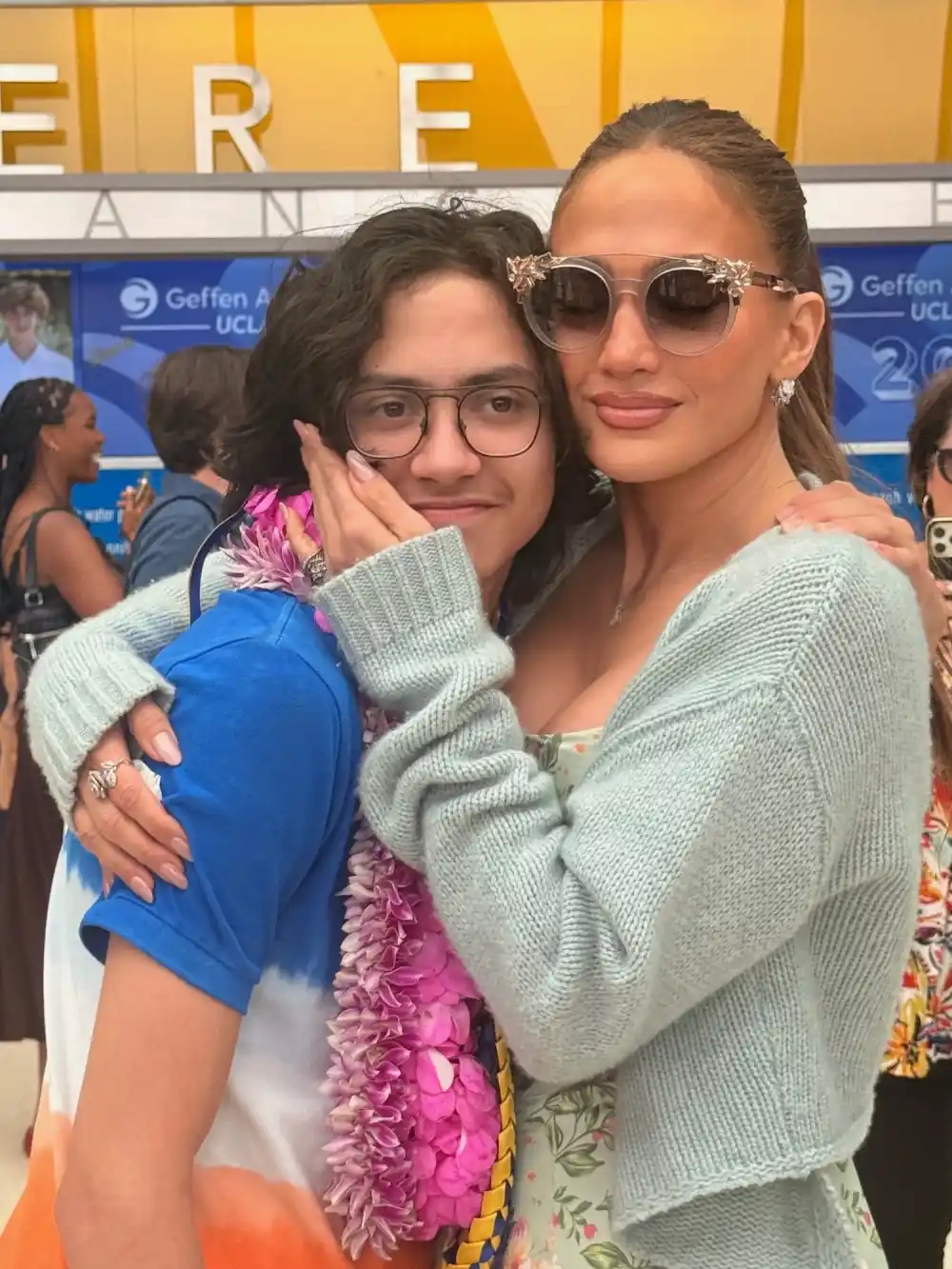
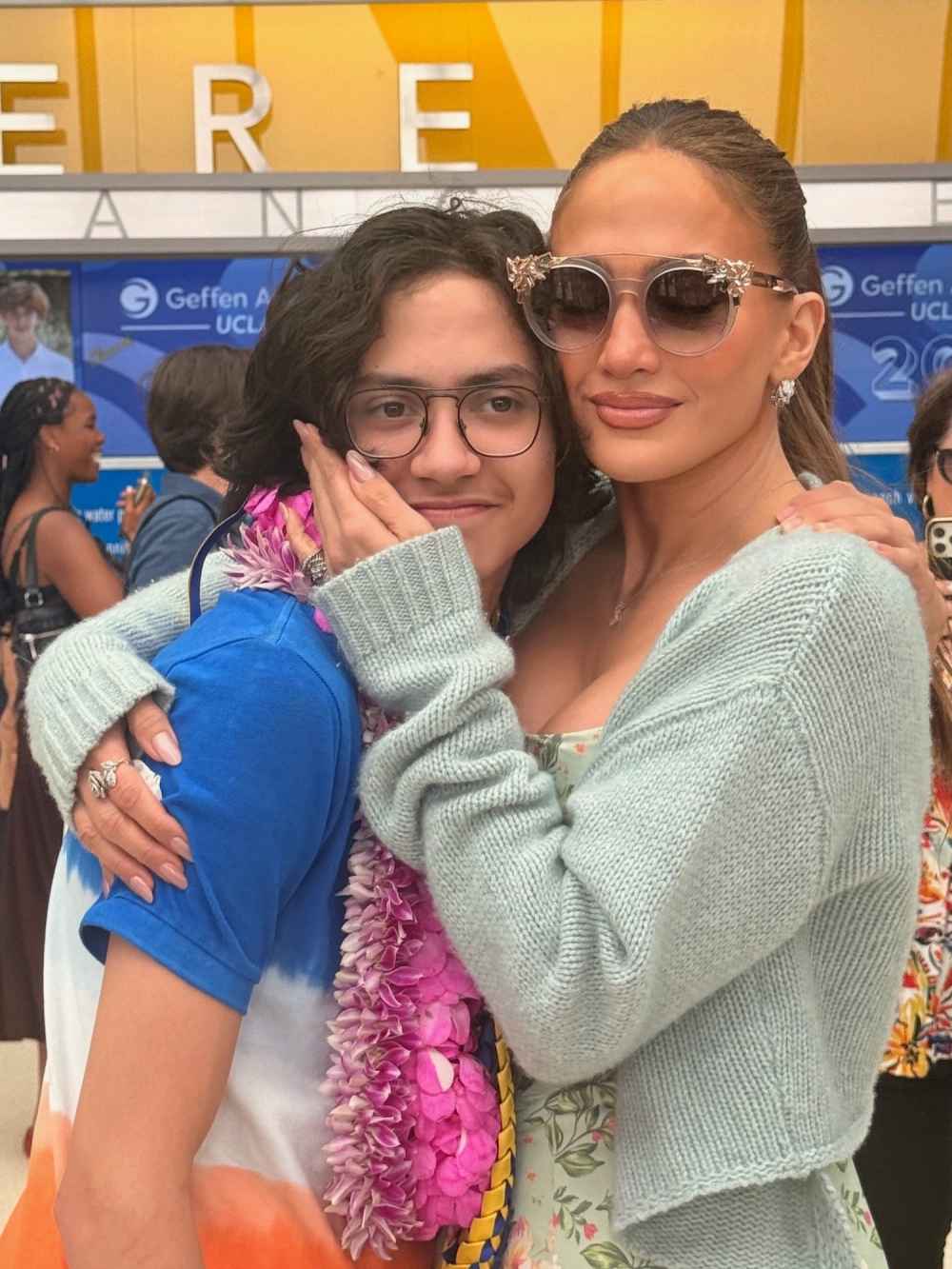
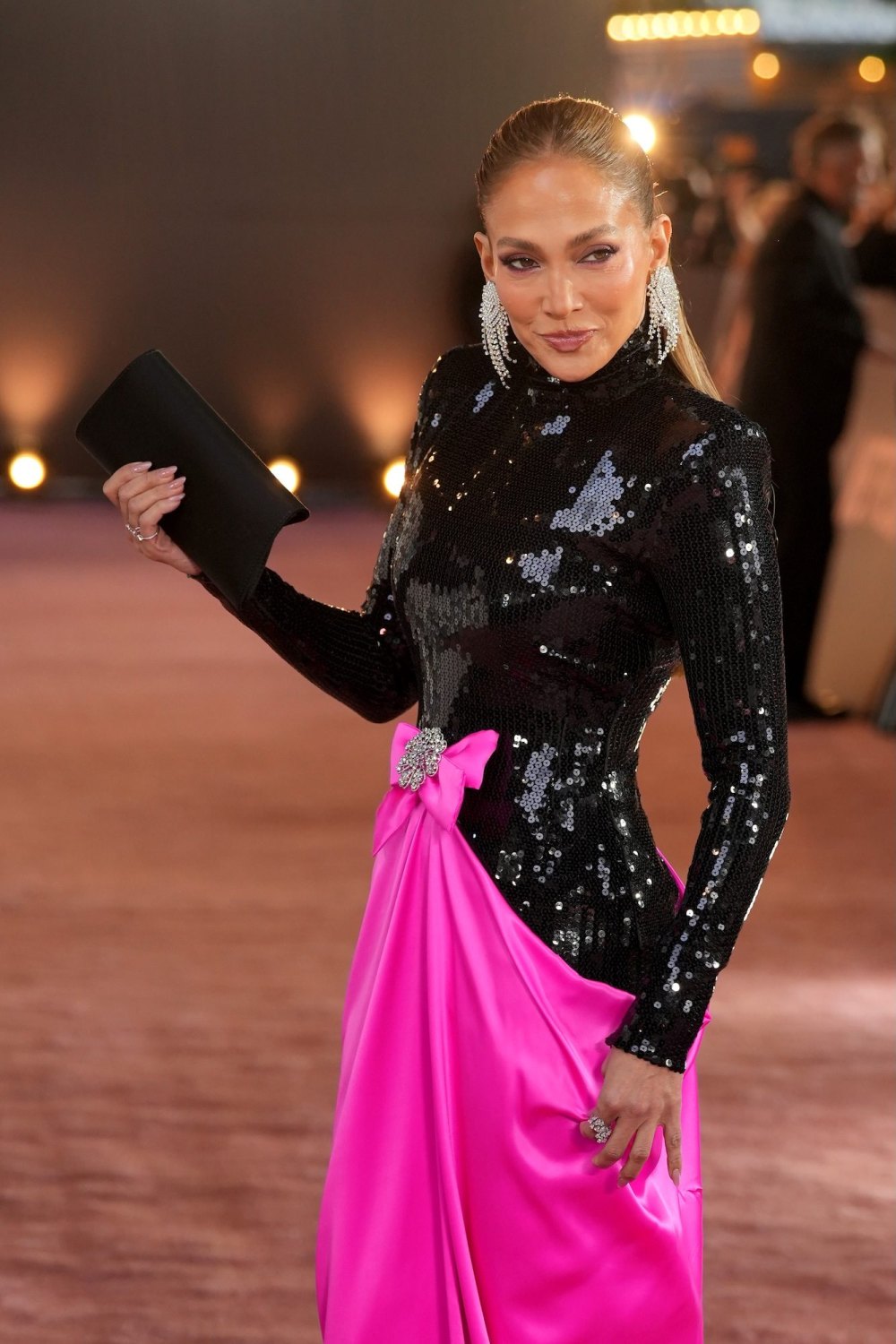
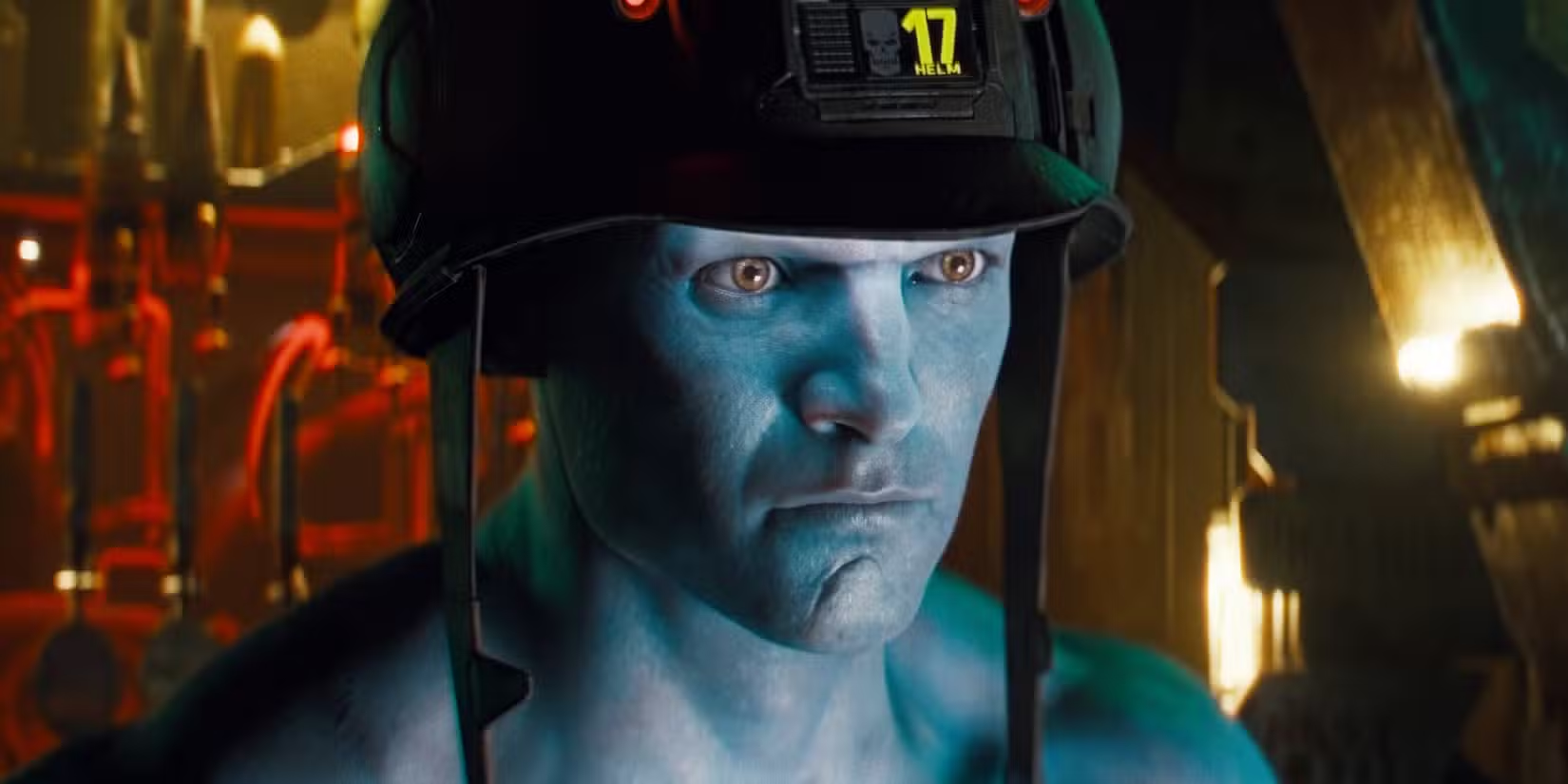


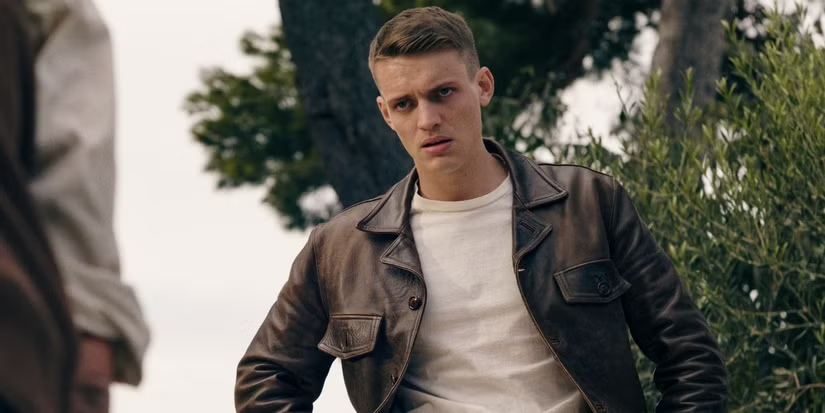


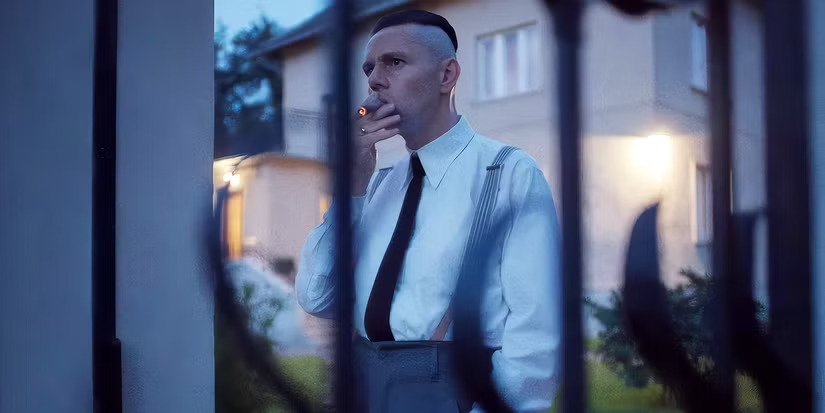


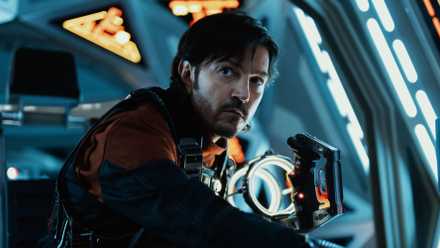
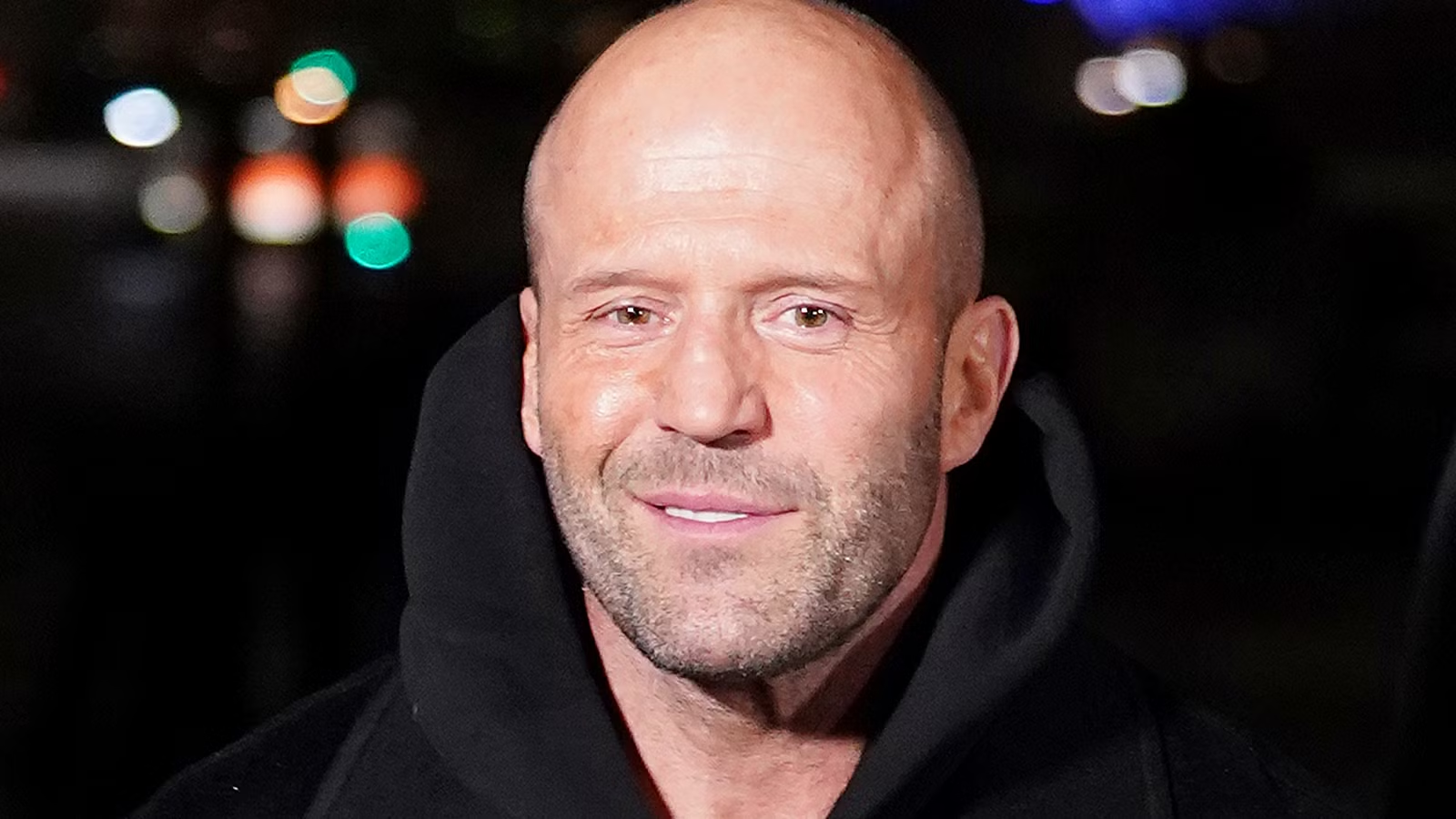


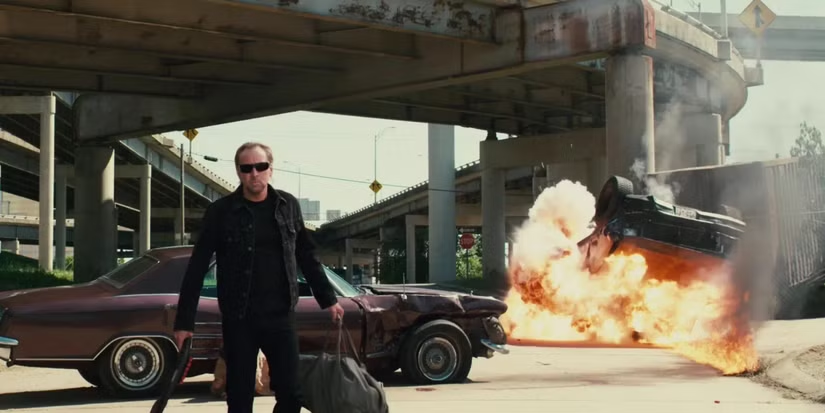


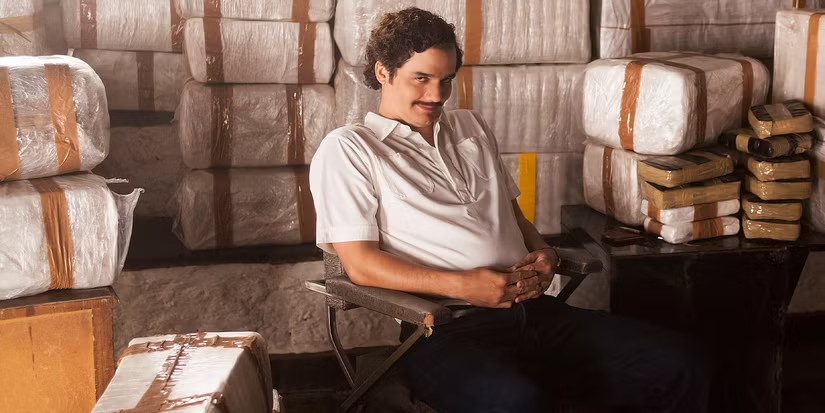




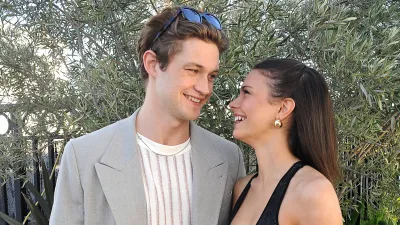


































You must be logged in to post a comment Login