
Entertainment
Rob Reiner's son Jake says it's 'almost too impossible to process' having brother Nick at center of parents' death

:max_bytes(150000):strip_icc():format(jpeg)/Rob-Reiner-Michele-Singer-Romy-Reiner-Nick-Reiner-Maria-Gilfillan-Jake-Reiner-spinal-tap-ii-premiere-2025-121625-a0626e1eb833482780faa8597552d67c.jpg)
Rob and Michele Reiner were found dead in their Brentwood home in December 2025. Nick has pleaded not guilty to murder charges.

Continue Reading
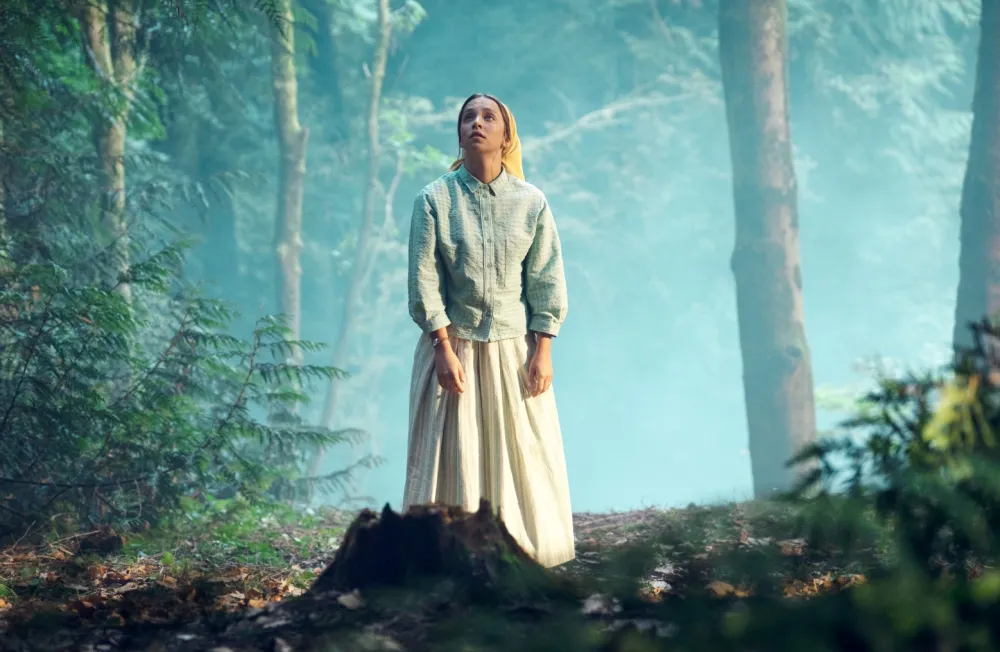
This brand-new Netflix original has already shot to the number 1 spot in the site’s top 10 chart — and for good reason.
Unchosen stars Sex Education‘s Asa Butterfield in a gripping psychological thriller story about women seeking freedom from an oppressive cult. Handmaid’s Tale vibes anyone?
Watch With Us loves a good cult show, and we couldn’t be more thrilled to sink our teeth into Unchosen.
Read on for our top three reasons why the show is unmissable.
If You’re a ‘The Handmaid’s Tale’ Fan, You’ll Like ‘Unchosen’
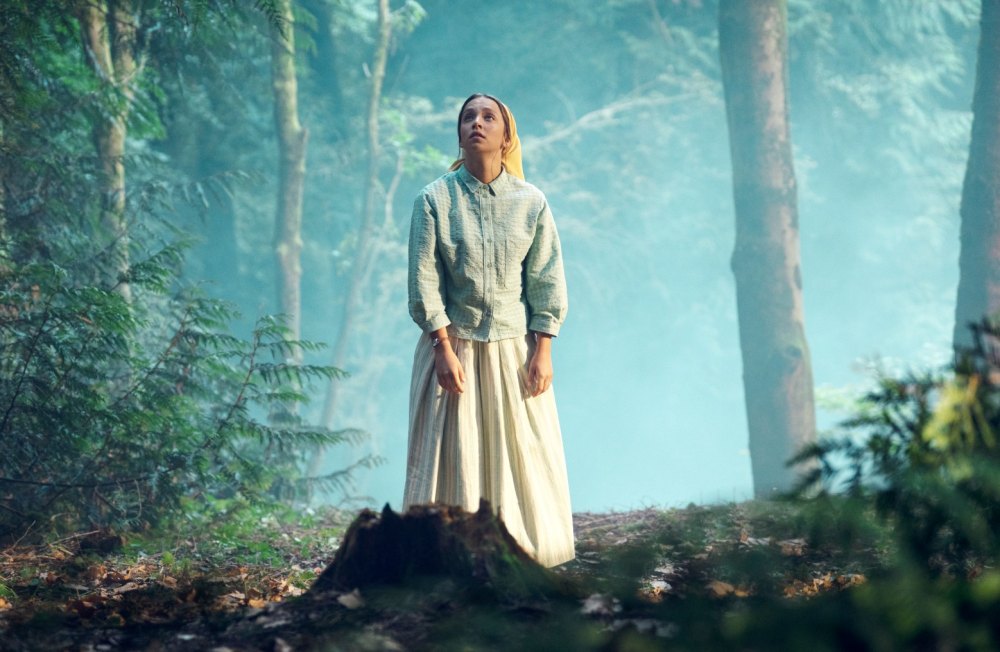
Molly Windsor in Unchosen. Netflix
If you’re looking for something to fill the void left by The Handmaid’s Tale and don’t find that the spinoff The Testaments is quite quenching your thirst, then Unchosen is the series for you. The show follows a fictional cult called Fellowship of the Divine, led by a charismatic man called Mr. Phillips (Christopher Eccleston). In this community, technology is banned, and women are confined to their homes and subservient to their husbands. The series focuses on one couple in particular, Adam (Butterfield) and Rosie (Molly Windsor), the latter of whom begins having second thoughts about her highly constrained life after an incident in the forbidden woods.
While there is no infertility epidemic in the world of Unchosen like in The Handmaid’s Tale, female characters are made to wear similarly modest garments and head coverings, and are at the sexual whims of all the men in the community, while the process of giving birth is also a communal experience, as with the handmaids in Gilead. Of course, the realities of living in such a highly oppressed society are bound to give way to thoughts of rebellion, and after Rosie comes across a tall, dark stranger in the woods, these feelings are thrust into sharp, life-changing relief.
The Netflix Drama Is Based on Real-Life U.K. Cults
There are currently at least 2,000 cults operating in the United Kingdom, and Unchosen creator Julie Gearey used some of them as inspiration while writing her show — she even reached out to real-life former members of such cults via the internet while doing research for Unchosen. Jim Loach, the series’ director, noted that Gearey grew up in an area of England where children she attended school with had parents who were active members of cults. One of the most famous cults in that particular area is the Christian community of Bruderhof, where members live similarly modest lives to those of the disciples of the Fellowship of the Divine.
Additionally, Butterfield watched the BBC documentary on Bruderhof in preparation for his role, along with documentaries on the Plymouth Brethren Christian Church, a group perceived by many as a cult that dates back 200 years and boasts over 55,000 members. While the Fellowship of the Divine is a wholly fictionalized cult, Gearey’s research, testimonials from former members who escaped cults and Gearey’s own personal experiences of associating with the children of cult members, all deeply informed the creation of the cult for Unchosen.


‘Unchosen’ Has a Top-Notch Cast
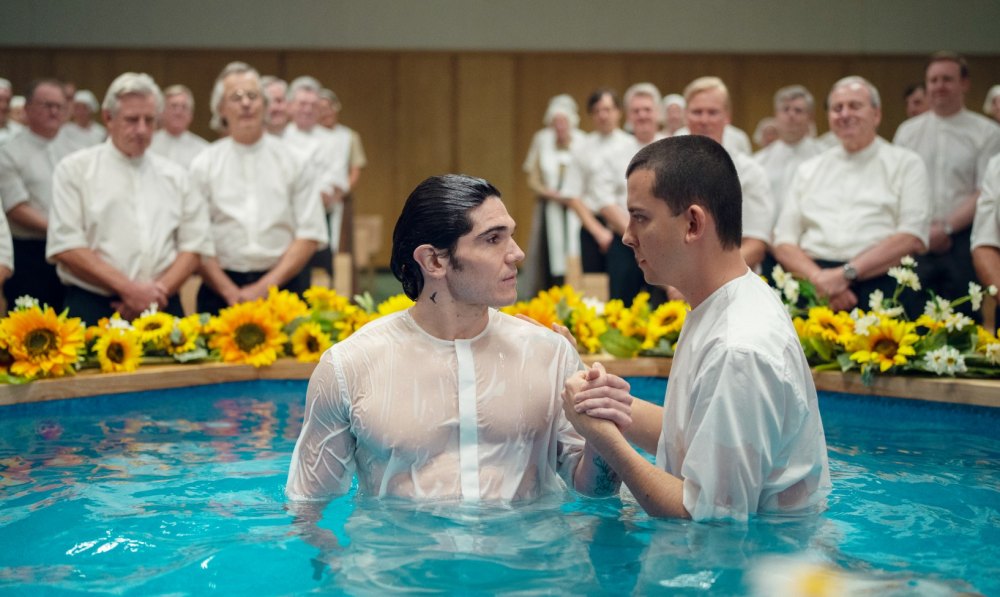
Fra Fee and Asa Butterfield in Unchosen. Netflix
In addition to Butterfield, the cast of Unchosen is exceedingly impressive, even if you might not know some of them on a first-name basis. Eccleston has been praised for his role as Mr. Phillips in particular, so impressive at playing a manipulative cult leader that it feels like he might have been one in a former life. Meanwhile, Windsor (who viewers may recognize from the film She Said) gives an incredibly earnest performance as the conflicted Rosie. But all three of the lead young actors, Windsor, Butterfield and Fra Free (as handsome newcomer Sam) are perfectly cast, and feel natural in their roles as each of their characters progresses throughout the season.

Netflix is ready to battle in April. The streamer is debuting a ton of new shows about people in conflict with one another, and the results are entertaining — and in one case, gruesome. Thank You! You have successfully subscribed. Subscribe to newsletters Enter your email Please enter a valid email. Subscribe By signing up, […]
Butterfield in particular does a stellar job playing against type as the domineering and cruel Adam, since many viewers are likely most familiar with the young actor from his performance in Netflix’s Sex Education, in which he plays a demure and well-meaning high school student. The rest of the major supporting cast is rounded out by Siobhan Finneran (The Damned) and Alexa Davies (Harlots and Mamma Mia! Here We Go Again).
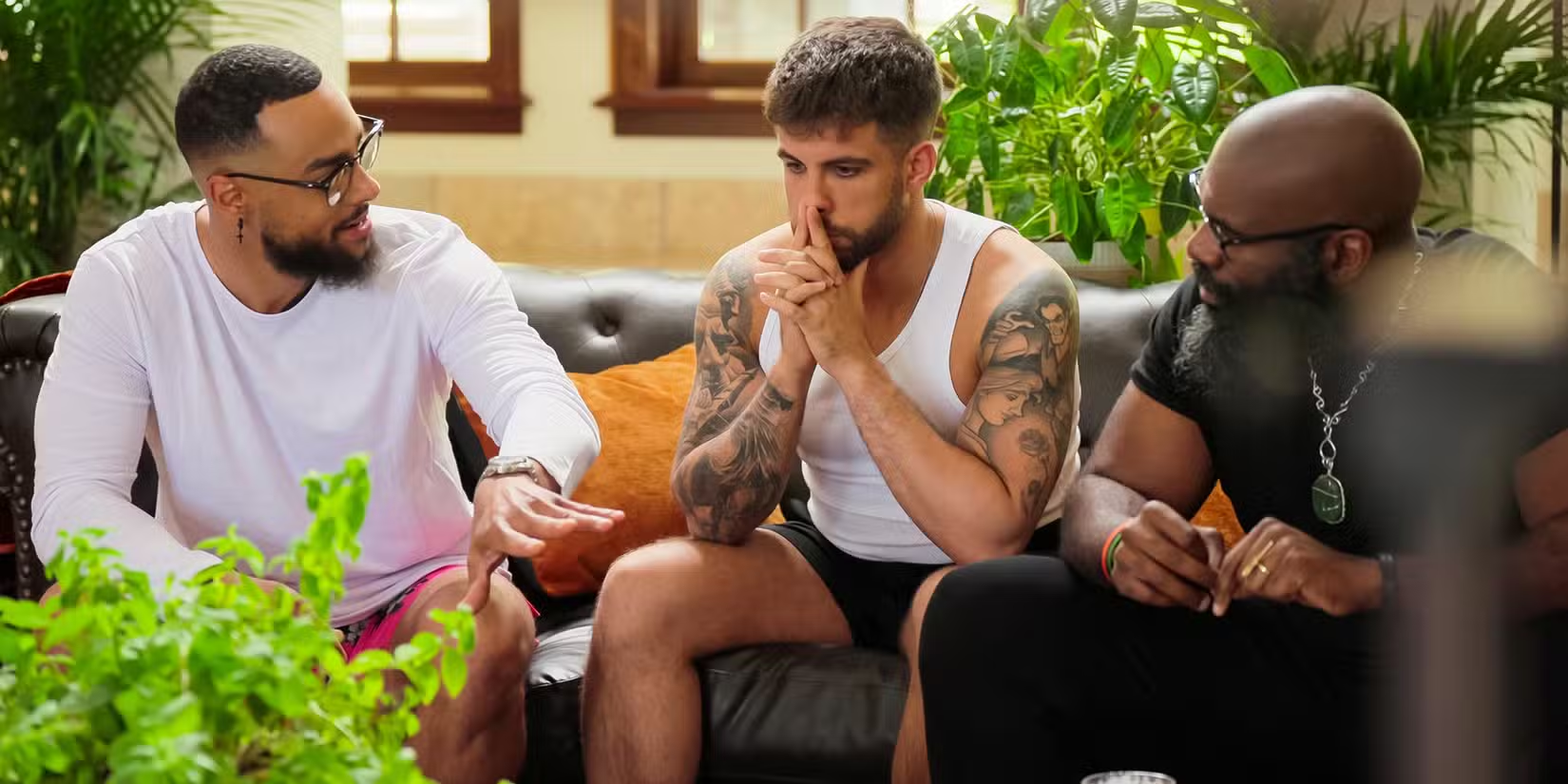
Million Dollar Secret is the kind of show that you don’t mean to get into, then end up all in. This is a style that it took and improved for season two, making it feel as if it were made specifically for binge-watching on the weekend. This second season delivers what most reality shows do not provide: a fast-paced, contained experience that does not drag or stall and does not require several weeks of your time to feel good about watching.
Fourteen participants enter a luxurious estate, where one participant will receive a secret $1 million prize; however, the other participants must discover who that participant is before they are voted out. Instead of everyone chasing the same prize, one player starts with it—and their entire goal becomes survival through deception. That inversion creates a constant tension that never really lets up, because every conversation carries a second meaning and every choice risks exposure.
‘Million Dollar Secret’ Turns a Familiar Format Into Something More Unstable

The popular Netflix show has some similar elements that you can compare to other social deduction shows (e.g., The Traitors; The Mole). Those comparisons are valid because they involve elements of forming alliances to cast doubt on someone else and of playing the game strategically to misdirect or deceive. But Million Dollar Secret separates itself through instability. Because the money can transfer to a new player if the current “Millionaire” is eliminated, the power structure never settles. No one gets to dominate for long, and no one can rely on a fixed role within the game.
That design choice does more than keep things unpredictable. It forces players into a constant state of recalibration, where yesterday’s logic stops working the moment the game resets. A correct read in one episode can become useless in the next. As a result of needing to be in line with others rather than aligned for a cause, the alliances formed will not last. Therefore, the overall view of the competition is that it’s a collapsible one with all participants struggling to keep their feet on the ground, but the ground is constantly moving away from them.
The second season portrays the instability of this environment much more accurately than the first season did. Contestants enter the game with a better understanding of how it works, which makes them more aware of how they are perceived relative to other contestants and, in turn, heightens the overall tension and excitement in the drama. Contestants are now analyzing every word and inferring all possible alternative actions of one another, and in some instances, attempting to sabotage their own game plans by trying to out think other contestants way too early in the season.
Strategy, Performance, and the Pressure to Lie

Every player, whether they hold the money or not, is forced into a version of themselves that feels slightly artificial. The Millionaire has to act normally while hiding something enormous, while the others have to act confident in reads that are often guesses. Over time, those performances start to crack, and that’s where the show finds its most compelling moments.
The “secret agendas” play a key role in pushing those cracks to the surface. The idea of players being assigned odd or specific tasks, such as repeating things, following other players around, and doing things designed to attract attention, creates situations in which players are unable to act normally. There are some uncomfortable moments that are intentionally awkward due to their design, as these situations create controlled chaos in social dynamics that might otherwise settle into specific patterns of behavior and provide no basis for action in real time.
While not every item achieved the same effect, there are larger-group challenges that feel more like a means of generating clues and moving power than an innovative segment. Even these segments help form a more significant whole; the focus of the entire format is on interaction rather than spectacle. The format relies on how people interpret each other and not on how well they perform activities.
Why Season 2 Feels Built for a Weekend Watch

The way Season 2 is structured makes it particularly appealing for marathon watching. With episodes released in two parts, the series naturally breaks into digestible chunks without losing momentum. Each of these sections has enough story momentum to feel like a complete section, but they also build on one another and lead into the next set of episodes. This design of the show lends itself to a rhythm that emphasizes continuous forward progression over the spectacle of individual episodes.
What allows Million Dollar Secret to be enjoyed by viewers for long sessions is anything but pacing. There is room for tension to mount but never become overly tired. The stakes are clear, the rules are consistent, and the constant shifting of power ensures that the narrative continues to move forward. Each time the viewer is introduced to a new angle, suspect, or decision that could change everything, it adds to their enjoyment of the series, drawing them deeper into the plot and encouraging them to watch the next episode.
Sydney Sweeney has been candid about what goes into stripping down for nude scenes in Euphoria and other projects.
After Euphoria premiered in 2019, Sweeney, who plays Cassie, opened up about the downsides of being naked on screen.
“I don’t think as many people took me seriously in Euphoria because I took my shirt off,” she told Cosmopolitan in February 2022. “When I saw The Voyeurs for the first time, I wondered if I’d done too much. I researched celebrities who have done nude scenes, trying to make myself feel better.”
Sweeney continued: “There are hour-long compilations of world-famous male actors with nude scenes who win Oscars and get praised for that work. But the moment a woman does it, it degrades them. They’re not actresses, they just take off their tops so they can get a role. There’s such a double standard and I really hope that I can have a part in changing that.”
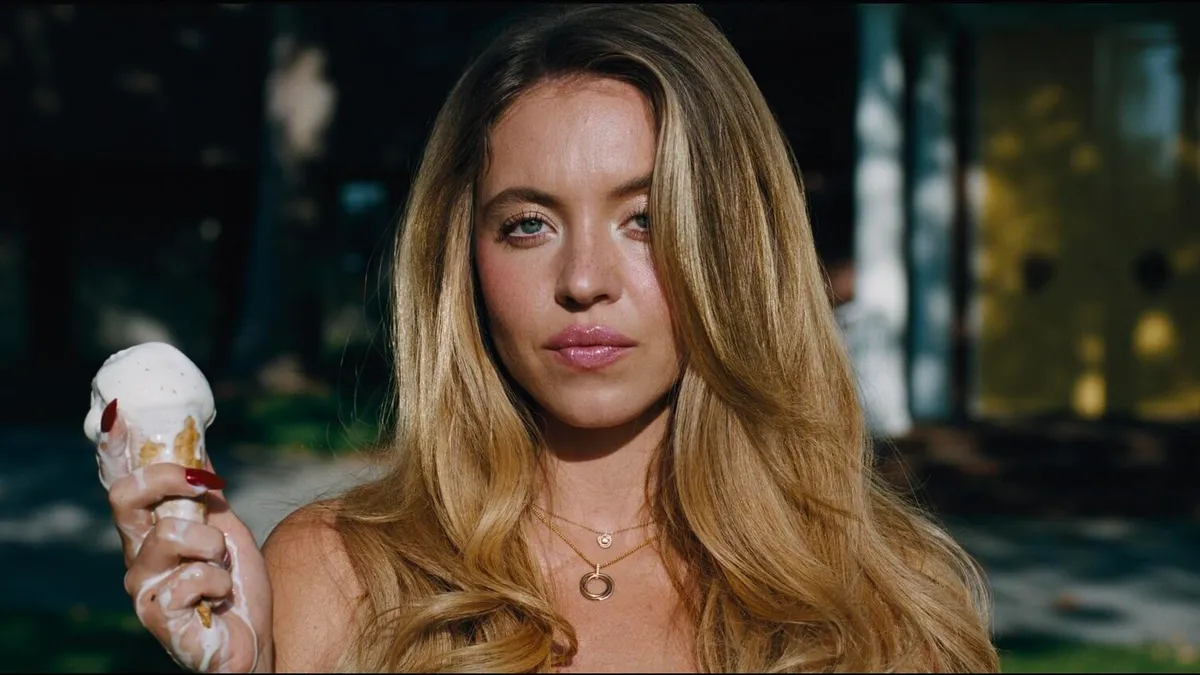
Euphoria has become known for its graphic sex scenes — and the stars haven’t held back about stripping down on camera. “Every scene is like, ‘He sleeps with this person. He does this with this person naked,’” Jacob Elordi said about playing Nate Jacobs during a March 2022 appearance on The Ellen DeGeneres Show. “On […]
In addition to the hit HBO series, Sweeney has taken risks in The Voyeurs, The Housemaid, Anyone But You and more. Keep scrolling for Sweeney’s most candid quotes about onscreen nudity:
Sydney Sweeney Compares Nude Scenes to Real Life
Sweeney told Teen Vogue in March 2022 about the risqué scenes in Euphoria, saying, “We all get naked in real life. We show this character’s life and what they’re going through. Cassie’s body is a different form of communication for her.”
Sydney Sweeney Wants to Feel Comfortable on Set
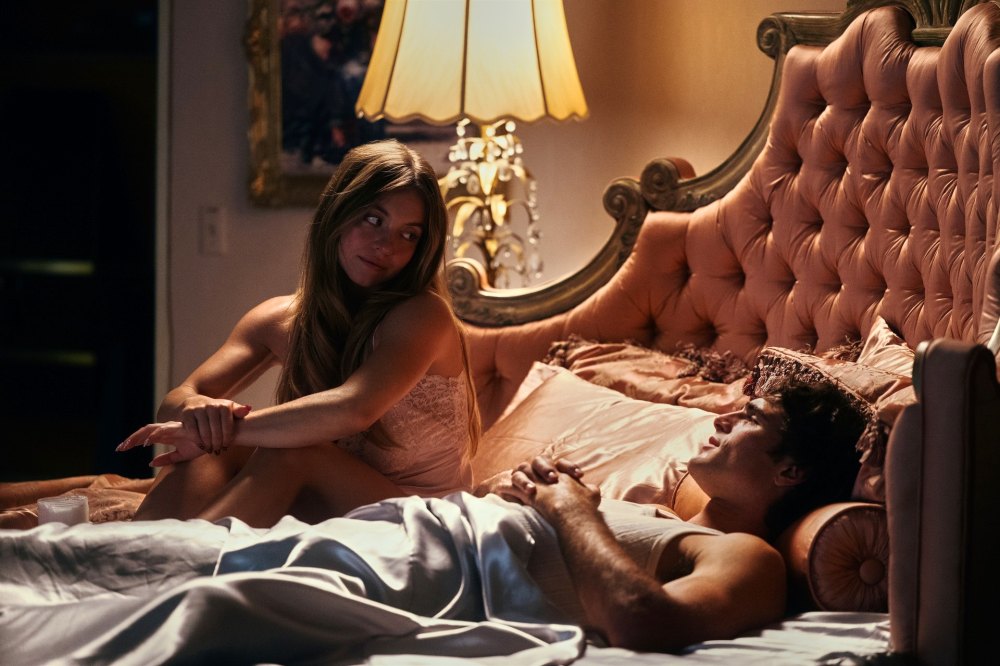
Sweeney praised Euphoria creator Sam Levinson for supporting her behind the scenes.
“Sam is amazing,” she told The Independent in January 2022. “There are moments where Cassie was supposed to be shirtless and I would tell Sam, ‘I don’t really think that’s necessary here.’ [And] he was like, ‘OK, we don’t need it.’ When I didn’t want to do [a nude scene], he didn’t make me.”
How Sydney Sweeney Put Distance Between the Scenes
Sweeney confessed to Cosmopolitan in 2022 that she viewed her nude scenes as the character getting naked, saying, “I’m so disconnected from it. When I get tagged in Cassie’s … nudes, it feels like me looking at their nudes, not Sydney’s nudes.”
The actress went on to explain that “when you film one of these scenes, it’s so technical and not romantic,” adding, “There are people staring at you, pads between you; there’s nipple covers and weird sticker thongs all up your butt.”

To quote Sydney Sweeney’s Euphoria character, she’s “never, ever been happier” — and that means body-shaming comments won’t faze her. “I see it, and I just can’t allow myself to have a reaction,” Sweeney told Variety in March 2024. “I don’t know how to explain it; I’m still trying to figure it out myself. People […]
Sydney Sweeney’s Approach to Telling Her Loved Ones
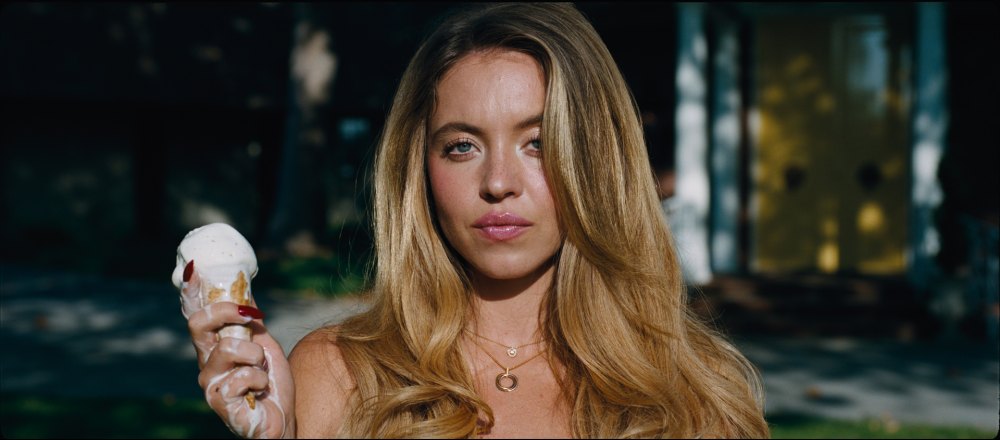
“My mom visited me on set at the time, so she knew the story and I talked to her a lot about it — my dad didn’t,” Sweeney told CBS Sunday in 2023 about filming Euphoria. “Yeah, I didn’t prepare my dad. At all.”
Sweeney weighed in on her family’s reaction to her racy projects.
“I mean, how do you bring it up in conversation? And also, when I talk to my dad, it’s usually not about work. We talk, like, father-daughter conversations. He decided he was going to watch it, without telling me, with his parents,’” she explained. “My dad and my grandpa turned it off and walked out. But my grandma is a big supporter of mine. She’s a big fan of mine. Actually I bring her, usually, all over the world to my different sets and I make her an extra.”
Sydney Sweeney Comparing Nudity to Power
In a 2025 interview with W Magazine, Sweeney reflected on not experiencing stage fright, saying, “I don’t get nervous. [I] gained so much confidence and self-awareness on Euphoria. I think that the female body is a very powerful thing. And I’m telling my character’s story, so I owe it to them to tell it well and to do what needs to be done.”
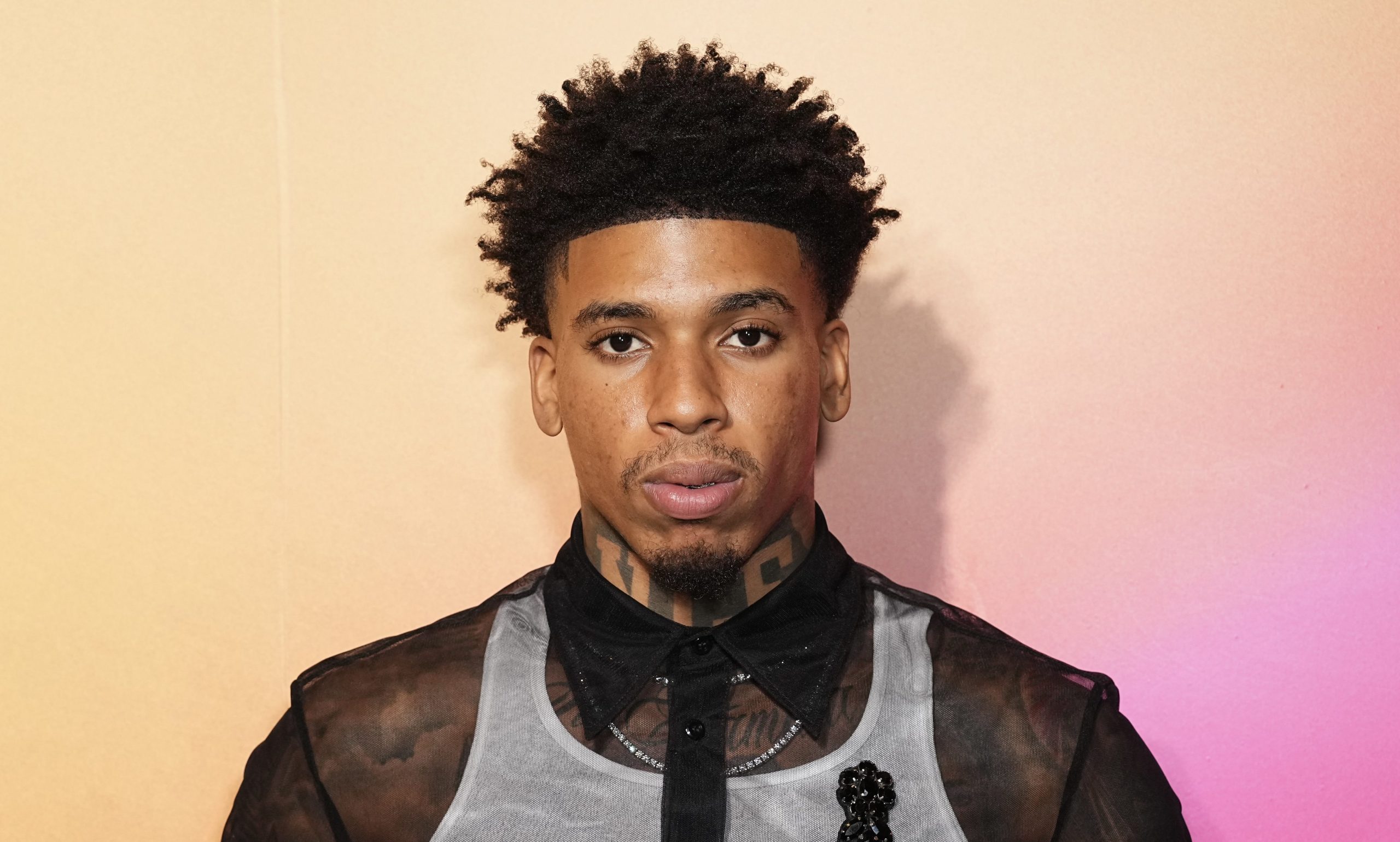
NLE Choppa and his fiancée Erica Raven have been out here embracing their engaged life after he popped the question in December. The first time they shared pics online was two months prior, and since then, they’ve been all boo’d up, from cute dancing videos to sweet photos. Now, the couple has the internet talking for a different reason following some viral clips in the club.
RELATED: Love Is In The Air! NLE Choppa Seemingly Proposes To Girlfriend Erica Raven With Pink Diamond Ring (WATCH)
NLE Choppa Addresses Clip Of Him Talking To Women While Out With His Fiancée
This week, clips of NLE Choppa having a good time in the club with his fiancée Erica Raven started making their way around the net. The buzz sparked after he was seen on livestream flirting and getting other women’s numbers while standing right beside his lady.
NLE Choppa later decided to clear the air as he checked critics, writing, “Keep in mind we set the intentions to bring some back with us. I was communicating for US. Thank you!”
He also shared another clip of Erica admiring how fine another woman was across the room, even asking her fiancé if he liked her or not. His comment read, “Slight bit of proof to my last repost.”
Social Media Weighs In
Social media users gathered under The Shade Room as they shared their thoughts on NLE Choppa’s post. While some were taken aback by the idea of sharing their partner with others, others argued that people should mind their business when it comes to other relationships.
Instagram user @alissaduh_ wrote, “You’d be surprised a lot of relationships do this. Mind ya business!”
Instagram user @shantishae added, “She definitely told the world she liked girls when she was on Baddies… so this shouldn’t be shocking lol smh.”
While Instagram user @dom_moan_nique2 wrote, “1 Want My Own Person I Pray This TypeNEVER Find Me!”
Instagram user @the_hoe_phase_expert wrote, “Trying to take a random home, Str8 from the club is INSANE, bouz I know they aren’t asking for MYCHARTS 🤷🏾♂️😩”
Instagram user @breezybabybae added, “This generation is COOKED 🤯”
While Instagram user @therealkbratzzz wrote, “ldk about yall but.. I like it 😂🥰”
Instagram user @geishalee wrote, “And this is why all them men of God at the table told him to go read the Bible again…. Cause I’m confused”
Instagram user @stone_gem14 added, “If the fiance didn’t care, why y’all care?”
While Instagram user @laidbackaplomb wrote, “Sis you better dust yourself off and try his friends (or whatever Aaliyah said)”
NLE Choppa And Erica: After Their Engagement
The couple have been out here loving each other loudly! Back in December, NLE Choppa penned a heartfelt message about how much peace and healing Erica Raven has brought into his life.
He wrote, “I’m so grateful for you. You teach me gentleness by simply being the delicate YOU the Most High crafted you to be. What’s on the inside of you attracts me deeper than what’s seen externally. I honor you deeply. Words can’t truly explain how much I love you. You’ve pulled me out of my curse. You showed me I can have a person in moments I thought a woman for me was nonexistent. You are my reflection, my mirror, my other half. In our past life, we were distant lovers, but in this one, we were husband and wife.”
In February, the rapper followed up with an appreciation post filled with some of their memories. NLE Choppa captioned it, “Last 7 months I’ve been in love with you #appreciationpost,”
RELATED: Hol’ Up! NLE Choppa Seemingly Claps Back At LeBron James’ Memphis Comments As The City’s Mayor Speaks Out
What Do You Think Roomies?
By TeeJay Small
| Published

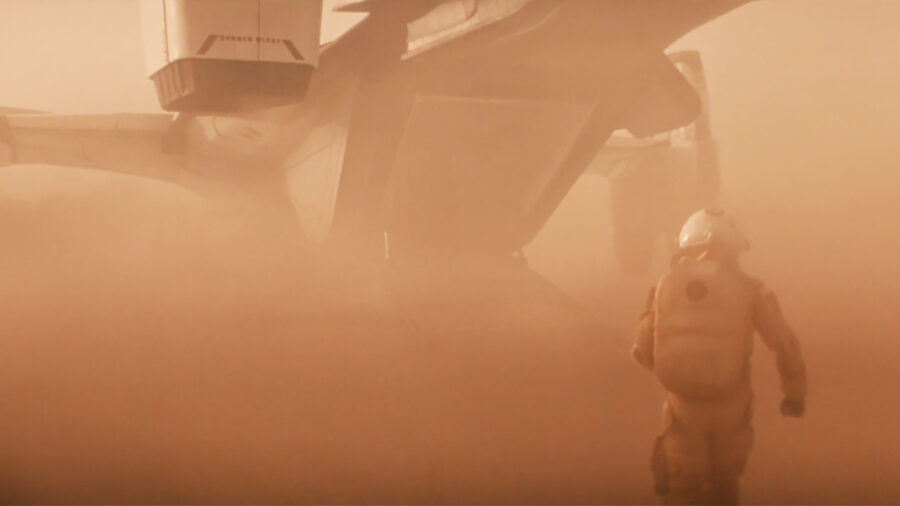
Since the dawn of mankind, humans have looked up at the sky and wondered if we were alone in the universe. As complex astronomy and space travel became possible, we’ve begun unraveling the mysteries of our solar system, though we’ve had very little in the way of straight answers. Now, according to a scientific study published in Nature Communications, NASA scientists may have uncovered the first concrete evidence of life on other planets. If the current hypothesis is correct, the Curiosity rover has recovered organic molecules which have been preserved on Mars for over 3 billion years.
Per the scientific journal, five of seven newly found molecules identified in a Mars soil sample can be linked to the building blocks of life. The materials, which were smushed into a dried-up lakebed near Mars’ equator, may be native to the big red planet, or they may have been carried by a crashed meteorite billions of years ago. Either way, the robot’s findings suggest that microbial life could have formed based on these molecules, and even thrived.
An Exceedingly Hostile Environment

While discussing these findings with The Guardian, University College London’s Professor Andrew Coates explained “[Mars] had all the conditions for life to start there when life was starting on Earth. There’s no known reason why it shouldn’t have started on Mars as well.” These days, there’s no need to wonder why creatures don’t inhabit Mars, as the planet’s surface is exceedingly hostile. The lack of and Earth-like atmosphere means that the planet is constantly getting blasted with powerful radiation, and temperatures are known to drop below -100 degrees Celsius when the sun sets.
In the past, skeptics have been content to write-off life on Mars as a fringe theory. Still, recent research suggests that the planet was once home to flowing water, meaning Mars’ atmosphere could have supported life long before humans became the predominant species on Earth. University of Florida astrogeologist Amy Williams is credited with leading the Curiosity mission that found these new organic molecules, strengthening her belief that life could have persisted on the red planet more recently than previously theorized.

Professor Williams has stated “For a long time, we thought that all organic matter was going to be seriously degraded by that harsh radiation environment. It’s really exciting to see [that] large complex material can survive in the subsurface environment.” Even with this exciting new information, Williams has cautioned that the molecules themselves are not DNA. Strictly speaking, she claims the molecules are “definitely a building block to how DNA is made now. But it is truly just the bricks, not the house.”
Any way you slice it, this rover discovery is extremely exciting. With any luck, we won’t have to go to the trouble of sending Matt Damon up to Mars to figure out what’s going on up there. Soon enough, we might have concrete proof of little green men, who evolved around the same time as dinosaurs on Earth.
Entertainment
Kathy Griffin's mom called her out for being 'rude' to Barbara Walters on “The View”: 'Too snippy!'
:max_bytes(150000):strip_icc():format(jpeg)/the-view-barbara-walters-kathy-griffin-02-042426-f18cdbebbbbc4683b6f10593b1891908.jpg)
Maggie Griffin, who frequently appeared in “Kathy Griffin: My Life on the D-List,” died in 2020 at age 99.
Us Weekly has affiliate partnerships. We receive compensation when you click on a link and make a purchase. Learn more!
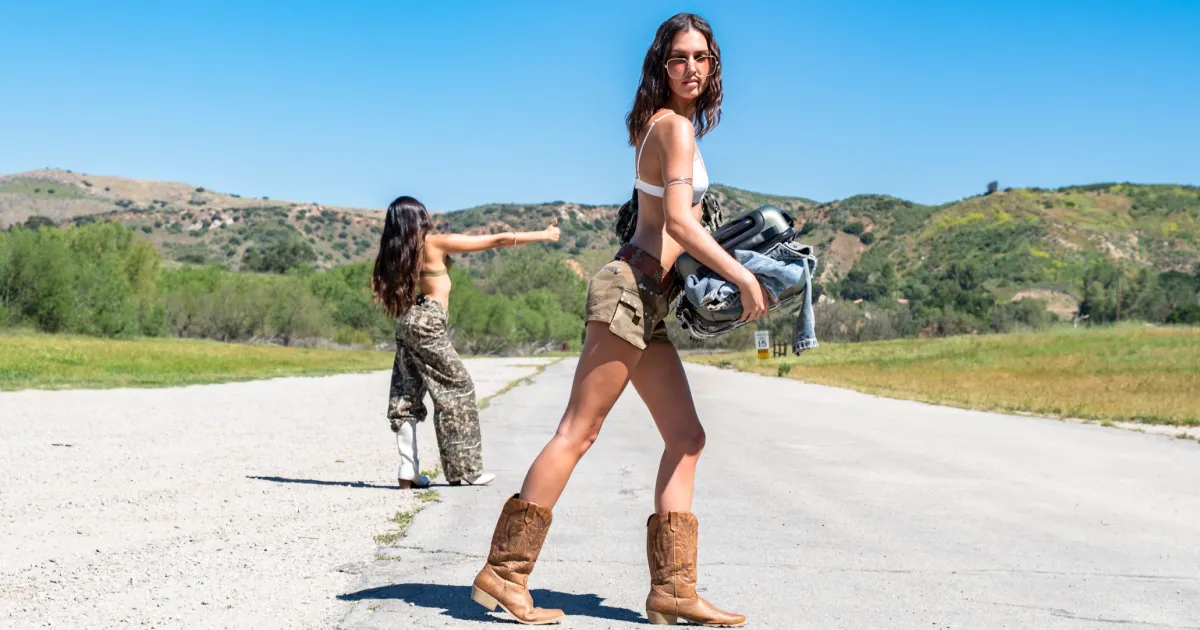
You don’t need an Arizona abode to imagine the vibe. Retro, sun-drenched and slightly edgy, Scottsdale socialites have a one-of-a-kind look. Miss Me just dropped a new spring collection that channels the iconic aesthetic, giving desert style a gem-studded upgrade, and these 11 spring pieces nail it.
With billowy dresses, baggy cargo pants, sassy tops and even comfy loungewear, Miss Me’s Desert Capsule is a one-stop shop for all things chic. You’ll look like you had VIP access at Coachella, so don’t be surprised if people ask for pictures. See the most Scottsdale-coded pieces below!
11 Chic Pieces to Channel Scottsdale Socialite Energy
1. Dreamy Denim: Lengthen your legs without even trying in these playful wide-leg jeans that feature sparkly side stripes. They scream ‘designer.’
2. Boho Babe: With a vibe that’s both Anthropologie and Zara, this lace-embellished midi dress is already in the cart.
3. One-Shoulder Wonder: In case you missed it, asymmetrical tops are totally back, and this edgy top is the perfect way to rock it. Pair it with jeans and flats, and you’re out the door.
4. Pretty in Pink: Make a statement in these Barbie-pink bootcut jeans that make even a tee and sneakers look luxe.
5. Graphic Tank: This tank top works with cardigans during the spring and solo during the summer, so you might wear it 24/7. We adore the lace and leather details.
6. Classic Cargo: Cargo pants are everywhere in Scottsdale. Thankfully, these classic printed pants come in multiple inseam lengths, so you can skip the trip to the tailor.
7. Baby Tee: Elevate your errand outfit with this pretty baby tee. With the wrap tie and cute bow closure, it even snatches your waist.
8. Mood Boost: If you don’t have bright yellow pants yet, let this be your sign. Martha Stewart has worn this buttery hue nonstop since February!
9. Comfy Cozy: Similar to Juicy Couture, this comfy zip-up has sassy rhinestone lettering that reads pure rich mom. Socialites are snatching it up.
10. Bye, Jeans: When you’re tired of blue jeans, opt for these studded cargo pants that add plenty of personality. They’re as functional as they are stylish.
11. Ribbed Knit: Spaghetti straps, ribbed fabric, a wrap waist! This staple cami checks all of our boxes, especially since it has a versatile acid-wash fabric.
Entertainment
The Last-Minute Editing Change That Completely Transformed the Ending of ‘Original Sound’
Summary
- Collider’s Steve Weintraub talks with the team behind Original Sound.
- First-time director Gregory Jbara, David Youse, Sarah Brandes, and David Lambert discuss adapting an Off-Broadway play to the big screen.
- They discuss casting, crafting the music, on and off-set chemistry, their filmmaking family, and more.
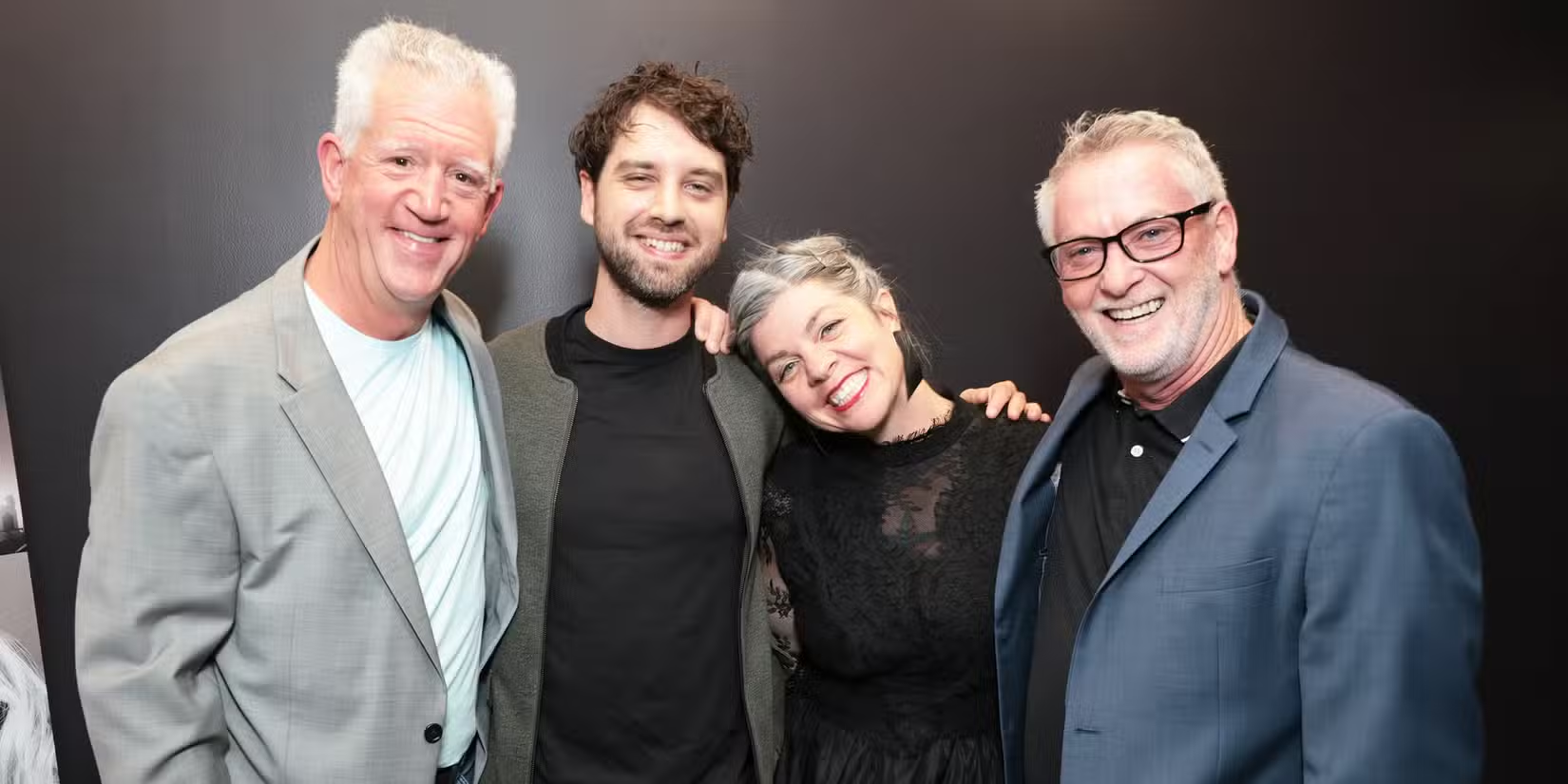
The creative team behind Original Sound are more than collaborators, they tell Collider’s Steve Weintraub during an exclusive Q&A conversation — they’re family. It takes a strong bond to take an Off-Broadway play from the stage to the big screen with an independent film budget and less than a month to shoot, and for actor and first-time director Gregory Jbara, producer David Youse, cinematographer Sarah Brandes, and star David Lambert, it was an exercise in collaboration, instinct, and most importantly, trust.
Playwright, screenwriter, and associate producer Adam Seidel adapted his 90-minute stage play Original Sound into a motion picture when a reviewer pointed out the on-screen potential of the story. In the movie, Lambert plays Danny Solis, a beat maker whose music is inspired by the rhythm of Brooklyn and Queens. He’s a struggling artist, hoping to be discovered, when rising pop star Ryan Reed (Laura Marano) lifts his track and uses it as her own. To avoid consequences, Ryan’s manager strikes a deal with Danny: Collaborate officially with Reed on a few of her songs. This could be Danny’s big break, but when his life begins to intertwine with Ryan’s, he realizes there’s a flipside to fame. Original Sound also stars Eric Stoltz, Bridget Moynahan, Constantine Maroulis, and Ted King.
After an advanced screening, the team hit the stage for a wide-ranging interview discussing the evolution from stage to screen, the unique casting process, and the realities of low-budget filmmaking that required their crew to think outside the box. They also share how they crafted the music for the film, the innovative tricks and techniques used for cinematography on a budget, and how they shaped the film in the edit.
Filmmaking Isn’t Always What Audiences Believe It To Be
The Original Sound crew pulls back the curtain on producing, directing, and acting.

COLLIDER: Before we get started, I like throwing a few fun questions. So the first one is for each of you. Have you ever asked for someone’s autograph?
GREGORY JBARA: Oh, sure. Probably Bozo the Clown when I was a kid in Detroit, Michigan.
DAVID LAMBERT: Yeah. I went to a WWE, WWF event back in the day, and I got some of the old guys’ signatures, like Triple H, Undertaker, and those guys. So that comes to mind first, and then Mickey Mouse at Disney World, and things like that.
DAVID YOUSE: When I was younger, my first concert my parents took me to was John Denver, and we had the opportunity to meet John Denver, and I actually asked for his autograph.
SARAH BRANDES: Mine was Tony Pagnotti, the local news anchor in Baltimore. He asked me what my favorite food was, and I said hot dogs.
Going down the line, what do audiences misunderstand most about your job?
JBARA: I don’t know that audiences misunderstand, but what I misunderstood about the job of a director, this being the first time I’ve ever done it, is I didn’t realize how easy it was. I’m being serious. When you have producers who hire the best people to be department heads, and you have a casting director who brings you the most gifted, amazing actors to work with, and you get to recollaborate with a DP who you worked with as an actor just two years before… I was never the actor who thought, “Oh, but I really want to direct!” Never. I always like being spoiled as an actor. I always thought directing was a selfless traffic cop who had to manage egos, and this was the furthest thing from that. Four hours of sleep every night, and I woke up every day literally tap dancing. I couldn’t believe how lucky I was to have this job.
That is not the normal answer. You got very, very lucky.
JBARA: I did.
LAMBERT: One thing that stands out, I guess, in watching it this time, it stood out to me, and I think it’s something that’s pretty common knowledge, but locations and the way we shoot the movie, compared to what you guys see, is always so wild to me. We can condense every part of the movie that we need in one location, we can do it in a matter of one day or two days.
You’ll see that first scene at the beginning part of the movie, and then the second scene at the very end of the movie, but that was done in one day. Sometimes that’s kind of crazy for me to wrap my head around. This movie is a good example of that concept. So, I think the schedule. I would say the schedule is always a wild thing for us to be a part of, and then also to see how it all comes together.
YOUSE: I think the audience thinks, when they hear the word “producer,” they just think money. They just think, “Oh, that’s the money person,” but it’s not. There’s the executive producers, who finance the film, but a producer, I always try to tell people who don’t understand it that it’s a wedding planner. So, you’ve got the dress, and you’ve got the groomsmen and the shoes, and the ties, and, “Oh, what if it rains?” And when people arrive, the appetizers are hot. And, “Oh, if it rains, do we have a canopy?” It’s literally everything. Just fixing everything and making sure it runs smoothly.
So, it’s not just the money part. There’s that, too, for many people, but a producer of a film is just the people that are making it all work. It’s a wedding planner to the ultimate, you know, in 21 days, get it done.
BRANDES: As the DP, people just assume, and probably the same for everybody’s job, but they just assume you have control, and you have no control. You’re just driving a car at 1,000 mph and trying to just pray that you can navigate your way through, and you’re just hoping that you can maintain some amount of control.
The One Where Donny Osmond Hurts His Back
Actor and first-time director Greg Jbara shares tales from the sets of Blue Bloods and Friends.

Greg, I definitely want to ask, you were on Blue Bloods for 14 seasons.
JBARA: Fifteen seasons, 14 years.
I’m very sorry. My math is off. What do you miss most about the job, besides the steady paycheck?
JBARA: Well, you answered it for me.
BRANDES: Tom Selleck.
JBARA: [Laughs] Yeah. Kissing Tom Selleck and getting razor burn. That’s nice. What do I miss about it? I mean, acting? I’ve got a new bug. I would love to be able to act again. I haven’t had a new job since this film, and we wrapped this a year ago. And I’ve been going out there. I’m enjoying the auditioning because I think that’s really what actors do, but I would love someone to go, “Oh, yeah, we’ll hire you.” That’d be nice.
But I’m hoping that someone who hires directors sees this and goes, “Wait, that was a $1.5 million film?” And I go, “Yeah, our producers made it look that good.” But yes, we can make our film look spectacular and shoot it in… How many days did we do it in?
YOUSE: I think it was 23. Five days a week. We worked Wednesday through Sunday so that Julie [Crosby] and I could fix things that happened on Monday and Tuesday. And also, it was better to get around New York City on Saturday and Sunday.
JBARA: Yeah, that was my answer.
This is a follow-up for you. You did one episode of Friends in Season 10, which is when the show was incredibly popular. What do you remember about being on that, and do you have people who still want to talk to you about Friends?
JBARA: No. No one ever brings it up. Yeah, of course. Thank you for asking. Two things: Matt LeBlanc in character, but he’s not, but he actually is Joey, I show up to rehearsal, and he goes, “Hey, man, I know it can be intimidating. Don’t worry, I got your back. I’ll make sure I introduce you to everybody.” And this, you know, I’ve had a career already, and I thought, “Oh, how sweet that there’s that essence that he has.”
What nobody knows is that we actually shot that $1,000 Pyramid on the actual soundstage where they shoot it in Sony. Donny Osmond, who really hosted that show, was used to being able to navigate that space without all of our camera equipment and cables from the Friends show. When he did the speed round, he leaves, and where he normally could safely, we had cables in his way. He forgot, tripped over, and really injured himself. He went down. It was to the point where we all gasped, and there was a studio audience. The whole thing came to a screeching halt, and he goes, “No, man,” pops right up, “I’m good. I’m totally good.” We went, “Really? Because that looked bad.” “No, I’m fine!” So we shot, then we took a little break, and he leans into Matt, and he goes, “I really messed up my back.” We went, “We gotta take care of that.” He goes, “No, I don’t want to be that guy. I want everything to go smoothly. I’ll be fine. I’ll make it through, but man, my back’s really messed up.”
So, Donny Osmond, no prima donna. A real team player. He was acting in pain in that entire speed round at the end. Love Donny Osmond.
David, I definitely have to ask you, you were on The Fosters for all 104 episodes, I believe.
LAMBERT: Yes, I believe so.
What do you remember most about that show? When you’re working like that, you’re really learning a lot, so what did you take away from that process that informed you or helped you as an actor?
LAMBERT: Yeah, The Fosters was a big, big part of my career thus far, for sure. I still look back and take from those constant lessons all the time as an actor. Five years. It also lined up with the age that I would have been going to school anyway, for whatever I would have gone for besides acting, I suppose, so it became school. The Fosters was my school for five years. I had people like Teri Polo and Sherri Saum and Danny Nucci, and then a number of recurring, fantastic, seasoned veteran actors that would come through. A lot of people came through, and so I learned from every single one of them. Then, also, just the consistency of doing that day in, day out. It was fantastic training for me as a young actor, and I utilize that with anything going forward, for sure.

10 Years After Its Premiere, ‘The Fosters’ Is More Important Than Ever
From its authentic LGBTQ+ characters to stark depictions of gun violence, the Freeform series has never been more relevant.
How an Off-Broadway Play Became a Feature Film
“I think it would make a better movie.”

Jumping into why I get to talk to you guys. How did this get from Off-Broadway to being a movie?
YOUSE: This started at the Cherry Lane Theatre in New York. My producing partner, Julie Crosby, produced it. I was a board member of the training theater, having produced other plays there with Julie, but I was not on this particular project, and it got some really great reviews. But one reviewer did say, “I think it would make a better movie.”
So Kit, our executive producer, was one of my partners on the board of the Cherry Lane Theatre — we just left A24 about a year ago — so it’s family, and it’s our second film with Kit as the executive producer. Sarah was our DP on the first film that Julie and I produced, called Alien Intervention, starring Greg Jbara. So we’ve all worked together before. We just realized that you have to work with people that you like and who are nice.
But anyway, we talked to Adam [Seidel] about changing the screenplay. In the play, there was no music. This was a play, and so when someone listened to a song, they would put earphones on and they would listen to the music, but the audience never heard anything what anything was. So we really had to create music. We had to create “Sway” with three different versions — Father’s version, his version, the pop version, and then her little guitar version. So it’s pretty daunting in how it all came to be. We were like, “What do we do first? Do we do the music first? Do we do the screenplay?” So, that’s how it all came together.
Gregory, this is your directorial debut. How long ago did you realize, “Wait a minute, I want to take a crack at directing?” And what was it about this material that said I really want to do this?
JBARA: So, never. I never wanted to take a crack at directing. Let me be clear: Never. Then during the strike, Kit and David and Julie said, “Hey, maybe you should be directing this project that we’re moving to the screen. Are we out of our minds?” And I thought as I read the email, “Yes, you’re out of your mind, but I’m going to be out of a job. Blue Bloods, we know when our closing day is.” And this was something that was literally handed to me by people who I had probably one of the most glorious experiences in Truth or Consequences, New Mexico, the summer of ‘22. And I went, “Oh, thanks.” And I went, “I’d be stupid to say no.” I don’t know anything about this.
David said, it was in an email, “Don’t worry, we’ll take care of everything.” He didn’t really speak on that, but he really did. If anything went wrong, I never knew about it. All I had to deal with was the glory of every single day being successful. That’s all I had to deal with. So, that’s how it came along. I said, “Oh, I’d be foolish to not say yes,” because I never would have thought of this for myself, and I couldn’t be more grateful to have had the experience working with people who saw something in me I never saw for myself. And that’s how I ended up here.
I’m definitely curious about how you landed with David and Laura [Marano] for your two leads.
YOUSE: Well, Don Carroll, our casting director, is in the audience. I’ll start at the beginning of it. It was such an easy process. We did not have auditions. Don gave us a list of people for each character, two or three people, and we interviewed them on Zoom, and we saw all of their work online. “Who’s number one? Who’s number two? Well, let’s meet David. We know he can act. Let’s see your personality.” And we, again, go back to picking the nicest people that you want to work with. And I will say, all of us, Laura included, Eric Stoltz, it’s a family. They’re in New York tonight doing a screening. It’s a family.
JBARA: I’d like to echo. All the people we hired on this film, Don did the vetting, and he goes, “Here are our best choices. Take a look. You guys decide.” David and Julie said, “We looked at everybody on paper who looks right for this for every creative department head,” and they said, “We’re going to meet them all. We’ll find the person who has the right sensibility, who’s going to lean into the project with us when something goes south. Somebody who isn’t going to make this about them, someone who doesn’t bring toxicity with them.” Everybody’s talented. We’ve got to hire the people that we, at the end of the day, went, “Oh, I want to hang out with them for a month or six months, depending on the job.” So, it was a luxurious experience.

David, what is it like for you the night before you’re going to be doing a Zoom meeting with what could be a project, and how much did you know that there was only a small number of people they were meeting with?
LAMBERT: In that situation, I wanted to know the least amount in terms of the stakes. I think that’s better. I think I operate better that way. For me, I wanted to go in knowing the story, and I wanted to know the general vibe, if you will, of the character. Then, yes, since it was the setting it was, since it was going to be this Zoom conversation with these guys, I also just wanted to feel what that was going to feel like in the Zoom. So, it was just a matter of me not psyching myself out, I guess.
Then, also, in a way, doing my homework. I wanted to be knowledgeable about what this project was, that way we could really talk about it. Also, it was important for me to hone in on a version, at that point, of Danny. In the script especially, I felt like he blended these older sensibilities with the vinyl records and that kind of thing, and his mixing and deejaying, and so it was sort of old-meets-new, and I’m very that way in my own life. So that was kind of the beginning of me starting to identify what I thought Danny could be. I took that in with me to the Zoom, and that stuff kind of came up in the Zoom, and that was where we went with it from there.
LAMBERT: You may not remember, but in the Zoom meeting, because we didn’t do scenes, we really were like, “We would like Danny and Ryan to be singer-actor songwriters because we have tunes to write. David, is music part of your world? Do you have songs? Are there songs that you’ve written?” And he goes, “Oh yeah, hold on.” He goes, “But it’s going to take me a few minutes to set my gear up.” Without any preparation or warning, he was like, “Yeah, I’ll play some songs for you.” That was like, “Oh, he has the right heart.”
YOUSE: And that is David playing the piano in that beautiful scene, which I love so much.
Building a Movie Around Music From Day One
The original play featured zero songs, so it was up to this filmmaking family to bring their A-game.

That actually leads me to my next question, which is specifically the music, because it’s really hard. You have to have songs that the audience really believes could be on the radio and could be pop songs. So talk a little bit about the music. Obviously, you’re making this on a budget, and you have a schedule, so talk about crafting those songs.
YOUSE: So I went to New York and Julie and myself had lunch with Glenn Schloss and Erik Blicker because they scored our first movie, and we sat at lunch at The Smith and had some eggs Benedict or something. I remember I said to Glenn, “I know you’re writing movie music and for television shows like that, so can you write a pop song?” He’s like, “Yeah, I can write a pop song.” I was like, “Could you write a pop song three different ways?” We just said, “Why don’t you guys take a crack at it?” And they worked with Adam, the screenwriter, about what the characters were feeling and what Adam was envisioning, and then Greg got involved.
JBARA: We were hiring them, and they were going to score the soundtrack no matter what, but then the writing of the songs, they wanted to do it. They said, “We’d really like to get a shot at it.” They’re standalone singer-songwriters — they’re ridiculous musicians — and they were willing. We hadn’t even figured out what the music contract would be, like who’d own what and what the rights were. They were going, “Yeah, but that’s fine. We’ll work it out. We’ll get it on paper. We just want the opportunity to do it.”
So, they worked with David, and they worked with Laura. It was a collaboration, and all those songs were studio-recorded and ready to go before our first day of filming because we needed clip tracks for our actors to lip-sync to, as well. Then we had our sound designer able to capture everything live, as well, because we knew that if we could make the audience know that this was real, instead of having it be like, “Oh, they’re lip syncing and that’s a studio sound,” then we would help the audience take the ride along with us. We were gifted with a sound department and actors who were like, “Yeah, we’ll sing live.”
Did you take for the movie their attitude with Danny’s attitude towards the contract? There’s a very real symmetrical thing to the movie. They’re like, “We don’t need a contract,” and you’re like, “I’ll take a crappy contract. I just want to get out there.”
YOUSE: Julie Crosby does not make a move without a contract. She’s a great business partner. I’m like, “Sure. Why not?” Julie’s like, “No. Everything’s always written.”
I’m totally joking around, but you know what I’m getting at.
YOUSE: But I will say, also, that first week we shot, we did all the music. The first time David and Laura met in person, I believe, was in the studio at the very end with the dog. That’s the actual studio where we recorded everything for the first week, and we thought, “Let’s get all the music done first, and then let’s continue with our first shooting day.”
Our biggest day with extras and background actors was Hugo’s nightclub scene, which had all the background people, and that was our first day, because we thought that they’d been singing for a week and let them continue to sing rather than waiting three weeks, like, “What was that song that we recorded four weeks ago?” We still never had the location for the recording studio, and through that week of recording, we finally turned to the guy who owned it, and said, “Can we just shoot it here?” And that staircase that was crookedly with the elevator, you guys carried up that equipment. We actually recorded the music in that recording studio.
JBARA: It looks so good.
BRANDES: Then I looked at you guys, and I said, “Could you guys do it, like, double the speed so that we could shoot it in slow motion? [Laughs] So David had to rap at twice the speed in the nightclub so that we could shoot it in slow motion. That was amazing.
LAMBERT: Wow. I completely forgot about that. Yes. Thank you for that. I had to rap that rap twice as fast for a couple of takes there. That was a fun experience.
BRANDES: You did great.
LAMBERT: Just to kind of touch on what David said, the first week in New York was Laura and I doing all of the music, and Glenn and Erik and everyone else being involved.
YOUSE: And Eric Stoltz would just stop by, just like, “I want to hang out. I want to get the feel of all this.” It was amazing.
LAMBERT: It was a great way to start the whole shoot, at least for me. We had a week of getting into the music, which was so prominent throughout the story, and so prominent in the end product, too. It really comes through. The amount of music, too. So, for me, it was a fantastic way to meet everybody and set a tone. I think that’s what I’m getting at. It was a really good way to set a tone.
The Two Leads Established Their Chemistry Before the Cameras Rolled
Lambert says the music was the key to their characters’ relationship.

David, you share a lot of screen time with Laura, who plays Ryan Reed. How did you two work together to build that contentious yet creative chemistry that drives the collaboration?
LAMBERT: Laura’s amazing, first off. She has really great energy, and she just has a really good strength, and she’s very grounded. So to work with someone like that, it’s very comforting and made me feel very comfortable, very fast. We both understood the assignment, and we had fun getting into those characters. Recording the music before we were shooting anything definitely helped with that, as well. We got to collaborate not in front of the camera type of way where we were creating, we were collaborating, recording music, but we didn’t have these added elements that we normally have to worry about. So it was a cool, interesting, creative week, and then going into shooting from there.
The other thing, too, the way the schedule worked, was a lot of Laura’s and my stuff, we were on separate days, so it would be Laura’s stuff and then my stuff. Then we would have our moments where we come together for the rehearsal space or something like Hugo’s. So, before those scenes, Laura and I were taking time to meet up prior, and we were running beats. We were running how we wanted it to go or things that we felt strongly about bringing. So a lot of this we were mapping out and being very intentional with so by the time we were shooting it, everyone knew what was going on. So, she was great. I can’t speak highly enough of Laura. She was so fun to work with.
One of the tough things to do in a movie or show is trying to show the creative process and make it cinematic and real. Can you talk about the way you wanted to show that collaboration, the way you were making music, from how you wanted it to look with the cinematography to how you wanted it to be directed and feel on screen?
BRANDES: One part in specific that really comes to mind is the scene where David is playing piano. That was really such an important scene, especially to the executive producer. But then Greg had this amazing idea that we would do this dramatic lighting change to showcase the whole thing. So, we had all these beats for what the room would look like ahead of time and what it would look like after, and what we wanted the feel to look like.
I remember I sat down with the executive producer, who we love, love, love so much — love you, Kit — and I said, “What is it about that scene that you want the audience to feel?” And she said, “Well, when I saw the play, what I loved so much about this was that I forgot that the rest of the world existed at that moment.” And I was like, “Greg, how are we going to do that?” [Laughs] Then we really did our best, and we figured it out, and I think we did a pretty good job.
JBARA: Yeah, you did!
BRANDES: We asked her in the end, “Did you forget?” And she goes, “Uh, yeah. You changed the lighting?” She was like, “Oh my God. I was in a whole other world.” She loved it so much that she didn’t even notice. She just felt like it was on a stage.
Honestly, I agree with Greg. I felt like every day was just a joy to show up. Everybody was so on board for the collaboration and the process, and being together every day was just this little band of 15, 20, or 30 of us, depending on the day, just moving around with the actors and everything.
YOUSE: I just want to add again, and it’s probably the last time I’ll say it, it really is about working with people that you like and people that you want to be around. Even the first AD, Monica [Palmieri], would say, “Oh, I have my team,” and Julie and I would say, “That’s great. We want to meet your team.” We had to go to some departments and say, “Well, we didn’t click with that one, so do you have another person?”
It’s really about really interviewing and talking to people who you want to hang out with, who are going to be there and get your back when something goes wrong, when the truck has a flat tire, or the rig breaks down in Texas on your way to Albuquerque, right? And you’ve got Pat, who’s like, “I’ll handle it.” So, it really comes down to that. That’s why everything went so smoothly.
LAMBERT: I loved shooting that sequence. I got to write the piano piece for that sequence, which was a great honor. Going back to Glenn and Erik, they were so open to allowing that to happen. I didn’t have necessarily too much prep time on that. I was already in New York when I wrote that piece because I wasn’t sure exactly how it was going to go. So, even being able to contribute that was amazing for me.
Then, shooting outside the box a little bit, getting a little unconventional with it, and interesting with the lighting and the camera moves, that’s super fun. So, the whole sequence was super fun for me.

BRANDES: I just want to add one more thing about Greg and I, and our process together, which was absolutely amazing. When we first started dreaming this whole thing up, we would meet in pre-production every week, once or twice a week on Zoom, and really just go by the entire script, scene by scene, and talk about the emotional and who’s winning, and trying to come up with ways to shoot it and do things. So, we really had an amazing idea, but we also just liked each other so much. We would just crack each other up.
How much did he actually pay you to say that?
BRANDES: Like $7. One latte’s worth, but it was worth it.
JBARA: Early on, one of the other genius things Sarah said was she goes, “So if he’s a beatmaker, hip hop, I want to show you this graphic novel. It’s the history of hip hop.” She goes, “Look at this. Do you see how the characters were doing, like, nine million things in the same frame?” And she goes, “We can do boxes and do this whole thing like it’s a graphic novel.” I went, “Whoa. I wouldn’t have thought of that. Let’s go there.” And really, that’s your signature look when you’re splitting frame, and that was Sarah Brandes magic.
How many Davids did we have on screen at one time in that first wake-up? Maybe five at one point. This is Sarah going, “We’re gonna lock a camera, and everything has to stay exactly the same.” And there are a few things, like a piece of art in the back fell off, and so we ended up having to spend a little bit of money to digitally remove the artwork from the beginning of that long shoot, so that it never existed.
I don’t know if you noticed, but there was a scene where we do a couple of pushes. When Danny comes in, and right before he pulls that picture of his dad out, there are tables and chairs and furniture in between us and where Danny’s character is, and if we had the budget, that camera would have been on a screen that would have just moved over the top of everything. But Sarah goes, “I still want to get that shot, so let’s rehearse, and we’re gonna get everybody to pull tables and chairs and rugs and things out of the way once it’s out of frame. I have some of the most amazing self-footage because I’m watching the monitor, and I’m supposed to be watching the shot, but I’m filming everybody accomplish that amazing shot.
You don’t even know, but there are 10 or 15 people all sneaking in and pulling everything out of the way so that the camera moves in on Danny’s face at the end. That’s what Sarah Brandes was able to make happen. Everybody went, “Oh, that’s amazing. How can I help?” That’s just one of the many magical things that Sarah brings.
Hunger Can Matter More Than Experience on a Film Crew
From coffee runs to cinematography, Sarah Brandes shares her on-set philosophies.

Speaking of Sarah, you’ve worked on a lot of high-profile projects in your career, and I’m just curious, what were two or three big lessons that you learned on those sets that you’ve really taken with you for when you’re shooting and you’re the DP?
BRANDES: I’ve done every job in the camera department throughout my career. I’ve gotten people coffee, I’ve made sandwiches, I’ve protected the film, I’ve clocked the slate, changed lenses, and now I get to make bigger decisions. I have enjoyed every step of that process and have so much respect for the camera department in that regard. But I think making your team and making anybody that you feel is a part of your team feel important and valid and seen is the biggest thing.
I would rather have someone who wants to be there every day than someone who’s incredibly experienced to be there every day, because I just always want to take a shot on somebody who wants to learn and do better. Those people will always be hungry, and those are the people I want to make movies with. So that’s one thing, because I’ve been that person, and I still am that person. And I always want to get a different shot, or I want to see something in a movie, like, “I want to do that, and I want to do that, but I want to tell it this way.” So, I want to stay hungry, and I want hungry people around me. That’s number one.
Then number two is probably just like, less lights are better.
I think it depends on the camera.
BRANDES: Yeah. Or face your lighting. I don’t know. Just feel it and be emotional about it. If you’re just doing something, and you’re like, “I don’t know, I like this thing here. I’m going to keep that thing there,” and lead with your heart. I think if you go into something with a pure heart and, emotionally, you are open to something, fuck-ups are great. They can be great, you just need to enjoy the process.
As a director of photography, you have to leave every day and feel like you did the best you could. Somebody is going to cut your stuff. They’re not going to maybe use your favorite take. There are a lot of things that are going to happen that you’re not going to be a part of the process for later, and you just have to feel good about that at the end of that day of filming. So, knowing that ahead of time, going into it, just being in love with your crew and in love with the story, and enjoying your collaborators is probably the best thing that I have learned, and I take with me every day.
‘Original Sound’ Refuses to Follow the Typical Love Story
“It’s not a rom-com.”

Something that I especially loved about the movie is that Danny and Ryan do not hook up. Because I’ve seen a thousand Hollywood productions where they do. There’s that scene on the street where she kisses him in friendship, and I’m like, “Oh, is it going to walk down this path?” and it doesn’t. Can you talk about that aspect, and was there ever talk of “Should they hook up?”
JBARA: Well, we shot the wedding, and we tested it, and everybody went, “Boo!”
LAMBERT: It was definitely talked about, and it was definitely a thing that we thought about. We had versions where that kiss didn’t happen.
YOUSE: I was going to say, that kiss was the last… We were ready to leave that location. Remember? And we were like, “Let’s just have them try the kiss.” Because from the beginning, even in pre-production, working with Adam, it was like, “They’re not making out. They’re not going to hook up. It’s not a rom-com. We’re not doing that.” And then some people have different opinions, so during shooting it was like, “Wait, shouldn’t they kiss?”
JBARA: Sarah and I believed they should kiss. We did.
YOUSE: Anyway, I hate working with these guys. [Laughs] So really, it was like, “Let’s just do it.”
JBARA: We shot one without it. We shot two or three. There were a couple of extra takes of that.
YOUSE: Yes, it was definitely talked about. But all three of these young adults go their own way, and that’s life. That’s what we wanted to show. It’s not a happy ending.
LAMBERT: Yeah, it’s not. Everyone kind of does what they need to do. For Danny, it’s back to the drawing board, but it’s this full circle thing for him. I think everyone is entering a new chapter by the end of the movie, and I think that’s really what life is more than anything else.
YOUSE: We even thought that Laura’s last song in the recording studio, “When is the Hard Part Over?,” which is one of my favorite songs, it was like, “Is she going to help Danny now? Is she going to get him credit on this?” There’s so many discussions that happen with all of that kind of creative stuff.
One of the things I really enjoyed is that it felt like life rather than a movie.
YOUSE: We didn’t want to have it too sweet and tied up.
BRANDES: And one of the things that Greg and I had talked about in pre-production, too, is that it does sort of complete this circle. Each character ends up nearly in, theoretically, the exact same place that they started the movie in, except now they have this wealth of knowledge to be able to move forward. They can move past where they were, and I thought that that was really a beautiful thing.
I could be wrong about this, but isn’t the first shot of the movie and the last shot of the movie very similar?
JBARA: Identical.
That’s what I mean. Was that on purpose because of where they start and stop in life?
BRANDES: Exactly. Very good observations.
This Final Change Completely Transformed the Ending
The team also discusses the painful process of killing your darlings.

I’m fascinated by the editing process. It’s where it all comes together. What did you learn from any early screenings from friends and family that impacted the finished film?
JBARA: I don’t know that really friends and family saw anything until we… It was us, David, Julie, me, Soojin [Chung], Adam, our writer, Soojin, our editor. At the end of the movie, it was a collaborative experience. Sometimes choices were made outside of Sarah’s input. There were some babies that we had to kill.
BRANDES: There’s that personal sense of satisfaction we were talking about.
JBARA: You know what it is? It’s a unique communication thing. When we started the editing process, we finished shooting, and for 10 or 12 days, I’m in a room with Soojin, our editor, and she’d already done a rough assemble of the film. Now, Sarah is notating, “This is the ratio. Here’s where it’s going. This shot goes with this.” We did overwhelm our editor to the point where, if we were shooting with one camera, you have one day’s worth of footage. We did a lot of days where we had one camera shot here because we had a lot of stuff that was synced. There were a lot of things that were happening. So, there were a lot of days that were two full cameras full of footage that we were just going, “Here you go, Soojin! Start assembling.” And she’s by herself because we are budgeted for an editor, not an editor and a team of 30 people to help.
YOUSE: In her apartment.
JBARA: In her apartment. But there were moments. There were some things that were done. I will throw myself on the sword. There’s a shot, the first time we see Kari with Kari’s father, and Sarah had framed this like two long letterbox shots, and I’d forgotten that that’s what it was about, and we didn’t go to the notes, and we had assembled it where the scene starts much more close up on their faces. We all liked the intimacy of that, but what we did was we abandoned a really amazing stylistic choice that would have stayed in the frame idea, and it would have worked. It did look good. But we, outside of Sarah, had gotten so married to this other assembly, and Sarah said, “Oh, you guys didn’t do that right. It’s supposed to be this.” And we went and did it, and we went, “Oh yeah, but we kind of like seeing the nostril hairs coming out of their faces.” And Sarah went, “Okay, that was the plan.” “I know. I know, Sarah.” That might have happened.
And Danny’s dad’s music sequence was actually shot over two and a half hours. We shot two and a half hours continuously. The idea was we were going to then speed the whole thing up. And cool as it was, outside of Sarah’s approval…
BRANDES: Okay, give me the microphone really quickly because I just have to say that there’s one little tiny window… Just a brief side story that’s really worth it. There’s a tiny little side window, and that’s the only window inside that apartment, and we had the electric team and my amazing gaffer, Julia [Gowesky], who is just one of the most incredible people in the world, she built this rig and had the electricians make little tick marks so that we knew exactly how long they had to move this light so that we could have a fake sunset. We were trying to make eight hours go by in about two hours. So they were going to move the sun, and then it was going to set, and then the dad was going to come over and close the thing. So we had this whole thing, and it was just the most amazing thing, and then it got killed.
JBARA: I’m sorry, still.

I am curious, if you can remember, what was the last thing that you cut before picture locking?
BRANDES: Good question.
And was there something that came close to being in the movie, but ultimately it didn’t make it?
JBARA: Actually, everyone’s finish at the end, Kari’s finish, Danny’s finish, and Ryan’s, they were complete. We saw the whole journey, and David, I feel like it was you who went, “Can we mix that up a little bit? Can we intersperse? Can we bounce back and forth so you don’t have all the answers from everybody at one time, so that everybody arrives at their finale at the same time? In the script, it was separate full journeys of closure, and in collaboration, I can’t take credit for it, we rebuilt it so that that arc, we saw the beginnings, the middles, and the ends of all the characters, so that everybody arrived at the end at the same time, and that was the right choice.
Original Sound is in select theaters now.

- Release Date
-
April 24, 2026
- Director
-
Gregory Jbara
- Writers
-
Adam Seidel
Taylor Sheridan’s TV empire has never exactly been short on drama behind the scenes, but this latest shake-up is landing at a pretty awkward moment and it’s a pretty embarrassing one at that. Dutton Ranch is still weeks away from making its debut, with the Beth and Rip-led spinoff set to launch as one of Paramount+’s biggest spring plays. The series is supposed to push two of Yellowstone’s most popular characters into a new chapter in South Texas, and all of that is still happening, but just before the show gets in front of audiences, it’s already losing the person who ran its first season. Which could mean nothing, or it could mean the season is shaping up to be a disaster.
According to Variety, Chad Feehan will not return as showrunner on Dutton Ranch if the series is renewed for a second season. The report notes that Feehan ran Season 1 and is also credited as the show’s creator, based on characters created by Sheridan and John Linson, but that he is now out in that role ahead of the show’s May 15 premiere. Variety also cites a prior Puck report claiming that Kelly Reilly, Cole Hauser, Sheridan, and 101 Studios boss David Glasser were unhappy with Feehan’s handling of production after Season 1 was completed.
The odd thing is, this isn’t even the first time this has happened in the last year with a Sheridan-produced series. Tulsa King began production on Season 4 without a showrunner in place, while Frisco King also went through its own leadership change before cameras rolled, so that makes this feel less of a random one-off and more of a larger pattern over how these shows are overseen.
Who Stars in ‘Dutton Ranch’?
The cast of Dutton Ranch is led by Kelly Reilly as Beth Dutton and Cole Hauser as Rip Wheeler, with Finn Little returning as Carter alongside Juan Pablo Raba, Jai Courtney, J.R. Villarreal, Marc Menchaca, Natalie Alyn Lind, Ed Harris, and Annette Bening. The official synopsis reads:
“As Beth and Rip fight to build a future together – far from the ghosts of Yellowstone — they collide with brutal new realities and a ruthless rival ranch that will stop at nothing to protect its empire. In South Texas, blood runs deeper, forgiveness is fleeting, and the cost of survival might just be your soul.”
Dutton Ranch premieres on May 15.

- Release Date
-
May 15, 2026
- Network
-
Paramount+
- Showrunner
-
Chad Feehan
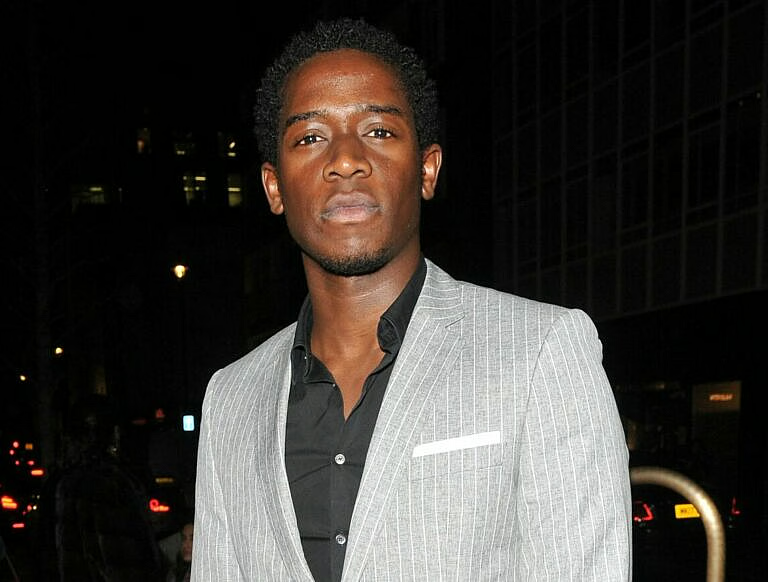
Damson Idris has revealed the exact moment he knew his dreams of becoming a soccer star weren’t going to work out… and it came while watching Lionel Messi do what he does best.
The British star, who once seriously considered a future in the sport, admitted that seeing Messi’s level firsthand forced a reality check he couldn’t ignore. Rather than chase a dream he felt he couldn’t match, Idris made the difficult call to walk away.
That decision ultimately paved the way for his rise in Hollywood and, more recently, his growing ties to the world of Formula 1.
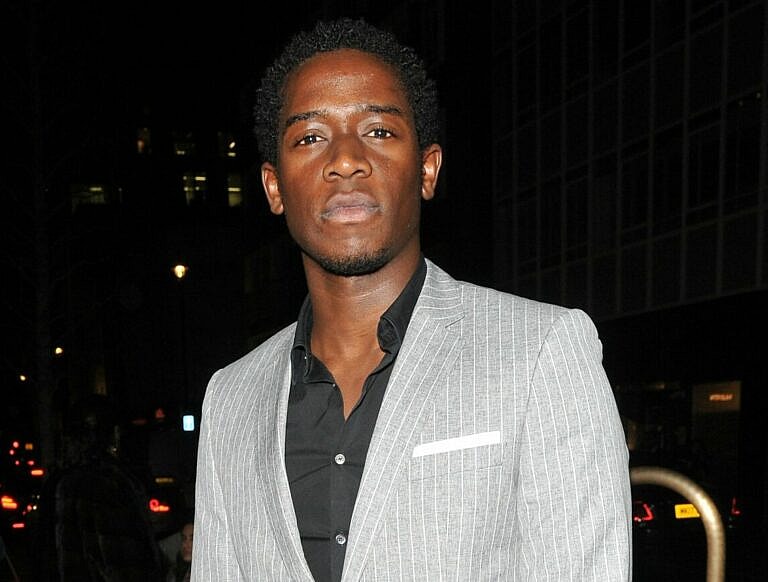
Long before he found fame on screen, Idris had his sights set on becoming a professional soccer player. He was fully committed to the path, training and playing through his teenage years, until one moment changed everything.
Speaking with AP, the 34-year-old actor revealed that watching Lionel Messi in his early 20s forced a reality check he couldn’t ignore. Faced with the Argentine star’s extraordinary level, Idris said he quickly realized he wasn’t going to match it and made the call to walk away from the sport.
“I wanted to be a footballer. I played up until the age of 18, and then I remember seeing Lionel Messi play. He was around 23 years old. And I was like, ‘I’m never going to be as good as this guy,’” Idris said, via CentreGoals on X.
Fans Cast Doubt On Idris’ Messi Claim

The comments section wasn’t exactly sympathetic to Idris’ reasoning, with several fans pushing back on the idea that watching Lionel Messi could be enough to abandon a lifelong dream.
“He actually wanted to play pro football, but this dumb reason can’t be why it didn’t happen,” one X user wrote, while another added, “Well, that’s a d*mb decision and we ain’t buying it.”
Others questioned the logic behind his takeaway, arguing that Messi’s greatness should have been a source of motivation rather than discouragement. “Isn’t Lionel Messi supposed to be the reason you’re inspired to play football and not the other way around?” one person asked.
Damson Idris Named F1 Global Ambassador
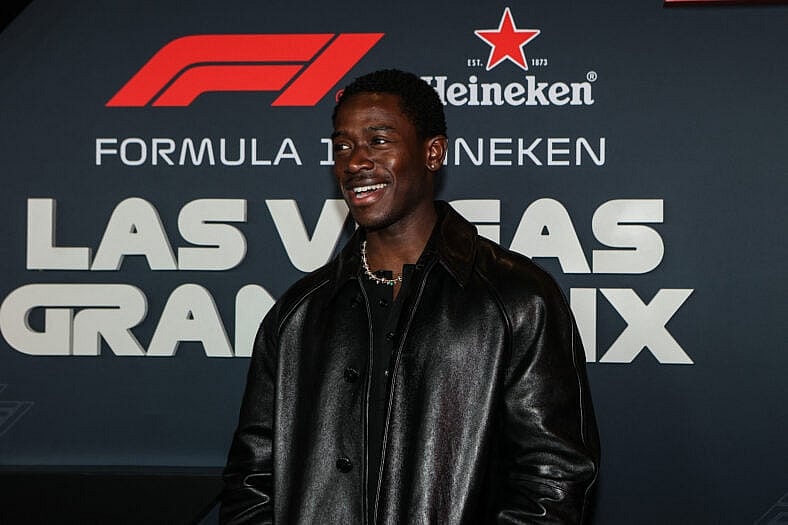
Despite falling short of his football ambitions, Idris is carving out a growing presence in the world of Formula 1. The actor was recently named a global ambassador for the sport, further cementing his ties to F1 following his on-screen role.
Idris helped usher in the new Formula 1 season by appearing in the “All To Drive For” campaign alongside all 22 drivers, positioning him at the center of the sport’s global push to expand its audience.
The British star also took his connection to F1 to the big screen, starring opposite Brad Pitt in the film “F1: The Movie.”
According to Variety, the film grossed over $630 million at the box office, making it the most successful sports movie of all time.
F1 CEO Praises Idris’ Appointment
Formula 1 leadership has made it clear they see Idris as more than just a celebrity face for the sport.
Speaking on the appointment, Stefano Domenicali, President and CEO of Formula One Group, welcomed Idris into the fold and pointed to his growing influence as a key reason behind the decision.
“I’m delighted to welcome Damson Idris officially to the Formula 1 family. Following his starring role in ‘F1: The Movie,’ which made history at the box office and helped bring our sport to new audiences, he is joining us as an official Global Brand Ambassador,” Domenicali said in a statement.
On his part, Idris said stepping into the role carries real meaning for him. While he already respected Formula One, the actor admitted that getting a behind-the-scenes look at the sport gave him an even deeper appreciation for what it takes to compete at the highest level.
Damson Idris Has Other Ventures Beyond F1
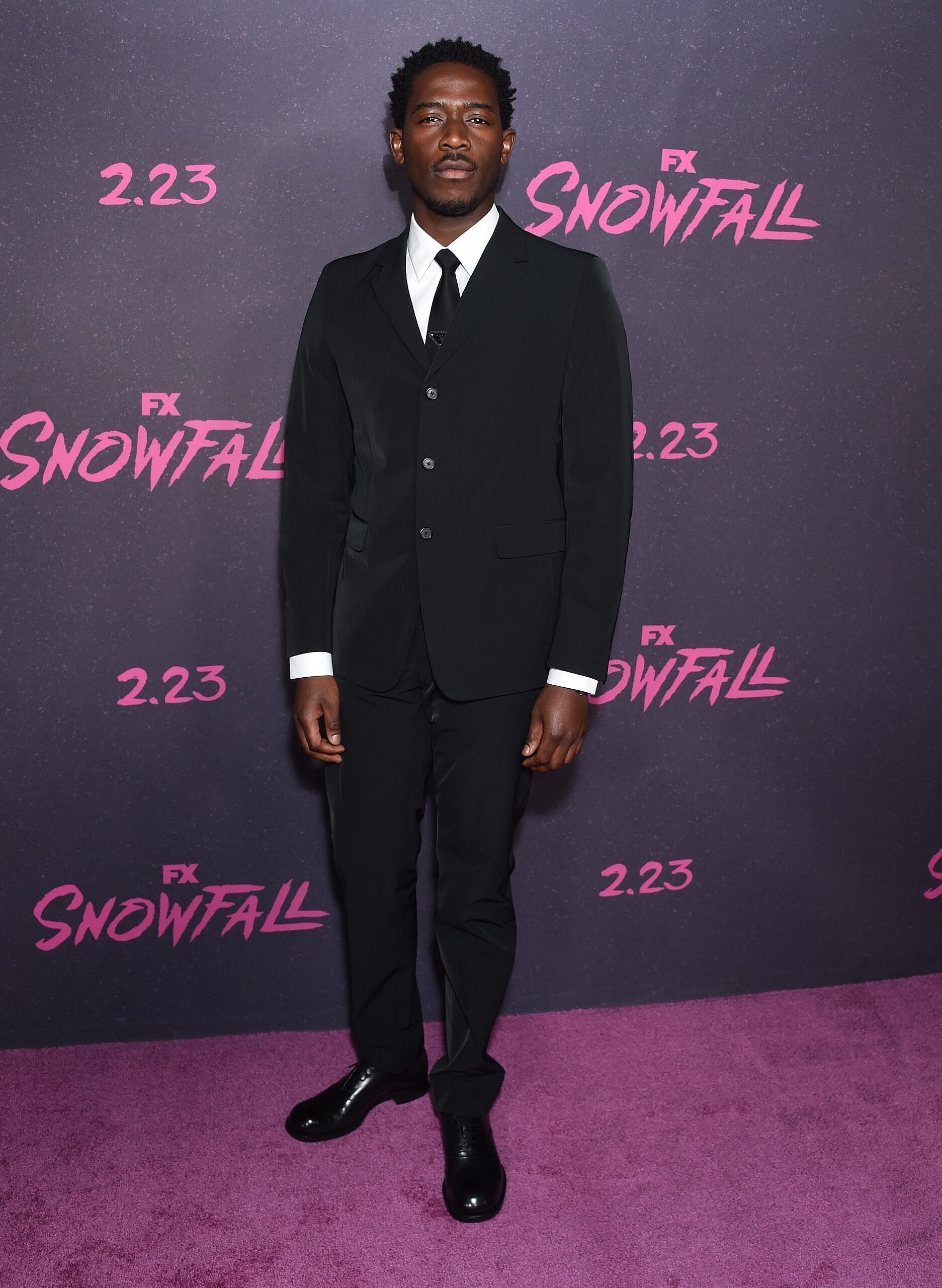
Away from the world of sport, Idris has been quietly building a diverse portfolio across business and entertainment.
The actor has stepped into design with his luxury jewelry house, Didris, a venture inspired by his mother and rooted in personal storytelling. At the same time, he continues to solidify his reputation on screen, with standout roles in projects like “Snowfall,” “Outside the Wire,” and “Farming.”

Business40 seconds ago
Justice Department drops criminal probe of Fed chair Powell, likely clearing way for Warsh

Crypto World1 minute ago
XRP ETFs Hit $1.53B With Goldman as Top Holder

Entertainment3 minutes ago
Netflix’s New No. 1 Streaming Show Is This Disturbing Cult Drama

NewsBeat1 month ago
Manchester United reach agreement with Casemiro over contract clause amid transfer speculation

Politics2 weeks ago
US brings back mandatory military draft registration

NewsBeat3 weeks ago
Steven Gerrard disagrees with Gary Neville over ‘shock’ Chelsea and Arsenal claim | Football


-

 Fashion7 days ago
Weekend Open Thread: Theodora Dress
-

 Business5 days ago
Powerball Result April 18, 2026: No Jackpot Winner in Powerball Draw: $75 Million Rolls Over
-

 Politics7 days ago
Palestine barred from entering Canada for FIFA Congress
-
Entertainment5 days ago
NBA Analyst Charles Barkley Chimes in on Ice Spice McDonald’s Fiasco
-

 Tech6 days ago
Auto Enthusiast Scores Running Tesla Model 3 for Two Grand and Turns It Into Bare-Bones Go-Kart
-

 Politics5 days ago
Zack Polanski demands ‘council homes not luxury flats for foreign investors’
-

 Crypto World7 days ago
Russia Pushes Bill to Criminalize Unregistered Crypto Services
-

 Politics4 days ago
Gary Stevenson delivers timely reminder to register to vote as deadline TODAY
-

 Business2 days ago
Rolls-Royce Voted UK’s Most Iconic Trade Mark as IPO Register Hits 150
-

 Politics2 days ago
Disabled people challenge government SEND proposals over segregation concerns
-

 Politics2 days ago
Making troops accountable for war crimes threatens US alliance, ex-SAS colonel warns
-

 Crypto World7 days ago
Russia Introduces Bill To Criminalize Unregistered Crypto Services
-

 Politics2 days ago
Starmer handler McSweeney to be dragged from shadows by Foreign Affairs Committee
-
Politics2 days ago
Wings Over Scotland | How To Get Away With Crimes
-

 Politics2 days ago
Zack Polanski responds to home secretary’s taser threat
-
 Crypto World6 days ago
Kelp DAO rsETH Bridge Hack Drains $292M as DeFi Losses Top $600M in Two Weeks
-

 Politics2 days ago
‘Iran is still a nuclear threat’
-

 News Videos7 days ago
AP Politics, Buggana Analyzes Reasons For Financial Instability Due To Amaravati
-

 Crypto World3 days ago
New York sues Coinbase, Gemini over prediction market offerings
-

 Business2 days ago
The Job Benefits Most Men Don’t Know to Negotiate
You must be logged in to post a comment Login