Entertainment
Stephen King’s 10 Best Fantasy Books, Ranked

There’s a lot that can be written about Stephen King, but that’s understandable when you consider how much writing there is by Stephen King. He’s been having work published consistently since 1974, which is when Carrie first came out, and it was that book (plus Salem’s Lot and The Shining, released in the following few years) that really helped establish him as a horror author.
His scariest books often remain some of his most popular and enduring, but King’s work is far from just horror-focused, since he’s written his fair share of sci-fi, crime, and fantasy books, too. It’s the fantasy genre that’s going to be focused on below, with some of these admittedly crossing over into the horror genre, to some extent. But if something’s either predominantly fantasy or somewhere between fantasy and horror, it can be counted, for present purposes.
10
‘The Dark Tower: The Gunslinger’ (1982)


The Dark Tower is going to pop up a few times here, since it’s a book series that encompasses seven main novels, and then one interquel set between books #4 and #5; call it book 4.5, if you want. The whole series is perhaps most easily definable as a dark fantasy one, though there are so many other genres explored throughout, with parts of it being creepy, some chunks of certain books having a particularly strong Western feel, and sci-fi elements ultimately playing a role quite a lot, too.
So, here’s the first book in the series, The Gunslinger, which is a great introduction to the main character, Roland, and his quest to find the titular Dark Tower, alongside the stage being set for the strange world he (initially) inhabits. It’s a weird book, and one that makes more sense the more of the series you read, but the fantastical stuff here is too bold and distinct to not give this first Dark Tower book some recognition here.
9
‘Insomnia’ (1994)

Very much worth talking about within the context of The Dark Tower series, Insomnia is most interesting for the allusions and references it has to some of the characters (especially of a villainous nature) and concepts from The Dark Tower. Its central premise, though, involves an old man who has the titular condition, and his lack of sleep has him seeing increasingly strange supernatural things.
Those supernatural things are part of a bigger conflict, and as he loses his grip on reality, to some extent, he gains more knowledge of something outside “reality” as it’s understood. The Dark Tower is referenced in plenty of other Stephen King novels and stories, but probably most referenced here, in Insomnia, which makes it a dense and somewhat difficult-to-approach book, albeit a very rewarding one if you’re invested in the whole Stephen King multiverse.
8
‘The Dark Tower V: Wolves of the Calla’ (2003)

Jumping ahead a little in The Dark Tower series, here’s Wolves of the Calla, which marked the start of a race toward the finish for Stephen King. He had a brush with death in 1999, after being hit and seriously injured by a vehicle, which seemed to inspire King to finish The Dark Tower, which had its first four books published over a fairly long stretch of time (1982 to 1997).
The last three books were all published between 2003 and 2004, with Wolves of the Calla being a bit punchier and more immediate in terms of forwarding things toward a climax. The third and fourth books are well-loved by some King fans, because the third does some great world-building, and then the fourth is instrumental in laying out so much of Roland’s backstory, but they do spin their wheels a bit (and not just because a train is involved near the third book’s end and the fourth’s beginning). Wolves of the Calla says, “Yep, okay, let’s get this done,” having a good deal of action and then a very intense final 50 to 100 pages or so, all of it very important for the final two books in the series.
7
‘The Talisman’ (1984)

Diving into Stephen King’s whole body of work will reveal a few books he’s co-written, with the best of his collaborations to date being with Peter Straub. The two wrote The Talisman in 1984, and then Black House in 2001, with a third book in the series talked about for a while, with its publication seeming less likely after Straub sadly passed away in 2022… but then King finished the third book, Other Worlds Than These, scheduled for release in 2026.
But sticking to The Talisman, it’s a pretty great fantasy/adventure story about a young boy going on a quest to an alternate world/dimension in an attempt to save his mother from dying of lung cancer. It’s a premise King kind of revisited himself, in Fairy Tale, but he does it much better in this book, with Straub. And then, Black House isn’t quite as good, but is still ultimately worthy of a read for anyone who enjoyed what The Talisman was doing.
6
‘The Eyes of the Dragon’ (1984)

The Eyes of the Dragon is potentially the gentlest book Stephen King wrote before the 1990s, or maybe even before the 2000s, as he’s gotten a little more sentimental as he’s gotten older (see Lisey’s Story, for a dramatic example). It came out at a time when King was largely known for horror and some science fiction-related stories, most of them pretty heavy on cruelty, suspense, and frequent deaths.
The Eyes of the Dragon is also on the slimmer side of things, by the standards of Stephen King’s novels, which makes it an approachable book.
You still get conflict with The Eyes of the Dragon, and it’s not that it lacks stakes or anything, but it feels more fantasy than dark fantasy, compared to just about any other fantasy-related book King’s penned. It’s also on the slimmer side of things, by the standards of Stephen King’s novels, which makes it an approachable book, and one that could be read by younger readers more easily than the majority of his other works.
5
‘The Green Mile’ (1996)

Both the book and movie versions of The Green Mile have low-key fantasy elements, compared to most other fantasy stories, but you’ve still got a death row prisoner integral to the narrative who has difficult-to-explain powers of healing. He also seems innocent of the crimes he’s been sentenced to death for, which gets the block supervisor of death row conflicted about what to do regarding what legally has to be carried out.
Stephen King wrote this one in the form of a six-part serial novel, and all the parts add up to something pretty great overall… and it’s easy to call The Green Mile one of King’s most emotional books, too. It’s not full-on fantasy, perhaps more magical realism, and it’s also light on true horror elements, so The Green Mile stands out pretty well within King’s body of work for those reasons (plus the fact that it’s also very good, of course).
4
‘The Dark Tower II: The Drawing of the Three’ (1987)

After The Gunslinger served as a good introduction for some things, The Drawing of the Three (book #2 in The Dark Tower series) does so much for introducing even more out-there concepts into the series, and for also giving Roland more by way of compelling supporting characters. The Drawing of the Three also might have one of the greatest opening chapters in literary history, since things get shaken up so intensely, bizarrely, gruesomely, and borderline-recklessly.
But the momentum from the gonzo opening is kept up, and all the jumping between world-related stuff is incredible, and also vital for the rest of the series and how it operates narratively. The Gunslinger is still good, but The Drawing of the Three is where The Dark Tower gets genuinely great, and there’s a very high chance that, should you get to book #2, you’ll be hooked from that point on until book #7.
3
‘It’ (1986)
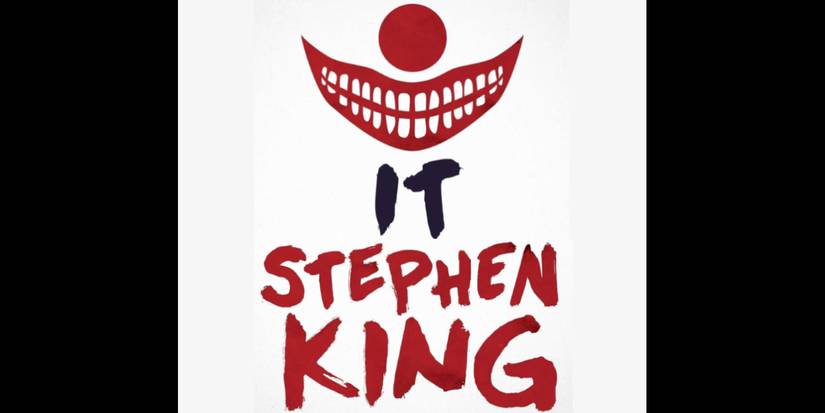
It feels a bit more of a horror book than a fantasy one, sure, but it’s sprawling enough to ultimately exist within a few different genres, and one of them is dark fantasy. What you get here is a bunch of kids taking on a horrific entity, and then doing the same as adults, because this particular being is active every 27 years… but structurally, it jumps back and forth between those two timelines.
It’s a dizzying read that proved hard to do justice in either a miniseries or movie duology form, especially because, regarding the latter, quite a few of the more out-there fantastical ideas weren’t really tackled/adapted. The best way to experience the story, by far, is still as a novel, and even if It is an incredibly long novel, it’s ultimately very much worth tackling.
2
‘The Dark Tower VII: The Dark Tower’ (2004)
The most infamous of The Dark Tower books is the seventh, and yet it also might be the best of them. What you definitely get here, for better or worse, is a definitive ending, to the point where a genuine eighth book feels not just unlikely, but wholly unnecessary. It’s also been 20-ish years, and while there’s been that interquel and other stories that reference The Dark Tower, this seventh book feels like a definitive conclusion in every way.
What are some of those ways? Well, this is one of the easiest to spoil books ever, since you get drama and surprisingly high stakes right from the very first chapter, so alluding to anything that happens here could ruin the book, and also a bunch of the books that came before it, in the series. It’s King just about at his best, though, within the fantasy genre (like, It might be the better book, but The Dark Tower VII is beating it here, partly because The Dark Tower VII is more fantasy heavy).
1
‘The Stand’ (1978)
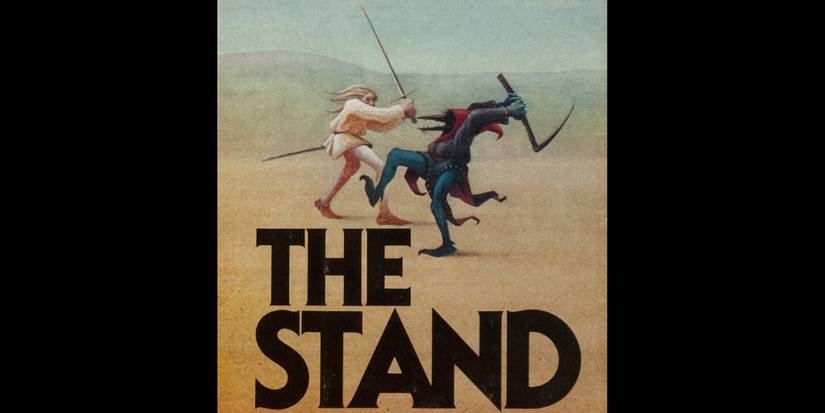
Since it’s a post-apocalyptic book, and particularly heavy on the elements that make up such a genre early on, you might initially feel like The Stand leans a little more into science fiction than fantasy. But as it goes along, the survivors of a massive viral outbreak (the people left after more than 99% of humanity dies) get roped into a battle of good versus evil, and the leaders of both sides have mysterious and fantastical powers.
It’s all dark fantasy, of course, since The Stand is a pretty bleak book that also finds plenty of time to be frightening, at least when it’s not focused on also being an adventure story, or something a bit more suspense/thrill-heavy. The Stand, in its uncut form, is easily Stephen King’s longest single novel, so there’s ample room here for him to play around and do a bit of everything, and here, he does a bit of everything so incredibly well.


You must be logged in to post a comment Login