Entertainment
The Iconic Star Trek Villains Inspired By Real-Life Criminals
By Chris Snellgrove
| Published
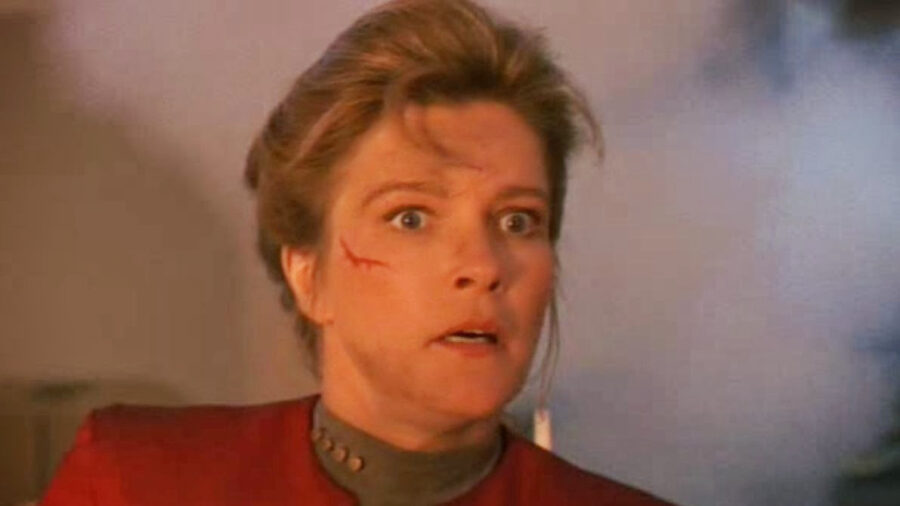

Star Trek is a franchise that has always been known for its colorful villains: from the Klingons to the Borg, episodes have always given us over-the-top bad guys like nothing the audience had ever seen before. However, the most iconic villains of a beloved spinoff were actually modeled after a type of real-life criminal that the audience is all too familiar with. In Star Trek: Voyager, the alien Kazons were originally modeled after the street gangs of Los Angeles, but it took over an entire season before one writer helped shape them into this very specific mold.
During the development of Voyager, producers Rick Berman, Michael Piller, and Jeri Taylor wanted to create a new kind of villain that nonetheless represented very contemporary concerns. As quoted in Captains’ Logs Supplemental – The Unauthorized Guide to the New Trek Voyages, Taylor said that “We felt with the Kazon we needed to address the tenor of our times and what…was happening in our cities and recognizing a source of danger and social unrest. We wanted to do that metaphorically.”
The Bloods, The Crips, And The Kazon

Piller (who almost singlehandedly transformed Star Trek: The Next Generation into must-see TV) liked the idea of villains who embraced anarchy and might fight among themselves as much as they fight with Captain Janeway. He and the other producers retained the LA gang metaphor, internally comparing the differing Kazon factions to the Bloods and the Crips. They were all in on these new bad guys, which is why the Voyager premiere episode and its first season presented various Kazon factions as an ongoing concern in our crew’s quest to navigate the Delta Quadrant and eventually make their way home.
Unfortunately, audiences kind of hated the Kazon in Season 1, and Michael Piller came to believe that the writers had failed to turn these aliens into something truly unique. After Ken Biller wrote an initial draft of the Season 2 episode “Initiations,” Piller called him and (as reported originally by Cinefantastique) expressed his concern that the audience saw the Kazon as “warmed over Klingons.” In order to get these villains back to their roots, Piller gave Biller a pretty wild homework assignment: to go talk to actual gang members and report on “what you find out from the street.”
Biller did not take this frankly dangerous advice, but he did go buy a copy of Monster: The Autobiography of an L.A. Gang Member, written (inside a jail cell, no less) by Sanyika “Monster” Shakur. Insights from the book helped the writer create a better Star Trek: Voyager episode, and Piller was quite pleased with the final draft of “Initiations.” But what pleased him even more was that Biller went on to go above and beyond the call of duty in order to breathe new life into the Kazons.
The Secret To Building A Better Villain

You see, Biller wrote a kind of mini-Kazon Bible that outlined their customs, history, and other major sociological factoids. This proved to be invaluable because Star Trek: Voyager had already planned to devote its second season to the Kazon, essentially giving itself a second chance to make a good impression on the audience. Whenever the writers had to craft a Kazon-heavy episode (like “Alliances”), they relied on Biller’s bible, one which finally made the Kazon feel like something other than Temu Klingons.
To this day, the Kazon aren’t necessarily fans’ favorite villains, but they are arguably the most iconic Star Trek: Voyager bad guys. In a show that would come to be dominated (or should that be assimilated?) by Borg episodes, the Kazon remain an original creation who helped shape Voyager into one of Trek’s most beloved spinoffs. But that never would have happened if Michael Piller and Ken Biller hadn’t teamed up to do the impossible: get these angsty aliens back to their inexplicable gangbanger roots.