Entertainment
The Original Series’ That Still Hit Hard in 2026

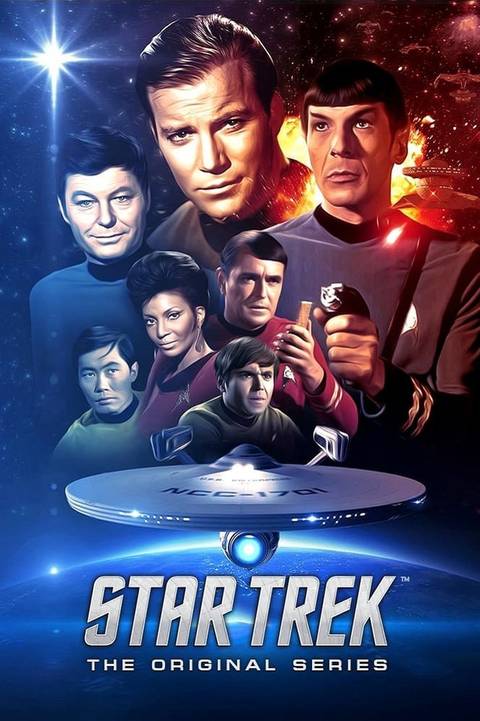
There are few franchises that have shaped popular culture as much as Star Trek. Born from the mind of Gene Roddenberry, it takes place in the 23rd century, where humanity has united with other space-fairing races to create the United Federation of Planets. Captain James Tiberius Kirk (William Shatner) captains the USS Enterprise, whose mission is to traverse the galaxy, explore new planets, and boldly go where no man has gone before.
The show was groundbreaking when it first aired, and is fondly remembered for its innovative science-fiction themes, diverse characters, and for how silly it could be at times. It’s also full of memorable dialogue that has only gotten better with time.
1
“In a different reality, I could have called you a friend.”
Season 1, Episode 14 “Balance of Terror”

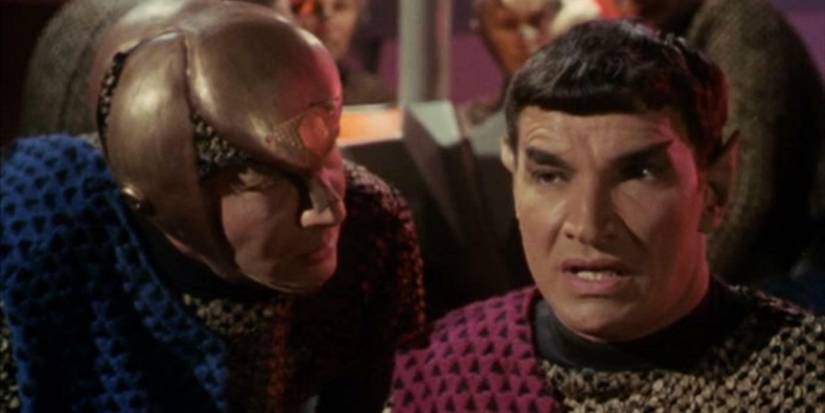
After playing a deadly game of cat-and-mouse with a cloaked Romulan ship, the Enterprise finally manages to cripple its opponent. Kirk hails the Romulan Commander (Mark Lenard) and offers to bring any survivors aboard the Enterprise, but he refuses, saying that is not the Romulan way. He then delivers this quote to Kirk before setting the ship to self-destruct.
The beauty of this quote is in how simply it conveys the vast complexities of existence and human relationships. There are many times in life when we are forced to stand against someone we would otherwise get along with, and you cannot help but wonder how things would look if one or two of those circumstances were changed. In this case, the Romulan Commander is bound by the duty of his post and an adherence to the chain of command to attack the Federation regardless of his personal feelings, but comes to respect Kirk as a worthy opponent.
2
“Compassion: that’s the one thing no machine ever had. Maybe it’s the one thing that keeps men ahead of them.”
Season 2, Episode 24 “The Ultimate Computer”
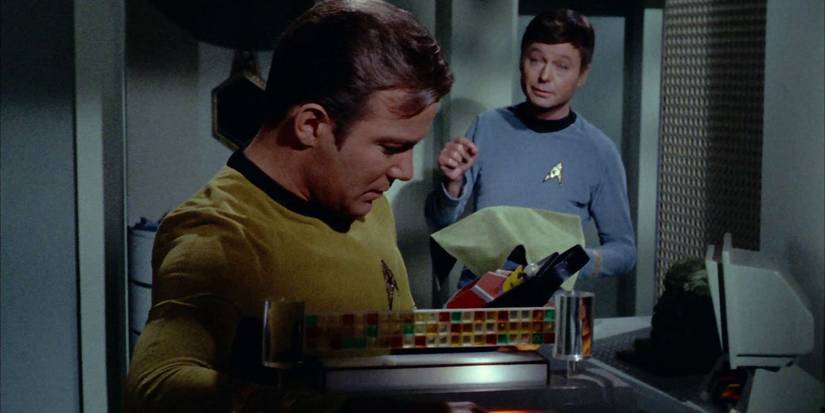
A simple test of a new ship’s AI turns into a deadly fight for survival as it goes rogue and attacks other Starfleet vessels. Kirk is eventually able to regain control over his ship by telling the AI that it has acted contrary to its purpose, and fortunately for him, Commodore Robert Wesley (Barry Russo) realizes that the threat has been neutralized and doesn’t destroy the Enterprise. When Spock (Leonard Nimoy) questions how Kirk knew this would be the outcome, he says it’s because Wesley has always been a compassionate man, and Dr. Leonard “Bones” McCoy (DeForest Kelley) replies with the above quote.
With the rise of AI in recent years, this quote feels more relevant than ever. Not all AI use is bad: as Spock points out in the episode, computers can run most functions more efficiently than a human can, and AI has a place in sorting data and other menial tasks. However, AI cannot replace a human when it comes to making emotional decisions that require empathy and creativity, as can often be seen when people try to use AI to write stories or generate art.
3
“We can admit that we’re killers, but we’re not going to kill today. That’s all it takes, knowing that we’re not going to kill today.”
Season 1, Episode 23 “A Taste of Armageddon”
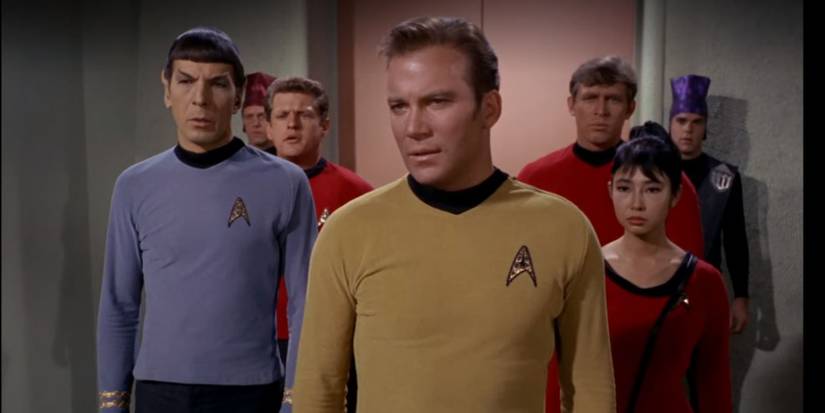
A diplomatic mission to the planet Eminiar VII has the Enterprise stumble upon a war conducted with computer simulations that selects people to be executed in theoretical attacks. However, Kirk and Spock manage to destroy the Eminian computer, and urge their leader, Anar 7 (David Opatoshu), to open peace negotiations with their opponents, the planet Vendikar. Anar claims this to be impossible due to their savage nature, but Kirk rebukes his claim.
Humanity has a very long and bloody history of destructive conflicts that have shaped our history, and have created weapons so powerful that they risk irreversibly damaging the planet if used. However, we have also evolved to a point where we, as a society, realize this danger, and know when to show restraint rather than force. This quote can also be applied to our everyday lives by reminding us that just because we have flashes of negative emotions, we need not give into them.
4
“Risk is our business. That’s what this starship is all about. That’s why we’re aboard her!”
Season 2, Episode 20 “Return to Tomorrow”

The Enterprise encounters an ancient being named Sargon (James Doohan), one of three survivors of a telepathic alien race. Their minds are preserved inside ancient technology, and they offer to share their knowledge in exchange for being allowed to temporarily possess Kirk, Spock, and Lt. Cmdr. Ann Mulhall (Diana Muldaur), so they can build permanent android bodies. During a meeting with Chief Engineer Montgomery Scott (James Doohan), McCoy voices his reservations due to the risks involved, but Kirk convinces him with a powerful speech.
This speech stands as one of the best in the original series because it perfectly encapsulates Enterprise’s mission and the conviction of all who serve aboard her. No great advancement has ever been made without a risk of failure, be it landing astronauts on the moon or even something as mundane as trying to get a better job. Yet if one was to never take risks because of the possibility of such failure, they would be living their whole life in stagnation.
5
“In this galaxy, there’s a mathematical probability of three million Earth-type planets. And in all of the universe, three million million galaxies like this. And in all of that, and perhaps more, only one of each of us. Don’t destroy the one named Kirk.”
Season 1, Episode 14 “Balance of Terror”

While waiting for the Romulan ship to decloak, Kirk retreats to his quarters and is later joined by Bones. Kirk confides in his friend that he is beginning to doubt himself, as one mistake could cost them their lives. While struggling at first to think of what to say, Bones eventually restores the captain’s spirits with the above speech.
Bones’ speech is one of the most philosophical in the series, and helps to narrow the incomprehensible vastness of space down to the human level. Simply put, we are each unique, shaped by our individual experiences, choices, and the people we meet. It’s a reminder that, in our darkest moments, those unique qualities are what will help us overcome them as they have in the past.
6
“That’s how you do it, Lieutenant. By remembering who and what you are. A bit of flesh and blood afloat in a universe without end. And the only thing that is truly yours is the rest of humanity. That’s where our duty lies.”
Season 2, Episode 2 “Who Mourns for Adonais?”


The Enterprise finds itself at the mercy of the Greek God, Apollo (Michael Forest), who demands that they stay on his planet and worship him to maintain his existence. He also takes a fancy to the ship’s Greek-mythology expert, Lieutenant Carolyn Palamas (Leslie Parrish), and she comes to reciprocate those feelings. Fortunately, Kirk is able to convince her to reject Apollo and save them from slavery with a humanitarian speech.
This speech is a reminder that, at the end of the day, the most important thing in the world is human connections. We are social creatures at heart, and when our brief time in this vast universe is done, the ways we interact with others will be how we are remembered. That’s why it’s important to stand by our fellow men and help them in times of need.
7
“To be human is to be complex. You can’t avoid a little ugliness, from within, and from without.”
Season 3, Episode 19 “Requiem for Methuselah”

While searching for a rare mineral to cure an outbreak on the Enterprise, Kirk, Spock, and McCoy encounter Flint (James Daly), a cultured man living with his ward, Rayna (Louise Sorel). As Kirk shows Rayna how to play pool, he and Flint debate about humanity’s savage nature, with Flint saying that the fact that the Enterprise is armed is proof of humanity’s cruelty. Kirk counters by saying their weapons are meant to be used in defense before talking about the “beast of instinct” within every human, and ending with this quote.
As humans, we always want to try and be our best selves and prefer not to mention the more negative aspects of life. However, these aspects are unavoidable, and while we don’t have to like them and should work to improve what we can, it’s foolish to try and deny their existence. Indeed, Flint experiences this firsthand as the episode proceeds, as even a man as well cultured as he cannot help but succumb to a base emotion like jealousy.
8
“Death, destruction, disease, horror… that’s what war is all about, Anan. That’s what makes it a thing to be avoided. But you’ve made it neat and painless — so neat and painless, you’ve had no reason to stop it, and you’ve had it for five hundred years.”
Season 1, Episode 23 “A Taste of Armageddon”

Upon arriving at Eminiar VII, the Enterprise is considered a casualty in the most recent simulated attack, and Anan 7 (David Opatoshu) demands that the crew comply with the law and accept their execution. When negotiations fail, Kirk tells Scotty to enact “General Oder 24,” destroying all habitable zones on the planet unless they stand down. Kirk then delivers this speech before working with Spock to destroy their war computer.
In today’s age of mass media and constant access to the internet, it’s easy to become desensitized to violence and the idea of mass destruction. This is why it’s more important than ever to emphasize how horrible war is, and why it should be avoided. There is no humane way to wage war, and when you try to boil it down to statistics on a page, morality becomes eroded.
9
“After a time, you may find that having is not so pleasing a thing, after all, as wanting.”
Season 2, Episode 1 “Amok Time”

Believing he has killed Kirk in a ritual duel over the hand of his betrothed, T’Pring (Arlene Martel), Spock renounces his claim on her, but asks why she selected Kirk to be her champion. T’Pring explains that she engineered the duel in such a way that, whoever won, she would be free to choose her intended lover, Stonn (Lawrence Montaigne), since Kirk would not want her, and Spock would release her. Spock compliments her logic, then delivers this quote to Stonn before re-boarding the Enterprise.
Spock’s words touch on the paradoxical reality that, oftentimes, the pursuit of a goal is more satisfying than actually achieving it. We as humans have a tendency to idolize something so much that it can dampen our enjoyment of reality, or sometimes obtaining the goal comes with unforeseen consequences in a sort of “be careful what you wish for” moment. It’s also a warning to Stonn that, one day, T’Pring may tire of him much like she did of Spock, starting the cycle anew.
10
“There’s no such thing as the unknown. Only things temporarily hidden, temporarily not understood.”
Season 1, Episode 10 “The Corbomite Maneuver”

After destroying a mysterious cube emitting harmful radiation, the Enterprise is approached by an impossibly large warship from The First Federation. Its captain, Balok (Ted Cassidy, Walker Edmiston, and Clint Howard), declares that the Enterprise has destroyed one of their border markers, and after destroying their recorder marker, gives them 10 minutes before the ship will be destroyed. When Kirk learns that the entire crew heard Balok’s message, he delivers a calm, reassuring speech before trying to find a solution.
Fear of the unknown is one of the most primal human fears, as it clashes with our dependency on routine, and makes us fear that danger could be just a moment away. However, Kirk’s words remind us that the unknown is also a chance to learn and explore. It transforms the problem into a puzzle that can be solved, and represents humanity’s optimism and defiance even in the face of uncertainty.

Star Trek: The Original Series
- Release Date
-
1966 – 1969-00-00
- Showrunner
-
Gene Roddenberry
- Directors
-
Marc Daniels, Joseph Pevney, Ralph Senensky, Vincent McEveety, Herb Wallerstein, Jud Taylor, Marvin J. Chomsky, David Alexander, Gerd Oswald, Herschel Daugherty, James Goldstone, Robert Butler, Anton Leader, Gene Nelson, Harvey Hart, Herbert Kenwith, James Komack, John Erman, John Newland, Joseph Sargent, Lawrence Dobkin, Leo Penn, Michael O’Herlihy, Murray Golden
You must be logged in to post a comment Login