Entertainment
The R-Rated 90s Sci-Fi Made To Teach Hollywood A Lesson
By Jonathan Klotz & Joshua Tyler | Published


Tim Burton’s Batman lit the box office on fire in 1989, setting off a rush by studios to push out the next big superhero film. Unlike the early 2000s superhero rush, those earlier studio executives went back to the pulp heroes of the 1930s.
Dick Tracy, The Shadow, and The Phantom hit theaters, bringing classic radio serials and comic books to life. In parallel with producing The Shadow, Universal Studios also launched a more straightforward approach to the problem of trying to duplicate Batman’s success by making their own, modern-day superhero franchise, just like Batman.

To do it, they hired a man who’d established himself as an up-and-coming genius in the horror space. Sam Raimi was the right man for the job, but he was too far ahead of his time. His big superhero success wouldn’t come until 12 years after the release of his Universal film.
Sam Raimi Makes His Own Superhero After Being Denied By Hollywood

Sam Raimi was coming off Evil Dead 2, still considered by many to be his best movie, and Hollywood studios were starting to take notice of the offbeat filmmaker. Sadly, Universal Pictures, the rights holders to The Shadow, passed on Raimi helming their Alec Baldwin pulp hero film.
Dejected, Raimi instead wrote a screenplay around a character called Darkman, a superhero he created in a short story years earlier. With that, he captured Universal’s attention.
Played by Liam Neeson, Darkman begins life as Dr. Peyton Westlake, a scientist working on synthetic skin who becomes disfigured when his lab is ransacked by thugs looking for proof their boss is engaged in white-collar crime.

Westlake is left horribly burned, but an experimental surgery gives him superhuman strength, which he puts to use alongside the synthetic skin that lets him disguise himself as anyone, so long as he stays out of the light, to dismantle the criminal network. On the surface, it’s a standard superhero revenge story, but Sam Raimi puts focus on Westlake’s changing emotional state as he embraces life as a monster, turning his back on his girlfriend Julie after she expresses her love for him.
Darkman is equal parts pulp heroic fisticuffs and gothic tragedy, but it proved Sam Raimi knows what makes a superhero movie work. Unfortunately, it didn’t give Universal what they wanted.
Darkman’s Sequels Get Dumped In The Bargain Bin

Darkman is one of those movies people like to retroactively call a success because it didn’t lose money. That’s a very low bar. Universal didn’t make Darkman to turn a modest profit; they made it to create a franchise that could ride the post-Batman superhero wave.

On that front, it absolutely failed. A true success gets sequels that people actually see in theaters. Darkman got dumped into the straight-to-video bin with a recast lead, which is Hollywood code for “we’re embarrassed but not quite done squeezing the IP.”
The warning signs were there immediately. Yes, Darkman opened at number one, but it did so with numbers that were already disappointing in a market recalibrated by Tim Burton. This was 1990, when studios were hunting the next pop-culture monster, not celebrating “pretty good.”
Darkman didn’t dominate the summer conversation, didn’t generate a cultural footprint, and didn’t turn Liam Neeson into a genre icon. Instead, it quietly exited theaters while Batman knockoffs and Teenage Mutant Ninja Turtles ate its lunch.
Why Darkman Failed

Part of what makes Darkman a great movie is also what made it a tough sell for audiences. Darkman isn’t weird enough to be a cult midnight classic, and it isn’t clean enough to be a four-quadrant hit.
It’s grotesque, mean, occasionally brilliant, and completely unsellable to kids, who were the actual money engine of Batman and early-’90s genre filmmaking. You can’t build an empire on a hero whose face melts, whose rage is chemically induced, and whose romance ends in a parking lot goodbye.
Darkman was quickly forgotten by the mainstream in the early 90s, overshadowed even by inferior box office failures like The Shadow, and is rarely talked about now outside of hardcore Raimi fan circles.
That happened not because it’s bad, but because it missed the moment it was built for. It arrived just early enough to look experimental, and just late enough to feel overshadowed. Universal wanted its own Batman. What they got was a cult favorite, a director calling card for Sam Raimi, and a franchise that limped off to VHS hell.
Sam Raimi Proves Everyone Wrong With Spider-Man
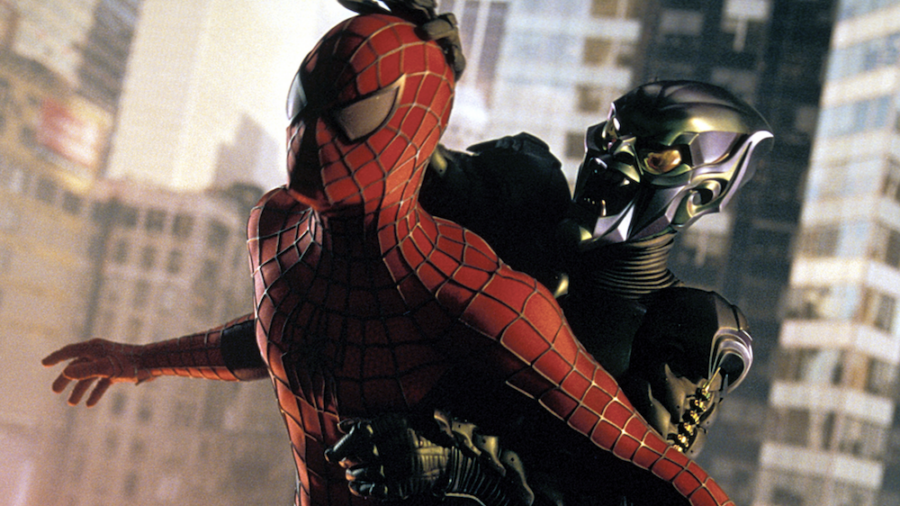
Sam Raimi would, of course, go on to direct one of the most influential superhero movies of all time, 12 years later, when he made Spider-Man. Drawing on his experience with Darkman, Raimi wanted to approach the story of Peter Parker from a different angle, opting to bring in Green Goblin as the villain and embrace the loose father/son dynamic between the two.
Amazingly, you can catch a brief glimpse of Darkman in Spider-Man during Peter’s dream sequence right after he’s been bitten.
If you’re looking for the true origin of modern superhero movies, that’s where it all started. With a genius filmmaker being denied the job he wanted, and then making it happen his way, anyway.