Entertainment
These 10 Action Movies Are Masterclasses in Technical Filmmaking

The action genre can be one of the most highly technical. From the stuntwork, explosive effects, and the endless amounts of choreography and coordination that go into making these movies, it makes it all the more impressive when they do it well. The best action movies are all technical masterpieces on one level or another, but some of them do it so well that they should legitimately be studied.
These are action movies that astound with sequences that seem too wild to be true, with such technical wizardry and precision filmmaking that they’ve often proven impossible to replicate. Every good action movie is technically impressive, but the great ones raise the bar. These ten are absolute masterclasses of action, elevating the genre and pushing it to its limits.
‘Police Story’ (1985)

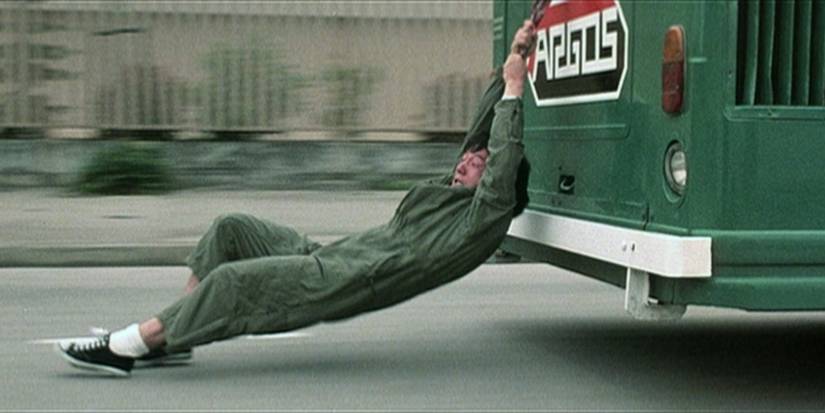
If you’re looking for premiere stunt work and fight choreography, there are few equals to Jackie Chan. The international action star has a filmography bursting with incredible action classics that have continually put Hollywood to shame. Wheels on Meals, Drunken Master II and Project A all offer incredible fight scenes and death-defying stunts, but if there’s one Chan film that is a true technical masterclass, it’s the original Police Story.
This action-comedy classic was made by Chan after his disappointment working on The Protector, an American co-production that failed to break him out as an international star. Beginning to end, Police Story features some of the most elaborate action sequences Chan ever accomplished, starting with a shantytown demolition derby and culminating in a mall-set finale that miraculously didn’t get everyone killed. For his part, Chan suffered second-degree burns and a dislocated pelvis from sliding down a two-story pole as part of this climax.
‘Terminator 2: Judgment Day’ (1991)

The Terminator is a grungy, gritty sci-fi action slasher that fueled James Cameron‘s career. It has a lot to love about it, but it was merely an apéritif to the four-course action feast that Cameron cooked up for the blockbuster sequel. The director was able to supersize every aspect of his time-travel cyborg adventure, adding massive action sequences and a dynamic new villain, accomplished with groundbreaking visual effects.
The T-1000, the liquid metal death machine that was sent in the sequel to kill John Connor, had originally been intended for the first film, but Cameron wisely understood he didn’t have the visual effects capability to accomplish the character in 1984. For Terminator 2: Judgment Day, Cameron reteamed with Industrial Light & Magic, the effects house that had created the iconic water tendril for The Abyss. Combined with incredible practical effects by Stan Winston, the resulting villain was a landmark for photo-realistic CGI, much of which holds up remarkably well over thirty years later.
‘Hard Boiled’ (1992)

While Cameron and crew were breaking new ground for visual effects, over in Hong Kong, John Woo was crafting his action magnum opus without any help from computers. Hard Boiled features a cops versus criminals plotline on which Woo and his stunt team are able to hang three of the most breathtaking action sequences ever captured on film. It was the director’s final film before making his way to Hollywood, and it remains his greatest action masterpiece that few films have come close to touching on a technical level.
The film opens with a bullet ballet in a tea house, as Chow Yun-fat dual-wields his way into the action hero hall of fame. From there, it moves to an explosive gunfight in a warehouse that must have depleted the squib supply of Hong Kong. The extended climax set in a hospital is where Hard Boiled truly schools every action filmmaker to come before, with floor after floor of intense action perfection. The most iconic moment is an extended long take of action that follows Chow and Tony Leung for three minutes straight of gunfighting on two floors.
‘Heat’ (1995)
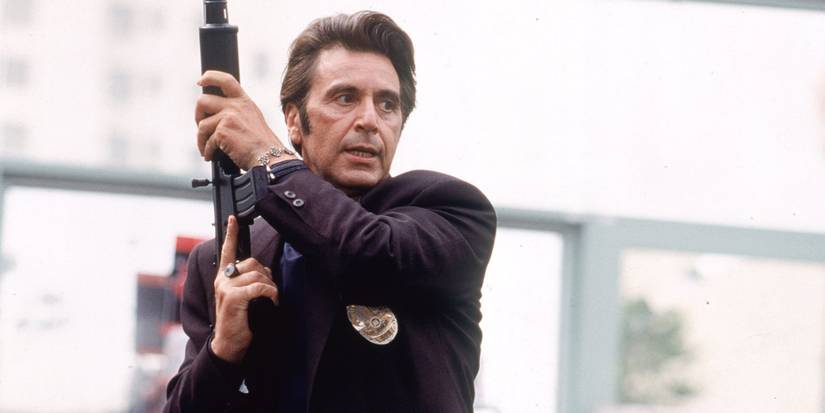
Michael Mann‘s muscular, sprawling crime saga Heat isn’t nearly as action-packed as the other films on this list, but pound for pound of pure adrenaline-fueled gunplay, it is every bit their equal. The film begins and ends with expertly choreographed action scenes, but it’s the broad daylight armed robbery turned downtown gunfight that is its action centerpiece. It makes Heat the apex of action-oriented heist films, and no other film has come close to reaching its heights.
Shot in the glass canyon of downtown Los Angeles, the shootout sees Robert De Niro‘s elite team of thieves trading bullets with Al Pacino‘s police unit. The actors all trained for months with former SAS soldier Andy McNab to become proficient in their weapons handling, and from the tight editing to the use of the real sounds of the gunshots echoing off the buildings, the sequence is a top-to-bottom assault on the senses. Mann is known for being a meticulous director, and the painstaking effort taken by him, his crew and the actors is clearly evident in one of the greatest gunfights ever filmed.
‘The Matrix’ (1999)

The influences on The Matrix are all clearly evident. From the man versus machines plotline, to the slow-motion gun-fu, to the gravity-defying fights pulled from numerous martial arts classics. Even the iconic bullet-time effect of the film had its origins in commercials and music videos before the Wachowskis ever utilized it for their film. No matter how many giants the filmmakers were standing on the shoulders of for their action classic, it doesn’t detract from how perfectly implemented every single element is in the final film. The Matrix is far more than just the sum of its parts.
To understand the true ingenuity behind The Matrix, you only need to look at any of the myriad imitators that were released in the wake of its success, including its sequels. While many of those films are technically impressive in their own right and had far larger budgets and access to more resources, they all feel like pale imitations. The low-tech solution to accomplish the iconic slow-motion action using a complex rig of still cameras gives the effects in The Matrix a timeless quality that no amount of technological advancements has seemingly been able to improve upon.
‘Children of Men’ (2006)

Alfonso Cuaron‘s dystopic thriller Children of Men features action sequences in the same way that Saving Private Ryan does. It’s meant to be harrowing and chaotic, all while still getting your pulse to race and your knuckles to whiten. In depicting a near-future police state where women have become infertile, the action is designed to be as immersive as possible, through incredible cinematography mixed with seamless digital work.
The most famous sequence in Children of Men is the car assault, accomplished with a complex camera rig that captures several long shots that were then stitched together in post-production to produce an action sequence that never takes a breath. There are several extended shots throughout the film that put audiences into the thick of the action, all of them captured with such breathtaking precision by cinematographer Emmanuel Lubezki. The action in Children of Men will leave you breathless.
‘Redline’ (2009)
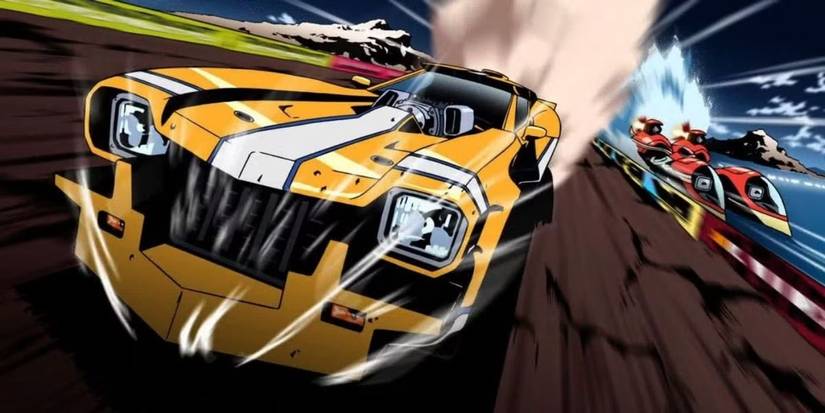
There are many technically impressive animated action movies, from classics like Akira to the more recent Predator: Killer of Killers. If there’s one film that comes off the line at full tilt and never lets its foot off the gas, it’s the nitro-boosted sci-fi racing film Redline. Produced by animation studio Madhouse, who were also responsible for other animated actioners like Wicked City and Vampire Hunter D: Bloodlust, the film was the directorial debut for Takeshi Koike, which makes it all the more of an impressive endeavor.
The film had a prolonged production period of seven years, due to the fact that it was all hand-animated and features over 1,000 individual frames. The result of that time-consuming work and dedication is animation that’s smooth as silk and some of the most exhilarating action ever produced in any medium. While Redline wasn’t an immediate success, it has gained a well-deserved cult following and remains one of the purest examples of handmade craftsmanship of the 21st century.
‘Inception’ (2010)

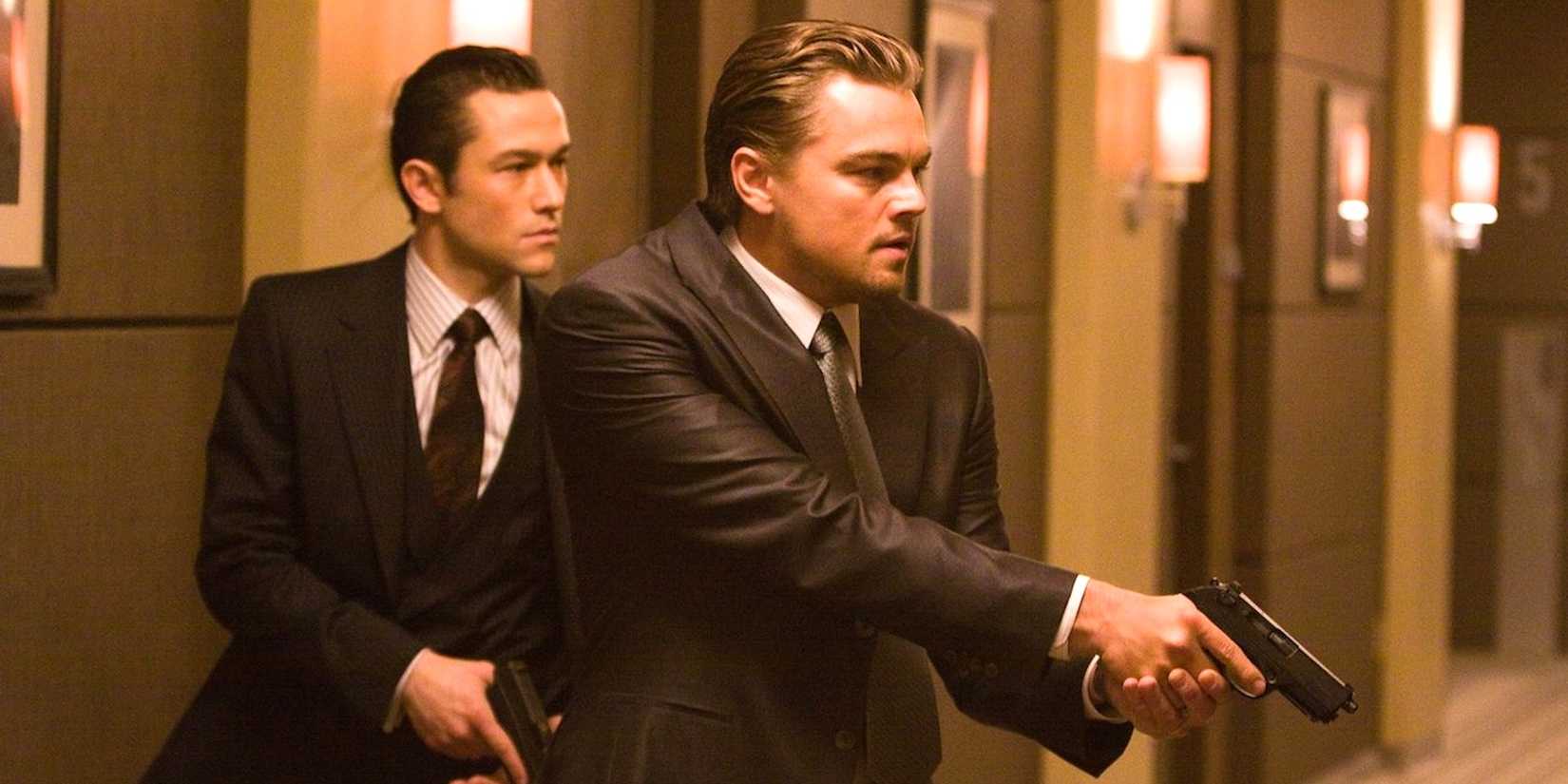
Few directors are as dedicated to, or have the creative power to demand, practical effects as Christopher Nolan. Whether it’s flipping an 18-wheeler in The Dark Knight or crashing a full-size 747 airplane in Tenet, the director emphasizes real stunts and effects over CGI whenever possible. Even when he does utilize CGI, it’s of the highest fidelity and blends beautifully with the more tangible effects work. Nowhere is this marriage more technically proficient than in his mind-bending action heist film Inception.
Setting the film within the architecture of the mind allowed Nolan and his team to go bigger and bolder with action setpieces than ever before. The most notable sequences feature a train barreling through traffic and a gravity-defying fight sequence. The latter involved the use of a massive rotating set that allowed the actors and stunt performers to fight across the walls and ceilings. Inception won a multitude of awards for its visual effects, sound design and cinematography, and it remains a high bar for Nolan as an action filmmaker.
‘The Raid 2’ (2014)

The Indonesian action masterpiece The Raid brought a fresh level of brutality to the action genre in the 2010s that inspired a decade-plus of ultraviolent cinema. It’s a brutalizing film filled with outstanding fight choreography, frenetic camerawork and bruising stunt work, and its sequel outdoes it in every single respect. The Raid 2 is an epic action film filled with muddy melees, bloody fight scenes, and a breakneck car chase.
Following the first film’s protagonist, played by martial arts star Iko Uwais, as he goes undercover in the underworld of Jakarta, the sequel trades the first film’s contained setting for sprawling set pieces. It begins with an epic prison brawl and only gets crazier from there. It’s a maximalist action movie that moves from one blood-soaked set piece to the next with an unrelenting pace. The Raid 2 is the best kind of sequel that elevates everything you loved about the first film to the extreme.
‘Mad Max: Fury Road’ (2015)
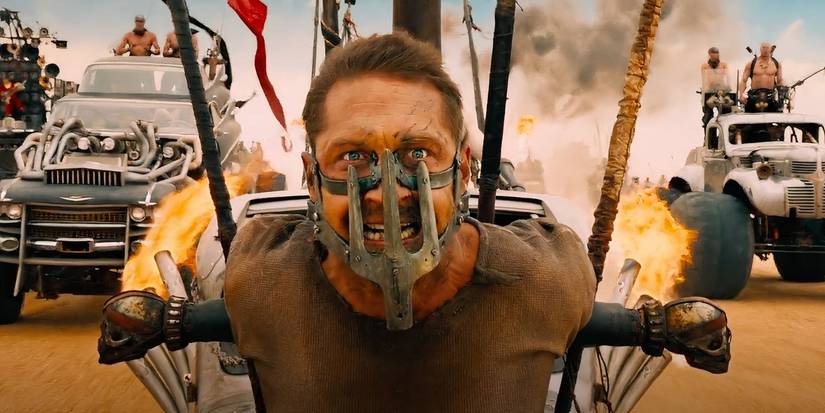
While the rest of Hollywood was trying to play catch-up to the international action filmmakers that were ten steps ahead, George Miller went back to the drawing board to reinvent his classic action franchise for the 21st century. The original three Mad Max films all offer unique evolutions to Miller’s motorhead action premise, but Mad Max: Fury Road supercharges it to a whole new level. Combining modern digital effects with old-school stunts, it’s an epic car chase across the desert that is as technically perfect as an action film can get.
Shot by legendary cinematographer John Seale, who came out of retirement to do the film, Fury Road has a vibrant color palette and utilizes center-framing as a means to keep the audience consistently oriented to the subject of each shot during the frenetic action. The editing is rapid-fire, and the frame rate ramps up and down throughout the entire runtime. Few action directors are ever in as complete control of the entire frame as Miller is here. The film has often been compared to the relentless energy of Looney Tunes, and Miller is the mad artist behind it.