Entertainment
This Ambitious 1-Season Sci-Fi Thriller Feels Like ‘The Fugitive’ Meets ‘The X-Files’

There’s a specific kind of thriller that starts by instantly removing the hero’s certainty. Not gradually or symbolically, but all at once. Phone numbers cease to work. Familiar faces go blank. What begins as an ordinary, recognizable life becomes something else entirely, almost overnight. Like The Fugitive and later The X-Files, the series builds tension from that loss of stability. But Nowhere Man pushes further, raising the possibility that even the main character’s memories may not belong to him.
Nowhere Man premiered in 1995 and centers on photojournalist Thomas Veil, played by Bruce Greenwood, with a tired, searching focus that never feels overstated. Veil wakes up to find his identity gone, his wife doesn’t recognize him, his bank accounts are inaccessible, and his closest friend is dead. The only thing he still has is a photograph that someone clearly wants to be erased, and before he can find out why, he must first prove he exists.
In ‘Nowhere Man,’ Identity Is Gone Before You Understand What Happened
“Absolute Zero” makes its intentions clear from the start. Veil steps away from dinner briefly, and when he comes back, his wife has vanished, and the staff treats him like a stranger. The confusion only deepens when he returns home and finds another man living there. His financial access is gone. His identity no longer holds weight. The episode moves quickly, stripping away every point of certainty Veil relies on.
The paranoia increases exponentially once Veil realizes his erasure is not random. It is connected to a photograph he took overseas, an image that captures something that powerful people want erased. The negatives become his only leverage and his only protection. He spends the rest of the series guarding them, even as it becomes unclear whether they contain the truth or another carefully constructed lie. Episode 2, “Turnabout,” reinforces how fragile identity becomes once systems decide you no longer exist. Veil is captured by the same organization hunting him and forced to impersonate a psychiatrist treating another victim whose identity has also been erased. Seeing someone else trapped in the same situation removes any illusion that this is a mistake. It is a process, and Veil is only one piece inside it.


What separates Nowhere Man from simpler chase thrillers is how often Veil faces choices that complicate his survival. In “Paradise on Your Doorstep,” he uncovers a secret community made up entirely of people whose identities have been erased. They pose as allies, providing safety and a sense of belonging. But their leader eventually pressures Veil to hand over the negatives, forcing him to question whether resistance has its own hierarchy of control.
That sense of isolation deepens in “You Really Got a Hold on Me,” where Veil meets Gus Shepard (Dean Stockwell), a man who has been running from the same conspiracy for decades. Shepard shows him the long-term cost of this existence. The running never stops, and survival becomes routine rather than victory. Veil sees his possible future reflected in someone who has already lost everything.
The show also understands the psychological toll of constant doubt. In “Something About Her,” Veil is drugged and manipulated into believing he has fallen in love with a woman who is actually part of the conspiracy. His emotions feel real even as the situation is fabricated. The episode does not rely on action to create tension. It lets uncertainty do the work.
The Sci-Fi Twist Makes Reality Itself Unreliable

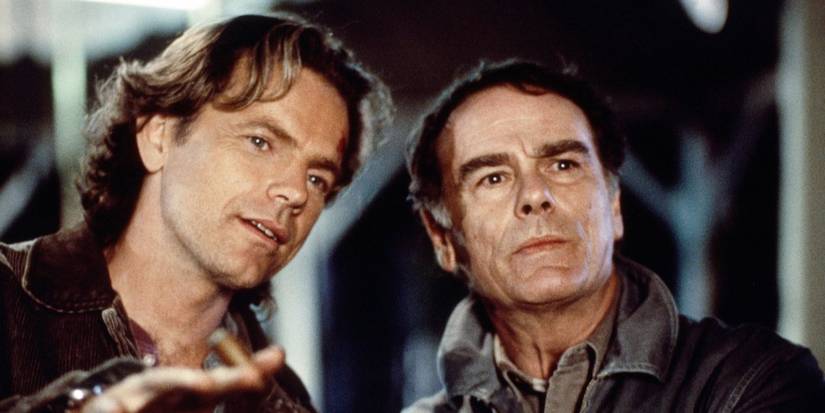
What truly sets Nowhere Man apart is its gradual transition from a conspiracy thriller to science fiction. Early episodes hint at surveillance and manipulation. Later ones suggest something far more invasive. In “Stay Tuned,” Veil infiltrates a small town where residents are subtly controlled through media exposure and psychological conditioning. The environment looks normal, but behavior reveals something engineered beneath the surface.
The series takes a more invasive turn in “Through a Lens Darkly,” when Veil is drugged and made to revisit pieces of his past. The memories appear real, but something about them feels off. He begins to understand that even his personal history isn’t beyond reach. It can be manipulated like any other part of his life. This development changes the entire premise. Veil isn’t only fleeing from people trying to kill him. He’s escaping those who can alter his perception of reality itself. That makes every answer questionable, including the ones he discovers.
‘Nowhere Man’s Final Revelation Changes Everything
When “Gemini” arrives, the show shifts the ground beneath Veil one last time. New revelations force him to reevaluate assumptions he’s relied on since the beginning. The photograph that once anchored his search no longer feels like the full story. Certainty becomes harder to hold onto.
The finale doesn’t offer resolution so much as expansion. Veil realizes his fight isn’t confined to a single moment or a single explanation. He’s left moving forward, still searching, still refusing to disappear — even as the scope of what he’s up against becomes harder to define.
Nowhere Man never became a mainstream success, but the tension it created still resonates. It moves with control, allows the unknown to linger, and never pretends everything will be explained. It takes The Fugitive‘s chase structure and X-Files’ and reworks it around a more unsettling question — not whether the hero can prove his innocence, but whether he can prove he was ever truly himself at all.

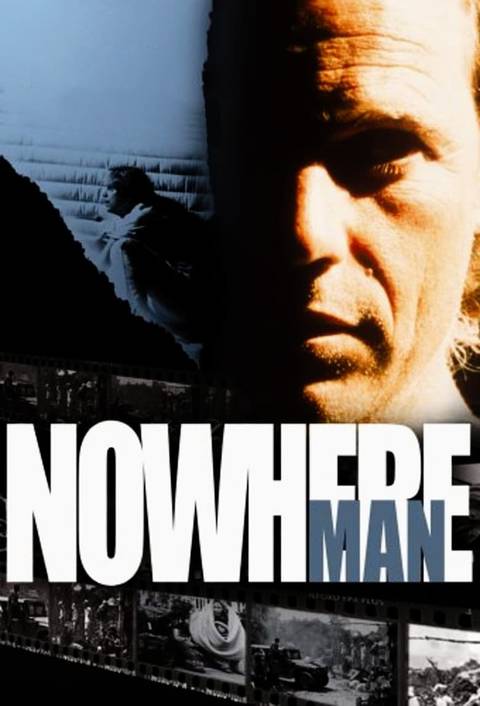
Nowhere Man
- Release Date
-
1995 – 1996-00-00
- Network
-
UPN
- Directors
-
Ian Toynton, James Whitmore Jr., Guy Magar, Michael Levine, Reza Badiyi, Thomas J. Wright, Greg Beeman, James Darren, Mel Damski, Steven Robman, Tim Hunter