
Connect with us

NewsBeat

45 pictures of colourful Darlington World Book Day costumes

Published

on

45 pictures of colourful Darlington World Book Day costumes

The nationwide celebration of reading marked a day off from typical school uniforms, with children donning costumes of their favourite literary characters instead.

The day witnessed classic and contemporary characters making an appearance.

See some of the amazing costumes readers of The Northern Echo sent in today:

Reggie age 8 as the boy from the Polar Express. (Image: UGC)

Archie Elstob, 7, Billionaire Boy. (Image: UGC)

Ridley Watson, 1. (Image: UGC)

Jessielee, 20 months, Hermione Granger. (Image: UGC)

Reggie, 3, BFG. (Image: UGC)

Jessielee, 20 months, Hermione Granger. (Image: UGC)

Jacob, 3, from Darlington, Iron Man. (Image: UGC)

Koby, 3, from Durham, The Hulk. (Image: UGC)

Emmeline Pankhurst and Jane Austen. (Image: UGC)

Arabella, 10 and Bertie 6, Sophie from BFG and Batman. (Image: UGC)

Theo, 5, The Highway Rat. (Image: UGC)

Matilda, 8, The Cat in the Hat. (Image: UGC)

Thomas, 5, Stickman. (Image: UGC)

Isla-Mae Webb, 6, Miss Hatter from Alice in Wonderland. (Image: UGC)

Archie, 1, The Tiger that came for Tea. (Image: UGC)

Rose and Ivy from Aycliffe as Paddington and his Marmalade. (Image: UGC)

Phoebe, 4, Charlie and the Chocolate Factory Golden Ticket. (Image: UGC)

Aaliyah, 9, The Cat in the Hat. (Image: UGC)

Lydia, 9, from Hurworth, Miss Trunchbull. (Image: UGC)

Violet, 4, Betty O’Barley from The Scarecrow’s Wedding. (Image: UGC)

Bobby, 2. (Image: UGC)

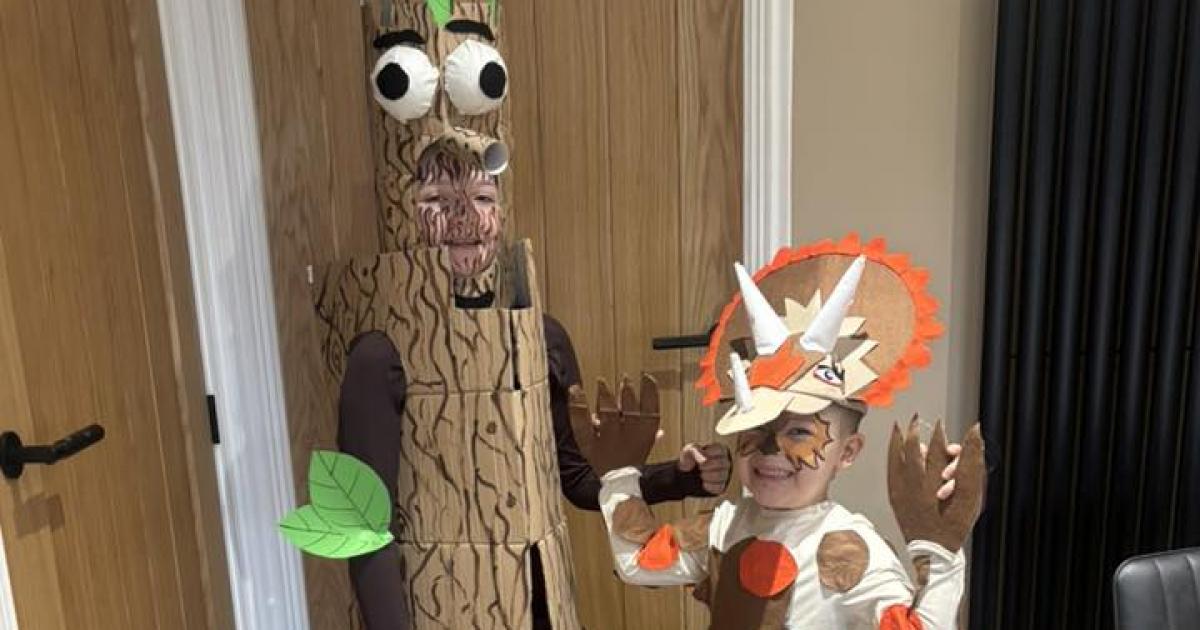
Delilah, 10 and Ralph, 5, Stickman and Triceratops follows its herd. (Image: UGC)

Alexia, 6 and Jadon, 4, The Rainbow Fish and ‘That’s not my…’ (Image: UGC)

Freya, 2, Witch from Room on the Broom. (Image: UGC)

Sid Rees, 6, Willy Wonka. (Image: UGC)

Toby, 10, from Darlington, The Boy in the Dress. (Image: UGC)

Maddie, 7, Cinderella. (Image: UGC)

Amber, 5, from Darlington, Alice in Wonderland. (Image: UGC)

Niamh, 7, Hermione Granger. (Image: UGC)

Presten, 10 and Lenny, 5. (Image: UGC)

Saskia as Isadora Moon. (Image: UGC)

Honey, 3, Angelina Ballerina. (Image: UGC)

Tommy-George Milburn, 3, Jake from The Tweenies. (Image: UGC)

Bonnie, 4 and Rosie 2, Flopsy and Elmer. (Image: UGC)

Tommy, 8, from Darlington, Peter Pan’s Shadow. (Image: UGC)

Lincoln, 10, Logan, 8, Lukas, 6 from Darlington as Where’s Wally? (Image: UGC)

Aria, 4, Skylar, 2, and Thea, 9. (Image: UGC)

Violet, 10, The Lorax. (Image: UGC)

Oliver, 10, Harry Potter. (Image: UGC)

Ariya, 6, The Day the Crayons Quit. (Image: UGC)

Arthur, 5, The Gruffalo. (Image: UGC)

Arthur, 3, The Elves and the Shoemaker. (Image: UGC)

Elsie, 9, Gangsta Granny. (Image: UGC)

Pippa Joy, 7, James and the Giant Peach. (Image: UGC)

Maya, 4, Norman the Slug with the Silly Shell. (Image: UGC)

A student dazzling as a character from “Charlie and the Chocolate Factory” carried a handmade, oversized Wonka Golden Ticket in one of the pictures.

Advertisement

The BFG’s Sophie made an appearance too, complete with a jar of “dreams” and the book itself.

A young Batman added a superhero flair to the event, while Stick Man, fashioned from cardboard with a leaf-top, stood tall.

The humorous side of the day was represented by a pupil mimicking the notable “Gangsta Granny” from David Walliams’ book.

The portrayal involved a complete transformation with a floral skirt, headscarf, curlers, and ceremoniously tugging a shopping trolley.

Advertisement

Other classic fairy tales had their moment as well.

A child appeared as an elf from “The Elves and the Shoemaker,” wearing a green tunic and pointy hat, proudly brandishing both a real shoe and the book.

World Book Day, celebrated in March, aims to encourage children to develop a love for reading.

The aim is to make reading enjoyable, accessible, and relevant for all, helping every child find a character or story they’ll adore.

Advertisement

Source link

Continue Reading
Click to comment

Leave a Reply

Your email address will not be published. Required fields are marked *

NewsBeat

Police officer ‘failed to perform duties’ after woman killed by husband

Published

on

Police officer ‘failed to perform duties’ after woman killed by husband

The two officers were cleared of gross incompetence after a 41-year-old was killed by her husband

A police officer “failed to perform their duties” before a woman was killed by her husband, a hearing has heard. Taiwo Abodunde, 41, was found with catastrophic injuries at her Newmarket home on November 28, 2023.

Advertisement

Mrs Abodunde had been attacked and killed by her husband Olubunmi Abodunde. A four-day misconduct hearing held by the Independent Office for Police Conduct (IOPC) concluded on February 27.

It looked into the contact Mrs Abodunde made with two police officers from Suffolk Constabulary before her death. The IOPC found one of the officers “failed to perform their duties”.

IOPC director Emily Barry said: “Our thoughts remain with the family and friends of Taiwo Abodunde and all those affected by her brutal murder. Our investigation into contact police had with her, before she was killed by her husband on November 28, 2023, found two Suffolk Constabulary officers should face a gross incompetence meeting.

“The meeting – organised by the force and held over four days – ended on Friday (February 27) and it found that a police constable failed to perform their duties. This relates to them delaying entry into Mrs Abodunde’s home on November 28, despite having concerns for her wellbeing and suspicions that Mr Abodunde was inside the address.

Advertisement

“While the case was not proven for gross incompetence, it was found proven for unsatisfactory performance. They were given a written improvement notice.”

She continued: “The case of gross incompetence against the officer’s supervisor – an acting sergeant – was found not proven. This was in relation to them advising the officers not to enter the property on November 28, when they were aware of the officers’ concerns for Mrs Abodunde; and regarding their supervision of the case after Mr Abodunde was taken into custody on November 27.”

In its investigation, the IOPC looked at the actions and decision-making of the officers when they came into contact with the couple. On November 27, 2023, the two officers, and a probationer, responded to a domestic incident. Olubunmi was arrested for common assault and assault causing actual bodily harm and taken into custody, before being released on bail later that evening.

The two officers returned to the property the next day for a pre-arranged meeting with Mrs Olubunmi, but couldn’t make contact with her. The officers waited outside the property and heard a disturbance. The officers discussed whether they had grounds to enter the home with their supervisor. After 35 minutes, they entered the property and found Mrs Abondunde dead.

Advertisement

Suffolk Police referred itself to the IOPC on November 28. A spokesperson for the Suffolk Police Federation said: “Our thoughts remain with the family and loved ones of Taiwo Abodunde. It is important that public discussion accurately reflects the outcomes of official proceedings. Following a four-day hearing, both officers were cleared of allegations of gross incompetence.

“One officer was found to have performed unsatisfactorily, which has been addressed through a written improvement notice. We encourage commentary on this matter to reflect these findings and the conclusions reached by the panel.”

Ben Hudson, branch secretary said: “Police officers operate under high levels of scrutiny. In many other workplaces, a written improvement notice would typically be handled internally as a routine performance matter and would not be the subject of a public investigation, multi-day hearing, or press release.

“Policing must be accountable, and our members accept that. At the same time, accountability depends on accuracy and proportionality in reporting outcomes. Officers regularly make complex decisions in fast-moving and uncertain situations, particularly during responses to domestic incidents.

Advertisement

“While such decisions are rightly scrutinised, it is important that the outcomes of formal processes, including those overseen by the Independent Office for Police Conduct (IOPC), are communicated fairly and in line with the findings reached.”
Source link

Continue Reading

NewsBeat

The Kurdish fighters who could join fight against Iran – and inspire uprising following air strikes | World News

Published

on

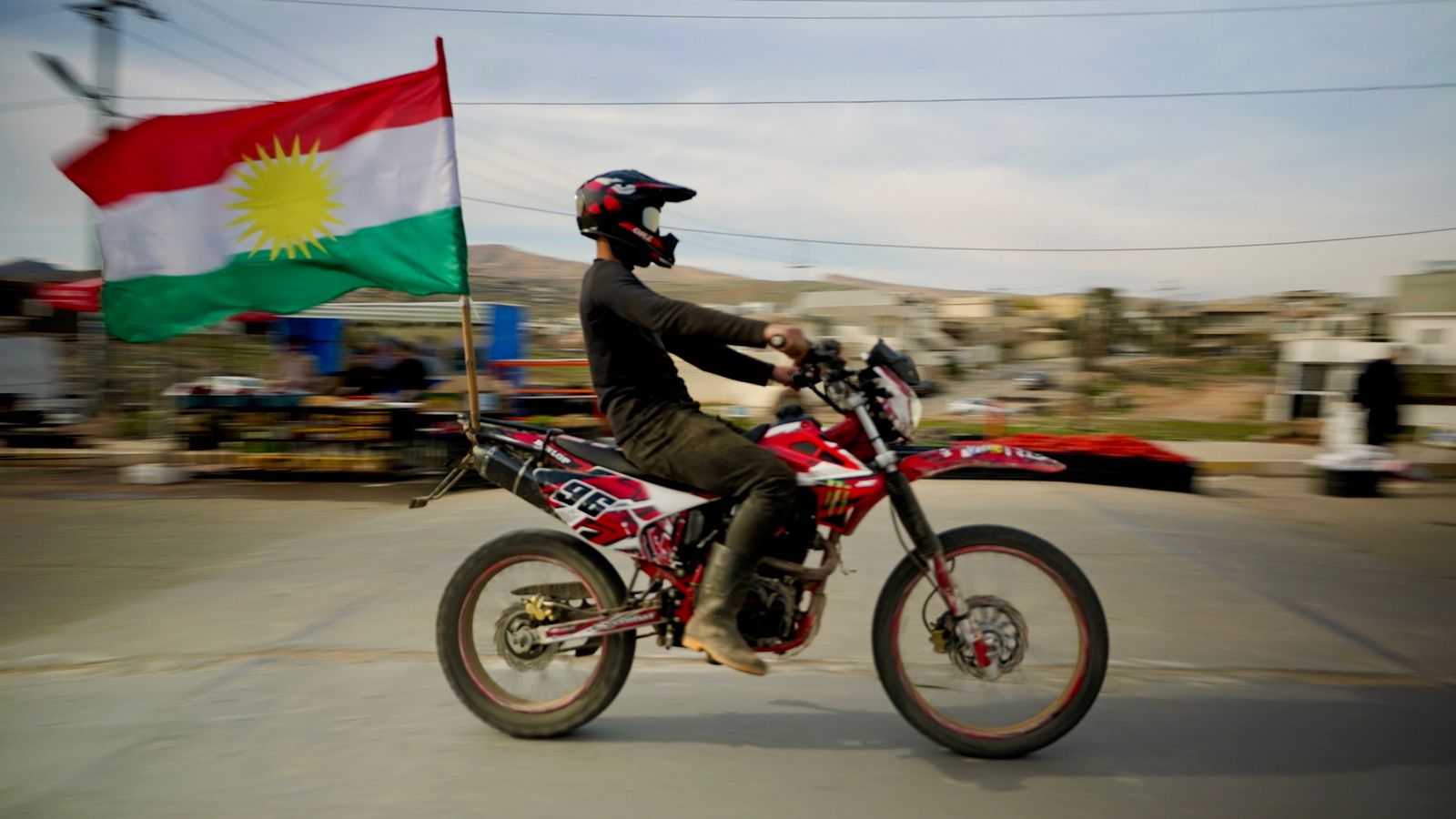
A biker proudly displays a Kurdistan flag

The spotlight is once again on the Kurds in the Middle East.

The US and Israel launched a crippling air campaign on Saturday, devastating Iran‘s security forces across the country, particularly in the Kurdish areas bordering Iraq.

In recent days, Kurds inside Iran say even small outposts belonging to Iranian security forces have been flattened.

Could this ultimately pave the way for a cross-border operation by a coalition of Iranian Kurdish groups?

Advertisement

Iran war latest – follow live updates

For security reasons, none of the groups can reveal how many active members they have, but it is estimated that all the parties together have around 5,000-10,000 fighters.

Image:
Smoke plumes in Sanandaj, Kurdistan province, Iran, amid the US-Israeli conflict with Iran. Pic: Social media via Reuters

This number does not include Iraqi-Kurdish fighters, who would not necessarily take part.

Iranian-Kurdish groups have extensive secret coordination cells inside the Kurdish region in Iran, and even in Tehran itself.

Advertisement
Residents inspect damage to nearby houses in Erbil, Iraqi Kurdistan. Pic: AP
Image:
Residents inspect damage to nearby houses in Erbil, Iraqi Kurdistan. Pic: AP

Potential to inspire uprising

Sources within the groups say that if Peshmerga fighters – security forces in the Kurdistan region – cross the border from northern Iraq into Iran, these networks and their supporters would join the fighters in securing the Kurdish region.

Some even believe that this could inspire an uprising by non-Kurdish Iranians.

“If the Peshmerga secure the Kurdish region, thousands of non-Kurdish Iranians will join them to finally free Iran,” one resident in Tehran said.


Kurdish uprising will further ‘destabilise’ region

Advertisement

The Iraqi Kurds have been put in a difficult position. The US is a critical partner for the Kurdish authorities in Iraq, providing political as well as military support in terms of training, equipment and funding to the Iraqi Kurdish peshmerga forces.

But the Iraqi Kurdish authorities also have cordial diplomatic and commercial relations with Iran. Indeed, Kurdish officials, including President Nechirvan Barzani, say they will not allow their territory to be used to launch an attack on their neighbour.

Tehran said that it will not tolerate any incursion from Iraqi Kurdistan, and will target the Kurdistan Regional Government (KRG) if this happens.


The Kurdish fighters mobilising for freedom

Advertisement

Who are these Iranian Kurdish groups that could act as boots on the ground inside Iran?

Kurdistan Democratic Party of Iran (KDPI)

Established in 1945, KDPI is the oldest party, and has widespread support across the Kurdish area in Iran.

The party’s manifesto, which called for autonomy for Kurdistan and democracy for Iran, has championed an autonomous region for the Kurds inside a united Iran that is secular and democratic.

Advertisement

The KDPI and another leftist group, Komala, tried to negotiate with the regime in Tehran after 1979 to secure equal rights for the Kurds.

But the negotiation broke down, and KDPI and Komala launched an insurgency which lasted from 1980 to 1988, when the Kurdish groups were forced out of Iran into Iraqi Kurdistan, where they have been ever since.

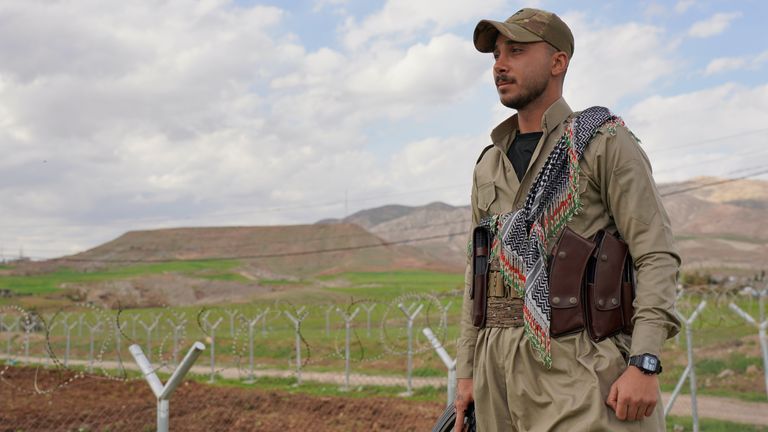
A member of the PDKI stands at a checkpoint leading to their base in Koya, Iraq. Pic: AP
Image:
A member of the PDKI stands at a checkpoint leading to their base in Koya, Iraq. Pic: AP

The leader of the group, a professor of economics called Abdul Rahman Ghassemlou, was assassinated by Iranian agents posing as peace negotiators in Vienna in 1989.

In recent years, the IRGC has fired several barrages of ballistic missiles and suicide drones at the camps of the KDPI and other Kurdish opposition groups in Iraqi Kurdistan, killing dozens of fighters and their family members.

Kurdistan Freedom Party (PAK)

Advertisement

PAK is a radical Kurdish party established in the early 1990s in Iraqi Kurdistan.

The founder, Saeed Yazdanpanah, was killed by Iranian intelligence operatives in the 1990s as part of an assassination campaign by the IRGC and Iran’s intelligence ministry in Iraq.

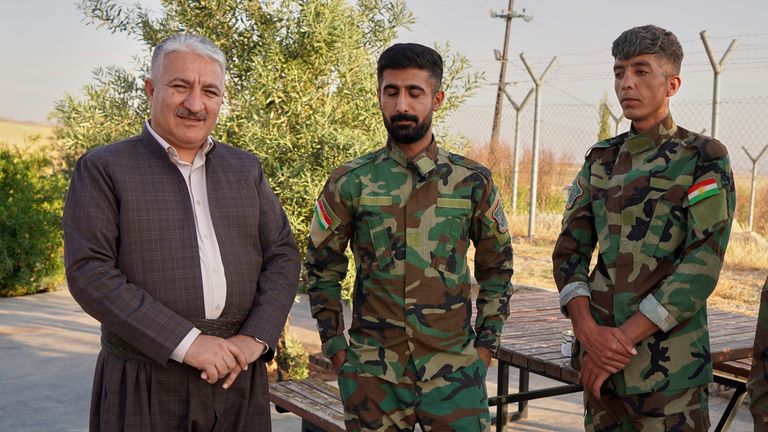
Khalil Naderi, spokesperson for the Kurdistan Freedom Party with Peshmerga fighters. File pic: AP
Image:
Khalil Naderi, spokesperson for the Kurdistan Freedom Party with Peshmerga fighters. File pic: AP

The group is a strong ally of the Iraqi Kurdistan’s ruling party, the Kurdistan Democratic Party (KDP), led by President Masoud Barzani.

The PAK Peshmerga have a reputation as fierce warriors, and were a part of the international coalition against Islamic State. They received training and weapons from the American-led coalition.

Komala Party (Komala)

Advertisement

The party, which operates under three branches, is a leftist-nationalist party established in 1979 in the aftermath of the Iranian revolution.

The group set a precedent in 1979 for recruiting thousands of young Kurdish women into its ranks, and fought bloody battles against the IRGC.

Advertisement

Kurdistan Free Life Party (PJAK)

The PJAK was established in 2004 by Iranian Kurdish members of the Kurdistan Workers Party (PKK) and Kurdish students from inside Iran. The PKK had fought the Turkish state for over four decades.

At least 300 members of the group had just returned from Syria, where they fought against ISIS as part of the Syrian Democratic Forces (SDF) affiliated with the US-led coalition.

The PJAK has operated small units deep inside the Kurdish areas for years, living in the rugged Kurdish mountains.

Advertisement
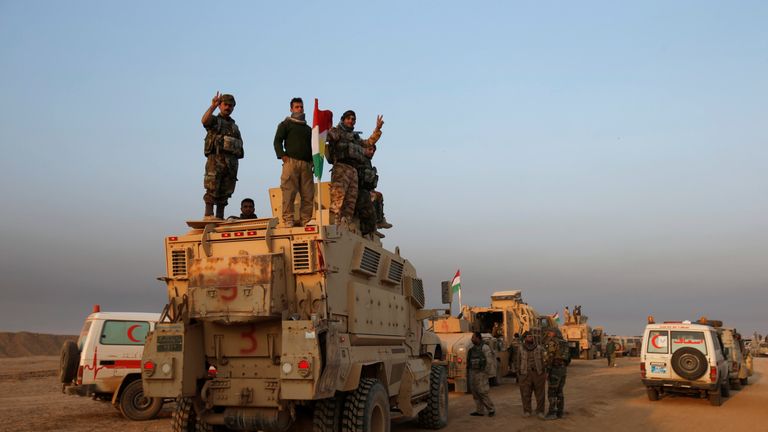
Peshmerga forces stand on a military vehicle in Bashiqa during an offensive against the Islamic State. File pic: Reuters
Image:
Peshmerga forces stand on a military vehicle in Bashiqa during an offensive against the Islamic State. File pic: Reuters

In 2011, PJAK fighters clashed with the special forces of the IRGC known as Saberin Units in the Qandil mountains straddling the Iran-Iraq border and inflicted heavy casualties on the IRGC.

The group is based in the border areas in Sulaymaniyah province in a network of sophisticated tunnels in the mountains, which has protected them from Iranian missiles and drones.

“It would take us less than three hours to take, for instance, Marivan city,” one official from PJAK said, referring to a border city in the Kurdish region.

“But we need to make sure that our people will be safe once we take the cities, and that means US air cover for Kurdish fighters.”

Read more from Sky News:
Kurdish fighters desperate to join battle
What satellite images reveal about war in Iran

Advertisement

Veteran fighters returning to region

Several hundred fighters said to be ready to cross the border are Iranian-Kurdish veterans of the war against the Islamic State in Iraq and Syria, who fought closely alongside US, British and French special forces.

And Kurdish sources say that hundreds of former Peshmerga fighters have returned from Europe, the UK and even North America to take part in any potential operation.

Thousands of light arms have been smuggled into the Kurdish areas in Iran in recent years, a Kurdish intelligence official noted.

Advertisement

Advertisement

Iran regime change unlikely through strikes alone

When asked about whether the CIA and Mossad have provided weapons to the Kurds, the official added that they are not a proxy of any country, and are fighting for equal rights in Iran.

“The most important thing right now is close air support for the Peshmerga once they cross back into Iran,” they said.

Another official from one of the other Iranian-Kurdish groups said the short-range ballistic missiles that Iran still retains could rain fire on Kurdish areas if the US does not provide air support, making any mission into Iran suicidal without that agreement.

Advertisement

Source link

Continue Reading

NewsBeat

Healey Demands Badenoch Apologise After Criticising UK Troops

Published

on

Healey Demands Badenoch Apologise After Criticising UK Troops

The defence secretary has called on Kemi Badenoch to apologise after she claimed British troops were “just hanging around” the UK’s military base in Cyprus.

The Conservative leader caused a stir on Friday morning when she called for Britain to take stronger action against Iran after its strikes against RAF Akrotiri.

Badenoch claimed that at the moment British jets are just “hanging around” the Middle East, even though the US “has been mobilising” in the region for months.

“Our guys, our government, were just sitting there shrugging their shoulders,” the leader of the opposition said.

Advertisement

But Presenter Charlie Stayt jumped in, pointing out: “The evidence we have from the British government and the British military is they have been involved in shooting down missiles and drones.”

“You have characterised what is already happening by the British military, by the RAF, as ‘just hanging around’,” he added.

Badenoch hit back: “What I have said is they are catching arrows. They need to catch the archer.”

But cabinet minister John Healey slammed Badenoch, pointing out that he was on the ground in the UK’s base in Cyprus on Thursday.

Advertisement

He said: “I saw how our British forces are working round the clock, in the face of repeated air raid sirens, to protect British lives and British interests.

“And to suggest they’re ‘just hanging around’ to score political points insults the men and women of our Armed Forces.

“She should apologise and withdraw her comments.”

Iran launched a drone strike on the UK’s RAF base in Cyprus on Sunday shortly after Keir Starmer gave his permission for US forces to launch limited and defensive attacks on Iran from two British military sites.

Advertisement

While sending more military personnel to the region to protect the British citizens in the area, the prime minister has made it very clear that the UK is still only acting in a defensive capacity.

He has insisted Britain will not be joining the US and Israeli’s offensive strikes against Iran.

Source link

Advertisement
Continue Reading

NewsBeat

Doctor Amir Khan explains why you might feel ‘jerk’ when falling asleep

Published

on

Doctor Amir Khan explains why you might feel 'jerk' when falling asleep

Doctor Amir Khan has explained the reason many of us suddenly jerk awake when we’re trying to sleep

Doctor Amir Khan is renowned for offering various health guidance, and he has recently focused his attention on helping people achieve better sleep. However, if you’re someone who frequently experiences sudden jolts whilst waking at night, or feel as though you’re falling when beginning to drift off, it appears certain factors typically trigger this phenomenon.

The GP, who’s recognised for providing health tips on ITV’s Lorraine, shared the expert guidance on Instagram this week, posting a video that explains what people ought to understand. Many of us experience these jolts as we begin falling asleep, which can occasionally cause mild alarm.

Advertisement

Nevertheless, it appears there are explanations for why this occurs. It’s not the only piece of sleep wisdom he’s offered recently either, as he also clarified why numerous people can wake at 3am.

Demonstrating what takes place, Doctor Amir said: “Have you ever felt you’re falling just as you nod off? That sudden jolt awake is actually called a hypnic jerk and, as you drift into sleep, your muscles relax, and sometimes your brain interprets that as falling.

“It’s a misinterpretation, so it sends a quick signal to your body to catch you, and that’s why you twitch awake. Now, some scientists think it’s an ancient survival reflex, back to when we slept in trees.”

“A sudden twitch might have stopped us from actually falling. It’s totally harmless. More common when you’re stressed, have caffeine late or you’re just super tired.

Advertisement

“So, next time it happens, don’t panic. it’s just your brain being quirky. Totally normal. Totally harmless.”

Doctor Amir admitted it’s something that happens to him “all the time”, and it’s nothing to worry about. In the comments, many others said they’ve experienced it too, reports the Mirror.

What you need to know

If you’ve never experienced them before, hypnic jerks are common, involuntary muscle spasms, also known as “sleep starts”. They occur during the transition from wakefulness to light sleep, and often lead to a sensation of falling or a sudden jolt.

What you may not realise is that they are actually experienced by over 80% of people and they are generally harmless. They’re caused by nerves misfiring as muscles relax, or by fatigue, stress or caffeine.

Advertisement

In other words, if you drink coffee late, are extremely tired or stressed, your body may be trying to tell you something, as you could need to make some lifestyle changes. Even being in an uncomfortable sleeping position can cause them.

If you want to try and stop them, you can start by reducing stimulants (caffeine), maintaining a consistent sleep schedule and practising relaxation techniques. Doing these things may help to decrease frequency.

Even though they are usually nothing to worry about, persistent or painful episodes should be discussed with a doctor. This is important to rule out any other potential sleep disorders.

If you’re experiencing any difficulties with sleep and it’s affecting your wellbeing, it’s worth speaking to your GP. They’ll be able to recommend approaches to help address the issue.

Advertisement

Source link

Continue Reading

NewsBeat

Plans to speed up HGV drivers labelled ‘totally stupid’

Published

on

Belfast Live

“DfI is looking to slow everyone else down, but speed up HGVs.”

A Stormont proposal to speed up HGV lorries has been criticised as “totally stupid” amid concerns of “illegal” road signs in Royal Hillsborough.

Advertisement

Lisburn and Castlereagh City Council’s regeneration and growth committee unanimously reacted against a Department for Infrastructure proposal on new speed limits for Northern Ireland.

The chamber heard further concerns of illegal speed signs being put up in a Co Down village with the potential for drivers to be falsely alerted.

READ MORE: Water tests reveal NI council recreation lakes may have closed due to sewage bacteria

READ MORE: Concern of Irish Football Association no ‘buy in’ to Ulster Hall of Fame

Advertisement

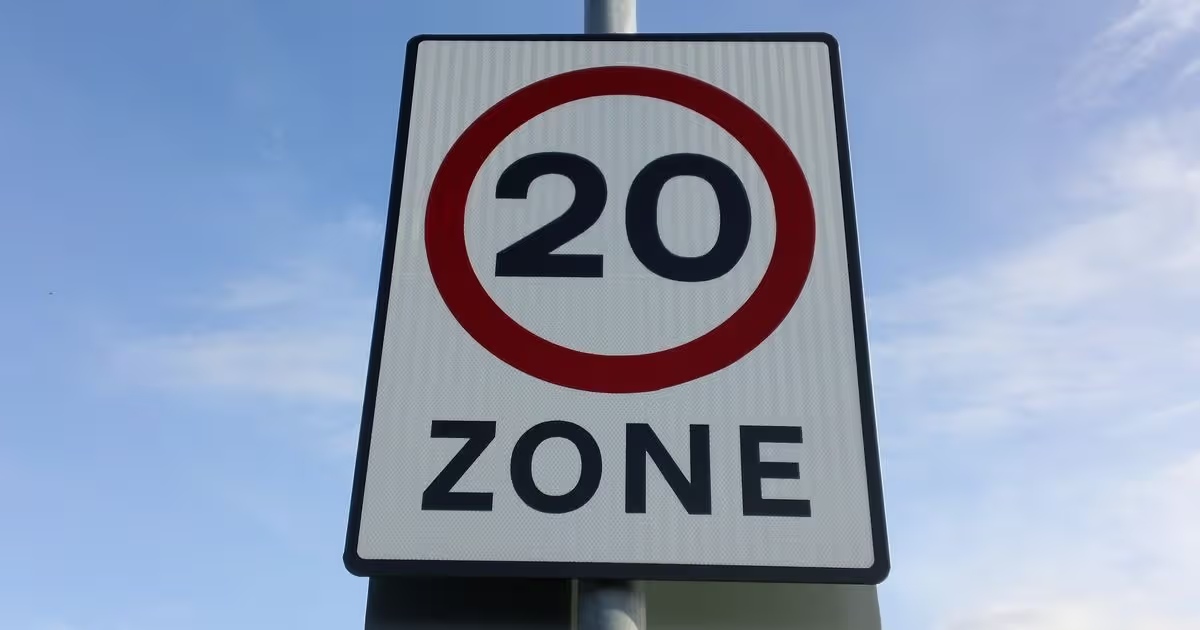
Downshire West DUP Alderman Allan Ewart said: “There are road signs in Royal Hillsborough for 20mph, that I think are illegal and were put up about a year ago. Should we be in touch with DfI about this?

“What is to stop someone putting up a fake road sign for 90mph? What are we going to do about it?”

A report to the committee shows that DfI is proposing to introduce more 20mph zones and lowering national speed limits on single rural roads and dual carriageways.

However, it is also proposing to increase the speeds of HGV drivers. The 14 week public consultation will close on April 22.

Advertisement

Downshire East UUP Alderman James Baird added: “I would say that the current national speed limits are adequate and that DfI would be better spending their time fixing the roads and potholes.

“To increase HGVs is just totally stupid. DfI is looking to slow everyone else down, but speed up HGVs.

“They are currently restricted to go 10mph slower than the national road speed.

“We would need to be very cautious on this proposal.”

Advertisement

A council officer responded: “We are aware of the 20mph road signs in Royal Hillsborough and contacted has been made on behalf of the council with a complaint reported.

“I will note on our consultation response to DfI that we are unanimous in not wanting HGVs to speed up.”

For all the latest news, visit the Belfast Live homepage here and sign up to our daily newsletter here.

Source link

Advertisement
Continue Reading

NewsBeat

Cambridgeshire walk where you can spot Highland cattle and Konik ponies

Published

on

Cambridgeshire walk where you can spot Highland cattle and Konik ponies

Alongside Highland cows and Konik ponies, walkers may also come across some other wildlife

The winter months are finally fading away, the clocks are soon to change, and the sun is starting to come out. There isn’t a more ideal time to put on your walking boots and explore the wonders of nature.

Advertisement

From a circular walk at Houghton Mill to a peaceful walk at Anglesey Abbey, walkers are not short on choices in Cambridgeshire. One particular walk even offers the chance to spot Highland cattle and Konik ponies.

Wicken Fen Adventurer’s trail offers trekkers a three-mile walk exploring a multitude of landscapes. The walk begins and ends at Wicken Fen National Trust visitor centre, in the village of Wicken, near Ely.

At the start of the walk, follow the path along Wicken Lode and Wicken’s Poor Fen. This is land where traditionally villagers had the right to collect sedge and peat.

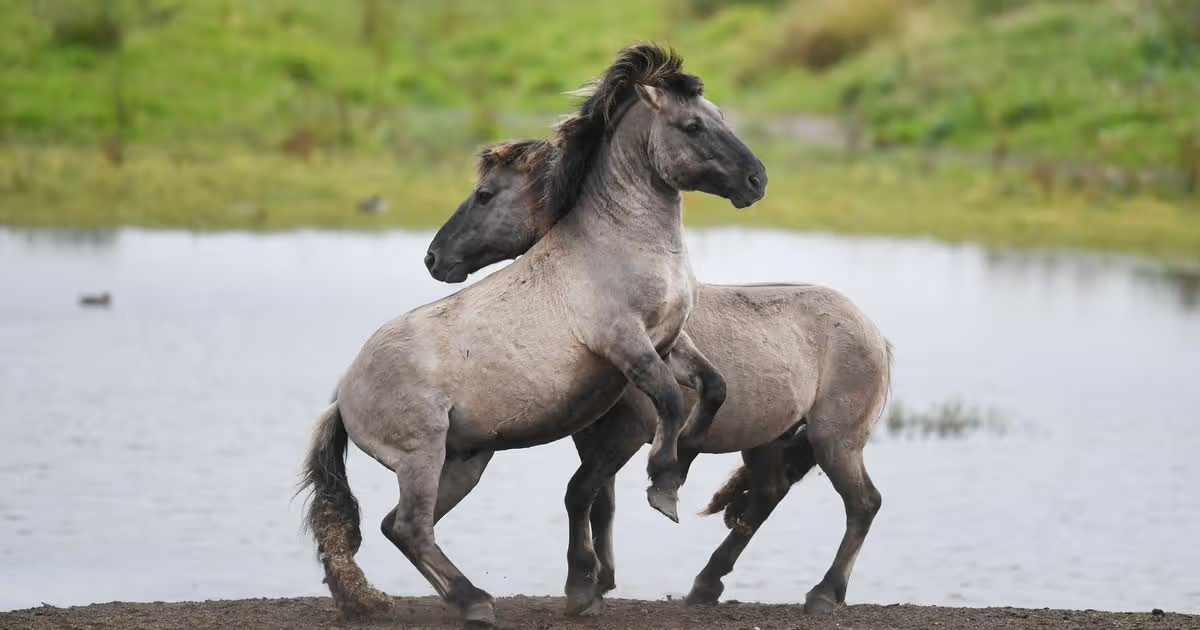
Following along, you will cross Monk’s Lode and Norman Bridge where you can often see plants such as water lillies. Further along the trail walkers will go along a bank known as Baker’s Fen. This is the time to keep your eyes peeled for herds of Highland cattle and Konik ponies grazing away. Roe deer, hares, and birds such as eared owls and marsh harriers can also often be spotted here.

Advertisement

The trail then takes you along a path, which leads to the site of Norman’s Mill. This iconic, historic windpump has now been restored but originally, it was used to drain the peat pits.

Continuing along, the trail takes you alongside Wicken Fen and a path leading into West Mere Hide. This used to overlook the mere’s west end and the island. Don’t forget to note the reed beds, as well as listening out for the boom noise of the bittern insect.

Coming to the end of the trail, trekkers will follow the sign for West Mere Hide and head back to the Wicken Fen bank, crossing over the Normans Bridge and return towards the visitor centre. If you have time, make a stop along the way at West Mere Hide and see what wildlife is out in the mere. Wicken Fen is home to over 4,000 species, including Britain’s largest dragonfly.

If the three-mile walk has left you feeling peckish, then you could make a stop at The Docky Hut cafe right next to the visitor centre. It offers a variety of homemade bakes, light lunches, or an afternoon tea for you to enjoy.

Advertisement

Source link

Continue Reading

NewsBeat

Locals say ‘safe’ Cambridgeshire town is great place for families with ‘excellent’ transport links

Published

on

Cambridgeshire Live

One woman said: “I love where we live”

People who live in a “safe” Cambridgeshire town say it is a “great” place to bring up a family. Huntingdon is one of the largest towns in Cambridgeshire – home to more than 25,000 people.

Advertisement

It is a market town and the birthplace of notorious historic figure Oliver Cromwell. As part of the Exploring Cambridgeshire series, we spoke to some Huntingdon residents about their hometown.

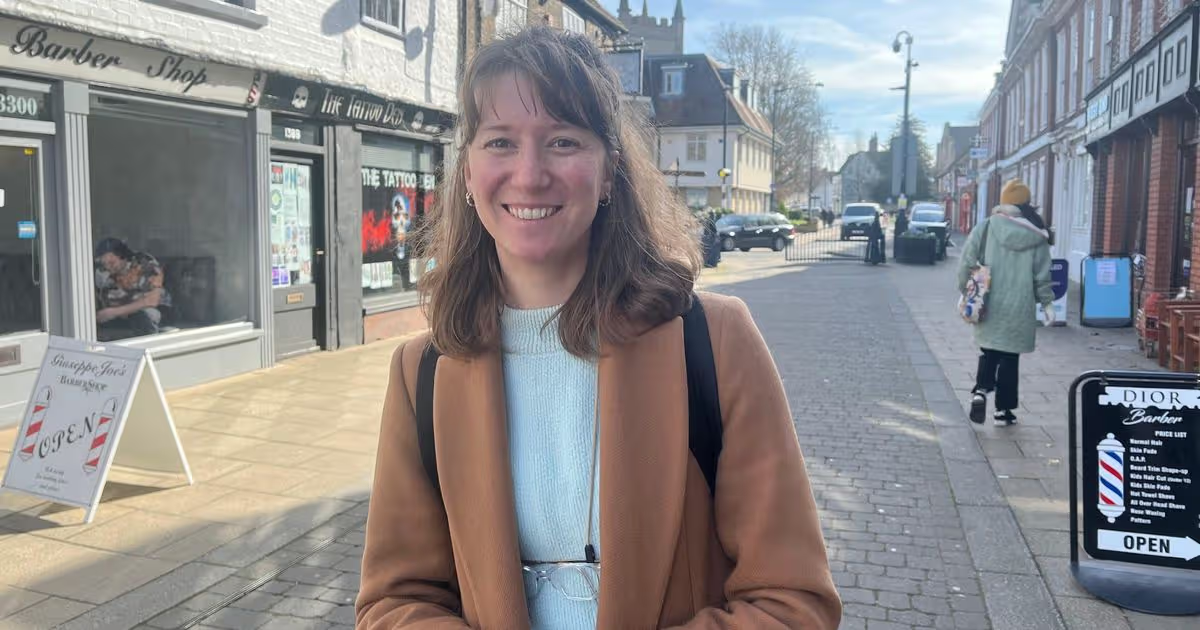
Anne Monkman has lived in Huntingdon for over 30 years, while her daughter Sarah Gosling was born here, moved away, and came back. “I am a boomerang child,” said Sarah.

She added: “I moved away and then came back here in my 20s. It has a nice family feel here. I grew up here and enjoy it, and I wanted to have my children here.”

Anne said the town has “quite good facilities”. She added: “It also has good transport. I go to Cambridge by train. It also has good public transport.”

Advertisement

Sarah agreed that Huntingdon’s transport is good, as she frequently travels by train to visit friends in London. She added: “Coming from my mum brain, there is also a lot to do for kids.

“Churches do a lot of group like toddler groups and they are free. It’s a good community.” The mother and daughter also find Huntingdon to be “safe”.

Barry Graves said he has lived in Huntingdon for over 50 years and said he will “die here”. “I love it,” said Barry. “It has all you need. We have excellent transport with the train station being so close to the centre.

Advertisement

“You can go to places like Cambridge or London very easily. We have historic buildings that add a bit more character to the town, and it makes it a lovely place to walk around. We have lots of nature nearby. It’s great to take my dog for a walk.”

Linda Hamilton believes Huntingdon has a “lot to offer” younger people. She said: “We have lots of shops and supermarkets nearby that people can shop at, and lots of houses being built. It’s a good place to move to.”

Another woman, who wished to remain anonymous, also admires the nature Huntingdon has. She said: “I moved here with my husband in our 20s and we brought our kids up here.

“We wouldn’t change it for the world. There is so much to see and many pretty sights, especially for walking. The buildings are a bit more interesting than the modern ones they are building. I love where we live.”

Advertisement

Source link

Continue Reading

NewsBeat

Why is HMS Dragon taking so long to get to Cyprus? | World News

Published

on

Why is HMS Dragon taking so long to get to Cyprus? | World News

👉 Listen to This Is Why on your podcast app 👈

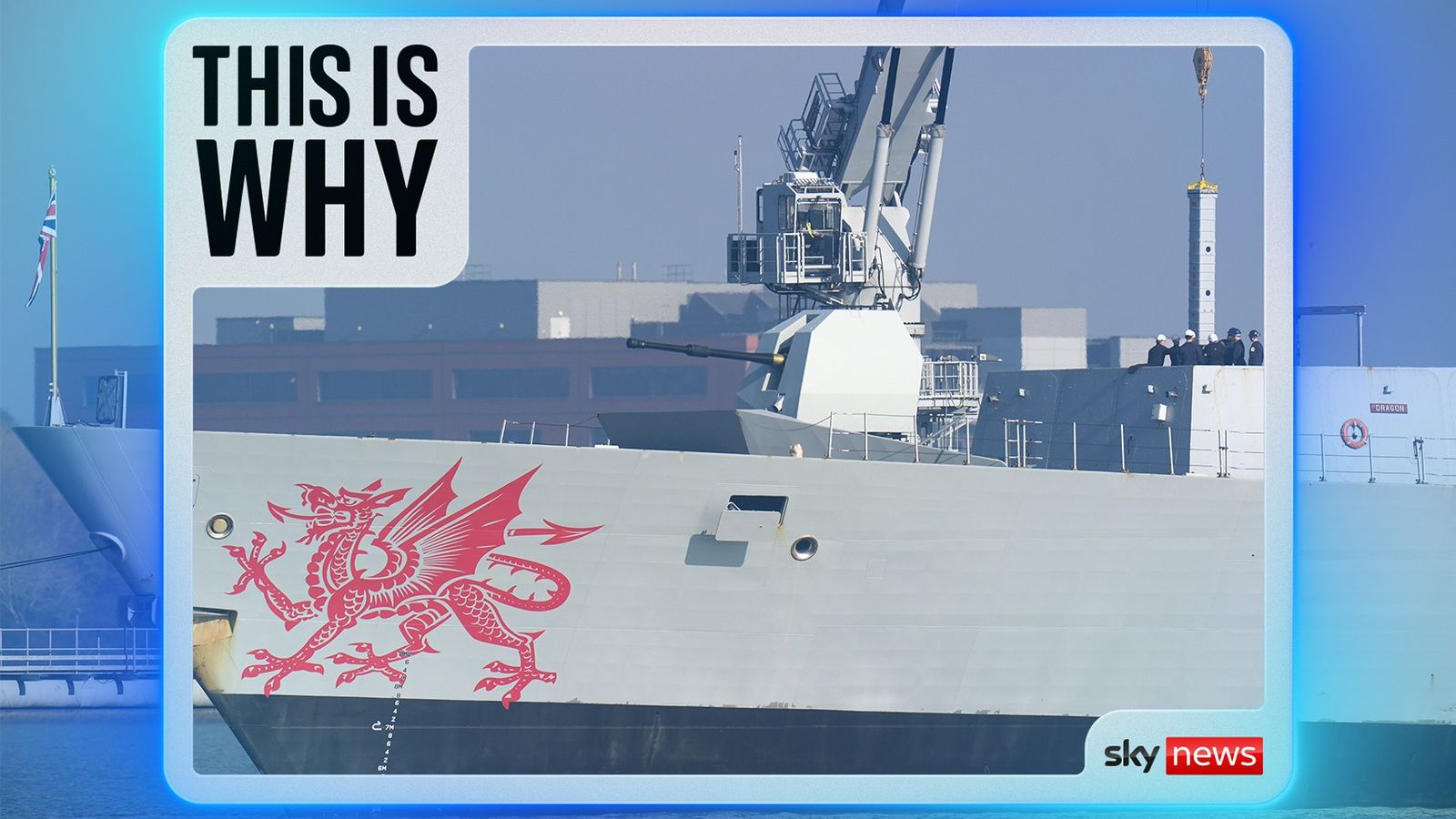
The warship HMS Dragon is now not expected to leave for the Mediterranean until next week to begin its mission to defend a British military base in Cyprus from attacks by Iran.

The ship is one of six Type 45 air defence destroyers in the Royal Navy and one of three that aren’t currently out of service.

Advertisement

It is well-equipped to deal with Iran’s Shahed-type drones, so why has it taken so long to send it to the region?

Niall speaks to defence analyst Tom Sharpe, who also spent 27 years in the Royal Navy, about the military capabilities of HMS Dragon, the state of the Navy currently, and when the warship might finally arrive in the Med.

Have you got a question for Niall? Email the show – why@sky.uk

Advertisement

Source link

Continue Reading

NewsBeat

Met Office reveals whether ‘Blood Rain’ will hit North East

Published

on

Met Office reveals whether ‘Blood Rain’ will hit North East

This week, Saharan dust has been moving across Europe.

With the Atlantic weather systems heading towards the UK, many are questioning if this will result in “blood rain”, a term used to describe rain that appears tinted red due to the presence of dust in the atmosphere, impacting the UK on Wednesday or Thursday.

However, the Met Office has provided some clarity regarding this phenomenon.

What is Blood Rain?

Advertisement

It’s important to note that ‘blood rain’ is not a scientific term.

The rain’s red tint can range from a mild rusty colour to deeper reds, depending on the concentration of dust in the air during a downpour.

Typically, these particles are abundant in iron oxides, lending them the red hue.

For the rain to visibly appear red, a relatively high concentration of these particles needs to mix with the droplets in the atmosphere during a downpour.

Where does it happen?

More commonly, though, rain appears normal and may leave a thin film of dust on surfaces once dried.

Advertisement

Regarding the upcoming days, the UK, especially the southern parts, can expect a plume of dust coming northward from the Sahara Desert.

This atmospheric event may lead to dust settling out with the rain on Wednesday and Thursday.

Despite the looming presence of this phenomenon, the Met Office assures that the density of dust in the rain will remain low.

(Image: Jordan Pettitt/PA Wire)

Resulting Rainfall Pattern

Advertisement

This means the rainfall won’t appear distinctly red, but rather, will likely leave a light layer of yellowish or brownish particles on cars and windows once it dries.

For those in the southwest, overnight and early-morning rain on Thursday could carry these dust particles due to a moist south-westerly airflow interacting with a broad dust plume.

Conversely, dust levels for other parts of the UK are forecast to remain even lower, resulting in non-differential rainfall.

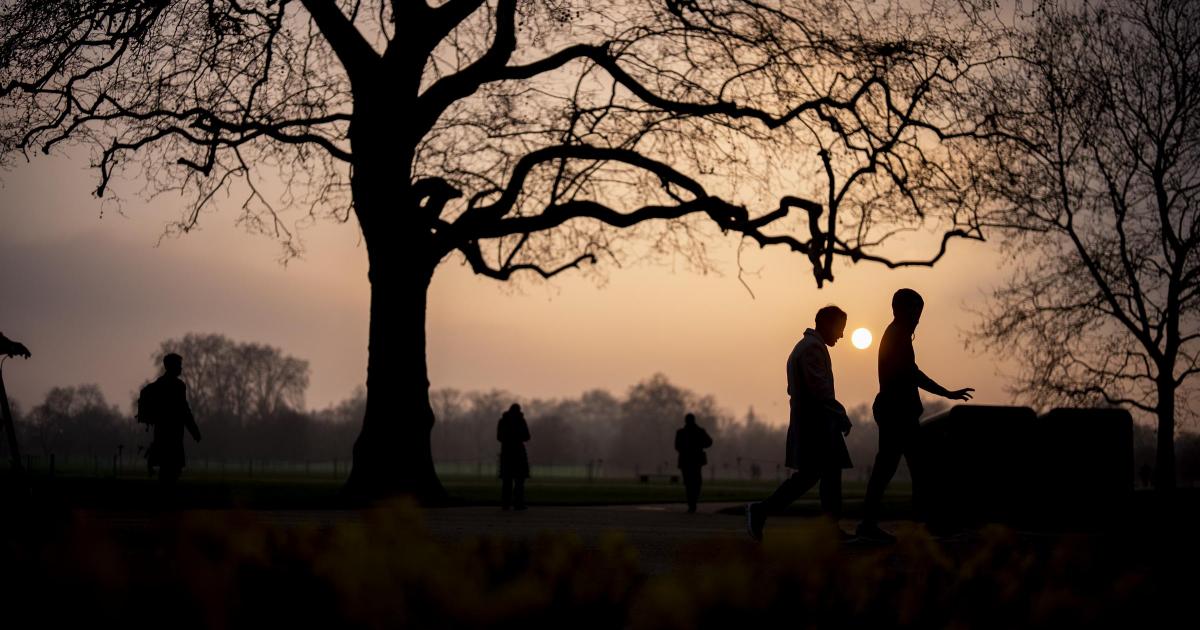
Residents in the region may notice a light dusting on vehicles, decreased visibility at high altitudes, and possibly, notably vibrant sunrises and sunsets caused by the scattering effect of the airborne dust particles on sunlight.

Advertisement

On the brighter side, the expected dust levels carry no significant health threats.

People with sensitive respiratory systems may only perceive a minor increase in airborne particles until the rain clears the atmosphere.

If you’re planning to wash your car, waiting until the end of the week may be wise, as additional dust pulses could reach the UK before conditions settle.

Advertisement

Source link

Continue Reading

NewsBeat

Cyprus foreign minister says British bases the target of military action, not his country | World News

Published

on

Cyprus foreign minister says British bases the target of military action, not his country | World News

The foreign minister of Cyprus told Sky News that British bases are the target of military action, not his country, as he expressed his “dissatisfaction” with the UK’s response to the Iran war.

The country’s foreign minister, Constantinos Kombos, welcomed the deployment of additional UK forces but said the deployment of assets to the country was coming “from the EU primarily”.

Follow Iran latest

The support of Greece, France and Spain was highlighted by Mr Kombos in an interview with Sky News, as he explained how the country was “creating a collective shield”.

Advertisement
Image:
UK Defence Secretary John Healey visited RAF Akrotiri in Cyprus on Thursday

“The UK has deployed its own forces; we are waiting for them to be incorporated into the system,” he said.

He also reminded the British government of its “responsibilities in relation to its bases”, stressing that it was not Cyprus being targeted, but British bases on the island.

“Right now, what matters is we get through this crisis.

Advertisement

“After this crisis ends, hopefully we will be able to reflect… and see what happened and what could have happened,” Mr Kombos said.

Foreign Secretary Yvette Cooper told Sky News’ Mornings With Ridge and Frost on Monday that the RAF base Akrotiri in Cyprus had been hit by a one-way attack drone.

The strike hit the airport’s runway in an attack which Mr Kombos said didn’t cause “any real damage”.

Advertisement
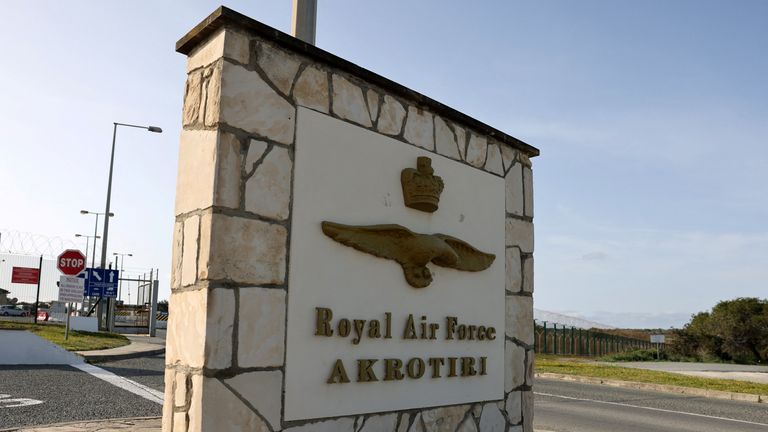
RAF Akrotiri, a British sovereign base in Cyprus that was hit by a drone. Pic: Reuters
Image:
RAF Akrotiri, a British sovereign base in Cyprus that was hit by a drone. Pic: Reuters

Read more from:
Royal Navy’s destroyer will arrive too late for Cyprus
Panic in Beirut as Israeli rhetoric sparks fears of all-out war

On Thursday, British Prime Minister Keir Starmer defended the UK’s military response in the run-up to and aftermath of US and Israeli airstrikes against Iran, that killed the country’s leader.

Six RAF F35 jets were sent before the war started to reinforce the eight Typhoons permanently stationed in Cyprus.

Since then, ground-based, short-range air defences have also been deployed, and Wildcat helicopters, which have the capability to detect drones, are due to arrive in Cyprus over the weekend.

The UK is also deploying HMS Dragon, a Type 45 air defence destroyer, to Cyprus. Though it won’t arrive in the region till next week.

Advertisement

Mr Starmer also announced on Thursday that four additional Typhoons would be deployed to Qatar as strikes against Iran by US and Israeli forces continue.

Source link

Advertisement
Continue Reading

Trending

Copyright © 2025