



Connect with us

NewsBeat

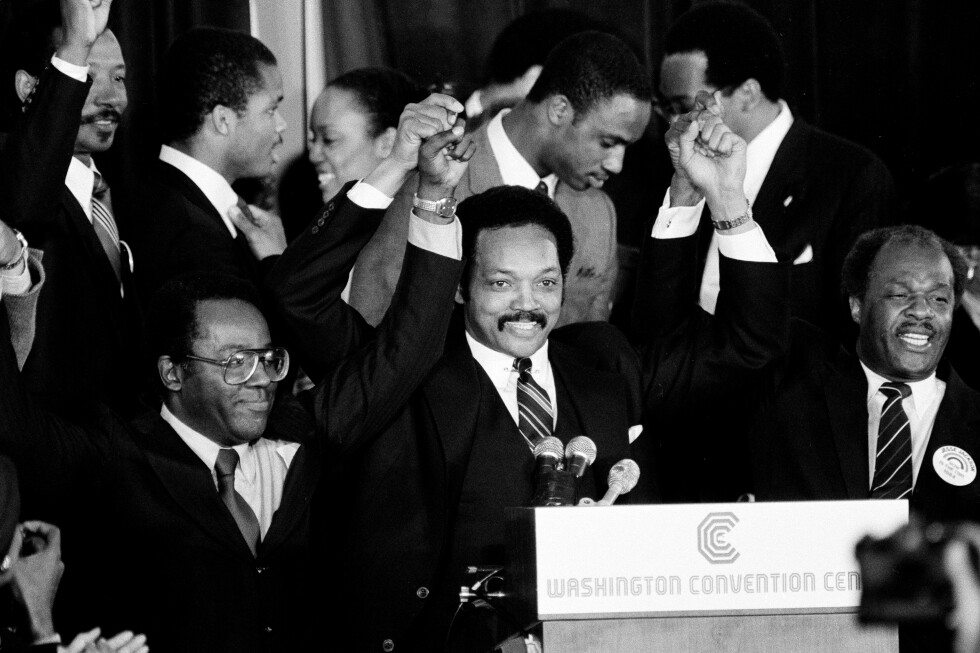
AP Was There: Jesse Jackson pondering a bid for the presidency

Published

on

AP Was There: Jesse Jackson pondering a bid for the presidency

CHICAGO (AP) — The Rev. Jesse Jackson was profiled by The Associated Press when he was a 41-year-old civil rights activist preparing his historic 1984 campaign for the presidency. The AP is republishing that story, by the late AP writer Sharon Cohen, as it appeared on Aug. 7, 1983.

___

He sees himself on the lonely, dusty road of the prophets — a man ordained by the spirit and sent forth like Jesus, Gandhi or the Rev. Martin Luther King Jr. to show others the way out of the wilderness.

“I’m very much driven by my religion to rise,” he says. “There’s a push that comes from religious duty. Gandhi couldn’t stop. Martin couldn’t stop. Jesus couldn’t stop.”

Advertisement

Nor, to hear him tell it, can the Rev. Jesse L. Jackson.

“I’m in the prophetic ministry,” he says. “It’s the kind of ministry ancient prophets engaged in when they challenged the conduct of kings and queens.”

Jesse Louis Jackson — 41-year-old son of the South, child of civil rights and a prospective 1984 black presidential candidate — is a man driven, almost obsessed with his self-appointed mission.

Wherever Jackson goes, his message is hope. His style is rhyme. He is a master of the slogan.

Advertisement

“If you are behind in a race, you CAN’T run equally,” he tells church audiences. “The race does not go to the fast or to the strong but to those who hold out.”

“If you pickle your brains with liquor, you CAN’T hold out. If you shoot cocaine in your membrane, you CAN’T hold out. If you put dope in your veins, rather than hope in your brains, you CAN’T hold out.”

His speeches mesmerize. Soon the audience is chanting, “Preach, brother. Preach it.” He does.

“We’re not the result of accidents, we’re the result of providence. We’re not here because we’re lucky. We’re here because we’re blessed.”

Advertisement

After his sermons, crowds flock to him, snapping pictures, begging for autographs and asking him to kiss babies. He turns no one away.

“My gift is a gift of the spirit,” he says.

It is a gift manifest in many forms in the evolution of this complex man from a brash, impetuous lieutenant of King into a magnetic — if controversial — political force in his own right.

In the ’60s, he battled for equal rights, picketing restaurants and marching for open housing.

Advertisement

In the ’70s came stress on self-respect and economic justice. Push-Excel, a bootstraps program urging students to study hard. The beginning of corporate agreements guaranteeing blacks fair participation.

Today, it’s leadership. A drive for voter registration across the South. More blacks in public office. And, ultimately, a black president, maybe Jesse Jackson.

“It’s not enough to get in the mainstream and swim,” Jackson says. “You must get in the mainstream and redirect its course.”

For years, and in highly visible ways, Jackson has tried to contribute his share, often to the dismay and irritation of others.

Advertisement

He has assailed dirty lyrics in disco music, mediated local labor disputes and led boycotts of national corporations.

He’s advocated the rights of Haitians, Palestinians and Poles.

He visited Panama to see whether the canal treaty was a good deal and spoke in South Africa to 20,000 blacks about apartheid.

American Jews were appalled when he embraced Yasser Arafat, leader of the Palestine Liberation Organization. Legislators applauded when he addressed Alabama’s Legislature — the first black to do so this century.

Advertisement

For the past few months, and maybe longer, Jackson has been weighing a bid for the presidency through the Democratic primaries and has sounded more and more like a candidate, to mixed reaction from other black leaders who, for various reasons, are skeptical of the political wisdom of a black candidacy at this time.

One poll has shown him to be more popular than some of the announced candidates. “God did not limit genius to white males,” says Jackson. “He distributed it all over town.”

Jackson has never run for political office. His only formal constituency is Chicago-based Operation PUSH (People United to Serve Humanity), but in reality he is the organization. Jackson founded the group in 1971, originally named the less-humble People United to Save Humanity, after splitting from the Southern Christian Leadership Conference. He has been president ever since at a current annual salary of $40,000.

When friends and foes alike discuss Jackson, they invariably speak of the same traits — his ego, his drive, his grand ideas, his weakness as an organizer, and his adroit courting of the media.

Advertisement

“He seems himself on a messianic mission,” says half-brother Noah Robinson. “What is it that motivates a person to grow? For Jesse, it’s his ego. God bless him for having that ego.”

“I always describe a visionary as someone who looks at cloudy skies and does not see the clouds, but sees the sun,” says Gary, Ind., Mayor Richard Hatcher, a friend and PUSH chairman of the board. “He’s able to do that.”

Mary Frances Berry, a member of the U.S. Civil Rights Commission, added though that “Jesse’s not really an organization man. His strong suit is not really running an organization.”

“The most pungent criticism is that he is constantly announcing campaigns and crusades that evaporate after the TV set is turned off,” says Don Rose, a political strategist who worked with Jackson in the 1960s civil rights movement.

Advertisement

Jackson, says Hatcher, “seems to have the ability to elicit from people either a very strong feeling of support … or a very strong feeling of dislike, and sometimes a feeling that borders almost on hatred.”

Indeed, several national black leaders accuse Jackson of being an opportunist who exploits issues and seizes credit for the work of others. But virtually none has opposed him openly.

No one disputes that Jackson can cut an impressive figure. He’s an athletic 6-foot-2, in well-tailored conservative suits that long ago replaced the splashy dashikis he wore in the ’60s, along with a bold Afro.

He’s retained his Baptist preacher’s eloquence, doesn’t smoke or drink, yet, unbending, displays a humor that leads his friends to suggest that Jackson could have made a dazzling comedian.

Advertisement

Perennially on the go, he takes time to quiz teachers on his son’s classroom performance. Jesse Jr., 18, eldest of his five children, attends a private Episcopalian school in Washington, D.C. “He wants us to be an example of what he preaches,″ says Jesse Jr.

While Jackson preaches on many things, one theme has been as consistent in his message as in his life, an unrelenting drive to succeed.

“When you do less than your best, it’s a SIN,” he tells audiences. “To be black in America, you have to be superior to be equal.”

Jackson was born Oct. 8, 1941, in Greenville, S.C., and graduated from North Carolina A&T, where he earned a bachelor’s degree in sociology and economics, and met Jacqueline Davis, whom he married in 1962.

Advertisement

After college, Jackson entered the Chicago Theological Seminary, and joined King in civil rights protests.

In 1967, King appointed him as director of Operation Breadbasket, economic arm of the SCLC. Four years later, after King’s assassination, he founded Operation PUSH.

Jackson was with King that day in 1968 when he was shot down in Memphis, Tenn. He wore a shirt said to be soaked with the slain civil rights leader’s blood to a Chicago City Council meeting the following day.

As PUSH president, Jackson has been an urban version of Dale Carnegie, pushing and praising, cajoling and criticizing blacks to work hard, excel in school, and demand their share of power.

Advertisement

Jackson’s Operation PUSH claims to have signed more than $1 billion in trade agreements with Burger King, Coca-Cola, Heublein, and Seven-Up that provide for more distributorships and more advertising in black-audience publications.

Not all his efforts have won friends.

When PUSH announced a boycott of Anheuser-Busch beer last year, some blacks in St. Louis, where the company is based, assailed him for picking on the wrong company.

Others say Jackson’s programs don’t help enough people.

Advertisement

Another Jackson brainchild, PUSH-EXCEL — Push for Excellence, a program started in 1976 urging daily study hours, teacher dedication and student discipline — has run into other problems.

Seven reports completed this year by Department of Education auditors want to disallow PUSH-EXCEL’s use of $736,000. They said the funds apparently were spent on items not eligible under the organization’s federal grants and contracts.

In addition, officials said, about $1 million in spending has been questioned because it was not documented adequately. The money is part of about $6 million awarded to PUSH-EXCEL over three or four years.

The audits don’t allege criminal violations. Jackson says PUSH гepresentatives are working with auditors to resolve the matter.

Advertisement

As Jackson ventured into presidential issues like the re-industrialization of America, jobs, or the defense budget, some critics questioned his qualifications for speaking out on such national issues.

Jackson bristles at that notion.

“I wasn’t trained in auto mechanics and brick masonry,” he says. “I had a liberal arts education … So if on a given day Mr. Reagan can speak about agricultural policy and trade policy and international affairs and art and culture and science, who’s to suggest I should be less able to speak to a broad range of issues?”

Jackson says the success of his Southern registration drive, finances and organization will help determine whether he runs for the Democratic nomination. If he doesn’t, he says, some black should.

Advertisement

The Democrats, he says, “have in many ways made us like the Harlem Globetrotters. We can provide the thrills and excitement, but not participate in the other room where policy decisions are made.”

While friends and black leaders are divided on a Jackson candidacy, some see benefits from broaching the possibility.

“He’s made the party more cognizant of black voters,″ says Georgia state Sen. Julian Bond. ”It has made race — in a positive way — an agenda item in the campaign for the Democratic nomination.”

Advertisement

Source link

Continue Reading
Click to comment

Leave a Reply

Your email address will not be published. Required fields are marked *

NewsBeat

Prince William shares rare photo with Princess Diana in Mother’s Day tribute

Published

on

Cambridgeshire Live

Prince William has shared an emotional tribute to his late mother, Princess Diana, on Mother’s Day

Prince William has paid an emotional tribute to his late mother, Princess Diana, on Mother’s Day, sharing a touching post and previously unseen photograph. Like millions across the nation, the Prince of Wales is honouring the women in his life on this significant day, and will undoubtedly have something special planned for Princess Kate.

However, the Duke has also acknowledged one particularly important figure: his late mother. This morning, he took to social media to share a photo of the two of them, with a caption expressing his thoughts of Diana “today and everyday”.

Advertisement

This year would have marked Diana’s 65th birthday. The caption reads: “Remembering my mother, today and every day. Thinking of all those who are remembering someone they love today. Happy Mother’s Day. W”.

The photograph, taken at Highgrove in 1984, depicts a young Prince William amidst a field of flowers with the late Diana. William was only 15 years old when his mother tragically died in a car accident in Paris in 1997.

William frequently discusses how he shares stories of their late grandmother with his own children – George, Charlotte and Louis – and how much of his charitable work, especially his involvement with homelessness charities, follows in her footsteps.

Advertisement

Prince William won’t be the only one remembering his late mother today, as his children also use Mother’s Day to honour the grandmother they never got to meet. Several years ago, William shared some cards created for Diana by the youngsters – with Charlotte’s containing a particularly poignant message.

Her note appeared on a fuchsia-coloured card featuring a hand-drawn multi-coloured heart. Within it, she made certain to mention how much her father William misses his mum.

Charlotte wrote: “Dear Granny Diana, I am thinking of you on mother’s day. I love you very much. Papa is missing you. Lots of love Charlotte xxxxxxxxx”. Meanwhile, elder brother George used cursive writing on bright green card to say: “Dear granny Diana, Happy happy Mother’s Day. I love you very much and think of you always, sending lots of love from George xxxxx.”

Advertisement

In the 2017 documentary Diana, Our Mother: Her Life and Legacy, William spoke openly, saying he is dedicated to ensuring his children know all about their late grandmother.

He expressed his wish for his youngsters to “know who she was and that she existed” and revealed how he “constantly” talks to his children “about Granny Diana” at bedtime so that they understand “there are two grandmothers in their lives”. The future monarch said: “We’ve got more photos up around the house now of her and we talk about her a bit.”

He further stated: “It’s hard because obviously Catherine didn’t know her so she cannot really provide that level of detail, so I regularly put George and Charlotte to bed, talk about her and just try to remind them that there are two grandmothers, there were two grandmothers in their lives. So it’s important that they know who she was and that she existed.”

Source link

Advertisement
Continue Reading

NewsBeat

Margot Robbie’s new hair: Why does the world hate it when famous women get a bob?

Published

on

Margot Robbie's new hair: Why does the world hate it when famous women get a bob?

Firstly, not all bobs are created equal. As hairstylist Kira Hellsten points out, Robbie’s new bob may simply be badly styled. “It does look very lacklustre – almost flat, and wet,” she says. There’s also a problem that arises with mid-length bobs, where it can feel like someone hasn’t fully committed to the chop. “If you’re too scared to go fully above shoulders, it can look like you’re trying to grow something out,” Hellsten says. “So you have to make it look like it’s a very intentional haircut.”

Source link

Continue Reading

NewsBeat

Jimmy Kimmel takes aim at Trump and Melania documentary at Oscars: ‘Oh man is he gonna be mad”

Published

on

Jimmy Kimmel takes aim at Trump and Melania documentary at Oscars: ‘Oh man is he gonna be mad”

Jimmy Kimmel took aim at Donald Trump while presenting an award at the 2026 Oscars.

Kimmel kicked his rivalry with the US president back into gear when announcing the winner for Best Documentary Feature – poking fun at Melania Trump’s critically maligned documentary released earlier this year.

“Oh man, is he gonna be made his wife wasn’t nominated for this,” Kimmel said without specifically name-checking Trump.

More to follow

Advertisement

Source link

Continue Reading

NewsBeat

Primark shoppers fuming as summer essential sees price hike

Published

on

Primark shoppers fuming as summer essential sees price hike

Customers regularly share their excitement for new items on social media, but a recent post has seen some footwear more than double in price.

The fashion retailer has sold its basic flip flops for 90p for years, but now customers have seen an increase in the price, saying it’s the “end of an era” as they now cost £2.

Having said this, the flip flops were posted on the official Primark TikTok page in 2024, and they cost £1 back then.

Advertisement

One customer said on the Bargain Lovers Facebook page that the price increase was “crazy”.

While the flip flops have been a staple for customers’ holidays over the years, they have also been used at weddings for guests who needed a break from uncomfortable shoes like heels.

Primark increases price of flip flops ahead of summer

The flip flops come in a range of colours, including white, black, pink, blue, navy and dark brown, and they’re only available to buy in stores rather than online.

Sharing a picture of the Primark flip flops on the shelves of one of its stores, someone said: “£2 at Primark?? The 90p days were elite”, sparking a debate with shoppers sharing their thoughts on the new price.


Simple ways to shop sustainably and save money


Some shoppers were shocked on seeing the news: “2 quid now xx”, adding two shocked face emojis.

Advertisement

Another customer said they were “fuming”, while someone else said the change in price is “disgusting”.

While some shoppers think the increase is big, others disagreed with one saying: “tbf though, 90p was too low”.

This person commented: “Cost of doing business goes up, price of goods go up to match that.


Recommended reading:

Advertisement

“The government increased employer NI contributions and minimum wage for a start and Primark employs 30,000 people in the UK.

“£2 is still dirt cheap imo though! A cup of coffee is more than that.”

The new price didn’t seem to phase this customer: “I’m just glad they are finally back in stock”.

Newsquest has approached Primark for comment.

Advertisement

Source link

Continue Reading

NewsBeat

Why we’ll always love Bob Mortimer – Teesside’s funniest son

Published

on

Why we’ll always love Bob Mortimer - Teesside’s funniest son

If he pops up on Would I Lie To You? , Last One Laughing, or wanders into shot on Mortimer & Whitehouse: Gone Fishing , you know you are about to get a story that starts small and ends in tears of laughter.

His tales have become the sort of thing people fire into WhatsApp chats with a simple: “You’ve got to watch this.”

The way he tells them

Plenty of comics tell daft stories. What makes Mortimer different is how real his nonsense feels.

Think about that hilarious self‑dentistry story on Would I Lie To You? . He talks about his teeth going wrong after a chocolate bar and calmly drifts into describing how he sorted it out himself, like he is chatting about putting up a shelf.

Advertisement

@uanddave Would you let Bob Mortimer in your mouth? #bobmortimer #wouldilietoyou #comedy #dentist Watch Would I Lie To You? on @UKTV Play ♬ original sound – U&Dave

You can see the panel wobbling between disbelief and total acceptance, because he throws in just enough everyday detail to make the madness sound possible.

It is the same with the Chris Rea bath tale, or the gaming‑chair saga, or the time he explains a run‑in with the police that should not make sense but somehow does.

He never rushes. He circles back, adds a tiny extra detail, and suddenly you realise you have leaned forward without noticing.

It feels less like a TV bit and more like listening to the best storyteller in the pub who has finally warmed up and started on the good stuff.

Advertisement

Fans talk about his episodes of WILTY as the ones they always click on first. You hear people say they have “lost an hour” rewatching his clips, because once you start on one story you end up jumping straight into another.

Why Gone Fishing hits differently

Then there is Mortimer & Whitehouse: Gone Fishing , which feels like a completely different show until Bob opens his mouth and you realise it is the same brain at work, just with more sky and fewer studio lights.

On paper, it is two blokes by a river.

null (Image: BBC/Robert Pereira Hind)

In reality, it is long, daft conversations about nothing in particular that suddenly open up into something very honest about getting older and being scared.

Advertisement

You get the wobbly walks along the bank, the dafter moments when he ends up on his backside or arguing with a camping chair, but you also get those pauses where he and Paul Whitehouse talk very plainly about heart surgery and what comes after.

The switches between clowning and vulnerability feel natural rather than forced.

It is exactly how a day out with an old mate often goes: serious for five minutes, then completely stupid again.

That is why people lean on Bob when life feels heavy.

Advertisement

A Teesside voice in a national spotlight

Through all of this, Mortimer has never sounded like he has drifted away from where he started.

The way he describes streets, neighbours and jobs feels very recognisable if you grew up anywhere in the North East.

null (Image: John Bailey)

There is a particular rhythm to how he talks about stupid decisions, daft plans and old cars that belongs to this part of the world.

That is why younger viewers who find him through clipped‑up WILTY stories or short Gone Fishing moments often end up digging back through older work like Shooting Stars .

Advertisement

They are not just stumbling across a random panel‑show regular. They are discovering someone whose voice carries a whole region with it, even when he is talking about something as daft as improvised dentistry or a spa day gone wrong.

Why the clips never die

In an internet full of things you only watch once, Mortimer’s stories are oddly rewatchable.

The punchline is never the only point.

null (Image: Ian West/PA)

You come back for the way he sets it up, the way his face goes serious just as the story goes ridiculous, and the way everyone around him slowly falls apart.

Advertisement

Even when you know where his dentistry tale is heading, you still want to hear how he gets there. The same is true of Gone Fishing .

In the end, that is why the love for Bob Mortimer keeps bouncing back every time a clip resurfaces.

He brings proper oddness into the most ordinary settings, but never sneers at the people or places in his stories.

He sounds like a Teesside neighbour, behaves like the funniest person in your friendship group, and somehow turns dental cement, motorway lay‑bys and quiet riverbanks into part of the country’s shared in‑jokes.

Advertisement

For a lot of readers here, he will always be that lad from Middlesbrough who made it big and never stopped sounding like one of us.

Source link

Advertisement
Continue Reading

NewsBeat

Police investigate ‘death to IDF’ chants led by Bobby Vylan at al-Quds rally as twelve arrested

Published

on

Police investigate 'death to IDF' chants led by Bobby Vylan at al-Quds rally as twelve arrested

Addressing the crowd on Sunday, Bobby Vylan said: “Here we are today as a community in an attempt to remain human and let this Government know that despite all of their scare tactics, for every doctor they harass with repeated arrests; for every musician they attempt to ban from playing shows; for every pensioner with a placard they bundle into a police van; for every political prisoner they hope starves to death; we are here unbreakable and human standing always with the people of Gaza.

Source link

Continue Reading

NewsBeat

Rich House, Poor House mum from Cambridgeshire emotional over millionaire’s help

Published

on

Cambridgeshire Live

A Cambridgeshire single mum featured on the Channel 5 show with her daughters

A single mother was moved to tears when she was presented with a family holiday and a significant career boost on TV programme, Rich House, Poor House.

Advertisement

Katie participated in the show alongside her two daughters, as they swapped homes – and lives – with an affluent Norfolk family for a week.

The family, who had been facing financial difficulties and occasionally relied on a food bank when funds were low, vacated their three-bedroom Cambridgeshire home to reside in Matt and Danni’s £1.2 million Norfolk residence.

The families exchanged budgets, with Matt and Danni, parents of three who operate a luxury mattress and bedding business, subsisting on Katie’s weekly budget of £82.61 after bills. Meanwhile, Katie and her daughters Shelby and Dixie were given £1,900 spending money for the week.

During the poignant episode, which aired on Sunday (March 15), Katie revealed that she was juggling four part-time jobs, including caring for her father Ted, who suffers from heart failure and is both deaf and diabetic, reports Wales Online.

Advertisement

READ MORE: The B&B praised for its breakfast and ‘fat pillows’ on Channel 4 show Four in a BedREAD MORE: The Cambridgeshire-born actor starring in raunchy Rivals series two

She also had plans to establish her own second-hand clothing business, specialising in plus-size attire, with the assistance of her mother Rosemary.

“It’s hard work trying to juggle earning a living and being a mum at the same time,” she said. “I’ve been using a food bank just to top up some shopping when I can’t afford it,” she added.

Advertisement

The programme showed Katie’s family experiencing the high life, being able to spend freely on takeaways and designer clothing. In contrast, Matt and Danni found themselves staying in and enjoying board games with their children as they lacked the funds to venture out.

The pair also carried out some maintenance work at Katie’s home, hanging a curtain at her bedroom window and painting the wooden staircase, which had remained unfinished as Katie couldn’t afford to decorate.

When the life swap concluded, the families met face to face for the first time. Following a discussion about their experiences, Matt and Danni expressed their desire to support Katie and her daughters Shelby and Dixie.

Katie appeared visibly moved as Danni told her: “So we thought that it would be nice to pay for a family holiday for you guys on the Norfolk Broads on a boat for a week. You guys, and Ted and Rosemary as well, so that you can all be together.”

Matt added: “And also something that we’d like to do as well is help you with the business since you’ve already made such a great start. We would like to put £500 in for initial stock just to get up and running and going. And what you do need to do is focus your attention. So we’ve basically drawn a five year plan. And I think within a year, you can certainly be giving all the other jobs up, you know, except you sort of care for your dad and stuff. But I think the business, if it all goes to plan on here, you could probably generate a £77,000 profit out of the business every year.”

Katie appeared emotional as she expressed her delight that Matt could recognise the promise in her concept.

“I’m really excited about my business now,” she said. “Matt’s given me lots of ideas. I can’t believe he has worked out a five-year plan.”

Advertisement

For the latest showbiz, TV, movie and streaming news, go to the new **Everything Gossip** website

Rich House, Poor House airs on Channel 5

Source link

Advertisement
Continue Reading

NewsBeat

Detectives investigating Portstewart burglary after cash and jewellery taken

Published

on

Belfast Live

PSNI said: “Two bedrooms were ransacked”

Detectives are appealing for information following a reported burglary in the Downing Park area of Portstewart last week.

Several items including an amount of cash were taken.

Advertisement

Detective Sergeant McKernan said: “The burglary is believed to have occurred at some point between 6pm and 10pm on Friday 13th March, when the property was unoccupied.

READ MORE: Ulster hospital paediatric team celebrate mother’s day with crafts, hearts and hugsREAD MORE: Co Antrim ‘suspected arson’ being investigated by police after car set alight

“A pane in a rear door had been smashed to gain entry. Two bedrooms were ransacked and cash and jewellery stolen. “Our enquiries are ongoing and we would appeal to anyone who noticed anything suspicious in the area to contact us on 101, quoting reference 1646 13/03/26. We would also ask local residents to check their CCTV or doorbell footage.”“Alternatively, you can submit a report online. You can also contact Crimestoppers anonymously on 0800 555 111 or online here.”

For all the latest news, visit the Belfast Live homepage here and sign up to our daily newsletter here.

Advertisement

Source link

Continue Reading

NewsBeat

how a feisty Glasgow neighbourhood beat a ‘secret’ immigration raid

Published

on

how a feisty Glasgow neighbourhood beat a ‘secret’ immigration raid

The kind of protests that loom large in the collective imagination tend to be compact and dramatic. Everybody to Kenmure Street, Felipe Bustos Sierra’s energising and inspiring film about a spontaneous act of collective civil disobedience in Glasgow, documents just such an event.

At a time when mobile phone footage shared by citizen activists is proving increasingly vital in holding authority to account, it also feels extraordinarily prescient. Most obviously in the US, where the film recently won the world cinema documentary special jury award for civil resistance at the Sundance Film Festival.

Bustos Sierra’s debut was the 2018 documentary Nae Pasaran, about a group of Scottish Rolls-Royce workers who, in 1974, refused to repair jet engines for the Chilean air force in protest against the violent Pinochet regime. It won a Bafta for best feature film. Unsurprisingly, Bustos Sierra handles his material with confidence.

Everybody to Kenmure Street begins with a black and white montage. Children play in the back courts of tenement slums. Suffragettes demand the right to vote. The intense heat of the Glasgow’s blast furnaces sends sparks flying. Crowds march against the installation of a nuclear deterrent on the Clyde. Riveters raise their hammers in synchronised rhythm in the city’s famous ship yards. Glasgow’s industrial heritage and its proud history of protest are established as the film’s backdrop.

Advertisement

As the film moves from black and white to colour, we find ourselves on a tenement-lined street in the Pollokshields area of the city. It is early morning on May 13 2021. An immigration enforcement vehicle has just pulled up on Kenmure Street, and two Indian men have been arrested for possible infringements.

Priti Patel, the UK home secretary, had been aggressively doubling down on the hostile environment promoted by her predecessor Theresa May. The dawn raid had been approved without the knowledge of the Scottish government in Holyrood because immigration legislation and policy are reserved to Westminster. Among other things, then, Everybody to Kenmure Street exposes some of the tensions in the devolution settlement.

This intrusion into one of Scotland’s most ethnically diverse areas, with a large Muslim population, on what also happened to be Eid al-Fitr – the feast day that celebrates the end of Ramadan – was understandably experienced by many as a deliberate provocation.

Advertisement

As Bustos Sierra’s evocative film documents, it quickly becomes the trigger for an extraordinary act of communal resistance. A kind of social media-enabled mass sit down, it results in an eight-hour stand-off with immigration officials and the police, and the eventual release, without charge, of the two men.

Making extensive use of donated mobile phone footage, Bustos Sierra documents the heartwarming combination of improvised tactics and community-based solidarity that won the day from the level of the street itself.

As the day progressed, the number of protestors grew from a handful to dozens, to hundreds and eventually a couple of thousand. Word spread and a number of well-known figures arrived on the scene, perhaps most significantly, the activist and human rights lawyer Aamer Anwar who eventually negotiated the men’s release.

Advertisement

The power of ordinary people

At its most affecting though, Everybody to Kenmure Street is a film about the decency and moral courage of ordinary Glaswegians. Having looked out of their windows and spotted the immigration van, a small number of residents decided to act.

They came out into the street, challenged the officials present, created an obstruction by sitting down, and began texting and posting on social media. Crucially, just after 9am an activist, known only as “Van Man”, crawled under the police vehicle and attached himself to the axle preventing the immigration officers from driving away.

His timely action allowed others to gather, and he was described by many as the hero of the day. Because he wishes to remain anonymous, his words are spoken, here, by the film’s executive producer, the actor and activist Emma Thompson, who looks directly to the camera while adopting a position that echoes the cramped conditions Van Man endured for eight hours.

The Scottish actor Kate Dickie similarly gives voice to the off-duty NHS worker who tended him for most of the day. “The fact that I’m a nurse,” she explains, “gives me a level of protection that other people wouldn’t experience”. It’s difficult to hear her words without thinking of Alex Pretti, the 37-year-old intensive care nurse shot and killed by an ICE agent in Minneapolis, in January of this year.

Advertisement

The absolute horror of events in that city make the dénouement of Bustos Sierra’s film all the more remarkable. Police Scotland, who by the end of the day were in attendance in high numbers, simply agreed to let the men go in order to avert any kind of violent confrontation.

If all this sounds wildly utopian, Bustos Sierra is careful not to allow his adopted home town to become too pleased with itself. Picking up on some of the threads laid down in the opening montage, he uses the middle section to stress Glasgow’s mixed legacies.

While the city’s radical tradition is certainly honoured, from its early opposition to apartheid to its proud history of trades unionism, the film also stresses that its mercantile and industrial wealth, like that of Bristol, Liverpool and London, was built on the labour of enslaved people.

Advertisement

In this way a connection is made between the brown men held in the van, who are victims of an aggressive immigration policy, and the historical victims of colonialism who were also predominantly people of colour.

Given that our news feeds are currently full of images reinforcing the reality that black and brown lives are less grievable than white ones, this connection seems an especially vital one to make. An important film, everybody should see Everybody to Kenmure Street.

Looking for something good? Cut through the noise with a carefully curated selection of the latest releases, live events and exhibitions, straight to your inbox every fortnight, on Fridays. Sign up here

Advertisement

Source link

Continue Reading

NewsBeat

Psychiatrists warn of ‘workforce crisis’ facing NI mental health services

Published

on

Belfast Live

“Behind these numbers are people – some of them vulnerable – who are waiting far too long for the support they so desperately need.”

Psychiatrists have warned of a “workforce crisis” facing mental health services in Northern Ireland.

Advertisement

A survey carried out by the Royal College of Psychiatrists from all five health trusts found that 29% of consultant posts in the region were either vacant or covered by locum doctors in 2025, up from 25% in 2023.

The census also highlighted pressures among speciality and specialist (SAS) psychiatrists, senior doctors who work alongside consultants.

READ MORE: Wife dedicating herself to helping struggling local artists in memory of late Belfast musicianREAD MORE: The Belfast workshop teaching women to ‘repair for themselves’

It found there were 79 SAS psychiatrist posts across Northern Ireland in March 2025, with 52 filled by permanent doctors.

Advertisement

The remaining posts were either vacant or filled by temporary staff, meaning 34% of SAS roles were not permanently staffed, up from around 29% in 2023.

The college said the staffing pressures “come at a time when demand for mental health care is increasing”.

It also warned that Northern Ireland receives less funding per person for mental health services than other parts of the UK.

Dr Julie Anderson, chairwoman of the Royal College of Psychiatrists in Northern Ireland, said: “These figures show the true scale of the workforce pressures facing mental health services in Northern Ireland.

Advertisement

“They also highlight how increasingly difficult it is for mental health services to provide consistent, high-quality care for our patients, especially at a time when we’re being asked to do more and more with less, as a result of various initiatives.

“Behind these numbers are people – some of them vulnerable – who are waiting far too long for the support they so desperately need.”

She said early intervention “improves outcomes for individuals and can reduce future pressure on health services”.

Dr Anderson added: “Northern Ireland has historically faced years of chronic underfunding and despite having a greater mental health need, we continue to receive less funding than other parts of the UK.

Advertisement

“At the same time, we still don’t have comprehensive regional data on mental health waiting lists, meaning the true scale of unmet need remains very unclear.

“It’s clear things need to change – everyone should be working together to secure solutions to this continuing workforce crisis.”

The census was conducted by the Training and Workforce Unit of the Royal College of Psychiatrists between May and October 2025. All five health trusts participated in the survey.

For all the latest news, visit the Belfast Live homepage here and sign up to our daily newsletter here.

Advertisement

Source link

Continue Reading

Trending

Copyright © 2025