Connect with us

NewsBeat

Are you eating breakfast, lunch and dinner at the wrong time? Experts reveal the perfect hour for every meal – and why shifting yours by an hour could transform your waistline

Published

on

Eating breakfast, lunch and dinner early is generally best for digestion and weight management

Staying trim, fit and healthy is no longer just determined by what you eat, as scientists are increasingly concerned with when you eat, too. 

A growing body of evidence suggests that eating the majority of calories as early as possible in the day could accelerate weight loss, lower blood pressure and keep you fuller for longer.

Last year, scientists from Slovenia found restricting meals to an 8am to 4pm window resulted in ten pounds weight loss over three months, as well as reduction in body fat and stabilisation of blood sugar levels. 

Critics say the effect is merely a result of fitting in fewer calories in a shorter space of time.

Advertisement

But is that really the extent of the benefit?

According to registered dietitian Sophie Medlin, there is reason to consider meal timings – and not just for those looking to lose weight

The body’s ability to utilise food depends on the interaction with our daily routine; that is, the time we wake up, sleep and exercise, she says. 

Here, she reveals the truth about the optimum time for breakfast, lunch and dinner – and the worst time to snack if you’re looking to shift extra pounds. 

Advertisement

Eating breakfast, lunch and dinner early is generally best for digestion and weight management

Is eating earlier really better?

There’s no denying that research suggests eating more of our energy earlier in the day could produce some benefits for weight and heart health, says Ms Medlin. 

Perhaps the most in-depth study is a 2024 meta-analysis⁠ which found that earlier calorie distribution and time-restricted eating produced reductions in weight – albeit relatively small.

Advertisement

‘Our bodies run on approximately 24-hour circadian rhythms,’ says Ms Medlin. ‘These influence how good our body is at converting blood sugar to energy and digesting food, as well as the level of our appetite hormones.’

In general, the body is more efficient at converting sugars in food into energy – and therefore calories burned – during the most active part of the day.

‘Eating earlier gives us more opportunity to use energy through movement,’ she adds. 

One 2022 Harvard study asked 16 overweight and obese adults to stick to an early eating schedule for two weeks, and then pushed the meals back by four hours, but consuming the same calorie intake.

Advertisement

Early eaters ate one hour after waking – at around 8am, on average, – while the late eaters waited five hours, with some having their first meal as late as 12pm. 

Those in the early group ate dinner at around 4.30pm, compared to 8.30pm in the late group. 

Results showed that those on the later schedule had much higher blood levels of hormones associated with hunger, and lower levels of compounds released in response to fullness. 

The researchers concluded that eating later could trigger changes in the gut that increase hunger signals, risking weight gain.

Advertisement
Big names including Rishi Sunak, Jennifer Aniston and Hugh Jackman swear by fasting to keep their health and weight on track

Big names including Rishi Sunak, Jennifer Aniston and Hugh Jackman swear by fasting to keep their health and weight on track

However, Ms Medlin caveats: ‘This study is interesting but it only involved 16 adults. More conclusive evidence is needed to prove the theory.’ 

She admits, though, that delaying most of our food until late evening could disrupt appetite regulation, and make blood sugars go awry. 

What about skipping breakfast?

Intermittent fasting – which involves limiting calorie intake for a few days a week – remains popular among Britons. 

Advertisement

Most adherents follow a similar schedule: skipping breakfast and saving their calories for lunch and dinner, while cutting out the snacks.

A review on the diet plan published earlier this year suggested it could result in a body weight reduction of about 3 per cent (roughly five and a half pounds in an average man).

However, a wealth of other reviews have found that the benefits are likely just the result of eating fewer calories. 

Scientists have found similar weight loss with other low-calorie diets. And some research suggests skipping breakfast could cause you to overeat. 

Advertisement

One large observational study examining the dietary records of 23,488 American adults found that people who skipped both breakfast and lunch consumed, on average, about 187 more calories at dinner.

Another study involving almost 3,000 older adults found delaying the first meal of the day by even an hour was associated with an 11 per cent higher risk of death. 

‘Skipping breakfast risks a pattern whereby you eat very little throughout the day and then consume a large proportion of the day’s food late at night,’ says Ms Medlin.

‘This can encourage overeating, and large, rich meals close to bed may cause reflux, bloating or disturbed sleep.’

Advertisement

She adds that, as the body is less able to convert food to energy at night, excess calories are more likely to be stored as fat. 

Is there an optimum time for every meal?

According to Ms Medlin, there aren’t any specific timings that guarantee that we won’t overeat, become sluggish, or lose focus.

However, there are ‘useful windows’ to stick to which are based on the strongest scientific evidence. 

‘Breakfast could be eaten within around one to two hours of waking up, lunch approximately four to five hours later, and dinner ideally two to three hours before bed,’ says Ms Medlin.

Advertisement

‘For someone following a conventional sleep pattern, that might mean breakfast between 7am and 9am, lunch between 12pm and 2pm, and dinner between 6pm and 8pm.’

But most crucial is ensuring the hours before bed are not the ‘main eating period of the day’, she adds. 

‘Finishing a main meal approximately two to three hours before lying down is a sensible target. This provides time for digestion and can reduce reflux or discomfort.

Source link

Advertisement
Continue Reading
Click to comment

You must be logged in to post a comment Login

Leave a Reply

NewsBeat

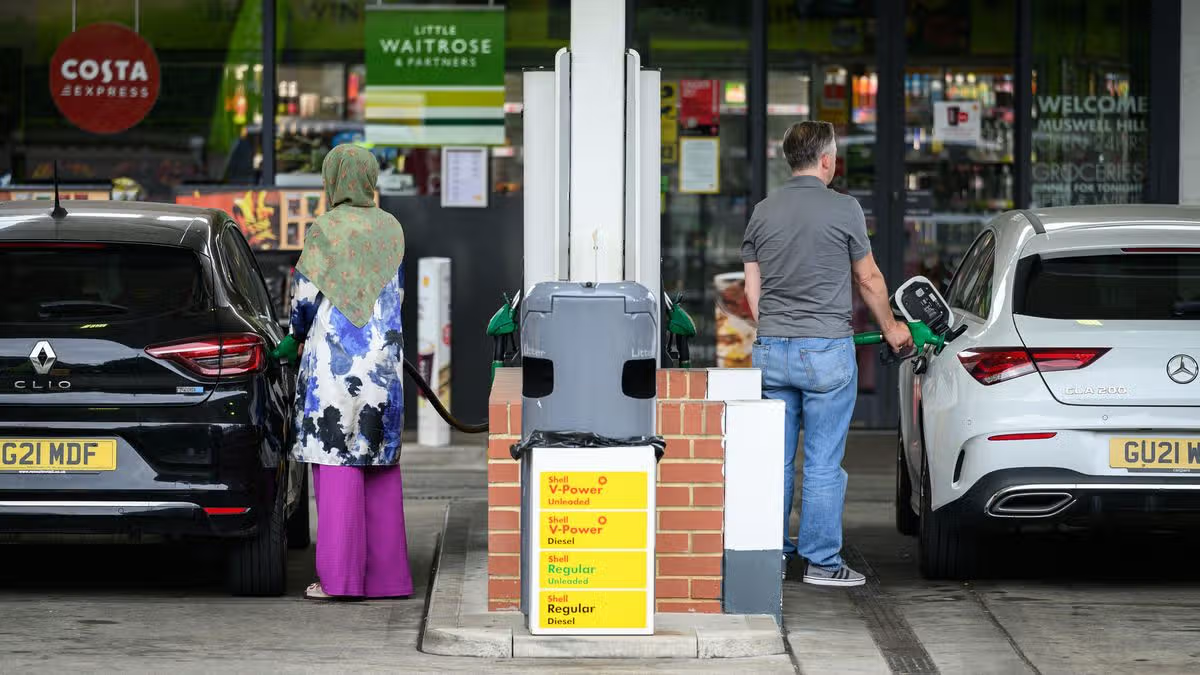
The most expensive place to fill up in Cambridgeshire as fuel prices soar

Published

on

Cambridgeshire Live

Average pump prices are jumping by a penny a day in some cases

Soaring petrol prices have now reached their highest level since the start of the Iran war with the cost of filling up a family car with unleaded fuel edging towards £100.

Advertisement

The average price of a litre of petrol has now gone through the 170p barrier which means it would cost around £94 to fill up a standard 55-litre tank car, and in many areas prices are much higher.

Motorists face a postcode lottery at the pumps with even the cheapest prices charged by supermarkets varying widely across the country. Maidstone in Kent has the highest average price for unleaded petrol this week at 175.2 per litre. That is 20p a litre more than motorists are paying in parts of Northern Ireland, and 15p a litre more than the average price in Watford.

In Cambridge, motorists are currently paying 173.2p per litre for unleaded petrol, making it one of the most expensive places in the country to fill up.

You can find the cheapest petrol and diesel on sale in your neighbourhood by searching our postcode checker.

Advertisement

Owners of diesel cars are paying an average of just over 190p and dozens of forecourts around the country have seen the price of standard diesel go over the £2-a-litre mark in the last week.

The price of diesel has reached 215p per litre at BP motorway services, while a service station on the M61 motorway near Bolton is charging 195.9 per litre of standard unleaded, one of the highest prices in the country.

According to the latest data from Fuel Finder, at least 200 garages are charging 181p or more per litre of standard E10 unleaded, which would push the cost of filling up a standard family car on their forecourts over the £100 mark.

RAC head of policy Simon Williams said: “Since the start of this month, the cost of filling a family car has already risen by almost £5, to £94 for petrol and £106 for diesel. Average pump prices have jumped by yet another penny in just a day. Petrol has now broken through the £1.70-a-litre barrier and stands at 170.54p – its highest since 23 August 2022. Unfortunately for hard-pressed drivers, prices look set to keep on rising”.

Advertisement

Average price for unleaded petrol:

20 most expensive areas

  • Maidstone – 175.2p
  • Brentwood – 174p
  • Dumfries and Galloway – 173.7p
  • Broxbourne – 173.5p
  • East Staffordshire – 173.2p
  • Cambridge – 173.2p
  • South Oxfordshire – 172.9p
  • North East Derbyshire – 172.9p
  • East Hertfordshire – 172.8p
  • Westminster – 172.7p
  • Cheshire East – 172.7p
  • Tandridge – 172.6p
  • Colchester – 172.6p
  • Chichester – 172.5p
  • Ashford – 172.4p
  • Breckland – 172.4p
  • Denbighshire – 172.2p
  • North Hertfordshire – 172.2p
  • Bournemouth, Christchurch and Poole – 172.1p
  • Lambeth – 172.1p

20 areas with the cheapest average prices

  • South Ayrshire – 163.9p
  • Basingstoke and Deane – 163.8p
  • Hartlepool – 163.8p
  • Erewash – 163.7p
  • West Suffolk – 163.5p
  • Ashfield – 163.2p
  • Tamworth – 162.7p
  • York – 162.2p
  • South Tyneside – 162.2p
  • Ipswich – 161.7p
  • Antrim and Newtownabbey – 160.6p
  • Watford – 160.2p
  • Fermanagh and Omagh – 160p
  • Derry City and Strabane – 159.2p
  • Causeway Coast and Glens – 159.2p
  • Armagh City, Banbridge and Craigavon – 157.2p
  • Mid Ulster – 156.2p
  • Mid and East Antrim – 156.1p
  • Ards and North Down – 154.2p
  • Scottish Borders – 149.3p

Source link

Continue Reading

NewsBeat

Proposed curriculum in Northern Ireland would restrict children’s language learning

Published

on

Proposed curriculum in Northern Ireland would restrict children’s language learning

Northern Ireland is in the process of establishing a new curriculum for primary and secondary education. The proposed Northern Ireland Curriculum Framework 2028, TransformED – currently under consultation – sets out a new, knowledge-rich curriculum.

Knowledge-rich means a strong understanding of subject-specific content, rather than, for instance, more general skills. There are many similarities with the 2013 educational reforms in England spearheaded by then education secretary Michael Gove, such as the influence of cognitive science and the belief that secure knowledge underpins higher-order thinking.

Some of the most far-reaching proposed changes in Northern Ireland are in language teaching.

Over the past 20 years, modern languages taught in schools in Northern Ireland have included French, German, Irish and Spanish.

Advertisement

When the curriculum was last reformed in the early 2000s, there was a missed opportunity to include statutory languages in the primary school curriculum. This effectively rendered Northern Ireland as having European Union’s shortest compulsory period of language learning.

Nevertheless, many of Northern Ireland’s post-primary schools teach [two or three languages]. The current curriculum requires the study of at least one language of the European Union but it provides ample flexibility to study more.

The new proposals still do not include modern languages in primary school. They shift to focus attention on “a single core modern language”, only required at secondary school in the 11-14 age range. Teaching practice would be focused on the three pillars of phonics, vocabulary and grammar. This includes concentrating on teaching pupils a high-frequency list of 800 words.

In Northern Ireland schools where teaching is in English, Irish is considered a modern language with the same status as French, German and Spanish. In Northern Ireland’s two Irish-medium post-primary schools, pupils learn through Irish and study English and either French or Spanish.

Advertisement

This differs from other Celtic jurisdictions, where language provision has been expanded, not reduced. Since 2013, Scotland has offered all pupils the chance to learn at least two modern languages. The Republic of Ireland and Wales have bilingual plus one policies, meaning that all pupils learn Irish or Welsh, plus an additional foreign modern language.

In fact, the explicit focus on only one core language from ages 11 to 14 in Northern Ireland is a significant policy shift not seen elsewhere in the British Isles. In England, language study is compulsory from ages seven to 14 and can include ancient languages in the primary phase.

Depth of knowledge

The argument from the Northern Ireland devolved government is that research evidence supports spending learning time concentrating on “developing depth of knowledge”. Yes, depth of knowledge of languages and linguistics is essential, but there is no peer-reviewed international research which says young people should only learn one language at school or that this should be confined to the 11-14 age range.

The proposals prioritise depth of knowledge.
Javier Bermudez Zayas/Shutterstock

Informed by international research, EU policy sets a goal of all pupils acquiring, before the end of upper secondary, proficiency in the language of schooling and knowledge of two additional languages. It also calls for particular attention to be paid to language awareness in multilingual classrooms.

Advertisement

In the UK, this approach has been widely embraced in recent changes to the curriculum in Wales.

The word list of 800 high-frequency words, which differ across each of French, German, Irish and Spanish, is an approach that has also been used in England, where, at GCSE level, pupils have defined word lists. But as applied linguist Gianfranco Conti notes, a high-frequency word list tells us how often a lexical item occurs in a corpus a word is used but it does not tell us how useful that word will be to an 11-year-old.

The word for “pencil case” may not be in the top 800 words, but it’s still important to a young person in a classroom and worth knowing, not least because it helps to explain gender in languages.

The arguments for multilingualism are well rehearsed – and this is a time when Northern Ireland’s schools educate over 21,350 newcomer pupils and are home to speakers of more than 90 languages.. The decisions made now will shape language learning for a generation.

Advertisement

Source link

Continue Reading

NewsBeat

Wales breaking news plus weather and traffic updates (Wednesday, September 16)

Published

on

Wales Online

Plaid Cymru leader and first minister Rhun ap Iorwerth will speak at a march for independence later this month, it has been announced. Thousands of people are expected to descend on Aberystwyth on Saturday, September 26, for a YesCymru Welsh independence rally.

It is the first YesCymru march to be held in mid Wales and follows the 10 marches held since 2019, including in Cardiff, Wrexham, Swansea and Carmarthen, which have seen tens of thousands of people from every corner of Wales attend. Campaign organisers confirmed Mr ap Iorwerth will be among the speakers at the rally following the march.

It comes after what YesCymru described as an “historic week” in the independence movement. Full details here.

Advertisement

Source link

Continue Reading

NewsBeat

Putney Pusher suspect is found dead: Millionaire HSBC banker, 44, an ex-Army captain with links to royalty was under investigation in hunt for jogger who shoved woman into bus

Published

on

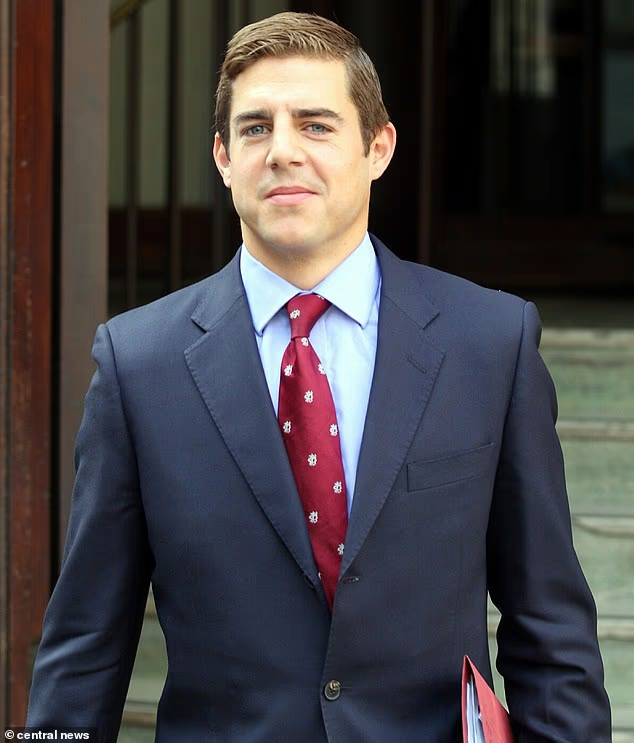
Nicholas Brandram - who was arrested by police on suspicion of being the Putney Pusher - has been found dead. He is pictured 2013

A 44-year-old private banker arrested by police on suspicion of being the Putney Pusher has been found dead. 

Nicholas Brandram was detained on June 15 at his home in Chiswick, West London, for attempted grievous bodily harm.

It was in relation to a notorious incident on May 5, 2017 when a jogger shoved a female pedestrian into the path of a double-decker bus on Putney Bridge – which only avoided her thanks to the lightening quick reactions of the driver. 

Police searched Mr Brandram’s £1.4million house and subsequently rearrested him for possession of Class A and Class B drugs – believed to be cocaine and cannabis. 

Advertisement

A Metropolitan Police spokesman said today: ‘At 7.15pm on Tuesday, September 15 officers and the London Ambulance Service attended an address in Chiswick, Hounslow after a man was found unresponsive inside a property. 

‘Sadly, a 44-year-old man was pronounced dead at the scene. His next-of-kin have been informed. At this time his death is being treated as unexpected, but is not believed to be suspicious. A file will be prepared for the coroner in due course.’

Mr Brandram – a grandson of Princess Katherine of Greece and Denmark, Queen Victoria’s last female descendant – was a director at HSBC’s private bank before being suspended after his arrest. 

His name was not released at the time of his arrest for legal reasons, but his identity was the subject of intense online speculation. He can now be named following his death. 

Advertisement

Mr Brandram was a decorated former British Army captain who served with the Scots Guards in Iraq, Bosnia and Afghanistan. In 2012, the Newcastle University philosophy and psychology graduate was awarded a Queen Elizabeth II Diamond Jubilee Medal in recognition of his military service.

A year later, he appeared at City of London Magistrates’ Court after colliding with a female cyclist on Hyde Park Corner on March 6 of that year. 

Nicholas Brandram – who was arrested by police on suspicion of being the Putney Pusher – has been found dead. He is pictured 2013 

Advertisement

Mr Brandram crashed his 1948 Harley-Davidson into the woman and then drove off without leaving his details or checking if she was hurt, the court heard. 

Representing himself, he told magistrates: ‘I ride a bicycle myself and realise the risks.

‘I’m an upstanding member of society and have recently resigned as a member of the British Army and have served in Iraq and Afghanistan.

‘I have a very loud bike so it’s not impossible I collided with her without me realising it. At the same time with such a big bike I don’t know how I didn’t feel the collision.’

Advertisement

He pleaded guilty to a count each of driving without due care and attention and of failing to stop after a road accident. 

He received five penalty points, a £200 fine and was told to pay £105 compensation. Mr Brandram thanked magistrates and said he would pay the fine immediately. 

The Putney Pusher incident took place during rush hour on May 5, 2017 at about 7.40am.

A woman was walking southwards on Putney Bridge when the jogger approached her from the opposite direction.

Advertisement

There was plenty of room on the footpath for him to run around her safely, but instead he shoved her onto the road – directly in the path of an incoming 430 bus going at 12mph.

Thanks to the rapid reactions of the driver, Oliver Salbris, the bus missed the 33-year-old victim’s head by inches, and she survived largely physically unscathed. 

The jogger continued his run across Putney Bridge without so much as a backward glance.

After the vehicle stopped, passers-by rushed to help the shaken woman – who has never been publicly identified.

Advertisement

The jogger returned in the opposite direction about 15 minutes later, passing the victim again while she was still being assisted on the bridge. He ignored her calls to stop. 

Nine years ago, police released dramatic CCTV footage of the moment this jogger appeared to push a woman into the path of an incoming bus on Putney Bridge

Nine years ago, police released dramatic CCTV footage of the moment this jogger appeared to push a woman into the path of an incoming bus on Putney Bridge 

The jogger was seen appearing to push the victim into the path of the incoming vehicle. The driver swerved and missed the woman's head by inches

The jogger was seen appearing to push the victim into the path of the incoming vehicle. The driver swerved and missed the woman’s head by inches

In April, Mr Salbris told the Mail that he would never forget what he saw.

Advertisement

‘I always think about the case and I still drive over Putney Bridge several times a day,’ he said.

‘Whenever I’m on the bridge, I look very carefully at the pedestrians on the pavement, I just can’t help it. I wouldn’t say it haunts me, but it’s not something I can easily forget.

‘I’m glad my reactions were quick on that day, or it would have ended very differently, both for me and the woman who was pushed. Her head was only a few centimetres from the bus and the wheel, even after I swerved to avoid her.’

At the time of the original appeal, the suspect was described as a white man in his early to mid-30s, with a stocky build and short brown hair. He was wearing a grey T-shirt and dark blue shorts.

Advertisement

Metropolitan Police detectives interviewed 50 men and arrested three suspects, including an American investment banker – who was able to prove ‘irrefutably’ that he was in the US at the time.

No suspect was ever charged, and the investigation was closed in 2018 before new information led to Mr Brandram’s arrest. 

Earlier this month, he was released under investigation to give police time to complete outstanding enquiries. 

The Met said at the time: ‘On Monday, June 15, a 44-year-old man was arrested on suspicion of attempted grievous bodily harm. 

Advertisement

‘The arrest relates to an incident on May 5, 2017, where a woman was pushed into the path of a bus on Putney Bridge in Putney.

‘Once in police custody, he was also arrested on suspicion of possession of Class A and Class B drugs.

‘He has since been released under investigation while enquiries continue.’

Mr Brandram - a grandson of Princess Katherine of Greece and Denmark, Victoria's last female descendant - was a director at HSBC's private bank before being suspended after his arrest

Mr Brandram – a grandson of Princess Katherine of Greece and Denmark, Victoria’s last female descendant – was a director at HSBC’s private bank before being suspended after his arrest

Advertisement

Mr Brandram’s late father, City executive Paul Brandram, was the only child of Princess Katherine of Greece and Denmark and Major Richard Campbell Andrew Brandram, who served with the British Army during the Second World War.

Princess Katherine was Queen Victoria‘s great-granddaughter, a first cousin of Prince Philip, and the daughter of King Constantine I, who ruled Greece between 1913 and 1922.

Queen Sofia of Spain, Paul Brandram’s cousin, told of her ‘great sadness’ after his death in 2020 at the age of 72. 

Like his father, Nicholas has had a successful career in the City, working at leading stockbrokers Killik & Co and Israeli lender Bank Leumi before moving to HSBC, where he managed the assets of wealthy individuals.

Advertisement

He was nominated Private Banker of the Year for 2026. 

Source link

Continue Reading

NewsBeat

Final call: 100 more walkers needed to light up Portsmouth at Rowans Hospice’s Shining Stars Walk

Published

on

Final call: 100 more walkers needed to light up Portsmouth at Rowans Hospice’s Shining Stars Walk

With less than two weeks to go until Rowans Hospice’s Shining Stars Walk returns to Portsmouth, the Hospice is making a final call for 100 more walkers to join a spectacular evening of remembrance, community and fundraising – helping to ensure local families can continue to receive compassionate hospice care when they need it most.

Source link

Continue Reading

NewsBeat

How I lost a stone – and found my mojo again – at 64: SUSANNAH CONSTANTINE reveals the everyday store cupboard staple that kickstarted her weight-loss journey – and the simple diet change that transformed her waistline

Published

on

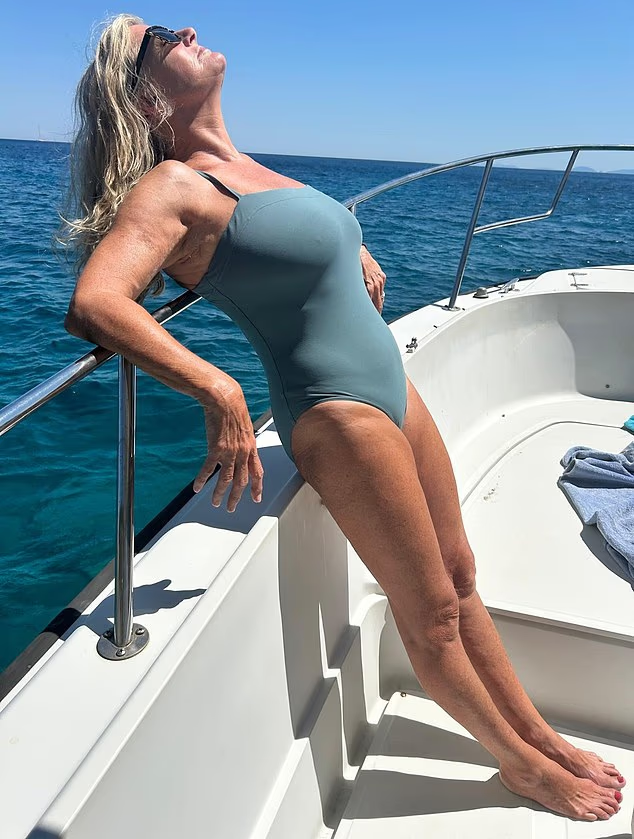
Susannah Constantine posted a photo of herself in a swimming costume on Instagram in July

Source link

Advertisement
Continue Reading

NewsBeat

Meghan’s deeply emotional song choice for Harry: Classic 80s hit used in Duchess’ birthday post was one Duke and Prince William would sing with Diana to ease boarding school ‘anxiety’

Published

on

The Duchess of Sussex , 45, marked her husband's 42nd milestone with a collection of nine previously unseen photographs set to an indie folk cover of Tina Turner's hit 'The Best'

Meghan Markle chose a song closely connected to Princess Diana‘s memory for Prince Harry’s birthday Instagram post yesterday.

The Duchess of Sussex, 45, marked her husband’s 42nd milestone with a collection of nine previously unseen photographs set to an indie folk cover of Tina Turner’s hit ‘The Best’.

It is likely no coincidence that Meghan picked that song, since it carries special significance for both the Duke of Sussex and his brother, the Prince of Wales, who previously revealed their mother would play the track while dropping them off at boarding school.

Speaking on an episode of the Apple Fitness+ series, Time to Walk, in 2021, Prince William shared that Diana ‘used to play all sorts of songs to while away the anxiety of going back to school’.

Advertisement

‘One of the songs I massively remember and has stuck with me all this time, and I still, to this day, still quite enjoy secretly, is Tina Turner’s The Best, because sitting in the back seat, singing away, it felt like a real family moment,’ the future King said at the time.

He recalled how Diana would be ‘singing at the top of her voice’ and the music would distract him and Harry right until they arrived at Ludgrove School in Berkshire and ‘reality kind of sunk in’.

‘You’d be singing and listening to the music right the way out into the gates of school, when they dropped you off,’ the Prince said. ‘And, and that’s when reality kind of sunk in that you really were going back to school because before that, you’re lost in songs.’

‘You’ll want to play it again just to keep that family moment going,’ he continued. ‘And when I listen to it now, it takes me back to those car rides and brings back lots of memories of my mother.’

Advertisement

The Duchess of Sussex , 45, marked her husband’s 42nd milestone with a collection of nine previously unseen photographs set to an indie folk cover of Tina Turner’s hit ‘The Best’ 

The Prince of Wales, who previously revealed their mother would play the track while dropping them off at boarding school.

The Prince of Wales, who previously revealed their mother would play the track while dropping them off at boarding school.

On Tuesday, the Duchess shared intimate insights into the Sussexes’ family life with the release of nine new pictures to celebrate Harry’s 42nd birthday. 

Advertisement

Meghan, who boasts 4.8million followers on Instagram, uploaded the sea of images of the prince with her and their children with the caption: ‘He’s simply the best. Happy birthday, my love,’ along with a heart emoji.

The montage is accompanied by husband-wife musical duo The Hound + The Fox’s cover of Simply the Best.

In one sweet snap, Harry is captured on an outdoor adventure with Meghan, 45, alongside Prince Archie, seven, and Princess Lilibet, five, as well as their Labrador, Pula.

Believed to have possibly been taken at Earl Spencer’s home, Althorp, Harry is seen driving a quad bike down a narrow track with Lilibet and Archie sat on either side of an M&S food bag and Pula dutifully following behind. 

Advertisement

In another snap, Harry, who is wearing a Santa Barbara Fire Department cap, shared a kiss with Lilibet, who sported a bright headband and red and white patterned top, while enjoying a golf cart ride. 

In a sweet tribute to her mother, the 3D embellishments on Lilibet’s fashionable headband appear to be miniature Mahjong tiles – rectangular pieces used to play a traditional Chinese board game adored by the duchess.

Showcasing their close father-daughter bond, the montage also featured an image of Harry holding hands with Lilibet during a ski trip – with the young royal keeping warm in pink gloves and purple trousers, while her father donned black salopettes and a grey jacket.

Harry and Meghan are firm fans of the winter sport and often enjoy trips to the slopes together – including visits to Whistler Blackcomb in Canada and Montana’s Yellowstone Club.

Advertisement
In one sweet snap, Harry drives a quad bike with Archie, seven, and Lilibet, five, sat beside an M&S food bag, while their beloved Labrador Pula trailing behind them

In one sweet snap, Harry drives a quad bike with Archie, seven, and Lilibet, five, sat beside an M&S food bag, while their beloved Labrador Pula trailing behind them 

The montage also featured an image of Harry holding hands with Lilibet during a ski trip. The Sussexes are known to be firm fans of the winter sport

The montage also featured an image of Harry holding hands with Lilibet during a ski trip. The Sussexes are known to be firm fans of the winter sport

One black-and-white photograph shared by Meghan showed the prince carrying Lilibet’s pink tasselled bicycle as they walked hand-in-hand.

In another, the young princess took a photograph of Harry, who playfully posed with a basket on his head, with a Polaroid camera as the family sat down for a dinner which appeared to include olives and fruit.

Advertisement

Proving she is quite the camerawoman, Lilibet drew comparisons to her aunt, the Princess of Wales, who is a keen amateur photographer and in 2015 became the first member of the Royal Family to take the official first images of a royal newborn.

Dressed in a pair of spotty pyjamas, Lilibet and her father were seen in another image enjoying a peaceful lake view from a balcony.

Meanwhile, Harry and his son Archie enjoyed some father-son bonding with a game of archery in another picture. The father-son duo wore matching outfits, including shorts and white T-shirts. 

Other images shared by the Duchess included an image of her and Harry sharing a warm embrace in a vineyard, while Archie is seen playing in the background.

Advertisement

Meghan chose a striking black-and-white photograph of the Duke, wearing sunglasses and a hat while looking out ahead deep in thought, as the first image of the carousel post. 

Some royal fans have suggested the snap may have been taken by the Sussexes’ go-to photographer and close friend, Misan Harriman, who has documented key events in their lives and is renowned for his black-and-white images.

Soon after Meghan marked Harry’s birthday online, it emerged that the Duchess’s mobile number was reportedly being shared by parents at the school that Archie and Lilibet had just started. 

Harry and Archie enjoyed some father-son bonding with a game of archery in another image. While the young prince wore sandals, his father stayed barefoot

Harry and Archie enjoyed some father-son bonding with a game of archery in another image. While the young prince wore sandals, his father stayed barefoot

Advertisement
The post also included a romantic shot of the couple sharing a warm embrace in a vineyard, while their two children are seen playing in the background

The post also included a romantic shot of the couple sharing a warm embrace in a vineyard, while their two children are seen playing in the background

In a further security blow to the couple, screenshots from a WhatsApp group titled ‘Year 3’ that Meghan joined were said to be circulating online.

An alleged screenshot of the chat showed the duchess introducing herself with a message reading: ‘Hi moms! Thanks for the warm welcome [heart emoji]. So happy to be a part of this community xx’

The Sussexes refused to comment, but sources close to them said it was disappointing that fellow parents would seek to share such information.

Advertisement

Meghan is understood to have joined the group the night before Prince Archie and Princess Lilibet started at the school.

It emerged after Harry and Meghan decided to ‘reluctantly’ remove their children from the school they had just started over security fears regarding traffic.

The family’s bodyguards warned the couple that the busy commute was placing their unit ‘under strain’.

Rush hour meant the drive – supposed to take around 35 minutes – lasted as long as an hour, while on one journey a convoy carrying the prince and princess is said to have become separated, leaving the children ‘sitting ducks’ in stationary traffic.

Advertisement

One mother with two children at the school said Harry and Meghan’s decision to send their children there had been a coup and had excited many parents. But she added: ‘Parents at the school are completely baffled. You don’t need to be an expert to know how congested that area is. It’s one of the worst places to drive in the UK.’

Another mother said of the slow school run: ‘This was obviously going to happen.’

News of the WhatsApp leak was initially reported by The Sun.

Friends of the couple stressed that the decision to withdraw the children was not an issue with the school itself.

Advertisement

Archie and Lilibet will now join another school where they have already attended taster sessions. The Sussexes’ security, meanwhile, are said to be much happier that the new school will be a shorter commute from the family home.

But the fiasco has sparked questions over why the family’s drivers only tested the route during the summer holidays, amid claims that their return to the UK was ‘rushed’.

Their private protection team were seemingly unable to properly assess the hour-long journey to the unnamed school after the Sussexes announced the move in late August.

Former Met Police Chief Superintendent Dal Babu said: ‘It does beggar belief why they haven’t thought this through. I don’t think he [Harry] has helped himself or the situation by not arranging things in good time.’

Advertisement

Former head of royal protection Dai Davies also told LBC radio: ‘If you keep a low profile, most people outside the school wouldn’t know where you are, what they’re doing, and all the rest of it.

‘Do they really need to go in convoy with two little children on the school run? If they only just kept a little quieter, kept a lower profile, they’d be a lot safer in my view.’

The dramatic schools development came as it emerged that Harry’s demand for taxpayer-funded police protection is being ‘reviewed’ now he is back in Britain. 

The duke and duchess are said to have been informed that ‘a decision’ was made at a meeting last week to examine the threat to both of them.

Advertisement

The prince has been at loggerheads with the Home Office for years over its decision to remove his automatic right to security. Harry has long argued that he was born a prince and needs police protection when in the UK.

But he lost a series of legal battles against the Home Office which deemed he had forfeited the right to be able to call at will on taxpayer-funded protection after he quit as a frontline royal in 2020 and moved to a new life in California.

Only last year, after yet another defeat at the Royal Courts of Justice – against his father His Majesty’s government – the prince declared in a petulant BBC interview that he could not imagine a time when he could safely bring his family to his country of birth.

But now that he has had a sudden change of heart, bringing Meghan, Archie and Lilibet to live in the UK, his access to police protection is being reviewed, it was reported on Monday evening.

Advertisement

The decision is said to involve reviewing the risks to Prince Harry and also to his wife.

Source link

Continue Reading

NewsBeat

Stockton campaign to become first UK Town of Culture

Published

on

Stockton campaign to become first UK Town of Culture

Stockton was shortlisted for the UK Town of Culture 2028 competition in July, making the final 15 from almost 400 entries nationwide.

The bid is built around Connection, Creativity and Confidence, and highlights Stockton’s historical influence, including the first passenger train and John Walker’s invention of the friction match.

S&DR200 festival in 2025. (Image: Stockton Borough Council)

The newly formed Stockton Community Collective, made up of more than 40 cultural and business organisations plus the council, is urging locals to back the bid.

Stockton will host events and launch an online survey so locals can shape and support the bid before it is submitted in November.

Advertisement

The national competition is part of the Government’s Plan for Change and aims to boost growth, civic pride and access to arts and culture.

The winning town will receive £3 million to deliver a major cultural programme in 2028, while each runner-up will get £250,000.

(Image: Stockton Borough Council)

Visitors to Stockton town centre may already have spotted the ‘Anything Anywhere’ band entertaining shoppers and asking about the town’s future.

September and October events will include an outdoor dance social by Urban Kaos, the return of The Gathering Sounds festival and storytelling sessions at the Sun Inn led by Mike McGrother.

Advertisement

Those unable to attend can complete an online survey about what makes Stockton a great place to live and what the title could unlock.

Stockton Community Carnival Parade. (Image: Stuart Boulton)

Councillor Lisa Evans, leader of Stockton-on-Tees Borough Council, said: “Being shortlisted for this prestigious accolade from such a high number of entries was wonderful news for Stockton town – but now we want to win it, and we deserve to win it.

“This is OUR town, OUR time.

“There is so much for us to be proud of in Stockton, from the rich history that has shaped our story and culture to our unique and hugely popular festivals and celebrations, like the Stockton International Riverside Festival which just enjoyed its first year based in the magnificent new Stockton Waterfront urban park.

Advertisement

“But it’s not just about the town, it’s about the people – the people who live there, who work there, who visit and enjoy everything Stockton has to offer.”

Stockton International Riverside Festival and Community Carnival. (Image: Stuart Boulton)

Cllr Evans added that organisers wanted views from all ages and backgrounds – especially town-centre residents and workers – as children and young people will shape the bid.

Jimmy Beck, owner of Stockton’s KU Bar and founder of KU Promotions, said: “Stockton town centre boasts a long tradition for putting on exceptional live music, with some of the world’s biggest acts famously playing here such as The Beatles and The Rolling Stones.

“To be crowned Town of Culture 2028 would give us the chance to crank the volume up further to remind the world what a fantastic culture of live music this town offers and help champion the artists of tomorrow.”

Advertisement


Claire Meek, Family Action’s deputy director of services and innovation (North), said: “It is vital that the bid reflects the perspectives of the communities it seeks to benefit, and we are committed to helping ensure those local voices are heard and represented throughout.”

The finalists and overall winner of the UK Town of Culture competition will be revealed early next year.


For more information on the Stockton Borough Council Town of Culture survey, visit: Help shape Stockton’s Town of Culture bid – Stockton-on-Tees Borough Council – Citizen Space

Advertisement

Source link

Continue Reading

NewsBeat

M62 traffic LIVE as all traffic STOPPED eastbound near Eccles interchange

Published

on

Manchester Evening News

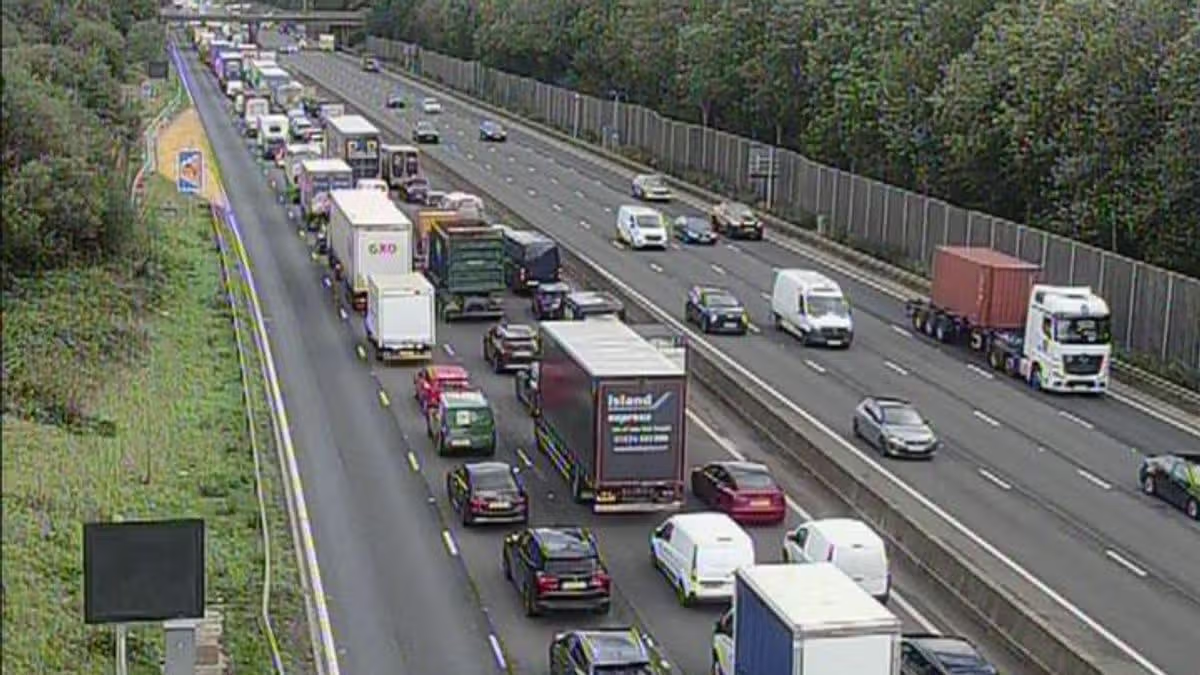
Long queues are building on the M62 motorway amid a vehicle fire.

All traffic is currently stopped on a stretch of the eastbound side of the motorway.

Traffic has been stopped just before junction 12 for the Eccles Interchange.

Advertisement

Click here to get the biggest stories straight to your inbox in our Daily Newsletter

Motorway cameras show long queues building up to the scene.

Follow our live blog below for the latest updates.

Source link

Advertisement
Continue Reading

NewsBeat

Britain’s most artificial landscape may not survive climate change

Published

on

Britain’s most artificial landscape may not survive climate change

Stretching across much of eastern England, the Fens produce a third of the country’s vegetables and support tens of thousands of jobs. Yet around 33% of the region lies below average sea level, while 87% is below the highest spring tides

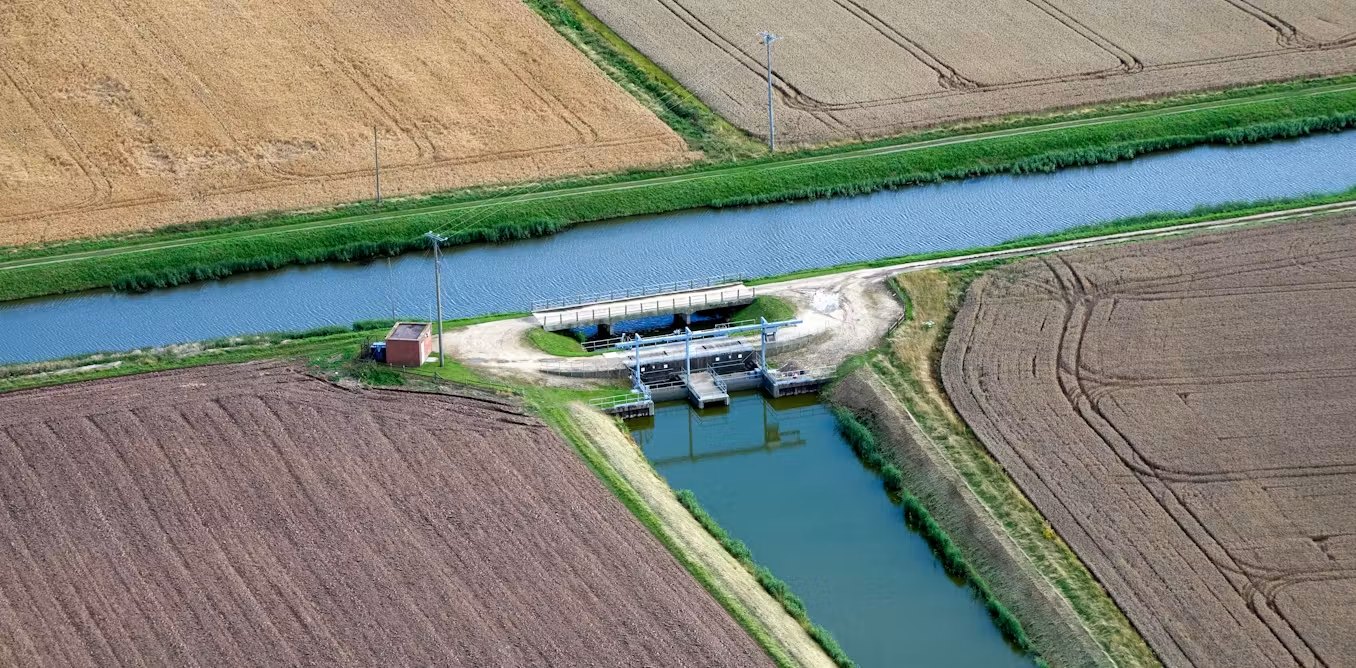
The landscape only exists due to centuries of engineering – pumps, embankments and drainage channels – that keeps water moving almost constantly. Now climate change is introducing new challenges that this system was never designed to face.

The Fens face several climate threats that reinforce one another. Rising sea levels, heavier downpours, hotter summers, longer droughts and biodiversity loss are all expected to intensify over the coming decades. These are all serious challenges, and in the Fens they will play out within one tightly interconnected system.

The Fens cover parts of Cambridgeshire, Lincolnshire and Norfolk:

Advertisement

The Fens (dark green) and their wider catchment area (light green). The map on the right shows the area (shaded blue) below the mean high spring tides that would be at risk without human engineering.
Environment Agency / Arup: ‘Fens 2100+: Summary baseline report’, CC BY-SA

In June, we published an academic analysis of these climate risks in the Fens. Our research examined flood risk from rivers, surface water and the sea, alongside drought, water scarcity, heat, biodiversity loss and agricultural productivity. It found that these hazards increasingly overlap as the climate warms.

With around 2°C of warming, the region will experience more frequent flooding, more extreme heat, declining summer river flows and accelerated biodiversity loss.

By 2100, under a 4°C warming scenario, annual flood damages to homes and businesses in the region could rise from £16 million today to £250 million, while ecosystems could collapse and parts of the Fens would be rendered uninhabitable without major investment in new infrastructure.

Advertisement

Importantly, sea-level rise is different from other risks as it will continue for centuries even if global temperatures are stabilised. Even a high emissions scenario, where the sea would rise by a metre by 2100, would still be followed by further rise. This is an existential risk for the low-lying Fens, meaning that more radical adaptation approaches will be needed in the long term. Decisions about how to adapt must begin well before then, as major changes to infrastructure and land management take decades to plan and implement.

Connected climate hazards

National climate risk assessments are essential, but they can mask the severity and complexity facing regions with distinct characteristics. The Fens is a case in point given its low-lying geography means that it is exposed to multiple climate risks that can compound each other.

River flows could fall by more than 25% under 4°C warming, at the same time as floods from surface water, rivers and seas would increase. Agriculture could faces crop losses from both drought and water scarcity and from water logging and flooding, alongside a decline in insect pollinators that could reduce productivity. These issues cannot be managed by only tackling single hazards in turn.

Advertisement
Looking along a small drainage canal

Flat land, waterways and big skies: the Fens.
Julian Eales/Alamy

We therefore developed a way to assess all the climate-related risks to a single place, rather than looking at each hazard in isolation. This provides an integrated picture of how multiple risks develop and interact over time, and gives interested people and groups locally relevant information to help them plan for climate change.

Aligned with the engineering evidence

Map of Fenland infrastructure.

A schematic map of the many rivers, canals and other waterways that keep the Fens drained.
Environment Agency / Arup: ‘Fens 2100+: Summary baseline report’, CC BY-SA

The Environment Agency’s Fens 2100+ programme, published in April 2026, reaches similar conclusions on the region’s infrastructure. For the first time, it brings together evidence on the entire flood risk management system, covering around 17,000 assets including 318 pumping stations, embankments and tidal defences.

Together, these assets are estimated to provide £58.8 billion in benefits through avoided flood damage over the next 100 years. However, nearly a third of these defences need upgrading in the next 15 years.

Both our analysis and the Fens 2100+ evidence conclude that dealing with these challenges separately or only in the short term cannot work.

The Fens needs to be considered as one connected landscape with decisions about flood protection, water, agriculture and the environment made together. Coastal lowlands around the world, from the Netherlands to the Mekong delta in Vietnam, are grappling with similar interconnected challenges of sea level rise, flooding and competing demands for land and water. The approach we have developed could be applied to help people in these regions assess their options for adaptation.

Advertisement

Source link

Continue Reading

Trending

Copyright © 2025