According to the Mental Health Foundation, around three-quarters of UK suicides are men, with around three times as many men dying by suicide than women.
But despite this, men are less likely than women to seek help – only 36 per cent of referrals to NHS talking therapies are for men.
This is something Jeff Moritz, 47, CEO of Little Hulton-based group Heads up Gentlemen, is hoping to change.
![]() Award winner Bill (Image: Dan Dougherty)
Award winner Bill (Image: Dan Dougherty)
“My initial idea was just to do a podcast”, said Jeff, “but I saw Pete posting wellbeing stuff on Facebook, so I thought we could do something more.”
Pete is the co-founder of Heads up Gentlemen with Jeff. The group meets every Wednesday at the Peel Park Pavilion, Little Hulton, with other meetups taking place on Fridays and Mondays at Pendlebury Social Club, Swinton, and Hug in a Mug, Walkden.
Any local men can join in and turn up if they want, coming for the games, the chat, and the sense of togetherness.
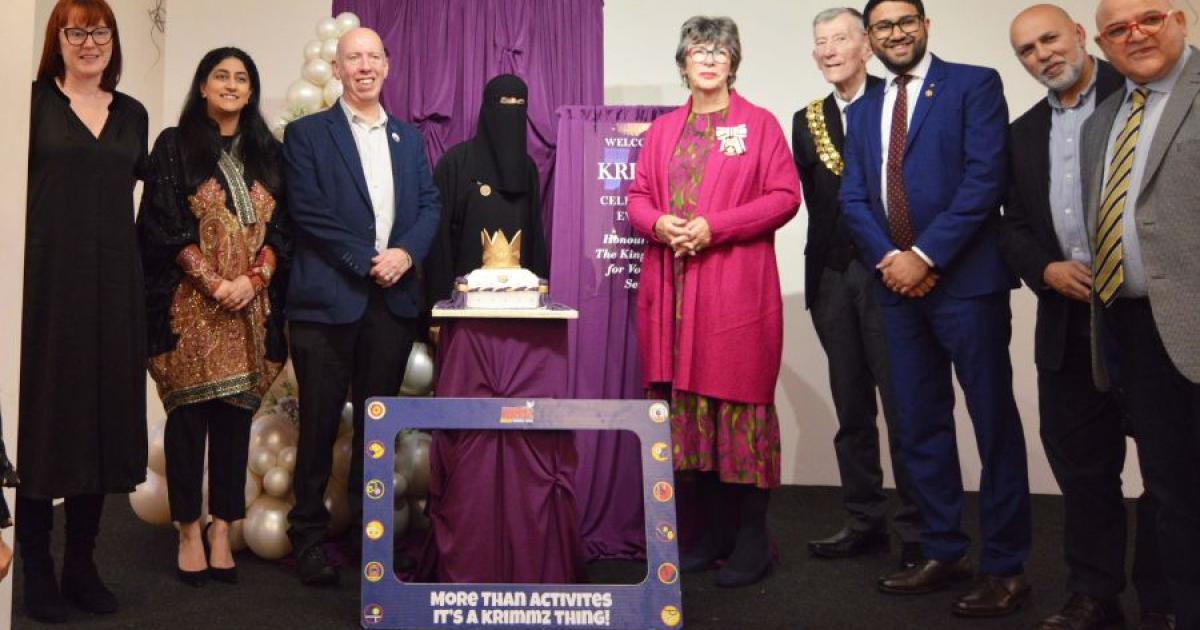
The group celebrated its one-year anniversary on Friday with an awards ceremony dedicated to everyone who’s helped them reach this significant milestone.
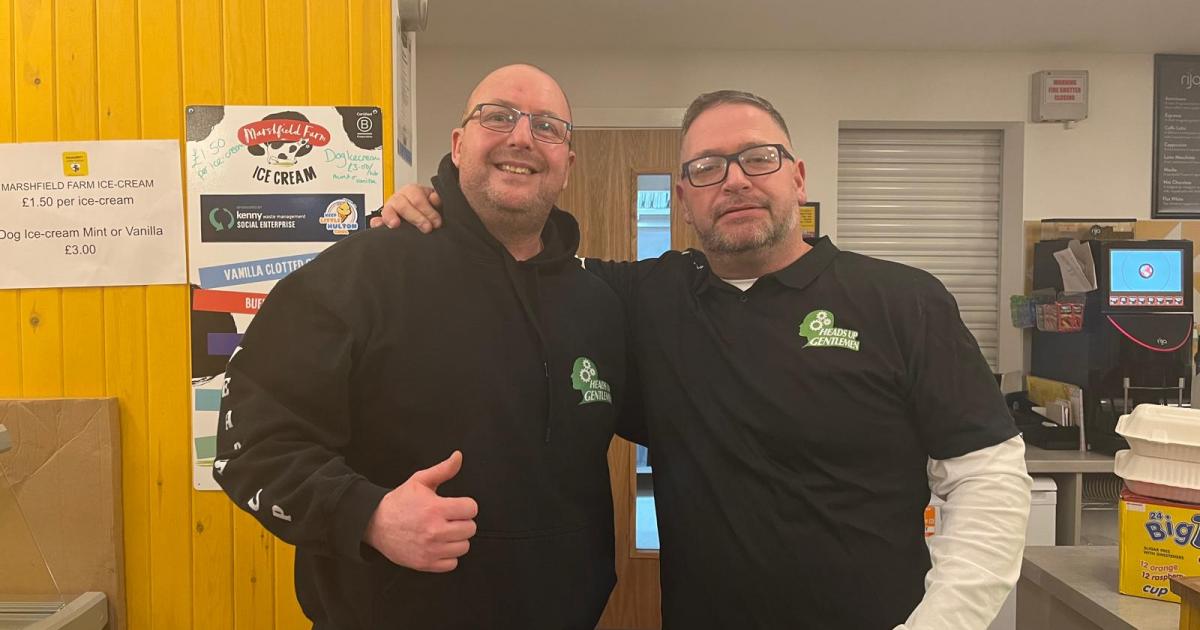
![]() Co-founder Pete Day (left) with Lee, who handles the group’s media (Image: Dan Dougherty)
Co-founder Pete Day (left) with Lee, who handles the group’s media (Image: Dan Dougherty)
“I’m very proud of my lived experience,” said Jeff, “I’ve had mental health issues, I’ve had addiction issues, I’m used to talking because I have done it from a very young age.”
The guys host game nights, bring in guest speakers and lecturers, go out into the community, do charity work. Most important, however, is the friendships forged between men who otherwise might find it difficult to meet people.
It’s this authenticity that Jeff believes has led to the relative success of his organisation compared to other similar groups.
“It’s a real brotherhood,” Jeff told me, “and that’s what keeps me going – it’s the feedback from the guys.”
Even the basic opportunity to socialise with a like-minded, empathetic group of people is enough to significantly boost some men’s mood.
“One of our members – Bill – got married last year, and he invited all of us to his stag do”, Jeff told me.
“Some of our guys don’t have the best social skills, so this is the kind of opportunity they may not have had before.”
![]() Mike wins an award (Image: Dan Dougherty)
Mike wins an award (Image: Dan Dougherty)
Attendee Douglas Short, 81, echoed much of what Jeff said.
“The support is invaluable,” said Douglas, “it helps you in ways you can’t see.
“When you ask me how important this is in the community, I’d have to say ‘extremely important.’”
Douglas, who started as an attendee, has moved towards working with the group to organise events. Several current Heads up Gentlemen collaborators were former attendees, a testament to how willing people are to help the organisation they feel has helped them.
“It is extremely important to put something back into the group that gave me so much,” said Douglas.
Other members gave stories of being near suicide, or mired in the depths of drug or drink addictions, before finding the group.
![]() Douglas Short said that Heads up Gentlemen had made a ‘fantastic change to his life’ (Image: Dan Dougherty)
Douglas Short said that Heads up Gentlemen had made a ‘fantastic change to his life’ (Image: Dan Dougherty)
“I put the success down to our authenticity,” said Pete Day, co-founder of Heads up Gentlemen.
“We try to keep it fun – if we were too serious then it could trigger some people.
“And I’ve got a lot of experience myself with addiction and things like that.
“I relate with the guys a lot.”
‘Guys talking to guys’ was a phrase that came up repeatedly, based on the belief that men find it easier to open up in an all-male environment than in a mixed one – another thing that Heads up Gentlemen does differently.
Of course, running an ever-expanding group isn’t an easy – or cheap – enterprise, and Jeff is constantly battling to keep his head above water.
“This is a seven-day-a-week job.
“I have savings from when I ran a company in America, but I’m going through them quite quickly.
![]() Award winner Trevor (Image: Dan Dougherty)
Award winner Trevor (Image: Dan Dougherty)
“People want proof of concept, which I have now, but I didn’t know that at first.”
He wants to get the point where NHS doctors are able to signpost directly to his group, but this is a process – one that’s going to require hard work and patience.
“We’re going to work on getting qualified as counsellors,” Jeff said, “and do that training.
“We put flyers in the GP surgery, but doctors can’t refer people to us directly.”