CAPE CANAVERAL, Fla. (AP) — The Artemis II astronauts who ignited a lunar renaissance gave high marks Thursday to their moonship, especially the heat shield, for its performance during reentry.
In their first news conference since returning to Earth, the three Americans and one Canadian said their lunar flyby puts NASA in a much better position for a moon landing by a crew in two years and an eventual moon base. They spoke from NASA’s Johnson Space Center in Houston, their home base.
They became the most distant travelers ever — breaking Apollo 13’s record — as they whipped around the lunar far side, illuminated enough to reveal features never viewed before by the human eye. The sight of a total lunar eclipse added to the wonderment.
Advertisement
Their Orion capsule, which they named Integrity, parachuted into the Pacific last Friday to close out the nearly 10-day voyage. Artemis II’s Houston homecoming the next day coincided with the 56th anniversary of the launch of Apollo 13.
Wiseman said he and Glover “maybe saw two moments of a touch of char loss” to the heat shield as Integrity plunged through the fastest, hottest part of reentry. Once aboard the recovery ship, they peered at the bottom of the capsule as best they could, leaning over to view any signs of damage. They spotted a little loss of charred material on the shoulder, where the heat shield meets the capsule.
“For four humans just looking at the heat shield, it looked wonderful to us. It looked great, and that ride in was really amazing,” Wiseman said.
He cautioned that detailed analyses still need to be conducted. “We are going to fine-tooth comb every single, not even every molecule, probably every atom on this heat shield,” he said.
Advertisement
The heat shield on the first Artemis test flight in 2022 — with no one aboard — came back so pockmarked and gouged that it pushed Artemis II back by months if not years. Instead of redoing it, NASA opted to change the capsule’s entry path to minimize heating. Future capsules will sport a new design.
As the parachutes released right before splashdown, Glover said he felt like he was in freefall — like diving backward off a skyscraper. “That’s what it felt like for five seconds,” he said, adding when the ride smoothed out: “It was glorious.”
Since their return, the four astronauts have endured round after round of medical testing to check their balance, vision, muscle strength and coordination, and overall health. They even put on spacewalking suits for exercises under conditions simulating the moon’s one-sixth gravity of Earth to see how much endurance and dexterity future moonwalkers might have upon lunar touchdown.
Advertisement
Sign up for Morning Wire:
Our flagship newsletter breaks down the biggest headlines of the day.
Advertisement
NASA already is working on Artemis III, the next step in its grand moon base-building plans. The platform from which the rocket launches headed back Thursday to Kennedy Space Center’s Vehicle Assembly Building, where it will be prepped for next year’s Artemis launch.
Still awaiting an assigned crew, Artemis III will remain in orbit around Earth as astronauts practice docking their Orion capsule with one or two lunar landers in development by Elon Musk’s SpaceX and Jeff Bezos’ Blue Origin.
Artemis IV will follow in 2028 under NASA’s latest schedule, with two astronauts landing near the moon’s south pole.
Advertisement
NASA is aiming for a sustainable moon presence this time around. During the Apollo moonshots, astronauts kept their visits short. Twelve astronauts explored the lunar surface, beginning with Apollo 11’s Neil Armstrong and Buzz Aldrin in 1969 and ending with Apollo 17’s Gene Cernan and Harrison Schmitt in 1972.
Koch said that since returning, she and her crewmates are “feeling even more excited and just ready to take that on as an agency.”
“We made it happen,” she added.
Everyone will need to accept extra risk to achieve all this and trust that any future problems can be figured out in real time, Hansen noted. “We’re not going to be able to pound everything flat before we go. We’re going to have to trust each other,” he said.
Advertisement
While everything went smoothly for them, “it was also very clear to us that it can get pretty bumpy,” he said. Future crews will have to “understand it can get real bumpy real fast.”
___
The Associated Press Health and Science Department receives support from the Howard Hughes Medical Institute’s Department of Science Education and the Robert Wood Johnson Foundation. The AP is solely responsible for all content.
An election gimmick calling for price controls is asking for trouble, says Record View.
Basket case plan doesn’t check out
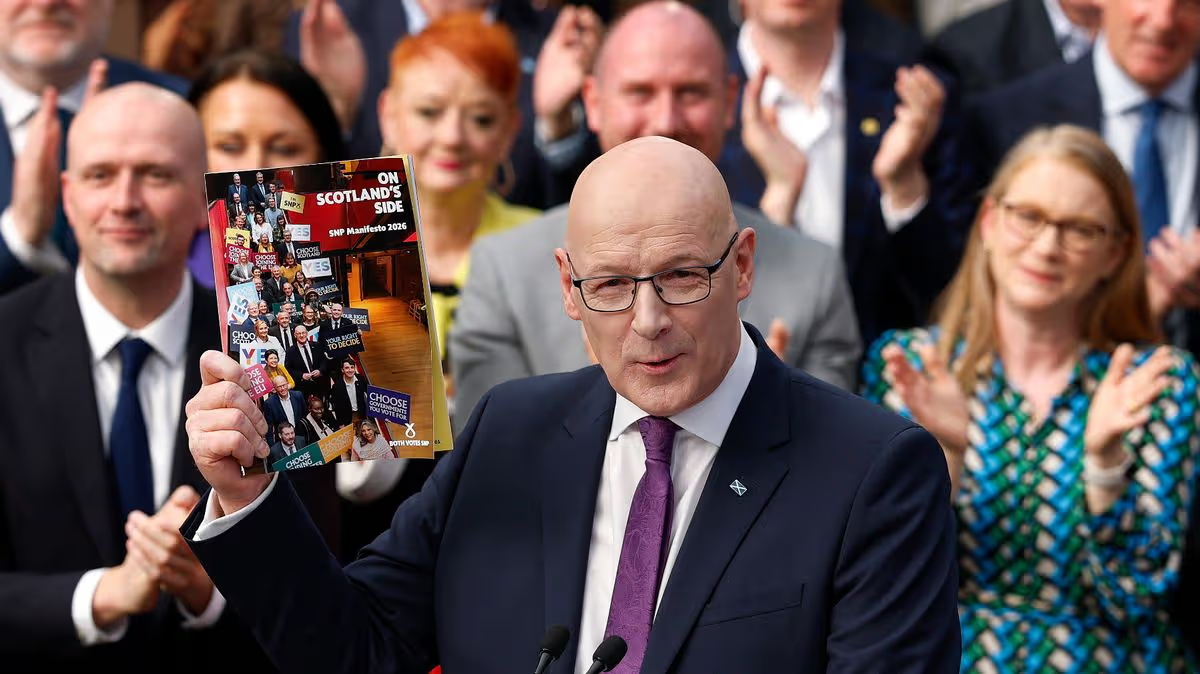
High school pupils currently studying for their Nat 5 exam in economics could have warned John Swinney of the perils of the state dictating price controls. The First Minister is right to want to do more to ease the cost-of-living crisis which continues to hammer household budgets.
Advertisement
But state intervention on how much shops can charge for everyday items like bread or milk is asking for trouble. As a student of political history, the SNP leader should be aware of the mess Ted Heath’s Tory government found itself in during the early 70s when it introduced price controls across the UK in a desperate bid to reduce inflation.
The sums didn’t add up then and they don’t look any better in 2026. The independent Institute of Fiscal Studies yesterday warned that price controls could have the unintended consequence of creating shortages on supermarket shelves.
If prices for basic items such as bread are set above the market average, the policy is toothless. But if prices are set below, the sober-minded IFS warns this “radical and risky” position could cause havoc.
Given the polling lead commanded by the SNP with three weeks until the Holyrood election, it’s incredible that senior party figures agreed on such a bonkers policy. They might have no intention of seeing it through, and instead view it as a pleasing distraction from their decidedly patchy domestic record in office since 2007.
Advertisement
But it’s now caused many Scots to question whether the party can be trusted to run the economy.
In his latest foray to Scotland, Nigel Farage has chosen to treat us to his views on independence. The Reform UK leader said IndyRef2 would be “quite reasonable” if the issue becomes “relevant” in future.
He said he remains opposed to independence but said he cannot predict how people will feel about the issue in 20 years’ time. The reality is Farage cares not a jot about Scotland and his views about independence are irrelevant.
He is no fan of the Scottish Parliament and would scrap the Barnett Formula, which provides Holyrood with a funding boost, in a heartbeat. Independence is a live issue north of the border but it is the people of Scotland whose views count.
Advertisement
Farage is nothing more than an occasional day tripper whose bar room outbursts should be ignored. He is a menace and voters across the UK should give him the cold shoulder.
Get more Daily Record exclusives by signing up for free to Google’s preferred sources. Click HERE.
The star appears in upcoming movie As Deep As the Grave from writer-director Coerte Voorhees, alongside Harry Potter star Tom Felton, Abigail Lawrie, Abigail Breslin, Wes Studi and Killers of the Flower Moon’s Tatanka Means.
The film follows real-life archaeologist couple Ann (Lawrie) and Earl Morris (Felton) and their discovery of the unearthed Ancestral Puebloans remains in the 1920s.
Kilmer, who died in April 2025 aged 65 from pneunonia after a long battle with throat cancer, had been cast as Father Fintan, a Catholic priest and Native American spiritualist, before his death.
However, he was ultimately too ill to ever shoot any of his scenes and so Voorhees, with the support of Kilmer’s daughter Mercedes, opted to digitally create his performance in full for the film.
Advertisement
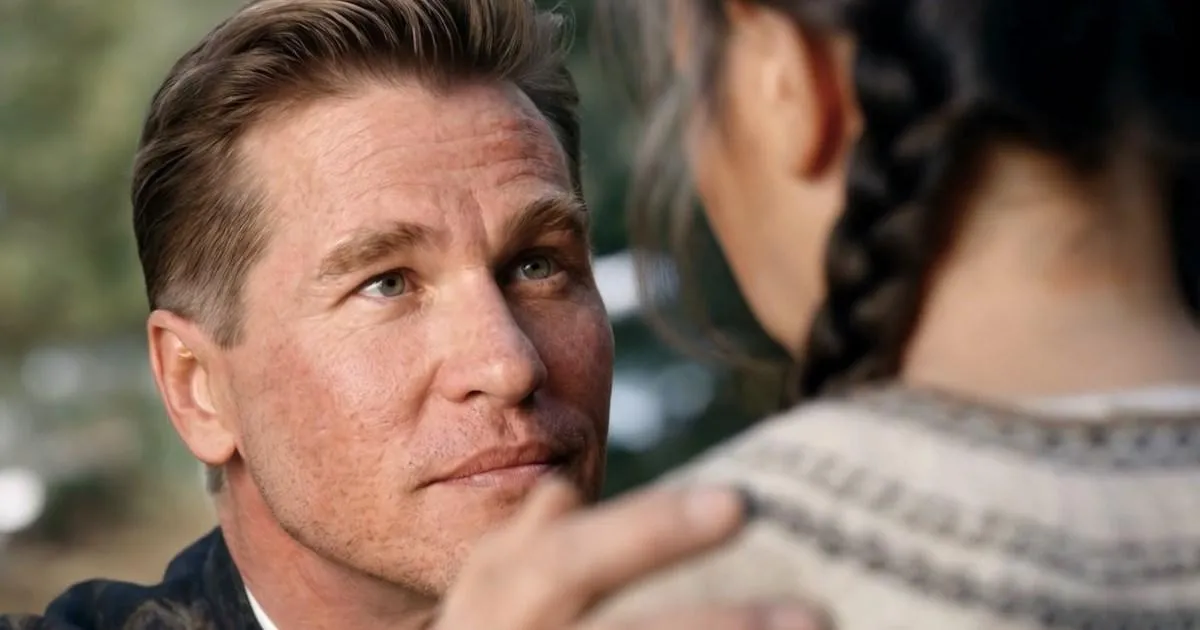
The Batman Forever actor is glimpsed throughout the atmospheric trailer, launched at CinemaCon in Las Vegas, as both a young, middle-aged and older version of his character, before his likeness declares at the end, as the camera hovers on his AI-generated face: ‘Don’t fear the dead, and don’t fear me.’
Val Kilmer’s presence and performance is entirely digitally recreated in upcoming film As Deep As the Grave (Picture: First Line Films)
While the actor signed up to play the part of a priesr, he was too sick to film scenes before his death in April 2025 (Picture: EuropaNewswire/Gado/Getty)
Twilight actor Jackson Rathbone was one of the most vocal critics of As Deep As the Grave’s choice, tagging US actors’ union Sag-Aftra and tweeting: ‘About that strike we had… You owe us an explanation. This is cool? Wtf.’
He then added of the ‘gross’ trailer, addressing Kilmer’s daughter directly: ‘Mercedes… I’m sorry for your loss, but this move begs the question… are you sorry for your loss? Or are you capitalising on your father’s death for your own financial gain? This is truly the MOST disgusting thing I’ve ever seen.’
‘Just because you can doesn’t mean you should,’ commented Michael Mrucz underneath the trailer, while another fan asked: ‘How can they label the movie as starring Val Kilmer when that is not actually Val Kilmer? Shouldn’t there be an asterisk or label like “AI Val Kilmer” to differentiate?’
Hey @sagaftra – about that strike we had..You owe us an explanation. This is cool? Wtf And dude .. Mercedes .. I’m sorry for your loss, but this move begs the question.. are you sorry for your loss? Or are you capitalizing on your father’s death for your own financial… https://t.co/f4V4YBQRrZ
The actor’s character, Father Fintan, is seen at three different ages – but fans have criticised the move, with actor Jackson Rathbone calling it ‘gross’ (Picture: First Line Films/AFP via Getty)
‘Theatres shouldn’t screen this,’ insisted another commenter as others argued that it felt ‘immoral and obscene’, even if Kilmer and his family gave consent.
‘I mean, one has to wonder: did NOBODY involved think “hey, maybe we should draw the line when we reach NECROMANCY”?’ asked a horrified Redditor as other people agreed they’d refuse to watch a film with an AI actor.
‘I hope this fails so hard that other studios are scared to try it again. Biggest, most judgmental “YIKES”,’ added someone else.
‘When Val came onboard the project five years ago, he immediately identified with the historical southwestern spiritual character of Father Fintan, and understood the importance of elevating awareness of Ann Morris’ incredible story as the first female archaeologist in North America,’ filmmaker Voorhees said in a previous statement to Variety.
Advertisement
His last screen role before this was in 2022’s Top Gun: Maverick (Picture: Paramount Pictures
He reprised the role of Iceman opposite Tom Cruise, with AI enlisted to help with his speaking voice, which had been compromised by his cancer (Picture: Paramount/Kobal/Rex/Shutterstock)
‘It was very unfortunate that his health at the time prevented him from playing this role which spoke to him spiritually and culturally.’
Kilmer’s daughter added: ‘He always looked at emerging technologies with optimism as a tool to expand the possibilities of storytelling. This spirit is something that we are all honoring within this specific film, of which he was an integral part.’
Producer John Vorhees repeated those reassurances to Entertainment Tonight at Wednesday’s CinemaCon presentation: ‘This is a character Val wanted to play, he was really clear about that before he passed and he spoke with his children about this, about continuing his legacy beyond his life.’
‘I think as long are families are okay, most people believe there shouldn’t be a problem,’ suggested Coerte Voorhees.
‘We really believe we need to prove the ethical, correct way to do this as an artistic endeavour,’ his producer brother John continued.
Advertisement
‘We currently have a free-for-all on the internet and all these places. With consent, compensation and collaboration – those are the three ‘C’s of what Sag-Aftra’s put forward -this is the way to do it and we believe we’re demonstrating that with our film.’
As Deep As the Grave is yet to confirm a release date.
Got a story?
If you’ve got a celebrity story, video or pictures get in touch with the Metro.co.uk entertainment team by emailing us celebtips@metro.co.uk, calling 020 3615 2145 or by visiting our Submit Stuff page – we’d love to hear from you.
The rich list was published the TaxPayers Alliance, which has tracked how many local government employees across the country are paid more than £100,000 every year since 2007.
In Bolton’s case the campaign group found that chief executive Sue Johnson was the highest paid employee with a total pay of £232,698, including pension contributions, for 2024-25.
TaxPayers Alliance chief executive John O’Connell said: “Taxpayers are caught in a pincer movement with a record-breaking tax burden on one side and a bloated public sector feathering its nest on the other.
“Our latest Town Hall Rich List exposes a surging class of council bosses enjoying six-figure packages, even as they plead poverty, slash frontline services, and hike council tax bills far beyond inflation.
Advertisement
Bolton Town Hall (Image: Phil Taylor)
“Residents can see exactly how many local bureaucrats are receiving plush packages and judge for themselves whether they’re getting value for money.”
The TaxPayers Alliance describes itself as a grassroots campaign for lower taxes, government transparency and an end to wasteful government spending.
But the group has also faced criticism over its lack of transparency about funding and donors
The group’s campaigns manager Susie Squire left to become head of press for David Cameron in 2012 which founder, Matthew Elliot went on to found Conservative Friends of Russia in 2012.
Advertisement
The group’s findings also showed that six figure pay was awarded to director of corporate resources Lee Fallows with £164,710 including pension contributions.
Though Ms Johnson was the highest paid employee at Bolton Council, she did not feature amongst the top 20 highest paid local government employees in the country over that period.
Other high earners included director of place Jon Dyson with £158,189 including pension contributions.
Director of adults, communities and integration Rachel Tanner was paid £150, 689 including pension contributions.
Advertisement
But Bolton did not feature in the TaxPayers Alliance’s top 10 councils with the largest rise in employees receiving more than £100,000 from 2005-6 to 2024-25.
The borough also did not feature in the top ten of council for the highest number of employees paid more than £100,000 over 2024-25.
Sir Keir Starmer has ordered the Foreign Office to explain how Lord Peter Mandelson was cleared to become UK ambassador (Picture: Reuters)
Sir Keir Starmer is under fire after it was revealed Lord Peter Mandelson was cleared to become US ambassador despite failing a security vetting process.
The Prime Minister has previously insisted that Lord Mandelson had lied about the extent of his links with paedophile financier Jeffrey Epstein.
But the Foreign Office had overruled Mandelson’s vetting because Sir Keir had already announced New Labour’s spin doctor as his man in Washington.
He is said to be ‘absolutely furious’ that the former Labour grandee was granted developed vetting against the advice of UK Security Vetting, the Government has said.
Advertisement
He then immediately instructed officials to establish the facts about why vetting was granted, and the Foreign Office has said it is ‘working urgently’ to comply with this request.
Sign up for all of the latest stories
Start your day informed with Metro’s News Updates newsletter or get Breaking Newsalerts the moment it happens.
Advertisement
It comes after The Guardian reported that security officials initially denied the peer clearance, but it was after the Prime Minister had already named him as Britain’s top diplomat in the US, and the Foreign Office took the rare step of overruling the recommendation.
Andrew Mountbatten-Windsor and Lord Peter Mandelson are seen wearing bathrobes seated alongside late financier and convicted sex offender Jeffrey Epstein (Picture: via REUTERS)
Sir Keir has previously said that vetting carried out independently by the security services ‘gave him clearance for the role’.
But the peer was not granted approval following the secretive process by the Cabinet Office’s UK Security Vetting (UKSV) last January, The Guardian reported.
A Government spokesperson said: ‘The decision to grant developed vetting to Peter Mandelson against the recommendation of UK Security Vetting was taken by officials in the FCDO.’
They added: ‘Once the Prime Minister was informed he immediately instructed officials to establish the facts about why the developed vetting was granted, in order to enact plans to update the House of Commons.’
Advertisement
The Foreign Office’s top civil servant, Sir Olly Robbins, has been asked to appear again before Parliament’s Foreign Affairs Committee next week to explain what happened.
Dame Emily Thornberry, senior Labour MP and the committee’s chairwoman, told Sky News: ‘Perhaps he can tell us… was it his own idea, or was he being leant on elsewhere?
‘Or was he, being a civil servant, was he getting direction from elsewhere, and if so, by whom?’
She also pointed to the careful language in a letter she received from Foreign Secretary Yvette Cooper on the vetting process, which noted that: ‘The vetting process was undertaken by UK Security Vetting on behalf of the FCDO and concluded with DV clearance being granted by the FCDO.’
Advertisement
Peter Mandelson in another bathrobe chats with Jeffrey Epstein
Dame Emily said: ‘It says he was vetted, and it says he was appointed, but it doesn’t say it was overridden… I’m saying is that, you know, people have basically been telling us half the story.’
Sir Keir has faced calls to stand down over the matter.
Conservative leader Kemi Badenoch said: ‘It is preposterous for Starmer to claim he did not know Mandelson failed security vetting.
‘If the Prime Minister doesn’t know what’s happening in his own office, he shouldn’t be in charge of our country. He should go.’
Liberal Democrat leader Sir Ed Davey said: ‘If this is true, the PM should’ve told Parliament at the earliest opportunity, not waited for the media to force the truth out.
Advertisement
‘His failure to do that alone is surely a breach of the Ministerial Code.’
The Green Party and Reform UK have both called for Sir Keir to resign.
Lord Mandelson, a political appointment rather than a career diplomat, was sacked from his Washington role last September when more details emerged about his relationship with Epstein, who died in 2019.
Sir Keir has been under fire over the decision to give Lord Mandelson the job despite it being known that his dealings with Epstein continued after the financier’s conviction for child sex offences.
Advertisement
Questions over his judgment intensified after the first batch of documents related to the decision published last month showed that he was warned before announcing Lord Mandelson’s ambassadorship of a ‘general reputational risk’ over his association with Epstein.
That warning stemmed from the first part of the checks, carried out by the Cabinet Office, which was based on information in the public domain at the time.
The second was the highly confidential background vetting by security officials, which followed the announcement but was before Lord Mandelson took up his role in February 2025.
Information unearthed in this process – including any concerns – is never shared with ministers, and the result is binary, either clearing the candidate or barring them.
Advertisement
Foreign Office officials deployed a rarely used authority to override the decision to deny Lord Mandelson clearance, and he was told days later that he had passed, according to The Guardian.
The Foreign Office has said it is urgently working to comply with Sir Keir Starmer’s request to establish how vetting was granted for Lord Peter Mandelson to become ambassador to the US.
An FCDO spokesperson said: ‘The Prime Minister has initiated a process to establish the facts of the granting of developed vetting and we are working urgently to comply with that process.’
The Department for Work and Pensions has confirmed that Income Support and income-related Jobseeker’s Allowance have now been closed as part of a major DWP benefits overhaul, with claimants urged to switch to Universal Credit
The Department for Work and Pensions (DWP) has stopped payments on two benefits as part of a sweeping reform of the welfare system.
Advertisement
The department has been steadily winding down older, so-called legacy benefits over recent years as it transitions claimants across to Universal Credit (UC). These outdated benefits are being abolished and consolidated into UC.
Claimants are not transferred automatically — they must submit an application themselves. Failure to do so puts them at risk of losing their entitlements entirely.
The most recent benefits to be axed are Income Support and income-related Jobseeker’s Allowance, reports Birmingham Live.
Both have now ceased to be paid out by the DWP. In their place, they have essentially been absorbed into UC, which has become the primary benefit in the UK.
Advertisement
Affected claimants should have received migration notices last year, giving them a three-month window in which to apply for the replacement benefit.
Hundreds of thousands have failed to complete this ‘migration’ process over recent years, consequently losing their benefits altogether.
In a recent statement, the DWP said: “The migration of customers from so-called legacy benefits to the country’s main benefit recommenced in May 2022, with the campaign helping to move over 1.9 million people, including 135,000 Income Support and income-related Jobseeker’s Allowance claimants.
“The success means those two benefits will close with customers now receiving Universal Credit – a benefit that better reflects today’s labour market and opens up a range of support to help people move closer to, or into work.”
Advertisement
Minister for Social Security and Disability, Sir Stephen Timms, said: “Our Move to Universal Credit campaign has been successful in moving over 1.9 million people from legacy benefits to the modern Universal Credit system.
“Vulnerable customers have been at the forefront of this campaign. In their interests, we are extending the deadline for income-related Employment Support Allowance claimants to move over.”
David Manning has lived in the UK for 38 years and has the right to live and work in the UK – but has been forced to stay in Turkey for a month after facing passport issues
A man has been left ‘stranded’ after he was denied entry back to the UK after celebrating his 30th wedding anniversary in America. Originally from New Zealand, David Manning called Bassingbourn in Cambridgeshire ‘home’ for 38 years.
Advertisement
Although he still has a New Zealand passport, David has a certificate of entitlement proving he has the right of abode in the UK. This means he can live and work in the UK without any restrictions.
On March 17, David was due to fly back on a British Airways (BA) flight to London Heathrow from Las Vegas with his wife Sarah, but was denied boarding. “On March 17, it all went pear-shaped,” said David.
The 59-year-old was told by BA staff that he couldn’t board the plane as his certificate of entitlement was not uploaded to his passport. David has had his passport for seven years, and said he hasn’t had trouble travelling before.
A Home Office spokesperson said: “From 25 February 2026, all dual British citizens need to present either a valid British passport or Certificate of Entitlement when travelling to the UK. Without one, carriers cannot verify British citizenship, which may lead to delays or refused boarding.” CambridgeshireLive understands that the Home Office will be in contact with Mr Manning regarding his situation.
Advertisement
“I can’t change what’s happened to me, but the key thing is I am frustrated,” he said. He said he was supposed to manually upload his right to abode to his current passport, but did not realise that this was now the case.
He added: “I have travelled with this passport for seven years just fine. I have the right to abode, but it’s not on the passport. How am I meant to know that the electronic certificate of entitlement hasn’t been transferred?”
As a result, David was unable to board his flight home, and his wife Sarah was left to travel alone. “I was left stranded – it wasn’t a great way to end our anniversary,” he said.
As he couldn’t get home, David then bought a ticket to Heathrow to fly onto Istanbul in Turkey, where he and his wife own a flat. He was able to transit through the airport, but would not have been able to go through border control and enter the country.
Advertisement
Since he has been in Turkey for nearly a month, he has had to apply through an agency for the Windrush Scheme. This allows people to get proof of their right to be in the UK if he came to the UK from any country before December 31, 1988, which he did.
Through this, he has had to provide evidence including his driving licence, NHS documents, council tax documents and more. He now has to wait to hear when he can get this.
David said: “The process could take months. Again, I can’t change what has happened to me, but my frustration is at the system.”
The Home Office spokesperson added: “Public information advising dual nationals to carry the correct documentation has been available since October 2024, with a substantive communications campaign on the introduction of ETA has been running since 2023. This requirement applies to all British citizens, regardless of other nationality, taking the same approach as other countries including the United States, Canada and Australia.”
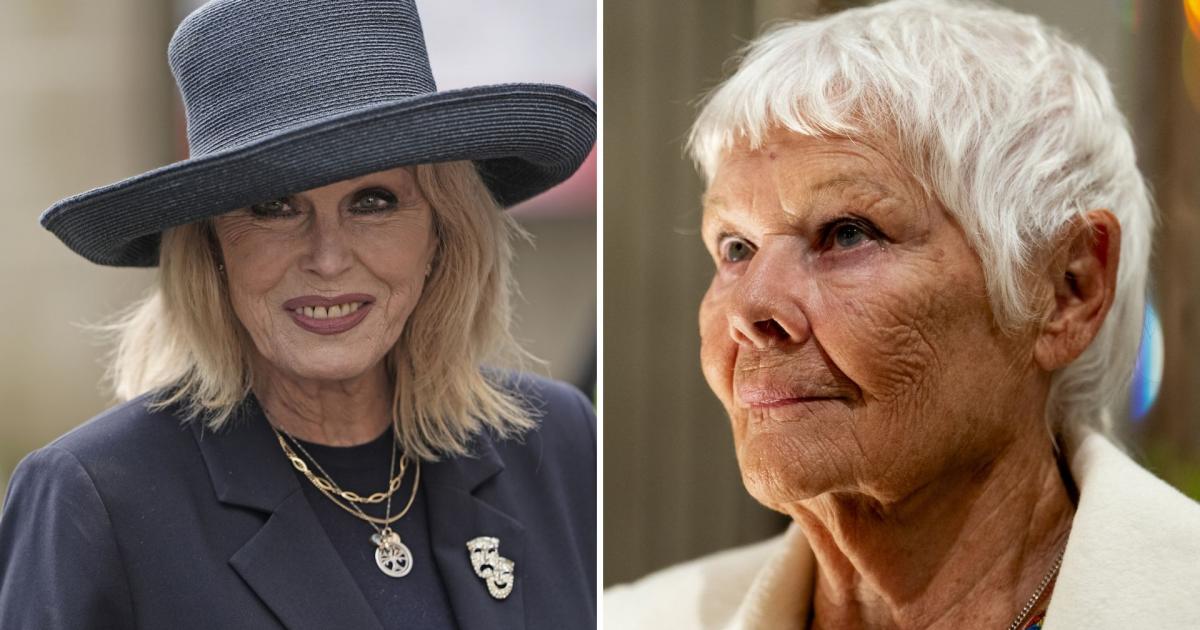
Actors Judi Dench and Joanna Lumley have spoken out ahead of a key planning meeting tomorrow (Friday, April 16) to decide on Harrogate Spring Water’s proposal to increase the size of its plant in Harlow Moor Road, Harrogate.
Campaign groups and local politicians have criticised the plan, which would see the loss of around 500 trees in the Rotary Wood community woodland.
Rotary Wood. Photo: Caught Light Photography. Free to use with credit.
Speaking in support of the Pinewoods Conservation Group, which is contesting the plans, Dame Joanna OBE said that cutting down trees planted by children to develop a bottling plant was “dreadful in so many ways”.
She added: “Other locations could, and should, be considered if additional capacity is truly needed. This 20-year-old forest carrying the hopes of the next generation cannot be replaced. Only a swift U-turn can save the face of a company whose green credentials are already looking pretty suspect.
Advertisement
“Do a great right, do a little wrong and let those trees stand and grow, let children believe and trust in big business and in decisions made by grown-ups.”
Ahead of the meeting, she said: “At a time when the country is talking so urgently about biodiversity loss, climate pressure and the need to protect nature close to where people live, it is deeply troubling that a healthy community woodland could be treated as disposable.
“Once mature trees and established habitat are lost, they are not simply replaced by promises. The value of a place like Rotary Wood lies not only in the number of trees on a map, but in the life it already supports and in the relationship local people have built with it”.
Local MP Tom Gordon said he had raised the issue in Parliament, adding: “This isn’t just about trees, it’s about whether a multinational corporation respects the democracy and the environment of the town it calls home.”
Critics say the move contradicts parent company Danone’s Forest Policy, which pledges “verified deforestation‑ and conversion‑free” supply chains by 2025 and a “forest‑positive” status by 2030.
Environmentalist and author, Jonathon Porritt, said: “You cannot call yourself ‘forest positive’ while cutting down a thriving community woodland planted by children. Rotary Wood is precisely the kind of living carbon store and biodiversity refuge we need to protect.
Advertisement
“If Danone wants credibility on climate and nature, the simplest, most powerful step it can take is to leave these trees standing.”
In response to the criticism of its plans, Harrogate Spring Water said it had “worked constructively with council officers and listened closely to community concerns” throughout the planning process.
A spokesperon added: “We have committed to creating a new, publicly accessible two‑acre woodland connected to the Pinewoods, planting 491 native and more mature trees, and delivering around 3,000 trees across the district – six times more than would be lost.
“These plans are consistent with Danone’s commitments globally to sustainable, responsible development, including its Renewed Forest Policy.
Advertisement
“Ultimately our goal remains to balance sustainable development and economic growth with care for the local environment and community.”
North Yorkshire Council officers have recommended that councillors approve the expansion when they meet at the Civic Centre in Harrogate.
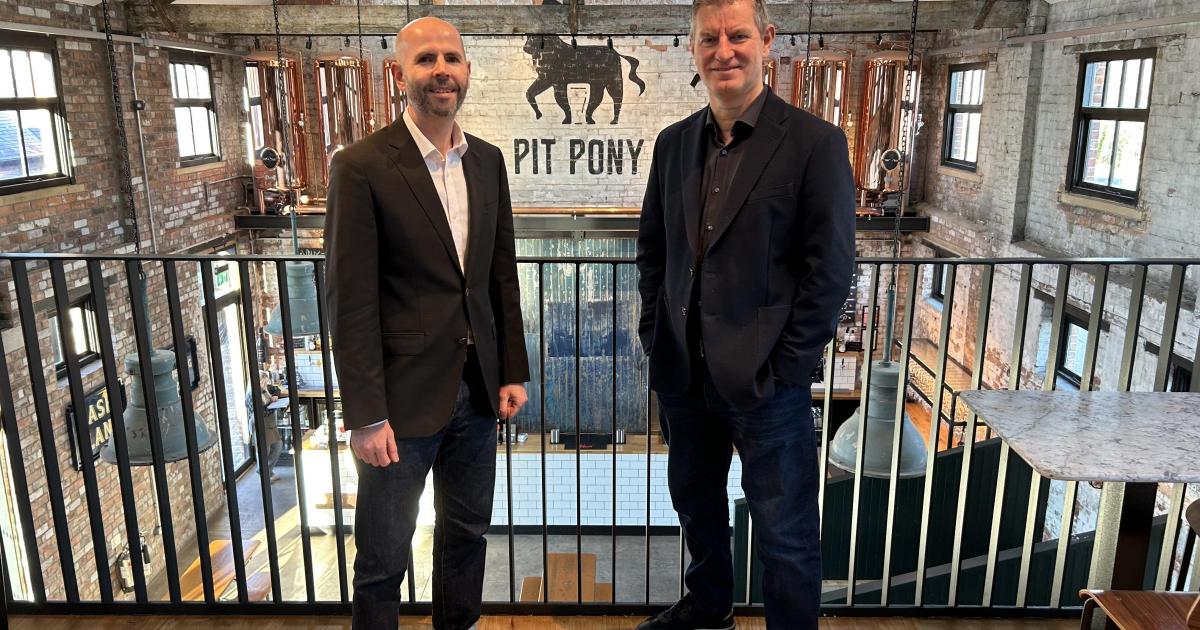
The PLATFORM Conference, held in Newcastle, is the first full-day event of its kind and builds on a series of successful half-day sessions designed to support business growth in the region.
It will take place on April 28 and is organised by Paul Lancaster, co-founder of Stellar Business Events, who successfully staged the five-day UK Startup & Scaleup Week festival in Sunderland last June, along with the three Newcastle Startup Week festivals.
Mr Lancaster said: “By bringing leading experts together in one day, delegates will have access to some of the best business minds in the region, who have an incredible track record when it comes to scaling a company.”
Advertisement
Since January 2024, 55 PLATFORM events have taken place across Newcastle, Sunderland, Middlesbrough and Edinburgh, attracting more than 2,000 delegates.
The upcoming conference features a strong line-up of speakers, including Lee Hartley, founder of Fairstone Group and now CEO of Castrius Capital Partners, who is working on a £10 billion investment fund for high-growth businesses in the North East.
Other speakers include European Business Coach of the Year winner Ian Kinnery, early-stage angel investor Neil Stephenson, and Kat Bond, head of partner success at Xero.
Dr Marc Owens, an expert in team dynamics, will also deliver a session titled “Overcoming Troubles: The Science of Teamwork.”
Advertisement
The event will cover topics including leadership, technology, finance and operational scaling, with panels and networking during and after the event.
The conference runs from 9am to 5pm at The Catalyst on Newcastle Helix and is sponsored by HR2day, Kinnery, Mira Marketing, NEL Fund Managers, Nouveau Legal, Optimal Accountancy, Precursor Security, Wubbleyou and Xero.
James Katirai, head of investments at NEL Fund Managers, said: “Supporting the PLATFORM Conference is a fantastic opportunity for founders, investors and advisers who are driving growth and innovation to make meaningful connections.
“For NEL, it’s about offering ‘more than capital’ – bringing our experience, networks and energy to help businesses unlock their full potential.
Advertisement
“We’re excited to be part of the conversations and proud to support people as they take their next steps.”
Nicky Jolley, managing director at HR2day Limited, said: “Being a corporate sponsor of the PLATFORM events has been great for me because it’s given me the chance to connect with likeminded business owners who genuinely want to collaborate, support one another and share real experiences.
“The quality of conversations and relationships I’ve built through PLATFORM have been invaluable – not just for business growth but for having a trusted network of people who understand the challenges and pace of running a company.
“That’s exactly why we’ve continued our sponsorship for a second year.”
When the Strait of Hormuz first closed in March and oil hit US$120 a barrel, a very old question came back: is this finally the moment electric vehicles take off for good – or just another false start?
EVs have been here before. They surged after the 1973 oil embargo, collapsed when oil fell, and surged again. Each wave died when the external pressure eased.
We think this time is different. In a new discussion paper, we argue that the economic case for electric vehicles is now improving on its own terms. This is because of what has happened to batteries, not because of the oil price. The same evidence, though, shows the transition creates new problems as serious as the ones it solves.
Why this time is different
Battery costs have fallen 93% since 2010. That is the number that changes everything. A pack that cost more than US$1,000 per kilowatt-hour in 2010 cost US$108 by late 2025, driven down by a decade of learning, investment and policy support.
Advertisement
Research on the global battery industry finds that every time cumulative production doubles, costs fall by around 9%. More buyers, more production, lower costs, more buyers.
Ethiopia is enjoying an EV boom. Joerg Boethling / Alamy
An economic platform, not just a better engine
The deeper reason this wave will not fade is not technical – it is economic. An EV is a platform. Its value grows as the network around it grows, just as smartphones became indispensable not because of the hardware but because of everything connected to it.
Every charger built makes the next EV more attractive. Every software update raises the value of every car already on the road. Every recycled battery feeds back into the supply chain that makes the next one cheaper. It’s part of the reason some other technologies like hydrogen fuel cell vehicles have struggled to get off the ground in numbers – the tech exists, but all the other elements aren’t quite there.
One study of 8,000 drivers in Shanghai found that range anxiety – the fear of running out of charge – has a real economic cost due to unnecessarily avoided trips. But that cost is falling sharply, not because batteries improved, but because charging networks expanded.
Making real-time charger availability visible could add 6–8 percentage points to market share by 2030. And because EV charging is far more flexible than other household electricity demand, drivers can shift away from peak hours remarkably easily when the price is right – turning the car into a grid asset, able to store and release electricity when needed. These are economic network effects, not engineering features.
Advertisement
Swapping one dependency for another
Ending oil dependence does not end geopolitical exposure. It relocates it.
In late 2025, China introduced rules requiring government approval for exports containing more than 0.1% rare earths. The leverage that once came from control of oil flows now comes from control of processing capacity and component supply chains.
The minerals at stake – lithium, cobalt, nickel, graphite and neodymium to name but a handful – carry their own geopolitical risks and, as we have written elsewhere, serious human costs in the communities that mine them. This creates a predictable cycle of social contestation that threatens to stall the transition unless the industry commits to responsible, sustainable innovation.
The metal cobalt traditionally helped EVs travel further on the same charge. And when prices spiked, so did research into making batteries with less or even no cobalt. Today, more than half of all EV batteries sold globally are cobalt free.
Advertisement
Four decades of patent data show the same pattern: higher mineral prices consistently redirect research and development toward mineral-saving technologies.
The Hormuz crisis is a reminder of what concentrated energy dependence costs. The EV transition does not need it. The learning curve keeps falling, the platform keeps compounding, the economics keep improving. That is what makes this wave different.
What it does not do is eliminate geopolitical risk. Unlike oil, where leverage comes from energy flows, EV supply chains concentrate power at materials, processing capacity, and technological bottlenecks – supply chains that are highly concentrated and carry their own serious risks. Fuel dependence becomes mineral dependence. That dependence is highly concentrated.
Advertisement
Traditional carmaking regions are already absorbing concentrated job losses, and history shows such disruptions leave persistent scars even if the long-term aggregate effects are positive. Yet electric vehicle assembly is proving more labour-intensive in western countries than expected – requiring more workers on the shopfloor, not fewer, at least in the ramp-up phase. Contrast this with China, where massive automation has led to the creation of “dark factories” where there are so few humans, internal lighting isn’t required.
The same regions facing losses could benefit. But the gains and losses do not fall on the same people. That is where the work remains.
If your fresh tulips keep drooping over the vase edge, a gardening expert has shared a simple method that keeps them standing upright in just seconds
Millie Bull Deputy Editor, Spare Time and Angela Patrone Senior Lifestyle Reporter
00:59, 17 Apr 2026
While nothing rivals the beauty of a mature tulip elegantly curving and swooping like a swan, there are times when tulips tend to droop dramatically over the vase rim and persistently refuse to stay upright, regardless of your efforts to straighten them.
Even when you’re familiar with all the techniques to extend the lifespan of your bouquets, cut flowers can still display signs of deterioration or decline quickly. Tulips, in particular, have gained a reputation for wilting exceptionally rapidly.
Advertisement
The cause of their collapse has long been a mystery, as have the techniques to avoid it. Nevertheless, following a tulip experiment, gardening instructor and expert Bethie shared on her Instagram account @blueacregarden to disclose the “winning” results so you can “fix your floppy tulips fast”. Bethie found there was one “clear far and away winner” in this experiment.
Starting with a selection of drooping tulips, the horticulturist placed two tulip stems in each of four vases and “waited exactly six days” to examine the results.
One vase held vodka, the second included coins, the third involved using a pin to create a hole in the tulips, while the final one functioned solely as a control specimen to show how the tulips looked without any additions or alterations, reports the Mirror.
Advertisement
Bethie observed that all tulips received a fresh cut before she captured the footage, and that all flowers were positioned in a well-lit spot in her kitchen.
The gardening enthusiast found that the “biggest loser” of the trial was the vodka vase. She said: “The one shot of vodka tulip plants fared horribly.” The blooms looked “sad, saggy, and droopy”. The stems had entirely lost their firmness.
Content cannot be displayed without consent
Bethie added: “It took up a good amount of water, but that seems to have petered off after a few days, and the plants suffered.”
The control group did “slightly better” than the vodka method. While the stems still had a touch of stiffness, they flopped over the vase’s rim, and the leaves displayed no strength at all.
Advertisement
The coin approach came next, with these tulips maintaining some structural support in both stems and leaves. Bethie observed, “I honestly think that if I had made a fresh cut on these and put them in fresh water, these actually might perk up a little bit.”
Ultimately, the “big and very clear far and away winner” turned out to be the pin technique, taking just seconds to carry out.
Bethie stated, “That’s right. By putting one tiny air hole using a pin under the petals of your tulips, you can have tulips that stand up nice and tall and strong.
Advertisement
“This method far and away outlasts any of the other most commonly recommended ways to keep your tulips tall and upright.”
By creating a tiny hole at the top of your tulips, you allow any air pockets potentially trapped inside the stem to release from your plant. This guarantees your plant can take in enough water, maintaining it upright and robust.






















































You must be logged in to post a comment Login