



Connect with us
DAPA Banner
DAPA Coin
DAPA
COIN PAYMENT ASSET
PRIVACY · BLOCKDAG · HOMOMORPHIC ENCRYPTION · RUST
ElGamal Encrypted MINE DAPA
🚫 GENESIS SOLD OUT
DAPAPAY COMING

NewsBeat

At least seven killed in twin roadside bombings in northwest Pakistan

Published

on

At least seven killed in twin roadside bombings in northwest Pakistan

Two roadside bombs in restive northwestern Pakistan killed at least seven people on Saturday, authorities said.

The first targeted a vehicle, while the second went off as rescuers responded to the blast in Bannu, a district in Khyber Pakhtunkhwa province bordering Afghanistan, senior police official Yasir Afridi said, adding both were controlled remotely.

Mr Afridi said five people were killed in the first blast and two in the second. Three people were also wounded, he said.

A search operation to find those responsible is underway.

Advertisement

“A private pick-up truck carrying passengers was targeted with a remote-controlled IED,” said Mr Afridi, using a common acronym for a homemade bomb.

“The injured were being transported to hospital in a car for emergency treatment when a second IED exploded,” he said, adding that three people were wounded.

No group immediately claimed responsibility, but suspicion is likely to fall on the Pakistani Taliban, who have been blamed for similar attacks in the past.

President Asif Ali Zardari strongly condemned the bombings. In a statement, he conveyed condolences to the families of those killed and prayed for the speedy recovery of the wounded.

Advertisement

Without naming any group, Mr Zardari issued a warning to “internal and external handlers of terrorism” who provide safe havens, logistical support and financial assistance to militant networks.

Pakistan has experienced a surge in militant violence in recent years, much of it claimed by the Pakistani Taliban, known as Tehrik-e-Taliban Pakistan, or TTP. The group is separate from, but allied with, Afghanistan’s Taliban, who seized power in Kabul in 2021.

Pakistani officials say many TTP leaders and fighters have found sanctuary across the border in Afghanistan, although the Taliban government in Kabul has repeatedly denied these accusations.

Relations between the two neighbours have deteriorated sharply in recent months, with tensions spilling over into military confrontations, including Pakistani air strikes inside Afghanistan.

Advertisement

Earlier this month, Pakistan said air strikes near the frontier killed at least 26 Taliban fighters. Afghan authorities, however, said the attacks left 12 civilians dead.

The main border crossings have remained largely shut since violence intensified in October, hampering trade and restricting the movement of people and goods between the two countries.

Source link

Advertisement
Continue Reading
Click to comment

You must be logged in to post a comment Login

Leave a Reply

NewsBeat

Sleep apnoea: The common sleep condition that raises your risk of stroke and costs workplaces billions

Published

on

Sleep apnoea: The common sleep condition that raises your risk of stroke and costs workplaces billions

New research has highlighted the significant financial burden obstructive sleep apnoea (OSA) places on businesses, leading experts to recommend workplace screening for the condition.

The findings, from a study conducted by specialists in the UK and the US, suggest that OSA could be costing companies billions annually in lost productivity.

The research examined the economic impact of OSA in both countries, utilising data from the 2021 census. Focusing on working-age adults aged 18 to 64, the team calculated losses by assessing absenteeism and reduced productivity at work.

In the UK sample, approximately 7 per cent of working-age adults met the criteria for OSA, with estimated productivity losses reaching as much as £4.22 billion annually, equating to £1,840 per worker each year.

Advertisement

Obstructive sleep apnoea is a condition where breathing repeatedly stops and starts during sleep, with loud snoring being a key symptom, according to the NHS.

In light of these findings, sleep specialists who regularly treat patients with OSA have outlined crucial signs that might indicate snoring is a symptom of a more serious underlying problem.

Snoring can signify a bigger issue
Snoring can signify a bigger issue ((Alamy/PA))

Dr Ryan Chin Taw Cheong, a consultant ENT (ear, nose and throat) and sleep surgeon at Cleveland Clinic London Hospital and Cleveland Clinic Portland Place Outpatient Centre, explains that anatomy, lifestyle, and physiology are the three primary factors contributing to snoring.

“If you have a structural narrowing of your nose or the back of your throat or the back of the tongue, that can actually increase the resistance of air flow when you breathe at night, which results in snoring sounds,” he says.

He adds that lifestyle factors also play a role: “Also, if you’re particularly overweight or you drink a lot of alcohol, the upper airway muscles can become more relaxed, and that can also increase the resistance of air flow, resulting in snoring.”

Advertisement

Dr Cheong further notes that the way muscles relax during sleep can be excessive, leading to obstruction.

“In some patients, the way that the muscles of the tongue or the palate or the throat relaxes is excessive to the point of obstruction or narrowing, and that can also cause snoring,” he explains.

Several red flags might suggest that snoring is indicative of sleep apnoea. Dr Cheong highlights choking episodes, gasping for air, or pauses in breath.

“If you witness any choking episodes or gasping of breath or pause of breath by your bed partner, or if you’ve experienced it yourself, that’s a potential red flag of sleep apnoea,” he warns.

Advertisement
Persistent daytime sleepiness is a red flag
Persistent daytime sleepiness is a red flag ((Alamy/PA))

Another significant indicator is excessive daytime sleepiness.

Dr David Garley, a GP and director of The Better Sleep Clinic, explains: “The issue with sleep apnoea is that it causes really fragmented, poor-quality sleep, so you can’t get into these deep states of sleep that help you feel refreshed in the morning.”

He advises that if individuals wake up feeling unrefreshed, are sleepy throughout the day, and struggle with concentration, memory, and low mood, they should consider speaking to a professional about sleep apnoea.

Untreated sleep apnoea carries substantial health risks beyond immediate daytime sleepiness and disruption to a bed partner.

Dr Cheong states: “Untreated sleep apnoea has been associated an increased risk of strokes and heart attacks, increased risk of diabetes, high blood pressure, and there’s also been evidence to suggest that it can increase the risk of neurocognitive decline.”

Advertisement

Dr Garley adds that the consistent disruption of sleep can severely impact mental health.

“If you think how bad you feel after one night of sleep, then you can see how years of bad sleep can have a really major impact on your health,” he says, noting that “some evidence suggests that around 20% of patients with sleep apnoea have depression.”

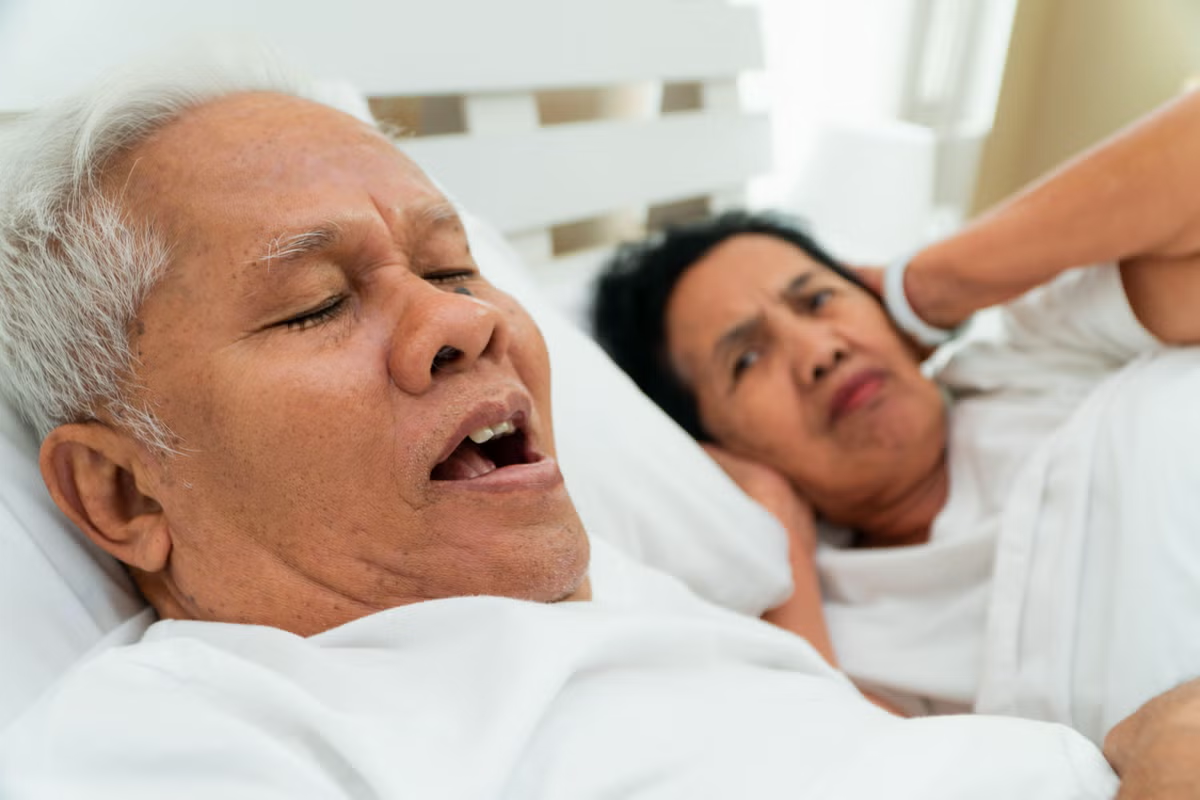
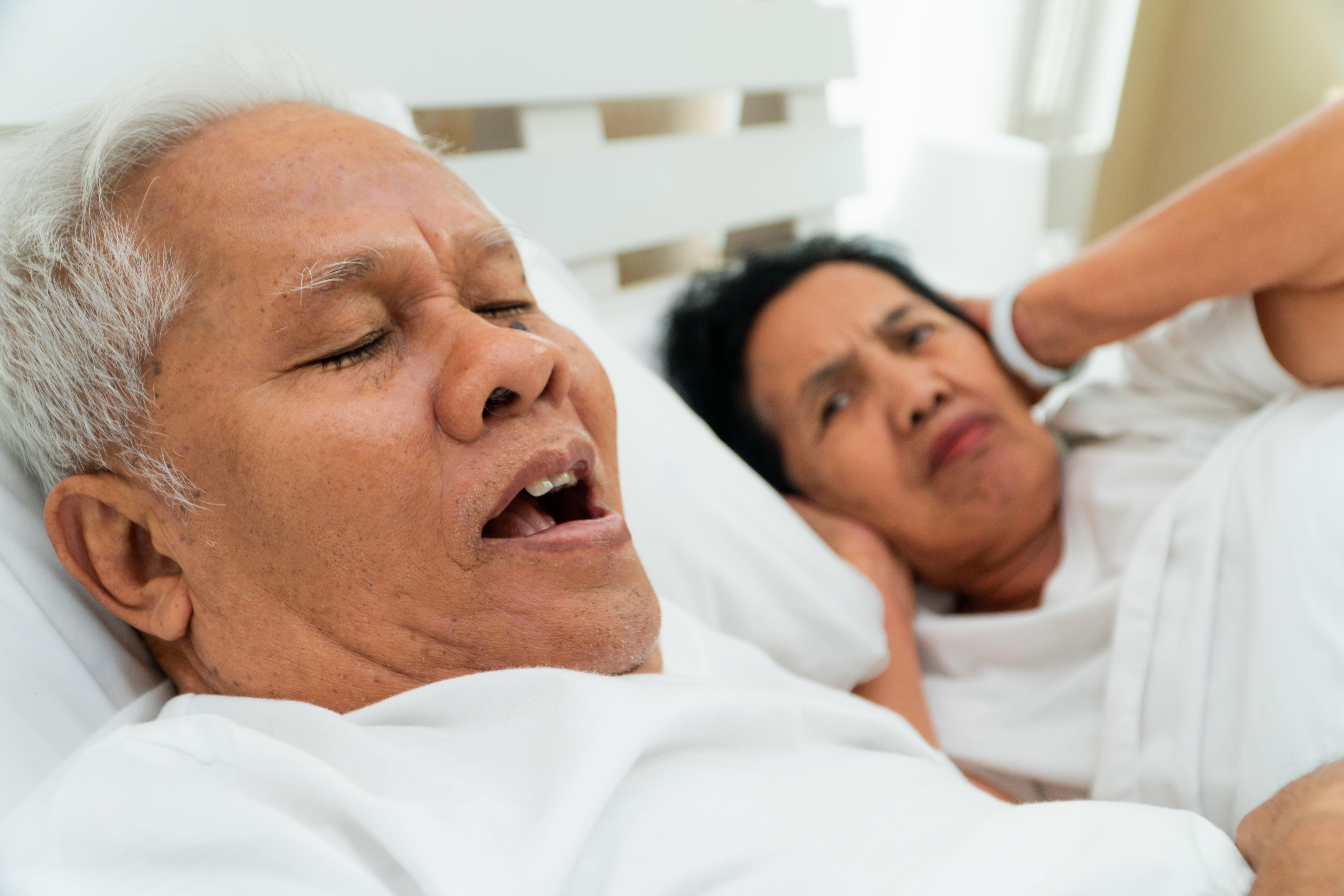
Snoring can have a negative impact on relationships
Snoring can have a negative impact on relationships (Alamy/PA)

Diagnosis typically begins with a risk assessment, such as the STOP-Bang questionnaire, an 8-item screening tool. However, the definitive diagnosis is usually made through a home sleep test.

Dr Garley describes this process: “This usually involves wearing a medical watch-like devices on your wrist which have a chest and a finger sensor, which takes really detailed measurements on how you sleep.”

These devices detect pauses in breathing, drops in oxygen levels, and the activation of the fight-or-flight nervous system triggered by breathing interruptions.

Advertisement

Treatment for sleep apnoea often starts with lifestyle modifications.

Dr Cheong recommends: “Reducing your alcohol consumption is something lifestyle based that can be altered to reduce your risk of sleep apnoea. Making sure that your weight is within optimal range can also help.”

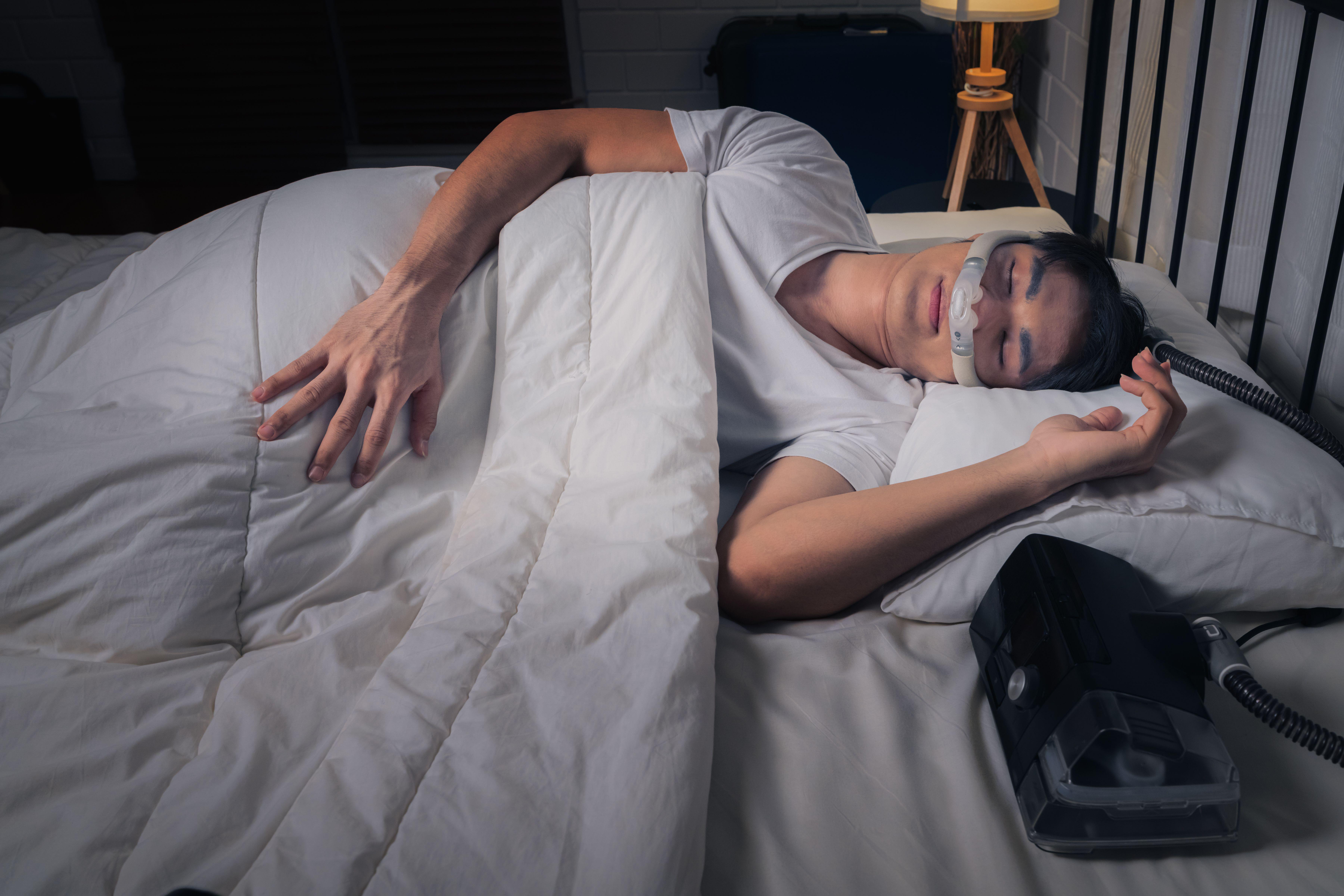
Wearing a CPAP machine in bed can stop snoring
Wearing a CPAP machine in bed can stop snoring (Alamy/PA)

Continuous Positive Airway Pressure (CPAP) therapy is a common and effective treatment option.

Dr Garley explains its mechanism: “It’s a small box that sits on your bedside table that blows low pressure air through a tube that leads to a mask which sits either over your nose or over your mouth and nose.”

This gentle pressure keeps the airway open, allowing for free breathing and deeper sleep.

Advertisement

For more severe cases, surgery or advanced technologies are available.

Dr Cheong mentions hypoglossal nerve implants, such as the Genio Nyxoah device, which stimulate the hypoglossal nerve to move the tongue forward and open the airway. Operations on the palate at the back of the throat can also be performed to widen the airway.

Source link

Advertisement
Continue Reading

NewsBeat

New multi-storey car park approved near Cambridge North station

Published

on

Cambridgeshire Live

The Greater Cambridge joint development committee approved the outline plans though said a multi-storey car park is ‘not what we want in this city’

Outline planning permission has been granted for a multi-storey car park and a standalone kiosk near Cambridge North station. The proposal comes as part of a wider scheme to develop the area with new residential and commercial buildings and a “wild park”.

Advertisement

Council officers said the car park will be for the “exclusive use” of those working at the five new commercial buildings and would replace earlier plans for parking in their basements. A separate multi-storey car park known as a “mobility hub” is also planned to be built on the site of the current ground-level car park.

Mike Derbyshire, the planning consultant for the scheme, said the applicant had a “demonstrable track record”, being responsible for the station which opened in 2017. He told the joint meeting of Cambridge City Council and South Cambridgeshire District Council that the scheme “is looking at supercharging delivery”.

He said: “How? By removing expensive concrete and carbon-hungry basements and looking to locate the car park in a lightweight, low-rise, multi-storey car park”.

Cllr Richard Stobart asked what the harvested rainwater would be used for and suggested it be used “to support the wild park”. The Lib Dem councillor said this would “increase the scope for doing stuff like growing trees” which would have a “tremendous effect” on “local temperatures and so on”.

Advertisement

He said that car parks “tend to not be that inspiring in appearance” and suggested a mural be created to make the car park “interesting”.

He said: “It’s visible from the railway line – it’s a very good way of announcing the arrival of the departure from Cambridge to train users for example. If we can consider public art, it’s not mentioned in the officer’s report, but I would like the committee to consider that.”

Cuma Ahmet presented the report recommending that the outline plans be approved by the Greater Cambridge Joint Development Management Committee. He said that appearance would be looked at later and there “is a public art strategy as part of the wider scheme already”.

A condition was added to the proposal to include details of how collected rainwater will be used within the wider surroundings. Lib Dem councillor Peter Sandford said: “Following on from Cllr Stobart’s suggestion of public art – I’m aware of a couple of multi-storey car parks in the area, particularly one in Granta Park, that have green walls.

Advertisement

“Those serve the same purpose as public art but they also contribute to biodiversity net gain, so maybe further down the line when we come to talk about public art we could also look at green walls.”

Anglia Water objected to the plans and said no development should take place until a strategic foul water strategy has been approved.

Cllr Richard Williams called the objection “bizarre” as the plans would only include “one toilet and one sink” from the kiosk. The Conservative councillor added: “There is a problem with foul water in this district but not in this application”.

Cllr Martin Smart said a multi-storey car park “is not a thing of beauty” and “not what we want in this city”. The Labour councillor said: “In terms of the built form, but also in terms of its purpose to bring more vehicles through our streets into the city.

Advertisement

“If it was in the basement, it’s out of the way – we don’t see it, that’s the whole point. It costs more for the developer than this proposal to put it above ground, but this is less good.”

Cllr Naomi Bennett suggested a condition to use temporary fencing to protect the wild park area while the car park is being built, which was added by the committee.

The recommendation with the two suggested changes was approved unanimously.
Source link

Advertisement
Continue Reading

NewsBeat

The inside story of how Kemi Badenoch masterminded ‘a heist’ in ‘the forgotten by-election’

Published

on

The inside story of how Kemi Badenoch masterminded ‘a heist’ in ‘the forgotten by-election’

As three by-elections approached this week – one in Makerfield in Greater Manchester, and two in Scotland – Tory leader Kemi Badenoch’s top team faced a problem: how should they translate the growing popularity of their leader into electoral success?

She desperately needed a victory to show that it is her party, and not the insurgent Reform UK, that is the real alternative to Labour.

With that in mind, her team focused on one of the seats – they deliberately did nothing in Makerfield, but instead decided to put all their resources into Aberdeen South, vacated by SNP Westminster leader Stephen Flynn after he returned to Holyrood.

The plan was to win by stealth in the race few were talking about.

Advertisement
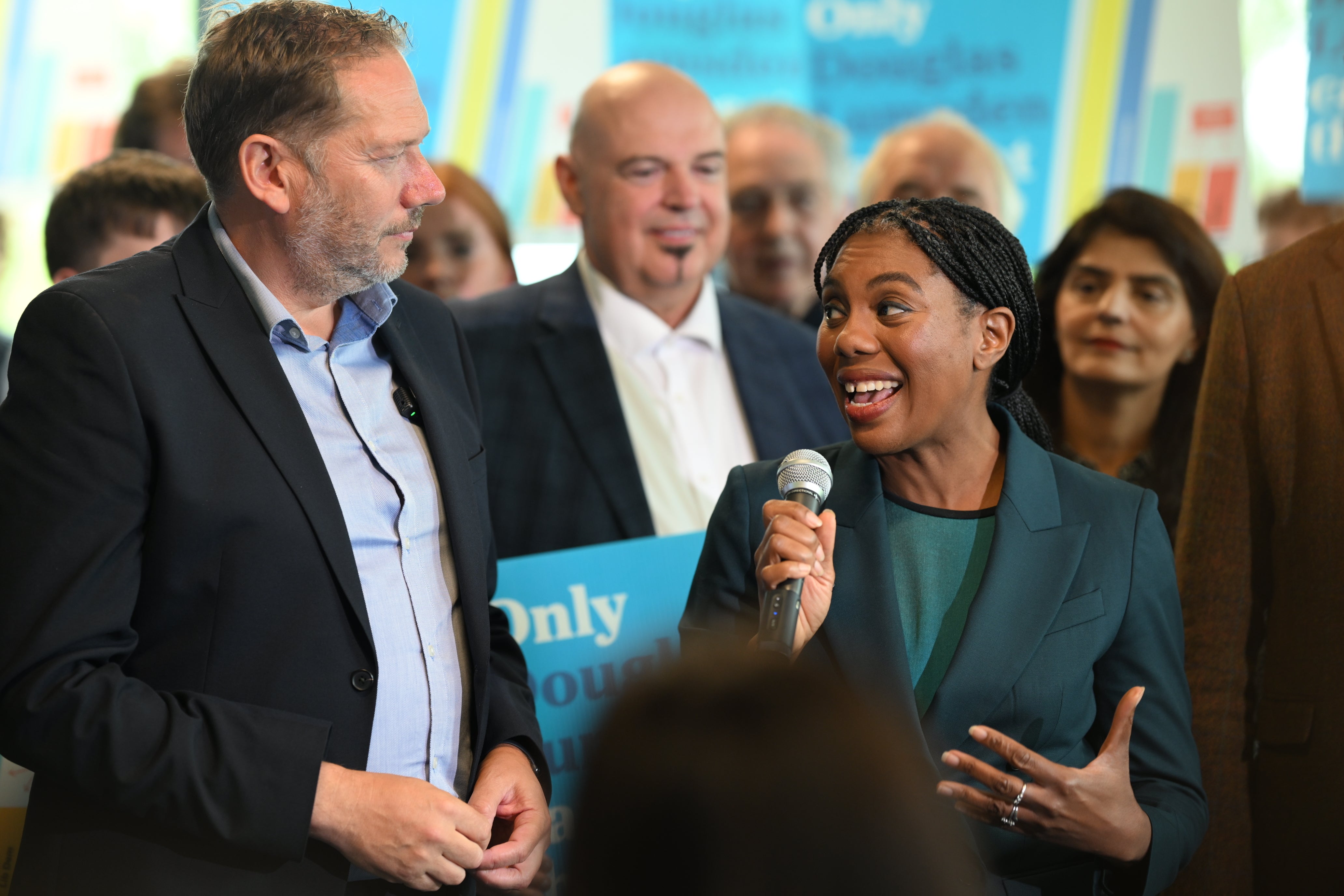
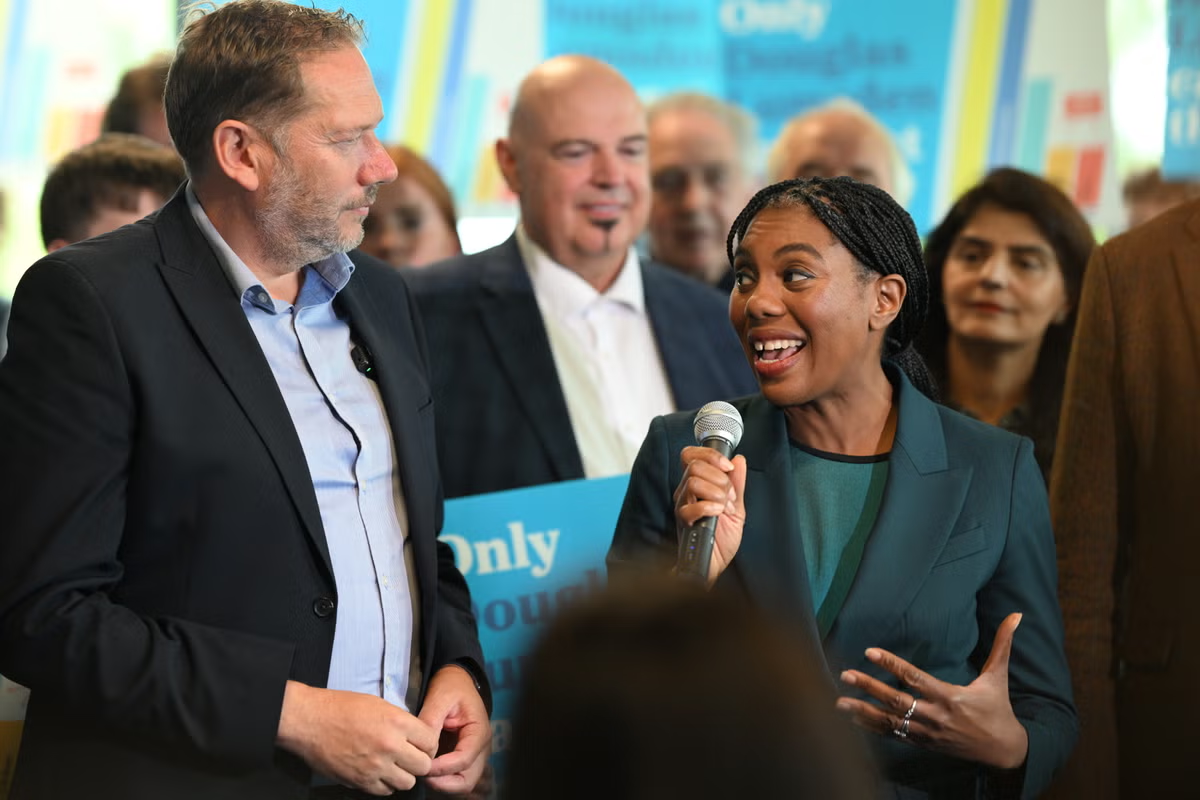
Conservatives, including leader Kemi Badenoch, celebrated the party’s win the Aberdeen South by-election, where they comfortably seized the seat from the SNP
Conservatives, including leader Kemi Badenoch, celebrated the party’s win the Aberdeen South by-election, where they comfortably seized the seat from the SNP (PA)

Mark McInnes, the Tory chief executive, made clear to MPs and senior party members that it was essential that Aberdeen South “remains the forgotten by-election”.

The stakes were high. After a make-or-break speech at the Tory conference in October, Badenoch had gone from the party leader “most likely to be replaced” to having the best personal rating of any current political leader in the UK.

Her only serious rival to be leader of the Conservatives, Robert Jenrick, helped her by defecting to Reform, and the collapse of Keir Starmer’s government made her look like a colossus in parliament with a series of powerful interventions.

But the Conservative Party has remained stubbornly low in the polls, at around 19 per cent on average – a full five points below where they were when Badenoch became leader.

The busted status of the Tory brand was further highlighted in the local elections in May, when they lost 563 council seats – almost half of those they were defending.

Advertisement

Meanwhile, Nigel Farage’s Reform UK continued to have a strong lead in the national polls, still drawing Tory support, and came second in Wales and Scotland while winning 1,454 council seats.

The by-election became a referendum on North Sea oil and gas
The by-election became a referendum on North Sea oil and gas (PA)

Even if the problem was the Tory brand and not Badenoch, there was only so much time before patience ran out and discussions began about finding a new leader.

But the task at hand seemed impossible. The last time the Conservatives won a Westminster by-election in Scotland was in 1967, when they took Glasgow Pollok off Labour in a shock victory. As one insider noted, that was only a year after England won the World Cup, and “the years of hurt are just as long”.

But McInnes and Badenoch were determined to ensure that Aberdeen South was “coming home”.

They selected a solid candidate, Douglas Lumsden – a member of the Scottish parliament for the North East of Scotland, with no dodgy social-media history; a good party stalwart who knew the seat inside out.

Advertisement

What then transpired has been described by another Tory insider as “a heist” against the SNP, who have run Scotland for 19 years and were defending the seat.

There was some hope there – the Tories had won the seat with Ross Thomson in 2017, although he was now a Reform defector. But the SNP were strong favourites.

The Tories wanted them to remain that way, and to focus as much on the other by-election in Scotland – Arbroath and Broughty Ferry.

Farage was left empty-handed in this week’s by-elections
Farage was left empty-handed in this week’s by-elections (PA Wire)

While the eyes of the national media were on Andy Burnham versus Reform in Makerfield, McInnes gave out strict instructions to say that Aberdeen was “probably” going to be an SNP victory.

The Tory camp then quietly set out to make it a referendum on net zero and Ed Miliband, and on the SNP’s policies against oil and gas drilling in the North Sea. Badenoch was there three times without much fuss, and deployed her shadow energy secretary Claire Coutinho for the final PMQs against David Lammy, to drive home the message.

Advertisement

When suspicions started leaking out in the days before that they could win, several calls were made to check the story.

The Independent, like others, was told by Tory sources: “It is very unlikely. If all the unionist votes go our way, we might squeeze it. But we are not really expecting it to be that close.”

Meanwhile, an SNP source appeared to confirm that they too believed there was no real threat: “The Tories think they have a chance, but we should win this one easily.”

But there was an added factor.

Advertisement

The scandal involving former SNP chief executive Peter Murrell hung over the whole contest, with ongoing questions about his estranged wife, former SNP leader Nicola Sturgeon.

As the count began at the Aberdeen Exhibition and Conference Centre, it quickly became clear that this really was a heist, as the Tory votes began to pile up.

In the end, on a turnout of 38 per cent, the Tories did not just win, but crushed their opponents, with a majority of 6,050 and 49.5 per cent of the vote. The SNP came second, with 26.8 per cent, a swing of 25 per cent to the Conservatives.

Even more important was that Reform only got 8.6 per cent of the vote in a part of Scotland where many projections had them replacing the Tories.

Advertisement

Badenoch was there early in the morning to lead the celebrations and take it as a personal victory.

One source close to her told The Independent: “This could be a turning point for us. It is an extraordinary victory, and Kemi has something to pin our comeback on.”

It was also noted that while Makerfield proves that people are seeking to vote tactically to stop Reform from winning, voters are also willing to vote tactically for the Tories.

Another source said: “Kemi needed to take ownership of this. She was there three times, this was very much her victory. People can see now that it is not just good performances at PMQs, but a tangible win.”

Advertisement

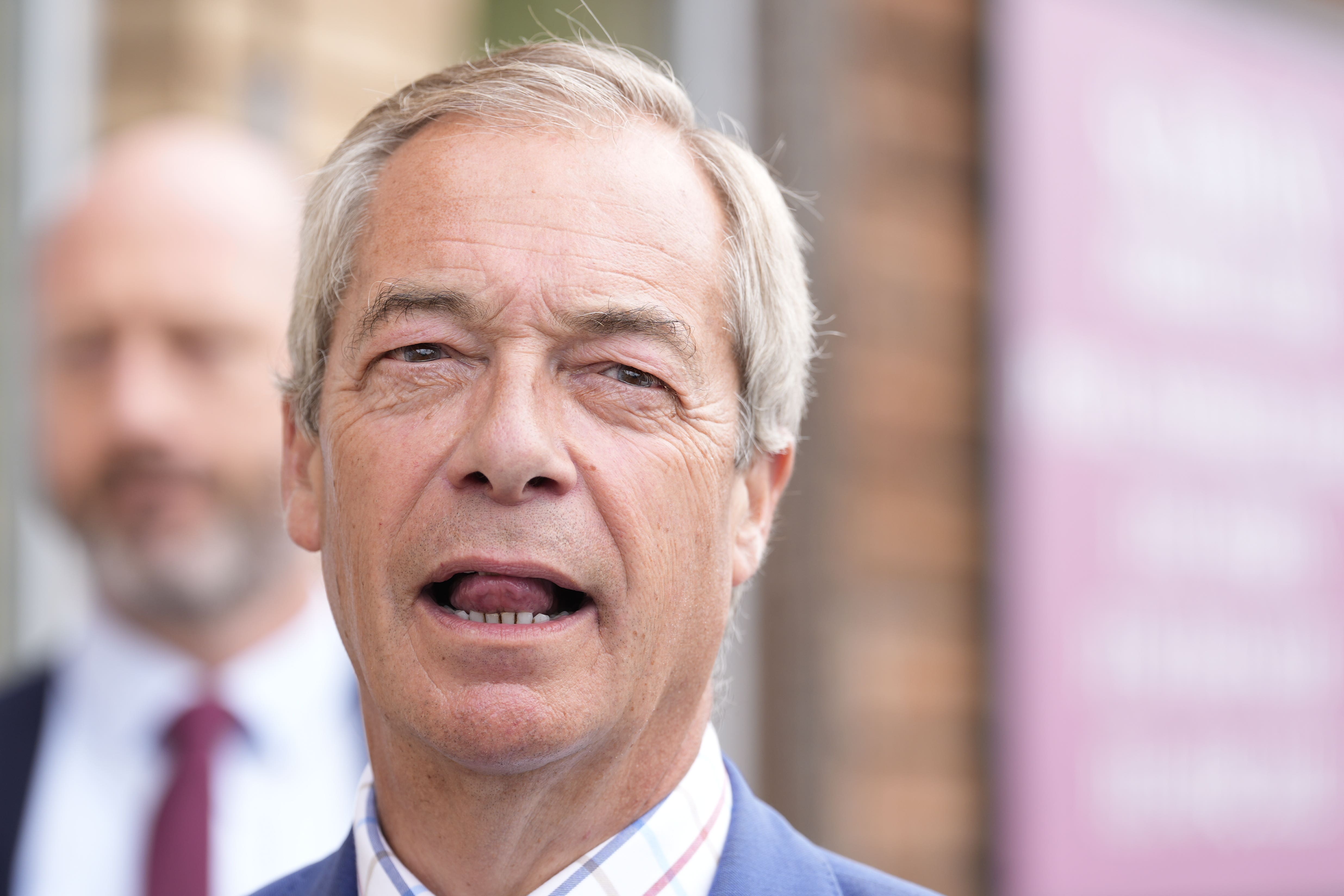
While Farage was licking his wounds from Makerfield, he tried to dismiss the Conservative victory as proving only that “they can win in pockets around the UK”.

But it was hard to not conclude that while Badenoch walked away from the most significant week of by-elections in decades with a morale-boosting win, he ended up empty-handed.

Source link

Advertisement
Continue Reading

NewsBeat

Katie Hopkins chucked out London pub during England match

Published

on

Daily Record

Katie Hopkins was involved in a heated confrontation with fans who were watching England’s World Cup opener.

Katie Hopkins appeared to be thrown out of a London pub after an altercation with fans watching England’s World Cup game.

Advertisement

Video footage shared on social media appears to show the controversial media personality locked in a row with punters at the Dundee Arms in east London during the England v Croatia match on Wednesday.

In the recording, posted online by internet personality Danny Price, a male voice can be heard instructing Hopkins to vacate the premises. Hopkins fires back, telling him to “f*** off” before seemingly lunging at another man, thought to be the landlord, amongst the crowd.

The clip appears to show the former Apprentice candidate gesturing with her middle finger at fellow drinkers as chants of “Katie, Katie, you’re a c***” ring out throughout the establishment.

As the situation intensifies, Hopkins can be heard yelling “f*** you” before seemingly shoving a man.

Hopkins appears to make her way to the exit, with cheers erupting from inside the venue as she leaves. She also appears to push away mobile phones as onlookers attempted to record her departure.

One reveller, who requested anonymity, told MyLondon: “I think she was kicked out because of her racism and general views. The vibe of the pub was that people didn’t want her there. I was surprised she was served at all.”

The clip has been met with widespread acclaim from viewers, who have been quick to applaud the establishment for showing Katie the door and pledging to pop in for a pint themselves.

Advertisement

One viewer remarked, “Little moments that preserve my faith in human nature.”

Another chipped in with, “Definitely gotta visit that pub and shake all of them by the hand.”

While a third simply declared, “God she’s vile!”.

Advertisement

Hopkins first burst onto the public scene after featuring on the third series of The Apprentice in 2007, subsequently carving out a career as a newspaper columnist, broadcaster and political commentator.

She has repeatedly courted controversy with her remarks on immigration, race, religion and social issues, drawing accusations of racism, Islamophobia, classism and fat-shaming – all of which she has flatly denied.

In 2017, Hopkins parted ways with LBC radio following remarks she made in the wake of the Manchester Arena bombing.

Three years on, her Twitter account was permanently banned for violating the platform’s hateful conduct policy, though it was later reinstated following a change in the platform’s ownership.

The Mirror has reached out to Katie Hopkins for a response. The Dundee Arms declined to comment.

Advertisement

Get Daily Record Premium for just £1 per month in exclusive offer to celebrate the world cup. Click HERE.

Source link

Continue Reading

NewsBeat

World Cup 2026: Why Harry Kane is different at this World Cup – Alan Shearer

Published

on

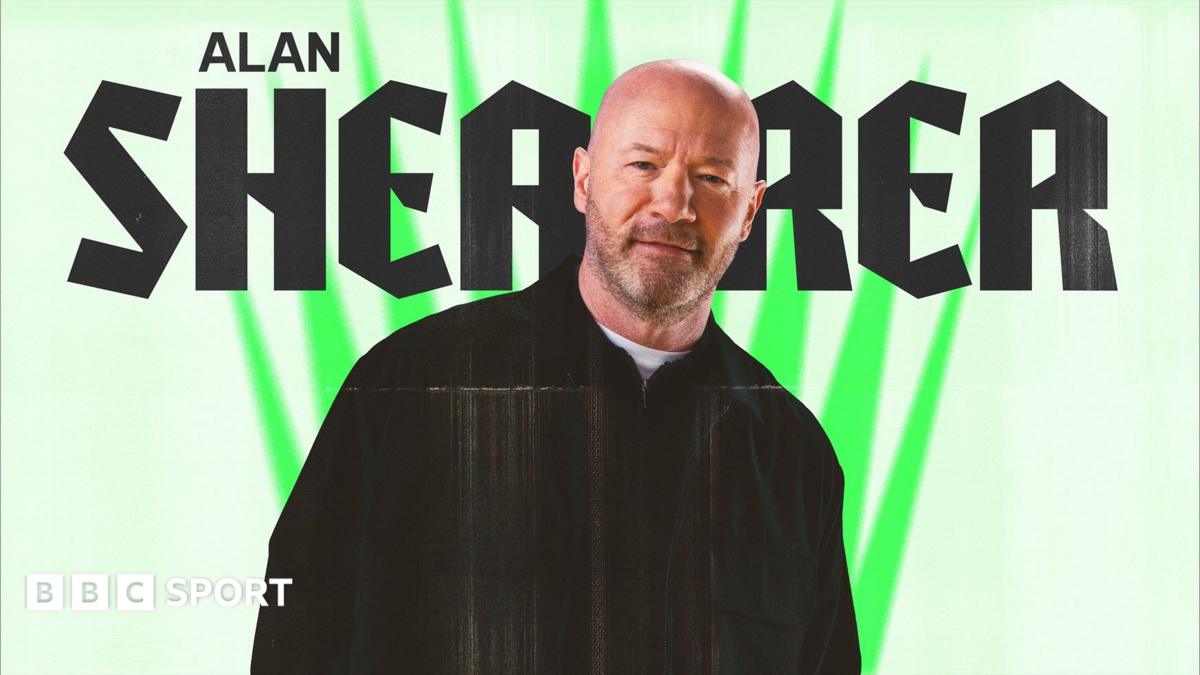
Alan Shearer's BBC Sport column

It took Harry Kane four games and 269 minutes to even manage a shot on target at the 2022 World Cup in Qatar.

He looked tired early in that tournament and I felt he needed a rest after England’s first two matches.

Things could not be more different this time – he will be on top of the world after scoring twice in the 4-2 win against Croatia.

As a striker, the one thing you desperately want to do at any major tournament is get off to a good start.

Advertisement

I was lucky enough to do that myself for England when we beat Tunisia in our first game at the 1998 World Cup.

Honestly, it was a massive relief – not only for the team to get the win, but to get on the scoresheet myself, as captain and our main goalscorer, when everyone was looking at me to deliver.

For all the same reasons, I know Kane will be feeling exactly the same way after the way he played on Wednesday.

He had to sit all week with the rest of the England squad and watch all the other games, seeing superstars like France’s Kylian Mbappe, Norway’s Erling Haaland and Argentina’s Lionel Messi get up and running, not just with one goal but by scoring at least two.

Advertisement

Kane would have been absolutely desperate to join the party and get off the mark in his first game too, so to do that after only 12 minutes and go on to get another one as well, is huge for him – and for England.

When Kane finally got a shot on target in Qatar, in the last 16 against Senegal, he scored.

This time he has got that feel-good factor from the very start, and we’ve already seen what he does when that happens – at Russia in 2018, Kane scored five goals in England’s first two games to send him on his way to the Golden Boot and help us reach the semi-finals.

With arguably our toughest game in Group L out of the way and Ghana and Panama next, his eyes must be lighting up.

Advertisement

Source link

Continue Reading

NewsBeat

Green Party announces candidate for Greater Manchester mayoral by-election

Published

on

Manchester Evening News

The party is gearing up to take on Labour, Reform UK and the rest

The Green Party has announced its candidate to replace Andy Burnham as Greater Manchester’s mayor. Mr Burnham’s victory in the Makerfield by-election has triggered a vote for a new mayor, to take place on July 30.

Advertisement

Labour will be hoping to defend the mayoralty, while Reform UK is likely to be a significant challenger, having won dozens of council seats across Greater Manchester in May’s local elections. But it is the Green Party which has made the first move in the mayoral by-election, by naming its candidate this afternoon (June 20).

Geraldine Coggins will contest the mayoral by-election for the Greens. She is currently the party’s group leader on Trafford council, where she serves as a representative for Altrincham.

Click here for our dedicated Makerfield by-election newsletter with exclusive interviews and analysis

Councillor Coggins was first elected back in 2018, making her one of Greater Manchester’s first Green Party councillors, long before the recent surge for the party seen since Salford-born Zack Polanski became leader last September. She is described by the party as a ‘straight talking anti-austerity campaigner’.

Advertisement

Coun Coggins had been considered a frontrunner for the nomination. Sources previously told the Manchester Evening News that she had been considered the favourite for members in Greater Manchester due to her ‘extensive’ political and leadership experience.

Mr Polanski has already suggested his party will be the main challenger to Reform UK next month. He wrote on X: “Greater Manchester Mayor is a straight up battle between the Green Party Vs Reform. It’s Hope Vs Hate. We’ve been getting ready for this one.”

The Greens fought off both Reform and Labour in the Gorton and Denton by-election, when Hannah Spencer – herself a former candidate for Greater Manchester’s mayoralty – was voted in as MP. The party also performed well on Manchester council in May’s local elections, winning 17 seats and defending one.

Advertisement

Unsurprisingly, Labour has already disputed Mr Polanski’s claim, issuing a statement on Friday evening describing the upcoming contest as a ‘two-horse race’ between itself and Reform. A Labour source said: “Labour in power in Greater Manchester has seen real improvements for people’s everyday lives.

“From buses back in public control with capped fares, to thousands more homes and additional infrastructure built – all of this progress could be put at risk with Reform. The Greens can’t win this race. It’s time to pass the torch from Andy Burnham, who has delivered for the area, to the next transformational Labour mayor.”

Applications to become Labour’s candidate to replace Andy Burnham are open until 5pm on Sunday, before long and short lists are drawn up by the party’s National Executive Committee and the Regional Executive, ahead of voting starting on Tuesday. Voting will close on Friday, June 26, before the result is announced.

Advertisement

Manchester council leader Bev Craig – who became the first woman to hold that position in 2021 – is currently considered to be the favourite for the nomination, while Salford mayor Paul Dennett is understood not to be putting himself forward. The M.E.N. understands allies close to Mr Burnham fear Labour could lose the mayoralty if Sir Keir Starmer does not set out a timeline for his departure before the by-election takes place.

Source link

Continue Reading

NewsBeat

DWP PIP two tier rules update for people who qualify for vehicle tax reductions

Published

on

Daily Mirror

The Department for Work and Pensions has faced questions around the existing system for people on PIP and DLA

The DWP has issued details over a two-tier system in place for PIP claimants in an update released to Parliament. The Department for Work and Pensions has been asked questions about tax reductions for some people on PIP – Personal Independence Payments – and DLA, which is Scottish Adult Disability Living Allowance.

Advertisement

Officials are under scrutiny over the process that disabled people have to go through to qualify for these reductions. There are two issues at play – and the current system leaves some people facing more hoops to jump through to get help.

People on the enhanced rate mobility component of PIP qualify for free vehicle tax and can sort this transaction online, free of annual paperwork, because the DWP and DVLA systems work together for this tier. But people on the standard rate, who qualify for a 50 per cent reduction, face a more laborious process.

Their reduction does not renew automatically each year. In addition, they can be required to go through V10 forms, Post Office visits and DWP award letters.

The DWP has now explained what it would like to do to improve the system. But it has admitted there will be a sizeable wait for any changes to occur.

The issue has come to light after a parliamentary question from Mike Martin, Liberal Democrat MP for Tunbridge Wells). He asked the Department for Transport what steps it is “taking to integrate DVLA and DWP data systems so that disabled people who qualify for vehicle tax reductions through receipt of PIP or DLA are not required to complete a separate annual renewal process with DVLA, given that their eligibility is already subject to review by DWP.”

In a response this month, Simon Lightwood, Parliamentary Under-Secretary (Department for Transport), replied to explain the current rules and what could happen in the future. He said: “The law requires that entitlement to Personal Independence Payment (PIP) is checked when a vehicle is taxed.

“The Driver and Vehicle Licensing Agency (DVLA) remains committed to working with the Department for Work and Pensions to review and improve the process for customers who receive the standard rate mobility component of PIP, which entitles them to a 50 per cent reduction in the rate of vehicle excise duty payable. Customers who receive the enhanced rate mobility component of PIP and whose vehicles are licensed in the disabled taxation class can already transact online.

Advertisement

“The DVLA will look to develop and introduce a full digital service for customers in receipt of the standard rate of PIP but this work will not start until after the delivery of electric Vehicle Excise Duty changes in 2028.”

The different processes for PIP standard and enhanced rate recipients

Vehicle Excise Duty is a legal requirement for most vehicles in the UK. A car tax reduction can see the rate dropped by 50 per cent or cut out altogether.

Government rules mean disabled people can benefit from these reductions. They often rely on a car for essential travel.

The gov.uk website says “you can get a vehicle tax exemption for one vehicle, if you’re eligible. The vehicle must be registered in the disabled person’s name or their nominated driver’s name.

Advertisement

“The vehicle must be used for a disabled person’s personal needs. It cannot be used by the nominated driver for their own personal use.” You can get a 50% reduction in vehicle tax on one vehicle if you are eligible, officials say.

The vehicle must be registered in the disabled person’s name or their nominated driver’s name. You can apply for a full exemption if you receive:

  • War Pensioners’ Mobility Supplement
  • enhanced rate mobility component of Personal Independence Payment (PIP)
  • enhanced rate mobility component of Adult Disability Payment (ADP)
  • higher rate mobility component of Disability Living Allowance (DLA)
  • Armed Forces Independence Payment
  • higher rate mobility component of Child Disability Payment
  • Scottish Adult Disability Living Allowance

For more details, see the gov.uk website.

Source link

Advertisement
Continue Reading

NewsBeat

Trump deepens the dustup with Italy’s Meloni over disputed G7 photo

Published

on

Trump deepens the dustup with Italy's Meloni over disputed G7 photo

WASHINGTON (AP) — President Donald Trump on Saturday lashed out at Italian Prime Minister Giorgia Meloni, insisting that she asked “over and over” for a photo with him at the recent Group of Seven summit and criticizing what he said was Italy’s lack of cooperation during the Iran war.

The remarks deepen the spat that began this week with the Republican president’s interview with an Italian broadcaster, during which Trump claimed Meloni “begged” for the photo during the G7 meeting in France. Meloni has called that “completely fabricated.” The dustup led Italy’s foreign minister to cancel a planned trip to the United States as Meloni’s government lined up in her defense.

“Italian Prime Minister Gigiorgia Meloni asked, over and over, for a picture with me during the G-7 meeting in France,” Trump wrote on his social media platform while spending the weekend at the Camp David presidential retreat. He misspelled her first name in the initial post, which he later corrected.

He continued: “She is doing poorly in Italy with her level of popularity, possibly because she turned down the United States of America, a Country that truly loves and protects Italy, when it came to denying Iran from obtaining or developing a Nuclear Weapon (But so did NATO, for that matter!).”

Advertisement

Trump’s comments were aired Friday on the La7 network. A correspondent had asked the president about Ukraine, but Trump raised Meloni and made the claim about the photo. Trump said he was not obliged to take the picture with her but that he felt sorry for her and agreed, La7 said. The broadcaster put a dubbed version of the conversation online, but not the original English audio.

In his post, Trump also complained that Meloni would not allow the U.S. to use Italy’s landing strips or runways during the Iran war even though the U.S. is a leader in defense spending among NATO allies. That is a long-standing complaint about the military alliance and one that Trump raised before his White House meeting Wednesday with NATO Secretary-General Mark Rutte and the NATO summit in Turkey next month.

Italy, a key logistics hub for the U.S., declined in March to allow American bombers headed for the Middle East to use a base in Sicily without parliamentary approval. Trump vented his frustration about Meloni and on Saturday claimed that she “wants to be friends again” in light of the initial deal between the U.S. and Iran to end the war.

Advertisement

Source link

Continue Reading

NewsBeat

World Cup games today: Kick-off times and TV channel for every match

Published

on

World Cup games today: Kick-off times and TV channel for every match

The World Cup action continues at rapid pace, with drama, excitement, goals and major talking points aplenty.

Source link

Continue Reading

NewsBeat

Can The Viral ‘Pinky Time’ Trend Really Prevent Alzheimer’s?

Published

on

Can The Viral ‘Pinky Time’ Trend Really Prevent Alzheimer's?

Could staving off memory loss be as simple as strategically wiggling your pinky fingers around every day? That’s what TikTokers are claiming.

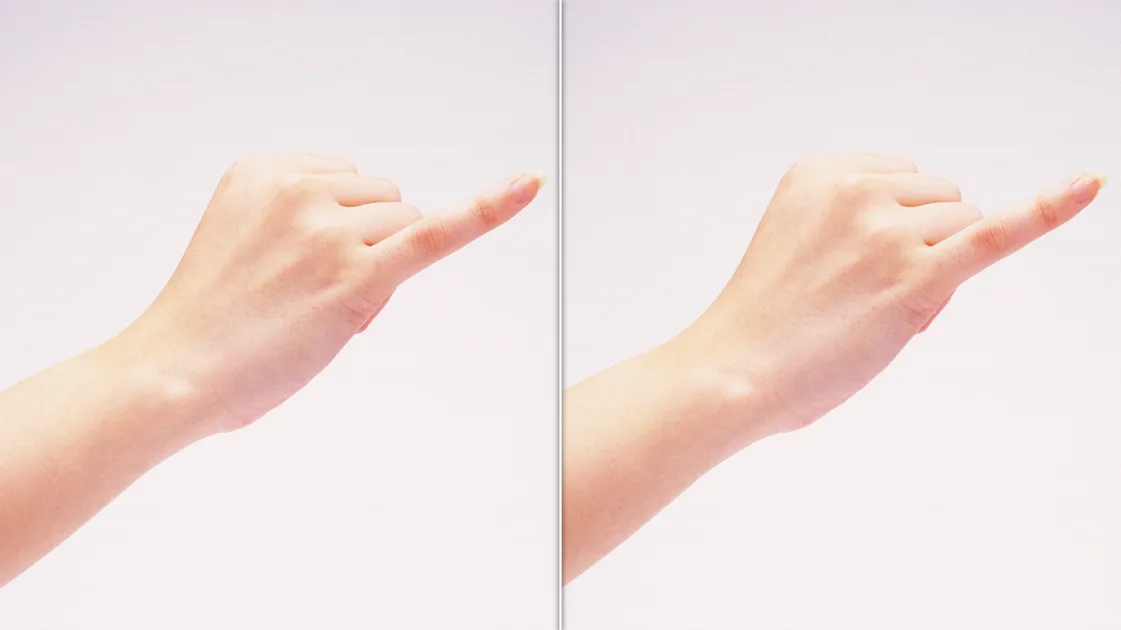
Dubbed “pinky time,” the viral exercise is fairly simple: you hold your hands in front of you with your palms facing each other. Then, you interlace your index and middle fingers, touch your ring fingers to your thumbs together, and move your pinkies up and down for several seconds. (Watch how it’s done here.)

“Just seven to 10 seconds a day of this exercise can help protect against Alzheimer’s and improve brain plasticity,” one wellness influencer, Ana Lučić, says in one of the earliest videos on “pinky time”.

If your pinky can move this easily, Lučić says, it’s “a sign your brain is in great shape,” because “loss of fine motor control often mirrors cognitive decline”.

Advertisement
If your pinky can move this easily, TikToker Ana Lučić says, it’s “a sign your brain is in great shape,” because “loss of fine motor control often mirrors cognitive decline.”

Those who post about pinky time say they do it at the same time each day. (One TikToker claimed she and her friends observe “pinky time” at 7:45pm on the dot every night.)

Is there any truth to the TikTokers’ claims? Neurologists we spoke to say that research does suggest structured finger exercises can stimulate the brain, support neuroplasticity and help ease symptoms of mild cognitive impairment in older adults.

That’s because finger exercises boost cognitive health by engaging the massive area of the brain’s motor cortex dedicated to the hands and fingers.

“The hands occupy a disproportionately large amount of the brain’s motor and sensory cortex,” explained Dr. Shaheen Lakhan, a neurologist and pain medicine specialist in Miami. “Activities that require dexterity, coordination, timing and learning can engage multiple brain networks simultaneously.”

Advertisement

But the specific movements used in the “pinky time” trend have not been studied, so it’s important not to confuse a viral exercise with a proven medical intervention, Lakhan told HuffPost.

“And we should distinguish between brain activation and dementia prevention,” he said. “Just because an activity activates the brain does not mean it prevents Alzheimer’s disease.”

The value of an exercise like pinky time isn’t focusing on the pinky – it’s the challenge involved.

“Learning a novel coordinated movement recruits brain networks involved in attention, motor planning, sensory processing, timing and learning,” Lakhan said. “The question isn’t whether the pinky moves; it’s whether the brain is being challenged in a meaningful way.”

Advertisement

One of the most important concepts in neuroscience is that the brain adapts to challenge, he explained. “Neuroplasticity thrives at the intersection of novelty, complexity and repetition.”

"Performing fine motor tasks or rhythmic finger movements stimulates these neural pathways," said Dr. Shae Datta, a clinical assistant professor in the department of neurology at NYU Grossman Long Island School of Medicine. "Things like guitar, playing piano, tai chi and other martial arts, working with your hands, and art should all help strengthen these brain pathways."

Luis Alvarez via Getty Images

“Performing fine motor tasks or rhythmic finger movements stimulates these neural pathways,” said Dr. Shae Datta, a clinical assistant professor in the department of neurology at NYU Grossman Long Island School of Medicine. “Things like guitar, playing piano, tai chi and other martial arts, working with your hands, and art should all help strengthen these brain pathways.”

What is fascinating is that hand-brain exercises can serve as a window into broader brain function, the doctor said.

“Coordinated movements require communication among sensory, motor, attentional and executive networks,” he said. “In that sense, they are often exercising far more than the fingers themselves.”

There are other drawbacks with pinky time, besides the lack of research on the specific movements. Pinky time provides repetition, but it lacks enough complexity to suggest it would substantially alter long-term cognitive trajectories, Lakhan said.

Advertisement

“As I often tell patients, cognitive decline isn’t prevented by a single movement. It’s resisted by a lifestyle that continuously asks the brain to adapt,” he said.

That’s why it’s a great idea to take up a hobby that calls upon a lot of finger movement, said Dr. Shae Datta, a clinical assistant professor in the department of neurology at NYU Grossman Long Island School of Medicine.

“Performing fine motor tasks or rhythmic finger movements stimulates these neural pathways,” she said. “Things like guitar, playing piano, tai chi and other martial arts, working with your hands and art should all help strengthen these brain pathways.”

Other well-studied activities that have been shown to reduce the risk of dementia include reading, playing board games, crafting and dancing.

Advertisement

As for the TikTokers’ claim that you need to do finger exercises – or finger-heavy hobbies – at a designated time every day, that’s bunk. Move those digits whenever you want to get the benefits, Datta said.

Source link

Advertisement
Continue Reading

Trending

Copyright © 2025