

Crypto World
Pudgy Penguins Brings Vibes Series 3 Trading Cards to Target Stores


Pudgy Penguins is pushing its NFT identity deeper into mainstream retail with a new chapter for its trading card game. The Ethereum-based NFT brand says its Vibes Series 3 rollout is arriving at Target stores across the United States, marking what it calls the largest retail expansion for the card game so far.
In a press release shared with Cointelegraph, the company said the launch adds new gameplay mechanics and fresh artwork, alongside characters from its Moonbirds NFT collection. With Series 3, Pudgy Penguins also reports that a total of 15 million trading cards have been circulated.
Key takeaways
- Pudgy Penguins’ Vibes Series 3 is being rolled out nationwide at Target, expanding retail distribution beyond earlier launches.
- The company says total circulated Vibes cards will reach 15 million with the new set.
- Series 3 introduces additional gameplay mechanics and features artwork and appearances tied to the Moonbirds collection.
- Pudgy Penguins continues building a consumer franchise around its NFT IP via toys, licensing, and games—not just on-chain collectibles.
Vibes Series 3 arrives at Target
Vibes began as a way to translate Pudgy Penguins’ NFT ecosystem into a physical collectible format. With Series 3, the project is broadening its consumer reach through a major U.S. retailer.
According to the press release provided to Cointelegraph, the Target rollout is positioned as the biggest retail expansion to date for the Vibes trading card game. The set is designed to be more than a simple collectible: Pudgy Penguins says it includes additional gameplay mechanics, which can help keep the physical product connected to the broader “play-to-collect” narrative behind the project.
The new release also leans on cross-collection recognition. Pudgy Penguins says Series 3 incorporates original artwork and characters from its Moonbirds collection, adding a visible bridge between separate NFT communities in a format that doesn’t require buyers to navigate a crypto wallet.
Turning NFT IP into retail products
The Target push reflects a strategy Pudgy Penguins has been pursuing for years: use its NFT-born intellectual property as the foundation for consumer entertainment. While the trading card game is still rooted in its NFT universe, the company is increasingly developing physical and mainstream digital products that can appeal to audiences who may not engage with NFTs directly.
That approach has already shown up in retail. Pudgy Penguins has expanded into toys and other merchandising, and it previously announced that its physical toys entered more than 2,000 Walmart stores in 2023. In May 2024, CEO Luca Netz said in remarks to PRNewswire that more than 1 million toys had been sold over the preceding 12 months.
Pudgy Penguins also highlighted a licensing model that ties ownership to physical product value. The company says NFT holders can receive 5% of net revenue from physical products featuring their individual penguins, creating a continued link between on-chain ownership and offline sales.
For investors and traders watching NFT sector developments, this kind of mainstream retail rollout matters because it suggests a revenue model that is not solely dependent on market activity for the underlying NFTs. If adoption of physical products grows, it can reduce how directly the brand’s audience and monetization are tied to NFT speculation cycles—though the long-term economic balance remains something the market will need to monitor.
Series 3 follows earlier releases—and a gaming push
Pudgy Penguins’ Vibes rollout comes after two earlier trading card game releases, with Series 3 now positioned as the next step in the product roadmap. The brand says Vibes was developed in partnership with Orange Cap Games, and that Series 3 is the latest installment in a system meant to extend the IP beyond simple digital collectibles.
Beyond cards, Pudgy Penguins has also been working to bring its characters into blockchain gaming. In 2025, the company launched the skill-based game Pengu Clash on The Open Network. Netz described gaming as a way to expose the project’s intellectual property to wider audiences, treating play as a growth channel for the IP.
More recently, Pudgy Penguins expanded into mobile gaming with Pudgy Party. The company said in August 2025 that downloads for the title had exceeded 1 million. However, it later announced that it would halt further development of the game and redirect resources toward a browser-based project called Pudgy World, according to earlier Cointelegraph coverage.
This shift—expanding into new formats and then consolidating efforts—highlights a pattern common to emerging entertainment products: not every title keeps its original roadmap, and resources often move toward the games that show the clearest traction or fit with the brand’s longer-term distribution goals. For readers following Pudgy Penguins, the immediate question is whether the combined push across retail and gaming will reinforce each other, driving brand awareness that translates back into the community around Pudgy NFTs.
Where Pudgy Penguins sits in the NFT landscape
Even as the company emphasizes consumer products, Pudgy Penguins remains an established NFT brand in market terms. The press release points to NFT Price Floor data, noting that the project is the fourth-largest NFT collection by market capitalization, based on the tracker.
That positioning can be important context for why partnerships and cross-collection collaborations are feasible in physical formats. Large, recognizable NFT collections typically have more leverage to coordinate with other communities and to attract retail-facing distribution opportunities, especially when the product framing is tied to brand familiarity rather than crypto mechanics alone.
At the same time, the Vibes Series 3 announcement doesn’t specify how physical sales will translate into measurable on-chain outcomes. While the licensing structure suggests a direct economic bridge for holders, the broader impact on NFT demand, secondary-market behavior, or user conversion will likely be something to watch over the coming retail cycle—particularly after the Target rollout begins.
Next, investors and collectors will likely focus on how quickly Vibes cards sell through at Target, whether Series 3’s additional gameplay mechanics drive repeat purchases, and if Pudgy Penguins’ gaming and retail efforts continue to strengthen the brand’s customer funnel rather than fragment it across too many initiatives.

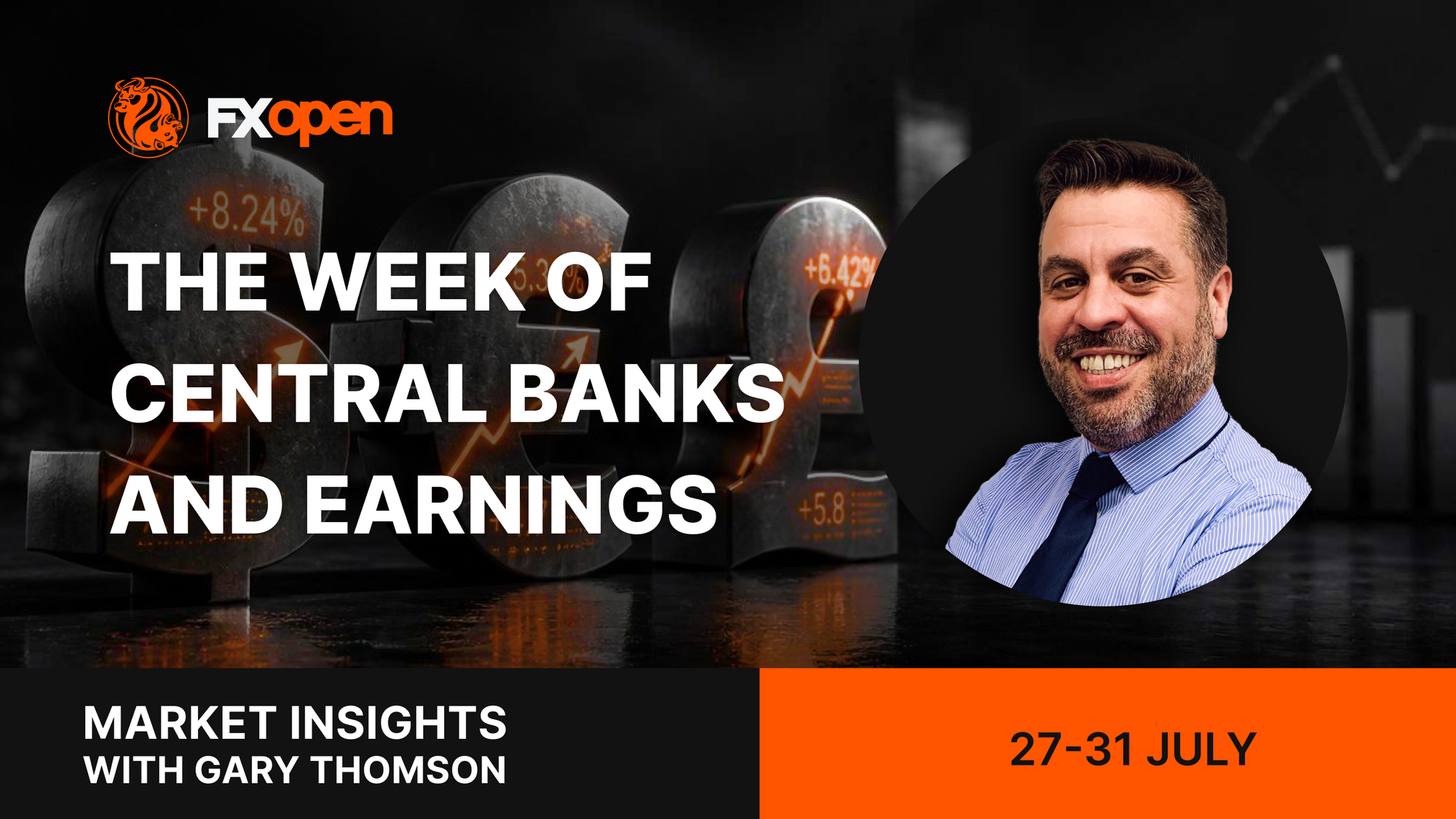
In this video, we’ll explore the key economic events and market trends, shaping the financial landscape. Get ready for insights into financial markets to help you navigate the week ahead. Let’s dive in!
In this episode of Market Insights, Gary Thomson unpacks the strategic implications of the most critical events driving global markets.
👉 Key topics covered in this episode:
✔️Fed Interest Rate Decision — 29 July, 09:00 PM GMT+3
The Federal Reserve is widely expected to leave interest rates unchanged. Investors will be watching Kevin Warsh’s comments for fresh clues on inflation, the labour market and the outlook for monetary policy. Could the Fed’s guidance have a greater impact than the rate decision itself?
✔️Bank of England Interest Rate Decision — 30 July, 02:00 PM GMT+3
Markets also expect the Bank of England to keep rates on hold. With inflation easing but oil prices creating fresh uncertainty, markets will focus on the MPC’s voting split and any signals about future interest rate decisions.
✔️US PCE Price Index — 30 July, 03:30 PM GMT+3
The Fed’s preferred inflation gauge could reshape expectations for interest rates, despite being released after the Fed meeting. Will inflation continue to cool, or could an upside surprise revive expectations of tighter monetary policy?
✔️Microsoft, Meta, Apple & Amazon Earnings
Big Tech earnings will test whether record AI spending is beginning to translate into stronger business performance. Investors will be looking beyond headline results for signs that AI investments are delivering measurable returns.
The combination of central bank decisions, inflation data and Big Tech earnings could drive significant moves across currencies, equity indices and technology stocks as markets head into August.
In this environment, traders closely monitor incoming data, being flexible and getting ready for short-term volatility.
Gain insights to strengthen your trading knowledge.
💬 Don’t forget to like, comment, and subscribe for more market insights every week.
Watch it now and stay updated with FXOpen.
This article represents the opinion of the Companies operating under the FXOpen brand only. It is not to be construed as an offer, solicitation, or recommendation with respect to products and services provided by the Companies operating under the FXOpen brand, nor is it to be considered financial advice.


Farmers in Parana, Brazil, struggling to get banks to loan them cash, became the first to tokenize livestock and place 10 dairy milk cows’ tokens for trade on the country’s B3 national stock exchange. They generated nearly $20,000 in credit backed by their cattle, signaling the potential of tokenizing RWAs as a financing tool.
The dairy cow tokenization in Brazil is a world first and serves as a test in a real-world scenario in which farmers are facing increasingly stringent lending limits imposed by local banks on small agricultural businesses.
“We take the cow, which is a real and tangible asset, and transform it into a digital asset backed by a unique code monitored in real time,” Thiago Martins of Cowmed, a Brazilian Agtec company, told CNNBrasil recently.
Martins and his company did not immediately respond to a CoinDesk request for comment.
“This digitization allows for formal registration with B3 as a movable asset,” Martins added. “The process is simple and gives the producer an advantageous opportunity to finance themselves, opening a new alternative for collateral at a time of strong credit restrictions in agribusiness.”
The biggest meme coin by market capitalization is down 12% over the past month, while its most recent plunge below a critical level suggests sellers may now be in full control.
On the other hand, Ali Martinez pointed to the formation of a rare setup that could be a precursor to a major bull run.
Will Bears Keep the Wheel?
DOGE has tumbled by roughly 5% on a 24-hour scale and is currently worth around $0.069 (according to CoinGecko). The X account BSCN noted that in its weekly anomaly report, Santiment flagged the meme coin as “hype without news,” warning that a price drop below $0.071 would hand control to the sellers.
“Santiment’s core read was that DOGE trades as amplified Bitcoin beta, falling harder in selloffs, and this session proved it on cue,” it added.
According to the analytics platform, a quick reclaim of the key $0.071 zone would repair the setup, but staying beneath it would indicate that bears continue to dominate.
Other market observers who also touched upon DOGE include Kamran Asghar and Scient. The former claimed that the token is approaching “a make or break” level, predicting that “the next big move could shock everyone.” The latter was firmly on the bearish side, expecting a further drop in the coming days.
The Bullish Signals
Contrary to its poor performance as of late, the renowned analyst Ali Martinez outlined that DOGE’s weekly TD Sequential indicator has flashed numerous consecutive buy signals. He labeled the development “a rare setup that could be warning a major bull rally is approaching.”
X user Cryptollica chipped in, too, noting the “dead attention” surrounding Dogecoin recently. At the same time, they believe this is the best moment to jump on the bandwagon, saying:
“Invest when no one else cares. That way, you will make money.”
The institutional interest is also worth mentioning. Earlier this week, spot DOGE ETFs witnessed their first green day since mid-June. However, the capital flowing into these products remains negligible, and appetite from big players like pension funds and hedge funds should seriously increase to positively impact the price.

The post Dogecoin (DOGE) Slips Below a Key Level: Can Bulls Repair the Damage? appeared first on CryptoPotato.
Crypto World
Institutional crypto trading platform LMAX explores strategic alternatives, including sale, IPO
Institutional crypto trading platform LMAX Group is working with Morgan Stanley (MS) and investment bank KBW, part of Stifel (SF), to evaluate strategic options, according to three people familiar with the matter.
The company is exploring a sale or public listing that could value the business at up to $5 billion, the people said, speaking on condition of anonymity because the discussions are private.
While all options remain on the table, including a sale, SPAC merger and IPOs in the U.S. or Europe, a Nasdaq listing is currently the preferred route, one of the people said.
The company is in no rush to go public as crypto markets remain weak, with its core foreign-exchange business providing insulation from the downturn, another person said.
A company spokesperson said LMAX declines to comment on speculation. Morgan Stanley declined to comment. Stifel didn’t respond to a request for comment by publication time.
The London-based firm operates institutional trading venues for foreign exchange and digital assets, providing execution, liquidity and market infrastructure to banks, brokers, hedge funds and asset managers. Regulated by the U.K.’s Financial Conduct Authority, it is known for its agency execution model, transparent order books and low-latency trading infrastructure.
Connecting crypto to TradFi
Deal activity across the crypto sector has accelerated this year as exchanges, fintech companies and market infrastructure firms seek to strengthen their digital asset offerings and capture rising institutional demand.

Bitcoin’s quantum-computing threat is once again taking center stage among market watchers, with Capriole Investments founder Charles Edwards arguing that developers could quickly relieve a major uncertainty if they publicly set out a practical roadmap for quantum-resistant upgrades.
In an interview with Cointelegraph’s Trade Secrets, Edwards said a clear timeline from the Bitcoin Core team—detailing rough steps and target milestones within “two or three months” and follow-through over the subsequent years—would likely be treated by markets as meaningful de-risking rather than distant theory.
Key takeaways
- Charles Edwards says Bitcoin’s response would likely be swift if developers publish a concrete quantum-hardening roadmap soon.
- He argues that the quantum risk is currently suppressing prices and is “more than priced in,” based on his own valuation framework.
- Edwards estimates the threat’s impact as part of a larger discount, while stressing that today’s pricing may change if timelines shift.
- He points to expert industry timelines for “Q Day” (the point quantum systems could reverse-engineer private keys) as underpinning his assumptions.
Why quantum risk remains a market-moving uncertainty
Edwards’ core concern is that sufficiently powerful quantum computers could eventually undermine the cryptographic assumptions that secure the Bitcoin network, potentially affecting how wallets protect private keys.
Within the broader Bitcoin community, the question of whether and how to modify Bitcoin to address quantum threats has become contentious. Some argue that major protocol changes could conflict with Bitcoin’s long-standing ethos of minimal, conservative alterations. Others believe quantum computers may be too far away to justify urgent changes—and warn that rushed “cures” could introduce new risks.
Edwards says the uncertainty has already affected investor sentiment. He also noted that large institutional participants have acknowledged long-term quantum risk. According to remarks referenced in the interview, BlackRock has pointed to quantum computing as a potential risk factor in materials for spot Bitcoin ETF investors.
A roadmap, not just debate, could change how markets price the threat
Edwards’ most direct claim is about timing and market psychology: he believes a credible and transparent development plan would be interpreted as a fast-moving improvement in Bitcoin’s risk profile.
He specifically described what he would consider “amazing news” for markets: if the Bitcoin Core team were to outline a roadmap within a couple of months, including rough steps and a multi-year delivery plan, then investors could re-rate the probability of worst-case scenarios.
Edwards added that such clarity could “discount a lot of the risk pretty much overnight,” and he even floated a price-response expectation of “double digits” in that scenario. For him, the quantum question is “on the back burner” and, to date, the Bitcoin Improvement Proposals (BIPs) addressing the issue are “not really” a genuine solution.
That framing matters because it positions the quantum debate not only as a technical challenge, but as a communications and execution problem. In Edwards’ view, markets have been discounting risk without a concrete mitigation pathway visible to the public—so the moment that pathway becomes legible, repricing could follow.
How Edwards’ valuation links quantum timelines to “Q Day”
Edwards also offered a quantitative perspective on how he sees Bitcoin priced relative to his notion of “fair value.” He estimated that Bitcoin is currently around 40% below fair value when measured against energy value, and he attributed roughly a 30% discount specifically to quantum risk. On that basis, he argued the risk is “more than priced in.”
He stressed that his conclusion is conditional on information available today, rather than unknown future developments. If quantum timelines accelerate or new information shifts expectations about the arrival of “Q Day,” the discount could widen; if mitigation becomes clearer, it could narrow.
In the interview, Edwards said his model is based on timelines discussed by leading quantum computing companies and researchers for when quantum systems could reach the point where attackers might reverse-engineer private keys from public keys. He suggested that this window sits in the “four to five year range, give or take, a few years.”
He further argued that even after the threat window arrives, Bitcoin would still need time to design and implement an effective solution. Edwards pointed to BIP-360 author Ethan Heilman’s view that the development and rollout of a fix could take years.
“If we’re gonna get into maths, it’s pretty simple; it is just an aggregation of those expert opinions. So it’s based on that, and based on the fact that there’s currently no solution for Bitcoin.”
Edwards said the key asymmetry is that while investors have already priced in the quantum risk “today,” the situation could still deteriorate—or improve—depending on whether there is a credible mitigation plan and how external quantum roadmaps evolve.
He also described the resulting distribution of outcomes as “skewed more probabilistically to the upside” from the current level, precisely because a mitigation roadmap would reduce uncertainty that is currently weighing on sentiment.
What other chains’ progress means for Bitcoin
The interview also tied Bitcoin’s preparation to broader sector momentum. Edwards cited that Ethereum is scheduled to complete its post-quantum overhaul by 2029, which he said could bring renewed attention to whether Bitcoin has done enough by then.
For investors, the practical takeaway is not that Bitcoin must copy another network’s approach, but that other ecosystems’ timelines can shift market expectations. When one major platform moves toward quantum-resistance on a defined schedule, it can raise the question of whether Bitcoin is lagging—or simply taking a different engineering path.
As of the time Edwards discussed these claims in the interview, Bitcoin was trading around $65,270, and he compared that to its October all-time highs of about $126,100—underscoring how much of the asset’s prior peak remains unrecovered.
Going forward, the market will likely watch two things closely: whether Bitcoin Core and related development groups publish a concrete, milestone-based plan for quantum-hardening, and whether external quantum roadmaps shift expectations about when “Q Day” could realistically arrive. Until then, Edwards’ argument suggests Bitcoin may continue to carry a quantifiable discount tied to uncertainty—even as the debate over how to preserve Bitcoin’s ethos continues.

CryptoBreaking is excited to announce another exclusive giveaway for our community in partnership with The Bitcoin Conference.
We are giving away 3 free General Admission passes to Bitcoin Asia 2026, taking place at the Hong Kong Convention and Exhibition Centre (HKCEC) on August 27–28, 2026.
This is your chance to attend Asia’s largest Bitcoin conference completely free and connect with thousands of Bitcoin enthusiasts, investors, entrepreneurs, developers, and industry leaders from around the world.
Presented by Metaplanet and organized by BTC Inc., Bitcoin Asia 2026 is expected to welcome more than 10,000 attendees from over 125 countries, bringing together the East and West Bitcoin ecosystems for two days of networking, education, and business opportunities.
If you’d like the chance to attend, simply register through the form embedded on this page.
Entering is simple.
Just complete the registration form below with your:
- First name
- Last name
- Email address
Once submitted, you’ll automatically be entered into the draw to win one of the 3 General Admission passes.
Important: Registration through this page is the only valid way to enter the giveaway.
Three lucky winners will each receive one Bitcoin Asia 2026 General Admission pass.
The giveaway covers the conference ticket only.
Travel, accommodation, visa expenses, and any ticket upgrades are not included.
Bitcoin Asia has quickly become one of the most important Bitcoin-focused conferences in the region.
The 2026 edition will feature leading voices from across the Bitcoin ecosystem, including institutional investors, policymakers, entrepreneurs, developers, and some of the industry’s most recognized personalities.
Confirmed speakers include:
- Balaji Srinivasan
- Justin Sun
- Simon Gerovich
- David Bailey
- Gracy Chen
- Hugh Hendry
- Bilal Bin Saqib
- Johnny Ng
- and many more.
Beyond the keynote sessions, attendees will enjoy networking opportunities, exhibitions, investor meetings, and discussions focused on Bitcoin adoption throughout Asia and globally.
Prefer not to wait for the giveaway?
CryptoBreaking readers can receive 10% off Bitcoin Asia 2026 tickets by using the promotional code:
CryptoBreaking10
at checkout.
For tickets and more information, visit:
- Open worldwide.
- Only one entry per person.
- Registration is valid only through the form embedded on this page.
- Three winners will be selected at random.
- Each winner will receive one General Admission pass.
- Winners will be contacted by email.
- If a winner does not respond within the requested timeframe, another winner may be selected.
- Travel, accommodation, visa costs, and personal expenses are not included.
By entering this giveaway, you agree to subscribe to the CryptoBreaking newsletter.
Your information will only be used for giveaway administration, winner notification, and future CryptoBreaking updates.
Winner information may be shared with the event organizers solely for ticket registration purposes.
You may unsubscribe from our newsletter at any time.
Don’t miss your chance to attend Bitcoin Asia 2026 in Hong Kong for free.
Complete the form below today for your opportunity to win one of three General Admission passes and join thousands of Bitcoin enthusiasts from around the world.
Good luck!
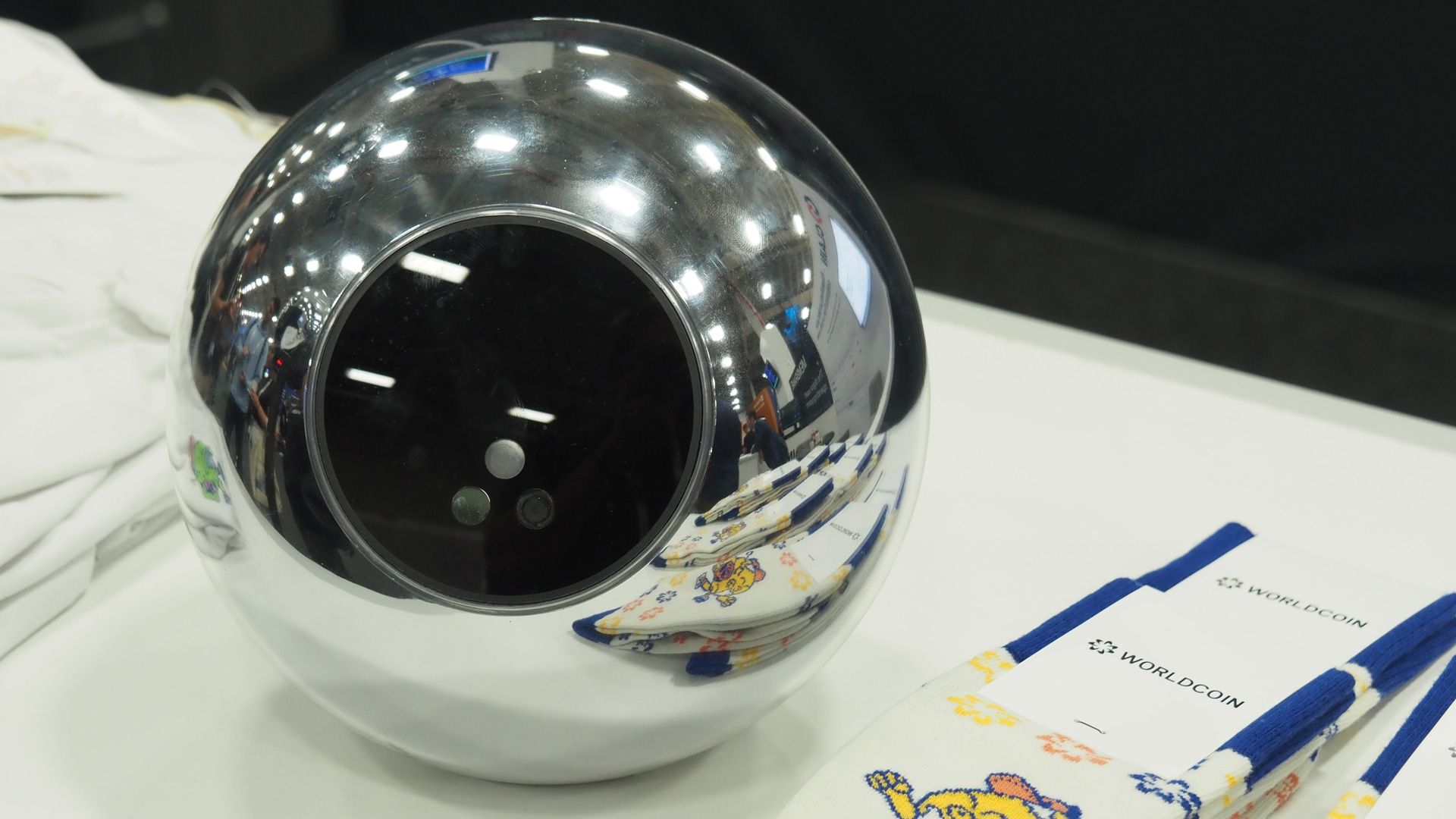
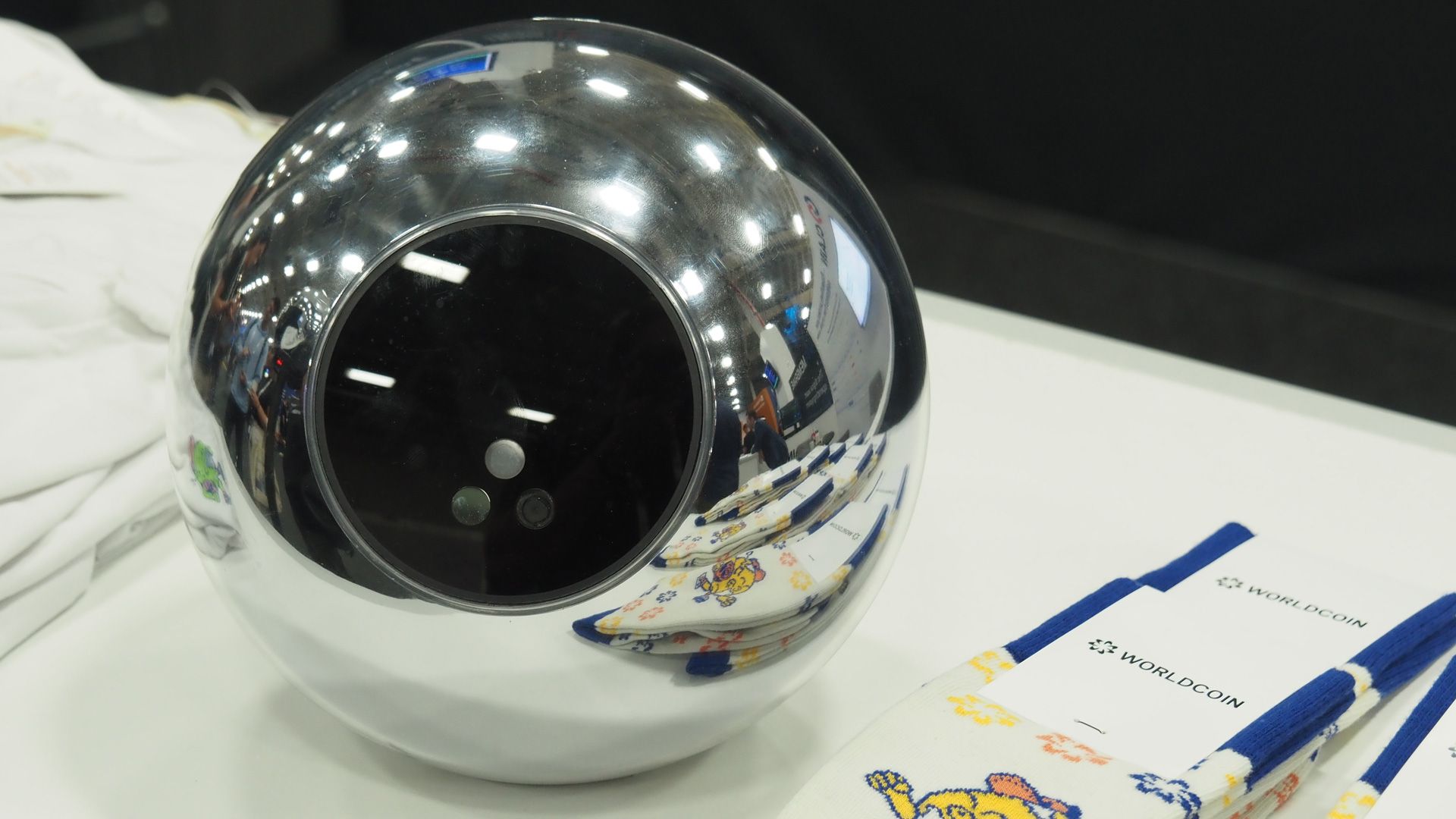
Poised to become the world’s most prominent “real humans’ network”, the project previously known as Worldcoin aims to establish an identity layer to distinguish unique individuals from automated bots. The protocol relies on custom hardware, known as an Orb, to issue credentials without compromising user privacy.
“World’s technology and proof of human and variations are among the most important building blocks to secure and verify interactions in an increasingly digital driven world,” said Tom Lee, an Eightco Holdings board member who also serves as the chairman of Bitmine, in a statement.
World said the investment comes as it shifts from building the network to scaling the utility.
To date, more than 39 million people have joined the World Network, with more than 18 million humans verified by an Orb, World said in the funding announcement press release. The network has utilized more than 475 million World ID proofs since its launch, scaling its capacity alongside the rollout of its updated, enterprise-ready infrastructure, it added.
World, the Sam Altman-backed digital identity project, unveiled in April what it called its most significant upgrade yet to World ID, positioning the system as “full-stack proof of human” infrastructure aimed at consumers, enterprises and AI agents.

Jensen Huang just made his first-ever post on X (Twitter). The Nvidia chief used it to defend open models and warn Washington against locking them down.
He means open-weight artificial intelligence (AI), not the similarly named company OpenAI. These are models that anyone can download and reuse for free.
Why Nvidia is Fighting for Open Models
Huang shared the letter on Friday. Microsoft, Meta, and Hugging Face are among its 25 signers.
The group calls open models key to American AI leadership. They compare them to open-source software, which now powers much of the internet.
The timing stands out. About a year ago, the government backed open models in its own AI Action Plan. It even called them a strategic asset for the country.
Officials are now weighing curbs on Kimi K3 and other Chinese models. Kimi K3 launched on July 16 from China’s Moonshot AI. With 2.8 trillion parameters, it ranks among the best anywhere, open or closed.
The worry is not new. In January 2025, a cheap model from China’s DeepSeek sent shockwaves through Nvidia. The chip giant lost nearly $600 billion in a day. That was a record at the time.
The Safety Case for Openness
The letter also makes a safety case. Open models let many teams check the code. They can spot flaws and fix them fast. Closed models sit with a few firms, which the group calls a weak point.
The letter draws one more line. It separates distillation from theft. Distillation trains one model using another’s output. The group calls that normal research, not stealing.
This fight is live. White House adviser Michael Kratsios says Moonshot copied a US model to build Kimi K3.
Two big names are missing. OpenAI and Anthropic did not sign. They have instead warned Washington that strong Chinese open models are risky.
So the field is split over how open AI should be. Chinese models, meanwhile, already outpace US rivals in daily use.
“Policymakers have an important opportunity to act… keeping the frontier plural by avoiding premature restrictions on open models that stifle competition or drive innovation overseas,” the signatories make that case in their letter.
Follow us on X to get the latest news as it happens
The next few weeks will show if Washington listens.
The post Nvidia CEO Jensen Huang Makes Open AI Plea in First-Ever X (Twitter) Post appeared first on BeInCrypto.
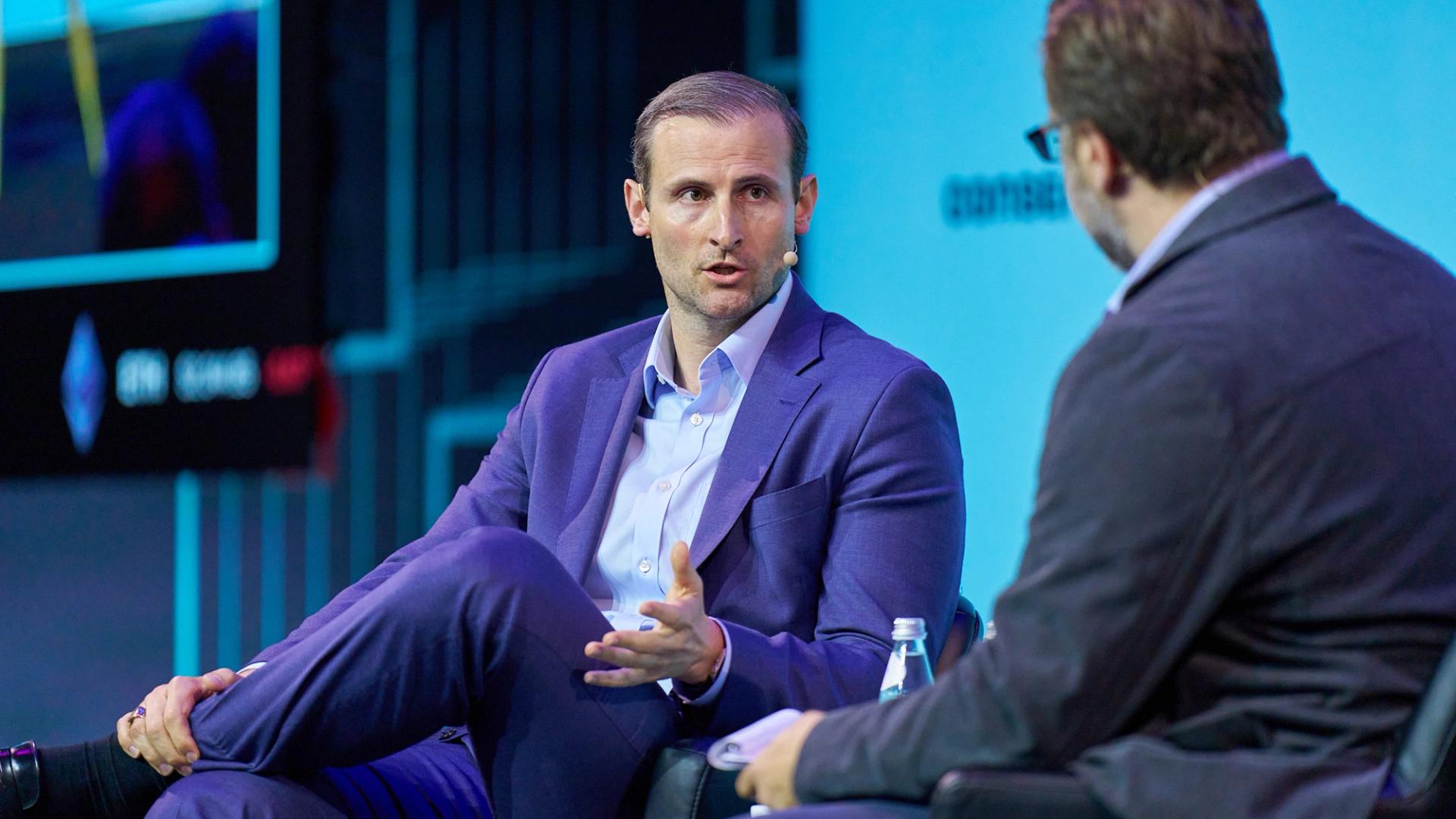
This negotiation over the government conflict-of-interest piece had delayed progress on the Clarity Act for months — now potentially beyond the window in which it could most easily become law in 2026. This week’s release of the final working draft of Clarity included the first ethics language openly circulated, so Democrats are now responding — many of them with disdain.
“Donald Trump raked in more than $1.4 billion from cryptocurrency ventures, and this bill does nothing to prevent him from vacuuming up his next $1.4 billion in crypto profits,” said Senator Elizabeth Warren, the Massachusetts Democrat who is her party’s ranking member on the Senate Banking Committee, referring to the crypto earnings Trump disclosed for 2025. She said the president will “simply ignore the law” as it’s proposed.
So what does the language do? It temporarily bans senior government officials (including the president, vice president, members of Congress and federal judges) from issuing or sponsoring cryptocurrencies.
However, it excuses activity in the past, and there are plenty of crypto business pursuits that don’t check the boxes of issuance or sponsorship, so it’s unlikely Trump would be forced to abandon some of his most prominent ties, such as his ownership stake in World Liberty Financial. He might have to create some legal distance for himself, such as placing certain investments in trusts that he can’t access directly.


Samsung Electronics plans to add stablecoin support to Samsung Wallet, expanding its mobile payments and rewards platform to include digital assets.

Jellycat pop-up shop at Castle Howard – when does it close?

Scotch whisky levy lifted as Trump imposes new wave of US tariffs

Weekly Market Insights with Gary Thomson: The Week of Central Banks and Earnings


-

 Fashion7 days ago
Weekend Open Thread – Corporette.com
-

 Politics6 days ago
The House | The City of London can help the new chancellor deliver growth in every postcode
-

 Crypto World6 days ago
Ripple Payments Joins MiCA With 14 Firms, Does It Mean Anything For XRP?
-

 Politics5 days ago
Democrats look to World Cup watch parties to register thousands of voters
-

 Crypto World7 days ago
Ripple wins EU-wide access as ESMA adds it to MiCA register
-

 Crypto World3 days ago
Grayscale Files For Worldcoin ETF, WLD Registers Sharp Rise
-

 Tech4 days ago
Sail Virtually Aboard The “Itanic” With IA-64 Emulator
-

 NewsBeat4 days ago
Unregistered fitter used Gas Safe logo on business flyers
-
 Tech4 days ago
Turtle Beach Command Series KB7 review: a nifty screen-equipped gaming keyboard
-

 News Videos5 days ago
Big Money Is Entering XRP
-
 Business2 days ago
New Jersey voter registration controversy explained: How 6,600 noncitizens got on the rolls, and what happens next
-
 Crypto World6 days ago
Kaspersky exposes OkoBot’s 20-module crypto wallet attack
-

 Business7 days ago
Airlines warn Sunshine Protection Act could disrupt flight scheduling
-
 Entertainment3 days ago
Johnny Depp’s R-Rated Gothic Cult Classic Gets New Release Ahead of Sydney Sweeney Remake
-

 NewsBeat6 days ago
Durham County Council to send out electoral registration emails
-

 Crypto World2 days ago
Ethics, other provisions in crypto Clarity Act to be further discussed
-

 Crypto World6 days ago
MiCA Licensing Faces Delays as ESMA Adds 14 CASPs to Register
-

 Crypto World6 days ago
Chip Stocks Enter Bear Market After Moonshot Ai Unveils Kimi K3 Model
-
 NewsBeat4 days ago
Shanghai science forum photos show China’s AI and robotics advances in rivalry with US
-

 Tech4 days ago
Watch Flock Safety CEO Garrett Langley discuss the future of surveillance at TechCrunch Disrupt 2026
You must be logged in to post a comment Login