Connect with us

NewsBeat

Ballymena dad laces up for his biggest challenge yet inspired by two sons

Published

on

Belfast Live

“Both our boys have additional needs and we believe there is not enough in Northern Ireland to help families feel supported, especially during school closures.”

A Co Antrim dad is preparing for his toughest challenge yet this weekend after being inspired by his two sons.

Advertisement

Dad-of-two Daz Tweed, 36, from Ballymena is attempting to run 100km on Sunday, March 1 for an organisation close to his heart: a new community-led initiative, WAVES, that puts children with additional needs at the heart of everything they do.

WAVES (Welcome. Accept. Value. Enjoy. Shine.) was set up to help kids with additional needs feel accepted and included while also providing support to their parents.

READ MORE: ‘Our community paediatric care team has been a lifeline for our family’READ MORE: Co Down family rallies around ‘precious’ Paige battling one of the world’s rarest illnesses

Formed by a group of passionate parents and professionals in partnership with Ballykeel 2 & District Community Association, it was born out of a shared concern: children with additional needs were being left behind, especially during school holidays and weekends. With no inclusive local activities or safe spaces, families felt isolated and unsupported.

Advertisement

Determined to change that, the group began small—introducing quiet hours at community events and launching “Lads, Dads and Dames,” a monthly stay-and-play evening designed to support fathers and their children in a relaxed, welcoming environment.

The response was overwhelmingly positive; today, the initiative is much more than just a summer scheme, offering vital respite for families and a chance for children to thrive, connect, and shine.

This isn’t Daz’s first big challenge; on World Down’s Syndrome Day, March 21, last year he started to run 21km for three days in a row to raise funds for the Causeway Down’s Syndrome Support Group.

The 21km distance represented the third copy of Trisomy 21, the genetic condition known as Down’s Syndrome. This cause was also deeply personal to Daz, as his 14-year-old stepson, Jack, has Down’s Syndrome and benefits greatly from the group’s services. Daz and his wife, Amber, also have a six-year-old son, Mikey, and both boys attend Castle Tower School in Ballymena.

Advertisement

Daz told Belfast Live: “Both our boys have additional needs and we believe there is not enough in Northern Ireland to help families feel supported, especially during school closures. WAVES started with a summer scheme last year and it helped us massively as well as other families in Ballymena and surrounding areas. With a little bit of fundraising hopefully they can offer more in 2026 at Easter, Halloween and Christmas etc so I’m trying to raise money for them.

“I started training for this in December with something called the Advent Calendar Challenge where you run a kilometre for every day of the month so December 1st was one kilometre and 2nd was 2 right up to 24 kilometres on Christmas Eve. Then I had a week off over Christmas and in January I started an eight-week block which is finishing this week.

“The plan for Sunday is to start at 6am from the Ecos car park and do a 20 kilometre lap of Ballymena, and then I do 24 kilometre loops of the Ecos. It’s more for convenience for supplies and so that people can join in. I will be hoping to complete the 100km in 12 hours so it’s by far my biggest challenge yet to support an organisation that has helped our family and many others who have kids with additional needs.”

Advertisement

Daz has launched a GoFundMe page as part of his campaign, which has already raised over £500 towards the £2,000 target and you can donate here.

Want to see more of the stories you love from Belfast Live? Making us your preferred source on Google means you’ll get more of our exclusives, top stories and must-read content straight away. To add Belfast Live as a preferred source, simply click here.

Source link

Advertisement
Continue Reading
Click to comment

Leave a Reply

Your email address will not be published. Required fields are marked *

NewsBeat

Foreign Office warns UK citizens to shelter as flights cancelled after Iran strikes

Published

on

Belfast Live

The Foreign Office has issued urgent travel warnings for UK citizens in the Middle East following co-ordinated US-Israel strikes on Iran, with airlines cancelling flights

The Foreign Office has issued a significant dual warning for UK tourists to seek shelter and avoid travel following a co-ordinated attack by Israel and the US on multiple cities in Iran.

Foreign Office officials updated their travel guidance to advise against all travel to Israel, Palestine and other nations in the Middle East following the strikes in Iran this morning.

Advertisement

Its website said: “Due to the threat posed by escalation in the region, we recommend against all travel to Israel and Palestine. On 28 February 2026, the US and Israel commenced joint military action in Iran, Israeli airspace has now closed.”

READ MORE: Urgent Mexico travel warning after El Mencho death sparks cartel violenceREAD MORE: Pilot’s wife shares method to carry third bag on plane for free without breaking rules

UK citizens in the Middle East have been urged to take “sensible precautions” as Iran retaliated with missile attacks in the Gulf, reports the Mirror.

Iran has since launched strikes on Israel and Qatar as well as other targets in the Middle East, prompting the UK Government to urge citizens to take shelter. In updated guidance for travel to Bahrain, the United Arab Emirates (UAE), Qatar and Kuwait, officials warned people to “immediately shelter in place.”

Advertisement

Advice on the website said: “Remain indoors in a secure location, avoid all travel and follow instructions from the local authorities.”

Explosions have been reported across the UAE, Bahrain and Kuwait. Israeli authorities have also confirmed that Iran launched missiles towards the country in response to the strikes.

Iran’s security council has pledged a “crushing” retaliation to the military action. It stated the “enemy” mistakenly believed Iran would “surrender to their petty demands through such cowardly actions.”

The UK Government has emphasised that its foremost concern is “the safety of UK nationals” throughout the Middle East. A Government spokesperson commented: “Iran must never be allowed to develop a nuclear weapon and that is why we have continually supported efforts to reach a negotiated solution.”

Advertisement

The statement added: “As part of our longstanding commitments to the security of our allies in the Middle East, we have a range of defensive capabilities in the region, which we have recently bolstered. We stand ready to protect our interests. We do not want to see further escalation into a wider regional conflict.”

Several airlines have suspended flights to and from Middle Eastern destinations “with immediate effect” following the Israeli and US strikes on Iran. WizzAir, Qatar Airways and Virgin Atlantic have all grounded services to the area on Saturday.

Virgin announced it has axed its VS400 service from Heathrow to Dubai, scheduled to leave at 10.10pm, “as a precautionary measure”. A spokesperson stated: “The safety and security of our customers and people is always our top priority and we apologise for any inconvenience caused.”

WizzAir director Rachel Wray announced the suspension of all flights to Israel, Dubai, Abu Dhabi and Amman.

Advertisement

She stated: “Wizz Air confirms that, following the recent escalation of the security situation in Iran, the airline is suspending all flights to and from Israel, Dubai, Abu Dhabi and Amman with immediate effect up until and including 7 March.”

Qatar Airways announced that flights to and from Doha had been halted owing to the closure of Qatari airspace, whilst British Airways confirmed it had cancelled services to Tel Aviv and Bahrain until 3 March.

Reports indicate that an overnight BA flight from Heathrow to Doha has turned back and is heading to London. A British Airways spokesperson commented: “We are closely monitoring the situation and have taken the operational decision to cancel our flights to Tel Aviv and Bahrain up to and including 03 March and have cancelled today’s service to Amman.

“Safety is always our top priority, and we’re contacting our customers to advise them of their travel options.”

Advertisement

Want to see more of the stories you love from Belfast Live? Making us your preferred source on Google means you’ll get more of our exclusives, top stories and must-read content straight away. To add Belfast Live as a preferred source, simply click here.
Source link

Continue Reading

NewsBeat

3 hidden passport rules that will prevent you from flying

Published

on

3 hidden passport rules that will prevent you from flying

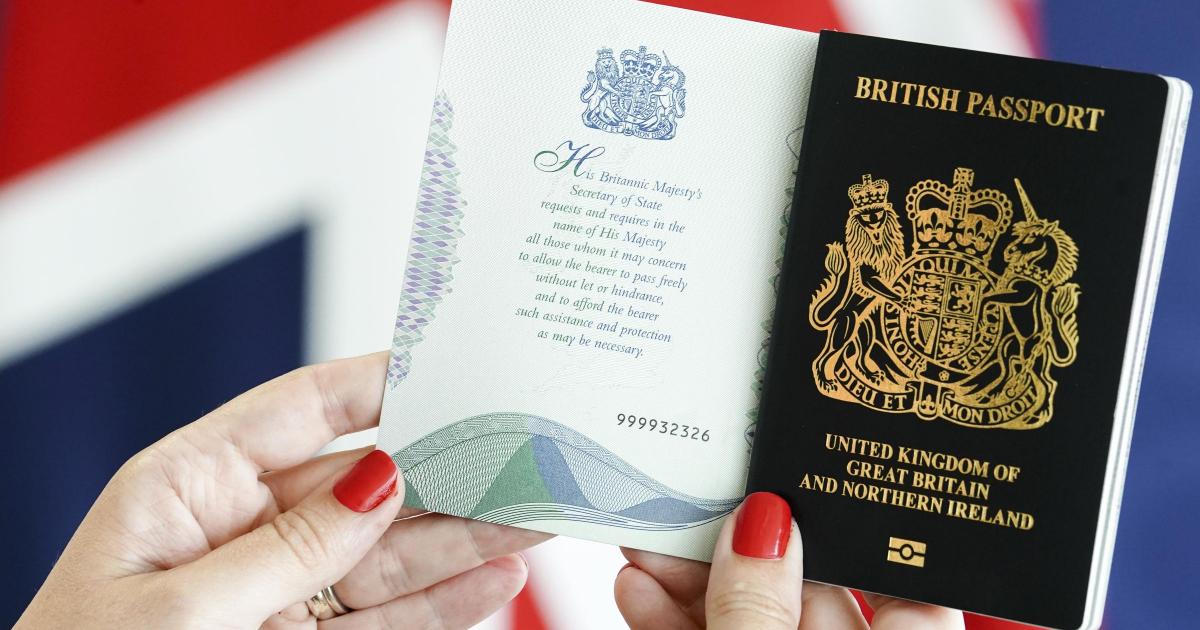
There are plenty of details travellers need to be aware of in the build-up to their flight, and passports are a crucial part of that.

One thing that people might not know is that your passport needs to be in good condition, with no ripped or torn pages, water damage or holes.

This is so border control can make sure it is readable and hasn’t been fraudulently tampered with.

Advertisement

However, there are a few other rules that people need to be aware of and keep in line with.

3 passport rules that will stop you from flying

Two or more blank pages needed in passport

Your passport has lots of blank pages for border control to stamp when arriving or leaving countries.

However, what you might not know is that some nations require there to be at least two blank pages, otherwise they won’t let you through.

Natasha Inglis, Implementation and Client Success Director at Good Business Travel, explains: “Many countries require at least two completely blank visa pages (in some cases more) to allow room for entry and exit stamps or full-page visas.

Advertisement

“These rules are in place to make sure immigration officials have the space to properly document your movements and avoid complications at the border.

“Airlines may also check this at the boarding gate, as they could face fines if a passenger is later refused entry at immigration.

“This means travellers can be denied boarding before they even leave the UK if their passport doesn’t meet page requirements.”

Advertisement

Many European countries have this restriction, alongside African nations like South Africa and Kenya and Asian countries such as India, Thailand and Indonesia.

In Namibia, it is required to have up to six blank pages in your passport.

The UK passport has 34 pages, so it shouldn’t fill up too quickly, although if you’re a frequent flyer it might pose more of a problem.

Dr Mohanjeet Brar, MD of Gamewatchers African Safaris, suggests getting a jumbo passport if you fall into that category.

Advertisement

He said: “The UK offers passports with more pages (48 instead of 34), ideal for frequent travellers or those planning multiple-entry visas.”

Between three and six months of validity needed on passport

Since 2021, the EU has considered British travellers as ‘third country nationals’, which means travellers’ passports must have a minimum of three months’ validity remaining on the date you leave the EU.

Ian McIlrath, Managing Director at Ski Solutions, shares that you’ll need six months at the very least when visiting countries such as China, Australia, Thailand, Turkey, and Egypt.

Since these requirements vary by destination, you should always confirm the specific rules for your chosen country at the time of booking. 

Advertisement

10-year issue date

Sean Doolan, director of ancillaries at travel insurance broker Swinton Travel Insurance, shares that if you’re travelling to EU or Schengen countries, your passport must have been issued within the last 10 years.

This is alongside the three months of validity needed as well.

He added: “If you fail to satisfy either of these requirements, you won’t be allowed to board your flight, because airlines are fined by governments if they carry passengers whose documents are not in order.”

Advertisement

UK passports are only issued for 10 years, so you might be wondering why this could be an issue.

This is because a previous rule meant you could carry up to nine months from an old passport onto a new one, which was the case before September 2018.

Matt Bramich, Operations Director at Inghams Walking, shares: “However, some UK residents will still have a valid passport that was issued before 10 September 2018, which may look like it’s valid for longer than 10 years.

“That’s because prior to this change, UK citizens were able to carry up to nine months from an old passport into a new one.

Advertisement

“However, this rule no longer applies for travel to the EU, which can cause confusion. 

“In simple terms, the EU border authorities assess the validity based on the date of issue, not the expiration date.

“So, even if one of these passports still has months remaining before its printed expiry, it will be refused.” 

Advertisement

New ETIAS rules launching in 2026

Alongside passport rules you need to keep in mind, travel to EU countries from the UK will be changing soon.


Recommended reading:


The European Travel Information and Authorisation System (ETIAS) is expected to begin operating in late 2026.

Once live, UK passport holders visiting 30 European countries for up to 90 days will need approval before travelling.

Advertisement

This will cost €20, but will be free for under-18s and over-70s and will be valid for three years or until your passport expires.

Source link

Advertisement
Continue Reading

NewsBeat

What time is WWE Elimination Chamber 2026 today? TV channel, live stream, confirmed match card and results

Published

on

What time is WWE Elimination Chamber 2026 today? TV channel, live stream, confirmed match card and results

The road to WrestleMania makes a quick pit stop in Chicago for WWE Elimination Chamber tonight.

WWE’s second Premium Live Event (PLE) of 2026 will be headlined by two Elimination Chamber matches as 12 superstars step inside the brutal structure chasing championship opportunities at the grandest stage of them all.

The chamber is built with two miles of chain and ten tons of unyielding steel. The match begins with two superstars in the centre of the cage, while the remaining four are locked inside glass pods.

At random intervals, a pod opens, releasing another superstar into the fray. This process repeats until all competitors are released into the match. A superstar is eliminated by pinfall or by submission, with the last remaining competitor emerging victorious.

Advertisement

Jey Uso was scheduled to battle LA Knight, Cody Rhodes, Trick Williams, Randy Orton and Je’Von Evans in the men’s chamber match. However, after being attacked on Smackdown, he has since been replaced by Logan Paul after he pinned Jacob Fatu in controversial circumstances,

CM Punk, however, has one more obstacle to clear before turning his attentions to Roman Reigns. The Chicago-native puts the title on the line against Finn Balor in a rematch from the January 19 episode of WWE Monday Night Raw in Belfast, Northern Ireland.

Can Finn Balor shock the world and capture the World Heavyweight title?

WWE

Advertisement

The other championship match on the card sees AJ Lee bid to take the WWE Women’s Intercontinental title off Becky Lynch as the pair renew a rivalry that dates all the way back to last autumn.

As Liv Morgan, the winner of the women’s 2026 Royal Rumble, has chosen Stephanie Vaquer as her opponent at WrestleMania 42, WWE Women’s championship Jade Cargill will face the winner of the second Elimination Chamber match of the night.

Former world champions Tiffany Stratton, Rhea Ripley, Alexa Bliss and Asuka have all qualified to give the showdown extra star power, though Kiana James and, particularly, Raquel Rodriguez possess a mean streak that means they must not be underestimated.

Source link

Continue Reading

NewsBeat

Amazon and eBay recall toy due to asbestos contamination

Published

on

Amazon and eBay recall toy due to asbestos contamination

The Office for Product Safety and Standards (OPSS) issued an urgent warning about the Colour Day branded Sand Art Activity Kit sold via Amazon and eBay as it presents a “risk to health”.

The product presents a risk to health as the sand included in the set may be contaminated with a small quantity of asbestos.

Safety chiefs warn that asbestos is a banned substance because it presents a risk of cancer even at low levels of inhalation exposure.

Advertisement

Breathing in high volumes of asbestos over a long period of time can cause asbestosis, which makes breathing difficult and enlarges the heart and it can take many years to develop.

Asbestos-related diseases are thought to kill around 5,000 people each year in the UK alone.

The product has been removed from the online marketplaces and shoppers are urged to contact the distributor for a full refund.

Customers are advised to stop using the product immediately, place it in a heavy duty bag, double tape it, label it clearly and keep it out of reach of children.

Advertisement

If the sand has been used, safety chiefs are urging people to wear gloves and a mask, clean up sites where the product was used using wet cloths to avoid generating dust.

The sand, gloves, mask and cloths then need to be double bagged, labelled and kept out of the reach of children.

An OPSS spokesperson said: “The product has been recalled from end users by eBay and Amazon. We recommend owners stop using the product immediately and keep it out of the reach of children.

“Stop using the product immediately. If the sand is still in the packaging, place it in a heavy-duty plastic bag, double tape it securely, label it clearly and store in a secure location out of reach of children.

Advertisement

“If the sand has been used, clean up sites where the product has been used using wet cloths to avoid generating dust. Wear gloves and a mask. Double bag the sand, gloves, mask and cloths.

“Keep children and other people away from the areas where the sand has been used until the area has been cleaned.

“Contact the distributor you purchased it from for a full refund and dispose of the product in your general household waste.”

An Amazon spokesperson said: “Customer safety is our top priority. When we are informed that a product is subject to a recall, we act swiftly to remove the product from sale and contact affected customers, including sharing any safety guidance issued by regulators.”

Advertisement

An eBay spokesperson added: “At eBay, we work closely with regulators, including the Office for Product Safety and Standards, to monitor for product recalls.

“Consumer safety is a top priority at eBay, and all listings for this item have been removed from our platform.”

Source link

Advertisement
Continue Reading

NewsBeat

Martin Compston admits he’s on strict diet ahead of filming Line of Duty soon

Published

on

Martin Compston admits he's on strict diet ahead of filming Line of Duty soon
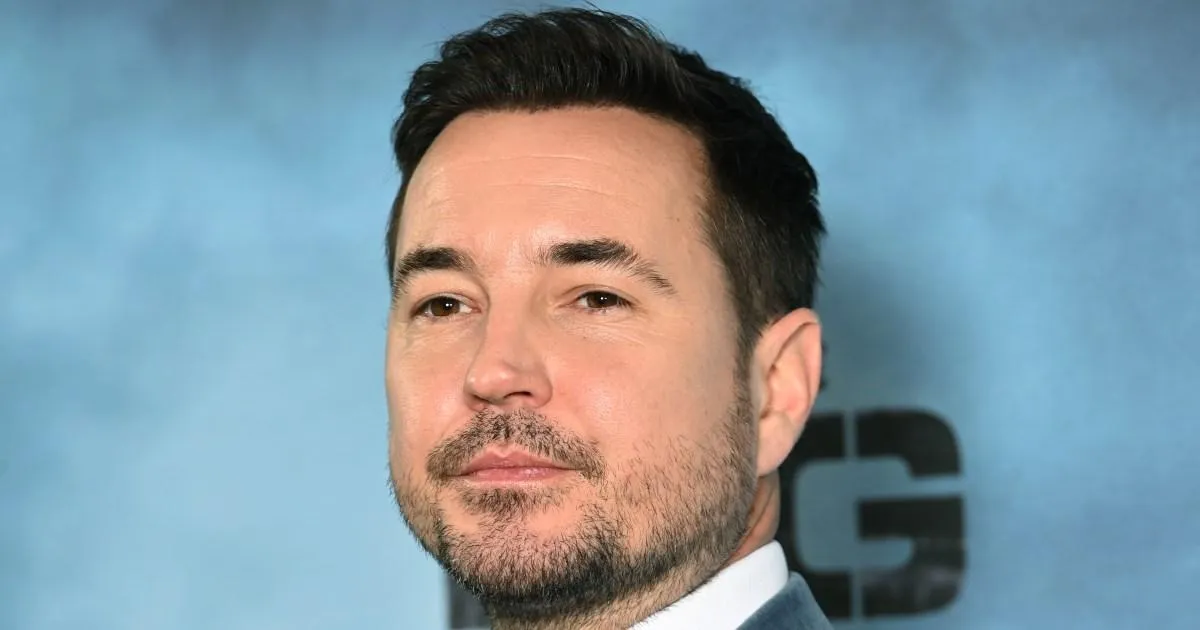
Martin Compston plays Detective Inspector Steve Arnott in Line of Duty (Picture: Getty Images)

Line of Duty star Martin Compston has revealed that he’s begun dieting ahead of his return to the hit BBC crime drama.

Martin, 41, plays Anti-Corruption Unit Detective Inspector Steve Arnott – best known for his choice of tight-fitting waistcoats on the show.

After years of speculation, it was recently announced that Line of Duty would be returning for a seventh series with all principal members of the cast.

Martin will reprise his role alongside Vicky McClure and Adrian Dunbar as AC-12’s top cops, with filming set to begin this Spring.

Advertisement

The actor has already begun preparing for the new series by undergoing a strict diet, under the supervision of his wife, Tianna Chanel Flynn.

This involves cutting out all sugar, and sticking to a strict menu of organic food.

Line of Duty press pic Vicky McClure, Martin Compston and Adrian Dunbar in Line of Duty.
Vicky McClure, Aidrian Dunbar and Martin Compston will return for Line of Duty series seven (Picture: BBC)
WARNING: Embargoed for publication until 00:00:01 on 23/03/2021 - Programme Name: Line of Duty S6 - TX: n/a - Episode: Line Of Duty - Generics (No. n/a) - Picture Shows: *NOT FOR PUBLICATION UNTIL 00:01HRS, TUESDAY 23rd MARCH, 2021* DS Steve Arnott (MARTIN COMPSTON) - (C) World Productions - Photographer: Steffan Hill
Martin is undergoing a strict diet so as to fit back into Steve’s trademark waistcoat (Picture: BBC)

Speaking to The Times newspaper, Martin said: ‘I’m filming series seven of Line of Duty in the Spring, and before I start a new project I do this thing called the Whole30 organic diet, orchestrated by my wife, who, unlike me, is a phenomenal cook, where you totally cut out sugar.’

Martin and actress Tiana have been married for ten years, after meeting at a bar in a Los Angeles hotel, and now share one son together.

Describing his new diet, he continued: ‘Yesterday she made chicken wings, asparagus, cabbage and a miso sauce for lunch, which all helps me fit nicely into my Steve Arnott waistcoat.’

Advertisement

Martin didn’t share whether or not she’s cooking these meals with gas.

For use in UK, Ireland or Benelux countries only Undated BBC handout photo of Robert Carlyle who is to star as guest lead in the new series of Line of Duty. The 64-year old actor, known for Trainspotting and The Full Monty, will portray a specialist rifle officer Detective Constable Shaun Massie in the seventh series of the BBC show. He will join actors Martin Compston, Vicky McClure and Adrian Dunbar who will reprise their roles in the next instalment of Jed Mercurio's hit crime thriller, which is due to air next year. Issue date: Thursday February 19, 2026. PA Photo. Photo credit should read: Austin G Shirley/BBC/PA Wire NOTE TO EDITORS: Not for use more than 21 days after issue. You may use this picture without charge only for the purpose of publicising or reporting on current BBC programming, personnel or other BBC output or activity within 21 days of issue. Any use after that time MUST be cleared through BBC Picture Publicity. Please credit the image to the BBC and any named photographer or independent programme maker, as described in the caption.
Robert Carlyle has been cast as Detective Constable Massie (Picture: PA Wire)

The core AC-12 team will be joined by series newcomer Robert Carlyle as its guest lead, Detective Constable Shaun Massie.

The Trainspotting and Once Upon a Time star will follow in the footsteps of previous guest stars Lennie James, Keeley Hawes and Daniel Mays, all of whom played corrupt coppers investigated by the gang.

On joining the series, Robert said: ‘The scripts for the series are excellent and will absolutely maintain the quality that the audience have come to expect from this fantastic show.’

‘DC Massie is an extraordinary character and I look forward to bringing him to life,’ he added.

Advertisement
Television Programme: Line of Duty S6. DI Kate Fleming (VICKY MCCLURE), DI Steve Arnott (MARTIN COMPSTON) - (C) World Production - Photographer: Steffan Hill
Steve Arnott and DI Kate Fleming will investigate an all-new case (Picture: BBC)

The BBC has shared a few details of what to expect from the plot of season seven, which begins with AC-12 disbanded and rebranded.

Now designated the Inspectorate of Police Standards, the team come together when the commanding officer of a Tactical Operations Unit is accused of being a sexual predator.

How this ties in to the divisive ending to series six remains to be seen, but we’d wager that there’s more to the tale than meets the eye.

Indeed, a TV insider has suggested that the show will revisit its biggest dangling thread when it does return – the identity of enigmatic crime boss ‘H.’

H was revealed to be bumbling Ian Buckells at the end of season six, although many fans weren’t thrilled about how the mystery was resolved.

Advertisement
DSI Ian buckles line of duty CREDIT BBC
Not everyone was happy with series six’s resolution (Picture: BBC)

An insider told The Sun: ‘There was genuine anger about the way series six ended and that was part of the reason that a seventh outing was ordered.

‘But this is the first time that there’s been any news on whether they’ll bring back the “H” storyline – and devotees will be thrilled to hear Jed will be giving them just what they want.’

The source said there was ‘still likely to be a new villain introduced into the new season’, just as with every series since the show was launched.

‘But the incoming baddie’s storyline is likely to be intertwined with that of H in a sensational double-whammy,’ the added.

Television Programme: Line of Duty S6. DI Kate Fleming (VICKY MCCLURE), DI Steve Arnott (MARTIN COMPSTON) - (C) World Production - Photographer: Steffan Hill
Filming on the seventh season is imminent (Picture: BBC)

While season seven is believed to begin filming in Spring 2026, its release date has yet to be confirmed.

What we do know is that the show will return to BBC iPlayer and BBC One at some point next year.

Advertisement

Line of Duty is available to stream now on BBC iPlayer.

Got a story?

If you’ve got a celebrity story, video or pictures get in touch with the Metro.co.uk entertainment team by emailing us celebtips@metro.co.uk, calling 020 3615 2145 or by visiting our Submit Stuff page – we’d love to hear from you.

Advertisement

Source link

Advertisement
Continue Reading

NewsBeat

Welsh rugby club boss says ‘the WRU need us’ as he speaks out amid uncertainty

Published

on

Wales Online

The Dragons CEO has spoken to fans amid uncertainty regarding the WRU’s proposed plan to cut a region

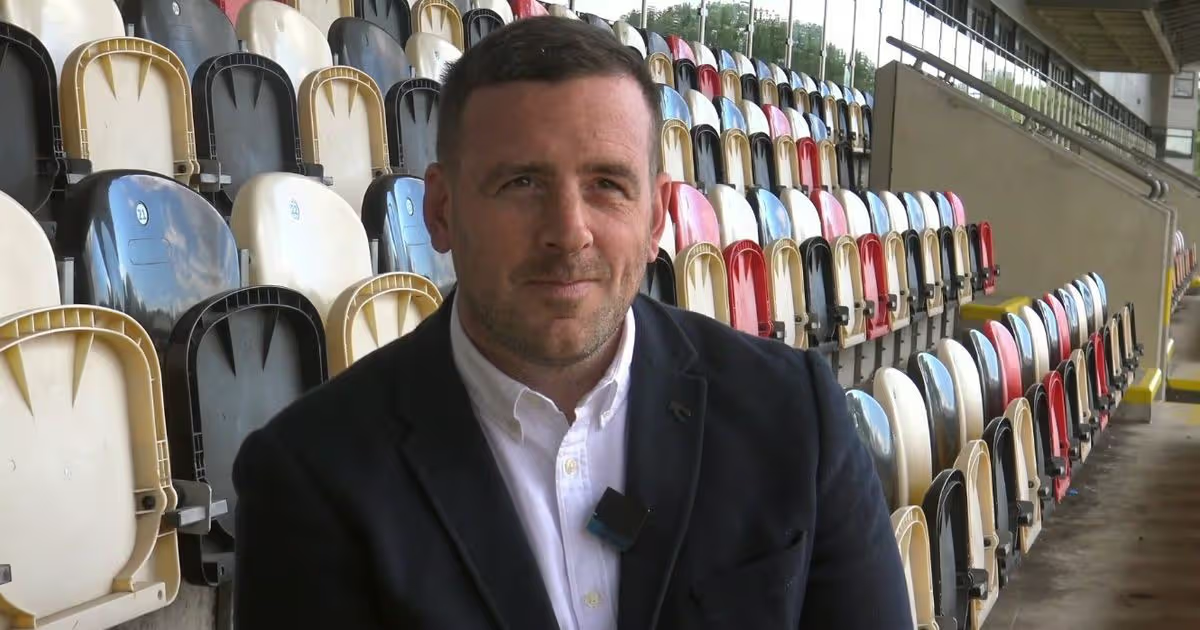
Dragons chief executive Rhys Blumberg has insisted the region has a “solid foundation” and says the Welsh Rugby Union “desperately need us for future plans” amid ongoing uncertainty in Welsh professional rugby.

Advertisement

With the WRU intent on reducing the number of professional sides from four to three, with one team earmarked for east Wales, questions have swirled around the long-term future of the Dragons RFC.

But speaking at a supporters’ meeting this week, Blumberg moved to reassure fans that the region is stable and planning for the future.

Ensure our latest sport headlines always appear at the top of your Google Search by making us a Preferred Source. Click here to activate or add us as Preferred Source in your Google search settings

“There is a lot going on with the other teams but we’re still in the background poking the bear around what the next five or 10 years looks like for the Dragons,” he said, per the BBC.

Advertisement

“It’s not panic stations because we have PRA locked in with a five-year term and know our funding for the next two years. We are recruiting and retaining players on a budget we know we have got under PRA25.”

Dragons, along with Cardiff, signed the new Professional Rugby Agreement (PRA25) last year, while Ospreys and Scarlets refused.

Under the agreement, there is a two-year notice period required should the WRU wish to terminate the deal, which would need to be served by 1 June.

Blumberg added: “The Union desperately need us to be stable and involved in the future plans. We have a solid foundation and they don’t want us to go off track.”

Advertisement

The region is also pressing ahead with ambitious off-field developments at Rodney Parade.

Talks are ongoing with Newport Council and the Welsh Government over proposals for a full-size 4G pitch with a 2,000-seat stand, as well as padel courts and a new clubhouse as part of a wider redevelopment of the site.

JOIN OUR WALES RUGBY FACEBOOK PAGE! Latest news, analysis and much more

Meanwhile, Blumberg confirmed Dragons would also work with football neighbours Newport County to ensure they remain at Rodney Parade, even if the Exiles suffer relegation from the Football League.

Advertisement

County, who have played at Rodney Parade since 2012, are currently battling at the foot of League Two.

While there is no clause to reduce rent in the event of relegation, Blumberg said Dragons would look at ways to ease the burden commercially if required.

“Legally Newport County are tied in long-term [but] it would have an impact,” he said.

“They won’t go anywhere, they will still play here, but it would just be about how we operate their games and how it works commercially.”

Advertisement

Source link

Continue Reading

NewsBeat

VAR gets EVEN MORE power as football lawmakers make controversial rule changes

Published

on

Daily Mirror

The video assistant referee will be able to rule on even more decisions next season after football’s lawmakers IFAB controversially decided to increase its remit

VAR’s powers have been extended by football’s lawmakers in moves which are sure to cause yet more controversy. The International Football Association Board (IFAB) have gone all-in on the video assistant referee, despite continued flashpoints and complaints.

Advertisement

Using VAR to check corners will be an option for competitions from this summer, while the core VAR protocol has now been widened to cover second yellow cards and cards awarded to the wrong team.

IFAB have also approved a package of measures to counter tactics designed to disrupt the tempo of matches which come into effect this summer. The successful introduction of the eight-second rule for goalkeepers has encouraged IFAB to go further on efforts to stop players slowing the game.

Referees will be given the power to start a five-second countdown if they feel players are taking too long over throw-ins and dead-ball goal kicks, and substitutions must be completed in no more than 10 seconds, otherwise the substitute must stay off for at least one minute.

JOIN US ON FACEBOOK! Latest news, analysis and much more on Mirror Football’s Facebook page

Advertisement

READ MORE: Richard Keys forced off air as Brits in Middle East warned to ‘take immediate shelter’READ MORE: Man Utd hold Harry Maguire ‘concern’ after £15.6m transfer decision

The IFAB also decided at its annual general meeting in Wales on Saturday to enforce a period of at least one minute off the field for any player whose injury forces a stoppage in play.

The Premier League has been trialling a 30-second period, but some within the IFAB did not feel this was long enough to serve as a deterrent. Other competitions had tested longer periods, with two minutes trialled at last year’s Arab Cup.

The aim with all the measures set to be adopted is to maintain the tempo of the game but also to help reduce time to be added on for stoppages, which is a problem from a player welfare perspective, for supporters and for broadcasters’ schedules.

Advertisement

MAKE THE MIRROR YOUR FIRST CHOICE! Click here to activate or add us as Preferred Source in your Google search settings

Changes agreed on Saturday will officially become part of the laws of the game from July 1 but will be adopted at this summer’s World Cup which kicks off on June 11. IFAB also agreed trials be conducted to further assess goalkeeper tactical injury delays and to propose options to deter this behaviour.

Lawmakers are adamant VAR checks on corners must not delay the kick being taken and will only be used to spot obvious errors. Corner-kick checks will be an option, rather than a mandatory part of the VAR protocol.

Advertisement

VARs will also only check incorrectly-awarded second yellow cards. They will not advise referees to issue a second yellow card where one was not shown on the field.

The IFAB will also hold consultations to develop measures where players leave the field of play as an act of protest against a referee’s decision or team officials instigating such action and where players cover their mouth when confronting opponents during matches.

The Africa Cup of Nations final was delayed by a walk-off by Senegal, while Benfica midfielder Gianluca Prestianni is alleged to have racially abused Real Madrid winger Vinicius Junior during a Champions League match last week while his mouth was covered by his shirt. UEFA is investigating the incident and Prestianni denies racially abusing Vinicius.

Join our new WhatsApp community and receive your daily dose of Mirror Football content. We also treat our community members to special offers, promotions, and adverts from us and our partners. If you don’t like our community, you can check out any time you like. If you’re curious, you can read our Privacy Notice.

Advertisement

Sky Sports discounted Premier League and EFL package

This article contains affiliate links, we will receive a commission on any sales we generate from it. Learn more
Content Image

£49

£35

Sky

Get the deal here

Sky has slashed the price of its Essential TV and Sky Sports bundle for the 2025/26 season, saving £336 and offering more than 1,400 live matches across the Premier League, EFL and more.

Advertisement

Sky shows at least 215 live Premier League games each season, an increase of up to 100, plus Formula 1, darts, golf and more.

Source link

Continue Reading

NewsBeat

Mexico is losing its battle with the cartels after years of flawed strategy

Published

on

Mexico is losing its battle with the cartels after years of flawed strategy

Crime is deeply entrenched in Mexico. The Global Organized Crime Index, a tool designed to measure levels of organised crime in a country, places Mexico third out of 193 nations in terms of criminality. At the core of Mexico’s struggle with organised crime is its network of powerful drug cartels.

The Mexican state and society have long been held hostage to the power and influence of these organisations, the most recent manifestation being the anarchy that followed the killing of Jalisco cartel leader, Nemesio “El Mencho” Oseguera Cervantes, by security forces on February 22.

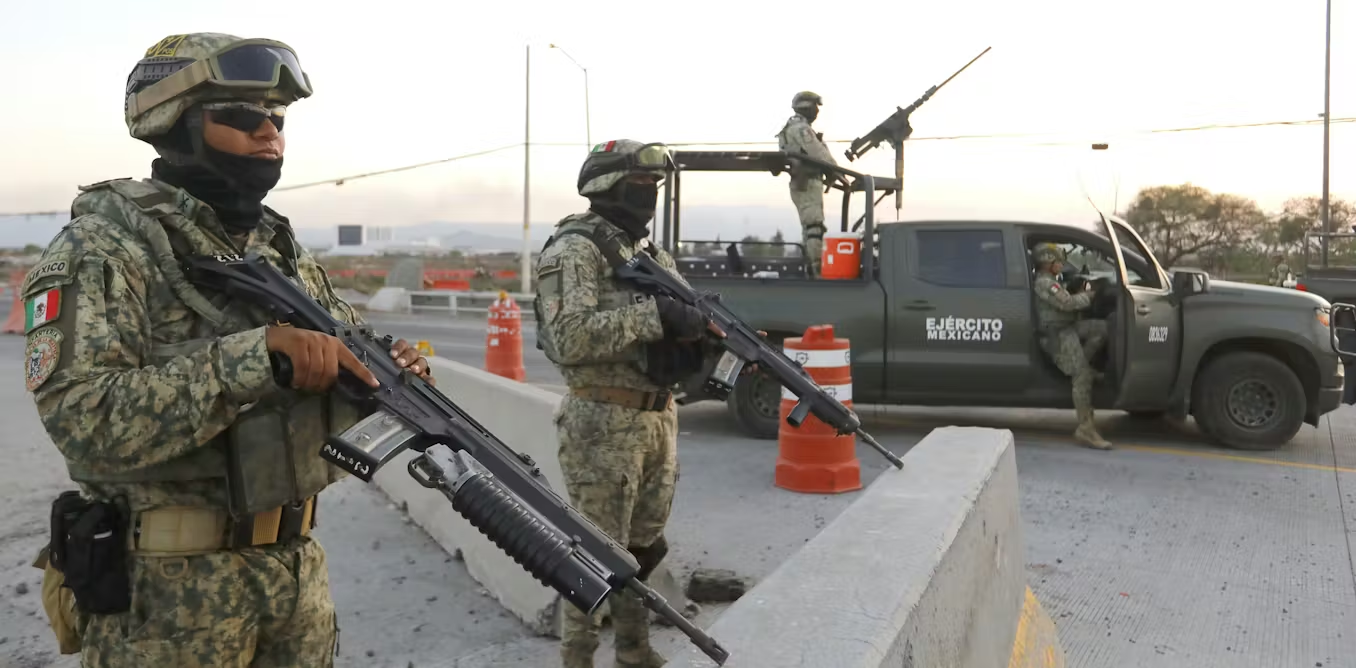
His killing unleashed a wave of violent unrest. Cartel members blockaded roads and torched vehicles across various towns and cities in retaliation. And a number of inmates were sprung from a prison in the coastal city of Puerto Vallarta, prompting the authorities to urge people not to venture out.

Mexico has been following the same rulebook of engagement with the cartels for much of the past two decades, with limited success. The war on drugs that started in 2006 under the then-Mexican president, Felipe Calderón, has seen the authorities go after cartel bosses.

Advertisement

This has resulted in the capture of senior Sinaloa cartel figures like Joaquín “El Chapo” Guzmán, Ovidio Guzmán López and Ismael “El Mayo” Zambada. It has also led to a number of high-profile killings, including Los Zetas cartel leader Heriberto Lazcano Lazcano in 2010 and now El Mencho.

Mexican drug lord Joaquin ‘El Chapo’ Guzman after being captured in 2016.
Mario Guzman / EPA

As I have argued in the past, this is a futile strategy. The killing or arrest of cartel leaders rarely spells the end for an affected organisation. As El Mayo said in an interview with a Mexican news magazine called El Proceso in 2010: “As soon as capos [leaders] are locked up, killed or extradited, their replacements are already around.”

Killings and arrests can also create openings for other cartels or splinter groups to fill the vacuum left behind by the previous leadership. This often results in violent turf wars. The arrest of Sinaloa cartel leader El Chapo in 2016, for example, led to hundreds of killings within the cartel itself as well between rival cartels that continue to this day. The killing of El Mencho is likewise bound to stir the pot of violence.

Explaining cartel violence

There are several interrelated factors that contribute to the power of Mexican cartels, complicating the government’s efforts to tackle crime. Restricting cartel violence in Mexico requires overcoming criminal impunity, youth unemployment and, perhaps the most challenging problem, the complete disregard for life among cartel members.

Advertisement

The Mexican judiciary has long been plagued by impunity, corruption and mismanagement. The rate of impunity for violent crimes in Mexico is estimated to stand at close to 95%, while just 16% of criminal investigations in the country were resolved in 2022. According to Human Rights watch, the violence perpetrated by Mexican criminal groups is directly linked to the impunity they enjoy.

Mexico, like many other countries in Latin America, is also affected by rampant youth unemployment. Figures released by the International Labour Organization suggest the unemployment rate for young people in the region was three times higher than that of adults in 2025. And around 60% of the young people who are employed in Latin America work under informal conditions.

Mexican governments have consistently failed to produce a national strategy to address this, with the perpetually reproducing ecosystem of grinding poverty and government apathy pushing generations of underprivileged young people towards the cartels.

As various studies show in Mexico and elsewhere, those without a social security umbrella or access to opportunities to address their everyday economic needs are more likely to join criminal groups. Now, estimates of cartel membership in Mexico suggest that such groups would rank as the fourth-largest employer in the country.

Advertisement

Meanwhile, the Mexican authorities lack a nationwide strategy aimed at the voluntary demobilisation of cartel members and their reintegration into society. Successive governments have responded to rising violence with policies that favour military force and arrest over rehabilitation.

Weak law enforcement and a void of economic opportunities have undoubtedly contributed to the spread of cartel violence in Mexico. But the complete disregard for life among cartel members is another contributing factor. As UK-based researcher Karina García Reyes, whose work involves speaking to former cartel members, wrote in a recent article in the Spanish-language newspaper El País:

Mexico’s narcos may not blame the state or society for their condition of poverty – each is, after all, his own man – but they don’t feel remorse for their crimes, either. They had the ‘bad luck’ of being born in poverty, they told me, and their victims had the ‘bad luck’ to be in their way.

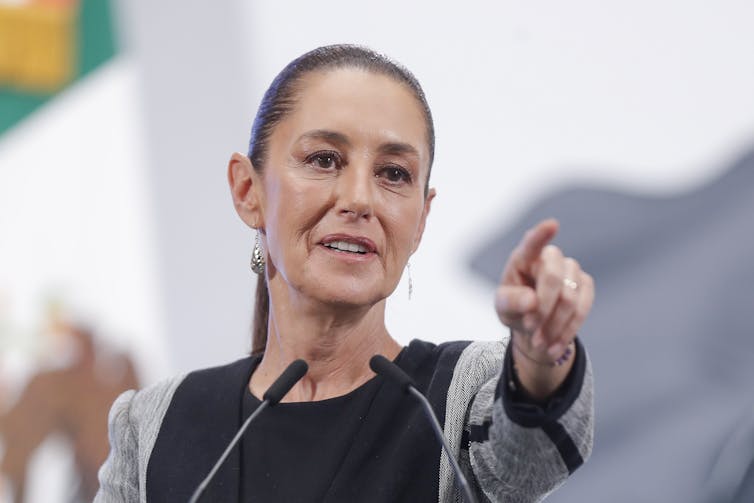
The Mexican state is taking steps to address youth unemployment and criminal impunity. Through the Plan México initiative, for example, the president, Claudia Sheinbaum, has promised to provide apprenticeships and monthly stipends to young people and boost educational infrastructure. The initiative also involves a pledge to expand university spots by 330,000 places.

Claudia Sheinbaum attends a press conference.
Claudia Sheinbaum announced plans to address youth unemployment in 2025.
Isaac Esquivel / EPA

However, with Mexico’s sluggish GDP growth of only 1% over the past 12 months, achieving these goals appears more difficult now than when Sheinbaum announced the plan in January 2025. And, even with these efforts, weaning criminals away from their established practice of violence will be a difficult undertaking.

Clearly, countering cartel violence in Mexico through military action has its limitations. In order to achieve greater success in addressing the problem, the government needs to undertake wholesale reforms to tackle the root causes of criminality – poverty, inequality and corruption – rather than relying solely on force to silence criminals.

Advertisement

Until then, Mexico will remain hostage to cycles of violence at the hands of its cartels.

Source link

Advertisement
Continue Reading

NewsBeat

US-Israeli attack on Iran risks plunging the world into turmoil

Published

on

US-Israeli attack on Iran risks plunging the world into turmoil

The US and Israel have launched extensive, coordinated attacks on numerous targets across Iran, prompting retaliatory strikes in the region. Donald Trump neither tried to obtain Congressional approval, nor did he pursue a United Nations security council resolution ahead of these actions. And the attack has come in the middle of talks between Tehran and Washington.The facts are clear. This is an illegal war, both in terms of US law and international statutes.

The US president has repeatedly said that Iran can’t be allowed to develop a nuclear weapon. The United Nations nuclear watchdog has reported that, because Iran has denied access to key sites hit during last year’s conflict, it cannot verify whether Iran has suspended all uranium enrichment or determine the current size and composition of its enriched uranium stockpile. However, Iran’s foreign minister, Abbas Araghchi, said after the latest round of talks that “good progress” was being made on a deal to limit Iran’s nuclear programme in return for sanctions relief.

Now, from everything that the US president is saying, the goalposts have shifted from a nuclear deal to an attempt to force regime change.

So bombs are falling on various cities in Iran, family members are hiding, tragedies will inevitably happen and the innocent will suffer. This is the endpoint of a longstanding campaign by the US and Israeli right-wing to reshape the Middle East and the wider Muslim world at the barrel of a gun. This is yet another intervention in a long history of disastrous foreign moves that have destabilised the country since Britain and the Soviet Union deposed Reza Shah Pahlavi in 1941 and the CIA and MI6 orchestrated a coup to depose Iran’s democratically elected prime minister, Mohammad Mossadegh, in 1953.

Advertisement

The consequences of this attack are likely to be dire for the region and the world. Already, Iran has retaliated by targeting US bases in Kuwait, Qatar, the United Arab Emirates and Bahrain and the first reports of casualties are emerging. Iran is unlikely to hold back. It’s clear that the Islamic Republic is viewing this as an existential threat.

Tehran will call on its allies in the region, the Houthis in Yemen, the Popular Mobilisation Forces in Iraq and Hezbollah in Lebanon which – despite being weakened over two years of attacks by Israel aided and abetted by the United States – have the capacity to expand the conflict throughout the region.

Iran has already indicated in recent drills with the Russian Navy that it may be capable of closing off the Strait of Hormuz, through which around one-quarter of the world’s oil and one-third of its liquefied natural gas travel. As a consequence, oil prices will explode and the world economy will suffer.

Clash of civilisations

There is a cultural component to this war, too. Israel and the US are conducting this war during the month of Ramadan. Muslims all over the world are fasting. For billions of them, this is the month of spirituality, peace and solidarity. Images of Iranian Muslims being killed by Israeli and US bombs threaten to further a clash of civilisations narrative which pits the Judeo-Christian world against Islam.

Advertisement
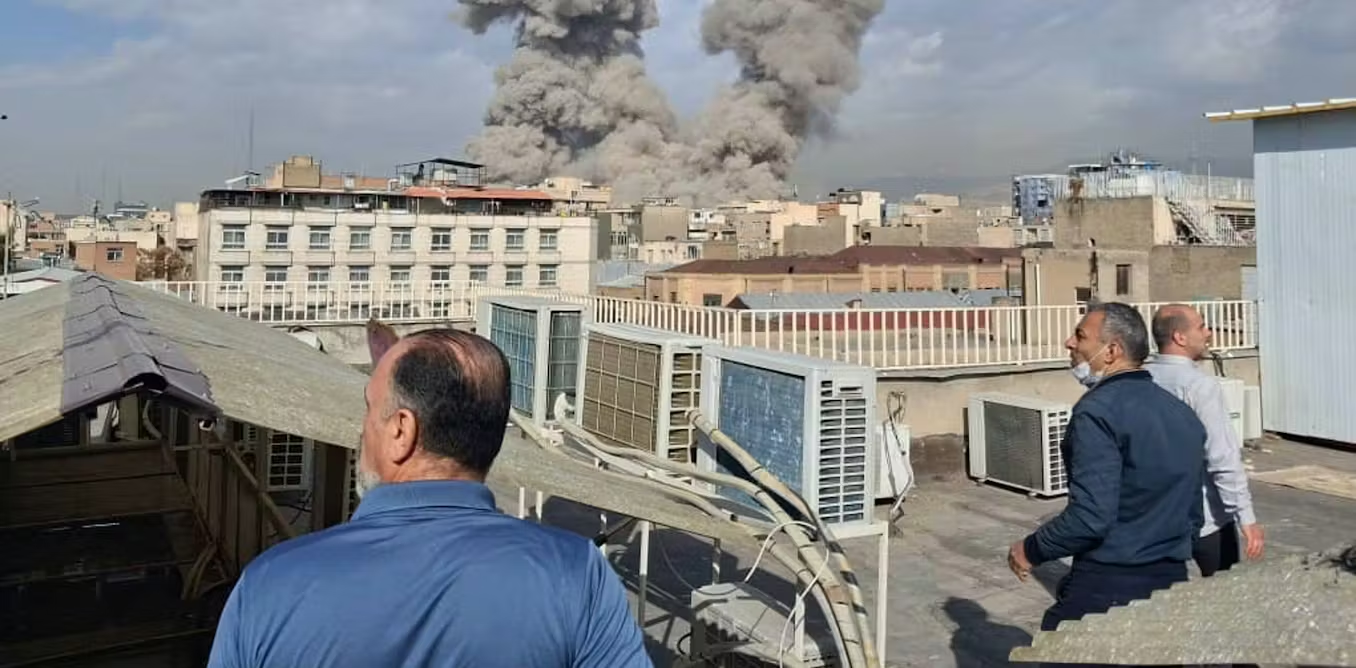
Iran has threatened retaliation across the Middle East.
EPA/Abedin Taherkenareh

Muslims in European capitals, together with anti-war activists, will see this war as a clear aggression on the part of the US and Israel. Global public opinion will not be easily swayed into the direction Trump and Netanyahu would like.

And it must be asked, what will the leaders in Moscow and Beijing be thinking as they watch this illegal war and what might this mean for Ukraine and Taiwan? Vladimir Putin and Xi Jinping are close to the government of Iran and will condemn this war. At the same time, they must feel emboldened to pursue their own agendas with military might.

So Trump and Netanyahu’s attack on Iran has the potential to plunge the world into deep crisis. Expect more refugees, more economic turmoil, more trauma, death and destruction. The only hope now is that cooler heads among world leaders can prevail to contain this conflict and to limit the actions of Trump and Netanyahu.

Diplomacy has to be prioritised. Attempting to force regime change by launching an illegal war is foolhardy. If Iran is further destabilised, the entire Middle East and beyond will be plunged into utter turmoil. From there the outcome for the whole world is dangerously uncertain.

Advertisement

Source link

Continue Reading

NewsBeat

Iran has been attacked by US and Israel when peace was within reach

Published

on

Iran has been attacked by US and Israel when peace was within reach

US and Iranian negotiators met in Geneva earlier this week in what mediators described as the most serious and constructive talks in years. Oman’s foreign minister, Badr Albusaidi, spoke publicly of “unprecedented openness,” signalling that both sides were exploring creative formulations rather than repeating entrenched positions. Discussions showed flexibility on nuclear limits and sanctions relief, and mediators indicated that a principles agreement could have been reached within days, with detailed verification mechanisms to follow within months.

These were not hollow gestures. Real diplomatic capital was being spent. Iranian officials floated proposals designed to meet US political realities – including potential access to energy sectors and economic cooperation. These were gestures calibrated to allow Donald Trump to present any deal as tougher and more advantageous than the 2015 agreement he withdrew the US from in May 2018. Tehran appeared to understand the optics Washington required, even if contentious issues such as ballistic missiles and regional proxy networks remained outside the immediate framework. Then, in the middle of these talks, the bridge was shattered.

Sensing how close the negotiations were — and how imminent military escalation had become — Oman’s foreign minister, Badr Albusaidi, made an emergency dash to Washington in a last-ditch effort to preserve the diplomatic track.

In an unusually public move for a mediator, he appeared on CBS to outline just how far the talks had progressed. He described a deal that would eliminate Iranian stockpiles of highly enriched uranium, down-blend existing material inside Iran, and allow full verification by the International Atomic Energy Agency (IAEA) — with the possibility of US inspectors participating alongside them. Iran, he suggested, would enrich only for civilian purposes. A principles agreement, he indicated, could be signed within days. It was a remarkable disclosure — effectively revealing the contours of a near-breakthrough in an attempt to prevent imminent war.

Advertisement

But rather than allowing diplomacy to conclude, the US and Israel have launched coordinated strikes across Iran. Explosions were reported in Tehran and other cities. Trump announced “major combat operations,”, framing them as necessary to eliminate nuclear and missile threats while urging Iranians to seize the moment and overthrow their leadership. Iran responded with missile and drone attacks targeting US bases and allied states across the region.

What is most striking is not merely that diplomacy failed, but that it failed amid visible progress. Mediators were openly discussing a viable framework; both sides had demonstrated flexibility – a pathway to constrain nuclear escalation appeared tangible. Choosing military escalation at that moment undermines the premise that negotiation is a genuine alternative to war. It signals that even active diplomacy offers no guarantee of restraint. Peace was not naïve. It was plausible.

Iran’s approach in Geneva was strategic, not submissive. Proposals involving economic incentives – including energy cooperation – were not unilateral concessions but calculated compromises designed to structure a politically survivable agreement in Washington. The core objective was clear: constrain Iran’s nuclear programme through enforceable limits and intrusive verification, thereby addressing the very proliferation risks that sanctions and threats of force were meant to prevent.

Talks had moved beyond rhetorical posturing toward concrete proposals. For the first time in years, there was credible movement toward stabilising the nuclear issue. By attacking during that negotiation window, Washington and its allies have not only derailed a diplomatic opening but have cast doubt on the durability of American commitments to negotiated solutions. The message to Tehran – and to other adversaries weighing diplomacy – is stark: even when talks appear to work, they can be overtaken by force.

Advertisement

Iran is not Iraq or Libya

Advocates of escalation often invoke Iraq in 2003 or Libya in 2011 as precedents for rapid regime collapse under pressure. Those analogies are misleading. Iraq and Libya were highly personalised systems, overly dependent on narrow patronage networks and individual rulers. Remove the centre, and the structure imploded.

Iran is structurally different. It is not a dynastic dictatorship but an ideologically entrenched state with layered institutions, doctrinal legitimacy and a deeply embedded security apparatus, including the Islamic Revolutionary Guard Corps. Its authority is intertwined with religious, political and strategic narratives cultivated over decades. It has endured sanctions, regional isolation and sustained external pressure without fracturing.

Even a previous US-Israeli campaign in 2025 that lasted 12 days failed to eliminate Tehran’s retaliatory capacity. Far from collapsing, the state absorbed pressure and responded. Hitting such a system with maximum force does not guarantee implosion; it may instead consolidate internal cohesion and reinforce narratives of external aggression that the leadership has long leveraged.


À lire aussi :
The US and Israel’s attack may have left Iran stronger

Advertisement

The mirage of regime change

Rhetoric surrounding the strikes has already shifted from tactical objectives to the language of regime change. US and Israeli leaders framed military action not solely as neutralising missile or nuclear capabilities, but as an opportunity for Iranians to overthrow their government. That calculus – regime change by force – is historically fraught with risk.

An incoming missile crashes into the sea off the port of Haifa in Israel as Iran retaliates.
AP Photo/Leo Correa

The Iraq invasion should be a cautionary tale. The US spent more than a decade cultivating multiple Iraqi opposition groups – yet dismantling the centralised state apparatus still produced chaos, insurgency and fragmentation. The vacuum gave rise to extremist organisations such as IS, drawing the US into years of renewed conflict.

Approaching Iran with similar assumptions ignores both its institutional resilience and the complexity of regional geopolitics. Sectarian divisions, entrenched alliances and proxy networks mean that destabilisation in Tehran would not remain contained. It could rapidly spill across borders and harden into prolonged confrontation.

A region wired for escalation

Iran has invested heavily in asymmetric capabilities precisely to deter and complicate external intervention. Its missile, drone and naval systems are embedded along the Strait of Hormuz — a chokepoint for global energy — and linked into a network of regional allies and militias.

Advertisement

In the current escalation, Tehran has already launched retaliatory missile and drone strikes against US military bases and allied territories in the Gulf, hitting locations in Iraq, Bahrain, the United Arab Emirates (including Abu Dhabi), Kuwait and Qatar in direct response to US and Israeli strikes on Iran’s cities, including Tehran, Qom and Isfahan. Explosions have been reported in Bahrain and the UAE, with at least one confirmed fatality in Abu Dhabi, and several bases housing US personnel have been struck or targeted, underscoring how the conflict has already spread beyond Iran’s borders

A full-scale regional war is now more likely than it was a week ago. Miscalculation could draw multiple states into conflict, inflame sectarian fault lines and disrupt global energy markets. What might have remained a contained nuclear dispute now risks expanding into a wider geopolitical confrontation.

What about Trump’s promise of no more forever wars?

Trump built his political brand opposing “endless wars” and criticising the Iraq invasion. “America First” promised strategic restraint, hard bargaining and an aversion to open-ended intervention. Escalating militarily at the very moment diplomacy was advancing sits uneasily with that doctrine and revives questions about the true objectives of US strategy in the Middle East.

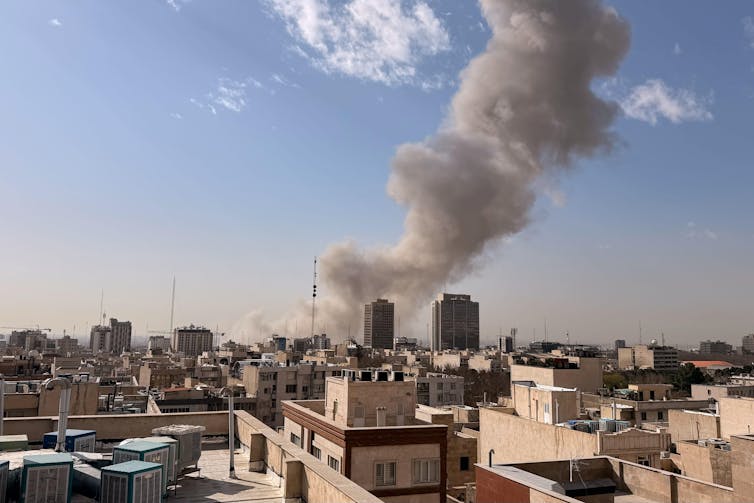
Tehran skyline as missiles strike, February 28 2026.
Tehran and other Iranian cities have come under heavy bombardment from Israel and the US.
AP Photo

If a workable nuclear framework was genuinely emerging, abandoning it in favour of escalation invites a deeper question: does sustained tension serve certain strategic preferences more comfortably than durable peace?

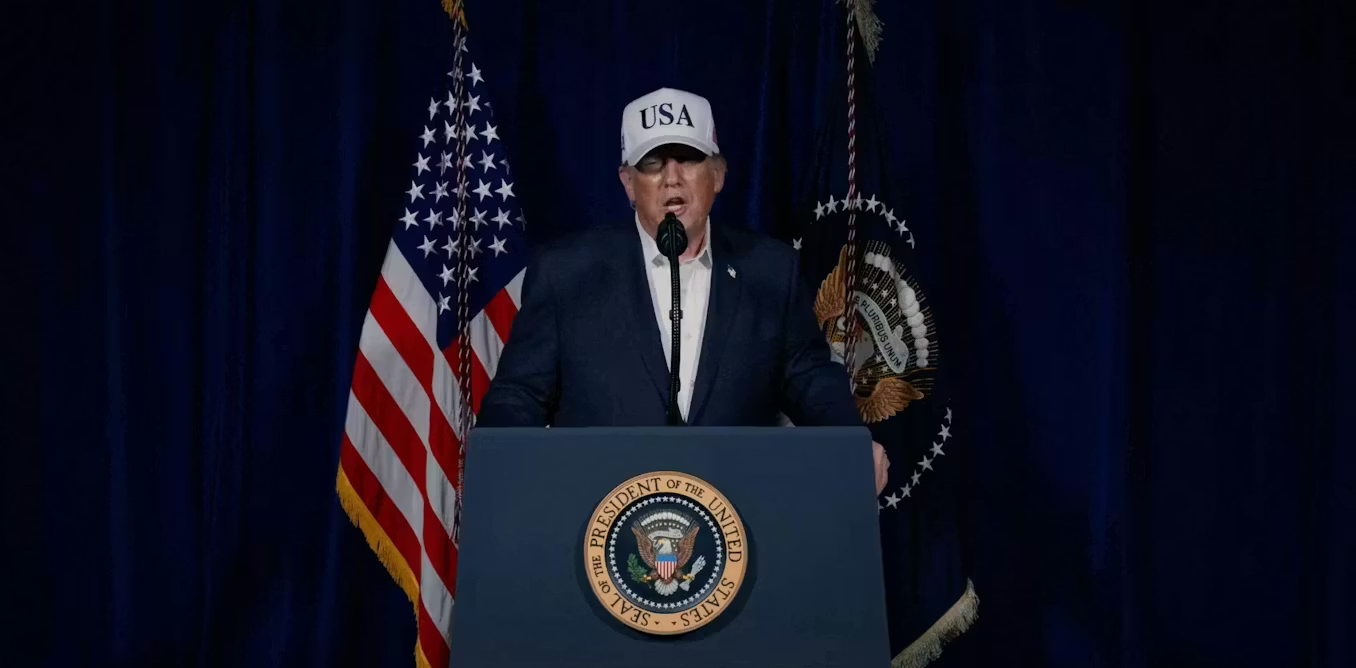
Trump’s Mar-a-Lago address announcing the strikes carried unmistakable echoes of George W. Bush before the 2003 invasion of Iraq. Military action was framed as reluctant yet necessary – a pre-emptive move to eliminate gathering threats and secure peace through strength. The rhetoric of patience exhausted and danger confronted before it fully materialises closely mirrors the language Bush used to justify the march into Baghdad.

Advertisement

The parallel extends beyond tone. Bush cast the Iraq war as liberation as well as disarmament, promising Iraqis freedom from dictatorship. Trump similarly urged Iranians to reclaim their country, implicitly linking force to regime change. In Iraq, that fusion of shock and salvation produced not swift democratic renewal but prolonged instability. The assumption that military force can reorder political systems from the outside has already been tested – and its costs remain visible.

The central challenge now facing the US is not simply Iran’s military capability. It is credibility. Abandoning negotiations mid-course signals that diplomacy can be overridden by force even when progress is visible. That perception will resonate far beyond Tehran.

Peace was never guaranteed. It was limited and imperfect, focused primarily on nuclear constraints rather than human rights or regional proxy networks. But it was plausible – and closer than many assumed. Breaking the bridge while building it does more than halt a single agreement – it risks convincing both sides that negotiation itself is futile.

In that world, trust erodes, deterrence hardens and aggression – not agreement – becomes the default language of international power. What we are witnessing is yet another clear indication that the rules-based order has been consigned to the history books.

Advertisement

Source link

Continue Reading

Trending

Copyright © 2025