



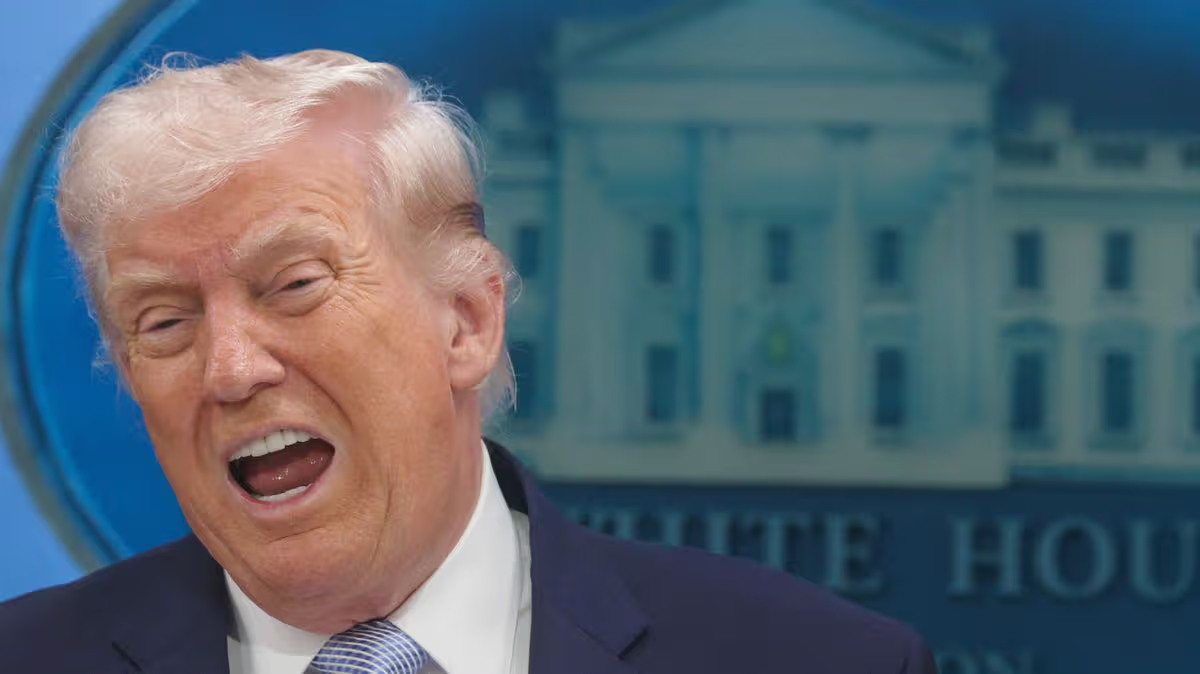
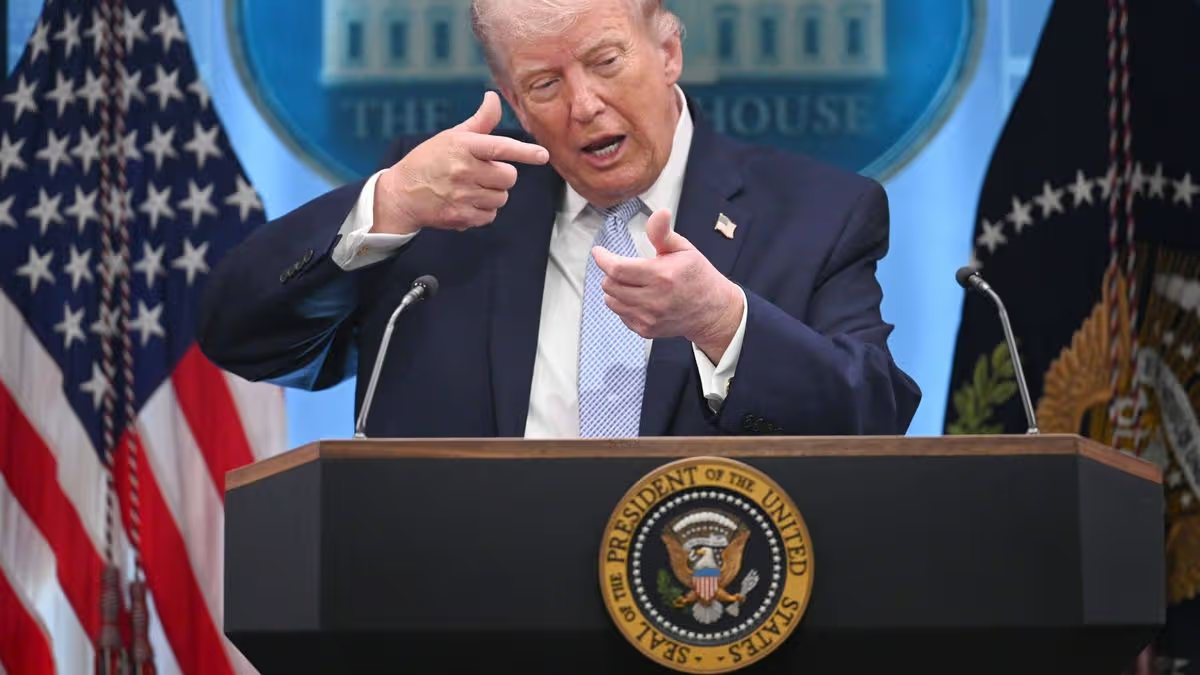
Donald Trump has been mocked after he said he would suspend his threatened attack against Iran less than two hours before the deadline the president set for Tehran
Oil prices plunged across the board yesterday after Donald Trump declared a two-week ceasefire with Iran.
The stoppage will see the reopening of the Strait of Hormuz, and so US crude oil has slid 18 percent to less than $93 (£70) a barrel, after trading upwards of $117 (£87) that very same day. The dips mark the largest one-day lowering of oil prices since during the Gulf War in 1991.
And prices for natural gas and heating oil also dropped a fair amount following the ceasefire development. Brent crude oil futures fell about six percent to $103.40. Both prices remain well above where they were at the start of the war.
Mr Trump, 79, agreeing to the two-week ceasefire to allow talks to progress, having previously threatened to “completely destroy” the Iranian civilisation. However, Iran state television mocked the world leader in the wake of the move.
READ MORE: Iran war LIVE: Trump calls off power plant attack and announces 11th-hour ceasefire agreementREAD MORE: Iran state TV mocks Donald Trump’s ceasefire as ‘a humiliating retreat’
Shipping in the Strait of Hormuz, a chokepoint in the Persian Gulf through which 20 percent of the world’s oil normally flows, had been all but halted. But NBC News now reports Dow futures went up 1,000 points, Nasdaq 100 futures nearly three percent and S&P 500 futures rose over 2.5 percent since Mr Trump’s announcement.
Concern had grown for the cost of living, including oil and petrol prices, after the war started last month. Data from the RAC shows the average price of a litre of diesel at UK forecourts was 185.2p, up 30 percent since the conflict began. This has impacted motorists who use roads for both work and pleasure, including 39-year-old James Airey, the owner of landscaping business Lawn and Order in Watford, Hertfordshire.
He said: “If I don’t fill the vans up, or fill the tools up, then I can’t earn a living. Everything smooths out after a while, but I’m really noticing a big difference. I’m laying out about £300 a week before I make anything back. If I work the weekend, which we sometimes will, that’s more money as well. If I think ‘no, I can’t pay the extra’ then I lose that whole day’s work, lose my customers, lose my business – so it’s just something you have to overcome.”
And so the drop in oil prices will be of welcome relief to Brits, especially those who use roads regularly. In the bond market, Treasury yields eased on word of a potential cease-fire. The yield on the 10-year Treasury fell to 4.24 percent from 4.30 percent earlier Tuesday.
That’s still well above its 3.97 percent level from before the war, and the rise has pushed up rates for mortgages and other loans going to US households and businesses, which slows the economy.












































You must be logged in to post a comment Login