


Connect with us

NewsBeat

Brent crude oil briefly tops $100 a barrel as Iran attacks shipping

Published

on

Brent crude oil briefly tops $100 a barrel as Iran attacks shipping

BANGKOK (AP) — The price of a barrel of Brent crude oil briefly topped $100 a barrel early Thursday, just days after it spiked near $120 in the latest jolts to financial markets and the global economy as a whole.

Oil prices initially shot more than 9% higher as supply concerns worsened with Iranian attacks on commercial shipping around the Strait of Hormuz. The U.S. campaign of airstrikes in Iran is now in its 13th day.

U.S. benchmark crude oil jumped 4.5% to about $91 a barrel. Brent, the international standard, was trading 5.3% higher at about $97 per barrel.

Iran has escalated its attacks aimed at generating enough global economic pain to pressure the United States and Israel to end the war. But there was no sign the conflict was subsiding.

Advertisement

Iran has targeted oil fields and refineries in Gulf Arab nations and effectively stopped cargo traffic through the narrow Strait of Hormuz, through which a fifth of all traded oil passes.

In response, the International Energy Agency agreed Wednesday to release 400 million barrels of oil, the largest volume of emergency oil reserves in its history, in a bid to counter the war’s effects on energy markets. The U.S. planned to release 172 million barrels of oil next week from its Strategic Petroleum Reserve to combat steep prices.

The IEA’s announcement came a day after energy ministers from the Group of Seven — the leading industrialized nations of Canada, the United States, France, Italy, Japan, Germany and Britain — met in Paris to look at ways to bring down prices.

But the continued strife and uncertainty have fueled speculation prices could push still higher, and that pulled shares lower.

Advertisement

The future for the S&P 500 lost 0.4% while that for the Dow Jones Industrial Average was 0.5% lower.

Germany’s DAX lost 0.4% to 23,533.60, while the CAC 40 in Paris lost 0.7% to 7,982.64. Britain’s FTSE 100 sank 0.7% to 10,285.91.

During Asian trading, Tokyo’s Nikkei 225 fell 1% to 54,452.96. In South Korea, the Kospi lost 0.5% to 5,583.25, while Hong Kong’s Hang Seng gave up 0.7% to 25,716.76.

The Shanghai Composite index shed 0.1% to 4,129.10 and in Australia, the S&P/ASX 200 dropped 1.3% to 8,629.00.

Advertisement

On Wednesday, U.S. stocks were little changed as the S&P 500 edged 0.1% lower for a second day of modest moves following a wild stretch caused by the war with Iran. The Dow Jones Industrial Average dropped 0.6%, to its lowest level this year, and the Nasdaq composite rose 0.1%.

Since the start of the war, sharp moves for oil prices have triggered swings up and down for financial markets worldwide, sometimes by the hour. Oil prices briefly spiked to their highest levels since 2022 this week because of the possibility that production in the Middle East could be blocked for a long time, which in turn raised worries about a surge of debilitating inflation for the global economy.

In a report, Oxford Economics said “the swings in Brent crude oil prices over the past several days are eye-catching and odds are volatility will remain because of the absence of a timeline for when the conflict will de-escalate and when the Strait of Hormuz, which is effectively closed, will see traffic begin to recover.”

The level of volatility suggests that depending on news developments, oil prices could spike as high as $140 per barrel, it said.

Advertisement

A report released Wednesday showed U.S. consumers paid prices for groceries, gasoline and other costs of living that were 2.4% higher in February than a year earlier.

That’s the same level as the month before and better than the 2.5% that economists expected, but it remains above the Federal Reserve’s 2% target and doesn’t include the spike in gasoline prices this month due to the war.

High inflation combined with a stagnating economy would create a worst-case scenario called “stagflation” that the Federal Reserve has no good tools to fix. Stagflation fears are rising not just because of higher oil prices but also because of weakness in hiring by U.S. employers.

In other dealings early Thursday, the dollar fell to 158.84 Japanese yen from 158.95 yen. The euro fell to $1.1553 from $1.1566.

Advertisement

Source link

Advertisement
Continue Reading
Click to comment

Leave a Reply

Your email address will not be published. Required fields are marked *

NewsBeat

Man fell on Whitby cliff path while on mobility scooter

Published

on

Coastguard rescue man after fall on Whitby Cliff path

The Whitby Coastguard Rescue Team said that it was dispatched to help the man, who was found partway down the slope with a suspected hip injury, after falling from his scooter.

After an initial assessment, the team say it ‘became clear the situation was time critical’ and they began to give care and provided blankets to keep the man warm until Yorkshire Ambulance Service arrived on scene.

Once the crew reached the site, Coastguard officers assisted in transporting equipment down the steep path to the scene.

Advertisement

Following further assessment and pain relief administered by the paramedics, the teams carried out a stretcher evacuation up the cliff path before transferring the injured man safely into an awaiting ambulance.

“Steep coastal paths can be challenging terrain, particularly when using mobility aids. If you ever see someone in difficulty along the coast, call 999 and ask for the Coastguard,” said Whitby Coastguard Rescue Team.

Source link

Advertisement
Continue Reading

NewsBeat

The best dehumidifiers in 2026 for drying laundry, to prevent mould and reduce condensation

Published

on

The best dehumidifiers in 2026 for drying laundry, to prevent mould and reduce condensation

To fairly compare models, we put every dehumidifier through a series of structured, real-world tests. We begin with set up, assessing whether it can be unpacked and running within minutes or if it takes time to figure out.

We also judge ease of use, looking for clearly labelled and responsive controls. We check how easy it is to empty and reinsert the water tank and whether any companion app connects reliably and adds genuine control rather than gimmicks. Design details matter too, so we look at cable length, portability, self-draining features and safety cut-offs. Build quality, durability, extra features and overall value for money are all important.

Next, we assess its effectiveness. First, we measure how well a unit reduces humidity after a hot shower, recording how long it takes to bring the room back to a comfortable 50 per cent. Then, we test laundry mode by hanging a standard load of washing and noting how quickly it dries compared to normal conditions.

Advertisement

Finally, we measure noise levels with a decibel app and track energy consumption over the course of an hour using a plug meter.

Source link

Continue Reading

NewsBeat

The Liam Rosenior gamble that could haunt Chelsea after PSG lesson in Champions League

Published

on

The Liam Rosenior gamble that could haunt Chelsea after PSG lesson in Champions League

A tie that had looked enthrallingly unpredictable, only for the first leg to be set by perhaps the most predictable development possible.

Liam Rosenior had replaced Robert Sanchez with Filip Jorgenson specifically for his footwork, and of course it was a bad goalkeeper pass that set up Vitinha for a decisive goal.

After that, Paris Saint-Germain took a step up – and then another two – and Chelsea didn’t go with them.

The ending ensured this match continued some themes of this Champions League week: erratic goalkeeping displays and Premier League defeats, as Paris Saint-Germain beat Chelsea 5-2.

Advertisement

What will further anger Rosenior was that the scale of the scoreline didn’t really reflect the game. Chelsea’s actual performance hadn’t been in the same sphere as those by Liverpool, Manchester City or Tottenham Hotspur – despite the same actual outcome as the last one.

Chelsea had largely given as good as they got in a game of almost the highest European quality… had it just ended in the 74th minute. He later spoke of a “crazy” final 15 minutes where his team – including himself – didn’t stay “calm”. That was maybe summed up in Enzo Fernandez arguing with Jorgensen and Pedro Neto’s moment with a ballboy, for which Rosenior apologised.

Maybe some of the performance is also fatigue from the Premier League season, which is obviously going to be a discussion over the next week.

Chelsea really have to raise it, though.

Advertisement
Kvicha Kvaratshkelia scored twice to give PSG control of the tie

Kvicha Kvaratshkelia scored twice to give PSG control of the tie (Reuters)

A 3-2 reverse was eminently salvageable but 5-2? Kvicha Kvaratshkelia is quite an option to bring off the bench, and he duly maximised that extra space to score another trademark exquisitely curling strike.

The most remarkable thing is that it may not have even been the pick of the goals. All of them involved exceptional class, even if they came from errors and fallibility that actually elevated the game in terms of drama.

That was most visible with maybe the best of them, Ousmane Dembele’s brilliant breakaway. Jorgenson could do little about that or Kvaratshkelia’s first, but the third and fifth?

Advertisement

They might decide the tie.

That might haunt Rosenior, especially to make a call so big – and so conspicuous given Antoni Kinsky – this early in his Chelsea career.

There is of course another story to this game.

The European champions may have finally started to play again. They looked like the best team in Europe again.

Advertisement

There is now always a sense of two sides with this PSG. It should never be forgotten they are ultimately a sportswashing project, who have still assembled one of the most expensive sides in history without “stars”.

And yet, in a purely football sense, they are refreshing.

Vitinha lofts the ball over a stranded Jorgensen

Vitinha lofts the ball over a stranded Jorgensen (Getty)

In a Premier League that has become dominated by high-definition tactical positioning, so many of their players are willing to take someone and have a shot from anywhere.

Advertisement

They go for it.

That isn’t to say that Luis Enrique isn’t highly tactical himself. What he has essentially done is enhance the Spanish positional game for the first time in 15 years, adding dribbling and intensity to a system that is almost supposed to be the antithesis of that. That comes from a lot of hard thinking and hard work, if an admittedly easy schedule to facilitate it.

The end product is nevertheless something that looks so free… if occasionally too free.

PSG have some clumsy moments themselves.

Advertisement

They are far from perfect, and that included last season.

And Chelsea, for their part, did initially prey on that and force more errors.

The back-and-forth of the goals were cases in point.

Bradley Barcola opened the scoring for PSG

Advertisement
Bradley Barcola opened the scoring for PSG (Action Images/Reuters)

After Bradley Barcola had displayed precisely this willingness to just let go with the opening goal – a blockbusting strike in off the bar, albeit with considerable space – there was a spell when it looked like they could just overwhelm Chelsea with their live-wire attacking.

If Rosenior will face a lot of questions about the Jorgensen decision, though, he does deserve credit for many of his in-game calls. It is clearly one of his best qualities.

Chelsea duly recalibrated around Enzo Fernandez, who had one of his finest games for the club.

Everything went through him, including the two goals.

Advertisement

It was his pass that put Malo Gusto into space for Chelsea’s equaliser. The finish was strong but it still went through Matvey Safonov.

A theme of the European champions’ more underwhelming 2025-26 campaign has been whether they are missing Gigi Donnarumma. It was hard not to think he’d have saved that… but the Italian wasn’t exactly having the best night for City.

Chelsea began to really press PSG in from there, only for Luis Enrique’s side to exploit their own weakness.

Chelsea were undone by late goals (Ben Whitley/PA)

Advertisement
Chelsea were undone by late goals (Ben Whitley/PA) (PA Wire)

This, typically, was done in the most direct way possible: pure pace. After Cole Palmer had a shot well saved by Safonov – no questions that time – Desire Doue showed quick thinking to immediately get the ball to Dembele.

He exhilaratingly surged up the pitch, although Wesley Fofana initially did well to stay with him. Just when it seemed like Dembele might have been pushed wide, he turned in, then went out – and in the process turned Fofana inside out – to finish supremely.

It was the type of move that was so impressive it produced one of those deafening sounds from the crowd, but it wasn’t definitive.

Chelsea again responded. PSG again showed their own fallibility. Pedro Neto displayed his own directness down the left, before squaring for Fernandez to finish emphatically.

Advertisement

It was another supreme goal, and should have been the set-up for a grand crescendo, an operatic back and forth.

Only one team stayed at the level, though, as Jorgensen – and Rosenior – endured a dismal low.

That may well be it for the tie. PSG do not look the kind of team to give up a three-goal lead now they’re European champions.

And they finally look like they can be that again.

Advertisement

Chelsea and Rosenior, by contrast, look like they still have a bit to learn.

Source link

Continue Reading

NewsBeat

emerging harms health systems can’t ignore

Published

on

emerging harms health systems can’t ignore

When e-cigarettes first appeared around 2010, they were hailed as a breakthrough: nicotine delivery without the toxic tar and combustion byproducts of traditional cigarettes. Public health bodies cautiously endorsed them as a tool for adult smokers to quit, often citing early claims that vaping was 95% less harmful than smoking. More than a decade later, with millions now vaping regularly, the picture is less clear.

A recent study, published in the American Journal of Physiology – Heart and Circulatory Physiology, found that people who vape or smoke have nearly 50% higher odds of elevated blood pressure compared to non-users. This isn’t proof that vaping directly causes high blood pressure – other factors such as diet or exercise could play a role – but it adds to a growing body of evidence that vaping’s early reputation for safety deserves a harder look.

The science behind the concern isn’t complicated. Nicotine in e-cigarette vapour triggers immediate spikes in heart rate and blood pressure. The flavourings and other chemicals can damage the lining of blood vessels – the tissue that prevents clotting and keeps blood flowing smoothly. Research reviews have found elevated rates of heart attack among vapers, particularly among those who also still smoke traditional cigarettes.

The lungs tell a similarly worrying story. A 2022 study comparing vapers, smokers and non-users found that vapers had measurably reduced lung function – even after accounting for any previous smoking history – as well as higher rates of wheezing, coughing and bronchitis-like symptoms. Further research from 2023–25 links vaping to increased airway resistance and asthma flare-ups, with some effects persisting well beyond a single vaping session.

Advertisement


À lire aussi :
Vaping makes lung bacteria more harmful and cause more inflammation


Perhaps the most urgent concern is what has happened among young people. The World Health Organization now describes e-cigarettes as “harmful and not safe”, warning of a new wave of nicotine addiction among teenagers who never smoked in the first place – and who are three times more likely to go on to smoke traditional cigarettes as a result.

Large surveys have linked regular vaping in young people to depression, anxiety and suicidal thoughts, with nicotine’s known effects on the developing brain almost certainly playing a role.

Supporters of vaping argue that its risks are acceptable if it helps established smokers quit – and there is something to this. A 2024 review by Ireland’s Health Research Board found that e-cigarettes do help some adults stop smoking, particularly when combined with behavioural support.

Advertisement


À lire aussi :
Vaping now more common than smoking among young people – and the risks go beyond lung and brain damage


But many people who vape to quit end up doing both – vaping and smoking – which means they are still exposed to tobacco’s most harmful chemicals. And the evidence for traditional nicotine replacement therapies such as patches and gum, backed by decades of clinical trials, remains stronger.

We don’t yet have human data confirming that vaping causes cancer. But this reflects how new the habit is rather than how safe it is. A review of laboratory studies show that e-cigarette vapour causes DNA damage and cell death in ways that look uncomfortably familiar to early tobacco research – research that preceded the smoking-related cancer epidemic by two or three decades.

Safer is not the same as safe

The original message – that vaping is far safer than smoking, and a reasonable tool for quitting – made sense at a time when tobacco was killing enormous numbers of people. But “safer than smoking” is not the same as safe, and that distinction matters enormously when teenagers are interpreting the message as permission to start. NHS Scotland is already clear that vaping carries real risks and is not suitable for young people.

Advertisement

We’ve tasted the bitter waters of tobacco, where delayed action fuelled generations of disease. To fix smoking, we’re now engineering a “solution” that could spawn tomorrow’s crises – akin to ditching petrol cars for electric vehicles to slash emissions, only to grapple with toxic lithium battery e-waste mountains clogging landfills and supply chains.

Both trades address one urgent harm while blindsiding us to downstream perils: leaching chemicals, recycling nightmares and resource wars. With vaping, signals of cardiovascular strain, lung irritation, youth gateways and addiction are flashing red, even if full epidemics lie years ahead.

The sensible conclusion is not complicated. If you have never smoked, don’t vape. If you do smoke and want to quit, patches, gum, medication and proper support remain the best-evidenced options. Vaping may have a role as a short-term bridge – but not as a permanent habit, and not for anyone who wouldn’t otherwise have been a smoker. The warning signs are there. The question is whether we act on them before the long-term consequences become impossible to ignore.

Advertisement

Source link

Continue Reading

NewsBeat

States weigh in on cash purchases without pennies

Published

on

States weigh in on cash purchases without pennies

Months after the last of the United States’ 1-cent coins were pressed, some states are beginning to offer their own 2 cents on the penny problem by setting rounding guidance for cash purchases.

President Donald Trump announced early last year an end to penny production, saying it was wasteful. It cost 3.7 cents to make each 1-cent coin in 2024, according to the U.S. Mint. The move led to a shortage of pennies in cash registers last summer, forcing consumers and businesses to confront a penniless future in which making exact change would be difficult.

The Treasury Department has said it will continue circulating the roughly 114 billion pennies that exist for “as long as possible.” Pennies must still be accepted as payment.

One solution to the penny problem is rounding to the nearest nickel, using a practice called symmetrical rounding. If the final price, after taxes, ends in one, two, six or seven cents, payment in cash rounds down. For example, $1.91 or $1.92 becomes $1.90. If the price ends in three, four, eight or nine, cash payment rounds up. For $1.98 or $1.99, the consumer pays $2.

Advertisement

A bill introduced last year in Congress and passed out of the House financial services committee would apply symmetrical rounding across the country. U.S. Rep. Lisa McClain, R-Mich., said in an email the federal law is important to prevent a “confusing patchwork of state policies.”

The bill hasn’t been voted on in the House and would still need to move through the U.S. Senate before reaching Trump’s desk.

Some states are looking to what’s next

In the meantime, bills to deal with penniless cash transactions have passed both chambers and await the governor’s signature in Arizona, Florida, Oregon, Tennessee, Virginia and Washington. Some states are proposing to allow businesses to round cash purchases, while others consider requiring it.

In Indiana, a bill signed into law this month by Republican Gov. Mike Braun tells businesses they must round cash purchases for all transactions that do not end in a zero or five. Lawmakers revised that provision in a second bill that makes rounding optional, which would take effect Sunday if Braun signs it into law.

Advertisement

In both bills, Indiana businesses can choose to always round cash purchases up to the nearest nickel, always round down or round up or down depending on the amount.

In Republican-led Tennessee, legislation makes symmetrical rounding exempt from legal claims under a state consumer protection law but does not require rounding.

“It is to provide safe harbor for private businesses,” said Republican Rep. Charlie Baum, the bill sponsor in Tennessee, during floor debate.

Rounding bills have been introduced in about two dozen states since late last year, according to an Associated Press analysis using the bill-tracking service Plural.

Advertisement

Outside of lawmaking bodies, some state agencies have published guidelines to advise that rounding should happen after tax, and that businesses must make sure the full taxed amount still goes to the state.

Will consumers pay more with rounding?

Cash isn’t used as ubiquitously since the rise in electronic payment methods. Still, about 8 in 10 U.S. adults said they recently used cash in a 2024 survey conducted by the Federal Reserve. Cash was more often used by older adults and those in lower-income households.

The Treasury wrote online that prices would be “rounded down just as often as they will be rounded up, so there should be no overall effect on consumer prices.”

But researchers at the Federal Reserve Bank of Richmond used a 2023 survey to show prices that didn’t end in zero or five were especially likely to end in eight or nine. Payment amounts could be different when multiple items are purchased or depending on the tax rate, but overall, prices more often being rounded up would lead to millions of dollars gained by businesses and lost by consumers collectively, amounting to a few pennies lost per person.

Advertisement

Do people think it’s fair?

As businesses have introduced rounding, some Americans have taken to social media to say they feel scammed, even if it is a penny or two at a time.

Nikki Capozzo-Hennessy, 50, said she tends to pay in cash because it makes her more conscious of her spending. The Trumbull, Connecticut, resident posted her grocery store receipt online when she noticed the rounding adjustment on a purchase of $8.73, with tax. The store chose to round down and she gained three cents.

Capozzo-Hennessy said it might feel taxing if she had to hand over extra pennies every time, but she also thinks it’s practical to stick with one rule. She runs a food truck business and said they’d likely use symmetrical rounding to be consistent.

“At the end of the day it’s three cents, but I can imagine with all the purchases that you make, it can add up,” Capozzo-Hennessy said.

Advertisement

Washington state Rep. April Berg, who introduced a rounding bill there, said she understands people who feel frustrated losing a penny but that the elimination of the hard currency leaves little option.

“We did make sure that everyone is allowed to pay exactly what they owe,” Berg said of her legislation.

What about the nickel?

The Treasury says ceasing penny production will save $56 million annually, but rounding could increase demand for nickels. The 5-cent coins also are costly to make, reaching nearly 14 cents each in 2024, according to the Mint.

The proposed federal legislation currently includes a potential cost-saving solution, allowing the Treasury to adjust the coin’s composition to use cheaper zinc and nickel instead of copper and nickel.

Advertisement

Source link

Advertisement
Continue Reading

NewsBeat

Wealthy parents play dead after own son hires hitman to kill them

Published

on

Daily Record

A 22-year-old man allegedly arranged the murders of his parents and 10-year-old sister for their inheritance, police said

A 22-year-old man’s plot to ‘do away with his family’ was foiled when police had his parents fake their own deaths.

Advertisement

Russian authorities have disclosed how they tricked the suspect into believing he’d contracted a hitman to eliminate his wealthy parents and 10-year-old, all in a bid to inherit their wealth.

Detectives became aware of the alleged scheme and staged the murders in the family home, even having his parents fake their own deaths.

The police then sent images of the fabricated murder scene to the son, who was entirely unaware of the covert operation.

An officer assumed the role of the hired assassin in the Russian resort of Sochi, a host city for this year’s FIFA World Cup, reports the Mirror.

Advertisement

The son had provided the “contract killer’ detailed instructions on how and where his family should be murdered, it is claimed.

He’s even said to have sketched out a floor plan, pinpointing where security cameras were located, and how to dodge guard dogs.

He agreed a price with the undercover copper for wiping out all three of his relatives, police said, and insisted on seeing pictures of his slain parents.

Advertisement

The man’s mum and dad – ” with detailed instructions on the method and location for his family’s execution, it is alleged.

He’s even reported to have drawn up a floor plan, indicating the positions of security cameras and how to evade guard dogs.

He negotiated a fee with the undercover officer for eliminating all three of his relatives, police stated, and demanded photographic evidence of his deceased parents.

The man’s mum and dad – “devastated” by their son’s purported plans – played dead in the police mock-up, and photographs of them, appearing to bleed from “fatal” knife wounds, were taken.

Advertisement

The “assassin” arranged a meeting in a Mercedes and presented the photographs of his “murdered parents” to the man.

Images of the man’s sister were not made public, and it remains uncertain whether she was involved in the police sting operation.

Upon seeing the photos, the suspect showed “delight” and agreed to pay the negotiated £38,000 fee to the person he believed to be a hitman, once he had received his inheritance.

Advertisement

However, the son – whose identity has been kept confidential – was swiftly apprehended by armed officers, as shown in police footage.

He admitted his guilt immediately, according to authorities in the Krasnodar region, who revealed that he had previously tried to kill them twice.

“He wanted to get rid of parents because they were not giving him money,” a police source disclosed.

“Before looking for a killer he tried to get rid of his relatives twice. He searched on the internet to find out how to carry out the murders.

Advertisement

“The criminal planned to put pills in the kettle to poison his parents but his father discovered something was amiss. Then the son intended to break a thermometer in his parents’ car so that they would be poisoned with mercury vapours. But he lost his nerve.”

During interrogation, the young man confessed: “I had been planning it for several months. I’m so done with them, they didn’t understand me, so I found a contract killer.”

His parents “cannot believe he could do this”, officers reported.

His father is the head of a significant educational institution in Sochi.

Advertisement

The family owns a sizeable property and vehicle, as well as savings which would have been inherited by their son.

Source link

Continue Reading

NewsBeat

How the Iran-US war could affect UK cost of living

Published

on

How the Iran-US war could affect UK cost of living

It has been just over a week since the US launched strikes on Iran, sparking a conflict that has destabilised the entire Middle East region. The economic impacts are being felt across the world as the America and Israel continue to exchange fire with Iran, which has retaliated by hitting targets in the United Arab Emirates (UAE), Qatar, Bahrain, Jordan and Iraq.

As fighting escalates, Iran has warned that it will “set fire” to any ships trying to pass through the Strait of Hormuz, delivering a sudden shock to the global economy. Around 20 per cent of the world’s gas and oil is shipped through the waterway, with the Iranian threat proving highly damaging for global trade.

Ten ships have reportedly already been hit since the conflict began, as a senior adviser to the Iranian military warns it will “not allow a single drop of oil to leave the region”.

The country’s approach has been called ‘economic warfare’, with the action threatening to hit economies across the globe. US president Donald Trump has indicated his military could “take over” the Strait of Hormuz to mitigate the impacts. At present, trade remains almost at a standstill.

Advertisement
It has been just over a week since the US launched strikes on Iran

It has been just over a week since the US launched strikes on Iran (AFP/Getty)

In the UK, the situation has prompted similar financial anxiety to Russia’s invasion of Ukraine, which had a long-standing impact on the cost of living.

Addressing concerns in recent days, prime minister Sir Keir Starmer said: “It is important to acknowledge that work is needed, because people will sense – you will sense, I think – that the longer this goes on, the more likely the potential for an impact on our economy, impact into the lives and households of everybody and every business.”

Shocks to global oil and gas trade can have a direct impact on household finances in ways that are both obvious and subtle. Here is an overview of what could happen in the coming days and weeks:

Advertisement

Energy bills

Wholesale gas prices have risen by almost 50 per cent since Saturday 28 February, when the conflict began. Although not directly correlated, these rates are a major influence on energy costs in the UK and the level at which Ofgem sets its energy price cap.

The UK imports most of its gas supply from Norway at about 50 per cent, and a further 40 per cent is produced domestically in the North Sea. Meanwhile, Qatar supplies a small amount of liquified natural gas (LNG) to the country, about 1 or 2 per cent.

But despite Britain’s apparent lack of dependence on Gulf-produced gas, impacts on trade there can have massive knock-on effects on prices here.

Advertisement
visualization

Founder of the new Verdant think tank and host of the Macrodose economics podcast, James Meadway, explains: “The impact, although initially it turns up in one market somewhere in the world, it starts to feed into what’s happening everywhere else as well.”

“This is a huge shock, and one that’s feeding already into gas markets in terms of the day to day price that wholesale companies pay, and what households – you and I – will be paying will change in about three months time and it’s likely to go very, very high.”

£160

The amount Iran conflict could add on to energy bills

In good news for UK households, the cap for April to June was set in February, meaning bills are effectively protected until July. The energy regulator announced a seven per cent, or £117, reduction to the figure, broadly in line with Labour’s pledge to cut energy bills by £150 from the start of the new financial year through scrapping an energy efficiency scheme.

The energy price cap sets the maximum amount energy suppliers can charge for each unit of energy for those on a standard variable tariff. It includes most households and is expressed as an annual bill for an average home.

Advertisement

Ofgem will announce its cap for July to September by 27 May. This could be a steep increase of as much as 10 per cent, or £160, increase due to the situation in the Middle East, energy consultancy Cornwall Insight has warned.

The rise threatens to effectively wipe out the savings Labour was looking to pass to households over the year, however energy bills in this scenario are still lower than they would have been had the government not made the change.

Martin Lewis has urged households to consider a fixed tariff energy deal (Stefan Rousseau/PA)

Martin Lewis has urged households to consider a fixed tariff energy deal (Stefan Rousseau/PA) (PA Archive)

In light of the situation, money experts have advised households to take action now to insulate themselves from the worst-case scenario rises. Martin Lewis has urged bill payers to consider a fixed tariff energy deal, which guarantees that customers will pay for their energy at a set rate for a set period of time, usually a year.

Advertisement

Commenting on the situation, the personal finance guru said: “The end of May is likely crunch time: This is usually when the next Price Cap (July to Sept) is announced. It currently seems very likely it will rise, though just how much all depends on how long lived the current energy price spike is.”

“If rates haven’t dropped back down by May, and it looks like it’ll stay high so the October Price Cap will rise too, and no cheap fixes are available, then things get into real problem territory.”

Petrol

Petrol and diesel prices have hit their highest in nearly 20 months this week, latest data shows, increasing by between 4.68p and 8.59p per litre since Saturday 28 February.

Advertisement

On average, drivers can now expect 137.51p per litre of unleaded petrol, and 150.97p per litre of diesel, at the pump.

visualization

This means the cost of filling up a 55-litre family car has increased by as much as £4.72 in just over a week, with further price rises expected in the coming days.

Commenting, AA president Edmund King has urged UK motorists to consider cutting out “non-essential journeys” as fuel prices rise.

£4.72

How much more it costs to fill a 55-litre car from last week

The rise has been fuelled by a spike in oil prices, which have a significant effect on the cost of wholesale fuel. Brent crude, the global benchmark for oil prices, jumped to over $100 a barrel on Monday for the first time since 2022.

Advertisement

As with gas, “the price of oil is set internationally”, Mr Meadway says. “If something disrupts global production in some way … then the price of oil globally goes up. Then that turns pretty rapidly into the price you see at the petrol pump.

“This dramatic shock – perhaps the biggest single oil shock ever – that turns pretty rapidly into rising fuel pricing.”

Food

One of the less obvious cost of living impacts that may arise from the ongoing conflict is increasing the price of food and other grocery items, economists warn.

Advertisement

In the short-term, this is because transport costs will increase as a result of rising oil prices, pushing up the cost of trade. With the UK importing roughly 40 per cent of its food supply, this could have a knock-on effect on the prices on shelves.

“Every bit of that supply chain is relying, typically, on petrol and diesel and bunker fuel to actually move this stuff around. That will turn into, quite likely, rising prices for food fairly rapidly,” says Mr Meadway.

The Strait of Hormuz, through which around 20 per cent of the world’s gas and oil is shipped

The Strait of Hormuz, through which around 20 per cent of the world’s gas and oil is shipped (MarineTraffic)

But there is a “slightly more obscure” factor that threatens to push up food prices, the economist adds, which is “in many ways more fundamental”. This is the price of artificial fertiliser, which is a key product to the UK’s domestic agriculture.

Advertisement

Mr Meadway explains: “The Gulf now is one of the world’s largest producers of artificial fertiliser and it does that because a big input to making fertiliser is natural gas, and there’s lots of natural gas in the gulf, so it’s quite cheap for companies to set up there.”

“If fertiliser supplies are disrupted for a period of time … then food prices will start to look pretty dramatic I think.”

As with any global conflict, the ongoing situation is volatile and unpredictable. The worst impacts of the Ukraine war were felt within the first year of Russia’s invasion in February 2022, with inflation peaking at 11.1 per cent in October of that year, and the price cap hitting a record £4,279 in January 2023.

Should the conflict in the Middle East end soon, the worst impacts may be avoided. President Trump has already indicated that his war with Iran may be over “pretty quickly,” but for now the exchange of fire – and consequent disruption the the global economy – continues.

Advertisement

For all the latest cost of living guidance, readers can visit The Independent’s regularly updated guide

Source link

Continue Reading

NewsBeat

Scarborough Open Air Theatre 2026 summer breaks records

Published

on

Scarborough Open Air Theatre 2026 summer breaks records

Sales figures show that 150,000 tickets have already been sold for this summer’s TK Maxx presents Scarborough Open Air Theatre series – beating the previous record by 35,000 tickets.

More than one million tickets have now been sold for shows at the North Yorkshire Council-owned venue since it was refurbished and re-opened to the public in 2010.

Scarborough Open Air Theatre 2026 summer breaks records. Photo Cuffe & Taylor

This year’s sales come as the council revealed that last summer’s run of 18 shows – with headliners including Will Smith, Gary Barlow and The Smashing Pumpkins – boosted the local economy by £8.8m.

With 10 extra shows in 2026, including major international artists as Alanis Morissette, Michael Bublé, Hollywood Vampires, Teddy Swims and Nile Rodgers and CHIC, organisers are predicting that this summer’s series will bring a £15m economic boost to the Yorkshire coast.

Advertisement

Alanis Morissette is one of the headline acts at Scarborough Open Air Theatre. Photo: Cuffe & Taylor

Rick Astley and Lottery Winners kick off the 2026 series on Friday, June 5.


Recommended reads:


Peter Taylor, co-founder of venue promoters Cuffe and Taylor who have programmed the summer series since 2016, said: “This summer is going to be the biggest and best-ever at Scarborough Open Air Theatre.

“Many of the shows have already sold out and many others are close to being sell-outs. There is a real buzz about the venue, not just here in North Yorkshire but across the country and abroad. This is one of the hottest outdoor concert venues anywhere in Europe.

“Shows at Scarborough OAT draw music lovers from around the UK and overseas and we know how important the summer series is for the local economy and the thousands who work in visitor-related industries on the Yorkshire coast.”

Advertisement

Will Smith at Scarborough Open Air Theatre. Photo: Cuffe & Taylor

North Yorkshire Council’s executive member for arts and culture, Cllr Simon Myers, said: “Last year’s programme of concerts generated millions of pounds for the local economy, and helped support our important tourism sector.

“To have more than a million tickets sold over the past 16 years is a clear indication of just how popular the Open Air Theatre is, and the record number of concerts this summer will bring even more memorable performances and economic benefit to Scarborough and wider area.”

With around 70 per cent of gig goers attending shows travelling more than an hour to the North Bay venue, local hospitality businesses are among those who benefit.

Scarborough Open Air Theatre. Photo: Cuffe & Taylor

An Economic Impact Assessment carried out by North Yorkshire Council showed the summer shows in 2025 generated an estimated £8.8m boost for the local economy, excluding ticket sales revenue and spend within the venue.

Advertisement

The shows attracted 110,495 attendees, of whom 77,444 travelled more than one hour to the venue.

It is estimated concert-goers staying overnight spend around £115 outside the venue while those returning home after shows spent around £50 locally. It is also estimated more than 44,000 hotel bed nights were booked locally over the Open Air Theatre season.

Source link

Advertisement
Continue Reading

NewsBeat

Amazon beats Apple with AirPods 4 discount in limited-time deal

Published

on

Belfast Live

The online retailer is offering £30 off during its Spring Deal Days event, dropping the price from £169 to £139 until March 16

Amazon has undercut competing retailers with its latest price drop on Apple’s AirPods – but it won’t last long. The e-commerce giant is running its annual Spring Deal Days promotion, slashing £30 off the Apple AirPods 4 with Active Noise Cancellation.

Normally priced at £169, they’re now available for £139 – a reduction of 18%. This beats the £169 asking price at rivals including Apple, Argos and Very, though the week-long promotion ends on Monday, March 16.

Advertisement

These earbuds are the premium choice of the two AirPod 4 models available, as they include Active Noise Cancellation (ANC), unlike the AirPods 4 without ANC (£99). This technology blocks out ambient noise for a more immersive listening experience.

The AirPods 4 offer several fresh features absent from previous generations, including Conversation Awareness, which lowers volume automatically when you speak before returning it to normal levels. Via Adaptive Audio, the ANC responds to your environment, whilst Spatial Audio gives the sensation that sound is coming from all around you.

Apple has additionally refined the AirPods’ construction for enhanced comfort, even during prolonged wear, whilst the included charging case is said to be the smallest ever produced. When used with the case, the earbuds can provide up to 30 hours of battery life and up to five hours on a single charge, reports the Liverpool Echo, reports the Daily Star.

Additional standout features include IP54 water resistance and ‘Find My’ compatibility, enabling users to track down their AirPods through their iPhone or iPad if they go missing. Alternatively, shoppers can purchase the identical model for £5.50 monthly through Sky Mobile’s payment scheme. The caveat is that this pricing demands a 36-month contract commitment.

For those taking advantage of Amazon’s Apple AirPods 4 with Active Noise Cancellation offer, shoppers have awarded them an impressive 4.6-star rating based on over 20,000 reviews.

One customer commented: “This latest generation is incredible. I upgraded from the first gen, and the difference is incredible. Active Noise Cancellation is great, and the sound is crystal clear. Battery life is excellent, the touch volume control is fantastic, and they seem durable enough to hold up well with use.”

Another remarked: “Fab AirPods. The sound quality is excellent, and they were very easy to set up straight out of the box. They connect quickly and the battery life has been great so far. They’re comfortable to wear and stay in well, whether listening to music or watching videos.”

Advertisement

One purchaser offered a word of warning to those outside the Apple universe, noting: “They are decent-sounding headphones, I would only get them if you’re already in the Apple ecosystem, though. They connect to iPhones and iPads seamlessly, but good luck getting it to do that on anything else.”

One five-star AirPods 4 review states: “Absolute quality, perfect size, fits in the ear perfectly. Easy to use too, functions are easy to change and use, volume control is easy. I love them, the noise cancelling works really well.”

Meanwhile, another pleased customer commented: “Best headphones I’ve had, sound quality great. I struggle with noise-cancelling headphones, and the settings on these really help. I like being able to hear what’s around me and being able to cancel noise.”

Source link

Advertisement
Continue Reading

NewsBeat

easyJet Edinburgh flight diverts to Manchester after declaring mid-air emergency

Published

on

Daily Record

The pilots of an easyJet flight to Edinburgh declared an emergency as the aircraft diverted to Manchester.

An easyJet flight has declared a mid-air emergency on route to Edinburgh Airport. Flight EJU7835 departed Amsterdam Airport Schiphol shortly before 6.15am on Thursday, March 12.

The Airbus A320 was due to arrive at Edinburgh at around 7.50am but was forced to divert to Manchester Airport. Data from flight tracking app FlightRadar24 appears to show the plane attempting to land at Edinburgh Airport before performing a ‘go-around’ – a procedure where pilots abort a landing attempt, turn around and try again.

It then turns south and heads towards Manchester before the pilot initiated an emergency procedure known as squawking 7700. The flight was the most tracked globally on FlightRadar24 before it landed at Manchester Airport at around 8.20am.

Advertisement

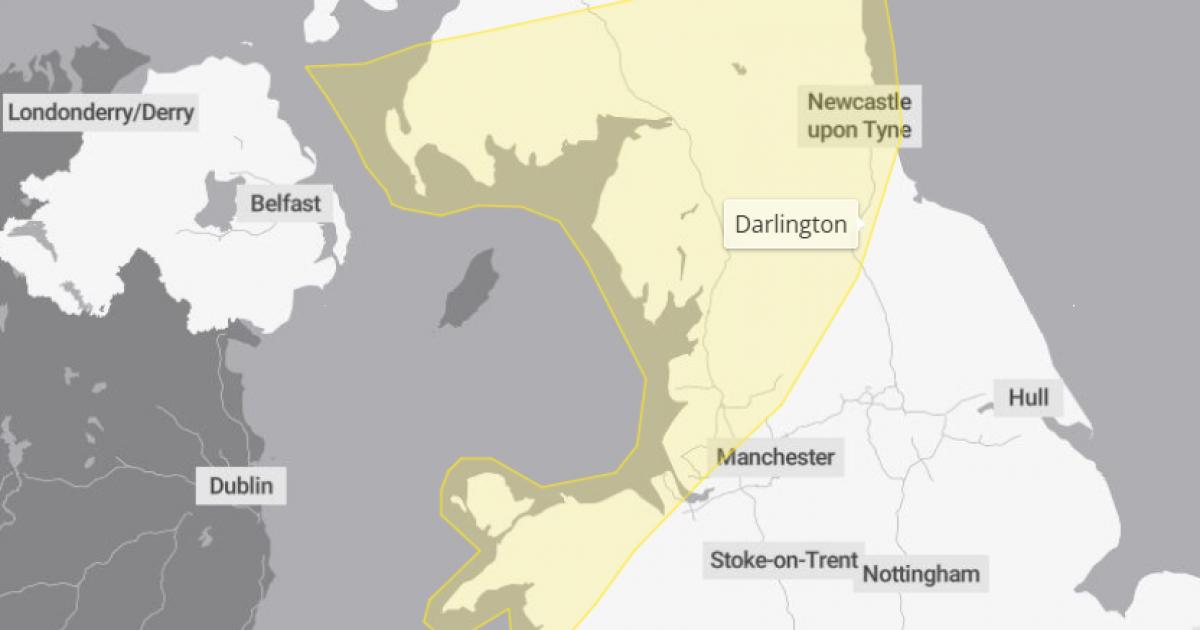
easyJet have been contacted for comment. It is currently unknown if the flight was affected by the weather after the Met Office issued a yellow warning for winds of up to 70 mph in southern, central, eastern and north east Scotland. Forecasters said in Scotland and England, gusts of 50-55mph are expected widely, while some coastal areas and places downwind of high ground could see gusts of 60mph or even 70mph in a few places.

They warned of potential delays to road, rail, ferry and air transport and said there may be some short-term loss of power and other services. However, no other flights have been unable to land at Edinburgh this morning.

Emergency response squawking 7700 means a general emergency has been declared. It can cover a range of scenarios including a technical or medical emergency. The procedure allows air traffic controllers and ground crews to respond to the emergency in the most effective manner.

Get more Daily Record exclusives by signing up for free to Google’s preferred sources. Click HERE.

Advertisement

Source link

Continue Reading

Trending

Copyright © 2025