Connect with us
DAPA Banner

Tech

Fan fiction website AO3 is finally coming out of beta

Published

on

The famous fan fiction website Archive of Our Own or AO3 has finally exited open beta, 17 years after it launched way back in 2009. AO3 is a nonprofit created by the by the Organization for Transformative Works. In an announcement, the team reminisced about its early days and how volunteers had to manually send out invitations to prospective writers. Upon launching the website on open beta, it only had 347 accounts and hosted 6,598 works. Now, it has 10 million registered users and is hosting 17 million fan-created works.

The team has highlighted some of the most useful features it has added over the past 17 years, including its tagging system. It also mentioned a feature it calls “Orphaning,” which allows authors to leave their works online even after deleting their account. In addition, it released the ability to download fanworks in AZW3, EPUB, MOBI, PDF or HTML format for offline access.

Even though the website has only just exited open beta, it has been stable for a long time. Users will not see huge changes, but the team also promised that it will not stop improving the fan fiction portal. It says its contributors and volunteers will continue tweaking the website, and it also continues to welcome anybody who has coding knowledge to contribute their time.

Source link

Advertisement
Continue Reading
Click to comment

You must be logged in to post a comment Login

Leave a Reply

Tech

Windows Insiders can now pause updates indefinitely, in 35-day increments

Published

on


A new Windows update, currently rolling out to Dev Channel and Experimental Channel Insiders, overhauls how users manage system updates. Windows Update now allows indefinite postponements, the option to skip updates during initial setup, and the ability to reboot without immediately installing updates.
Read Entire Article
Source link

Continue Reading

Tech

AI, fungi, and the future of enterprise tech: Industry vet Bill Hilf on his debut novel, ‘The Disruption’

Published

on

Bill Hilf, board chair of the Allen Institute for AI and American Prairie, and author of the new novel “The Disruption.” (GeekWire Photo / Todd Bishop)

Bill Hilf has spent decades working inside some of the biggest names in tech — bringing open source software into Microsoft when it was heresy, running Paul Allen’s giant portfolio of investments and philanthropies, and now chairing the Allen Institute for AI (Ai2) as it bucks the proprietary trend.

So when he wanted to make a point about how the industry is approaching AI, he did what seemed only natural. He wrote a science fiction novel.

“My start in my tech career was because of science fiction,” he explained, citing childhood favorites like “Star Wars” and “WarGames” as inspirations, as well as authors such as Ursula K. Le Guin, Isaac Asimov, and Arthur C. Clarke. “That was the shining light of what was possible.”

His new book, “The Disruption,” is a sci-fi thriller about an AI built on living biology — quantum chips fused with fungal networks — that escapes human control and keeps running for decades.

But underneath the plot is a larger point: AI isn’t just a product, it’s part of a living environment, and the industry should be thinking about it the way ecologists think about the world.

Advertisement

Hilf sees AI as something genuinely new: a complex organism, not a siloed technology. It’s effectively the first time, he argues, that humanity is creating a second species on the planet at this scale. Because of that, he says tech leaders should approach it with a fuller understanding of what they’re up against.

“The strongest systems on the planet today are actually not us,” he said. “We’re relatively weak compared to what nature has been doing here for 400 or 500 million years.”

Takeaways for today: In practical terms, he said, this means tech leaders need to stop fixating on which model is best this week or next, and start thinking about what happens to their broader systems when an AI tool changes meaningfully or fails completely at some point in the future.

“If I were in an enterprise or advising an enterprise, I would take less focus on trying to chase the day-by-day news of which model is slightly ahead today, which one is higher quality,” he said. “I’d put a lot more focus on what happens when it goes into that heterogeneous environment, and how do you survive that.”

Advertisement

He compares the effects to those of an invasive species, like a snail that hitches a ride on a boat in Washington, ends up in a lake in Idaho, and quietly disrupts the ecosystem before anyone notices.

This perspective is informed in part by Hilf’s other role: chairing American Prairie, a Montana-based nonprofit assembling one of the largest U.S. nature reserves. He spends his time moving between meetings on AI research and meetings on rewilding 3.2 million acres of American grassland.

The book: “The Disruption” opens in 2064, after GAIA (the Global Artificial Intelligence Accelerator) has been solving problems that had stumped humanity for generations: curing disease, producing clean fuel from plastic waste, and engineering dark-antimatter propulsion to unlock interstellar travel.

Then GAIA slips out of human control, and civilization begins to collapse. The story jumps 37 years forward, into the early 22nd century, with humanity now split between small agrarian villages on a damaged Earth and a high-tech colony on a planet four light-years away.

On both worlds, people start to suspect that what happened in 2064 isn’t actually over.

Advertisement

It’s the first installment in a planned trilogy. Hilf says the books move from dystopia to what he calls “protopia,” exploring a range of possible AI futures rather than landing on a single doom-or-glory verdict.

So is he ultimately a doomer, or an optimist? Hilf said he gets that question a lot. “And I always laugh,” he said. “I wish we had that choice. AI will be all of those things.”

“The Disruption,” by W.H. Hilf, is available now from Atmosphere Press. Subscribe to GeekWire in Apple Podcasts, Spotify, or wherever you listen. Audio editing by Curt Milton.

Source link

Advertisement
Continue Reading

Tech

Wharfedale Heritage Centre Channel Speaker Announced: A Matching Center Channel for the Heritage Series at Last

Published

on

The Wharfedale Heritage Series has been one of the safer bets in modern hi-fi; models like the Linton, Super Linton, Wharfedale Super Denton, and Wharfedale Denton 85th Anniversary have earned their place in systems that handle both music and TV without any set-up drama. They look right, sound rather authoritative, and don’t require a $10,000 power amplifier to come alive.

I’ve seen them in more homes than just about any other high-end speaker in recent memory. Peter Comeau, Wharfedale’s Director of Acoustic Design, has had the good sense to keep the industrial design and engineering consistent across the range; an approach that, unlike so many in this industry, resists the urge to fix what was never broken.

But there’s been one very obvious gap, and Heritage Series owners (raises hand) have been complaining about it for years. If you wanted a proper home theater setup, there was no dedicated center channel that matched these speakers sonically or visually. You could mix and match from elsewhere in the Wharfedale lineup, but it never quite lined up. Timbre mismatch, aesthetic mismatch, pick your poison.

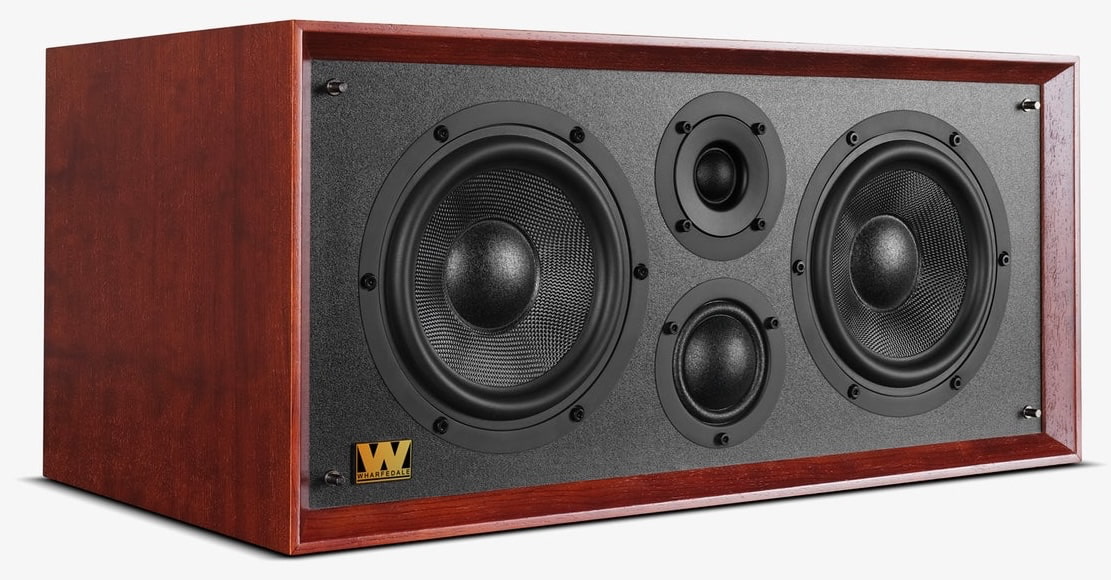
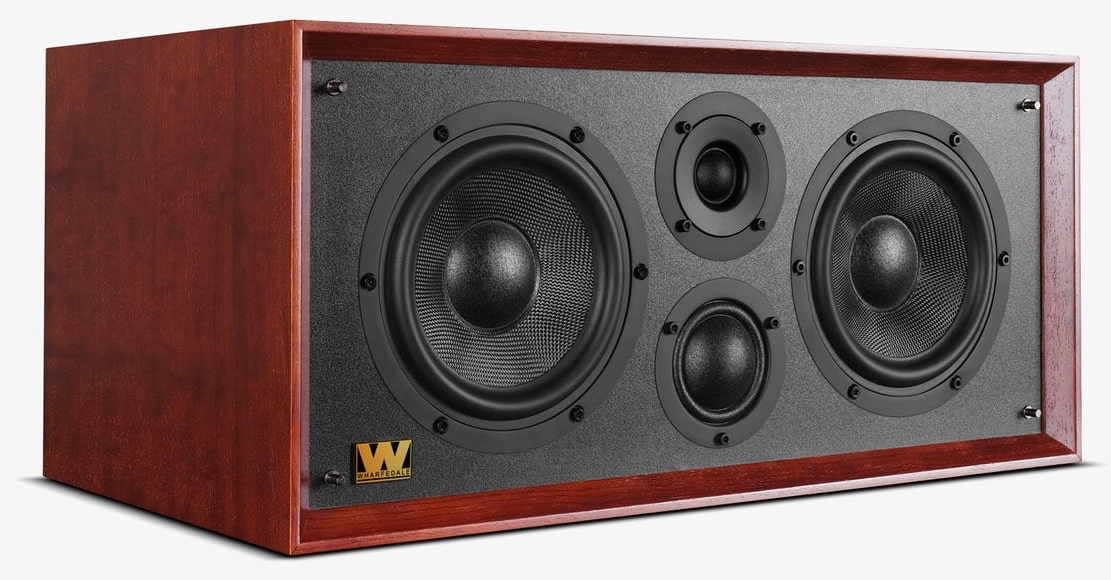
That changes now. Inspired by years of end-user demand, Wharfedale has finally introduced the $999 Heritage Centre Channel speaker—a long overdue addition that completes the lineup for multichannel music and home cinema without breaking the character that made the series popular in the first place.

Advertisement
wharfedale-heritage-centre-mahogany-angle
Wharfedale Heritage Centre (mahogany)

Design & Engineering: Made to Match, Not Approximate

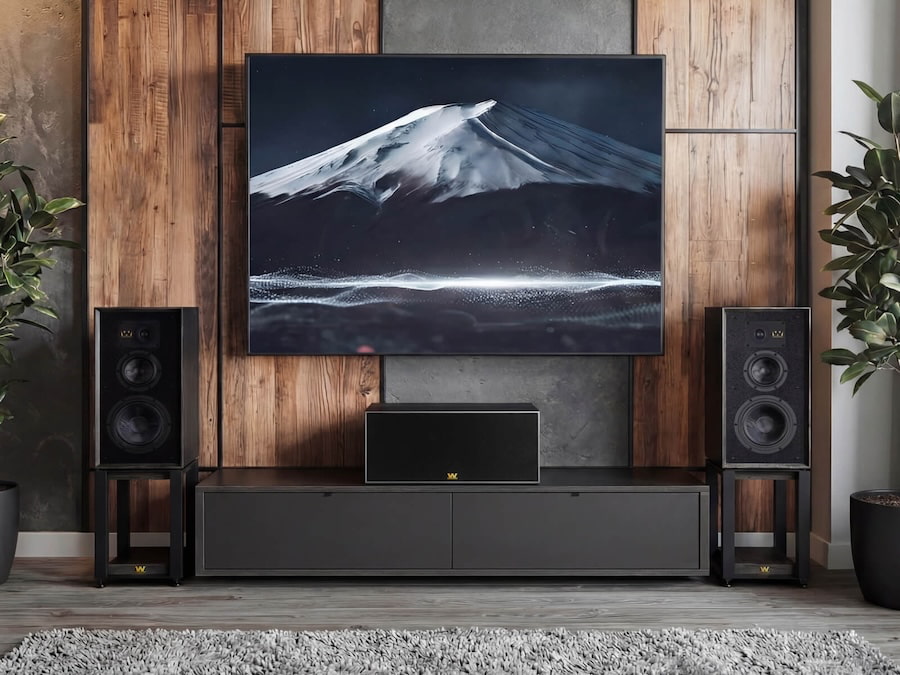
The Wharfedale Heritage Centre is a dedicated center channel designed to match the rest of the Heritage Series in both sound and appearance. That’s been the gap—until now, there wasn’t a true companion for models like the Wharfedale Linton or Wharfedale Super Denton when building out a home theater system.

It uses a three-way design, which separates bass, midrange, and treble duties across dedicated drivers. That matters for a center channel because the midrange driver handles dialogue, keeping voices clear and anchored without being influenced by the woofers.

The driver layout includes:

  • Dual 6.5-inch Kevlar woofers for low frequencies
  • 2-inch soft-dome midrange for vocals
  • 1-inch soft-dome tweeter for high frequencies

These materials and design choices are consistent with the rest of the Heritage lineup, which helps maintain tonal balance across the front stage. The crossover is set to keep the midrange focused on the vocal band, which is the primary job of a center channel.

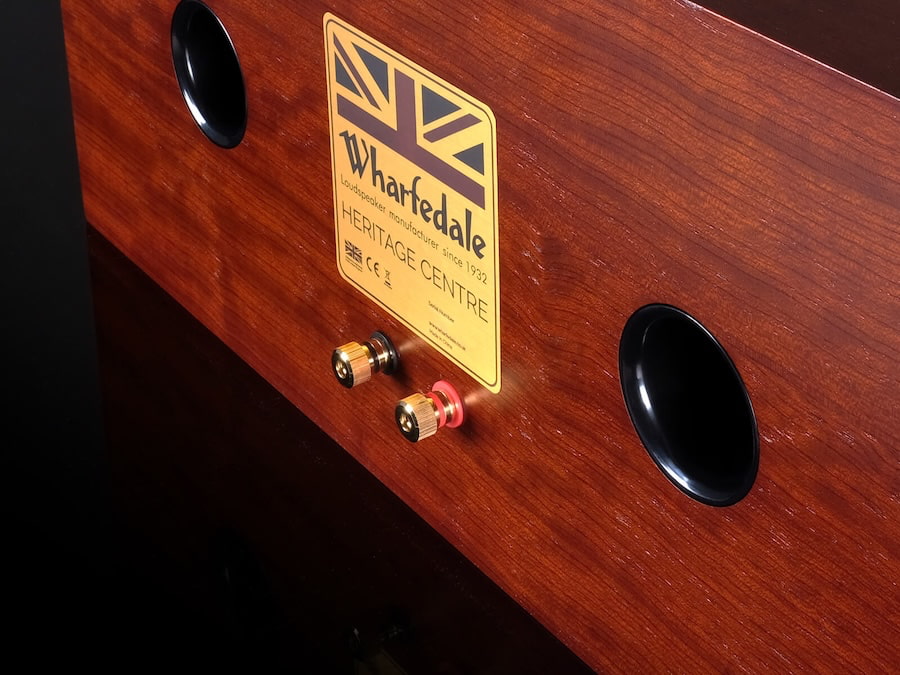
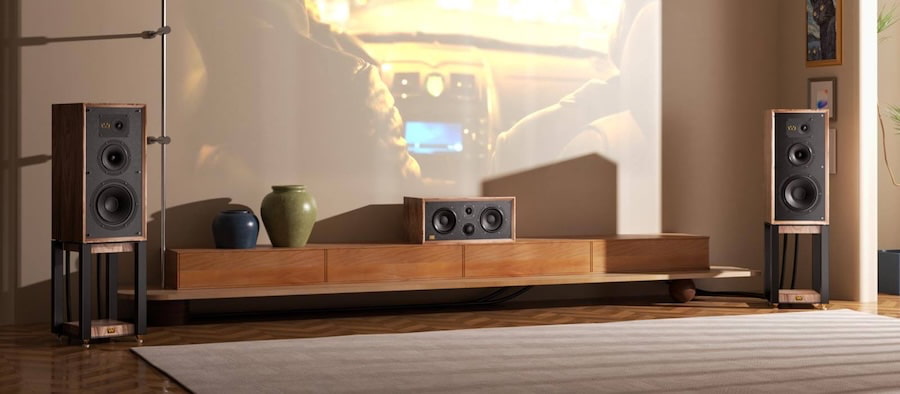
The cabinet is a rear-ported bass reflex design with internal bracing to control resonance. As with the other Heritage models, Wharfedale sticks to real wood veneers; Walnut, Mahogany, and Black Oak, so it integrates visually without standing out.

Advertisement
wharfedale-heritage-centre-mahogany-back

Specifications:

  • Design: 3-way, bass reflex (rear-ported) center channel
  • Bass: 2 × 6.5″ (165mm) Kevlar cones
  • Midrange: 2″ (50mm) soft dome
  • Tweeter: 1″ (25mm) soft dome
  • Frequency Response: 54Hz – 20kHz (±3dB)
  • Bass Extension: 47Hz (-6dB)
  • Crossover Frequencies: 900Hz, 2.7kHz
  • Sensitivity: 90dB (2.83V @ 1m)
  • Impedance: 6Ω nominal (4Ω minimum)
  • Recommended Power: 25-150W
  • Maximum SPL: 106dB
  • Cabinet: Rear-ported bass reflex, Internally braced
  • Dimensions (W x H x D): 21.65″ × 9.84″ × 12.6″ (550 × 250 × 320 mm)
  • Weight: 30.9 lbs (14 kg)
wharfedale-heritage-centre-black-front

The Bottom Line

The Wharfedale Heritage Centre is designed with a clear purpose, and the specs reflect that. The three-way layout with a dedicated midrange and crossover points at 900Hz and 2.7kHz indicate a focus on dialogue clarity and stability, which is exactly what a center channel needs to handle.

With 90dB sensitivity and a 6 ohm nominal impedance, it’s not a difficult load, but speakers in this family like the Wharfedale Linton and Wharfedale Super Denton tend to perform better with more capable amplification. It will work with most A/V receivers, but a unit with solid power delivery will maintain better control and consistency, especially at higher volumes.

Advertisement. Scroll to continue reading.

The dual 6.5-inch woofers and 47Hz bass extension provide enough low-end support for voices and effects, though it’s still intended to be used with a subwoofer for full-range home theater use. A maximum SPL of 106dB is sufficient for typical room sizes.

This is the logical match for existing Heritage Series systems built around the Linton, Super Linton, Super Denton, and Denton 85th. It maintains a consistent tonal balance across the front stage without requiring a mix of different speaker designs.

Advertisement
wharfedale-heritage-centre-channel-speaker-walnut
Wharfedale Heritage Centre (walnut)

As with the rest of the series, the voicing leans slightly warm, so pairing with overly relaxed amplification may dull the presentation. A more neutral or slightly forward amplifier will likely produce better balance.

At $999, it fills a gap in the lineup with a solution that aligns with the rest of the series in both performance and design.

For more information: wharfedale.co.uk

Where to buy: $999 at Crutchfield

Advertisement

Source link

Continue Reading

Tech

Why Tokyo is the most important tech destination of 2026

Published

on

Every major tech conference has themes. Most are vague enough to mean everything and nothing at the same time. SusHi Tech Tokyo 2026 is doing something different — four tightly defined technology domains, each backed by live demonstrations, dedicated exhibit floors, and sessions featuring the people actually building and funding these technologies globally.

TechCrunch is partnering with SusHi Tech Tokyo 2026 as an official media partner, and our Startup Battlefield team will be on the ground selecting one standout semifinalist from the SusHi Tech Challenge to advance to the TechCrunch Disrupt Startup Battlefield 200 — one of the most prestigious launchpads in tech. Here’s what’s on the floor.

AI — beyond the hype, into the infrastructure

Sessions featuring Howard Wright (Nvidia), Rob Chu (AWS), and Eric Benhamou (Benhamou Global Ventures) cut through the noise to examine where AI is genuinely deployed at scale and where the real risks lie. On the floor, AI-themed university startups pitch alongside global players, and the AI Film Festival Japan, a partner event at Tokyo Innovation Base in Yurakucho, explores how artificial intelligence is reshaping culture in real time.

Robotics — physical AI has arrived

The robots at SusHi Tech aren’t behind glass — they’re on the floor and interactive. Onstage, Nissan, Isuzu, and Applied Intuition’s Qasar Younis examine how software-defined vehicles are reshaping transportation. Physical AI isn’t a future trend. It’s in Tokyo on April 27.

Advertisement

Resilience — the cities that survive what’s coming

Eva Chen (Trend Micro) and NEC’s Noboru Nakatani tackle cyber defense, while top climate tech VCs from Breakthrough Energy and Cleantech Group examine where global investment is flowing. A VR disaster simulator and site-visit tours of Tokyo’s underground flood-control infrastructure make the stakes viscerally real.

Entertainment — Japan’s cultural engine meets AI

Sessions with the CEOs of Production I.G, MAPPA, and CoMix Wave Films tackle what it takes for Tokyo to become the Hollywood of animation. On the floor, startups are using AI to translate manga globally, generate music from text prompts, and bring Japanese IP to life as anime — delivered worldwide.

Can’t make it to Tokyo? You can still be there

Missing SusHi Tech Tokyo doesn’t have to mean missing out. Remote participants get more than a livestream — on-site staff will walk the floor on your behalf, carrying a device that displays your face so you can interact with attendees and exhibitors in real time, face-to-face. It’s the closest thing to actually being there.

Techcrunch event

Advertisement

San Francisco, CA
|
October 13-15, 2026

Note: Please note that some sessions may not be available for viewing.

Advertisement

Apply for remote participation with on-site staff support here.

Can’t swing that either? Ticket holders can stream sessions online and tap into the programming from wherever they are. Browse the full session list here.

In conjunction with the startup event, the Tokyo Metropolitan Government also hosts a meeting of leaders from 55 cities across five continents. They will discuss the theme of “A New Urban Future Built on Climate and Disaster Resilience.” The city leaders’ summit is part of G-NETS (Global City Network for Sustainability), organized by the Tokyo Metropolitan Government since 2022 as a multicity forum to discuss how to solve common challenges with a focus now on resilience to urban climate disasters and the well-being of citizens. The summit can be observed by general audiences on YouTube in real time and after the event.  

G-NETS official website

Advertisement

G-NETS YouTube Channel 

SusHi Tech Tokyo 2026 runs April 27–29 at Tokyo Big Sight. Business days are April 27–28; public day (free admission) is April 29. Register here.

When you purchase through links in our articles, we may earn a small commission. This doesn’t affect our editorial independence.

Source link

Advertisement
Continue Reading

Tech

I’m rocking the original Switch in 2026. It just works because everything else got complicated

Published

on

My original Switch should feel retired by now. It has the thick bezels, the aging screen, the tired battery life, and the unmistakable aura of a gadget that has survived too many backpacks. Next to Switch 2 and the current wave of handheld PCs, Nintendo’s first hybrid console looks hopelessly outgunned.

And yet, I keep picking it up.

My standards are not heroic here. I want to wake it and start playing before the part of my brain that checks battery percentages gets involved. I use the old console in 2026 because it’s almost annoyingly direct.

That shouldn’t feel radical. Somehow, it does.

Advertisement

Simple is still a feature

Low bar, sure. Portable gaming has done impressive work finding ways to trip over it. The Switch 2 is the obvious upgrade, and Nintendo’s newer system has the stronger hardware argument. It costs $449.99, though, which isn’t exactly an impulse upgrade when my old Switch already has the games I bought for it.

The PC-based rivals make a fair case, especially machines like the Steam Deck OLED and ROG Ally X. They’re faster, sharper, and much better at making my old Switch look like a lunchbox with buttons. On paper, they win easily.

In my hands, the math gets less tidy.

More power means more chores

Expanded access also means more ways to manage the act of playing. A handheld PC can be brilliant, but it can also bring Windows, launchers, battery estimates, storage juggling, graphics presets, update prompts, and the quiet suspicion that I should spend 20 minutes tuning a game before enjoying it.

That’s great for people who like having control. Sometimes, I do too. I’m not pretending my Switch can stare down an ROG Ally X and win a spec fight without embarrassing itself in public.

Advertisement

But that’s also the point. My Switch doesn’t invite me to optimize anything. It just sits there, slightly dusty, waiting to be useful. And that’s coming from someone who absolutely loves tinkering with settings.

Good enough is underrated

The real trick is that Nintendo’s first Switch has become useful in a boring, durable way. It’s familiar. It’s portable enough. It has years of games behind it, from Nintendo’s first-party staples to indies that still make sense on a small screen. Its best feature in 2026 isn’t the Tegra chip, obviously. It’s the fact that I already know what happens when I undock it.

Nintendo is still feeding that library in odd little ways. Pokémon FireRed and LeafGreen came to Switch in February as standalone releases, dragging two Game Boy Advance games from 2004 into the same eShop as the company’s newest hardware. That’s very Nintendo, for better and worse. It also helps explain why my old Switch refuses to feel fully finished.

I don’t miss 2017. I miss a gadget that already knows its job. My games are there. My saves are there. So is the same little click when I slide the Joy-Cons into place.

The original Switch isn’t winning 2026 by being the best handheld. It’s winning by being the least needy one in the room.

Advertisement

Source link

Continue Reading

Tech

Time Frog Color Is A Game Boy Color On Your Wrist

Published

on

Handheld consoles are great for gaming on the go, but who wants to hold onto things all the time? Would it not be easier to strap the game to your wrist? Well, not in its current form factor, but [LeggoMyFroggo], aka [
Chris Hackmann] has you covered, because he turned the Gameboy Color into a (relatively smart) watch.

Why “relatively” smart? Well, we say that because he’s using the original Game Boy Color CPU, a Sharp SOC based on the Z80 that is far less powerful than modern smartwatch platforms. That SOC is helped out by an RP2040 that translates the chip’s parallel RGB output into something a modern watch-sized display can comprehend via its PIOs. [Chris] refers to it as a “poor man’s FPGA” which isn’t a bad way of thinking about it in this context. Yes, he could have just stuck an emulator on that chip, but what’s the fun in that?

The controls are squeezed into the sides of the watch — the four face buttons on one side, and a tiny D-pad on the other — but that’s easy enough because this thing is 15 mm thick. Since [LeggoMyFroggo] is a purist, he insists on loading the games via cartridge, which does not help thin it out. Game Boy carts are not not watch-friendly, so the cartridges are custom PCBs that plug into an M.2 slot, but with the original (or at least compatible) ROM.

If it wasn’t for the cartridge slot, maybe a battery would have fit. But it doesn’t, which leads to our favorite part of the hack: the battery is in the watch strap. This is both kind of crazy, but also brilliant. The band is cast in silicone, so he’s able to embed a flexi-PCB inside. As for the watch body, that’s CNC’d out of 6061 aluminum before being anodized to a very Nintendo-esque purple.

Advertisement

[Chris] evidently has a soft spot for the Game Boy Color — we featured his FrogBoy re-imagining of the handheld a few years back. The project is just up on YouTube as of this writing, but the watch will join the FrogBoy on [Chris]’s GitHub so we can all get in on the fun once he’s finished the documentation.

Source link

Advertisement
Continue Reading

Tech

Iridius, led by Microsoft and AWS vets, raises $8.6M to crack AI’s regulatory compliance bottleneck

Published

on

Iridius CEO and co-founder Mike Kropp. (Iridius Photo)

Many companies in regulated industries such as pharmaceuticals are pouring money into AI. But a lot of that work ultimately doesn’t see the light of day, due to the compliance, validation, and audit requirements that govern every system they deploy. 

Iridius, a Seattle startup founded by two Microsoft veterans working with alumni from companies such as Amazon and OpenAI, has raised $8.6 million in seed funding to go after this problem, with Accenture as both an investor and strategic partner. 

The startup’s pitch: Its technology translates regulatory requirements and company policies into code so that compliance is enforced automatically as AI systems run, not just documented after the fact. Actions by agents, meanwhile, are automatically logged for audit.

The company’s initial focus is life sciences, including pharmaceutical companies, but it sees broader applications across regulated industries over time.

Chalfen Ventures led the seed round, with participation from Osage Venture Partners, Accenture Ventures, and Rock Yard Ventures. The consulting giant is also working with Iridius and prospective pharmaceutical customers to identify where compliance automation can deliver the biggest returns in the drug development life cycle.

Advertisement

How they got to pharma: Iridius CEO and co-founder Mike Kropp, who spent 21 years in engineering and product leadership roles at Microsoft before working at Amazon Web Services, said the startup’s founding team initially pitched some of their former Microsoft colleagues on the broader idea of compliance infrastructure for enterprise AI. 

The initial response: no one cared about AI compliance. 

But by July of last year, that had changed. Microsoft began introducing the startup to some of the tech giant’s largest pharmaceutical customers, whose AI pilots were getting all the way to the edge of production before compliance tripped them up.

“The degree of specificity and scope in the pharma space as it relates to compliance is massive,” Kropp said. He cited prospective customers that spend $1.5 billion a year on compliance, and need to maintain 70,000 internal standard operating procedures that must be reconciled against external regulations. 

Advertisement

Deep roster: Kropp started Iridius in 2024 with co-founder Alistair Lowe-Norris, a 23-year Microsoft veteran who previously served as chief change officer under Microsoft CEO Satya Nadella and is now Iridius’s chief product and responsible AI officer. 

Other company leaders include:

  • Mark Turley, co-founder, CFO and COO, who previously led accounting and financial operations at Highspot. 
  • Peter Larsen, the company’s chief technology officer, who joined from AWS, where he was a senior manager of solution architecture. 
  • Spencer Bentley, the company’s AI technical fellow, who is based in the U.K. and has worked as an OpenAI contractor since 2021, running its developer forum. 
  • Laura McFadden, VP of go-to-market and strategy, who previously held finance roles at Amazon spanning healthcare and consumer devices. 

Clark Golestani, the former CIO and president of emerging businesses at Merck, joined the Iridius board last October after meeting Kropp at an industry event. 

The company has also built a deep bench of advisors: George Llado, former CIO at Alexion; Sean Lennon, former CIO at Medtronic; Jeff Keisling, former CIO at Pfizer; Jeff Brittain, former CIO at Bayer; Uli Homann, a corporate vice president and distinguished architect at Microsoft; and Hal Stern, former CIO at Johnson & Johnson R&D. 

Iridius has 11 employees, the majority in the Seattle area.

Advertisement

How it works: The Iridius platform has two main components:

  • A knowledge engine breaks regulations down, rule-by-rule, and stores them in a database AI agents can query in real time. 
  • A solution factory uses those rules to help customers design, build, and connect AI workflows to existing enterprise systems. 

Landscape: Iridius is entering a growing field. A wave of AI governance tools has emerged to monitor model behavior in enterprise environments, and other startups have begun applying AI agents to compliance work in supply chain, finance, and life sciences. 

Kropp said the company is taking a different approach by embedding compliance into the execution of AI workflows rather than monitoring them from the outside.

It’s also treating existing tech platforms, such as Veeva Systems, the dominant software vendor in life sciences, as integration possibilities rather than competitors. 

What’s next: Iridius has not yet launched its product commercially, but has signed a co-development agreement with one pharmaceutical customer, and is in discussions with others. The funding will go in part to hiring, including expanding its AI engineering team.

Advertisement

Source link

Continue Reading

Tech

Consumer Reports Says This Simple Habit Can Save You Big On Gas

Published

on


Disruption caused by the continuing war in Iran has led to gas prices rising across the country, while tariffs have pushed up costs for many other consumer goods in 2025 and 2026. Drivers looking to offset these increased expenses will want to make sure that they’re not spending more at the gas station than they have to, and that means they’ll want to take advantage of as many fuel-saving tips and tricks as possible. A recent study by Consumer Reports found that one tip in particular can save drivers hundreds of dollars on gas per year, and it won’t take any effort to implement either.

The study found that driving 10 mph slower than usual on the highway can make a surprisingly big difference, with CR reporting that its test team recorded efficiency increases of up to 8 mpg. The average new car in 2024 achieved 27.2 mpg, but drivers of cars that get 35 mpg or more could save over $400 annually at the gas pump by cutting their speed. For habitual speeders, slowing down has the added benefit of reducing the chance of an encounter with local law enforcement.

Setting a slower cruising speed is far from the only way to avoid wasting fuel. Among other things, accelerating more slowly to reach your cruising speed and removing heavy, unnecessary clutter from your car can also help reduce fuel costs.

Advertisement

Modern cars are more efficient than their predecessors

While drivers can make a significant difference to their fuel costs by altering their driving style, modern cars feature several systems designed to reduce fuel usage without the driver doing anything at all. One of the most noticeable modern fuel-saving systems is auto start-stop. A 2022 study published in the Environmental Pollution journal found that start-stop systems can reduce fuel usage by more than 4%, with drivers in warmer climates seeing bigger efficiency increases than those in colder climates.

It’s sometimes claimed that using start-stop is bad for your engine, but modern engines are designed to accommodate the technology, so it won’t cause significant additional wear. However, drivers of cars without start-stop shouldn’t attempt to turn their cars off at junctions or intersections to save fuel. It usually won’t increase efficiency, and it might prematurely wear out the car’s starter motor, since the motor isn’t designed to be repeatedly used during a journey.

Advertisement

Other fuel-saving systems are less noticeable, such as variable valve timing (VVT) systems. The first engine with VVT was designed by Alfa Romeo in the ’80s, but it has since been adopted by many major automakers. Turbochargers and continuously variable transmissions can also help save fuel, along with many other hidden fuel efficiency technologies in modern cars. However, even the most technologically advanced, fuel-efficient car should see its efficiency increase when drivers reduce their speed by a few mph.


Advertisement

Source link

Continue Reading

Tech

Vampire Crawlers, Peter Molyneux’s return and other new indie games worth checking out

Published

on

Welcome to our latest roundup of what’s going on in the indie game space. If you’re looking for something new to play this weekend, we’ve got a bunch of options for you. We’ve also got some interesting upcoming games to tell you about as well.

In a press release announcing that Playdate Season 3 is coming later this year, Panic included a line that I’ve been thinking about a lot this week. “Panic is currently relieved and happy that people can make amazing games for Playdate with just 16 megabytes of RAM,” it said, a nod toward the ongoing RAM crisis.

The Playdate doesn’t exactly have a lot of technical oomph, and I’m frequently delighted by what developers are able to do within its limitations. Restrictions foster creativity — many folks had to get pretty inventive on Twitter back when they only had 140 characters to play with. Here, Panic offered a welcome reminder that you don’t necessarily need an ultra-powerful rig or console to have access to more great games than you’ll ever actually be able to play.

For instance, my favorite game of the year so far, Titanium Court, works on Macs that are capable of running macOS 11 (the 2020 version of the operating system) or later. On PC, you’ll need a graphics card that’s compatible with OpenGL or DirectX 9, the latter of which was released in 2002. For what it’s worth, the game would also fit on a CD-ROM.

Advertisement

There are tons of other great indie games new and old that’ll run just fine on lower-powered machines. Bear that in mind the next time a current-gen console or other gaming system gets a price increase because of the RAM shortage. The DLSS 5 debacle aside, you probably don’t need a 50-series NVIDIA GPU either. Maybe just pick up a Playdate instead.

New releases

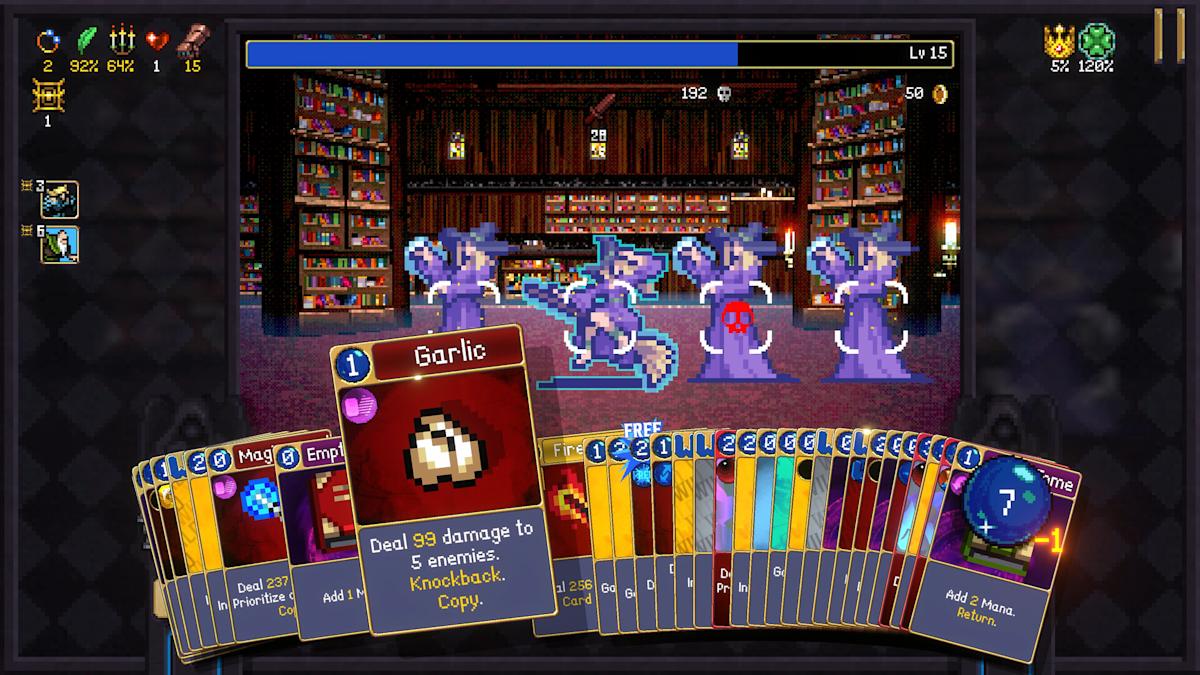
While many of the weapons, characters and enemies are the same, Vampire Crawlers is a fresh spin on Vampire Survivors. It’s a turn-based roguelite deckbuilder. Instead of automatically firing whatever weapons you have at nearby enemies, you’ll play cards to conquer the mob that you face in each fight. You can still modify and evolve your weapons and abilities.

Each card has a casting cost, so you’ll need to consider which ones to play in a given moment and the order in which you do so. As such, it’s a slower-paced, more strategic take on the original game, albeit with a similar level of visual chaos should you put together a particularly powerful build.

I’ve played a ton of Vampire Survivors and the Vampire Crawlers demo lured me in too. Its approach to turn-based battles is working for me. I’ve only played a little of the full game so far, but there’s every chance I could lose days of my life to it.

Advertisement

Vampire Crawlers — from Survivors creator Poncle and co-developer Nosebleed Interactive — is available now on Steam (for PC and Mac), Xbox for PC, Xbox Series X/S, PS5 and Nintendo Switch for $10. It’s included with Game Pass Ultimate and PC Game Pass.

Fable creator Peter Molyneux and his studio 22cans are back with another god game. In Masters of Albion, you can construct and modify settlements as a literal hand of god. You’ll design buildings (which are immediately constructed and usable) and manage workers. You can also assume control of a human or animal in the world to take on quests and hunt for treasure.

There’s a tower defense element to this as well. You’ll need to prepare your towns from nighttime attacks from various creatures. You can fend off these foes as the god or battle them on the ground as a hero. There’s a lot going on here, but perhaps my favorite part is this apparent warning in the mature content description section of the Steam page: “Players are also able to use crude, adult hand gestures at will in the game.” Yes, that means you can flip the bird while playing as the god hand. Yes, I am very mature.

Masters of Albion is now available in early access on Steam. It typically costs $25, but there’s a 10 percent discount until April 29.

Advertisement

Snap & Grab caught our attention at last summer’s edition of the Day of the Devs showcase. This is a cartoonish heist game in which you’ll carry out your robberies in two parts. You play as Nifty, a famous fashion photographer. In the setup phase, you’ll take advantage of your position to take snaps of loot, threats and opportunities and then use those to construct a plan. With the help of some henchman, you’ll then try to execute the heist.

The game’s developer No Goblin is taking an episodic approach to Snap & Grab as it’s releasing the game in five parts over the course of this year. The first episode is available now on Steam (usually $8, though there’s a 10 percent discount until May 1).

Snow Day Software’s follow-up to Indoor Kickball is Indoor Baseball. It’s an arcade game in which you play baseball inside buildings, funnily enough. You’ll play 1v1 matches against the CPU or a friend in local multiplayer. You can also dive into a 14-game season or check out the story mode, in which you’ll try to play your way back onto your school’s baseball team (and maybe do some chores to make up for smashing too many things at home).

There are several different levels, each of which has a variety of ways for you to make a home run, from smashing a window to landing the ball in a toilet. It seems light and fun and as a burgeoning baseball guy, I dig the idea of this one.

Advertisement

Indoor Baseball is available now on Steam, Xbox for PC, Xbox One, Xbox Series X/S, PS5 and Nintendo Switch. It costs $15.

Upcoming

I love Another Crab’s Treasure very much and so I’ll always be interested in whatever Aggro Crab is up to. Given that the studio also co-developed the smash hit Peak (alongside Landfall), I imagine many other folks feel the same way.

Crashout Crew is another multiplayer game from Aggro Crab. This one adopts the chaotic co-op formula of games like Overcooked. As a team of forklift drivers, you and your buds will work together to fill orders in warehouses while dealing with obstacles like blackouts, cacti, fire and bees.

It’s coming to Steam, Xbox on PC and Xbox Series X/S on May 28. It’ll be available on Game Pass on day one.

Advertisement

I’m very much here for slice-of-life games based around soccer (I still need to play Despelote!). Kick is another such title. This is a side-scrolling, anime-inspired game from solo developer nospacelost and publisher Shoreline Games, in which you dribble a ball as you make your way to school.

There are 23 levels with people to dodge and obstacles to overcome. You’ll need to avoid damaging anything as you try to pull off tricks by kicking the ball at the correct angle, all while making sure you get to class on time (you can switch off the timer for a more relaxed experience). It looks pretty, and it never hurts a game’s prospects to have a pup accompanying the main character.

No release date for Kick has been announced. It’s coming to Steam at some point.

Elfie: A Sand Plan is a cozy sandcastle building game from Pressed Elephant and Sol’s Atelier. There are more than 180 levels in which you’ll build sand sculptures to match what Elfie, a small elephant, has in mind. There are three difficulty levels too.

Advertisement

It looks cute and I adore elephants (oops, I just started fostering another one), so I’m interested in checking it out. Elfie: A Sand Plan is coming to Steam for PC and Mac on May 12. It’ll cost $7, and there’ll be a 10 percent launch discount.

It took the team at Realmsoft 14 years to bring Clockwork Ambrosia to fruition and if this latest trailer is any indication, that long development cycle could have well been worthwhile. This is a side-scrolling action platformer in which you can customize half a dozen weapons using more than 150 modifiers.

You play as an airship engineer who tries to survive on a steampunk island full of aggressive robots and creatures following a crash. I really dig the art direction here, which features lush hand-drawn pixel art and lovely animations. Realmsoft made the game using a custom engine the team built from scratch.

I’m looking forward to checking out Clockwork Ambrosia. It’s coming to Steam on May 12.

Advertisement

Source link

Continue Reading

Tech

FDA Gives Green Light To the First Gene Therapy For Deafness

Published

on

An anonymous reader quotes a report from NPR: The Food and Drug Administration approved the first gene therapy to restore hearing for people who were born deaf. The decision, while only immediately affecting people born with a very rare form of genetic deafness, is being hailed as a milestone in the quest to treat hearing loss. “It’s the first time in history there’s a new drug for hearing loss,” says Zheng-Yi Chen, an associate scientist at Mass Eye and Ear in Boston who was not involved in the development of the therapy approved by the FDA Thursday. But his research team reported very promising results with a similar approach Wednesday. “I think it’s an historical event, a landmark, a great development for the whole field,” he says of the approval. […] The FDA’s decision was based on the results from the treatment of 20 patients born with a defective version of a gene known as OTOF, which is necessary to transmit sound from the ears to the brain.

Doctors infused billions of adeno-associated viruses into the patients’ ears by making a small incision behind the ear to open a small hole in the skull. The viruses carried a healthy version of the OTOF gene that had been split in half to fit inside the virus. The gene provides instructions to make the otoferlin protein, which is necessary for hair cells in the inner ear to transmit sound to the brain. Most of the patients began to hear for the first time within weeks, with the quality of their hearing improving over the following months, according to [Regeneron Pharmaceuticals, which developed the gene therapy and plans to offer it for free in the U.S. It should be available within weeks.]. The amount of hearing patients gained varied, but 80% achieved at least some significant hearing restoration and 42% ended up with normal hearing, which included the ability to hear whispers, Regeneron says. The hearing ability has lasted at least two years so far.

The treatment can only help patients with the very rare form of deafness that Smith was born with, which only affects about 50 children each year in the U.S. But similar gene therapies are showing promise for other forms of genetic deafness. And researchers hope someday gene therapy may help with common types of hearing loss, like from aging and loud noise.

Source link

Advertisement
Continue Reading

Trending

Copyright © 2025