Connect with us
DAPA Banner
DAPA Coin
DAPA
COIN PAYMENT ASSET
PRIVACY · BLOCKDAG · HOMOMORPHIC ENCRYPTION · RUST
ElGamal Encrypted MINE DAPA
🚫 GENESIS SOLD OUT
DAPAPAY COMING

NewsBeat

Bulgaria welcomes back Eurovision winner Dara

Published

on

Bulgaria welcomes back Eurovision winner Dara

SOFIA, Bulgaria (AP) — Hundreds of cheering fans waving Bulgarian flags welcomed Eurovision Song Contest winner Dara upon her return home on Sunday.

Visibly tired but smiling, the 27-year-old singer arrived at Sofia’s Vasil Levski Airport waving the Eurovision trophy. Bulgaria’s major television stations made changes to their regular programs to air live coverage from the airport.

“This award marks the beginning of my future international career,” Dara said.

The singer won the 70th Eurovision Song Contest in Vienna on Saturday with her infectious party anthem “Bangaranga,” giving the southeast European country its first-ever victory in the competition.

Advertisement

“We have done something great for Bulgarian music, and I hope this sends a message that Bulgaria’s performers and artists deserve stronger support,” Dara said.

She said that Bulgaria is “an exceptionally talented nation that will continue to receive more and more attention.”

Dara, whose real name is Darina Yotova, beat 24 other competitors during Saturday’s grand final of the European pop music competition. Her song’s infectious beats and tightly choreographed dance routine proved a hit with both national juries in participating countries and viewers around the world, whose votes together decide the winner.

Sofia Mayor Vassil Terziev was among the officials at the airport. Terziev said that the capital city is ready to host the next edition of the European song contest in 2027 when Bulgaria will mark the 20th anniversary of joining the European Union.

Advertisement

The Balkan country’s political leaders joined the outburst of national pride.

Parliamentary speaker Mihaela Dotsova called Dara’s win an “inspiration for the nation,” while President Iliana Yotova said that it was a “triumph for Bulgaria” and Prime Minister Rumen Radev proclaimed it “a victory with global resonance.”

Advertisement

Source link

Continue Reading
Click to comment

You must be logged in to post a comment Login

Leave a Reply

NewsBeat

Martinelli scores late to help Brazil beat Japan 2-1 at World Cup

Published

on

Martinelli scores late to help Brazil beat Japan 2-1 at World Cup

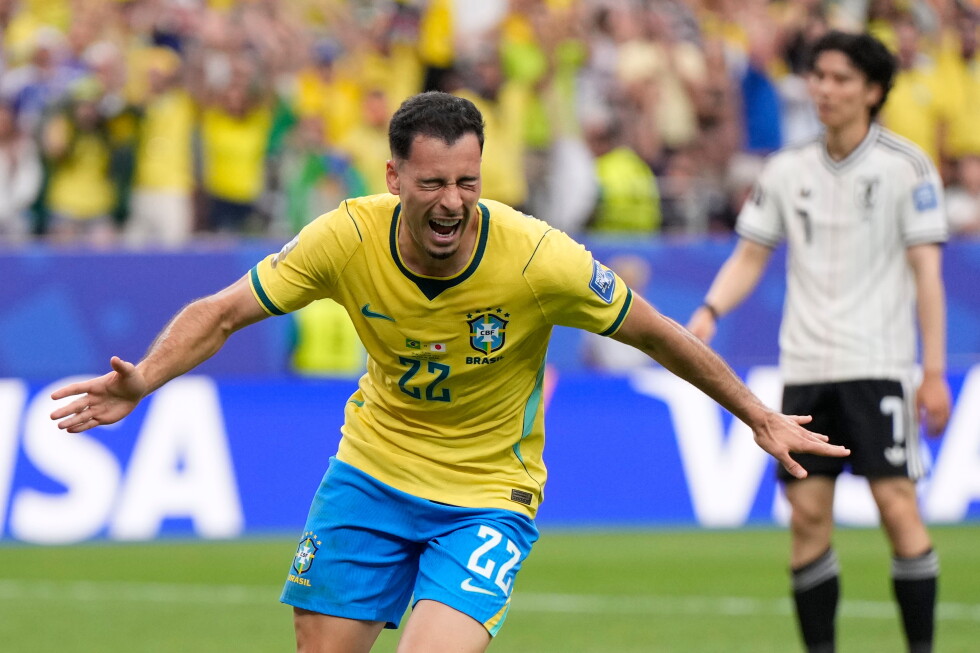
HOUSTON (AP) — With Brazil trailing for much of the game and with extra time looming, Gabriel Martinelli came through in a big, big way at the World Cup.

Martinelli entered the game as a second-half substitute and put an end to Japan’s near-upset on Monday, scoring the winning goal late in injury time to give five-time champion Brazil a 2-1 victory and a spot in the round of 16.

The result was a showcase of Brazil’s Italian connections. Martinelli holds dual citizenship in Italy and Brazil, and the man who made the decision to change the team’s makeup was Carlo Ancelotti, an Italian who is the first European to coach the South American country’s national team.

“Above all else we wanted to freshen up the field because Martinelli has a lot of intensity as a player,” Ancelotti said through a translator. “When he goes in the match he’s always on his top game.”

Advertisement

Brazil will next face either the Ivory Coast or Norway on Sunday in East Rutherford, New Jersey, in the round of 16.

“We can never be content with what we’re doing,” Ancelotti said. “We’re doing a good job. We are performing. But you can never be content because we want to play better. We want to play at the highest level.”

Casemiro had earlier equalized for Brazil on a header in the 56th minute off an assist from Gabriel Magalhães after just missing another chance two minutes earlier. The shot sailed just out of the reach of the outstretched hand of Japan goalkeeper Zion Suzuki and into the net.

Kaishu Sano stole a misplaced pass at midfield and took it down the field before a right-footed shot from above the half circle put Japan ahead in the 29th minute.

Advertisement

“There is not not making mistakes because nobody is perfect,” Ancelotti said. “But you have to overcome it and you have to push it forward. The team did a good job of that in the second half.”

Vinícius Júnior, who has scored four goals so far in this year’s tournament, had a chance to put Brazil on top in the 58th minute but his shot from the left box was deflected by Suzuki and went off the far post.

Casemiro left in the first minute of second-half stoppage time with what appeared to be a leg injury.

Brazil had two chances to even the score early in the second half before breaking through. On the first one, Suzuki blocked a header from Bruno Guimarães in the 52nd minute. Soon after, Casemiro’s header bounced off a defender’s head and Suzuki’s face. Suzuki finished with four saves.

Advertisement

Brazil great Neymar didn’t play Monday after making his first appearance for the team since 2023 in the last game against Scotland. He played only 14 minutes in that 3-0 win after missing the first two group matches at the World Cup with a right calf injury.

“I was seriously considering putting him on the pitch,” Ancelotti said. “In the end, we did not need him.”

Japan has never won a knockout match at the World Cup, going 0-4 in the round of 16 — including also taking the lead the last two times in 2018 and 2022 before losing.

The win was Brazil’s 12th in 15 games against Japan. The teams have also played to two draws while Japan got its first win in the series in a friendly in Tokyo in October.

Advertisement

“The gap between us is closing now,” Japan coach Hajime Moriyasu said through a translator. “Brazil is a top-tier team and we’re definitely approaching that level.”

Then he mentioned the loss in Qatar four years ago before adding: “We have to up our game.”

This was a matchup between two countries with deep ties, with Brazil being home to about 2.7 million Japanese descendants, which is the largest Japanese population outside of Japan.

Those ties extend to soccer where Brazil superstar Zico moved to Japan in 1991 to play for Kashima Antlers and help build Japan’s professional soccer network. He coached the Japan national team from 2002-06, leading the team to the World Cup in 2006.

Advertisement

That team lost to Brazil 4-1 in the only previous meeting between the teams at the World Cup.

Brazil won Group C after a draw with Morocco and victories over Haiti and Scotland. Monday’s victory came on the anniversary of their first World Cup championship in Sweden in 1958, when a 17-year-old Pele scored two goals in the final against the host country.

Japan reached the round of 32 as runner-up in Group F after a draws with the Netherlands and Sweden and a win over Tunisia. The loss snaps a 10-game unbeaten streak dating back to a 2-0 loss to the United States in September.

___

Advertisement

See more of AP’s World Cup coverage here

Source link

Advertisement
Continue Reading

NewsBeat

Netflix under fire for using AI to recreate Gene Wilder’s voice in Willy Wonka series

Published

on

Daily Mirror

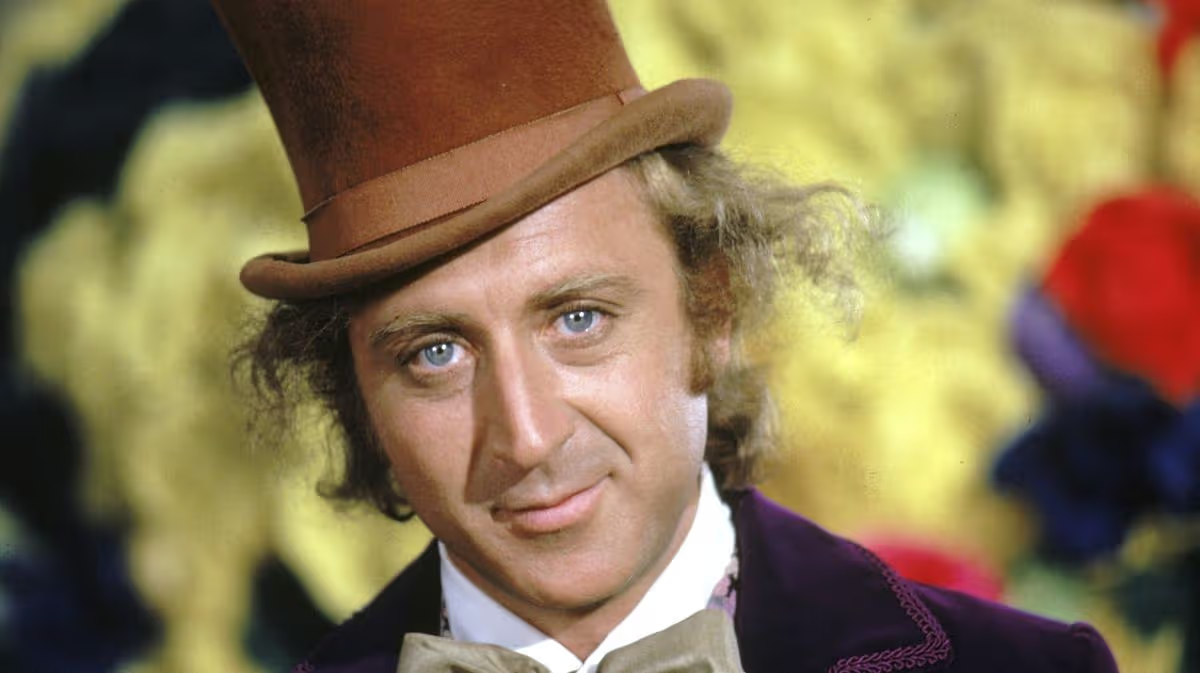
Netflix has come under fire for apparently using artificial intelligence to recreate Gene Wilder’s voice in their new series based on Willy Wonka and the Chocolate Factory

Wonka’s The Golden Ticket teased in trailer from Netflix

Netflix has come under fire for apparently using artificial intelligence to recreate Gene Wilder’s voice in their new series based on Willy Wonka and the Chocolate Factory. The late actor, who died in 2016 at the age of 83, famously played the title character in the 1971 adaptation of the Roald Dahl classic.

Now, the streaming service is set to launch Wonka’s The Golden Ticket, a reality series that invites players to step inside the famous factory and complete challenges.

A voiceover, which sounds very much like that of Wilder, says: “A whole new generation of real-life golden ticketholder will compete for a life-changing prize, or say a most unfortunate goodbye.

Advertisement

“Marvel at the magic you remember, and delight in my newest wonders beyond imagination…The most extraordinary competition on earth is about to begin. There’s no turning back now.” A group of entrants were then seen locking shocked and the trailer confirmed that the series will be released on September 23.

Fans were left unimpressed as they instantly recognised what sounded almost the late actor’s voice, assuming that it had been generated by AI. One fan wrote on X: “It almost sounds like gene wilder, but not really and is a plastic substitute that people will eat up because the robots have made them stupid, This is an obscenity.”

Another said: “Ain’t no way they ruining one of my favourite movies of all time with a show and a AI Gene Wilder,” whilst a third wrote: “I’m sure Gene Wilder who died 10 years ago gave his permission to use his voice for AI slop.”

Advertisement

Charlie and the Chocolate Factory was first published in 1964 and followed an impoverished boy as he won the chance to visit Wonka’s chocolate factory and watched as four other spoiled children met their grisly end over the course of the day. The 1971 adaptation was filmed as a musical and featured songs like Pure Imagination, I Want It Now and The Candyman.

In 2005, Tim Burton released a remake with Johnny Depp as Wonka and Freddie Highmore as Charlie. The story was then adapted for the stage in 2013, and ran for a short period of time on both Broadway and the West End but closed amid mixed reviews.

In 2024, Timothée Chalamet stepped into the role of the factory owner in a prequel film, alongside an all-star cast made up of Rowan Atkinson, Olivia Colman, and Hugh Grant.

Advertisement

The celebrated children’s author was also behind other classics such as Matilda, The Twits, and James’ Giant Peach, and Netflix acquired The Roald Dahl Story Company in 2021.

Earlier this year, Netflix revealed that upcoming animation feature due was to release sometime in 2027. At the time, it was confirmed that Heartstopper star Kit Connor is set to lead the voice cast.

He will be joined by comedic actor and filmmaker Taika Waititi, known for directing and starring in Jojo Rabbit and Thor Ragnarok. They will both feature in Charlie vs. the Chocolate Factory.

The Netflix original is directed by experienced animated filmmakers Jared Stern and Elaine Bogan. Between them they have previously helmed The Lego Batman Movie, Spirit Untamed and Trollhunters.

Advertisement

According to the synopsis, Willy Wonka has spent the years since the Golden Ticket contest behind bars for the crime of turning a child into a blueberry. Having served his time, Wonka returns to his factory determined to add a little sweetness to a bitter world. But one thing stands in his way: teenager Charlie Paley and his friends.

Facing eviction, this next generation of “rotten” kids plot to break into the factory, nab a priceless Wonka Bar, and save their homes. But like many before them who enter the fantastical world of the factory, these kids are in for a bit more than they can chew.

The story is said to be set in modern day London, and the makers hope it retains the quintessential British charm synonymous with Roald Dahl’s original work while featuring a new adventure, original songs, brand new characters and some surprises. Netflix hopes this new chapter set in the world of Wonka will introduce a new generation to its universe and characters.

Kit Connor said: “I’m so excited to enter the wonderful world of Wonka. I was immediately caught by the early concept art, and the directors’ vision for the film – capturing the spirit and heart that made the original story so special, whilst imbuing it with something so fresh and unique. It’s such a fun representation of the London that I know. This new adventure is going to surprise audiences around the world, you’re in for a treat!”

Advertisement

The Mirror has reached out to Netflix for comment

Like this story? For more of the latest showbiz news and gossip, follow Mirror Celebs on TikTok, Snapchat, Instagram, Twitter, Facebook, YouTube and Threads.

Source link

Advertisement
Continue Reading

NewsBeat

Prison officer, 29, who was found to be in a relationship with a murderer after being saved as ‘partner’ in his contacts is jailed

Published

on

Prison officer Rebecca Green, 29, has been jailed for a year and four months after she was caught having a relationship with an inmate

Advertisement

A female prison officer caught having a relationship with a convicted murderer at a maximum security prison has been jailed.

Rebecca Green, 29, was working at HMP Whitemoor when she struck up a relationship with inmate John Otugade in October 2022.

Advertisement

Otugade, 33, is serving a life sentence with a minimum term of 25 years for shooting dead a nightclub bouncer in 2010 after being refused entry.

Cambridge Police said suspicions were raised about Green in the spring of 2023, and Otugade was moved to HMP Belmarsh in south-east London while an investigation took place.

Officers searched Green’s car and seized her mobile phone, which unearthed messages that gave away the relationship.

Otugade also had a number added to his approved contacts list inside the prison under the name ‘partner’.

Advertisement

This number was later found to match a phone belonging to Green.

Green, of Holbeach, Lincolnshire, pleaded guilty to misconduct in a public office at an earlier hearing.

Prison officer Rebecca Green, 29, has been jailed for a year and four months after she was caught having a relationship with an inmate 

Advertisement
She struck up a relationship with John Otugade, 33, who is serving a life sentence for shooting dead a London nightclub bouncer

She struck up a relationship with John Otugade, 33, who is serving a life sentence for shooting dead a London nightclub bouncer

She was sentenced at Cambridge Crown Court on June 24 to one year and four months in prison.

Detective Constable Tom Adams, who investigated, said: ‘As a prison officer, you have a responsibility to keep prisoners and your colleagues safe.

‘This was a serious breach of Green’s responsibilities, and she failed to consider the potential impact on the security and safety of the staff and prisoners and how her actions undermined the work of the prison.

Advertisement

‘This sentence shows how seriously the police and courts take such breaches.’

Green’s crime is an increasingly familiar story in the UK’s prison system.

The number of women prison officers fired for having ‘inappropriate’ relationships with male inmates has trebled in recent years. 

Figures show that 40 female wardens have been fired in the past four years after it was found that they were having behind-bar flings with imprisoned criminals.

Advertisement

Over the same period, there was just one case where a male officer was fired for having an affair with a woman inmate.

The Ministry of Justice also revealed there were a handful of cases where an officer was fired after illicit same sex relationships.

Another recent offender was Kyra Dancer, 23, also charged with misconduct in a public office amid accusations she had an ‘inappropriate relationship’ with an inmate.

Ms Dancer was employed by G4S and worked at their Wellingborough facility, which has been dubbed ‘Britain’s cushiest jail’.

Advertisement

Dancer, of Rushden, is accused of ‘wilfully and without reasonable excuse or justification misconducting’ herself.

Advertisement

Source link

Advertisement
Continue Reading

NewsBeat

Ringleader of Rochdale grooming gang ‘cannot be deported’

Published

on

A woman in a pink bikini lies on a deck chair covered in pink blankets, reads a magazine. there are pink towels, a tote bag and a radio next to her.

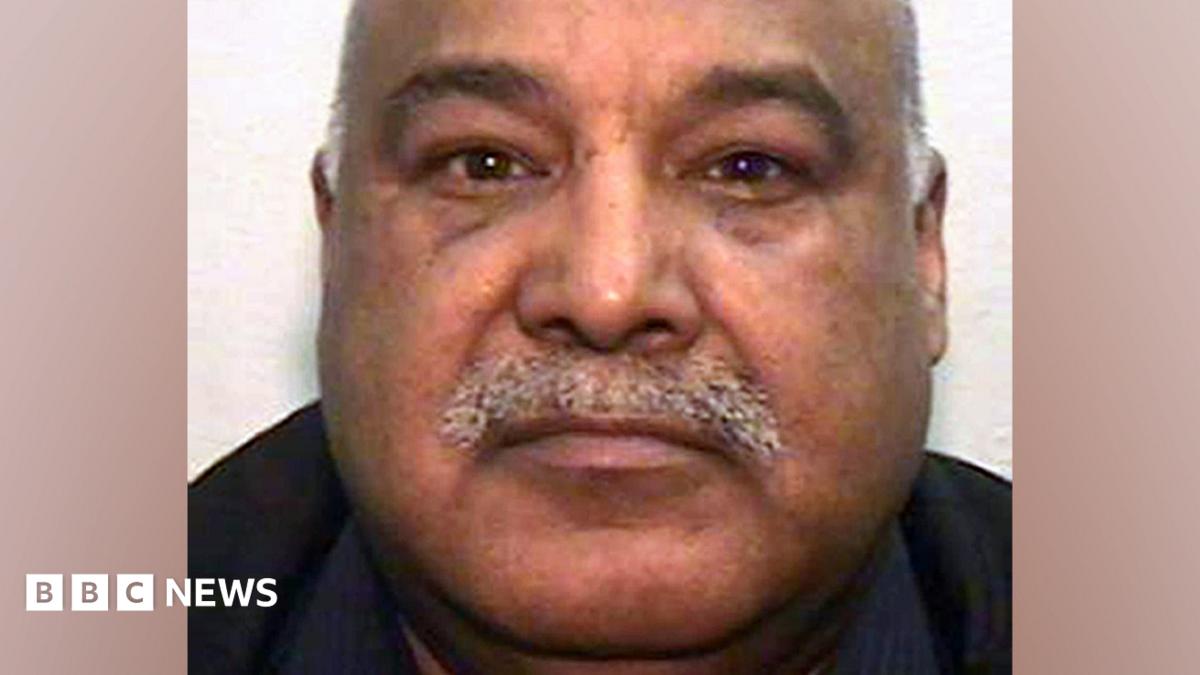
The ringleader of a notorious Rochdale grooming gang is set to be released from jail this week and cannot be deported, his victims have been told.

Shabir Ahmed, 73, known to his victims as “Daddy”, had dual British-Pakistani citizenship but was stripped of the former following his conviction in 2012 for multiple counts of rape and sexual offences against girls.

Documents shared online, reportedly from the Probation Service to one of his victims, state that he will be released on Thursday.

The Home Office said Ahmed’s crimes were “appalling” and that he would be subject to stringent licence conditions upon his release from prison.

Advertisement

Ahmed must initially live in supervised accommodation 24/7 and will be subject to an “exclusion zone” centred on Rochdale.

The papers published online said Ahmed cannot be deported back to Pakistan due to provisions under the Immigration Act 1971.

The act says because Ahmed arrived in the UK before 1973 and lived in the country for at least five years before his deportation was considered, his removal is barred.

Following the news, one of the Rochdale gang’s victims told how she has been left feeling “scared for my safety”.

Advertisement

The girl, who was sexually abused from the age of 12, told BBC Newsnight Ahmed was well-known in Rochdale, Oldham and Middleton.

“Even if he is not in those areas, he still knows people and could contact them, which makes me feel unsafe,” she said.

“At the end of the trial, we were told they would all be deported once released, but not one of them has been deported.

“There are always false promises.”

Advertisement

Source link

Continue Reading

NewsBeat

Primark issues recall over chemical risk on purses that can ‘damage reproductive system’ | News UK

Published

on

Primark issues recall over chemical risk on purses that can 'damage reproductive system' | News UK
Primark has recalled the colour block purse after a chemical hazard risk (Picture: Office for Product Safety and Standards)

A Primark purse has been recalled after a chemical health hazard fear.

A brown colour block coin purse sold by the fast fashion retailer for £6 has been recalled after a chemical risk from the textile.

The UK’s product safety watchdog issued an alert today to recall the product due to it ‘presenting a serious chemical risk.’

It has been found to contain excessive concentrations of phthalates, a chemical often used to make products more durable.

Advertisement

The chemical found on the purse are called Dibutyl phthalate (DBP), Bis(2-ethylhexyl) phthalate (DEHP), and Short Chain Chlorinated Paraffins (SCCPs).

Sign up for all of the latest stories

Start your day informed with Metro’s News Updates newsletter or get Breaking News alerts the moment it happens.

Advertisement

The Office for Product Safety and Standards said: ‘Phthalates are harmful to health and may cause damage to the reproductive system.’

The product does not meet UK chemical regulations designed to protect human health and the environment.

The purses were manufactured in China, the recall notice says.

What to do if you have bought the purse

Customers who bought the purse should stop using it immediately and keep the product out of reach of children, the watchdog says.

Advertisement

It can be returned to any Primark store for a full refund.

Customers can contact the retailer through its help centre and live chat function.

The affected purses’ model code is 3103002 and the barcode is 991169270

Get in touch with our news team by emailing us at webnews@metro.co.uk.

Advertisement

For more stories like this, check our news page.

Source link

Continue Reading

NewsBeat

Prince William turns homemaker as he helps tenant furnish new flat

Published

on

Manchester Evening News

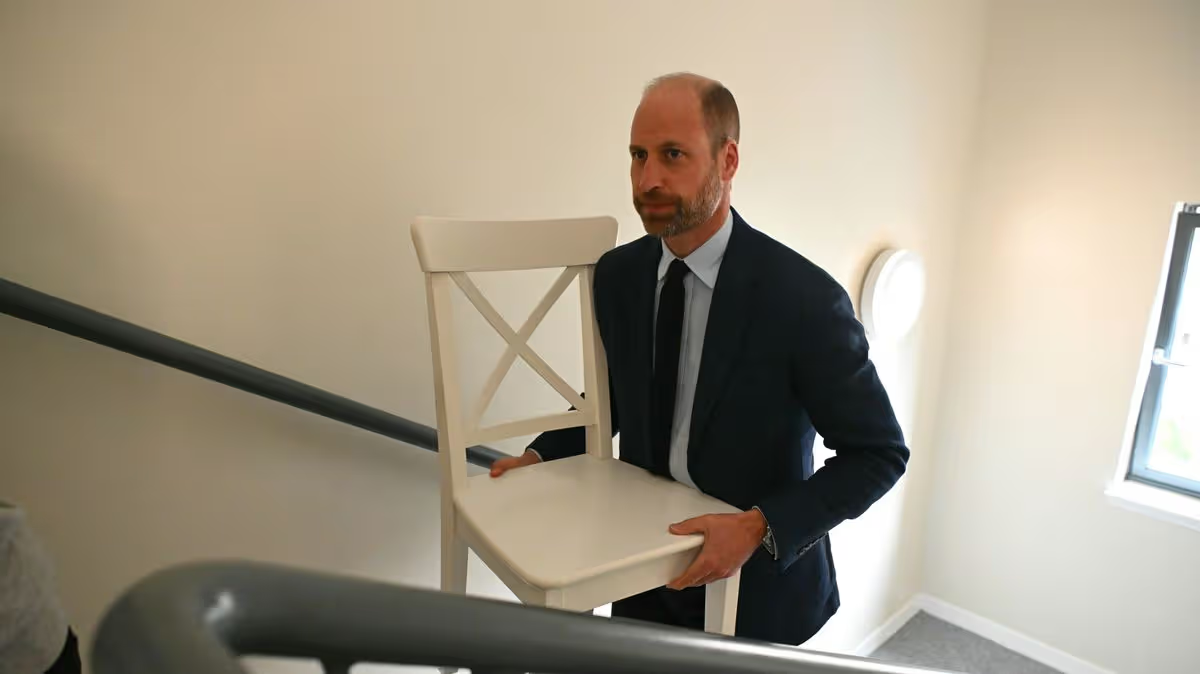
The Prince of Wales got stuck in helping a tenant furnish his new flat

The Prince of Wales has contributed to turning a flat into a home, declaring his project to prevent homelessness can be “embedded” across society.

Marking the third year of his five-year Homewards initiative, Prince William has helped furnish a new flat to make it into a home for a housing association tenant. The flat, in Aberdeen, is in one of the six areas of the country where William is trying to create a template to eradicate all forms of homelessness.

The future king carried a dining room chair up three flights of stairs to the one-bedroom flat on the outskirts of the city, with Langstane Housing Association staff fetching the other three. He was also given a brief tour of the accommodation.

Advertisement

Click here to get the biggest stories straight to your inbox in our Daily Newsletter

In a major speech at London’s Tate Modern earlier, William spoke about the progress made since he launched Homewards in 2023. He said: “Three years on, Homewards has helped more than 73 people into stable housing, supported more than 250 people into employment and reached thousands before they reached crisis.

“These aren’t just statistics. They are people who have a home, a job, and a future that looked very different only a few years ago.

“And crucially, people are being supported earlier, in schools, in the workplace, in their communities, so homelessness never becomes part of their story. Across our work, we’ve helped thousands of people to reduce their risk of falling into crisis.

Advertisement

“By trialling new approaches, Homewards is demonstrating how prevention can be embedded across every part of our society. Proving that our true strength emerges not in isolation, but in a shared purpose that makes us greater than the sum of our parts.

“Where services work together around people’s lives, rather than in silos.”

Homewards works in six locations – Newport, Lambeth, Belfast, Aberdeen, Sheffield and the three neighbouring Dorset towns of Poole, Bournemouth and Christchurch – with the aim of delivering bespoke solutions to homelessness issues in each area.

Advertisement

Over the past three years, Homewards has invested £1.9 million across its six locations. Organisers also said another £3.5 million has been leveraged through grants and private philanthropy, while a further £2.3 million worth of surplus goods has been used to furnish Homewards homes.

The furniture in the Aberdeen flat, whose tenant will sign their agreement with Langstane on Wednesday, was provided by organisations and businesses like Ikea who are supporting the prince’s homeless initiative. They also donated cleaning products and home appliances like vacuum cleaners and air fryers.

In the housing association’s offices, close to the flat he visited, William also filled a bag-for-life destined for a new home with cleaning products. As he worked, he said: “All that makes them feel like it’s a home, not somewhere they’ve got to stay.”

Advertisement

When Helen Gauld, Langstane’s chief executive, mentioned air fryers the balding prince also joked “some of us don’t need hair dryers”.

The event follows Princess Kate also taking on the gruelling Three Peaks Challenge this weekend, which she completed to raise money for a cancer charity and to “explore life beyond diagnosis”. Following the challenge, Kate also made a donation an an 11-year-old wheelchair user, named Ted, who she met while climbing Ben Nevis.

Donating to Ted’s cause on Just Giving, she left a message which read: “One of the real highlights of the Three Peaks Challenge was meeting inspiring people like you along the way. Huge congratulations to Ted, Pete and the entire team for raising money for such a wonderful cause.”

Source link

Advertisement
Continue Reading

NewsBeat

Serena Williams, 44, makes stunning tennis return with husband and kids cheering her on at Wimbledon – after using weight-loss jabs to kick-start her comeback

Published

on

Serena Williams, 44, makes stunning tennis return with husband and kids cheering her on at Wimbledon - after using weight-loss jabs to kick-start her comeback

Serena Williams made an emotional return to Wimbledon, competing in the singles draw at a tournament for the first time in four years, in front of her family on Tuesday. 

The 44-year-old icon sealed a remarkable comeback to the sport when she took to Centre Court at Wimbledon to face World No 87 Maya Joint in the first round after accepting a wildcard entry to the Grand Slam.  

Many had been wondering whether – in the era of Naomi Osaka‘s catwalks entrances – she’d make a dramatic arrival. But the 23-time Grand Slam champion chose not to join the growing Wimbledon fashion show as she kept it simple on her long-awaited return to the All England Club. 

Williams, a seven-time singles champion at Wimbledon, was calm and collected as she strolled confidently out onto the heart of SW19. 

Advertisement

The crowd inside the iconic court broke out into a raucous round of applause, wildly cheering the tennis legend. Not that Williams would have heard. She kept her head down, ears covered by a pair of pale pink headphones.

Yet, no amount of soundproofing could have drowned out the eruption of cheers minutes later when she claimed the first point of the match on her opponent’s serve. 

Serena Williams made her singles comeback on her return to Wimbledon on Tuesday

Advertisement
The legend was supported by her husband Alexis Ohanian and their two daughters

The legend was supported by her husband Alexis Ohanian and their two daughters 

Tuesday's first-round clash marks her return to SW19 for the first time in four years

Tuesday’s first-round clash marks her return to SW19 for the first time in four years

It was tough not to feel for Joint, the echoing cheers making it clear that, even after a four-year hiatus, Williams was still very much the favorite and the Australian the underdog. 

At just 20 years old, Joint is part of the new generation of female tennis players who have never before faced Williams on the court. 

Advertisement

Tuesday’s first-round clash marked Williams’ return to SW19 and singles action for the first time in four years after having publicly stepped away from the sport following the 2022 US Open. 

In the time since she ‘evolved’ away from the sport, Williams welcomed her second daughter, Adira, with Alexis Ohanian, who was in her box to cheer her on. 

The two-year-old defied Wimbledon’s age restrictions for Centre Court to sit alongside her dad and older sister Olympia, eight, and watch her mom compete at SW19 for the first time. 

Wimbledon traditionally enforces an age limit of five and above to attend the show courts. However, exceptions were evidently made for the daughter of a seven-time winner.

Advertisement

Williams’ posse of supporters was rounded out by her sister Venus and new brother-in-law, Italian actor Andrea Preti, whom Venus wed last year. 

The sisters will form a powerful duo later in the week when they team up in the doubles draw, where they have found formidable success in the past, winning six times. 

Ohanian sat in Williams' box with Adria, two (left), and Olympic, eight, (right)

Ohanian sat in Williams’ box with Adria, two (left), and Olympic, eight, (right) 

Williams' youngest applauds her legendary mom as Ohanian lifts her up in the player's box

Williams’ youngest applauds her legendary mom as Ohanian lifts her up in the player’s box 

Advertisement
Her sister Venus and new brother-in-law, Italian actor Andrea Preti, were also in attendance

Her sister Venus and new brother-in-law, Italian actor Andrea Preti, were also in attendance 

Williams faced World No 87 Maya Joint in the first round of the Grand Slam tournament

Williams faced World No 87 Maya Joint in the first round of the Grand Slam tournament 

For now, though, Serena had her own success to focus on. It appeared her comeback was destined to collapse just eight games into the first set when Joint broke her serve. 

The cameras panned to the player’s box when an anxious Ohanian could be seen pumping his fists on the top of the railing. His wife displayed a similar explosion of determination moments later when she went 0-15 up on Joint’s serve, erupting into a passionate cry.

Advertisement

It wasn’t enough, however, to stall Joint’s momentum, the Australian taking the first set comfortably 6-3.

Williams’ renowned grit and determination did make its signature appearance in the second set, however. Staring down an early exit in straight sets, Williams clung on, breaking back Joint’s serve not once but twice to force a tie-break and ultimately win the second. 

Long before the days of Osaka’s catwalk entrances, Williams was renowned as a tennis fashionista, having walked out in a white trench coat in 2008 as well as a detachable train to her outfit that featured one long sleeve in 2021.

Williams also famously caused controversy when she wore a bright purple headband in 2012 despite Wimbledon’s strict all-white dress code.

Advertisement

Yet despite that, she stepped out on to Centre Court for her opening round match with Maya Joint in a simple Nike white mesh jacket, over a matching co-ord top and skirt.

It was nothing on the grand entrance made by Osaka for her opening match, which saw the Japanese star sport a kimono inspired by Lucy Liu’s character from the film Kill Bill.

Nor, too, the custom all-white Hugo Boss suit worn by American Taylor Fritz, who did his best Roger Federer impression as he strolled out for his opening-round match.

Proud Venus appeared to film her sister's blockbuster entrance onto Centre Court

Proud Venus appeared to film her sister’s blockbuster entrance onto Centre Court 

Advertisement
Williams stepped out in a simple Nike white mesh jacket, over a matching co-ord top and skirt

Williams stepped out in a simple Nike white mesh jacket, over a matching co-ord top and skirt

The crowd inside Centre Court erupted into cheers as Williams and Joint stepped out

The crowd inside Centre Court erupted into cheers as Williams and Joint stepped out 

The 23-time Grand Slam winner let out a roar after claiming a point in the first set

The 23-time Grand Slam winner let out a roar after claiming a point in the first set 

Fritz channelled his inner Federer with matching white holdall, which drew instant comparisons with the iconic outfit worn by the eight-time Wimbledon champion.

Advertisement

The 44-year-old began her comeback to tennis – four years after her last professional match – at the Queen’s Club’s HSBC Championships, where she won a round before being forced out by an injury to her partner Victoria Mboko.

Williams had previously hinted at a potential return to the grass courts after kicking off her competitive tennis comeback in the doubles draw alongside Venus. 

While many questioned if the veteran still possesses her titan talent, others may be more focused on the question mark over one particular detail of her preparation -whether Williams has continued to use GLP-1 jabs managed by telehealth company Ro, of which she became a vocal paid spokesperson for last year.

The seven-time Wimbledon champion’s husband Ohanian sits on the company’s board and was an early investor. As recently as this February Williams, the company’s celebrity face, featured in a Super Bowl advert for the brand and its Zepbound tirzepatide jab, which is also marketed under the name Mounjaro.

Advertisement

Williams, who is said to have lost close to two and a half stone, or 34 pounds (15kg) using the drug, previously called her challenge to lose weight following the birth of her two children ‘the one opponent (she) couldn’t beat’.

It remains unclear as to whether Williams has continued to use the drug, which also treats symptoms of diabetes, with her publicist declining to comment when asked by the Atlantic.

But although GLP-1s are not banned by the World Anti-Doping Agency (WADA), they are one of the drugs under ongoing investigation as to whether they might be classed as performance-enhancing in the future.

Williams has previously been outspoken on her use of weight-loss medication through her role as an ambassador for Ro

Williams has previously been outspoken on her use of weight-loss medication through her role as an ambassador for Ro

Advertisement
Williams made her return to tennis and dominated at the Queen's Club at the start of the month

Williams made her return to tennis and dominated at the Queen’s Club at the start of the month

Although Williams would be the first athlete to publicly use a GLP-1 if she was still using Zepbound, tennis has an existing relationship with weight-loss jabs, with semaglutide Ozempic a surprising sponsor at last year’s Canadian Open. 

Before being able to announce her comeback, Williams had to return to the anti-doping testing pool. 

However, the tennis legend took aim at the regulations when asked about returning to the pool on Sunday. 

Advertisement

‘It’s grueling. They changed the rules now. I didn’t know some of the rules. So apparently if you miss a test outside of your window, it still counts as missed. I’m like, I guess I can’t go pick up my kids,’ said the seven-time Wimbledon champion, a mother of two.

‘It’s unprofessional. I hate it. I think it’s necessary, but I think a lot of the stuff, if I want to go places outside of my window, I should be able to go without having it count as a missed test.’

Players are required by the International Tennis Integrity Agency to provide their daily ‘whereabouts’ for no-notice testing.

Williams described it as ‘unreasonable.’

Advertisement

‘That was a big reason why I didn’t want to come back either,’ she said, ‘because it’s just so hard. I mean, my life is busy, I run a company, I run a VC company, I travel the world. I have children. It’s like I could be in so many different cities so many different times.’

Source link

Continue Reading

NewsBeat

Heroics on the Somme of south Durham’s Roland Bradford VC

Published

on

Heroics on the Somme of south Durham's Roland Bradford VC

They had been engaged in the heaviest fighting on the Somme since September 15, practically without a break, and many had paid the heaviest price – within five days the 9th Battalion had lost four officers and 44 men were dead, 27 were missing and nine officers and 219 men were wounded. This meant that 44 per cent of the battalion’s strength had been wiped out.

Even the young commanding officer, Col Bradford, 24, had been wounded when he was struck by shrapnel. It was a nasty wound, but he stayed with his men rather than seek treatment, meaning that he took many months to heal.

Brigadier-General Roland Bradford.

A day before the assault on October 1, the British heavy guns began a bombardment of the German trenches. The Germans returned fire.

Ninety minutes before the Durhams were due to go over the top disaster befell the 6th Battalion. Its commanding officer, Major GE Wilkinson, was struck by shellfire and had to retreat to a casualty station, leaving it leaderless.

Advertisement

SEE MORE: NORTHERN PERSPECTIVES VIEW OF THE WITTON PARK STATUE ERECTED IN 2016 TO COMMEMORATE BRADFORD AND HIS BROTHERS

Into the breach stepped Col Bradford who swiftly and decisively led the two battalions into battle.

For 24 hours, “bomb fighting of a severe nature raged around” the DLI. Despite the heavy shelling they made it into the first German trenches. They saw off the enemy counter-attack and, by sending out patrols probed deep into the German defences – a maze of trenches known as ‘The Tangle’.

The British troops on either side of the Durhams appear not to have been so well marshalled and had not made such good progress, so after two days of constant fighting the battalions dug in and consolidated their gains, even as shells rained down on them.

Advertisement

In his report back to the 9th Battalion headquarters Col Bradford spoke of how the men had “fought conspicuously well and with great gallantry”. He wrote: “In all, we had 70 officers and men killed and 400 wounded…

“The men are all happy and fit and eager to meet the accursed Germans.”

Carwood House in Witton Park, where the Bradford brothers spent their early years. The house still stands

Col Bradford was one of four fighting brothers, all born in Witton Park, near Bishop Auckland, where their tyrannical father was a colliery manager. When Roland was two the family moved to a farmhouse at Morton Palms, on the eastern edge of Darlington, and four years later into a large Victorian house in Milbank Road in the West End of town. This was the house Roland called home.

Milbanke House, Milbank Road, Darlingotn, home of the Bradford brothers.

The fighting Bradfords: the four brothers in the garden of their home at Milbank Road, Darlington, in 1914. From left: Roland Boys Bradford: awarded the Victoria Cross and the Military Cross; he became, at 25, the youngest brigadier‑general in the British Army and was killed at Cambrai in 1917; George Nicholson Bradford: Royal Navy lieutenant‑commander whose leadership in the Zeebrugge raid on St George’s Day 1918 earned him a posthumous Victoria Cross; James Barker Bradford: An officer in the DLI awarded the Military Cross for his actions on the Somme, before dying of wounds after a week‑long battle; Sir Thomas Andrews Bradford: The eldest and only surviving brother, he was awarded the Distinguished Service Order and twice Mentioned in Despatches, later becoming a knight and holding public offices in County DurhamThe fighting Bradfords: the four brothers in the garden of their home at Milbank Road, Darlington, in 1914. From left: Roland Boys Bradford: awarded the Victoria Cross and the Military Cross; he became, at 25, the youngest brigadier‑general in the British Army and was killed at Cambrai in 1917; George Nicholson Bradford: Royal Navy lieutenant‑commander whose leadership in the Zeebrugge raid on St George’s Day 1918 earned him a posthumous Victoria Cross; James Barker Bradford: An officer in the DLI awarded the Military Cross for his actions on the Somme, before dying of wounds after a week‑long battle; Sir Thomas Andrews Bradford: The eldest and only surviving brother, he was awarded the Distinguished Service Order and twice Mentioned in Despatches, later becoming a knight and holding public offices in County Durham

On October 3, after nearly 20 days fighting on the frontline near Eaucourt L’Abbaye, what was left of the battalions was stood down. The men moved back to a training camp, where it rained heavily on their tents.

Advertisement

Col Bradford barely rested. He was designing, making and erecting a large wooden cross in memory of his fallen men. He was badgering those higher up the command chain to send his men a weekly parcel of treats – “of, say, polonies, cakes, kippers, condensed milk and a few socks”, he wrote. He was organising a battalion band.

As many of his men had Durham musical backgrounds he had campaigned for those at home in the county to send out spare instruments, and arranged shows with the new band supporting his theatrical group. He was doing anything that could make life better for his troops.

Lt Col Roland Bradford of DLI awarded VC for bravery on October 1, 1916;.

Plus, he was planning their next attack.

Because of their success the DLI was tasked with capturing the Butte de Warlencourt – a prehistoric burial mound, 50ft high, that stood out like a sore thumb in the flatlands around the Somme.

Advertisement

It still does, beside the tree-lined D929 that runs dead straight through the flat fields on the northern bank of the river.

Its past gives it a presence, and it grabs the eye of passers-by as it looms over the landscape in much the same way that Roseberry Topping stares down on the Tees Valley.

The Germans were entrenched on top of it; the fields approaching it had been churned into a porridgey quagmire, and Col Bradford wondered whether the cost of capturing it would ever be worth it – it was so exposed that it attracted enemy fire, and it was such an obvious target that it would have been difficult for the British to hold.

He later wrote that the Butte – which is French for ‘mound’ – was “of doubtful value” and “of little use”.

Advertisement

The Butte de Warlencourt, looming large over the flat fields of the Somme

“The Butte de Warlencourt had become an obsession,” he said. “Everybody wanted it. It loomed large in the minds of the soldiers in the forward area and they attributed many of their misfortunes to it. Newspaper correspondents talked about “that miniature Gibraltar”.

“It seems that the attack was one of those tempting and, unfortunately, frequent local operations which are so costly and which are rarely worthwhile.”

And it was the Durhams that would pay the cost.

As well as Bradford’s 9DLI on the left, the 8DLI were on the right and the 6DLI – recruited mainly from the Bishop Auckland area and rejoicing in the nickname of the ‘black buttoned bastards’ – were down the centre, like a football formation.

Advertisement

But it was so wet that their match was postponed for a fortnight as day after day it came down like stair-rods. The opening of November was a little drier, but a heavy shower before kick-off filled the trenches and ensured the field of play was as bad as any infantry ever faced.

“The muddy ground, torn by shellfire and churned into deep porridge by heavy rain, was from knee to thigh deep,” wrote Aycliffe historian Harry Moses in his book, The Fighting Bradfords.

Zero hour was 9.10am on November 5.

Attacking the Butte de Warlencourt, drawn by Capt Robert Mauchley of the DLI

“The officers’ whistles sounded the advance,” wrote Lance Corporal Harry Cruddas of 6DLI. “Immediately the first wave mounted the trench, they were met by a terrific and annihilating fire and crumpled up like snow in summer.”

Advertisement

Even though they had to advance just 300 yards to the Butte, 6DLI could not make any headway. 8DLI fared a little better, but when they got within 30 yards of the mound, under heavy fire from the Germans in front, they were suddenly struck by British artillery from behind and Australian artillery from the side.

Those who were not killed outright fell from their wounds and drowned in the mud.

Perhaps because the other battalions took all the fire, 9DLI, led by Lt Col Bradford, made it out of their Maxwell Trench, across No Man’s Land and up to the top of the Butte within an hour.

But the Butte was a honeycomb of trenches and the enemy was ensconced as tightly as a nest of ants beneath a heavy stone in workings that had first been dug out during the Franco-Prussian War of 1870.

Advertisement

Lt Col Bradford wrote: “Over 100 German soldiers were lurking down in the dark warren of dugouts and tunnels beneath and around the Butte. So began a murderous game played out with bomb and bayonet, with little or no quarter on either side.”

Plus, reinforcements were able to reach the Germans.

They counter attacked at noon. 9DLI held on.

They counter attacked at 3pm, knocking 9DLI back – but still the Durhams held the Butte.

Advertisement

The memorial to the DLI on top of the Butte de Warlencourt

“About 6pm the Germans made a determined counter attack preceded by a terrific bombardment,” wrote Lt Col Bradford. “A tough struggle ensued. But our men showed the traditional superiority of the British in hand-to-hand fighting, succeeding in driving out the enemy.

“The 9th DLI was now getting weak, but it was hoped that the Bosche had now made his last counter attack for that day.”

He hadn’t. Further reinforced, the enemy came again at 7.15pm, all but forcing the ‘Gateshead Gurkhas’ to relinquish their grip on the Butte.

“At about 11pm, battalions of the Prussians delivered a fresh counter attack,” wrote Lt Col Bradford. “They came in great force from our front and also worked round from both flanks. Our men were overwhelmed. Many died fighting, others were compelled to surrender. It was only a handful of men who found their way back to Maxwell Trench and they were completely exhausted by their great efforts and the strain of the fighting.”

Advertisement

Back where they had begun, the Durhams counted the cost. The 6th and the 8th battalions had lost, in one way or another, about 1,000 men between them. 9DLI’s figures are more precise and of a similar magnitude: 42 killed, 230 wounded, 157 missing.

It later transpired that in total, 273 Durham men had died.

And all for the Butte that was worth b*gger all.

The survivors stayed in the frontline trenches around the Butte until they were withdrawn for recuperation at a rest camp at Millencourt on November 16.

Advertisement

The Victoria Cross

There, on November 25, they received an announcement: Roland was to receive the Victoria Cross for leading the two battalions into battle on October 1.

The men joyously chaired their young colonel around the camp – although he modestly said it was recognition for them all.

His citation told of how the 6DLI’s commander had gone down injured, causing the men to “become dangerously exposed at close quarters to the enemy. Raked by machine gun fire, the situation of the battalion became critical”.

But, said the citation, Col Bradford “asked permission to command the exposed battalion in addition to his own”. When permission was granted, “he at once proceeded to the foremost lines”.

Advertisement

“By his fearless conduct under fire of all description and his skilful leadership of the two battalions, regardless of all danger, he succeeded in rallying the attack, and captured and defended the objective.”

It concluded that by his “most conspicuous bravery and good leadership in attack, he saved the situation”. For that he was awarded the nation’s highest award for military gallantry.

He became the youngest recipient of it in the First World War and when his brother, George, was also awarded the VC for his naval bravery in 1918, they became the only brothers in the war to ascend such a pinnacle.

But Roland could barely be bothered to collect it. He stayed on the Somme with his men that Christmas and got them a special lunch of pork. He stayed with them through the winter, despite picking up another little wound, developing new tactics and leading them into battle. He stayed with them despite receiving the devastating news that on May 10, 1917, his brother James was killed fighting with 18DLI.

Advertisement

Perhaps that insight into mortality softened him a little because at the end of the month he gave in to pressure to return to England to receive his VC.

“I made a hard fight to get out of it, but the General said he could not disobey a direct order from the King,” he wrote.

So on June 2, at Hyde Park in London, George V was able to present this remarkable soldier with his richly deserved award.

It was a huge occasion – 350 military medals were presented, including 11 VCs, watched by 600 hospitalised soldiers and thousands more interested people.

Advertisement

“For the convenience of the onlookers a booklet had been prepared in which each recipient was numbered and the number was displayed as the heroes marched up to the platform,” said The Northern Echo. “Two VCs, Capt A White, Yorkshire Regiment, and Lt-Col Roland Bradford, Durham Light Infantry, were kept by the King chatting for some moments.

“During the ceremony, four or five aeroplanes passed over the enclosure. They were acting as aerial guard to the king.”

Immediately afterwards Roland dashed up to Darlington to see his mother, Amy, and his brother’s new widow. The town mayor wanted to make a song and dance of ‘wor’ war hero’s homecoming, but Roland refused such ‘pomp and ceremony’ and threatened to take the first train to London if anything was in the offing.

He didn’t stay long, and as he left his home in Milbank Road he must have known there was a good chance he would never see it again.

Advertisement

And so it was.

Roland Bradford.

Back on the Western Front, in September 1917, he led 9DLI on what his commanding officer described as “an excellent raid full of originality and thought”. He had planned it so well that on November 4 he was promoted to Brigadier-General – at the age of 25 he remains the youngest member of the British Army to hold this exalted rank.

It didn’t last long. He led his men into the Battle of Cambrai, on the Somme, then fell back for rest and recuperation.

On the morning of November 30 he left his headquarters to visit his men. By early afternoon he hadn’t returned and a search party was sent out.

Advertisement

He was found lying dead: shrapnel from a stray shell had pierced his spine and flukishly killed him outright.

The Northern Echo of December 5, 1917, reporting on the death of Brig-Gen Roland Bradford

He is buried in Hermies Cemetery, a small, quiet, immaculately tended graveyard from the Bapaume to Cambrai main road. By the gate in its low brick wall is a metal cupboard containing a visitors’ book. Many of the messages have been left by the people of Darlington and south Durham who have been to see his last resting place.

Chris Lloyd with the grave of Brig Gen Roland Boys Bradford

When I last visited, one of the most recent messages read simply: “Our hero.”

THE Germans finally retreated from the Butte de Warlencourt on February 24, 1917, allowing the British to clamber up its slopes. On its chalky peak, they erected three rudimentary wooden crosses – one for each of the three Durham battalions who have fought so valiantly, and at such cost, in November 1916 to capture it. In 1926, the crosses were taken down and brought home, in lieu of the men who had lost their lives. One went to St Andrew's Church in Bishop Auckland; another went to the Church of St Mary and St Cuthbert in Chester-le-Street, and the third was positioned in Durham Cathedral.In July 2016, to mark the Battle of the Somme, the three Butte crosses were brought together in the cathedral's DLI Chapel where they stand arm to arm just as they had once stood on top of the hillock overlooking the D929 were so many Durhams, fighting hand-to-hand, had died exactly 100 years ago.THE Germans finally retreated from the Butte de Warlencourt on February 24, 1917, allowing the British to clamber up its slopes. On its chalky peak, they erected three rudimentary wooden crosses – one for each of the three Durham battalions who have fought so valiantly, and at such cost, in November 1916 to capture it. In 1926, the crosses were taken down and brought home, in lieu of the men who had lost their lives. One went to St Andrew’s Church in Bishop Auckland; another went to the Church of St Mary and St Cuthbert in Chester-le-Street, and the third was positioned in Durham Cathedral.In July 2016, to mark the Battle of the Somme, the three Butte crosses were brought together in the cathedral’s DLI Chapel where they stand arm to arm just as they had once stood on top of the hillock overlooking the D929 were so many Durhams, fighting hand-to-hand, had died exactly 100 years ago.

Before his death in November 1917, Roland Bradford had ordered thousands of these Christmas cards for his men in the trenches

The Bradford sculpture in the Witton Park memorial garden was made by sculptor Ray Lonsdale and unveiled in 2016. Picture: SARAH CALDECOTT

The unveiling of the Bradford memorial garden at Witton Park Picture: SARAH CALDECOTT.

Unveiling of the Bradford memorial stone in the new garden in Witton Park by the Lord-Lieutenant of Durham, Sue Snowdon, in 2016

Advertisement

Source link

Continue Reading

NewsBeat

France vs Sweden – World Cup last 32 LIVE: Kylian Mbappe looks to close in on Lionel Messi in race for Golden Boot and send the two-time winners into the round of 16

Published

on

France vs Sweden - World Cup last 32 LIVE: Kylian Mbappe looks to close in on Lionel Messi in race for Golden Boot and send the two-time winners into the round of 16

Advertisement

Follow Daily Mail Sport’s live coverage of the latest updates as two-time winners France take on Sweden in the last 32 of the World Cup in New York/New Jersey

Advertisement

Advertisement

Source link

Continue Reading

NewsBeat

Man killed after A19 crash near Selby named in tribute

Published

on

Man killed after A19 crash near Selby named in tribute

Christopher Wilson, 34, from Kellington, died after the black Honda motorcycle he was riding crashed with a red Vauxhall Corsa near Selby on Friday, June 19.

North Yorkshire Police said the two vehicles crashed on the A19 through Chappel Haddesley shortly before 2pm.

“Despite the best efforts of emergency services and doctors, he passed away in hospital later that evening,” a police spokesperson said.

Advertisement

They said the 18-year-old man who was driving the Corsa was helping officers with their investigation.

Mr Wilson’s family said he was a “much loved son, brother, uncle, partner, stepdad and proud new daddy”.

“Christopher was his mum’s blue-eyed boy, remembered for his cheeky smile, his dimples, and the warmth that lit up every room he entered. He was treasured by all who knew him and deeply loved by his family and friends,” the family said in a statement released by North Yorkshire Police

“Family meant everything to Christopher. He was a devoted partner, an amazing stepdad, and had recently welcomed his beautiful baby girl into the world. His family was complete, and she was everything he had ever wanted.”

Advertisement

The statement added: “Known as the life and soul of the party, Christopher had a way of bringing people together. He was always the one entertaining everyone, especially the children, who adored him for being a big kid at heart.

“He embraced life with enthusiasm and adventure, whether he was out on his motorbike, travelling, fishing, or enjoying a day at the go-karts.

“A proud Leeds United supporter, he lived life with passion and made lasting memories wherever he went.

“Christopher’s kindness, laughter, and love will never be forgotten. He leaves behind a family and many friends who will carry his memory with them always.

Advertisement

“Ride off into the sunset, Christopher, until we meet again. Forever loved, forever missed.”

North Yorkshire Police previously issued an appeal to trace the driver of a red Seat Ibiza believed to have been travelling directly behind the Corsa at the time of the crash.

The force said the Seat’s driver “may hold vital information that could assist with the investigation”.

Police are urging anyone who saw the crash or either of the vehicles before to email mark.patterson@northyorkshire.police.uk or phone 101 and ask for Mark Patterson quoting reference 12260103591.

Advertisement

Source link

Continue Reading

Trending

Copyright © 2025