




A short video circulating online captures something about Andy Burnham’s political appeal in Greater Manchester. In it he is confronted by a member of the public as he walks through Manchester city centre.
“Hey Andy, how come you never stuck up for the victims of Pakistani rape gangs?”, the guy behind the camera asks. As Burnham’s staff attempt to remove the man asking questions the mayor begins to engage with him.
“I didn’t know that Andy”, the interviewer responds to Burnham’s explanation. As the video ends, the man with the camera says: “I appreciate that, man”, and they part with a fist bump.
It is the kind of interaction that you rarely see in national politics and it’s quite hard to imagine any other current Labour politician who would have handled it as well.
Andy Burnham’s name carries a particular kind of affection in Greater Manchester. It is an attachment that often feels more personal than political. Many voters don’t talk about him in the abstract language usually reserved for national figures. They talk about him as someone they see, recognise, and compare against the absence of that same familiarity in Westminster politics.
The King of the North, the ongoing commentary on his eyelashes. The videos of him playing guitar or skateboarding or talking about music feel unguarded and honest – if at times a bit dad-dancing-cringe.
Taken together, it adds up to something unusual in modern Labour politics, warmth. In light of the disastrous local election results last night, warmth towards the Labour party is evidently in short supply.
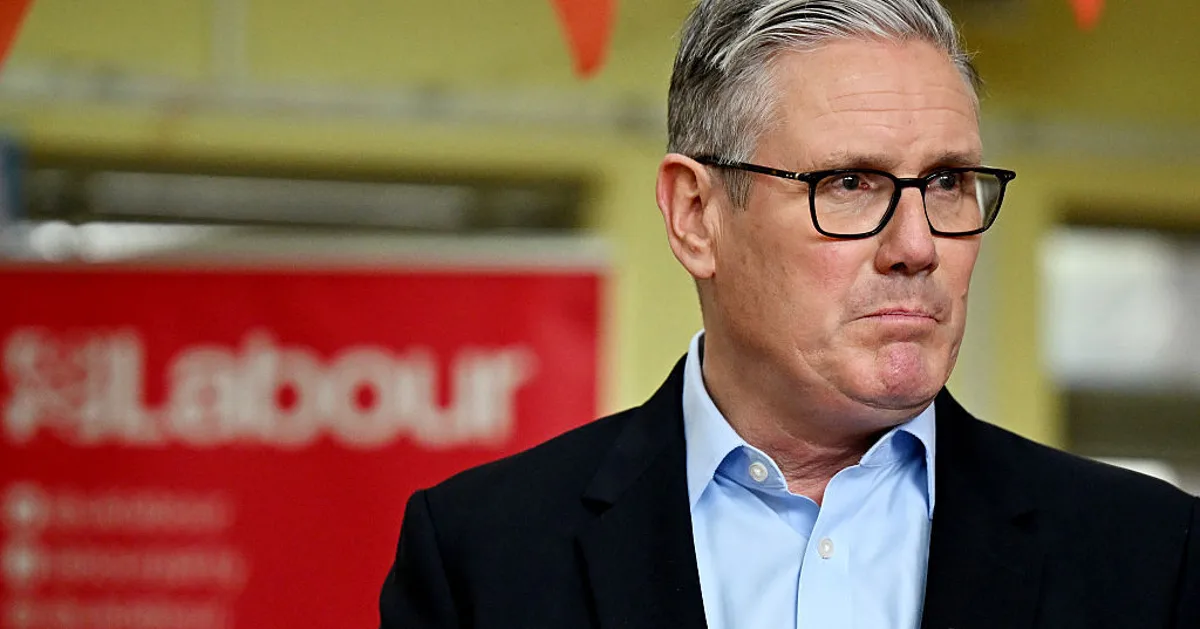
Keir Starmer came into office on a wave of expectation after years of Conservative chaos, with a level of goodwill not seen since 1997. Much of that has faded. The memory of what a transformative Labour government can feel like still lingers, and that makes the current sense of drift more acute. Labour were keen to manage expectations ahead of the last general election. They somehow underpromised and then went on to under-deliver anyway.
As Labour’s national government struggles to define itself, Greater Manchester continues to offer something more concrete – a sense of direction, and a political identity people can actually describe.
In Greater Manchester voters are clear about the problem. Labour isn’t listening.
That frustration came through repeatedly during our many pre-election vox pops. People feel poorer. Services feel worse. Things feel stuck. Politicians are all liars, they don’t listen and things are ‘generally sh*t’. There is extraordinary hostility towards Keir Starmer from all sections of the electorate.
Meanwhile, Andy Burnham’s name was mentioned a surprising amount. Often as a point of comparison and always unprompted. A Labour politician who appears to offer something the national party currently does not – visibility, confidence and a sense of direction.
Paradoxically, his authority may have been strengthened by being blocked from returning to Westminster. The decision reinforced his position as a figure rooted in place rather than ambition alone. Burnham being blocked also cast him as an outsider. Fundamentally, it didn’t play well with voters who saw it as an affront to the British sense of fairness.
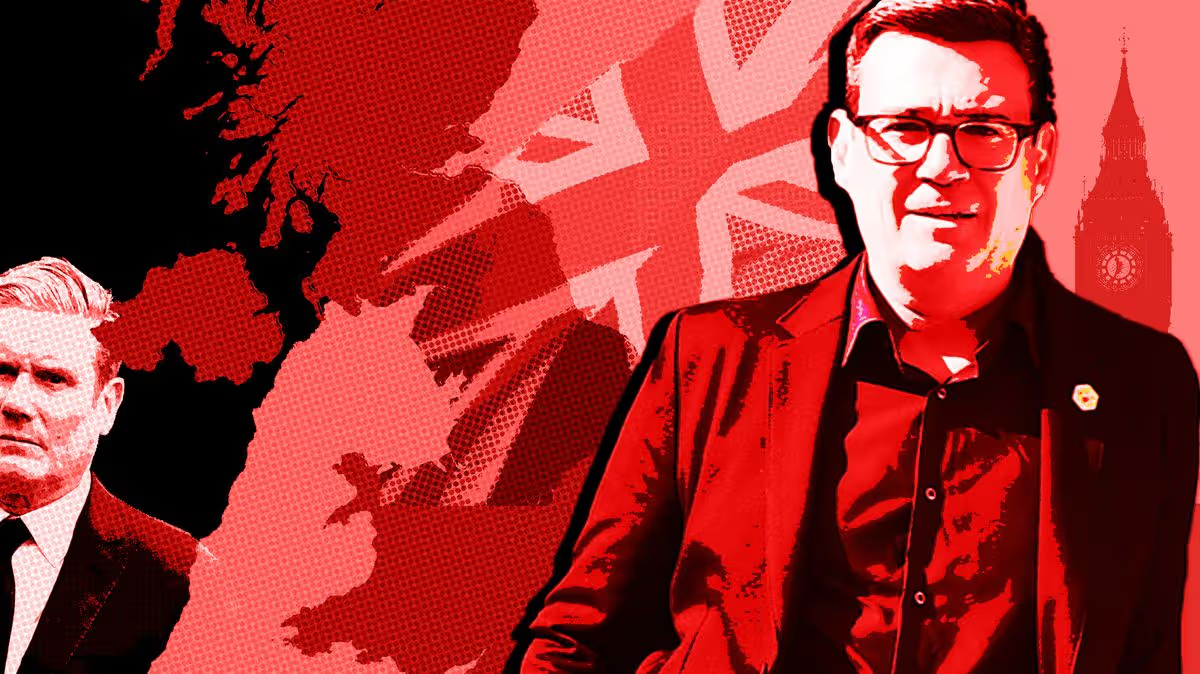
As a result his reputation is now stronger than that of any national Labour figure, including the ailing Prime Minister.
This is partly about personality, but not only that. He comes across as someone who believes what he is saying, who is willing to argue for it and who is comfortable doing so in public.
Politics still depends on whether people feel they can trust you enough to listen. Burnham has built that trust through visibility and accessibility, but also by delivering things people can point to.
What gives this comparison its force is not simply personality, but what it reveals about Labour as a governing project.
Labour in Westminster is struggling to articulate a sense of change that voters can feel in their daily lives, particularly on the economy, immigration and the NHS. The language of stability and competence has not been matched by a convincing account of improvement, and that gap is widening in public perception.
That is why the tone of the vox pops matter. Repeated references to hopelessness, to not being listened to, to things feeling harder than they should be, and to politics feeling remote all point in the same direction. Labour is no longer benefiting from the residual emotional authority it once had. The memory of 1997 still lingers in the background of British politics, but it now functions more as contrast than comfort.
In that context, Greater Manchester begins to look like something more interesting than a political anecdote. “Manchesterism” is not a fully formed ideology, but it does represent a governing instinct that is becoming clearer. It’s investment-led growth, visible delivery, and devolved authority anchored in place not party.
It rests on a simple, but politically significant proposition, that people are more likely to trust institutions they can see working in their own lives. Transport systems that function, housing that is delivered, skills training that connects to jobs. Burnham understands that no amount of slick media or disciplined messaging can alter the fact of people’s lived experiences.
Westminster operates through managed messaging, caution and reactive positioning. Greater Manchester is focused on long-term planning and pragmatic cooperation. There’s a sense that Burnham will work with anyone who wants to do the best for Greater Manchester. Ideological purity doesn’t matter – outcomes do.
What makes the Westminster comparison politically uncomfortable for Labour is that it exposes uncertainty about what kind of governing party it now is. Is dissatisfaction driven by managerial failure, or by something more fundamental about the party’s current ideological direction?
Manchesterism, if it can be called that, sits uneasily in that space. It is not an ideological break with Labour tradition so much as a return to a more explicitly place-based model of governance. It assumes that growth is built through sustained investment, that transport, housing and skills should be treated as one system, and that legitimacy comes from delivery rather than smart messaging.
That approach prioritises coalition building across business, unions and local government, and accepts that progress is slow, cumulative and visible rather than rhetorical. It is not a politics of slogans, but of infrastructure – of bricks, mortar and delivery.
Critics are right to point out that what works in Greater Manchester does not automatically scale to national government. The UK is more complex, more centralised, and more uneven in capacity. But that does not resolve the underlying political question.
There is also a credibility gap that Burnham will need to address if he doesn’t want to spook the markets. He’s still considered to be on the left of the political spectrum, regardless of his well-documented economic pragmatism.
It’s also fair to say that he doesn’t always get everything right. His equivocation on the Clean Air Zone is a case in point, and he didn’t always have a tight enough grip on the previous regime at Greater Manchester Police.
Any depiction of our region as some sort of utopia would also ignore the very real challenges that people in Greater Manchester still face. These are not the sunlit uplands of a glorious future, but at least there seems to be a plan to get there.
So, why does a regional authority with limited fiscal power appear more coherent than a national government with a large majority?
Burnham’s significance, then, is not simply personal or factional. It lies in what he represents: a strand of Labour thinking that is more comfortable with intervention, more willing to prioritise place and more focused on visible outcomes than strategic positioning.
Under his leadership, Greater Manchester has become associated with efforts to integrate transport systems, expand housing delivery and develop a more coordinated regional growth strategy. Whether or not these initiatives are uniformly successful, they have created a clearer sense of intent than is often visible at national level.
That is why Burnham is frequently invoked in discussions about Labour’s future direction.
There is a route back to Westminster for Andy Burnham. He has the offer of a seat outside of Manchester, though still in the North West, but it is understood his preference would be for a seat in Greater Manchester.
Meanwhile, concerns about who would take over as mayor are largely assuaged. It is generally believed that Manchester City Council leader Bev Craig, who is respected for her commitment to delivery, is likely to be a frontrunner.
Salford mayor Paul Dennett, was also widely expected to be interested in the role, but may have been damaged by a series of scandals at Salford council.
That woolly concept Manchesterism, if it is to mean anything at all, is therefore less a brand than a proposition: that politics should be judged by what people can see changing around them. It is a politics rooted in place, focused on investment and defined by outcomes rather than rhetoric or ideology.
Of course, it might not work. The constraints are real, and the systems are different. But the lesson Manchester offers is becoming harder and harder to ignore in the light of Labour’s catastrophic polling and the local election results.
People do not experience politics through speeches or strategy documents. They experience it through whether things feel like they are getting better or not. That is where the gap now lies between Westminster and Greater Manchester. It is not a new idea. It is what Labour once believed it was for.
This Labour government now needs to look for new energy, new ideas and a popular leader. There is no doubt the country and the party need it. Otherwise it risks irrelevance or worse.
Increasingly, the answer points not just to Manchester as a model, but to Andy Burnham as its political expression. The answer to Labour’s problems is not around the cabinet table. It is not in Westminster waiting to be found. It is already in Manchester. It is Andy Burnham.
A night of drama, total coverage.
Tears for some, joy for others. Momentous results, political drama and a huge shift in Greater Manchester local politics. The Manchester Evening News has covered all the results, bringing you them first, along with insight, analysis and on the ground reporting.
Only your MEN can do this sort of reporting in our region.
If you appreciate what we’re doing you may want to support trusted local journalism by trying out our new Premium offering. You can subscribe here for the price of a coffee per month for exclusive content, and an ad-lite experience tailored for people who really want the inside track on what’s happening in our great city region.






































You must be logged in to post a comment Login