However, this rise in popularity has come with concerns around the pistachio’s environmental impacts. There are also questions around whether their production can withstand changing climate conditions.
Pistachios originated in modern-day Turkey and Iran. Despite being considered a nut, they are actually the seeds of pistachio trees. These trees thrive in a hot summer climate but require relatively cold winter temperatures to ensure the trees flower at the right time in spring. They also require dry conditions, as high humidity can reduce yields and leave the trees susceptible to fungal disease.
In the late 19th and early 20th century, pistachios were popularised in the US by migrants from the Middle East. By the 1930s, pistachio orchards were established in California. The warm, dry climate of California provided ideal conditions for pistachio trees, so much so that the US has now overtaken Iran and Turkey as the world’s largest producer of pistachios.
Advertisement
The estimated carbon footprint for pistachios is around 2.5kg of CO₂ equivalent (kg CO₂e). That’s all the greenhouse gases resulting from growing, processing and transporting pistachios, including methane and nitrous oxide, rolled into the CO₂ equivalent of warming.
That puts their footprint around the same as avocados, at the higher end of plant-based products. Part of the reason for their relatively large footprint is the intensive nature of production and the amount of post-harvest processing involved, such as drying, roasting, and sometimes shelling and salting. However, their footprint is still lower than animal-based products like eggs (4.6kgCO₂e per kg) and chicken (9.8kgCO₂e per kg), and much lower than beef (85kgCO₂e per kg).
The larger concern from a sustainability standpoint, however, is the amount of water used in pistachio production, especially as pistachios are predominantly grown in areas susceptible to drought. Pistachios require over 7,600 litres of irrigated water per kg according to one study published in 2020. That is more than almost any other food source. Only beef and lamb are more water intensive, but they generally consume mostly rainwater, which doesn’t deplete as much groundwater as irrigation typically does.
Intensive pistachio production, along with much of California’s agriculture, is accelerating groundwater depletion in the region. In the San Joaquin valley, where much of California’s pistachio production occurs, excessive groundwater pumping is even causing the land to sink, causing huge infrastructure damage and permanently shrinking the capacity of the underground aquifers.
This is compounding the effects of climate change in California, where drought conditions are already becoming more frequent and severe. California is also experiencing greater swings between wet and dry periods, with short, sudden downpours between droughts. Intense rainfall often overwhelms water infrastructure, preventing the effective replenishment of any water lost during the dry periods.
More worryingly, pistachio production will require even more water use by 2050 if temperatures and CO₂ levels continue to rise. This casts serious doubts about the future of pistachio production globally. In both Iran and California, winter temperatures are also increasing. This affects the flowering of pistachio trees, reducing yields and increasing losses to pests.
Pistachio production may be forced to move to more suitable climates as California and Iran become hotter and more drought stricken. However, current producers will still lose their livelihoods. And the climate of any new region might not remain stable long enough for production to establish, especially as pistachio orchards require several years to become productive.
The easiest way to continue enjoying pistachios is to drastically reduce greenhouse gas emissions to limit future environmental consequences. Switching to more diverse, less intensive, and more water-efficient agricultural practices will help. But given their current environmental effects and precarious future, perhaps it’s best to consider this luxury food as a treat rather than a staple for the time being.
TG Jones, formerly known as WHSmith, has revealed that it will be shutting its Coney Street shop – which also contains the city’s main post office – on October 19.
The Post Office is set to close a few days early on October 14, seven years since the branch moved into the shop after the standalone Lendal location closed.
RECOMMENDED READING:
Advertisement
As reported by The Press on Monday, the brand has secured court approval for a major restructuring, which is expected to lead to the closure of around 150 stores and affect hundreds of jobs.
Shops across the country have revealed that they are set to close, with banners in the window of the Coney Street shop reading “Store Closing Down” and “Everything Must Go”.
On the Post Office website, an advert to fill the main city centre post office has been advertised with a closing date of next Thursday (September 10).
It says: “These contracts will be awarded directly as Post Office Ltd must act with extreme and unavoidable urgency to protect essential services relied upon by communities.
Advertisement
“Applicants will be shortlisted prior to full assessment, with higher scores given to those experienced in operating a Post Office to required retail standards and those with suitable premises.
“Your Expression of Interest will guide shortlisting, so ensure all details are accurate and proposed locations include complete addresses with postcodes.”
The nearest Post Offices in York city centre are Micklegate and Colliergate.
TG Jones has been contacted for comment and once we receive their reply, we will include it in this story.
Lindsay Clancy does not deny killing her three children, but claims she was suffering with postpartum psychosis at the time
Elizabeta Ranxburgaj and Olivia Bridge Reporter in Live News Network
09:06, 02 Sep 2026
A murder trial has gripped the US after a mum stands accused of killing three of her children but claims she had been suffering from postpartum psychosis at the time.
Lindsay Clancy, 36, is charged with killing Cora, age five, Dawson, three, and Callan, eight months old, in 2023, when she was on maternity leave.
Advertisement
Her then-husband, Patrick Clancy, the father of the three children, discovered the bodies in the basement when he came home.
The former labour and delivery nurse has pleaded not guilty of lack of criminal responsibility in court, but doesn’t deny strangling the young children to death. Instead, she claims postpartum psychosis led her to do it.
Jurors however are struggling to reach a verdict. The murder trial started at the end of July but Tuesday ended a fourth day of deliberations without a verdict after previously saying they couldn’t agree whether the mother is criminally responsible.
What happened to the children?
The Clancy’s had been at their home in Duxbury, Massachusetts, with their kids on January 24, 2023, when Patrick said he nipped out in the evening.
He told the court the mum had been outside with the kids, building a snowman and was having “one of her best days”. Clancy reportedly told her husband at the time that she was having thoughts about harming her children or suicide.
Later on, Patrick said he left the home to pick up dinner and medication but when he returned, found all three children dead and Clancy injured in the garden from a suicide attempt.
Advertisement
Clancy is still paralysed from the waist down and requires a wheelchair. The three children were all killed after being strangled with exercise bands.
About the Clancy trial
The mum is charged with three counts of first-degree murder and three counts of assault and battery. But the trial is largely about whether the killings were intentional, given her mental health.
Kevin Reddington, her lawyer, says Clancy was so mentally unwell that she couldn’t be held criminally responsible. The trial heard she had bipolar disorder and postpartum psychosis which led her to believe she heard a voice telling her to kill the children so she could end her life.
Advertisement
In her diary entries in the months before the killings, Clancy wrote feeling anxious, overwhelmed and preoccupied with the details of her infant’s care with “brain dog” and feeling “desperate to get a mental break from taking care of everyone”.
Yet prosecutors argue she acted intentionally, as she was involved in everyday activities on the day of the murder such as taking them to the doctor and building a snowman.
The prosecution claims she deliberately sent Patrick away on errands to get him out of the house. It has also questioned the seriousness of her suicide attempt.
What is postpartum psychosis?
According to the NHS, postpartum psychosis is a serious mental health illness that can affect someone soon after having a baby. Symptoms can include hallucinations, delusions, mania, low mood and confusion.
Advertisement
It is said to affect around one in every 1,000 mothers after giving birth and should be seen as a medical emergency. People in this state may not realise they are ill and may need their partner, family or friends to spot the signs and call for help.
Did Clancy try to get help?
After around three months after her youngest, Callan, was born, and around the time she was due to return to work, the mum’s mental health started to decline, according to court testimonies.
Clancy sought help from multiple providers and programmes in September 2022 and also checked herself into a psychiatric hospital for several days in early January 2023.
Advertisement
Her defence claims her care was disjointed and her medication was not managed well. The Clancy’s have both separately sued several people who treated her, though these claims are yet to be heard in civil court.
The clinic that saw Clancy testified she denied having plans to harm herself or anyone else and didn’t exhibit signs of mania or psychosis, but did say she reported feeling suicidal.
Her mother however claimed Clancy told her and Patrick in December 2022 that she thought about harming the children,
Has Clancy testified in court?
The court has heard from Clancy’s ex-husband, lawyers and more than 70 witnesses, including family members and medical staff, but Clancy has not taken to the witness stand.
Advertisement
Throughout the trial, she has been held at Tewksbury Hospital, a psychiatric hospital, but came into court to watch the proceedings from the defence table. She was seen occasionally crying, such as when prosecutors showed autopsy photos of the children to the jury.
What are the potential outcomes of the trial?
Judge William Sullivan has urged the jury to keep trying to reach a verdict, with deliberations expected to resume again on Wednesday.
The jury could convict her of murder or manslaughter, or acquit her if they believe her mental health was to blame.
Advertisement
A conviction could see her spend the rest of her life in prison, though if acquitted, a judge could still order her to be confined to a mental health facility if an evaluation determines she is a danger to the public.
If the jury can’t reach a verdict and a mistrial is declared, the charges against Clancy would remain and prosecutors would need to decide whether to go through the process again before a new group of jurors.
Alternatively, Clancy could be offered a plea deal though her lawyer is more likely to push to drop the charges, according to Boston defence attorney and former prosecutor, Brad Bailey, who is not involved in the case.
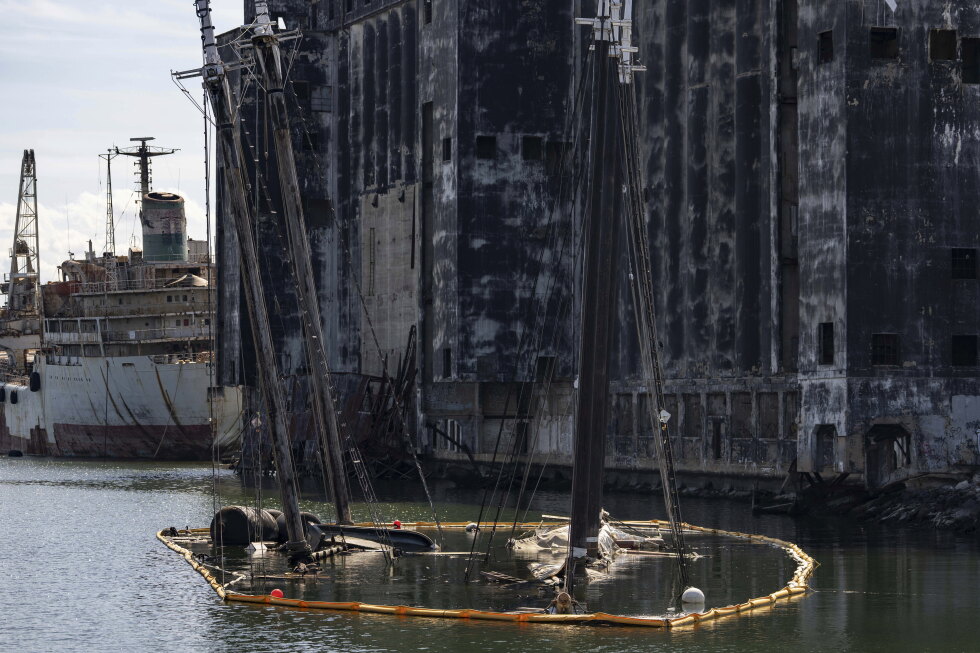
For more than a century, the Pilot and the Victory Chimes — two historic schooners with towering sails — have between them served the country in wartime, hosted the likes of Jacques Cousteau and graced the Maine state quarter.
But an inlet just off New York City’s famously polluted Gowanus Canal could be their final port of call.
The boats — now owned by a company that turns historic vessels into floating bars and restaurants — sank there in early July while docked on the Brooklyn waterfront.
Now many in the maritime community are calling on the company to do what it can to save them — and to account for how they sank in the first place.
Advertisement
The 121-foot (37-meter) Pilot, which is a little more than a century old, and the 128-foot (39-meter) Victory Chimes, which dates to 1900 and is the ship that graces the 2003 Maine quarter, are owned by New York City-based company Crew. Both schooners sank around the time of strong squalls, though the exact cause of the sinkings has not been fully determined.
Crew is working with insurers, marine salvage experts and marine surveyors to determine what to do about the sunken boats, said Alex Pincus, the company’s CEO.
“Raising wooden vessels of this size is a highly complex operation that requires specialized equipment, careful planning and extensive coordination,” Pincus said. “The vessels remain submerged as part of that ongoing process while assessments and planning continue.”
Maritime groups want to see the ships saved if possible
Many in the maritime community are calling on the company to do what it can to save the ships and to account for why they sank. Brad Vogel, a member of a canoe club called the Gowanus Dredgers, whose members paddle near the site, called the potential loss of the ships “a shame” and “in some ways unforgivable.”
Advertisement
“People in Maine, people in New York City, do want answers, and want to know what’s going on. And it’s not at all certain that there is a commitment to raising the vessels,” he said.
The Victory Chimes is on the National Register of Historic Places and is the last surviving Chesapeake ram, a kind of flat-bottomed schooner designed to navigate narrow and shallow waterways. Crew acquired it at auction about three years ago.
The loss of the ship is “heartbreaking for Maine and the nation’s maritime heritage” because it’s the last schooner of its type, said Steve Bromage, executive director of the Maine Historical Society.
“While salvaging her requires tremendous effort and expense, it would be very unfortunate to lose such an important part of history,” he said.
Advertisement
The Pilot once ferried maritime pilots to larger ships in Boston Harbor. It also made trips for the Coast Guard during the World War II era. It became an educational and research vessel in the 1970s and 1980s, and Jacques Cousteau spent time aboard it during that period. Crew acquired the vessel in 2015 and turned it into an oyster bar.
Advertisement
Sign up for Morning Wire:
Our flagship newsletter breaks down the biggest headlines of the day.
It’s unclear if the vessels can be saved
Even if the ships can be raised, rebuilding them would be extremely difficult and expensive, in part because the kind of timber they were built with is no longer readily available, said Charlie Weidman, of Charlie’s Marine Service in Rockland, Maine, who once shared a dock with the Victory Chimes. He described himself as “unsentimental” about the sinking of the ships and the ill-fated attempts to turn them into floating restaurants.
Advertisement
“They’re not the saviors that they paint themselves to be. They’re like, we’re saving the boat,” Weidman said. “You’re trying to monetize that boat. You’re just trying to make a buck here.”
The schooners were docked at Brooklyn Bridge Park before being relocated to Henry Street Basin, just off the Gowanus Canal in Brooklyn’s Red Hook neighborhood. The canal is a federal Superfund site regarded as one of the most toxic waterways in the country, though a long-term cleanup is underway.
The Brooklyn Bridge Park Corporation, which manages the park, didn’t respond to a request for comment. Coast Guard and New York City officials also didn’t respond to questions about the sinking of the ships.
The loss of the boats is “sad, but not entirely unexpected,” because maintaining such historic schooners is very difficult, said Amanda Pleau, spokesperson for the Maine Maritime Museum. Most turn-of-the-century schooners lasted less than 20 years, she said.
Advertisement
“That’s also why historic vessels are so special; it’s not uncommon in Maine to come across a home that’s more than 100 years old, but the remaining ships are few and far between,” Pleau said.
This is the moment a suspected thief brazenly stole an influencer’s Louis Vuitton suitcase outside London St Pancras station.
Colleen Bankston’s bag was apparently pinched by the man as she turned her back for a split second while packing luggage into the boot of a taxi on Sunday morning.
Footage shows a man, wearing headphones and a baseball cap, looking around to see if anyone is watching before subtly bending down to grab the suitcase and walking off with it.
Ms Bankston, a 62-year-old influencer and personal trainer, appears none the wiser as she faces the boot of the taxi, the bag having been just behind her.
Advertisement
The thief then hides the suitcase by holding it close to his chest, before disappearing through the station entrance.
The video, which was taken by a man nearby who said he recognised the suspected thief, was posted on social media by the American fitness influencer.
Captioning the clip, she wrote: ‘Get this guy who stole my bag before he gets someone else or, worse, takes a child.’
Reacting to the video, one viewer wrote: ‘He has definitely done this before… He is a pro… I bet he has stolen countless bags from tourists.’ Another said: ‘Happened two weeks ago to my friend at St Pancras.’
Advertisement
Footage shows a man bending down to pick up the suitcase while its owner has her back turned
He then begins walking off with the bag, clutching it to his chest so it is less visible
The suspected thief, wearing headphones and a baseball cap, walks quickly along the outside of the station before turning into the entrance
Advertisement
The suspect looked smart in a white polo shirt, blue suit trousers, a black rucksack and glasses.
A spokesman for British Transport Police said: ‘Officers are aware of a video showing a man taking a suitcase from outside St Pancras International railway station on Sunday August 30.
‘Enquiries are ongoing, and anyone with information is asked to contact British Transport Police by texting 61016, quoting reference 447 of 1 September.’
Jumama Zaida had just come out of the station in April after she arrived on the Eurostar from Paris when an accomplice told her she had a stain on her clothing and offered her a tissue in a bid to distract her.
As she wiped her trousers, Bilal Arbaoui, 32, then used the opportunity to steal Ms Zaida’s gold Rimowa case, which can cost upwards of £1,000.
She quickly noticed the luggage had been taken and saw Arbaoui running away with it, before notifying police.
Assisted by an Arabic interpreter, Arbaoui appeared at Inner London Crown Court this month and was jailed for 22 months after he pleaded guilty to theft, despite initially denying it was him in CCTV images.
Advertisement
Arbaoui, of Neasden, north-west London, has two previous convictions for similar bag thefts since he arrived in the UK in 2024.
An Algerian migrant who stole a suitcase containing jewellery worth up to £175,000 by telling his victim her trousers were dirty was jailed last month
At the same station in June, classical musician Peter Facer had his oboe stolen
At the same station in June, a classical musician was also targeted in another cruel ‘distraction theft’.
The oboist was leaning against railings outside the station entrance when the thieves struck.
Mr Facer was carrying a coffee and two bags, one containing his rare oboe d’amore while the other contained his clothes and a pair of Apple AirPods.
One of the crooks pretended to ask for directions to Euston station while his accomplice stole the ‘sentimental’ instrument.
Advertisement
The young man walked away after Mr Facer repeated instructions to get to Euston as the thief claimed to have limited English.
The classical musician was ‘just trying to be helpful’ – but when he looked down, his possessions, including his cherished woodwind instrument, had vanished.
The Met Police told the Daily Mail at the time: ‘it appears to be a theft not involving violence which means we are unable to provide a comment in this instance.’
Bahrain intercepted an Iranian aerial attack early Wednesday, as Tehran continued to fire on allies of the United States in the Gulf region despite threats from President Donald Trump to escalate American military attacks.
Bahrain, which hosts an important US naval base, said its air defense systems intercepted incoming fire from Iran, accusing Iran of ‘attacks targeting civilians’ in a statement issued by its military.
After a respite of more than a month, fighting between the US and Iran has been increasing since the weekend after the American military hit Iranian rocket launchers on an island in the Strait of Hormuz and Iran retaliated by firing missiles at American bases in Jordan, which were all intercepted.
The renewed violence threatens to threatens to fully reignite a conflict that is now in its seventh month and has led to a spike in oil prices, roiled the global economy and is posing increasing political problems for Trump’s Republican party ahead of November midterm elections.
Advertisement
Since the fighting resumed, the price of Brent crude oil, the international standard, climbed above $95, up more than 30 per cent from the start of the war.
Ahead of the morning attacks on Bahrain, Iran fired missiles at Jordan and drones at Kuwait all of which were intercepted.
On Monday, the United Arab Emirates said it had intercepted an incoming Iranian drone over its waters as well.
The US Central Command said it had completed the latest barrage against Iranian military targets including air defense sites, radar systems and maritime assets.
Advertisement
Smoke in the sky in Bahrain following Iranian drone and missile attacks on September 2
President Donald Trump threatened to escalate American military attacks
A map showing US attacks on Iran and retaliatory strikes
Advertisement
One US strike hit a home hosting a wedding, according to Iranian media. At least five people were killed, including a child, and wounding at least 68 others, according to Iranian officials.
Iran’s top negotiator Mohammad Bagher Ghalibaf on Wednesday called the US ‘Satan’ after the attack in the country’s south.
‘Minab school: children massacred. Lamerd sports hall: kids slaughtered. Kouhestak wedding: children killed with families. If a power acts like Satan, picks targets like Satan, and kills like Satan, it’s Satan. Shields a junior Satan that does the same? It’s THE Great Satan,’ said Ghalibaf in a post on X.
The US military said it was aware of the report but that it ‘never targets civilians.’
Advertisement
In a statement, the Iranian army said ‘dozens of the army’s attack drones… have targeted radar systems and the positions of US forces at the Al Dhafra and Al Minhad bases in the United Arab Emirates’.
It said it also targeted ‘radar installations and gathering points’ of US forces at Bahrain’s Sheikh Isa Air Base.
Iran’s Revolutionary Guards meanwhile said they targeted US forces in Kuwait, Jordan, Bahrain and Erbil in Iraq’s Kurdistan region.
During last month’s the lull in fighting, the US ramped up economic pressure on Iran, which is suffering from soaring inflation, negative growth and a collapsing currency, as Washington sought to win concessions to fully open the Strait of Hormuz to international shipping traffic.
Advertisement
About a fifth of the world’s traded oil was shipped through the key waterway before Israel and the US attacked Iran on February 28 and Iran largely shut it down.
Despite many pronouncements from Washington that the strait is open, only a handful of ships are making the passage each day and Iran has regularly attacked vessels.
In launching its latest attacks, US Central Command said it was responding to Tehran trying to hit commercial ships and American forces in the Middle East.
Late Tuesday, Trump said he would not force Iran to the bargaining table.
Advertisement
‘I couldn’t care less if they sign a worthless, to them, agreement. I like our position now much better, with almost total control of the Hormuz Strait, and their economy totally collapsing.
‘They are just playing out the inevitable. When are the Iranian people going to rise up and fight?’ Trump wrote on social media.
Earlier, Trump had appeared to pivot toward trying to bend Iran to his will through economic sanctions.
He warned that if Iran retaliated for the new strikes, ‘they will be hit again at a much harder and higher level.’
Lionel Richie, 77, being tested for ‘cardiac-related issues’ as he remains hospitalized… after newly surfaced concert footage shows him appearing out of breath
Lionel Richie remains hospitalized and is being tested for ‘cardiac-related issues’ after checking himself in on Saturday, shortly after appearing to struggle during a concert.
The singer, 77, is in a St. Louis intensive care unit and is reportedly expected to be released on Wednesday, a source told TMZ.
The latest update comes after Richie appeared to be struggling to perform his final song of the night in St Louis, Missouri, before he checked himself into the hospital.
Video from the final song of his concert at The Muny in Forest Park that was obtained by the Daily Mail shows Richie seemingly out of breath at times as he tries to sing one of his biggest hits, All Night Long.
Advertisement
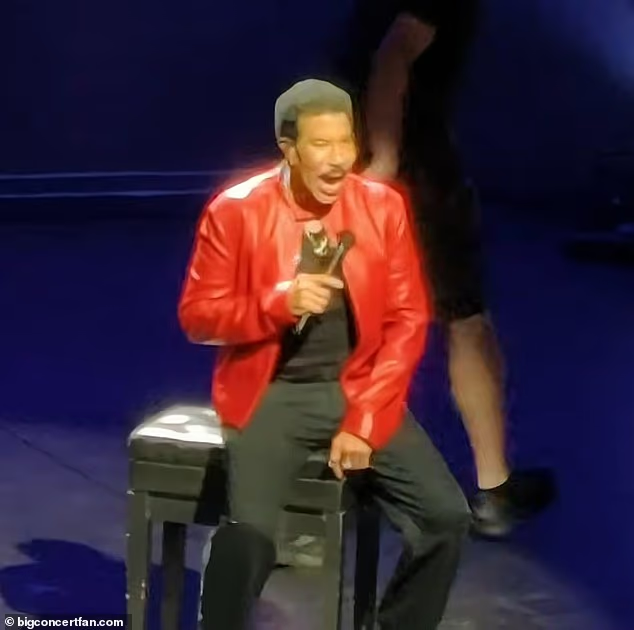
Richie also seemed to have difficulty standing, and he had to take a seat on a piano bench early on, where he remained for the rest of the song.
The Daily Mail has reached out to Richie’s representatives for comment.
Lionel Richie, 77, remains hospitalized and is being tested for ‘cardiac-related issues’ after checking himself in on Saturday, shortly after appearing to struggle during a concert
Advertisement
Richie appeared to have difficulties while performing his final song of the night in St Louis, Missouri, before he checked himself into the hospital on Saturday. Video showed him needing to sit down through the song, All Night Long
The video shows the singer returning to the stage for All Night Long, but within 30 seconds a stagehand can be seen bringing out a piano bench unprompted, suggesting that Richie may have requested it while backstage.
Richie continued singing, but then gestured at the bench to get the stagehands to move it closer to the front of the stage.
The former Commodores singer, who performed in all black aside from a red leather jacket that read ‘All Night Long’ on the back, then took a seat on the corner of the bench and continued singing to the audience.
Advertisement
Closeups from the video appear to show Richie out of breath at times when his vocals dropped out amid thick layers of backing vocals.
While seated, his guitarist and bass player joined him on either side of the bench.
Richie awkwardly stretched out the microphone to both of their faces to let them take the spotlight on the vocals, but when neither attempted to sing, he didn’t attempt to jump back in and shook his head while the audience could be heard filling in the lyrics.
His guitarist then appeared to be singing part of the verse, but Richie had already pulled the microphone away, making him inaudible.
Advertisement
Richie was alone on his bench once the instrumentalists went back to their parts of the stage, though he got another short break for the saxophone solo toward the end of the tune.
To end All Night Long, Richie pumped his fists in the air repeatedly as the song was wrapping up.
After it had ended, he got up from the bench and walked away with his back to the audience, before turning around to shout goodnight and spreading his arms as clips of him from years earlier played on the massive video screen behind him.
Advertisement
The singer returned to the stage for All Night Long, but within 30 seconds, a stagehand could be seen bringing out a piano bench unprompted, suggesting that Richie may have requested it while backstage. He pointed at it wordlessly to signal to move it closer to the front of the stage
Closeups from the video appear to show Richie out of breath at times when his vocals dropped out amid thick layers of backing vocals
While seated, his guitarist and bass player joined him on either side of the bench. He awkwardly tried to get them to sing on mic, but when neither did he dropped out of the song himself and just shook his head side to side
Advertisement
To end All Night Long, Richie pumped his fists in the air repeatedly as the song was wrapping up
After it had ended, he got up from the bench and walked away with his back to the audience, before turning around to shout goodnight and spreading his arms as clips of him from years earlier played on the massive video screen behind him
On Monday, it was reported that Richie had been hospitalized in St Louis shortly after that performance.
The singer checked himself into the facility following his performance at The Muny in Forest Park to have some tests run, per TMZ, and he was treated in the intensive care unit.
Advertisement
Sources said that the singer went to the hospital out of an abundance of caution, and doctors were reportedly examining the possibility that Richie might be suffering from dehydration.
The singer’s latest health scare comes just two months after he stoked concerns among fans when he was forced to cut short a concert in St Paul, Minnesota, after falling ill on stage.
Concert attendees told TMZ that Richie appeared to be having difficulty at the end of his concert in St Louis.
During his show-closing performance of his iconic hit All Night Long, Richie had to ask for a chair to be brought out so that he could sit down while singing.
Advertisement
The incident was reminiscent of the health scare Richie suffered at his St Paul concert in June, when he had to sit down on stage multiple times while performing.
On Monday, it was reported that Richie had been hospitalized in St Louis shortly after that performance; Above July 1 in Detroit, Michigan
The singer checked himself into the facility following his performance to have some tests run, per TMZ, and he was treated in the ICU; Above before falling it at his show in St Louis on Saturday
Richie is reportedly expected to be released on Wednesday; Above in St Louis on Saturday
Advertisement
The septuagenarian hitmaker was performing at the Grand Casino Arena as the start of his joint Sing A Song All Night Long tour with Earth, Wind & Fire when he announced an unusual intermission after a performance of Three Times A Lady from his piano, according to Minnesota’s Bring Me The News.
Richie’s band reportedly also left the stage minutes later, but more than 40 minutes after he cut off the show, a band member returned to announce he wouldn’t be able to return because he was feeling ill.
‘Unfortunately, Lionel is not feeling well,’ said saxophonist Dino Soldo, according to the Minnesota Star Tribune. ‘He won’t be able to continue. Additional information will be available.’
On social media, fans who attended the show shared their concerns and revealed that the singer had signaled throughout the performance that he wasn’t feeling well.
Advertisement
Videos of him performing showed the singer stopping to sit down multiple times during his second-to-last song, Dancing On The Ceiling, and he reportedly told the crowd he was feeling ‘dizzy’ while performing.
Richie was able to sit at the piano bench for what turned out to be his last song of the evening.
A fan who attended the June concert told the publication Richie ‘said he has been in this business long enough, if you feel dizzy you sit down! And if you don’t feel right, you sit down!’
According to the Minnesota Star Tribune’s Jon Bream, Richie was even saltier with his advice, quoting the singer as saying, ‘When you’re feeling dizzy, sit your a** down.’
Advertisement
Sources said Richie took himself to the hospital out of an abundance of caution, and doctors were reportedly considering the possibility that he might be suffering from dehydration; Above in May on American Idol
Concert attendees told TMZ that Richie appeared to be having difficulty at the end of his concert in St Louis, and he asked for a chair to be brought out so that he could sit while singing his show-closing hit All Night Long; Above on Saturday in St Louis
The incident was reminiscent of the health scare Richie suffered at his St Paul concert in June (pictured), when he had to sit down on stage multiple times while performing
One video posted by journalist Patrick Kessler on X from the St Paul show in June showed a portion of his Dancing On The Ceiling performance in which he appeared unsteady as he walked across the stage, before he made an unexpected stop and sat down on the edge of a large stepped platform.
Advertisement
Despite apparently feeling unwell, Richie appeared to be singing throughout his seated portion of the song, rather than relying on a guide vocal.
Richie was seated for less than ten seconds before he stood up and started making his way across the stage again.
However, less than 30 seconds later, he stopped to sit down again on the risers on the opposite side of the stage, even as he continued singing.
According to the Star Tribune, Richie’s saxophonist Dino Soldo, who later confirmed that the rest of the show was canceled, took a seat with the singer during Dancing On The Ceiling.
Advertisement
The publication reported audience members began to file out of the venue as soon as Richie’s band left the stage, about 15 minutes after he announced the surprise intermission.
Sources close to the star later told TMZ that paramedics met Richie backstage, and he was taken by ambulance to a hospital.
One disappointed audience member called the surprise end to the show ‘horrible’ while speaking to the Star Tribune.
Richie reportedly told the crowd that he was feeling ‘dizzy’ while performing. A band member reportedly told the audience that Richie had to cancel the rest of the show because he was ‘not feeling well’; Above April 29 in NYC
Advertisement
Audience members reportedly began filing out once Richie’s band left the stage, about 15 minutes after his departure; Above April 29 in NYC
He and the funk icons are next scheduled to perform a three-date mini tour beginning on September 26 in San Francisco, Calif.; Above Earth, Wind & Fire on June 13 in Honolulu, Hawaii
‘I’m super bummed. This was my first time [seeing Richie] and I’m old,’ they vented.
The first half of the concert featured a performance from Earth, Wind & Fire, while Richie took the stage for what would have been the second half of the evening.
Advertisement
The two acts are now touring separately after wrapping up their performances in mid-August, but they’ll reunite for another mini tour with three shows on September 26 in San Francisco, California, September 30 in Chicago and October 2 in Columbus, Ohio.
Following the disastrous St Paul performance, a source told the Daily Mail that the singer’s loved ones fear that Richie – whose best-selling album is 1983’s Can’t Slow Down – may be more focused on entertaining audiences than focusing on his own health.
‘Family, friends, and even his bandmates are definitely concerned about Lionel’s health, but nobody is about to tell him to slow down,’ the insider said. ‘They all want him better and to do what he loves to do.’
They emphasized his incredible work ethic, which has made him a reliably popular entertainer for decades, going back to his time in the 1970s and ’80s in The Commodores.
Advertisement
‘The Lionel we see on tour and on American Idol is the same Lionel we have known for decades – he’s always moving, always working, and always looking ahead to the next show,’ the source continued. ‘And with that, depending on what doctors tell him, his mindset is already focused on getting back out on the road as quickly as possible because that’s simply who he is.’
‘Music isn’t just his job; it’s what keeps him going. He’s not someone who sits still, and retirement has never really been part of the conversation unless his health leaves him with no other choice,’ they added.
After his disastrous St Paul performance in June, a source told the Daily Mail that family, friends and bandmates were worried about Richie’s health but feared that he wouldn’t slow down; Above July 1 in Detroit, Michigan
‘Right now, Lionel is actually more upset that fans didn’t get the full show they paid for than he is about himself and his health. That’s where his head is,’ the insider said. ‘He hates disappointing people and feels terrible that the concert couldn’t continue as planned.’
Advertisement
The source close to Richie suggested he wasn’t going to worry for the time being.
‘As far as he’s concerned, while he awaits results, this is just a temporary setback. He fully expects to be back doing what he loves, and he’s already hoping to make it to Chicago this weekend if everything checks out,’ they shared.
‘He’s still waiting for a few more answers on what he is dealing with, but he feels that it could be just a bit of an episode over something super serious.’
While tech-moguls pour billions into trying to live longer, the answer might well be in the simple life
It’s 8am on Rio de Janeiro’s Ipanema beach, and another day in the ‘Marvellous City’ is stirring.
The Atlantic pounds in steady, hypnotic bursts as the early birds gather to strut their stuff before the tourists descend. I can see a few vendors sleepily setting up their stalls and hear the whirr of a helicopter overheard – the first of dozens that will swish above the jungle mountains and Christ the Redeemer throughout the day.
Advertisement
I lay down my towel and smile. At the shoreline, a small group of older swimmers gathers, chatting, stretching, laughing as they time their entry between waves.
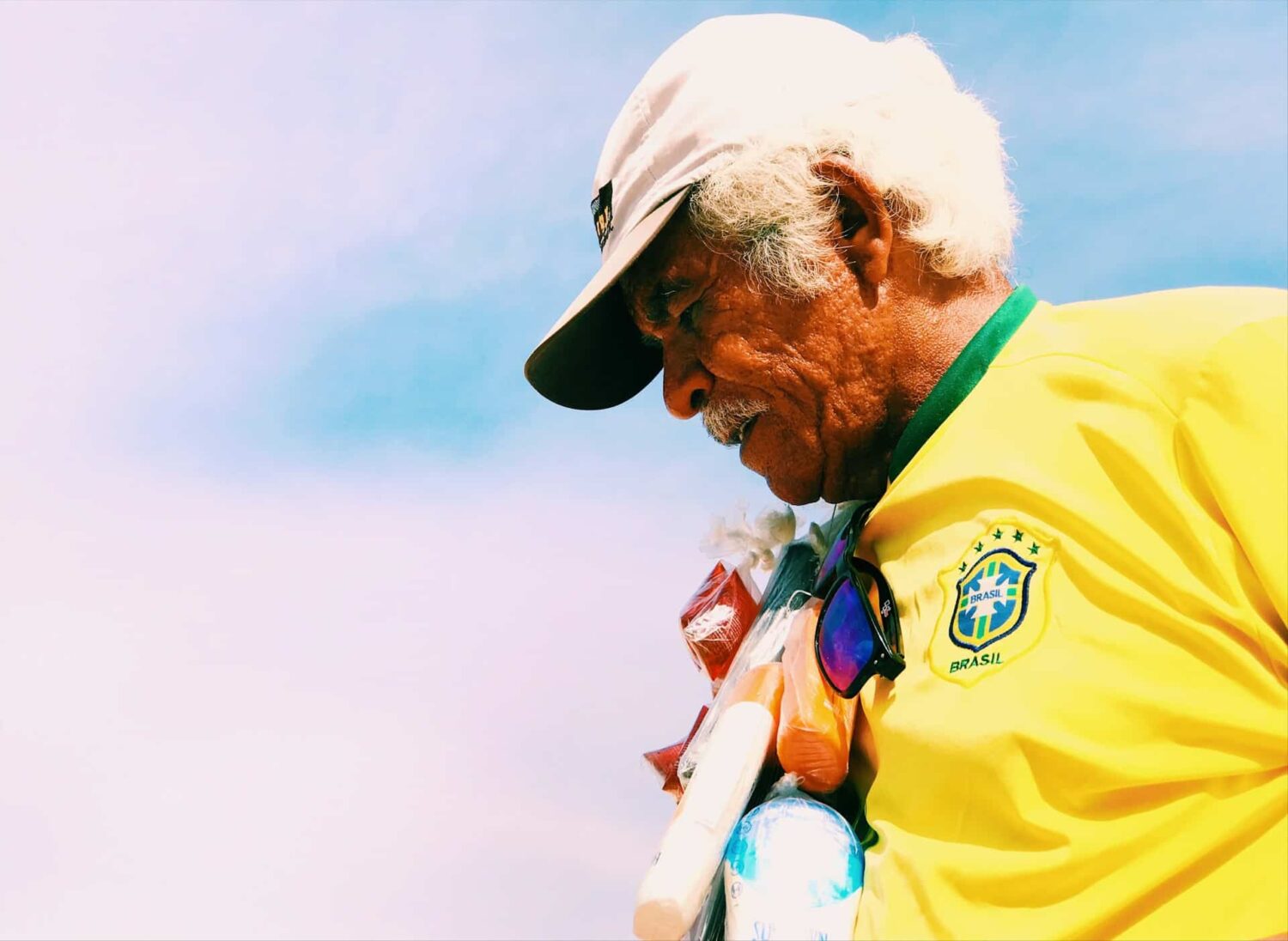
They are not moving like people nearing the end of life. In Brazil, they might only just be getting started. Because while we tend to look to the ‘Blue Zones’ of Sardinia or Okinawa for longevity lessons, a more chaotic, unequal, exuberant country is quietly producing people who live to 110 and beyond.
Solutions every Saturday Uplift your inbox with our weekly newsletter. Positive News editors select the week’s top stories of progress, bringing you the essential briefing about what’s going right. Sign up
Recent demographic research suggests that Brazil may have one of the highest concentrations of supercentenarians in the world – a striking fact in a nation better known for inequality, patchy healthcare and economic and social volatility.
Advertisement
At the same time, in Silicon Valley, billionaires are spending fortunes trying to outwit ageing. Figures like Bryan Johnson subject themselves to extreme regimes – blood testing, supplements, strict diets, tightly controlled sleep – all in pursuit of a longer life. Brazil’s approach could hardly be more different.
Here, people are reaching extraordinary ages through something less engineered, less controlled – and perhaps more revealing. For more than two decades, Prof Mayana Zatz has been studying this phenomenon. At the University of São Paulo, she and her team have assembled a cohort of nearly 200 centenarians, including more than 20 supercentenarians aged over 110.
“We are still collecting, still trying to understand,” she tells me. “But already we see some very interesting patterns.” One is gender. Around 70% of Brazil’s centenarians are women. Another is physical: many of these women are notably small. “All our centenarian women are very short,” Zatz says, laughing. “Which is not good news for me because I am tall!”
Advertisement
Around 70 percent of Brazilian supercentenarians are women. Image: Roberto Huczek
It’s even worse news for me – a 6ft 1in Scotsman. But I’m here to pick up some tips on how to double my current age and still be walking the earth. There may be a biological explanation. Smaller bodies, Zatz suggests, may require less energy, undergo fewer cell divisions, and experience less cumulative damage over time.
But beyond that, the story widens –and deepens into Brazil’s past. Modern Brazil is, genetically speaking, one of the most mixed populations on Earth. Following Portuguese colonisation in the 1500s, millions of enslaved Africans were forcibly brought to the country. Over the centuries that followed, waves of immigration arrived from southern Europe – particularly Italy, Spain and Germany – as well as one of the largest Japanese diasporas outside Japan.
Advertisement
The result is a vast, layered genetic mosaic: Indigenous, European, African and Asian ancestry often combined within a single individual.
Zatz believes this may be key. “We think that different populations may carry different protective genetic variants,” she explains. “And in Brazil, people are very admixed. So one person may be lucky enough to inherit several of these protective variants together.”
Around 70% of Brazil’s centenarians are women
In other words, Brazil’s history– however painful and complex –may have inadvertently created a population with unusually rich genetic diversity, increasing the chances of assembling combinations of genes linked to resilience, immune strength and cellular repair.
Her team is now mapping these patterns, analysing ancestry alongside longevity, searching for what she calls “protective genes”. But even here, there is no single blueprint.
Advertisement
Brazil’s longest-lived citizens do not follow strict diets. They do not necessarily avoid alcohol. They are not confined to pristine environments. In fact, many come from remote or deprived regions, where access to modern medicine has historically been limited. “We focus a lot on people who live far from healthcare,” Zatz explains. “Because these are the ones who survived without vaccines, without treatment. They were the strongest from the beginning.”
In rural Brazil, families once had 10 or 12 children, she says – but only a few would survive into adulthood. Those who did may already have been biologically resilient. Add to that a childhood largely free from ultra-processed foods, and a lifetime of physical movement – walking long distances, working with the body – and a picture begins to emerge: not just good genes, but a kind of natural selection shaped by environment.
Those with mixed genetics might benefit from this. Image: Renan Martelli da Rosa
Advertisement
And then there are the individuals themselves. Take Milton, who lived to 108. When Zatz and her team visited him in the capital city Brasília, he greeted them with Brazil’s customary cafezinho –small, strong, sweet coffee. But alongside it, something unexpected.
“He offered us whisky,” Zatz recalls.“And he told us he drinks whisky every morning.” That’s certainly one daily habit I can get behind.
Milton was not just long-lived but mentally formidable. Before his death, he would host birthday gatherings, delivering speeches in which he recalled every guest by name, their age, and how they had featured in his life. “His memory was incredible,” Zatz says.
Advertisement
Then there is Laura, now 107, who only began swimming in her 70s – and went on to become a champion at 100. She still trains regularly, and, Zatz notes, enjoys a daily caipirinha (a fiery Brazilian cocktail made with cachaça, sugar, lime and ice) with lunch. Asked to explain her vitality, Laura’s answer was disarmingly simple: “My DNA.” She may have a point. Longevity runs strongly in her family: two sisters are over 100, and an aunt reached 110. Zatz’s team is now studying them closely.
People who live far from healthcare are the ones who survived without vaccines, without treatment. They were the strongest from the beginning
Yet not all cases are familial. Only around 20–30% of centenarians in the study have relatives who also reach extreme ages. And many of their habits defy expectations. Another subject, Sister Inah, who lived to 116 and was once the oldest person in the world, ate “everything” – except bananas. Even at 116, her mind was razor-sharp. During one visit, she carefully asked how to spell Zatz’s name before writing it down herself, her hand steady.
These stories challenge the idea that longevity comes from strict discipline. “Our centenarians eat everything,” Zatz says.Which raises an uncomfortable contrast with the longevity industry now flourishing among the ultra-wealthy. The pursuit of eternal youth in places like California is built on control – measuring, tracking, optimising every biological process. But it is also relentless, expensive and, arguably, stressful.
In Brazil, longevity looks less like optimisation and more like adaptation. That doesn’t mean lifestyle doesn’t matter.“Healthy ageing is not only genetics,” says Prof Cesar de Oliveira of University College London. “It also depends on environment, behaviour and social life.” And here, Brazil offers some powerful clues.
Advertisement
Brazilian supercentenatians move often, and don’t limit their diet. Image: Vinicius “amnx” Amano
Movement is constant and informal. Food is simple and largely unprocessed – with rice and beans a staple. Coffee is frequent, social, woven into the day. But perhaps most important is community. Brazil is a country where life happens collectively. Families remain close, often across generations. Even in cities, social interaction is constant – in the street, on the beach, in cafés and homes.
Advertisement
Zatz believes this cultural fabric may play a role. “Brazilians are optimistic,” she says. “Even with all the problems – people make jokes. They laugh.”
Standing again on Ipanema beach, watching the morning swimmers emerge from the surf, laughing, greeting each other like old friends, it’s hard not to feel that this is what endurance looks like. They are not chasing longer lives. They are living them.
And perhaps that’s the real lesson: longevity, in Brazil, isn’t built in a lab. It’s built over generations – in genes, in families, in communities, and in the messy, joyful business of everyday life.
Illustration: Sol Cotti
Advertisement
Be part of the solution
At Positive News, we’re not chasing clicks or profits for media moguls – we’re here to serve you and have a positive social impact. We can’t do this unless enough people like you choose to support our journalism.
Give once from just £1, or join 1,800+ others who contribute an average of £3 or more per month. Together, we can build a healthier form of media – one that focuses on solutions, progress and possibilities, and empowers people to create positive change.
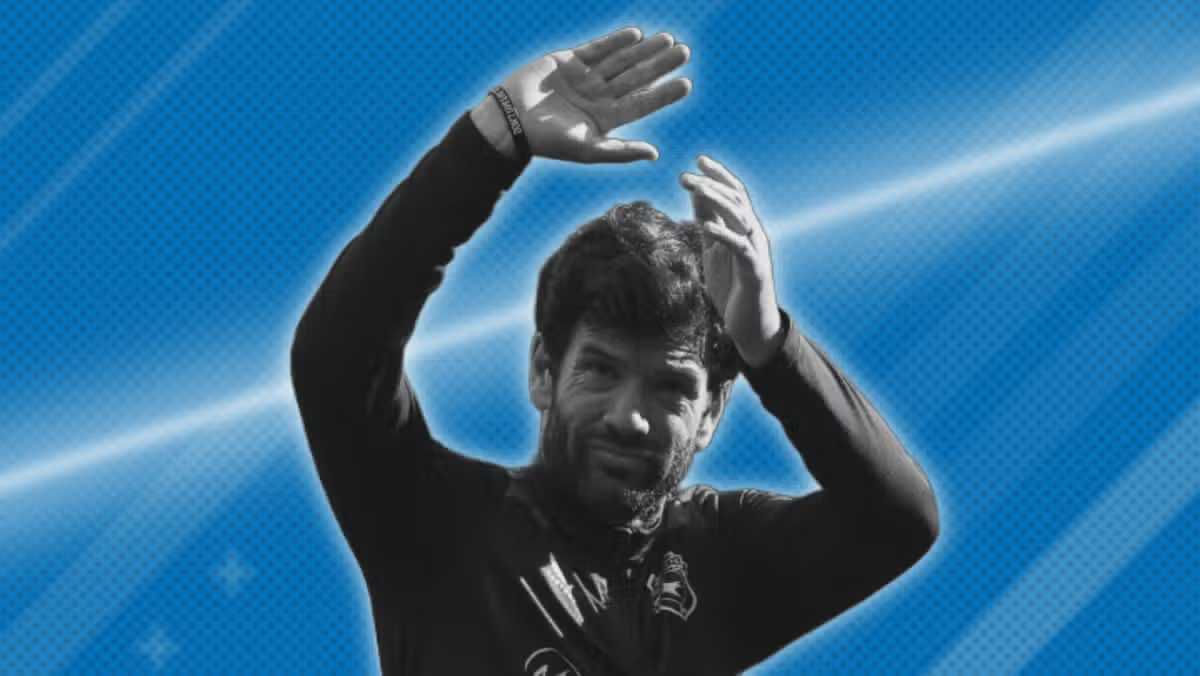
Cardiff City wanted one or two more players this summer. Instead, the window closed with Brian Barry-Murphy refusing to compromise on his targets.
For weeks, there had been a sense that the Bluebirds were building towards something. Barry-Murphy had taken a young, exciting group of players, given them another year of development together and watched them emerge from League One as a promotion-winning side with momentum firmly behind them.
There was an obvious argument to be made – add a striker and a winger to the mix and Cardiff could have a squad capable of competing at the right end of the Championship.
Then the deadline passed.
Advertisement
No striker. No winger. No late-night deal to send supporters into a frenzy.
And, let’s be frank, it is perfectly understandable why plenty of Cardiff supporters are left reeling.
This was a window in which the club appeared to have a chance to capitalise on the momentum generated by last season. The team is young, entertaining and increasingly cohesive. The football has been exciting. The performances against the likes of Sheffield United have suggested this is not a group content simply to survive. These lot can really thrive.
Yet when the opportunity came to strengthen the areas everyone could see needed strengthening, Cardiff ultimately chose not to do so. We will get on to the reasons for why.
Advertisement
That is where the frustration comes from. Social media was not a fun place to be on Tuesday night.
The supporters are not imagining the shortcomings. Even those inside the club acknowledge that, ideally, they would have brought in another one or two players. The squad is too thin in certain areas and, while the club remained open to additions, they were not prepared to compromise their recruitment principles simply to add numbers.
And there is another important point here.
While transfer windows can often see anger directed towards the very top, multiple sources have indicated that Barry-Murphy ultimately had the decisive say over the players who came in. Or, more pertinently, those who didn’t.
Advertisement
It is his squad. He trains these players every day. He picks the team. He has to believe in the footballers he brings into the dressing room.
If a player is signed simply because there is a perceived hole in the squad, rather than because the manager genuinely believes he can improve it, then the consequences can be worse than simply having one fewer player.
Barry-Murphy has extraordinarily high standards. He would rather trust players he knows, likes and believes in than compromise those standards to tick a box.
Advertisement
That is the case for the defence and that philosophy has shaped this entire window.
So how did Cardiff get here? There was plenty of logic to the original plan.
Calum Scanlon, Nathan Trott and Omari Kellyman had all spent last season at Cardiff on loan with a view to bringing them back. Scanlon and Trott have returned and both have started the new campaign encouragingly.
Kellyman was different.
Advertisement
His sale to Strasbourg, Chelsea’s sister club, represented a significant blow to Cardiff’s plans because they had expected to have that attacking option available again. He had communicated his desire to return and Cardiff were delighted and felt they had a multi-positional asset back on board.
The club was then forced to pivot. A winger was identified, but that deal did not materialise after the player chose a different opportunity.
The pursuit of Jens Hjertø-Dahl was real, too, despite some questioning it, and Cardiff made a £6.2m bid. Hull City ultimately came in and blew the Bluebirds out of the water.
Advertisement
Those were two significant blows to a recruitment strategy that is deliberately specific. And that, ultimately, is the downside of being specific.
If you are looking for a particular type of player, with a particular profile and the right character to fit a particular dressing room, you are inevitably going to miss out sometimes.
Cardiff did.
The striker situation is perhaps the biggest source of frustration.
Advertisement
The club had been looking for a forward throughout the summer, yet not one viable striker ever seemed to emerge publicly as a serious Cardiff target.
With so little coming out, so few targets courted publicly, and so little said on record to sate fans’ appetites while rivals prosper in the transfer market, it can be difficult for supporters to stomach. It can feel like the wind being knocked out of the sails.
It can often feel like the club aren’t doing anything, when, of course, that is not the case. But it’s all a totting-up effect for fans over the course of a summer, much of it without football as a distraction.
As recently as the weekend, a striker and a winger, both Premier League loans, were lined up. Neither materialised for one reason or another.
Advertisement
Then, in the final throes of the window, attention briefly turned towards the possibility of a full-back after Genoa were thought to be interested in Ronan Kpakio, WalesOnline has learned.
But Genoa opted for former Cardiff loanee Cody Drameh instead, and the Bluebirds ultimately decided they did not need another right-back.
Instead, they put their faith in Kpakio as Perry Ng’s understudy.
That is the kind of decision which can look either inspired or reckless depending on what happens over the next four months.
Advertisement
And that, ultimately, is the problem with assessing this window. There is no definitive answer yet.
One of the biggest debates around Cardiff for years has been recruitment.
Supporters have consistently called for a stronger structure around the manager, with Erol Bulut perhaps the most vocal advocate for expanding the operation during his time in charge. The appointment of a director of football and a figure who could be held accountable for recruitment was seen as one potential solution.
Advertisement
But that structure has never really been established at Cardiff. There seems to be very few people tasked with huge remits at Cardiff and, in in the view of many supporters, they need more help around them.
There remains a unique set-up at board and senior management level, and attempts to build something resembling a traditional football operation have rarely been sustained.
This summer, Barry-Murphy and head of recruitment Paddy Deboys have worked extremely closely together.
The pair were central to Cardiff’s recruitment, with Krystian Bielik himself highlighting the conversations he had with both men when explaining why he chose to join.
Advertisement
Bielik and Jack Moylan are perhaps the clearest examples of the strategy working exactly as intended.
Both had been tracked for more than a year, it is understood. Cardiff had tried to sign both last summer, shortly after Barry-Murphy arrived, but the deals were not possible.
They stayed close to the situations. When the opportunity presented itself again, they were ready.
That is very different from frantically scrambling around on deadline day looking for anyone who can fill a position. It has some semblance of a plan, which is encouraging.
Advertisement
When Cardiff were relegated, the squad had become bloated. Players could see there was little route into the team, standards dropped and the pathway for academy players became harder to navigate.
The current thinking is almost the exact opposite.
Keep the group tight. Give everybody a genuine opportunity to play. Use multi-positional players to provide flexibility. Maintain competition for places. Keep the academy pathway open. That’s the strategy.
There is merit to that argument.
Advertisement
You cannot spend an entire year preaching about developing young players and creating a pathway into the first team, only to block that pathway because you are afraid to have a hole in the squad.
And the club also points to another important factor – keeping the core of this promotion-winning group together.
There were bids and significant interest in some of Cardiff’s players this summer. The owner was clear that retaining the nucleus of the squad was just as important as adding to it.
Selling one of the key players and then spending the rest of the window trying to replace him would have been counterproductive.
Advertisement
So the club’s position is relatively straightforward.
They believe the players they have brought in have improved the team. They believe the group they have retained has enormous potential. And they believe adding somebody who does not meet their standards could ultimately do more harm than good.
There is also a financial reality.
Moylan cost around £3m, Bielik around £2.5m and Trott around £1.5m. That is roughly £7m of spending, which is not going to transform a Championship squad in the current market.
Advertisement
Before Bielik arrived, Barry-Murphy was explicit about the club having spent relatively little and being confident it could still bring players in.
And, importantly, he was never pretending he did not want additions.
“I think it’s obvious we’re looking to add to the squad,” he said on August 17.
Advertisement
After Bielik arrived, he was asked how keen he remained to strengthen.
“Very keen,” was the answer.
On August 25, he hoped Cardiff would be “very” busy during the final days.
As recently as Saturday, he said he felt “confident” more players could be brought in.
Advertisement
They weren’t. That is why it is too simplistic to say Barry-Murphy was simply happy with his squad all along. He wanted more. He just wasn’t prepared to take somebody he did not believe in.
And that is where Cardiff have made a calculated gamble. And it is a gamble, because this group of players isn’t a million miles away from the one which finished bottom of the Championship.
The club’s own internal view is that this is a two-window season. January will provide another opportunity to assess exactly where the squad is, what it needs and what becomes available, with the budget potentially more flexible depending on the league position.
That may prove to be a sensible approach. Or it may come back to bite them.
Advertisement
If Yousef Salech gets injured, Cardiff suddenly have a very obvious problem. He offers something unique within this squad and there is no longer an Omari Kellyman waiting in the wings to provide a solution.
If Ollie Tanner suffers an injury, there is no natural like-for-like replacement on the right flank either, although Isaak Davies or perhaps Kpakio could provide alternative solutions.
Those are legitimate concerns.
So too is the broader question of whether Cardiff have left themselves one or two players short of genuinely competing for the play-offs.
Advertisement
That accusation is fair. They had all summer to get six players – why was there a mad rush? Other clubs were building squads all summer. All valid frustrations from supporters.
But it is also impossible to know whether those one or two additions would actually have made the difference between finishing 14th and fourth. They were understood to be young Premier League loans, whether they would have had the impact of Kellyman or not is not known.
Football rarely works that neatly.
The last time this team took to the pitch, against Sheffield United, the overriding feeling was one of excitement. Supporters were watching a young Cardiff side go toe-to-toe with one of the Championship’s biggest clubs and trying to win the game on its own terms.
Advertisement
That is what fans want.
They would rather watch this team, flaws and all, than watch a plodding side edge towards 1-0 victories and eventually finish somewhere in mid-table.
This group will lose games. It will be naïve at times. It will concede soft goals. It will probably frustrate the life out of its supporters on occasions.
But when it gets things right, it is a joy to watch. That’s rarely been the case in recent years, if we are all honest.
Advertisement
The biggest concern I have, though, is whether too much of this is currently being held together by Barry-Murphy himself.
Cardiff’s ambition, secretly, upon his arrival, was to build a structure which would allow managers of his ilk to come into the club and operate within it seamlessly.
Perhaps that work is happening quietly behind the scenes. Perhaps the intention is to scale it up once Championship revenues begin to flow again, and further still if Cardiff eventually make it back to the Premier League.
But from the outside, it is difficult to see a fully developed structure capable of surviving the departure of the manager.
Advertisement
That’s why tying Barry-Murphy down to a new three-year contract was probably the best piece of business Cardiff did this summer. It protects the club and gives this project stability.
But it will not stop a Premier League club taking him if the right opportunity and the right compensation package arrive.
The hope has to be that enough has changed at Cardiff over the past year for the foundations to remain when, eventually, the man at the centre of it all moves on. Or perhaps the club progresses upwards with him and this is a long-term project for everyone.
For now, though, the window is over. It wasn’t vintage and the criticism will come into sharp focus after a defeat or when an injury occurs, such is the nature of the beast.
Advertisement
The anger is understandable. The club have left themselves exposed in certain areas and even those inside the building concede they would have liked another one or two players – having had all summer to address the issues.
But – saliently – there is a belief in this group and the culture they have created. They believe that bringing somebody in for the sake of it could damage the very thing they are trying to build.
There was no panic in the end. Previous managers had spent hours on the phone to Vincent Tan on deadline day. It is understood Barry-Murphy didn’t call the owner once on Tuesday.
Whether that proves to be wisdom or folly will be judged over the next few months, of course. But the transfer window cannot be changed now. The striker is not coming through the door. The winger is not arriving.
Advertisement
This is the group Cardiff have. And it is an exciting one.
Five or 10 years from now, supporters may look back at this generation and remember it for what it achieved last season, maybe what it went on to achieve this season and the football it produced along the way.
That is the challenge now and the siege mentality begins. The excuses end.
John Lennon’s son Sean, 51, confirms he has become a father for the first time as he welcomes baby boy with girlfriend Charlotte Kemp Muhl, 39…. after his brother Julian first revealed the news in a now-deleted post
Sean Ono Lennon and girlfriend Charlotte Kemp Muhl have announced the birth of their baby boy.
The son of Beatles legend John Lennon shared the happy news on Instagram last night, posting photos of his baby boy as he told fans ‘Charlotte and I have created a Human Bean! His name is Aurelius! Thank you!’
Sean, 51, shared a series of photos of himself and his partner, 39, holding Aurelius, and in one caption for a snap of Charlotte in hospital wrote: ‘Baby Momma!’
Aurelius is the first grandchild of Yoko Ono and John. Yoko, 93, already has two grandchildren from her older daughter Kyoko.
Advertisement
Hours before his post, Sean’s baby news was broken by his older brother Julian, 63 – the son John shared with his first wife Cynthia.
Julian wrote in a now-deleted Facebook page that he had been enjoying a trip to London last week during which the ‘the most amazing thing happened in the whole wide world, I became an uncle!’
Sean Ono Lennon and girlfriend Charlotte Kemp Muhl have announced the birth of their baby boy
Advertisement
He added his congratulations to Sean and Charlotte ‘and their new ‘Beautiful Boy,’ referencing his father’s song which was dedicated to Sean.
Last year Sean shut down rumours of a long-standing rift with Julian by reposting a fan’s post about his relationship with his sibling, who is also a singer and songwriter.
‘Here, we do not accept comparisons and erroneous creations of fights about two people that john lennon loved the most: his children :),’ wrote a John Lennon fan account, which Sean reposted to his Instagram Stories, who added, ‘Peace and much love.’
The post featured a sweet black-and-white image of Julian, who was around 23 at the time, as he rested his hands on Sean’s shoulder affectionately at the 1986 Rock and Roll Hall of Fame induction ceremony, where both joined in a celebration for the induction of Elvis Presley.
Advertisement
Sean, who would have been around 11 at the time the photo, has been dogged by rumours that he and Julian have been estranged for years, but much of it seems to be driven by social media users expressing distaste for one — or both — of his famous parents.
Yoko and John were still married to their spouses Anthony Cox and Cynthia Powell, respectively, when they originally met in 1966.
Sean was just five-years-old when his father was tragically shot dead by Mark Chapman outside his New York apartment in December 1980.
Fans have previously highlighted Julian’s past statements criticising his stepmother as evidence of a family split.
Advertisement
The son of Beatles legend John Lennon shared the happy news on Instagram, posting photos of his baby boy as he told fans ‘Charlotte and I have created a Human Bean!’
Aurelius is the first grandchild of Yoko Ono and John Lennon. Yoko already has two grandchildren from older daughter Kyoko
Julian previously claimed that he had to buy back letters and postcards he had written to his father – and the ones he’d received in return – because his stepmother had refused to give them to him.
He sued his father’s estate in 1996, eventually reaching a settlement authorised by Yoko.
Advertisement
In a 1999 interview on The Deni Petty Show Julian witheringly referred to Yoko as ‘her highness’ and noted that the two had a rocky relationship, as she was the executor of his father’s estate.
He feared any criticisms he made about the enforcement of Lennon’s will could result in him being cut out completely.
But in the same interview, Julian made it clear that he had only warm feelings toward Sean, and he claimed his younger brother was only caught in the middle of a difficult situation.
Hours before his post, Sean’s baby news was broken by his older brother Julian, 63 – the son John shared with his first wife Cynthia
Advertisement
Julian has steadfastly made it clear that he and Sean are loving siblings, even if Sean has been less vocal about their relationship over the years.
In a December 2024 social media post, Julian shared some sweet black-and-white photos of the two catching up at The Dakota, the building in Manhattan where his father lived for years with Yoko and Sean before he was shot down in front of it.
‘A Goodnight kiss for my brother, after spending the evening with him, having a lil dinner & chatting the night away, at The Dakota,’ he wrote. Something we rarely get to do… Thankful.’
Both Sean and Julian have followed their father into music. Sean works as a producer and musician alongside his role as the main caretaker of his parents’ artistic legacy.
Advertisement
Sean has been in a relationship with girlfriend Charlotte since 2007 and performs with him in the musical duo The Ghost of a Saber Tooth Tiger.
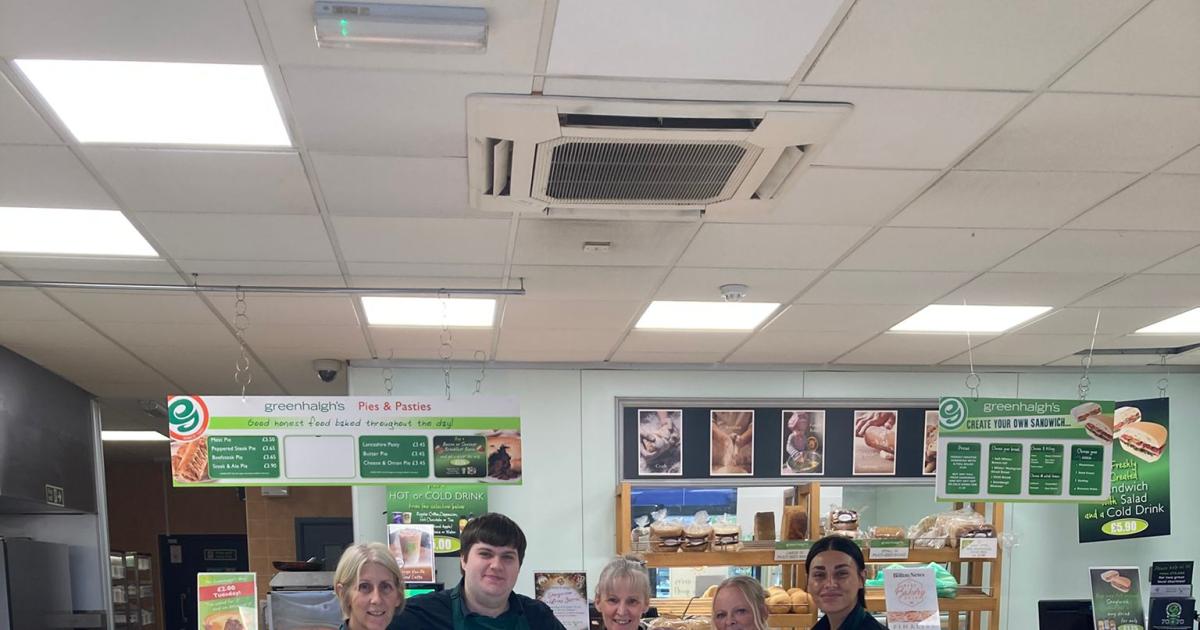
Angie has seen the shop through revamps and even television installations.
She said, “It’s fantastic what they’ve done, it’s really good.”
And whether it’s a pie, a slice, or a quick breakfast stop, Greenhalgh’s hopes the nomination shows just how much their Breightmet shop means to the community.
Advertisement
To vote to crown Greenhalgh’s, Breightmet, Bolton’s best pick up a copy of today’s paper.





























































You must be logged in to post a comment Login