







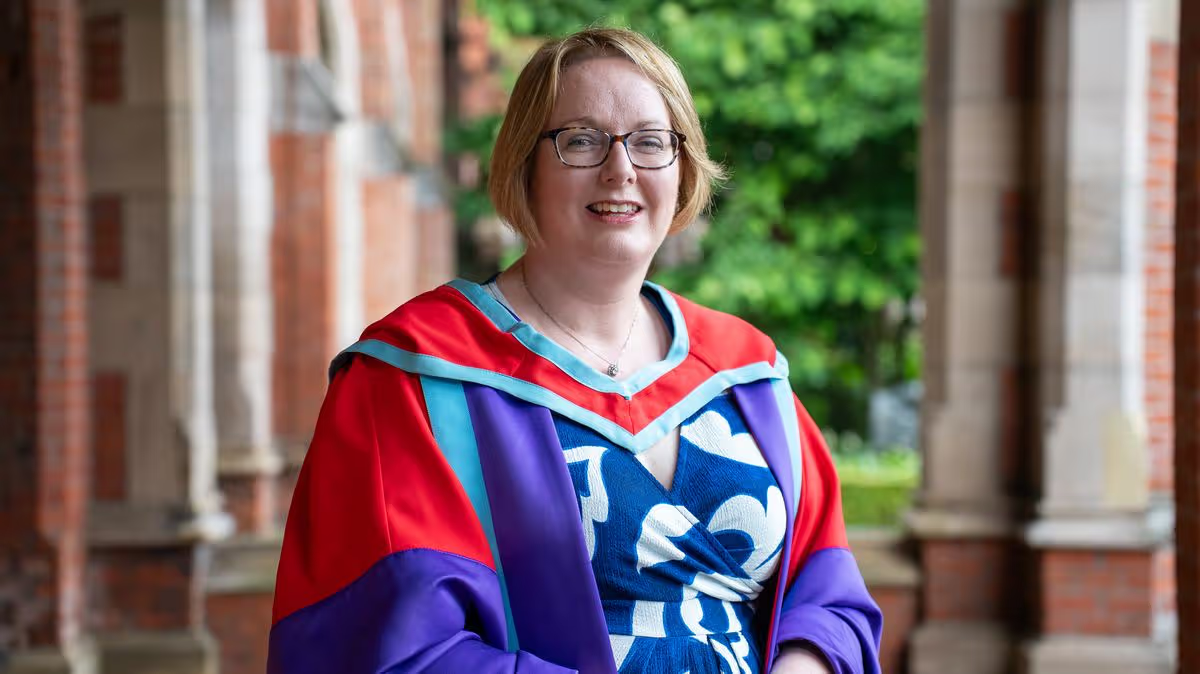
The determined nursing graduate is channeling her own premature birth journey to empower other parents
Meet Victoria Craig, who has transformed her personal experience with premature birth into a lifelong commitment to empowering and supporting other parents facing similar challenges.
In 2006, as Victoria, from Broughshane, Co Antrim, approached the end of her Nursing degree, her world shifted dramatically when her daughter Catherine was born 12 weeks early, beginning a 10 week stay in the Neonatal Unit at Antrim Area Hospital.
Looking back, Victoria says: “Catherine’s birth was a very traumatic time in my life. I often say she changed my life in so many ways. She was born by emergency c-section at 28 +1 weeks gestation, which is very early. Although I felt very supported by the nurses in the Neonatal Unit at the time, I was on autopilot and the impact of the trauma was felt for a very long time afterwards.”
Victoria went on to pursue a career in the same neonatal unit that her daughter Catherine was born, caring for premature babies: “My job as a neonatal nurse was an unexpected career option following my first-hand experience of neonatal care. I like to think that my experience can help other parents in the same situation.
“I also encourage nurses to be the best they can be, growing in knowledge so that we can provide the best possible care to infants and parents in the Neonatal Unit.”
Victoria had just turned 40 when a PhD opportunity arose that inspired her to go back to Queen’s University as a mature student, which was not without its challenges: “As a dedicated mum, I had to juggle studying and caring for my three children, Catherine, Adam and Sarah, which was extremely difficult within itself.”
However, it wasn’t just the demands of parenting that Victoria had to overcome during her PhD studies, as her family faced life-changing health issues and loss: “Just a few months after I began my studies, my dad had a stroke. I had to be on hand for appointments and help my mum when he had a series of falls. We were already grieving the recent loss of my mother-in-law, so we were trying to navigate an overwhelming amount of change all at once.”
Victoria was adamant to keep going and managed to overcome many hurdles with the support of those closest to her: “My husband Stephen has been incredibly supportive throughout my studies. Returning to university was a major decision that affected the whole family, but he stood behind me completely.”
Her PhD compared the Butterfly Hug and Safe Calm Place techniques with playing Tetris to explore their impact on parents with PTS symptoms, she said: “The Butterfly Hug and Safe Calm Place technique involves crossing the arms so each hand rests on the opposite collarbone, then gently tapping for 30–40 seconds while focusing on a safe, calming place, such as a childhood home.
“When used after a traumatic experience, this method can help reduce the emotional intensity of the memory, which may in turn lessen symptoms of posttraumatic stress. My study explored this technique alongside Tetris to assess whether both were acceptable and feasible tools for parents to use in the Neonatal Unit.”
Today, Victoria is extremely happy working as a clinical educator in the unit, using her expertise to support pre-term infants and their parents, nursing staff, and students and aspires to pursue a career in Neonatal Education within Queen’s.
As she graduates with a Doctor of Philosophy from the School of Nursing and Midwifery at QUB on Monday, most importantly, her daughter, Catherine is now a fit and healthy 20-year-old who has never looked back after her rocky start in life.
For all the latest news, visit the Belfast Live homepage here and sign up to our daily newsletter here.















































You must be logged in to post a comment Login