Following the conclusion of Series 6 on Channel 5, the stars of the hit period drama have been appearing in a new set of videos for MASTERPIECE | PBS during the show’s US broadcast.
In the latest clip, attention turns to the real-life family behind the stories, as viewers are invited to learn more about Jim and Rosie Herriot, the children of author and veterinarian James Herriot.
All Creatures Great and Small (Image: CHANNEL 5)
The video explores their memories of growing up in Skeldale House, the real Yorkshire home that inspired much of the series, and the lasting impact their father’s work has had on generations of readers and viewers.
Fans are told how Jim and Rosie’s experiences have helped shape the tone and authenticity of All Creatures Great and Small, with the production team keen to honour the warmth, humour and humanity of Herriot’s original stories.
Advertisement
The cast also reflects on how important it has been to stay true to the spirit of the books, particularly as the series moves further into a post-war world following the events of Series 6.
The filming of All Creatures Great and Small (Image: CHANNEL 5)
The message struck an emotional chord with viewers, many of whom have followed the show since its debut and feel a deep connection to its characters and setting.
The MASTERPIECE | PBS post accompanying the video read: “Now that you’ve all met the Herriot children on All Creatures Great and Small, learn a little about the real Jim and Rosie.
Advertisement
“Hear about their impact on the series, memories of growing up in Skeldale House, and all the stories they have to share.”
Fans quickly responded, praising the series for staying faithful to Herriot’s legacy and celebrating the personal touches that continue to set the show apart.
All Creatures Great and Small has enjoyed huge success both in the UK and overseas, with its depiction of rural Yorkshire life winning international acclaim.
Series 7 and 8 have already been confirmed, with filming details expected to be announced in due course.
Two different roads have been closed this morning due to downed trees
Rob Currell Live news reporter
07:18, 30 Mar 2026Updated 07:22, 30 Mar 2026
Fallen trees have caused problems for motorists this morning, (Monday) as two different roads were closed. Drivers are asked to find alternative routes while work to clear debris is underway.
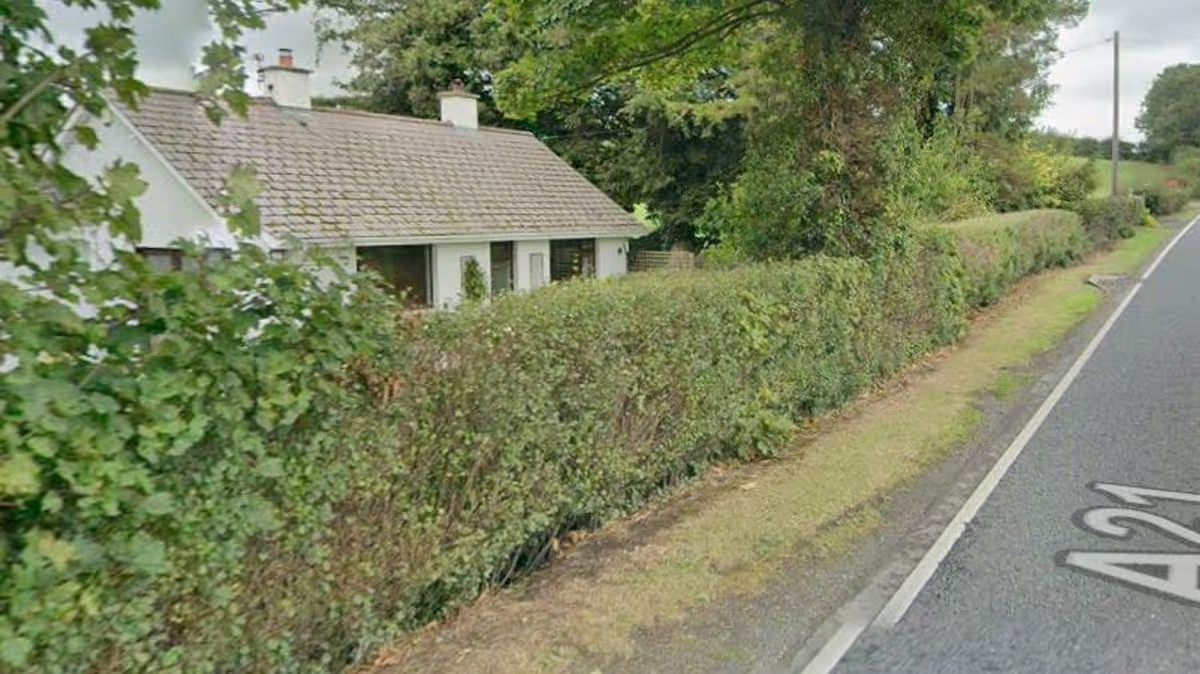
The Ballygowan Road, Saintfield is currently closed due to a fallen tree and damaged NIE cable. Northern Ireland Electricity have been informed and according to Traffic Watch NI are due to respond. Road ahead closed and road closed signs are currently in place.
A 50-year-old man has been charged with murder following an incident in Portadown last week.
The charge follows the death of Rolandas Kvederis, aged 49, at a property in Ranfurley Road on Thursday night, March 26.
Advertisement
Police attended the scene following reports that a man had been injured in an altercation. Mr Kvederis was pronounced dead at the property.
Two men were arrested on suspicion of murder following the incident, and the other has since been released unconditionally.
The charged man is due to appear before Lisburn Magistrates’ Court later this morning, Monday, March 30.Police said that, as is standard procedure, the charge will be reviewed by the Public Prosecution Service.
Alice Solomons of Sharples School is the North West winner of the Inspiring History Teaching Awards.
The head of history has worked as a teacher for 10 years, with all of that time having been spent at Sharples. She became director of history role in her very first year of teaching, and has been there since.
Now, she has been recognised for her work, “raising engagement” in history and transforming its uptake at GCSE level.
Alice Solomons (Image: Alice Solomons)
Speaking to The Bolton News, Ms Solomons said: “It was just a shock, really, and a massive honour to be recognised for all of the work at the department since I started 10 years ago.
Advertisement
“It is all I’ve ever known, because the head of department left in December and I had started in the September, the job came up in May and I got it.
“The status of history at the school has changed massively, because of the work that has been put in at Key Stage Three – the work that the department as a whole has done, not just me.
“Students really enjoy the subject. A lot of people think history is boring, what’s the relevance. But we have shown why it is relevant and now it is popular at GCSE, it validates your work.”
History department winning an award (Image: Alice Solomons)
She thanked Ann Webster, the former headteacher who “trusted her to do it at such a young age”, current headteacher Caroline Molyneux, her family, in particular her mum, for being the “reason she is so enthusiastic about history” and her own history teacher, Rebecca Grantham, at Rivington and Blackrod High School.
Advertisement
She was nominated for the award by history teacher Hollie Elias, with Ms Solomons adding: “She said she’d nominated me because of how much support I gave her as a new employee and the department as a whole, even though I wasn’t working at the time.”
She will also be attending a swanky ceremony at the Tower of London in June for the awards, saying to be recognised at a place which features in so many of her lessons is “surreal”.
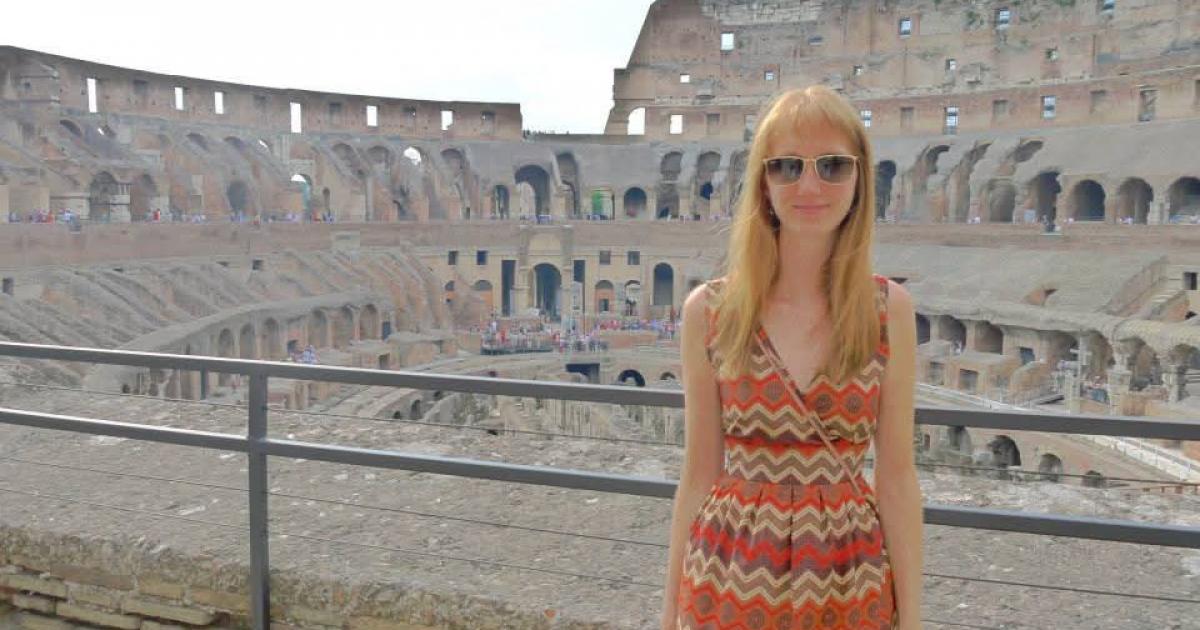
Alice at the colosseum (Image: Alice Solomons)
Award organisers said in a statement: “Through her dedication to storytelling, debate and immersive activities – such as virtual reality experiences of First World War trenches – the judges praised Alice’s approach which has raised the engagement of history within Sharples School.
“Under her leadership, the subject has become one of the school’s most popular GCSE subjects with uptake rising 622 per cent since 2019.
Advertisement
“Alongside her commitment to lesser-known, diverse histories, Alice has also received glowing feedback from trainees, saying they ‘could not have asked for a better teacher to learn from’.”
Watch: Zelensky visits Jordan as Kyiv looks to shore up Middle east defence ties
Zelensky visits Jordan as Kyiv looks to shore up Middle east defence ties
James Reynolds30 March 2026 08:00
Israel bolsters artillery stockpiles as Lebanon war widens
Israel’s ministry of defence on Monday said that it had placed a $48 million order for “tens of thousands” of 155mm artillery shells from Israeli defence company Elbit Systems.
Advertisement
The order was part of a broader ministry strategy to reduce Israel’s reliance on foreign munitions and expand domestic production, the ministry said in a statement.
It did not say when the munitions would be delivered.
An Israeli artillery unit fires towards Lebanon, amid escalating hostilities between Israel and Hezbollah (Reuters)
James Reynolds30 March 2026 07:45
Advertisement
Recap: Trump says talks progressing as Israel widens invasion of Lebanon
Over the weekend, Donald Trump said that the US and Iran have been meeting directly and indirectly, appraising the new leaders of the country as being “very reasonable”.
In an apparent climbdown from criticism over the leadership of Iran, Trump said on Sunday he thought the US had already accomplished regime change in the country.
Pakistan, acting as an intermediary between the US and Iran, said it was preparing to host “meaningful talks” in the coming days aimed at ending the war.
US eyes possible Kharg invasion
Advertisement
Trump’s comments came even as more US troops arrived in the region, giving Trump the option of launching a ground offensive.
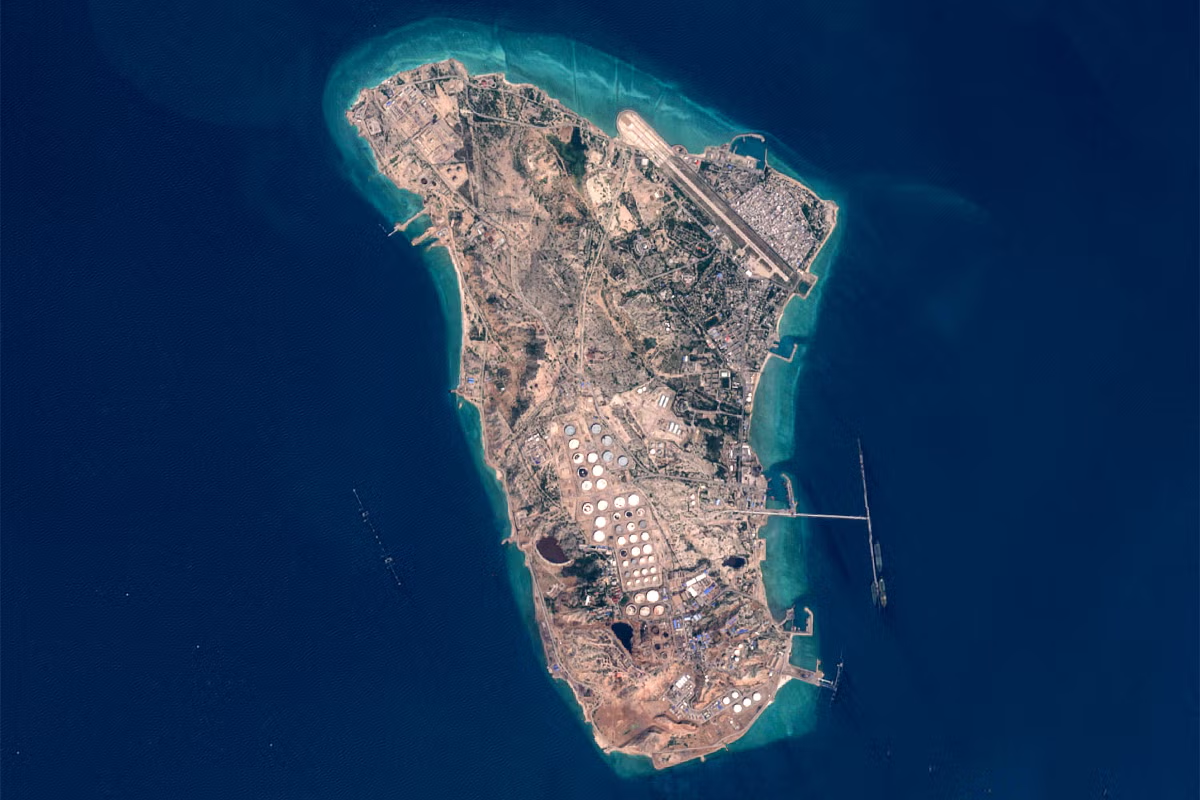
In an interview with Financial Times published on Sunday, Trump said he wanted to “take the oil in Iran” and could seize the export hub of Kharg Island. Taking control of Kharg would require ground troops.
Iran’s parliament speaker accused the US of trying to negotiate while also planning an invasion, and said Iran was ready to respond if needed.
Netanyahu greenlights wider invasion in Lebanon
Advertisement
Israeli prime minister Benjamin Netanyahu said meanwhile on Sunday that he had ordered the military to expand its operations in southern Lebanon, blaming Hezbollah rocket fire.
Israel said last week it was enlarging a ‘buffer zone’ up to the Litani River.
Yemen’s Iran-aligned Houthis joined the conflict on Saturday, launching their first attacks on Israel and raising the prospect they could target and thus block a second key shipping route, the Bab el-Mandeb Strait.
Israeli authorities said on Sunday that they had intercepted two drones launched from Yemen.
Advertisement
Supreme leader still out of frame
Iran’s new supreme leader thanked the Iraqi people and religious leadership for their support of Iran, according to Iran’s state media. But it was unclear how the message was conveyed.
Mojtaba Khamenei still has not been seen since his appointment as the third supreme leader of Iran in early March.
James Reynolds30 March 2026 07:30
Advertisement
Australia PM calls for clarity from Trump on objectives of Iran war
Australian prime minister Anthony Albanese has said he wanted more certainty from US president Donald Trump on the objectives of the ongoing war in Iran.
“I want to see more certainty in what the objectives of the war are and I want to see a de-escalation,” Albanese said, responding to a question about his view on how Trump was prosecuting the war.
Alisha Rahaman Sarkar30 March 2026 07:20
Advertisement
Watch: Trump ducks question about Iran invasion
Trump ducks question about Iran invasion
Alisha Rahaman Sarkar30 March 2026 07:04
Trump considering military action to seize Iran’s uranium – report
US president Donald Trump is reportedly considering a military operation to remove nearly 1,000 pounds of uranium from Iran.
Advertisement
President Trump is still weighing the risk of the operation and has yet to pass the order, US officials familiar with the matter told the Wall Street Journal.
Trump and key allies have privately agreed a targeted operation could seize the uranium without significantly prolonging the war, the report said.
However, former US military officers and experts warned any attempt to extract the uranium would be highly complex and carry significant risks.
Alisha Rahaman Sarkar30 March 2026 07:00
Advertisement
Iran dismisses Pakistan talks
Iran’s parliament speaker, Mohammad Bagher Qalibaf, dismissed the talks in Pakistan as a cover after some 2,500 US Marines trained in amphibious landings arrived in the Middle East.
He said Iranian forces were “waiting for the arrival of American troops on the ground to set them on fire and punish their regional partners forever,” according to state media.
Alisha Rahaman Sarkar30 March 2026 06:42
Advertisement
Protest in Washington DC in support of Iranians’ ‘fight for freedom’
A woman holds up a sign featuring an image of Reza Pahlavi, son of the last shah of Iran, and US President Donald Trump as demonstrators march toward the White House during a rally in support of Iranians’ fight for freedom, in Washington, DC, on March 29, 2026. The event, organized by DCProtests4Iran, brought together members of the Iranian diaspora from the Washington, DC metropolitan area and surrounding states. (Photo by Amid FARAHI / AFP via Getty Images) (AFP via Getty Images)
A woman holds up a sign featuring an image of Reza Pahlavi, son of the last shah of Iran, and US President Donald Trump as demonstrators march toward the White House during a rally in support of Iranians’ fight for freedom, in Washington, DC, on March 29, 2026. The event, organized by DCProtests4Iran, brought together members of the Iranian diaspora from the Washington, DC metropolitan area and surrounding states. (Photo by Amid FARAHI / AFP via Getty Images) (AFP via Getty Images)
Alisha Rahaman Sarkar30 March 2026 06:40
Trump calls Iran’s current leaders ‘very reasonable’
President Donald Trump said the US and Iran have been meeting “directly and indirectly” and that Iran’s new leaders have been “very reasonable”, as more US troops arrived in the region and Tehran warned it will not accept humiliation.
Mr Trump’s remarks came after Pakistan, which is acting as an intermediary between Tehran and Washington, said it was preparing to host “meaningful talks” in the coming days aimed at ending the month-long Iran war.
Advertisement
“I think we’ll make a deal with them, I’m pretty sure, but it’s possible we won’t,” Mr Trump told reporters last evening as he traveled aboard Air Force One to Washington.
Mr Trump said he thought the US had already accomplished regime change in Tehran after strikes killed the country’s supreme leader and other top officials, but said twice that their replacements seemed “reasonable”.
Alisha Rahaman Sarkar30 March 2026 06:20
Advertisement
New Zealand warns inflation will go ‘much higher’ if Iran war drags on
New Zealand’s finance minister said this morning that inflation was likely to rise “much higher” this year and stay outside the central bank’s target range if the conflict in the Middle East drags on.
Finance minister Nicola Willis said the latest treasury department modelling had inflation peaking higher than previously expected based on a scenario with “a longer conflict with deeper disruption to supply chains”.
“They think inflation will go much higher this year, and it will stay out of our target band,” Ms Willis told reporters.
Data released in January showed fourth-quarter inflation of 3.1 per cent breached the central bank’s target band of 1 per cent to 3 per cent. With energy prices rising, markets are increasingly pricing in a near-term policy tightening.
About 2,000 residents are currently on Darlington Borough Council’s waiting list for a home despite a shortage of available properties.
But rival Conservative councillors fear the area’s value green spaces could soon be lost and be chosen by developers for new housing schemes.
At last Thursday’s council meeting, councillors were asked to back plans to formally designate Bellburn Field, a triangle of land off Sparrow Hall Drive in Whinfield ward, and Tommy Crooks Park as protected community green spaces.
Advertisement
With more than 1,000 families on the waiting list naming the Whinfield area of the borough as their preferred option for a new home, opposition members fear sites like Sparrowhall Drive could be chosen for development.
Jonathan Dulston, leader of the Conservatives, said: “We understand the need to build affordable and quality housing across the borough. It has to be sensible but there are areas where the impact on the community has to be a priority, not making a profit for the council.”
The motion, backed by Conservative colleague Cllr Scott Durham, urged the council to “give a clear and binding commitment that Darlington Borough Council will not sell, lease, or otherwise dispose of these pieces of land for development or private ownership.”
Although it was not supported by cross-party councillors, leaders agreed in principle to protect Tommy Crooks Park and the Bellburn Field.
Advertisement
But for Sparrow Hall Drive, Darlington Borough Council confirmed that, in February 2022, the land was included as part of the council’s housing allocation, meaning it is available for development.
The then Conservative-led administration removed Springfield Park, also in the Whinfield ward, from the allocation but did not remove Sparrow Hall Drive.
Chris McEwan, Labour deputy leader, said: “Cllrs Dulston and Durham are more interested in playing political games than improving residents’ lives. More focused on Facebook than facts.
“Now, they are calling on Tommy Crooks Park, Bellburn Field, and land at Sparrow Hall Drive to be protected. But if that is their priority, then why didn’t they protect them in the Local Plan that they published and voted for?”
Advertisement
And highlighting the council’s ongoing housing issues, Cllr McEwan said the local authority needs to balance protecting valued green spaces with the need for new homes that residents “desperately need”.
He added: “We have nearly 2,000 people on our housing waiting list. We have over a thousand families naming Whinfield as one of their preferences.
“We need more council housing and I will work to deliver on that – and that’s why we are exploring this site.”
Their victim was left with ‘devastating injuries’, including a slash from his forehead to his lip
07:50, 30 Mar 2026Updated 07:51, 30 Mar 2026
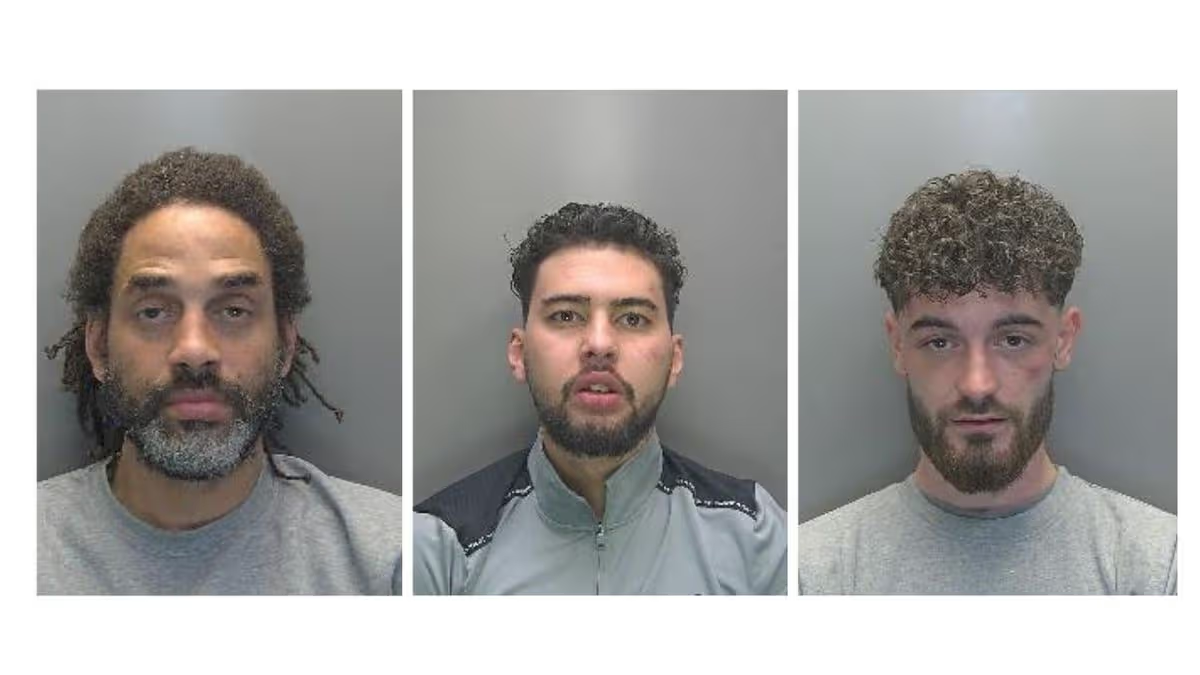
A man was stabbed 17 times by three thugs wielding zombie knives in a daylight attack on a Cambridge home. Nathan Brown-Bonnett, Joel Farrow-Brown and Liam Cafferkey attacked their victim at this home in Drayton Road, Cambridge, just after 3pm on July 24, 2025.
The 45-year-old victim was stabbed 17 times, and a slash to his face from his forehead to lip. He also suffered a degloving wound to his right shoulder. The man had to undergo multiple blood transfusions and plastic surgery. A 41-year-old woman in the property also received a minor cut to her stomach.
CCTV from nearby properties captured the three suspects running from the scene. Cambridgeshire Police used this to identify the men. Appearing at Peterborough Crown Court on March 25, the trio, of no fixed addresses, were sentenced after previously pleading guilty to grievous bodily harm with intent. Farrow-Brown also pleaded guilty to eight counts of beating an emergency worker.
Advertisement
Brown-Bonnett, 46, was sentenced to eight years and one month in prison, Farrow-Brown, 27, to nine years and Cafferkey, 25, to seven years and two months.
Detective Constable Edward Mcauley, who investigated, said: “This was a shocking and completely unprovoked attack that left a man with devastating injuries. The level of violence used was extreme and there is absolutely no place for this kind of behaviour in our communities.
“Thanks to diligent investigative work, these three men have been brought to justice and will now spend a significant time behind bars. We hope this sentence provides reassurance to the public that we will relentlessly pursue those who carry knives and commit violent offences.”
Seven people were treated at the scene and later taken to hospital with a range of serious but not life-threatening injuries, after they were hit by a black Suzuki Swift in Friar Gate on Saturday at about 9.30pm.
A 36-year-old Derby man, who is originally from India but has lived in the UK for a number of years, was arrested on suspicion of attempted murder, causing serious injury through dangerous driving, inflicting grievous bodily harm with intent, and dangerous driving, Derbyshire Police said.
Counter-terrorism police are assisting the investigation but police are keeping an open mind about potential motives they added. The incident is not currently being classed as terrorism.
The new footage has come out days after the incident over the weekend (Picture: Daily Mail)
Sign up for all of the latest stories
Start your day informed with Metro’s News Updates newsletter or get Breaking Newsalerts the moment it happens.
Advertisement
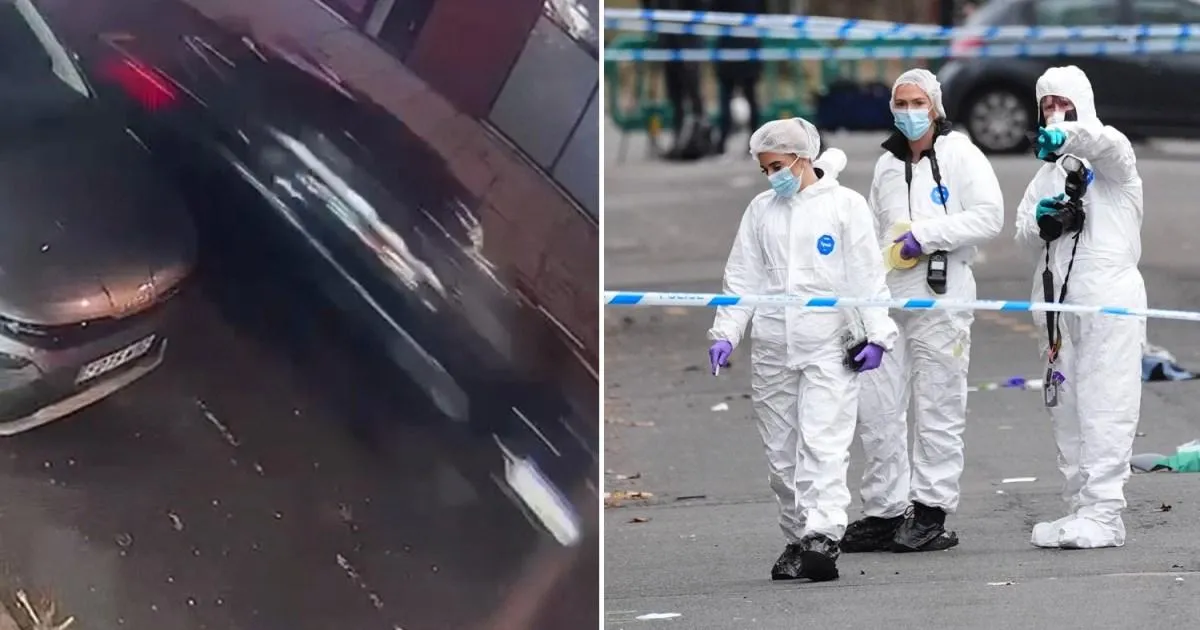
CCTV footage obtained by the Daily Mail shows the moment a Suzuki Swift is seen racing down the road just moments after the incident, which left several people lying on the ground.
A silver car can be seen making its way along the road at what appears to be a normal speed, before the black car shoots down the street a few moments later.
Advertisement
After the Suzuki Swift has passed, witnesses stand in the middle of the road to assess what has happened, before appearing to make their way down the street towards the scene of the attack.
Blake Pierce, 21, who lives in the local area, was enjoying a night out with friends along Friars Gate when they heard ‘screaming.’
He told Metro: ‘We decided to change pubs and as we walked towards the road we started hearing screaming.
‘There were people spread out across the road and the adjacent pathway that led down.
Advertisement
‘We weren’t sure what to think and just froze. I could count about 6 people sprawled out pretty widespread across the area. This was all before the police showed up.’
He said bystanders rushed to help the injured before the emergency services arrived, adding that the police response time was ‘good.’
Seven people were treated at the scene and taken to hospital with a range of serious but not life-threatening injuries, after they were hit by a black Suzuki Swift, the police added (Picture: X)
Baggy Shanker, the MP for Derby South, said his thoughts are with ‘everyone who has been affected and with their loved ones’ (Picture: Paul Tonge)
‘I’ve always found Derby to be a good night out, nothing really happens here from what I’ve experienced. It was a real shock to see something so graphic right in-front of you,’ he added.
Eren Celebi, who works at FG Express on Friar Gate, described scenes of chaos after the incident.
‘I didn’t see it exactly happen. I was serving some customers and I just heard a lot of screaming and shouting outside.
Advertisement
‘There was just a lot of people running about,’ the 23-year-old added.
Celebi said when he left the shop people were lying on the pavement and the main road.
‘There was like blood leaking from their head and stuff,’ he said. ‘I was a bit shocked.’
The police said the support of counter terrorism officers does not mean the incident is currently being treated as terrorism (Picture: Jacob King/PA Wire)
Forensic investigators are seen carrying evidence bags at the scene in Friar Gate, Derby, after the incident over the weekend (Picture: Jacob King/PA Wire)
He said that some people went to check on victims, adding: ‘Some people were running into shops. Some people were just standing outside running about.’
Another man, who did not want to be named, told reporters the scene was ‘quite distressing’ and that there were ‘a lot of bloodied people’.
Advertisement
The man estimated that between 80 to 130 people were on the road after the incident.
He said: ‘There was a lot of ambulances, police at the scene as well – paramedics trying to get them the best possible care and it was just utter chaos.’
The area of the city was cordoned off over the weekend allowing for the forensic officers to investigate the scene. It’s since been lifted (Picture: Jacob King/PA Wire)
Detectives are urging anyone who has footage of the incident taking place, or dashcam footage capturing the car before or after, to come forward (Picture: Jacob King/PA Wire)
Chief Superintendent Emma Aldred, who leads policing in Derby, told a media briefing on Sunday that the suspected driver was arrested on the other side of the city centre seven minutes after the incident.
She said: ‘He was safely stopped in Station Approach, where the bridge crosses over towards Pride Park.
‘This swift action would not have been possible without eyewitnesses who contacted us about the vehicle’s whereabouts as it was driven away from the scene and around the city centre.’
Advertisement
She added that the police believe it is an isolated incident, and there is no wider risk to the public.
The Home Secretary is being kept updated on the incident, Education Secretary Bridget Phillipson has said.
It was widely reported at the time that the Grammy winner had been arrested on suspicion of driving while under the influence, though this remains unconfirmed.
Her reps subsequently told HuffPost UK: “This was an unfortunate incident that is completely inexcusable.
Advertisement
“Britney is going to take the right steps and comply with the law and hopefully this can be the first step in long overdue change that needs to occur in Britney’s life. Hopefully, she can get the help and support she needs during this difficult time.
“Her boys are going to be spending time with her. Her loved ones are going to come up with an overdue needed plan to set her up for success for well being.”
Following her arrest, Britney’s Instagram page was deactivated, though it was reinstated over the weekend, featuring photos and short clips of the Piece Of Me singer posing with her youngest son, 19-year-old Jayden James Federline.
“Thank you guys for all your support… spending time with family and friends is such a blessing,” she wrote in the caption, urging her supporters to “stay kind”.
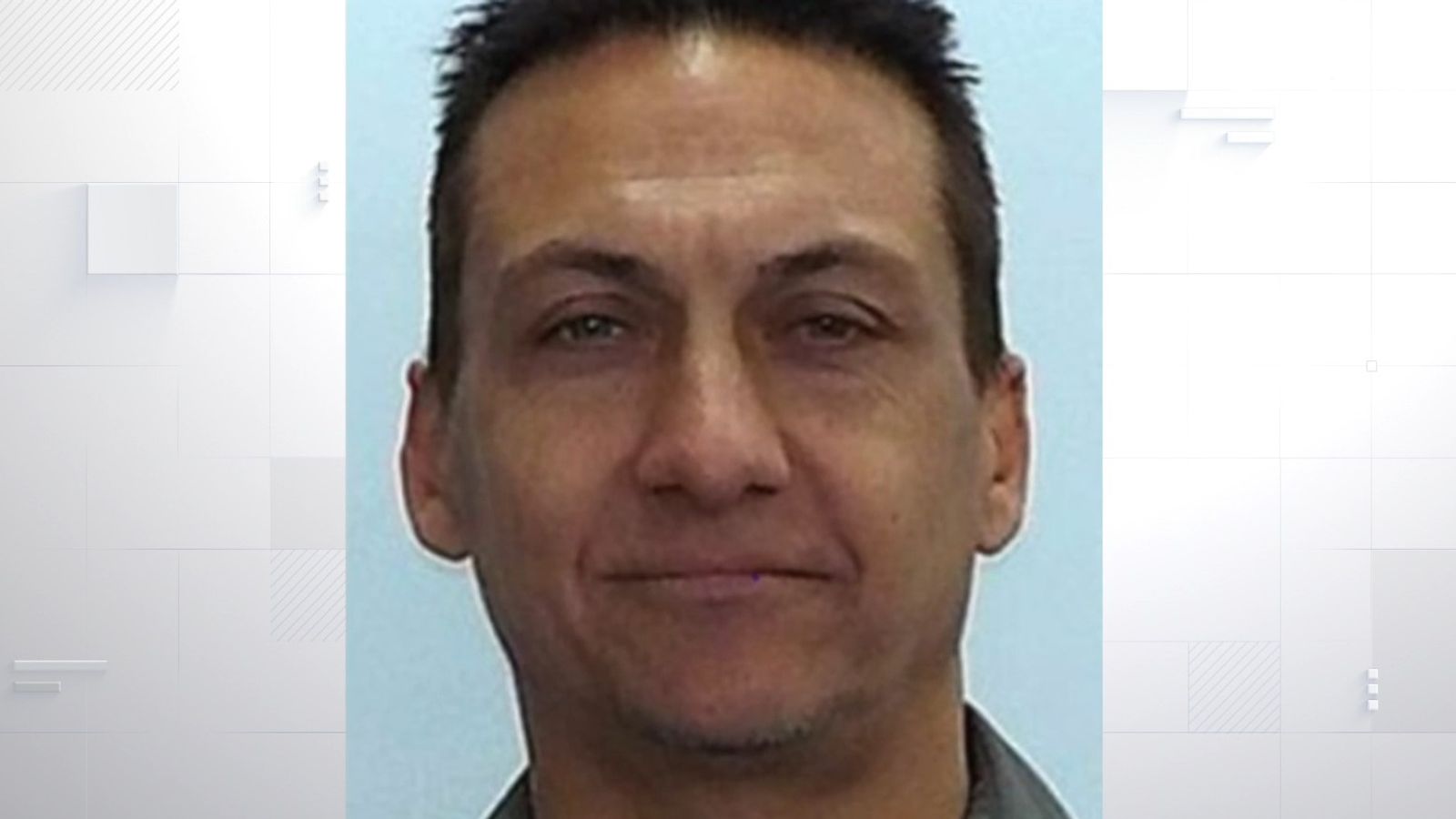
A fugitive accused of killing two police officers is believed to have been shot dead, Australian police have said.
Dezi Freeman, 56, was on the run for seven months after allegedly killing two officers in a remote town in Victoria state.
On Monday, police said they believed he was engaged in a three-hour standoff inside a rural property northeast of Victoria.
Heavily armed tactical officers and the man who was killed at the scene are believed to have opened fire during the shootout, police said.
Advertisement
“While the man is yet to be formally identified, police believe it is likely to be 56-year-old Porepunkah man Desmond Freeman,” Victoria Police said in a statement.
Image: A police helicopter during the search for Freeman in Porepunkah, Victoria, Australia, last year. Pic: Reuters
Freeman, previously known as Desmond Filby, was shot dead at around 8.30am, local media widely reported.
He had been inside a shelter like a shipping container, according to police.
Victoria Police Chief Commissioner Mike Bush declined to formally confirm the identity of the dead man, pending official identification, but said the shooting was justified.
Advertisement
Chief Commissioner Bush added that no police officers were injured during the incident.
He told reporters during a press conference: “Everything I know at this point tells me that this shooting was justified.
“There was an opportunity for him to surrender peacefully, which he did not…we’re working through the sequence of that.
“We strongly believe, yet to be confirmed, that he was armed.”
Advertisement
He added: “This was all about bringing this to a conclusion as safely as possible. Our ultimate goal was to arrest the person there…as peacefully as possible.”
More than 450 police officers had been involved in the hunt for Freeman since August, when he allegedly opened fire on a team of 10 police officers.
The officers had arrived at a property in Porepunkah, about 300 km (186 miles) northeast of Melbourne, to execute a search warrant.
A $1m (£520,000) reward had been offered for information leading to his capture.
Advertisement
Believed to have expert bushcraft survival skills and multiple powerful firearms, Freeman fled into bushland at Mount Buffalo National Park following the shooting.
Local media described him as a “sovereign citizen”, a term used for individuals who regard the government as illegitimate.
A spokesperson for Victoria police added: “The shooting occurred at the property shortly after 8.30am following a stand-off of several hours with police, including members of the Special Operations Group and detectives from Taskforce Summit.
“Police rendered assistance, however the man died at the scene. No one else was present at the property and no police were physically injured during the incident.
“The exact circumstances surrounding the incident are yet to be determined, however it’s understood a number of police discharged their firearms.
Advertisement
“Police also believe Freeman was armed and further investigation will take place to determine if he discharged a firearm.”
North Yorkshire Fire and Rescue Service said vape shop owners had a duty to ensure safety arrangements are in place and maintained in their premises.
The service has also called for vapes to be disposed of at dedicated drop-off points and not in household waste or recycling bins to avoid fires in lorries and at tips.
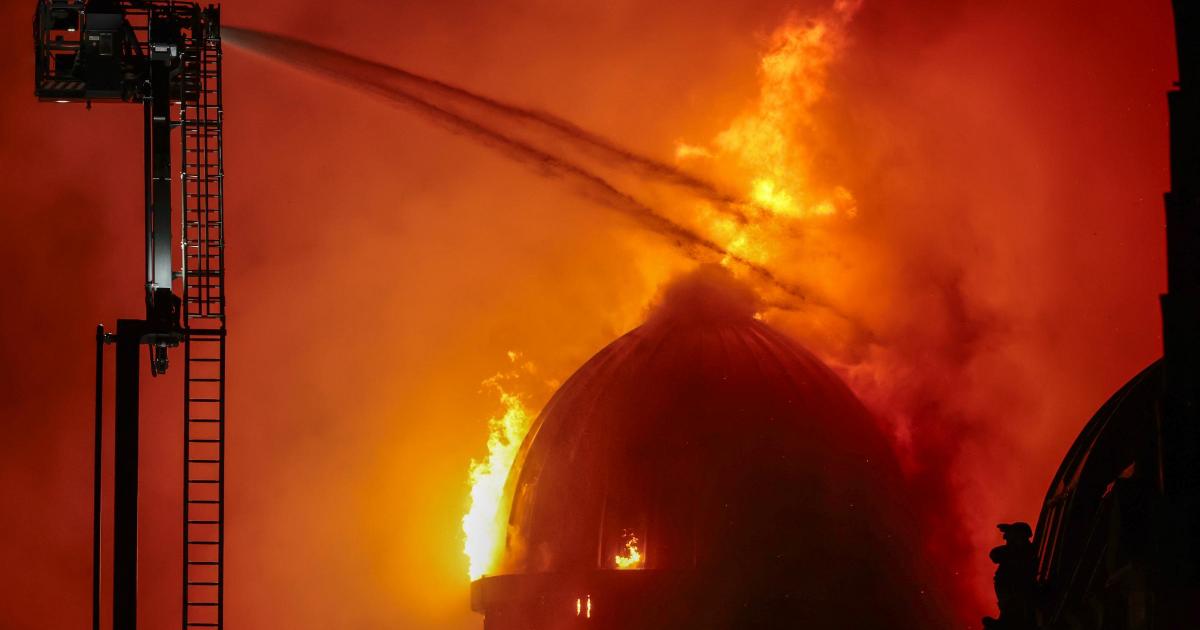
It follows a fire in Union Street in Glasgow on Sunday, March 8 which destroyed a Victorian building and led to the city’s rail station closing.
RECOMMENDED READING:
Advertisement
Glasgow Central reopened for the first time since the fire on Wednesday, March 25.
The fire began in a vape shop though an investigation into the exact cause remains ongoing.
More than 200 firefighters were involved in the response to the fire which gutted several businesses while nearby hotels were evacuated and roads were closed.
Shops do not currently need a licence to sell vapes of e-cigarettes.
Advertisement
But this could change if the Tobacco and Vapes Bill currently making its way through Parliament becomes law.
North Yorkshire Fire and Rescue Service said the Fire Service Regulation Order 2005 placed a duty on responsible persons at businesses to ensure their premises are safe.
It added they always looked at the best ways to support businesses to operate safely and they would follow the outcome of the investigation into the cause of the Glasgow fire.
More than 200 firefighters responded to the blaze in Glasgow on Sunday, March 8 (Image: The Herald)
The service said: “Following the devastating fire Glasgow, we want to remind businesses of the guidance we can provide and the steps you can take to operate safely.
Advertisement
“We have a team of fire safety professionals who can provide guidance relating to fire safety in buildings.
“Our Protection and Risk team also conduct fire safety audits, address fire safety concerns and when required enforce fire safety law.
“We are committed to keeping the public safe, if you have questions or feel something is not right about a fire safety issue please contact us.”
The service has also called on people to dispose of vapes at drop-off points which are now in most supermarkets and council sites.
Advertisement
More than 6m vapes or pods are thrown in bins instead of being recycled every week, according to the Recycle Your Electricals campaign.
The group said they can cause dangerous fires when crushed in bin lorries or at recycling centres.
They added fires caused by batteries in vapes and other electricals can endanger lives and cause serious environmental and health risks.
Safety advice and legal information for businesses is available from North Yorkshire Fire and Rescue Service here: https://www.northyorksfire.gov.uk/business-safety/fire-safety-act-and-fire-safety-regulations/


















































You must be logged in to post a comment Login