When structural engineers design a building, they aren’t just stacking floors; they are calculating how to win a complex battle against nature. Every building is built to withstand a specific “budget” of environmental stress – the weight of record snowfalls, the push of powerful winds and the expansion caused by summer heat.
To do this, engineers use hazard maps and safety codes. These are essentially rulebooks based on decades of historical weather data. They include safety margins to ensure that even if a small part of a building fails, the entire structure won’t come crashing down like a house of cards.
The problem is that these rulebooks are becoming obsolete. Most of our iconic high-rises were built in the 1970s and 80s – a world that was cooler, with more predictable tides and less violent storms. Today, that world no longer exists.
Climate change acts as a threat multiplier, making the consequences of environmental stress on buildings much worse. It rarely knocks a building down on its own. Instead, it finds the tiny cracks, rusting support beams and ageing foundations and pushes them toward a breaking point. It raises the intensity of every load and strain a building must weather.
Advertisement
To understand the challenge, I have been studying global hotspots where the environment is winning the battle against engineering.
The 2021 collapse of Champlain Towers South in Miami, Florida, killed 98 people. While the 12-storey building had original design issues, decades of rising sea levels and salty coastal air acted as a catalyst, allowing saltwater to seep into the basement and garage.
When salt reaches the steel rods inside concrete that provide structural strength (known as reinforcement), the metal rusts and expands. This creates massive internal pressure that cracks the concrete from the inside out — a process engineers call spalling. The lesson is clear: in a warming world, coastal basements are becoming corrosion chambers where minor maintenance gaps can escalate into catastrophic structural failure.
While the Miami case affected a single building, the historic coastal city of Alexandria, Egypt, is more widely at risk. Recent research shows that building collapses there have jumped from one per year to nearly 40 per year in the past few years.
Advertisement
Not only is the sea rising, the salt is liquefying the soft ground beneath the city foundations. As the water table rises, saltwater is pushed under the city, raising the groundwater level. This salty water doesn’t just rust the foundations of buildings; it changes the chemical and physical structure of soil. As a result, there are currently 7,000 buildings in Alexandria at high risk of collapse.
The historic city of Alexandria, Egypt, is widely affected by the retreating coastline. muratart/Shutterstock
In Hong Kong during Super Typhoon Mangkhut in 2018, wind speeds hit a terrifying 180 miles per hour. When strong winds hit a wall of skyscrapers, they squeeze between the buildings and speed up — like water sprayed through a narrow garden hose.
This pressure turned hundreds of offices into wind tunnels, causing glass windows to pop out of their frames and raining broken glass onto the streets below. With 82 deaths and 15,000 homes destroyed across the region, skyscrapers became “debris machines”, even if they didn’t fully collapse.
Advertisement
Supercomputer simulations of Japan’s river systems show that in a world warmed by 2°C, floods of today’s “once in a century” magnitude could recur about every 45 years. With 4°C of warming, they could be every 23 years. These surges in water volume will expand flood zones into areas previously considered safe, potentially overflowing sea walls and flood defences. In a critical region like Osaka Bay, storm surges could rise by nearly 30%.
In the US, a study of 370 million property records from 1945 to 2015 found over half of all structures are in hazard hotspots. Nearly half are facing multiple threats like earthquakes, floods, hurricanes and tornadoes. In the UK, climate-driven weather claims hit £573 million in 2023, a 36% rise from 2022. Annual flood damage to non-residential properties in the UK is also projected to nearly double from £2 billion today to £3.9 billion by the 2080s.
Maintenance is our best defence
Much of the world’s building stock is therefore entering its middle age under environmental conditions it was never designed to face. Instead of panicking or tearing everything down, the solution is to adapt and treat building maintenance as a form of climate resilience – not as an optional extra.
Mid-life building upgrades can help protect our skylines for the next 50 years. Our hazard maps must look at future climate models — not just historical weather — to set new safety standards. Regular structural health monitoring is essential – by using sensors to track invisible stresses in foundations and frames before they become fatal, dangerous situations can be foreseen.
Advertisement
Buildings can stay strong by focusing retrofits on the weakest and most vulnerable parts. This includes glass facades, the underground drainage, the foundation piles and corrosion protection.
Climate change isn’t rewriting the laws of engineering, but it is rapidly eating away at our margins of safety. If we want our cities to remain standing, we must act now – before small, invisible stresses accumulate into irreversible failure.

Don’t have time to read about climate change as much as you’d like?
NHS England’s new national cancer plan focuses on catching cancer earlier and treating it faster. The government has also promised to meet all cancer waiting-time targets by 2029. This includes a long-missed target, namely that most patients should start treatment within 62 days of being referred by their GP.
For some of the deadliest cancers – lung, liver, oesophageal, pancreatic and stomach cancers – the UK ranks near the bottom of the league table among similar wealthy countries. Fewer patients are still alive five years after diagnosis compared to other nations.
No single cause explains this gap. A key factor is that people in the UK are more likely to be diagnosed when their cancer is already advanced. This makes it harder to cure and limits treatment options.
Advertisement
Getting to see a specialist can also be slow. Patients struggle to get GP appointments, symptoms may not seem urgent at first, and people often need multiple visits before getting referred to a specialist.
Once in the system, patients hit more delays. The NHS has fewer CT and MRI scanners per person than many comparable health systems, contributing to waits for imaging and other tests.
There are also longstanding workforce shortages, especially in radiology and oncology. This means fewer specialists to read scans, plan treatment and deliver radiotherapy and chemotherapy. Limited surgical capacity, operating theatre time and radiotherapy machines cause further delay treatment.
How countries record cancer survival accounts for some of the difference. But even when researchers adjust for this, the UK still lags behind the best-performing countries. The result is a system where many individual steps function under strain, and those small delays add up for patients.
Advertisement
Health secretary, Wes Streeting launched a National Cancer Plan. Tolga Akmen/EPA
What actually happens to a patient during the 62 days?
The 62-day target measures the journey from urgent referral for suspected cancer to starting treatment. In principle, a person referred urgently by their GP, a screening programme or a hospital doctor should have their diagnosis confirmed and their initial treatment underway within just over two months.
That sounds straightforward. But for patients, it’s a complex and emotionally draining experience.
The journey usually starts when someone notices a worrying symptom – a breast lump, unusual bleeding, a persistent cough or a change in their bowels – and gets a GP appointment. If the GP is concerned, they make an urgent referral to a specialist clinic. The patient then waits for their first hospital appointment, where they’ll have further assessment and tests: blood tests, X-rays, endoscopy, CT scans, MRI scans or ultrasound.
If scans show something suspicious, the next step is often a biopsy. This lets a pathologist confirm whether it is cancer and identify the type.
Advertisement
Modern pathology may also include molecular and genetic tests, which help decide which treatments are most likely to be effective.
All of this information is then brought to a multidisciplinary team meeting, where surgeons, oncologists, radiologists, pathologists and specialist nurses discuss the case and agree a plan.
Only after that can the first treatment be scheduled, whether that is surgery, radiotherapy, drug treatment or active monitoring. Delays can happen at every stage: getting the first appointment, accessing scans or endoscopy, receiving pathology results, convening the multidisciplinary team, and finding an operating theatre or radiotherapy slot. And the 62-day clock keeps ticking.
For patients, what appears as a single target number actually represents weeks of waiting, uncertainty and repeated encounters with an overstretched system.
Advertisement
Is early diagnosis always beneficial?
Catching cancer early has become a cornerstone of cancer policy. Cancers caught early are easier to treat and more likely to be cured.
A small, localised tumour can often be removed with surgery or treated effectively with radiotherapy or drugs. But cancers that have spread are harder to control.
This link between early detection and survival drives efforts to encourage people to seek help quickly, expand screening programmes and speed up diagnosis. But early diagnosis isn’t always beneficial for everyone or every type of cancer.
Screening can lead to overdiagnosis. This means detecting very slow-growing cancers or abnormalities that would never have caused symptoms or shortened someone’s life. People in this situation may live for years with a cancer label, alongside the physical and psychological consequences of surgery, radiotherapy or drugs that they might not have needed.
Advertisement
So-called “false positives” are another important issue. Tests sometimes flag abnormalities that aren’t cancer, but still trigger scans, biopsies and procedures, as well as significant anxiety for patients and families.
For some aggressive cancers, finding the disease a little earlier on a scan may not change the eventual outcome if available treatments remain limited. The challenge is to design programmes that catch the right cancers early, using accurate and targeted tests, while clearly explaining both benefits and risks so people can make informed decisions.
What does ‘9.5 million more tests and scans’ really mean?
One of the most eye-catching promises in the new plan is to deliver 9.5 million more tests and scans by 2029. Much of this extra activity is expected to take place in community diagnostic centres, which bring CT and MRI scanners, ultrasound, endoscopy and blood tests closer to where people live.
Extending opening hours into evenings and weekends should give patients more flexibility and, in theory, shorten waiting times for investigations and diagnosis.
Advertisement
But tests and machines are only part of the picture. Every scan needs a professional to interpret it, and every endoscopy list requires trained staff and recovery space.
England already has a shortage of imaging specialists, and increasing the number of scans without increasing the number of people who can report them risks swapping one bottleneck for another.
Laboratories also need enough biomedical scientists and pathologists to process additional blood tests and tissue samples. If staffing does not keep pace, the promise of millions more tests could translate into longer queues for results and less time for doctors to explain findings and discuss options with patients.
New technologies, including artificial intelligence to support image reading and automated laboratory systems, may help to increase efficiency, but they still rely on human oversight and do not remove the need for a well-trained, reasonably staffed diagnostic workforce.
How realistic is the staffing fix?
The success of the plan depends heavily on people, not just equipment. Yet there are already substantial gaps in the cancer workforce, especially among radiologists, oncologists, pathologists, specialist nurses and radiographers.
Advertisement
Professional bodies have warned for several years that the shortfall in key specialties is growing, with services relying on overtime, outsourcing and temporary staff to keep up with demand. These pressures affect not only the speed of diagnosis and treatment, but also the time healthcare professionals can devote to communication, compassion and shared decision-making.
Training more specialists is essential but slow. From entry to medical school to becoming a consultant radiologist or oncologist typically takes well over a decade, meaning that decisions made now will only fully affect services in the 2030s.
Meanwhile, the NHS will keep relying on recruiting from abroad, the private sector, and new ways of working that expand what nurses and other non-doctor professionals can do.
The risk is that without serious attention to burnout, working conditions and retention, new trainees will simply replace experienced staff who leave because of workload and stress. Any realistic staffing fix will therefore need to combine expanded training with measures that make cancer services sustainable places to work: manageable rotas, protected time for training, supportive leadership and a sense that delays and shortages are being addressed rather than normalised.
Advertisement
Who benefits first – and who might miss out?
Cancer care in England is already unequal, and a national plan that ignores this risks making the gap worse. People in poorer areas are more likely to develop certain cancers, get diagnosed late, and die from them.
Access to primary care varies widely. Some communities face long waits for appointments or can’t see the same doctor regularly.
Rural patients may need to travel far for scans, endoscopy or radiotherapy, while some urban communities face language barriers, cultural differences or mistrust that make screening and early diagnosis programmes harder to access.
Expanding community diagnostic centres, mobile services and workplace partnerships could reduce some barriers – but only if they’re deliberately placed where they are needed most. But if new facilities go to already well-served areas, or if information campaigns and booking systems don’t reach marginalised groups, the extra capacity will mostly benefit people who already navigate the system easily.
Advertisement
Ensuring that the benefits of earlier diagnosis and faster treatment reach everyone will require careful use of data on stage at diagnosis, waiting times and outcomes, broken down by region, ethnicity and deprivation, and a willingness to direct extra resources where need is greatest, not just where uptake is easiest.
What does ‘success’ look like for patients after treatment?
Politically, the headline ambition is framed in terms of five-year survival, and improving that is undeniably important. From a patient’s perspective, though, success is more than being alive at a particular time point.
Many people live with the long-term consequences of treatment, including fatigue, pain, bowel or bladder changes, sexual difficulties, early menopause, cognitive effects and altered body image. These can disrupt work, relationships and everyday activities long after the end of chemotherapy or radiotherapy.
Anxiety about recurrence is common, and routine follow-up appointments can be both reassuring and a source of renewed fear.
Advertisement
A cancer plan that truly serves patients has to focus on how people are living, not just how long. That means investing in rehabilitation, psychological support, specialist nursing, social care and fair access to financial and employment advice.
It also means recognising that some patients will never be “finished” with cancer but will live for many years with incurable disease, requiring ongoing treatment and support to maintain the best possible quality of life.
When we judge whether the new targets have been met, we should therefore look beyond the headline numbers. Success would be a future in which more people are diagnosed early, treated promptly and supported to rebuild their lives, with fewer left waiting in pain or confusion, and fewer feeling abandoned once the last dose of treatment has been given.
The Met Office has issued “yellow” level rain warnings for 23 areas across the United Kingdom
Parts of Scotland have been told to watch out for heavy rain, with snow possible on higher elevation areas.
Advertisement
The Met Office has issued a yellow warning for rain for two areas in Scotland from 6pm on Wednesday, February 4 to 12pm on Thursday, February 5. The South West region of the United Kingdom has also been warned of rains.
“Spells of rain, heavy at times will develop later on Wednesday and then persist into Thursday morning,” the Met Office said.
The forecaster warned that between 15-30 mm of rain is likely to fall quite widely. It added that between 30-40 mm possible in some places.
“Some melting of lying snow is also likely,” the Met Office said.
Rain is forecast to turn to snow in areas above 300 to 400 metres later on Thursday morning.
Advertisement
The Met Office said residents in the affected areas can expect likely flooding of a few homes and businesses.
The forecaster also said bus and train services will likely be affected, with journey times taking longer. Spray and flooding on roads will also increase journey times.

Residents have been warned of some interruption to power supplies and other services as a result of the rain.
Other areas across the UK under “yellow” level rain warnings on Thursday include:
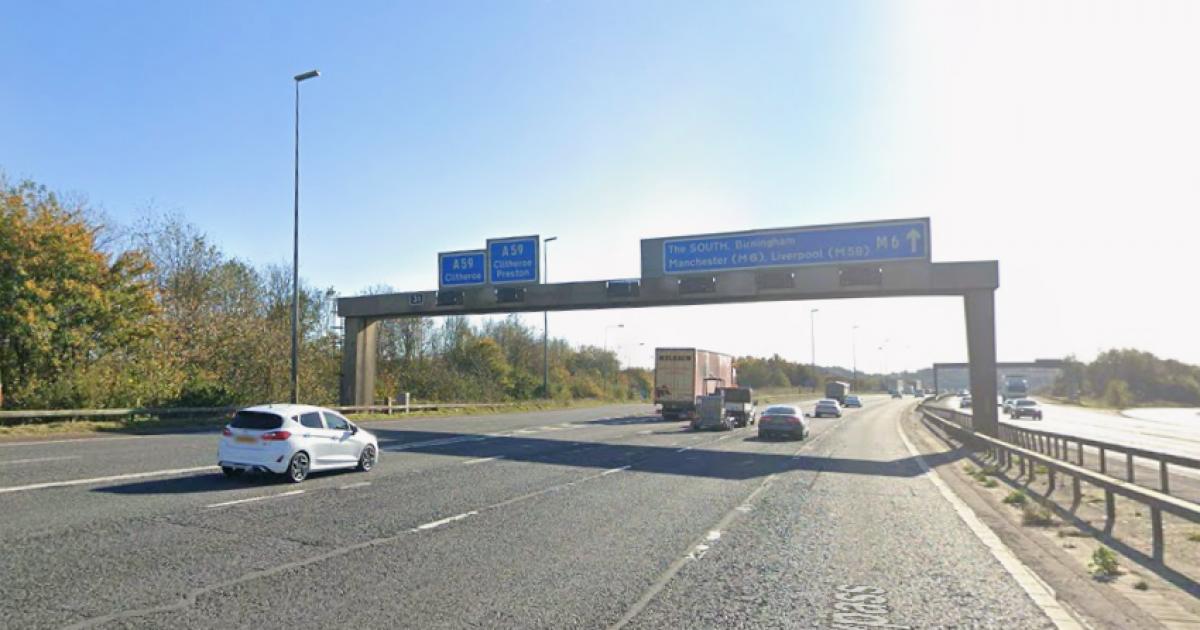
North Yorkshire Police is appealing for information after the crash on the A1(M) northbound before junction 44 for the A64, near Aberford, on Monday morning (February 2).
A black SUV collided with the rear of a blue Ford Fiesta but failed to stop, the force said.
The driver of the Fiesta was taken to York Hospital with minor injuries and discharged later that day after treatment, police said.
Advertisement
Officers are urging anyone who saw the crash or the vehicles before to contact North Yorkshire Police.
Those with information are asked to email mark.davey@northyorkshire.police.uk or phone 101 and ask for 895 Mark Davey quoting reference 12260019823.
But the controversy surrounding Lord Mandelson – who has quit the House of Lords, resigned from the Labour Party, been removed from the Privy Council and faces a criminal investigation following new revelations from the so-called Epstein files – has led to intensifying questions about the Prime Minister’s political future.
All eight competitors—including 2025 champion Luke Humphries—posed with the sculpture ahead of the opening night at the Utilita Arena on Thursday (December 5) night.
Mr Humphries said: “Newcastle is a really fun place to come for the darts and we’re all excited to get the 2026 BetMGM Premier League Darts campaign underway.
Premier League Darts returns on Thursday. (Image: BETMGM)
“Seeing BetMGM’s giant dart on the Tyne today with the iconic bridge behind us has set the scene perfectly and I can’t wait to defend the title I won last year, particularly with BetMGM’s 18ct gold darts up for grabs again.”
The tournament features a weekly league format over 16 weeks and a £1.25 million prize pool.
Advertisement
BetMGM is offering a set of 18ct gold darts worth £30,000 to any player who throws a nine-darter.
In 2025, it was achieved five times.
Dan Towse from the bookies said: “The opening night of the BetMGM Premier League Darts is unique, and we wanted to help build the anticipation this year with an eye-catching display at one of Newcastle’s most iconic locations.
“Today’s stunt sets the tone for the energy and entertainment fans can expect from BetMGM throughout the Premier League Darts season.”
Advertisement
Adam Perfect, head of commercial at PDC, said: “The Premier League has a long and special relationship with Newcastle, and launching this year’s event with BetMGM’s giant dart on the banks of the River Tyne is a fantastic way to celebrate that.”
This year’s players include Luke Littler, Gian van Veen, Michael van Gerwen, Jonny Clayton, Stephen Bunting, Josh Rock, and Gerwyn Price.
The move at the Original Factory Store entering administration last month.
The retailer employs 1,180 staff nationally 137 stores nationally, including at Ripon, Northallerton, Hornsea, Kippax and Garforth.
At the time, administrators Interpath Advisory said the stores would continue to trade while they found ways to keep it afloat.
Advertisement
RECOMMENDED READING:
However, the Ripon store has posted online: “We now have most of our departments on sale. Everything must go so pop in and grab some bargains.
“Everything in store is now sold as seen so check the sizes try them on in our in store fitting room as returns are no longer accepted.
“During this time myself and my team are working extremely hard so please be respectful and show some patience as foot flow is obviously increased and my staff are under extreme pressure too.
Advertisement
The post added: “Also we do not have a closing date as stated in my previous post I will update as soon as any information is received.
“Many thanks again for your support and kind words.”
All the stores nationally are now due to close.
The Northallerton branch also said it would be closing and the Kippax branch has closed already. Garforth and Hornsea are also staging closing down sales.
CambridgeshireLive readers have clashed over plans for new Grantchester to Cambridge walking and cycling path with sharp differences over demand, cost and transport policy
David Prince and Cambridgeshire Live readers
16:05, 04 Feb 2026
CambridgeshireLive readers have been sharing their thoughts on the plans for a new walking and cycling path, with sharp differences over demand, cost, and the wider aims of transport policy.
A new walking and cycling path has been planned on a route currently used by around 20 people each day. The route connecting Grantchester and Cambridge is expected to attract more than 300 people per day once complete, according to the Greater Cambridge Partnership (GCP).
Advertisement
The new all-weather path is planned alongside the historic ‘Baulk Path’. Forecasts predict that more than 250 cyclists and around 50 pedestrians will use the new path each day, according to papers published by the GCP.
The plans have certainly divided our readers, with Calumen Nomen writing: “Nobody wants, or has asked for, these ‘greenways’. Anyone who wants to cycle or walk from Barton to Cambridge has already got at least three options right now.”
While Weneedqueenmeghan disagrees: “We need more cycleways. It always makes sense. Dig up some roads and convert them!”
Skipper asks: “Do we have a costing for this? Who made the estimate of the number of people likely to use it? Are cyclists going to be charged a fee for their use until the cost has been paid off (like the Dartford Bridge, even though it was paid off years ago, and we are still paying)? The idea of a toll for push bike riders to pay for their facilities is a good one, I think.”
Advertisement
Freddly says: “This is good as far as it goes, but it’s tinkering at the edges. Real modal shift, the sort that will transform cities, will only come by taking space away from car and van drivers on main roads in cities. They do not remotely pay the actual cost of driving, and their taste for larger and larger battering-ram type cars holds up buses and ambulances and makes active travel unpleasant and unviable.”
Brexit498 comments: “We had ridiculous forecasts for the use of Milton Rd by cyclists, and that upgrade (£33 million) has made little difference to cycling and walking use – I have lived close to it for 10 years. The GCP needs to be shut down. The size of the car makes no difference to congestion. Don’t forget, bus drivers and emergency vehicle drivers need cars to get to work. The contribution car drivers make to the economy is £22 billion and 538,000 jobs: a tad more than cyclists, of which I am one.”
Freddly writes: “Driving creates significant costs that are not reflected in the price of petrol or vehicles, such as air and noise pollution, which contribute to healthcare costs and environmental damage. Traffic jams represent a major “deadweight loss” to the economy, resulting in lost time, reduced productivity, and wasted fuel.
“Roads, parking, and associated infrastructure are often subsidised by governments, meaning non-drivers often pay for the infrastructure that drivers use. For individuals, the high costs of car ownership (depreciation, insurance, fuel) can consume a large share of disposable income. Auto-dependency encourages urban sprawl, which is less dense and, in the long run, can be less economically efficient to service with infrastructure than, for example, public transport, studies suggest.”
Advertisement
Whynot3 asks: “Which century are you actually living in? Do you have electricity or gas? Do you still have an outhouse, or do you use a chamber pot at night? Power goes off in the middle of the night. Sorry, can’t fix it till tomorrow. The maintenance crew can’t get to work. Buses don’t start till 0600 hours! I take you don’t get mail or packages delivered to your door? Need an ambulance, sorry you’ll have to wait. The horse is getting new shoes put on, but the cargo bike will be ready once we fix the puncture! Where would you be without motor vehicles?”
Banthebikes questions: “Why build cycle ways? Nobody uses them, anything that involves cycling is a complete waste of money.”
Specialized says: “You’re deliberately missing the point. The current facility is poor. So it is little used. When it is improved it will be more used. Build it and they will come. It won’t change van drivers at all. Vans are necessary as you state. Singly-occupied cars at the busiest times of day, less so. This path will enable people to bypass traffic jams, thereby helping them. It doesn’t affect vans and doesn’t affect you, so why are you objecting?”
Whynot3 comments: “Just remember the old adage, you can lead a horse to water, but you can’t make him drink it. If they go ahead and build it, it’ll make that £98 a bus passenger look cheap, but as it’s not their money, so why should they care?”
Advertisement
Brexit498 adds: “Driving creates significant revenues that are not reflected in the price of petrol or vehicles, such as road fund licence, repairs and spares, motorsport (VAT) and a viable infrastructure (roads) so businesses can operate an effective distribution system – I am assuming that you consume.”
Is a new cycleway really needed? Comment HERE or below to join in the conversation.
Next time you go on a long haul journey – whether it be a flight, bus trip or car journey, consider following this important advice issued by a medical professional
When going on a long journey, you shouldn’t just think about which items to pack in your suitcase.
Advertisement
For the sake of your health, you should also be mindful about the outfit you’re wearing. Sitting in a confined space for hours isn’t just uncomfortable, it can be bad for your health.
In serious cases, immobility can lead to clots that restrict blood flow. This can cause life-threatening emergencies such as stroke and heart attack, so it’s crucial to mitigate risks where possible.
Providing important information on the matter, Dr José Manuel Felices posted his advice on TikTok.
The medical professional said: “Blood clots are life-threatening and increasingly common, even in young people. What you may not know is that they can be prevented.
Advertisement
“Blood clots form when blood flow stagnates and eventually coagulates. The legs are the key point, as the returning blood has to overcome gravity, for which the pumping action of our heart is crucial… That is why they are so common on long journeys, when we spend a lot of time sitting down.”
The expert recommends taking the following three precautions – and also had a clothing recommendation to share.
1. Walk before travelling
Physical activity like walking helps keep your blood flowing smoothly through your legs. This reduces the chance of blood pooling and clotting, which can happen when you’re inactive for long periods.
Spending at least twenty minutes walking in the hour before a flight or train departure helps activate circulation and prepare the body for the hours of inactivity that will follow.
Advertisement
Instead of sitting down before you board the plane, consider browsing the shops or walking around your gate instead.
2. Do exercises
Stretch your legs by walking around in the cabin when it’s safe to do so. Alternatively, do some exercises to get the blood pumping.
The doctor recommended: “Every hour, choose one of these two options: either heel raises, which you can do in your own seat, or get up and do some squats.”
3. Think about your outfit
Avoid tight clothing that can restrict blood flow in your legs. Under loose layers, you should also think about your choice of socks. Consider wearing graduated compression stockings, which help promote blood flow in your legs.
Advertisement
If you notice symptoms such as swelling, pain, redness, or warmth in your legs after a flight, seek medical attention promptly.
You should also consult your healthcare provider for personalised advice, especially if you have underlying health conditions.
The lucky lady won the prize in a draw on October 2025
A lady from Cambridgeshire, who buys a lottery ticket from the same shop each week has won £120,000. The winning ticket was a Lucky Dip ticket in the Set For Life prize draw which was drawn on October 9, 2025.
Advertisement
The retired winner, who said the win came as “an absolute shock”, has won the equivalent of £10,000 every month for one year.
The winner said: “I couldn’t believe I’d won and still can’t believe it now – it’s been such a lovely surprise! I’m planning to treat myself to an iPad and continue with the renovations on the house.”
Andy Carter, Senior Winners’ Advisor at Allwyn, operator of The National Lottery, congratulated the winner saying, “What wonderful news for our Set For Life winner! £10,000 per month for a year is a fantastic prize, and we’re thrilled she can now enjoy her retirement even more whilst continuing her home improvements. Congratulations!”
The National Lottery has awarded players over £102 billion in prize money, creating more than 7,700 millionaires. Each week, players help generate around £32M for National Lottery-funded projects. With over £52BN raised for Good Causes since launch, this funds hundreds of projects in every postcode area across the UK.
Alistair Campbell has claimed disgraced former Labour peer Peter Mandelson was always drawn to “powerful men with money”.
Files released by the US Department of Justice (DoJ) last week appear to show that Mandelson leaked sensitive government information to Epstein while serving as business secretary in Gordon Brown’s Labour government.
Campbell, who worked alongside Mandelson to devise “New Labour” in the 1990s, gave insight into his character on the The Rest is Politics podcast with Rory Stuart on Wednesday (4 Feburary).
Advertisement
Claiming he himself was “naturally very suspicious about very, very wealthy people”, Campbell said: “I think there’s something in Peter that he’s drawn to them, finds them interesting, finds them attractive.”