The 86-year-old has presented the popular BBC rural affairs show for 37 years, having started in 1989.
Prior to that, he had a 17-year stint on Newsround after originally launching it on the BBC back in 1972.
Away from TV, Mr Craven lives in a village near Banbury with his wife, where the couple brought up two daughters.
Advertisement
Now, Wales Online reports that the TV legend has shared a “poignant final wish” about returning home to his roots in Yorkshire.
In the article, which was published in recent days, Mr Craven was quoted as saying: “Still one of my favourite places in the world is Wharfedale and Otley Chevin, where I used to cycle with my mates.
“I love the coast too, especially Whitby, though we had family holidays in Bridlington because I suspect it was a bit cheaper.
“I’d like to come home and have my ashes scattered in Yorkshire, maybe on the top of Otley Chevin.”
Advertisement
This article comes after a recent interview with Farmers’ Guardian, in which Mr Craven opened up about the difficulties of filming in the early days of Countryfile.
He said: “In the very early days of Countryfile, it was very difficult to get cameras onto farms and to get farmers to speak to us.
“It took a long time to win farmers over and let them open the gates of the farm and let us in.”
Farmers are now more open and willing to share their experiences, he said, but warned there remain significant questions over balancing food production with environmental goals.
Advertisement
“We need to up the amount of food that is produced in this country,” he said.
“The balance between environmental concern and the need to produce more food, that is the big issue that faces the country today.”
Ukrainian long-range drones struck a major warehouse belonging to Russia’s biggest online retailer for the second time in just over a month, starting a massive fire that destroyed it completely, local authorities said Wednesday.
Ukrainian forces previously hit the depot in the Tambov region southeast of Moscow, several hundred kilometers (miles) from the Ukrainian border, on July 18, killing seven people and heralding the start of an aerial campaign that has delivered repeated blows to Russian e-commerce giant Wildberries. The company’s size and commercial importance have brought comparisons with Amazon.
Ukraine’s cutting-edge drone capabilities developed since Russia’s February 2022 invasion have allowed it to hit dozens of Wildberries facilities across Russia in recent weeks. Kyiv officials say goods sold by the company include gear and technical components used by Russia’s military. The attacks have also served Ukraine’s war goals by unsettling Russians living far from the front line and hurting the Russian economy.
Russia, meanwhile, has blasted Ukraine with ballistic and cruise missiles, powerful glide bombs and jet-powered drones, killing thousands of civilians.
Advertisement
Ukraine has been firing hundreds of drones at Russia almost nightly, hoping to overwhelm air defenses. The Russian Defense Ministry said that its forces overnight shot down 426 Ukrainian drones over 15 Russian regions and illegally annexed Crimea.
Wildberries confirmed the overnight attack and fire at its depot in the Tambov region and said the facility was evacuated, but it didn’t elaborate on the extent of the damage.
Tambov Gov. Yevgeny Pervyshov said that the fire completely destroyed the logistical center and injured two people — a 19-year-old man who suffered a concussion, and a 49-year-old woman, who broke her finger.
Elsewhere, two people were killed and two others were wounded in Russia’s Lipetsk region south of Moscow after a drone fell on a house, setting it ablaze, the region’s Gov. Igor Artamonov said.
Advertisement
Ukraine has also targeted Russian oil facilities that are the backbone of the country’s economy. Russia is one of the world’s largest energy producers.
Unconfirmed reports said that an oil refinery in Russia’s Nizhny Novgorod region was on fire Wednesday. The region has repeatedly been targeted by Ukraine. Local Governor Gleb Nikitin confirmed the attack and said that an unspecified “industrial facility” sustained damage, but didn’t provide any details about that facility.
Advertisement
Sign up for Morning Wire:
Our flagship newsletter breaks down the biggest headlines of the day.
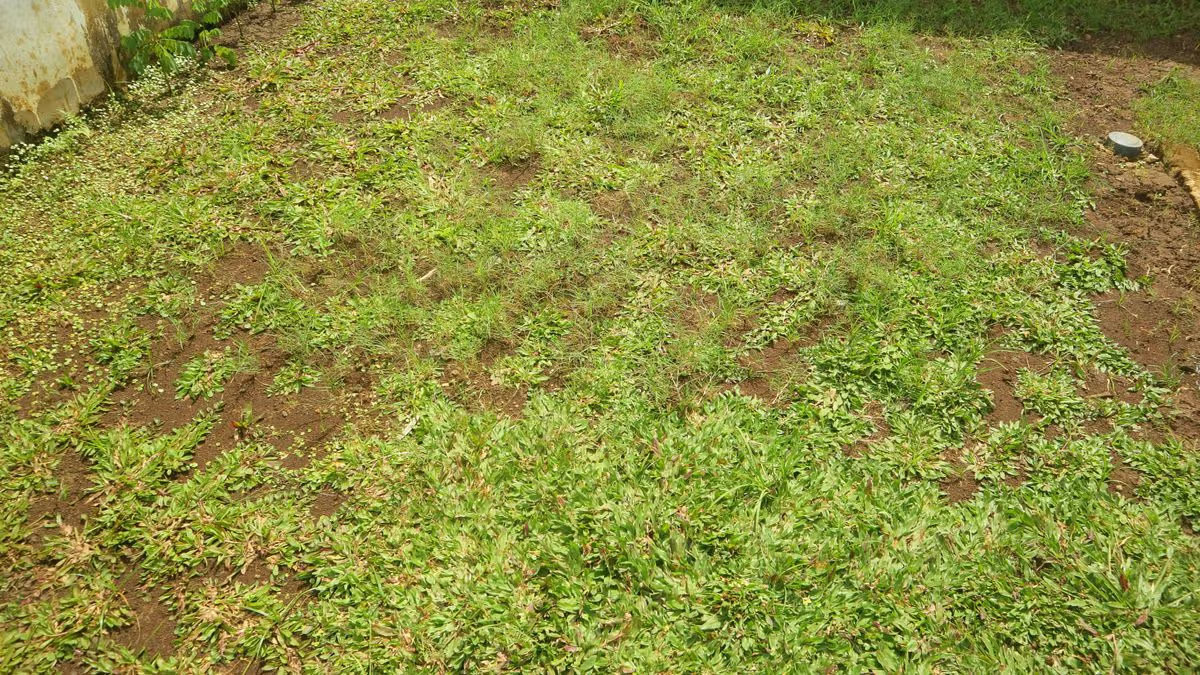
Gardeners are being urged to tackle one key task this week to help revive sparse, dry lawns and keep them lush through autumn
August represents a critical period for lawn maintenance, as the warmer months begin transitioning towards cooler conditions. Following the heat of summer, lawns can appear parched, sparse, patchy, and generally worse for wear.
Advertisement
With soil temperatures remaining warm and moisture levels beginning to rise, late summer offers the perfect window to help grass recover and prepare for what lies ahead.
A handful of straightforward tasks carried out now can promote stronger, healthier growth and leave lawns far better positioned to withstand autumn and winter.
Among the most beneficial jobs to complete before September arrives is overseeding, which can help fill in bare patches and revitalise a lacklustre garden.
According to Garsons, the “ideal” periods for overseeding lawns are spring, from March through early May, and late summer, towards the end of August.
Advertisement
They noted, however, that autumn was “by far” the optimal time to overseed, owing to the more favourable weather conditions.
How to overseed your lawn
The experts said: “Start by removing weeds and any fallen leaves in the way. You can also use a scarifier to remove moss if needed.
“Mow the lawn on a low setting and remove all clippings. Aerate your soil by forking holes into the lawn and adding a thin dressing layer over the area to be seeded. This only needs to be very thin and is called topdressing.
“Sow your seeds as per the packet instructions and lightly rake to ensure the seeds are in contact with the soil. Lightly press down, walk or pat the area.”
Advertisement
How to care for your overseeded lawn
Ensuring grass seeds remain moist is crucial, as they require adequate hydration to germinate successfully. Water gently using a fine rose attachment to prevent the seeds from being displaced.
The experts added: “Your lawn will need mowing, but start low in spring and raise the setting.
“For newly sown seeds, make sure the grass is at least 5cm to 8cm before you cut on a high setting.
Advertisement
“Keeping a nice lawn is one of the greatest pleasures, and it doesn’t have to be as hard as it looks. Overseeding will definitely help to keep it thick and green.”
Should your grass be struggling to thrive, the RHS (Royal Horticultural Society) advises applying an autumn feed rich in potassium and phosphorus to promote stronger roots and greater resilience.
Craig White told the supported person: “Away to your bed, because ken why, nobody likes you,” or words to that effect.
A social care worker from Ayrshire was caught on camera causing “emotional distress” to a service user.
Advertisement
Craig White leaned over a supported person and told them: “Away to your bed, because ken why, nobody likes you,” or words to that effect.
The incident took place on or around 5 March 2026, while White was employed as a support worker with Parkcare Homes No.2 Ltd, at Newhouse, in Kilmarnock.
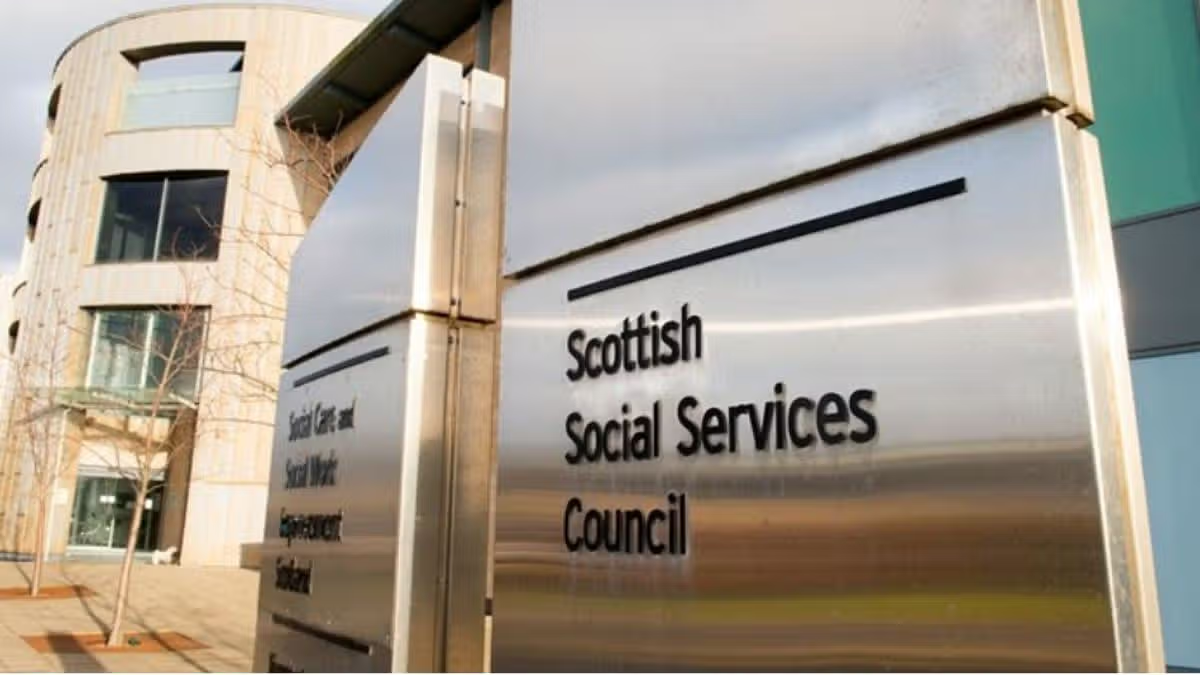
Now the industry regulator, the Scottish Social Services Council (SSSC), has stepped in and removed White’s name from their register, saying White’s fitness to practise was “impaired” due to “misconduct.”
The supported person at the centre of the case was referred to as ‘AA’ in the SSSC report.
Advertisement
In their decision notice the SSSC told White: “Social services workers, in whom the public and service users place their trust and confidence, are expected to treat service users with dignity and respect at all times and to not be a source of harm to vulnerable service users in your care.
“We have established that your (White’s) behaviour caused emotional distress to ‘AA.’ Your behaviour was indicative of an intentional loss of self-control towards a vulnerable service user and found you to be an intentional source of harm to ‘AA.’
The decision notice continues: “We held your behaviours to be of the highest seriousness and indicative of a values issue that had a lasting impact on ‘AA.’
“It is apparent within the video that your (White’s) tone was aggressive and forceful and was at very close proximity to ‘AA’s face.”
Advertisement
White, it was said, had been registered with the SSSC since September 2019 without any previous finding of impairment. White also co-operated with the SSSC investigation to a “meaningful extent.”
However, the SSSC said his behaviour gave rise to “significant concerns” about values which related to his role.
The SSSC added: “The SSSC considers a Removal Order is the most appropriate sanction as it is both necessary and justified in the public interest and to maintain the continuing trust and confidence in the social service profession and the SSSC as the regulator of the profession.”
There’s no need to add extra oil when the chef’s method makes it cook even better.
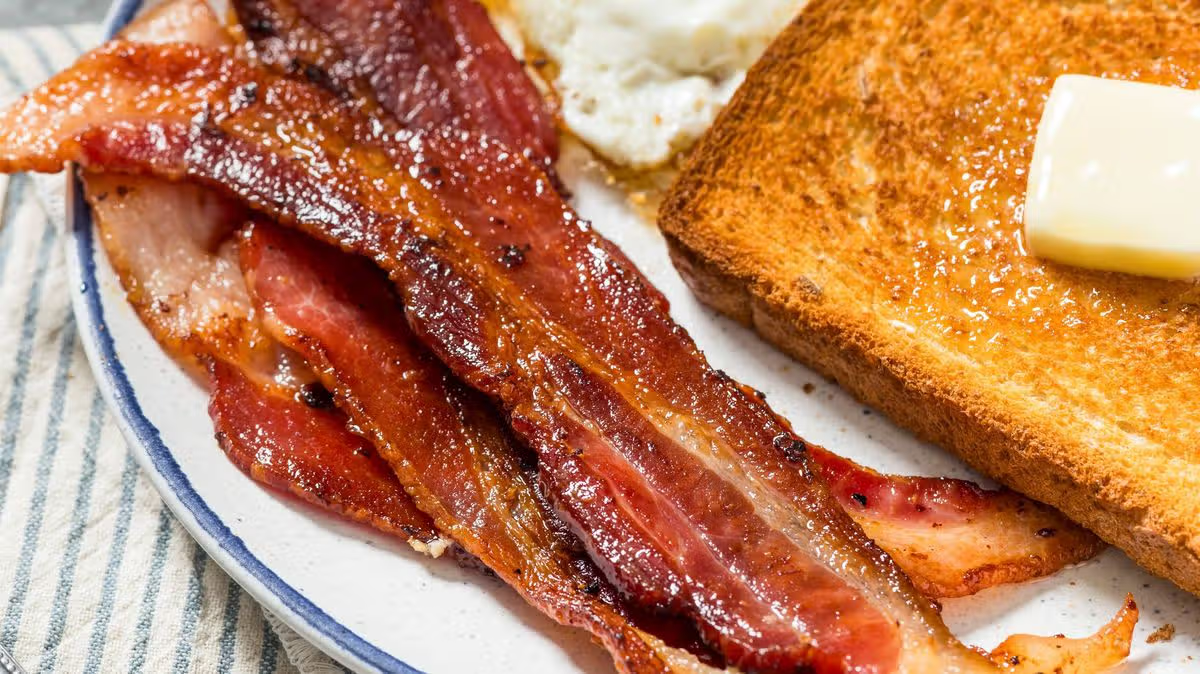
Bacon is a breakfast staple, typically rustled up on leisurely mornings when a generously buttered sandwich is just what’s needed to kick off the day. However, cooking it in oil can frequently result in burnt rashers.
Advertisement
While frying bacon may seem the most natural approach, it often leads to grease spattering across the hob, the kitchen filling with smoke, and a pan that requires considerable scrubbing afterwards.
Oil may well be the most popular method for cooking bacon, but it actually causes it to cook far too rapidly, which can leave the edges charred before the pink centre is properly done. This commonly produces bacon that is simultaneously singed, soggy and excessively greasy, as the oil tends to overwhelm the natural flavour, meaning you never quite taste it as it should be.
However, Chuckie Hessong, a cookery class instructor and founder of Laughing Rooster Eats, has revealed there is a far easier approach — apparently, bacon turns out considerably better when cooked in water rather than oil, reports the Express.
Chuckie said: “Boiled bacon creates a meaty, crispy, tender bacon – every time without making a big ol’ mess of my stove or stinking up my house, hair, and clothes.”
Advertisement
Cooking bacon in water may sound utterly peculiar, but adding just a small amount of water to the frying pan actually helps produce crispier rashers that are far simpler to cook. Bacon is naturally high in fat, which should melt away from the meat during cooking, allowing the bacon to essentially cook in its own juices.
The problem arises when oil is added to the pan, as the white fatty parts tend to cook considerably faster than the pink meat, resulting in burnt, charred edges before the centre of the bacon has had a chance to cook through properly.
Water slows the cooking process just enough to allow the fat to render evenly, meaning every part of the bacon cooks simultaneously, leaving you with perfectly caramelised rashers straight from the pan.
Advertisement
It simply prevents the bacon from burning, greatly improves its texture, and stops the oil from scorching the pan — meaning you won’t be left scrubbing away at the dishes after your morning fry-up.
How to make tastier bacon
Start by placing the bacon in a cold frying pan, and don’t worry if the rashers overlap or touch one another, as they will shrink down during cooking.
Pour a small amount of water into the pan — just enough to barely cover the bacon, but take care not to add too much, or you’ll end up boiling rather than frying it.
Advertisement
Place the pan over a high heat until the water begins to bubble, then reduce to a medium heat and allow all the water to evaporate completely.
Wait for the bacon to begin sizzling, then leave it to cook for approximately two minutes until it reaches your desired level of crispiness. Remember to flip the bacon halfway through to ensure both sides cook evenly.
Once the bacon is cooked to perfection, remove it from the pan and place it on a buttered roll or slice of bread. The bacon should be golden-brown, juicy, and considerably more flavoursome than it would typically taste.
The intimate reality series left viewers crying happy tears after its release back in April
Two cherished TV personalities have just secured a second series for their reality programme.
Advertisement
Last April, Made In Chelsea favourites Sophie Habboo and Jamie Laing chronicled their path to parenthood in an intimate three-part series called Raising Chelsea. The show captured how the pair managed pregnancy and childbirth while simultaneously overseeing major building work on their property.
The episodes featured cameos from relatives and fellow reality television personalities, including Jamie’s closest friend, Ollie Proudlock. The programme also confronted the raw realities of giving birth head-on.
Speaking to OK! at the time, Sophie disclosed that she became tearful “every time” she revisited the first series’ delivery scene. She explained: “I saw something the other day that the birth is like every emotion, like fireworks, like every single emotion you can imagine going off in your head.
“That truly is what it’s like. It’s utterly wild. And it is quite amazing to have that captured and like be able to show your children later on in life.”
Disney Plus has now announced that a second series of Raising Chelsea has received approval. This instalment will follow how the couple have adjusted to parenthood with their son Ziggy, their professional comeback and, according to the synopsis, “new adventures that take them outside Chelsea.”
It adds: “The returning series will host brand new faces, together with the return of the couple’s mums Penny Baines and Sarah Wigley, plus Sophie’s sister Georgia Habboo, and Jamie’s best-friend, Oliver Proudlock.”
Speaking about the series renewal, Jamie and Sophie said in a joint statement: “We were blown away by the response to the show and are so excited to keep sharing our journey. The experience of working with Disney+ and Dorothy Street Pictures for season one made it easy for us to say yes.
Advertisement
Get Disney+ for £5.99
This article contains affiliate links, we will receive a commission on any sales we generate from it. Learn more
A Disney+ subscribtion now starts at £5.99 per month and provides access to hit series like Rivals, Only Murders in the Building and The Bear, plus countless titles from Marvel, Star Wars, Pixar and more.
“We’ve always documented our lives over the years and continuing to do this on a bigger scale is just amazing. We hope that fans and viewers carry on enjoying our honesty as we continue to navigate raising Ziggy, together with balancing our family and professional lives. We can’t wait to bring you in more.”
Advertisement
Viewers described the opening season as “eye opening” with numerous people confessing to watching it all in a single sitting. One audience member revealed: “Not sure what’s wrong with me but I was a wreck. Cried for a whole 10 mins when he passed his driving test and sobbed when Ziggy was born. He [Jamie] for sure is still a Peter Pan but has grown up a lot too lol.”
A second commented: “Binge watched it. They are so funny and entertaining. Made for each other,” while a third wrote: “Loved this show. Was always a fan of Jamie. Thought they were both very honest. It was very entertaining and great to watch. Binge watched all three episodes.”
Raising Chelsea series one is streaming on Disney Plus. A release date for the second season is yet to be announced.
Experts have explained how to figure out what you need, and how to save money of your purchase
Neil Shaw Assistant Editor
09:54, 26 Aug 2026
To help students thinking about an upgrade, experts at Currys have compiled their top tips to picking the right laptop for you. Matthew Higginson, head of category at Currys, said: “For most students, a laptop is going to be at the heart of university life, so the start of a new term is a good opportunity to make sure your tech is ready for the years ahead.
“Our advice is to start with what your course requires, how and where you will be studying, and what you need your laptop to handle. That will help you prioritise the features you genuinely need. The aim should not be to simply buy the most powerful laptop you can afford, but to choose the right technology for the way you are going to study.
“If your current device is starting to struggle, upgrading can bring noticeable improvements to everything from everyday speed and multitasking to battery life and connectivity.”
Advertisement
Matthew said that if your dream device is slightly out of reach then trading in or getting a refurbished model may get it back in budget.
“If you do decide it’s time to refresh your laptop, there are ways to make your budget go further, from considering refurbished devices to trading in tech you no longer use,” he said.
The experts’ guide to getting the right device
1. Start with your course, not the laptop
Advertisement
Before buying anything, check what your course is going to ask of your laptop. An English student primarily researching and drafting essays is going to have very different requirements to someone studying architecture, engineering or video production.
It is worth checking whether your university recommends particular programmes, operating systems or minimum specifications before you buy. Some specialist software may work better on certain devices, so doing that homework upfront can stop you paying for performance you do not need or discovering a few weeks into term that your laptop struggles with something essential to your course.
2. Think beyond first year
If you are buying a new laptop, don’t just think about what you will need during your first few weeks at university. Consider what your workload could look like in your second or final year too.
Advertisement
Projects often become larger and more demanding as a degree progresses, particularly if you move into specialist software, data-heavy assignments, dissertations or creative work. Spending in the right places now can help you choose something capable of keeping up throughout your course, rather than finding yourself needing another upgrade halfway through.
3. Do not underestimate portability and battery life
Remember that your laptop could spend as much time in your bag as it does on your desk. If you are moving between lectures, the library and your accommodation every day, weight and battery life can matter just as much as processing power.
For most students, a 13 or 14-inch laptop strikes a good balance between having enough screen space to work comfortably and still being easy to carry around campus.
Advertisement
Larger 15 or 16-inch screens can be useful for subjects such as design, architecture or engineering, but they will generally take up more room and add extra weight.
Good battery life is another feature that can make a huge difference. The less time you spend hunting for a plug socket between lectures, the better.
4. Know which specs are worth paying for
With so many processors, storage options and specifications to choose from, it can be easy to assume more is always better. What we would encourage students to do is match the specification to the job they need their laptop to do.
Advertisement
For most, 16GB of RAM is a good starting point for comfortably switching between research tabs, documents, lectures and everyday applications. Students continually working with more demanding creative or technical programmes may benefit from 32GB, alongside a more powerful processor or graphics capability.
Storage matters too. A 512GB SSD should give most students a useful balance of space and speed, while people working with large video, design or project files may want additional storage or to combine it with cloud or external storage.
5. Pay attention to the everyday details
Processor speeds and storage tend to get the headlines, but the features you notice every day can be just as important.
Advertisement
Think about the keyboard you will potentially be typing thousands of words on, whether the screen is comfortable for long study sessions and the quality of the webcam and microphone for online lectures or group work.
Connections are worth checking too. USB-C can make connecting newer accessories and storage much easier, while an HDMI port can be useful when you need to plug into a monitor, projector or university display. Finding out you need three different adapters five minutes before a presentation is something most students would rather avoid.
6. Think about what a newer laptop could unlock
If your current laptop is starting to struggle with everyday tasks, upgrading to a newer device can make a noticeable difference to how smoothly you work.
Advertisement
Faster performance paired with AI capabilities can help when you’re switching between research, documents, video calls and multiple applications, while newer devices can also offer improvements in areas like battery efficiency, connectivity and everyday responsiveness
For students using more demanding creative or technical software, the difference can be even more noticeable. Ultimately, an upgrade should be about making your laptop work harder for you – spending less time waiting for programmes to load or worrying about whether your device can keep up, and more time focusing on the work itself.
7. Ask for help if the specs start sounding like you need a degree to understand them
Laptop specifications can quickly become a wall of numbers and acronyms, and students should not feel like they need to become a computer expert before they buy one.
Advertisement
The simple approach is to start with three things: what you are studying, the programmes you need to run and your budget. From there, experts can help translate that into the type of laptop and specification that makes sense for you, rather than simply pointing you towards the most expensive option.
Britons will be urged to stock up on tinned food and bottled water in new ‘national resilience campaign’ by Government to prepare for risk of extreme weather or cyber attacks
Britons will be urged by the Government to stock up on tinned food and bottled water in case of emergencies.
A new public information drive will encourage households to prepare for severe disruption from events such as extreme weather, cyber attacks or hostile state action.
The national resilience campaign will highlight simple steps people can take to keep themselves and their families safe in a crisis where power or water supplies are taken out, or shops are forced to close.
It comes as several incidents, including extreme heat, flooding and cyber attacks, have transpired over the last few months both in the UK and across the globe.
Advertisement
Louise Haigh, the First Secretary of State, is said to be organising crisis planning across various Whitehall departments to support aid being given to impacted communities more quickly.
A Government official told the Financial Times: ‘There will be practical advice on things you can do to improve domestic resilience, like having some bottled water and tinned food.’
But the source insisted: ‘It will be common sense, not scaremongering.’
Ministers are also stepping up work on national security by updating the so-called ‘war book’ that sets out how departments respond to major threats.
Advertisement
The Government sent a ‘severe alert’ to all mobile phones about the risk of wildfires
The biggest home defence exercise in decades will take place next year ‘to ensure that should the worst ever happen, we will always be ready’, MPs were told last month.
It comes after Andy Burnham ordered loud emergency alerts to be sent to all mobile phones in England and Wales earlier this month, warning of the danger posed by wildfires.
During his Makerfield by-election campaign, the Prime Minister repeatedly voiced his concerns about the threat of flooding and the government’s inadequate response and planning to such natural disasters.
Advertisement
Downing Street insisted the move was ‘entirely appropriate ‘, but many said the system should be reserved for more urgent threats to life such as terror attacks.
Charities and domestic abuse survivors also criticised the alert for risking the safety of those potentially hiding secret phones.
Before departing No. 10, Sir Keir Starmer had warned Russia could launch an attack on a Nato country in the next four years, western intelligence assessments had indicated.
Advertisement
On Monday, Burnham accused the Kremlin of ‘outrageous threats’ against the UK after the country warned of retaliation over Britain’s support of Ukraine.
Putin had been advised the new incumbent in No10 would be ‘softer than [Sir Keir] Starmer’.
But the Russian president’s hopes were dashed by the Prime Minister’s moves to fortify the UK-Ukraine military alliance in recent weeks, swapping missile blueprints and battlefield AI with Moscow’s enemy.
Vladimir Putin’s spokesperson, Dmitry Peskov, said the exchange would add ‘fuel to the fire’ and impact moves towards peace talks.
Advertisement
‘Britain is involved in this war on the side of the Kyiv regime,’ he said.
‘Britain methodically and regularly adds fuel to the fire, and methodically and regularly hatches schemes to prevent even the slightest progress in the peaceful settlement process.’
A spokesman for the Cabinet Office said: ‘Safeguarding national security is the first priority of any government.
‘We’re committed to raising awareness of simple steps households can take to make themselves more resilient, as well as driving forward the Home Defence Programme to build our country’s preparedness for various threats.’
Advertisement
Share or comment on this article:
Britons will be urged to stock up on tinned food and bottled water in new ‘national resilience campaign’ by Government to prepare for risk of extreme weather or cyber attacks
Dolly Parton has left fans one final gift with an unreleased song which is set to be released on her 100th birthday in 20 years time.
It was announced on Tuesday that the music icon had died at the age of 80, with her death confirmed in an Instagram video posted by her nephew Bryan Seaver.
And as fans mourn the death of the Jolene hitmaker, she has one more track for fans kept on a CD in a locked box at Dollywood’s DreamMore Resort in Tennessee.
Titled ‘My Place In History,’ Dolly wrote the song back in 2015, the same year she opened the DreamMore Resort in Pigeon Forge, Tennessee.
Advertisement
‘I don’t know if I want to live to be 100 or not. But you never know,’ Dolly wrote in her 2020 book, Dolly Parton, Songteller: My Life in Lyrics.
‘I might, and if I do, I’m going to be at that opening.’
Dolly Parton’s final gift to fans: Music icon has an unreleased song kept in a locked box in Dollywood that will be released on her 100th birthday
Advertisement
Titled ‘My Place In History’, Dolly wrote the song back in 2015, and it is kept on a CD in a locked box at Dollywood’s DreamMore Resort in Tennessee
‘There’s no telling what music is going to be by then,’ she joked: ‘Hopefully, it will play and the whole thing ain’t rotted.’
The song is contained in a chestnut ‘Dream Box’ displayed in a glass case and also features a piece of wood from the front porch of her childhood home in Sevierville, Tennessee, where she grew up singing with her 11 siblings.
The legendary country singer’s death shocked the world and came after months of health woes that saw her pull out of a string of public appearances, fuelling fan fears for her wellbeing.
And now, Dolly’s representatives revealed she died following a ‘brief battle with cancer‘ in a statement to People, though they did not disclose what type of cancer it was.
‘Our beloved Dolly Parton spent her life and career bringing joy, laughter, hope and integrity into everything she touched,’ the statement read.
Advertisement
‘After bravely facing a brief battle with cancer, Dolly departed her Earthly life today at the Vanderbilt-Ingram Cancer Center surrounded by loved ones.’
Her representatives also highlighted the extraordinary reach of Parton’s ‘unmatched generosity’, noting she touched the lives of countless people she would never meet and was always ready to ‘offer a helping hand’.
‘Whether it be the hundreds of millions of books donated through her invaluable Imagination Library or funding research that helped create a lifesaving vaccine used around the world, Dolly’s unconditional love for all people was the guiding force for her lasting impact.’
Despite her cancer battle, Parton remained optimistic and leaned on her deep Christian faith for strength in the last few months.
Advertisement
‘I don’t know if I want to live to be 100 or not. But you never know,’ Dolly wrote in her 2020 book, Dolly Parton, Songteller: My Life in Lyrics (pictured in 2014)
‘From the time that Dolly Parton was born, she was surrounded by faith, by God, by Jesus. Her grandfather was a preacher. Even in her Broadway show, she shows how much faith means to her,’ a source told People.
Meanwhile audience members gasped as news of the singer’s death was announced minutes before a performance of 9 To 5: The Musical.
The news broke just as the cast of 9 To 5: The Musical, which is touring the UK after a hit West End run, were about to go on stage at the Pavilion Theatre in Worthing, West Sussex.
Advertisement
Actress Karla Tracey, who plays Parton’s character Doralee in the production, broke the news to the shocked audience on opening night.
‘Before we begin tonight’s performance of 9 to 5,’ Tracey told the crowd, ‘we would like to take a moment to remember the remarkable Dolly Parton, who has sadly passed away today.
She continued after audible gasps around the theatre: ‘9 to 5 was originally written and produced by Dolly, whose extraordinary talent, creativity, and spirit are woven into every part of this work.
‘Tonight, we will perform the piece as she intended with great respect and affection for the woman whose vision brought it to life.’
Advertisement
‘As we begin, we dedicate tonight’s performance to Dolly Parton, with our deepest thanks for the music, laughter and joy she gave us.’
Paul Jepson, Landmark Theatres chief executive and the musical’s director, said in a statement: ‘We would like to take a moment to remember the remarkable Dolly Parton.
‘Our thoughts are with Dolly’s family, friends and all those around the world who loved and admired her.
‘It has been an honour for all of us to work on this show, originally written and produced by Dolly, whose extraordinary talent, creativity and spirit are woven into every part.’
Country music star Dolly Parton died after a “brief battle with cancer”, her publicist said. In a statement to media outlets, her publicist Marcel Pariseau said: “After bravely facing a brief battle with cancer, Dolly departed her Earthly life today at the Vanderbilt-Ingram Cancer Center surrounded by loved ones.”
The singer, 80, was best known for her genre-defining hits including 9 To 5, I Will Always Love You and Jolene. The statement continued: “Our beloved Dolly Parton spent her life and career bringing joy, laughter, hope and integrity into everything she touched. Her unmatched generosity reached the lives of countless people whom she would never meet, yet she was always there to offer a helping hand.
“Whether it be the hundreds of millions of books donated through her invaluable Imagination Library or funding research that helped create a lifesaving vaccine used around the world, Dolly’s unconditional love for all people was the guiding force for her lasting impact.”
Advertisement
Dolly Parton’s family share sad update as singer passes away
The type of cancer was not disclosed. Parton’s death was announced late on Tuesday via an Instagram video by her nephew Bryan Seaver, who also served as the singer’s head of security.
He said it was “an honour that is mixed with absolute pride and great sadness”, to share the news of her death, adding: “But sadness lies with us, not with Dolly. Dolly has lived in the light and is in the arms of Jesus, surely met by Carl, her parents and countless others who have watched her and longed to meet her in the heavens.”
Parton’s husband Carl Dean died last year, aged 82.
Flags will be lowered throughout America in Parton’s honour, US President Donald Trump announced, posting on Truth Social “there has never been anyone like her”.
Advertisement
Country superstar Dolly Parton dies aged 80
An oncologist has explained the common cancer symptoms people should look for – including some that are ignored or overlooked.
Persistent tiredness, unexplained weight loss or a cough that refuses to go away are often blamed on getting older, a busy lifestyle or a lingering virus. But according to one cancer specialist, these are among the symptoms that people too often ignore for months before finally seeking medical advice.
While most ongoing symptoms will have a harmless explanation, doctors say it’s important not to dismiss changes that are persistent, unexplained or noticeably different from what’s normal for you. Knowing when something deserves further investigation can make all the difference.
Richard Madeley tears up whilst discussing Dolly Parton’s death
Dr Jiri Kubes, radiation oncologist and Medical Director at Proton Therapy Center, said one of the biggest misconceptions is that cancer always causes severe pain or dramatic symptoms from the outset. In reality, early warning signs are often subtle and can easily be mistaken for far more common conditions.
Advertisement
He said: “One symptom on its own rarely points to cancer, and the vast majority of people experiencing these symptoms will not have cancer. The important thing is persistence. If something continues for several weeks, keeps returning or simply doesn’t feel right for you, it’s always worth getting checked rather than assuming it will eventually go away.”
Persistent fatigue
Everyone feels tired after a busy week or a few poor nights’ sleep, but persistent fatigue that doesn’t improve with rest is something doctors take more seriously. It can affect your ability to work, exercise or carry out everyday activities and often feels very different from ordinary tiredness.
Dr Kubes said: “Cancer-related fatigue is often described as an overwhelming exhaustion that doesn’t improve with sleep. There are many possible explanations, including anaemia, thyroid disorders, infections and poor sleep, but persistent fatigue should always be discussed with your GP if it isn’t improving.”
Advertisement
Gasps heard as audience at 9 To 5 musical told of Dolly Parton’s death
A cough that won’t go away
Most coughs caused by viral infections settle within a few weeks, but one that persists or gradually worsens should not simply be ignored. This is particularly true if it’s accompanied by breathlessness, chest pain or coughing up blood.
“A persistent cough doesn’t automatically mean cancer,” Dr Kubes said. “In fact, there are many more common causes. However, if it continues beyond a few weeks or behaves differently from a typical cough, it’s sensible to have it assessed.”
Unexplained weight loss
Advertisement
Losing weight without changing your diet or exercise routine can sometimes be an early sign that something isn’t quite right. Although many conditions can cause unexpected weight loss, it’s one of the symptoms doctors always want to investigate.
Dr Kubes said: “If you’re losing weight despite eating normally and haven’t intentionally changed your lifestyle, it’s important to understand why. Often there will be another explanation, but it’s not something that should simply be overlooked.”
He added: “One of the biggest mistakes people make is waiting for symptoms to become severe before seeking help. Cancer doesn’t always announce itself dramatically, and many of the early warning signs are vague and easily explained by more common conditions.
“The important thing isn’t to become anxious about every cough or ache, but to pay attention to symptoms that persist, keep returning or simply don’t feel normal for you. In many cases they’ll turn out to have a harmless explanation, but if something more serious is going on, getting it checked early gives us the best possible chance of diagnosing and treating it successfully.”



























































You must be logged in to post a comment Login