


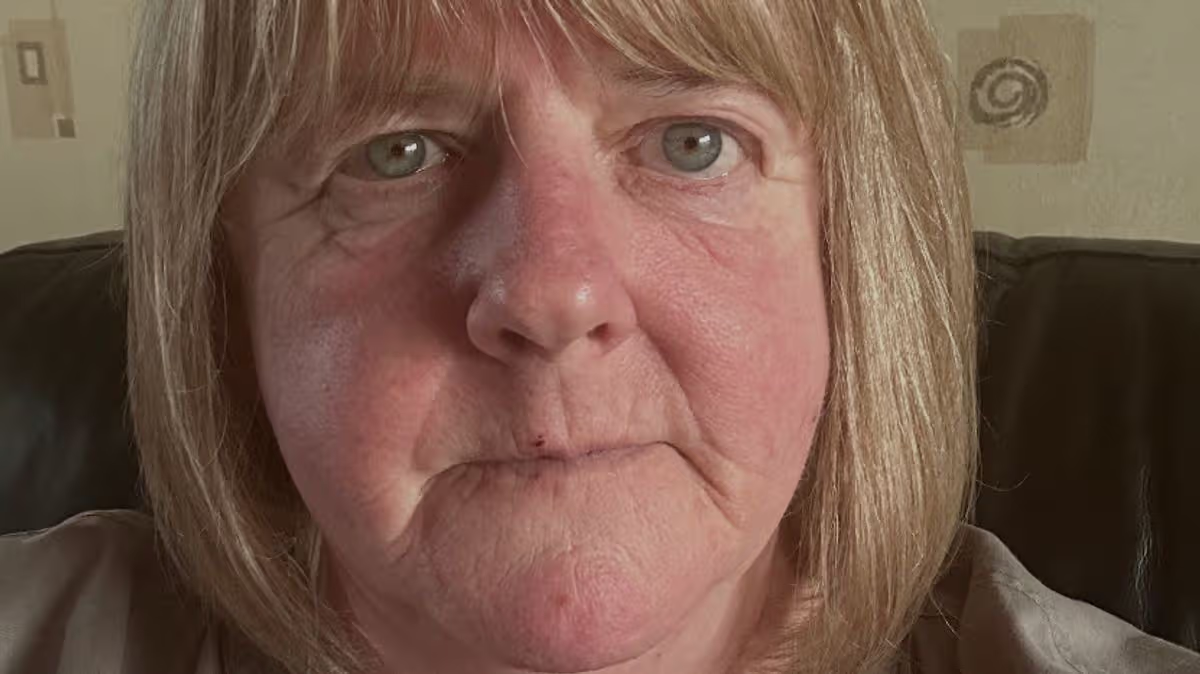
Alison Britton’s father John Anderson died in 2011 aged 72, after being infected with Hepatitis C from a blood transfusion.
A grieving daughter whose dad was a victim of the infected blood scandal says the dead are being “pushed to the back of the queue” in the battle for long-overdue compensation.
Alison Britton’s father John Anderson died in 2011 aged 72 after being infected with Hepatitis C from a blood transfusion.
The former merchant navy seaman and engineer, from East Kilbride, near Glasgow, was one of more than 30,000 people in the UK to be infected with HIV or Hepatitis C after being given NHS blood products. Thousands of them were in Scotland.
Alison, 60, from Inverness, said many families dealing with the estates of loved ones who have since died have been angered by the way a compensation scheme set up in the wake of a damning public inquiry report two years ago has been handled.
She said many have not even started the claim process and a lack of answers and transparency is compounding their grief.
Alison said: “People who are in the last 12 months of their life are being paid first and quite rightfully so. But there is a large community in the deceased estates – over 3,000 – and we’re just feeling that our loved ones paid the ultimate price. They died. We don’t feel we’re being recognised and our loved ones are being recognised.
“They opened up the scheme for the deceased estates in December. They’re only taking a handful of people at a time.
“These are people who lost children in the 70s or 80s. You’ve got very elderly people, some who are in nursing homes, and we’re just not being recognised.
“We’re feeling angry and let down and haven’t been given any guidelines or expectations of when you’re going to be called. The authority are not being open with us at all.”
It is estimated that about 3,000 people in Scotland were given infected blood in the 1970s and 80s.
Many had received transfusions on the NHS, while others were being treated for haemophilia. Hundreds have now died.
In Scotland, the vast majority of infections came from its own blood donations and the Scottish National Blood Transfusion Service (SNBTS) has been criticised for not adequately screening donors and for taking donations from prisoners.
Prisoners were known to be at greater risk of infection due to a higher population of intravenous drug users.
Although most of the blood used in Scotland was from Scottish donations, the exception was Yorkhill hospital in Glasgow where children were treated for haemophilia.
The hospital regularly received plasma products sourced from paid donors in the United States.
Scotland was the first part of the UK to commission a public inquiry into the scandal. But after a six-year probe costing around £12m, the report made just one recommendation – that anybody who had a blood transfusion before 1991 should be screened for hepatitis C.
The 2015 report was condemned as a “whitewash”, with some setting fire to copies of it in the street.
A UK probe, by Sir Brian Langstaff, found in 2024 that the disaster could largely have been avoided if different decisions had been taken by health authorities.
It said too little was done to stop the importing of contaminated blood products and there was evidence of cover ups.
The Infected Blood Compensation Scheme was also rolled out that year – pledging to pay £11.8billion to those affected.
But in May last year, Sir Brian ordered extra hearings after the inquiry was bombarded with letters expressing concerns about the way the government’s compensation scheme for victims had been managed.
An extra report found that victims had been “harmed further” by the way they had been treated during the process.
Alison, who gave evidence to the public inquiry, said she had also been let down after losing dad John, who needed a blood transfusion for a ruptured stomach ulcer in 1980.
She said: “For years he felt unwell. He was feeling cold, his joints were aching, and eventually in 1999 they did a blood screening and he was diagnosed with Hepatitis C.
“He ended up with sclerosis of the liver and lots of scaring and tumours on his liver.
“He had to undergo regular biopsies and scans until 2004 when he received a liver transplant. He got just over seven years, but the last two years of his life were awful because his liver was failing. He was having acute episodes of confusion.”
John, who moved his family to Islay after leaving East Kilbride, died just two weeks after being moved to a hospital in the Highlands to be closer to Alison, his only child.
The Infected Blood Compensation Authority (IBCA) has so far made over £2.4 billion in compensation offers to more than 3,000 victims, separating claimants into categories.
Interim payments have been paid in many cases, though others have still not received a penny.
Alison said: “We’ve registered our intent to claim but then you have to wait to be invited to start the claim process. You’re waiting on a weekly basis to see if they pull your name out of the hat.
“Because we’re part of this community and trying to be supportive of one another you’re hearing people’s stories all the time.
“There’s a huge feeling of disappointment that (the authority) won’t communicate with us and answer specific questions.
“People are dying at a rate of one every four days, that was the latest figure, so there is also a feeling, especially amongst the elderly, that they’re waiting for people to die as their claims die with them.
“IBCA are telling us that deceased estates claims are more complex, that’s why they are starting with small numbers. This isn’t actually the case.
“They have compensated over 3,000 of the living infected, and rightfully so, but the dead are being pushed further and further to the back of the queue.
“As a community, the estates of the deceased are becoming more and more upset, angry and helpless.
“It is completely unacceptable and continues to compound the grief and that feeling of loss that we felt at the time of the death of our loved ones.”
A spokeswoman for the Infected Blood Compensation Authority (IBCA) said: “Those impacted have waited decades for recognition and to get the compensation that they deserve. That’s why our priority is to pay every eligible person as quickly as we can, while making sure we build a compensation which is right for all claims.
“While we cannot comment on individual circumstances, we are prioritising and paying claims based on recommendations made by the Infected Blood Inquiry. This means that we are processing claims for every eligible group of people. Within these groups, we prioritise claims made by all those who are sadly nearing the end of their life, and then people from older age groups.
“We would ask anyone who thinks they may be eligible but has not yet registered for compensation to do so by visiting the IBCA website – ibca.org.uk.”
Get more Daily Record exclusives by signing up for free to Google’s preferred sources. Click HERE























![BITCOIN IS BREAKING CRITICAL RESISTANCE! [TRAP TRAP TRAP]](https://wordupnews.com/wp-content/uploads/2026/05/1778482707_maxresdefault-80x80.jpg)































You must be logged in to post a comment Login