The death of the Soham murderer Ian Huntley is a focus for Sunday’s papers, with the Sunday Mirror headlining the news as the “death of a monster”. The convicted killer has died 10 days after he was attacked in prison, Sunday Mirror reports, quoting a former guard, who said “no one will shed any tears”. The former school caretaker had been serving a life sentence with a minimum term of 40 years for murdering best friends Holly Wells and Jessica Chapman in 2002.
Sunday People headlines with a “special place in hell” for Ian Huntley who has “finally died”, the paper reports, after an attack in prison. Above an image of the child murderer is a US Air Force bomber at RAF Fairford in Gloucestershire, which the paper describes as capable of delivering 34 tons of explosives.
Similarly, the Sunday Telegraph leads with former UK prime minister Tony Blair rebuking Starmer over his failure to back “Trump’s war”. Blair, who supported the US invasion of Iraq and Afghanistan, told a “private luncheon” on Friday that Sir Keir should have done more to support the US from the “very beginning of the escalating conflict”, the paper reports.
A former Formula One engineer has urged UK defence chiefs to “harness the innovative skills within motor racing to arm Britain for a potential conflict with Russia”, the Sunday Express reports. Mark Mathieson, who once worked at Mercedes and McLaren, believes the answers to “improving slow, ineffective” processes “used by the Ministry of Defence” can be found in the sport.
Large plumes of black smoke could be seen billowing from a unit at the height of the fire on the estate in the Tyne Dock area of South Tyneside.
It is understood that the fire broke out at about 4.15pm today.
The fire on Mitre Place, South Shields. (Image: NORTHERN ECHO)
Two engines were seen battling the fire on Mitre Place, South Shields.
In a post on X, the Tyne and Wear Fire and Rescue Service advised residents to keep windows and doors locked and urged people to avoid the area, if possible, while they tackled the fire.
Advertisement
It is understood the fire is being brought under control, but fire personnel are expected to be at the scene for some time.
Trump’s comments over the weekend stand in contrast to several he made last week, including a televised address on 1 April, in which he suggested that the US had already created the conditions necessary for other countries to engage in the Strait. “Take it, protect it, use it for yourselves,” he told allies.
Taylor Little became so badly addicted to her smartphone that she felt she had lost many of her teenage years. “I was literally trapped by addiction at age 12 and lost my teenage years because of it,” she said. Her addiction was to social media, which led to suicide attempts and prolonged depression.
Molly Russell, at just 14, took her own life. Her parents blame the apps on her phone for exposing her to graphic and disturbing content that took control of her mindset.
The proposed response – in Australia, now proposed in the UK and elsewhere – is to ban social media for under-16s. It is an understandable impulse. But there are good reasons to think it won’t work – despite politicians claiming a successful start to the ban.
Advertisement
Teenagers have always found ways around rules. Getting an older sibling to buy alcohol is a time-honoured tradition. When it comes to social media, teenagers are more tech-savvy than the adults trying to restrict them, and evidence is emerging that many are working around the age verification systems put in place to enforce bans, such as by using VPNs (virtual private networks).
Rules will exist, but compliance will be patchy and hard to enforce. Those most determined to access social media may also be the most resourceful in getting around restrictions. This means that the teenagers most at risk may also be the least affected by a ban. Evidence from other areas shows that when certain activities are driven underground, they often become more harmful.
Social media is one component of a broader “smartphone ecosystem”, and targeting one app while leaving the ecosystem intact is unlikely to solve much.
If social media is blocked, teenagers are not going to put their phones down. They will migrate to mobile games, group chats and endless web browsing – activities that rely on the same design features driving their social media use: notifications, streaks (features that track consecutive days of use and reward consistency), infinite scroll. The problem is not any single app but a pattern of behaviour that will find new outlets.
Nor is this only a problem for teenagers. Adults struggle with excessive smartphone use too. Heavy use is associated with poorer sleep, reduced attention and higher stress – and in some respects the adult consequences are more severe. Distracted driving, often fuelled by phone use, kills thousands of people every year.
Distracted driving kills thousands each year. Noody/Shutterstock.com
This matters for teenagers because behaviour is learned by watching others. Children who see parents, teachers and other adults checking their phones absorb that as the norm. A policy that targets only young people does nothing to change the culture they are growing up inside.
Advertisement
And opting out is becoming harder for everyone. Primary school children are expected to use smartphones for homework – on apps that share more than a passing resemblance to addictive games. Online banking has become more difficult without one. Workplaces assume employees are reachable via multiple WhatsApp groups at all hours.
When opting out means opting out of modern life, restricting access to one category of app starts to look less like a solution and more like a gesture.
If the goal is to reduce harm, the focus needs to widen. The deeper issue is the central role smartphones now play in everyday life – for all of us, not just teenagers. That points towards different kinds of intervention: delaying smartphone adoption among younger children, encouraging simpler devices, redesigning compulsive features across all apps, and ensuring that essential services such as banking, education and travel stop assuming everyone is glued to a screen.
Banning social media for teenagers may feel like decisive action. But until the broader dependency is addressed, it will not deliver the change its advocates are hoping for.
A man took on the grand but derelict Craig y Don mansion which had been left to decay for years
02:02, 06 Apr 2026
Advertisement
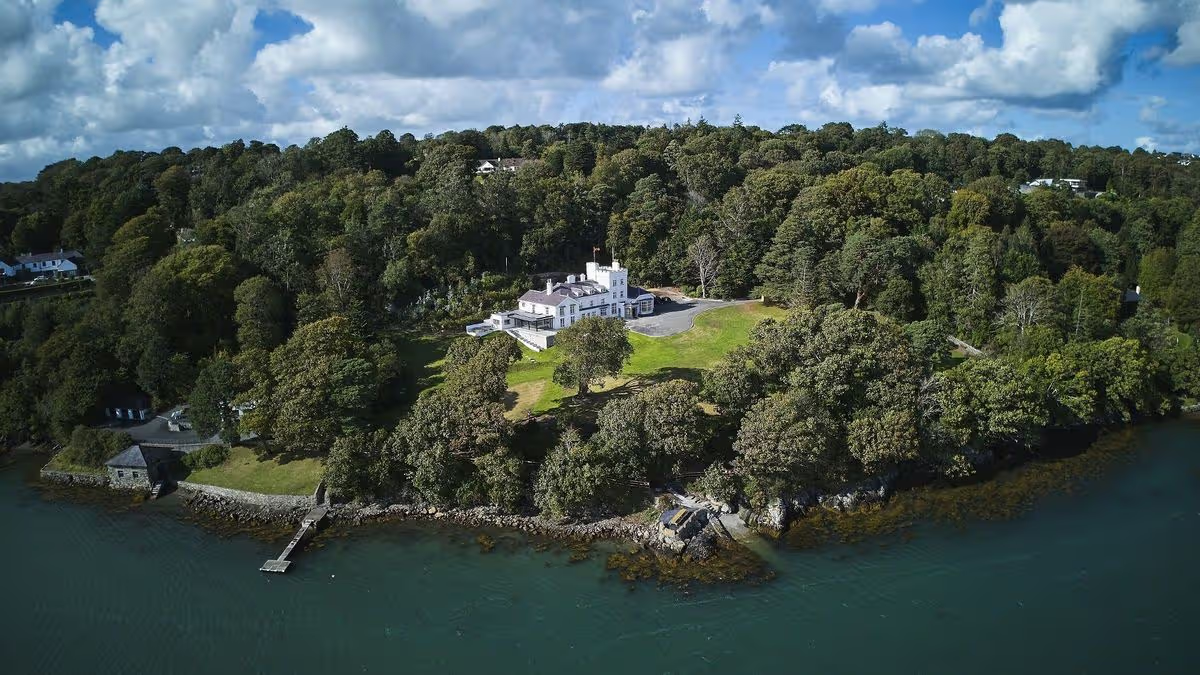
A huge and historic mansion by the sea stood empty, unloved and alone for many years, shrouded by trees and unruly foliage, hidden from view; alone, silent and slowly beginning to fall into dereliction.
Sadly there are many houses across Wales that replicate this scenario, some remain hidden and hoping for rescue, some are found and illegally entered by trespasses and end up on social media, but very few actually find a historic house hero who will take on such a substantial project to save it, revive it and secure its future for generations to come.
Craig y Don, a striking white-washed mansion sitting high above the Menai Strait within acres of private land, is one of the lucky ones because Mark Ellis found it, fell in love with it, and has spent years and too much budget to even say out loud, renovating and transforming it. For more property stories sent to your inbox twice a week sign up to the property newsletter here.
It was 2021 and Mark, who comes from the area and visits the Isle of Anglesey frequently, says: “I saw this place come up and knew of it, but I thought it looked pretty amazing. Actually I remember going down and climbing over the gate and having a look and initially, just thinking ‘Oh gosh, it looks like a really big project’- I was a bit scared by the size of it.
“But I sort of reflected on it and, foolishly, an idea started to form. I was thinking ‘this is a pretty good spot and they don’t make land like this anymore’. I ended up looking around it and yeah, fell in love with it, and just couldn’t stop imagining what it might be like.”
Advertisement
The idea that started to gain momentum came from Mark’s challenging experience of trying to find somewhere amazing as a place to rent and stay for a large family celebration.
Mark says: “I think there were 16 of us and I was struggling to find somewhere that was lovely, that was five-star luxury where the whole family could sit around the same fireplace or at the same dining room table. I thought ‘if I’m struggling to find somewhere then surely other people are too’.”
He found there was a ‘surprising lack’ of top-end family places to rent in stunning locations, and that is where Craig y Don started to weave its way into Mark’s future.
Advertisement
After building up a solicitor business and then selling it in his fifties, Mark was not ready to retire just yet and having already done a restoration on a house in Chester, he had been bitten by the renovation bug – all good news for Craig y Don, maybe a bright and lasting future was on the horizon?
But this renovation project was going to be epic. Mark remembers: “It was in a very poor state. It hadn’t been lived on for nearly 20 years but at least the roof was solid. However, there was a lot of damp, black mould, peeling paper, and there was plaster that was starting to fall off.
“And there was no kitchen, just a tiny space with an Aga, but nothing else, not even kitchen units. There was no running water and wires hanging everywhere. Then there were seagulls that had fallen through chimneys and ash that had fallen onto the floors.”
But nothing that Mark saw that day, and on subsequent visits, dampened his enthusiasm, even the ambience of sadness that wafted through the rooms did not persuade him to change his mind and his ambition.
He says: “It felt cold. It felt unloved. It felt damp. But, and this sounds a bit deep, it had a good spirit. It felt like the energy was positive, it just needed some love. And it felt like it had once been a happy place, although it certainly wasn’t now.”
Advertisement
Being from the area and loving the island Mark was keen to use local trades people on the project where possible and now that the renovation is finished he has teamed up with companies in the area to promote local outdoor activities, pubs and restaurants, and places for guests to visit – he is keen that the local economy and employment opportunities benefit from the house being alive again after 20 years of emptiness.
His company Daisy Joy also annually supports three local charities in their endeavours, as Mark is keen to support the community as much as possible. He says: “It comes from a love of Wales and a love of the island.”
But the core driver that ploughed through all the challenges Craig y Don threw at Mark was saving the house so it would survive forever and making it a place to create lifelong memories.
Advertisement
Mark says: “It’s a forever investment. This is not a business for me. I mean, if it was a business, I would be out of business because I’ve done it from the heart and spent more than it’s now worth, but I’ve done it to keep it alive forever.
“I think that if we can be successful and fill it with family gatherings, you know, people celebrating important birthdays and celebrations, fill the house with laughter and happiness again, then I hope that’s a good thing.
“We’re not doing commercial events, we’re not doing weddings, this is about family and friends spending time together and making sure that the grandparents will have as much fun as the grandkids and vice versa. This is a family home, where we want to have family gatherings.”
Advertisement
Craig y Don had been empty for 20 years and on the market many times; no-one was interested, and at some points Mark wished he hadn’t been interested either.
He says: “There have been many nights when I have lain awake and thought, ‘what have I done, I must be bonkers’, and then when I started putting the work out to tender, the quotes were coming back so high because I knew I wanted this to be done well.”
Enter the next house saving hero – a team called Birch Stays who came up with an interesting proposition that benefitted all parties and the house.
Advertisement
The company specialise in offering property owners a complete package to create and run high-end holiday homes from the renovation stage right through to booking and marketing, maintenance and guest services.
Mike Walsh, one of the directors at Birch Stays, says: “We’d been steadily building a reputation for transforming character properties into standout holiday homes, and this was an opportunity to take on something truly special and so we agreed to renovate Craig y Don after just a single tour of the home.
“It had incredible bones, an amazing history dating back centuries and a Grade II listing, but it needed a huge amount of work. Like many heritage properties, it had seen years of piecemeal changes that didn’t really do it justice.”
Advertisement
Mark adds: “I said ‘I’ll pay you a fixed fee for project managing and then I’ll use local trades and pay them directly’ and this was a way I tried to find a more cost-effective way of doing it with them.”
Once the project work was agreed, Mike and business partner Jonathon Leyland and the team at Birch Stays were keen to get started, and emotions were high.
Mike says: “We felt equal parts excitement and respect, to be honest. Projects like this don’t come along often, and you feel a real responsibility to get it right. It’s not just about creating something beautiful, it’s about honouring the history while making it relevant for modern guests. We knew it would be a challenge, but that’s exactly what makes it worthwhile.”
Advertisement
The house was given a Grade II listing by Cadw in 1988 for being ‘a mainly early 19th century small country house with good later interiors and group value with the coach house, the boathouse and the lodge’. The earliest recorded occupant was Colonel Thomas Peers Williams MP in 1845, grandson of Thomas Williams Commander of the Anglesey Light Infantry.
The listing goes on to state that in the mid 19th century Mrs Peer Williams supported ‘a private charity school at the house, founded in 1845, for 12 girl scholars, none of whom had to pay fees’.
The core of the house is said to date back to 1540 but according to the listing the earliest surviving evidence of a previous abode is an 18th century red brick chimney stack visible in the attic.
Since then the property had early to mid 19th century rebuilding, remodelling and extensions with subsequent modern alterations, and Mike says these added to the drama as well as the need to respect and work within the Grade II listed status.
There were many challenges, from peeling back all the work done to the house over the decades, structural issues, and drainage that needed an extensive amount of groundwork.
Inside, the original features have been preserved and restored and the interior design has been spearheaded in a partnership between Mark and company Horton & Co who work extensively on Anglesey and across the area to create an absolutely stunning house.
Mark says: “We had a vast space that was completely empty. It didn’t have any furniture, any wallpaper, anything at all, so we started from scratch. We didn’t want to go out and buy new furniture, obviously we bought lovely new luxury beds and mattresses and it’s been completely redecorated, but we’ve sourced antiques and artwork. And I think the interior design is something worth celebrating in itself.”
The house provided some of the interior inspiration with the Prince Edward bedroom suite and the Lillie Langtry suite, both located in the tower, were created as a recognition of the rumour that Albert Edward, Prince of Wales (the future King Edward VII) and the Victorian socialite and actress Langtry stayed at the house during their affair.
Advertisement
The Prince Edward suite has been designed with a masculine energy, including time spent finding a fabulous four-poster bed of the right age, while the Lillie room is more delicate and feminine and the views from both are outstanding.
A new glass extension has been added at one side of the house to create a social kitchen diner hub with more exceptional views to enjoy and it’s this contrast between old and new that excites Mark the most regarding the home’s new interior.
He says: “We’ve got modern wood and contemporary as well as antiques and old, I think we have achieved that lovely mix of contemporary with tradition.
Advertisement
“Standing in the new kitchen dining space, you feel like you’re on top of the Menai Strait and the water’s below, you can see for miles including all the activity on the water looking over towards the mountains; it is wonderful.”
Another interior space that Mark finds himself drawn to and that guests, now that the house is open for bookings, are enjoying is the visually breathtaking lounge bar found in the former ballroom that Mark describes as ‘extravagant and opulent’.
There is so much to explore at the house even before stepping inside, including acres of private land that includes a boat house and steps down to the water, two hot tubs, and a sun-drenched terrace outside. Climb the distinctive tower to the roof deck at the top and the views are truly panoramic and immersive.
Advertisement
Inside the nine gorgeous bedrooms can sleep up to 20 people in total and each has been lavished with their own unique interior design, and six have their own ensuite.
Time is easily spent and enjoyed in the cinema room, the tranquil drawing room, the library and, of course, the lounge bar in the ballroom. Maybe the games room is the standout play space, offering table tennis, air hockey, and table football plus a space also suited for yoga and pilates.
The mini spa includes a sauna, gym and treatment room and Mark’s company Daisy Joy can even arrange staff to visit for treatments and massages.
Advertisement
It’s taken six years and a secret seven-figure sum to get to this point. Mark says: “At times it has been stressful, it’s just been so much more work to do and the job being much bigger than we expected but I’ve had to just hold my nerve. I now feel a great sense of relief and pride, I suppose, of what we’ve done.”
Mark is still clearly in love with Craig y Don, he finds joy in every space and every element of design and now he is hoping that guests feel enchanted too. He says: “Hopefully I can get some good feedback from people staying there and that’ll be the most satisfying time, when somebody writes to me and says, ‘We’ve had such a lovely time. We all loved it’, and I think that’ll be when I think ‘okay, it was worth it’.
“Because in thedaylight hours, looking at the beauty of the location, looking across towards the mountains of Eryri and just visualising how it would be when we finished the project kept me going. But then you go to those dark periods in the night and you’re thinking ‘goodness me, I’ve bitten off more than I can chew here!’.
Advertisement
“But I’m a positive person so I’d stop myself and say, ‘no, actually, this is a really lovely spot, it’s great, and I can do this and I mustn’t give up’ because I actually couldn’t give up, that wasn’t an option.
“All of my family and friends thought I was absolutely mad, and I still do too sometimes because it makes absolutely no sense financially. But you know, it is a legacy because it’s definitely not a business, it’s something that my family owns now and into the future, we will never sell it.”
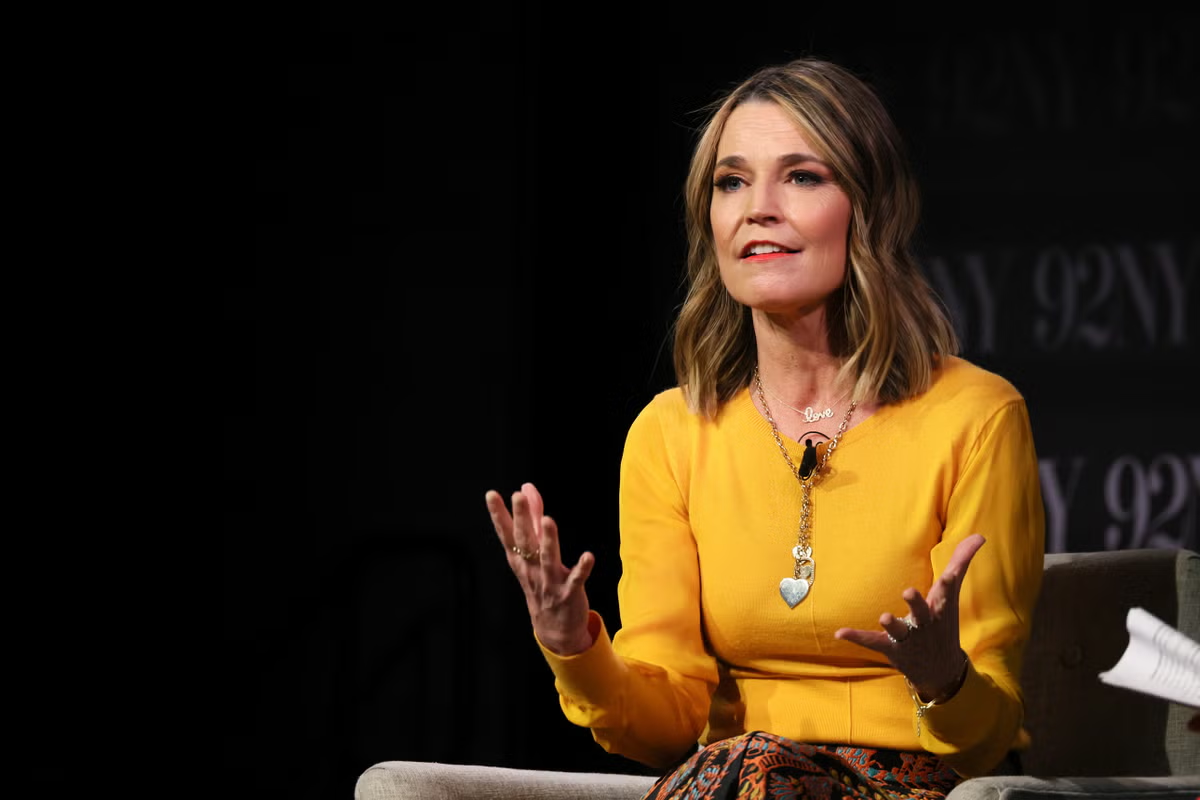
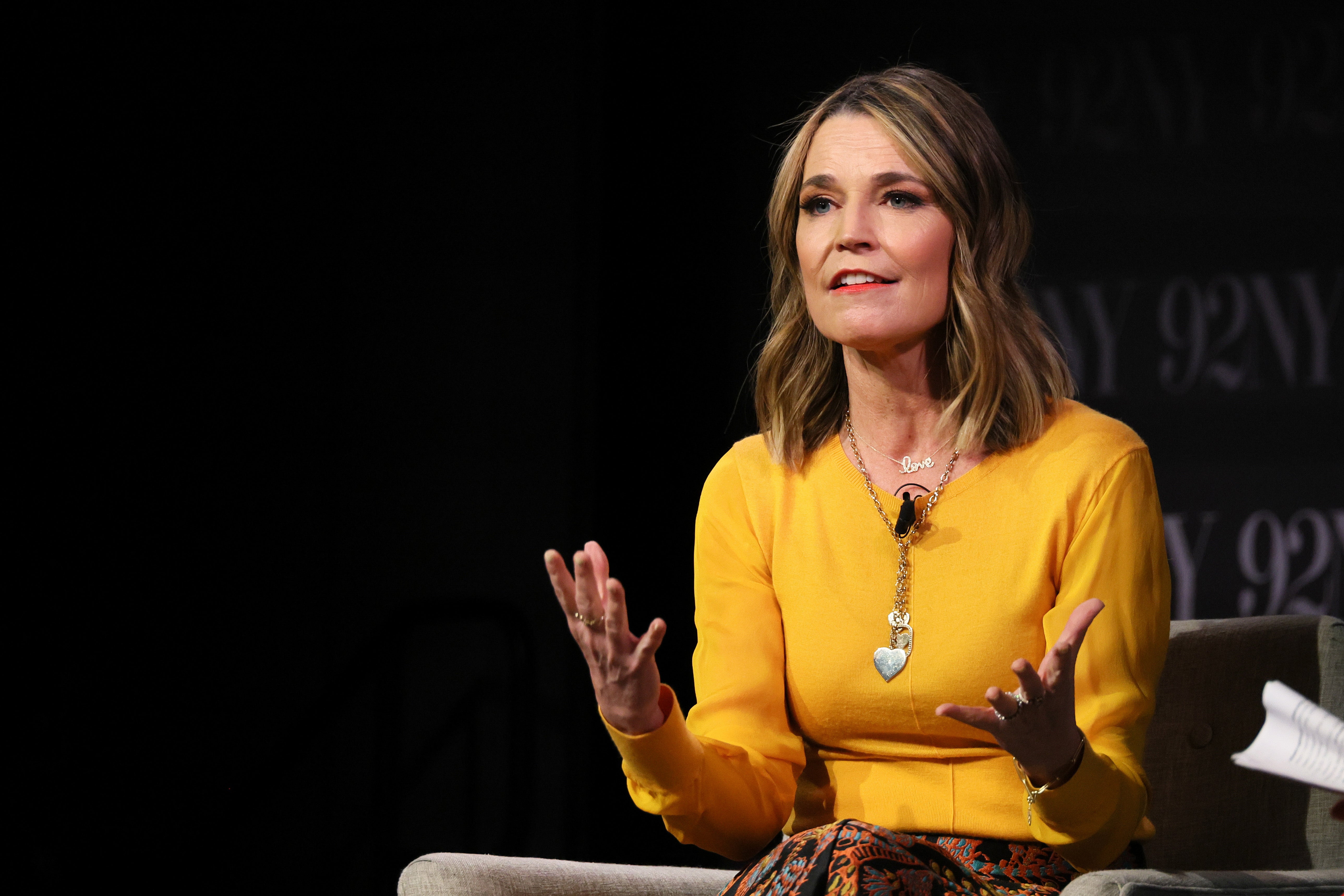
The Today show co-anchor — who is set to return to NBC’s broadcast on Monday — described how she has felt “moments of deep disappointment with God” in a video message shared by her church Good Shepherd New York.
“We celebrate today the promise of a new life that never ends in death,” Guthrie said in a video published Sunday. “But standing here today, I have to tell you, there are moments in which that promise seems irretrievably far away. When life itself seems far harder than death.”
She described them as moments marked by a “deep disappointment with God, the feeling of utter abandonment,” she continued.
Advertisement
Guthrie said she was taught Jesus had “experienced every single emotion that we humans can feel,” but recently questioned whether he “really ever experienced this particular wound that I feel.”
‘Today’ show co-anchor Savannah Guthrie described feeling ‘moments of deep disappointment with God’ in an Easter message April 5 (Getty Images)
“This grievous and uniquely cruel injury of not knowing, of uncertainty and confusion and answers withheld. In those darkest moments I have thought bitterly, and perhaps irreverently, that I have stumbled upon a feeling that Jesus did not know,” she said.
Guthrie then explained how she turned to the story of Jesus’ death and resurrection.
“I remembered three days in the grave. No one talks much about that. We focus mostly on Easter, of course we do. We cut to the happy ending and the joy of Sunday morning. And yes, we do observe the Friday before, the agony of crucifixion, we mourn by candlelight that darkest night,” she said.
“But after Jesus died, after he breathed his last, what did he actually know? On the cross, he cried out, ‘My God, my God, why have you forsaken me?’ That is the anguished cry of someone who does not know the answers,” she added.
Advertisement
Savannah Guthrie’s mother, 84-year-old Nancy Guthrie, was last seen on January 31 (NBC/Today)
Guthrie concluded the message by reflecting on what it means to celebrate Easter.
“Perhaps this is too dark a message to share on Easter morning, but I have long believed that we miss out on fully celebrating resurrection if we do not acknowledge the feelings of loss, pain and, yes, death,” she said. “It is the darkness that makes this morning’s light so magnificent, so blindingly beautiful. It is all the brighter because it is so desperately needed.”
“I don’t know that it’s because she’s my mom and somebody thought, ‘Oh, that lady has money and we can make a quick buck.’ I mean, that would make sense,” she said. “But we don’t know … which is too much to bear, to think that I brought this to her bedside.”
This wasn’t always the case – the village has a vast history with many people connected to it
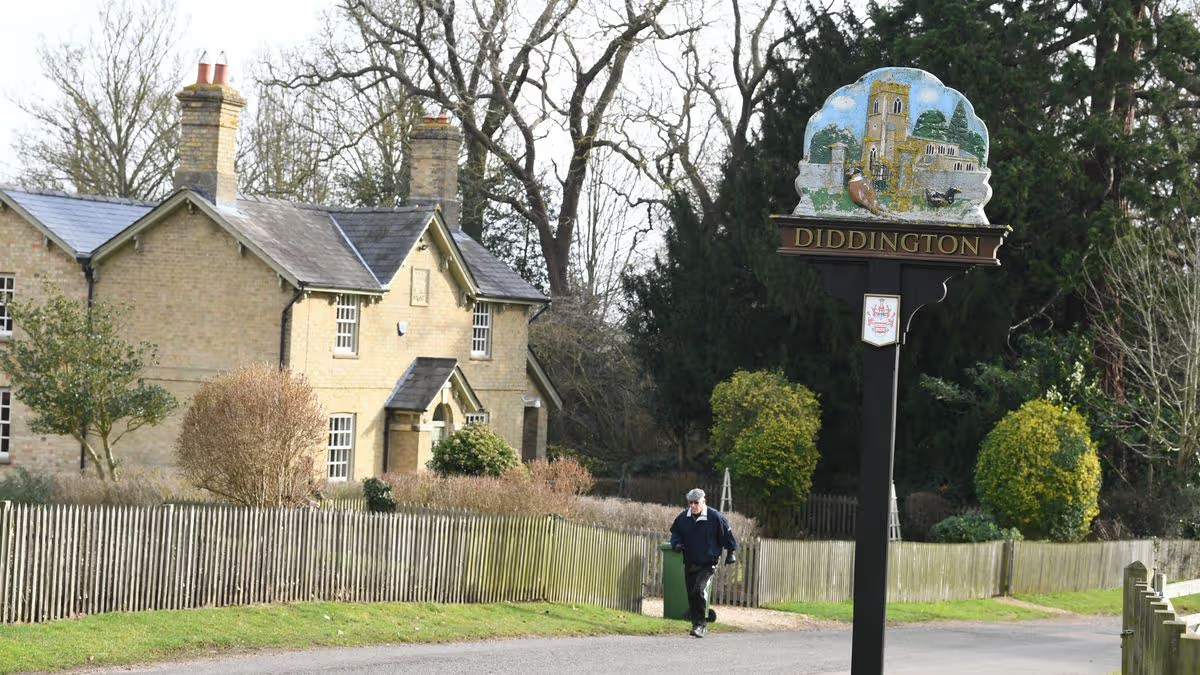
Driving down the A1 you would quite easily miss the turning for the quiet and tiny village of Diddington, near Huntingdon. Cambridgeshire’s smallest village is an absolute gem despite not really having much there.
Advertisement
It sits directly next to the busy dual carriageway and covers only 526 hectares. According to the Office for National Statistics, it had a population of just 56 people in 2016. This makes it the very smallest village in Cambridgeshire.
In fact, it’s so small that it doesn’t even appear on TripAdvisor! That’s probably due to the fact that it only has a church and village hall, which doesn’t really account for much tourism.
Despite not having much there now, this tiny village has a vast history in a military sense. During the Second World War, it housed prisoners of war and was used as a transit camp, then it became home to the 49th American Station Hospital, the second largest American hospital in England.
After the war, it became a Polish Resettlement Camp for displaced people and remained home to a large Polish community until the late 1950s. For such a small place, it has a very fascinating and diverse history.
Advertisement
The village today could also very easily be the set of a period drama, with tiny whitewashed cottages, wooden fences and a countryside lane with no road markings but verges spotted with the white of the first snowdrops in Spring.
So what is actually there today? Well its main attraction is definitely its local church, the parish Church of St Lawrence. This tiny little village church has the original 13th-century font still present.
Professor Ramani Moonesinghe, national clinical director for critical and perioperative care at NHS England, said: “Staff across the NHS will be doing everything they can this week to keep patients safe and ensure people can continue to get the care they need,” said Prof Moonesinghe.
We have picked out two well-fancied horses we like, as well as an outsider that could go close at a big price
15:11, 05 Apr 2026
Advertisement
The BoyleSports Irish Grand National is the richest race in the Irish jump racing calendar and has a roll of honour that includes Desert Orchid, Bobbyjo and a number of subsequent Aintree Grand National winners.
Picking the winner is not always easy, though. In 2021 and 2022, Dermot McLoughlin trained 150/1 and 40/1 winners of the race, much to the delight of bookmakers.
The last two winners have gone off at 13/2, though, so choosing the best betting strategy is difficult.
With this in mind, we have picked out two well-fancied horses for the race, as well as an outsider that could go close at a big price.
Advertisement
Solider In Milan 8/1
It would have been hard to imagine that Solider In Milan, less than a year after winning a bumper at Punchestown, would be lining up in the Irish Grand National.
This Emmet Mullins-trained horse was well backed to beat none other than King Rasko Grey, winner of the Turners’ Novices’ Hurdle at Cheltenham, in the aforementioned bumper, before connections took the bold step of going straight over fences.
He has been brought along steadily this season, and the feeling is that this race was the plan all along. The seven-year-old’s lack of experience is a concern, but he certainly has the class to be involved.
Advertisement
Goraibhmaithagat 14/1
Colm Murphy has been in the game for a long time and has trained some brilliant horses, not least the likes of Brave Inca and Big Zeb.
But after many quiet years, he has quality stock in his yard again, and many of them are running this weekend.
Zanoosh looks to hold very strong claims in the Honeysuckle Mares’ Novice Hurdle, and Goraibhmaithagat could win the big one.
Advertisement
Goraibhmaithagat showed plenty of ability over hurdles but was not highly tried, and has been brought along steadily over fences ever since.
Always looking like a step up in trip would suit, the money came for the JP McManus horse in the Leinster National last time, only for the gelding to be caught on the line.
You get the sense, though, that this horse is improving with every run over fences and could still be well ahead of his mark.
Weveallbeencaught 40/1
Advertisement
There have been plenty of surprise winners of this race in recent years, and Weveallbeencaught might be the next.
Compared to some of the unexposed novices in this line-up, Weveallbeencaught has shown his hand many times to the handicapper, but he looks an ideal type for this sort of marathon challenge.
Formerly trained by Nigel Twiston-Davies, this nine-year-old gelding has been reinvigorated by a switch to Eric McNamara’s Limerick yard this season.
After finishing second in the Munster National in October, he was disappointing at Leopardstown over Christmas but showed plenty of spirit when running a gallant race to finish seventh in the Kim Muir Handicap Chase at Cheltenham.
Advertisement
The Irish handicapper has given him a chance, and while many might crumble under the demands of this race, Weveallbeencaught looks tailor-made for the challenge.
Yang Haiming didn’t stop working when he retired from the coal mines at age 60. Instead, he jumped into a new industry.
Yang is part of a generation of workers that powered China’s growth by digging coal from underground mines in Datong, a city known as China’s coal capital in the northern province of Shanxi. Now, as China prioritizes renewable energy over coal, Yang is ahead of the change his fellow workers are being forced to confront.
He now runs a restaurant that sells lamb skewers to tourists visiting the Yungang Grottoes, a historically significant 6th century site featuring Buddhist carvings in caves that draws millions of visitors a year.
Shanxi province would be the world’s larger producer of coal if it were its own country. Its roughly 800,000 miners dug 1.3 billion tons in 2025, or nearly one-third of China’s coal. A few million more people work in jobs that rely indirectly on coal, ranging from logistics to restaurants. The province will see crucial change as China adds renewable energy so fast it covered almost all of the nation’s growth in power demand last year, and growing tourism is a major goal.
Advertisement
Experts say it’s vital to make sure coal workers don’t get left behind — a worry for many.
“It doesn’t feel like money’s coming into this industry,” said Zhou Hongfei, a coal miner.
Coal town’s evolution
As is typical for China’s state-owned enterprises, the coal company built Yang’s village right next to the mine — called No. 9 — that its residents would work. The place once hummed with thousands of workers and their families, with a school, a day care and a sports center. An elevated rail line passes through to carry coal to the rest of the country.
Advertisement
These days, the No. 9 mine is mostly a museum, though a section is still being worked. The school is empty, its gates locked. Many of the low-rise apartment blocks are only partially filled, often not by miners but by people attracted to cheap housing.
Yang recalls prosperous years before surrounding villages were dismantled.
“There were so many people, especially during the new year days,” he said. “It was crowded everywhere. Now the bustling scenes have gone, and so has the feeling.”
Those who stayed behind, like Yang, have tried to capitalize on visitors to the Yungang Grottoes. On a day when Associated Press reporters visited, one retired coal miner walked the street striking up conversations in hopes of bringing customers to his noodle shop. Mostly elderly people walked in the street, soaking up the sun.
Advertisement
Transitioning to tourism is difficult
Yang is in the minority of workers who’ve managed to make a transition.
There are many “who don’t know what to do, who say they don’t have the right skill sets for anyone else. All they know is to be a coal miner, or the easiest fallback option is for them to go back to farming,” said Tom Wang, a Shanxi native, environmental activist and founder of People of Asia for Climate Solutions.
Zhou, 36, said he thought about switching to tourism but didn’t know how. And he worries about supporting his wife and 8-year-old daughter.
Advertisement
“To really be able to make contact with and then switch into a new industry is very hard, and the truth is, I don’t dare,” he said. “If you leave this industry, you don’t know if it’ll work out. Can I adapt? And what if this ends up being a burden for my family?”
Mining wages rise and fall with demand. Before Yang retired eight years ago, he earned up to 10,000 renminbi (about $1,450) in a good month. He said he earns more now from his restaurant.
The province is trying to develop several alternative industries, from investing in coal-to-hydrogen projects to promoting its native “youmai,” a type of oat used by locals to make a special type of noodles.
But Shanxi’s major focus and biggest success for life after coal has been tourism. Hang Kan, who directs the Yungang Research Institute that oversees the grottoes and is a representative in the National People’s Congress, last year called for accelerating development of the culture and tourism industry into “a strategic pillar” that “promotes people’s welfare” in Shanxi.
Advertisement
His remarks came after the blockbuster video game Black Myth: Wukong, in which the lead character visits the grottoes and many nearby sites, caused a spike in visitors. The number jumped to 4.5 million in 2024, up from 3 million the year before, according to state media.
Yan Jiali, a tour guide in the region, said that boom has caused rising interest in jobs like hers, which requires a government test to become licensed.
“Even my mom’s friends would come ask me about taking this test,” she said.
Wang, the activist, is hoping that the high-tech industries that are now the nation’s priority will help Shanxi’s transition by providing jobs. After all, he said, the province’s coal powered China’s transformation into an economic powerhouse.
Advertisement
“What if DeepSeek comes over to Shanxi and says, OK, we will start a data center here? What if Baidu comes over to Shanxi?” he said, referring to China’s homegrown tech companies.
Coal remains important
Few think Shanxi can leave coal mines behind completely. Experts see coal as a critical safety net for China’s security needs, and the Iran war has once again highlighted just how vulnerable energy supply chains are to disruptions.
The government recently declined to cap how much coal can be used, walking back its commitment to gradually reduce coal consumption, according to analysts at the Centre for Research on Energy and Clean Air.
Advertisement
“The confidence hasn’t grown to the point where they can entirely depend on renewable energy,” said Qi Qin, an analyst at CREA.
In fact, China has continued to build out coal power plants at a massive scale, bringing online 78 gigawatts in 2025, more than India did in a whole decade. One gigawatt can power about 320,000 Chinese households for a year.
Even if demand doesn’t fall, workers also have to worry that their mines will play out. Some of the older mines in Datong are near the end of their lives. When that happens, workers can be reassigned to other mines that may be far away and pay less.
Another coal mine worker, Xu, has taken a second job as a ride-share driver, spending about 5 hours a day behind the wheel after his day job ends. Xu — who declined to give his full name for fear of repercussions from the state-owned mine — said he doubted that the benefits of the industries replacing coal will be spread evenly, whether it’s tourism or renewable energy.
Advertisement
“This tourism industry, how do I get in there?” he asked. “For Datong, those who can enjoy the benefits of this tourism boom, it’s mostly the big hotels and maybe some restaurants, noodle shops, but what do you think regular people can get?”
___ The Associated Press’ climate and environmental coverage receives financial support from multiple private foundations. AP is solely responsible for all content. Find AP’s standards for working with philanthropies, a list of supporters and funded coverage areas at AP.org.























































You must be logged in to post a comment Login