Connect with us
DAPA Banner

NewsBeat

Deep underground, a telescope may soon detect ghosts of stars that died before Earth existed

Published

on

Deep underground, a telescope may soon detect ghosts of stars that died before Earth existed

Imagine looking up at the night sky and seeing a star suddenly burst into a blaze of light brighter than anything nearby. A flash so bright that it briefly outshines an entire galaxy before fading forever.

This violent fate is rare: fewer than about 1% of stars are big enough to end their lives this way. Indeed, these dramatic explosions only occur in so-called “massive stars”. These are stars with a mass roughly eight times or more that of the Sun.

But these cosmic explosions, known as supernovae, have naturally fascinated astronomers for centuries. In 1572, for instance, Danish astronomer Tycho Brahe observed a supernova explosion so bright that it could be seen with the naked eye for two years.

Yet what we can see with our eyes, or even with powerful telescopes, when these stars die, is only a tiny fraction of the story. Because most of the energy from a supernova is carried away by neutrinos, these are nearly invisible particles often called “ghost particles” because they pass through almost everything in their path.

Advertisement

Scientists are now finally on the verge of seeing these ghostly messengers. With the help of an extremely powerful telescope buried deep underground in Japan, astronomers may be able to catch a glimpse of these stellar “ghosts” – and with it the remnants of explosions from stars that died as long as 10 billion years ago.

Particles from before time

And there’s a really good chance that scientists might be able to finally see these ghost particles this year. This is largely due to Japan’s Super-Kamiokande telescope receiving an upgrade, which significantly enhances its ability to detect supernova neutrinos.

For me, as a particle astrophysicist, this would probably be one of the most exciting scientific achievements in my lifetime. Indeed, it would mean we could see particles that were produced even before the Earth itself existed, as the telescope is now sensitive enough to catch the faint “glow” of all the exploding stars in the universe.

Advertisement

This is all possible because neutrinos almost never interact with anything. They have no electric charge. So they can travel through space – and even through entire planets – without being absorbed or scattered, so almost nothing can stop them.

In fact, billions of these ghostly particles are passing through your body every second – and you don’t even notice – and some of them have been travelling for more than 10 billion years to get here.

When a star dies

Big ideas lead to big questions, and one such question astrophysicists are trying to figure out is what remains after the explosion of such a star.

Does the collapsing core become a black hole? Or does it form a different type of star known as a neutron star, which then slowly cools over time? A neutron star is an incredibly dense object, only about 20 kilometres (12 miles) across, roughly the size of a large city or about the length of Manhattan.

Advertisement

If scientists are able to detect the combined signal from all the supernovae that have ever occurred, it would bring us closer to being able to answer these questions. It would also allow us to study the deaths of stars across the entire history of the universe, using particles that have been travelling toward us for billions of years without ever stopping.

Supernova remnant N 63A lies within a clumpy region of gas and dust in the Large Magellanic Cloud.
NASA, ESA, HEIC, and The Hubble Heritage Team (STScI/AURA), CC BY

Supernovae are rare in our galaxy, happening only once every few decades. But across the universe, a massive star explodes in a supernova roughly once every second. When they explode, they release enormous energy: only about 1% is visible light, while 99% escapes as neutrinos.

Even though these neutrinos are almost invisible, they carry the story of every star that has ever exploded – and now, for the first time, we may be able to catch them.

So if 2026 does bring the first clear detection, it will mark a new era in astronomy. For the first time, we won’t just observe the brilliant explosions of nearby stars, but the collective story of all the massive stars that have ever lived and died.

Advertisement

And it all starts with a telescope buried deep underground in Japan, patiently watching for the faint, ghostly glow of the universe’s oldest explosions.


This article was commissioned as part of a partnership betweenVidenskab.dk and The Conversation. You can read the article in Danish.


Source link

Advertisement
Continue Reading
Click to comment

You must be logged in to post a comment Login

Leave a Reply

NewsBeat

Two long-lost Doctor Who episodes rediscovered after going missing for more than 60 years

Published

on

Two long-lost Doctor Who episodes rediscovered after going missing for more than 60 years
Doctor Who has returned in an unconventional way (Picture: Sunday Mirror/ Mirrorpix/ Mirrorpix via Getty Images)

Two rarely seen Doctor Who episodes that first aired decades ago are now available to watch on BBC iPlayer.

The BBC sci-fi series first arrived on screens almost 63 years ago, spanning around 900 episodes, 41 seasons, 15 (main) Doctors, and a 2005 reboot.

With such a wealth of content, there have been several early stories from the Classic Who era (1963-1989) which have been lost to time and wiped from the records.

In fact, over 90 episodes from the 253 which aired in the first six years are unaccounted for.

Advertisement

However, last month it was revealed that, in the first major recovery in over a decade, two more long-lost episodes have been found.

Get personalised updates on Doctor Who

Wake up to find news on your TV shows in your inbox every morning with Metro’s TV Newsletter.

Sign up to our newsletter and then select your show in the link we’ll send you so we can get TV news tailored to you.

Advertisement

The two episodes in question – season three episode one, The Nightmare Begins, and episode three, Devil’s Planet – aired in November 1965, to launch William Hartnell’s third season with companion Steven Taylor (Peter Purves).

A still of William Hartnell and Peter Purves as The Doctor and Steven in Doctor Who
Nearly all of this William Hartnell adventure had been lost to time (Picture: BBC)
Daleks in Classic Who episode
This story centred around the Doctor’s arch-nemesis – The Daleks (Picture: BBC)

A clip released earlier this week from one of the episodes, The Nightmare Begins, shows the Doctor attempting to get to a city in a jungle before being held at gunpoint.

The intervening second episode, Day of Armageddon, was also recovered in 2004 by a former BBC engineer.

All in all, the revived trio are part of a 12-part ‘dark and gritty’ Dalek storyline written by Terry Nation, with nine segments still wiped from history.

Advertisement

As for where these gold-dust episodes were found, they were sitting in a cardboard box filled with a ‘ramshackle’ collection of vintage films discovered by charitable trust Film is Fabulous! (FIF), according to the BBC.

The episodes were only ever aired in the UK in the 60s, making them a true rare find and exciting addition to the Whoniverse.

Purves, 87, was invited to the Phoenix Cinema in Leicester, where the joyous finds were revealed, leading him to declare: ‘My flabber has never been so gasted.’

Peter Purves
Purves, now 87, was surprised by the findings

BBC Archives are working to restore the original 16mm telerecordings, ensuring fans can enjoy a little extra treat with their Easter Eggs this April,’ Director of BBC Archives, Noreen Adams, shared in a statement.

Explaining the recovery process, FIF trustee chair Professor Justin Smith, explained: ‘We travel all over the country to recover film collections from private hands.

Advertisement

‘A lot of the films had suffered water damage, and the cans had corroded. These are gems in what was an eclectic and ramshackle collection, a lot of which hadn’t been looked after as well as the Doctor Who had.

‘The collector did recognise what he had, but how he acquired them has been lost to time.’

The Daleks in colour with William Hartnell as the first Doctor opening the Tardis
There are still over 90 lost episodes (Picture: BBC)

Meanwhile, discussing his memories of the lost episodes, Purves added: ‘I’m not sure I even saw those programmes go out originally – I remember the stories, but having seen them, the pictures are unfamiliar to me.

‘I didn’t remember the first one when I was still almost comatose following the injury I received fighting in Troy in the wonderful Mythmakers – which of course is missing.’

The last time Doctor Who episodes were recovered was in 2013, through a Nigerian TV station housing nine missing instalments from two Patrick Troughton stories, The Enemy of the World and The Web of Fear.

Advertisement

The BBC has been maintaining the legacy of Classic Who on iPlayer in recent years, with the vast corpus available on iPlayer.

A still from a Doctor Who episode of William Hartnell as the First Doctor and Peter Purves as companion Steven Taylor
This is the biggest discovery in over a decade (Picture: BBC)

It has even launched a colourisation project with the iconic 1963 tale, The Daleks, being released with colour just a few years ago. This was followed by Patrick Troughton’s The War Games.

The original series of Doctor Who aired from 1963 to 1989, before being rebooted in 2005. The most recent season, starring Ncuti Gatwa as the 15th Doctor, aired last year.

During the finale of his second season, the character regenerated and appeared to be replaced by Billie Piper, who played Rose Tyler, the Doctor’s first companion when the series was rebooted over two decades ago.

The finale also saw Jodie Whittaker, the 13th Doctor, make a guest appearance while Gatwa’s Doctor appeared to be travelling through alternate universes.

Advertisement

The Nightmare Begins and Devil’s Planet are available to stream on BBC iPlayer now.

A version of this article was originally published on March 13, 2026.

Got a story?

If you’ve got a celebrity story, video or pictures get in touch with the Metro.co.uk entertainment team by emailing us celebtips@metro.co.uk, calling 020 3615 2145 or by visiting our Submit Stuff page – we’d love to hear from you.

Advertisement

Source link

Advertisement
Continue Reading

NewsBeat

Three arrested after boy, 14, shot dead in Woolwich, London

Published

on

Three arrested after boy, 14, shot dead in Woolwich, London

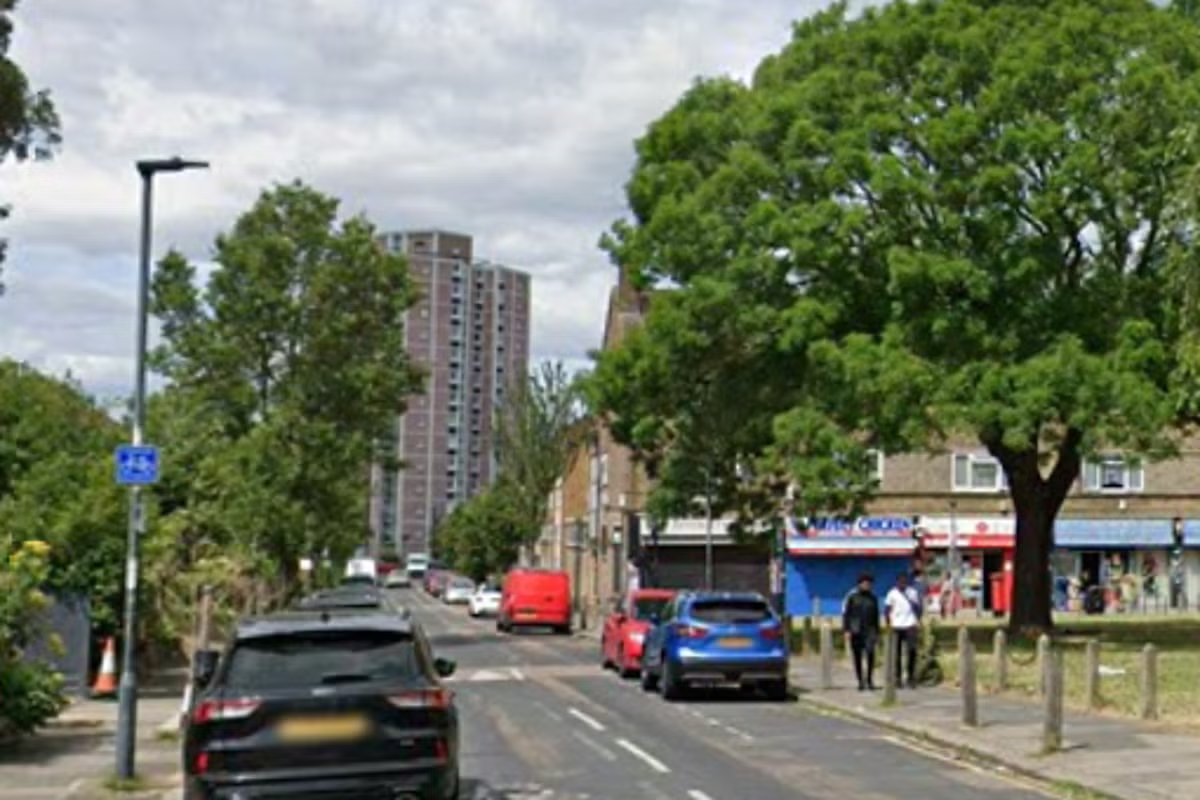
Three teenagers have been arrested on suspicion of murder after a 14-year-old boy was shot dead in south-east London.

Officers received reports of a shooting on Lord Warwick Street, Woolwich, at about 3.40pm on Thursday, the Metropolitan Police said.

Two boys, aged 14 and 16, and an 18-year-old man have been arrested on suspicion of murder.

The force had said in an earlier press release that the victim was a man, but on Friday confirmed he was a 14-year-old boy.

Advertisement

Detective Chief Inspector Lucie Card said: “Our thoughts remain with the boy’s family and loved ones.

“We are aware of the concern that this incident will cause the local community.

“We have already made three arrests and our investigation continues at pace. An increased police presence remains in the area.

“I would appeal for anyone who was in the area at the time, who has CCTV or dashcam footage of the incident or has information that could help my officers to come forward.”

Advertisement

Source link

Continue Reading

NewsBeat

Road closure planned in Grangetown for ‘nine weeks’

Published

on

Government invests £3.3bn to improve roads in North West

The authority has published notice of its intention to make a Temporary Prohibition of Driving Order covering parts of Robert Street and Granville Road in Grangetown.

Works are being, or are proposed to be, carried out on or near the affected lengths of road.

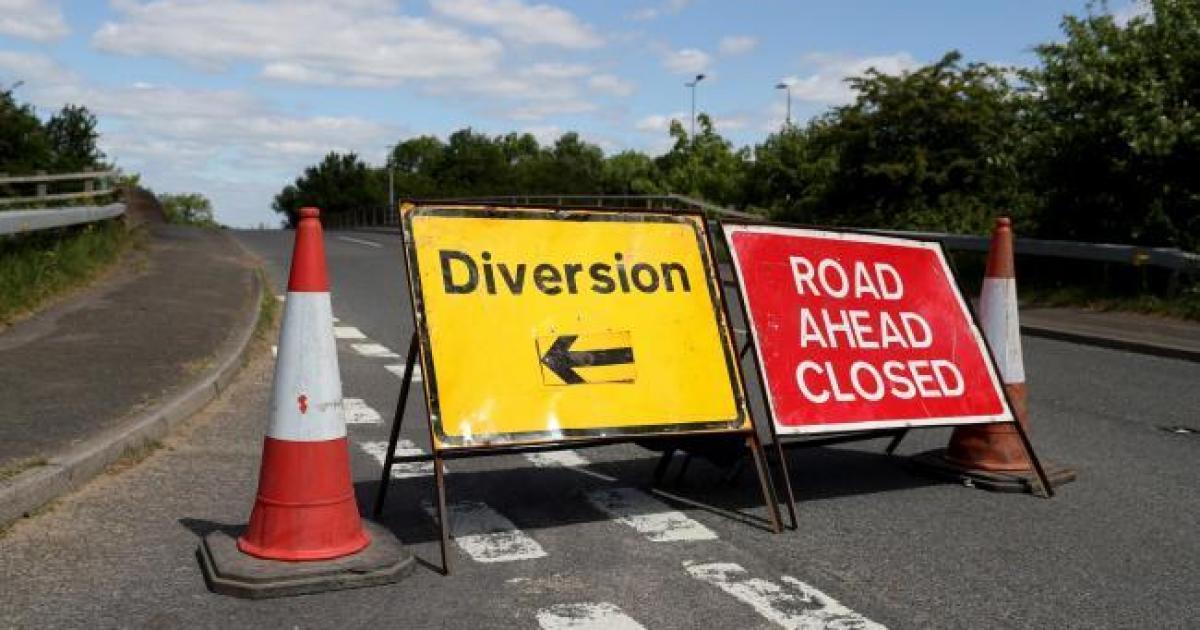
If the order is confirmed, all vehicles will be prohibited from proceeding along Robert Street from its junction with Alexandra Road in a southerly direction for 70 metres.

Advertisement

Granville Road would also be closed from its junction with Robert Street through to its junction with Evans Street in Grangetown.

Access will, however, be maintained to residents’ properties within the closure area, and local diversions are set to be put in place to route traffic around the works.

  • For more notices affecting YOUR area, visit our Public Notice Portal – Public Notices from The Northern Echo ( publicnoticeportal.uk ).

The order is due to come into operation on April 27 and would remain in force for up to 18 months.

The council says it is envisaged that the works themselves will be completed within nine weeks.

The notice is issued by B Archer, chief executive of Redcar and Cleveland Borough Council, from Redcar and Cleveland House, Kirkleatham Street, Redcar, TS10 1RT.

Advertisement

Source link

Continue Reading

NewsBeat

How the Epstein files dogged Pam Bondi’s time as attorney general

Published

on

How the Epstein files dogged Pam Bondi's time as attorney general

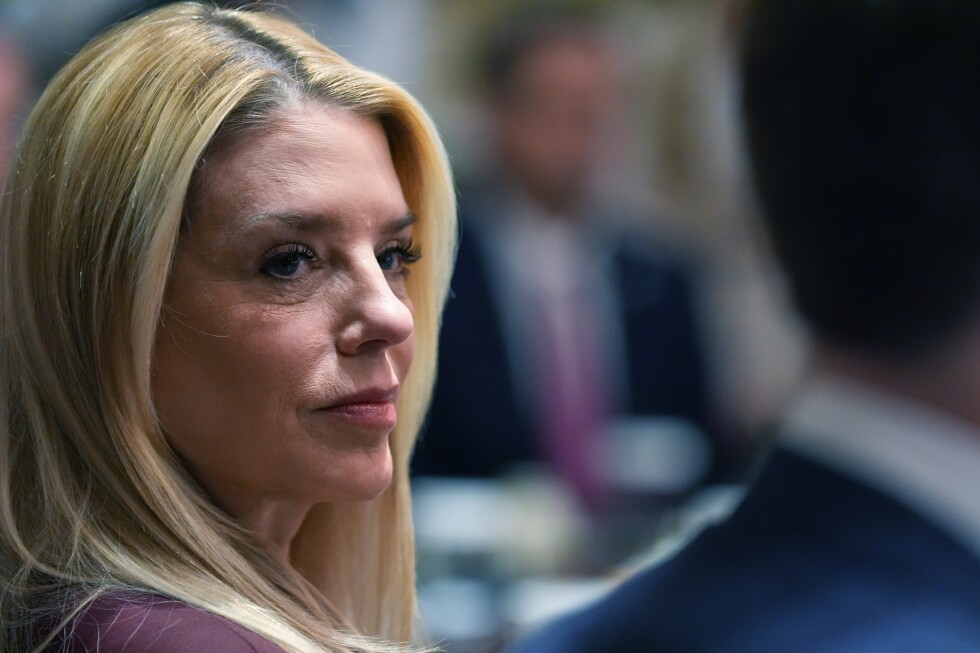
NEW YORK (AP) — After Pam Bondi became U.S. attorney general last year, conservative influencers, online sleuths and others who wanted the government to disclose all it knew about Jeffrey Epstein thought they might have a champion in the Department of Justice.

So did Jess Michaels, one of the legions of women who have said they were sexually assaulted by the late financier and convicted sex offender with a roster of powerful friends in business, politics and beyond.

“I thought, ‘Well, maybe a woman stepping into this role will finally, finally get the truth,’” Michaels recalled Thursday, after President Donald Trump announced Bondi was out of the nation’s top law enforcement job.

“She had this opportunity to be a hero and to really do right by survivors of sexual violence and trafficking,” Michaels said, “and she chose not to.”

Advertisement

The furor over the “Epstein files,” as the trove of investigative records came to be known, wasn’t the only controversy of Bondi’s tenure. But the arc — first raising expectations for a big reveal, then declaring there was nothing to see, and ultimately a forced, flawed document dump — was a stubbornly problematic storyline that ran through her time as attorney general.

Bondi rejected criticism of her handling of the matter, and Trump on Thursday praised her as “a Great American Patriot and a loyal friend.”

Michaels and other Epstein victims watched it all with shaken trust that Bondi’s departure alone won’t likely rebuild.

“This is not about a single person,” accuser Annie Farmer said Thursday. “It is about a government and judicial system that has repeatedly failed Epstein survivors.”

Advertisement

Here’s a glance at Bondi’s part in the Epstein saga:

February 2025: The binders

Freshly confirmed as attorney general for a president who had suggested on the campaign trail that he’d open more government documents on Epstein, Bondi whetted appetites by declaring on Fox News that “you’re going to see some Epstein information released.” And when a host asked about “releasing “the list of Jeffrey Epstein’s clients” — a long-rumored, never-seen sex trafficking roster — she replied that it was “sitting on my desk right now.”

A day later, conservative commentators and content creators were brought to the White House to get DOJ binders emblazoned with “The Epstein Files: Phase 1” and “Declassified.”

The attempt to showcase transparency soon backfired, once it emerged that the contents largely were already public. Bondi demanded that the FBI give her “the full and complete Epstein files,” and she later said that she’d unearthed a “truckload” of previously withheld material and that “everything is going to come out to the public.”

Advertisement

July 2025: The walkback

After months of anticipation, the Justice Department said it wouldn’t release any more Epstein material. A court had sealed much of it to protect victims, and “only a fraction” would have come out if Epstein had gone to trial, the agency said in an unsigned memo. It added that authorities hadn’t found evidence that merited new charges or investigations and that “perpetuating unfounded theories about Epstein” wouldn’t help victims get justice.

And, it said, there was no “client list.” As for Bondi’s prior comment that it was on her desk, officials said she had meant the overall case file.

Conservative influencers, among others, blasted the turnabout and questioned Bondi’s capability. But Trump stood by her, scolding a journalist for attempting to ask her a question about Epstein at a White House Cabinet meeting.

Trump had himself raised questions for some years after Epstein’s 2019 death in jail as the financier faced federal sex trafficking charges. After the Justice Department memo, however, the president suggested there was nothing more to say about Epstein and the country, including his own supporters, should simply move on.

Advertisement

November 2025: The legislation

Amid a drumbeat of disclosures that begin to exact consequences for some powerful people — particularly Andrew Mountbatten-Windsor, Britain’s former Prince Andrew — Congress passed legislation to force the Justice Department to disclose its investigative files on Epstein. Trump signed it into law, casting the quest for Epstein information as a Democratic-led distraction from the Republican agenda.

Meanwhile, at his urging, Bondi announced that the U.S. attorney in Manhattan would investigate Epstein’s ties to some of the Republican president’s political foes, including Democratic former President Bill Clinton. None has been accused of misconduct by Epstein’s accusers; nor has Trump, another former Epstein friend. Both Clinton and Trump have said they knew nothing about Epstein’s misconduct and cut ties with him many years ago.

December 2025: The first batch

At the statutory deadline for making the Epstein files public, the Justice Department released only some of them. While the records included some material the public hadn’t previously seen, including some candid photos of Clinton, the documents didn’t break major ground and included little about Trump.

The department said it was continuing to review other Epstein records to make sure that victims were protected.

Advertisement

But Democrats cried cover-up, bill sponsor Rep. Thomas Massie, R-Ky., accused the Justice Department of breaking the law by missing the deadline and redacting too much, and some Epstein accusers also questioned the extensive redactions.

January 2026: The big release

The Justice Department began releasing a huge cache of additional Epstein documents, videos and photos, though others remained under wraps.

The records pulled back a curtain on favor-trading and frank communications in a chummy elite that looked past Epstein’s 2008 guilty plea to solicitating prostitution from an underage girl in Florida. Some high-flying Epstein friends resigned or lost jobs in corporate America, academia, big law firms, the British, Slovakian and Norwegian governments and beyond.

But the documents disclosed highly personal information about some victims while redacting the names of Epstein correspondents in, for example, emails that appeared to refer to the sexual abuse of underage girls.

Advertisement

Gloria Allred, an attorney for numerous Epstein victims, said Thursday that Bondi betrayed them by failing to protect personal information in the files.

“She has destroyed the trust in the DOJ that victims had a right to expect, and her termination may be the only type of justice that survivors will receive from the DOJ,” Allred said by email.

February 2026: The hearing

At a congressional hearing, a combative Bondi tried to quell the Epstein files controversy. She defended how the Justice Department dealt with it, lobbed personal insults at Democrats and lauded Trump over, among other things, the performance of the stock market.

Bondi said she was deeply sorry for what Epstein victims suffered. But she declined a request from Rep. Pramila Jayapal, D-Wash., to face and apologize to them for the Justice Department’s actions, and Bondi dismissed Massie’s critiques of the release of victims’ personal information.

Advertisement

March 2026: The subpoena

The House Committee on Oversight and Government Reform subpoenaed Bondi to answer questions on April 14 about the Justice Department’s handling of the Epstein investigation and file release. With five Republicans joining Democrats to support the subpoena, it reflected widespread discontent, including in the GOP base, over Bondi’s management of the matter.

The future

For now, Deputy Attorney General Todd Blanche will be the acting attorney general.

Michaels, who traveled to the Capitol last year to press for the files’ release, wanted Bondi gone. But will Blanche do better?

“We can only hope. But given that they worked together, I don’t have great expectations,” she said.

Advertisement

The Associated Press generally does not identify people who say they have been sexually assaulted unless they come forward publicly, as Michaels has done.

Robert Glassman, an attorney for a woman who testified as “Jane” in the 2021 criminal trial of Epstein confidante Ghislaine Maxwell, noted that agency leaders come and go.

“For victims of sexual abuse, what matters is whether the institutions meant to protect them actually do their job,” he said.

Advertisement

Source link

Continue Reading

NewsBeat

Robbie Lawlor murder accused appears in court

Published

on

Belfast Live

Jonathan Gill was remanded into custody at Cloverhill Prison, with the next court hearing for extradition to be held on April 21

A man has appeared before the High Court as he faces extradition over the murder of Robbie Lawlor in Belfast.

Advertisement

Jonathan Gill, 44, with an address at Malahide Road, Clontarf, appeared before Judge Barry O’Donnell on the foot of a warrant in Northern Ireland for him to be charged with the murder of Lawlor, which occurred in the Ardoyne area of Belfast on April 4, 2020.

He is also to be charged with possession of a 9mm pistol on a date unknown between April 2nd and April 5th 2020.

Detective Sergeant Frank Lambe of the Garda National Bureau of Criminal Investigation (NBCI) Extradition Unit gave evidence of arresting Mr Gill on the Malahide Road in Dublin on April 2nd.

Det Sgt Lambe told the court that he arrested the man, whom he identified as the man sitting in court wearing a black top and shorts.

Advertisement

He said he introduced himself to Mr Gill by telling him his name and rank and informed him that he was aware of a trade and cooperation agreement calling for his arrest.

He told Mr. Gill that he would explain the details of this to him at the garda station. He then arrested Mr Gill on the foot of a UK warrant at 4:50pm.

Det Sgt Lambe said he cautioned Mr Gill and said he was not obliged to say anything but that anything he would say could be taken and used in evidence. Mr Gill made no reply, he said.

He then conveyed Mr Gill to Clontarf Garda Station where he was shown a copy of the arrest warrant. Mr Gill confirmed to Det Sgt Lambe that his name is Jonathan Gill, AKA Jack Gill and that his date of birth is the 29th of August 1981.

He informed Mr Gill of his rights to consent or not to surrender to the warrant and to avail of professional legal advice and representation.

Det Sgt Lambe said at the conclusion of reading over the summary he asked Mr Gill if he knew about the offences, to which he replied “No.”

The Judge informed Mr Gill in court again of his rights – that he can surrender to the UK, can avail of professional legal advice, the services of an interpreter, and to obtain legal advice in the UK. He asked Mr Gill if he understood those rights to which he responded in court: “Yeah.”

Advertisement

The Judge remanded Mr Gill into custody, with a date of April 21 set for the next hearing. Mr Gill can make a bail application, the court heard, of which the Minister for Justice is to be informed.

Mr Gill was remanded into custody at Cloverhill Prison, with the next court hearing for extradition to be held on April 21 before the same court.

For all the latest news, visit the Belfast Live homepage here and sign up to our daily newsletter here.

Source link

Advertisement
Continue Reading

NewsBeat

Iran war nears end of 5th week with both sides fighting and oil prices surging

Published

on

Iran war nears end of 5th week with both sides fighting and oil prices surging

DUBAI, United Arab Emirates (AP) — Iran fired on targets Friday across the Middle East, damaging a desalination plant and setting a refinery ablaze in Kuwait, while American and Israeli airstrikes hit the Islamic Republic as the war neared the end of its fifth week.

Tehran has kept the pressure on Israel and its Gulf Arab neighbors, despite U.S. and Israeli insistence that Iran’s military capabilities have been all but destroyed. In a sign that part of Iran’s theocracy could be willing to negotiate, the country’s former top diplomat published a proposal for ending the conflict in an influential American magazine.

Iran’s attacks on Gulf energy infrastructure and its tight grip on the Strait of Hormuz, through which a fifth of the world’s oil and natural gas transits in peacetime, have roiled stock markets, sent oil prices skyrocketing, and threatened to raise the cost of many basic goods, including food.

Iran’s ability to wreak havoc in the global economy has proved a major strategic advantage, and world leaders have struggled to figure out how to reopen the waterway. The U.N. Security Council was expected to look at a new proposal.

Advertisement

Iran’s former top diplomat suggests terms to end the war

Former Iranian Foreign Minister Mohammad Javad Zarif — a diplomat with long experience negotiating with the West who remains close to a pragmatic wing of Iran’s leadership — wrote on Friday that the time has come to end the suffering.

“Prolonged hostility will cause a greater loss of precious lives and irreplaceable resources without actually altering the existing stalemate,” Zarif, who helped negotiate Iran’s 2015 nuclear deal with world powers, wrote in Foreign Affairs magazine.

The U.S. has presented Iran with a 15-point plan for a ceasefire that includes reopening the Strait of Hormuz, dismantling Iran’s nuclear facilities and limiting its missile production in exchange for sanctions relief. But no signs of progress were apparent in the diplomatic effort.

Iran’s initial five-point counterproposal aired by hard-line state television included recognizing Iran’s sovereignty over the strait, the removal of U.S. bases from the region, compensation for war damage, and a guarantee against further aggression — all things likely unpalatable to the Trump administration.

Advertisement

Zarif’s proposal included elements of both of the plans.

Iran “should offer to place limits on its nuclear program and to reopen the Strait of Hormuz in exchange for an end to all sanctions — a deal Washington wouldn’t take before but might accept now,” he wrote.

Tehran and Washington were in talks about Iran’s nuclear program when the U.S. and Israel began bombing on Feb. 28 — the second time under President Donald Trump that the U.S. has attacked while in negotiations.

It’s not clear how much to read into Zarif’s proposal. While he has no official position in Iran’s government, he helped get reformist President Masoud Pezeshkian elected and would likely not have published such a piece without at least some authorization from senior leaders.

Advertisement

But it also remains clear who in Iran has the authority to negotiate since many leaders have been killed in the war. Immediately after the piece came out, Zarif wrote he had been “torn” about it — a sign he may already face pressure at home.

What’s more, it’s not clear how Trump will respond. He has vacillated between saying the U.S. is negotiating an end to the war and threatening to expand it. Thousands of U.S. Marines and paratroopers have been ordered to the region, raising speculation that there could be a ground offensive.

Iran targets a desalination plant and a refinery

Kuwait’s Mina al-Ahmadi oil refinery came under Iranian attack, and the state-run Kuwait Petroleum Corp. said firefighters were working to control several blazes.

Kuwait also said that an Iranian attack caused “material damage” to a desalination plant. Such plants are responsible for most of the drinking water for Gulf states, and they have become a major target in the war.

Advertisement

Sirens also sounded in Bahrain, Saudi Arabia said it had destroyed several Iranian drones, and Israel reported incoming missiles.

Authorities in the United Arab Emirates shut down a gas field after a missile interception reportedly rained debris on it and started a fire.

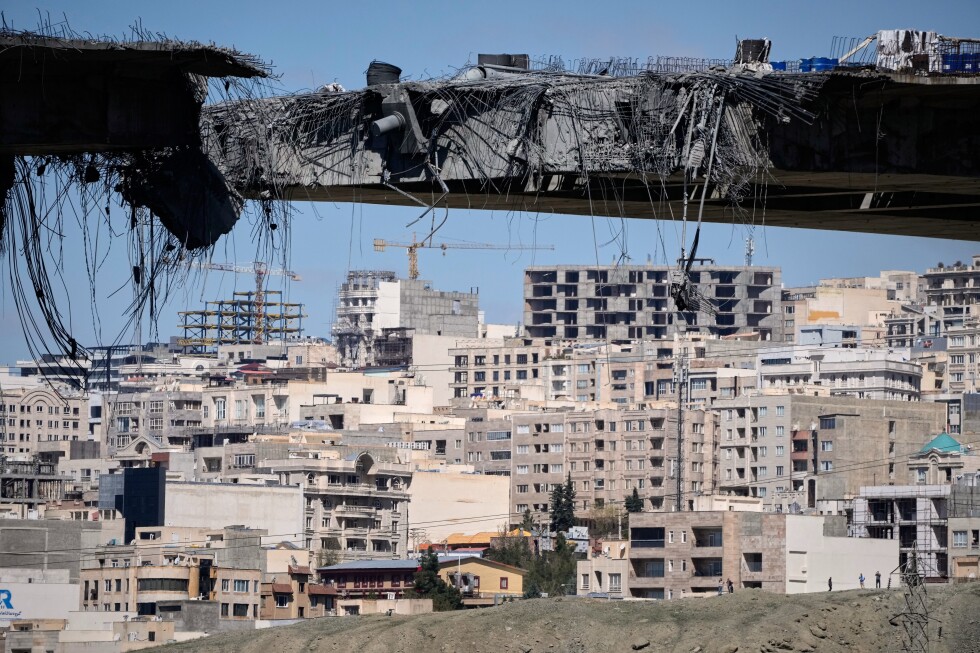
Activists reported strikes around Tehran and the central city of Isfahan, but it wasn’t immediately clear what was hit. A day earlier, Iran said the U.S. hit a major bridge, which was still under construction, killing eight people.

More than 1,900 people have been killed in Iran during the war. In a review released Friday, the Armed Conflict Location and Event Data, a U.S-based group, said they found that civilian casualties were clustered around strikes on security and state-linked sites “rather than indiscriminate bombardment” of urban areas.

Advertisement

More than two dozen people have died in Gulf states and the occupied West Bank, while 13 U.S. service members have been killed, while 19 have been reported dead in Israel.

More than 1,300 people have been killed and more than 1 million displaced in Lebanon, where Israel has launched a ground invasion in its fight with the pro-Iranian Hezbollah militant group. Ten Israeli soldiers have also died there.

UN Security Council to take up Strait of Hormuz security question

Spot prices of Brent crude, the international standard, were around $109 Friday, up more than 50% since the start of the war, when Iran began restricting traffic through the Strait of Hormuz.

The U.N. Security Council was expected to vote Saturday on a proposal from Bahrain that would authorize defensive action to ensure vessels can safely transit the waterway. Bahrain’s initial draft would have allowed countries to “use all necessary means” to secure the strait, but Russia, China and France — who have veto power on the Council — expressed opposition to approving the use of force.

Advertisement

Following meetings in Seoul between South Korean President Lee Jae Myung and French President Emmanuel Macron, the two leaders said they resolved to “cooperate to ensure safe passage” through the strait but did not offer specifics.

___

Rising reported from Bangkok. AP journalists Sylvie Corbet in Paris, Sarah El Deeb in Beirut, Tong-hyung Kim in Seoul, South Korea, and Edith M. Lederer at the United Nations contributed to this report.

Advertisement

Source link

Continue Reading

NewsBeat

We tried the Belfast fish and chip shop named as our readers’ favourite

Published

on

Belfast Live

We asked you to vote for your favourite chippy, so we headed out to give it a go!

Mick Conlon’s Fish and Chip Shop Review

Nothing beats a good chippy, and with today being Good Friday, we asked our readers to let us know where their go-to spot is in Belfast for the best fish and chips.

We were inundated with suggestions and we whittled it down to the top 10 which we then put to a reader’s vote, and there was one chippy that came out on top and that was Mick Conlon Fish & Chips, on the Grosvenor Road, so we had to head in and give it a go.

Advertisement

One of the reasons I love this job is that it allows me to venture outside of my usual food catchment areas and try new spots that aren’t right on my doorstep.

READ MORE: Belfast Live readers crown their ‘favourite fish and chips’ in the city ahead of Good FridayREAD MORE: Deliveroo Restaurant Awards announce shortlist of top food spots in Northern Ireland for 2025

When I arrived this spot looked like any traditional chippy which is what I absolutely love. For me, I can tell when somewhere is trying too hard that it won’t quite be the same.

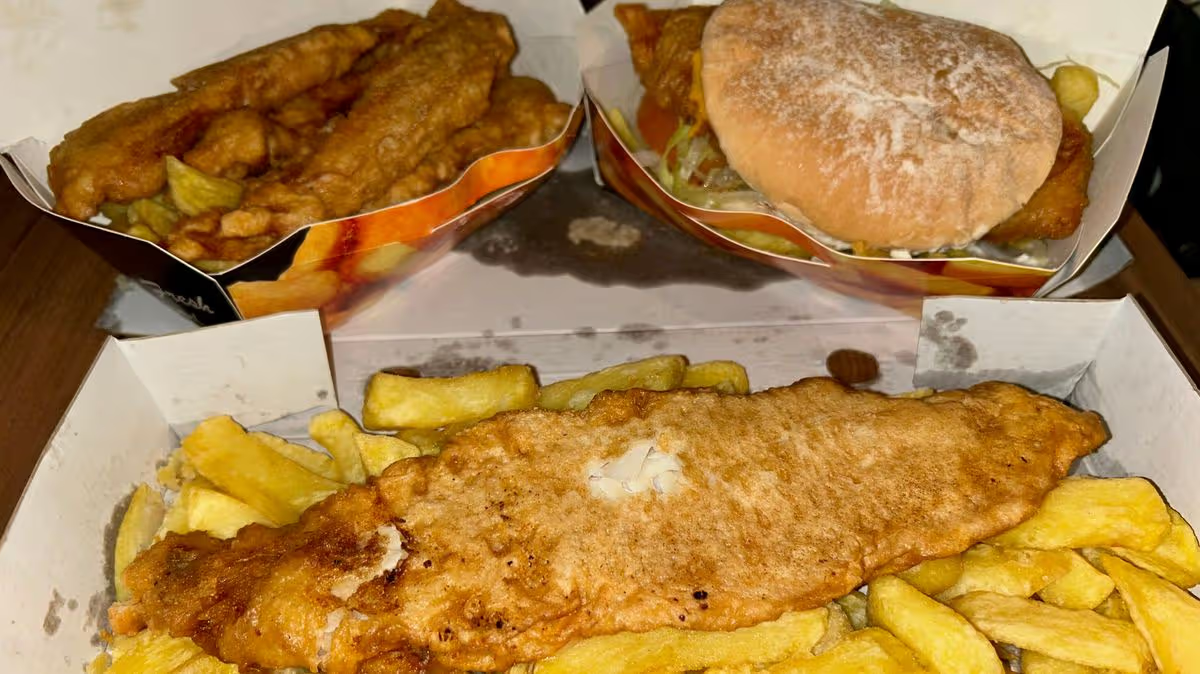
We got a bit of everything when I went in just to get a good idea of how it really was. We went for a fish supper, of course, a chicken goujon meal and a battered chicken burger meal, which I think really covers a lot of the classics, and I knew when I struggled to carry the bag that the portions were going to be pretty filling.

Advertisement

I couldn’t start anywhere else other than the fish supper with this one. The portion sizes were huge, and the fish was bigger than my head. It was cooked very well, and the taste was absolutely spot on. It was exactly what we wanted from a good fish supper.

The next on the list had to be the chicken burger that came with all the trimmings, and it was a struggle to even hold, which I won’t complain about. This was fantastic and was truly a classic chippy chicken burger in all regards.

Advertisement

The goujons were spot on and there were no changes with the portion sizes again. We loved these and they were definitely delicious.

You might have noticed I haven’t spoken about one of the main features of a chippy yet, the chips. That is simply because they deserve their own section. They were absolutely incredible, fluffy and crispy, I couldn’t get enough of them!

The price is something that we all have to consider when picking somewhere and this spot is really reasonable in that regards. So we had a fish supper, goujon meal and a chicken burger meal which came with 2 drinks. This came to a grand total of £21.17 and for the portion sizes this was quite a good price in my opinion.

Advertisement

This spot came with something extra, not quite in the bag, but with a side of personality thrown in for good measure. The staff in here were a proper laugh and kept me entertained to no end while I waited which I think I loved more than the food, and that’s saying something because this was a truly brilliant chippy.

So I can see why our readers love this spot. It was an all round great chippy with all the classics on offer, while also serving a community with more than food. The customers came in and left with a smile and good chat while they waited which shows that this seems to be more than a chippy for the people around it. It is absolutely not fine dining, but we can all get bored with that, can’t we?

So if you’re looking for your next chippy, think about trying this place and you won’t be disappointed.

If your mouth isn’t already watering have a look at our video from my visit:

Advertisement
Content cannot be displayed without consent

For all the latest news, visit the Belfast Live homepage here and sign up to our daily newsletter here.

Advertisement

Source link

Continue Reading

NewsBeat

‘Our Ryan Giggs’ – Brad Friedel hails Ireland legend, outlines World Cup fan regret

Published

on

Belfast Live

Ireland won’t be at this summer’s World Cup, but the former USA goalkeeper remembers their 1994 appearance.

Former USA goalkeeper Brad Friedel has described one of his old Irish teammates as “our Ryan Giggs.”

Friedel spent almost two decades in the Premier League, chalking up almost 500 appearances for Liverpool, Blackburn Rovers, Aston Villa and Tottenham.

During that time he lined out with a handful of Irish stars, including Richard Dunne, Jason McAteer, Phil Babb, Mark Kennedy, Jeff Kenna, Jonathan Douglas, Alan Kelly and Steven Reid.

Advertisement

But one player stood out above the rest. Friedel spent three seasons at Ewood Park with Damien Duff.

Speaking with Belfast Live via Gambling.com where users find top-rated Irish casinos, the Ohio-born star said: “I played with a few, but the best Irish player I played with was Damien Duff. I thought he was our Ryan Giggs.

“He was incredible for Blackburn during my time there and his performances were up there with the best wingers in the Premier League at that time for sure. That is how good he was.”

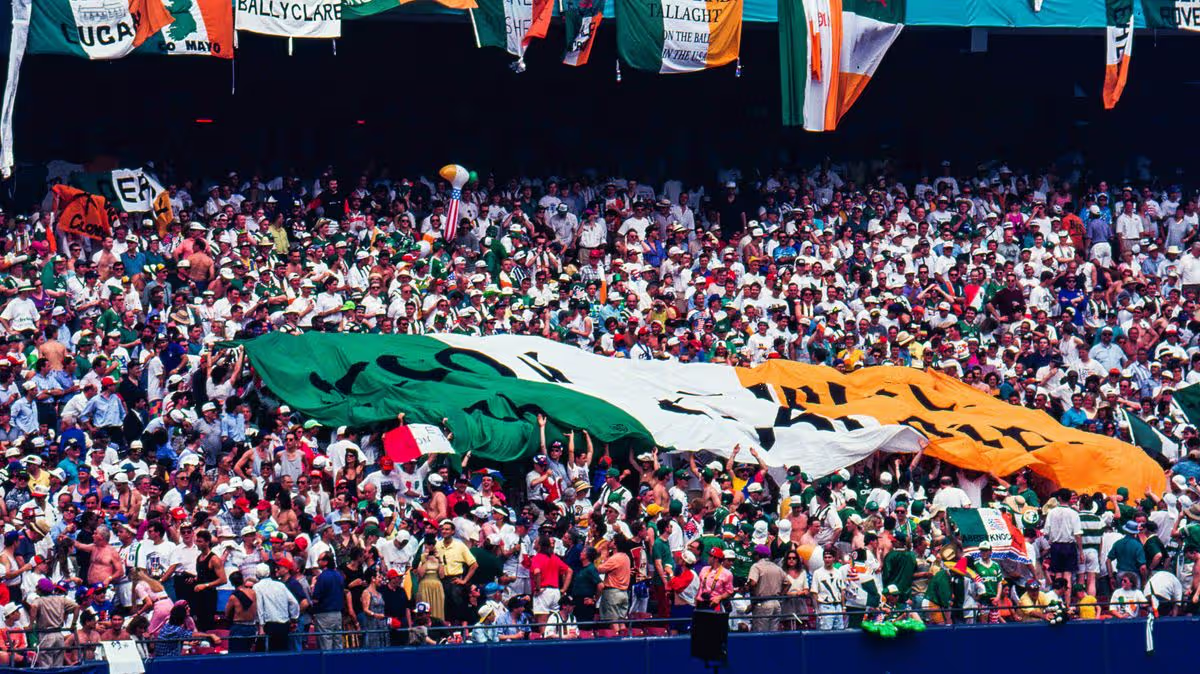
Friedel played three times against Ireland during his 82-cap USA career. He was involved in the US squad the last time the World Cup was held Stateside, when Jack Charlton’s Boys in Green made it to the last-16.

Advertisement

Ireland won’t be involved this time around. A penalty shootout defeat to Czechia in Prague ended their play-off hopes.

According to Friedel: “The fans more than the teams I think will be missed. The Irish fans are brilliant wherever they are and if they were to play in Boston or New York then the streets would be full of green.

“It would be a brilliant atmosphere and one the USA will miss out on as I know how great the Irish fans can be. They would have brought a fantastic fun environment to the States.”

Click here to sign up to our sport newsletter, bringing you the latest sports news, headlines and top stories.

Advertisement

Source link

Continue Reading

NewsBeat

Welsh Tesco store hosting marathon where runners will do laps of the shop

Published

on

Wales Online

Participants paid up to £49.95 to take part in the event which sold out in minutes

A supermarket in Wales is set to host what is believed to be the UK’s first ever “supermarketathon” -– and it has already sold out.

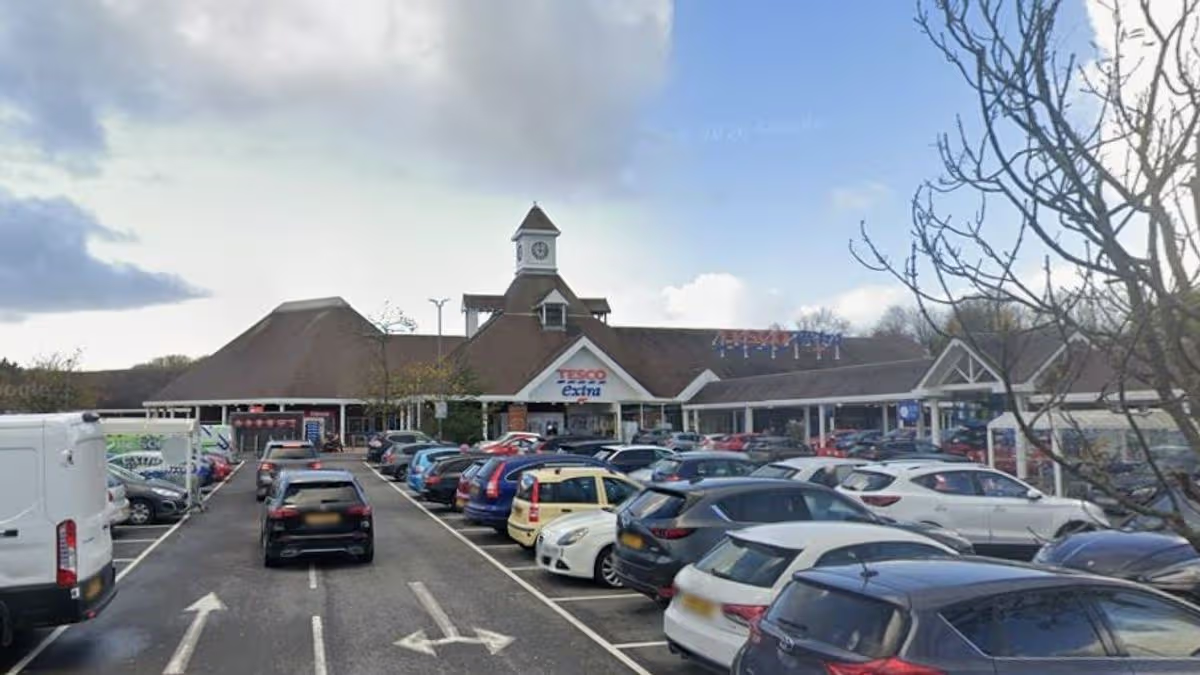
The event will take place at the Tesco Extra store in Bridgend, where 140 runners have signed up to take part in the unusual six-hour challenge organised by Phoenix Running.

Advertisement

Participants can complete anything from a 5km to a marathon or ultra distance by running repeated laps in and around the store.

The quirky course will start in the store foyer before heading outside to loop around the car park.

Runners will then head back inside and pass through the foyer and onto the travelator – although they’ll have to slow things down at that point as walking is mandatory for safety.

From there they will complete a lap of the first floor before heading back down and starting the whole process again.

Advertisement

Organisers say the final lap distance is still to be confirmed but is expected to be between 0.4 and 0.5 miles meaning competitors could find themselves repeating the same route dozens of times over the six-hour limit.

Runners will be free to complete as many or as few laps as they choose within the six-hour time limit. All participants will also receive a finisher’s medal regardless of distance completed. Stay informed on Bridgend news by signing up to our newsletter here

Tickets were priced at £47.95 for affiliated runners and £49.95 for unaffiliated entrants with all places now taken.

The event was met with a wave of excitement on social media with one person commenting: “That’s the stupidest thing I’ve ever heard, I’m definitely interested.”

Advertisement

A second said: “The two loves of my life. Running and supermarkets”, while a third wrote: “This has to be one of the daftest runs I’ve ever seen. I’m checking my diary and setting an alarm to enter.”

Officials from Tesco confirmed the Bridgend store will be hosting the event on June 28 to raise funds for the UK Armed Forces charity Help for Heroes. It will take place outside normal opening hours starting at 4.30pm.

A full risk assessment has been carried out prior to the event with staggered start times planned and safety measures in place including the requirement to walk on the travelator.

A Tesco spokesman said: “Our Bridgend Extra store is hosting this unique event to raise funds for our armed forces network partner charity Help for Heroes.

Advertisement

“It’s not every day that runners get to follow a course that goes through a supermarket so we are not surprised it has proved incredibly popular.”

Source link

Continue Reading

NewsBeat

Could the Middle East conflict open the door to price controls? Here’s how it works in Greece

Published

on

Could the Middle East conflict open the door to price controls? Here’s how it works in Greece

The US-Israel war with Iran has sent shockwaves through the global economy and predictions of COVID‑era inflation are becoming hard to ignore. In many countries, these pressures are already being felt, as households struggle to afford essentials.

During and after the height of the pandemic, governments across the political spectrum experimented with price controls in a bid to protect people from soaring living costs. Spain and Mexico, for example, implemented such measures from the political left; Greece did so from the right.

They were a response to the pressures of inflation, weakened household finances and growing insecurity for large swathes of the population.

Among these examples, Greece’s “household basket” programme stands out as a detailed attempt to keep essential goods affordable. As consumers may once again be facing a cost-of-living price spiral, it is a case study worth examining.

Advertisement

Greece entered the inflationary period (2021-22) with some of the lowest wages in Europe. Its average pay is still just a third of that in Germany. When inflation hit 10%-12% in 2022, everyday necessities such as food, dairy products and basic household supplies quickly became more expensive.

In November 2022, the centre-right New Democracy government introduced the household basket, requiring major supermarket chains to keep prices low on more than 50 categories of essentials. These included bread, pasta, rice, dairy products, cleaning materials and baby food. Relevant items were highlighted clearly in stores, and the list was updated weekly.

Originally presented as a temporary tool, the programme has been extended repeatedly because of ongoing inflation – most recently due to concerns about conflict-related price spikes. It has become a central part of the country’s strategy to stabilise living costs, along with related measures including profit caps in the fuel sector.

A system based on transparency

What distinguishes the Greek model is how it combines regulation with consumer access to information via a digital platform. Large supermarket chains are obliged to publish the prices of their basket items online.

Advertisement

Once placed on the list, an item’s price cannot rise for seven days, though it may fall at any time. Retailers face fines of up to €5 million (£4.3 million) for violations. The scheme also requires supermarkets to submit supplier price lists, giving regulators insights into where mark‑ups occur.

The platform allows shoppers to compare prices across retailers and locate branches stocking specific items. All purchases must take place in person, maintaining the scheme’s focus on physical retail while improving transparency.

Beyond the basket itself, in 2025 the Greek ministry of development and retailers agreed price cuts of 8% on average for 2,000 goods – and profit margins on essential items were capped at their 2021 level. Inspectors conducted regular audits to enforce compliance.

Advertisement

The contents of the Greek household basket can be tweaked temporarily to reflect holidays or special occasions.
vivooo/Shutterstock

Across many product categories, there were notable price declines. Among 56 breakfast foods and cereals, there was a price fall of up to 23%; among 34 cheese products, the fall was 5%-35%; and for fresh meat, the drop was 5%-7% across three products. On top of these, oils and fats dropped in price by 5%-16%, pasta by 3%-5%, and sweets and chocolate by 3%-17%.

The basket has gradually expanded to include pulses, fresh poultry, meat cuts, milk and cheese. The Greek government has also introduced short‑term “themed baskets” during periods of high seasonal demand. So far, Christmas and Easter baskets have included lamb, goat meat, turkey and chocolate Easter eggs to keep a cap on holiday costs.

Price controls remain controversial for some. Retailers in Greece have argued the system is unfair, and that they are unable to absorb the costs.

However, in the Greek case, supermarkets did accept reduced profit margins for the price-capped product lines. They responded with price wars to attract custom and boost market share, and with competitively priced own-brands. One consequence of these measures is that Greece now has a relatively cheap food basket compared with other EU countries.

Advertisement

In the UK at the height of the COVID pandemic, some large retailers raised prices above inflation – doubling their profits between 2019 and 2021-22. Under such circumstances, many may feel it is only fair to ask them to contribute to combating a cost-of-living crisis.

So, while price controls may not always please retail and other sectors, they are becoming more common. Many countries have been experimenting with ways to contain the cost of living, as practical tools to stabilise inflation and support citizens during unpredictable economic shocks.

Greece’s experience shows that such measures can be structured, transparent and enforceable. It also demonstrates that price controls need not be limited to one political tradition. They have been deployed by governments across the ideological spectrum when faced with inflationary pressures.

As the UK braces for further economic turbulence, triggered by conflict and volatile energy markets, Greece’s family basket offers a model worth studying. It is not a full solution to high inflation – nothing so simple exists – but it shows how governments can intervene to reduce pressure on households while maintaining oversight of essential markets.

Advertisement

A political party ready to champion measures that deliver immediate relief to struggling households could resonate widely at a moment when many people have yet to recover from the last cost‑of‑living crisis.

Source link

Advertisement
Continue Reading

Trending

Copyright © 2025