Connect with us
DAPA Banner

Tech

The AI Doc’s Falsehoods And False Balance

Published

on

from the hype-without-substance dept

There is a familiar media failure in which opposing viewpoints are presented as equally valid, even when the evidence overwhelmingly supports one side. It’s called Bothsidesism. This false balance phenomenon legitimizes misinformation and undermines public understanding by giving disproportionate weight to baseless claims.

Why bring this up? Because the new AI Doc film is based on it.

The film wants credit for being “balanced” because it assembles a wide range of experts. But putting Prof. Fei-Fei Li, a pioneering computer scientist, next to someone like Eliezer Yudkowsky, an author of a Harry Potter fanfic, is not “balance.”

Once you understand that false equivalence is baked into the film’s storytelling, you understand how misleading and manipulative the documentary is. And it is compounded by a series of falsehoods that go unchallenged and uncorrected.

This review addresses both failures. 

Advertisement

The “AI Doc” Movie

“The AI Doc: Or How I Became an Apocaloptimist,” co-directed by Daniel Roher and Charlie Tyrell, sets out to explore AI, especially its potential for good and bad, with a strong emphasis on the filmmakers’ anxieties and fears. Its basic premise is: “A father-to-be tries to figure out what is happening with all this AI insanity.” As summarized by Andrew Maynard from Future of Being Human:

“The documentary progresses through the eyes of director Daniel Roher as he faces a tsunami of existential AI angst while grappling with the responsibility of becoming a father. Motivated by a fear that artificial intelligence could spell the end of everything that matters, he sets out to interview some of the largest (and loudest) voices in AI to fathom out whether this is the best of times or worst of times for him and his wife (filmmaker Caroline Lindy) to bring a kid into the world.”

The “loudest voices” include many AI doomer figures, such as Eliezer Yudkowsky, Dan Hendrycks, Daniel Kokotajlo, Connor Leahy, Jeffrey Ladish, and two of the most populist voices on emerging tech (first social media and now AI): Tristan Harris and Yuval Noah Harari. The film also features voices on AI ethics, including David Evan Haris, Emily M. Bender, Timnit Gebru, Deborah Raji, and Karen Hao. On the more boosterish side, there are Peter Diamandis and Guillaume Verdon (AKA Beff Jezos). Three leading AI CEOs were also interviewed: OpenAI’s Sam Altman, DeepMind’s Demis Hassabis, and Anthropic’s Amodei siblings, Dario and Daniela. (Meta’s Mark Zuckerberg declined, and xAI’s Elon Musk agreed but never showed up).

The movie started playing in theaters on March 27, but there are already plenty of reviews (dating back to the Sundance Film Festival). The praise is fairly consistent: It is timely, wide-ranging, visually energetic, and unusually well-connected, with access to major AI figures.

Advertisement

The most common criticism is that it is too deferential to interviewees and too thin on hard interrogation or concrete answers. As several reviewers put it:

  1. “Roher’s willingness to blindly accept any and all of his speakers’ pronouncements leaves The AI Doc feeling toothless.”
  2. “By giving its doomer and accelerationist voices so much time to present AI’s most hyperbolic potential outcomes with little pushback, the documentary’s first half plays more like an overlong advertisement for the technology as opposed to a piece of measured analysis.”
  3. “Roher acts as a fantastic storyteller, but he treats his subjects too gently. The film desperately needs more pushback during the interviews.”

Tristan Harris, co-founder of the Center for Humane Technology, told the AP: “My hope is that this film is kind of like ‘An Inconvenient Truth’ or ‘The Social Dilemma’ for AI.”

That is not reassuring. It is more like a glaring warning sign. Harris’s “Social Dilemma” and “AI Dilemma” movies were full of misinformation and nonsensical hyperbole, and both were designed to be manipulative and dishonest. If anything, his endorsement tells you exactly what kind of movie this is.

After watching the AI Doc, I realized what the doomers had managed to accomplish here: The film absorbs the panic rather than investigates it.

The False Balance of The AI Doc

Advertisement

The AI Doc starts with what one reviewer called a “Doom Parade.” It aims to set the tone.

The worst AI predictions are presented first,” another reviewer noted. “Eliezer Yudkowsky, co-founder of the Machine Intelligence Research Institute, calmly talks of the ‘abrupt extermination’ of humanity.”

And it is worth remembering who Yudkowsky is and what he has actually advocated. In his notorious TIME op-ed, “Shut it All Down,” he argued that governments should “be willing to destroy a rogue datacenter by airstrike.” In his book “If Anyone Builds It, Everyone Dies,” which many reviewers found unconvincing and “unnecessarily dramatic sci-fi,” he (and his co-author Nate Soares) proposed that governments must bomb labs suspected of developing AI. Based on what exactly? On the authors’ overconfident, binary worldview and speculative scenarios, which they mistake for inevitability.

One review of that book observed, “The plan with If Anyone Builds It seems to be to sane-wash him [Yudkowsky] for the airport books crowd, sanding off his wild opinions.”

Advertisement

That is more or less what the new documentary does, too. The AI Doc sane-washes the loudest doomers for mainstream viewers, sanding off their wild opinions.

In his newsletter, David William Silva addresses the documentary’s “series of doomers,” who “describe AI-driven extinction with the calm confidence of people who have said these things so many times they have stopped noticing they have no evidence for them.”

“Roher’s reaction is full terror,” Silva adds. “I hope it is unequivocally evident that this is not journalism.”

That gets to the heart of it. The film pretends to weigh competing perspectives, but in practice, it grants disproportionate authority to people most invested in flooding the zone with AI panic. And there is a well-oiled machine behind this kind of AI panic. As Silva writes:

Advertisement

“The people behind the AI anxiety machine. […] They know that predicting human extinction by software is an extraordinary claim requiring extraordinary evidence. They know they don’t have it. They know ‘my kids won’t live to see middle age’ is nothing but performance. […] And they do it anyway. Why do you think that is? The calculation is simple. Some people will see through it, and they will be annoyed, write rebuttals, call it what it is. Ok, fine. Just an acceptable loss. The believers, on the other hand, are a market. As long as the ratio stays favorable, the machine is profitable.”

One of the biggest beneficiaries of this film is Harris.[1] He is framed as if he is in the middle between the two main camps (doomers and accelerationists), and his narrative gradually becomes the film’s narrative (similar to the Social Dilemma). His call to action even serves as the ending (with a QR code directing viewers to a designated website).

The problem is that this framing has very little to do with reality. Harris’s Center for Humane Technology got $500,000 from the Future of Life Institute for “AI-related policy work and messaging cohesion within the AI X-risk [existential risk] community.” That is not a neutral player.

There’s a touching scene in the film where Roher mentions his father’s cancer treatment and expresses hope that AI might help. Harris appears visibly emotional. But in other contexts, Harris has argued against looking at AI for help with cancer treatment… in the belief that it would lead to extinction. Here he is on Glenn Beck’s show in 2023:

“My mother died from cancer several years ago. And if you told me that we could have AI that was going to cure her of cancer, but on the other side of that coin was that all the world would go extinct a year later, because of the, the only way to develop that was to bring something, some Demon into the world that would we would not be able to control, as much as I love my mother, and I would want her to be here with me right now, I wouldn’t take that trade.”

That sort of hyperbole seems relevant to Harris’ stance on such things, but was not mentioned in the film at all.

Advertisement

Connor Leahy of Conjecture and ControlAI gets a similar makeover. In the documentary, he appears as another pessimistic expert. Elsewhere, he said he does not expect humanity “to make it out of this century alive; I’m not even sure we’ll get out of this decade!” His “Narrow Path” proposal for policymakers begins with the claim that “AI poses extinction risks to human existence.” Instead of calling for a six-month AI pause, he argued for a 20-year pause, because “two decades provide the minimum time frame to construct our defenses.”

This is exactly why background checks matter. Viewers of the AI Doc deserve to know the full scope of the more extreme positions these interviewees have publicly taken elsewhere. If someone has publicly argued for destroying data centers by airstrikes or stopping AI for 20 years, the audience should know that.

Debunking the Falsehoods

The film goes way beyond just pushing a panic. It also recycles several misleading or plainly false claims, letting them pass as established facts. Three stood out in particular.  

Advertisement

Anthropic’s Blackmail study

One of the most repeated “facts” in reviews of the movie is that Anthropic’s AI model, Clause, decided, unprompted, to blackmail a fictional employee. In the film, Daniel Roher asks, “And nobody taught it to do that?” Jeffrey Ladish, of Palisade Research and Tristan’s Center for Humane Technology, replies: “No, it learned to do that on its own.”

That is a misleading characterization of the actual experiment, it has already been debunked in “AI Blackmail: Fact-Checking a Misleading Narrative.” Anthropic researchers admitted that they strongly pressured the model and iterated through hundreds of prompts before producing that outcome. It wasn’t a spontaneous emergence of “evil” behavior; the researchers explicitly ensured it would be the default. Telling viewers that the model has gone full “HAL 9000” omits the facts about the heavily engineered experimental setup.  

Although this is a classic case of big claims and thin evidence, the film offers so little pushback that viewers are left to take Ladish’s statements at face value.

Advertisement

It is also worth remembering that Ladish has fought against open-source AI, pushed for a crackdown on open-source models, and once said, “We can prevent the release of a LLaMA 2! We need government action on this asap.” He later updated his position (and it’s good to revise such views). But does the film mention his earlier public hysteria? No.

Is AI less regulated than sandwich shops? No.

Connor Leahy tells Daniel Roher, “There is currently more regulation on selling a sandwich to the public” than there is on AI development. This talking point has become a favorite slogan in AI doomer circles. It was repeatedly stated by The Future of Life Institute’s Max Tegmark and, more recently, by Senator Bernie Sanders. It’s catchy. It’s also false.

State attorneys general from both parties have explicitly argued that existing laws already apply to AI. Lina Khan, writing on behalf of the Federal Trade Commission, stated that “AI is covered by existing laws. Each agency here today has legal authorities to readily combat AI-driven harm.” The existing AI regulatory stack already includes antitrust & competition regulation, civil rights & anti-discrimination law, consumer protection, data privacy & security, employment & labor law, financial regulation, insurance & accident compensation, property & contract law, among others.

Advertisement

So no, AI is not less regulated than sandwich shops. It’s a misleading soundbite, not a serious description of legal reality.  

Data center water usage

In the film, Karen Hao criticizes data centers, warning that “People are literally at risk, potentially of running out of drinking water.” That sounds alarming, which is presumably the point. But it is highly misleading.

In fact, Karen Hao had to issue corrections to her “Empire of AI” book because a key water-use figure was off by a factor of 4,500. The discrepancy was not 45x or 450x, but rather 4,500x. That is not a rounding error. For detailed rebuttals, see Andy Masley’s “The AI water issue is fake” and “Empire of AI is widely misleading about AI water use.”

Advertisement

There is also a basic proportionality issue here. As demonstrated by The Washington Post, “The water used by data centers caused a stir in Arizona’s drought-prone Maricopa County. But while they used about 905 million gallons there last year, that’s a small fraction of the 29 billion gallons devoted to the country’s golf courses.” To put that plainly: data centers accounted for just 0.1% of the county’s water use.

It is also worth noting that “most of the water used by data centers returns to its source unchanged.” In closed-loop cooling systems, for example, water is recirculated multiple times, which significantly reduces net consumption. 

None of this is hidden information. A basic fact-check by the filmmakers could have brought it to light. But that was not the film’s goal. They chose fear-based framing over actual reporting. They could have pressed interviewees on their track records, failed predictions, and political agendas. Instead, they let them narrate the stakes, unchallenged.

So, I think we can conclude that the AI Doc may want to appear balanced and thoughtful, but, unfortunately, too often it is not.

Advertisement

Final Remark

While Western filmmakers are busy platforming advocates for “bombing data centers” and “Stop AI for 20 years,” the Chinese Communist Party is building the actual infrastructure. The CCP is not making doom-and-gloom documentaries; it is racing ahead. This is a real strategic threat, and it is far more concerning than anything featured in this film.

—————————

Dr. Nirit Weiss-Blatt, Ph.D. (@DrTechlash), is a communication researcher and author of “The TECHLASH and Tech Crisis Communication” book and the “AI Panic” newsletter.

Advertisement

Filed Under: ai, ai doomerism, daniel roher, eliezer yudkowsky, the ai doc, tristan harris

Source link

Advertisement
Continue Reading
Click to comment

You must be logged in to post a comment Login

Leave a Reply

Tech

Time Frog Color Is A Game Boy Color On Your Wrist

Published

on

Handheld consoles are great for gaming on the go, but who wants to hold onto things all the time? Would it not be easier to strap the game to your wrist? Well, not in its current form factor, but [LeggoMyFroggo], aka [
Chris Hackmann] has you covered, because he turned the Gameboy Color into a (relatively smart) watch.

Why “relatively” smart? Well, we say that because he’s using the original Game Boy Color CPU, a Sharp SOC based on the Z80 that is far less powerful than modern smartwatch platforms. That SOC is helped out by an RP2040 that translates the chip’s parallel RGB output into something a modern watch-sized display can comprehend via its PIOs. [Chris] refers to it as a “poor man’s FPGA” which isn’t a bad way of thinking about it in this context. Yes, he could have just stuck an emulator on that chip, but what’s the fun in that?

The controls are squeezed into the sides of the watch — the four face buttons on one side, and a tiny D-pad on the other — but that’s easy enough because this thing is 15 mm thick. Since [LeggoMyFroggo] is a purist, he insists on loading the games via cartridge, which does not help thin it out. Game Boy carts are not not watch-friendly, so the cartridges are custom PCBs that plug into an M.2 slot, but with the original (or at least compatible) ROM.

If it wasn’t for the cartridge slot, maybe a battery would have fit. But it doesn’t, which leads to our favorite part of the hack: the battery is in the watch strap. This is both kind of crazy, but also brilliant. The band is cast in silicone, so he’s able to embed a flexi-PCB inside. As for the watch body, that’s CNC’d out of 6061 aluminum before being anodized to a very Nintendo-esque purple.

Advertisement

[Chris] evidently has a soft spot for the Game Boy Color — we featured his FrogBoy re-imagining of the handheld a few years back. The project is just up on YouTube as of this writing, but the watch will join the FrogBoy on [Chris]’s GitHub so we can all get in on the fun once he’s finished the documentation.

Source link

Advertisement
Continue Reading

Tech

Iridius, led by Microsoft and AWS vets, raises $8.6M to crack AI’s regulatory compliance bottleneck

Published

on

Iridius CEO and co-founder Mike Kropp. (Iridius Photo)

Many companies in regulated industries such as pharmaceuticals are pouring money into AI. But a lot of that work ultimately doesn’t see the light of day, due to the compliance, validation, and audit requirements that govern every system they deploy. 

Iridius, a Seattle startup founded by two Microsoft veterans working with alumni from companies such as Amazon and OpenAI, has raised $8.6 million in seed funding to go after this problem, with Accenture as both an investor and strategic partner. 

The startup’s pitch: Its technology translates regulatory requirements and company policies into code so that compliance is enforced automatically as AI systems run, not just documented after the fact. Actions by agents, meanwhile, are automatically logged for audit.

The company’s initial focus is life sciences, including pharmaceutical companies, but it sees broader applications across regulated industries over time.

Chalfen Ventures led the seed round, with participation from Osage Venture Partners, Accenture Ventures, and Rock Yard Ventures. The consulting giant is also working with Iridius and prospective pharmaceutical customers to identify where compliance automation can deliver the biggest returns in the drug development life cycle.

Advertisement

How they got to pharma: Iridius CEO and co-founder Mike Kropp, who spent 21 years in engineering and product leadership roles at Microsoft before working at Amazon Web Services, said the startup’s founding team initially pitched some of their former Microsoft colleagues on the broader idea of compliance infrastructure for enterprise AI. 

The initial response: no one cared about AI compliance. 

But by July of last year, that had changed. Microsoft began introducing the startup to some of the tech giant’s largest pharmaceutical customers, whose AI pilots were getting all the way to the edge of production before compliance tripped them up.

“The degree of specificity and scope in the pharma space as it relates to compliance is massive,” Kropp said. He cited prospective customers that spend $1.5 billion a year on compliance, and need to maintain 70,000 internal standard operating procedures that must be reconciled against external regulations. 

Advertisement

Deep roster: Kropp started Iridius in 2024 with co-founder Alistair Lowe-Norris, a 23-year Microsoft veteran who previously served as chief change officer under Microsoft CEO Satya Nadella and is now Iridius’s chief product and responsible AI officer. 

Other company leaders include:

  • Mark Turley, co-founder, CFO and COO, who previously led accounting and financial operations at Highspot. 
  • Peter Larsen, the company’s chief technology officer, who joined from AWS, where he was a senior manager of solution architecture. 
  • Spencer Bentley, the company’s AI technical fellow, who is based in the U.K. and has worked as an OpenAI contractor since 2021, running its developer forum. 
  • Laura McFadden, VP of go-to-market and strategy, who previously held finance roles at Amazon spanning healthcare and consumer devices. 

Clark Golestani, the former CIO and president of emerging businesses at Merck, joined the Iridius board last October after meeting Kropp at an industry event. 

The company has also built a deep bench of advisors: George Llado, former CIO at Alexion; Sean Lennon, former CIO at Medtronic; Jeff Keisling, former CIO at Pfizer; Jeff Brittain, former CIO at Bayer; Uli Homann, a corporate vice president and distinguished architect at Microsoft; and Hal Stern, former CIO at Johnson & Johnson R&D. 

Iridius has 11 employees, the majority in the Seattle area.

Advertisement

How it works: The Iridius platform has two main components:

  • A knowledge engine breaks regulations down, rule-by-rule, and stores them in a database AI agents can query in real time. 
  • A solution factory uses those rules to help customers design, build, and connect AI workflows to existing enterprise systems. 

Landscape: Iridius is entering a growing field. A wave of AI governance tools has emerged to monitor model behavior in enterprise environments, and other startups have begun applying AI agents to compliance work in supply chain, finance, and life sciences. 

Kropp said the company is taking a different approach by embedding compliance into the execution of AI workflows rather than monitoring them from the outside.

It’s also treating existing tech platforms, such as Veeva Systems, the dominant software vendor in life sciences, as integration possibilities rather than competitors. 

What’s next: Iridius has not yet launched its product commercially, but has signed a co-development agreement with one pharmaceutical customer, and is in discussions with others. The funding will go in part to hiring, including expanding its AI engineering team.

Advertisement

Source link

Continue Reading

Tech

Consumer Reports Says This Simple Habit Can Save You Big On Gas

Published

on


Disruption caused by the continuing war in Iran has led to gas prices rising across the country, while tariffs have pushed up costs for many other consumer goods in 2025 and 2026. Drivers looking to offset these increased expenses will want to make sure that they’re not spending more at the gas station than they have to, and that means they’ll want to take advantage of as many fuel-saving tips and tricks as possible. A recent study by Consumer Reports found that one tip in particular can save drivers hundreds of dollars on gas per year, and it won’t take any effort to implement either.

The study found that driving 10 mph slower than usual on the highway can make a surprisingly big difference, with CR reporting that its test team recorded efficiency increases of up to 8 mpg. The average new car in 2024 achieved 27.2 mpg, but drivers of cars that get 35 mpg or more could save over $400 annually at the gas pump by cutting their speed. For habitual speeders, slowing down has the added benefit of reducing the chance of an encounter with local law enforcement.

Setting a slower cruising speed is far from the only way to avoid wasting fuel. Among other things, accelerating more slowly to reach your cruising speed and removing heavy, unnecessary clutter from your car can also help reduce fuel costs.

Advertisement

Modern cars are more efficient than their predecessors

While drivers can make a significant difference to their fuel costs by altering their driving style, modern cars feature several systems designed to reduce fuel usage without the driver doing anything at all. One of the most noticeable modern fuel-saving systems is auto start-stop. A 2022 study published in the Environmental Pollution journal found that start-stop systems can reduce fuel usage by more than 4%, with drivers in warmer climates seeing bigger efficiency increases than those in colder climates.

It’s sometimes claimed that using start-stop is bad for your engine, but modern engines are designed to accommodate the technology, so it won’t cause significant additional wear. However, drivers of cars without start-stop shouldn’t attempt to turn their cars off at junctions or intersections to save fuel. It usually won’t increase efficiency, and it might prematurely wear out the car’s starter motor, since the motor isn’t designed to be repeatedly used during a journey.

Advertisement

Other fuel-saving systems are less noticeable, such as variable valve timing (VVT) systems. The first engine with VVT was designed by Alfa Romeo in the ’80s, but it has since been adopted by many major automakers. Turbochargers and continuously variable transmissions can also help save fuel, along with many other hidden fuel efficiency technologies in modern cars. However, even the most technologically advanced, fuel-efficient car should see its efficiency increase when drivers reduce their speed by a few mph.


Advertisement

Source link

Continue Reading

Tech

Vampire Crawlers, Peter Molyneux’s return and other new indie games worth checking out

Published

on

Welcome to our latest roundup of what’s going on in the indie game space. If you’re looking for something new to play this weekend, we’ve got a bunch of options for you. We’ve also got some interesting upcoming games to tell you about as well.

In a press release announcing that Playdate Season 3 is coming later this year, Panic included a line that I’ve been thinking about a lot this week. “Panic is currently relieved and happy that people can make amazing games for Playdate with just 16 megabytes of RAM,” it said, a nod toward the ongoing RAM crisis.

The Playdate doesn’t exactly have a lot of technical oomph, and I’m frequently delighted by what developers are able to do within its limitations. Restrictions foster creativity — many folks had to get pretty inventive on Twitter back when they only had 140 characters to play with. Here, Panic offered a welcome reminder that you don’t necessarily need an ultra-powerful rig or console to have access to more great games than you’ll ever actually be able to play.

For instance, my favorite game of the year so far, Titanium Court, works on Macs that are capable of running macOS 11 (the 2020 version of the operating system) or later. On PC, you’ll need a graphics card that’s compatible with OpenGL or DirectX 9, the latter of which was released in 2002. For what it’s worth, the game would also fit on a CD-ROM.

Advertisement

There are tons of other great indie games new and old that’ll run just fine on lower-powered machines. Bear that in mind the next time a current-gen console or other gaming system gets a price increase because of the RAM shortage. The DLSS 5 debacle aside, you probably don’t need a 50-series NVIDIA GPU either. Maybe just pick up a Playdate instead.

New releases

While many of the weapons, characters and enemies are the same, Vampire Crawlers is a fresh spin on Vampire Survivors. It’s a turn-based roguelite deckbuilder. Instead of automatically firing whatever weapons you have at nearby enemies, you’ll play cards to conquer the mob that you face in each fight. You can still modify and evolve your weapons and abilities.

Each card has a casting cost, so you’ll need to consider which ones to play in a given moment and the order in which you do so. As such, it’s a slower-paced, more strategic take on the original game, albeit with a similar level of visual chaos should you put together a particularly powerful build.

I’ve played a ton of Vampire Survivors and the Vampire Crawlers demo lured me in too. Its approach to turn-based battles is working for me. I’ve only played a little of the full game so far, but there’s every chance I could lose days of my life to it.

Advertisement

Vampire Crawlers — from Survivors creator Poncle and co-developer Nosebleed Interactive — is available now on Steam (for PC and Mac), Xbox for PC, Xbox Series X/S, PS5 and Nintendo Switch for $10. It’s included with Game Pass Ultimate and PC Game Pass.

Fable creator Peter Molyneux and his studio 22cans are back with another god game. In Masters of Albion, you can construct and modify settlements as a literal hand of god. You’ll design buildings (which are immediately constructed and usable) and manage workers. You can also assume control of a human or animal in the world to take on quests and hunt for treasure.

There’s a tower defense element to this as well. You’ll need to prepare your towns from nighttime attacks from various creatures. You can fend off these foes as the god or battle them on the ground as a hero. There’s a lot going on here, but perhaps my favorite part is this apparent warning in the mature content description section of the Steam page: “Players are also able to use crude, adult hand gestures at will in the game.” Yes, that means you can flip the bird while playing as the god hand. Yes, I am very mature.

Masters of Albion is now available in early access on Steam. It typically costs $25, but there’s a 10 percent discount until April 29.

Advertisement

Snap & Grab caught our attention at last summer’s edition of the Day of the Devs showcase. This is a cartoonish heist game in which you’ll carry out your robberies in two parts. You play as Nifty, a famous fashion photographer. In the setup phase, you’ll take advantage of your position to take snaps of loot, threats and opportunities and then use those to construct a plan. With the help of some henchman, you’ll then try to execute the heist.

The game’s developer No Goblin is taking an episodic approach to Snap & Grab as it’s releasing the game in five parts over the course of this year. The first episode is available now on Steam (usually $8, though there’s a 10 percent discount until May 1).

Snow Day Software’s follow-up to Indoor Kickball is Indoor Baseball. It’s an arcade game in which you play baseball inside buildings, funnily enough. You’ll play 1v1 matches against the CPU or a friend in local multiplayer. You can also dive into a 14-game season or check out the story mode, in which you’ll try to play your way back onto your school’s baseball team (and maybe do some chores to make up for smashing too many things at home).

There are several different levels, each of which has a variety of ways for you to make a home run, from smashing a window to landing the ball in a toilet. It seems light and fun and as a burgeoning baseball guy, I dig the idea of this one.

Advertisement

Indoor Baseball is available now on Steam, Xbox for PC, Xbox One, Xbox Series X/S, PS5 and Nintendo Switch. It costs $15.

Upcoming

I love Another Crab’s Treasure very much and so I’ll always be interested in whatever Aggro Crab is up to. Given that the studio also co-developed the smash hit Peak (alongside Landfall), I imagine many other folks feel the same way.

Crashout Crew is another multiplayer game from Aggro Crab. This one adopts the chaotic co-op formula of games like Overcooked. As a team of forklift drivers, you and your buds will work together to fill orders in warehouses while dealing with obstacles like blackouts, cacti, fire and bees.

It’s coming to Steam, Xbox on PC and Xbox Series X/S on May 28. It’ll be available on Game Pass on day one.

Advertisement

I’m very much here for slice-of-life games based around soccer (I still need to play Despelote!). Kick is another such title. This is a side-scrolling, anime-inspired game from solo developer nospacelost and publisher Shoreline Games, in which you dribble a ball as you make your way to school.

There are 23 levels with people to dodge and obstacles to overcome. You’ll need to avoid damaging anything as you try to pull off tricks by kicking the ball at the correct angle, all while making sure you get to class on time (you can switch off the timer for a more relaxed experience). It looks pretty, and it never hurts a game’s prospects to have a pup accompanying the main character.

No release date for Kick has been announced. It’s coming to Steam at some point.

Elfie: A Sand Plan is a cozy sandcastle building game from Pressed Elephant and Sol’s Atelier. There are more than 180 levels in which you’ll build sand sculptures to match what Elfie, a small elephant, has in mind. There are three difficulty levels too.

Advertisement

It looks cute and I adore elephants (oops, I just started fostering another one), so I’m interested in checking it out. Elfie: A Sand Plan is coming to Steam for PC and Mac on May 12. It’ll cost $7, and there’ll be a 10 percent launch discount.

It took the team at Realmsoft 14 years to bring Clockwork Ambrosia to fruition and if this latest trailer is any indication, that long development cycle could have well been worthwhile. This is a side-scrolling action platformer in which you can customize half a dozen weapons using more than 150 modifiers.

You play as an airship engineer who tries to survive on a steampunk island full of aggressive robots and creatures following a crash. I really dig the art direction here, which features lush hand-drawn pixel art and lovely animations. Realmsoft made the game using a custom engine the team built from scratch.

I’m looking forward to checking out Clockwork Ambrosia. It’s coming to Steam on May 12.

Advertisement

Source link

Continue Reading

Tech

FDA Gives Green Light To the First Gene Therapy For Deafness

Published

on

An anonymous reader quotes a report from NPR: The Food and Drug Administration approved the first gene therapy to restore hearing for people who were born deaf. The decision, while only immediately affecting people born with a very rare form of genetic deafness, is being hailed as a milestone in the quest to treat hearing loss. “It’s the first time in history there’s a new drug for hearing loss,” says Zheng-Yi Chen, an associate scientist at Mass Eye and Ear in Boston who was not involved in the development of the therapy approved by the FDA Thursday. But his research team reported very promising results with a similar approach Wednesday. “I think it’s an historical event, a landmark, a great development for the whole field,” he says of the approval. […] The FDA’s decision was based on the results from the treatment of 20 patients born with a defective version of a gene known as OTOF, which is necessary to transmit sound from the ears to the brain.

Doctors infused billions of adeno-associated viruses into the patients’ ears by making a small incision behind the ear to open a small hole in the skull. The viruses carried a healthy version of the OTOF gene that had been split in half to fit inside the virus. The gene provides instructions to make the otoferlin protein, which is necessary for hair cells in the inner ear to transmit sound to the brain. Most of the patients began to hear for the first time within weeks, with the quality of their hearing improving over the following months, according to [Regeneron Pharmaceuticals, which developed the gene therapy and plans to offer it for free in the U.S. It should be available within weeks.]. The amount of hearing patients gained varied, but 80% achieved at least some significant hearing restoration and 42% ended up with normal hearing, which included the ability to hear whispers, Regeneron says. The hearing ability has lasted at least two years so far.

The treatment can only help patients with the very rare form of deafness that Smith was born with, which only affects about 50 children each year in the U.S. But similar gene therapies are showing promise for other forms of genetic deafness. And researchers hope someday gene therapy may help with common types of hearing loss, like from aging and loud noise.

Source link

Advertisement
Continue Reading

Tech

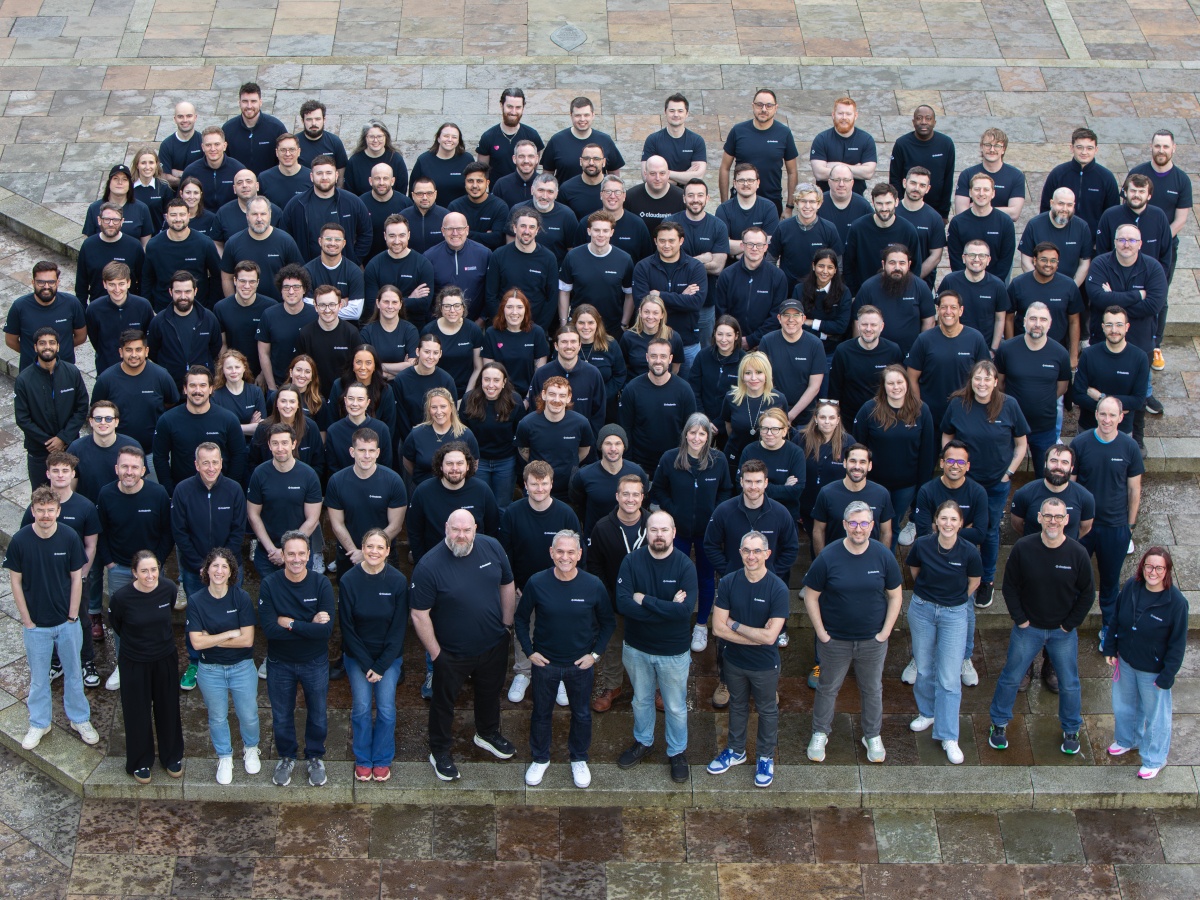
Belfast’s Cloudsmith eyes ‘massive growth’ with $72m raise

Published

on

The company raised $23m last year to expand its workforce.

Belfast software company Cloudsmith has raised $72m in Series C funding led by the investment firm TCV.

The raise, Cloudsmith said, would position the company for “massive growth” as it eyes the AI-generated software market. The funds will help accelerate product development and expand its go-to-market capabilities. Insight Partners and other existing investors also supported the round.

The latest funding comes just a year after the company raised $23m in a Series B to expand its workforce across departments and invest in AI R&D. TVC also led this round.

Advertisement

Founded in 2016 by Lee Skillen and Alan Carson, Cloudsmith helps businesses manage software on the cloud, and is used by companies that need control, security and scalability in their software supply chain. The company made two Series A raises – $15m in 2021 and $11m in 2023.

The new investment follows a period of strong year-over-year growth, Cloudsmith said, as companies seek modern infrastructure to keep pace with the speed and scale of AI-generated software.

Businesses also rely on software companies such as Cloudsmith to provide guardrails and governance when adopting AI-coding agents.

The investment comes at a time when AI coding is seeing unprecedented uptake by enterprises, which brings with it an ever-expanding threat surface.

Advertisement

Enterprises need to manage an growing software supply chain, while facing regulatory pressures and their own security requirements to ensure their AI-generated software is secure by design.

“AI agents generate so much software, so fast, it’s nearly impossible for humans to carefully review it all,” said Glenn Weinstein, the CEO of Cloudsmith.

Weinstein said Cloudsmith has the capacity to protect enterprises against the new kinds of threats that AI-driven development introduces.

“TCV and Insight Partners both recognise this profound shift, and their backing is helping Cloudsmith scale up for the massive wave of adoption of AI agents across enterprise software teams.”

Advertisement

Thomas Krane, the managing director at Insight Partners added: “In an era increasingly defined by AI-driven development, securing the software supply chain is critical.

“As a cloud-native offering, Cloudsmith is well positioned to do this – providing the scale and reliability needed to help power enterprise and AI-driven builds and mitigate emerging risks.”

Don’t miss out on the knowledge you need to succeed. Sign up for the Daily Brief, Silicon Republic’s digest of need-to-know sci-tech news.

Advertisement

Source link

Continue Reading

Tech

This Is JD Power’s Most Reliable French Door Refrigerator Brand

Published

on


Appliances might be smarter than ever, but 2025 study data from J.D. Power suggests that they aren’t as reliable as they used to be. Senior managing director of retail practice at J.D. Power, Michael Taylor, explained that although “modern appliances are far more sophisticated and packed with more technologies than ever before,” the increased complexity of today’s appliances means that there are more systems to potentially go wrong. As a result, he said that reliability was now a “critical factor” in picking a new appliance.

According to the study, buyers looking for the most reliable French door refrigerator from a major refrigerator brand should look toward GE’s current lineup. The brand saw the lowest number of problems per 100 appliances (PP100), with owners reporting 65 PP100. GE’s score was slightly ahead of Whirlpool’s rival refrigerators, which saw 68 PP100 reported. The third most reliable brand in the segment was LG, with owners reporting 74 PP100.

Advertisement

French door refrigerators suffered from more problems on average than most other types of appliances. Across the category, owners reported 76 PP100 on average, while side-by-side refrigerators were subject to 68 PP100 on average. Two appliance categories shared top honors for being the most reliable on average: cooking appliances and clothes dryers. Both saw an average of 56 PP100 reported.

Advertisement

GE scored highly for reliability in other categories

Although it didn’t quite achieve a clean sweep, GE managed a first-place finish for reliability in almost all appliance categories in J.D. Power’s study. As well as being the most reliable French door refrigerator brand, GE also took top honors in the clothes dryer, front-load washer, and top-load washer categories, among others. However, not everyone agrees with J.D. Power’s verdict, with Consumer Reports crowning LG’s front-load washers the best on the market.

Even so, J.D. Power’s study unequivocally puts GE’s home appliance range at the top of the pile for reliability. As a bonus, when things do go wrong, the study claims that GE has the best service experience, too. The brand received 778 points for its appliance service out of a possible 1,000 points, while Samsung earned second place with a score of 768 points. Unfortunately, owners of Samsung appliances are more likely to end up testing out its appliance service than most, since the Korean brand’s appliances were subject to more problems than average in seven out of eight appliance categories.


Advertisement

Source link

Continue Reading

Tech

Cohere acquires, merges with Germany-based startup to create a ‘transatlantic AI powerhouse’

Published

on

Cohere, the Canada-based enterprise AI unicorn, announced Friday that it would merge with the Germany-based enterprise AI company Aleph Alpha.

The deal, which has yet to close, will value the newly formed company at $20 billion, the FT reported. Schwarz Group, one of Aleph Alpha’s top backers, will also invest $600 million in Cohere’s Series E round, which is expected to close later this year, CNBC reported.

A handful of Silicon Valley players continue to dominate the AI commercial landscape, which is busy with consolidation activity.

A press release announcing the Cohere-Aleph Alpha union said one goal of the merger was to give businesses and governments an alternative to these dominant tech players, one that offers greater independence and control over their data. It also hopes to combine the talent pool across Canada and Germany to create a “transatlantic AI powerhouse.” 

Advertisement

Source link

Continue Reading

Tech

This Ring Doorbell deal is a cheap way to smarten up your front door

Published

on

Most video doorbells make you choose between a wide-angle view of your porch or a tight shot of whoever’s face is at the door, but the Ring Battery Doorbell doesn’t ask you to compromise.

Right on that premise, the Ring Battery Doorbell is currently down from $99.99 to $59.99 at Amazon, putting $40 back in your pocket for a camera that covers significantly more of your front door area.

Ring Battery Video Doorbell on a red and orange backgroundRing Battery Video Doorbell on a red and orange background

Upgrade your home with 40% off a Ring Battery Doorbell 

For anyone who has been putting off adding a smart doorbell to their home, this 40% discount makes the barrier to entry massively lower.

Advertisement

View Deal

The headline feature here is Head-to-Toe Video, which expands the vertical field of view compared to the previous generation, so you can see both a visitor’s face and any packages left on your doorstep in a single frame.

Advertisement

That wider perspective pairs naturally with Live View, which lets you pull up a real-time feed from your phone at any moment, whether you’re in the next room or across town on a work trip.

Two-Way Talk is built in as well, so you can have a full conversation with whoever’s at the door without opening it, which is particularly useful for redirecting delivery drivers when you’re not home.

Advertisement

Motion Detection alerts push a notification to your phone the moment activity is detected outside, and because the doorbell runs on a built-in rechargeable battery, installation doesn’t require any existing doorbell wiring at your property.

Advertisement

The Whatsapp LogoThe Whatsapp Logo

Get Updates Straight to Your WhatsApp

Join Now

Advertisement

Charging is handled via USB-C; you simply detach the unit from its wall bracket, connect the included cable, and click it back into place when it’s ready, which makes the whole process considerably less disruptive than it sounds.

The Ring Battery Doorbell also connects with Alexa-enabled devices, meaning an Echo Show can display a live feed when motion is detected, and compatible Echo speakers will announce when someone arrives.

It’s worth noting that features like Smart Alerts for person and package recognition, video history, and Quick Replies each require a Ring Protect subscription, sold separately, so factor that into your running costs.

For anyone who has been putting off adding a smart doorbell to their home setup, this 40% discount makes the barrier to entry meaningfully lower than it has been.

Advertisement

Advertisement

SQUIRREL_PLAYLIST_10148964

Source link

Advertisement
Continue Reading

Tech

DJI Osmo Pocket 4, Recteq X-Fire Pro and Alienware 27 QD-OLED

Published

on

Engadget’s hottest review roundup truly has it all this week: a new pocket cam, a 2-in-1 smart grill, a pair of drones and a pricey skinny vac. And that’s before we even get to the highly capable gaming display that will only set you back $350. Read on to catch up on the reviews you might’ve missed over the last two weeks as we prepare for another slate of big events next month.

DJI Osmo Pocket 4

Image for the large product module

DJI/Engadget

The Osmo Pocket 4 is still the best pocket-friendly vlogging camera you can buy. With excellent image quality, improved photos, great stabilization and pro D-Log mode, it’s incredibly easy to record everything from simple vlogs to near cinematic-quality video. The high level of portability and extended battery life make this an easy camera to reach for whatever you’re filming.

Pros
Advertisement
  • Excellent image quality
  • Improved low-light performance
  • Onboard storage
  • Modular accessories
Cons
  • Still only 3K in portrait mode
  • No dust or water protection due to the gimbal
  • No optical zoom
  • Not available in the US

DJI’s Osmo Pocket cameras have become a staple of Engadget’s live event coverage over the last few years. They’re convenient, compact and product high-quality footage when speed matters. Contributing review reporter James Trew recently put the new Osmo Pocket 4 through its paces, concluding that “you’re getting better image quality that will pay you back over time.”

Recteq X-Fire Pro 825

Image for the large product module

Recteq/Engadget

The X-Fire Pro offers the ease of gas with the wood flavor of pellets in the same grill. While there could be more features, the build quality is excellent and the performance is reliable.

Pros
  • Two grills in one
  • Reliable Wi-Fi tools
  • Robust build quality
  • Direct-flame searing
Cons
  • Small pellet hoppers
  • No super smoke, keep warm or other handy modes
  • Not compatible with wireless food probes

With the X-Fire Pro, Recteq set out to make a pellet grill that would appeal to fans of gas grills. The company has done just that, offering a dual-mode device that imparts wood flavor you don’t inherently get from propane or natural gas. “Recteq has successfully combined the best aspects of pellet grills with a dedicated high-heat mode and separate controls that will be familiar to gas grillers,” I said. “This model offers robust build quality, reliable performance and Wi-Fi connectivity for extended smoking sessions.”

Alienware 27 QD-OLED monitor

Image for the large product module

Dell / Engadget

Advertisement

In a world where every piece of gaming gear seems to be getting more expensive, Alienware’s  $350 AW2726DM 27-inch QD-OLED monitor feels like a gift to gamers on a budget.

Pros
  • Stupendously affordable
  • Three-year warranty with burn-in protection
  • Simple, straightforward design
  • QHD resolution with 240Hz VRR
  • Rich colors
Cons
  • Mediocre brightness
  • Not a ton of ports
  • No native G-Sync support

Can a $350 gaming monitor offer enough to get the job done? If you’re talking about the Alienware 27 QD-OLED display, that answer is a resounding “yes.”

“The AW2726DM might not have all the fancy features you get on more expensive monitors, but it’s an excellent example of a no frills gadget done right,” senior reporter Sam Rutherford said. “You get just enough ports, a straightforward design and a beautiful QD-OLED panel with a solid resolution and refresh rate — all for just $350.”

DJI Lito drones and a Dyson PencilVac

Like the Osmo Pocket 4, DJI’s latest Drones are unlikely to make it to the US. However, if you live elsewhere, there’s a lot of performance available for under $400. “The Lito series shows that DJI is intent on dominating every drone price range and category, including the bottom end,” contributing reporter Steve Dent said. “Despite their low prices, the new drones don’t skimp on features, offering full obstacle protection, ActiveTrack subject tracking, relatively high speeds and sharp 4K video quality — just like models that cost a lot more.”

Advertisement

If your spring cleaning could still use a jump start, perhaps a fancy, skinny vacuum could do the trick for light duty. “With its minimalist form factor, the PencilVac is still an engineering marvel,” UK bureau chief Mat Smith said. “Its high degree of mobility makes it easy to clean in tight corners and between furniture. I just wish it were slightly more powerful.”

Source link

Continue Reading

Trending

Copyright © 2025